We've ranked the best modernism books using expert recommendations, sales data, and millions of reader ratings. At Shortform, we know books. Our book guides are the best in the world. Learn why.
Cover unavailable
1
The Great Gatsby
F. Scott Fitzgerald
5.0
A young man, newly rich, tries to recapture the past and win back his former love, despite the fact that she has married.
When he got to high school, the president said, his tastes changed and he learned to enjoy classics like “Of Mice and Men” and “The Great Gatsby.” [source]
Melinda and I really like this book. When we were first dating, she had a green light that she would turn on when her office was empty and it made sense for me to come over. [source]
Marvin Liao
Partner/500 Startups
For Non-Business, I'd have to say Dune (Herbert), Emergency (Strauss), The Great Gatsby (Fitzgerald) or Flint (L'Amour). I re-read these books every year because they are just so well written & great stories that I get new perspective & details every time I read them. [source]
Cover unavailable
2
Mrs. Dalloway
Virginia Woolf
4.9
In this vivid portrait of one day in a woman's life, Clarissa Dalloway is preoccupied with the last-minute details of party preparation while in her mind she is much more than a perfect society hostess. As she readies her house, she is flooded with far-away remembrances. And, met with the realities of the present, Clarissa reexamines the choices she has made, hesitantly looking ahead to growing old. Undeniably triumphant, this is the inspired novelistic outline of human consciousness.
…
Recommended by Charles Fernyhough and Maria Sveland.
Charles Fernyhough
Woolf is interested in the intersections between minds. She’s trying to show how minds bleed into each other. [source]
Maria Sveland
It’s one of the saddest books I’ve ever read. I could really identify with Clarissa, this empty, poor person who is going out to find some flowers for a party. At the same moment, we are following her out into the beautiful morning as the story starts. It’s clear very soon that Clarissa is a woman who has lost her soul among all the duties and conventions of a boring marriage. That loss is so overwhelming and confusing that she loses contact even with her own body. She describes feeling young, but at the same time really old. I don’t know why I identified with her so strongly. [source]
Cover unavailable
3
To the Lighthouse
Virginia Woolf, Stella McNichol, Hermione Lee
4.9
For years now the Ramsays have spent every summer in their holiday home in Scotland, and they expect these summers will go on forever; but as the First World War looms, the integrity of family and society will be fatally challenged. To the Lighthouse is at once a vivid impressionist depiction of a family holiday, and a meditation on a marriage, on parenthood and childhood, on grief, tyranny and bitterness. Its use of stream of consciousness, reminiscence and shifting perspectives, gives the novel an intimate, poetic essence, and at the time of publication in 1927 it represented an utter rejection of Victorian and Edwardian literary values. Virginia Woolf saw the novel as an elegy to her own parents, and in her diary she wrote: 'I used to think of him (father) and mother daily; but writing The Lighthouse laid them in my mind'.
Aristotle tells us that all politics starts in the family, and you really do see that in To the Lighthouse. Woolf always said that there is no symbolism in the lighthouse at all, and I think we should believe her. All the same, I do think that the lighthouse, in a way, is Mrs Ramsay because the lighthouse is there to protect us from harm and from hazards, and Mrs Ramsay is a self-sacrificing, patient mother who attends to everyone’s needs and tends to protect them from hazards. Of course, that was an impossibility for Woolf, because her mother died when she was 13. So she is really trying to recreate her mother and also her father, Mr Ramsay. She’s brought them to life – I wonder what that must have been like for her to write. In Hot Milk, I refer to To the Lighthouse as well as Woolf’s earlier novel The Voyage Out. It seems to Sofia that her mother is a hazard, and she says, later, ‘I’ve been waiting for her to take the voyage out of her gloom, to buy a ticket to a vital life with an extra ticket for me. I’ve been waiting all my life for her to reserve a seat for me.’ [source]
Hermione Lee
When all is said and done, I think it is her greatest novel. [source]
Cover unavailable
4
Ulysses
James Joyce
4.8
Loosely based on the Odyssey, this landmark of modern literature follows ordinary Dubliners in 1904. Capturing a single day in the life of Dubliner Leopold Bloom, his friends Buck Mulligan and Stephen Dedalus, his wife Molly, and a scintillating cast of supporting characters, Joyce pushes Celtic lyricism and vulgarity to splendid extremes. Captivating experimental techniques range from interior monologues to exuberant wordplay and earthy humor. A major achievement in 20th century literature.
…
Recommended by Andi Dumitrescu, Charles Fernyhough, Debbie Millman, and 4 others.
Andi Dumitrescu
If I had to make a more rational choice, I’d go with Ulises or The Master and Margareta, but I think that choice is a bit snobbish. [source]
Charles Fernyhough
The archetypal stream of consciousness novel. Joyce didn’t invent the technique, but he makes it flourish in the most extraordinary way. [source]
Debbie Millman
I also really love a line from this book, which is 'The longest way around is the shortest way home.' [source]
Mikhail Bulgakov's devastating satire of Soviet life was written during the darkest period of Stalin's regime. Combining two distinct yet interwoven parts—one set in ancient Jerusalem, one in contemporary Moscow—the novel veers from moods of wild theatricality with violent storms, vampire attacks, and a Satanic ball; to such somber scenes as the meeting of Pilate and Yeshua, and the murder of Judas in the moonlit garden of Gethsemane; to the substanceless, circus-like reality of Moscow. Its central characters, Woland (Satan) and his retinue—including the vodka-drinking black cat, Behemoth; the poet, Ivan Homeless; Pontius Pilate; and a writer known only as The Master, and his passionate companion, Margarita—exist in a world that blends fantasy and chilling realism, an artful collage of grotesqueries, dark comedy, and timeless ethical questions.
Though completed in 1940, "The Master and Margarita" wasn't published in Moscow until 1966, when the first part appeared in the magazine "Moskva." It was an immediate and enduring success: audiences responded with great enthusiasm to its expression of artistic and spiritual freedom.
…
Recommended by Max Levchin, Neil Gaiman, Andi Dumitrescu, and 5 others.
Max Levchin
Co-founder/PayPal, CEO/Affirm, Investor
One of the finest works of fiction of the last century. [source]
If I had to make a more rational choice, I’d go with Ulises or The Master and Margareta, but I think that choice is a bit snobbish. [source]
Cover unavailable
6
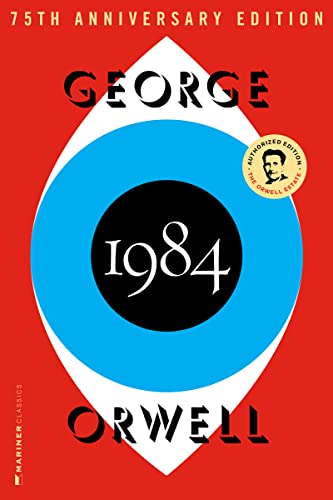
1984
George Orwell
4.8
A PBS Great American Read Top 100 Pick
With extraordinary relevance and renewed popularity, George Orwell’s 1984 takes on new life in this hardcover edition.
“Orwell saw, to his credit, that the act of falsifying reality is only secondarily a way of changing perceptions. It is, above all, a way of asserting power.”—The New Yorker
In 1984, London is a grim city in the totalitarian state of Oceania where Big Brother is always watching you and the Thought Police can practically read your mind. Winston Smith is a man in grave danger for the simple reason that his memory still functions. Drawn into a forbidden love affair, Winston finds the courage to join a secret revolutionary organization called The Brotherhood, dedicated to the destruction of the Party. Together with his beloved Julia, he hazards his life in a deadly match against the powers that be.
Lionel Trilling said of Orwell’s masterpiece “1984 is a profound, terrifying, and wholly fascinating book. It is a fantasy of the political future, and like any such fantasy, serves its author as a magnifying device for an examination of the present.” Though the year 1984 now exists in the past, Orwell’s novel remains an urgent call for the individual willing to speak truth to power.
Today is World Book Day, a wonderful opportunity to address this #ChallengeRichard sent in by Mike Gonzalez of New Jersey: Make a list of your top 65 books to read in a lifetime. [source]
called this book "one of his favorite" and recommended it to the hires. The book also inspired one the greatest TV ad (made by Jobs) [source]
Andra Zaharia
These books and their core ideas have stuck with me the most and continue to guide me when I hit crossroads along the way. [source]
Cover unavailable
7
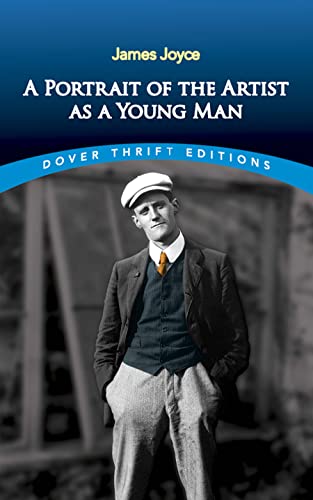
A Portrait of the Artist as a Young Man / Dubliners
James Joyce, Kevin J.H. Dettmar
4.8
Widely regarded as the greatest stylist of twentieth-century English literature, James Joyce deserves the term “revolutionary.” His literary experiments in form and structure, language and content, signaled the modernist movement and continue to influence writers today. His two earliest, and perhaps most accessible, successes—A Portrait of the Artist as a Young Man and Dubliners—are here brought together in one volume. Both works reflect Joyce’s lifelong love-hate relationship with Dublin and the Irish culture that formed him.
In the semi-autobiographical Portrait, young Stephen Dedalus yearns to be an artist, but first must struggle against the forces of church, school, and society, which fetter his imagination and stifle his soul. The book’s inventive style is apparent from its opening pages, a record of an infant’s impressions of the world around him—and one of the first examples of the “stream of consciousness” technique.
Comprising fifteen stories, Dubliners presents a community of mesmerizing, humorous, and haunting characters—a group portrait. The interactions among them form one long meditation on the human condition, culminating with “The Dead,” one of Joyce’s most graceful compositions centering around a character’s epiphany. A carefully woven tapestry of Dublin life at the turn of the last century, Dubliners realizes Joyce’s ambition to give his countrymen “one good look at themselves.”
Kevin J. H. Dettmar is Professor of English and Cultural Studies at Southern Illinois University Carbondale. He is the author or editor of a half-dozen books on James Joyce, modernist literature, and rock music. He is currently finishing a term as President of the Modernist Studies Association. --back cover
…
Recommended by Richard Bourke.
Richard Bourke
Joyce’s depiction is one of Ireland in the aftermath of the fall of Charles Stewart Parnell. [source]
Cover unavailable
8
Dubliners
James Joyce, Terence Brown, Roman Muradov, Colum McCann
4.8
For the centennial of its original publication, an irresistible Graphic Deluxe Edition of one of the most beloved books of the 20th century
Perhaps the greatest short story collection in the English language, James Joyce’s Dubliners is a vivid and unflinching portrait of “dear dirty Dublin” at the turn of the twentieth century. These fifteen stories, including such unforgettable ones as “Araby,” “Grace,” and “The Dead,” delve into the heart of the city of Joyce’s birth, capturing the cadences of Dubliners’ speech and portraying with an almost brute realism their outer and inner lives. Dubliners is Joyce at his most accessible and most profound, and this edition is the definitive text, authorized by the Joyce estate and collated from all known proofs, manuscripts, and impressions to reflect the author’s original wishes.
It is the perfect story—you can almost touch the characters, and yet it is told from a remote point of view, from a distance but not without affection [source]
Cover unavailable
9
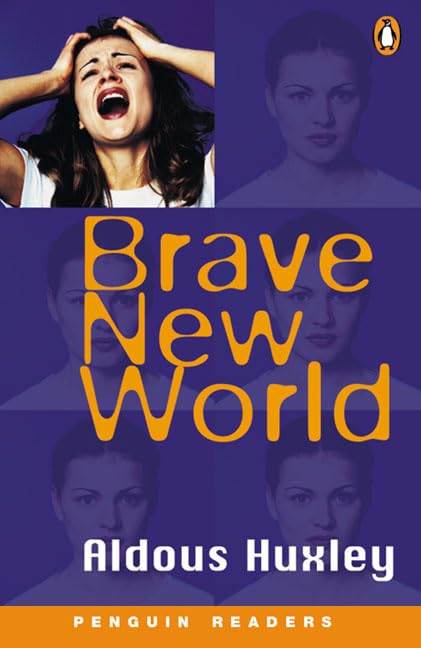
Brave New World
Aldous Huxley
4.7
Now reissued in a gorgeous hardcover edition: "one of the most prophetic dystopian works of the 20th century" (Wall Street Journal) must be read and understood by anyone concerned with preserving the human spirit in the face of our "brave new world." Huxley's masterpiece has become a bestseller once again after the American election.
Aldous Huxley's profoundly important classic of world literature,Brave New World is a searching vision of an unequal, technologically-advanced future where humans are genetically bred, socially indoctrinated, and pharmaceutically anesthetized to passively uphold an authoritarian ruling order whose motto is "Community, Identity, Stability."—all at the cost of our freedom, humanity, and perhaps our souls. "A genius [who] who spent his life decrying the onward march of the Machine" (The New Yorker), Huxley was a man of incomparable talents: equally an artist, a spiritual seeker, and one of history's keenest observers of human nature and civilization. Brave New World, his masterpiece, has enthralled and terrified millions of readers, and retains its urgent relevance to this day as both a warning as we head into tomorrow and as a thought-provoking, satisfying work of literature. Written in the shadow of the rise of fascism during the 1930s, Brave New World likewise speaks to a twenty-first-century world dominated by mass-entertainment, technology, medicine and pharmaceuticals, the arts of persuasion, and the hidden influence of elites.
The most prophetic book of the 20th century. Today many people would easily mistake it for a utopia. [source]
Andra Zaharia
These books and their core ideas have stuck with me the most and continue to guide me when I hit crossroads along the way. [source]
Catherine Mayer
It shows the ways in which technology, our need for certain creature comforts and consumer culture can be used to manipulate us. [source]
Cover unavailable
10
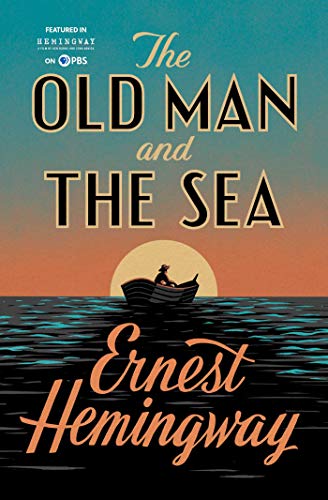
The Old Man and the Sea
Ernest Hemingway
4.7
The Old Man and the Sea, an apparently simple fable, represents the mature Hemingway at his best. He was awarded the Nobel Prize for Literature soon after its publication, and half a century later it is still one of his most read books.
I keep coming back to it. I love the straightforwardness, the tightness, and the poetry. I think it shows a common struggle that is repeated over and over in so many narratives both fictional and nonfictional. [source]
The Old Man and the Sea by Ernest Hemingway https://t.co/7dJE4Pfn56, a book from my great books list https://t.co/AxBNX3QpMb [source]
May Witwit
I taught this book to my students in Iraq during the economic sanctions. And I feel like it gave me some kind of strength to continue. [source]
Cover unavailable
11
Orlando
Virginia Woolf, Brenda Lyons, Sandra M Gilbert
4.6
Virginia Woolf's Orlando 'The longest and most charming love letter in literature', playfully constructs the figure of Orlando as the fictional embodiment of Woolf's close friend and lover, Vita Sackville-West. Spanning three centuries, the novel opens as Orlando, a young nobleman in Elizabeth's England, awaits a visit from the Queen and traces his experience with first love as England under James I lies locked in the embrace of the Great Frost. At the midpoint of the novel, Orlando, now an ambassador in Constantinople, awakes to find that he is now a woman, and the novel indulges in farce and irony to consider the roles of women in the 18th and 19th centuries. As the novel ends in 1928, a year consonant with full suffrage for women. Orlando, now a wife and mother, stands poised at the brink of a future that holds new hope and promise for women.
…
Recommended by Andrei Codrescu.
Andrei Codrescu
This is Woolf’s mysterious and magical insight into the cyclical, sexual nature of time. It’s her most beautiful writing too, in my opinion. [source]
Cover unavailable
12
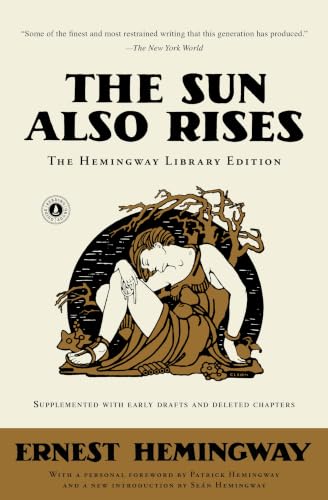
The Sun Also Rises
Ernest Hemingway, William Hurt, et al
4.6
The quintessential novel of the Lost Generation, The Sun Also Rises is one of Ernest Hemingway’s masterpieces and a classic example of his spare but powerful writing style.
A poignant look at the disillusionment and angst of the post-World War I generation, the novel introduces two of Hemingway’s most unforgettable characters: Jake Barnes and Lady Brett Ashley. The story follows the flamboyant Brett and the hapless Jake as they journey from the wild nightlife of 1920s Paris to the brutal bullfighting rings of Spain with a motley group of expatriates. First published in 1926, The Sun Also Rises helped establish Hemingway as one of the greatest writers of the twentieth century.
…
Recommended by Wai Chee Dimock.
Wai Chee Dimock
Many people don’t appreciate what a big commitment writing this novel was for Hemingway. He was used to writing short stories. It meant he had to spend a lot of time on one book that could have been spent more profitably writing short stories. Like many of Hemingway’s later novels, it is stitched together from shorter pieces – in this case, what he’d already written about Pamplona. [source]
Cover unavailable
13
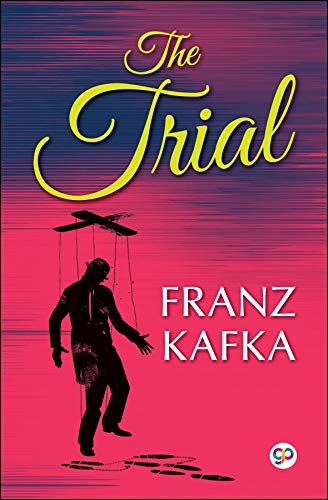
The Trial
Franz Kafka, Breon Mitchell
4.6
Written in 1914 but not published until 1925, a year after Kafka's death, The Trial is one of the most important novels of the twentieth century: the terrifying tale of Josef K., a respectable bank officer who is suddenly and inexplicably arrested and must defend himself against a charge about which he can get no information. Whether read as an existential tale, a parable, or a prophecy of the excesses of modern bureaucracy wedded to the madness of totalitarianism, Kafka's nightmare has resonated with chilling truth for generations of readers. This new edition is based upon the work of an international team of experts who have restored the text, the sequence of chapters, and their division to create a version that is as close as possible to the way the author left it.
In his brilliant translation, Breon Mitchell masterfully reproduces the distinctive poetics of Kafka's prose, revealing a novel as full of energy and power as when it was first written.
It’s a fascinating writing style with a 3rd party observer that’s treated as an extension of the protagonists own sentiments and mind. It’s also just exquisitely written. And the concept of being on trial for charges unknown by a vast, impersonal, yet petty, bureaucracy pulls from a timeless well of societal anxieties. So far, so very good. About half way through. [source]
Michael Peel
I read this before going to Nigeria but moving there made me think about it a lot. The idea that the system always wins. [source]
Cover unavailable
14
The Sound and the Fury
William Faulkner, Grover Gardner, et al
4.6
This is an alternate cover ed. for ISBN 0679732241.
The Sound and the Fury is the tragedy of the Compson family, featuring some of the most memorable characters in literature: beautiful, rebellious Caddy; the manchild Benjy; haunted, neurotic Quentin; Jason, the brutal cynic; and Dilsey, their black servant. Their lives fragmented and harrowed by history and legacy, the character’s voices and actions mesh to create what is arguably Faulkner’s masterpiece and one of the greatest novels of the twentieth century.
…
Cover unavailable
15
A Farewell to Arms: The Hemingway Library Edition
Ernest Hemingway, Seán Hemingway, Patrick Hemingway
4.6
Presented by Patrick and Seán Hemingway, this augmented edition of Ernest Hemingway’s classic novel of love during wartime features early drafts and, for the first time, all of the author’s alternate endings.
Written when Ernest Hemingway was thirty years old and lauded as the best American novel to emerge from World War I, A Farewell to Arms is the unforgettable story of an American ambulance driver on the Italian front and his passion for a beautiful English nurse. Set against the looming horrors of the battlefield—weary, demoralized men marching in the rain during the German attack on Caporetto; the profound struggle between loyalty and desertion—this gripping, semiautobiographical work captures the harsh realities of war and the pain of lovers caught in its inexorable sweep.
Ernest Hemingway famously said that he rewrote the ending to A Farewell to Arms thirty-nine times to get the words right. This edition collects all of the alternative endings together for the first time, along with early drafts of other essential passages, offering new insight into Hemingway’s craft and creative process and the evolution of one of the greatest novels of the twentieth century. Featuring Hemingway’s own 1948 introduction to an illustrated reissue of the novel, a personal foreword by the author’s son Patrick Hemingway, and a new introduction by the author’s grandson Seán Hemingway, this edition of A Farewell to Arms is truly a celebration.
…
Recommended by Jordan B Peterson, Jordan Peterson, and Julia Enthoven.
A Farewell to Arms by Ernest Hemingway https://t.co/dwAYVoKl3K, a book from my great books list https://t.co/AxBNX3QpMb [source]
Jordan Peterson
Jordan Peterson recommended this book on his website. [source]
Julia Enthoven
For non-business, I’ve loved so many different books that it’s hard to pick a favorite. Recently, I’ve enjoyed The Art of Fielding and Americanah, and I love classics like A Farewell to Arms and Lord of the Flies. [source]
Cover unavailable
16
The Waves
Virginia Woolf
4.6
Set on the coast of England against the vivid background of the sea, The Waves introduces six characters—three men and three women—who are grappling with the death of a beloved friend, Percival. Instead of describing their outward expressions of grief, Virginia Woolf draws her characters from the inside, revealing them through their thoughts and interior soliloquies. As their understanding of nature’s trials grows, the chorus of narrative voices blends together in miraculous harmony, remarking not only on the inevitable death of individuals but on the eternal connection of everyone. The novel that most epitomizes Virginia Woolf’s theories of fiction in the working form, The Waves is an amazing book very much ahead of its time. It is a poetic dreamscape, visual, experimental, and thrilling.
…
Recommended by Grey Baker.
Grey Baker
The language is so beautiful, and was so different to anything I’d read before. I remember feeling swept along by it for hours. [source]
Cover unavailable
17
The Metamorphosis
Franz Kafka
4.6
Alternate cover edition of ISBN 0553213695 / 9780553213690
"As Gregor Samsa awoke one morning from uneasy dreams he found himself transformed in his bed into a gigantic insect. He was laying on his hard, as it were armor-plated, back and when he lifted his head a little he could see his domelike brown belly divided into stiff arched segments on top of which the bed quilt could hardly keep in position and was about to slide off completely. His numerous legs, which were pitifully thin compared to the rest of his bulk, waved helplessly before his eyes."
With it's startling, bizarre, yet surprisingly funny first opening, Kafka begins his masterpiece, The Metamorphosis. It is the story of a young man who, transformed overnight into a giant beetle-like insect, becomes an object of disgrace to his family, an outsider in his own home, a quintessentially alienated man. A harrowing—though absurdly comic—meditation on human feelings of inadequacy, guilt, and isolation, The Metamorphosis has taken its place as one of the most widely read and influential works of twentieth-century fiction. As W.H. Auden wrote, "Kafka is important to us because his predicament is the predicament of modern man."
David Lynch said this is one of his most-recommended books. [source]
David Lynch
David Lynch said this is one of his most-recommended books. [source]
Cover unavailable
18
As I Lay Dying
William Faulkner
4.5
As I Lay Dying is Faulkner’s harrowing account of the Bundren family’s odyssey across the Mississippi countryside to bury Addie, their wife and mother. Narrated in turn by each of the family members -- including Addie herself -- as well as others; the novel ranges in mood, from dark comedy to the deepest pathos. Considered one of the most influential novels in American fiction in structure, style, and drama, As I Lay Dying is a true 20th-century classic.
This edition reproduces the corrected text of As I Lay Dying as established in 1985 by Noel Polk.
…
Cover unavailable
19
Waiting for Godot
Samuel Becket
4.5
The story revolves around two seemingly homeless men simply waiting for someone—or something—named Godot. Vladimir and Estragon wait near a tree, inhabiting a drama spun of their own consciousness. The result is a comical wordplay of poetry, dreamscapes, and nonsense, which has been interpreted as mankind’s inexhaustible search for meaning. Beckett’s language pioneered an expressionistic minimalism that captured the existential post-World War II Europe. His play remains one of the most magical and beautiful allegories of our time.
Have recently come to appreciate the awesome, absurdist humor of this book. [source]
Cover unavailable
20
The Waste Land
T. S. Eliot and Michael North
4.5
The text of Eliot's 1922 masterpiece is accompanied by thorough explanatory annotations as well as by Eliot's own knotty notes, some of which require annotation themselves.
For ease of reading, this Norton Critical Edition presents The Waste Land as it first appeared in the American edition (Boni & Liveright), with Eliot's notes at the end. "Contexts" provides readers with invaluable materials on The Waste Land's sources, composition, and publication history. "Criticism" traces the poem's reception with twenty-five reviews and essays, from first reactions through the end of the twentieth century. Included are reviews published in the Times Literary Supplement, along with selections by Virginia Woolf, Gilbert Seldes, Edmund Wilson, Elinor Wylie, Conrad Aiken, Charles Powell, Gorham Munson, Malcolm Cowley, Ralph Ellison, John Crowe Ransom, I. A. Richards, F. R. Leavis, Cleanth Brooks, Delmore Schwartz, Denis Donoghue, Robert Langbaum, Marianne Thormählen, A. D. Moody, Ronald Bush, Maud Ellman, and Tim Armstrong. A Chronology and Selected Bibliography are included.
…
Cover unavailable
21
Animal Farm
George Orwell and Christopher Hitchens
4.5
Animal Farm is one of the most famous warnings ever written. Orwell's immortal satire - 'against Stalin' as he wrote to his French translator - can be read on many levels. With its piercing clarity and deceptively simple style it is no surprise that this novel is required reading for schoolchildren and politicians alike. This fable of the steadfast horses Boxer and Clover, the opportunistic pigs Snowball and Napoleon, and the deafening choir of sheep remains an unparalleled masterpiece.
One reviewer wrote 'In a hundred years' time perhaps Animal Farm ... may simply be a fairy story: today it is a fairy story with a good deal of point.' Over sixty years on in the age of spin, it is more relevant than ever.
Rejected by such eminent publishing figures as Victor Gollancz, Jonathan Cape and T.S. Eliot, Animal Farm was published to great acclaim by Martin Secker and Warburg on 17 August 1945 in an edition of 4500 copies. In the centenary year of Martin Secker, Ltd., Harvill Secker is proud to publish this special edition with a brand-new introduction by Christopher Hitchens.
Whitney Cummings recommended this book on the podcast "The Tim Ferriss Show". [source]
Vlad Tenev
When I was in sixth grade I remember being very upset by the ending of this book. [source]
Heather Brooke
I picked Animal Farm because it is an allegory about power and its seductive and corruptive influence on people regardless of their initial good intentions. [source]
Cover unavailable
22
A Room of One's Own
Virginia Woolf
4.5
A Room of One's Own is an extended essay by Virginia Woolf. First published on the 24th of October, 1929, the essay was based on a series of lectures she delivered at Newnham College and Girton College, two women's colleges at Cambridge University in October 1928. While this extended essay in fact employs a fictional narrator and narrative to explore women both as writers of and characters in fiction, the manuscript for the delivery of the series of lectures, titled Women and Fiction, and hence the essay, are considered nonfiction. The essay is seen as a feminist text, and is noted in its argument for both a literal and figural space for women writers within a literary tradition dominated by patriarchy.
…
Cover unavailable
23
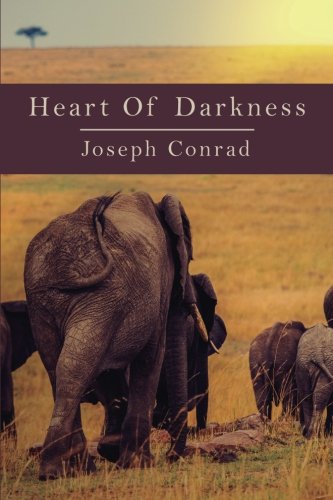
Heart of Darkness
Joseph Conrad
4.5
Heart of Darkness, a novel by Joseph Conrad, was originally a three-part series in Blackwood's Magazine in 1899. It is a story within a story, following a character named Charlie Marlow, who recounts his adventure to a group of men onboard an anchored ship. The story told is of his early life as a ferry boat captain. Although his job was to transport ivory downriver, Charlie develops an interest in investing an ivory procurement agent, Kurtz, who is employed by the government. Preceded by his reputation as a brilliant emissary of progress, Kurtz has now established himself as a god among the natives in “one of the darkest places on earth.” Marlow suspects something else of Kurtz: he has gone mad.
A reflection on corruptive European colonialism and a journey into the nightmare psyche of one of the corrupted, Heart of Darkness is considered one of the most influential works ever written.
…
Cover unavailable
24
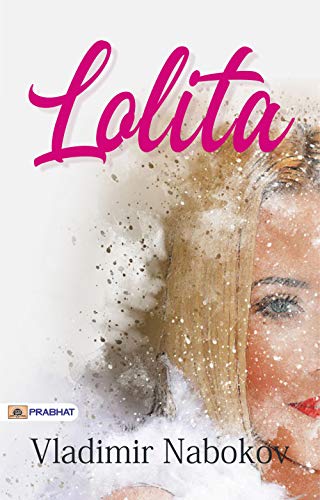
Lolita
Vladimir Nabokov
4.5
When it was published in 1955, Lolita immediately became a cause célèbre because of the freedom and sophistication with which it handled the unusual erotic predilections of its protagonist. But Vladimir Nabokov's wise, ironic, elegant masterpiece owes its stature as one of the twentieth century's novels of record not to the controversy its material aroused but to its author's use of that material to tell a love story almost shocking in its beauty and tenderness.
Awe and exhilaration–along with heartbreak and mordant wit–abound in this account of the aging Humbert Humbert's obsessive, devouring, and doomed passion for the nymphet Dolores Haze. Lolita is also the story of a hypercivilized European colliding with the cheerful barbarism of postwar America, but most of all, it is a meditation on love–love as outrage and hallucination, madness and transformation. With an introduction by Martin Amis.
…
Recommended by Ev Williams, Bryan Callen, Ella Berthoud, and 3 others.
So here are my three must read books. I've been reading a lot of great books like: Outsmart Your Instincts, The Culture Code, and Antonio Damasio’s The Strange Order, and sometimes when you read a lot of nonfiction it’s very enriching, sometimes you need a novel. I really believe you should take a minute and read something beautiful. Listen, listen to Lolita by Nabokov. But also listen to Blood Meridian by Cormac McCarthy and listen to Richard Poe narrate that. Those are two of the greatest feats of the english language that I can think of. Then there’s Fortress of Solitude, an amazing book, Extremely Loud and Incredibly Close, these are great novels. Cold Mountain is a beautiful novel, Snow Falling On Cedars, I mean they’ve been around for a while. But goddamnit, get those under your belt. Those are the novels I think you should read. You know Love In The Time Of Cholera it just makes you ache. Kind of like a Hemingway thing, where Hemingway “ahh!”, it’s the same thing, you know. So I don’t know, I’m a fan of all those books. Those are my 3 slash 20 books. [source]
Ella Berthoud
Even though it’s wrong, you sympathise with him because he can’t help himself and writes about it in such a passionate and empathetic way. [source]
Richard Cohen
It’s more imbued with references to the sun and using the sun as symbol or metaphor – almost a kind of character in the novel – than any other work in literature. [source]
Cover unavailable
25
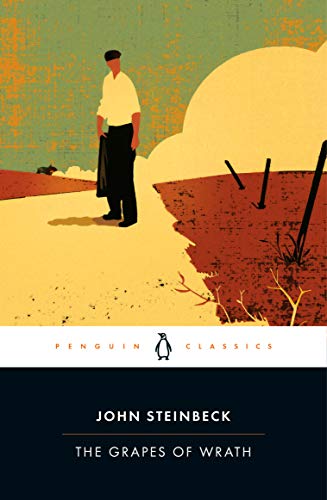
The Grapes of Wrath
John Steinbeck, Robert DeMott
4.5
The Pulitzer Prize-winning epic of the Great Depression, a book that galvanized—and sometimes outraged—millions of readers.
First published in 1939, Steinbeck’s Pulitzer Prize-winning epic of the Great Depression chronicles the Dust Bowl migration of the 1930s and tells the story of one Oklahoma farm family, the Joads—driven from their homestead and forced to travel west to the promised land of California. Out of their trials and their repeated collisions against the hard realities of an America divided into Haves and Have-Nots evolves a drama that is intensely human yet majestic in its scale and moral vision, elemental yet plainspoken, tragic but ultimately stirring in its human dignity. A portrait of the conflict between the powerful and the powerless, of one man’s fierce reaction to injustice, and of one woman’s stoical strength, the novel captures the horrors of the Great Depression and probes into the very nature of equality and justice in America. At once a naturalistic epic, captivity narrative, road novel, and transcendental gospel, Steinbeck’s powerful landmark novel is perhaps the most American of American Classics.
…
Recommended by Antonio Villaraigosa, Elizabeth Tsurkov, John Kerry, and 2 others.
Antonio Villaraigosa
It has been over 70 years since The Grapes of Wrath was published, yet the suffering that Steinbeck describes still hits close to home with families across our country still struggling to find work and put food on the table. It reminds us progressives that the day-to-day struggles of Americans should always remain close to our hearts. [source]
While there is a story that takes place between characters, the hardship and unfairness is a central element of the book. It shows how fiction can create progressive change as well. [source]
Cover unavailable
26
The Waste Land and Other Poems
T. S. Eliot
4.5
Few readers need any introduction to the work of the most influential poet of the twentieth century. In addition to the title poem, this selecion includes "The Love Song of J. Alfred Prufrock", "Gerontion", "Ash Wednesday", and other poems from Mr. Eliot's early and middle work.
"In ten years' time," wrote Edmund Wilson in Axel0s Castle (1931), "Eliot has left upon English poetry a mark more unmistakable than that of any other poet writing in English." In 1948 Mr. Eliot was awarded the Nobel Prize "for his work as trail-blazing pioneer of modern poetry".
…
Cover unavailable
27
Invisible Man
Ralph Ellison
4.4
First published in 1952 and immediately hailed as a masterpiece, Invisible Man is one of those rare novels that have changed the shape of American literature. For not only does Ralph Ellison's nightmare journey across the racial divide tell unparalleled truths about the nature of bigotry and its effects on the minds of both victims and perpetrators, it gives us an entirely new model of what a novel can be.
As he journeys from the Deep South to the streets and basements of Harlem, from a horrifying "battle royal" where black men are reduced to fighting animals, to a Communist rally where they are elevated to the status of trophies, Ralph Ellison's nameless protagonist ushers readers into a parallel universe that throws our own into harsh and even hilarious relief. Suspenseful and sardonic, narrated in a voice that takes in the symphonic range of the American language, black and white, Invisible Man is one of the most audacious and dazzling novels of our century.
…
Recommended by Barack Obama, Daegan Miller, Dan Barreiro, and 3 others.
As a devoted reader, the president has been linked to a lengthy list of novels and poetry collections over the years — he admits he enjoys a thriller. [source]
Daegan Miller
The novel pinpoints relentlessly, and beautifully, the environment of exploitation. [source]
Dan Barreiro
Riveting time capsule material. Literary giant Ellison on the blues, on race, on his powerful book, Invisible Man. https://t.co/iS6xQ7ojE8 [source]
Cover unavailable
28
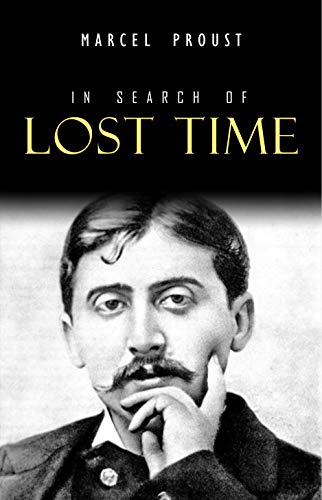
Swann's Way (In Search of Lost Time, #1)
Marcel Proust, D.J. Enright, C.K. Scott Moncrieff, Terence Kilmartin, Richard Howard
4.4
Swann's Way tells two related stories, the first of which revolves around Marcel, a younger version of the narrator, and his experiences in, and memories of, the French town Combray. Inspired by the "gusts of memory" that rise up within him as he dips a Madeleine into hot tea, the narrator discusses his fear of going to bed at night. He is a creature of habit and dislikes waking up in the middle of the night not knowing where he is.
He claims that people are defined by the objects that surround them and must piece together their identities bit by bit each time they wake up. The young Marcel is so nervous about sleeping alone that he looks forward to his mother's goodnight kisses, but also dreads them as a sign of an impending sleepless night. One night, when Charles Swann, a friend of his grandparents, is visiting, his mother cannot come kiss him goodnight. He stays up until Swann leaves and looks so sad and pitiful that even his disciplinarian father encourages "Mamma" to spend the night in Marcel's room.
…
Recommended by Thomas Graziani.
Thomas Graziani
My favorite book is like "A la recherche du temps perdu" ("In Search of Lost Time”) from Marcel Proust. It is a seven-volumes epic work describing the intricacies of human nature. Proust style is among the most beautiful I've ever read, and he manages to really make you consider every aspect of your daily life in a different and deeper way. [source]
Cover unavailable
29
For Whom the Bell Tolls
Ernest Hemingway
4.4
Hemingway's classic novel of the Spanish Civil War. In 1937 Ernest Hemingway traveled to Spain to cover the civil war; three years later he completed the greatest novel to emerge from "the good fight," For Whom the Bell Tolls. The story of Robert Jordan, a young American in the International Brigades, it tells of loyalty and courage, love and defeat, and the tragic death of an ideal. Surpassing his achievement in The Sun Also Rises and A Farewell to Arms, Hemingway creates a work at once rare and beautiful, strong and brutal, compassionate, moving and wise. "If the function of a writer is to reveal reality," Maxwell Perkins wrote to Hemingway after reading the manuscript, "no one ever so completely performed it." For Whom the Bell Tolls stands as one of the best war novels of all time.
Ernest Hemingway did more to change the style of English prose than any other writer in the twentieth century, and for his efforts he was awarded the Nobel Prize for literature in 1954. Hemingway wrote in short, declarative sentences and was known for his tough, terse prose. Publication of The Sun Also Rises and A Farewell to Arms immediately established Ernest Hemingway as one of the greatest literary lights of the twentieth century. As part of the expatriate community in 1920s Paris, the former journalist and World War I ambulance driver began a career that lead to international fame. Hemingway was an aficionado of bullfighting and big-game hunting, and his main protagonists were always men and women of courage and conviction, who suffered unseen scars, both physical and emotional. He covered the Spanish Civil War, portraying it in fiction in his brilliant novel For Whom the Bell Tolls, and he subsequently covered World War II. His classic novella The Old Man and the Sea won the Pulitzer Prize in 1953. He died in 1961.
Through the story of an ordinary man unwittingly drawn into a senseless murder on an Algerian beach, Camus explored what he termed "the nakedness of man faced with the absurd." First published in English in 1946; now in a new translation by Matthew Ward.
Seminal novel on existentialism and the absurd by Albert Camus from 1946. Explores that feeling of disconnectedness from society, its norms, and the absurdity of every day life. Striking first-person account in a powerful, direct language. [source]
Kyle Maynard
Kyle Maynard said this is one of his most-recommended books. [source]
Cover unavailable
31
Absalom, Absalom!
William Faulkner
4.4
Published in 1936, Absalom, Absalom! is considered by many to be William Faulkner's masterpiece. Although the novel's complex and fragmented structure poses considerable difficulty to readers, the book's literary merits place it squarely in the ranks of America's finest novels. The story concerns Thomas Sutpen, a poor man who finds wealth and then marries into a respectable family. His ambition and extreme need for control bring about his ruin and the ruin of his family. Sutpen's story is told by several narrators, allowing the reader to observe variations in the saga as it is recounted by different speakers. This unusual technique spotlights one of the novel's central questions: To what extent can people know the truth about the past?
…
Cover unavailable
32
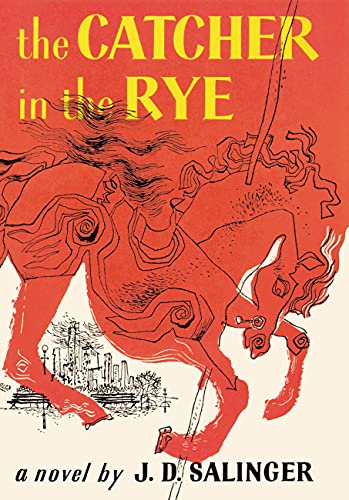
The Catcher in the Rye
J. D. Salinger
4.4
The hero-narrator of The Catcher in the Rye is an ancient child of sixteen, a native New Yorker named Holden Caulfield. Through circumstances that tend to preclude adult, secondhand description, he leaves his prep school in Pennsylvania and goes underground in New York City for three days. The boy himself is at once too simple and too complex for us to make any final comment about him or his story. Perhaps the safest thing we can say about Holden is that he was born in the world not just strongly attracted to beauty but, almost, hopelessly impaled on it. There are many voices in this novel: children's voices, adult voices, underground voices-but Holden's voice is the most eloquent of all. Transcending his own vernacular, yet remaining marvelously faithful to it, he issues a perfectly articulated cry of mixed pain and pleasure. However, like most lovers and clowns and poets of the higher orders, he keeps most of the pain to, and for, himself. The pleasure he gives away, or sets aside, with all his heart. It is there for the reader who can handle it to keep.
J.D. Salinger's classic novel of teenage angst and rebellion was first published in 1951. The novel was included on Time's 2005 list of the 100 best English-language novels written since 1923. It was named by Modern Library and its readers as one of the 100 best English-language novels of the 20th century. It has been frequently challenged in the court for its liberal use of profanity and portrayal of sexuality and in the 1950's and 60's it was the novel that every teenage boy wants to read.
It was such a relief from the other books I was reading at the time, which all had a quality of homework to them. [source]
Audrey Russo
So many novels; Lord of the Flies, Great Gatsby, Great Expectations; all the Nancy Drew books; Catcher in the Rye, Books written by Zora Neale Hurston; Pat Conroy – all because of the view about different people who endure despite adversity while kindling the hearts of the human spirit. [source]
Cover unavailable
33
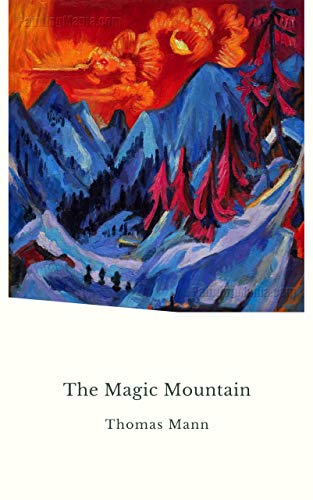
The Magic Mountain
THOMAS MANN
4.3
Hans Castorp is 'a perfectly ordinary, if engaging young man' when he goes to visit his cousin in an exclusive sanatorium in the Swiss Alps.What should have been a three week trip turns into a seven year stay. Hans falls in love and becomes intoxicated with the ideas he hears at the clinic - ideas which will strain and crack apart in a world on the verge of the First World War.
Recommended by Igor Debatur and Marc Wittmann.
Igor Debatur
It’s a story about young ambitious man who felt in a trap of his own mind in form of a chronic disease. He visited his brother in a clinic, situated in high mountains of Switzerland. Instead of retreating after a week, as was originally planned, he stayed there for seven years. There are several very bright characters with different ideas about liberalism, conservatism, hedonism and many other matters. All of them were living in a very comfortable reality with a set of rules. It’s very alike to any virtual society that could become a thing in upcoming years, and it’s easy to understand why the hero of the book decided to stay there. [source]
Marc Wittmann
In the ever-repeating sameness of the Magic Mountain Resort, time accelerates because all novelty is lost. [source]
Cover unavailable
34
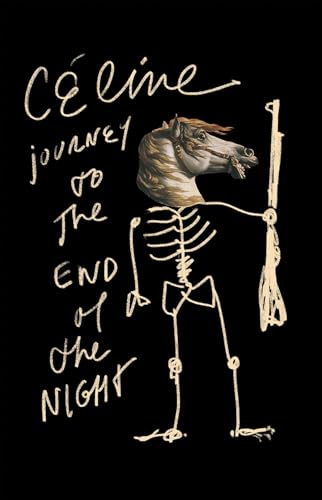
Journey to the End of the Night
Louis-Ferdinand Céline, Ralph Manheim, William T. Vollmann
4.3
Louis-Ferdinand Celine's revulsion and anger at what he considered the idiocy and hypocrisy of society explodes from nearly every page of this novel. Filled with slang and obscenities and written in raw, colloquial language, Journey to the End of the Night is a literary symphony of violence, cruelty and obscene nihilism. This book shocked most critics when it was first published in France in 1932, but quickly became a success with the reading public in Europe, and later in America where it was first published by New Directions in 1952. The story of the improbable yet convincingly described travels of the petit-bourgeois (and largely autobiographical) antihero, Bardamu, from the trenches of World War I, to the African jungle, to New York and Detroit, and finally to life as a failed doctor in Paris, takes the readers by the scruff and hurtles them toward the novel's inevitable, sad conclusion.
…
Recommended by Neil Strauss, David Downie, Quentin Hardy, and 1 others.
Neil Strauss recommended this book in the book "Tools of Titans". [source]
David Downie
I was particularly fascinated by Céline’s portrait of the city because Paris is one of the characters in the book. You get a real sense of what Paris looked like. [source]
Quentin Hardy
@p1lonn Terrible human, but that's a great book. [source]
Cover unavailable
35
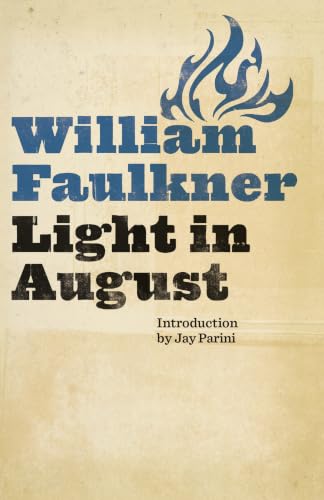
Light in August
William Faulkner, Noel Polk, Joseph Blotner
4.3
Light in August, a novel that contrasts stark tragedy with hopeful perseverance in the face of mortality, which features some of Faulkner’s most memorable characters: guileless, dauntless Lena Grove, in search of the father of her unborn child; Reverend Gail Hightower, a lonely outcast haunted by visions of Confederate glory; and Joe Christmas, a desperate, enigmatic drifter consumed by his mixed ancestry.
…
Cover unavailable
36
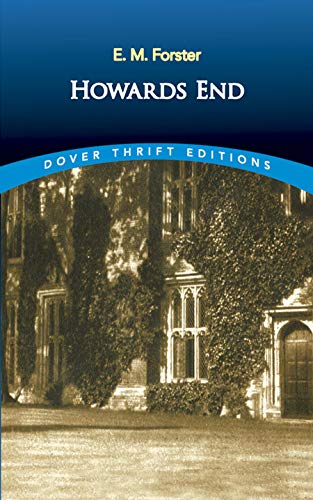
Howards End
E M Forster
4.3
Howards End is a novel by E. M. Forster about social conventions, codes of conduct and relationships in turn-of-the-century England. A strong-willed and intelligent woman refuses to allow the pretensions of her husband's smug English family to ruin her life. Howards End is considered by some to be Forster's masterpiece.
Mrs Wilcox tells Margaret Schlegel of a superstition about the wych-elm which grows by her family home, Howards End. [source]
Cover unavailable
37
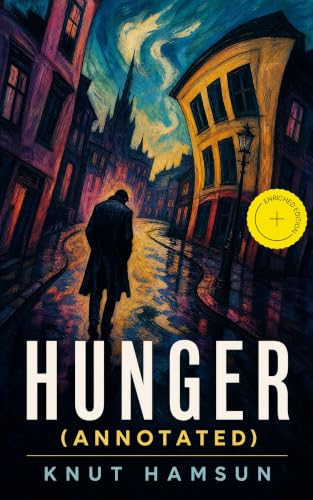
Hunger
Knut Hamsun, Sverre Lyngstad, Jo Nesbo, Paul Auster
4.3
First published in Norway in 1890, Hunger probes into the depths of consciousness with frightening and gripping power. Like the works of Dostoyevsky, it marks an extraordinary break with Western literary and humanistic traditions.
Librarian note: an older cover for this ISBN can be found here.
A dark and moving first-person narrative, about the conflicting drives for self-preservation and self-immolation inside all of us. Hunger is about a writer who is starving himself. He cannot write because he is starving and cannot eat because writing is how he makes his living. It’s a vicious cycle and the book is a first-person descent into it. Strangely modern for being published in 1890 and ultimately inspired a lot of great stream-of-consciousness writing since (but influence goes unacknowledged because Knut was a Nazi sympathizer). [source]
Stephane Grand
This is an amazing book about being true to your engagements. [source]
Cover unavailable
38
Steppenwolf: A Novel
Hermann Hesse, Basil Creighton
4.3
Steppenwolf is a poetical self-portrait of a man who felt himself to be half-human and half-wolf. This Faust-like and magical story is evidence of Hesse's searching philosophy and extraordinary sense of humanity as he tells of the humanization of a middle-aged misanthrope. Yet this novel can also be seen as a plea for rigorous self-examination and an indictment of the intellectual hypocrisy of the period. As Hesse himself remarked, "Of all my books Steppenwolf is the one that was more often and more violently misunderstood than any other".
…
Recommended by Amanda Palmer and Sanja Zepan.
Amanda Palmer
Has a fantastical realism that pierces to the bottom of the psyche. I've re-read and re-read this sucker every five years. [source]
Sanja Zepan
Favourite non-business book would be Der Steppenwolf, by Hermann Hesse. It's a book that's often read by privileged people who feel misunderstood (usually teens), so everyone focuses on the first part about loneliness in the bourgeois world and forgets about the whole second part of the book that's about overcoming that and finding a sense of humour, a shift in perspective, and a bit of distance. Jack Kerouac even dismisses the book in the fashion of the precisely same intellectual hypocrisy this book talks about, which to me sounds like hipsters talking about how other people are hipsters and fake, because they themselves "have been listening the band before it was popular". Also, Steppenwolf is very relevant today - especially in the often lonely world of startup founders, where everyone talks about how great they're doing. So, the message still resonates with me. [source]
Cover unavailable
39
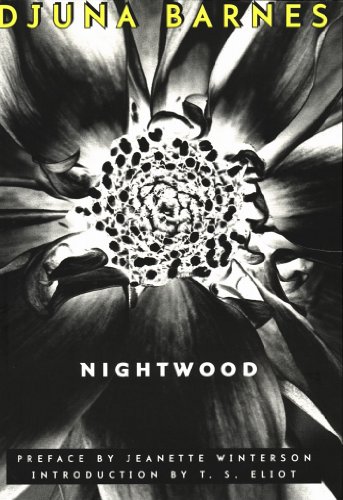
Nightwood
Djuna Barnes, Jeanette Winterson, T. S. Eliot
4.3
Nightwood, Djuna Barnes' strange and sinuous tour de force, "belongs to that small class of books that somehow reflect a time or an epoch" (TLS). That time is the period between the two World Wars, and Barnes' novel unfolds in the decadent shadows of Europe's great cities, Paris, Berlin, and Vienna—a world in which the boundaries of class, religion, and sexuality are bold but surprisingly porous. The outsized characters who inhabit this world are some of the most memorable in all of fiction—there is Guido Volkbein, the Wandering Jew and son of a self-proclaimed baron; Robin Vote, the American expatriate who marries him and then engages in a series of affairs, first with Nora Flood and then with Jenny Petherbridge, driving all of her lovers to distraction with her passion for wandering alone in the night; and there is Dr. Matthew-Mighty-Grain-of-Salt-Dante-O'Connor, a transvestite and ostensible gynecologist, whose digressive speeches brim with fury, keen insights, and surprising allusions. Barnes' depiction of these characters and their relationships (Nora says, "A man is another person—a woman is yourself, caught as you turn in panic; on her mouth you kiss your own") has made the novel a landmark of feminist and lesbian literature. Most striking of all is Barnes' unparalleled stylistic innovation, which led T. S. Eliot to proclaim the book "so good a novel that only sensibilities trained on poetry can wholly appreciate it." Now with a new preface by Jeanette Winterson, Nightwood still crackles with the same electric charge it had on its first publication in 1936.
…
Cover unavailable
40
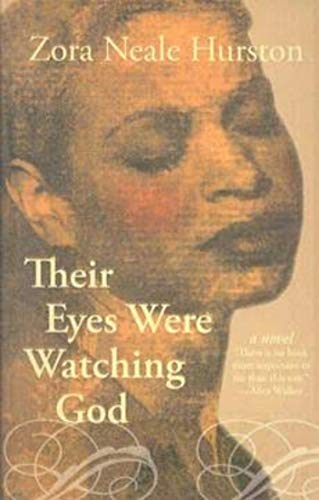
Their Eyes Were Watching God
Zora Neale Hurston
4.3
Fair and long-legged, independent and articulate, Janie Crawford sets out to be her own person -- no mean feat for a black woman in the '30s. Janie's quest for identity takes her through three marriages and into a journey back to her roots.
Recommended by Farah Jasmine Griffin.
Farah Jasmine Griffin
Hurston gives us one of the first true love stories in African American writing. [source]
Cover unavailable
41
In Search of Lost Time (6 Volumes)
Marcel Proust
4.3
For this complete, authoritative English-language edition, D. J. Enright has revised the late Terence Kilmartin's acclaimed reworking of C. K. Scott Moncrieff's translation to take into account the new definitive French editions of 'À la recherche du temps perdu' (the final volume of these new editions was published by the Bibliothèque de la Pléiade in 1989).
Proust’s reflection on the nature of time is deep and spread over his writing. [source]
Mona Simpson
You have a treat in store – and of course there are many more volumes after Swann’s Way! [source]
Cover unavailable
42
The Book of Disquiet
Fernando Pessoa, RICHARD Zenith
4.3
Fernando Pessoa was many writers in one. He attributed his prolific writings to a wide range of alternate selves, each of which had a distinct biography, ideology. and horoscope. When he died in 1935, Pessoa left behind a trunk filled with unfinished and unpublished writings, among which were the remarkable pages that make up his posthumous masterpiece, The Book of Disquiet, an astonishing work that, in George Steiner's words, "gives to Lisbon the haunting spell of Joyce's Dublin or Kafka's Prague."Published for the first time some fifty years after his death, this unique collection of short, aphoristic paragraphs comprises the "autobiography" of Bernardo Soares, one of Pessoa's alternate selves. Part intimate diary, part prose poetry, part descriptive narrative, captivatingly translated by Richard Zenith, The Book of Disquiet is one of the greatest works of the twentieth century.
This is a book of ideas. It’s not a book about the internet. It was written much earlier, in the 20th century, and written in Portuguese. It’s really a book of meditations. It’s very philosophical. It applies to the internet in that the main point is how much joy you can take in small things and small changes and the true drama of life can be extraordinarily minute in scale, and this, I think, gets at the idea that the internet and the stories we follow are, to a lot of us, extremely important and exciting and meaningful, though really they are just a few changes of characters on a little screen somewhere. [source]
Cover unavailable
43
Tender Is the Night
F. Scott Fitzgerald
4.3
F. Scott Fitzgerald wrote in a friend's copy of Tender Is the Night, "If you liked The Great Gatsby, for God's sake read this. Gatsby was a tour de force but this is a confession of faith." Set in the South of France in the decade after World War I, Tender Is the Night is the story of a brilliant and magnetic psychiatrist named Dick Diver; the bewitching, wealthy, and dangerously unstable mental patient, Nicole, who becomes his wife; and the beautiful, harrowing ten-year pas de deux they act out along the border between sanity and madness. In Tender Is the Night, Fitzgerald deliberately set out to write the most ambitious and far-reaching novel of his career, experimenting radically with narrative conventions of chronology and point of view and drawing on early breakthroughs in psychiatry to enrich his account of the makeup and breakdown of character and culture. Tender Is the Night is also the most intensely, even painfully, autobiographical of Fitzgerald's novels; it smolders with a dark, bitter vitality because it is so utterly true. This account of a caring man who disintegrates under the twin strains of his wife's derangement and a lifestyle that gnaws away at his sense of moral values offers an authorial cri de coeur, while Dick Diver's downward spiral into alcoholic dissolution is an eerie portent of Fitzgerald's own fate. F. Scott Fitzgerald literally put his soul into Tender Is the Night, and the novel's lack of commercial success upon its initial publication in 1934 shattered him. He would die six years later without having published another novel, and without knowing that Tender Is the Night would come to be seen as perhaps its author's most poignant masterpiece. In Mabel Dodge Luhan's words, it raised him to the heights of "a modern Orpheus."
…
Recommended by Leo Babauta.
Cover unavailable
44
East of Eden
John Steinbeck
4.3
In his journal, Nobel Prize winner John Steinbeck called East of Eden "the first book," and indeed it has the primordial power and simplicity of myth. Set in the rich farmland of California's Salinas Valley, this sprawling and often brutal novel follows the intertwined destinies of two families—the Trasks and the Hamiltons—whose generations helplessly reenact the fall of Adam and Eve and the poisonous rivalry of Cain and Abel. The masterpiece of Steinbeck’s later years, East of Eden is a work in which Steinbeck created his most mesmerizing characters and explored his most enduring themes: the mystery of identity, the inexplicability of love, and the murderous consequences of love's absence.
This edition features an introduction by David Wyatt.
It's the perfect summer read...a novel so rich and full of drama you won't be able to turn the pages fast enough! [source]
John Lilly
@ben_mathes @kevinakwok @samhinkie @aweissman Amazing book. Ive always liked it better than Grapes of Wrath. [source]
Steve Benjamins
My favorite non-business book is East of Eden by John Steinbeck. I think all of John Steinbeck’s books are uplifting. He sees the best in humanity and it leaves me feeling warm and generous. [source]
Cover unavailable
45
The Castle
Franz Kafka, Mark Harman
4.3
Translated and with a preface by Mark Harman
Left unfinished by Kafka in 1922 and not published until 1926, two years after his death, The Castle is the haunting tale of K.’s relentless, unavailing struggle with an inscrutable authority in order to gain access to the Castle. Scrupulously following the fluidity and breathlessness of the sparsely punctuated original manuscript, Mark Harman’s new translation reveals levels of comedy, energy, and visual power, previously unknown to English language readers.
…
Recommended by Igor Debatur.
Igor Debatur
Question: What five books would you recommend to young people interested in your career path & why? Answer: The Glass Bead Game by Herman Hesse Foucault's Pendulum by Umberto Eco The Antichrist by Friedrich Nietzsche The Castle by Franz Kafka 1984 by George Orwell and Brave New World by Aldous Huxley [source]
Cover unavailable
46
Siddhartha
Hermann Hesse
4.3
Herman Hesse's classic novel has delighted, inspired, and influenced generations of readers, writers, and thinkers. In this story of a wealthy Indian Brahmin who casts off a life of privilege to seek spiritual fulfillment. Hesse synthesizes disparate philosophies--Eastern religions, Jungian archetypes, Western individualism--into a unique vision of life as expressed through one man's search for meaning.
He says, 'Love is stronger than hate. Soft is stronger than hard. Water is stronger than stone.' [source]
Cover unavailable
47
Collected Poems, 1909-1962
T. S. Eliot
4.3
There is no more authoritative collection of the poetry that T.S. Eliot himself wished to preserve than this volume, published two years before his death in 1965.
Poet, dramatist, critic, and editor, T. S. Eliot was one of the defining figures of twentieth-century poetry. This edition of Collected Poems 1909-1962 includes his verse from Prufrock and Other Observations (1917) to Four Quartets (1943), and includes such literary landmarks as 'The Waste Land' and 'Old Possum's Book of Practical Cats'.
…
Recommended by M C Beaton.
M C Beaton
A lot of his poetry has gone into general usage. Being a city person, I also like the atmosphere of the city, of London, the descriptions of fog that I remember from my youth. [source]
Cover unavailable
48
Lord of the Flies
William Golding
4.3
At the dawn of the next world war, a plane crashes on an uncharted island, stranding a group of schoolboys. At first, with no adult supervision, their freedom is something to celebrate; this far from civilization the boys can do anything they want. Anything. They attempt to forge their own society, failing, however, in the face of terror, sin and evil. And as order collapses, as strange howls echo in the night, as terror begins its reign, the hope of adventure seems as far from reality as the hope of being rescued. Labeled a parable, an allegory, a myth, a morality tale, a parody, a political treatise, even a vision of the apocalypse, Lord of the Flies is perhaps our most memorable tale about “the end of innocence, the darkness of man’s heart.”
…
Recommended by Elon Musk, Ev Williams, Audrey Russo, and 5 others.
Audrey Russo
So many novels; Lord of the Flies, Great Gatsby, Great Expectations; all the Nancy Drew books; Catcher in the Rye, Books written by Zora Neale Hurston; Pat Conroy – all because of the view about different people who endure despite adversity while kindling the hearts of the human spirit. [source]
Chigozie Obioma
William Golding imbues some of these children with wisdom that would read, in the hands of a lesser author, as implausibly knowing [source]
Disco Donnie
@JoshRHernandez1 I love the book “Lord of the Flies” so just started watching The Society [source]
Hemingway's memories of his life as an unknown writer living in Paris in the twenties are deeply personal, warmly affectionate, and full of wit. Looking back not only at his own much younger self, but also at the other writers who shared Paris with him - James Joyce, Wyndham Lewis, Scott and Zelda Fitzgerald - he recalls the time when, poor, happy, and writing in cafes, he discovered his vocation. Written during the last years of Hemingway's life, his memoir is a lively and powerful reflection of his genius that scintillates with the romance of the city.
…
Recommended by Janine di Giovanni, Mohsin Hamid, and Wai Chee Dimock.
Janine di Giovanni
The fact that Hemingway writes it as an old, rather bitter man trapped in his Idaho home with a bullying wife while he dreams of his youth in Paris with his first wife and child is so touching to me. [source]
We think of Hemingway as an American writer, but much of his writing is set outside of the United States, just as much of his life was set outside of the United States. [source]
Wai Chee Dimock
This is a memoir by Hemingway about his time in Paris, which includes sketches of people like F Scott Fitzgerald. [source]
Cover unavailable
50
Ficciones
Jorge Luis Borges, John Sturrock
4.3
Jorge Luis Borges was one of those very rare creators who changed the face of an art form—in his case, the short story. His work has been paid the ultimate honor of being appropriated and imitated by innumerable writers on every continent of the world. The seventeen brief masterpieces of FICCIONES explode the boundaries of genre, offering up labyrinthine libraries, a fictional encyclopedia entry that spawns an entire world, a review of a nonexistent writer’s attempt to re-create Don Quixote word for word, a man with the disabling inability to forget anything he has ever experienced, and other metaphysical puzzles. But the true measure of Borges’s greatness lies in the fact that his fictions—elaborately paradoxical, postmodern, and intellectually delicious as they are—managed to return the short story to the realm of the fabulous and the uncanny from which, as parable and fairy tale, it originally came.
This is something very hard to find, almost by definition: a literary writer who thinks in abstract terms (the only other such author I've read is Stanislaw Lem). These are philosophical thought experiments in their purest form, yet somehow magically delivered in a playful literary athmosphere. Borges is a mathematical philosopher, first and last. Ignore the "Latin American" categorization and the nonsense about his background and personal life: one should resist embedding him in a socio-cultural framework; he is as universal as they come. It is good to read a short story once in a while to see how literature and philosophy can be saved by the parable. [source]
Kate Marvel
I don’t think there will ever be a better writer on uncertainty and science than Borges [source]
There is a transnational quality to Borges’s writing. [source]
Cover unavailable
51
Of Mice and Men
John Steinbeck
4.3
The compelling story of two outsiders striving to find their place in an unforgiving world.
Drifters in search of work, George and his simple-minded friend Lennie have nothing in the world except each other and a dream -- a dream that one day they will have some land of their own. Eventually they find work on a ranch in California’s Salinas Valley, but their hopes are doomed as Lennie, struggling against extreme cruelty, misunderstanding and feelings of jealousy, becomes a victim of his own strength.
Tackling universal themes such as the friendship of a shared vision, and giving voice to America’s lonely and dispossessed, Of Mice and Men has proved one of Steinbeck’s most popular works, achieving success as a novel, a Broadway play and three acclaimed films.
When he got to high school, the president said, his tastes changed and he learned to enjoy classics like “Of Mice and Men” and “The Great Gatsby.” [source]
Steve Benjamins
I think all of John Steinbeck’s books are uplifting. He sees the best in humanity and it leaves me feeling warm and generous. I always love this paragraph in Of Mice and Men that hints at the tension between business and humanity: "It has always seemed strange to me that the things we admire in men, kindness and generosity, openness, honestly, understanding, and feeling are the concomitants of failure in our system. And those traits we detest, sharpness, greed, acquisitiveness, meanness, egotism, and self-interest are the traits of success. And while men admire the quality of the first they love the produce of the second." [source]
Cover unavailable
52
Finnegans Wake
James Joyce
4.3
A story with no real beginning or end (it ends in the middle of a sentence and begins in the middle of the same sentence), this "book of Doublends Jined" is as remarkable for its prose as for its circular structure.
Written in a fantastic dream-language, forged from polyglot puns and portmanteau words, the Wake features some of Joyce's most hilarious characters: the Irish barkeep Humphrey Chimpden Earwicker, Shem the Penman, Shaun the Postman, and Anna Livia Plurabelle.
Joyce's final work, Finnegan's Wake is his masterpiece of the night as Ulysses is of the day. Supreme linguistic virtuosity conjures up the dark underground worlds of sexuality and dream. Joyce undermines traditional storytelling and all official forms of English and confronts the different kinds of betrayal - cultural, political and sexual - that he saw at the heart of Irish history. Dazzlingly inventive, with passages of great lyrical beauty and humour, Finnegans Wake remains one of the most remarkable works of the twentieth century.
…
Cover unavailable
53
One Hundred Years of Solitude
Gabriel Garcia Marquez
4.2
The brilliant, bestselling, landmark novel that tells the story of the Buendia family, and chronicles the irreconcilable conflict between the desire for solitude and the need for love—in rich, imaginative prose that has come to define an entire genre known as "magical realism."
When asked what books he recommended to his 18-year-old daughter Malia, Obama gave the Times a list that included The Naked and the Dead and One Hundred Years of Solitude. “I think some of them were sort of the usual suspects … I think she hadn’t read yet. Then there were some books that are not on everybody’s reading list these days, but I remembered as being interesting.” Here’s what he included: The Naked and the Dead, Norman Mailer One Hundred Years of Solitude, Gabriel García Márquez The Golden Notebook, Doris Lessing The Woman Warrior, Maxine Hong Kingston [source]
Brace yourselves—One Hundred Years of Solitude by Gabriel García Márquez is as steamy, dense and sensual as the jungle that surrounds the surreal town of Macondo! [source]
Today is World Book Day, a wonderful opportunity to address this #ChallengeRichard sent in by Mike Gonzalez of New Jersey: Make a list of your top 65 books to read in a lifetime. [source]
Cover unavailable
54
The Good Soldier
Ford Madox Ford
4.2
Recommended by Alexandra Harris.
Alexandra Harris
It really is a sad story, about four people – two couples – who are at a German spa resort, in love with the wrong people. [source]
Cover unavailable
55
Lady Chatterley's Lover
D.H. Lawrence
4.2
Lawrence's frank portrayal of an extramarital affair and the explicit sexual explorations of it's central characters caused this controversial book, now considered a masterpiece, to be banned as pornography until 1960.
Recommended by Anthony Julius.
Anthony Julius
Of course, this book was also the object of censoring attention, culminating in a couple of trials (one in the States and one in Britain). But it’s also itself about the violation of norms – in this case, the violation of the marriage contract and the norm of monogamous living. [source]
Cover unavailable
56
In the Shadow of Young Girls in Flower (In Search of Lost Time, #2)
Marcel Proust
4.2
In the Shadow of Young Girls in Flower is Proust’s spectacular dissection of male and female adolescence, charged with the narrator’s memories of Paris and the Normandy seaside. At the heart of the story lies his relationships with his grandmother and with the Swann family. As a meditation on different forms of love, In the Shadow of Young Girls in Flower has no equal. Here, Proust introduces some of his greatest comic inventions, from the magnificently dull M. de Norpois to the enchanting Robert de Saint-Loup. It is memorable as well for the first appearance of the two figures who for better or worse are to dominate the narrator’s life—the Baron de Charlus and the mysterious Albertine. First time in Penguin Classics
A Penguin Classics Deluxe Edition
The first completely new translation of Proust's novel since the 1920s, following Lydia Davis's brilliant translation of Swann's Way
…
Cover unavailable
57
Jacob's Room
Virginia Woolf
4.2
This collection chronicles the fiction and non fiction classics by the greatest writers the world has ever known. The inclusion of both popular as well as overlooked pieces is pivotal to providing a broad and representative collection of classic works.
Recommended by Alexandra Harris and Mona Simpson.
Alexandra Harris
It’s a very ghostly book in that we have a very likable hero and want to get to know him a lot, but he keeps disappearing. [source]
Mona Simpson
What would female fiction be without Virginia Woolf? She picks out exactly the right details to reveal the character’s interiorities. [source]
Cover unavailable
58
Four Quartets
T.S. Eliot
4.2
The Four Quartets is a series of four poems by T.S. Eliot, published individually from 1936 to 1942, and in book form in 1943; it was considered by Eliot himself to be his finest work. Each of the quartets has five "movements" and each is titled by a place name -- BURNT NORTON (1936), EAST COKER (1940), THE DRY SALVAGES (1941), and LITTLE GIDDING (1942). Eliot's insights into the cyclical nature of life are revealed through themes and images woven throughout the four poems. Spiritual, philosophical, and personal themes emerge through symbolic allusions and literary and religious references from both Eastern and Western thought. The work addresses the connections of the personal and historical present and past, spiritual renewal, and the very nature of experience; it is considered the poet's clearest exposition of his Christian beliefs. (The Merriam-Webster Encyclopedia of Literature)
…
Cover unavailable
59
A Room with a View
E.M. Forster
4.2
"But you do," he went on, not waiting for contradiction. "You love the boy body and soul, plainly, directly, as he loves you, and no other word expresses it ..."
Lucy has her rigid, middle-class life mapped out for her until she visits Florence with her uptight cousin Charlotte, and finds her neatly ordered existence thrown off balance. Her eyes are opened by the unconventional characters she meets at the Pension Bertolini: flamboyant romantic novelist Eleanor Lavish, the Cockney Signora, curious Mr Emerson and, most of all, his passionate son George.
Lucy finds herself torn between the intensity of life in Italy and the repressed morals of Edwardian England, personified in her terminally dull fiancé Cecil Vyse. Will she ever learn to follow her own heart?
…
Recommended by Hind Makki.
Hind Makki
A Room With a View. The book is great. The movie is better. https://t.co/Q8E0KXD4kj [source]
Cover unavailable
60
A Passage to India
E M Forster, Oliver Stallybrass, Pankaj Mishra
4.2
When Adela Quested and her elderly companion Mrs Moore arrive in the Indian town of Chandrapore, they quickly feel trapped by its insular and prejudiced 'Anglo-Indian' community. Determined to escape the parochial English enclave and explore the 'real India', they seek the guidance of the charming and mercurial Dr Aziz, a cultivated Indian Muslim. But a mysterious incident occurs while they are exploring the Marabar caves with Aziz, and the well-respected doctor soon finds himself at the centre of a scandal that rouses violent passions among both the British and their Indian subjects. A masterful portrait of a society in the grip of imperialism, A Passage to India compellingly depicts the fate of individuals caught between the great political and cultural conflicts of the modern world.
In his introduction, Pankaj Mishra outlines Forster's complex engagement with Indian society and culture. This edition reproduces the Abinger text and notes, and also includes four of Forster's essays on India, a chronology and further reading.
…
Recommended by Ian Buruma.
Ian Buruma
One of the novel’s strengths is that it’s not polemical. It’s very clear that Forster disapproved of colonial rule, but he doesn’t paint a caricature of brutal Brits and Indian victims. It’s much more subtle than that. The character of Cyril Fielding, the young Englishman full of goodwill, is true to life in that a lot of British people in India at the time did a lot of good – but in the end it was the system that was the problem. [source]
Cover unavailable
61
Sodom and Gomorrah (In Search of Lost Time, #4)
Marcel Proust, John Sturrock, Christopher Prendergast
4.2
Sodom and Gomorrah – now in a superb translation by John Sturrock – takes up the theme of homosexual love, male and female, and dwells on how destructive sexual jealousy can be for those who suffer it. Proust's novel is also an unforgiving analysis of both the decadent high society of Paris, and the rise of a philistine bourgeoisie that is on the way to supplanting it. Characters who had lesser roles in earlier volumes now reappear in a different light and take center stage, notably Albertine, with whom the narrator believes he is in love, and also the insanely haughty Baron de Charlus.
…
Cover unavailable
62
Between the Acts
Virginia Woolf
4.2
In Woolf's last novel, the action takes place on one summer's day in 1939 at Pointz Hall, a country house in the heart of England, where the villagers are presenting their annual pageant.
The book weaves together the musings of several disparate characters and their reactions to the imminence of a war which is to change the pattern of history.
Recommended by Margo Jefferson.
Margo Jefferson
There’s almost a touch of the allegorical. When I was re-reading it, I realised the characters are interesting, they’re poignant, they’re touching, but it’s about the larger purpose that they serve. Woolf’s language keeps moving us that way. [source]
Cover unavailable
63
Tender Buttons: The Corrected Centennial Edition
Gertrude Stein, Seth Perlow, Juliana Spahr
4.2
The MLA Committee on Scholarly Editions has awarded Tender Buttons: The Corrected Centennial Edition its seal designating it an MLA Approved Edition. 2014 marks the one hundredth anniversary of the original publication of Gertrude Stein's groundbreaking modernist classic, Tender Buttons. This centennial edition is the first and only version to incorporate Stein's own handwritten corrections—found in a first-edition copy at the University of Colorado—as well as corrections discovered among her papers at the Beinecke Library at Yale University. Editor Seth Perlow has assembled a text with over one hundred emendations, resulting in the first version of Tender Buttons that truly reflects its author's intentions. These changes are detailed in Perlow's "Note on the Text," which describes the editorial process and lists the specific variants for the benefit of future scholars. The book includes facsimile images of some of Stein's handwritten edits and lists of corrections, as well as an afterword by noted contemporary poet and scholar Juliana Spahr. A compact, attractive edition suitable for general readers as well as scholars, Tender Buttons: The Corrected Centennial Edition is unique among the available versions of this classic text and is destined to become the standard.
Gertrude Stein (1874–1946) was one of the most important and innovative American writers of literary modernism, as well as one of the great art collectors and salon hosts of the period. A pioneering lesbian writer, Stein lived most of her life in Paris but became a celebrity in the United States with the publication of The Autobiography of Alice B. Toklas (1933).
Seth Perlow teaches English at Oklahoma State University.
Juliana Spahr teaches writing at Mills College.
"Tender Buttons was recently reissued by City Lights Books, to mark the centennial of a volume that broke language barriers, acknowledging hungers to see more. It challenged with inspired daring."--Barbara Berman, The Rumpus
"For the centennial of this masterpiece, Seth Perlow has given us much the best edition of the poem, based on Stein’s manuscript and corrections she made to the first edition. Punctuation, spelling, format, and a few phrases are affected and most especially the change in the capitalization of the section titles. 'The difference is spreading.'"--Charles Bernstein, University of Pennsylvania, author of Attack of the Difficult Poems: Essays and Inventions
"Happy 100th birthday, TENDER BUTTONS. You are as explosive, tantalizing, and delicious as you were on the day you were born. Your birthday gift from Seth Perlow and Juliana Spahr is a beautiful new edition that will carry you into your next century, the best edition ever. Your birthday gift from all of us who love literature and culture is to buy this edition for ourselves and all our friends. Congratulations to all."--Catharine R. Stimpson, Professor, New York University, and co-editor of the two-volume Gertrude Stein: Writings published by the Library of America
“The publication of an authoritative edition of Tender Buttons, with Stein’s hitherto unpublished corrections and editions, is a splendid way to celebrate the centennial of this influential modernist work. Scholars will benefit from the full documentation, and readers will appreciate its convenient format, which resembles the original publication.”--Jonathan Culler, Cornell University
"This radical multi-dimensional generative cubist text with the simplest words imaginable continues to alter and shape poetics into the post post modernist future. We have Gertrude Stein's 'mind grammar' operating at full tilt, with unpredictability, wit and sensory prevarication. Look to the 'minutes particulars,' Blake admonished, and here she does just that: 'it is a winning cake.' Salvos to the editor and salient 'afterword' that give belletristic notes and political perspective as well. A unique edition."--Anne Waldman, The Jack Kerouac School of Disembodied Poetics
…
Recommended by Jeremy Noel-Tod.
Jeremy Noel-Tod
Tender Buttons in particular was the book that made her notorious. She knew that there was something about her writing that fascinated people, and it fascinated them partially because it irritated them. But it irritated them because they were sort of attracted to it, without knowing why. It irritates the rational part of the mind which expects to be able to explain things. [source]
Cover unavailable
64
The Secret Agent
Joseph Conrad, Roger Tennant
4.2
The Secret Agent is the unsurpassed ancestor of a long series of twentieth-century novels and films which explore the confused motives that lie at the heart of political terrorism. In its use of powerful psychological insight to intensify narrative suspense, it set the terms by which subsequent works in its genre were created. Conrad was the first novelist to discover the strange in-between territory of the political exile, and his genius was such that we still have no truer map of that region's moral terrain than his story of a terrorist plot and its tragic consequences for the guilty and innocent alike. Introduction by Paul Theroux
…
Recommended by Iain Sinclair, Jason Burke, and Jessica Stern.
There are lots of reasons I’m very fond of Conrad as a writer. I like visions of London that come translated or diffused or refracted through other cultures. In that way, I suppose, I like this book in the same way I like my first choice, the Céline. Coming here out of his Polish background, Conrad picked up on the elements you were talking about in terms of Dickens — the city as a labyrinth of conspiracies and overloads. In The Secret Agent, you go from a shop in Soho into a space like Greenwich Park, where the bomb incident takes place – quite an interesting journey in itself – and then, at the end, there’s an extraordinary marching-away into the suburbs of one of the characters who walks through endless anonymous, curious areas. So it’s another navigation of London, but this time it’s the London of conspiracy and paranoia, the London of imported terror groups or anarchist groups who come from other places but enact their dramas here. [source]
Jason Burke
Basically, anything you want to know about how terrorism works you can find in this book. It is not necessarily about who is behind terrorism because in this book it is a shadowy foreign state that wants an agent provocateur in London to explode Greenwich Observatory to make a point. [source]
Jessica Stern
Yes, I thought I was being clever and unique and didn’t realise so many other people had made the connection. The book is based on an incident that actually did occur when an anarchist tried to blow up the Royal Observatory. In the novel, a group of hapless anarchists are trying to incite a rebellion. Their main concern is that British society is too liberal and they want to demonstrate that this kind of thing can occur. [source]
Cover unavailable
65
The Guermantes Way (In Search of Lost Time, #3)
Marcel Proust, Mark Treharne, Christopher Prendergast
4.2
After the relative intimacy of the first two volumes of In Search of Lost Time, The Guermantes Way opens up a vast, dazzling landscape of fashionable Parisian life in the late nineteenth century, as the narrator enters the brilliant, shallow world of the literary and aristocratic salons. Both a salute to, and a devastating satire of a time, place, and culture, The Guermantes Way defines the great tradition of novels that follow the initiation of a young man into the ways of the world. This elegantly packaged new translation will introduce a new generation of American readers to the literary richness of Marcel Proust. First time in Penguin Classics
A Penguin Classics Deluxe Edition with french flaps and luxurious design
Penguin Classics' superb new edition of In Search of Lost Time is the first completely new translation of Proust's masterwork since the 1920s
…
Cover unavailable
66
The plague
Albert Camus, Stuart Gilbert
4.2
A gripping tale of human unrelieved horror, of survival and resilience, and of the ways in which humankind confronts death, The Plague is at once a masterfully crafted novel, eloquently understated and epic in scope, and a parable of ageless moral resonance, profoundly relevant to our times. In Oran, a coastal town in North Africa, the plague begins as a series of portents, unheeded by the people. It gradually becomes a omnipresent reality, obliterating all traces of the past and driving its victims to almost unearthly extremes of suffering, madness, and compassion.
…
Recommended by Jim Collins, Arthur Ammann, Jenny Davidson, and 1 others.
Arthur Ammann
It’s an amazing book, considering Camus probably never personally experienced a plague. In his novel, Camus captured everything that we were dealing with in the Aids epidemic without Aids existing at that time. Without his knowing what the consequences of the HIV plague were going to be, he seems to have gotten all the actors in there and the myriad of things that you wrestle with. [source]
Jenny Davidson
Albert Camus’s The Plague probably remains the best-known novel on the topic of epidemic disease. It tells the story of those involved in an epidemic in a North African setting. It is very interested in the details about how quarantines are enforced and the role not just of the government, but of individuals who band together into groups to manage the epidemic. [source]
Stephen Breyer
He talks about the plague. Well, the plague is that part of a human being which can be very evil. That germ, he says at the end, never dies, it simply goes into remission. It lurks. It lurks in the cupboards, it lurks in the hallways, it lurks in the filing cabinets. [source]
Cover unavailable
67
The Complete Stories
Franz Kafka, Nahum N. Glatzer, John Updike
4.2
The Complete Stories brings together all of Kafka’s stories, from the classic tales such as “The Metamorphosis,” “In the Penal Colony,” and “A Hunger Artist” to shorter pieces and fragments that Max Brod, Kafka’s literary executor, released after Kafka’s death. With the exception of his three novels, the whole of Kafka’s narrative work is included in this volume. --penguinrandomhouse.com
Two Introductory parables: Before the law -- Imperial message -- Longer stories: Description of a struggle -- Wedding preparations in the country -- Judgment -- Metamorphosis -- In the penal colony -- Village schoolmaster (The giant mole) -- Blumfeld, and elderly bachelor -- Warden of the tomb -- Country doctor -- Hunter Gracchus -- Hunter Gracchus: A fragment -- Great Wall of China -- News of the building of the wall: A fragment -- Report to an academy -- Report to an academy: Two fragments -- Refusal -- Hunger artist -- Investigations of a dog -- Little woman -- The burrow -- Josephine the singer, or the mouse folk -- Children on a country road -- The trees -- Clothes -- Excursion into the mountains -- Rejection -- The street window -- The tradesman -- Absent-minded window-gazing -- The way home -- Passers-by -- On the tram -- Reflections for gentlemen-jockeys -- The wish to be a red Indian -- Unhappiness -- Bachelor's ill luck -- Unmasking a confidence trickster -- The sudden walk -- Resolutions -- A dream -- Up in the gallery -- A fratricide -- The next village -- A visit to a mine -- Jackals and Arabs -- The bridge -- The bucket rider -- The new advocate -- An old manuscript -- The knock at the manor gate -- Eleven sons -- My neighbor -- A crossbreed (A sport) -- The cares of a family man -- A common confusion -- The truth about Sancho Panza -- The silence of the sirens -- Prometheus -- The city coat of arms -- Poseidon -- Fellowship -- At night -- The problem of our laws -- The conscripton of troops -- The test -- The vulture -- The helmsman -- The top -- A little fable -- Home-coming -- First sorrow -- The departure -- Advocates -- The married couple -- Give it up! -- On parables.
…
Cover unavailable
68
Passing (Macmillan Collector's Library)
Nella Larsen
4.2
Nella Larsen’s distinctive and revealing novel about racial identity set in New York in 1929. Soon to be a major motion picture starring Tessa Thompson, Ruth Negga and Alexander Skarsgård.
Part of the Macmillan Collector’s Library; a series of stunning, clothbound, pocket sized classics with gold foiled edges and ribbon markers. These beautiful books make perfect gifts or a treat for any book lover. This edition of Passing features an introduction by writer and academic, Christa Holm Vogelius.
Irene Redfield, married to a successful physician, enjoys a comfortable life in Harlem, New York. Reluctantly, she renews her friendship with old school friend, Clare Kendry. Clare, who like Irene is light skinned, ‘passes’ as white and is married to a racist white man who has no idea about Clare’s racial heritage. Even though Irene knows that reigniting her friendship with Clare will lead to trouble, she can’t resist allowing Irene into her world. Irene in turn wants to rekindle her bonds with the African American community of her youth. As tensions mount between friends and between couples, this taut and mesmerizing narrative spins towards an unexpected end.
@mdbell79 I'm happy to report that we've done our best to keep this book in readers' hands for nearly two decades. https://t.co/zpisFYUGOl [source]
Cover unavailable
69
Winesburg, Ohio
Sherwood Anderson, Irving Howe
4.1
A modern American classic, Winesburg, Ohio mixed Sherwood Anderson's memories of his boyhood in Clyde, Ohio, and his observations in turn-of-the-century Chicago, where he wrote advertising copy. It was a book that, for its time, broke all conventions. Its introduction and twenty-one loosely connected stories defied the genteel tradition that omitted anything sexual, harsh, or abberant from print. It embraced frankness and truth and dealt with people whose deeply moving lives were filled with secrets. Here are the inhabitants of small-town America: young George Willard, the newspaper reporter with dreams; Kate Swift, the schoolteacher who nearly seduces him; Wing Biddlebaum, the berry picker whose hands are the source of his renown and shame; Dr. Reefy, the physician who loves George's mother; Alice Hindman, who has one last, shocking adventure; and all the other complex human beings whose portraits, rendered in Anderson's masterful prose, brought American literature into the modern age.
It was very modern and groundbreaking for its time, an entirely new form of writing. He draws about 20 portraits of people who lived in this mythical town. [source]
Cover unavailable
70
Molloy, Malone Dies, The Unnamable (The Trilogy, #1-3)
Samuel Beckett, Gabriel Josipovici
4.1
The first novel of Samuel Beckett's mordant and exhilirating midcentury trilogy intoduces us to Molloy, who has been mysteriously incarcerated, and who subsequently escapes to go discover the whereabouts of his mother. In the latter part of this curious masterwork, a certain Jacques Moran is deputized by anonymous authorities to search for the aforementioned Molloy. In the trilogy's second novel, Malone, who might or might not be Molloy himself, addresses us with his ruminations while in the act of dying. The third novel consists of the fragmented monologue - delivered, like the monologues of the previous novels, in a mournful rhetoric that possesses the utmost splendor and beauty - of what might or might not an armless and legless creature living in an urn outside an eating house. Taken together, these three novels represent the high-water mark of the literary movement we call Modernism. Within their linguistic terrain, where stories are taken up, broken off, and taken up again, where voices rise and crumble and are resurrected, we can discern the essential lineaments of our modern condition, and encounter an awesome vision, tragic yet always compelling and always mysteriously invigorating, of consciousness trapped and struggling inside the boundaries of nature.
…
Cover unavailable
71
The Bell Jar
Sylvia Plath
4.1
Sylvia Plath's shocking, realistic, and intensely emotional novel about a woman falling into the grip of insanity.
Esther Greenwood is brilliant, beautiful, enormously talented, and successful, but slowly going under—maybe for the last time. In her acclaimed and enduring masterwork, Sylvia Plath brilliantly draws the reader into Esther's breakdown with such intensity that her insanity becomes palpably real, even rational—as accessible an experience as going to the movies. A deep penetration into the darkest and most harrowing corners of the human psyche, The Bell Jar is an extraordinary accomplishment and a haunting American classic.
…
Recommended by Bryony Gordon, The CEO Library Community (through anonymous form), and Tim Kendall.
As a teenage girl, you have to read The Bell Jar. It’s a rite of passage. [source]
The CEO Library Community (through anonymous form)
One of the best 3 books I've read in 2019 [source]
Tim Kendall
Despite its subject matter, The Bell Jar is often a very funny novel. Perhaps we miss it because the pall of Plath’s biography descends across the whole work and reputation. But The Bell Jar is viciously funny. There are people still alive today who won’t talk about it because they were so badly hurt by Plath’s portrayal of them. [source]
Cover unavailable
72
Sons and Lovers
D.H. Lawrence, Geoff Dyer
4.1
"She was a brazen hussy."
"She wasn't. And she was pretty, wasn't she?"
"I didn't look ... And tell your girls, my son, that when they're running after you, they're not to come and ask your mother for you - tell them that - brazen baggages you meet at dancing classes"
The marriage of Gertrude and Walter Morel has become a battleground. Repelled by her uneducated and sometimes violent husband, delicate Gertrude devotes her life to her children, especially to her sons, William and Paul - determined they will not follow their father into working down the coal mines. But conflict is evitable when Paul seeks to escape his mother's suffocating grasp through relationships with women his own age. Set in Lawrence's native Nottinghamshire, Sons and Lovers is a highly autobiographical and compelling portrayal of childhood, adolescence and the clash of generations.
…
Cover unavailable
73
The Voyage Out
Virginia Woolf
4.1
Woolf’s first novel is a haunting book, full of light and shadow. It takes Mr. and Mrs. Ambrose and their niece, Rachel, on a sea voyage from London to a resort on the South American coast. “It is a strange, tragic, inspired book whose scene is a South America not found on any map and reached by a boat which would not float on any sea, an America whose spiritual boundaries touch Xanadu and Atlantis” (E. M. Forster).
…
Cover unavailable
74
The Love Song of J. Alfred Prufrock and Other Poems
T. S. Eliot
4.1
Let us go then, you and I, When the evening is spread out against the sky Like a patient etherized upon a table; Let us go, through certain half-deserted streets, The muttering retreats Of restless nights in one-night cheap hotels.
Cover unavailable
75
Good Morning, Midnight
Jean Rhys, Leslie Jamison
4.1
The last of the four novels Jean Rhys wrote in interwar Paris, Good Morning, Midnight is the culmination of a searing literary arc, which established Rhys as an astute observer of human tragedy. Her everywoman heroine, Sasha, must confront the loves— and losses— of her past in this mesmerizing and formally daring psychological portrait.
Cover unavailable
76
The Collected Poems
Wallace Stevens
4.1
This definitive poetry collection, originally published in 1954 to honor Stevens on his 75th birthday, contains:
- "Harmonium" - "Ideas of Order" - "The Man With the Blue Guitar" - "Parts of the World" - "Transport Summer" - "The Auroras of Autumn" - "The Rock"
If I had to pick a book of poems for my desert island, I would probably end up with Wallace Stevens. [source]
Cover unavailable
77
Cane
Jean Toomer, George B. Hutchinson, Zinzi Clemmons
4.1
Jean Toomer's Cane is one of the most significant works to come out of the Harlem Renaissance and is considered to be a masterpiece in American modernist literature due to its distinct structure and style. First published in 1923 and told through a series of vignettes, Cane uses poetry, prose and play-like dialogue to create a window into the varied lives of African Americans living in the rural South and urban North during a time when Jim Crow laws pervaded and racism reigned.
…
Recommended by Farah Jasmine Griffin.
Farah Jasmine Griffin
Cane is one of the most beautiful novels in all of American literature. It eschews straightforward storytelling; it’s a very experimental book in both form and content. [source]
Cover unavailable
78
Zeno's Conscience
Italo Svevo
4.1
This enormously engaging, strange novel is both an engrossing saga of a family and a hilarious account of addiction and failure as its helpless hero, notionally undergoing psychiatric help, manages spectacularly to fail to give up smoking, run his business or make sense of his private life.
A hymn to self-delusion and procrastination ZENO'S CONSCIENCE has provoked enormous affection in its readers both in Italian and English since its first publication in the 1920s.
Let’s make a quick comment about Svevo. Svevo was not his real name. His real name was Schmitz and he grew up as a German speaker in the area of Trieste where there was a big linguistic mix, so Italian was his second language. He had written a number of books which he self-published, which was quite common at that time, and received no attention at all really, so he was a failure in that regard. He worked as a businessman and he was quite successful in a company producing industrial paints for painting ships and things like that, which was a fairly big business in the Trieste area, then part of the Austro-Hungarian empire. [source]
Cover unavailable
79
The Collected Poems of W.B. Yeats
William Butler Yeats, Richard J. Finneran
4.1
The Collected Poems of W. B. Yeats includes all of the poems authorized by Yeats for inclusion in his standard canon. Breathtaking in range, it encompasses the entire arc of his career, from luminous reworking of ancient Irish myths and legends, to passionate meditations on the demands and rewards of youth and old age, from exquisite, occasionally whimsical songs of love, nature, and art to somber and angry poems of life in a nation torn by war and uprising. In observing the development of rich and recurring images and themes over the course of his body of work, we can trace the quest of this century's greatest poet to unite intellect and artistry in a single magnificent vision.
Revised and corrected, this edition includes Yeat's own notes on his poetry, complemented by explanatory notes from esteemed Yeats scholar Richard J. Finneran. The Collected Poems of W. B. Yeats is the most comprehensive edition of one of the world's most beloved poets available in paperback.
…
Cover unavailable
80
The Man Without Qualities
Robert Musil, Sophie Wilkins, Burton Pike
4.1
Set in Vienna on the eve of World War I, this great novel of ideas tells the story of Ulrich, ex-soldier and scientist, seducer and skeptic, who finds himself drafted into the grandiose plans for the 70th jubilee of the Emperor Franz Josef. This new translation - published in two elegant volumes - is the first to present Musil's complete text, including material that remained unpublished during his lifetime.
…
Cover unavailable
81
Beloved
Toni Morrison
4.1
Staring unflinchingly into the abyss of slavery, this spellbinding novel transforms history into a story as powerful as Exodus and as intimate as a lullaby.
Sethe was born a slave and escaped to Ohio, but eighteen years later she is still not free. She has too many memories of Sweet Home, the beautiful farm where so many hideous things happened. Her new home is haunted by the ghost of her baby, who died nameless and whose tombstone is engraved with a single word: Beloved.
Filled with bitter poetry and suspense as taut as a rope, Beloved is a towering achievement by Nobel Prize laureate Toni Morrison.
…
Recommended by Bianca Belair, Esi Edugyan, and Farah Jasmine Griffin.
Bianca Belair
@ylc130 I went to the library when I was in the 3rd grade and read Beloved... I remember being so confused and my Mama having to explain it to me... I later read it as an adult and it hit me completely different. GREAT BOOK! [source]
Esi Edugyan
I was shocked by the blunt force of its subject matter and its exquisitely torqued prose. It remains one of my most adored novels. [source]
Farah Jasmine Griffin
Beloved was Morrison’s fifth novel. It’s a gripping story, inspired by a famous abolitionist case, the true story of a woman who runs away from slavery with her children, but when the slave catchers catch up with her, she kills one of her own and tries to kill the others, rather than returning them to slavery. [source]
Cover unavailable
82
The Picture of Dorian Gray
Oscar Wilde
4.1
On its first publication The Picture of Dorian Gray was regarded as dangerously modern in its depiction of fin-de-siècle decadence. In this updated version of the Faust story, the tempter is Lord Henry Wotton, who lives selfishly for amoral pleasure; Dorian's good angel is the portrait painter Basil Hallward, whom Dorian murders. The book highlights the tension between the polished surface of high society and the life of secret vice. Although sin is punished in the end the book has a flavour of the elegantly perverse.
With an Afterword by Peter Harness.
Designed to appeal to the booklover, the Macmillan Collector's Library is a series of beautifully bound gift editions of much loved classic titles. Bound in real cloth, printed on high quality paper, and featuring ribbon markers and gilt edges, Macmillan Collector's Library are books to love and treasure.
…
Recommended by Andra Zaharia, Eric Berkowitz, Marc Montagne, and 1 others.
Andra Zaharia
A copy from 1903 of this book is my most prized possession. [source]
Eric Berkowitz
The Picture of Dorian Gray is now a part of the canon that no one would admit to not having read. Most of us have read it and delighted in its witticisms. It’s hard to imagine, but when Dorian Gray was first published, the book was not well received at all. It was totally panned. It was held against him as being an example of an effete character. It was being serialised by Lippincott’s Magazine, and the serialisation of the novel stopped when it became too inflammatory. [source]
Marc Montagne
My favorite fiction book is the The Picture of Dorian Gray by Oscar Wilde. I'm a huge Oscar Wilde fan, he has one of the brightest minds and the Picture is a masterpiece and his unique novel. I consider that you should only read books that you would consider reading again at some point while still enjoying the same pleasure. The Picture is definitely one of those. [source]
Cover unavailable
83
This Side of Paradise
F. Scott Fitzgerald, James L. W. III West
4.1
This Side of Paradise, F. Scott Fitzgerald's romantic and witty first novel, was written when the author was only twenty-three years old. This semi-autobiographical story of the handsome, indulged, and idealistic Princeton student Amory Blaine received critical raves and catapulted Fitzgerald to instant fame. Now, readers can enjoy the newly edited, authorized version of this early classic of the Jazz Age, based on Fitzgerald's original manuscript. In this definitive text, This Side of Paradise captures the rhythms and romance of Fitzgerald's youth and offers a poignant portrait of the "Lost Generation."
…
Cover unavailable
84
Things Fall Apart (The African Trilogy, #1)
Chinua Achebe
4.1
THINGS FALL APART tells two overlapping, intertwining stories, both of which center around Okonkwo, a “strong man” of an Ibo village in Nigeria. The first of these stories traces Okonkwo's fall from grace with the tribal world in which he lives, and in its classical purity of line and economical beauty it provides us with a powerful fable about the immemorial conflict between the individual and society.
The second story, which is as modern as the first is ancient, and which elevates the book to a tragic plane, concerns the clash of cultures and the destruction of Okonkwo's world through the arrival of aggressive, proselytizing European missionaries. These twin dramas are perfectly harmonized, and they are modulated by an awareness capable of encompassing at once the life of nature, human history, and the mysterious compulsions of the soul. THINGS FALL APART is the most illuminating and permanent monument we have to the modern African experience as seen from within.
…
Recommended by Barack Obama, Helon Habila, Jacqueline Novogratz, and 2 others.
As 2018 draws to a close, I’m continuing a favorite tradition of mine and sharing my year-end lists. It gives me a moment to pause and reflect on the year through the books I found most thought-provoking, inspiring, or just plain loved. It also gives me a chance to highlight talented authors – some who are household names and others who you may not have heard of before. Here’s my best of 2018 list. [source]
Helon Habila
It almost feels like a cliché to say that this is one of my favourite books. But there is no way you can escape this book. It is such a part of African literature. It is an inescapable classic. It is a brilliant feat of storytelling, the economy of it, the brevity, the imagery, the ear he has for the traditional language. [source]
Jacqueline Novogratz
The first book I read by an African author. Achebe is unflinching in his portrayal of the challenges of change, the relationships of colonialism, and power/powerlessness. [source]
Cover unavailable
85
All Quiet on the Western Front
Erich Maria Remarque, A W. Wheen
4.0
One by one the boys begin to fall…
In 1914 a room full of German schoolboys, fresh-faced and idealistic, are goaded by their schoolmaster to troop off to the ‘glorious war’. With the fire and patriotism of youth they sign up. What follows is the moving story of a young ‘unknown soldier’ experiencing the horror and disillusionment of life in the trenches.
Recommended by Cécile Fabre.
Cécile Fabre
He knows that his pleasure at a beautiful landscape, at the smell of good food, will forever be coloured by what the landscape looked like in the trenches, by the food that was cooked in the trenches. [source]
Cover unavailable
86
The Captive & The Fugitive (In Search of Lost Time, #5-6)
Marcel Proust, D.J. Enright, C.K. Scott Moncrieff, Terence Kilmartin
4.0
The Modern Library’s fifth volume of In Search of Lost Time contains both The Captive (1923) and The Fugitive (1925). In The Captive, Proust’s narrator describes living in his mother’s Paris apartment with his lover, Albertine, and subsequently falling out of love with her. In The Fugitive, the narrator loses Albertine forever. Rich with irony, The Captive and The Fugitive inspire meditations on desire, sexual love, music, and the art of introspection.
For this authoritative English-language edition, D. J. Enright has revised the late Terence Kilmartin’s acclaimed reworking of C. K. Scott Moncrieff’s translation to take into account the new definitive French editions of Á la recherché du temps perdu (the final volume of these new editions was published by the Bibliothèque de la Pléiade in 1989).
…
Cover unavailable
87
The Cantos
Ezra Pound
4.0
Delmore Schwartz said about The Cantos, "They are one of the touchstones of modern poetry." William Carlos Williams said, "[Pound] discloses history by its odor, by the feel of it—in the words; fuses it with the words, present and past, to MAKE his Cantos. Make them."
Since the 1969 revised edition, the Italian Cantos LXXII and LXXIII (as well as a 1966 fragment concluding the work) have been added. Now appearing for the first time is Pound's recently found English translation of Italian Canto LXXII.
…
Cover unavailable
88
The Metamorphosis and Other Stories
Franz Kafka, Donna Freed, Jason Baker
4.0
The Metamorphosis and Other Stories, by Franz Kafka, is part of the Barnes & Noble Classicsseries, which offers quality editions at affordable prices to the student and the general reader, including new scholarship, thoughtful design, and pages of carefully crafted extras. Here are some of the remarkable features of Barnes & Noble Classics: All editions are beautifully designed and are printed to superior specifications; some include illustrations of historical interest. Barnes & Noble Classics pulls together a constellation of influences—biographical, historical, and literary—to enrich each reader's understanding of these enduring works.
Virtually unknown during his lifetime, Franz Kafka is now one of the world’s most widely read and discussed authors. His nightmarish novels and short stories have come to symbolize modern man’s anxiety and alienation in a bizarre, hostile, and dehumanized world. This vision is most fully realized in Kafka’s masterpiece, “The Metamorphosis,” a story that is both harrowing and amusing, and a landmark of modern literature.
Bringing together some of Kafka’s finest work, this collection demonstrates the richness and variety of the author’s artistry. “The Judgment,” which Kafka considered to be his decisive breakthrough, and “The Stoker,” which became the first chapter of his novel Amerika, are here included. These two, along with “The Metamorphosis,” form a suite of stories Kafka referred to as “The Sons,” and they collectively present a devastating portrait of the modern family.
Also included are “In the Penal Colony,” a story of a torture machine and its operators and victims, and “A Hunger Artist,” about the absurdity of an artist trying to communicate with a misunderstanding public. Kafka’s lucid, succinct writing chronicles the labyrinthine complexities, the futility-laden horror, and the stifling oppressiveness that permeate his vision of modern life.
Jason Baker is a writer of short stories living in Brooklyn, New York.
…
Cover unavailable
89
Maurice
E. M. Forster
4.0
Maurice is heartbroken over unrequited love, which opened his heart and mind to his own sexual identity. In order to be true to himself, he goes against the grain of society’s often unspoken rules of class, wealth, and politics. Forster understood that his homage to same-sex love, if published when he completed it in 1914, would probably end his career. Thus, Maurice languished in a drawer for fifty-seven years, the author requesting it be published only after his death (along with his stories about homosexuality later collected in The Life to Come). Since its release in 1971, Maurice has been widely read and praised. It has been, and continues to be, adapted for major stage productions, including the 1987 Oscar-nominated film adaptation starring Hugh Grant and James Wilby.
Historically, it’s very interesting – a book he suppressed during his lifetime. It seems based on wish fulfilment, but also has a lot of class analysis. [source]
Cover unavailable
90
Brideshead Revisited
Evelyn Waugh
4.0
The most nostalgic and reflective of Evelyn Waugh's novels, Brideshead Revisited looks back to the golden age before the Second World War. It tells the story of Charles Ryder's infatuation with the Marchmains and the rapidly-disappearing world of privilege they inhabit. Enchanted first by Sebastian at Oxford, then by his doomed Catholic family, in particular his remote sister, Julia, Charles comes finally to recognize only his spiritual and social distance from them.
…
Cover unavailable
91
Kehinde Wiley: A New Republic
Connie H. Choi
4.0
Cover unavailable
92
The Collected Stories of Katherine Mansfield
Katherine Mansfield
4.0
With an Introduction and Notes by Professor Stephen Arkin, San Francisco State University.
Katherine Mansfield is widely regarded as a writer who helped create the modern short story. Born in Wellington, New Zealand in 1888, she came to London in 1903 to attend Queen's College and returned permanently in 1908. her first book of stories, 'In a German Pension', appeared in 1911, and she went on to write and publish an extraordinary body of work.
This edition of The Collected Stories brings together all of the stories that Mansfield had written up until her death in January of 1923. With an introduction and head-notes, this volume allows the reader to become familiar with the complete range of Mansfield's work from the early, satirical stories set in Bavaria, through the luminous recollections of her childhood in New Zealand, and through the mature, deeply felt stories of her last years. Admired by Virginia Woolf in her lifetime and by many writers since her death, Katherine Mansfield is one of the great literary artists of the twentieth century.
…
Cover unavailable
93
The Autobiography of Alice B. Toklas
Gertrude Stein
4.0
The Autobiography of Alice B. Toklas was written in 1933 by Gertrude Stein in the guise of an autobiography authored by Alice B. Toklas, who was her lover. It is a fascinating insight into the art scene in Paris as the couple were friends with Paul Cézanne, Henri Matisse and Pablo Picasso. They begin the war years in England but return to France, volunteering for the American Fund for the French Wounded, driving around France, helping the wounded and homeless. After the war Gertrude has an argument with T. S. Eliot after he finds one of her writings inappropriate. They become friends with Sherwood Anderson and Ernest Hemingway. It was written to make money and was indeed a commercial success. However, it attracted criticism, especially from those who appeared in the book and didn't like the way they were depicted.
…
Recommended by Wai Chee Dimock.
Wai Chee Dimock
Gertrude Stein and Hemingway appear in Woody Allen’s recent film, Midnight in Paris. She’s the person who would read everyone’s work and give her opinion. That was historically the case with Hemingway. He was struggling, and at that early point would have been very happy to have one of his stories taken. Stein encouraged him to leave his paid job with the Toronto Star and concentrate on writing. [source]
Cover unavailable
94
My Ántonia (Great Plains Trilogy, #3)
Willa Cather
4.0
Through Jim Burden's endearing, smitten voice, we revisit the remarkable vicissitudes of immigrant life in the Nebraska heartland, with all its insistent bonds. Guiding the way are some of literature's most beguiling characters: the Russian brothers plagued by memories of a fateful sleigh ride, Antonia's desperately homesick father and self-indulgent mother, and the coy Lena Lingard. Holding the pastoral society's heart, of course, is the bewitching, free-spirited Antonia.
…
Cover unavailable
95
The Beautiful and Damned
F. Scott Fitzgerald
4.0
First published in 1922, The Beautiful and the Damned followed Fitzgerald's impeccable debut, This Side of Paradise, thus securing his place in the tradition of great American novelists. Embellished with the author's lyrical prose, here is the story of Harvard-educated, aspiring aesthete Anthony Patch and his beautiful wife, Gloria. As they await the inheritance of his grandfather's fortune, their reckless marriage sways under the influence of alcohol and avarice. A devastating look at the nouveau riche, and the New York nightlife, as well as the ruinous effects of wild ambition, The Beautiful and the Damned achieved stature as one of Fitzgerald's most accomplished novels. Its distinction as a classic endures to this day. Pocket Book's Enriched Classics present the great works of world literature enhanced for the contemporary reader. Special features include critical perspectives, suggestions for further read, and a unique visual essay composed of period photographs that help bring every word to life.
…
Cover unavailable
96
Lord Jim
Joseph Conrad, Cedric Watts
4.0
Jim, a young British seaman, becomes first mate on the Patna, a ship full of pilgrims travelling to Mecca for the hajj. When the ship starts rapidly taking on water and disaster seems imminent, Jim joins his captain and other crew members in abandoning the ship and its passengers. A few days later, they are picked up by a British ship. However, the Patna and its passengers are later also saved, and the reprehensible actions of the crew are exposed. The other participants evade the judicial court of inquiry, leaving Jim to the court alone. He is publicly censured for this action and the novel follows his later attempts at coming to terms with his past. The novel is counted as one of 100 best books of the 20th century.
Joseph Conrad (1857-1924), was a Polish author who wrote in English after settling in England. Conrad is regarded as one of the greatest novelists in English, though he did not speak the language fluently until he was in his twenties. He wrote stories and novels, often with a nautical setting, that depict trials of the human spirit in the midst of an indifferent world. He was a master prose stylist who brought a distinctly non-English tragic sensibility into English literature.
Contents:
Lord Jim
Memoirs & Letters:
A Personal Record; or Some Reminiscences
The Mirror of the Sea
Notes on Life & Letters
Biography & Critical Essays:
Joseph Conrad (A Biography) by Hugh Walpole
Joseph Conrad by John Albert Macy
A Conrad Miscellany by John Albert Macy
Joseph Conrad by Virginia Woolf
…
Cover unavailable
97
Doctor Faustus
Thomas Mann, John E. Woods
4.0
Thomas Mann's last great novel, first published in 1947 and now rendered into English by acclaimed translator John E. Woods, is a modern reworking of the Faust legend, in which Germany sells its soul to the Devil. Mann's protagonist, the composer Adrian Leverkühn, is the flower of German culture, a brilliant, isolated, overreaching figure, his radical new music a breakneck game played by art at the very edge of impossibility. In return for twenty-four years of unparalleled musical accomplishment, he bargains away his soul - and the ability to love his fellow man.
Leverkühn's life story is a brilliant allegory of the rise of the Third Reich, of Germany's renunciation of its own humanity and its embrace of ambition and its nihilism. It is also Mann's most profound meditation on the German genius - both national and individual - and the terrible responsibilities of the truly great artist.
…
Recommended by Alex Ross, Alex Ross, and Michael Fried.
There’s an extraordinary sense of plausibility in how Mann described these fictional compositions of Leverkühn. [source]
Alex Ross
There’s an extraordinary sense of plausibility in how Mann described these fictional compositions of Leverkühn. [source]
Michael Fried
I almost surprised myself when I included this. But it’s a book I love. Writing during World War Two, Mann reflects on modernism in the arts, the tragic history of modern Germany and the persistence of Nietzsche in the German imagination. It’s a work of extraordinary intellectual seriousness and ambition. [source]
Cover unavailable
98
Flush
Virginia Woolf
4.0
This story of Elizabeth Barrett Browning’s cocker spaniel, Flush, enchants right from the opening pages. Although Flush has adventures of his own with bullying dogs, horrid maids, and robbers, he also provides the reader with a glimpse into Browning’s life. Introduction by Trekkie Ritchie.
Cover unavailable
99
Death in Venice and Other Stories
Thomas Mann
4.0
Death in Venice is a story of obsession. Gustave von Aschenbach is a successful but aging writer who travels to Venice for a holiday. One day, at dinner, Aschenbach notices an exceptionally beautiful young boy who is staying with his family in the same hotel. Soon his days begin to revolve around seeing this boy and he is too distracted to pay attention to the ominous rumors that have begun to circulate about disease spreading through the city. Available exclusively from Vintage Classics.
I’m really interested in novels that are deeply Platonic, and Death in Venice is deeply Platonic. [source]
Cover unavailable
100
Pale Fire
Vladimir Nabokov
4.0
The American poet John Shade is dead. His last poem, 'Pale Fire', is put into a book, together with a preface, a lengthy commentary and notes by Shade's editor, Charles Kinbote. Known on campus as the 'Great Beaver', Kinbote is haughty, inquisitive, intolerant, but is he also mad, bad - and even dangerous? As his wildly eccentric annotations slide into the personal and the fantastical, Kinbote reveals perhaps more than he should be.
Nabokov's darkly witty, richly inventive masterpiece is a suspenseful whodunit, a story of one-upmanship and dubious penmanship, and a glorious literary conundrum.
Part of a major new series of the works of Vladimir Nabokov, author of Lolita and Pale Fire, in Penguin Classics.


 1
1