We've ranked the best insightful books using expert recommendations, sales data, and millions of reader ratings. At Shortform, we know books. Our book guides are the best in the world. Learn why.
Man's Search for Meaning has riveted generations of readers with its descriptions of life in Nazi death camps and its lessons for spiritual survival. Between 1942 and 1945 psychiatrist Viktor Frankl labored in four different camps, including Auschwitz, while his parents, brother, and pregnant wife perished. Based on his own experience and the stories of his many patients, Frankl argues that we cannot avoid suffering but we can choose how to cope with it, find meaning in it, and move forward with renewed purpose. Frankl's theory—known as logotherapy, from the Greek word logos ("meaning")—holds that our primary drive in life is not pleasure, as Freud maintained, but the discovery and pursuit of what we personally find meaningful. In the decades since its first publication in 1959, Man's Search for Meaning has become a classic, with more than twelve million copies in print around the world. A 1991 Library of Congress survey that asked readers to name a "book that made a difference in your life" found Man's Search for Meaning among the ten most influential books in America. At once a memoir, a meditation, a treatise, and a history, it continues to inspire us all to find significance in the very act of living. (back cover)
…
Recommended by Tony Robbins, Dustin Moskovitz, Ev Williams, and 60 others.
Another book that I’ve read dozens of times. It taught me that if you change the meaning, you change everything. Meaning equals emotion, and emotion equals life. [source]
Dustin Moskovitz
Co-founder/Facebook and Asana
Dustin Moskovitz recommended this book on Twitter. [source]
I read it while spending ten days in the ICU of Bellevue hospital trying to reattach my finger from a ring avulsion accident in my kitchen. It talks about the meaning of life, and I believe you come out a better person from reading it. [source]
100,000 years ago, at least six human species inhabited the earth. Today there is just one. Us. Homo sapiens.
How did our species succeed in the battle for dominance? Why did our foraging ancestors come together to create cities and kingdoms? How did we come to believe in gods, nations and human rights; to trust money, books and laws; and to be enslaved by bureaucracy, timetables and consumerism? And what will our world be like in the millennia to come?
In Sapiens, Dr Yuval Noah Harari spans the whole of human history, from the very first humans to walk the earth to the radical – and sometimes devastating – breakthroughs of the Cognitive, Agricultural and Scientific Revolutions. Drawing on insights from biology, anthropology, paleontology and economics, he explores how the currents of history have shaped our human societies, the animals and plants around us, and even our personalities. Have we become happier as history has unfolded? Can we ever free our behaviour from the heritage of our ancestors? And what, if anything, can we do to influence the course of the centuries to come?
Bold, wide-ranging and provocative, Sapiens challenges everything we thought we knew about being human: our thoughts, our actions, our power ... and our future.
Both Melinda and I read this one, and it has sparked lots of great conversations at our dinner table. Harari takes on a daunting challenge: to tell the entire history of the human race in just 400 pages. He also writes about our species today and how artificial intelligence, genetic engineering, and other technologies will change us in the future. Although I found things to disagree with—especially Harari’s claim that humans were better off before we started farming—I would recommend Sapiens to anyone who’s interested in the history and future of our species. [source]
Paulo Coelho's enchanting novel has inspired a devoted following around the world. This story, dazzling in its powerful simplicity and inspiring wisdom, is about an Andalusian shepherd boy named Santiago who travels from his homeland in Spain to the Egyptian desert in search of a treasure buried in the Pyramids. What starts out as a journey to find worldly goods turns into a discovery of the treasure found within. Lush, evocative, and deeply humane, the story of Santiago is an eternal testament to the transforming power of our dreams and the importance of listening to our hearts.
There's a great quote in this book: When you're on the right path the universe conspires to help you! [source]
Daniel Ek
It was fascinating to talk to the author about how this book came to be such a hit—he never backed down, and he allowed people to read it for free in order to then boost sales—much like how Spotify’s freemium model was perceived in the early days. [source]
Eric Ripert
Speaks of everyone having an ultimate goal in life, but most of us are too afraid to pursue it. The encouragement to fulfill your dreams is very inspirational! [source]
Cover unavailable
4
The 7 Habits of Highly Effective People: Powerful Lessons in Personal Change
When Stephen Covey first released The Seven Habits of Highly Effective People, the book became an instant rage because people suddenly got up and took notice that their lives were headed off in the wrong direction; and more than that, they realized that there were so many simple things they could do in order to navigate their life correctly. This book was wonderful education for people, education in how to live life effectively and get closer to the ideal of being a ‘success’ in life.
But not everyone understands Stephen Covey’s model fully well, or maybe there are some people who haven’t read it yet. This is definitely true because we still see so much failure all around us. Now, I am not saying that by using Covey’s model, or anyone else’s model for that matter, you can become a sure-shot success, but at least we should have seen many more successes around us already judging by the number of copies the book has sold! So, where is the shortcoming?
There are two main problems here, and we are talking only about the people who have read the book already. The first problem is that most people are too lazy to implement the ideals of Stephen Covey in their lives. They consider his masterpiece of a book as a mere coffee-table book or a book that you use for light reading when you are traveling and then forget all about it. They do not realize that this book contains life-changing information. Or, they take the information and do not make the effort to actually utilize it so that it becomes knowledge for them.
The second problem is that a lot of people have a myopic view of Covey’s ideals. These are people who are impressed by the book already. If you ask them what the seven habits are, they can rattle them off end to end, but then they miss the larger picture. They do not understand that Covey was trying to tell more than he wrote in words. There are hidden implications in this book, yes, and a lot of people have just failed to see through them.
That is what we are trying to do. We are trying to show you how Covey’s book, or rather, his model, was a complete model in itself. There was nothing amiss about it. If you implement it, there should be no aspect of your life that should go untouched. The only thing is that you have to understand these ideals and try to implement them in your life.
But, before we barge into that area, it is extremely important to understand what these ideals are. What was the model that was propounded by Stephen Covey in his mega-famous book? We shall begin by trying to understand his model first, and then interpret it in such a way that it pertains to every aspect of our life
Dave Ramsey recommended this book on his website. [source]
Dustin Moskovitz
Co-founder/Facebook and Asana
I was surprised at how familiar the topics felt. [source]
Joe Martin
@benmorris @audible_com @Gladwell I enjoy the quiet on the way home, but on the way to work I am listening to the 7 habits book by Stephen Coveru, a fave of mine [source]
Major New York Times bestseller Winner of the National Academy of Sciences Best Book Award in 2012 Selected by the New York Times Book Review as one of the best books of 2011 A Globe and Mail Best Books of the Year 2011 Title One of The Economist's 2011 Books of the Year One of The Wall Street Journal's Best Nonfiction Books of the Year 2011 2013 Presidential Medal of Freedom Recipient
In the international bestseller, Thinking, Fast and Slow, Daniel Kahneman, the renowned psychologist and winner of the Nobel Prize in Economics, takes us on a groundbreaking tour of the mind and explains the two systems that drive the way we think. System 1 is fast, intuitive, and emotional; System 2 is slower, more deliberative, and more logical. The impact of overconfidence on corporate strategies, the difficulties of predicting what will make us happy in the future, the profound effect of cognitive biases on everything from playing the stock market to planning our next vacation—each of these can be understood only by knowing how the two systems shape our judgments and decisions. Engaging the reader in a lively conversation about how we think, Kahneman reveals where we can and cannot trust our intuitions and how we can tap into the benefits of slow thinking. He offers practical and enlightening insights into how choices are made in both our business and our personal lives—and how we can use different techniques to guard against the mental glitches that often get us into trouble. Winner of the National Academy of Sciences Best Book Award and the Los Angeles Times Book Prize and selected by The New York Times Book Review as one of the ten best books of 2011, Thinking, Fast and Slow is destined to be a classic.
A few months ago, Mr. Obama read “Thinking, Fast and Slow,” by Daniel Kahneman, about how people make decisions — quick, instinctive thinking versus slower, contemplative deliberation. For Mr. Obama, a deliberator in an instinctive business, this may be as instructive as any political science text. [source]
Captivating dive into human decision making, marred by inclusion of several/many? psychology studies that fail to replicate. Will stand as a cautionary tale? [source]
From the author of the bestselling biographies of Benjamin Franklin and Albert Einstein, this is the exclusive, New York Times bestselling biography of Apple co-founder Steve Jobs.
Based on more than forty interviews with Jobs conducted over two years—as well as interviews with more than a hundred family members, friends, adversaries, competitors, and colleagues—Walter Isaacson has written a riveting story of the roller-coaster life and searingly intense personality of a creative entrepreneur whose passion for perfection and ferocious drive revolutionized six industries: personal computers, animated movies, music, phones, tablet computing, and digital publishing.
At a time when America is seeking ways to sustain its innovative edge, and when societies around the world are trying to build digital-age economies, Jobs stands as the ultimate icon of inventiveness and applied imagination. He knew that the best way to create value in the twenty-first century was to connect creativity with technology. He built a company where leaps of the imagination were combined with remarkable feats of engineering.
Although Jobs cooperated with this book, he asked for no control over what was written nor even the right to read it before it was published. He put nothing off-limits. He encouraged the people he knew to speak honestly. And Jobs speaks candidly, sometimes brutally so, about the people he worked with and competed against. His friends, foes, and colleagues provide an unvarnished view of the passions, perfectionism, obsessions, artistry, devilry, and compulsion for control that shaped his approach to business and the innovative products that resulted.
Driven by demons, Jobs could drive those around him to fury and despair. But his personality and products were interrelated, just as Apple’s hardware and software tended to be, as if part of an integrated system. His tale is instructive and cautionary, filled with lessons about innovation, character, leadership, and values.
For Chesky, a source may come in the form of a biography of a business hero such as Steve Jobs or Walt Disney. His primary book source on management technique is Andy Grove’s High Output Management. [source]
You can go after the job you want—and get it! You can take the job you have—and improve it! You can take any situation—and make it work for you!
Dale Carnegie’s rock-solid, time-tested advice has carried countless people up the ladder of success in their business and personal lives. One of the most groundbreaking and timeless bestsellers of all time, How to Win Friends & Influence People will teach you:
-Six ways to make people like you -Twelve ways to win people to your way of thinking -Nine ways to change people without arousing resentment
And much more! Achieve your maximum potential—a must-read for the twenty-first century with more than 15 million copies sold!
…
Recommended by Dave Ramsey, Daymond John, Dustin Moskovitz, and 58 others.
In this stunning new book, Malcolm Gladwell takes us on an intellectual journey through the world of "outliers"--the best and the brightest, the most famous and the most successful. He asks the question: what makes high-achievers different?
His answer is that we pay too much attention to what successful people are like, and too little attention to where they are from: that is, their culture, their family, their generation, and the idiosyncratic experiences of their upbringing. Along the way he explains the secrets of software billionaires, what it takes to be a great soccer player, why Asians are good at math, and what made the Beatles the greatest rock band.
Gladwell is not the first person to come up with the 10,000 hour rule. Nor is he the first person to document what it takes to become the best in the world at something. But his stories are so great as he explains these deep concepts. How did the Beatles become the best? Why are professional hockey players born in January, February and March? And so on. [source]
Alex Circei
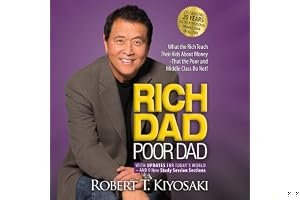
Question: What five books would you recommend to young people interested in your career path & why? Answer: Screw It, Let's Do It: Lessons In Life by Richard Branson Outliers: The Story of Success by Malcolm Gladwell Start With Why: How Great Leaders Inspire Everyone To Take Action by Simon Sinek The Hard Thing About Hard Things: Building a Business When There Are No Easy Answers by Ben Horowitz Rich Dad Poor Dad: What the Rich Teach Their Kids About Money That the Poor and Middle Class Do Not! by Robert T. Kiyosaki [source]
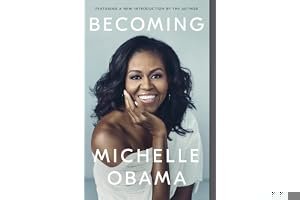
In a life filled with meaning and accomplishment, Michelle Obama has emerged as one of the most iconic and compelling women of our era. As First Lady of the United States of America—the first African American to serve in that role—she helped create the most welcoming and inclusive White House in history, while also establishing herself as a powerful advocate for women and girls in the U.S. and around the world, dramatically changing the ways that families pursue healthier and more active lives, and standing with her husband as he led America through some of its most harrowing moments. Along the way, she showed us a few dance moves, crushed Carpool Karaoke, and raised two down-to-earth daughters under an unforgiving media glare.
In her memoir, a work of deep reflection and mesmerizing storytelling, Michelle Obama invites readers into her world, chronicling the experiences that have shaped her—from her childhood on the South Side of Chicago to her years as an executive balancing the demands of motherhood and work, to her time spent at the world’s most famous address. With unerring honesty and lively wit, she describes her triumphs and her disappointments, both public and private, telling her full story as she has lived it—in her own words and on her own terms. Warm, wise, and revelatory, Becoming is the deeply personal reckoning of a woman of soul and substance who has steadily defied expectations—and whose story inspires us to do the same.
…
Recommended by Barack Obama, Piers Morgan, Mary Burkey, and 3 others.
Of course, @MichelleObama’s my wife, so I’m a little biased here. But she also happens to be brilliant, funny, wise – one of a kind. This book tells her quintessentially American story. I love it because it faithfully reflects the woman I have loved for so long. [source]
Piers Morgan
Congrats to @MichelleObama on sensational sales of her new book #Becoming. I always take people as I find them & when I met her at the White House, she was a delightfully warm, friendly & genuine lady. A great First Lady & now a best-selling author. https://t.co/nlSUHI01SM [source]
Mary Burkey
This is a case where you have to hear Michelle Obama read her story. It’s her story and she puts her whole emotional self into it. [source]
Cover unavailable
10
The Tipping Point: How Little Things Can Make a Big Difference
The tipping point is that magic moment when an idea, trend, or social behavior crosses a threshold, tips, and spreads like wildfire. Just as a single sick person can start an epidemic of the flu, so too can a small but precisely targeted push cause a fashion trend, the popularity of a new product, or a drop in the crime rate. This widely acclaimed bestseller, in which Malcolm Gladwell explores and brilliantly illuminates the tipping point phenomenon, is already changing the way people throughout the world think about selling products and disseminating ideas.
Gladwell introduces us to the particular personality types who are natural pollinators of new ideas and trends, the people who create the phenomenon of word of mouth. He analyzes fashion trends, smoking, children's television, direct mail, and the early days of the American Revolution for clues about making ideas infectious, and visits a religious commune, a successful high-tech company, and one of the world's greatest salesmen to show how to start and sustain social epidemics.
Bunch of really good information in here on how to make ideas go viral. This could be good to apply to any kind of products or ideas you may have. Definitely, check out The Tipping Point, which is one of my favorites. [source]
Malcolm Gladwell's breakthrough insight was to focus on the micro-relationships between individuals, which helped organizations realize that it's not about the big ads and the huge charity balls... it's about setting the stage for the buzz to start. [source]
Andy Stern
I think that when we talk about making change, it is much more about macro change, like in policy. This book reminds you that at times when you're building big movements, or trying to elect significant decision-makers in politics, sometimes it's the little things that make a difference. Ever since the book was written, we've become very used to the idea of things going viral unexpectedly and then having massive impact. The Tipping Point, to me, is really an appreciation that very small things can rearrange thinking in ways – like infectious diseases – that have huge implications. While we're always searching for the big policy changes – and we think we have to do that in very traditional ways of building coalitions against constituencies, movements and the media – sometimes it's the little things that actually tip the situation. Like the story of a person and their unique set of circumstances that really captures an issue about health care or housing. So it's trying to remember, while you're thinking about the grand and the glorious, that thinking about the small things can equally bring about change. [source]
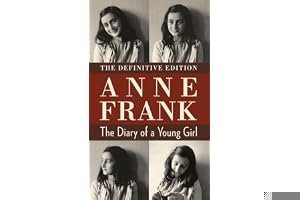
In Everyman’s Library for the first time—one of the most moving and eloquent accounts of the Holocaust, read by tens of millions of people around the world since its publication in 1947. The Diary of a Young Girl is the record of two years in the life of a remarkable Jewish girl whose triumphant humanity in the face of unfathomable deprivation and fear has made the book one of the most enduring documents of our time.
The Everyman’s hardcover edition reprints the Definitive Edition authorized by the Frank estate, plus a new introduction, a bibliography, and a chronology of Anne Frank’s life and times.
…
Recommended by Alice Little, Catalina Penciu, and Tim Fargo.
Alice Little
I remember being a fourth grader and trying to check out this book and being told it was grossly inappropriate and going so far as to have my parents take it to the school board and petition for me to be allowed to read this book. [source]
Catalina Penciu
I'm a huge fan of personal stories and biographies like this one. [source]
Tim Fargo
@Quixoticnance Good point, Nancy. The museum is a powerful experience, esp. when you've read her book. [source]
Cover unavailable
12
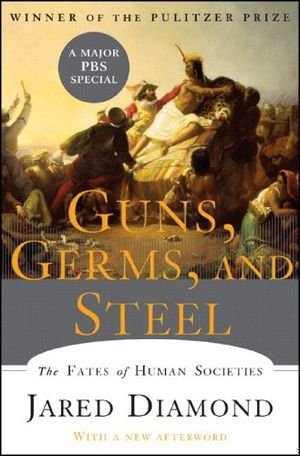
Guns, Germs and Steel: The Fates of Human Societies
Explaining what William McNeill called The Rise of the West has become the central problem in the study of global history. In Guns, Germs, and Steel Jared Diamond presents the biologist's answer: geography, demography, and ecological happenstance. Diamond evenhandedly reviews human history on every continent since the Ice Age at a rate that emphasizes only the broadest movements of peoples and ideas. Yet his survey is binocular: one eye has the rather distant vision of the evolutionary biologist, while the other eye--and his heart--belongs to the people of New Guinea, where he has done field work for more than 30 years.
Fascinating.... Lays a foundation for understanding human history. [source]
Daniel Ek
A brilliant Pulitzer Prize-winning book about how the modern world was formed, analyzing how societies developed differently on different continents. [source]
I’m a fan of books that challenge our assumptions, and Diamond offers us a new and remarkably simple way of looking at our world. Learning to challenge existing assumptions is core to effective leadership for it trains us to keep an open mind. [source]
Cover unavailable
13
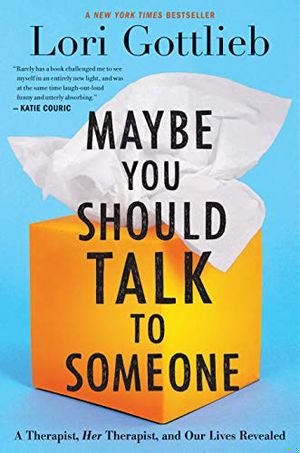
Maybe You Should Talk to Someone: A Therapist, Her Therapist, and Our Lives Revealed
One day, Lori Gottlieb is a therapist who helps patients in her Los Angeles practice. The next, a crisis causes her world to come crashing down. Enter Wendell, the quirky but seasoned therapist in whose office she suddenly lands. With his balding head, cardigan, and khakis, he seems to have come straight from Therapist Central Casting. Yet he will turn out to be anything but.
As Gottlieb explores the inner chambers of her patients' lives -- a self-absorbed Hollywood producer, a young newlywed diagnosed with a terminal illness, a senior citizen threatening to end her life on her birthday if nothing gets better, and a twenty-something who can't stop hooking up with the wrong guys -- she finds that the questions they are struggling with are the very ones she is now bringing to Wendell.
…
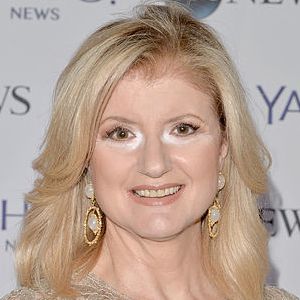
Recommended by Arianna Huffington, Andrea Barber, Chris Abraham, and 2 others.
Arianna Huffington
Founder/The Huffington Post
This is a daring, delightful, and transformative book. Lori Gottlieb takes us inside the most intimate of encounters as both clinician and patient and leaves us with a surprisingly fresh understanding of ourselves, one another, and the human condition. Her willingness to expose her own blind spots along with her patients’ shows us firsthand that we aren’t alone in our struggles and that maybe we should talk more about them! Maybe You Should Talk to Someone is funny, hopeful, wise, and engrossing—all at the same time. [source]
Andrea Barber
My new favorite book 😍😍 @LoriGottlieb1 https://t.co/7iQsEH7sDa [source]
Chris Abraham
I would like to introduce Zandria and Lori because Zan just read Lori's amazing new book this month, Maybe You Should Talk to Someone; and, since I adore you both, you should be friends. https://t.co/lwQJSJHQxb [source]
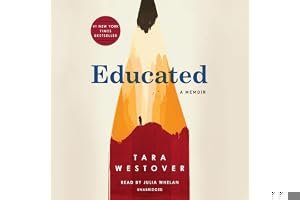
Tara Westover was 17 the first time she set foot in a classroom. Born to survivalists in the mountains of Idaho, she prepared for the end of the world by stockpiling home-canned peaches and sleeping with her "head-for-the-hills bag". In the summer she stewed herbs for her mother, a midwife and healer, and in the winter she salvaged in her father's junkyard.
Her father forbade hospitals, so Tara never saw a doctor or nurse. Gashes and concussions, even burns from explosions, were all treated at home with herbalism. The family was so isolated from mainstream society that there was no one to ensure the children received an education and no one to intervene when one of Tara's older brothers became violent.
Then, lacking any formal education, Tara began to educate herself. She taught herself enough mathematics and grammar to be admitted to Brigham Young University, where she studied history, learning for the first time about important world events like the Holocaust and the civil rights movement. Her quest for knowledge transformed her, taking her over oceans and across continents, to Harvard and to Cambridge. Only then would she wonder if she'd traveled too far, if there was still a way home.
Educated is an account of the struggle for self-invention. It is a tale of fierce family loyalty and of the grief that comes with severing the closest of ties. With the acute insight that distinguishes all great writers, Westover has crafted a universal coming-of-age story that gets to the heart of what an education is and what it offers: the perspective to see one's life through new eyes and the will to change it.
As 2018 draws to a close, I’m continuing a favorite tradition of mine and sharing my year-end lists. It gives me a moment to pause and reflect on the year through the books I found most thought-provoking, inspiring, or just plain loved. It also gives me a chance to highlight talented authors – some who are household names and others who you may not have heard of before. Here’s my best of 2018 list. [source]
Tara never went to school or visited a doctor until she left home at 17. I never thought I’d relate to a story about growing up in a Mormon survivalist household, but she’s such a good writer that she got me to reflect on my own life while reading about her extreme childhood. Melinda and I loved this memoir of a young woman whose thirst for learning was so strong that she ended up getting a Ph.D. from Cambridge University. [source]
If you read or listen to only one book this summer, this is it. Bloody brilliant! Every word, every sentence. Rarely do I go through a book with such a rollecoaster of emotion, from love to hate. Thank you for sharing @tarawestover #Educated https://t.co/GqLaqlcWMp [source]
Cover unavailable
15
Born a Crime: Stories from a South African Childhood
Trevor Noah’s unlikely path from apartheid South Africa to the desk of The Daily Show began with a criminal act: his birth. Trevor was born to a white Swiss father and a black Xhosa mother at a time when such a union was punishable by five years in prison. Living proof of his parents’ indiscretion, Trevor was kept mostly indoors for the earliest years of his life, bound by the extreme and often absurd measures his mother took to hide him from a government that could, at any moment, steal him away. Finally liberated by the end of South Africa’s tyrannical white rule, Trevor and his mother set forth on a grand adventure, living openly and freely and embracing the opportunities won by a centuries-long struggle.
…
Recommended by Bill Gates, Heather Zynczak, Irina Nica, and 3 others.
As a longtime fan of The Daily Show, I loved reading this memoir about how its host honed his outsider approach to comedy over a lifetime of never quite fitting in. Born to a black South African mother and a white Swiss father in apartheid South Africa, he entered the world as a biracial child in a country where mixed race relationships were forbidden. Much of Noah’s story of growing up in South Africa is tragic. Yet, as anyone who watches his nightly monologues knows, his moving stories will often leave you laughing. [source]
Heather Zynczak
So excited for our latest speaker announcement for #PSLIVE19! Trevor Noah! I am a huge @TheDailyShow fan! And his book -Born a Crime -and life story are amazing. Can't wait! Join us! https://t.co/N6ykJq7TOy https://t.co/r0dIx5RFVI [source]
Irina Nica
I also pay attention to any book recommendations my friends post on Facebook. I started reading Trevor Noah’s Born a Crime after I saw Radu Marcusu, CEO of Upswing, recommending it. He swore by it that is was funny -- and it was! Until the last chapter. I remember listening to the audiobook on a train and crying my eyes out. So yeah. That happened. [source]
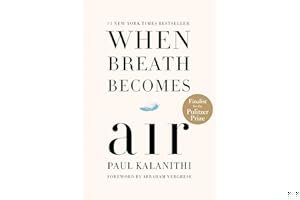
At the age of thirty-six, on the verge of completing a decade’s worth of training as a neurosurgeon, Paul Kalanithi was diagnosed with stage IV lung cancer. One day he was a doctor treating the dying, and the next he was a patient struggling to live. And just like that, the future he and his wife had imagined evaporated. When Breath Becomes Air chronicles Kalanithi’s transformation from a naïve medical student “possessed,” as he wrote, “by the question of what, given that all organisms die, makes a virtuous and meaningful life” into a neurosurgeon at Stanford working in the brain, the most critical place for human identity, and finally into a patient and new father confronting his own mortality.
What makes life worth living in the face of death? What do you do when the future, no longer a ladder toward your goals in life, flattens out into a perpetual present? What does it mean to have a child, to nurture a new life as another fades away? These are some of the questions Kalanithi wrestles with in this profoundly moving, exquisitely observed memoir.
I don’t know how Kalanithi found the physical strength to write this book while he was so debilitated by the disease and then potent chemotherapy. But I’m so glad he did. He spent his whole brief life searching for meaning in one way or another -- through books, writing, medicine, surgery, and science. I’m grateful that, by reading this book, I got to witness a small part of that journey. I just wish the journey hadn’t been cut so short [source]
Despite its popularity, When Breath Becomes Air is actually underrated. It’s make-you-cry good. [source]
Bethany S. Mandel
More Shabbat reading recommendations: This book was breathtaking and such a powerful advertisement for the joy of parenthood. https://t.co/V8BH97eiL9 [source]
Cover unavailable
17
Quiet: The Power of Introverts in a World That Can't Stop Talking
At least one-third of the people we know are introverts. They are the ones who prefer listening to speaking; who innovate and create but dislike self-promotion; who favor working on their own over working in teams. It is to introverts—Rosa Parks, Chopin, Dr. Seuss, Steve Wozniak—that we owe many of the great contributions to society.
In Quiet, Susan Cain argues that we dramatically undervalue introverts and shows how much we lose in doing so. She charts the rise of the Extrovert Ideal throughout the twentieth century and explores how deeply it has come to permeate our culture. She also introduces us to successful introverts—from a witty, high-octane public speaker who recharges in solitude after his talks, to a record-breaking salesman who quietly taps into the power of questions. Passionately argued, superbly researched, and filled with indelible stories of real people, Quiet has the power to permanently change how we see introverts and, equally important, how they see themselves.
Now with Extra Libris material, including a reader’s guide and bonus content.
Leaders needn’t be the loudest. Leadership is not about theater. It’s not about dominance. It is about putting the lives of others before any other priority. In Quiet, Cain affirms to a good many of us who are introverts by nature that we needn’t try to be extroverts if we want to lead. Simply being ourselves is more important — and more effective. [source]
Danielle Morrill
Co-founder/Mattermark
Anyway, maybe you’re like me and figuring this out for yourself. It’s a good book for introverts and for those who love them [source]
Probably half the world is introverts. Maybe more. It’s not an easy life to live. I sometimes have that feeling in a room full of people, “uh-oh. I just shut down. I can’t talk anymore and there’s a lock on my mouth and this crowd threw away the key.” Do you ever get that feeling? Please? I hope you do. Let’s try to lock eyes at the party. “Quiet” shows the reader how to unlock the secret powers that probably half the world needs to unlock. [source]
Immensely helpful and illuminating to any aspiring writer, Stephen King’s critically lauded, classic bestseller shares the experiences, habits, and convictions that have shaped him and his work.
"Long live the King" hailed Entertainment Weekly upon publication of Stephen King’s On Writing. Part memoir, part master class by one of the bestselling authors of all time, this superb volume is a revealing and practical view of the writer’s craft, comprising the basic tools of the trade every writer must have. King’s advice is grounded in his vivid memories from childhood through his emergence as a writer, from his struggling early career to his widely reported, near-fatal accident in 1999—and how the inextricable link between writing and living spurred his recovery. Brilliantly structured, friendly and inspiring, On Writing will empower and entertain everyone who reads it—fans, writers, and anyone who loves a great story well told.
I read a bunch of books on writing before I wrote my first book and the two that stuck with me were Stephen King’s book and “On Writing Well” by Zinsser (which is a bit on the technical side). [source]
Alina Varlanuta
My professional path – copywriting – somehow intertwines with my unprofessional (hahaha) path – writing so I would recommend reading literature for both. Somehow reading and writing are two ways of doing the same thing: storytelling (even when you read you tell yourself a story in your own voice, bringing your personal emotion and empathy to the story you’re reading). The only difference is that when I’m reading, panic is far away from me, in a safe place. Nevertheless, the words below helped me rewrite and think twice before adding an exclamation point: On Writing by Stephen King. [source]
Andrew Cowan
Yes. It is a surprise to a lot of people that this book is so widely read on university campuses and so widely recommended by teachers of writing. Students love it. It’s bracing: there’s no nonsense. He says somewhere in the foreword or preface that it is a short book because most books are filled with bullshit and he is determined not to offer bullshit but to tell it like it is. [source]
Cover unavailable
19
Creativity, Inc.: Overcoming the Unseen Forces That Stand in the Way of True Inspiration
“What does it mean to manage well?” From Ed Catmull, co-founder (with Steve Jobs and John Lasseter) of Pixar Animation Studios, comes an incisive book about creativity in business—sure to appeal to readers of Daniel Pink, Tom Peters, and Chip and Dan Heath. Creativity, Inc. is a book for managers who want to lead their employees to new heights, a manual for anyone who strives for originality, and the first-ever, all-access trip into the nerve center of Pixar Animation—into the meetings, postmortems, and “Braintrust” sessions where some of the most successful films in history are made. It is, at heart, a book about how to build a creative culture—but it is also, as Pixar co-founder and president Ed Catmull writes, “an expression of the ideas that I believe make the best in us possible.” For nearly twenty years, Pixar has dominated the world of animation, producing such beloved films as the Toy Story trilogy, Monsters, Inc., Finding Nemo, The Incredibles, Up, and WALL-E, which have gone on to set box-office records and garner thirty Academy Awards. The joyousness of the storytelling, the inventive plots, the emotional authenticity: In some ways, Pixar movies are an object lesson in what creativity really is. Here, in this book, Catmull reveals the ideals and techniques that have made Pixar so widely admired—and so profitable.
As a young man, Ed Catmull had a dream: to make the first computer-animated movie. He nurtured that dream as a Ph.D. student at the University of Utah, where many computer science pioneers got their start, and then forged a partnership with George Lucas that led, indirectly, to his founding Pixar with Steve Jobs and John Lasseter in 1986. Nine years later, Toy Story was released, changing animation forever. The essential ingredient in that movie’s success—and in the thirteen movies that followed—was the unique environment that Catmull and his colleagues built at Pixar, based on philosophies that protect the creative process and defy convention, such as:
• Give a good idea to a mediocre team, and they will screw it up. But give a mediocre idea to a great team, and they will either fix it or come up with something better. • If you don’t strive to uncover what is unseen and understand its nature, you will be ill prepared to lead. • It’s not the manager’s job to prevent risks. It’s the manager’s job to make it safe for others to take them. • The cost of preventing errors is often far greater than the cost of fixing them. • A company’s communication structure should not mirror its organizational structure. Everybody should be able to talk to anybody. • Do not assume that general agreement will lead to change—it takes substantial energy to move a group, even when all are on board.
This book is written by the founder of Pixar and is about his experience building a culture that fosters creativity. His theory is that people are fundamentally creative, but many forces stand in the way of people being able to do their best work. I love reading first-hand accounts about how people build great companies like Pixar and nurture innovation and creativity. This should be inspiring to anyone looking to do the same, and hopefully there will be lessons we can apply to connecting the world! [source]
No matter your circumstances, storytelling and creativity are two 'meta-skills' that can take your business and life to the next level. Ed is a master. [source]
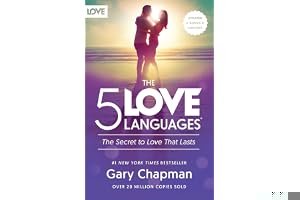
Couples who understand each other's love language hold a priceless advantage in the quest for love that lasts a lifetime -- they know how to effectively and consistently make each other feel truly and deeply loved. That gift never fades away.
Recommended by Dustin Moskovitz, James Altucher, Kaci Lambe Kai, and 1 others.
Dustin Moskovitz
Co-founder/Facebook and Asana
Dustin Moskovitz recommended this book on Twitter. [source]
Kaci Lambe Kai
The Five Love Languages by Gary Chapman impacted how I interpret and receive love. Not just romantically, but in my friendships and business relationships. I had several personal and professional relationships that improved when I could appreciate that their "love language" was different than mine. I could at least see their efforts as an attempt at showing me love and kindness, even if it wasn't how I best receive or give love. This is pivotal. And if you can separate out the idea of it being for romantic partners only, I'd say this is critical reading for leaders. Not everyone is motivated and feels appreciation by a raise. Sometimes, public recognition of kind words or an act of kindness will feel better than anything else you can do. [source]
Pedro Cortés
The books that had the biggest impact are the ones that are controversial and challenge people's beliefs around work, relationships, life, and money most of them were things I already thought about (that's how I found them or decided to read them) but just by putting it in an actionable and structured way it made me think 100x more clearly about my goals and beliefs. Such examples could be the 4hww, Rich Dad Poor Dad, F.U. Money, The Five Love Languages, So good they can't ignore, Predictably Irrational and Ego is the Enemy are the ones who stand out the most. [source]
Cover unavailable
21
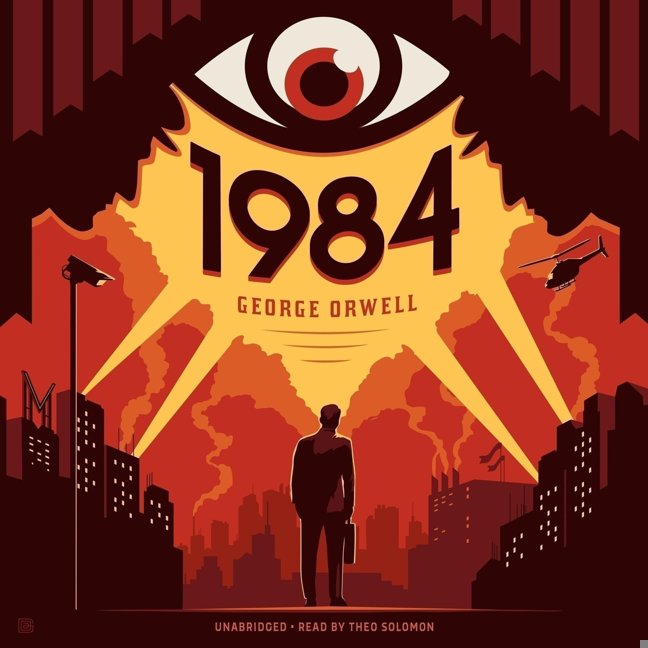
1984
George Orwell
4.4
A PBS Great American Read Top 100 Pick
With extraordinary relevance and renewed popularity, George Orwell’s 1984 takes on new life in this hardcover edition.
“Orwell saw, to his credit, that the act of falsifying reality is only secondarily a way of changing perceptions. It is, above all, a way of asserting power.”—The New Yorker
In 1984, London is a grim city in the totalitarian state of Oceania where Big Brother is always watching you and the Thought Police can practically read your mind. Winston Smith is a man in grave danger for the simple reason that his memory still functions. Drawn into a forbidden love affair, Winston finds the courage to join a secret revolutionary organization called The Brotherhood, dedicated to the destruction of the Party. Together with his beloved Julia, he hazards his life in a deadly match against the powers that be.
Lionel Trilling said of Orwell’s masterpiece “1984 is a profound, terrifying, and wholly fascinating book. It is a fantasy of the political future, and like any such fantasy, serves its author as a magnifying device for an examination of the present.” Though the year 1984 now exists in the past, Orwell’s novel remains an urgent call for the individual willing to speak truth to power.
Today is World Book Day, a wonderful opportunity to address this #ChallengeRichard sent in by Mike Gonzalez of New Jersey: Make a list of your top 65 books to read in a lifetime. [source]
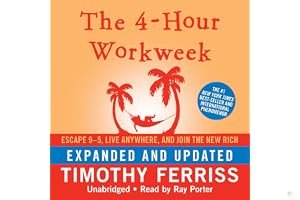
More than 100 pages of new, cutting-edge content. Forget the old concept of retirement and the rest of the deferred-life plan there is no need to wait and every reason not to, especially in unpredictable economic times. Whether your dream is escaping the rat race, experiencing high-end world travel, earning a monthly five-figure income with zero management, or just living more and working less, The 4-Hour Workweek is the blueprint. This step-by-step guide to luxury lifestyle design teaches: How Tim went from $40,000 per year and 80 hours per week to $40,000 per month and 4 hours per week. How to outsource your life to overseas virtual assistants for $5 per hour and do whatever you want How blue-chip escape artists travel the world without quitting their jobs How to eliminate 50% of your work in 48 hours using the principles of a forgotten Italian economist How to trade a long-haul career for short work bursts and frequent mini-retirements The new expanded edition of Tim Ferriss The 4-Hour Workweek includes: More than 50 practical tips and case studies from readers (including families) who have doubled income, overcome common sticking points, and reinvented themselves using the original book as a starting point Real-world templates you can copy for eliminating e-mail, negotiating with bosses and clients, or getting a private chef for less than $8 a meal How Lifestyle Design principles can be suited to unpredictable economic times The latest tools and tricks, as well as high-tech shortcuts, for living like a diplomat or millionaire without being either"
Eric Weinstein recommended this book on Twitter. [source]
Tim Draper
Founder/Draper Fisher Jurvetson
With this kind of time management and focus on the important things in life, people should be able to get 15 times as much done in a normal work week. [source]
It's about time this book was written. It is a long-overdue manifesto for the mobile lifestyle, and Tim Ferriss is the ideal ambassador. This will be huge. [source]
Cover unavailable
23
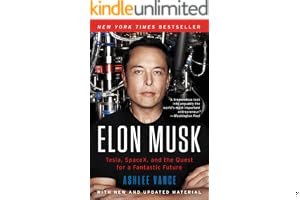
Elon Musk: Tesla, SpaceX, and the Quest for a Fantastic Future
Elon Musk, the entrepreneur and innovator behind SpaceX, Tesla, and SolarCity, sold one of his internet companies, PayPal, for $1.5 billion. Ashlee Vance captures the full spectacle and arc of the genius's life and work, from his tumultuous upbringing in South Africa and flight to the United States to his dramatic technical innovations and entrepreneurial pursuits. Vance uses Musk's story to explore one of the pressing questions of our age: can the nation of inventors and creators who led the modern world for a century still compete in an age of fierce global competition? He argues that Musk is an amalgam of legendary inventors and industrialists including Thomas Edison, Henry Ford, Howard Hughes, and Steve Jobs. More than any other entrepreneur today, Musk has dedicated his energies and his own vast fortune to inventing a future that is as rich and far-reaching as the visionaries of the golden age of science-fiction fantasy
Elon Musk is a man after my own heart: a risk taker undaunted by setbacks and ever driven to ensure a bright future for humanity. Ashlee Vance's stellar biography captures Musk's remarkable life story and irrepressible spirit. [source]
I'm fascinated by Elon Musk, I own a Tesla, I read Ashlee Vance's biography on Elon Musk. I think he's a very interesting charachter. [source]
Andrea Loubier
Elon Musk: Tesla, SpaceX, and the Quest for a Fantastic Future as this was still in the first couple of years of me starting my own company, Mailbird and it was inspiring and visionary. It helps you go from a small voice in a big corporate company, to thinking big and voicing your wild opinions and creating plan to work towards it. [source]
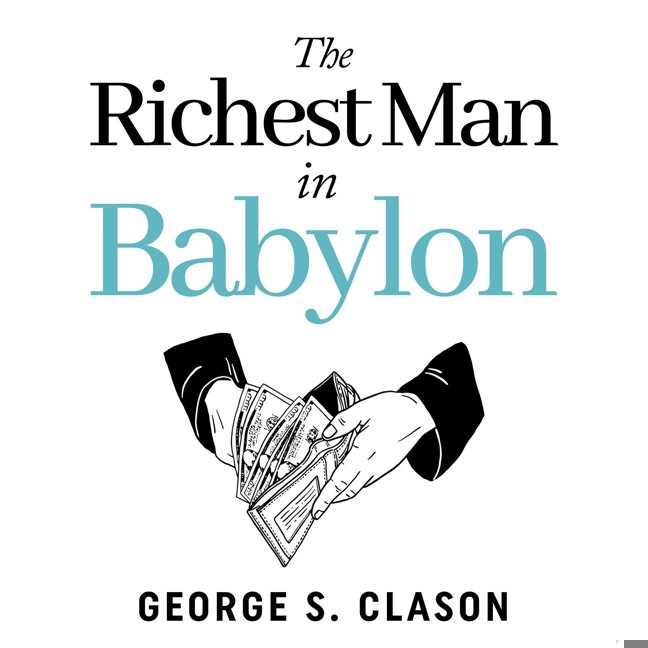
This hardcover edition is cleanly formatted for easy reading. 12 point Garamond, 1.25 spacing. The Richest Man in Babylon is a timeless classic, revealing the secrets to making money and keeping it. This inspirational book is hailed as the greatest of books on finances. It unveils the secrets to wealth, providing priceless suggestions, advice, unforgettable parables, financial problem-solving tools, and invaluable information which will get you on your way to riches. The book to read for all who want financial success.
…
Recommended by Daymond John, Aisha Yesufu, DJ Vlad, and 6 others.
Daymond John
Founder/FUBU
Daymond John said this is one of his most-recommended books. [source]
Aisha Yesufu
@seundavidpaul 👏👏👏👏👏 This is a great book [source]
This is a 1920s classic version of How To Get Rich. The ancestor of all the pale imitations, like Rich Dad/Poor Dad, that came since. And while I scoffed at plenty of the allegories from ancient Babylon that presents the lessons, it was still a neat package. And at least ancient Babylon is a more interesting backdrop for teaching lessons about money than some suburban house flipper. I ended up liking it more at the end than I did at the beginning. It’s also a really interesting tie-in with that debt history book. [source]
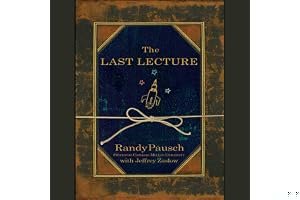
A lot of professors give talks titled 'The Last Lecture'. Professors are asked to consider their demise and to ruminate on what matters most to them: What wisdom would we impart to the world if we knew it was our last chance? If we had to vanish tomorrow, what would we want as our legacy?
When Randy Pausch, a computer science professor at Carnegie Mellon, was asked to give such a lecture, he didn't have to imagine it as his last, since he had recently been diagnosed with terminal cancer. But the lecture he gave, 'Really Achieving Your Childhood Dreams', wasn't about dying. It was about the importance of overcoming obstacles, of enabling the dreams of others, of seizing every moment (because time is all you have and you may find one day that you have less than you think). It was a summation of everything Randy had come to believe. It was about living.
In this book, Randy Pausch has combined the humour, inspiration, and intelligence that made his lecture such a phenomenon and given it an indelible form. It is a book that will be shared for generations to come.
…
Recommended by Gabriel Coarna.
Gabriel Coarna
I read "The Last Lecture" because I had seen Randy Pausch give this talk: https://www.youtube.com/watch?v=ji5_MqicxSo [source]
Cover unavailable
26
Animal Farm
George Orwell and Christopher Hitchens
4.3
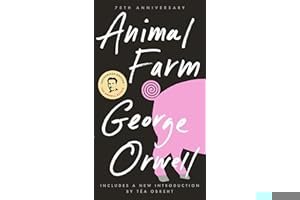
Animal Farm is one of the most famous warnings ever written. Orwell's immortal satire - 'against Stalin' as he wrote to his French translator - can be read on many levels. With its piercing clarity and deceptively simple style it is no surprise that this novel is required reading for schoolchildren and politicians alike. This fable of the steadfast horses Boxer and Clover, the opportunistic pigs Snowball and Napoleon, and the deafening choir of sheep remains an unparalleled masterpiece.
One reviewer wrote 'In a hundred years' time perhaps Animal Farm ... may simply be a fairy story: today it is a fairy story with a good deal of point.' Over sixty years on in the age of spin, it is more relevant than ever.
Rejected by such eminent publishing figures as Victor Gollancz, Jonathan Cape and T.S. Eliot, Animal Farm was published to great acclaim by Martin Secker and Warburg on 17 August 1945 in an edition of 4500 copies. In the centenary year of Martin Secker, Ltd., Harvill Secker is proud to publish this special edition with a brand-new introduction by Christopher Hitchens.
Whitney Cummings recommended this book on the podcast "The Tim Ferriss Show". [source]
Vlad Tenev
When I was in sixth grade I remember being very upset by the ending of this book. [source]

Heather Brooke
I picked Animal Farm because it is an allegory about power and its seductive and corruptive influence on people regardless of their initial good intentions. [source]
Cover unavailable
27
Start with Why: How Great Leaders Inspire Everyone to Take Action
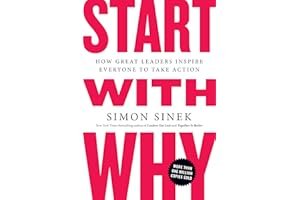
Why are some people and organizations more innovative, more influential, and more profitable than others? Why do some command greater loyalty from customers and employees alike? Even among the successful, why are so few able to repeat their success over and over?
People like Martin Luther King Jr., Steve Jobs, and the Wright Brothers might have little in common, but they all started with why. It was their natural ability to start with why that enabled them to inspire those around them and to achieve remarkable things.
In studying the leaders who've had the greatest influence in the world, Simon Sinek discovered that they all think, act, and communicate in the exact same way—and it's the complete opposite of what everyone else does. Sinek calls this powerful idea The Golden Circle, and it provides a framework upon which organizations can be built, movements can be lead, and people can be inspired. And it all starts with WHY.
Any organization can explain what it does; some can explain how they do it; but very few can clearly articulate why. WHY is not money or profit—those are always results. WHY does your organization exist? WHY does it do the things it does? WHY do customers really buy from one company or another? WHY are people loyal to some leaders, but not others?
Starting with WHY works in big business and small business, in the nonprofit world and in politics. Those who start with WHY never manipulate, they inspire. And the people who follow them don't do so because they have to; they follow because they want to.
Drawing on a wide range of real-life stories, Sinek weaves together a clear vision of what it truly takes to lead and inspire. This book is for anyone who wants to inspire others or who wants to find someone to inspire them.
Today is World Book Day, a wonderful opportunity to address this #ChallengeRichard sent in by Mike Gonzalez of New Jersey: Make a list of your top 65 books to read in a lifetime. [source]
The basis of this book is so important to anyone looking to increase their influence, profits or impact. People won't truly buy into a product, service, movement, or idea until they understand the WHY behind it. When you start with the why, everything else falls into place. This book is so impactful, I consider it required reading. [source]
Tony Hsieh
CEO/Zappos.com
Over the years he’s recommended well over 20 business books — including his own, the 2010 bestseller Delivering Happiness and you can always find what he’s currently reading atop his cluttered desk. Start with Why is amogst those titles. [source]
Cover unavailable
28
Freakonomics: A Rogue Economist Explores the Hidden Side of Everything
Which is more dangerous, a gun or a swimming pool? What do schoolteachers and sumo wrestlers have in common? Why do drug dealers still live with their moms? How much do parents really matter? What kind of impact did Roe v. Wade have on violent crime? Freakonomics will literally redefine the way we view the modern world.
These may not sound like typical questions for an economist to ask. But Steven D. Levitt is not a typical economist. He is a much heralded scholar who studies the stuff and riddles of everyday life -- from cheating and crime to sports and child rearing -- and whose conclusions regularly turn the conventional wisdom on its head. He usually begins with a mountain of data and a simple, unasked question. Some of these questions concern life-and-death issues; others have an admittedly freakish quality. Thus the new field of study contained in this book: freakonomics.
Through forceful storytelling and wry insight, Levitt and co-author Stephen J. Dubner show that economics is, at root, the study of incentives -- how people get what they want, or need, especially when other people want or need the same thing. In Freakonomics, they set out to explore the hidden side of ... well, everything. The inner workings of a crack gang. The truth about real-estate agents. The myths of campaign finance. The telltale marks of a cheating schoolteacher. The secrets of the Ku Klux Klan.
What unites all these stories is a belief that the modern world, despite a surfeit of obfuscation, complication, and downright deceit, is not impenetrable, is not unknowable, and -- if the right questions are asked -- is even more intriguing than we think. All it takes is a new way of looking. Steven Levitt, through devilishly clever and clear-eyed thinking, shows how to see through all the clutter.
Freakonomics establishes this unconventional premise: If morality represents how we would like the world to work, then economics represents how it actually does work. It is true that readers of this book will be armed with enough riddles and stories to last a thousand cocktail parties. But Freakonomics can provide more than that. It will literally redefine the way we view the modern world. (front flap)
…
Recommended by Malcolm Gladwell, Daymond John, Ev Williams, and 12 others.
James Altucher recommended this book on the podcast "The Tim Ferriss Show". [source]
Cover unavailable
29
The Fault in Our Stars
John Green
4.3
Despite the tumor-shrinking medical miracle that has bought her a few years, Hazel has never been anything but terminal, her final chapter inscribed upon diagnosis. But when a gorgeous plot twist named Augustus Waters suddenly appears at Cancer Kid Support Group, Hazel's story is about to be completely rewritten.
Insightful, bold, irreverent, and raw, The Fault in Our Stars is award-winning author John Green's most ambitious and heartbreaking work yet, brilliantly exploring the funny, thrilling, and tragic business of being alive and in love.
@johngreen You should not be. It is a great book. Was recently in Amsterdam and walked some of the scenes with your huge fan, my youngest daughter. Loved hearing from you and meeting you at Kenyon. [source]
Cover unavailable
30
Being Mortal: Medicine and What Matters in the End
Medicine has triumphed in modern times, transforming the dangers of childbirth, injury, and disease from harrowing to manageable. But when it comes to the inescapable realities of aging and death, what medicine can do often runs counter to what it should.
Through eye-opening research and gripping stories of his own patients and family, Atul Gawande, a practicing surgeon, reveals the suffering this dynamic has produced. Nursing homes, devoted above all to safety, battle with residents over the food they are allowed to eat and the choices they are allowed to make. Doctors, uncomfortable discussing patients' anxieties about death, fall back on false hopes and treatments that are actually shortening lives instead of improving them.
In his bestselling books, Gawande has fearlessly revealed the struggles of his profession. Now he examines its ultimate limitations and failures--in his own practices as well as others'--as life draws to a close. Riveting, honest, and humane, Being Mortal shows how the ultimate goal is not a good death but a good life--all the way to the very end.
President Obama is spending his Hawaiian vacation playing golf, getting together with high school friends and reading a handful of dark novels set in foreign lands, according to a book list released by the White House Wednesday. The presidential reading list includes … two works of non-fiction for the trip: … "Being Mortal: Medicine and What Matters in the End" by Dr. Atul Gawande. [source]
American medicine, Being Mortal reminds us, has prepared itself for life but not for death. This is Atul Gawande's most powerful--and moving--book. [source]
In this generation-defining self-help guide, a superstar blogger cuts through the crap to show us how to stop trying to be "positive" all the time so that we can truly become better, happier people.
For decades, we’ve been told that positive thinking is the key to a happy, rich life. "Fk positivity," Mark Manson says. "Let’s be honest, shit is fked and we have to live with it." In his wildly popular Internet blog, Manson doesn’t sugarcoat or equivocate. He tells it like it is—a dose of raw, refreshing, honest truth that is sorely lacking today. The Subtle Art of Not Giving a Fk is his antidote to the coddling, let’s-all-feel-good mindset that has infected American society and spoiled a generation, rewarding them with gold medals just for showing up.
Manson makes the argument, backed both by academic research and well-timed poop jokes, that improving our lives hinges not on our ability to turn lemons into lemonade, but on learning to stomach lemons better. Human beings are flawed and limited—"not everybody can be extraordinary, there are winners and losers in society, and some of it is not fair or your fault." Manson advises us to get to know our limitations and accept them. Once we embrace our fears, faults, and uncertainties, once we stop running and avoiding and start confronting painful truths, we can begin to find the courage, perseverance, honesty, responsibility, curiosity, and forgiveness we seek.
There are only so many things we can give a fk about so we need to figure out which ones really matter, Manson makes clear. While money is nice, caring about what you do with your life is better, because true wealth is about experience. A much-needed grab-you-by-the-shoulders-and-look-you-in-the-eye moment of real-talk, filled with entertaining stories and profane, ruthless humor, The Subtle Art of Not Giving a F**k is a refreshing slap for a generation to help them lead contented, grounded lives.
…
Recommended by Ryan Holiday, Alex Blackwell, Aunty Ada, and 21 others.
Alternate Cover Edition ISBN 1439107955 (ISBN13: 9781439107959)
The Emperor of All Maladies is a magnificent, profoundly humane “biography” of cancer—from its first documented appearances thousands of years ago through the epic battles in the twentieth century to cure, control, and conquer it to a radical new understanding of its essence.
Physician, researcher, and award-winning science writer, Siddhartha Mukherjee examines cancer with a cellular biologist’s precision, a historian’s perspective, and a biographer’s passion. The result is an astonishingly lucid and eloquent chronicle of a disease humans have lived with—and perished from—for more than five thousand years.
The story of cancer is a story of human ingenuity, resilience, and perseverance, but also of hubris, paternalism, and misperception. Mukherjee recounts centuries of discoveries, setbacks, victories, and deaths, told through the eyes of his predecessors and peers, training their wits against an infinitely resourceful adversary that, just three decades ago, was thought to be easily vanquished in an all-out “war against cancer.”
The book reads like a literary thriller with cancer as the protagonist. From the Persian Queen Atossa, whose Greek slave cut off her malignant breast, to the nineteenth-century recipients of primitive radiation and chemotherapy to Mukherjee’s own leukemia patient, Carla, The Emperor of All Maladies is about the people who have soldiered through fiercely demanding regimens in order to survive—and to increase our understanding of this iconic disease.
Riveting, urgent, and surprising, The Emperor of All Maladies provides a fascinating glimpse into the future of cancer treatments. It is an illuminating book that provides hope and clarity to those seeking to demystify cancer.
…
Recommended by Bill Gates and Timothy J. Jorgensen.
Yuval Noah Harari, author of the critically-acclaimed New York Times bestseller and international phenomenon Sapiens, returns with an equally original, compelling, and provocative book, turning his focus toward humanity’s future, and our quest to upgrade humans into gods.
Over the past century humankind has managed to do the impossible and rein in famine, plague, and war. This may seem hard to accept, but, as Harari explains in his trademark style—thorough, yet riveting—famine, plague and war have been transformed from incomprehensible and uncontrollable forces of nature into manageable challenges. For the first time ever, more people die from eating too much than from eating too little; more people die from old age than from infectious diseases; and more people commit suicide than are killed by soldiers, terrorists and criminals put together. The average American is a thousand times more likely to die from binging at McDonalds than from being blown up by Al Qaeda.
What then will replace famine, plague, and war at the top of the human agenda? As the self-made gods of planet earth, what destinies will we set ourselves, and which quests will we undertake? Homo Deus explores the projects, dreams and nightmares that will shape the twenty-first century—from overcoming death to creating artificial life. It asks the fundamental questions: Where do we go from here? And how will we protect this fragile world from our own destructive powers? This is the next stage of evolution. This is Homo Deus.
With the same insight and clarity that made Sapiens an international hit and a New York Times bestseller, Harari maps out our future.
Harari’s new book is as challenging and readable as Sapiens. Rather than looking back, as Sapiens does, it looks to the future. I don’t agree with everything the author has to say, but he has written a thoughtful look at what may be in store for humanity. [source]
I certainly wouldn’t consider myself a big reader of paleontology or anthropology – not good words for us dyslexics! – but I enjoy learning about how society has unfolded and history has developed in an exciting, easy to read way. The sequel, Homo Deus: A Brief History of Tomorrow, is a fascinating look into the future too. While these aren’t traditional business or leadership books, they are all about people – and learning how to work with, live with, interact with people and get the best out of them is what leadership is all about. [source]
Not that I agree with all of it, but it is still mind-bending speculation about our future as a follow-up to a previous favorite, Sapiens. It’s directionally right. [source]
Cover unavailable
34
To Kill a Mockingbird
Harper Lee, Sissy Spacek, et al
4.3
The unforgettable novel of a childhood in a sleepy Southern town and the crisis of conscience that rocked it, To Kill A Mockingbird became both an instant bestseller and a critical success when it was first published in 1960. It went on to win the Pulitzer Prize in 1961 and was later made into an Academy Award-winning film, also a classic.
Compassionate, dramatic, and deeply moving, To Kill A Mockingbird takes readers to the roots of human behavior - to innocence and experience, kindness and cruelty, love and hatred, humor and pathos. Now with over 18 million copies in print and translated into forty languages, this regional story by a young Alabama woman claims universal appeal. Harper Lee always considered her book to be a simple love story. Today it is regarded as a masterpiece of American literature.
…
Recommended by Adam Lawrence, Antonio Villaraigosa, Clive Stafford Smith, and 6 others.
Even though I know we’ve made great strides in America, and have come from the reality of Maycomb, we still suffer today from the lingering effects of the bigotry of that era. At the same time, it’s a lesson in standing tall in the face of tremendously hostile circumstances. [source]
Clive Stafford Smith
The book touches on so many issues and deals with so many prejudices – prejudices towards the mentally ill, racial stuff. It’s a book that was way ahead of its time in many ways. It’s also a wonderfully written book – a joy to read. [source]
Cover unavailable
35
Unbroken: A World War II Story of Survival, Resilience and Redemption
In her long-awaited new book, Laura Hillenbrand writes with the same rich and vivid narrative voice she displayed in Seabiscuit. Telling an unforgettable story of a man's journey into extremity, Unbroken is a testament to the resilience of the human mind, body, and spirit.
On a May afternoon in 1943, an Army Air Forces bomber crashed into the Pacific Ocean and disappeared, leaving only a spray of debris and a slick of oil, gasoline, and blood. Then, on the ocean surface, a face appeared. It was that of a young lieutenant, the plane's bombardier, who was struggling to a life raft and pulling himself aboard. So began one of the most extraordinary odysseys of the Second World War.
The lieutenant’s name was Louis Zamperini. In boyhood, he'd been a cunning and incorrigible delinquent, breaking into houses, brawling, and fleeing his home to ride the rails. As a teenager, he had channeled his defiance into running, discovering a prodigious talent that had carried him to the Berlin Olympics and within sight of the four-minute mile. But when war had come, the athlete had become an airman, embarking on a journey that led to his doomed flight, a tiny raft, and a drift into the unknown.
Ahead of Zamperini lay thousands of miles of open ocean, leaping sharks, a foundering raft, thirst and starvation, enemy aircraft, and, beyond, a trial even greater. Driven to the limits of endurance, Zamperini would answer desperation with ingenuity; suffering with hope, resolve, and humor; brutality with rebellion. His fate, whether triumph or tragedy, would be suspended on the fraying wire of his will.
…
Cover unavailable
36
I Am Malala: The Story of the Girl Who Stood Up for Education and Was Shot by the Taliban
I come from a country that was created at midnight. When I almost died it was just after midday.
When the Taliban took control of the Swat Valley in Pakistan, one girl spoke out. Malala Yousafzai refused to be silenced and fought for her right to an education.
On Tuesday, October 9, 2012, when she was fifteen, she almost paid the ultimate price. She was shot in the head at point-blank range while riding the bus home from school, and few expected her to survive.
Instead, Malala's miraculous recovery has taken her on an extraordinary journey from a remote valley in northern Pakistan to the halls of the United Nations in New York. At sixteen, she has become a global symbol of peaceful protest and the youngest-ever Nobel Peace Prize laureate.
I Am Malala is the remarkable tale of a family uprooted by global terrorism, of the fight for girls' education, of a father who, himself a school owner, championed and encouraged his daughter to write and attend school, and of brave parents who have a fierce love for their daughter in a society that prizes sons.
…
Recommended by Adrienne Kisner.
Adrienne Kisner
Malala’s story of triumph is a battle cry for girls (and boys) everywhere. Education can set you free. [source]
Cover unavailable
37
The Hiding Place: The Triumphant True Story of Corrie Ten Boom
At one time Corrie ten Boom would have laughed at the idea that there would ever be a story to tell. For the first fifty years of her life nothing at all out of the ordinary had ever happened to her. She was an old-maid watchmaker living contentedly with her spinster sister and their elderly father in the tiny Dutch house over their shop. Their uneventful days, as regulated as their own watches, revolved around their abiding love for one another. However, with the Nazi invasion and occupation of Holland, a story did ensue.
Corrie ten Boom and her family became leaders in the Dutch Underground, hiding Jewish people in their home in a specially built room and aiding their escape from the Nazis. For their help, all but Corrie found death in a concentration camp. The Hiding Place is their story.
…
Recommended by Alison Alvarez.
Alison Alvarez
What I really took with me from the book were the descriptions of how she dealt with the stress of solitary confinement and eventually the Ravensbruck concentration camp. I adapted some of her techniques for keeping her mind occupied to deal with my own problems with anxiety and worry. Also, it’s a book with a surprising amount of joy in it for subject matter that is so dark. [source]
Cover unavailable
38
Daring Greatly: How the Courage to Be Vulnerable Transforms the Way We Live, Love, Parent, and Lead
Researcher and thought leader Dr. Brené Brown offers a powerful new vision that encourages us to dare greatly: to embrace vulnerability and imperfection, to live wholeheartedly, and to courageously engage in our lives.
“It is not the critic who counts; not the man who points out how the strong man stumbles, or where the doer of deeds could have done them better. The credit belongs to the man who is actually in the arena, whose face is marred by dust and sweat and blood; who strives valiantly; . . . who at best knows in the end the triumph of high achievement, and who at worst, if he fails, at least fails while daring greatly.” —Theodore Roosevelt
Every day we experience the uncertainty, risks, and emotional exposure that define what it means to be vulnerable, or to dare greatly. Whether the arena is a new relationship, an important meeting, our creative process, or a difficult family conversation, we must find the courage to walk into vulnerability and engage with our whole hearts.
In Daring Greatly, Dr. Brown challenges everything we think we know about vulnerability. Based on twelve years of research, she argues that vulnerability is not weakness, but rather our clearest path to courage, engagement, and meaningful connection. The book that Dr. Brown’s many fans have been waiting for, Daring Greatly will spark a new spirit of truth—and trust—in our organizations, families, schools, and communities.
…
Recommended by AnneMarie Schindler, Chase Jarvis, and Chelsea Frank.
AnneMarie Schindler
I suggest these books because they really open up 'how' you think about life and in turn work, success/challenges/setbacks, and in general, yourself. I believe that the more you can understand yourself and broaden your approach to work, the easier it will be to find work that energizes you. Finally, I'm a team player at heart, and love working with others to achieve a huge goal so a portion of these deal with team composition and performance too. [source]
Chase Jarvis
Chase Jarvis recommended this book on the podcast "The Tim Ferriss Show". [source]
Chelsea Frank
I read everything with an open mind, often challenging myself by choosing books with an odd perspective or religious/spiritual views. These books do not reflect my personal feelings but are books that helped shape my perspective on life, love, and happiness. [source]
Cover unavailable
39
The Power of Habit: Why We Do What We Do in Life and Business
A young woman walks into a laboratory. Over the past two years, she has transformed almost every aspect of her life. She has quit smoking, run a marathon, and been promoted at work. The patterns inside her brain, neurologists discover, have fundamentally changed.
Marketers at Procter & Gamble study videos of people making their beds. They are desperately trying to figure out how to sell a new product called Febreze, on track to be one of the biggest flops in company history. Suddenly, one of them detects a nearly imperceptible pattern—and with a slight shift in advertising, Febreze goes on to earn a billion dollars a year.
An untested CEO takes over one of the largest companies in America. His first order of business is attacking a single pattern among his employees—how they approach worker safety—and soon the firm, Alcoa, becomes the top performer in the Dow Jones.
What do all these people have in common? They achieved success by focusing on the patterns that shape every aspect of our lives.
They succeeded by transforming habits.
In The Power of Habit, award-winning New York Times business reporter Charles Duhigg takes us to the thrilling edge of scientific discoveries that explain why habits exist and how they can be changed. With penetrating intelligence and an ability to distill vast amounts of information into engrossing narratives, Duhigg brings to life a whole new understanding of human nature and its potential for transformation.
Along the way we learn why some people and companies struggle to change, despite years of trying, while others seem to remake themselves overnight. We visit laboratories where neuroscientists explore how habits work and where, exactly, they reside in our brains. We discover how the right habits were crucial to the success of Olympic swimmer Michael Phelps, Starbucks CEO Howard Schultz, and civil-rights hero Martin Luther King, Jr. We go inside Procter & Gamble, Target superstores, Rick Warren’s Saddleback Church, NFL locker rooms, and the nation’s largest hospitals and see how implementing so-called keystone habits can earn billions and mean the difference between failure and success, life and death.
At its core, The Power of Habit contains an exhilarating argument: The key to exercising regularly, losing weight, raising exceptional children, becoming more productive, building revolutionary companies and social movements, and achieving success is understanding how habits work.
Habits aren’t destiny. As Charles Duhigg shows, by harnessing this new science, we can transform our businesses, our communities, and our lives.
…
Recommended by Naval Ravikant, Blake Irving, Alden Mills, and 15 others.
I also recently finished The Power of Habit, or close to finish as I get. That one was interesting, not because of its content necessarily, but because it’s good for me to always keep on top of mind how powerful my habits are. … I think learning how to break habits is a very important meta-skill that can serve you better in life than almost anything else. Although you can read tons of books on it, the reality is you’re never going to learn how to break bad habits until you just break them. [source]
Blake Irving
CEO/GoDaddy
You know, there's a book called The Power of Habit by Charles Duhigg. Simple read book about just how to build positive habits that can be I think I what I'd call you know whether in your personal life or whether in your business life to help you build you know, have a loop that can build your success and that's one I mean there are so many great books out there. [source]
Alden Mills
More recent books that have had a significant impact on me are The Power of Habit and The Diamond Cutter. Both represent different forces for me – the former helps me tactically with making incremental improvements in my life. [source]
Cover unavailable
40
The Book on Rental Property Investing: How to Create Wealth and Passive Income Through Intelligent Buy & Hold Real Estate Investing!
In The Book on Rental Property Investing, real estate investor and co-host of the BiggerPockets Podcast Brandon Turner has one goal in mind: to give you every strategy, tool, tip, and technique needed to become a millionaire rental property investor--while helping you avoid the junk that pulls down so many wannabes! Written for both new and experienced investors, this book will impart years of experience through the informative and entertaining lessons contained within. You'll find practical, up-to-date, exciting strategies that investors across the world are using to build wealth and significant cash flow through rental properties. Inside, you'll discover: - Why many real estate investors fail, and how you can ensure you don't! - 4 unique, easy-to-follow strategies you can begin implementing today. - Creative tips for finding incredible deals--even in competitive markets. - How to achieve success without touching a toilet, paintbrush, or broom. - Actionable ideas for financing rentals, no matter how much cash you have. - Advice on keeping your wealth by deferring (and eliminating) taxes. - And so much more!
In Sapiens, he explored our past. In Homo Deus, he looked to our future. Now, one of the most innovative thinkers on the planet turns to the present to make sense of today's most pressing issues.
How do computers and robots change the meaning of being human? How do we deal with the epidemic of fake news? Are nations and religions still relevant? What should we teach our children?
Yuval Noah Harari's21 Lessons for the 21st Century is a probing and visionary investigation into today's most urgent issues as we move into the uncharted territory of the future. As technology advances faster than our understanding of it, hacking becomes a tactic of war, and the world feels more polarized than ever, Harari addresses the challenge of navigating life in the face of constant and disorienting change and raises the important questions we need to ask ourselves in order to survive.
In twenty-one accessible chapters that are both provocative and profound, Harari builds on the ideas explored in his previous books, untangling political, technological, social, and existential issues and offering advice on how to prepare for a very different future from the world we now live in: How can we retain freedom of choice when Big Data is watching us? What will the future workforce look like, and how should we ready ourselves for it? How should we deal with the threat of terrorism? Why is liberal democracy in crisis?
Harari's unique ability to make sense of where we have come from and where we are going has captured the imaginations of millions of readers. Here he invites us to consider values, meaning, and personal engagement in a world full of noise and uncertainty. When we are deluged with irrelevant information, clarity is power. Presenting complex contemporary challenges clearly and accessibly, 21 Lessons for the 21st Century is essential reading.
…
Recommended by Bill Gates, Brajesh Kumar Singh, Eh Bee Family, and 2 others.
Harari is such a stimulating writer that even when I disagreed, I wanted to keep reading and thinking. All three of his books wrestle with some version of the same question: What will give our lives meaning in the decades and centuries ahead? So far, human history has been driven by a desire to live longer, healthier, happier lives. If science is eventually able to give that dream to most people, and large numbers of people no longer need to work in order to feed and clothe everyone, what reason will we have to get up in the morning? It’s no criticism to say that Harari hasn’t produced a satisfying answer yet. Neither has anyone else. So I hope he turns more fully to this question in the future. In the meantime, he has teed up a crucial global conversation about how to take on the problems of the 21st century. [source]
Brajesh Kumar Singh
Harari, currently, the world's best historian and future analyst, is a gay! He is a Jew and writes his books in Hebrew! Got universal acclaim for his first book Sapiens, followed by Homo Deus and now the latest, 21 lessons for the 21st century! Salute to this genius, keep it up! https://t.co/s7R6oEbwiN [source]
Eh Bee Family
@harari_yuval This book is amazing. After every chapter...I pause...then freak out...then gather myself and keep reading. [source]
Cover unavailable
42
The Perks of Being a Wallflower
Stephen Chbosky
4.3
Read the cult-favorite coming of age story that takes a sometimes heartbreaking, often hysterical, and always honest look at high school in all its glory. Now a major motion picture starring Logan Lerman and Emma Watson, The Perks of Being a Wallflower is a funny, touching, and haunting modern classic.
The critically acclaimed debut novel from Stephen Chbosky, Perks follows observant “wallflower” Charlie as he charts a course through the strange world between adolescence and adulthood. First dates, family drama, and new friends. Sex, drugs, and The Rocky Horror Picture Show. Devastating loss, young love, and life on the fringes. Caught between trying to live his life and trying to run from it, Charlie must learn to navigate those wild and poignant roller-coaster days known as growing up.
A #1 New York Times best seller for more than a year, an American Library Association Best Book for Young Adults (2000) and Best Book for Reluctant Readers (2000), and with millions of copies in print, this novel for teen readers (or “wallflowers” of more-advanced age) will make you laugh, cry, and perhaps feel nostalgic for those moments when you, too, tiptoed onto the dance floor of life.
…
Recommended by Emma Watson, Jamie Grayson, Rae Earl, and 1 others.
Jamie Grayson
Holy shit there’s no way this book is that old because that really ages me but I COMPLETELY agree. This book is a masterpiece and a must-read. Lessons about being human are in there and those are important right now. https://t.co/fF1spEFrUH [source]
Rae Earl
It is a tremendously powerful study of PTSD, a mental health issue that isn’t talked about enough [source]
Richard Speight Jr.
A pal for 30 years, @StephenChbosky ‘s first book #ThePerksofBeingaWallflower had a MASSIVE impact on me & countless others. Then came his great movies. Now..THE NEXT BOOK! Be like me & buy it THE DAY it comes out. (Then harass him until he agrees to put me in the movie! 🎥 🤠) https://t.co/02bMKPgF9A [source]
Who Moved My Cheese? is a simple parable that reveals profound truths. It is an amusing and enlightening story of four characters who live in a "Maze" and look for "Cheese" to nourish them and make them happy.
Two are mice named Sniff and Scurry. And two are "Littlepeople"—beings the size of mice who look and act a lot like people. Their names are Hem and Haw.
"Cheese" is a metaphor for what you want to have in life—whether it is a good job, a loving relationship, money, a possession, health, or spiritual peace of mind.
And the "Maze" is where you look for what you want—the organization you work in, or the family or community you live in.
In the story, the characters are faced with unexpected change. Eventually, one of them deals with it successfully, and writes what he has learned from his experience on the Maze walls.
When you come to see "The Handwriting on the Wall," you can discover for yourself how to deal with change, so that you can enjoy less stress and more success (however you define it) in your work and in your life.
Written for all ages, the story takes less than an hour to read, but its unique insights can last a lifetime.
…
Recommended by Dave Ramsey, Daymond John, Darren Chua, and 5 others.
Drawing on cutting-edge neuroscience and psychology and displaying all of the brilliance that made The Tipping Point a classic, Blink changes the way you'll understand every decision you make. Never again will you think about thinking the same way.
Malcolm Gladwell redefined how we understand the world around us. Now, in Blink, he revolutionizes the way we understand the world within. Blink is a book about how we think without thinking, about choices that seem to be made in an instant - in the blink of an eye - that actually aren't as simple as they seem. Why are some people brilliant decision makers, while others are consistently inept? Why do some people follow their instincts and win, while others end up stumbling into error? How do our brains really work - in the office, in the classroom, in the kitchen, and in the bedroom? And why are the best decisions often those that are impossible to explain to others?
In Blink we meet the psychologist who has learned to predict whether a marriage will last, based on a few minutes of observing a couple; the tennis coach who knows when a player will double-fault before the racket even makes contact with the ball; the antiquities experts who recognize a fake at a glance. Here, too, are great failures of "blink": the election of Warren Harding; "New Coke"; and the shooting of Amadou Diallo by police. Blink reveals that great decision makers aren't those who process the most information or spend the most time deliberating, but those who have perfected the art of "thin-slicing" - filtering the very few factors that matter from an overwhelming number of variables.
…
Recommended by Ev Williams, Mike Shinoda, Marillyn Hewson, and 4 others.
Mike Shinoda
I know most of the guys in the band read this book. [source]
Marillyn Hewson
CEO/Lockheed Martin
CEO Marilyn Hewson recommends this book because it helped her to trust her instincts in business. [source]
Antonio Eram
When asked to name some books that had a big impact on him, Antonio mentioned Blink: The Power of Thinking Without Thinking by Malcolm Gladwell. [source]
From the author of the phenomenal #1 New York Times bestseller Tuesdays with Morrie, a novel that explores the unexpected connections of our lives, and the idea that heaven is more than a place; it's an answer.
Eddie is a wounded war veteran, an old man who has lived, in his mind, an uninspired life. His job is fixing rides at a seaside amusement park. On his 83rd birthday, a tragic accident kills him as he tries to save a little girl from a falling cart. He awakes in the afterlife, where he learns that heaven is not a destination. It's a place where your life is explained to you by five people, some of whom you knew, others who may have been strangers. One by one, from childhood to soldier to old age, Eddie's five people revisit their connections to him on earth, illuminating the mysteries of his "meaningless" life, and revealing the haunting secret behind the eternal question: "Why was I here?"
…
Cover unavailable
46
A Thousand Splendid Suns
Khaled Hosseini
4.2
A Thousand Splendid Suns is a breathtaking story set against the volatile events of Afghanistan's last thirty years—from the Soviet invasion to the reign of the Taliban to post-Taliban rebuilding—that puts the violence, fear, hope, and faith of this country in intimate, human terms. It is a tale of two generations of characters brought jarringly together by the tragic sweep of war, where personal lives—the struggle to survive, raise a family, find happiness—are inextricable from the history playing out around them.
Propelled by the same storytelling instinct that made The Kite Runner a beloved classic, A Thousand Splendid Suns is at once a remarkable chronicle of three decades of Afghan history and a deeply moving account of family and friendship. It is a striking, heart-wrenching novel of an unforgiving time, an unlikely friendship, and an indestructible love—a stunning accomplishment. --front flap
I would encourage people to read it because it gives you a sense of Afghanistan’s incredible history and the role women have played within that history [source]
Cover unavailable
47
The Life-Changing Magic of Tidying Up: The Japanese Art of Decluttering and Organizing
Despite constant efforts to declutter your home, do papers still accumulate like snowdrifts and clothes pile up like a tangled mess of noodles?
Japanese cleaning consultant Marie Kondo takes tidying to a whole new level, promising that if you properly simplify and organize your home once, you'll never have to do it again. Most methods advocate a room-by-room or little-by-little approach, which doom you to pick away at your piles of stuff forever. The KonMari Method, with its revolutionary category-by-category system, leads to lasting results. In fact, none of Kondo's clients have lapsed (and she still has a three-month waiting list).
With detailed guidance for determining which items in your house "spark joy" (and which don't), this international best seller featuring Tokyo's newest lifestyle phenomenon will help you clear your clutter and enjoy the unique magic of a tidy home - and the calm, motivated mindset it can inspire.
…
Recommended by Andra Zaharia, Annie Loves Covfefe, Benjamin Spall, and 3 others.
Andra Zaharia
I’ve gone through quite a few experiences brought on or shaped by what I’ve learned from books. … a more frivolous example is The Life-Changing Magic of Tidying. I read this one when moving apartments a few years ago and it made me throw or give away ⅓ of my stuff. The result: freeing up space, both physical and mental, and acquiring some home organizing skills that have stuck with me ever since. My home is tidier and my mind is clearer because of this book. [source]
Annie Loves Covfefe
@Benny29143790 @Thereal_ssteele Oh how I love Kondo cleaning. Her first book is fantastic too!! [source]
Benjamin Spall
The Life-Changing Magic of Tidying Up by Marie Kondo … I started reading on vacation. I interviewed Marie for my own book and while the translation is somewhat quirky in places, her book is worth the hype. [source]
Cover unavailable
48
The Road Less Traveled: A New Psychology of Love, Traditional Values and Spiritual Growth
The Road Less Traveled: A New Psychology of Love, Traditional Values and Spiritual Growth 316 pp. "Psychotherapy is all things to all people in this mega-selling pop-psychology watershed, which features a new introduction by the author in this 25th anniversary edition. His agenda in this tome, which was first published in 1978 but didn't become a bestseller until 1983, is to reconcile the psychoanalytic tradition with the conflicting cultural currents roiling the 70s. In the spirit of Me-Decade individualism and libertinism, he celebrates self-actualization as life's highest purpose and flirts with the notions of open marriage and therapeutic sex between patient and analyst. But because he is attuned to the nascent conservative backlash against the therapeutic worldview, Peck also cites Gospel passages, recruits psychotherapy to the cause of traditional religion (he even convinces a patient to sign up for divinity school) and insists that problems must be overcome through suffering, discipline and hard work (with a therapist.) Often departing from the cerebral and rationalistic bent of Freudian discourse for a mystical, Jungian tone more compatible with New Age spirituality, Peck writes of psychotherapy as an exercise in "love" and "spiritual growth," asserts that "our unconscious is God" and affirms his belief in miracles, reincarnation and telepathy. Peck's synthesis of such clashing elements (he even throws in a little thermodynamics) is held together by a warm and lucid discussion of psychiatric principles and moving accounts of his own patients' struggles and breakthroughs. Harmonizing psychoanalysis and spirituality, Christ and Buddha, Calvinist work ethic and interminable talking cures, this book is a touchstone of our contemporary religio-therapeutic culture." -- Publishers WeeklyKeywords: MIND & BODY PSYCHOLOGY SOCIOLOGY RELIGION
…
Recommended by John C. Maxwell, Iulian Stanciu, and 1 others.
Iulian Stanciu
It helps you take a deeper look and understand why certain things happen in your life. It's an introduction to psychology. It helps you divide a person, just like you would do with a mathematical equation. [source]
The personal memoir of a manic depressive and an authority on the subject describes the onset of the illness during her teenage years and her determined journey through the realm of available treatments.
Recommended by Jonathan Glover and Tanya Byron.
Jonathan Glover
Kay Redfield Jamison is a psychologist who has co-authored the major psychiatric textbook on manic depression. It authoritatively covers every aspect of the science, from genetics to pharmacology, and also has chapters on the links with creativity and on what the illness feels like. The chapters on the subjective experience are enriched with vivid quotations from patients. In her autobiography, An Unquiet Mind, Kay Jamison came out as not only an expert on the illness but also someone who has it. The power of her book comes from her understanding it both scientifically and from the inside. [source]
Tanya Byron
This is a divine book. A patient of mine who suffers with a bipolar illness, an absolutely inspiring young genius, recommended it to me. So I read it, and then we discussed it in a lot of our sessions together. [source]
New York Times best-selling author and professor Brené Brown offers a powerful and inspiring book that explores how to cultivate the courage, compassion, and connection to embrace your imperfections and to recognize that you are enough.
Each day we face a barrage of images and messages from society and the media telling us who, what, and how we should be. We are led to believe that if we could only look perfect and lead perfect lives, we'd no longer feel inadequate. So most of us perform, please, and perfect, all the while thinking, What if I can't keep all of these balls in the air? Why isn't everyone else working harder and living up to my expectations? What will people think if I fail or give up? When can I stop proving myself?In The Gifts of Imperfection, Bren頂rown, PhD, a leading expert on shame, authenticity and belonging, shares what she's learned from a decade of research on the power of Wholehearted Living--a way of engaging with the world from a place of worthiness.In her ten guideposts, Brown engages our minds, hearts, and spirits as she explores how we can cultivate the courage, compassion, and connection to wake up in the morning and think, No matter what gets done and how much is left undone, I am enough, and to go to bed at night thinking, Yes, I am sometimes afraid, but I am also brave. And, yes, I am imperfect and vulnerable, but that doesn't change the truth that I am worthy of love and belonging.
Milk and Honey is a collection of poetry and prose about survival. About the experience of violence, abuse, love, loss, and femininity.
The book is divided into four chapters, and each chapter serves a different purpose. Deals with a different pain. Heals a different heartache. Milk and Honey takes readers through a journey of the most bitter moments in life and finds sweetness in them because there is sweetness everywhere if you are just willing to look.
Sheryl Sandberg’s Lean In is a massive cultural phenomenon and its title has become an instant catchphrase for empowering women. The book soared to the top of bestseller lists internationally, igniting global conversations about women and ambition. Sandberg packed theatres, dominated opinion pages, appeared on every major television show and on the cover of Time magazine, and sparked ferocious debate about women and leadership. Ask most women whether they have the right to equality at work and the answer will be a resounding yes, but ask the same women whether they'd feel confident asking for a raise, a promotion, or equal pay, and some reticence creeps in. The statistics, although an improvement on previous decades, are certainly not in women's favour – of 197 heads of state, only twenty-two are women. Women hold just 20 percent of seats in parliaments globally, and in the world of big business, a meagre eighteen of the Fortune 500 CEOs are women. In Lean In, Sheryl Sandberg – Facebook COO and one of Fortune magazine's Most Powerful Women in Business – draws on her own experience of working in some of the world's most successful businesses and looks at what women can do to help themselves, and make the small changes in their life that can effect change on a more universal scale.
For the past five years, I've sat at a desk next to Sheryl and I've learned something from her almost every day. She has a remarkable intelligence that can cut through complex processes and find solutions to the hardest problems. Lean In combines Sheryl's ability to synthesize information with her understanding of how to get the best out of people. The book is smart and honest and funny. Her words will help all readers - especially men - to become better and more effective leaders. [source]
If you loved Sheryl Sandberg's incredible TED talk on why we have too few women leaders, or simply believe as I do that we need equality in the boardroom, then this book is for you. As Facebook's COO, Sheryl Sandberg has first-hand experience of why having more women in leadership roles is good for business as well as society. Lean In is essential reading for anyone interested in righting the injustice of this inequality. [source]
Cover unavailable
53
The Book Thief
Markus Zusak
4.2
It is 1939. Nazi Germany. The country is holding its breath. Death has never been busier, and will be busier still.
By her brother's graveside, Liesel's life is changed when she picks up a single object, partially hidden in the snow. It is The Gravedigger's Handbook, left behind there by accident, and it is her first act of book thievery. So begins a love affair with books and words, as Liesel, with the help of her accordian-playing foster father, learns to read. Soon she is stealing books from Nazi book-burnings, the mayor's wife's library, wherever there are books to be found.
But these are dangerous times. When Liesel's foster family hides a Jew in their basement, Liesel's world is both opened up, and closed down.
In superbly crafted writing that burns with intensity, award-winning author Markus Zusak has given us one of the most enduring stories of our time.
Now reissued in a gorgeous hardcover edition: "one of the most prophetic dystopian works of the 20th century" (Wall Street Journal) must be read and understood by anyone concerned with preserving the human spirit in the face of our "brave new world." Huxley's masterpiece has become a bestseller once again after the American election.
Aldous Huxley's profoundly important classic of world literature,Brave New World is a searching vision of an unequal, technologically-advanced future where humans are genetically bred, socially indoctrinated, and pharmaceutically anesthetized to passively uphold an authoritarian ruling order whose motto is "Community, Identity, Stability."—all at the cost of our freedom, humanity, and perhaps our souls. "A genius [who] who spent his life decrying the onward march of the Machine" (The New Yorker), Huxley was a man of incomparable talents: equally an artist, a spiritual seeker, and one of history's keenest observers of human nature and civilization. Brave New World, his masterpiece, has enthralled and terrified millions of readers, and retains its urgent relevance to this day as both a warning as we head into tomorrow and as a thought-provoking, satisfying work of literature. Written in the shadow of the rise of fascism during the 1930s, Brave New World likewise speaks to a twenty-first-century world dominated by mass-entertainment, technology, medicine and pharmaceuticals, the arts of persuasion, and the hidden influence of elites.
This lyrical, evocative, thought-provoking journal of a man's quest for truth - and for himself - has touched and changed an entire generation, and is ready to reach out to a new one. At its heart, the story is all too simple: a man and his son take a motorcycle trip across America. But this is not a simple trip at all, for around every corner, through mountain and desert, wind and rain, and searing heat and biting cold, their pilgrimage leads them to new vistas of self-discovery and renewal.
Zen and the Art of Motorcycle Maintenance is an elemental work that has helped to shape and define the past 25-years of American culture. This special audio edition presents this adventure in an exciting new way - for the millions who have already taken this journey and want to travel these roads again, and for the many more who will discover for the first time the wonders and challenges of a story that will change the way they think and feel about their lives. Unique to audio, this edition features a new introduction by the author.
…
Recommended by Brad Feld, Drew Houston, Ev Williams, and 7 others.
Brad Feld
Co-Founder/Foundry Group
I think every entrepreneur or aspiring entrepreneur should read the book Zen and the Art of Motorcycle Maintenance. It was written in the 1970s by a guy named Robert Pirsig. It was his first book, it's kind of a hippie philosophy treatised journey. The word that sort of came out of it was Chautauqua, he's like having a conversation with his son as they do a motorcycle trip across the country, and it's just this incredible treatise on philosophy, product, quality, accomplishing what your goal is, against the backdrop of the narrator, the author, going crazy and having a psychotic break. And so it's this very powerful mix of accessible philosophy, combined with this pretty captivating journey in a book that, again, anybody who builds anything, there's so much in it that's so worth reading and just soaking in. But it's not what you'd expect, it's not a "here's how you do it", you have to read it slowly and think about it. So, it's one of my favorites. [source]
Drew Houston
CEO/Dropbox
There are engineers who dismiss all these things that can’t be fit into an algorithm, or that don’t have some kind of mathematical rigor underpinning them, this book is about that question. [source]
Honorable mentions: Jonathan Livingston Seagull, Zen and the Art of Motorcycle Maintenance, and The Joy of Sex, all given to me by my mother. I believe they helped inculcate some of the 1960s-70s ethos of individual freedom into my thinking. [source]
Cover unavailable
56
How to Read a Book: The Classic Guide to Intelligent Reading
With more than half a million paperback copies in print and now in this stunning hardcover keepsake edition, How to Read a Book is the classic and definitive guide to reading comprehension and retention for students of literature, scholars across disciplines, and anyone who just loves to read.
Originally written in 1940 and first published by Simon & Schuster in 1972, How to Read a Book introduces and elucidates the various levels of reading and how to achieve them in order to gain the most understanding and insight from any book. From elementary reading, through systematic skimming and inspectional reading, to speed reading and beyond, readers will learn when and how to “judge a book by its cover,” perceive structure no matter the prose, read critically, and extract the author’s message from the text.
Also included are specific reading techniques that work best for reading particular genres, whether they be practical books, imaginative literature, plays, poetry, history, science and mathematics, philosophy, or social science works. A recommended reading list and multiple comprehension tests are incorporated as well in order to measure progress in reading skills, speed, and understanding.
As poignant and applicable today as it was nearly seventy-five years ago, this beautiful hardcover edition is the perfect way for you to discover or rediscover How to Read a Book, a rare phenomenon and the best and most successful guide to reading comprehension.
…
Recommended by Sergey Brin, Ben Chestnut, Kevin Systrom, and 3 others.
had “How to Read a Book” by Mortimer J. Adler as one of his most recommended books. [source]
Ben Chestnut
Founder & CEO/MailChimp
I also love How to Read a Book by Mortimer Adler. I’m teaching its tips to my children while they’re young, so they can consume books much faster and have more fun reading. [source]
Kevin Systrom
The author's thesis is that the most important part of reading a book is to actually read the table of contents and familiarize yourself with the major structure of the book. [source]
Cover unavailable
57
The Hunger Games (The Hunger Games, #1)
Suzanne Collins
4.2
WINNING MEANS FAME AND FORTUNE. LOSING MEANS CERTAIN DEATH. THE HUNGER GAMES HAVE BEGUN. . . .
In the ruins of a place once known as North America lies the nation of Panem, a shining Capitol surrounded by twelve outlying districts. The Capitol is harsh and cruel and keeps the districts in line by forcing them all to send one boy and once girl between the ages of twelve and eighteen to participate in the annual Hunger Games, a fight to the death on live TV.
Sixteen-year-old Katniss Everdeen regards it as a death sentence when she steps forward to take her sister's place in the Games. But Katniss has been close to dead before—and survival, for her, is second nature. Without really meaning to, she becomes a contender. But if she is to win, she will have to start making choices that weight survival against humanity and life against love.
Few books on software project management have been as influential and timeless as The Mythical Man-Month. With a blend of software engineering facts and thought-provoking opinions, Fred Brooks offers insight for anyone managing complex projects. These essays draw from his experience as project manager for the IBM System/360 computer family and then for OS/360, its massive software system. Now, 20 years after the initial publication of his book, Brooks has revisited his original ideas and added new thoughts and advice, both for readers already familiar with his work and for readers discovering it for the first time.
The added chapters contain (1) a crisp condensation of all the propositions asserted in the original book, including Brooks' central argument in The Mythical Man-Month: that large programming projects suffer management problems different from small ones due to the division of labor; that the conceptual integrity of the product is therefore critical; and that it is difficult but possible to achieve this unity; (2) Brooks' view of these propositions a generation later; (3) a reprint of his classic 1986 paper "No Silver Bullet"; and (4) today's thoughts on the 1986 assertion, "There will be no silver bullet within ten years."
From "The Everything Store", written by Brad Stone “An influential computer scientist makes the counterintuitive argument that small groups of engineers are more effective than larger ones at handling complex software projects. The book lays out the theory behind Amazon’s two pizza teams,” Stone writes. [source]
What is the nature of space and time? How do we fit within the universe? How does the universe fit within us? There’s no better guide through these mind-expanding questions than acclaimed astrophysicist and best-selling author Neil deGrasse Tyson.
But today, few of us have time to contemplate the cosmos. So Tyson brings the universe down to Earth succinctly and clearly, with sparkling wit, in tasty chapters consumable anytime and anywhere in your busy day.
Great, very quick overview of astrophysics. Easily accessible. [source]
Cover unavailable
60
The Giving Tree
Shel Silverstein
4.2
"Once there was a tree...and she loved a little boy."
So begins a story of unforgettable perception, beautifully written and illustrated by the gifted and versatile Shel Silverstein.
Every day the boy would come to the tree to eat her apples, swing from her branches, or slide down her trunk...and the tree was happy. But as the boy grew older he began to want more from the tree, and the tree gave and gave and gave.
This is a tender story, touched with sadness, aglow with consolation. Shel Silverstein has created a moving parable for readers of all ages that offers an affecting interpretation of the gift of giving and a serene acceptance of another's capacity to love in return.
…
Recommended by Kaci Lambe Kai, Neal Layton, and Todd Gordon.
Kaci Lambe Kai
I cry every time I read The Giving Tree by Shel Silverstein. That story breaks my heart. I recently read it to my nephew (then five at the time) and I cried the whole time. [source]
Neal Layton
It’s a book full of questions, about a boy and a tree, but whether there are any answers there or not is another thing. [source]
Todd Gordon
I got to spend lunch with this wonderful group of 5 yr olds reading The Giving Tree by Shell Silverstein. Great book and good lesson about the value of friendship! (note, I have permission to post this). https://t.co/HahANdNYpq [source]
Cover unavailable
61
Braving the Wilderness: The Quest for True Belonging and the Courage to Stand Alone
#1 NEW YORK TIMES BESTSELLER - A timely and important new book that challenges everything we think we know about cultivating true belonging in our communities, organizations, and culture, from the #1 bestselling author of Rising Strong, Daring Greatly, and The Gifts of Imperfection
"True belonging doesn't require us to change who we are. It requires us to be who we are." Social scientist Brene Brown, PhD, LMSW, has sparked a global conversation about the experiences that bring meaning to our lives--experiences of courage, vulnerability, love, belonging, shame, and empathy. In Braving the Wilderness, Brown redefines what it means to truly belong in an age of increased polarization. With her trademark mix of research, storytelling, and honesty, Brown will again change the cultural conversation while mapping a clear path to true belonging.
Brown argues that we're experiencing a spiritual crisis of disconnection, and introduces four practices of true belonging that challenge everything we believe about ourselves and each other. She writes, "True belonging requires us to believe in and belong to ourselves so fully that we can find sacredness both in being a part of something and in standing alone when necessary. But in a culture that's rife with perfectionism and pleasing, and with the erosion of civility, it's easy to stay quiet, hide in our ideological bunkers, or fit in rather than show up as our true selves and brave the wilderness of uncertainty and criticism. But true belonging is not something we negotiate or accomplish with others; it's a daily practice that demands integrity and authenticity. It's a personal commitment that we carry in our hearts." Brown offers us the clarity and courage we need to find our way back to ourselves and to each other. And that path cuts right through the wilderness. Brown writes, "The wilderness is an untamed, unpredictable place of solitude and searching. It is a place as dangerous as it is breathtaking, a place as sought after as it is feared. But it turns out to be the place of true belonging, and it's the bravest and most sacred place you will ever stand."
…
Recommended by Ashley Hathaway and Cat Williams-Treloar.
Ashley Hathaway
One thing I have learned is that some books don’t stick or I’m not ready for them at that time and that’s ok. Now if I get 50 or 100 pages in and lose interest I don’t struggle through the rest of it. I put it down and find another book. I try to just stick with books that I think about when I’m not reading. When I’m standing in line somewhere or walking and think “I wonder what’s next.” That’s a good book. I’m in the middle of Brene Brown’s new book right now. [source]
Cat Williams-Treloar
This year when I read "Braving the Wilderness" by Brene Brown it had a tremendous impact on how I behaved as an entrepreneur. Coming from a corporate world where it's about the brand to a startup world where it's a brand with your face was scary. Brene Brown helped with my confidence. [source]
Cover unavailable
62
Behind the Beautiful Forevers: Life, Death, and Hope in a Mumbai Undercity
From Pulitzer Prize-winner Katherine Boo, a landmark work of narrative nonfiction that tells the dramatic and sometimes heartbreaking story of families striving toward a better life in one of the twenty-first century's great, unequal cities.
In this brilliantly written, fast-paced book, based on three years of uncompromising reporting, a bewildering age of global change and inequality is made human.
Annawadi is a makeshift settlement in the shadow of luxury hotels near the Mumbai airport, and as India starts to prosper, Annawadians are electric with hope. Abdul, a reflective and enterprising Muslim teenager, sees "a fortune beyond counting" in the recyclable garbage that richer people throw away. Asha, a woman of formidable wit and deep scars from a childhood in rural poverty, has identified an alternate route to the middle class: political corruption. With a little luck, her sensitive, beautiful daughter - Annawadi's "most-everything girl" - will soon become its first female college graduate. And even the poorest Annawadians, like Kalu, a fifteen-year-old scrap-metal thief, believe themselves inching closer to the good lives and good times they call "the full enjoy."
But then Abdul the garbage sorter is falsely accused in a shocking tragedy; terror and a global recession rock the city; and suppressed tensions over religion, caste, sex, power and economic envy turn brutal. As the tenderest individual hopes intersect with the greatest global truths, the true contours of a competitive age are revealed. And so, too, are the imaginations and courage of the people of Annawadi.
With intelligence, humor, and deep insight into what connects human beings to one another in an era of tumultuous change, Behind the Beautiful Forevers carries the reader headlong into one of the twenty-first century's hidden worlds, and into the lives of people impossible to forget.
Katherine Boo spent three years getting to know the people of Annawadi, a slum of about 3,000 people on the edge of a sewage-filled lake in India’s largest city. Her book is a poignant reminder of how much more work needs to be done to address the inequities in the world. But it’s also an uplifting story of people striving to make a life for themselves, sacrificing for their families, and in their own way, being innovative and entrepreneurial in creating a vibrant local economy. [source]
Adam Minter
Vivid scenes of walking down Mumbai’s Airport Road, lined by shacks and trash pickers, and behind them are walls, and behind them are the finest five star hotels in India. [source]
Cover unavailable
63
Night
Elie Wiesel
4.2
Night is Elie Wiesel's masterpiece, a candid, horrific, and deeply poignant autobiographical account of his survival as a teenager in the Nazi death camps. This new translation by Marion Wiesel, Elie's wife and frequent translator, presents this seminal memoir in the language and spirit truest to the author's original intent. And in a substantive new preface, Elie reflects on the enduring importance of Night and his lifelong, passionate dedication to ensuring that the world never forgets man's capacity for inhumanity to man.
Night offers much more than a litany of the daily terrors, everyday perversions, and rampant sadism at Auschwitz and Buchenwald; it also el
…
Recommended by Johanna Reiss and Steven Katz.
Johanna Reiss
Elie Wiesel wrote..that he was considering running into the barbed wire once, but he didn’t because his father needed him. [source]
Steven Katz
Probably the best known memoir that has been written about the experience of the death camps. [source]
Cover unavailable
64
David and Goliath: Underdogs, Misfits, and the Art of Battling Giants
In his #1 bestselling books The Tipping Point, Blink, and Outliers, Malcolm Gladwell has explored the ways we understand and change our world. Now he looks at the complex and surprising ways the weak can defeat the strong, the small can match up against the giant, and how our goals (often culturally determined) can make a huge difference in our ultimate sense of success. Drawing upon examples from the world of business, sports, culture, cutting-edge psychology, and an array of unforgettable characters around the world, David and Goliath is in many ways the most practical and provocative book Malcolm Gladwell has ever written.
…
Recommended by Andrew Chen, Cat Williams-Treloar, Catalina Penciu, and 3 others.
Cat Williams-Treloar
The books that I've talked the most about with friends and colleagues over the years are the Malcolm Gladwell series of novels. Glorious stories that mix science, behaviours and insight. You can't go wrong with the "The Tipping Point", "Outliers", "Blink" or "David & Goliath". [source]
Catalina Penciu
Business-wise, my goal for this year is to improve my collection and my mindset, but my favorite so far has been David and Goliath by Malcolm Gladwell. [source]
Robert Katai
Buy Malcolm Gladwell’s book “David and Goliath” and read the interesting stories about how the Davids of that moments have defeated the Goliaths. [source]
Cover unavailable
65
Wonder
R. J. Palacio
4.2
NOW A MAJOR MOTION PICTURE STARRING JULIA ROBERTS, OWEN WILSON, AND JACOB TREMBLAY!
Over 6 million people have read the #1 New York Times bestseller WONDER and have fallen in love with Auggie Pullman, an ordinary boy with an extraordinary face.
The book that inspired the Choose Kind movement.
I won’t describe what I look like. Whatever you’re thinking, it’s probably worse.
August Pullman was born with a facial difference that, up until now, has prevented him from going to a mainstream school. Starting 5th grade at Beecher Prep, he wants nothing more than to be treated as an ordinary kid—but his new classmates can’t get past Auggie’s extraordinary face. WONDER, now a #1 New York Times bestseller and included on the Texas Bluebonnet Award master list, begins from Auggie’s point of view, but soon switches to include his classmates, his sister, her boyfriend, and others. These perspectives converge in a portrait of one community’s struggle with empathy, compassion, and acceptance.
“Wonder is the best kids’ book of the year,” said Emily Bazelon, senior editor at Slate.com and author of Sticks and Stones: Defeating the Culture of Bullying and Rediscovering the Power of Character and Empathy. In a world where bullying among young people is an epidemic, this is a refreshing new narrative full of heart and hope. R.J. Palacio has called her debut novel “a meditation on kindness” —indeed, every reader will come away with a greater appreciation for the simple courage of friendship. Auggie is a hero to root for, a diamond in the rough who proves that you can’t blend in when you were born to stand out.
Join the conversation: #thewonderofwonder
Source: penguinrandomhouse.com
…
Cover unavailable
66
Siddhartha
Hermann Hesse
4.2
Herman Hesse's classic novel has delighted, inspired, and influenced generations of readers, writers, and thinkers. In this story of a wealthy Indian Brahmin who casts off a life of privilege to seek spiritual fulfillment. Hesse synthesizes disparate philosophies--Eastern religions, Jungian archetypes, Western individualism--into a unique vision of life as expressed through one man's search for meaning.
The Art of Thinking Clearly by world-class thinker and entrepreneur Rolf Dobelli is an eye-opening look at human psychology and reasoning -- essential reading for anyone who wants to avoid "cognitive errors" and make better choices in all aspects of their lives.
Have you ever: Invested time in something that, with hindsight, just wasn't worth it? Or continued doing something you knew was bad for you? These are examples of cognitive biases, simple errors we all make in our day-to-day thinking. But by knowing what they are and how to spot them, we can avoid them and make better decisions.
Simple, clear, and always surprising, this indispensable book will change the way you think and transform your decision-making--work, at home, every day. It reveals, in 99 short chapters, the most common errors of judgment, and how to avoid them.
Dobelli examines our most common decision-making failings with engaging eloquence and describes how to counter them with instructive good sense. [source]
This is an unpretentious book. Dobelli doesn’t claim to be an original thinker himself. He’s a summariser of other people’s thoughts. What he’s done is brought lots of different things together in one place. Each of the 99 entries is pretty short, and it’s the kind of book to dip into. [source]
Cover unavailable
68
Tuesdays with Morrie
Mitch Albom
4.1
Maybe it was a grandparent, or a teacher or a colleague. Someone older, patient and wise, who understood you when you were young and searching, and gave you sound advice to help you make your way through it. For Mitch Albom, that person was Morrie Schwartz, his college professor from nearly twenty years ago.
Maybe, like Mitch, you lost track of this mentor as you made your way, and the insights faded. Wouldn't you like to see that person again, ask the bigger questions that still haunt you?
Mitch Albom had that second chance. He rediscovered Morrie in the last months of the older man's life. Knowing he was dying of ALS - or motor neurone disease - Mitch visited Morrie in his study every Tuesday, just as they used to back in college. Their rekindled relationship turned into one final 'class': lessons in how to live.
…
Cover unavailable
69
The Help
Kathryn Stockett
4.1
Three ordinary women are about to take one extraordinary step.
Twenty-two-year-old Skeeter has just returned home after graduating from Ole Miss. She may have a degree, but it is 1962, Mississippi, and her mother will not be happy till Skeeter has a ring on her finger. Skeeter would normally find solace with her beloved maid Constantine, the woman who raised her, but Constantine has disappeared and no one will tell Skeeter where she has gone.
Aibileen is a black maid, a wise, regal woman raising her seventeenth white child. Something has shifted inside her after the loss of her own son, who died while his bosses looked the other way. She is devoted to the little girl she looks after, though she knows both their hearts may be broken.
Minny, Aibileen's best friend, is short, fat, and perhaps the sassiest woman in Mississippi. She can cook like nobody's business, but she can't mind her tongue, so she's lost yet another job. Minny finally finds a position working for someone too new to town to know her reputation. But her new boss has secrets of her own.
Seemingly as different from one another as can be, these women will nonetheless come together for a clandestine project that will put them all at risk. And why? Because they are suffocating within the lines that define their town and their times. And sometimes lines are made to be crossed.
In pitch-perfect voices, Kathryn Stockett creates three extraordinary women whose determination to start a movement of their own forever changes a town, and the way women, mothers, daughters, caregivers, friends, view one another. A deeply moving novel filled with poignancy, humor, and hope, The Help is a timeless and universal story about the lines we abide by, and the ones we don't. (jacket flap)
…
Recommended by Twin Mummy And Daddy.
Twin Mummy And Daddy
I love a good book and The Help is exactly that! In fact it’s an amazing book! Read my review over on the blog today! https://t.co/efaf9aRGOK #TheHelp #KathrynStockett #bookreview #bookblogger #mummybloggers #daddybloggers #pbloggers #mbloggers @UKpbloggers @UKBloggers1 #books [source]
Cover unavailable
70
Lord of the Flies
William Golding
4.1
At the dawn of the next world war, a plane crashes on an uncharted island, stranding a group of schoolboys. At first, with no adult supervision, their freedom is something to celebrate; this far from civilization the boys can do anything they want. Anything. They attempt to forge their own society, failing, however, in the face of terror, sin and evil. And as order collapses, as strange howls echo in the night, as terror begins its reign, the hope of adventure seems as far from reality as the hope of being rescued. Labeled a parable, an allegory, a myth, a morality tale, a parody, a political treatise, even a vision of the apocalypse, Lord of the Flies is perhaps our most memorable tale about “the end of innocence, the darkness of man’s heart.”
…
Recommended by Elon Musk, Ev Williams, Audrey Russo, and 5 others.
Audrey Russo
So many novels; Lord of the Flies, Great Gatsby, Great Expectations; all the Nancy Drew books; Catcher in the Rye, Books written by Zora Neale Hurston; Pat Conroy – all because of the view about different people who endure despite adversity while kindling the hearts of the human spirit. [source]
Chigozie Obioma
William Golding imbues some of these children with wisdom that would read, in the hands of a lesser author, as implausibly knowing [source]
Disco Donnie
@JoshRHernandez1 I love the book “Lord of the Flies” so just started watching The Society [source]
Cover unavailable
71
The Little Prince Family Storybook: Unabridged Original Text
Antoine de Saint-Exupéry
4.1
Rediscover Antoine de Saint-Exupery's universal masterpiece with original text and magnificent new illustrations created by masters of film animation. This wise and enchanginting fable teaches the secret of what is really important in life.
Recommended by Ryan Holiday, Brandon Stanton, Evan Goldberg, and 1 others.
Equally allegorical, I read The Little Prince for the first time which for some reason I’d never been exposed to before. If you’re in the same boat, read it. It’s short but great. [source]
Brandon Stanton
Brandon Stanton recommended this book on the podcast "The Tim Ferriss Show". [source]
Do you ever suspect that everyone else has life figured out and you don’t have a clue? If so, Rachel Hollis has something to tell you: That’s a lie.
As the founder of the lifestyle website TheChicSite.com and CEO of her own media company, Rachel Hollis developed an immense online community by sharing tips for better living while fearlessly revealing the messiness of her own life. Now, in this challenging and inspiring new book, Rachel exposes the 20 lies and misconceptions that too often hold us back from living joyfully and productively, lies we’ve told ourselves so often we don’t even hear them anymore.
With painful honesty and fearless humor, Rachel unpacks and examines the falsehoods that once left her feeling overwhelmed and unworthy, and reveals the specific practical strategies that helped her move past them. In the process, she encourages, entertains, and even kicks a little butt, all to convince you to do whatever it takes to get real and become the joyous, confident woman you were meant to be.
With unflinching faith and rock-hard tenacity, Girl, Wash Your Face shows you how to live with passion and hustle - and how to give yourself grace without giving up.
…
Cover unavailable
73
Jane Eyre
Charlotte Brontë
4.1
Orphaned as a child, Jane has felt an outcast her whole young life. Her courage is tested once again when she arrives at Thornfield Hall, where she has been hired by the brooding, proud Edward Rochester to care for his ward Adèle. Jane finds herself drawn to his troubled yet kind spirit. She falls in love. Hard.
But there is a terrifying secret inside the gloomy, forbidding Thornfield Hall. Is Rochester hiding from Jane? Will Jane be left heartbroken and exiled once again?
…
Recommended by Audrey Penn, John Sutherland, Lucy Atkins, and 2 others.
Audrey Penn
My next one is Jane Eyre. She was orphaned and sent to a very rich aunt, who had her own very selfish children. Jane Eyre was not the perfect child and she was sent to live in a girls’ school. She made one friend, but unfortunately the little girl died, so she had to toughen up. She grew up there and learned everything she needed to know about teaching. She was a very good artist, she played a little piano, she learned French. When she got older she became the governess for a little French girl who was the ward of a man who lived in a manor. They fell in love, but it turned out that he had a wife, who was insane and lived in the attic. So Jane Eyre ran away and found out she had an uncle who had left her a great deal of money. But she couldn’t get the man out of her mind, so she went back. She found out that after she left, the man’s wife had set the place on fire. The wife had died in the fire, and it had blinded him. They were still very much in love and they married. And they lived happily ever after. [source]
John Sutherland
There is an interesting debate … that the real heroine of Jane Eyre is not the plain little governess but the mad woman in the attic, Bertha Mason [source]
I think Charlotte Brontë’s most accomplished book is Villette. It’s probably a better book, it’s tighter and more sophisticated in some ways. But there’s something about Jane Eyre that is just deeply emotionally compelling for me. [source]
Cover unavailable
74
Memoirs of a Geisha
Arthur Golden
4.1
A literary sensation and runaway bestseller, this brilliant debut novel presents with seamless authenticity and exquisite lyricism the true confessions of one of Japan's most celebrated geisha.
In Memoirs of a Geisha, we enter a world where appearances are paramount; where a girl's virginity is auctioned to the highest bidder; where women are trained to beguile the most powerful men; and where love is scorned as illusion. It is a unique and triumphant work of fiction - at once romantic, erotic, suspenseful - and completely unforgettable.
…
Recommended by Alice Little.
Alice Little
The author uses language that is very, very rich and colorful. … You can really immerse yourself into that world and kind of get a sense of what things were like, at that time. [source]
Cover unavailable
75
The Curious Incident of the Dog in the Night-Time
Mark Haddon
4.1
Christopher John Francis Boone knows all the countries of the world and their capitals and every prime number up to 7,057. He relates well to animals but has no understanding of human emotions. He cannot stand to be touched. And he detests the color yellow.
Although gifted with a superbly logical brain, for fifteen-year-old Christopher everyday interactions and admonishments have little meaning. He lives on patterns, rules, and a diagram kept in his pocket. Then one day, a neighbor's dog, Wellington, is killed and his carefully constructive universe is threatened. Christopher sets out to solve the murder in the style of his favourite (logical) detective, Sherlock Holmes. What follows makes for a novel that is funny, poignant and fascinating in its portrayal of a person whose curse and blessing are a mind that perceives the world entirely literally.
…
Recommended by Ev Williams, Robert Muchamore, Simon Baron-Cohen, and 1 others.
Robert Muchamore
Mark Haddon wrote a spy series for eight- or nine-year-olds and then he suddenly comes out with this rather brilliant novel. Is it an adult book? Is it a kids’ book? So many people can read it and approach it. [source]
Simon Baron-Cohen
In fiction the writer has some licence to deviate from what is real – it’s a work of art, ultimately, for people’s interest and enjoyment, but I think that the character is very recognisable of many people with Asperger syndrome. I think the author has done a very good job. [source]
Vanessa Keng
I've always loved fiction - mainly crime and legal thrillers, but there's something wonderful about reading a completely different style of writing from what I'm used to. I found myself absorbed in the narrative of guilt and love in The Kite Runner, and The Curious Incident told me a story from a completely different perspective. [source]
Cover unavailable
76
The Grapes of Wrath
John Steinbeck, Robert DeMott
4.1
The Pulitzer Prize-winning epic of the Great Depression, a book that galvanized—and sometimes outraged—millions of readers.
First published in 1939, Steinbeck’s Pulitzer Prize-winning epic of the Great Depression chronicles the Dust Bowl migration of the 1930s and tells the story of one Oklahoma farm family, the Joads—driven from their homestead and forced to travel west to the promised land of California. Out of their trials and their repeated collisions against the hard realities of an America divided into Haves and Have-Nots evolves a drama that is intensely human yet majestic in its scale and moral vision, elemental yet plainspoken, tragic but ultimately stirring in its human dignity. A portrait of the conflict between the powerful and the powerless, of one man’s fierce reaction to injustice, and of one woman’s stoical strength, the novel captures the horrors of the Great Depression and probes into the very nature of equality and justice in America. At once a naturalistic epic, captivity narrative, road novel, and transcendental gospel, Steinbeck’s powerful landmark novel is perhaps the most American of American Classics.
…
Recommended by Antonio Villaraigosa, Elizabeth Tsurkov, John Kerry, and 2 others.
Antonio Villaraigosa
It has been over 70 years since The Grapes of Wrath was published, yet the suffering that Steinbeck describes still hits close to home with families across our country still struggling to find work and put food on the table. It reminds us progressives that the day-to-day struggles of Americans should always remain close to our hearts. [source]
While there is a story that takes place between characters, the hardship and unfairness is a central element of the book. It shows how fiction can create progressive change as well. [source]
Cover unavailable
77
Charlotte's Web
E. B White and Kate DiCamillo
4.1
Don’t miss one of America’s top 100 most-loved novels, selected by PBS’s The Great American Read.
This beloved book by E. B. White, author of Stuart Little and The Trumpet of the Swan, is a classic of children's literature that is "just about perfect." This paper-over-board edition includes a foreword by two-time Newbery winning author Kate DiCamillo.
Some Pig. Humble. Radiant. These are the words in Charlotte's Web, high up in Zuckerman's barn. Charlotte's spiderweb tells of her feelings for a little pig named Wilbur, who simply wants a friend. They also express the love of a girl named Fern, who saved Wilbur's life when he was born the runt of his litter.
E. B. White's Newbery Honor Book is a tender novel of friendship, love, life, and death that will continue to be enjoyed by generations to come. It contains illustrations by Garth Williams, the acclaimed illustrator of E. B. White's Stuart Little and Laura Ingalls Wilder's Little House series, among many other books.
…
Recommended by Mary Burkey.
Mary Burkey
One thing that was also very nice was having a title that’s for younger children recognized as a truly stellar audiobook, because sometimes people think that audiobooks are to help kids learn to read and not for them to fall in love with literature. And that’s what the audiobook recording of Charlotte’s Web does. It lets young kids and their parents revisit a beautiful title and fall in love with the book. [source]
Cover unavailable
78
The Book of Awakening: Having the Life You Want by Being Present to the Life You Have
Mark Nepo
4.1
Philosopher-poet and cancer survivor, Mark Nepo opens a new season of freedom and joy--an escape from deadening, asleep-at-the wheel sameness--that is both profound and clarifying. His spiritual daybook is a summons to reclaim aliveness, liberate the self, take each day one at a time, and to savor the beauty offered by life's unfolding. Reading his poetic prose is like being given second sight, exposing the reader to life's multiple dimensions, each one drawn with awe and affection. The Book of Awakening is the result of his journey of the soul and will inspire others to embark on their own. Nepo speaks of spirit and friendship, urging readers to stay vital and in love with this life, no matter the hardships. Encompassing many traditions and voices, Nepo's words offer insight on pain, wonder, and love. Each entry is accompanied by an exercise that will surprise and delight the reader in its mind-waking ability.
The most important book I have ever read, the best gift I have ever given. A daily touchstone to center, balance, inspire & comfort. I was honored @marknepo asked me to write the forward for this 20th anniversary edition. It is available now for pre-order. Publication date 1/1/20 https://t.co/6PIQFBI1Wz [source]
When he got to high school, the president said, his tastes changed and he learned to enjoy classics like “Of Mice and Men” and “The Great Gatsby.” [source]
Melinda and I really like this book. When we were first dating, she had a green light that she would turn on when her office was empty and it made sense for me to come over. [source]
Marvin Liao
Partner/500 Startups
For Non-Business, I'd have to say Dune (Herbert), Emergency (Strauss), The Great Gatsby (Fitzgerald) or Flint (L'Amour). I re-read these books every year because they are just so well written & great stories that I get new perspective & details every time I read them. [source]
Cover unavailable
80
Crime and Punishment: A Russian Realistic Novel
Fyodor Dostoyevsky
4.1
This work has been selected by scholars as being culturally important, and is part of the knowledge base of civilization as we know it. This work was reproduced from the original artifact, and remains as true to the original work as possible. Therefore, you will see the original copyright references, library stamps (as most of these works have been housed in our most important libraries around the world), and other notations in the work.This work is in the public domain in the United States of America, and possibly other nations. Within the United States, you may freely copy and distribute this work, as no entity (individual or corporate) has a copyright on the body of the work.As a reproduction of a historical artifact, this work may contain missing or blurred pages, poor pictures, errant marks, etc. Scholars believe, and we concur, that this work is important enough to be preserved, reproduced, and made generally available to the public. We appreciate your support of the preservation process, and thank you for being an important part of keeping this knowledge alive and relevant.
It is not a crime book in the way that we understand crime fiction today. Instead it is like an existential psychological thriller. [source]
Cover unavailable
81
Mind Platter
Najwa Zebian
4.0
From celebrated Lebanese-Canadian poet and speaker, Najwa Zebian, comes this revised and expanded edition of her debut collection.
Mind Platter is a compilation of reflections on life as seen through the eyes of an educator, student, and human who experienced her early days in silence. It is written in the words of a woman who came from Lebanon to Canada at the age of sixteen and experienced what it was like to have fate push her to a place where she didn't belong. It is written in the voice of every person who has felt unheard, mistreated, misjudged, or unseen. The book contains over 200 one-page reflections on topics we encounter in our everyday lives: love, friendship, hurt, inspiration, respect, motivation, integrity, honesty, and more. Mind Platter is not about the words it contains, but what the reader makes of them. May this book give a voice to those who need one, be a crying shoulder for those who yearn for someone to listen, and inspire those who need a reminder of the power they have over their lives.
…
Cover unavailable
82
The Catcher in the Rye
J. D. Salinger
4.0
The hero-narrator of The Catcher in the Rye is an ancient child of sixteen, a native New Yorker named Holden Caulfield. Through circumstances that tend to preclude adult, secondhand description, he leaves his prep school in Pennsylvania and goes underground in New York City for three days. The boy himself is at once too simple and too complex for us to make any final comment about him or his story. Perhaps the safest thing we can say about Holden is that he was born in the world not just strongly attracted to beauty but, almost, hopelessly impaled on it. There are many voices in this novel: children's voices, adult voices, underground voices-but Holden's voice is the most eloquent of all. Transcending his own vernacular, yet remaining marvelously faithful to it, he issues a perfectly articulated cry of mixed pain and pleasure. However, like most lovers and clowns and poets of the higher orders, he keeps most of the pain to, and for, himself. The pleasure he gives away, or sets aside, with all his heart. It is there for the reader who can handle it to keep.
J.D. Salinger's classic novel of teenage angst and rebellion was first published in 1951. The novel was included on Time's 2005 list of the 100 best English-language novels written since 1923. It was named by Modern Library and its readers as one of the 100 best English-language novels of the 20th century. It has been frequently challenged in the court for its liberal use of profanity and portrayal of sexuality and in the 1950's and 60's it was the novel that every teenage boy wants to read.
It was such a relief from the other books I was reading at the time, which all had a quality of homework to them. [source]
Audrey Russo
So many novels; Lord of the Flies, Great Gatsby, Great Expectations; all the Nancy Drew books; Catcher in the Rye, Books written by Zora Neale Hurston; Pat Conroy – all because of the view about different people who endure despite adversity while kindling the hearts of the human spirit. [source]
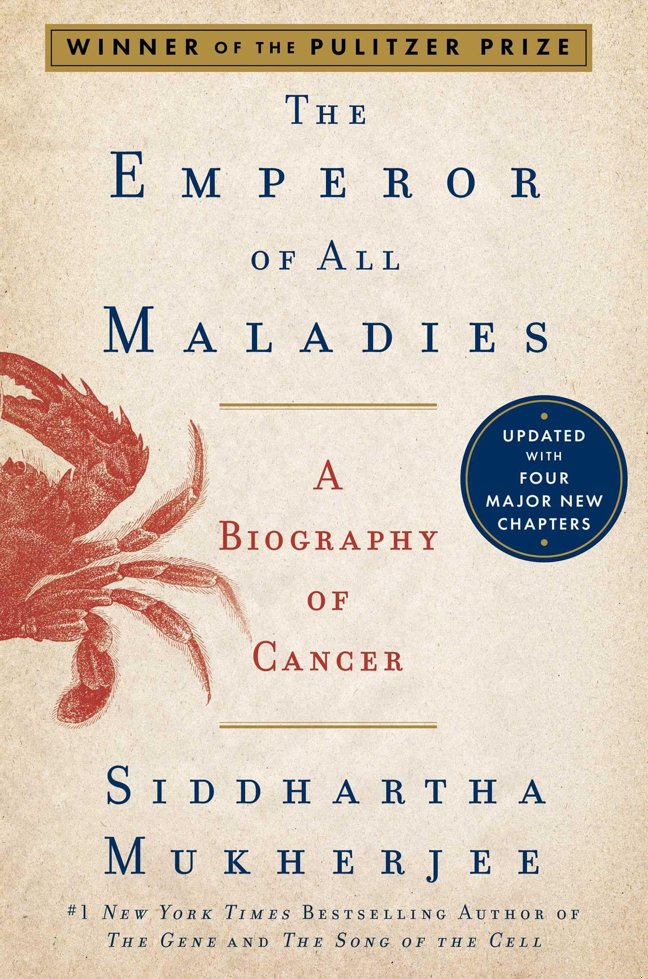
Cover unavailable
83
The Hate U Give
Angie Thomas
4.0
Sixteen-year-old Starr Carter moves between two worlds: the poor neighborhood where she lives and the fancy suburban prep school she attends. The uneasy balance between these worlds is shattered when Starr witnesses the fatal shooting of her childhood best friend Khalil at the hands of a police officer. Khalil was unarmed.
Soon afterward, his death is a national headline. Some are calling him a thug, maybe even a drug dealer and a gangbanger. Protesters are taking to the streets in Khalil's name. Some cops and the local drug lord try to intimidate Starr and her family. What everyone wants to know is: what really went down that night? And the only person alive who can answer that is Starr.
But what Starr does--or does not--say could upend her community. It could also endanger her life.
…
Recommended by Bianca Belair.
Bianca Belair
For #BlackHistoryMonth I will be sharing some of my favorite books by Black Authors 7th Book: The Hate U Give By: Angie Thomas @angiecthomas The movie was really great, but it just hits different when you read the book! https://t.co/rxMH5Uu6JN [source]
Cover unavailable
84
The Screwtape Letters
C.S. Lewis
4.0
The story takes the form of a series of letters from a senior demon, Screwtape, to his nephew, a junior "tempter" named Wormwood, so as to advise him on methods of securing the damnation of a British man, known only as "the Patient".
Screwtape holds an administrative post in the bureaucracy ("Lowerarchy") of Hell, and acts as a mentor to Wormwood, the inexperienced tempter. In the body of the thirty-one letters which make up the book, Screwtape gives Wormwood detailed advice on various methods of undermining faith and promoting sin in the Patient, interspersed with observations on human nature and Christian doctrine. Wormwood and Screwtape live in a peculiarly morally reversed world, where individual benefit and greed are seen as the greatest good, and neither demon is capable of comprehending or acknowledging true human virtue when he sees it.
…
Recommended by John C. Maxwell, Dominic D'Agostino, and Ed Morrissey.
In my Sunday reflections, I often refer back to arguments made by Lewis in The Screwtape Letters. The book is a brilliant, devastating, and entertaining disposition on... https://t.co/qPAHQHG6Hk [source]
Cover unavailable
85
All the Light We Cannot See
Anthony Doerr
4.0
An alternate cover for this ISBN can be found here
From the highly acclaimed, multiple award-winning Anthony Doerr, the stunningly beautiful instant New York Times bestseller about a blind French girl and a German boy whose paths collide in occupied France as both try to survive the devastation of World War II.
Marie-Laure lives in Paris near the Museum of Natural History, where her father works. When she is twelve, the Nazis occupy Paris and father and daughter flee to the walled citadel of Saint-Malo, where Marie-Laure’s reclusive great uncle lives in a tall house by the sea. With them they carry what might be the museum’s most valuable and dangerous jewel.
In a mining town in Germany, Werner Pfennig, an orphan, grows up with his younger sister, enchanted by a crude radio they find that brings them news and stories from places they have never seen or imagined. Werner becomes an expert at building and fixing these crucial new instruments and is enlisted to use his talent to track down the resistance. Deftly interweaving the lives of Marie-Laure and Werner, Doerr illuminates the ways, against all odds, people try to be good to one another.
…
Recommended by Jason Goldman.
Jason Goldman
All The Light We Cannot See is the best book I've read in a while. I tend to speed read and here I savored every word; the writing is just effortlessly beautiful. I hope it's made it onto high school WWII syllabi by now. [source]
Cover unavailable
86
Rich Dad Poor Dad: What The Rich Teach Their Kids About Money - That The Poor And Middle Class Do Not!
Robert T. Kiyosaki
4.0
In Rich Dad Poor Dad, the #1 Personal Finance book of all time, Robert Kiyosaki shares the story of his two dad: his real father, whom he calls his ‘poor dad,’ and the father of his best friend, the man who became his mentor and his ‘rich dad.’ One man was well educated and an employee all his life, the other’s education was “street smarts” over traditional classroom education and he took the path of entrepreneurship…a road that led him to become one of the wealthiest men in Hawaii. Robert’s poor dad struggled financially all his life, and these two dads—these very different points of view of money, investing, and employment—shaped Robert’s thinking about money.
Robert has challenged and changed the way tens of millions of people, around the world, think about money and investing and he has become a global advocate for financial education and the path to financial freedom. Rich Dad Poor Dad (and the Rich Dad series it spawned) has sold over 36 million copies in English and translated editions around the world.
Rich Dad Poor Dad will… • explode the myth that you need to earn a high income to become rich • challenge the belief that your house is an asset • show parents why they can’t rely on the school system to teach their kids about money • define, once and for all, an asset and a liability • explain the difference between good debt and bad debt • teach you to see the world of money from different perspectives • discuss the shift in mindset that can put you on the road to financial freedom
Will Smith mentioned sharing this book with his son. [source]
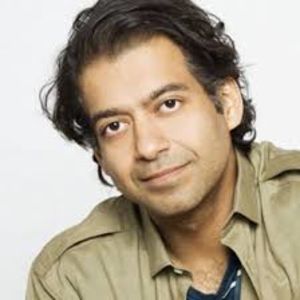
Cover unavailable
87
The Road
Cormac McCarthy
4.0
A searing, postapocalyptic novel destined to become Cormac McCarthy’s masterpiece.
A father and his son walk alone through burned America. Nothing moves in the ravaged landscape save the ash on the wind. It is cold enough to crack stones, and when the snow falls it is gray. The sky is dark. Their destination is the coast, although they don’t know what, if anything, awaits them there. They have nothing; just a pistol to defend themselves against the lawless bands that stalk the road, the clothes they are wearing, a cart of scavenged food—and each other.
The Road is the profoundly moving story of a journey. It boldly imagines a future in which no hope remains, but in which the father and his son, “each the other’s world entire,” are sustained by love. Awesome in the totality of its vision, it is an unflinching meditation on the worst and the best that we are capable of: ultimate destructiveness, desperate tenacity, and the tenderness that keeps two people alive in the face of total devastation. (front flap)
It's got everything that's grabbing the headlines in America right now. It's about race and class, the economy, culture, immigration and the danger of the us-versus-them mentality. And underneath it all, pumps the heart and soul of family love, the pursuit of happiness, and what home really means. [source]
This is possibly the most important environmental book ever written. It is a thought-experiment that imagines the world without a biosphere. That is the fundamental thought-experiment at the heart of environmentalism. All the horrors of that story arise from the disappearance of the biosphere, leaving people without any means of feeding themselves and without any means of survival. They are thrown into a brutal and fatal competition where the only thing left to eat is each other. [source]
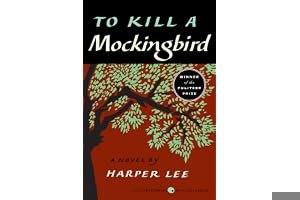
Greg Garrett
There is no creature that has been transformed by leaking chemicals or radioactive satellites. But, on the other hand, there are human beings who consume other humans and that informs the major conflicts of the book. So, you’ve got a post-apocalyptic setting and you’ve got ethical quandaries for the main characters. There’s the sense of menace that permeates the zombie apocalypse. It’s not bad enough that they’re going to kill you, they’re also going to eat you. What I love about this story is its literary quality. We tend to think of the zombie apocalypse as a low-culture, pulp phenomenon. [source]
Cover unavailable
88
The Nightingale
KRISTIN HANNAH
4.0
In love we find out who we want to be. In war we find out who we are.
FRANCE, 1939
In the quiet village of Carriveau, Vianne Mauriac says goodbye to her husband, Antoine, as he heads for the Front. She doesn’t believe that the Nazis will invade France…but invade they do, in droves of marching soldiers, in caravans of trucks and tanks, in planes that fill the skies and drop bombs upon the innocent. When a German captain requisitions Vianne’s home, she and her daughter must live with the enemy or lose everything. Without food or money or hope, as danger escalates all around them, she is forced to make one impossible choice after another to keep her family alive.
Vianne’s sister, Isabelle, is a rebellious eighteen-year-old girl, searching for purpose with all the reckless passion of youth. While thousands of Parisians march into the unknown terrors of war, she meets Gäetan, a partisan who believes the French can fight the Nazis from within France, and she falls in love as only the young can…completely. But when he betrays her, Isabelle joins the Resistance and never looks back, risking her life time and again to save others.
With courage, grace and powerful insight, bestselling author Kristin Hannah captures the epic panorama of WWII and illuminates an intimate part of history seldom seen: the women’s war. The Nightingale tells the stories of two sisters, separated by years and experience, by ideals, passion and circumstance, each embarking on her own dangerous path toward survival, love, and freedom in German-occupied, war-torn France–a heartbreakingly beautiful novel that celebrates the resilience of the human spirit and the durability of women. It is a novel for everyone, a novel for a lifetime.
…
Cover unavailable
89
The Kite Runner
Khaled Hosseini and Simon & Schuster Audi
4.0
The unforgettable, heartbreaking story of the unlikely friendship between a wealthy boy and the son of his father’s servant, The Kite Runner is a beautifully crafted novel set in a country that is in the process of being destroyed. It is about the power of reading, the price of betrayal, and the possibility of redemption; and an exploration of the power of fathers over sons—their love, their sacrifices, their lies.
A sweeping story of family, love, and friendship told against the devastating backdrop of the history of Afghanistan over the last thirty years, The Kite Runner is an unusual and powerful novel that has become a beloved, one-of-a-kind classic. --khaledhosseini.com
…
Recommended by James Altucher, Ann Miura-Ko, Magda Marcu, and 1 others.
Ann Miura-Ko recommended this book on the podcast "The Tim Ferriss Show". [source]
Magda Marcu
I’m currently reading “The Kite Runner”. I never have expectations from books, I let them surprise me as I get into the story. Learning about characteristics of different cultures, in this case the Afghan one, it’s one aspect I am interested in. [source]
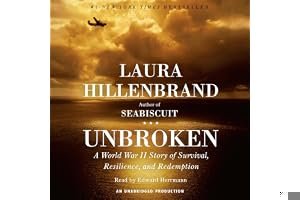
Cover unavailable
90
The Bell Jar
Sylvia Plath
4.0
Sylvia Plath's shocking, realistic, and intensely emotional novel about a woman falling into the grip of insanity.
Esther Greenwood is brilliant, beautiful, enormously talented, and successful, but slowly going under—maybe for the last time. In her acclaimed and enduring masterwork, Sylvia Plath brilliantly draws the reader into Esther's breakdown with such intensity that her insanity becomes palpably real, even rational—as accessible an experience as going to the movies. A deep penetration into the darkest and most harrowing corners of the human psyche, The Bell Jar is an extraordinary accomplishment and a haunting American classic.
…
Recommended by Bryony Gordon, The CEO Library Community (through anonymous form), and Tim Kendall.
As a teenage girl, you have to read The Bell Jar. It’s a rite of passage. [source]
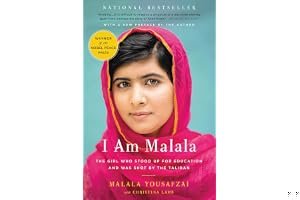
The CEO Library Community (through anonymous form)
One of the best 3 books I've read in 2019 [source]
Tim Kendall
Despite its subject matter, The Bell Jar is often a very funny novel. Perhaps we miss it because the pall of Plath’s biography descends across the whole work and reputation. But The Bell Jar is viciously funny. There are people still alive today who won’t talk about it because they were so badly hurt by Plath’s portrayal of them. [source]
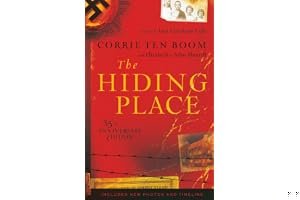
Cover unavailable
91
The Unbearable Lightness of Being
Milan Kundera
4.0
In The Unbearable Lightness of Being, Milan Kundera tells the story of a young woman in love with a man torn between his love for her and his incorrigible womanizing and one of his mistresses and her humbly faithful lover. This magnificent novel juxtaposes geographically distant places; brilliant and playful reflections; and a variety of styles to take its place as perhaps the major achievement of one of the world’s truly great writers.
This book was recommended by on page 488 in "Tools of Titans". [source]
Bernard Tan
I wasn’t expecting anything going into it, but I am currently quite engrossed by Kundera’s understanding of humanity and his beautiful writing style. [source]
Cover unavailable
92
Eleanor Oliphant Is Completely Fine
Gail Honeyman
4.0
No one’s ever told Eleanor that life should be better than fine
Meet Eleanor Oliphant: she struggles with appropriate social skills and tends to say exactly what she’s thinking. Nothing is missing in her carefully timetabled life of avoiding unnecessary human contact, where weekends are punctuated by frozen pizza, vodka, and phone chats with Mummy.
But everything changes when Eleanor meets Raymond, the bumbling and deeply unhygienic IT guy from her office. When she and Raymond together save Sammy, an elderly gentleman who has fallen, the three rescue one another from the lives of isolation that they had been living. Ultimately, it is Raymond’s big heart that will help Eleanor find the way to repair her own profoundly damaged one. If she does, she'll learn that she, too, is capable of finding friendship—and even love—after all.
Smart, warm, uplifting, Eleanor Oliphant Is Completely Fine is the story of an out-of-the-ordinary heroine whose deadpan weirdness and unconscious wit make for an irresistible journey as she realizes. . .
the only way to survive is to open your heart.
…
Recommended by Twinkle Khanna.
Twinkle Khanna
Eleanor is awkward, funny, an alcoholic and clearly not fine. A great book for someone who wants to get over a reading slump. Loved it! #mustread #eleanoroliphantiscompletelyfine #TweakIt https://t.co/fVQu4sYhSi [source]
Cover unavailable
93
The Book of Mormon Study Guide: Start to Finish
Thomas R. Valletta
4.0
Cover unavailable
94
I Know Why the Caged Bird Sings
Maya Angelou
4.0
Here is a book as joyous and painful, as mysterious and memorable, as childhood itself. I Know Why the Caged Bird Sings captures the longing of lonely children, the brute insult of bigotry, and the wonder of words that can make the world right. Maya Angelou’s debut memoir is a modern American classic beloved worldwide.
Sent by their mother to live with their devout, self-sufficient grandmother in a small Southern town, Maya and her brother, Bailey, endure the ache of abandonment and the prejudice of the local “powhitetrash.” At eight years old and back at her mother’s side in St. Louis, Maya is attacked by a man many times her age—and has to live with the consequences for a lifetime. Years later, in San Francisco, Maya learns that love for herself, the kindness of others, her own strong spirit, and the ideas of great authors (“I met and fell in love with William Shakespeare”) will allow her to be free instead of imprisoned.
Poetic and powerful, I Know Why the Caged Bird Sings will touch hearts and change minds for as long as people read. “I Know Why the Caged Bird Sings liberates the reader into life simply because Maya Angelou confronts her own life with such a moving wonder, such a luminous dignity.”—James Baldwin
…
Recommended by Richard Branson, Bianca Belair, and Julia Enthoven.
Today is World Book Day, a wonderful opportunity to address this #ChallengeRichard sent in by Mike Gonzalez of New Jersey: Make a list of your top 65 books to read in a lifetime. [source]
Bianca Belair
For #BlackHistoryMonth I will be sharing some of my favorite books by Black Authors 5th Book: I Know Why the Caged Bird Sings By: Maya Angelou Another autobiography classic that will be hard to not find on any must- read book list! https://t.co/mGRG76lLRn [source]
Julia Enthoven
I Know Why the Caged Bird Sings is beautifully written, and I really enjoy the voice of the protagonist and think it’s sad and fascinating to read about her time in history. [source]
Cover unavailable
95
Book of Mormon Made Easier Box Set (with Chronological Map)
David Ridges
4.0
In our busy world, we sometimes find our scripture study isn't always productive. The solution is here with the complete Book of Mormon Made Easier Box Set! This box set includes Parts 1, 2, and 3. Along with the complete text of the Book of Mormon, these valuable study guides include in-the-verse notes and additional insights and commentary. And now with a new 24" x 36" chronological map, this set is the ultimate study companion!
…
Cover unavailable
96
It Ends with Us
Colleen Hoover
4.0
Sometimes it is the one who loves you who hurts you the most.
Lily hasn’t always had it easy, but that’s never stopped her from working hard for the life she wants. She’s come a long way from the small town in Maine where she grew up — she graduated from college, moved to Boston, and started her own business. So when she feels a spark with a gorgeous neurosurgeon named Ryle Kincaid, everything in Lily’s life suddenly seems almost too good to be true.
Ryle is assertive, stubborn, maybe even a little arrogant. He’s also sensitive, brilliant, and has a total soft spot for Lily. And the way he looks in scrubs certainly doesn’t hurt. Lily can’t get him out of her head. But Ryle’s complete aversion to relationships is disturbing. Even as Lily finds herself becoming the exception to his “no dating” rule, she can’t help but wonder what made him that way in the first place.
As questions about her new relationship overwhelm her, so do thoughts of Atlas Corrigan — her first love and a link to the past she left behind. He was her kindred spirit, her protector. When Atlas suddenly reappears, everything Lily has built with Ryle is threatened.
…
Cover unavailable
97
The Happiness Project: Or Why I Spent a Year Trying to Sing in the Morning, Clean My Closets, Fight Right, Read Aristotle, and Generally Have More Fun
Gretchen Rubin had an epiphany one rainy afternoon in the unlikeliest of places: a city bus. “The days are long, but the years are short,” she realized. “Time is passing, and I’m not focusing enough on the things that really matter.” In that moment, she decided to dedicate a year to her happiness project.
In this lively and compelling account, Rubin chronicles her adventures during the twelve months she spent test-driving the wisdom of the ages, current scientific research, and lessons from popular culture about how to be happier. Among other things, she found that novelty and challenge are powerful sources of happiness; that money can help buy happiness, when spent wisely; that outer order contributes to inner calm; and that the very smallest of changes can make the biggest difference.
…
Cover unavailable
98
Life of Pi
Yann Martel
4.0
Yann Martel's imaginative and unforgettable Life of Pi is a magical reading experience, an endless blue expanse of storytelling about adventure, survival, and ultimately, faith. The precocious son of a zookeeper, 16-year-old Pi Patel is raised in Pondicherry, India, where he tries on various faiths for size, attracting "religions the way a dog attracts fleas." Planning a move to Canada, his father packs up the family and their menagerie and they hitch a ride on an enormous freighter. After a harrowing shipwreck, Pi finds himself adrift in the Pacific Ocean, trapped on a 26-foot lifeboat with a wounded zebra, a spotted hyena, a seasick orangutan, and a 450-pound Bengal tiger named Richard Parker ("His head was the size and color of the lifebuoy, with teeth"). It sounds like a colorful setup, but these wild beasts don't burst into song as if co-starring in an anthropomorphized Disney feature. After much gore and infighting, Pi and Richard Parker remain the boat's sole passengers, drifting for 227 days through shark-infested waters while fighting hunger, the elements, and an overactive imagination. In rich, hallucinatory passages, Pi recounts the harrowing journey as the days blur together, elegantly cataloging the endless passage of time and his struggles to survive: "It is pointless to say that this or that night was the worst of my life. I have so many bad nights to choose from that I've made none the champion."
The protagonist Piscine "Pi" Molitor Patel, an Indian boy from Pondicherry, explores the issues of religion and spirituality from an early age and survives 227 days shipwrecked in the Pacific Ocean.
Lina is just like any other fifteen-year-old Lithuanian girl in 1941. She paints, she draws, she gets crushes on boys. Until one night when Soviet officers barge into her home, tearing her family from the comfortable life they've known. Separated from her father, forced onto a crowded and dirty train car, Lina, her mother, and her young brother slowly make their way north, crossing the Arctic Circle, to a work camp in the coldest reaches of Siberia. Here they are forced, under Stalin's orders, to dig for beets and fight for their lives under the cruelest of conditions.
Lina finds solace in her art, meticulously--and at great risk--documenting events by drawing, hoping these messages will make their way to her father's prison camp to let him know they are still alive. It is a long and harrowing journey, spanning years and covering 6,500 miles, but it is through incredible strength, love, and hope that Lina ultimately survives. Between Shades of Gray is a novel that will steal your breath and capture your heart.
…
Cover unavailable
100
Homage to Catalonia
George Orwell
4.0
In 1936 George Orwell travelled to Spain to report on the Civil War and instead joined the fight against the Fascists. This famous account describes the war and Orwell’s own experiences. Introduction by Lionel Trilling.
The other reason I picked this book is that Orwell, like Dan Schorr, was an outsider. When he went to Spain, he was an unknown. He wasn’t Hemingway. He wasn’t a well-connected intellectual. He just had this amazing eye for detail. He was an amazing observer, and he could write so powerfully. This book, to me, is just one of the classics of foreign reporting. [source]
Anyone who wants to go off and write about Egypt, Tunisia or Libya today should pack a copy of Homage to Catalonia. It’s brilliant reportage. As you know, it opens with a vignette of an Italian militiaman in the barracks in Barcelona and he only saw this guy for a few moments but it captures the excitement. [source]