

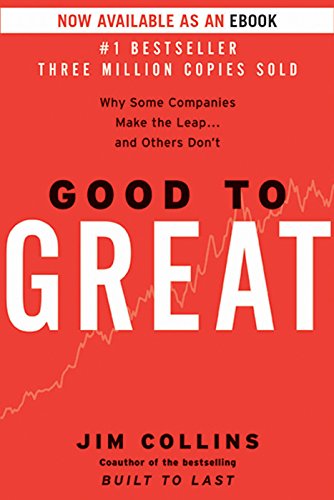
This article is an excerpt from the Shortform summary of "Good to Great" by Jim Collins. Shortform has the world's best summaries of books you should be reading.
Like this article? Sign up for a free trial here .
What is the Stockdale Paradox? The “Stockdale Paradox” is the stoic acceptance of business realities coupled with an unwavering faith in eventual triumph. This concept was coined by Jim Collins in his book Good to Great.
We’ll cover the Stockdale Paradox and why it’s so important to face the brutal realities of the market in order for your business to succeed. Additionally, we’ll look at how you can be a truth-telling leader that uses the facts to your advantage.
Originally Published: December 23, 2019
Last Updated: January 23, 2026
The Stockdale Paradox
Admiral Jim Stockdale was the highest-ranking U.S. prisoner at the infamous North Vietnamese POW camp dubbed the “Hanoi Hilton.” Over the course of his eight-year imprisonment, he was tortured more than 20 times and suffered unimaginable physical and psychic pain.
When Collins asked him which prisoners didn’t make it, he replied, “the optimists.” The optimists were the ones who thought they would be rescued well before they actually were. With each optimistic prediction—“We’ll be out in a month”; “We’ll be out by the end of the season”—that didn’t come to fruition, these soldiers lost more and more of their will to survive. They died of “broken hearts.”
Stockdale endured because he was able to confront and manage the brutal reality of his day-to-day life in the camp—interrogations, torture—without losing hope that one day he would be freed.
Leading Like Stockdale
Each good-to-great company faced adversity on its path to great, whether in the form of crushing debt (in the case of Fannie Mae) or a massive product recall (in the case of Abbott Laboratories).
Good-to-great leaders approach these challenges in the same way Stockdale did his imprisonment: They accept and address the brute facts of reality while never losing faith that the company will emerge victorious.
Unearthing and Facing Facts
Collins says one of the principles that makes good-to-great companies successful is that leaders are unflinching in the face of facts, no matter how dire—leaders remain stoic yet hopeful, and realistic without turning cynical. Collins adds that in order to respond to facts in this way, leaders cultivate a culture in which facts can be discovered and expressed without fear of reprisal or blame.
(Shortform note: In Principles, Ray Dalio says you might deny the facts and shut yourself off from self-reflection because you want to protect your ego—your underlying desire to be seen as capable. This leads to spontaneous, emotionally driven reactions, rather than well-thought-out decisions. You might also see the world through your own biased lens, causing you to have blind spots. To get over these two hurdles, Dalio says you should be totally receptive to the possibility that others might see something better than you. You must also create a culture that refuses to compromise the truth to skirt people’s egos and emotions.)
For example, in the 1970s, Kroger and A&P were well-established grocery companies that were similarly positioned to take advantage of a new customer demand for a one-stop shopping experience. But whereas Kroger saw the demand for “superstores”—establishments that sold conventional groceries as well as prepared foods and nutritional supplements—and overhauled all their stores, A&P stayed the course. Over the 15-year period that Collins and his team evaluated, Kroger generated 80 times the returns of A&P. Collins says A&P had the facts: It rolled out an experimental superstore that was a success, but management chose to stick to what worked for the company in the past rather than adjust to a changing marketplace.
(Shortform note: A&P’s decision to keep doing what they were doing was partly driven by a phenomenon called groupness, the instinct to form in-groups and view outsiders with suspicion. Psychologists say that we naturally defend our group—sometimes by dismissing information, practices, or culture that comes from others. This tendency gets even stronger when a group works hard toward a goal and succeeds, reinforcing its boundaries and heightening its resistance to outside ideas. It comes into play in harmful ways not only in business—as A&P demonstrated by dismissing outside information—but also in science and nature.)
How to Achieve It
With the right management team—one comprising sharp, critical thinkers—the facts should never be in short supply. Collins says leaders can encourage truth-telling by:
1) Beginning meetings with questions, not answers. Leaders should ask their team tough questions to unearth information and insight. (Shortform note: What questions should you ask your team? Research reveals the five kinds of questions to help you unearth information and insight, and make better decisions. The first is integrative, which gives you a full picture of your situation. The second is speculative, which helps you think creatively. The third is productive, which clarifies the resources you have to help you move forward. The fourth is interpretive, which allows you to dig deeper into a problem and its implications. The fifth is subjective, which reveals your team’s feelings and opinions.)
2) Cultivating, rather than stifling, debate among the team. Collins says that some executives solicit input from their team just to give them a sense of being heard, even though they’re determined to pursue the direction they already had in mind. He says leaders should instead encourage dissent that has real implications on company strategy.
(Shortform note: In Principles, Dalio details the two practices that ensure healthy debate within his company. The first is thoughtful disagreement, which he describes as being open to other viewpoints and moving a conversation in a useful direction. He emphasizes that your goal is not to prove you’re right, but rather to find out which view is right and decide what to do about it. The second practice is fostering an environment where the best ideas win, no matter what the source. However, he concedes that you should give more weight to the opinions of people who are more credible in an area.)
3) Analyzing mistakes without assigning blame. Collins says evaluating failures in this way ensures that the same errors aren’t made twice.
(Shortform note: To evaluate failures with a level head, reframe how you see them. In Right Kind of Wrong, Amy Edmondson says you should see them not as a cause for shame or punishment but simply as results that differ from the desired outcome. She adds that to develop a healthy relationship with failure, you need three things: resilience—the ability to push through embarrassment and frustration, and keep trying after a setback; accountability—recognizing and admitting to your role in a failure; and reflection—examining your failures so you can learn from them and view them as opportunities. Leaders who model this behavior and candidly discuss their own mistakes will encourage others to do the same.)
FAQ
What is the Stockdale Paradox?
The Stockdale Paradox is the ability to face brutal facts without losing faith in eventual success, balancing realism with long-term hope.
Why is a truth-telling culture important for leaders?
A culture that encourages honesty without fear allows critical facts to surface, helping leaders make better decisions instead of protecting egos.
What lesson does the Kroger vs. A&P example illustrate?
Kroger succeeded because it acted on emerging facts and adapted, while A&P failed by ignoring evidence that challenged its past success.
How can leaders encourage facts to come out in meetings?
Leaders should start with questions instead of answers and invite open discussion to uncover insights and perspectives.
Why is healthy debate essential to good decision-making?
Real debate tests assumptions and ensures the best ideas shape strategy, rather than decisions being driven by authority or consensus alone.
How should leaders analyze mistakes without blame?
They should treat mistakes as learning opportunities, focusing on understanding what went wrong so the same errors aren’t repeated.
———End of Preview———
Like what you just read? Read the rest of the world's best summary of "Good to Great" at Shortform . Learn the book's critical concepts in 20 minutes or less .
Here's what you'll find in our full Good to Great summary :
- The 3 key attributes of Great companies
- Why it's better to focus on your one core strength than get spread thin
- How to build a virtuous cycle, or flywheel effect, in your business