Getting Real: Doable Climate Mitigation and Adaptation Proposals
Getting Real: Doable Climate Mitigation and Adaptation Proposals

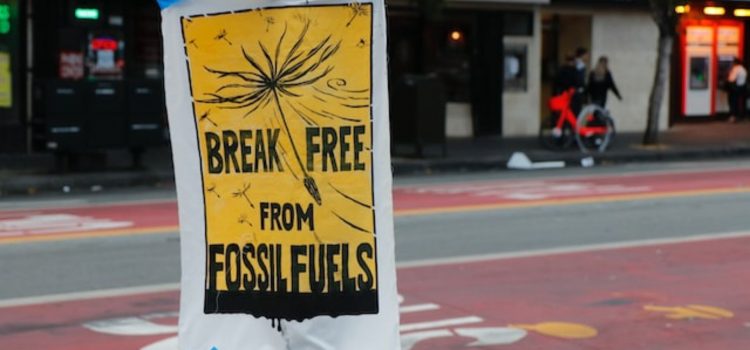
How should we deal with climate change and its impact? What’s actually realistic? Because of the distortion of climate science, Steven E. Koonin argues that many governments have endorsed impractical responses to climate change. In his book Unsettled, he proposes alternative responses to mitigate and adapt to climate change and its effects. Continue reading to learn Koonin’s practical climate mitigation and adaptation proposals.

How Do Children Acquire Language? Innate Skills May Explain It

How Do Children Acquire Language? Innate Skills May Explain It

How do children acquire language? At what point do our language acquisition skills diminish? Steven Pinker believes that human language is biologically innate. His theory provides a key insight into the field of linguistics. It explains why children have the ability to rapidly acquire language. Keep reading to discover why children are linguistic geniuses.

The World Without Us by Alan Weisman: Book Overview

The World Without Us by Alan Weisman: Book Overview

How permanent are the changes we’ve made to our planet? Have we left scars that will never heal, or is nature resilient enough to erase any damage we’ve done? The World Without Us by Alan Weisman is a thought experiment that’s designed to answer those questions. He contemplates the world before people and speculates what the world would be like if the human race disappeared. Keep reading for an overview of this book, and discover Weisman’s conclusions for his thought experiment.

Population and the Environment: A Thought Experiment

Population and the Environment: A Thought Experiment

What’s the relationship between the population and the environment? Is it straightforward or nuanced and complex? In The World Without Us, science journalist Alan Weisman outlines the ways the human race has left a mark on our planet. He asserts that the Earth’s environment would benefit if the human population declined or even vanished, and he conducts a thought experiment to explore the implications. Keep reading to learn about the interplay between the population and the environment from the perspective of this thought experiment.

Doomsday Scenarios: The Extinction of the Human Race

Doomsday Scenarios: The Extinction of the Human Race

What could wipe out humanity? How have civilizations been destroyed in the past? In The World Without Us, science journalist Alan Weisman asks what would happen if the human race vanished overnight. Although he states that the means of extinction are not necessarily relevant to the thought experiment, he speculates about how it might occur. Read more to learn about a few doomsday scenarios that might cause the extinction of the human race.

The Earth After Humans: Alan Weisman’s Thought Experiment

The Earth After Humans: Alan Weisman’s Thought Experiment

What effects, positive or negative, would the disappearance of humans have on the world? How permanent are the changes we’ve made? The human race has left a mark on our planet. In The World Without Us, science journalist Alan Weisman asks what would happen if the human race vanished overnight. Weisman’s goal is to address humanity’s environmental impact by imagining a world in which nature is allowed to flourish. Keep reading to learn how the Earth after humans would be significantly different than what came before.

Is Everything Relative? Relationalism & Our True Identity

Is Everything Relative? Relationalism & Our True Identity

Is everything relative? If so, what does that mean for our identity as humans? Philosopher Alan Watts believes that each of us is the Cosmic Being. What we think of as “I” is just one expression of the Cosmic Being in a particular time and place. Our real identity is the entire collection of beings and their environments and their relationships with one another. Continue reading for an intriguing discussion of relationalism as Watts sees it.

The Colorado River Water Shortage: The Cause & Impact

The Colorado River Water Shortage: The Cause & Impact

What’s causing the Colorado River water shortage? What impact will it have on the river itself, water users, and the wider economy? Reservoirs throughout the Colorado River drainage have become critically depleted because current water use agreements divert more irrigation water to farmers than the river can provide. Reduced availability of irrigation water could potentially diminish the nation’s food supply and drive up prices. Keep reading to learn more about the cause and impact of the Colorado River water shortage.

Richard Feynman, The Manhattan Project, and a New World

Richard Feynman, The Manhattan Project, and a New World

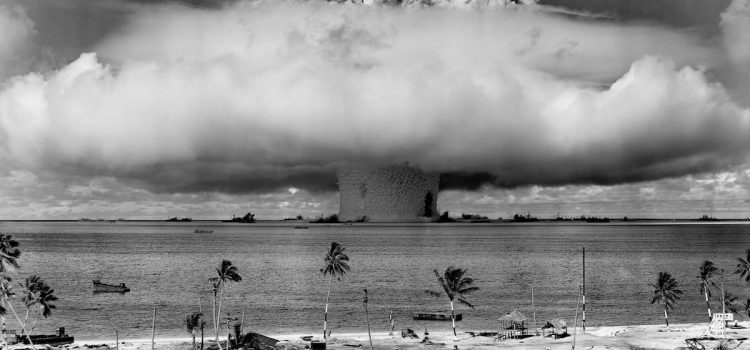
What was Richard Feynman’s contribution to the Manhattan Project? How did he look back on the experience? In the early 1940s, Richard Feynman was working on his doctorate at Princeton. An army general arrived on campus to recruit physicists. Feynman signed up, having no idea how his decision would change his life and put him at the center of a project that would change the world. Read more to learn about Richard Feynman, the Manhattan Project, and the dawning of a new era.

Richard Feynman at Caltech & the Path to His Academic Home

Richard Feynman at Caltech & the Path to His Academic Home

What did Richard Feynman do before he taught at Caltech? Why was Caltech such a good fit for him? For Richard Feynman, Caltech was home—academically speaking. His career took a few turns before he settled in at Caltech. And, he grew in his understanding of what it meant—for him—to be a teacher. He tells the story in his memoir Surely You’re Joking, Mr. Feynman! Continue reading to learn a bit about Feynman’s time at Caltech and the path he took to get there.