Why Adults and Children Need a Secure Base to Thrive

Why Adults and Children Need a Secure Base to Thrive

What is a “secure base” in regards to attachment theory? Why do both children and adults need a secure base in order to thrive? Psychologist Mary Ainsworth found that if a child had a “secure base,” (such as having a parent in the room with them) they felt more confident to explore. More recently, researchers found that adults also crave a secure base, such as a partner or friend, to thrive. Keep reading to learn more about the psychology of having a secure base.

The Simulated Annealing Example of Stronger Systems

The Simulated Annealing Example of Stronger Systems

What is simulated annealing? Can a simulated annealing example help you understand how societies can be antifragile? Annealing is a process used to make metals stronger and improve impurities. Inspired by this process, mathematicians created a process called simulated annealing, which evaluates systems and finds ways to improve. Author Nassim Nicholas Taleb proposes that we can apply this process to politics as well. Keep reading for a simulated annealing example that can help explain antifragility.

Omega-3 vs. Omega-6: What’s the Difference?

Omega-3 vs. Omega-6: What’s the Difference?

What is the difference between the Omega-3 vs. Omega-6 fatty acids? What functions do they perform in the body? The main difference between the Omega-3 vs Omega-6 fatty acids is in the location of double bonds. Function-wise, Omega-3 fatty acids are essential for brain development and reducing anti-inflammatory response. Omega-6 fatty acids, on the other hand, are good for skin and lowering blood cholesterol, but they also promote an inflammatory response in the body. Learn about the difference between the Omega-3 vs Omega-6 fatty acids, their main food sources, and what functions they perform in the body.

Group Madness Theory: Why Crowds Go Crazy

Group Madness Theory: Why Crowds Go Crazy

Who invented the group madness theory? Why do people behave irrationally—even violently—when in a crowd? Group madness is the idea that people lose their free will, reasoning, and restraint when in a crowd—everyone goes mad all at once and there’s no ideological motivation or justification involved. Group madness theory was invented by nineteenth-century French polymath Gustave LeBon. Keep reading to learn about Gustagrve LeBon’s group madness theory.

Plant-Based Eating: Why All the Hype?

plants

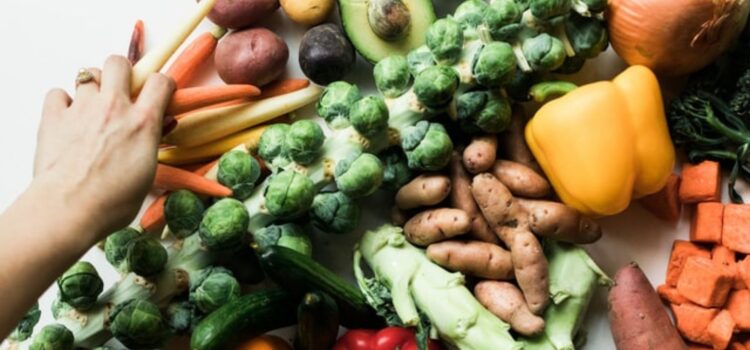
What’s all the hype about plant-based eating? Are diets consisting primarily of plant-derived foods really better for you? What are the main benefits of plant-based eating? There are numerous health benefits to eating a plant-based diet. To name a few, plant-based foods contain more antioxidants (compounds that fight free radicals) and fewer calories. They are also lower in toxins. Learn about the benefits of plant-based eating.

Creativity in Children: Can It Be Cultivated?

Creativity in Children: Can It Be Cultivated?

Is there a way to cultivate creativity in children? What can you, as a parent, do to encourage creative expression in your child? Creativity isn’t locked on genetics—it can be cultivated through upbringing. According to organizational psychologist Adam Grant, the key to cultivating creativity in children is not to impose too many rules and to explain the rationale behind the rules that are set. Keep reading to learn about the psychology behind creativity in children.

The Heidi/Howard Study: Success vs. Likeability

The Heidi/Howard Study: Success vs. Likeability

What is the Heidi/Howard study? What do the findings say about the gender double standard in modern workplaces? The 2003 “Heidi/Howard” study tested perceptions of women and men in the workforce. The study demonstrates the difference between likeability and success for men and women. The more successful a man is, the greater his likeability. The more successful a woman is, the worse her likeability.  Keep reading to learn about the Heidi/Howard study and its implications for women’s achievement.

The Lipid Hypothesis: The Biggest Food Hoax Ever?

The Lipid Hypothesis: The Biggest Food Hoax Ever?

What is the lipid hypothesis? How did the lipid hypothesis change dietary guidelines in the United States? Was there any evidence to corroborate it? The lipid hypothesis is a medical theory that postulates an association between the intake of saturated fat and the risk of developing cardiovascular disease. This hypothesis motivated the McGovern committee to create the Dietary Goals for the U.S. report which advised Americans to limit their consumption of red meat and dairy even though the evidence was weak. Keep reading to learn about the health implications of the lipid hypothesis.