Losing a Parent: The One Silver Lining

Losing a Parent: The One Silver Lining

Losing a parent is one of the most devastating things that can happen to a child. But, once the initial, most acute grieving subsides, is it possible that losing a parent can make a child stronger? We’ll cover the theory of “desirable difficulties” and look at why it may not be a coincidence that some of the most successful people in history lost a parent when they were young.

6 Arguments Against the Benefits of Smaller Class Sizes

Think Yourself Healthy: Live Like a Child

Every parent knows the benefits of smaller class sizes: more attention, higher achievement, and a sense of community, among other benefits. With so much to love, what could be bad about smaller class sizes? The benefits of smaller class sizes are valuable, but smaller isn’t always better. We’ll look at examples from around the world that demonstrate that it’s possible for a class to be too small.

Rule 5: Do Not Let Your Children Do Anything That Makes You Dislike Them

Rule 5: Do Not Let Your Children Do Anything That Makes You Dislike Them

In 12 Rules for Life, Rule #5 is “Do Not Let Your Children Do Anything That Makes You Dislike Them.” What does this mean? Why shouldn’t you let your children act like brats? The ultimate point is that you have a responsibility to teach your child the rules of society. If you don’t, society will, in a much meaner way. Learn more about Jordan Peterson’s Rule 5.

10,000 Hours of Practice, Explained (Malcolm Gladwell)

10,000 Hours of Practice, Explained (Malcolm Gladwell)

It may seem obvious that we need to work hard to succeed, but too often we attribute success solely to talent and forget that the hours we put in matter just as much as, if not significantly more than, the natural gifts we start with.

You need a certain level of natural talent to get your foot in the door in a particular field. But after you are “good enough,” practice becomes the determining factor in how successful you are. According to Malcolm Gladwell, 10,000 hours of practice is how long it takes to become an expert in something.

Robert Oppenheimer’s Practical Intelligence

Robert Oppenheimer’s Practical Intelligence

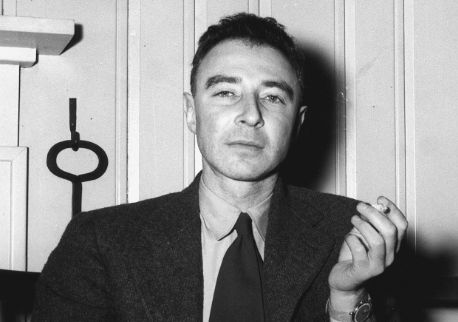
Gladwell contrasts Langan’s situation with Robert Oppenheimer, a physicist hired to head the American effort to develop the nuclear bomb during WWII.

Like Langan, Oppenheimer possessed a brilliant mind. He was doing lab experiments by third grade and studying physics and chemistry by fifth grade.

Unlike Langan, Oppenheimer was raised with privilege. He grew up in a wealthy neighborhood in Manhattan. He attended the progressive Ethical Culture School, where they groomed students to “reform the world.”