Serving the Church: What’s Your Unique Contribution?

Serving the Church: What’s Your Unique Contribution?

Are you serving the church in the way that only you can? How are you uniquely wired for ministry? A big part of Christian life is serving the church—contributing to the Great Commission to get God’s work done in the world. God has not only called you to serve, he has wired you to contribute in a way that no one else can. Read more to learn how you can serve the church like no one else.

Dwight D. Eisenhower: Accomplishments & Sacrifices

Dwight D. Eisenhower: Accomplishments & Sacrifices

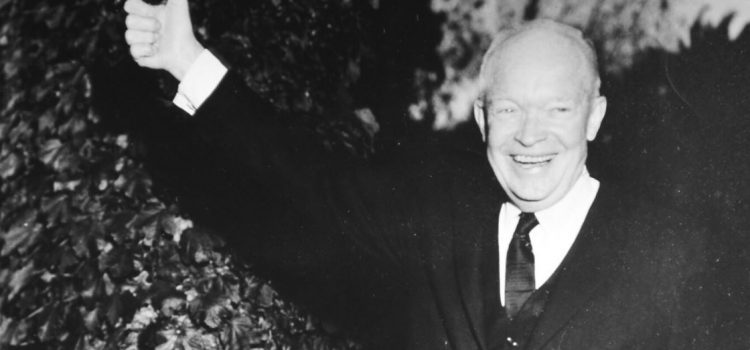
In what ways did Eisenhower repress himself to please others? How did Eisenhower’s self-sacrificing nature eventually win him a seat as President? In his book The Road to Character, David Brooks highlights some historical figures who put “we” before “me” and made sacrifices for the sake of humanity. One of the figures he discusses is Dwight D. Eisenhower. Continue reading to learn about Dwight D. Eisenhower’s accomplishments and life story.

Alternative Futures: What’s at Stake With Each Decision

Alternative Futures: What’s at Stake With Each Decision

What are alternative futures? Do you consider them when you make decisions? Whenever you make a decision, you’re choosing between alternative futures—outcomes that result from particular decisions. To make better decisions, you should adopt an “alternative futures” mindset. Keep reading to learn about thinking in terms of alternative futures.

Learn From Your Past With Mental Time Travel

Learn From Your Past With Mental Time Travel

What is mental time travel? How can it help you make better decisions? Mental time travel is a decision-making strategy in which you look at the past and imagine the future. It helps you learn from your experiences and keep your vision in mind. Ultimately, it guides you to make better decisions. Continue reading to learn how to leverage mental time travel.

The Role of Extrinsic Rewards in Motivation

The Role of Extrinsic Rewards in Motivation

What role do rewards play in motivation? Have you ever done something purely for fun, then started getting paid for it? How did getting paid change how you felt about the work, and how motivated you were? According to Daniel H. Pink, the author of Drive, rewards—specifically, extrinsic rewards—are only effective when the job is low-skill, routine and, monotone. However, when the job requires creativity and intelligence, extrinsic rewards actually diminish motivation and performance. In this article, you’ll learn about the psychology behind rewards and motivation. Specifically, we’ll discuss why extrinsic rewards are ineffective in motivating performance in the long-term.

Daniel Pink: Autonomy vs. Independence

Daniel Pink: Autonomy vs. Independence

What is autonomy in the context of motivation? How does autonomous motivation improve performance? Autonomy gives you more internal choice over what to do and how to do it. Autonomous motivation has been associated with: greater conceptual understanding, better grades, job satisfaction, higher productivity, less burnout, faster company growth, and better psychological health. According to Daniel Pink, autonomy is acting with internal choice but it is different from independence. In this article, you’ll learn about the autonomy component of motivation.