Using the Rule #1 Investing Toolbox for Market Timing

Rule #1's investing toolbox full of gold coins.

How do professional investors time the market so effectively? What if you could access the same tools they use to make informed decisions? The timing of your market entry and exit can greatly affect the outcomes of your investment endeavors. In Rule #1, Phil Town suggests an investing toolbox that utilizes analytical instruments to identify these pivotal moments. Discover how to safeguard your portfolio from market downturns with the Rule #1 investing toolbox.

Why Rule #1 Is One of the Best Investing Strategies to Learn

A person planting coins in a mason jar to represent the best investing strategy.

What is the Rule #1 investing strategy? Why does Phil Town recommend this approach as the best investing strategy? Rule #1 investing centers on building wealth by purchasing outstanding companies at attractive market prices. It underscores the importance of adopting investment strategies that reduce risk, providing a set of rules for investors to follow. Discover more about Phil Town’s strategy for smart investing, as explained in his book Rule #1.

How to Find Investment Opportunities: 4 Smart Strategies

A silhouette of a woman looking at charts and lines as she learns how to find investment opportunities.

Do you want to start an investment portfolio? Where can you find investment opportunities to help you start? Investing wisely requires a systematic strategy for pinpointing and assessing possible investment opportunities. The book Rule #1 by Phil Town will navigate you through every critical stage. Continue reading to learn how to find investment opportunities that are smart financial decisions.

Breaking Down Phil Town’s Investing Strategy for Beginners

The silhouette of a man looking at lines and charts for investing.

What skills do you need to manage your investment portfolio? How does Phil Town’s investing strategy garner good results? In Rule #1, Phil Town outlines the essential steps and considerations for successfully implementing an investment strategy known as Rule #1. The two major things you must consider when using this strategy are to eliminate any financial challenges and to gain skills to handle your own personal portfolio. Keep reading to learn more about Phil Town’s investing strategy.

The 2 Major Benefits of Platform Business Models

A businessman standing on a platform in the sky, representing the benefits of platforms.

What are the benefits of platform business models? How are platforms affecting politics and the economy? Platforms aren’t just an alternative to pipelines. Geoffrey G. Parker, Marshall W. Van Alstyne, and Sangeet Paul Choudary say platforms are outperforming pipelines and, in the process, transforming the world. We’ll explain why platforms are taking over the market and explore the economic, social, and political effects.

7 Ways to Invest Your Tax Refund Money Wisely

Coins being planted in soil with plants growing from them, visual for ways to invest tax refund money

What are some smart ways to invest your tax refund? Can investing your tax refund help you get ahead financially? If you invest tax refund funds wisely, such as by paying off high-interest debt, contributing to retirement accounts, or building an emergency fund, you can supercharge your financial stability. With effective management, this “unexpected” income can transform into a powerful tool to expedite your journey to financial freedom and make your hard-earned money work even harder. Dive deeper into how your tax refund can work significantly harder for you and steer you faster toward financial freedom.

Is Going to College Worth It, Amidst Rising Costs?

A college degree and graduation cap in the trash as some wonder, "is going to college worth it?"

Is going to college still worth it? How has public confidence in the value of a college degree changed in recent years? What can be done to reduce the financial risk for students? A recent study shows most colleges significantly increase their graduates’ earnings, even as public confidence in the value of higher education is declining. The 2008 financial crisis, the pandemic, and swelling tuition and student loan debts are fueling Americans’ skepticism about the value of a college degree. Let’s take a look at the current value of a college degree.

The Childcare Crisis in the US Keeps Getting Worse

An empty classroom displays the childcare crisis in the US

How has the end of federal pandemic funding impacted the childcare industry and families? Why is the sector struggling financially? Can state efforts fix the funding gap? The September expiration of federal pandemic support has put the US childcare sector in a state of crisis and left families struggling with soaring childcare costs. Staffing shortages, low wages, rising costs, and unpredictable income streams have forced many childcare providers to raise tuition or close. Continue reading as we delve into the causes and effects of the childcare crisis in the US.

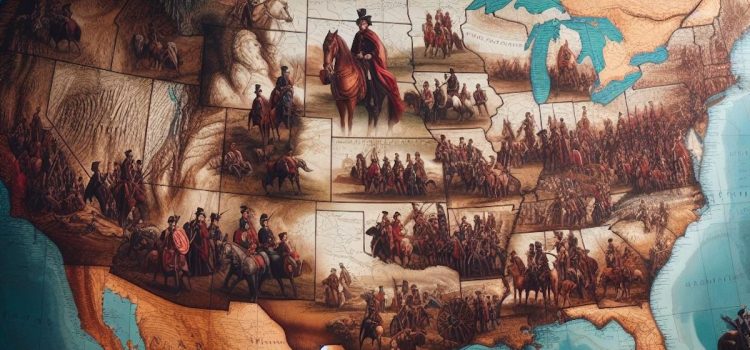
The Territorial Expansion of the United States: A People’s History

a map of the US during the first half of the 19th century illustrates the territorial expansion of the United States

How was the United States able to expand westward during its early history? What was the cost? In his book A People’s History of the United States, historian Howard Zinn discusses the country’s economic and territorial expansion during the first half of the 19th century. He focuses on how it led to the displacement of American Indians and the Mexican-American War. Keep reading to understand the territorial expansion of the United States from Zinn’s perspective.