
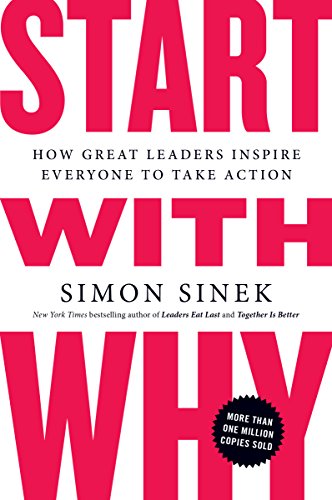
This article is an excerpt from the Shortform summary of "Start With Why" by Simon Sinek. Shortform has the world's best summaries of books you should be reading.
Like this article? Sign up for a free trial here .
Simon Sinek’s leadership views center around establishing trust. Sinek believes good leadership creates trust within the business, and how to establish the trust necessary to be a great leader.
Trust is a gut feeling—it exists in the limbic brain and can’t be rationalized. That’s why we trust certain companies even when things go wrong, and mistrust other companies even though they do everything right. Here’s more on Sinek’s advice on leadership from his book Start With Why.
Originally Published: January 23, 2020
Last Updated: January 22, 2026
Simon Sinek on Leadership: Establishing Trust
And when people trust a leader or organization, they place a higher value on it. Sinek defines value as “the transference of trust,” meaning value is the result of people trusting in you, your product, or your company. This is why trust is so important in Simon Sinek’s views on leadership.
Consequently, you can’t rationally convince someone to trust you. You have to earn that trust by showing them that you share their values and beliefs. That happens when you clearly communicate your WHY. Once people trust you, they will follow you willingly. This is the essence of Simon Sinek’s leadership.
Trusting Your Leadership
When a group of people with similar beliefs has a cause, challenge, or goal to chase, it creates a strong sense of teamwork. This gives employees something to work toward, which is how great ideas happen. Encouraging this sense of teamwork is part of Simon Sinek’s leadership strategy.
This is very different from average companieswhichho just give people things to work on. In these situations, people do their jobs and nothing more.
It’s the job of a great leader to create an environment where inspired work can happen.
Great leaders create strong company cultures where everyone works toward the same goal. They inspire employees to believe and pursue WHY instead of WHAT. This is why Simon Sinek’s leadership beliefs center on trust and company culture.
There’s a parable of a man who comes across three bricklayers working. He asks the first bricklayer what he’s doing; the first bricklayer grumbles, “I’m laying bricks.” He asks the second the same question and gets the reply, “I’m making money.” Lastly, he asks the third bricklayer, who replies in awe, “I’m building a cathedral.”
All three men were doing the same work. The first two men had a job. The third had a calling.
By starting with WHY, you give your employees a cathedral.
Inspiring Customers and Your Team
Sinek says that potential customers get inspired when a company shares its WHY. At that point, the company isn’t selling a product; it’s selling an idea. As a result, the company’s communications are authentic and inspirational: The company truly believes in its message, and people recognize that sincerity.
Customers who share the company’s vision—who have the same WHY—are then attracted to the company and try its products or services. When the product is good, it establishes trust between the company and the consumer. That, in turn, brings in more customers and creates a repeatable cycle of success.
The outdoor clothing company Patagonia is a good example of this principle. Their mission statement spells out that they’re in business to save our planet. That core mission shapes the company’s whole business strategy, and people buy from Patagonia partly because they share its commitment to sustainability and environmental justice.
| Counterpoint: People Want Simple Solutions to Basic Needs While Sinek believes appealing to goals and values will get customers’ attention, Donald Miller thinks it’s more effective to address people’s basic needs. In Building a Storybrand, Miller says people really only have two interests: Interest 1: Meet basic survival needs. People have fundamental needs for nourishment, security, relationships, and meaning. Everything they do is an attempt to fulfill at least one of these needs. Interest 2: Avoid complexity. The energy required to understand something complicated could be better spent on meeting those four basic needs, so people will quickly dismiss complex ideas and missions. Therefore, to grab a customer’s attention, Miller recommends presenting simple, survival-related messages about your company. For example, you might advertise how your product will save people money (security), or how it will help them connect with like-minded people (relationships). |
WHY Inspires Your Team
Sinek says great leaders create strong company cultures where everyone works toward the same goal. They inspire employees to believe and pursue WHY instead of WHAT.
An inspired team provides many benefits, including:
Innovation: When employees understand the company’s WHY, they feel a personal challenge to explore new ways to bring the WHY to life. For instance, Apple cofounder Steve Jobs didn’t personally build the Mac or the iPod, but he gave his talented team the context around which to innovate and explore the options for making his company’s WHY tangible.
(Shortform note: In Humanocracy, business consultants Gary Hamel and Michele Zanini add that the most successful companies are those that promote innovation through empowerment and accountability. Such companies encourage employees to find their own solutions to problems and their own ways to meet goals. However, those employees must also accept the consequences of their decisions, both positive and negative. So, if an innovation works well, the person who came up with it deserves recognition and perhaps a reward. If an innovation causes more harm than good, the person must take accountability for their mistake and do their best to repair the damage.)
Persistence: Sinek says that when employees have a clear sense of WHY, they’re more likely to embrace failure and move through it. Failure becomes a step on the way to the goal rather than a catastrophic setback. Inspiration revolutionizes employees’ perspectives on their jobs. Employees start to see even their least favorite tasks as necessary to achieving their WHY.
(Shortform note: In a culture that promotes innovation, some new initiatives will inevitably fail. It’s therefore important for employees to learn how to deal with failure beyond just owning up to it. In Dare to Lead, Brené Brown says you can help employees develop failure resilience, or the ability to recover quickly when something goes wrong. This entails reassuring onboarding employees that they’ll be supported—not penalized—when they fail. Then, train them to respond to failure rationally rather than emotionally, separating facts from feelings and assessing situations accurately, so that they can learn the right lessons from their mistakes.)
Trust: Inspired people realize that everyone—from the CEO down to the most entry-level worker—needs each other to reach their common goal. This means people will strive to be both trusting and trustworthy. Employees are less focused on self-gain, but instead do what’s best for the mission and the organization as a whole. Inspired employees feel protected in their companies and by their leaders because they feel leadership makes decisions in the service of a greater purpose rather than their own self-gain. That gives employees the confidence to take risks, explore, be creative, and push the company forward.
Sinek adds that building a trust-based organization starts with the hiring process. When you have a strong WHY, you can find employees who are also passionate about your mission. The trick here is to look beyond the résumé. Don’t just hire skilled people whom you then have to motivate. Instead, hire motivated people who believe in your WHY, and inspire them; skills can be taught, passion cannot.
| Build Upon the Foundation of Trust Sinek’s suggestions about building a trust-based organization closely mirror how former Netflix CEO Reed Hastings describes his approach to leadership. In No Rules Rules, Hastings writes that the best way to run a business is to hire the best people you can get, at any cost. In this case, that means people who believe in your company’s WHY—when you find someone who’s genuinely passionate about your mission, do whatever it takes to get them on the team and keep them there. However, while Sinek says this kind of trust will naturally lead to a healthy and inspired organization, Hastings urges you to keep actively building that kind of culture through constant feedback at all levels of the company. Everyone, from executives to entry-level worker,s should feel welcome to share their thoughts and offer suggestions. This will foster a culture of trust and respect in the workplace and help the company fulfill its mission more effectively (thereby building trust with customers as well). |
Simon Sinek Leadership Example: The Shackleton Expedition
In the 20th century, Ernest Shackleton set out to cross the Antarctic. He put out an ad for this unprecedented journey: “Men wanted for hazardous journey. Small wages, bitter cold, long months of complete darkness, constant danger, safe return doubtful. Honour and recognition in case of success.” This attracted only people who loved the WHY and could endure the pain.
Shackleton didn’t ask for his WHAT: “Men needed for adventure. 5 years experience required. Must know how to maintain sa hip and pitch tents.”
He and his team of twenty-seven men ended up stranded in the Antarctic for ten months when their ship, the Endurance, sank. Remarkably, no one died because Shackleton hired inspired people.
———End of Preview———
Like what you just read? Read the rest of the world's best summary of "Start With Why" at Shortform . Learn the book's critical concepts in 20 minutes or less .
Here's what you'll find in our full Start With Why summary :
- What Steve Jobs did right compared to every other business leader
- How to define your organization's WHY
- How to help your organization avoid losing its edge as it succeeds