We've ranked the best linkedin books using expert recommendations, sales data, and millions of reader ratings. At Shortform, we know books. Our book guides are the best in the world. Learn why.
Man's Search for Meaning has riveted generations of readers with its descriptions of life in Nazi death camps and its lessons for spiritual survival. Between 1942 and 1945 psychiatrist Viktor Frankl labored in four different camps, including Auschwitz, while his parents, brother, and pregnant wife perished. Based on his own experience and the stories of his many patients, Frankl argues that we cannot avoid suffering but we can choose how to cope with it, find meaning in it, and move forward with renewed purpose. Frankl's theory—known as logotherapy, from the Greek word logos ("meaning")—holds that our primary drive in life is not pleasure, as Freud maintained, but the discovery and pursuit of what we personally find meaningful. In the decades since its first publication in 1959, Man's Search for Meaning has become a classic, with more than twelve million copies in print around the world. A 1991 Library of Congress survey that asked readers to name a "book that made a difference in your life" found Man's Search for Meaning among the ten most influential books in America. At once a memoir, a meditation, a treatise, and a history, it continues to inspire us all to find significance in the very act of living. (back cover)
…
Recommended by Tony Robbins, Dustin Moskovitz, Ev Williams, and 60 others.
Another book that I’ve read dozens of times. It taught me that if you change the meaning, you change everything. Meaning equals emotion, and emotion equals life. [source]
Dustin Moskovitz
Co-founder/Facebook and Asana
Dustin Moskovitz recommended this book on Twitter. [source]
I read it while spending ten days in the ICU of Bellevue hospital trying to reattach my finger from a ring avulsion accident in my kitchen. It talks about the meaning of life, and I believe you come out a better person from reading it. [source]
Major New York Times bestseller Winner of the National Academy of Sciences Best Book Award in 2012 Selected by the New York Times Book Review as one of the best books of 2011 A Globe and Mail Best Books of the Year 2011 Title One of The Economist's 2011 Books of the Year One of The Wall Street Journal's Best Nonfiction Books of the Year 2011 2013 Presidential Medal of Freedom Recipient
In the international bestseller, Thinking, Fast and Slow, Daniel Kahneman, the renowned psychologist and winner of the Nobel Prize in Economics, takes us on a groundbreaking tour of the mind and explains the two systems that drive the way we think. System 1 is fast, intuitive, and emotional; System 2 is slower, more deliberative, and more logical. The impact of overconfidence on corporate strategies, the difficulties of predicting what will make us happy in the future, the profound effect of cognitive biases on everything from playing the stock market to planning our next vacation—each of these can be understood only by knowing how the two systems shape our judgments and decisions. Engaging the reader in a lively conversation about how we think, Kahneman reveals where we can and cannot trust our intuitions and how we can tap into the benefits of slow thinking. He offers practical and enlightening insights into how choices are made in both our business and our personal lives—and how we can use different techniques to guard against the mental glitches that often get us into trouble. Winner of the National Academy of Sciences Best Book Award and the Los Angeles Times Book Prize and selected by The New York Times Book Review as one of the ten best books of 2011, Thinking, Fast and Slow is destined to be a classic.
A few months ago, Mr. Obama read “Thinking, Fast and Slow,” by Daniel Kahneman, about how people make decisions — quick, instinctive thinking versus slower, contemplative deliberation. For Mr. Obama, a deliberator in an instinctive business, this may be as instructive as any political science text. [source]
Captivating dive into human decision making, marred by inclusion of several/many? psychology studies that fail to replicate. Will stand as a cautionary tale? [source]
You can go after the job you want—and get it! You can take the job you have—and improve it! You can take any situation—and make it work for you!
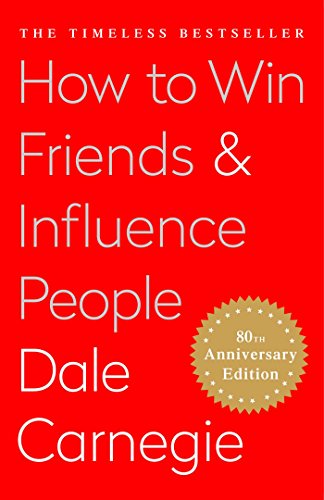
Dale Carnegie’s rock-solid, time-tested advice has carried countless people up the ladder of success in their business and personal lives. One of the most groundbreaking and timeless bestsellers of all time, How to Win Friends & Influence People will teach you:
-Six ways to make people like you -Twelve ways to win people to your way of thinking -Nine ways to change people without arousing resentment
And much more! Achieve your maximum potential—a must-read for the twenty-first century with more than 15 million copies sold!
…
Recommended by Dave Ramsey, Daymond John, Dustin Moskovitz, and 58 others.
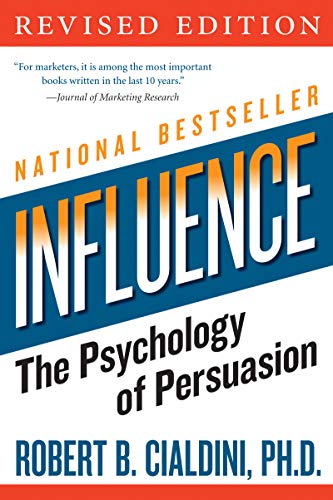
Influence, the classic book on persuasion, explains the psychology of why people say "yes"—and how to apply these understandings. Dr. Robert Cialdini is the seminal expert in the rapidly expanding field of influence and persuasion. His thirty-five years of rigorous, evidence-based research along with a three-year program of study on what moves people to change behavior has resulted in this highly acclaimed book.
You'll learn the six universal principles, how to use them to become a skilled persuader—and how to defend yourself against them. Perfect for people in all walks of life, the principles of Influence will move you toward profound personal change and act as a driving force for your success.
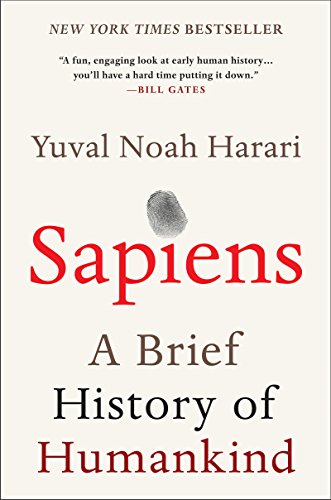
100,000 years ago, at least six human species inhabited the earth. Today there is just one. Us. Homo sapiens.
How did our species succeed in the battle for dominance? Why did our foraging ancestors come together to create cities and kingdoms? How did we come to believe in gods, nations and human rights; to trust money, books and laws; and to be enslaved by bureaucracy, timetables and consumerism? And what will our world be like in the millennia to come?
In Sapiens, Dr Yuval Noah Harari spans the whole of human history, from the very first humans to walk the earth to the radical – and sometimes devastating – breakthroughs of the Cognitive, Agricultural and Scientific Revolutions. Drawing on insights from biology, anthropology, paleontology and economics, he explores how the currents of history have shaped our human societies, the animals and plants around us, and even our personalities. Have we become happier as history has unfolded? Can we ever free our behaviour from the heritage of our ancestors? And what, if anything, can we do to influence the course of the centuries to come?
Bold, wide-ranging and provocative, Sapiens challenges everything we thought we knew about being human: our thoughts, our actions, our power ... and our future.
Both Melinda and I read this one, and it has sparked lots of great conversations at our dinner table. Harari takes on a daunting challenge: to tell the entire history of the human race in just 400 pages. He also writes about our species today and how artificial intelligence, genetic engineering, and other technologies will change us in the future. Although I found things to disagree with—especially Harari’s claim that humans were better off before we started farming—I would recommend Sapiens to anyone who’s interested in the history and future of our species. [source]
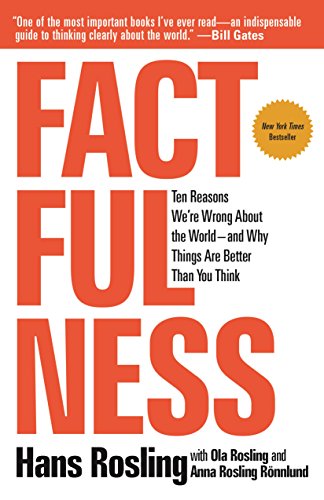
Factfulness: The stress-reducing habit of only carrying opinions for which you have strong supporting facts.
When asked simple questions about global trends—what percentage of the world’s population live in poverty; why the world’s population is increasing; how many girls finish school—we systematically get the answers wrong. So wrong that a chimpanzee choosing answers at random will consistently outguess teachers, journalists, Nobel laureates, and investment bankers.
In Factfulness, Professor of International Health and global TED phenomenon Hans Rosling, together with his two long-time collaborators, Anna and Ola, offers a radical new explanation of why this happens. They reveal the ten instincts that distort our perspective—from our tendency to divide the world into two camps (usually some version of us and them) to the way we consume media (where fear rules) to how we perceive progress (believing that most things are getting worse).
Our problem is that we don’t know what we don’t know, and even our guesses are informed by unconscious and predictable biases.
It turns out that the world, for all its imperfections, is in a much better state than we might think. That doesn’t mean there aren’t real concerns. But when we worry about everything all the time instead of embracing a worldview based on facts, we can lose our ability to focus on the things that threaten us most.
Inspiring and revelatory, filled with lively anecdotes and moving stories, Factfulness is an urgent and essential book that will change the way you see the world and empower you to respond to the crises and opportunities of the future.
As 2018 draws to a close, I’m continuing a favorite tradition of mine and sharing my year-end lists. It gives me a moment to pause and reflect on the year through the books I found most thought-provoking, inspiring, or just plain loved. It also gives me a chance to highlight talented authors – some who are household names and others who you may not have heard of before. Here’s my best of 2018 list. [source]
This was a breakthrough to me. The framework Hans enunciates is one that took me decades of working in global development to create for myself, and I could have never expressed it in such a clear way. I’m going to try to use this model moving forward. [source]
Aidan Connolly
I would suggest Hans Rosling’s Factfulness on the real world of statistics. [source]
Cover unavailable
7
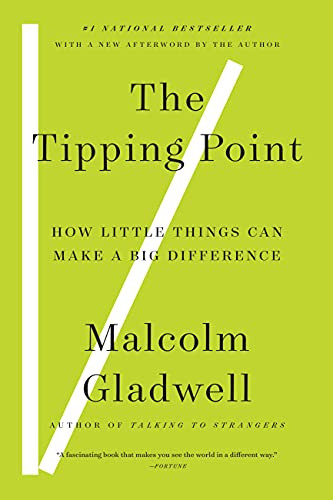
The Tipping Point: How Little Things Can Make a Big Difference
The tipping point is that magic moment when an idea, trend, or social behavior crosses a threshold, tips, and spreads like wildfire. Just as a single sick person can start an epidemic of the flu, so too can a small but precisely targeted push cause a fashion trend, the popularity of a new product, or a drop in the crime rate. This widely acclaimed bestseller, in which Malcolm Gladwell explores and brilliantly illuminates the tipping point phenomenon, is already changing the way people throughout the world think about selling products and disseminating ideas.
Gladwell introduces us to the particular personality types who are natural pollinators of new ideas and trends, the people who create the phenomenon of word of mouth. He analyzes fashion trends, smoking, children's television, direct mail, and the early days of the American Revolution for clues about making ideas infectious, and visits a religious commune, a successful high-tech company, and one of the world's greatest salesmen to show how to start and sustain social epidemics.
Bunch of really good information in here on how to make ideas go viral. This could be good to apply to any kind of products or ideas you may have. Definitely, check out The Tipping Point, which is one of my favorites. [source]
Malcolm Gladwell's breakthrough insight was to focus on the micro-relationships between individuals, which helped organizations realize that it's not about the big ads and the huge charity balls... it's about setting the stage for the buzz to start. [source]
Andy Stern
I think that when we talk about making change, it is much more about macro change, like in policy. This book reminds you that at times when you're building big movements, or trying to elect significant decision-makers in politics, sometimes it's the little things that make a difference. Ever since the book was written, we've become very used to the idea of things going viral unexpectedly and then having massive impact. The Tipping Point, to me, is really an appreciation that very small things can rearrange thinking in ways – like infectious diseases – that have huge implications. While we're always searching for the big policy changes – and we think we have to do that in very traditional ways of building coalitions against constituencies, movements and the media – sometimes it's the little things that actually tip the situation. Like the story of a person and their unique set of circumstances that really captures an issue about health care or housing. So it's trying to remember, while you're thinking about the grand and the glorious, that thinking about the small things can equally bring about change. [source]
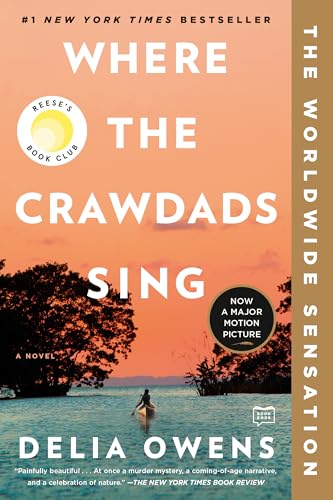
A novel about a young woman determined to make her way in the wilds of North Carolina, and the two men that will break her isolation open.
For years, rumors of the "Marsh Girl" have haunted Barkley Cove, a quiet town on the North Carolina coast. She's barefoot and wild; unfit for polite society. So in late 1969, when handsome Chase Andrews is found dead, the locals immediately suspect Kya Clark.
But Kya is not what they say. Abandoned at age ten, she has survived on her own in the marsh that she calls home. A born naturalist with just one day of school, she takes life lessons from the land, learning from the false signals of fireflies the real way of this world. But while she could have lived in solitude forever, the time comes when she yearns to be touched and loved. Drawn to two young men from town, who are each intrigued by her wild beauty, Kya opens herself to a new and startling world--until the unthinkable happens.
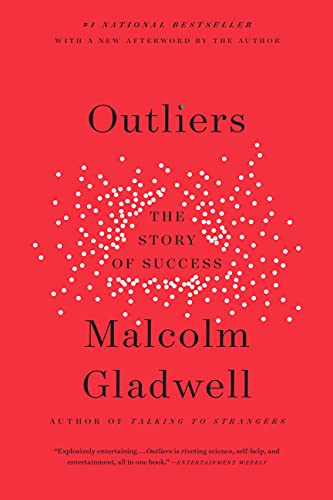
In this stunning new book, Malcolm Gladwell takes us on an intellectual journey through the world of "outliers"--the best and the brightest, the most famous and the most successful. He asks the question: what makes high-achievers different?
His answer is that we pay too much attention to what successful people are like, and too little attention to where they are from: that is, their culture, their family, their generation, and the idiosyncratic experiences of their upbringing. Along the way he explains the secrets of software billionaires, what it takes to be a great soccer player, why Asians are good at math, and what made the Beatles the greatest rock band.
Gladwell is not the first person to come up with the 10,000 hour rule. Nor is he the first person to document what it takes to become the best in the world at something. But his stories are so great as he explains these deep concepts. How did the Beatles become the best? Why are professional hockey players born in January, February and March? And so on. [source]
Alex Circei
Question: What five books would you recommend to young people interested in your career path & why? Answer: Screw It, Let's Do It: Lessons In Life by Richard Branson Outliers: The Story of Success by Malcolm Gladwell Start With Why: How Great Leaders Inspire Everyone To Take Action by Simon Sinek The Hard Thing About Hard Things: Building a Business When There Are No Easy Answers by Ben Horowitz Rich Dad Poor Dad: What the Rich Teach Their Kids About Money That the Poor and Middle Class Do Not! by Robert T. Kiyosaki [source]
Cover unavailable
10
The 4-Hour Workweek: Escape 9-5, Live Anywhere, and Join the New Rich
More than 100 pages of new, cutting-edge content. Forget the old concept of retirement and the rest of the deferred-life plan there is no need to wait and every reason not to, especially in unpredictable economic times. Whether your dream is escaping the rat race, experiencing high-end world travel, earning a monthly five-figure income with zero management, or just living more and working less, The 4-Hour Workweek is the blueprint. This step-by-step guide to luxury lifestyle design teaches: How Tim went from $40,000 per year and 80 hours per week to $40,000 per month and 4 hours per week. How to outsource your life to overseas virtual assistants for $5 per hour and do whatever you want How blue-chip escape artists travel the world without quitting their jobs How to eliminate 50% of your work in 48 hours using the principles of a forgotten Italian economist How to trade a long-haul career for short work bursts and frequent mini-retirements The new expanded edition of Tim Ferriss The 4-Hour Workweek includes: More than 50 practical tips and case studies from readers (including families) who have doubled income, overcome common sticking points, and reinvented themselves using the original book as a starting point Real-world templates you can copy for eliminating e-mail, negotiating with bosses and clients, or getting a private chef for less than $8 a meal How Lifestyle Design principles can be suited to unpredictable economic times The latest tools and tricks, as well as high-tech shortcuts, for living like a diplomat or millionaire without being either"
Eric Weinstein recommended this book on Twitter. [source]
Tim Draper
Founder/Draper Fisher Jurvetson
With this kind of time management and focus on the important things in life, people should be able to get 15 times as much done in a normal work week. [source]
It's about time this book was written. It is a long-overdue manifesto for the mobile lifestyle, and Tim Ferriss is the ideal ambassador. This will be huge. [source]
Cover unavailable
11
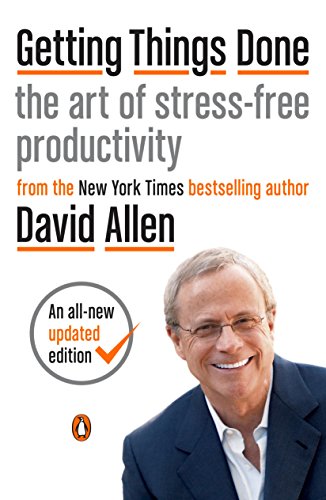
Getting Things Done: The Art of Stress-Free Productivity
"The Bible of business and personal productivity" —Lifehack
"A completely revised and updated edition of the blockbuster bestseller from 'the personal productivity guru'"—Fast Company
Since it was first published almost fifteen years ago, David Allen’s Getting Things Done has become one of the most influential business books of its era, and the ultimate book on personal organization. “GTD” is now shorthand for an entire way of approaching professional and personal tasks, and has spawned an entire culture of websites, organizational tools, seminars, and offshoots.
Allen has rewritten the book from start to finish, tweaking his classic text with important perspectives on the new workplace, and adding material that will make the book fresh and relevant for years to come. This new edition of Getting Things Done will be welcomed not only by its hundreds of thousands of existing fans but also by a whole new generation eager to adopt its proven principles.
…
Recommended by David Allen, Dustin Moskovitz, Ev Williams, and 19 others.
Getting Things Done by David Allen. He recently spoke at our Zappos all-hands meeting and gave me a signed copy of his book. [source]
Eric Rose
Chairman/Columbia University Department of Surgery
When I'm flat-out stressed about the volume and complexity of my work, I open this book and find immediate ways to gain a sense of control. That's really a critical need for decision making. David made me what I am today: headstrong and proud of it. [source]
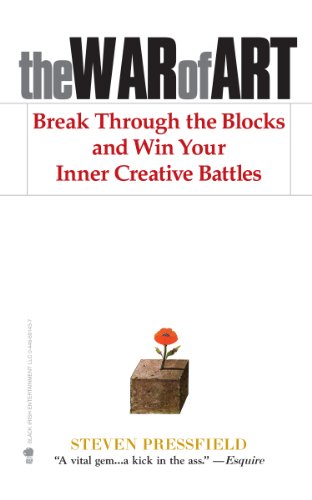
When a writer or an entrepreneur, or a manager, or an employee, or a…whatever…sits down to get to work, he or she is often met by “the resistance”. The excuses that come up: I can’t do this. I am too old. I don’t have enough money. I’m scared. “The War of Art” is the guide to getting through that block. The comfort zone is papered up and cemented shut by our excuses. Learn to blast through that wall. Because on the other side of the comfort zone are all the tools of success. [source]
Also hard to find on audio. I find Steve's voice to be fascinating, and even before I knew him, I was fascinated by listening to him speak his own work. The War of Art is one of those books, at least for me when I finally was exposed to it, I said, 'Why wasn't I informed? Why did it take this long for this book to land on my desk?'... You need to be clear with yourself about what you are afraid of, why you are afraid, and whether you care enough to dance with that fear because it will never go away. [source]
Adam Johnston
The last two pages of Steven Pressfield’s The War of Art gave me a swift kick in the ass. Do it or don’t do it. But if you don’t do it, you not only hurt yourself. You hurt your children. You hurt me. You hurt the planet. Pressfield wrote a beautiful book that you should read, but if nothing else, just read the last two pages of the book. I have them hanging on my wall in my office. [source]
One of the most popular personal development and self-improvement books of all time, Think and Grow Rich has sold over 100 million copies worldwide since its first publication during the Great Depression. In this hardcover edition, Napoleon Hill presents a "Philosophy of Achievement" in 13 principles drawn from the success stories of such greats as Andrew Carnegie, Henry Ford, Thomas Edison, and other millionaires of his time.
Think and Grow Rich reveals the secrets that can bring you fortune. By suppressing negative thoughts and keeping your focus on the long term, you can find true and lasting success. Napoleon Hill details his philosophy through the following 13 principles:
Desire Faith Autosuggestion Specialized Knowledge Imagination Organized Planning Decision Persistence Power of the Master Mind The Mystery of Sex Transmutation The Subconscious Mind The Brain The Sixth Sense Follow the steps outlined here, and you may just find the path to your own personal fortune.
For anyone interested in my career path, I’d recommend books in various genres. On a real practical level, I’d certainly recommend reading any and all plant/mushroom/tree/ecology/nature books you can acquire. It’s even more helpful to read the books that pertain specifically to your ecosystem and bioregion. Additionally, I’d also recommend reading a plethora of business and marketing books — both old and new alike. Think And Grow Rich by Napoleon Hill, Crush It! by Gary Vaynerchuk, Influence: The Psychology of Persuasion by Robert Cialdini, and anything by Seth Godin would be my top recommendations. And of course, every book I mentioned in the previous answers are strongly recommended as well. [source]
Alan Pierce
This book dramatically changed the way I structured my day to day life. Based on over two decades of personal interviews and studies of some of history's’ greatest minds, the author distills the lessons he learned and details how you can train and condition your mind through daily habit to master your actions. The way it promotes a disciplined and holistic approach of continual self-improvement, goal setting and strategic decision making really resonated with me. [source]
In this must-read book for anyone striving to succeed, pioneering psychologist Angela Duckworth shows parents, educators, students, and business people both seasoned and new that the secret to outstanding achievement is not talent but a focused persistence called grit.
Why do some people succeed and others fail? Sharing new insights from her landmark research on grit, Angela Duckworth explains why talent is hardly a guarantor of success. Rather, other factors can be even more crucial such as identifying our passions and following through on our commitments.
Drawing on her own powerful story as the daughter of a scientist who frequently bemoaned her lack of smarts, Duckworth describes her winding path through teaching, business consulting, and neuroscience, which led to the hypothesis that what really drives success is not genius, but a special blend of passion and long-term perseverance. As a professor at the University of Pennsylvania, Duckworth created her own character lab and set out to test her theory.
Here, she takes readers into the field to visit teachers working in some of the toughest schools, cadets struggling through their first days at West Point, and young finalists in the National Spelling Bee. She also mines fascinating insights from history and shows what can be gleaned from modern experiments in peak performance. Finally, she shares what she's learned from interviewing dozens of high achievers; from JP Morgan CEO Jamie Dimon to the cartoon editor of The New Yorker to Seattle Seahawks Coach Pete Carroll.
Winningly personal, insightful, and even life-changing, Grit is a book about what goes through your head when you fall down, and how that not talent or luck makes all the difference.
…
Recommended by Albert Wenger, Anu Hariharan, Benjamin Spall, and 11 others.
Benjamin Spall
Question: What five books would you recommend to youngsters interested in your professional path? … Grit by Angela Duckworth [source]
Bogdan Lucaciu
Grit: The Power of Passion and Perseverance - it was frustrating to read: “Where was this book 20 years ago!?” [source]
Stephen Lew
When asked what books he would recommend to youngsters interested in his professional path, Stephen mentioned Grit. [source]
Cover unavailable
15
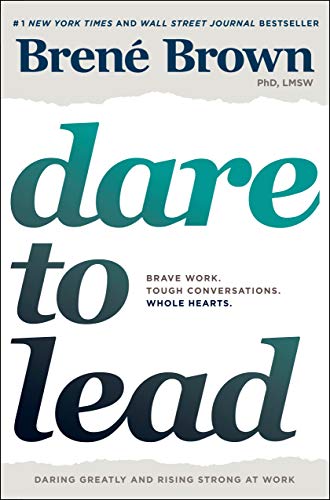
Dare to Lead: Brave Work. Tough Conversations. Whole Hearts.
In her #1 New York Times bestsellers, Brené Brown has taught us what it means to dare greatly, rise strong, and brave the wilderness. Now, based on new research conducted with leaders, change makers, and culture shifters, she's showing us how to put those ideas into practice so we can step up and lead.
Leadership is not about titles, status, and wielding power. A leader is anyone who takes responsibility for recognizing the potential in people and ideas, and has the courage to develop that potential.
When we dare to lead, we don't pretend to have the right answers; we stay curious and ask the right questions. We don't see power as finite and hoard it; we know that power becomes infinite when we share it with others. We don't avoid difficult conversations and situations; we lean into vulnerability when it's necessary to do good work.
But daring leadership in a culture defined by scarcity, fear, and uncertainty requires skill-building around traits that are deeply and uniquely human. The irony is that we're choosing not to invest in developing the hearts and minds of leaders at the exact same time as we're scrambling to figure out what we have to offer that machines and AI can't do better and faster. What can we do better? Empathy, connection, and courage, to start.
Four-time #1 New York Times bestselling author Brené Brown has spent the past two decades studying the emotions and experiences that give meaning to our lives, and the past seven years working with transformative leaders and teams spanning the globe. She found that leaders in organizations ranging from small entrepreneurial startups and family-owned businesses to nonprofits, civic organizations, and Fortune 50 companies all ask the same question:
How do you cultivate braver, more daring leaders, and how do you embed the value of courage in your culture?
In this new book, Brown uses research, stories, and examples to answer these questions in the no-BS style that millions of readers have come to expect and love.
Brown writes, "One of the most important findings of my career is that daring leadership is a collection of skills and practices that are 100 percent teachable. It's learning and unlearning that requires brave work, tough conversations, and showing up with your whole heart. Easy? No. Because choosing courage over comfort is not always our default. Worth it? Always. We want to be brave with our lives and our work. It's why we're here."
Whether you've read Daring Greatly and Rising Strong or you're new to Brené Brown's work, this book is for anyone who wants to step up and into brave leadership.
With Dare to Lead, Brené brings decades of research to bear in a practical and insightful guide to courageous leadership. This book is a road map for anyone who wants to lead mindfully, live bravely, and dare to lead. [source]
Co-Founder/Pixar, CEO Pixar and Walt Disney Animation Studios
Brene visited Pixar to talk with our filmmakers. Her message was important, as movies are best when they come from a place of vulnerability, when the people who make them encounter setbacks and are forced to overcome them, when they are willing to have their asses handed to them. It is easy to sit back and talk about the values of a safe and meaningful culture, but extraordinarily difficult to pull it off. You don’t achieve good culture without constant attention, without an environment of safety, courage, and vulnerability. These are hard skills, but they are teachable skills. Start with this book. [source]
Don’t miss one of my favorite human beings @BreneBrown, discuss her book #DareToLead on this #MarieTV: this is for every one of us that wants to show up, contribute, and lean into our purpose 💪🏼💗 https://t.co/QVgSpZe9e9 [source]
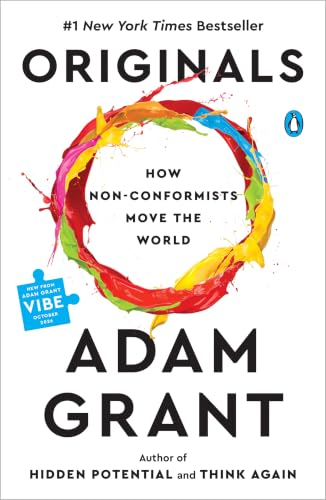
In Originals the author addresses the challenge of improving the world from the perspective of becoming original: choosing to champion novel ideas and values that go against the grain, battle conformity, and buck outdated traditions. How can we originate new ideas, policies, and practices without risking it all?
Using surprising studies and stories spanning business, politics, sports, and entertainment, Grant explores how to recognize a good idea, speak up without getting silenced, build a coalition of allies, choose the right time to act, and manage fear and doubt; how parents and teachers can nurture originality in children; and how leaders can build cultures that welcome dissent. Learn from an entrepreneur who pitches his start-ups by highlighting the reasons not to invest, a woman at Apple who challenged Steve Jobs from three levels below, an analyst who overturned the rule of secrecy at the CIA, a billionaire financial wizard who fires employees for failing to criticize him, and a TV executive who didn’t even work in comedy but saved Seinfeld from the cutting-room floor. The payoff is a set of groundbreaking insights about rejecting conformity and improving the status quo.
…
Recommended by Richard Branson, Arianna Huffington, Tony Hsieh, and 6 others.
Today is World Book Day, a wonderful opportunity to address this #ChallengeRichard sent in by Mike Gonzalez of New Jersey: Make a list of your top 65 books to read in a lifetime. [source]
Arianna Huffington
Founder/The Huffington Post
A fascinating, eye-opening read that will help you not just recognize your own unique gifts, but find the strength to challenge conventional wisdom to bring them to life. [source]
Tony Hsieh
CEO/Zappos.com
It's always interesting just to learn different perspectives, but to be careful of not trying to just say, 'Oh this book is the Bible, and we should copy that,' … Instead, I want us t0 take the parts that make sense for Zappos and try to incorporate them." [source]
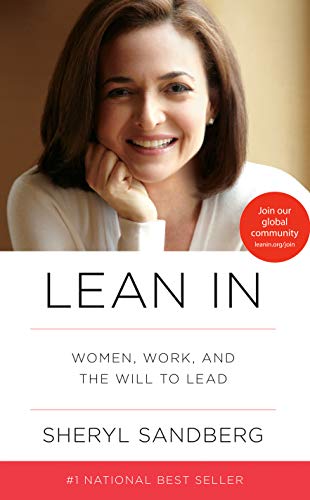
Sheryl Sandberg’s Lean In is a massive cultural phenomenon and its title has become an instant catchphrase for empowering women. The book soared to the top of bestseller lists internationally, igniting global conversations about women and ambition. Sandberg packed theatres, dominated opinion pages, appeared on every major television show and on the cover of Time magazine, and sparked ferocious debate about women and leadership. Ask most women whether they have the right to equality at work and the answer will be a resounding yes, but ask the same women whether they'd feel confident asking for a raise, a promotion, or equal pay, and some reticence creeps in. The statistics, although an improvement on previous decades, are certainly not in women's favour – of 197 heads of state, only twenty-two are women. Women hold just 20 percent of seats in parliaments globally, and in the world of big business, a meagre eighteen of the Fortune 500 CEOs are women. In Lean In, Sheryl Sandberg – Facebook COO and one of Fortune magazine's Most Powerful Women in Business – draws on her own experience of working in some of the world's most successful businesses and looks at what women can do to help themselves, and make the small changes in their life that can effect change on a more universal scale.
For the past five years, I've sat at a desk next to Sheryl and I've learned something from her almost every day. She has a remarkable intelligence that can cut through complex processes and find solutions to the hardest problems. Lean In combines Sheryl's ability to synthesize information with her understanding of how to get the best out of people. The book is smart and honest and funny. Her words will help all readers - especially men - to become better and more effective leaders. [source]
If you loved Sheryl Sandberg's incredible TED talk on why we have too few women leaders, or simply believe as I do that we need equality in the boardroom, then this book is for you. As Facebook's COO, Sheryl Sandberg has first-hand experience of why having more women in leadership roles is good for business as well as society. Lean In is essential reading for anyone interested in righting the injustice of this inequality. [source]
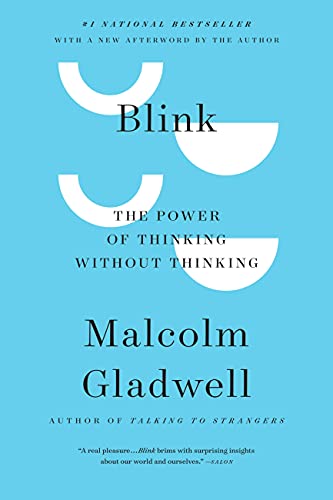
Drawing on cutting-edge neuroscience and psychology and displaying all of the brilliance that made The Tipping Point a classic, Blink changes the way you'll understand every decision you make. Never again will you think about thinking the same way.
Malcolm Gladwell redefined how we understand the world around us. Now, in Blink, he revolutionizes the way we understand the world within. Blink is a book about how we think without thinking, about choices that seem to be made in an instant - in the blink of an eye - that actually aren't as simple as they seem. Why are some people brilliant decision makers, while others are consistently inept? Why do some people follow their instincts and win, while others end up stumbling into error? How do our brains really work - in the office, in the classroom, in the kitchen, and in the bedroom? And why are the best decisions often those that are impossible to explain to others?
In Blink we meet the psychologist who has learned to predict whether a marriage will last, based on a few minutes of observing a couple; the tennis coach who knows when a player will double-fault before the racket even makes contact with the ball; the antiquities experts who recognize a fake at a glance. Here, too, are great failures of "blink": the election of Warren Harding; "New Coke"; and the shooting of Amadou Diallo by police. Blink reveals that great decision makers aren't those who process the most information or spend the most time deliberating, but those who have perfected the art of "thin-slicing" - filtering the very few factors that matter from an overwhelming number of variables.
…
Recommended by Ev Williams, Mike Shinoda, Marillyn Hewson, and 4 others.
Mike Shinoda
I know most of the guys in the band read this book. [source]
Marillyn Hewson
CEO/Lockheed Martin
CEO Marilyn Hewson recommends this book because it helped her to trust her instincts in business. [source]
Antonio Eram
When asked to name some books that had a big impact on him, Antonio mentioned Blink: The Power of Thinking Without Thinking by Malcolm Gladwell. [source]
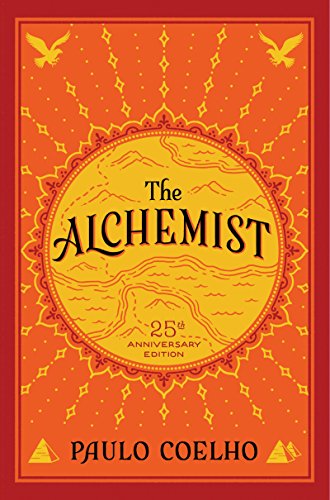
Paulo Coelho's enchanting novel has inspired a devoted following around the world. This story, dazzling in its powerful simplicity and inspiring wisdom, is about an Andalusian shepherd boy named Santiago who travels from his homeland in Spain to the Egyptian desert in search of a treasure buried in the Pyramids. What starts out as a journey to find worldly goods turns into a discovery of the treasure found within. Lush, evocative, and deeply humane, the story of Santiago is an eternal testament to the transforming power of our dreams and the importance of listening to our hearts.
There's a great quote in this book: When you're on the right path the universe conspires to help you! [source]
Daniel Ek
It was fascinating to talk to the author about how this book came to be such a hit—he never backed down, and he allowed people to read it for free in order to then boost sales—much like how Spotify’s freemium model was perceived in the early days. [source]
Eric Ripert
Speaks of everyone having an ultimate goal in life, but most of us are too afraid to pursue it. The encouragement to fulfill your dreams is very inspirational! [source]
Cover unavailable
20
David and Goliath: Underdogs, Misfits, and the Art of Battling Giants
In his #1 bestselling books The Tipping Point, Blink, and Outliers, Malcolm Gladwell has explored the ways we understand and change our world. Now he looks at the complex and surprising ways the weak can defeat the strong, the small can match up against the giant, and how our goals (often culturally determined) can make a huge difference in our ultimate sense of success. Drawing upon examples from the world of business, sports, culture, cutting-edge psychology, and an array of unforgettable characters around the world, David and Goliath is in many ways the most practical and provocative book Malcolm Gladwell has ever written.
…
Recommended by Andrew Chen, Cat Williams-Treloar, Catalina Penciu, and 3 others.
Cat Williams-Treloar
The books that I've talked the most about with friends and colleagues over the years are the Malcolm Gladwell series of novels. Glorious stories that mix science, behaviours and insight. You can't go wrong with the "The Tipping Point", "Outliers", "Blink" or "David & Goliath". [source]
Catalina Penciu
Business-wise, my goal for this year is to improve my collection and my mindset, but my favorite so far has been David and Goliath by Malcolm Gladwell. [source]
Robert Katai
Buy Malcolm Gladwell’s book “David and Goliath” and read the interesting stories about how the Davids of that moments have defeated the Goliaths. [source]
Cover unavailable
21
Predictably Irrational: The Hidden Forces That Shape Our Decisions
Why do our headaches persist after taking a one-cent aspirin but disappear when we take a 50-cent aspirin?
Why does recalling the Ten Commandments reduce our tendency to lie, even when we couldn't possibly be caught?
Why do we splurge on a lavish meal but cut coupons to save twenty-five cents on a can of soup?
Why do we go back for second helpings at the unlimited buffet, even when our stomachs are already full?
And how did we ever start spending $4.15 on a cup of coffee when, just a few years ago, we used to pay less than a dollar?
When it comes to making decisions in our lives, we think we're in control. We think we're making smart, rational choices. But are we?
In a series of illuminating, often surprising experiments, MIT behavioral economist Dan Ariely refutes the common assumption that we behave in fundamentally rational ways. Blending everyday experience with groundbreaking research, Ariely explains how expectations, emotions, social norms, and other invisible, seemingly illogical forces skew our reasoning abilities.
Not only do we make astonishingly simple mistakes every day, but we make the same "types" of mistakes, Ariely discovers. We consistently overpay, underestimate, and procrastinate. We fail to understand the profound effects of our emotions on what we want, and we overvalue what we already own. Yet these misguided behaviors are neither random nor senseless. They're systematic and predictable--making us "predictably" irrational.
From drinking coffee to losing weight, from buying a car to choosing a romantic partner, Ariely explains how to break through these systematic patterns of thought to make better decisions. "Predictably Irrational" will change the way we interact with the world--one small decision at a time.
…
Recommended by Max Levchin, Vinod Khosla, Vinod Khosla, and 22 others.
Max Levchin
Co-founder/PayPal, CEO/Affirm, Investor
Max Levchin recommended this book as an answer to "What business books would you advise young entrepreneurs read?" [source]
Andra Zaharia
'While I was thinking of the best books to add to this short list, I realized that not even half of them are directly related to digital marketing. This is because I believe that the best marketers are people who understand human nature deeply and aim to bring out the best in it. Call me naive, but that’s how I see it. If I were to want to pursue a career in marketing, I’d read … Predictably Irrational. [source]
Chris Goward
Here are some of the books that have been very impactful for me, or taught me a new way of thinking: … Predictably Irrational. [source]
The latest groundbreaking book from Tim Ferriss, the #1 New York Times best-selling author of The 4-Hour Workweek.
From the author:
“For the last two years, I’ve interviewed nearly two hundred world-class performers for my podcast, The Tim Ferriss Show. The guests range from super celebs (Jamie Foxx, Arnold Schwarzenegger, etc.) and athletes (icons of powerlifting, gymnastics, surfing, etc.) to legendary Special Operations commanders and black-market biochemists. For most of my guests, it’s the first time they’ve agreed to a two-to-three-hour interview, and the show is on the cusp of passing 100 million downloads. “This book contains the distilled tools, tactics, and ‘inside baseball’ you won’t find anywhere else. It also includes new tips from past guests, and life lessons from new ‘guests’ you haven’t met. “What makes the show different is a relentless focus on actionable details. This is reflected in the questions. For example: What do these people do in the first sixty minutes of each morning? What do their workout routines look like, and why? What books have they gifted most to other people? What are the biggest wastes of time for novices in their field? What supplements do they take on a daily basis? “I don’t view myself as an interviewer. I view myself as an experimenter. If I can’t test something and replicate results in the messy reality of everyday life, I’m not interested. “Everything within these pages has been vetted, explored, and applied to my own life in some fashion. I’ve used dozens of the tactics and philosophies in high-stakes negotiations, high-risk environments, or large business dealings. The lessons have made me millions of dollars and saved me years of wasted effort and frustration. “I created this book, my ultimate notebook of high-leverage tools, for myself. It’s changed my life, and I hope the same for you.”
Tim is a brilliant thinker. The way he approaches mastery is inspiring in many ways. His latest book is no exception. What I loved about Tools of Titans is that it distills key tactics, routines and habits of the ultra-successful in actionable ways that anyone can take advantage of. Highly recommended. Every chapter is a valuable lesson. [source]
It only came out recently. I had so many questions about it that I flew to California and interviewed him about it for my podcast.It’s the collection of all the knowledge and wisdom he gained from the 100s of people he interviewed.I leave it out on my floor and read a page or two whenever I pass it.It’s already filled with 100s of my notes (see below). It’s maybe the one physical book I keep around. The rest, including my own books, I keep on my Kindle. [source]
If you think the world is coming to an end, think again: people are living longer, healthier, freer, and happier lives, and while our problems are formidable, the solutions lie in the Enlightenment ideal of using reason and science.
Is the world really falling apart? Is the ideal of progress obsolete? In this elegant assessment of the human condition in the third millennium, cognitive scientist and public intellectual Steven Pinker urges us to step back from the gory headlines and prophecies of doom, which play to our psychological biases. Instead, follow the data: In seventy-five jaw-dropping graphs, Pinker shows that life, health, prosperity, safety, peace, knowledge, and happiness are on the rise, not just in the West, but worldwide. This progress is not the result of some cosmic force. It is a gift of the Enlightenment: the conviction that reason and science can enhance human flourishing.
Far from being a naïve hope, the Enlightenment, we now know, has worked. But more than ever, it needs a vigorous defense. The Enlightenment project swims against currents of human nature–tribalism, authoritarianism, demonization, magical thinking–which demagogues are all too willing to exploit. Many commentators, committed to political, religious, or romantic ideologies, fight a rearguard action against it. The result is a corrosive fatalism and a willingness to wreck the precious institutions of liberal democracy and global cooperation.
With intellectual depth and literary flair, Enlightenment Now makes the case for reason, science, and humanism: the ideals we need to confront our problems and continue our progress.
Pinker is at his best when he analyzes historic trends and uses data to put the past into context. I was already familiar with a lot of the information he shares—especially about health and energy—but he understands each subject so deeply that he’s able to articulate his case in a way that feels fresh and new. I love how he’s willing to dive deep into primary data sources and pull out unexpected signs of progress. I tend to point to things like dramatic reductions in poverty and childhood deaths, because I think they’re such a good measure of how we’re doing as a society. Pinker covers those areas, but he also looks at more obscure topics. Here are five of my favorite facts from the book that show how the world is improving: 1. You’re 37 times less likely to be killed by a bolt of lightning than you were at the turn of the century—and that’s not because there are fewer thunderstorms today. It’s because we have better weather prediction capabilities, improved safety education, and more people living in cities. 2. Time spent doing laundry fell from 11.5 hours a week in 1920 to an hour and a half in 2014. This might sound trivial in the grand scheme of progress. But the rise of the washing machine has improved quality of life by freeing up time for people—mostly women—to enjoy other pursuits. That time represents nearly half a day every week that could be used for everything from binge-watching Ozark or reading a book to starting a new business. 3. You’re way less likely to die on the job. Every year, 5,000 people die from occupational accidents in the U.S. But in 1929—when our population was less than two-fifths the size it is today—20,000 people died on the job. People back then viewed deadly workplace accidents as part of the cost of doing business. Today, we know better, and we’ve engineered ways to build things without putting nearly as many lives at risk. 4. The global average IQ score is rising by about 3 IQ points every decade. Kids’ brains are developing more fully thanks to improved nutrition and a cleaner environment. Pinker also credits more analytical thinking in and out of the classroom. Think about how many symbols you interpret every time you check your phone’s home screen or look at a subway map. Our world today encourages abstract thought from a young age, and it’s making us smarter. 5. War is illegal. This idea seems obvious. But before the creation of the United Nations in 1945, no institution had the power to stop countries from going to war with each other. Although there have been some exceptions, the threat of international sanctions and intervention has proven to be an effective deterrent to wars between nations. [source]
Elon Musk, the entrepreneur and innovator behind SpaceX, Tesla, and SolarCity, sold one of his internet companies, PayPal, for $1.5 billion. Ashlee Vance captures the full spectacle and arc of the genius's life and work, from his tumultuous upbringing in South Africa and flight to the United States to his dramatic technical innovations and entrepreneurial pursuits. Vance uses Musk's story to explore one of the pressing questions of our age: can the nation of inventors and creators who led the modern world for a century still compete in an age of fierce global competition? He argues that Musk is an amalgam of legendary inventors and industrialists including Thomas Edison, Henry Ford, Howard Hughes, and Steve Jobs. More than any other entrepreneur today, Musk has dedicated his energies and his own vast fortune to inventing a future that is as rich and far-reaching as the visionaries of the golden age of science-fiction fantasy
Elon Musk is a man after my own heart: a risk taker undaunted by setbacks and ever driven to ensure a bright future for humanity. Ashlee Vance's stellar biography captures Musk's remarkable life story and irrepressible spirit. [source]

I'm fascinated by Elon Musk, I own a Tesla, I read Ashlee Vance's biography on Elon Musk. I think he's a very interesting charachter. [source]
Andrea Loubier
Elon Musk: Tesla, SpaceX, and the Quest for a Fantastic Future as this was still in the first couple of years of me starting my own company, Mailbird and it was inspiring and visionary. It helps you go from a small voice in a big corporate company, to thinking big and voicing your wild opinions and creating plan to work towards it. [source]
Cover unavailable
25
Creativity, Inc.: Overcoming the Unseen Forces That Stand in the Way of True Inspiration
“What does it mean to manage well?” From Ed Catmull, co-founder (with Steve Jobs and John Lasseter) of Pixar Animation Studios, comes an incisive book about creativity in business—sure to appeal to readers of Daniel Pink, Tom Peters, and Chip and Dan Heath. Creativity, Inc. is a book for managers who want to lead their employees to new heights, a manual for anyone who strives for originality, and the first-ever, all-access trip into the nerve center of Pixar Animation—into the meetings, postmortems, and “Braintrust” sessions where some of the most successful films in history are made. It is, at heart, a book about how to build a creative culture—but it is also, as Pixar co-founder and president Ed Catmull writes, “an expression of the ideas that I believe make the best in us possible.” For nearly twenty years, Pixar has dominated the world of animation, producing such beloved films as the Toy Story trilogy, Monsters, Inc., Finding Nemo, The Incredibles, Up, and WALL-E, which have gone on to set box-office records and garner thirty Academy Awards. The joyousness of the storytelling, the inventive plots, the emotional authenticity: In some ways, Pixar movies are an object lesson in what creativity really is. Here, in this book, Catmull reveals the ideals and techniques that have made Pixar so widely admired—and so profitable.
As a young man, Ed Catmull had a dream: to make the first computer-animated movie. He nurtured that dream as a Ph.D. student at the University of Utah, where many computer science pioneers got their start, and then forged a partnership with George Lucas that led, indirectly, to his founding Pixar with Steve Jobs and John Lasseter in 1986. Nine years later, Toy Story was released, changing animation forever. The essential ingredient in that movie’s success—and in the thirteen movies that followed—was the unique environment that Catmull and his colleagues built at Pixar, based on philosophies that protect the creative process and defy convention, such as:
• Give a good idea to a mediocre team, and they will screw it up. But give a mediocre idea to a great team, and they will either fix it or come up with something better. • If you don’t strive to uncover what is unseen and understand its nature, you will be ill prepared to lead. • It’s not the manager’s job to prevent risks. It’s the manager’s job to make it safe for others to take them. • The cost of preventing errors is often far greater than the cost of fixing them. • A company’s communication structure should not mirror its organizational structure. Everybody should be able to talk to anybody. • Do not assume that general agreement will lead to change—it takes substantial energy to move a group, even when all are on board.
This book is written by the founder of Pixar and is about his experience building a culture that fosters creativity. His theory is that people are fundamentally creative, but many forces stand in the way of people being able to do their best work. I love reading first-hand accounts about how people build great companies like Pixar and nurture innovation and creativity. This should be inspiring to anyone looking to do the same, and hopefully there will be lessons we can apply to connecting the world! [source]
No matter your circumstances, storytelling and creativity are two 'meta-skills' that can take your business and life to the next level. Ed is a master. [source]
"Emotional Intelligence 2.0 succinctly explains how to deal with emotions creatively and employ our intelligence in a beneficial way." --THE DALAI LAMA
For the first time ever in a book, TalentSmart's revolutionary program helps people identify their EQ skills, build these skills into strengths, and enjoy consistent performance in the pursuit of important life objectives. The book contains proven strategies from a decade-long effort to accurately measure and increase emotional intelligence. Trusted by upper-echelon leaders inside companies worldwide, these strategies will enable you to capitalize on the skills responsible for 58% of performance in all types of jobs.
Includes a passcode for online access to the world's bestselling emotional intelligence test, the Emotional Intelligence Appraisal®, which will show you where your EQ stands today and what you can do to begin maximizing it immediately.
Rooted in sound research involving more than 500,000 responses, this new edition of the test will:
--Pinpoint which of the book's 66 emotional intelligence strategies will increase your EQ the most.
--Reveal the specific behaviors responsible for your EQ scores.
--Allow you to test yourself a second time to measure how much your EQ has increased from your efforts.
The book's smooth narrative style turns rigorous research into memorable stories and practical strategies that anyone can use to his or her advantage.
With 90% of top performers high in EQ, and EQ twice as important as IQ in getting where you want to go in life, who can afford to ignore it?
What people are saying about it:
"Emotional Intelligence 2.0 is a fast read with compelling anecdotes and good context in which to understand and improve your score." --Newsweek
"Surveys of 500,000 people on the role of emotions in daily life have enabled the authors to hone EQ assessment to a 28-question online survey that can be completed in seven minutes." --The Washington Post
"Read worthy strategies for improving emotional intelligence skills make this our how-to book of the week. It's nice to know that average IQ doesn't limit a person to average performance. And who can resist an online quiz with instant feedback?" --Newsday
"Gives abundant, practical findings and insights with emphasis on how to develop EQ. Research shows convincingly that EQ is more important than IQ." --Stephen R. Covey, author, The 7 Habits of Highly Effective People
"This book can drastically change the way you think about success...read it twice." --Patrick Lencioni, author, The Five Dysfunctions of a Team
"At last a book that gives how to's rather than just what to's. We need no more convincing that emotional intelligence is at the core of life success. What we need are practical ways of improving it. Bradberry and Greaves brilliant new book is a godsend. It will change your life." --Joseph Grenny, New York Times bestselling coauthor of Crucial Conversations
"Emotional intelligence is an extremely important skill for personal and professional success. This book is excellent and the learning included in the free online test is cutting-edge. I strongly recommend it." --Ken Blanchard, bestselling business book author of all time; coauthor The One Minute Manager®
"I distributed the book to my entire team. We found it very helpful in our dealings with each other and our internal customers. With all the new buzzwords over the past few years, the heart and soul of a company's culture is how they support and promote emotional intelligence. Those with foresight see that emotional intelligence will separate the good companies from the great ones. This book is a wonderful tool for a grass roots approach. If your desire is to be a truly resonate leader that people will trust and follow, this is an opportunity that cannot only change your professional career, but also your personal relationships." --Regina Sacha, vice president, human resources, FedEx Custom Critical
"In the fast lane of business life today, people spend more time on computer keyboards, blackberries and conference calls than they do in face-to-face communication. We're expected to piece together broken conversations, cryptic voicemails, and abbreviated text messages to figure out how to proceed. In this increasingly complex web, emotional intelligence is more important than ever before. This book is filled with invaluable insights and information that no one can afford to ignore." --Rajeev Peshawaria, executive director, Goldman Sachs International
Gives abundant, practical findings and insights with emphasis on how to develop EQ. Research shows convincingly that EQ is more important than IQ. [source]
Deke Bridges
Current read... fascinating IQ vs EQ. Worthy book. #books #education #growth #LifeLessons @LeadersBest https://t.co/j0fjFstOWb [source]
The Inner Game of Tennis will help you: use the mind/body connection and learn to trust yourself on the court; find the state of "relaxed concentration" that allows you to play at your best; utilize the "inner game principles to make the most of traditional instruction techniques; focus your mind to overcome nervousness and self-doubt; and build skills by smart practice, then put it all together in match play. Gallwey is one of the leading innovators in sports, and this new edition refines the techniques that he has perfected over his long career. His straightforward and concise style, clear examples, and illuminating anecdotes will help tennis players of all abilities - from beginner to expert. The Inner Game of Tennis will change the way you play the game.
…
Recommended by Amir Salihefendic, Bill Cole, Dave Elitch, and 1 others.
Bill Cole
Gallwey was the first author to detail practical, in-the-trenches sports psychology techniques. He wasn’t really a theory guy or a data guy or a research guy, but practical techniques—his books are loaded with those. [source]

@krkdnz @perepereden I've read that one since it's a classic, great book 👍 [source]
Cover unavailable
28
Benjamin Franklin: An American Life
Walter Isaacson
4.2
In this authoritative and engrossing full-scale biography, Walter Isaacson, bestselling author of Einstein and Steve Jobs, shows how the most fascinating of America's founders helped define our national character.
Benjamin Franklin is the founding father who winks at us, the one who seems made of flesh rather than marble. In a sweeping narrative that follows Franklin’s life from Boston to Philadelphia to London and Paris and back, Walter Isaacson chronicles the adventures of the runaway apprentice who became, over the course of his eighty-four-year life, America’s best writer, inventor, media baron, scientist, diplomat, and business strategist, as well as one of its most practical and ingenious political leaders. He explores the wit behind Poor Richard’s Almanac and the wisdom behind the Declaration of Independence, the new nation’s alliance with France, the treaty that ended the Revolution, and the compromises that created a near-perfect Constitution.
In this colorful and intimate narrative, Isaacson provides the full sweep of Franklin’s amazing life, showing how he helped to forge the American national identity and why he has a particular resonance in the twenty-first century.
I didn't read actually very many general business books, but I like biographies and autobiographies, I think those are pretty helpful. Actually, a lot of them aren't really business. … Isaacson's biography on Franklin is really good. Cause he was an entrepreneur and he sort of started from nothing, actually he was just like a run away kid, basically, and created his printing business and sort of his way of doing that, and then over time all of the science and politics. I'd say certain he's one of the few people I most admire. Franklin's pretty awesome. [source]
Brandon Stanton
The biography of Benjamin Franklin I read. [source]
Ed Zschau
Ed Zschau recommended this book on the podcast "The Tim Ferriss Show". [source]
Cover unavailable
29
Built to Last: Successful Habits of Visionary Companies
"This is not a book about charismatic visionary leaders. It is not about visionary product concepts or visionary products or visionary market insights. Nor is it about just having a corporate vision. This is a book about something far more important, enduring, and substantial. This is a book about visionary companies." So write Jim Collins and Jerry Porras in this groundbreaking book that shatters myths, provides new insights, and gives practical guidance to those who would like to build landmark companies that stand the test of time.
Drawing upon a six-year research project at the Stanford University Graduate School of Business, Collins and Porras took eighteen truly exceptional and long-lasting companies -- they have an average age of nearly one hundred years and have outperformed the general stock market by a factor of fifteen since 1926 -- and studied each company in direct comparison to one of its top competitors. They examined the companies from their very beginnings to the present day -- as start-ups, as midsize companies, and as large corporations. Throughout, the authors asked: "What makes the truly exceptional companies different from other companies?"
What separates General Electric, 3M, Merck, Wal-Mart, Hewlett-Packard, Walt Disney, and Philip Morris from their rivals? How, for example, did Procter & Gamble, which began life substantially behind rival Colgate, eventually prevail as the premier institution in its industry? How was Motorola able to move from a humble battery repair business into integrated circuits and cellular communications, while Zenith never became dominant in anything other than TVs? How did Boeing unseat McDonnell Douglas as the world's best commercial aircraft company -- what did Boeing have that McDonnell Douglas lacked?
By answering such questions, Collins and Porras go beyond the incessant barrage of management buzzwords and fads of the day to discover timeless qualities that have consistently distinguished out-standing companies. They also provide inspiration to all executives and entrepreneurs by destroying the false but widely accepted idea that only charismatic visionary leaders can build visionary companies.
Filled with hundreds of specific examples and organized into a coherent framework of practical concepts that can be applied by managers and entrepreneurs at all levels, Built to Last provides a master blueprint for building organizations that will prosper long into the twenty-first century and beyond.
…
Recommended by Jeff Bezos, Drew Huston, Ev Williams, and 13 others.
recommends this book because it shows how to create a long lasting company. [source]
Tim O'Reilly
Founder/O'Reilly Media
Built to Last, by James Collins and Jerry Porras. The idea here is that great companies aren't afraid to have strong values. In fact, their cult-like values are what make them stand out from the norm. [source]
Alden Mills
Built to Last focused my daydreaming mind into what it takes to build truly great companies. [source]
In this book, Robert Greene demonstrates that the ultimate form of power is mastery itself. By analyzing the lives of such past masters as Charles Darwin, Benjamin Franklin, Albert Einstein, and Leonard da Vinci, as well as by interviewing nine contemporary masters, including tech guru Paul Graham and animal rights advocate Temple Grandin, Greene debunks our culture’s many myths about genius and distills the wisdom of the ages to reveal the secret to greatness. With this seminal text as a guide, readers will learn how to unlock the passion within and become masters.
What better way to learn about success then the minute paths taken by 100s or 1000s of successful people.It feels like Robert takes everyone in history and dissects the exact moments and decisions that led to their great success. [source]
There is no living writer (or person) who has been more influential to me than Robert Greene. I met him when I was 19 years old and he’s shaped me as a person, as a writer, as a thinker. You MUST read his books. His work on power and strategy are critical for anyone trying to accomplish anything. In life, power is force we are constantly bumping up against. People have power of over us, we seek power ourselves that we might be free enough and influential enough to accomplish our goals—so we must understand where power comes from, how it works and how to get it. But pure power is meaningless. It must be joined to mastery and purpose. So read his book Mastery so that you can figure your life’s task and how to dedicate yourself to it. [source]

Boban Dedovic
Question: What books had the biggest impact on you? Perhaps changed the way you see things or dramatically changed your career path. Answer: Here are some others books that are important to me. Zero to One by Peter Thiel (on startups) Mastery by Robert Greene (life and career path study) Good to Great by Jim Collins (on growing a great company) Getting to Yes by Roger Fisher (negotiation) [source]
In Evicted, Princeton sociologist and MacArthur "Genius" Matthew Desmond follows eight families in Milwaukee as they struggle to keep a roof over their heads. Evicted transforms our understanding of poverty and economic exploitation while providing fresh ideas for solving one of 21st-century America's most devastating problems. Its unforgettable scenes of hope and loss remind us of the centrality of home, without which nothing else is possible.
If you want a good understanding of how the issues that cause poverty are intertwined, you should read this book about the eviction crisis in Milwaukee. Desmond has written a brilliant portrait of Americans living in poverty. He gave me a better sense of what it is like to be poor in this country than anything else I have read. [source]
Nadella is using this season to learn more in a variety of subjects. By the looks of it, he is interested in, among other things, virtual reality, the refugee crisis, and housing for the urban poor. [source]
Surprising insights into the lives of people who were evicted. I make a lot of assumptions about these people. Turns out I was wrong WHY they get evicted. [source]
From the bestselling author of The Black Swan and one of the foremost philosophers of our time, Nassim Nicholas Taleb, a book on how some systems actually benefit from disorder.
In The Black Swan Taleb outlined a problem; in Antifragile he offers a definitive solution: how to gain from disorder and chaos while being protected from fragilities and adverse events. For what he calls the "antifragile" is one step beyond robust, as it benefits from adversity, uncertainty and stressors, just as human bones get stronger when subjected to stress and tension.
Taleb stands uncertainty on its head, making it desirable, and proposing that things be built in an antifragile manner. Extremely ambitious and multidisciplinary, Antifragile provides a blueprint for how to behave-and thrive-in a world we don't understand and which is too uncertain for us to even try to understand. He who is not antifragile will perish. Why is the city state better than the nation state, why is debt bad for you, and why is almost everything modern bound to fail? The book covers innovation, health, biology, medicine, life decisions, politics, foreign policy, urban planning, war, personal finance, and economic systems. Throughout, the voice and recipes of the ancient wisdom from Phoenician, Roman, Greek, and Medieval sources are heard loud and clear.
You ask about success. To be successful you have to avoid being “fragile” – the idea that if something hurts you, you let collapse completely. You also have to avoid simply being resilient. Bouncing back is not enough. Antifragile is when something tries to hurt you and you come back stronger. That is real life business. That is real life success. Nassim focuses on the economy. But when I read the book I kept asking myself, “how can I apply this to the areas of my life where I feel most fragile?” [source]
Marvin Liao
Partner/500 Startups
My list would be (besides the ones I mentioned in answer to the previous question) both business & Fiction/Sci-Fi and ones I personally found helpful to myself. The business books explain just exactly how business, work & investing are in reality & how to think properly & differentiate yourself. On the non-business side, a mix of History & classic fiction to understand people, philosophy to make sense of life and Science fiction to picture what the future could be like (not always utopian). [source]
Vlad Tenev
The general concept is applicable to many fields beyond biology, for instance finance, economics and monetary policy. [source]
Cover unavailable
33
Tiny Beautiful Things: Advice on Love and Life from Dear Sugar
Cheryl Strayed
4.2
Life can be hard: your lover cheats on you; you lose a family member; you can’t pay the bills—and it can be great: you’ve had the hottest sex of your life; you get that plum job; you muster the courage to write your novel. Sugar—the once-anonymous online columnist at The Rumpus, now revealed as Cheryl Strayed, author of the bestselling memoir Wild—is the person thousands turn to for advice.
Tiny Beautiful Things brings the best of Dear Sugar in one place and includes never-before-published columns and a new introduction by Steve Almond. Rich with humor, insight, compassion—and absolute honesty—this bookis a balm for everything life throws our way.
Cheryl had an advice column called “Dear Sugar”. I was reading the column long before Oprah recommended “Wild” by Cheryl and then Wild became a movie and “Tiny Beautiful Things” (the collection of her advice column) became a book. She is so wise and compassionate. A modern saint. I used to do Q&A sessions on Twitter. I’d read her book beforehand to get inspiration about what true advice is. [source]
It was wonderful to read these two provocative books of essays by two incredibly wise and compassionate women. Cheryl Strayed, also the author of Wild, was the anonymous columnist behind the online column, Dear Sugar and boy, are we better off for it. This is not a random smattering of advice. This book contains some of the most cogent insights on life, pain, loss, love, success, youth that I have ever seen. I won’t belabor the point: read this book. Thank me later. … Both will make you think and both made me a better person this year. [source]
Cover unavailable
34
Sprint: How to Solve Big Problems and Test New Ideas in Just Five Days
A fantastic, proven formula for moving from idea to prototyping to decision making within five days, based on a process he developed while working at Google and later GV. [source]
Cat Williams-Treloar
Jake Knapp, John Zeratsky & Braden Kowitz "Sprint" - the go-to guide on how to sprint. You may not follow everything to the tee, but it's simple, clean and full of great examples of how to move fast with structure. [source]
Javed Khatri
This book details the "sprint" process used at Google Ventures. We follow a similar process at Kustard to validate business ideas and to solve problems without wasting much time, money and energy. If you want to quickly validate an idea, this is a proven model and a must read. [source]
Cover unavailable
35
Range: Why Generalists Triumph in a Specialized World
What's the most effective path to success in any domain? It's not what you think. Plenty of experts argue that anyone who wants to develop a skill, play an instrument, or lead their field should start early, focus intensely, and rack up as many hours of deliberate practice as possible. If you dabble or delay, you'll never catch up to the people who got a head start. But a closer look at research on the world's top performers, from professional athletes to Nobel laureates, shows that early specialization is the exception, not the rule.
David Epstein examined the world's most successful athletes, artists, musicians, inventors, forecasters and scientists. He discovered that in most fields--especially those that are complex and unpredictable--generalists, not specialists, are primed to excel. Generalists often find their path late, and they juggle many interests rather than focusing on one. They're also more creative, more agile, and able to make connections their more specialized peers can't see.
Provocative, rigorous, and engrossing, Range makes a compelling case for actively cultivating inefficiency. Failing a test is the best way to learn. Frequent quitters end up with the most fulfilling careers. The most impactful inventors cross domains rather than deepening their knowledge in a single area. As experts silo themselves further while computers master more of the skills once reserved for highly focused humans, people who think broadly and embrace diverse experiences and perspectives will increasingly thrive.
For reasons I cannot explain, David Epstein manages to make me thoroughly enjoy the experience of being told that everything I thought about something was wrong. I loved Range. [source]
This book looks at how an emphasis on specialization can actually hamper our ability to really excel at something. It aligns with what I try to do when I am coaching, in my stories, and what we’re doing with Mamba Sports Academy — create all-around athletes who can think critically and make assessments in real time to enhance their play rather than rely only on a narrow set of skills. [source]
Susan Cain
Author
It’s a joy to spend hours in the company of a writer as gifted as David Epstein. And the joy is all the greater when that writer shares so much crucial and revelatory information about performance, success, and education. [source]
Cover unavailable
36
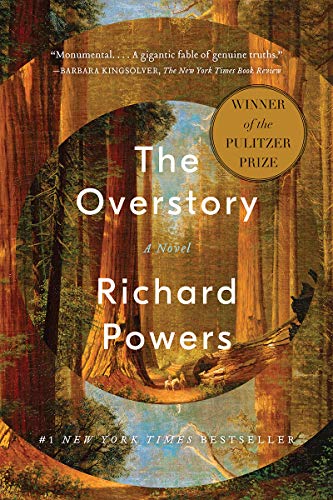
The Overstory
Richard Powers
4.2
The Overstory is a sweeping, impassioned work of activism and resistance that is also a stunning evocation of - and paean to - the natural world. From the roots to the crown and back to the seeds, Richard Powers’s twelfth novel unfolds in concentric rings of interlocking fables that range from antebellum New York to the late twentieth-century Timber Wars of the Pacific Northwest and beyond. There is a world alongside ours—vast, slow, interconnected, resourceful, magnificently inventive, and almost invisible to us. This is the story of a handful of people who learn how to see that world and who are drawn up into its unfolding catastrophe.
Feels at the beginning like a series of short stories, each of which has some important thing about a tree or a kind of tree in it, but also holds some human character. You’d be a very strange person if you came away from this book not caring about what’s happening to the trees. [source]
Martha Kearney
@omrgriffiths @BBCPM @RobGMacfarlane Great idea. Loved that book. [source]
Sarah Dry
I had the experience of having the revelation that the author clearly hoped a reader would have, which is that what appears to be a book about distinct individuals—almost a book of short stories— turns out to be something more complex, in which all the characters are linked through time and space. [source]
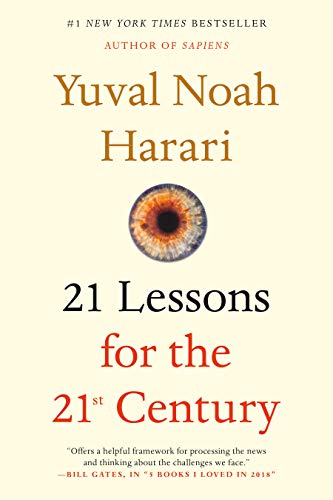
In Sapiens, he explored our past. In Homo Deus, he looked to our future. Now, one of the most innovative thinkers on the planet turns to the present to make sense of today's most pressing issues.
How do computers and robots change the meaning of being human? How do we deal with the epidemic of fake news? Are nations and religions still relevant? What should we teach our children?
Yuval Noah Harari's21 Lessons for the 21st Century is a probing and visionary investigation into today's most urgent issues as we move into the uncharted territory of the future. As technology advances faster than our understanding of it, hacking becomes a tactic of war, and the world feels more polarized than ever, Harari addresses the challenge of navigating life in the face of constant and disorienting change and raises the important questions we need to ask ourselves in order to survive.
In twenty-one accessible chapters that are both provocative and profound, Harari builds on the ideas explored in his previous books, untangling political, technological, social, and existential issues and offering advice on how to prepare for a very different future from the world we now live in: How can we retain freedom of choice when Big Data is watching us? What will the future workforce look like, and how should we ready ourselves for it? How should we deal with the threat of terrorism? Why is liberal democracy in crisis?
Harari's unique ability to make sense of where we have come from and where we are going has captured the imaginations of millions of readers. Here he invites us to consider values, meaning, and personal engagement in a world full of noise and uncertainty. When we are deluged with irrelevant information, clarity is power. Presenting complex contemporary challenges clearly and accessibly, 21 Lessons for the 21st Century is essential reading.
…
Recommended by Bill Gates, Brajesh Kumar Singh, Eh Bee Family, and 2 others.
Harari is such a stimulating writer that even when I disagreed, I wanted to keep reading and thinking. All three of his books wrestle with some version of the same question: What will give our lives meaning in the decades and centuries ahead? So far, human history has been driven by a desire to live longer, healthier, happier lives. If science is eventually able to give that dream to most people, and large numbers of people no longer need to work in order to feed and clothe everyone, what reason will we have to get up in the morning? It’s no criticism to say that Harari hasn’t produced a satisfying answer yet. Neither has anyone else. So I hope he turns more fully to this question in the future. In the meantime, he has teed up a crucial global conversation about how to take on the problems of the 21st century. [source]
Brajesh Kumar Singh
Harari, currently, the world's best historian and future analyst, is a gay! He is a Jew and writes his books in Hebrew! Got universal acclaim for his first book Sapiens, followed by Homo Deus and now the latest, 21 lessons for the 21st century! Salute to this genius, keep it up! https://t.co/s7R6oEbwiN [source]
Eh Bee Family
@harari_yuval This book is amazing. After every chapter...I pause...then freak out...then gather myself and keep reading. [source]
Cover unavailable
38
Delivering Happiness: A Path to Profits, Passion, and Purpose
You want to learn about the path that we took at Zappos to get to over $1 billion in gross merchandise sales in less than ten years. You want to learn about the path I took that eventually led me to Zappos, and the lessons I learned along the way. You want to learn from all the mistakes we made at Zappos over the years so that your business can avoid making some of the same ones. You want to figure out the right balance of profits, passion, and purpose in business and in life. You want to build a long-term, enduring business and brand. You want to create a stronger company culture, which will make your employees and coworkers happier and create more employee engagement, leading to higher productivity. You want to deliver a better customer experience, which will make your customers happier and create more customer loyalty, leading to increased profits. You want to build something special. You want to find inspiration and happiness in work and in life. You ran out of firewood for your fireplace. This book makes an excellent fire-starter.
…
Recommended by Ev Williams, Chip Conley, Adam Johnston, and 15 others.
Chip Conley
The author is a wise guy. Sincerely. He’s one of the wisest and most thoughtful business leaders of the modern age. [source]
Adam Johnston
Inspiring case study into building brand and customer service. [source]
Chelsea Frank
I read everything with an open mind, often challenging myself by choosing books with an odd perspective or religious/spiritual views. These books do not reflect my personal feelings but are books that helped shape my perspective on life, love, and happiness. [source]
Cover unavailable
39
Dark Money: The Hidden History of the Billionaires Behind the Rise of the Radical Right
Who are the immensely wealthy right-wing ideologues shaping the fate of America today? From the bestselling author of The Dark Side, an electrifying work of investigative journalism that uncovers the agenda of this powerful group.
In her new preface, Jane Mayer discusses the results of the most recent election and Donald Trump's victory, and how, despite much discussion to the contrary, this was a huge victory for the billionaires who have been pouring money in the American political system.
Why is America living in an age of profound and widening economic inequality? Why have even modest attempts to address climate change been defeated again and again? Why do hedge-fund billionaires pay a far lower tax rate than middle-class workers? In a riveting and indelible feat of reporting, Jane Mayer illuminates the history of an elite cadre of plutocrats—headed by the Kochs, the Scaifes, the Olins, and the Bradleys—who have bankrolled a systematic plan to fundamentally alter the American political system. Mayer traces a byzantine trail of billions of dollars spent by the network, revealing a staggering conglomeration of think tanks, academic institutions, media groups, courthouses, and government allies that have fallen under their sphere of influence. Drawing from hundreds of exclusive interviews, as well as extensive scrutiny of public records, private papers, and court proceedings, Mayer provides vivid portraits of the secretive figures behind the new American oligarchy and a searing look at the carefully concealed agendas steering the nation. Dark Money is an essential book for anyone who cares about the future of American democracy.
…
Recommended by Brad Feld and Avi Asherschapiro.
Avi Asherschapiro
Who could forget that great book of reportage, "Dark Money," about the shadowy mechanization of the Nurses Union & the Climate Change Youth Movement. [source]
Who are you? When you start to explore this question, you find out how elusive it really is. Are you a physical body? A collection of experiences and memories? A partner in a relationship? Each time you consider these aspects of yourself, you realize that there is much more to you than any of these can define.
InThe Untethered Soul—now a New York Times bestseller—spiritual teacher Michael Singer explores the question of who we are and arrives at the conclusion that our identity is to be found in our consciousness, the fact of our ability to observe ourselves, and the world around us. By tapping into traditions of meditation and mindfulness, Singer shows how the development of consciousness can enable us all to dwell in the present moment and let go of painful thoughts and memories that keep us from achieving happiness and self-realization.
This book, copublished with the Institute of Noetic Sciences (IONS), offers a frank and friendly discussion of consciousness and how we can develop it. In part one, he examines the notion of self and the inner dialogue we all live with. Part two examines the experience of energy as it flows through us and works to show readers how to open their hearts to the energy of experience that permeates their lives. Ways to overcome tendencies to close down to the rest of the world are the subject of part three. Enlightenment, the embrace of universal consciousness, is the subject of part four. And finally, in part five, Singer returns to daily life and the pursuit of unconditional happiness. Throughout, the book maintains a light and engaging tone, free from heavy dogma and prescriptive religious references. The easy exercises that figure in each chapter help readers experience the ideas that Singer presents.
Visit www.untetheredsoul.com for more information.
In the book The Untethered Soul, Michael A. Singer takes you step-by-step through the process of Gyana, the yoga of the Intellect, to the Source. Moreover, he does it with elegant simplicity. Read this book carefully, and you will get more than a glimpse of eternity. [source]
Michael moved to an empty patch of forest, set up his trailer, and started to meditate in the early 70s. He surrendered to whatever happened in his life. Well...what ended up happening is that he created a multi-billion dollar company. His book is about the spiritual beauty of surrender. And how that can go hand in hand with financial success. I was so astonished by the book that I contacted him and flew down to Florida and stayed several days in his “compound” and interviewed him about his success. I re-read the book at least once every few months. [source]
East is East and West is West, but Michael A. Singer bridges these two great traditions in a radiant treatise on how to succeed in life from our spiritual quest to our everyday tribulations. Freud said that life was composed of love and work. With great eloquence, wit, and compelling logic, Singer’s brilliant book completes this thought by showing them to be two poles of the same selfless devotion. [source]
Cover unavailable
41
The Start-up of You: Adapt to the Future, Invest in Yourself, and Transform Your Career
From the co-founder and chairman of LinkedIn and author Ben Casnocha comes a revolutionary new book on how to apply the strategies of successful entrepreneurship to your career: in other words, how to run the 'start-up of you'.
In a world where wages are virtually stagnant, creative disruption is rocking every industry, global competition for jobs is fierce, and job security is a thing of the past, we're all on our own when it comes to our careers. In the face of such uncertainty, the key to success is to think and act like an entrepreneur: to be nimble and self-reliant, to be innovative, and to know how to network and stand out from the crowd. And this is precisely what Hoffman and Casnocha show you how to do in a book that is both inspirational and supremely practical.
Just as LinkedIn is the one online community that no professional can afford not to belong to, this is the book that no professional can afford to be without.
Everyone, women and men alike, needs to think big to succeed. This is a practical book that shows you how to take control and build a career that will enable you to have real impact. [source]
The Startup of You" describes how to take the Silicon Valley approach to building a life: start with an idea, and work over your entire career to turn it something remarkable. In the world today, I think that the startup approach to life is necessary. This book distills the key techniques needed to succeed. [source]

The same extraordinary vision and timing that enabled Reid to found LinkedIn is once again on display with his book "the start-up of YOU." His central thesis, that every individual can benefit from acting as the entrepreneur of their own life and career, has never been more important than it is in today's increasingly globalized, competitive, and networked world. [source]
Cover unavailable
42
The Phoenix Project: A Novel About IT, DevOps, and Helping Your Business Win
Bill is an IT manager at Parts Unlimited. It's Tuesday morning and on his drive into the office, Bill gets a call from the CEO.
The company's new IT initiative, code named Phoenix Project, is critical to the future of Parts Unlimited, but the project is massively over budget and very late. The CEO wants Bill to report directly to him and fix the mess in ninety days or else Bill's entire department will be outsourced.
With the help of a prospective board member and his mysterious philosophy of The Three Ways, Bill starts to see that IT work has more in common with manufacturing plant work than he ever imagined. With the clock ticking, Bill must organize work flow streamline interdepartmental communications, and effectively serve the other business functions at Parts Unlimited.
In a fast-paced and entertaining style, three luminaries of the DevOps movement deliver a story that anyone who works in IT will recognize. Readers will not only learn how to improve their own IT organizations, they'll never view IT the same way again.
…
Recommended by Jeffrey Snover and Louis Nyffenegger.
Jeffrey Snover
Great thread. I know of a number of devops people that haven't read this book. Ya'll should fix that. https://t.co/Yri4JJ0jBZ [source]
Louis Nyffenegger
I don't think I have a specific book that I can call my favourite. Some books have had a big impact on my view of how to build a product/company ("Rework"), some were very enjoyable to read ("The Phoenix Project"), some helped me improve the way I think ("The Pleasure Of Finding Things Out") and some the way I live ("Essentialism") or work ("Deep Work"). [source]
Cover unavailable
43
Pachinko
Min Jin Lee
4.1
In the early 1900s, teenaged Sunja, the adored daughter of a crippled fisherman, falls for a wealthy stranger at the seashore near her home in Korea. He promises her the world, but when she discovers she is pregnant--and that her lover is married--she refuses to be bought. Instead, she accepts an offer of marriage from a gentle, sickly minister passing through on his way to Japan. But her decision to abandon her home, and to reject her son's powerful father, sets off a dramatic saga that will echo down through the generations.
Richly told and profoundly moving, Pachinko is a story of love, sacrifice, ambition, and loyalty. From bustling street markets to the halls of Japan's finest universities to the pachinko parlors of the criminal underworld, Lee's complex and passionate characters--strong, stubborn women, devoted sisters and sons, fathers shaken by moral crisis--survive and thrive against the indifferent arc of history.
Member of the Group of 30, and former CEO of Westpac will be spending her summer months reading a memoir, a novel and historical non-fiction. Lab Girl—Hope Jahren Pachinko—Min Jin Lee The Boys in the Boat: Nine Americans and Their Epic Quest for Gold at the 1936 Berlin Olympics—Daniel James Brown [source]
Cover unavailable
44
Leaders Eat Last
Simon Sinek
4.1
The highly anticipated follow-up to Simon Sinek’s global bestseller Start with Why Simon Sinek is an optimist, a visionary thinker, and a leader of the cultural revolution of WHY. His second book is the natural extension of Start with Why, expanding his ideas at the organizational level. Determining a company’s WHY is crucial, but only the beginning. The next step is how do you get people on board with your WHY? How do you inspire deep trust and commitment to the company and one another? He cites the Marine Corps for having found a way to build a culture in which men and women are willing to risk their lives, because they know others would do the same for them. It’s not brainwashing; it’s actually based on the biology of how and when people are naturally at their best. If businesses could adopt this supportive mentality, employees would be more motivated to take bigger risks, because they’d know their colleagues and company would back them up, no matter what. Drawing on powerful and inspiring stories, Sinek shows how to sustain an organization’s WHY while continually adding people to the mix.
…
Recommended by AnneMarie Schindler, Dan Rockwell, Intern John, and 1 others.
AnneMarie Schindler
I picked up Leaders Eat Last when I was going through a lot of transition at work. Our organization had experienced a significant scandal; the leadership team which I really respected was turning over; my direct boss and mentor was leaving; And I was still charged with managing one of the bigger teams in the organization. I would read this quote over and over again to guide my everyday,"the true price of leadership is the willingness to place the needs of others above your own. Great leaders truly care about those they are privileged to lead and understand that the true cost of the leadership privilege comes at the expense of self-interest." It grounded me in what was important and when I made it a core value for myself, I was easy to use that as a benchmark for myself and influence my team to operate at a higher standard. [source]
Intern John
My parents got me this book, love it, and suggest you read! #leadership #leader https://t.co/AI4Yr5Szqi [source]
New York Times bestseller and named Best Marketing Book of 2014 by the American Marketing Association
What makes things popular? Why do people talk about certain products and ideas more than others? Why are some stories and rumors more infectious? And what makes online content go viral?
If you said advertising, think again. People don't listen to advertisements, they listen to their peers. But why do people talk about certain products and ideas more than others? Why are some stories and rumors more infectious? And what makes online content go viral?
Wharton marketing professor Jonah Berger has spent the last decade answering these questions. He's studied why New York Times articles make the paper's own Most E-mailed List, why products get word of mouth, and how social influence shapes everything from the cars we buy to the clothes we wear to the names we give our children. In this book, Berger reveals the secret science behind word-of-mouth and social transmission. Discover how six basic principles drive all sorts of things to become contagious, from consumer products and policy initiatives to workplace rumors and YouTube videos.
Contagious combines groundbreaking research with powerful stories. Learn how a luxury steakhouse found popularity through the lowly cheese-steak, why anti-drug commercials might have actually increased drug use, and why more than 200 million consumers shared a video about one of the seemingly most boring products there is: a blender. If you've wondered why certain stories get shared, e-mails get forwarded, or videos go viral, Contagious explains why, and shows how to leverage these concepts to craft contagious content. This book provides a set of specific, actionable techniques for helping information spread - for designing messages, advertisements, and information that people will share. Whether you're a manager at a big company, a small business owner trying to boost awareness, a politician running for office, or a health official trying to get the word out, Contagious will show you how to make your product or idea catch on.
…
Recommended by Vinod Khosla, Vinod Khosla, Andrew Medal, and 10 others.
Andrew Medal
The world is #CONTAGIOUS ☢️☢️☢️ • • My dog and I love this book. I read to him when he wants to learn about marketing techniques. The last time I read this book was in 2013. If you want a read that dissects how and… https://t.co/6v0ckSnSQe [source]
Ee Ling Lim
Contagious by Jonah Berger is another interesting one for those trying to figure out how to market their business. In Contagious, Jonah identifies what makes some things go viral, and narrowed it down to 6 principles STEPPS: Social currency (content that makes people look good when they talk about it), Triggers (top of mind topics), Emotion (content that we care about, especially high arousal ones like anger, awe, excitement and humor), Public, Practical and Stories. [source]
Erik Cheong
Explains why certain products and ideas become popular while others fail. It reveals the secret science behind word-of-mouth and social transmission. Discover how six basic principles drive all sorts of things to become contagious, from consumer products and policy initiatives to workplace rumors and YouTube videos. [source]
Cover unavailable
46
Rejoice (Redemption, #4)
Karen Kingsbury and Gary Smalley
4.1
The Redemption series won "Christian Retailing"’s 2005 Retailer’s Choice Award for Best Series! In addition, "Rejoice" was a 2005 Gold Medallion Award finalist! This latest release in the Redemption series reunites readers with the continuing saga of the Baxter family. Brooke Baxter has achieved everything this world has to offer—a prestigious career, a beautiful home, and two wonderful children. Her recent return to her faith is an encouragement to her family. But if she faces tremendous loss, can her fledgling faith and her rocky marriage survive?
…
Cover unavailable
47
LinkedIn: The 5-Minute Drill for Executive Networking Success
Lori Ruff, Col (Ret.) Joe Frankie III, et al.
4.1
Cover unavailable
48
AI Superpowers: China, Silicon Valley, and the New World Order
Kai-Fu Lee
4.1
Dr. Kai-Fu Lee—one of the world’s most respected experts on AI and China—reveals that China has suddenly caught up to the US at an astonishingly rapid and unexpected pace. In AI Superpowers, Kai-fu Lee argues powerfully that because of these unprecedented developments in AI, dramatic changes will be happening much sooner than many of us expected. Indeed, as the US-Sino AI competition begins to heat up, Lee urges the US and China to both accept and to embrace the great responsibilities that come with significant technological power. Most experts already say that AI will have a devastating impact on blue-collar jobs. But Lee predicts that Chinese and American AI will have a strong impact on white-collar jobs as well. Is universal basic income the solution? In Lee’s opinion, probably not. But he provides a clear description of which jobs will be affected and how soon, which jobs can be enhanced with AI, and most importantly, how we can provide solutions to some of the most profound changes in human history that are coming soon.
Kai-Fu Lee's experience as an AI pioneer, top investor, and cancer survivor has led to this brilliant book about global technology. AI Superpowers gives us a guide to a future that celebrates all the benefits that AI will bring, while cultivating what is unique about our humanity. It’s one of those books you read and think, ‘Why are people reading any other book right now when this is so clearly the one they need to be reading? [source]
Kai-Fu Lee's smart analysis on human-AI coexistence is clear-eyed and a must-read. We must look deep within ourselves for the values and wisdom to guide AI's development. [source]
Gregory Zuckerman, the bestselling author of The Greatest Trade Ever and The Frackers, answers the question investors have been asking for decades: How did Jim Simons do it?
Shortlisted for the Financial Times/McKinsey Business Book of the Year Award
Jim Simons is the greatest money maker in modern financial history. No other investor--Warren Buffett, Peter Lynch, Ray Dalio, Steve Cohen, or George Soros--can touch his record. Since 1988, Renaissance's signature Medallion fund has generated average annual returns of 66 percent. The firm has earned profits of more than $100 billion; Simons is worth twenty-three billion dollars.
Drawing on unprecedented access to Simons and dozens of current and former employees, Zuckerman, a veteran Wall Street Journal investigative reporter, tells the gripping story of how a world-class mathematician and former code breaker mastered the market. Simons pioneered a data-driven, algorithmic approach that's sweeping the world.
As Renaissance became a market force, its executives began influencing the world beyond finance. Simons became a major figure in scientific research, education, and liberal politics. Senior executive Robert Mercer is more responsible than anyone else for the Trump presidency, placing Steve Bannon in the campaign and funding Trump's victorious 2016 effort. Mercer also impacted the campaign behind Brexit.
The Man Who Solved the Market is a portrait of a modern-day Midas who remade markets in his own image, but failed to anticipate how his success would impact his firm and his country. It's also a story of what Simons's revolution means for the rest of us.
@Singh7575 ~The man who solved the market Nice book and interesting insights from Jim's life. Read it last month. Happy reading👍 [source]
Andy Sum
I finished reading a book! Pretty interesting biography and background on some of the emotions involved in quantatative trading. Worth reading. https://t.co/doi843dcGN [source]
Great read: Fascinating book that tells the tale of a enigmatic hedge fund, it’s secretive founder, and the team of brilliant data scientists who managed to “solve the market.” Nice work @GZuckerman ! https://t.co/QVgG546flw [source]
Cover unavailable
50
Found (Firstborn, #3)
Karen Kingsbury
4.1
A Desperate Search Driven by his wife’s dying wish to find their firstborn son, John Baxter sets about the search. His prayer? That Elizabeth’s wish would be fulfilled before the upcoming Baxter family reunion. One strange turn follows another, but when the answers finally come, they shake John to his core. Will he agree to walk away and keep the secret of a lifetime, or will he let the truth come to light, no matter the cost?
A Tragic Loss Dayne Matthews is questioning his adoptive parents’ faith when he receives crushing news. He was ready to take on the responsibility of having a family, but now the future is drastically altered and Dayne is desperate for answers. Wisdom and comfort come from visits with a long-lost friend and then from Katy Hart, the girl Dayne can’t seem to forget. But will he find the strength he needs to face a future laced with loss, and will that strength lead him to the greatest love of all?
A Terrible Storm As the Baxters come together, the reunion is overshadowed by a miracle in their midst. But just as quickly, tragedy comes to Bloomington. Ashley is eight months pregnant and in the early stages of labor when a tornado rips through the community, leaving one family missing. What will Dayne do when he hears about the storm? Will he finally find peace in a God he has been running from all his life?
…
Cover unavailable
51
Reunion (Redemption, #5)
Karen Kingsbury, Gary Smalley
4.1
A fresh new look for the best-selling series from America’s number-one inspirational novelist, Karen Kingsbury. Fans will enjoy a personal note from Karen and Gary Smalley as well as discussion questions for book group use. Revisit the Baxter family in all their life-changing events, or share the series with someone who hasn’t discovered it yet.
This touching story allows us to see into the lives of the Baxter family as Erin and Sam attempt to adopt a child. As the family looks forward to a heartwarming reunion, they find out that Mr. and Mrs. Baxter have a secret that could change their lives forever.
…
Cover unavailable
52
Prisoners of Geography: Ten Maps That Explain Everything About the World
In the bestselling tradition of Why Nations Fail and The Revenge of Geography, an award-winning journalist uses ten maps of crucial regions to explain the geo-political strategies of the world powers.
All leaders of nations are constrained by geography. Their choices are limited by mountains, rivers, seas, and concrete. To understand world events, news organizations and other authorities often focus on people, ideas, and political movements, but without geography, we never have the full picture. Now, in the relevant and timely Prisoners of Geography, seasoned journalist Tim Marshall examines Russia, China, the USA, Latin America, the Middle East, Africa, Europe, Japan and Korea, and Greenland and the Arctic—their weather, seas, mountains, rivers, deserts, and borders—to provide a context often missing from our political reportage: how the physical characteristics of these countries affect their strengths and vulnerabilities and the decisions made by their leaders.
In ten, up-to-date maps of each region, Marshall explains in clear and engaging prose the complex geo-political strategies of these key parts of the globe. What does it mean that Russia must have a navy, but also has frozen ports six months a year? How does this affect Putin’s treatment of Ukraine? How is China’s future constrained by its geography? Why will Europe never be united? Why will America never be invaded? Shining a light on the unavoidable physical realities that shape all of our aspirations and endeavors, Prisoners of Geography is the critical guide to one of the major (and most often overlooked) determining factors in world history.
…
Recommended by Lee Mckenzie, Lucas Morales, and Sunil Chhetri.
Lee Mckenzie
This is a great book and by far the best thing I have read for a while. If you are curious about the world in which we live, geopolitics or just fancy something a little different, you couldn’t do much better than this. Coffee optional! @Itwitius 👏🏻 #prisonersofgeography https://t.co/Gd3G2tDVyT [source]
Lucas Morales
Depending on your interest and goals, if you are like me and always looking for the trends in the big picture then I highly recommend being an active contrarian reader. Read what no one else is reading. Your goal is to think outside the box. To look at the world and ask “why hasn’t this been solved?” And that gives you a roadmap as to what opportunities may exist for your entrepreneurial efforts. So to that, here’s a snapshot, in no particular order, of what might help you push your intellectual boundaries: Born a Crime: Stories from a South African Childhood by Trevor Noah 23 Things They Don't Tell You About Capitalism by Ha-Joon Chang Postcapitalism: A Guide to Our Future by Paul Mason Capital in the Twenty-First Century by Thomas Piketty Who Gets What--And Why: The New Economics of Matchmaking and Market Design by Alvin E. Roth The Political Economy of Participatory Economics by Michael Albert and Robin Hahnel The Zero Marginal Cost Society: The Internet of Things, the Collaborative Commons, and the Eclipse of Capitalism by Jeremy Rifkin Why America Misunderstands the World by Paul R. Pillar A Theory of Justice by John Rawls Prisoners of Geography by Tim Marshall [source]
@TaranaRaja The cover got me and I'm sure the book is very, very interesting! [source]
Cover unavailable
53
Washington Black
Esi Edugyan
4.1
Washington Black is an eleven-year-old field slave who knows no other life than the Barbados sugar plantation where he was born.
When his master's eccentric brother chooses him to be his manservant, Wash is terrified of the cruelties he is certain await him. But Christopher Wilde, or "Titch," is a naturalist, explorer, scientist, inventor, and abolitionist.
He initiates Wash into a world where a flying machine can carry a man across the sky; where two people, separated by an impossible divide, might begin to see each other as human; and where a boy born in chains can embrace a life of dignity and meaning. But when a man is killed and a bounty is placed on Wash's head, Titch abandons everything to save him.
What follows is their flight along the eastern coast of America, and, finally, to a remote outpost in the Arctic, where Wash, left on his own, must invent another new life, one which will propel him further across the globe.
From the sultry cane fields of the Caribbean to the frozen Far North, Washington Black tells a story of friendship and betrayal, love and redemption, of a world destroyed and made whole again--and asks the question, what is true freedom?
As 2018 draws to a close, I’m continuing a favorite tradition of mine and sharing my year-end lists. It gives me a moment to pause and reflect on the year through the books I found most thought-provoking, inspiring, or just plain loved. It also gives me a chance to highlight talented authors – some who are household names and others who you may not have heard of before. Here’s my best of 2018 list. [source]
Alvin Lindsay
CEO of ClickFunnels GIVES away his best 7 funnels! he just paid for your book (where do you want it shipped?) https://t.co/meFLMLNrb0 😃 https://t.co/K4zwQLLtfC [source]
Its range is astonishing. It’s an adventure story, so it’s beautifully written, but a lot of the time—and this is why it was good to read it more than once—you rush through because it’s so exciting. [source]
Cover unavailable
54
Don't Sweat the Small Stuff ... and it's all small stuff: Simple Ways to Keep the Little Things from Taking Over Your Life
Richard Carlson
4.1
Don't Sweat the Small Stuff... and it's all small stuff is a book that shows you how to keep from letting the little things in life drive you crazy. In thoughtful and insightful language, author Richard Carlson reveals ways to calm down in the midst of your incredibly hurried, stress-filled life. You can learn to put things in perspective by making the small daily changes he suggests,including advice such as "Think of your problems as potential teachers"; "Remember that when you die, your 'In' box won't be empty"; and "Do one thing at a time." You should also try to live in the present moment, let others have the glory at times, and lower your tolerance to stress. You can write down your most stubborn positions and see if you can soften them, learn to trust your intuitions, and live each day as if it might be your last. With gentle, supportive suggestions, Dr.Carlson reveals ways to make your actions more peaceful and caring, with the added benefit of making your life more calm and stress-free.
…
Recommended by Robert Kelsey and Sa El.
Robert Kelsey
Don’t Sweat the Small Stuff is almost a self-help book for people who are put off by self-help books. Out of these five, it’s the one you’d probably find in the downstairs loo. It’s very readable, all these nice 300-word bits. It’s brilliant for people with low self-esteem because he really does throw it at you, how you should just reconsider the world. One of the things that happens, if you’ve got low self-esteem, is that you don’t like yourself, so you end up not liking other people. That’s a very negative dynamic. What you should do is start the process of gaining self-esteem by liking other people, by forcing yourself to like other people and that will help you to like yourself. How do you do that? What Carlson says is that you should develop your compassion. That runs right the way through this book — the idea of developing your compassion. He’s saying people are complicated, people have problems just as bad as yours and you should develop compassion for them. If you make sure that’s in the forefront of your mind the whole time, it’ll make you like yourself more. You won’t be thinking “Oh that person is trying to do me over!” which undermines your self-esteem. Instead, you’re reinforcing your self-esteem by saying “The reason they’re behaving that way is because of this or that.” If all you can see is the impact something is having on you, you become ineffective. What I like about this idea of developing your compassion is that it’s something you can proactively adopt. Even after everything has gone wrong, even after you’ve had the wrong reactions, all that stuff that supports your low self-esteem or supports your insecurities, you can then go, “You know what? I’ve got that wrong.” You can mentally develop your compassion even after the event. [source]
Sa El
My favorite non-business book is Don't Sweat The Small Stuff And It's All Small Stuff by Richard Carlson, this book is full of sage advice on how to get over yourself and to not let the small things in life beat you up. It also helps you understand that anything you think is something big, is still really small stuff because it won't matter in 100 years. [source]
Cover unavailable
55
The Road Less Traveled: A New Psychology of Love, Traditional Values and Spiritual Growth
The Road Less Traveled: A New Psychology of Love, Traditional Values and Spiritual Growth 316 pp. "Psychotherapy is all things to all people in this mega-selling pop-psychology watershed, which features a new introduction by the author in this 25th anniversary edition. His agenda in this tome, which was first published in 1978 but didn't become a bestseller until 1983, is to reconcile the psychoanalytic tradition with the conflicting cultural currents roiling the 70s. In the spirit of Me-Decade individualism and libertinism, he celebrates self-actualization as life's highest purpose and flirts with the notions of open marriage and therapeutic sex between patient and analyst. But because he is attuned to the nascent conservative backlash against the therapeutic worldview, Peck also cites Gospel passages, recruits psychotherapy to the cause of traditional religion (he even convinces a patient to sign up for divinity school) and insists that problems must be overcome through suffering, discipline and hard work (with a therapist.) Often departing from the cerebral and rationalistic bent of Freudian discourse for a mystical, Jungian tone more compatible with New Age spirituality, Peck writes of psychotherapy as an exercise in "love" and "spiritual growth," asserts that "our unconscious is God" and affirms his belief in miracles, reincarnation and telepathy. Peck's synthesis of such clashing elements (he even throws in a little thermodynamics) is held together by a warm and lucid discussion of psychiatric principles and moving accounts of his own patients' struggles and breakthroughs. Harmonizing psychoanalysis and spirituality, Christ and Buddha, Calvinist work ethic and interminable talking cures, this book is a touchstone of our contemporary religio-therapeutic culture." -- Publishers WeeklyKeywords: MIND & BODY PSYCHOLOGY SOCIOLOGY RELIGION
…
Recommended by John C. Maxwell, Iulian Stanciu, and 1 others.
Iulian Stanciu
It helps you take a deeper look and understand why certain things happen in your life. It's an introduction to psychology. It helps you divide a person, just like you would do with a mathematical equation. [source]
Cover unavailable
56
Remember (Redemption, #2)
Karen Kingsbury, Gary Smalley
4.1
The Redemption series won "Christian Retailing"’s 2005 Retailer’s Choice Award for Best Series! Convinced she could make it on her own, Ashley Baxter has kept the most important people in her life at a distance—her family, the man who loves her, and the God she is sure can never forgive her. Now, just as she begins to open her heart, the events of September 11 rip into Ashley’s world and she is led to heartbreaking and hope-filled decisions that will forever change her life. This story vividly illustrates that we must value others more than ourselves, and it drives home one of Gary Smalley’s key messages: Honor one another. "Remember" is second in the five-book Redemption series by Gary Smalley and Karen Kingsbury that centers around the Baxter family. As readers follow the hopes and struggles of the family, they will explore key relationship themes as well as the larger theme of redemption, both in characters’ spiritual lives and in their relationships. Each book includes study questions for individual and small-group use as well as a “teaser” chapter of the next book in the series.
…
Cover unavailable
57
Return (Redemption, #3)
Karen Kingsbury, Gary Smalley
4.1
The Redemption series won "Christian Retailing"’s 2005 Retailer’s Choice Award for Best Series! This touching novel reunites readers with the Baxter family and focuses on the only Baxter son, Luke. He is determined to leave his faith and his past behind and embrace a new, free-thinking future. But what he doesn’t realize is that his past holds a secret even he doesn’t know. When Luke finds out, his comfortable new life is turned upside down, and he must turn back to his roots.
From #1 New York Times bestselling author Karen Kingsbury comes the third and final novel in an unforgettable series about four friends and the divine intervention that changes their lives forever.
Against the advice of her doctor, Mary Catherine moves to Uganda to work at a new orphanage. Whatever time she has left, Mary Catherine wants to spend it helping children—especially since she is unable to have children of her own. The only problem is Marcus Dillinger, the Major League Baseball player she was never meant to fall in love with. But neither Marcus nor Mary Catherine’s other friends—Tyler Ames and Sami Dawson—know just how serious her heart condition is.
Still, Marcus suspects something isn’t right. After months of silence, a divinely timed letter from Mary Catherine leads him on a desperate life-or-death mission to get her to a US hospital before time runs out. Meanwhile, as Sami and Tyler prepare to marry, the group receives shocking news that changes everyone’s plans.
The team of angels walking is busier than ever in this epic battle between life and death. Brush of Wings is a poignant tale of love, sacrifice, and the power of faith.
…
Cover unavailable
60
Redemption (Redemption, #1)
Karen Kingsbury, Gary Smalley
4.1
The Redemption series won "Christian Retailing"’s 2005 Retailer’s Choice Award for Best Series! When Kari Baxter Jacobs finds out that her husband is involved in an adulterous relationship and wants a divorce, she decides she will love him and remain faithful to her marriage at all costs. This book shows how God can redeem seemingly hopeless relationships, and it illustrates one of Gary Smalley’s key messages: Love is a decision. "Redemption" is the first book in the five-book Redemption series that Gary and Karen will write about the Baxter family—their fears and desires, their strengths and weaknesses, their losses and victories. Each book will explore key relationship themes as well as the larger theme of redemption, both in characters’ spiritual lives and in their relationships. Each book includes study questions for individual and small-group use as well as a “teaser” chapter of the next book in the series.
…
Cover unavailable
61
A Time to Dance / A Time to Embrace (Timeless Love, #1-2)
Karen Kingsbury
4.1
Cover unavailable
62
TED Talks: The official TED guide to public speaking
In Ted Talks Chris Anderson, head of TED, reveals the inside secrets of how to give a first-class presentation. Where books like Talk Like TED and TED Talks Storytelling whetted the appetite, here is the official TED guide to public speaking from the man who put TED talks on the world's stage. 'Nobody in the world better understands the art and science of public speaking than Chris Anderson. He is absolutely the best person to have written this book' Elizabeth Gilbert.
Anderson shares his five key techniques to presentation success: Connection, Narration, Explanation, Persuasion and Revelation (plus the three to avoid). He also answers the most frequently asked questions about giving a talk, from 'What should I wear?' to 'How do I handle my nerves?'.
Ted Talks is also full of presentation tips from such TED notable speakers as Sir Ken Robinson, Bill Gates, Mary Roach, Amy Cuddy, Elizabeth Gilbert, Dan Gilbert, Amanda Palmer, Matt Ridley and many more. This is a lively, fun read with great practical application from the man who knows what goes into a truly memorable speech. In Ted Talks Anderson pulls back the TED curtain for anyone who wants to learn how to prepare an exceptional presentation.
…
Recommended by Chris Anderson, Chris Anderson, Chris Anderson, and 1 others.
Chris Anderson
In Apollo week, a great book recommendation: this more than a story of a computer--it's about the first shot in the man vs machine battles (should astronauts be pilots or "spam in a can"?) that foreshadowed today's debates about drones & self driving cars https://t.co/CidYughKHz [source]
Chris Anderson
In Apollo week, a great book recommendation: this more than a story of a computer--it's about the first shot in the man vs machine battles (should astronauts be pilots or "spam in a can"?) that foreshadowed today's debates about drones & self driving cars https://t.co/CidYughKHz [source]
Chris Anderson
In Apollo week, a great book recommendation: this more than a story of a computer--it's about the first shot in the man vs machine battles (should astronauts be pilots or "spam in a can"?) that foreshadowed today's debates about drones & self driving cars https://t.co/CidYughKHz [source]
Cover unavailable
63
Superforecasting: The Art and Science of Prediction
"The most important book on decision making since Daniel Kahneman's Thinking, Fast and Slow." —Jason Zweig, The Wall Street Journal
Everyone would benefit from seeing further into the future, whether buying stocks, crafting policy, launching a new product, or simply planning the week’s meals. Unfortunately, people tend to be terrible forecasters. As Wharton professor Philip Tetlock showed in a landmark 2005 study, even experts’ predictions are only slightly better than chance. However, an important and underreported conclusion of that study was that some experts do have real foresight, and Tetlock has spent the past decade trying to figure out why. What makes some people so good? And can this talent be taught?
In Superforecasting, Tetlock and coauthor Dan Gardner offer a masterwork on prediction, drawing on decades of research and the results of a massive, government-funded forecasting tournament. The Good Judgment Project involves tens of thousands of ordinary people—including a Brooklyn filmmaker, a retired pipe installer, and a former ballroom dancer—who set out to forecast global events. Some of the volunteers have turned out to be astonishingly good. They’ve beaten other benchmarks, competitors, and prediction markets. They’ve even beaten the collective judgment of intelligence analysts with access to classified information. They are "superforecasters."
In this groundbreaking and accessible book, Tetlock and Gardner show us how we can learn from this elite group. Weaving together stories of forecasting successes (the raid on Osama bin Laden’s compound) and failures (the Bay of Pigs) and interviews with a range of high-level decision makers, from David Petraeus to Robert Rubin, they show that good forecasting doesn’t require powerful computers or arcane methods. It involves gathering evidence from a variety of sources, thinking probabilistically, working in teams, keeping score, and being willing to admit error and change course. Superforecasting offers the first demonstrably effective way to improve our ability to predict the future—whether in business, finance, politics, international affairs, or daily life—and is destined to become a modern classic.
…
Recommended by Vinod Khosla, Vinod Khosla, Julia Galef, and 1 others.
Julia Galef
Has some good advice on how to improve your ability to make accurate predictions. [source]
Sheil Kapadia
Read the book Superforecasting, had a great conversation with @bcmassey and came up with seven ideas for how NFL teams can try to find small edges during the draft process. Would love to hear feedback on this one. https://t.co/PdN1fKCagl [source]
Cover unavailable
64
Divine
Karen Kingsbury
4.1
Cover unavailable
65
Illusions: The Adventures of a Reluctant Messiah
Richard Bach
4.1
In the cloud-washed airspace between the cornfields of Illinois and blue infinity, a man puts his faith in the propeller of his biplane. For disillusioned writer and itinerant barnstormer Richard Bach, belief is as real as a full tank of gas and sparks firing in the cylinders...until he meets Donald Shimoda — former mechanic and self-described messiah who can make wrenches fly and Richard's imagination soar....
In Illusions, Richard Bach takes to the air to discover the ageless truths that give our souls wings: that people don't need airplanes to soar...that even the darkest clouds have meaning once we lift ourselves above them... and that messiahs can be found in the unlikeliest places — like hay fields, one-traffic-light midwestern towns, and most of all, deep within ourselves.
What would a messiah be like if he lived now. Would he care about politics? Would he care about the constant things people scream about on social media? Or would he care about peace in the heart. And peace in our every day activities. And beauty. And being calm. And trusting the universe around us. I go with the latter and so does this book. [source]
Richard Bach is an American Treasure who dishes out powerful life-changing lessons in the most endearing way. [source]
Cover unavailable
66
Seveneves
Neal Stephenson
4.1
What would happen if the world were ending?
A catastrophic event renders the earth a ticking time bomb. In a feverish race against the inevitable, nations around the globe band together to devise an ambitious plan to ensure the survival of humanity far beyond our atmosphere, in outer space.
But the complexities and unpredictability of human nature coupled with unforeseen challenges and dangers threaten the intrepid pioneers, until only a handful of survivors remain...
Five thousand years later, their progeny -- seven distinct races now three billion strong -- embark on yet another audacious journey into the unknown ... to an alien world utterly transformed by cataclysm and time: Earth.
Just like us, the president enjoys a good beach read while relaxing in the sun. In 2016, he released his list of summer vacation books: Barbarian Days: A Surfing Life, William Finnegan H Is for Hawk, Helen Macdonald The Girl on the Train, Paula Hawkins Seveneves, Neal Stephenson The Underground Railroad, Colson Whitehead [source]
Seveneves reminded me of all the things I love about science fiction. It is a great novel to get lost in, learn from, and think about. More than anything else, it has me thinking I should get back to reading sci-fi again. [source]
Compiled in this collector edition are Gideon's Gift, Sarah's Song, Maggie's Miracle, and Hannah's Hope. Readers worldwide have been touched by these heart-warming tales of hope, inspiration, and joyous miracles by bestselling author Karen Kingsbury.
Cover unavailable
68
The Idea Factory: Bell Labs and the Great Age of American Innovation
Jon Gertner
4.1
The definitive history of America s greatest incubator of innovation, the birthplace of some of the 20th century s most influential technologies, including the integrated circuit, the communications satellite and the cell phone.
From its beginnings in the 1920s until its demise in the 1980s, Bell Labs officially, the research and development wing of AT&T was the biggest, and arguably the best, laboratory for new ideas in the world. From the transistor to the laser, it s hard to find an aspect of modern life that hasn t been touched by Bell Labs. Why did so many transformative ideas come from Bell Labs? In "The Idea Factory," Jon Gertner traces the origins of some of the twentieth century s most important inventions and delivers a riveting and heretofore untold chapter of American history. At its heart this is a story about the life and work of a small group of brilliant and eccentric men Mervin Kelly, Bill Shockley, Claude Shannon, John Pierce, and Bill Baker who spent their careers at Bell Labs. Their job was to research and develop the future of communications. Small-town boys, childhood hobbyists, oddballs: they give the lie to the idea that Bell Labs was a grim cathedral of top-down command and control. Gertner brings to life the powerful alchemy of the forces at work behind Bell Labs inventions, teasing out the intersections between science, business, and society. He distills the lessons that abide: how to recruit and nurture young talent; how to organize and lead fractious employees; how to find solutions to the most stubbornly vexing problems; how to transform a scientific discovery into a marketable product, then make it even better, cheaper, or both. Today, when the drive to invent has become a mantra, Bell Labs offers us a way to enrich our understanding of the challenges and solutions to technological innovation. Here, after all, was where the foundational ideas on the management of innovation were born. "The Idea Factory" is the story of the origins of modern communications and the beginnings of the information age a deeply human story of extraordinary men who were given extraordinary means time, space, funds, and access to one another and edged the world into a new dimension."
My next book for A Year of Books is The Idea Factory: Bell Labs and the Great Age of American Innovation. I'm very interested in what causes innovation -- what kinds of people, questions and environments. This book explores that question by looking at Bell Labs, which was one of the most innovative labs in history. As an aside, I loved The Three-Body Problem and highly recommend it. If you're interested in Chinese history, virtual reality and science fiction -- I'm three for three! -- then you'll enjoy this book. I'm going to try to fit in the sequel before the end of the year as well. [source]
Cover unavailable
69
Hands-On Machine Learning with Scikit-Learn and TensorFlow: Concepts, Tools, and Techniques to Build Intelligent Systems
Geron
4.1
Through a series of recent breakthroughs, deep learning has boosted the entire field of machine learning. Now, even programmers who know close to nothing about this technology can use simple, efficient tools to implement programs capable of learning from data. This practical book shows you how.
By using concrete examples, minimal theory, and two production-ready Python frameworks-scikit-learn and TensorFlow-author Aurélien Géron helps you gain an intuitive understanding of the concepts and tools for building intelligent systems. You'll learn a range of techniques, starting with simple linear regression and progressing to deep neural networks. With exercises in each chapter to help you apply what you've learned, all you need is programming experience to get started.
Explore the machine learning landscape, particularly neural nets Use scikit-learn to track an example machine-learning project end-to-end Explore several training models, including support vector machines, decision trees, random forests, and ensemble methods Use the TensorFlow library to build and train neural nets Dive into neural net architectures, including convolutional nets, recurrent nets, and deep reinforcement learning Learn techniques for training and scaling deep neural nets Apply practical code examples without acquiring excessive machine learning theory or algorithm details
…
Recommended by Mark Tabladillo.
Mark Tabladillo
Book to Start You on Machine Learning - KDnuggets https://t.co/19fdX59b0d This book is “Hands-On Machine Learning with Scikit-Learn & TensorFlow”. each new revision has become an even better version of one of the best in-depth resources to learn Machine Learning by doing. https://t.co/ujyUH3xU3e [source]
Cover unavailable
70
Conscious Business: How to Build Value Through Values
Fred Kofman
4.1
More and more business leaders are catching on to an often-overlooked fact: consciousness is our basic faculty for survival and success. Without it, we forget what's important to us and lose sight of the steps we might take to reach those goals. Conscious business, explains Fred Kofman, means shining this awareness on every area of your work: in recognizing the needs of others and expressing your own; in seeing the hidden emotional obstacles that may be holding your team back; in making good decisions under pressure; and even in delving into such spiritual questions as "Who am I?" and "What is my real purpose here?" In Conscious Business, this visionary teacher and consultant to Google, Microsoft, Yahoo! and other leading companies presents the complete training manual in the breakthrough techniques he has shared with over 20,000 executives on four continents.
The author's whole kind of thread is to say actually in fact, how you can express business and capitalism as a spiritual practice of compassion. [source]
Cover unavailable
71
LinkedIn for Students, Graduates, and Educators: How to Use LinkedIn to Land Your Dream Job in 90 Days: A Career Development Handbook
Melonie Dodaro and Miguel Angel Garcia
4.1
Cover unavailable
72
Love Story (The Baxter Family, #1)
Karen Kingsbury
4.1
An instant New York Times bestseller!
From #1 New York Times bestselling author Karen Kingsbury comes a new book featuring everyone’s favorite family—the Baxters, which tells the story of how John and Elizabeth first fell in love.
From the day they met, John and Elizabeth were destined to fall in love. Their whirlwind romance started when they were young college students and lasted nearly thirty years—until Elizabeth died of cancer.
So when John Baxter is asked to relive his long-ago love story with Elizabeth for his grandson Cole’s heritage project, he’s not sure he can do it. The sadness might simply be too great. But he agrees and allows his heart and soul to go places they haven’t gone in decades. Back to the breathless first moments, but also to the secret heartbreak that brought John and Elizabeth together.
At the same time, Baxter family friend Cody Coleman is working through the breakup of his complicated relationship with Andi Ellison. He is determined to move on when a chance sighting changes his plans—and heart. Can Cody convince Andi to give their love another try, or is it time for them to say goodbye for good?
As school comes to an end, Cole presents his report on the love story between his grandparents John and Elizabeth Baxter. It is a tale that touches the hearts of the entire family, and one that causes Cole to better understand his own beginning.
Whether you’re meeting the Baxter family for the first time or finding them all over again, Love Story will stir your heart and remind you of the generational impact of love and the eternal bond of family.
…
Cover unavailable
73
LinkedIn: How to Build Relationships and Get Job Offers Using LinkedIn: A No BS Guide to LinkedIn (LinkedIn Tips Book 1)
Robbie Abed
4.0
Cover unavailable
74
How Not to Be Wrong: The Power of Mathematical Thinking
Jordan Ellenberg
4.0
The Freakonomics of math—a math-world superstar unveils the hidden beauty and logic of the world and puts its power in our hands
The math we learn in school can seem like a dull set of rules, laid down by the ancients and not to be questioned. In How Not to Be Wrong, Jordan Ellenberg shows us how terribly limiting this view is: Math isn’t confined to abstract incidents that never occur in real life, but rather touches everything we do—the whole world is shot through with it.
Math allows us to see the hidden structures underneath the messy and chaotic surface of our world. It’s a science of not being wrong, hammered out by centuries of hard work and argument. Armed with the tools of mathematics, we can see through to the true meaning of information we take for granted: How early should you get to the airport? What does “public opinion” really represent? Why do tall parents have shorter children? Who really won Florida in 2000? And how likely are you, really, to develop cancer?
How Not to Be Wrong presents the surprising revelations behind all of these questions and many more, using the mathematician’s method of analyzing life and exposing the hard-won insights of the academic community to the layman—minus the jargon. Ellenberg chases mathematical threads through a vast range of time and space, from the everyday to the cosmic, encountering, among other things, baseball, Reaganomics, daring lottery schemes, Voltaire, the replicability crisis in psychology, Italian Renaissance painting, artificial languages, the development of non-Euclidean geometry, the coming obesity apocalypse, Antonin Scalia’s views on crime and punishment, the psychology of slime molds, what Facebook can and can’t figure out about you, and the existence of God.
Ellenberg pulls from history as well as from the latest theoretical developments to provide those not trained in math with the knowledge they need. Math, as Ellenberg says, is “an atomic-powered prosthesis that you attach to your common sense, vastly multiplying its reach and strength.” With the tools of mathematics in hand, you can understand the world in a deeper, more meaningful way. How Not to Be Wrong will show you how.
…
Recommended by Bill Gates, Auston Bunsen, and Nick Ganju.
The writing is funny, smooth, and accessible -- not what you might expect from a book about math. What Ellenberg has written is ultimately a love letter to math. If the stories he tells add up to a larger lesson, it’s that 'to do mathematics is to be, at once, touched by fire and bound by reason' -- and that there are ways in which we’re all doing math, all the time. [source]
Auston Bunsen
I’ve got a few, one book that really impacted me early on as someone coming from a middle-class family was “Rich dad, Poor dad”. Since then I’ve read many books but one that really stands out is “How not to be wrong” by Jordan Ellenberg which really reignited my appetite & appreciation for math. [source]
Nick Ganju
Written for an audience of people who have historically been intimidated by math … and introduces things in a very simple way, and then works up to more complex concepts. [source]
Cover unavailable
75
What Made Maddy Run: The Secret Struggles and Tragic Death of an All-American Teen
Kate Fagan
4.0
The #1 New York Times Monthly Sports and Fitness bestseller
From noted ESPN commentator and journalist Kate Fagan, the heartbreaking and vital story of college athlete Madison Holleran, whose death by suicide rocked the University of Pennsylvania campus and whose life reveals with haunting detail and uncommon understanding the struggle of young people suffering from mental illness today.
If you scrolled through the Instagram feed of 19-year-old Maddy Holleran, you would see a perfect life: a freshman at an Ivy League school, recruited for the track team, who was also beautiful, popular, and fiercely intelligent. This was a girl who succeeded at everything she tried, and who was only getting started.
But when Maddy began her long-awaited college career, her parents noticed something changed. Previously indefatigable Maddy became withdrawn, and her thoughts centered on how she could change her life. In spite of thousands of hours of practice and study, she contemplated transferring from the school that had once been her dream. When Maddy's dad, Jim, dropped her off for the first day of spring semester, she held him a second longer than usual. That would be the last time Jim would see his daughter.
What Made Maddy Run began as a piece that Kate Fagan, a columnist for espnW, wrote about Maddy's life. What started as a profile of a successful young athlete whose life ended in suicide became so much larger when Fagan started to hear from other college athletes also struggling with mental illness. This is the story of Maddy Holleran's life, and her struggle with depression, which also reveals the mounting pressures young people, and college athletes in particular, face to be perfect, especially in an age of relentless connectivity and social media saturation.
…
Recommended by Tony Reali.
Tony Reali
That personal evolution led to what I think is her best work, the article, then book What Made Maddy Run. https://t.co/3LAxyuAc2A [source]
Cover unavailable
76
Work Rules!: Insights from Inside Google That Will Transform How You Live and Lead
Laszlo Bock
4.0
From the visionary head of Google's innovative People Operations comes a groundbreaking inquiry into the philosophy of work-and a blueprint for attracting the most spectacular talent to your business and ensuring that they succeed.
"We spend more time working than doing anything else in life. It's not right that the experience of work should be so demotivating and dehumanizing." So says Laszlo Bock, head of People Operations at the company that transformed how the world interacts with knowledge.
This insight is the heart of WORK RULES!, a compelling and surprisingly playful manifesto that offers lessons including:
Take away managers' power over employees Learn from your best employees-and your worst Hire only people who are smarter than you are, no matter how long it takes to find them Pay unfairly (it's more fair!) Don't trust your gut: Use data to predict and shape the future Default to open-be transparent and welcome feedback If you're comfortable with the amount of freedom you've given your employees, you haven't gone far enough.
Drawing on the latest research in behavioral economics and a profound grasp of human psychology, WORK RULES! also provides teaching examples from a range of industries-including lauded companies that happen to be hideous places to work and little-known companies that achieve spectacular results by valuing and listening to their employees. Bock takes us inside one of history's most explosively successful businesses to reveal why Google is consistently rated one of the best places to work in the world, distilling 15 years of intensive worker R&D into principles that are easy to put into action, whether you're a team of one or a team of thousands.
WORK RULES! shows how to strike a balance between creativity and structure, leading to success you can measure in quality of life as well as market share. Read it to build a better company from within rather than from above; read it to reawaken your joy in what you do.
…
Recommended by Ken Norton.
Cover unavailable
77
Desarrollo Web; Diseño Web; Retoque Fotográfico; Facebook, Instagram, Twiter, Linkedin, YouTube. Pack 3 Libros: PHOTOSHOP Proyectos prácticos; REDES SOCIALES; CREACION DE SITIOS WEB (Spanish Edition)
Staff Users, Users, et al.
4.0
Cover unavailable
78
I Still Believe
Jeremy Camp, Phil Newman, Karen Kingsbury
4.0
A leading artist on the contemporary Christian scene, Jeremy Camp has gained a sizable fan following. I Still Believe follows Jeremy's life from growing up in Indiana and his struggles as a teen, to his love for his first wife Melissa and her untimely passing, to his growing music ministry and re-found hope and love in his wife Adrienne. "We have choices when life hits us with tragedy or despair, crisis or loss. That's the message of Jeremy Camp's books, and it's the reason you will find hope and healing by journeying through the pages of this story."
Bestselling author Karen Kingsbury, from the Foreword
…
Cover unavailable
79
The Vital Question: Energy, Evolution, and the Origins of Complex Life
To explain the mystery of how life evolved on Earth, Nick Lane explores the deep link between energy and genes.
The Earth teems with life: in its oceans, forests, skies and cities. Yet there’s a black hole at the heart of biology. We do not know why complex life is the way it is, or, for that matter, how life first began. In The Vital Question, award-winning author and biochemist Nick Lane radically reframes evolutionary history, putting forward a solution to conundrums that have puzzled generations of scientists.
For two and a half billion years, from the very origins of life, single-celled organisms such as bacteria evolved without changing their basic form. Then, on just one occasion in four billion years, they made the jump to complexity. All complex life, from mushrooms to man, shares puzzling features, such as sex, which are unknown in bacteria. How and why did this radical transformation happen?
The answer, Lane argues, lies in energy: all life on Earth lives off a voltage with the strength of a lightning bolt. Building on the pillars of evolutionary theory, Lane’s hypothesis draws on cutting-edge research into the link between energy and cell biology, in order to deliver a compelling account of evolution from the very origins of life to the emergence of multicellular organisms, while offering deep insights into our own lives and deaths.
Both rigorous and enchanting, The Vital Question provides a solution to life’s vital question: why are we as we are, and indeed, why are we here at all?
Nick is one of those original thinkers who makes you say: More people should know about this guy's work. He is trying to right a scientific wrong by getting people to fully appreciate the role that energy plays in all living things. Even if the details of Nick's work turn out to be wrong, I suspect his focus on energy will be seen as an important contribution to our understanding of where we come from. [source]
Cover unavailable
80
How to Write a KILLER LinkedIn Profile... And 18 Mistakes to Avoid: Updated for 2019
Brenda Bernstein
4.0
Learn step-by-step how to create a LinkedIn profile that will get you the results you want, and learn about 18 common mistakes to avoid.
A dynamic new cover heralds the reissue of this bestselling business classic, which Spencer Johnson, M.D., co-author of The One Minute Manager praised as "One of the most important communication books I've ever read. I recommend it highly!"
Recommended by Ev Williams, Tim O'Reilly, Ken Norton, and 7 others.
Tim O'Reilly
Founder/O'Reilly Media
Positioning, and The 22 Immutable Laws of Marketing by Al Ries and Jack Trout. Anyone who wants to start a business with impact needs to read these books. [source]
Marvin Liao
Partner/500 Startups
My list would be (besides the ones I mentioned in answer to the previous question) both business & Fiction/Sci-Fi and ones I personally found helpful to myself. The business books explain just exactly how business, work & investing are in reality & how to think properly & differentiate yourself. On the non-business side, a mix of History & classic fiction to understand people, philosophy to make sense of life and Science fiction to picture what the future could be like (not always utopian). [source]
This book is built around the brilliant insight that your prospect doesn't care nearly as much about what you do as you do, and thus you must boil down your offering into a unique slot that repositions the competition. [source]
Cover unavailable
82
The Dip: A Little Book That Teaches You When to Quit (and When to Stick)
Seth Godin
4.0
A New York Times, USA Today, and Wall Street Journal bestseller
In this iconic bestseller, popular business blogger and bestselling author Seth Godin proves that winners are really just the best quitters. Godin shows that winners quit fast, quit often, and quit without guilt--until they commit to beating the right Dip.
Every new project (or job, or hobby, or company) starts out fun...then gets really hard, and not much fun at all. You might be in a Dip--a temporary setback that will get better if you keep pushing. But maybe it's really a Cul-de-Sac--a total dead end. What really sets superstars apart is the ability to tell the two apart.
Winners seek out the Dip. They realize that the bigger the barrier, the bigger the reward for getting past it. If you can beat the Dip to be the best, you'll earn profits, glory, and long-term security. Whether you're an intern or a CEO, this fun little book will help you figure out if you're in a Dip that's worthy of your time, effort, and talents. The old saying is wrong--winners do quit, and quitters do win.
In this iconic bestseller, popular business blogger and bestselling author Seth Godin proves that winners are really just the best quitters. Godin shows that winners quit fast, quit often, and quit without guilt—until they commit to beating the right Dip. Every new project (or job, or hobby, or company) starts out fun…then gets really hard, and not much fun at all. You might be in a Dip—a temporary setback that will get better if you keep pushing. But maybe it’s really a Cul-de-Sac—a total dead end. What really sets superstars apart is the ability to tell the two apart. Winners seek out the Dip. They realize that the bigger the barrier, the bigger the reward for getting past it. If you can beat the Dip to be the best, you’ll earn profits, glory, and long-term security. Whether you’re an intern or a CEO, this fun little book will help you figure out if you’re in a Dip that’s worthy of your time, effort, and talents. The old saying is wrong—winners do quit, and quitters do win. [source]
Foti Panagio
My favourite business book at the moment is The Dip by Seth Godin because it has some great advice on when to stick with something and when to quit. I’m currently working on a new venture called GrowthMentor.io and The Dip gave me the ammunition I needed to follow my gut and to stick with the project even when I felt like shelving it and moving on to something else. … When I was reading The Dip, I could almost superimpose what Godin was saying directly on top of my own work. Without The Dip, I might have bailed on the project or switched my attention somewhere else. [source]
Michael Herrmann
Very motivating for sticking through hard times. [source]
Cover unavailable
83
The Survivor (Families of Honor #3)
Shelley Shepard Gray
4.0
Mattie’s body has healed from the cancer that nearly took her life . . . but can she find the man who can mend her lonely heart?
Mattie has faced more in her twenty-three years than she ever imagined possible. Having successfully battled cancer, she’s ready to reenter the world with hopes for her future. But while she was in and out of hospitals, other Amish girls her age were courting and finding the men they would marry. The only man who’s ever made her heart beat faster is Graham Weaver, her best friend, who has always been there to comfort her, in good times and bad. Is it finally time for their friendship to become something more?
But cruel gossip is spreading, claiming that Graham’s the father of the baby Jenna Yoder’s carrying. Will Mattie’s dreams of a happily-ever-after be crushed before they’ve left the ground?
…
Cover unavailable
84
Presence: Bringing Your Boldest Self to Your Biggest Challenges
Have you ever left a nerve-racking challenge and immediately wished for a do over? Maybe after a job interview, a performance, or a difficult conversation? The very moments that require us to be genuine and commanding can instead cause us to feel phony and powerless. Too often we approach our lives' biggest hurdles with dread, execute them with anxiety, and leave them with regret.
By accessing our personal power, we can achieve "presence," the state in which we stop worrying about the impression we're making on others and instead adjust the impression we've been making on ourselves. As Harvard professor Amy Cuddy's revolutionary book reveals, we don't need to embark on a grand spiritual quest or complete an inner transformation to harness the power of presence. Instead, we need to nudge ourselves, moment by moment, by tweaking our body language, behavior, and mind-set in our day-to-day lives.
Amy Cuddy has galvanized tens of millions of viewers around the world with her TED talk about "power poses." Now she presents the enthralling science underlying these and many other fascinating body-mind effects, and teaches us how to use simple techniques to liberate ourselves from fear in high-pressure moments, perform at our best, and connect with and empower others to do the same.
Brilliantly researched, impassioned, and accessible, Presence is filled with stories of individuals who learned how to flourish during the stressful moments that once terrified them. Every reader will learn how to approach their biggest challenges with confidence instead of dread, and to leave them with satisfaction instead of regret.
"Presence feels at once concrete and inspiring, simple but ambitious -- above all, truly powerful."-New York Times Book Review
…
Recommended by Ellen Lupton and Ryan Foland.
Ryan Foland
Finished listening to Presence: Bringing Your Boldest Self to Your Biggest ... by @amyjccuddy via #Audible. Great book 👍👍 Want it? Get it free: https://t.co/Q0kbPqqJuF [source]
Cover unavailable
85
The Undoing Project: A Friendship That Changed Our Minds
Forty years ago, Israeli psychologists Daniel Kahneman and Amos Tversky wrote a series of breathtakingly original papers that invented the field of behavioral economics. One of the greatest partnerships in the history of science, Kahneman and Tversky’s extraordinary friendship incited a revolution in Big Data studies, advanced evidence-based medicine, led to a new approach to government regulation, and made much of Michael Lewis’s own work possible. In The Undoing Project, Lewis shows how their Nobel Prize–winning theory of the mind altered our perception of reality.
Here are some of my favorite reads from 2017. Lots of friends and colleagues send me book suggestions and it's impossible to squeeze them all in. I continue to be super curious about how digital and tech are enabling people to transform our lives but I try to read a good mix of books that apply to a variety of areas and stretch my thinking more broadly. [source]
Michael Lewis is just a great storyteller, and tell a story in this he does. It’s about two Israeli psychologists, their collaboration on the irrationality of the human mind, and the milestones they set with concepts like loss-aversion, endowment effect, and other common quirks that the assumption of rationality doesn’t account for. It’s a bit long-winded, but if you like Lewis’ style, you probably won’t mind it. The scientific recaps could have happened in a book 1/10th the length, but then you’d miss out on the character portrayals of these two fascinating scientists. [source]
Francisco Perez Mackenna
This summer, Mackenna is learning more about the birth of behavioral economics, the psychology of white collar crime, and the restoration of American cities as locations of economic growth. [source]
Cover unavailable
86
Feel the Fear and Do It Anyway
Susan Jeffers
4.0
Success can be yours with Susan Jeffers's Feel the Fear and Do it Anyway
The world's foremost producer of personal development and motivational audio programs gives you the tools to face the fears that hold you back.
We're all afraid of something: beginnings, endings, changing, getting stuck. But fear doesn't have to hold you back from happiness or success. You can change your relationship with fear -- and in this dynamic, inspirational program, Susan Jeffers, Ph.D., teaches compassionate concepts and highly effective exercises that help you unravel the complexities and reverse the effects of fear.
You'll learn: * The five truths about fears * How to weed negatives out of your words and thoughts * How to develop goals that help extend your self-imposed limitations
Don't be prisoner of you own insecurities. Career growth, personal harmony and financial rewards can by yours -- when you learn to Feel the Fear and Do It Anyway.
…
Cover unavailable
87
Forever Young: Ten Gifts of Faith for the Graduate
Pat Williams
4.0
Every graduate wants success in their life’s work and achievements. Often, they worry that their future will mean letting go of youth—not so! Pat Williams and best-selling author Karen Kingsbury team up for an inspiring book that will help the graduate aim high, while gaining insight into living a life full of passion, hope and faith. Some of the tips in Forever Young encourage and remind graduates of Christian values and an understanding of faith that will lead them in future adventures and happiness. Some of there advice includes:
Laugh Long and Loud Weed Out Worry Live Healthy Max Out Today Keep It Happy
Overcoming disappointments, setbacks, difficult times, heartache and learning lessons as one grows, are all part of the wonderful road of life. Forever Young teaches us to enjoy life and get the most out of it with teachings drawn from scriptural references, illustrations, and tips on how to carry out the lessons learned in your life. Forever Young is the perfect gift book for new graduates as they seek success, happiness and remain true to their faith.
…
Cover unavailable
88
Olive, Again
Elizabeth Strout
4.0
The iconic Olive struggles to understand not only herself and her own life but also the lives of those around her in the town of Crosby, Maine. Whether with a teenager coming to terms with the loss of her father, a young woman about to give birth during a hilariously inopportune moment, a nurse who confesses a secret high school crush, or a lawyer who struggles with an inheritance she does not want to accept, the unforgettable Olive will continue to startle us, to move us, and to inspire moments of transcendent grace.
…
Cover unavailable
89
The Protector (Families of Honor, #2)
Shelley Shepard Gray
4.0
“Shelley Shepard Gray writes with honesty, tenderness, and depth. Her characters are admirable, richly-layered, and impossible to forget.” —Jillian Hart
A truly beloved writer of Christian romantic fiction, Shelley Shepard Gray, author of the popular Sisters of the Heart series, once again joins the ranks of Beverly Lewis, Wanda Brunstetter, and Cindy Woodsmall as she celebrates the beauty and simplicity of the Amish community. A story of faith, dedication, and deep, heartfelt emotion, The Protector is the second book in her acclaimed Families of Honor inspirational series—a moving and beautiful story of young Amish woman forced to turn over the family farm after her parents’ death to a man who secretly desires to share it with her…as her husband.
…
Cover unavailable
90
The Celestine Prophecy
James Redfield
4.0
The Celestine Prophecy contains secrets that are currently changing our world. Drawing on ancient wisdom, it tells you how to make connections among the events happening in your own life right now...and lets you see what is going to happen to you in the years to come!
A book that has been passed from hand to hand, from friend to friend, since it first appeared in small bookshops across America, The Celestine Prophecy is a work that has come to light at a time when the world deeply needs to read its words. The story it tells is a gripping one of adventure and discovery, but it is also a guidebook that has the power to crystallize your perceptions of why you are where you are in life...and to direct your steps with a new energy and optimism as you head into tomorrow.
A few months ago, I was drinking a Noah’s Mill whiskey (cute) with my good buddy Brian Balfour and talking about life... During the conversation, we got on the topic of books that changed our lives. I want to share them with you. I judge a book's success if a year later I'm still using at least 1 thing from the book. [source]
Stephen Lew
“The Celestine Prophecy” by James Redfield, that book pivoted my journey towards personal development and human excellence. At the point of time, nearly 2 decades ago, I started an inner quest of holistic wisdom, through the studies of metaphysics, meditation practices, philosophy, popular psychology, transpersonal psychology, dreams interpretations and comparative religions, I discovered an unconscious part or of the human selves, and its correlation to our psyche/spiritual developments. [source]
Cover unavailable
91
The Industries of the Future
Alec Ross
4.0
This book answers the question: 'What's next?' The Internet had a world-changing impact on businesses and the global community over the twenty years from 1994 to 2014. In the next ten years, change will happen even faster.
As Hillary Clinton's Senior Advisor for Innovation, Alec Ross travelled nearly a million miles to forty-one countries, the equivalent of two round-trips to the moon. From refugee camps in the Congo and Syrian war zones, to visiting the world's most powerful people in business and government, Ross's travels amounted to a four-year masterclass in the changing nature of innovation.
In The Industries of the Future, Ross distils his observations on the forces that are changing the world. He highlights the best opportunities for progress and explains how countries thrive or sputter. Ross examines the specific fields that will most shape our economic future over the next ten years, including robotics, artificial intelligence, the commercialization of genomics, cybercrime and the impact of digital technology.
Blending storytelling and economic analysis, he answers questions on how we will need to adapt. Ross gives readers a vivid and informed perspective on how sweeping global trends are affecting the ways we live, now and tomorrow.
…
Recommended by Reid Hoffman, Marvin Liao, and Ivan Kv.
Marvin Liao
Partner/500 Startups
My list would be (besides the ones I mentioned in answer to the previous question) both business & Fiction/Sci-Fi and ones I personally found helpful to myself. The business books explain just exactly how business, work & investing are in reality & how to think properly & differentiate yourself. On the non-business side, a mix of History & classic fiction to understand people, philosophy to make sense of life and Science fiction to picture what the future could be like (not always utopian). [source]
Ivan Kv
I have finally finished reading your book (Industries of the Future), @AlecJRoss... My favorite read this year. #VR #AI #Genomics #cybersecurity #BigData #future https://t.co/qHsIYABkWS [source]
Cover unavailable
92
Autumn's Promise (Seasons of Sugarcreek, #3)
Shelley Shepard Gray
4.0
Some promises are meant to be broken. . . .
Until Robert Miller met Lilly Allen, his world had been dark. A widower after only two years of marriage, he'd been living in a haze, feeling that, at twenty-four, his life was already over. But thanks to his friendship with Lilly, he now has new reasons to wake up each day. He knows his connection to her doesn't make sense. She's only nineteen, with a past the whole town talks about. Even more, she's not Amish, like Robert. A marriage between the two of them could never happen.
Lilly's heart is drawn to Robert, not to his faith. No matter how much she admires his quiet strength and dependability, she doesn't think she could ever give up her independence and reliance on the modern world. Is their love doomed before it even begins?
A tribe is any group of people, large or small, who are connected to one another, a leader, and an idea. For millions of years, humans have been seeking out tribes, be they religious, ethnic, economic, political, or even musical (think of the Deadheads). It's our nature.
Now the Internet has eliminated the barriers of geography, cost, and time. All those blogs and social networking sites are helping existing tribes get bigger. But more important, they're enabling countless new tribes to be born—groups of ten or ten thousand or ten million who care about their iPhones, or a political campaign, or a new way to fight global warming. And so the key question: Who is going to lead us?
The Web can do amazing things, but it can't provide leadership. That still has to come from individuals—people just like you who have passion about something. The explosion in tribes means that anyone who wants to make a difference now has the tools at her fingertips.
If you think leadership is for other people, think again—leaders come in surprising packages. Consider Joel Spolsky and his international tribe of scary-smart software engineers. Or Gary Vaynerhuck, a wine expert with a devoted following of enthusiasts. Chris Sharma leads a tribe of rock climbers up impossible cliff faces, while Mich Mathews, a VP at Microsoft, runs her internal tribe of marketers from her cube in Seattle. All they have in common is the desire to change things, the ability to connect a tribe, and the willingness to lead.
If you ignore this opportunity, you risk turning into a "sheepwalker"—someone who fights to protect the status quo at all costs, never asking if obedience is doing you (or your organization) any good. Sheepwalkers don't do very well these days.
Tribes will make you think (really think) about the opportunities in leading your fellow employees, customers, investors, believers, hobbyists, or readers. . . . It's not easy, but it's easier than you think.
…
Recommended by Andrew Youderian, Bogdana Butnar, Michael Herrmann, and 2 others.
Andrew Youderian
The book "Tribes" by Seth Godin has been helpful as I've learned and studied how to best lead a Community. [source]
Bogdana Butnar
I thought I might put my money where my mouth is. I keep whining that young people are not in touch with some essential books on advertising that have helped me shape the way I practise my trade today, but I never did anything about it. So I am starting here the ultimate books to read list. I will add to it as I get suggestions and as more good books get written. [source]
Michael Herrmann
Another good book for today. The author argues that every product/service appeals to a "Tribe" of like-minded people. As businesspeople it's important we understand their dynamics. [source]
Cover unavailable
94
The Chase: Trusting God with Your Happily Ever After
Kyle Kupecky, Kelsey Kupecky, Karen Kingsbury
4.0
Only God could have written a love story as beautiful as Kyle and Kelsey Kupecky's. From their teenage days thousands of miles apart when they separately wrote letters to their future spouses, to a chance meeting backstage at a concert, their story brings inspiration and hope to every girl.
It's easy to get impatient for the future to play out, especially when it comes to love. Before long you find yourself chasing the perfect guy and trying to write your own happily ever after. But the truth is, your best future won't be found chasing boys--it'll only come by first chasing God.
In The Chase, Kyle and Kelsey take turns telling their story--with Kelsey sharing secrets to a godly relationship and Kyle revealing the truth about what guys really think. Together they'll show you how to put God first, protect your heart, deal with the loneliness and peer pressure that comes along with purity, and see yourself as God does.
Are you ready to trust God with your very own happily ever after? Let the chase begin.
…
Cover unavailable
95
Spring's Renewal (Seasons of Sugarcreek, #2)
Shelley Shepard Gray
4.0
Shelley Shepard Gray, the beloved author of the Sisters of the Heart series (Hidden, Wanted, and Forgiven) returns with the second novel in her Seasons at Sugarcreek series, Spring’s Renewal. A moving tale of love and faith set among the Amish community, it tells a story of courage and sacrifice that fans of Beverly Lewis, Wanda Brunstetter, and Cindy Woodsmall will take deeply into their hearts.
Cover unavailable
96
Forgiven (Sisters of the Heart, #3)
Shelley Shepard Gray
4.0
Tragedy strikes—a brother and sister find themselves facing a situation that will shape the rest of their lives.
When a fire destroys the Lundys' barn, Winnie is injured trying to get the animals to safety. Confined to a hospital for weeks, out of touch with her loved ones who live too far away to visit by buggy, she must depend on Englisher Samuel Miller to keep her company. Though his family is part of Winnie's tight-knit Amish community, Samuel left years earlier to pursue a university education. Through conversations, and Samuel's dedication to her recovery, a friendship forms. But despite their growing attraction, Winnie knows it can never develop into something more as long as Samuel chooses to remain in the outside world.
When Winnie returns home, she finds her brother, Jonathan, struggling with his own dilemma. Cigarette butts were discovered in the debris of the barn and Jonathan is determined to find out who is responsible for destroying his property and putting his family at risk. But in a community founded on grace and forgiveness, will his unwillingness to move on eat away at the trust that is the foundation of their lives?
…
Cover unavailable
97
The Proposal at Siesta Key (Amish Brides of Pinecraft, #2)
Shelley Shepard Gray
4.0
Penny Troyer never disobeys her parents. But tonight she's bending the rules because Michael Knoxx—the most famous member of the Knoxx Family, a traveling Mennonite evangelical family—is scheduled to speak. Penny has heard of Michael—how he lost part of his leg in a terrible accident and uses the experience to inspire others—and knows she must meet him . . . even if it means challenging her parents' strict rules and taking the first step toward her own independence.
Though he speaks about living life to the fullest, Michael knows he needs to take his own advice. Life on the road is grueling and Michael wants to slow down, to rest . . . to perhaps meet someone who sees him as a man, not just a celebrity. So when a twist of fate allows him the chance to stay a little longer in Pinecraft, Michael knows God is showing him a new path, especially when he discovers that Penny has also survived a terrible ordeal.
But as Michael's time in Pinecraft comes to an end, Michael and Penny are left to wonder what kind of future they could possibly have together. Are they brave enough to take the chance given to them? Or will they choose to cling to what is familiar, even if it pushes away their dream of happiness?
…
Cover unavailable
98
Living Forward: A Proven Plan to Stop Drifting and Get the Life You Want
Michael Hyatt, Daniel Harkavy
4.0
Each of us has but one life to live on this earth. What we do with it is our choice. Are we drifting through it as spectators, reacting to our circumstances when necessary and wondering just how we got to this point anyway? Or are we directing it, maximizing the joy and potential of every day, living with a purpose or mission in mind?
Too many of us are doing the former--and our lives are slipping away one day at a time. But what if we treated life like the gift that it is? What if we lived each day as though it were part of a bigger picture, a plan? That's what New York Times bestselling author Michael Hyatt and executive coach Daniel Harkavy show us how to do: to design a life with the end in mind, determining in advance the outcomes we desire and path to get there. In this step-by-step guide, they share proven principles that help readers create a simple but effective life plan so that they can get from where they are now to where they really want to be--in every area of life.
The people who have achieved greatness are not just lucky. They created and executed a plan, took massive action to get results, and were willing to adjust the course when the plan didn't work. While most people understand this in business, they don't always apply it to every area of their life. That’s why I recommend this book. It's a guide that will show you how to develop and utilize a clear and compelling Life Plan to create the life you want. [source]
In this one-of-a-kind book, Michael Hyatt and Daniel Harkavy explain exactly how to create a Life Plan. It will equip you to live your life on purpose, achieving what matters most in every aspect of your life. [source]
Cover unavailable
99
Boss Life: Surviving My Own Small Business
Paul Downs
4.0
When columnist Paul Downs was approached by The New York Times to write for their “You’re the Boss” blog, he had been running his custom furniture business for twenty-four years strong. or mostly strong. Now, in his first book, Downs paints an honest portrait of a real business, with a real boss, a real set of employees, and the real challenges they face. Fresh out of college in 1986, Downs opened his first business, a small company that builds custom furniture. In 1987, he hired his first employee. That’s when things got complicated. As his enterprise began to grow, he had to learn about management, cash flow, taxes, and so much more. But despite any obstacles, Downs always remained keenly aware that every small business, no matter the product it makes or the service it provides, starts with people. He writes with tremendous insight about hiring employees, providing motivation to get the best out of them, and the difficult decisions he’s made to let some of them go. Downs also looks outward, to his dealings with vendors and to providing each client with exemplary customer service from first sales pitch to final delivery. With honesty and conviction, he tells the true story behind building and sustaining a successful company in an ever-evolving economy, often airing his own failures and shortcomings to reveal the difficulties that arise from being a boss and a businessperson. Countless employees have told the story of their experience with managers—Boss Life tells the other side of that story.
…
Cover unavailable
100
Eventide (The Days of Redemption #3)
Shelley Shepard Gray
4.0
A young Amish woman harbors a difficult secret. Does she dare share the truth with the man she hopes to marry?
Elsie Keim doesn't want to be left behind. Her twin sister, Viola, and her older brother, Roman, have both found love and are building lives of their own. But Elsie? She's still stuck at home, being treated like a child. No one seems to consider her a capable woman—all they see are the thick lenses of her glasses, constant reminders that Elsie suffers from keratoconus and is slowly going blind.
Elsie knows there's much more to her than her disease. That's why when a new neighbor, Landon Troyer, shows some interest in her, she doesn't want anything to scare him away . . . even if it means keeping her condition a secret.
Landon is ready to start a new life and feels like Elsie may just be the right woman to start it with. But when Roman steps in and shares the truth about Elsie's illness, Landon is floored. His job is demanding and takes him away from home, sometimes for days at a time. How could he keep up with his responsibilities and take care of Elsie?
A riveting conclusion to the Days of Redemption series, Eventide reveals the power of love to illuminate even the darkest paths and how faith, family, and forgiveness can forge through any obstacle.