We've ranked the best law books using expert recommendations, sales data, and millions of reader ratings. At Shortform, we know books. Our book guides are the best in the world. Learn why.
A powerful true story about the potential for mercy to redeem us, and a clarion call to fix our broken system of justice—from one of the most brilliant and influential lawyers of our time
Bryan Stevenson was a young lawyer when he founded the Equal Justice Initiative, a legal practice dedicated to defending those most desperate and in need: the poor, the wrongly condemned, and women and children trapped in the farthest reaches of our criminal justice system. One of his first cases was that of Walter McMillian, a young man who was sentenced to die for a notorious murder he insisted he didn’t commit. The case drew Bryan into a tangle of conspiracy, political machination, and legal brinksmanship—and transformed his understanding of mercy and justice forever.
Just Mercy is at once an unforgettable account of an idealistic, gifted young lawyer’s coming of age, a moving window into the lives of those he has defended, and an inspiring argument for compassion in the pursuit of true justice.
Today is World Book Day, a wonderful opportunity to address this #ChallengeRichard sent in by Mike Gonzalez of New Jersey: Make a list of your top 65 books to read in a lifetime. [source]

Chris Sacca
Proud that @crystale and I could help fund the making of a film about one of our heroes, Bryan Stevenson. If you’ve read the book, then you know how powerful this film is. #JustMercy https://t.co/vNfXK4Imwr [source]

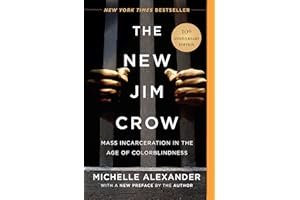
"Jarvious Cotton's great-great-grandfather could not vote as a slave. His great-grandfather was beaten to death by the Klu Klux Klan for attempting to vote. His grandfather was prevented from voting by Klan intimidation; his father was barred by poll taxes and literacy tests. Today, Cotton cannot vote because he, like many black men in the United States, has been labeled a felon and is currently on parole."
As the United States celebrates the nation's "triumph over race" with the election of Barack Obama, the majority of young black men in major American cities are locked behind bars or have been labeled felons for life. Although Jim Crow laws have been wiped off the books, an astounding percentage of the African American community remains trapped in a subordinate status--much like their grandparents before them.
In this incisive critique, former litigator-turned-legal-scholar Michelle Alexander provocatively argues that we have not ended racial caste in America: we have simply redesigned it. Alexander shows that, by targeting black men and decimating communities of color, the U.S. criminal justice system functions as a contemporary system of racial control, even as it formally adheres to the principle of color blindness. The New Jim Crow challenges the civil rights community--and all of us--to place mass incarceration at the forefront of a new movement for racial justice in America.
I read The New Jim Crow, a study of how the U.S. justice system disproportionately criminalizes and jails blacks and Latinos. Making our criminal justice system fairer and more effective is a huge challenge for our country. I’m going to keep learning about this topic, but some things are already clear: We can’t jail our way to a just society, and our current system isn’t working (adapted with permission from Facebook’s A Year of Books project). [source]
Peter Temin
The new Jim Crow that Michelle Alexander is talking about is mass incarceration. [source]
Cover unavailable
3
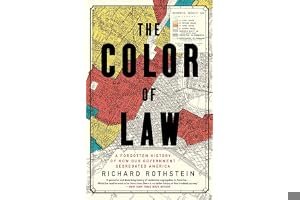
The Color of Law: A Forgotten History of How Our Government Segregated America
Widely heralded as a “masterful” (Washington Post) and “essential” (Slate) history of the modern American metropolis, Richard Rothstein’s The Color of Law offers “the most forceful argument ever published on how federal, state, and local governments gave rise to and reinforced neighborhood segregation” (William Julius Wilson).
Exploding the myth of de facto segregation arising from private prejudice or the unintended consequences of economic forces, Rothstein describes how the American government systematically imposed residential segregation: with undisguised racial zoning; public housing that purposefully segregated previously mixed communities; subsidies for builders to create whites-only suburbs; tax exemptions for institutions that enforced segregation; and support for violent resistance to African Americans in white neighborhoods.
A groundbreaking, “virtually indispensable” study that has already transformed our understanding of twentieth-century urban history (Chicago Daily Observer), The Color of Law forces us to face the obligation to remedy our unconstitutional past.
…
Cover unavailable
4
To Kill a Mockingbird
Harper Lee, Sissy Spacek, et al
4.6
The unforgettable novel of a childhood in a sleepy Southern town and the crisis of conscience that rocked it, To Kill A Mockingbird became both an instant bestseller and a critical success when it was first published in 1960. It went on to win the Pulitzer Prize in 1961 and was later made into an Academy Award-winning film, also a classic.
Compassionate, dramatic, and deeply moving, To Kill A Mockingbird takes readers to the roots of human behavior - to innocence and experience, kindness and cruelty, love and hatred, humor and pathos. Now with over 18 million copies in print and translated into forty languages, this regional story by a young Alabama woman claims universal appeal. Harper Lee always considered her book to be a simple love story. Today it is regarded as a masterpiece of American literature.
…
Recommended by Adam Lawrence, Antonio Villaraigosa, Clive Stafford Smith, and 6 others.
Even though I know we’ve made great strides in America, and have come from the reality of Maycomb, we still suffer today from the lingering effects of the bigotry of that era. At the same time, it’s a lesson in standing tall in the face of tremendously hostile circumstances. [source]
Clive Stafford Smith
The book touches on so many issues and deals with so many prejudices – prejudices towards the mentally ill, racial stuff. It’s a book that was way ahead of its time in many ways. It’s also a wonderfully written book – a joy to read. [source]
Cover unavailable
5
The Nine: Inside the Secret World of the Supreme Court
Jeffrey Toobin
4.5
In The Nine, acclaimed journalist Jeffrey Toobin takes us into the chambers of the most important—and secret—legal body in our country, the Supreme Court, revealing the complex dynamic among the nine people who decide the law of the land. An institution at a moment of transition, the Court now stands at a crucial point, with major changes in store on such issues as abortion, civil rights, and church-state relations. Based on exclusive interviews with the justices and with a keen sense of the Court’s history and the trajectory of its future, Jeffrey Toobin creates in The Nine a riveting story of one of the most important forces in American life today.
Hailed by Thomas Jefferson as “the best commentary on the principles of government which was ever written", The Federalist Papers is a collection of eighty-five essays published by Founding Fathers Alexander Hamilton, James Madison, and John Jay from 1787 to 1788, as a means to persuade the public to ratify the Constitution of the United States.
With nearly two-thirds of the essays written by Hamilton, this enduring classic is perfect for modern audiences passionate about his work or seeking a deeper understanding of one of the most important documents in US history.
AmazonClassics brings you timeless works from iconic authors. Ideal for anyone who wants to read a great work for the first time or revisit an old favorite, these new editions open the door to the stories and ideas that have shaped our world.
According to the president’s Facebook page and a 2008 interview with the New York Times, these titles are among his most influential forever favorites: Moby Dick, Herman Melville Self-Reliance, Ralph Waldo Emerson Song Of Solomon, Toni Morrison Parting The Waters, Taylor Branch Gilead, Marylinne Robinson Best and the Brightest, David Halberstam The Federalist, Alexander Hamilton Souls of Black Folk, W.E.B. Du Bois The Power and the Glory, Graham Greene The Quiet American, Graham Greene Cancer Ward, Aleksandr Solzhenitsyn Gandhi’s autobiography Working, Studs Terkel Wealth of Nations, Adam Smith Theory of Moral Sentiments, Adam Smith All the King’s Men, Robert Penn Warren [source]
I think this is the greatest explanation, in one place, of the American constitution, of the essential underpinnings and structures that make American democracy possible. This is how to view the constitution in its proper perspective, as a document of limited government, and enormous personal freedom – as an attempt to understand human nature and draw on both its strengths and its weaknesses to achieve a community and nation. [source]
"For Michael Sandel, justice is not a spectator sport," The Nation's reviewer of Justice remarked. In his acclaimed book―based on his legendary Harvard course―Sandel offers a rare education in thinking through the complicated issues and controversies we face in public life today. It has emerged as a most lucid and engaging guide for those who yearn for a more robust and thoughtful public discourse. "In terms we can all understand," wrote Jonathan Rauch in The New York Times, Justice "confronts us with the concepts that lurk . . . beneath our conflicts."
Affirmative action, same-sex marriage, physician-assisted suicide, abortion, national service, the moral limits of markets―Sandel relates the big questions of political philosophy to the most vexing issues of the day, and shows how a surer grasp of philosophy can help us make sense of politics, morality, and our own convictions as well.
Justice is lively, thought-provoking, and wise―an essential new addition to the small shelf of books that speak convincingly to the hard questions of our civic life.
The reason I picked this book is because I think Michael Sandel is an outstanding speaker and writer in his ability to bring philosophy alive. He can take a thinker like Aristotle and make him completely relevant to the present day, to show how his ideas have applications in our everyday lives. [source]
Cover unavailable
8
The Rule of Law
Penguin Adult HC/TR
4.5
The Rule of Law' is a phrase much used but little examined. The idea of the rule of law as the foundation of modern states and civilisations has recently become even more talismanic than that of democracy, but what does it actually consist of?
In this brilliant short book, Britain's former senior law lord, and one of the world's most acute legal minds, examines what the idea actually means. He makes clear that the rule of law is not an arid legal doctrine but is the foundation of a fair and just society, is a guarantee of responsible government, is an important contribution to economic growth and offers the best means yet devised for securing peace and co-operation. He briefly examines the historical origins of the rule, and then advances eight conditions which capture its essence as understood in western democracies today. He also discusses the strains imposed on the rule of law by the threat and experience of international terrorism.
The book will be influential in many different fields and should become a key text for anyone interested in politics, society and the state of our world.
…
Recommended by Jonathan Sumption, Max Mosley, Shami Chakrabarti, and 1 others.
It’s essentially a basic introduction to the social and political functions of law in modern Britain, which is addressed to non-lawyers. [source]
Max Mosley
What’s interesting about The Rule of Law is that it’s written by someone who was until very recently the UK’s most senior judge, Lord Bingham. It’s comforting because it shows that the highest level of the judiciary is really interested in the liberty of the individual and freedom in all its various guises. It’s also got all sorts of fascinating little pieces in it. For example, he criticises the way in which the Americans put certain prisoners outside the reach of their courts in Guantanamo Bay and mentions that the executive in England was doing exactly the same thing, putting prisoners beyond the reach of the courts, more than 300 years ago. But then there was an act of parliament to stop it, the Habeas Corpus Amendment Act of 1689. The book is a general look at aspects of the law which effectively guarantee the freedom of the individual. The rule of law is one of the two great pillars of democracy, the other, obviously, being the vote. But it’s probably more important than the vote, because the vote is only once in a while, but the rule of law determines the rules which everyone, including the authorities, must follow on a daily basis and is the greatest guarantee of freedom. So, it’s a very important book [source]
Shami Chakrabarti
A new book from probably the greatest jurist of our times, probably anywhere in the world. [source]
An alternative cover edition for this ISBN can be found here.
Since it appeared in 1971, John Rawls’s A Theory of Justice has become a classic. The author has now revised the original edition to clear up a number of difficulties he and others have found in the original book.
Rawls aims to express an essential part of the common core of the democratic tradition—justice as fairness—and to provide an alternative to utilitarianism, which had dominated the Anglo-Saxon tradition of political thought since the nineteenth century. Rawls substitutes the ideal of the social contract as a more satisfactory account of the basic rights and liberties of citizens as free and equal persons. “Each person,” writes Rawls, “possesses an inviolability founded on justice that even the welfare of society as a whole cannot override.” Advancing the ideas of Rousseau, Kant, Emerson, and Lincoln, Rawls’s theory is as powerful today as it was when first published.
…
Recommended by Azeem Azhar, Ann Miura-Ko, Jonathan Wolff, and 1 others.
Ann Miura-Ko
Actually a dialogue and a real logical debate. [source]
Jonathan Wolff
Rawls wants you to think about how you would design society if you didn’t know what place you’d play in it. [source]
Lucas Morales
Depending on your interest and goals, if you are like me and always looking for the trends in the big picture then I highly recommend being an active contrarian reader. Read what no one else is reading. Your goal is to think outside the box. To look at the world and ask “why hasn’t this been solved?” And that gives you a roadmap as to what opportunities may exist for your entrepreneurial efforts. So to that, here’s a snapshot, in no particular order, of what might help you push your intellectual boundaries: Born a Crime: Stories from a South African Childhood by Trevor Noah 23 Things They Don't Tell You About Capitalism by Ha-Joon Chang Postcapitalism: A Guide to Our Future by Paul Mason Capital in the Twenty-First Century by Thomas Piketty Who Gets What--And Why: The New Economics of Matchmaking and Market Design by Alvin E. Roth The Political Economy of Participatory Economics by Michael Albert and Robin Hahnel The Zero Marginal Cost Society: The Internet of Things, the Collaborative Commons, and the Eclipse of Capitalism by Jeremy Rifkin Why America Misunderstands the World by Paul R. Pillar A Theory of Justice by John Rawls Prisoners of Geography by Tim Marshall [source]
Cover unavailable
10
A Civil Action
Jonathan Harr
4.4
A Civil Action is a non-fiction book by Jonathan Harr about a water contamination case in Woburn, Massachusetts, in the 1980s.
After finding that her child is diagnosed with leukemia, Anne Anderson notices a high prevalence of leukemia, a relatively rare disease, in her city. Eventually she gathers other families and seeks a lawyer, Jan Schlichtmann, to consider their options.
Schlichtmann originally decides not to take the case due to both the lack of evidence and a clear defendant. Later picking up the case, Schlichtmann finds evidence suggesting trichloroethylene (TCE) contamination of the town's water supply by Riley Tannery, a subsidiary of Beatrice Foods; a chemical company, W. R. Grace; and another company named Unifirst.
In the course of the lawsuit Schlichtmann gets other attorneys to assist him. He spends lavishly as he had in his prior lawsuits, but the length of the discovery process and trial stretch all of their assets to their limit.
…
Recommended by Catherine Manegold.
Catherine Manegold
This book incorporates less history. Instead, it is just a whiz-bang narrative about a lawyer who takes up the cause of a small New England town that is host to a mysterious rash of cancer deaths. The narrative revolves around Jan Schlichtmann, a Boston lawyer who uncovers an environmental crisis and traces culpability up the chain to several multinational corporations responsible for the mess. As the reader follows Schlichtmann in his crusade, Harr uses the case and Schlichtmann’s obsession with it, to educate us about chemistry, cancer clusters, illegal dumping, environmental degradation and the law. Here again, a seductive narrative yanks the reader in, then great research and reporting leave the reader wholly changed. No one reading this book could ever think about ground pollutants and illegal dumping the same way again. That’s the beauty of it: Who would ever go to a bookstore and say to the clerk: ‘Gee, today I’d really like to sink into a 500-page book on cancer clusters, dead children and irresponsible industry executives.’ In the hands of a writer like Jonathan Harr, however, the education is a treat. [source]
Cover unavailable
11
Getting to Yes: Negotiating Agreement Without Giving in
The key text on problem-solving negotiation-updated and revised
Getting to Yes has helped millions of people learn a better way to negotiate. One of the primary business texts of the modern era, it is based on the work of the Harvard Negotiation Project, a group that deals with all levels of negotiation and conflict resolution.
Getting to Yes offers a proven, step-by-step strategy for coming to mutually acceptable agreements in every sort of conflict. Thoroughly updated and revised, it offers readers a straight- forward, universally applicable method for negotiating personal and professional disputes without getting angry-or getting taken.
…
Recommended by Charles T. Munger, Drew Houston, Dustin Moskovitz, and 8 others.
recommends this title in the book "Poor Charlie's Almanack: The Wit and Wisdom of Charles T. Munger". [source]
Drew Houston
CEO/Dropbox
About principled negotiation, and I still think about and apply a lot of those concepts today. [source]

Dustin Moskovitz
Co-founder/Facebook and Asana
Dustin Moskovitz recommended this book on Twitter. [source]
Cover unavailable
12
A Time to Kill (Jake Brigance, #1)
John Grisham, Michael Beck, et al
4.3
Librarian's Note: Alternate-cover edition for ISBN 0385338600 / 9780385338608
Before The Firm and The Pelican Brief made him a superstar, John Grisham wrote this riveting story of retribution and justice. In this searing courtroom drama, best-selling author John Grisham probes the savage depths of racial violence...as he delivers a compelling tale of uncertain justice in a small southern town...Clanton, Mississippi.
The life of a ten-year-old girl is shattered by two drunken and remorseless young men. The mostly white town reacts with shock and horror at the inhuman crime. Until her black father acquires an assault rifle and takes matters into his hands.
For ten days, as burning crosses and the crack of sniper fire spread through the streets of Clanton, the nation sits spellbound as young defense attorney Jake Brigance struggles to save his client's life...and then his own.
This was the holiday-reading book which, as a teenager, inspired me to pursue criminal law. The gritty reality of criminal practice is of course somewhat removed from the fictionalised ideal, and any lawyer acting in the way that our hero Jake Brigance does in securing a just outcome for his innocent client would have to deal with fairly serious professional consequences, but the underlying themes transcend time and realities. [source]
Cover unavailable
13
Notorious RBG: The Life and Times of Ruth Bader Ginsburg
Irin Carmon
4.3
You can't spell truth without Ruth. Only Ruth Bader Ginsburg can judge me. The Ruth will set you free.
Supreme Court Justice Ruth Bader Ginsburg never asked for fame—she was just trying to make the world a little better and a little freer. But along the way, the feminist pioneer's searing dissents and steely strength have inspired millions. Notorious RBG: The Life and Times of Ruth Bader Ginsburg, created by the young lawyer who began the Internet sensation and an award-winning journalist, takes you behind the myth for an intimate, irreverent look at the justice's life and work. As America struggles with the unfinished business of gender equality and civil rights, Ginsburg stays fierce. And if you don't know, now you know.
…
Cover unavailable
14
One L: The Turbulent True Story of a First Year at Harvard Law School
Scott Turow
4.3
Newsweek calls him "an extraordinarily canny and empathetic observer." In bestseller after bestseller, Turow uses his background as a lawyer to create suspense fiction so authentic it reads with the hammering impact of fact. But before he became a worldwide sensation, Scott Turow wrote a book that is entirely true, the account of his own searing indoctrination into the field of law called...
The first year of law school is an intellectual and emotional ordeal so grueling that it ensures only the fittest survive. Now Scott Turow takes you inside the oldest and most prestigious law school in the country when he becomes a "One L," as entering students are known at Harvard Law School. In a book that became a national bestseller, a law school primer, and a classic autobiography, he brings to life the fascinating, shocking reality of that first year. Provocative and riveting, One L reveals the experience directly from the combat zone: the humiliations, triumphs, hazings, betrayals, and challenges that will make him a lawyer-and forever change Turow's mind, test his principles, and expose his heart.
This amoral, cunning, ruthless, and instructive book synthesizes the philosophies of Machiavelli, Sun Tzu, and Carl Von Clausewitz with the historical legacies of statesmen, warriors, seducers, and con men throughout the ages.
These are the books I recommend people to listen to on @applebooks. [source]
Marvin Liao
Partner/500 Startups
My list would be (besides the ones I mentioned in answer to the previous question) both business & Fiction/Sci-Fi and ones I personally found helpful to myself. The business books explain just exactly how business, work & investing are in reality & how to think properly & differentiate yourself. On the non-business side, a mix of History & classic fiction to understand people, philosophy to make sense of life and Science fiction to picture what the future could be like (not always utopian). [source]
There is no living writer (or person) who has been more influential to me than Robert Greene. I met him when I was 19 years old and he’s shaped me as a person, as a writer, as a thinker. You MUST read his books. His work on power and strategy are critical for anyone trying to accomplish anything. In life, power is force we are constantly bumping up against. People have power of over us, we seek power ourselves that we might be free enough and influential enough to accomplish our goals—so we must understand where power comes from, how it works and how to get it. But pure power is meaningless. It must be joined to mastery and purpose. So read his book Mastery so that you can figure your life’s task and how to dedicate yourself to it. [source]
Cover unavailable
16
The Law
Frederic Bastiat and Tony Darnell
4.3
How is it that the law enforcer itself does not have to keep the law? How is it that the law permits the state to lawfully engage in actions which, if undertaken by individuals, would land them in jail? These are among the most intriguing issues in political and economic philosophy. More specifically, the problem of law that itself violates law is an insurmountable conundrum of all statist philosophies. The problem has never been discussed so profoundly and passionately as in this essay by Frederic Bastiat from 1850. The essay might have been written today. It applies to our own time. It applies in all times in which the state assumes unto itself different rules and different laws from that by which it expects other people to live. And so we have this legendary essay, written in a white heat against the leaders of 19th century France, the reading of which has shocked millions out of their toleration of despotism. This new edition from the Mises Institute revives a glorious translation that has been out of print for a hundred years, one that circulated in Britain in the generation that followed Bastiat s death. This newly available translation provides new insight into Bastiat s argument. The question that Bastiat deals with: how to tell when a law is unjust or when the law maker has become a source of law breaking? When the law becomes a means of plunder it has lost its character of genuine law. When the law enforcer is permitted to do with others lives and property what would be illegal if the citizens did them, the law becomes perverted. Bastiat doesn t avoid the difficult issues, such as why should we think that a democratic mandate can convert injustice to justice. He deals directly with the issue of the expanse of legislation: It is not true that the mission of the law is to regulate our consciences, our ideas, our will, our education, our sentiments, our works, our exchanges, our gifts, our enjoyments. Its mission is to prevent the rights of one from interfering with those of another, in any one of these things. Law, because it has force for its necessary sanction, can only have as its lawful domain the domain of force, which is justice. The Law by Frederic Bastiat - Ludwig von Mises Institute
…
Cover unavailable
17
The Firm
John Grisham
4.3
When Mitch McDeere signed on with Bendini, Lambert and Locke of Memphis, he thought he and his beautiful wife, Abby, were on their way. The firm leased him a BMW, paid off his school loans, arranged a mortgage, and hired him a decorator. Mitch McDeere should have remembered what his brother Ray-doing fifteen years in a Tennessee jail- already knew. You never get nothing for nothing. Now the FBI has the lowdown on Mitch's firm and needs his help. Mitch is caught between a rock and a hard place, with no choice-- if he wants to live.
…
Cover unavailable
18
The Constitution of the United States of America
Founding Fathers
4.3
The landmark legal document of the United States, the U.S. Constitution comprises the primary law of the Federal Government. Signed by the members of the Constitutional Convention in Philadelphia on September 17, 1787, the Constitution outlines the powers and responsibilities of the three chief branches of the Federal Government, as well as the basic rights of the citizens of the United States. This beautiful gift edition contains the complete text of the United States Constitution, as well as all of its amendments. It is a treasure for Americans of all ages.
…
Cover unavailable
19
The Pelican Brief
John Grisham
4.3
In suburban Georgetown a killer's Reeboks whisper on the front floor of a posh home... In a seedy D.C. porno house a patron is swiftly garroted to death... The next day America learns that two of its Supreme Court justices have been assassinated. And in New Orleans, a young law student prepares a legal brief... To Darby Shaw it was no more than a legal shot in the dark, a brilliant guess. To the Washington establishment it was political dynamite. Suddenly Darby is witness to a murder -- a murder intended for her. Going underground, she finds there is only one person she can trust -- an ambitious reporter after a newsbreak hotter than Watergate -- to help her piece together the deadly puzzle. Somewhere between the bayous of Louisiana and the White House's inner sanctums, a violent cover-up is being engineered. For someone has read Darby's brief. Someone who will stop at nothing to destroy the evidence of an unthinkable crime.
…
Recommended by Louise Bagshawe.
Louise Bagshawe
This was probably the last book I read where I literally stayed up until three o’clock in the morning because I could not stop reading it. I just think it is such a brilliant fast-paced story. The characterisation is sparse, terse, but nevertheless really well-drawn. He doesn’t do psychology but it’s a chase story with an ongoing mystery in the back. [source]
Cover unavailable
20
The Client
John Grisham
4.3
In a weedy lot on the outskirts of Memphis, two boys watch a shiny Lincoln pull up to the curb...Eleven-year-old Mark Sway and his younger brother were sharing a forbidden cigarette when a chance encounter with a suicidal lawyer left Mark knowing a bloody and explosive secret: the whereabouts of the most sought-after dead body in America. Now Mark is caught between a legal system gone mad and a mob killer desperate to cover up his crime. And his only ally is a woman named Reggie Love, who has been a lawyer for all of four years. Prosecutors are willing to break all the rules to make Mark talk. The mob will stop at nothing to keep him quiet. And Reggie will do anything to protect her client --even take a last, desperate gamble that could win Mark his freedom... or cost them both their lives.
…
Cover unavailable
21
The Concept of Law (Clarendon Law Series)
H. L. A. Hart, Penelope Bulloch, et al.
4.3
Fifty years on from its original publication, HLA Hart's The Concept of Law is widely recognized as the most important work of legal philosophy published in the twentieth century. It is a classic book in the field of legal scholarship and remains the starting point for most students coming to the subject for the first time. Known as Hart's most famous work, The Concept of Law emerged from a set of lectures that Hart began to deliver in 1952 in which he developed a sophisticated view of legal positivism. Hart revolutionized the methods of jurisprudence and the philosophy of law in the English-speaking world by bringing the tools of analytic, and especially linguistic, philosophy to bear on the central problems of legal theory. In this third edition, Leslie Green provides a new introduction that sets the book in the context of subsequent developments in social and political philosophy, clarifying misunderstandings of Hart's project and highlighting central tensions and problems in the work. The Concept of Law remains a must-read for anyone interested in the great thinkers of the 20th century.
…
Cover unavailable
22
The Rainmaker
John Grisham
4.3
InThe Rainmaker, John Grisham tells the story of a young man barely out of law school who finds himself taking on one of the most powerful, corrupt, and ruthless companies in America -- and exposing a complex, multibillion-dollar insurance scam. In his final semester of law school Rudy Baylor is required to provide free legal advice to a group of senior citizens, and it is there that he meets his first "clients," Dot and Buddy Black. Their son, Donny Ray, is dying of leukemia, and their insurance company has flatly refused to pay for his medical treatments. While Rudy is at first skeptical, he soon realizes that the Blacks really have been shockingly mistreated by the huge company, and that he just may have stumbled upon one of the largest insurance frauds anyone's ever seen -- and one of the most lucrative and important cases in the history of civil litigation. The problem is, Rudy's flat broke, has no job, hasn't even passed the bar, and is about to go head-to-head with one of the best defense attorneys -- and powerful industries -- in America.
…
Cover unavailable
23
The Four Agreements: A Practical Guide to Personal Freedom
In The Four Agreements, don Miguel Ruiz reveals the source of self-limiting beliefs that rob us of joy and create needless suffering. Based on ancient Toltec wisdom, the Four Agreements offer a powerful code of conduct that can rapidly transform our lives to a new experience of freedom, true happiness, and love. The Four Agreements are: Be Impeccable With Your Word, Don't Take Anything Personally, Don't Make Assumptions, Always Do Your Best.
Question: What are the books that had a major influence on you? Or simply the ones you like the most. : Tao te Ching, score takes care of itself, between the world and me, the four agreements, the old man and the sea...I love reading! [source]
Karlie Kloss
I just think it’s got a lot of great principles and ideas. [source]
Cover unavailable
24
Making Your Case: The Art of Persuading Judges
Bryan A. Garner and Antonin Scalia
4.3
In their professional lives, courtroom lawyers must do these two things: speak persuasively and write persuasively. In this noteworthy book, two of the most noted legal writers of our day - Justice Antonin Scalia and Bryan A. Garner - systematically present every important idea about judicial persuasion in a fresh, entertaining way. Making Your Case: The Art of Persuading Judges is a guide for novice and experienced litigators alike. It covers the essentials of sound legal reasoning, including how to develop the syllogism that underlies any argument. From there the authors explain the art of brief writing, expecially what to include and what to omit, so that you cn induce the judge to focus closely on your arguments. Finally they show what it takes to succeed in oral argument. The opinions of Justice Scalia are legendary for their sharp insights, biting wit, and memorable phrasing. The writings of Gryan Garner, Editor in chief of Black's Law Dictionary, are respected inside and
…
Cover unavailable
25
The Brethren: Inside the Supreme Court
Bob Woodward, Scott Armstrong
4.3
The Brethren is the first detailed behind-the-scenes account of the Supreme Court in action.
Bob Woodward and Scott Armstrong have pierced its secrecy to give us an unprecedented view of the Chief and Associate Justices—maneuvering, arguing, politicking, compromising, and making decisions that affect every major area of American life.
In a life filled with meaning and accomplishment, Michelle Obama has emerged as one of the most iconic and compelling women of our era. As First Lady of the United States of America—the first African American to serve in that role—she helped create the most welcoming and inclusive White House in history, while also establishing herself as a powerful advocate for women and girls in the U.S. and around the world, dramatically changing the ways that families pursue healthier and more active lives, and standing with her husband as he led America through some of its most harrowing moments. Along the way, she showed us a few dance moves, crushed Carpool Karaoke, and raised two down-to-earth daughters under an unforgiving media glare.
In her memoir, a work of deep reflection and mesmerizing storytelling, Michelle Obama invites readers into her world, chronicling the experiences that have shaped her—from her childhood on the South Side of Chicago to her years as an executive balancing the demands of motherhood and work, to her time spent at the world’s most famous address. With unerring honesty and lively wit, she describes her triumphs and her disappointments, both public and private, telling her full story as she has lived it—in her own words and on her own terms. Warm, wise, and revelatory, Becoming is the deeply personal reckoning of a woman of soul and substance who has steadily defied expectations—and whose story inspires us to do the same.
…
Recommended by Barack Obama, Piers Morgan, Mary Burkey, and 3 others.
Of course, @MichelleObama’s my wife, so I’m a little biased here. But she also happens to be brilliant, funny, wise – one of a kind. This book tells her quintessentially American story. I love it because it faithfully reflects the woman I have loved for so long. [source]
Piers Morgan
Congrats to @MichelleObama on sensational sales of her new book #Becoming. I always take people as I find them & when I met her at the White House, she was a delightfully warm, friendly & genuine lady. A great First Lady & now a best-selling author. https://t.co/nlSUHI01SM [source]
Mary Burkey
This is a case where you have to hear Michelle Obama read her story. It’s her story and she puts her whole emotional self into it. [source]
Cover unavailable
27
America's Constitution: A Biography
Akhil Reed Amar
4.2
In America’s Constitution, one of this era’s most accomplished constitutional law scholars, Akhil Reed Amar, gives the first comprehensive account of one of the world’s great political texts. Incisive, entertaining, and occasionally controversial, this “biography” of America’s framing document explains not only what the Constitution says but also why the Constitution says it.
We all know this much: the Constitution is neither immutable nor perfect. Amar shows us how the story of this one relatively compact document reflects the story of America more generally. (For example, much of the Constitution, including the glorious-sounding “We the People,” was lifted from existing American legal texts, including early state constitutions.) In short, the Constitution was as much a product of its environment as it was a product of its individual creators’ inspired genius.
Despite the Constitution’s flaws, its role in guiding our republic has been nothing short of amazing. Skillfully placing the document in the context of late-eighteenth-century American politics, America’s Constitution explains, for instance, whether there is anything in the Constitution that is unamendable; the reason America adopted an electoral college; why a president must be at least thirty-five years old; and why–for now, at least–only those citizens who were born under the American flag can become president.
From his unique perspective, Amar also gives us unconventional wisdom about the Constitution and its significance throughout the nation’s history. For one thing, we see that the Constitution has been far more democratic than is conventionally understood. Even though the document was drafted by white landholders, a remarkably large number of citizens (by the standards of 1787) were allowed to vote up or down on it, and the document’s later amendments eventually extended the vote to virtually all Americans.
We also learn that the Founders’ Constitution was far more slavocratic than many would acknowledge: the “three fifths” clause gave the South extra political clout for every slave it owned or acquired. As a result, slaveholding Virginians held the presidency all but four of the Republic’s first thirty-six years, and proslavery forces eventually came to dominate much of the federal government prior to Lincoln’s election.
Ambitious, even-handed, eminently accessible, and often surprising, America’s Constitution is an indispensable work, bound to become a standard reference for any student of history and all citizens of the United States.
…
Cover unavailable
28
My Beloved World
Sonia Sotomayor
4.2
The first Latinx (Puerto Rican) and third woman appointed to the US Supreme Court, Sonia Sotomayor has become an instant American icon. Now, with a candor and intimacy never undertaken by a sitting Justice, she recounts her life from a Bronx housing project to the federal bench, a journey that offers an inspiring testament to her own extraordinary determination and the power of believing in oneself.
Here is the story of a precarious childhood, with an alcoholic father (who would die when she was 9) and a devoted but overburdened mother, and of the refuge a little girl took from the turmoil at home with her passionately spirited paternal grandmother. But it was when she was diagnosed with juvenile diabetes that the precocious Sonia recognized she must ultimately depend on herself. She would learn to give herself the insulin shots she needed to survive and soon imagined a path to a different life.
With only television characters for her professional role models, and little understanding of what was involved, she determined to become a lawyer, a dream that would sustain her on an unlikely course, from valedictorian of her high school class to the highest honors at Princeton, Yale Law School, the New York County District Attorney’s office, private practice, and appointment to the Federal District Court before the age of 40.
She speaks with warmth and candor about her invaluable mentors, a failed marriage, and the modern version of extended family she has created from cherished friends and their children. Through her still-astonished eyes, America’s infinite possibilities are envisioned anew in this warm and honest book, destined to become a classic of self-invention and self-discovery.
…
Cover unavailable
29
My Own Words
Ruth Bader Ginsburg
4.2
13 hours, 18 minutes
The first book from Ruth Bader Ginsburg since becoming a Supreme Court Justice in 1993—a witty, engaging, serious, and playful collection of writings and speeches from the woman who has had a powerful and enduring influence on law, women’s rights, and popular culture.
My Own Words offers Justice Ginsburg on wide-ranging topics, including gender equality, the workways of the Supreme Court, being Jewish, law and lawyers in opera, and the value of looking beyond US shores when interpreting the US Constitution. Throughout her life Justice Ginsburg has been (and continues to be) a prolific writer and public speaker. This book’s sampling is selected by Justice Ginsburg and her authorized biographers Mary Hartnett and Wendy W. Williams. Justice Ginsburg has written an introduction to the book, and Hartnett and Williams introduce each chapter, giving biographical context and quotes gleaned from hundreds of interviews they have conducted. This is a fascinating glimpse into the life of one of America’s most influential women.
…
Cover unavailable
30
The Runaway Jury
John Grisham
4.2
Every jury has a leader, and the verdict belongs to him. In Biloxi, Mississippi, a landmark tobacco trial with hundreds of millions of dollars at stake begins routinely, then swerves mysteriously off course.
The jury is behaving strangely, and at least one juror is convinced he's being watched. Soon they have to be sequestered. Then a tip from an anonymous young woman suggests she is able to predict the jurors' increasingly odd behavior.
Is the jury somehow being manipulated, or even controlled? If so, by whom? And, more importantly, why?
From the Trade Paperback edition.
…
Cover unavailable
31
Law 101: Everything You Need to Know about the American Legal System
Jay M. Feinman
4.2
The best-selling first edition of Law 101 provided readers with a vividly written and indispensable portrait of our nation's legal system. Now, in this revised edition, Jay M. Feinman offers an updated survey of American law, spiced with new anecdotes and cases, and incorporating fresh material on topics ranging from the President's war powers, to intellectual property, standard form contracts, and eminent domain. Here is an exceptionally clear introduction to law, covering the main subjects found in the first year of law school, giving us a basic understanding of how it all works. Readers are introduced to every aspect of the legal system, from constitutional law and the litigation process to tort law, contract law, property law, and criminal law. Feinman illuminates each discussion with many intriguing, outrageous, and infamous cases, from the scalding coffee case that cost McDonald's half a million dollars, to the sensational murder trial in Victorian London that led to the legal definition of insanity, to the epochal decision in Marbury v. Madison that gave the Supreme Court the power to declare state and federal laws unconstitutional. He broadens the reader's legal vocabulary, clarifying the meaning of everything from "due process" and "equal protection" in constitutional law, to the distinction between "murder" and "manslaughter" in criminal law. Perhaps most important, we learn that though the law is voluminous and complex, it is accessible to all. Everyone who wants a better grasp of current legal issues--from students contemplating law school, to journalists covering the legislature or the courts, to fans of Court TV--will find here a wonderful source of information: a complete, clear, and colorful map of the American legal system. "An entertaining and informative introduction to the law.... For journalists, those interested in the law, and fans of television law dramas, this book should be required reading."--Library Journal
…
Cover unavailable
32
Black's Law Dictionary, Fifth Pocket Edition
Bryan A. Garner
4.2
For more than a century Black's has been the gold standard for the language of law. Today it is the most widely cited law book in the world. Edited by Bryan A. Garner, the world's leading legal lexicographer, the 9th Edition is the most authoritative, comprehensive law dictionary ever published. It contains more than 45,000 terms and includes: 2,000 more terms than the 8th Edition and 19,000 more than the 7th Edition including click fraud, Code Adam, collaborative law, ecoterrorism, environmental tort, friendly subpoena, happy-slapping, honor crime, secret detention, Schumer box, and super precedent. Includes the date when selected terms were first used in English-language contexts, especially in judicial opinions. Heightened accuracy: more than 200 lawyers around the country reviewed terms. Definitions of more than 1,000 law-related abbreviations and acronyms. Almost 3,000 quotations drawn from sources over five centurie. Alternate spellings or equivalent expressions for more than 5,300 terms. West Key Numbers.
…
Cover unavailable
33
The Street Lawyer
John Grisham
4.2
Michael was in a hurry. He was scrambling up the ladder at Drake & Sweeney, a giant D.C. law firm with eight hundred lawyers. The money was good and getting better; a partnership was three years away. He was a rising star with no time to waste, no time to stop, no time to toss a few coins into the cups of panhandlers. No time for a conscience.
But a violent encounter with a homeless man stopped him cold. Michael survived; his assailant did not. Who was this man? Michael did some digging, and learned that he was a mentally ill veteran who'd been in and out of shelters for many years. Then Michael dug a little deeper, and found a dirty secret, and the secret involved Drake & Sweeney.
The fast track derailed; the ladder collapsed. Michael bolted the firm and took a top-secret file with him. He landed in the streets, an advocate for the homeless, a street lawyer.
And a thief.
…
Cover unavailable
34
The Innocent Man: Murder and Injustice in a Small Town
John Grisham
4.2
#1 NEW YORK TIMES BESTSELLER
In the town of Ada, Oklahoma, Ron Williamson was going to be the next Mickey Mantle. But on his way to the Big Leagues, Ron stumbled, his dreams broken by drinking, drugs, and women. Then, on a winter night in 1982, not far from Ron’s home, a young cocktail waitress named Debra Sue Carter was savagely murdered. The investigation led nowhere. Until, on the flimsiest evidence, it led to Ron Williamson. The washed-up small-town hero was charged, tried, and sentenced to death—in a trial littered with lying witnesses and tainted evidence that would shatter a man’s already broken life, and let a true killer go free.
Impeccably researched, grippingly told, filled with eleventh-hour drama, John Grisham’s first work of nonfiction reads like a page-turning legal thriller. It is a book that will terrify anyone who believes in the presumption of innocence—a book no American can afford to miss.
…
Cover unavailable
35
Gideon's Trumpet: How One Man, a Poor Prisoner, Took His Case to the Supreme Court-And Changed the Law of the United States
Anthony Lewis
4.2
A history of the landmark case of Clarence Earl Gideon's fight for the right to legal counsel. Notes, table of cases, index. The classic backlist bestseller. More than 800,000 sold since its first pub date of 1964.
Cover unavailable
36
A History of American Law
Lawrence M. Friedman
4.2
In this brilliant and immensely readable book, Lawrence M. Friedman tells the whole fascinating story of American law from its beginnings in the colonies to the present day. By showing how close the life of the law is to the economic and political life of the country, he makes a complex subject understandable and engrossing. A History of American Law presents the achievements and failures of the American legal system in the context of America's commercial and working world, family practices, and attitudes toward property, government, crime, and justice. Now completely revised and updated, this groundbreaking work incorporates new material regarding slavery, criminal justice, and twentieth-century law. For laymen and students alike, this remains the only comprehensive authoritative history of American law.
…
Cover unavailable
37
Getting to Maybe: How to Excel on Law School Exams
Richard Michael Fischl
4.2
Professors Fischl and Paul explain law school exams in ways no one has before, all with an eye toward improving the reader's performance. The book begins by describing the difference between educational cultures that praise students for "right answers" and the law school culture that rewards nuanced analysis of ambiguous situations in which more than one approach may be correct. Enormous care is devoted to explaining precisely how and why legal analysis frequently produces such perplexing situations.
But the authors don't stop with mere description. Instead, Getting to Maybe teaches how to excel on law school exams by showing the reader how legal analysis can be brought to bear on examination problems. The book contains hints on studying and preparation that go well beyond conventional advice. The authors also illustrate how to argue both sides of a legal issue without appearing wishy-washy or indecisive. Above all, the book explains why exam questions may generate feelings of uncertainty or doubt about correct legal outcomes and how the student can turn these feelings to his or her advantage.
In sum, although the authors believe that no exam guide can substitute for a firm grasp of substantive material, readers who devote the necessary time to learning the law will find this book an invaluable guide to translating learning into better exam performance.
…
Cover unavailable
38
Law School Confidential: A Complete Guide to the Law School Experience: By Students, for Students
Robert H. Miller
4.2
I WISH I KNEW THEN WHAT I KNOW NOW!
Don't get to the end of your law school career muttering these words to yourself! Take the first step toward building a productive, successful, and perhaps even pleasant law school experience—read this book!
Written by students, for students, Law School Confidential has been the "must-have" guide for anyone thinking about, applying to, or attending law school for more than a decade. And now, in this newly revised third edition, it's more valuable than ever. This isn't the advice of graying professors or battle-scarred practitioners long removed from law school. Robert H. Miller has assembled a blue-ribbon panel of recent graduates from across the country to offer realistic and informative firsthand advice about what law school is really like. This updated edition contains the very latest information and strategies for thriving and surviving in law school—from navigating the admissions process and securing financial aid, choosing classes, studying and exam strategies, and securing a seat on the law review to getting a judicial clerkship and a job, passing the bar exam, and much, much more. Newly added material also reveals a sea change that is just starting to occur in legal education, turning it away from the theory-based platform of the previous several decades to a pragmatic platform being demanded by the rigors of today's practices. Law School Confidential is a complete guide to the law school experience that no prospective or current law student can afford to be without.
…
Cover unavailable
39
Why Nations Fail: The Origins of Power, Prosperity, and Poverty
Brilliant and engagingly written, Why Nations Fail answers the question that has stumped the experts for centuries: Why are some nations rich and others poor, divided by wealth and poverty, health and sickness, food and famine?
Is it culture, the weather, geography? Perhaps ignorance of what the right policies are?
Simply, no. None of these factors is either definitive or destiny. Otherwise, how to explain why Botswana has become one of the fastest growing countries in the world, while other African nations, such as Zimbabwe, the Congo, and Sierra Leone, are mired in poverty and violence?
Daron Acemoglu and James Robinson conclusively show that it is man-made political and economic institutions that underlie economic success (or lack of it). Korea, to take just one of their fascinating examples, is a remarkably homogeneous nation, yet the people of North Korea are among the poorest on earth while their brothers and sisters in South Korea are among the richest. The south forged a society that created incentives, rewarded innovation, and allowed everyone to participate in economic opportunities. The economic success thus spurred was sustained because the government became accountable and responsive to citizens and the great mass of people. Sadly, the people of the north have endured decades of famine, political repression, and very different economic institutions—with no end in sight. The differences between the Koreas is due to the politics that created these completely different institutional trajectories.
Based on fifteen years of original research Acemoglu and Robinson marshall extraordinary historical evidence from the Roman Empire, the Mayan city-states, medieval Venice, the Soviet Union, Latin America, England, Europe, the United States, and Africa to build a new theory of political economy with great relevance for the big questions of today, including:
- China has built an authoritarian growth machine. Will it continue to grow at such high speed and overwhelm the West? - Are America’s best days behind it? Are we moving from a virtuous circle in which efforts by elites to aggrandize power are resisted to a vicious one that enriches and empowers a small minority? - What is the most effective way to help move billions of people from the rut of poverty to prosperity? More philanthropy from the wealthy nations of the West? Or learning the hard-won lessons of Acemoglu and Robinson’s breakthrough ideas on the interplay between inclusive political and economic institutions?
Why Nations Fail will change the way you look at—and understand—the world.
"I read two books that raise big, interesting questions about social change and technological progress. I’m planning to write longer reviews of each of these books, but let me flag them for you now. One is Why Nations Fail: The Origins of Power, Prosperity, and Poverty by Daron Acemoglu and James A. Robinson.The topic of this book is why some countries have prospered and created great living conditions for their citizens while others have not. This is an important topic, which I care a lot about. The book makes an appealing argument that economic development depends on political institutions that protect individual rights. It is well written and very easy to read with lots of interesting historical stories about different countries. But it is a major disappointment. Its analysis is vague and simplistic. I’ll explain more in a longer review." [source]
My next book for A Year of Books is Why Nations Fail by Daron Acemoğlu and James A. Robinson. This book explores the different kinds of social institutions and incentives that nations have applied to encourage prosperity, economic development and elimination of poverty. This is a good complement to our last book, Portfolios of the Poor, which focused on how people live in poverty. This one discusses why poverty exists and how to reduce it. [source]
In terms of understanding this top inequality, I mentioned the possibility that it might be about politics. How should we think about politics? What are the levers of politics? For that we need a conceptual framework and that’s what this book tries to provide. It’s co-authored with my long-term collaborator and friend Jim Robinson – and it’s not about US or UK or Canadian inequality. It runs through several thousand years of history, and tries to explain how societies work and why, often, they fail to generate prosperity for their citizens. It’s a very political story. [source]
Cover unavailable
40
Eichmann in Jerusalem: A Report on the Banality of Evil
Originally appearing as a series of articles in The New Yorker, Hannah Arendt’s authoritative and stunning report on the trial of Nazi leader Adolf Eichmann sparked a flurry of debate upon its publication. This revised edition includes material that came to light after the trial, as well as Arendt’s postscript directly addressing the controversy that arose over her account. A major journalistic triumph by an intellectual of singular influence, Eichmann in Jerusalem is as shocking as it is informative—an unflinching look at one of the most unsettling and unsettled issues of the twentieth century that remains hotly debated to this day.
…
Recommended by Dr. Phil Zimbardo, Daniel Pick, David Bell, and 1 others.
Dr. Phil Zimbardo
Talks about Eichmann as illustrating the banality of evil. [source]
Daniel Pick
The trial focused public attention on the individual high bureaucrat who had such personal responsibility in the Final Solution. There was, in a way, this enigma of what went on in Eichmann’s mind. [source]
David Bell
Political philosopher Arendt sees the work of the Nazis as the inevitable result of colonialism and industrialisation. [source]
Cover unavailable
41
The Legal Analyst: A Toolkit for Thinking about the Law
Ward Farnsworth
4.2
There are two kinds of knowledge law school teaches: legal rules on the one hand, and tools for thinking about legal problems on the other. Although the tools are far more interesting and useful than the rules, they tend to be neglected in favor of other aspects of the curriculum. In The Legal Analyst, Ward Farnsworth brings together in one place all of the most powerful of those tools for thinking about law.
From classic ideas in game theory such as the “Prisoner’s Dilemma” and the “Stag Hunt” to psychological principles such as hindsight bias and framing effects, from ideas in jurisprudence such as the slippery slope to more than two dozen other such principles, Farnsworth’s guide leads readers through the fascinating world of legal thought. Each chapter introduces a single tool and shows how it can be used to solve different types of problems. The explanations are written in clear, lively language and illustrated with a wide range of examples.
The Legal Analyst is an indispensable user’s manual for law students, experienced practitioners seeking a one-stop guide to legal principles, or anyone else with an interest in the law.
…
Cover unavailable
42
The Secret Barrister: Stories of the Law and How It's Broken
The Secret Barrister, Jack Hawkins, et al
4.2
“I’m a barrister, a job which requires the skills of a social worker, relationship counsellor, arm-twister, hostage negotiator, named driver, bus fare-provider, accountant, suicide watchman, coffee-supplier, surrogate parent and, on one memorable occasion, whatever the official term is for someone tasked with breaking the news to a prisoner that his girlfriend has been diagnosed with gonorrhoea.”
Welcome to the world of the Secret Barrister. These are the stories of life inside the courtroom. They are sometimes funny, often moving and ultimately life-changing.
How can you defend a child-abuser you suspect to be guilty? What do you say to someone sentenced to ten years who you believe to be innocent? What is the law and why do we need it?
And why do they wear those stupid wigs?
From the criminals to the lawyers, the victims, witnesses and officers of the law, here is the best and worst of humanity, all struggling within a broken system which would never be off the front pages if the public knew what it was really like.
Both a searing first-hand account of the human cost of the criminal justice system, and a guide to how we got into this mess, The Secret Barrister wants to show you what it’s really like and why it really matters.
…
Cover unavailable
43
The Common Law
Oliver Wendell Holmes Jr.
4.2
Oliver Wendell Holmes, Jr. (1841–1935) is generally considered one of the two greatest justices of the United States Supreme Court, Chief Justice John Marshall being the other. In more than 2000 opinions, he delineated an impressive legal philosophy that profoundly influenced American jurisprudence, particularly in the area of civil liberties and judicial restraint. At the same time, his abilities as a prose stylist earned him a position among the literary elite. In The Common Law, derived from a series of lectures delivered at the Lowell Institute in Boston, Holmes systematized his early legal doctrines. The result was an enduring classic of legal philosophy that continues to be read and consulted over a century later. Beginning with historical forms of liability (thought to have originated in the desire for vengeance in ancient Roman and Germanic blood feuds), the book goes on to discuss criminal law, torts, bails, possession and ownership, contracts, successions, and many other aspects of civil and criminal law. Encompassing Holmes's profound, wide-ranging knowledge of the law in its historical aspects, yet written in a manner easily accessible to the layman, The Common Law provoked this observation from another famed jurist; "The book is a classic in the sense that its stock of ideas has been absorbed and become part of common juristic thought … they placed law in a perspective which legal scholarship ever since has merely confirmed." — Felix Frankfurter, Of Law and Men. Now the influential ideas and judicial theory of Oliver Wendell Holmes, Jr. can be studied and appreciated in this superb edition — the only one in print — of his magnum opus. This edition also features a new introduction by Professor Sheldon M. Novick, author of Honorable Justice: The Life of Oliver Wendell Holmes. First published in 1881, this book is still indispensable reading for lawyers, political scientists, historians, general readers — anyone interested in the origins, development, and continuing evolution of the laws that govern human society.
…
Cover unavailable
44
Reading Law: The Interpretation of Legal Texts
Antonin Scalia and Bryan A. Garner
4.2
In this groundbreaking book, Scalia and Garner systematically explain all the most important principles of constitutional, statutory, and contractual interpretation in an engaging and informative style with hundreds of illustrations from actual cases. Is a burrito a sandwich? Is a corporation entitled to personal privacy? If you trade a gun for drugs, are you using a gun in a drug transaction? The authors grapple with these and dozens of equally curious questions while explaining the most principled, lucid, and reliable techniques for deriving meaning from authoritative texts. Meanwhile, the book takes up some of the most controversial issues in modern jurisprudence. What, exactly, is textualism? Why is strict construction a bad thing? What is the true doctrine of originalism? And which is more important: the spirit of the law, or the letter? The authors write with a well-argued point of view that is definitive yet nuanced, straightforward yet sophisticated.
…
Cover unavailable
45
The Trial
Franz Kafka, Breon Mitchell
4.2
Written in 1914 but not published until 1925, a year after Kafka's death, The Trial is one of the most important novels of the twentieth century: the terrifying tale of Josef K., a respectable bank officer who is suddenly and inexplicably arrested and must defend himself against a charge about which he can get no information. Whether read as an existential tale, a parable, or a prophecy of the excesses of modern bureaucracy wedded to the madness of totalitarianism, Kafka's nightmare has resonated with chilling truth for generations of readers. This new edition is based upon the work of an international team of experts who have restored the text, the sequence of chapters, and their division to create a version that is as close as possible to the way the author left it.
In his brilliant translation, Breon Mitchell masterfully reproduces the distinctive poetics of Kafka's prose, revealing a novel as full of energy and power as when it was first written.
It’s a fascinating writing style with a 3rd party observer that’s treated as an extension of the protagonists own sentiments and mind. It’s also just exquisitely written. And the concept of being on trial for charges unknown by a vast, impersonal, yet petty, bureaucracy pulls from a timeless well of societal anxieties. So far, so very good. About half way through. [source]
Michael Peel
I read this before going to Nigeria but moving there made me think about it a lot. The idea that the system always wins. [source]
Cover unavailable
46
Letters to a Law Student: A Guide to Studying Law at University
Nicholas J. McBride
4.1
Letters to a Law Student relays all that a prospective law student needs to know before embarking on their studies. It provides a useful guide to those considering a law degree or conversion course and helps students prepare for what can be a daunting first year of study.
Written in a fast-paced thriller style, 'The Goal' contains a serious message for all managers in industry and explains the ideas which underline the Theory of Constraints developed by the author.
Recommended by Jeff Bezos, Danielle Morrill, Kevin Systrom, and 4 others.
Encourages companies to identify the biggest constraints in their operations and then structure their organizations to get the most out of those constraints. [source]
Kevin Systrom
About basically manufacturing and supply chain management. It sounds really boring, but I promise you it’s really good. [source]
Chris Goward
Here are some of the books that have been very impactful for me, or taught me a new way of thinking: … The Goal. [source]
Cover unavailable
48
In Cold Blood
Truman Capote
4.1
On November 15, 1959, in the small town of Holcomb, Kansas, four members of the Clutter family were savagely murdered by blasts from a shotgun held a few inches from their faces. There was no apparent motive for the crime, and there were almost no clues.
As Truman Capote reconstructs the murder and the investigation that led to the capture, trial, and execution of the killers, he generates both mesmerizing suspense and astonishing empathy. At the center of his study are the amoral young killers Perry Smith and Dick Hickcock, who, vividly drawn by Capote, are shown to be reprehensible yet entirely and frighteningly human. In Cold Blood is a seminal work of modern prose, a remarkable synthesis of journalistic skill and powerfully evocative narrative.
One of the reasons I like this true crime novelisation is down to the fact it was so out of character for Capote and took everyone by surprise. It is also an excellent, almost biographical, insight into the two young killers’ minds. [source]
I think in all honesty it is one of the finest books ever written. It took him six years to finish it because he had to wait for the court case and the final verdict which was the two perpetrators being executed. [source]
Robert Greene is a master guide for millions of readers, distilling ancient wisdom and philosophy into essential texts for seekers of power, understanding and mastery. Now he turns to the most important subject of all - understanding people's drives and motivations, even when they are unconscious of them themselves. We are social animals. Our very lives depend on our relationships with people. Knowing why people do what they do is the most important tool we can possess, without which our other talents can only take us so far. Drawing from the ideas and examples of Pericles, Queen Elizabeth I, Martin Luther King Jr, and many others, Greene teaches us how to detach ourselves from our own emotions and master self-control, how to develop the empathy that leads to insight, how to look behind people's masks, and how to resist conformity to develop your singular sense of purpose. Whether at work, in relationships, or in shaping the world around you, The Laws of Human Nature offers brilliant tactics for success, self-improvement, and self-defence.
Robert has been writing this book since Mastery came out in 2013 and it shows - it's a spectacular masterwork that builds atop all his other books. Robert's book have always been an unvarnished look at how the world really works, for better and for worse. What I like about this book is that it pushes us to question our own biases, our own assumptions, irrationalities and tendencies. It's almost as if we believe other people have a 'human nature' but we don't - we're logical, fair, motivated by higher purposes always. Of course this is silly. Lots of good stuff here for anyone in a position of leadership, who works with an audience or studies human behavior. [source]
Ayush Kumar
People are the ROI, people are the asset, everything is people and one needs to understand people. [source]
Cover unavailable
50
Devil in the Grove: Thurgood Marshall, the Groveland Boys, and the Dawn of a New America
Gilbert King
4.1
Devil in the Grove is the winner of the 2013 Pulitzer Prize for General Nonfiction.
Arguably the most important American lawyer of the twentieth century, Thurgood Marshall was on the verge of bringing the landmark suit Brown v. Board of Education before the U.S. Supreme Court when he became embroiled in an explosive and deadly case that threatened to change the course of the civil rights movement and cost him his life.
In 1949, Florida’s orange industry was booming, and citrus barons got rich on the backs of cheap Jim Crow labor. To maintain order and profits, they turned to Willis V. McCall, a violent sheriff who ruled Lake County with murderous resolve. When a white seventeen-year-old Groveland girl cried rape, McCall was fast on the trail of four young blacks who dared to envision a future for themselves beyond the citrus groves. By day’s end, the Ku Klux Klan had rolled into town, burning the homes of blacks to the ground and chasing hundreds into the swamps, hell-bent on lynching the young men who came to be known as “the Groveland Boys.”
And so began the chain of events that would bring Thurgood Marshall, the man known as “Mr. Civil Rights,” into the deadly fray. Associates thought it was suicidal for him to wade into the “Florida Terror” at a time when he was irreplaceable to the burgeoning civil rights movement, but the lawyer would not shrink from the fight—not after the Klan had murdered one of Marshall’s NAACP associates involved with the case and Marshall had endured continual threats that he would be next.
Drawing on a wealth of never-before-published material, including the FBI’s unredacted Groveland case files, as well as unprecedented access to the NAACP’s Legal Defense Fund files, King shines new light on this remarkable civil rights crusader, setting his rich and driving narrative against the heroic backdrop of a case that U.S. Supreme Court justice Robert Jackson decried as “one of the best examples of one of the worst menaces to American justice.”
…
Cover unavailable
51
The Chamber
John Grisham
4.1
In the corridors of Chicago's top law firm: Twenty -six-year-old Adam Hall stands on the brink of a brilliant legal career. Now he is risking it all for a death-row killer and an impossible case.
Maximum Security Unit, Mississippi State Prison: Sam Cayhall is a former Klansman and unrepentant racist now facing the death penalty for a fatal bombing in 1967. He has run out of chances -- except for one: the young, liberal Chicago lawyer who just happens to be his grandson.
While the executioners prepare the gas chamber, while the protesters gather and the TV cameras wait, Adam has only days, hours, minutes to save his client. For between the two men is a chasm of shame, family lies, and secrets -- including the one secret that could save Sam Cayhall's life... or cost Adam his. --back cover
…
Cover unavailable
52
Bleak House
Charles Dickens, Nicola Bradbury, Hablot K. Brown
4.1
Bleak House opens in the twilight of foggy London, where fog grips the city most densely in the Court of Chancery. The obscure case of Jarndyce and Jarndyce, in which an inheritance is gradually devoured by legal costs, the romance of Esther Summerson and the secrets of her origin, the sleuthing of Detective Inspector Bucket and the fate of Jo the crossing-sweeper, these are some of the lives Dickens invokes to portray London society, rich and poor, as no other novelist has done. Bleak House, in its atmosphere, symbolism and magnificent bleak comedy, is often regarded as the best of Dickens. A 'great Victorian novel', it is so inventive in its competing plots and styles that it eludes interpretation.
Bleak House is the work which most powerfully suggests the darkness of London. It conveys a haunted city, half pantomime-half graveyard. [source]

Trevor Phillips
Bleak House tells us not to rely on the courts for justice. In the end, a just society can’t be delivered by people in a courtroom. [source]
Cover unavailable
53
The Testament
John Grisham
4.1
In a plush Virginia office, a rich, angry old man is furiously rewriting his will. With his death just hours away, Troy Phelan wants to send a message to his children, his ex-wives, and his minions, a message that will touch off a vicious legal battle and transform dozens of lives.
Because Troy Phelan's new will names a sole surprise heir to his eleven-billion-dollar fortune: a mysterious woman named Rachel Lane, a missionary living deep in the jungles of Brazil.
Enter the lawyers. Nate O'Riley is fresh out of rehab, a disgraced corporate attorney handpicked for his last job: to find Rachel Lane at any cost. As Phelan's family circles like vultures in D.C., Nate is crashing through the Brazilian jungle, entering a world where money means nothing, where death is just one misstep away, and where a woman - pursued by enemies and friends alike - holds a stunning surprise of her own.
…
Cover unavailable
54
The Oath: The Obama White House and The Supreme Court
Jeffrey Toobin, Robertson Dean
4.1
From the prizewinning author of The Nine, a gripping insider's account of the momentous ideological war between the John Roberts Supreme Court and the Obama administration.
From the moment John Roberts, the chief justice of the United States, blundered through the Oath of Office at Barack Obama's inauguration, the relationship between the Supreme Court and the White House has been confrontational. Both men are young, brilliant, charismatic, charming, determined to change the course of the nation—and completely at odds on almost every major constitutional issue. One is radical; one essentially conservative. The surprise is that Obama is the conservative—a believer in incremental change, compromise, and pragmatism over ideology. Roberts—and his allies on the Court—seek to overturn decades of precedent: in short, to undo the ultimate victory FDR achieved in the New Deal. This ideological war will crescendo during the 2011-2012 term, in which several landmark cases are on the Court's docket—most crucially, a challenge to Obama's controversial health-care legislation. With four new justices joining the Court in just five years, including Obama's appointees Sonia Sotomayor and Elena Kagan, this is a dramatically—and historically—different Supreme Court, playing for the highest of stakes. No one is better positioned to chronicle this dramatic tale than Jeffrey Toobin, whose prize-winning bestseller The Nine laid bare the inner workings and conflicts of the Court in meticulous and entertaining detail. As the nation prepares to vote for President in 2012, the future of the Supreme Court will also be on the ballot.
“One of the finest, most compelling accounts of what happened to corporate America and Wall Street in the 1980’s.” —New York Times Book Review
A #1 New York Times bestseller and arguably the best business narrative ever written, Barbarians at the Gate is the classic account of the fall of RJR Nabisco. An enduring masterpiece of investigative journalism by Bryan Burrough and John Helyar, it includes a new afterword by the authors that brings this remarkable story of greed and double-dealings up to date twenty years after the famed deal. The Los Angeles Times calls Barbarians at the Gate, “Superlative.” The Chicago Tribune raves, “It’s hard to imagine a better story...and it’s hard to imagine a better account.” And in an era of spectacular business crashes and federal bailouts, it still stands as a valuable cautionary tale that must be heeded.
…
Recommended by Bill Liao, Bogdan Iordache, David Rothschild, and 2 others.
Bill Liao
The human world occurs in language so best get good at it! [source]
Bogdan Iordache
There are quite a few good business books on technology, and I'll list below some I find to be a good starting point. Personally, I like biographies a lot and I mostly read biographies of dead people, because those are the most honest ones. So because the computer age is still very young, there won't be a lot of biographies in my list. [source]
Scott Kupor
@JPHampstead @TimParksauthor Barbarians is a great book. Hope you enjoy mine! [source]
Cover unavailable
56
The Lincoln Lawyer (Mickey Haller, #1; Harry Bosch Universe, #15)
Michael Connell
4.1
Mickey Haller has spent all his professional life afraid that he wouldn’t recognize innocence if it stood right in front of him. But what he should have been on the watch for was evil.
Haller is a Lincoln Lawyer, a criminal defense attorney who operates out of the back seat of his Lincoln Town Car, traveling between the far-flung courthouses of Los Angeles to defend clients of every kind. Bikers, con artists, drunk drivers, drug dealers — they’re all on Mickey Haller’s client list. For him, the law is rarely about guilt or innocence — it’s about negotiation and manipulation. Sometimes it’s even about justice.
A Beverly Hills playboy arrested for attacking a woman he picked up in a bar chooses Haller to defend him, and Mickey has his first high-paying client in years. It is a defense attorney’s dream, what they call a franchise case. And as the evidence stacks up, Haller comes to believe this may be the easiest case of his career.
Then someone close to him is murdered and Haller discovers that his search for innocence has brought him face-to-face with evil as pure as a flame. To escape without being burned, he must deploy every tactic, feint, and instinct in his arsenal — this time to save his own life.
…
Cover unavailable
57
The Partner
John Grisham
4.1
They watched Danilo Silva for days before they finally grabbed him. He was living alone, a quiet life on a shady street in Brazil; a simple life in a modest home, certainly not one of luxury. Certainly no evidence of the fortune they thought he had stolen. He was much thinner and his face had been altered. He spoke a different language, and spoke it very well.
But Danilo had a past with many chapters. Four years earlier he had been Patrick Lanigan, a young partner in a prominent Biloxi law firm. He had a pretty wife, a new daughter, and a bright future. Then one cold winter night Patrick was trapped in a burning car and died a horrible death. When he was buried his casket held nothing more than his ashes.
From a short distance away, Patrick watched his own burial. Then he fled. Six weeks later, a fortune was stolen from his ex-law firm's offshore account. And Patrick fled some more.
"Man is born free; and everywhere he is in chains."
These are the famous opening words of a treatise that has not ceased to stir vigorous debate since its first publication in 1762. Rejecting the view that anyone has a natural right to wield authority over others, Rousseau argues instead for a pact, or ‘social contract’, that should exist between all the citizens of a state and that should be the source of sovereign power. From this fundamental premise, he goes on to consider issues of liberty and law, freedom and justice, arriving at a view of society that has seemed to some a blueprint for totalitarianism, to others a declaration of democratic principles.
…
Cover unavailable
59
The 15 Invaluable Laws of Growth: Live Them and Reach Your Potential
Are there tried and true principles that are always certain to help a person grow? John Maxwell says the answer is yes. He has been passionate about personal development for over fifty years, and for the first time, he teaches everything he has gleaned about what it takes to reach our potential. In the way that only he can communicate, John teaches . . .
The Law of the Mirror: You Must See Value in Yourself to Add Value to Yourself The Law of Awareness: You Must Know Yourself to Grow Yourself The Law of Modeling: It's Hard to Improve When You Have No One But Yourself to Follow The Law of the Rubber Band: Growth Stops When You Lose the Tension Between Where You are and Where You Could Be The Law of Contribution: Developing Yourself Enables You to Develop Others
This third book in John Maxwell's Laws series (following the 2-million seller The 21 Irrefutable Laws of Leadership and The 17 Indisputable Laws of Teamwork) will help you become a lifelong learner whose potential keeps increasing and never gets "used up."
This is a book you will cherish for a lifetime, for within is pages are the secrets of making all your dreams come true. Based on natural laws that govern all of creation, this book shatters the myth that success is the result of hard work, exacting plans, or driving ambition.
Instead, Deepak Chopra offers a life-altering perspective on the attainment of success: When we understand our true nature and learn to live in harmony with natural law, a sense of well-being, good health, fulfilling relationships, and material abundance spring forth easily and effortlessly.
Deepak Chopra is the bestselling author of numerous books and audio programs that cover every aspect of mind, body, and spirit. His groundbreaking books blend physics and philosophy, the practical and the spiritual, with dynamic results.
The Seven Laws of Success distills the essence of Chopra's teachings into seven simple, yet powerful, principles that can easily be applied to create success in all areas of your life. Filled with timeless wisdom and practical steps you can apply right away, this is a book you will want to read and refer to again and again.
…
Recommended by Big Sean and Haris Siddique.
Big Sean
Will help you implement ways of applying successful traits to your life that will take you up. [source]
Haris Siddique
A very powerful book which provides amazing tools and techniques to create a more effective version of reality. [source]
Cover unavailable
61
The Children Act
Ian McEwan
4.1
A fiercely intelligent, well-respected High Court judge in London faces a morally ambiguous case while her own marriage crumbles in a novel that will keep readers thoroughly enthralled until the last stunning page.
Fiona Maye is a High Court judge in London presiding over cases in family court. She is fiercely intelligent, well respected, and deeply immersed in the nuances of her particular field of law. Often the outcome of a case seems simple from the outside, the course of action to ensure a child's welfare obvious. But the law requires more rigor than mere pragmatism, and Fiona is an expert in considering the sensitivities of culture and religion when handing down her verdicts.
But Fiona's professional success belies domestic strife. Her husband, Jack, asks her to consider an open marriage and, after an argument, moves out of their house. His departure leaves her adrift, wondering whether it was not love she had lost so much as a modern form of respectability; whether it was not contempt and ostracism she really fears. She decides to throw herself into her work, especially a complex case involving a seventeen-year-old boy whose parents will not permit a lifesaving blood transfusion because it conflicts with their beliefs as Jehovah's Witnesses. But Jack doesn't leave her thoughts, and the pressure to resolve the case - as well as her crumbling marriage - tests Fiona in ways that will keep readers thoroughly enthralled until the last stunning page.
Ian McEwan is the subtlest of the New Athiests. Most of his novels show that we, as humans, just as we need to live in groups, have a desperate desire to make meaning. Many neo-atheists fail to understand that religion is quite a good way of doing this. Stupid though its beliefs might be, nonetheless it does give us a meaning, which we so desperately need. What’s interesting about The Children Act is that McEwan poses two different ways of making meaning. One is the religious way, and the other is the anti-heroine’s way. She is a high court judge and her way of making meaning is through culture, through playing Bach, through reading, through her beautiful flat with its lovely walnut tables etc. But it’s also through love. As a family court judge, she has to deal with a lot of cases brought up by the opposition between religious fundamentalists and the English secular state. So she has to deal with a case of an orthodox Jewish husband who wants his daughters to be brought up religiously and his wife, who wants them to go to a secular school where they will learn to be lawyers or teachers. Then she has a case of a Catholic family who have Siamese twins and are prepared to let them both die, because if an operation is done, you will deliberately be killing one of them, which is against their faith. She has quite a few cases like that. The case that is at the heart of this book is of a 17-year old boy who is a Jehovah’s Witness, as his parents are. He has leukemia and will die unless he gets a blood transfusion. But Jehovah’s Witnesses do not allow this. You’d think that given McEwan is a New Atheist, this would be a story which is totally unsympathetic to such fundamentalism, but, on the contrary, he is able to show that this, also, is a way of living together and of finding meaning. The lives of the parents of this boy were falling to bits before they discovered this particular religion. The father was drinking too much, he was abusive to his wife, he’d lost his job and so on. Then these two polite young men from America knock on the door and the parents discover a community and a meaning and the father starts running a business. This religion has done them a lot of good, despite the fact that they are actually prepared to let their son die. And the wonderful thing is that the high court judge rules against them, and they are so happy, because they had to follow the beliefs of their religion and yet, of course, they wanted their son to live. She allows them to get out of that dilemma. [source]
This novel is as impeccably researched as you would expect given the author, which pleases the legal pedant in me, but its greater achievement still is its illustration of the humanity beating throughout the justice system. [source]
Cover unavailable
62
Doing Justice: A Prosecutor's Thoughts on Crime, Punishment, and the Rule of Law
Preet Bharara and Random House Audi
4.1
By the one-time federal prosecutor for the Southern District of New York, an important overview of the way our justice system works, and why the rule of law is essential to our society. Using case histories, personal experiences and his own inviting writing and teaching style, Preet Bharara shows the thought process we need to best achieve truth and justice in our daily lives and within our society. Preet Bharara has spent much of his life examining our legal system, pushing to make it better, and prosecuting those looking to subvert it. Bharara believes in our system and knows it must be protected, but to do so, we must also acknowledge and allow for flaws in the system and in human nature. The book is divided into four sections: Inquiry, Accusation, Judgment and Punishment. He shows why each step of this process is crucial to the legal system, but he also shows how we all need to think about each stage of the process to achieve truth and justice in our daily lives. Bharara uses anecdotes and case histories from his legal career--the successes as well as the failures--to illustrate the realities of the legal system, and the consequences of taking action (and in some cases, not taking action, which can be just as essential when trying to achieve a just result). Much of what Bharara discusses is inspiring--it gives us hope that rational and objective fact-based thinking, combined with compassion, can truly lead us on a path toward truth and justice. Some of what he writes about will be controversial and cause much discussion. Ultimately, it is a thought-provoking, entertaining book about the need to find the humanity in our legal system--and in our society.
…
Cover unavailable
63
A People's History of the Supreme Court: The Men and Women Whose Cases and Decisions Have Shaped Our Constitution
Peter Irons
4.1
A comprehensive history of the people and cases that have changed history, this is the definitive account of the nation's highest court
Recent changes in the Supreme Court have placed the venerable institution at the forefront of current affairs, making this comprehensive and engaging work as timely as ever. In the tradition of Howard Zinn's classic A People's History of the United States, Peter Irons chronicles the decisions that have influenced virtually every aspect of our society, from the debates over judicial power to controversial rulings in the past regarding slavery, racial segregation, and abortion, as well as more current cases about school prayer, the Bush/Gore election results, and "enemy combatants." To understand key issues facing the supreme court and the current battle for the court's ideological makeup, there is no better guide than Peter Irons. This revised and updated edition includes a foreword by Howard Zinn.
"A sophisticated narrative history of the Supreme Court . . . [Irons] breathes abundant life into old documents and reminds readers that today's fiercest arguments about rights are the continuation of the endless American conversation." -Publisher's Weekly (starred review)
…
Cover unavailable
64
Becoming Justice Blackmun: Harry Blackmun's Supreme Court Journey
LINDA GREENHOUSE
4.1
"A fascinating book. In clear and forceful prose, Becoming Justice Blackmun tells a judicial Horatio Alger story and a tale of a remarkable transformation . . . A page-turner."--The New York Times Book Review In this acclaimed biography, Linda Greenhouse of The New York Times draws back the curtain on America's most private branch of government, the Supreme Court. Greenhouse was the first print reporter to have access to the extensive archives of Justice Harry A. Blackmun (1908-99), the man behind numerous landmark Supreme Court decisions, including Roe v. Wade.
Through the lens of Blackmun's private and public papers, Greenhouse crafts a compelling portrait of a man who, from 1970 to 1994, ruled on such controversial issues as abortion, the death penalty, and sex discrimination yet never lost sight of the human beings behind the legal cases. Greenhouse also paints the arc of Blackmun's lifelong friendship with Chief Justice Warren E. Burger, revealing how political differences became personal, even for two of the country's most respected jurists.
From America's preeminent Supreme Court reporter, this is a must-read for everyone who cares about the Court and its impact on our lives.
…
Recommended by Dahlia Lithwick.
Dahlia Lithwick
This is another book that I chose because it tells us a lot about the court today. In researching the biography Linda went through 1,600 boxes of Blackmun’s papers, 1970 to 1994. Blackmun most famously was the author of Roe v Wade, and this book in some ways is an exploration of how the casecame to define him. He spent the rest of his life being either feted or tarred-and-feathered, even though he only wrote it for the majority. This biography shows that the justices are in touch with what the public thinks. Blackmun was affected by his fan and hate mail. [source]
Cover unavailable
65
Scorpions: The Battles and Triumphs of FDR's Great Supreme Court Justices
Noah Feldman
4.1
A tiny, ebullient Jew who started as America's leading liberal and ended as its most famous judicial conservative. A Klansman who became an absolutist advocate of free speech and civil rights. A backcountry lawyer who started off trying cases about cows and went on to conduct the most important international trial ever. A self-invented, tall-tale Westerner who narrowly missed the presidency but expanded individual freedom beyond what anyone before had dreamed.
Four more different men could hardly be imagined. Yet they had certain things in common. Each was a self-made man who came from humble beginnings on the edge of poverty. Each had driving ambition and a will to succeed. Each was, in his own way, a genius.
They began as close allies and friends of FDR, but the quest to shape a new Constitution led them to competition and sometimes outright warfare. SCORPIONS tells the story of these four great justices: their relationship with Roosevelt, with each other, and with the turbulent world of the Great Depression, World War II, and the Cold War. It also serves as a history of the modern Constitution itself.
…
Cover unavailable
66
Killers of the Flower Moon: The Osage Murders and the Birth of the FBI
In the 1920s, the richest people per capita in the world were members of the Osage Indian Nation in Oklahoma. After oil was discovered beneath their land, the Osage rode in chauffeured automobiles, built mansions, and sent their children to study in Europe.
Then, one by one, they began to be killed off. One Osage woman, Mollie Burkhart, watched as her family was murdered. Her older sister was shot. Her mother was then slowly poisoned. And it was just the beginning, as more Osage began to die under mysterious circumstances.
In this last remnant of the Wild West—where oilmen like J. P. Getty made their fortunes and where desperadoes such as Al Spencer, “the Phantom Terror,” roamed – virtually anyone who dared to investigate the killings were themselves murdered. As the death toll surpassed more than twenty-four Osage, the newly created F.B.I. took up the case, in what became one of the organization’s first major homicide investigations. But the bureau was then notoriously corrupt and initially bungled the case. Eventually the young director, J. Edgar Hoover, turned to a former Texas Ranger named Tom White to try to unravel the mystery. White put together an undercover team, including one of the only Native American agents in the bureau. They infiltrated the region, struggling to adopt the latest modern techniques of detection. Together with the Osage they began to expose one of the most sinister conspiracies in American history.
A true-life murder mystery about one of the most monstrous crimes in American history.
…
Recommended by Jacqueline Novogratz.
Jacqueline Novogratz
Reads like a novel while giving a deeper understanding of both the good and the terrible that humans are capable of. [source]
Cover unavailable
67
Law's Empire
Ronald Dworkin
4.1
With the incisiveness and lucid style for which he is renowned, Ronald Dworkin has written a masterful explanation of how the Anglo-American legal system works and on what principles it is grounded. Law's Empire is a full-length presentation of his theory of law that will be studied and debated--by scholars and theorists, by lawyers and judges, by students and political activists--for years to come.
Dworkin begins with the question that is at the heart of the whole legal system: in difficult cases how do (and how should) judges decide what the law is? He shows that judges must decide hard cases by interpreting rather than simply applying past legal decisions, and he produces a general theory of what interpretation is--in literature as well as in law--and of when one interpretation is better than others. Every legal interpretation reflects an underlying theory about the general character of law: Dworkin assesses three such theories. One, which has been very influential, takes the law of a community to be only what the established conventions of that community say it is. Another, currently in vogue, assumes that legal practice is best understood as an instrument of society to achieve its goals. Dworkin argues forcefully and persuasively against both these views: he insists that the most fundamental point of law is not to report consensus or provide efficient means to social goals, but to answer the requirement that a political community act in a coherent and principled manner toward all its members. He discusses, in the light of that view, cases at common law, cases arising under statutes, and great constitutional cases in the Supreme Court, and he systematically demonstrates that his concept of political and legal integrity is the key to Anglo-American legal theory and practice.
…
Cover unavailable
68
Point Made: How to Write Like the Nation's Top Advocates
Ross Guberman
4.1
With Point Made, legal writing expert Ross Guberman throws a life preserver to attorneys, who are under more pressure than ever to produce compelling prose. What is the strongest opening for a motion or brief? How to draft winning headings? How to tell a persuasive story when the record is dry and dense? The answers are "more science than art," says Guberman, who has analyzed stellar arguments by distinguished attorneys to develop step-by-step instructions for achieving the results you want The author takes an empirical approach, drawing heavily on the writings of the nation's 50 most influential lawyers, including Barack Obama, John Roberts, Elena Kagan, Ted Olson, and David Boies. Their strategies, demystified and broken down into specific, learnable techniques, become a detailed writing guide full of practical models. In FCC v. Fox, for example, Kathleen Sullivan conjures the potentially dangerous, unintended consequences of finding for the other side (the "Why Should I Care?" technique). Arguing against allowing the FCC to continue fining broadcasters that let the "F-word" slip out, she highlights the chilling effect these fines have on America's radio and TV stations, "discouraging live programming altogether, with attendant loss to valuable and vibrant programming that has long been part of American culture." Each chapter of Point Made focuses on a typically tough challenge, providing a strategic roadmap and practical tips along with annotated examples of how prominent attorneys have resolved that challenge in varied trial and appellate briefs. Short examples and explanations with engaging titles--"Brass Tacks," "Talk to Yourself," "Russian Doll"--deliver weighty materials with a light tone, making the guidelines easy to remember and apply.
…
Cover unavailable
69
The Last Juror
John Grisham
4.1
In 1970, one of Mississippi s more colorful weekly newspapers, TheFord County Times, went bankrupt. To the surprise and dismay of many, ownership was assumed by a 23-year-old college dropout, named Willie Traynor. The future of the paper looked grim until a young mother was brutally raped and murdered by a member of the notorious Padgitt family. Willie Traynor reported all the gruesome details, and his newspaper began to prosper.
The murderer, Danny Padgitt, was tried before a packed courthouse in Clanton, Mississippi. The trial came to a startling and dramatic end when the defendant threatened revenge against the jurors if they convicted him. Nevertheless, they found him guilty, and he was sentenced to life in prison.
But in Mississippi in 1970, life didn't necessarily mean life, and nine years later Danny Padgitt managed to get himself paroled. He returned to Ford County, and the retribution began.
…
Cover unavailable
70
What About Law: Studying Law at University
Catherine Barnard, Janet O'Sullivan, et al.
4.1
Most young people considering studying law, or pursuing a legal career, have very little idea of what learning law involves and how universities teach law to their students. The new edition of this book, which proved very popular when first published in 2007, provides a 'taster' for the study of law; a short, accessible presentation of law as an academic subject, designed to help 17- and 18-year old students and others decide whether law is the right choice for them as a university subject, or, if they have already made the choice, what to expect when they start their law degree. It helps answer the question 'what should I study at university?' and counters the perception that law is a dry, dull subject. What About Law? shows how the study of law can be fun, intellectually stimulating, challenging and of direct relevance to students. Using a case study approach, the book introduces prospective law students to the legal system, as well as to legal reasoning, critical thinking and argument. This is a book that should be in the library of every school with a sixth form, every college and every university, and it is one that any student about to embark on the study of law should read before they commence their legal studies. All of the authors have long experience in teaching law at Cambridge and elsewhere and all have also been involved, at various times, in advising prospective law students at open days and admissions conferences.
Listed as one of the 'Six of the best law books' that a future law student should read by the Guardian Law Online, 8th August 2012.
See the detailed website for this book: www.whataboutlaw.co.uk.
…
Cover unavailable
71
Crime and Punishment: A Russian Realistic Novel
Fyodor Dostoyevsky
4.1
This work has been selected by scholars as being culturally important, and is part of the knowledge base of civilization as we know it. This work was reproduced from the original artifact, and remains as true to the original work as possible. Therefore, you will see the original copyright references, library stamps (as most of these works have been housed in our most important libraries around the world), and other notations in the work.This work is in the public domain in the United States of America, and possibly other nations. Within the United States, you may freely copy and distribute this work, as no entity (individual or corporate) has a copyright on the body of the work.As a reproduction of a historical artifact, this work may contain missing or blurred pages, poor pictures, errant marks, etc. Scholars believe, and we concur, that this work is important enough to be preserved, reproduced, and made generally available to the public. We appreciate your support of the preservation process, and thank you for being an important part of keeping this knowledge alive and relevant.
It is not a crime book in the way that we understand crime fiction today. Instead it is like an existential psychological thriller. [source]
Cover unavailable
72
The Education of an Idealist: A Memoir
Samantha Power
4.1
A NEW YORK TIMES, WALL STREET JOURNAL, AND USA TODAY BESTSELLER
A NEW YORK TIMES NOTABLE BOOK OF 2019 • AN NPR BEST BOOK OF 2019 • ONE OF TIME’S MUST-READ BOOKS OF 2019 • AN ECONOMIST BOOK OF THE YEAR • A WASHINGTON POST NOTABLE BOOK OF 2019 • A PUBLISHERS WEEKLY BEST BOOK OF 2019
“Her highly personal and reflective memoir . . . is a must-read for anyone who cares about our role in a changing world.”—President Barack Obama
An intimate, powerful, and galvanizing memoir by Pulitzer Prize winner, human rights advocate, and former UN Ambassador Samantha Power.
In her memoir, Power offers an urgent response to the question "What can one person do?" and a call for a clearer eye, a kinder heart, and a more open and civil hand in our politics and daily lives. The Education of an Idealist traces Power’s distinctly American journey from immigrant to war correspondent to presidential Cabinet official. In 2005, her critiques of US foreign policy caught the eye of newly elected senator Barack Obama, who invited her to work with him on Capitol Hill and then on his presidential campaign. After Obama was elected president, Power went from being an activist outsider to a government insider, navigating the halls of power while trying to put her ideals into practice. She served for four years as Obama’s human rights adviser, and in 2013, he named her US Ambassador to the United Nations, the youngest American to assume the role.
Power transports us from her childhood in Dublin to the streets of war-torn Bosnia to the White House Situation Room and the world of high-stakes diplomacy. Humorous and deeply honest, The Education of an Idealist lays bare the searing battles and defining moments of her life and shows how she juggled the demands of a 24/7 national security job with the challenge of raising two young children. Along the way, she illuminates the intricacies of politics and geopolitics, reminding us how the United States can lead in the world, and why we each have the opportunity to advance the cause of human dignity. Power’s memoir is an unforgettable account of the power of idealism and of one person’s fierce determination to make a difference.
“This is a wonderful book. […] The interweaving of Power’s personal story, family story, diplomatic history and moral arguments is executed seamlessly and with unblinking honesty.”—THOMAS L. FRIEDMAN, The New York Times Book Review
“Honest, personal, revealing… about the development of a young woman’s inner strength and self-knowledge.”—COLM TÓIBÍN, author of Brooklyn and Nora Webster
“Truly engrossing.”—RACHEL MADDOW
…
Recommended by Hamdi Ulukaya, Mia Farrow, Piper Perabo, and 1 others.
.@SamanthaJPower rare moment when I’ve put your book down !! always learning from your integrity, brilliance, leadership & unwavering focus on human dignity. this is one book everyone must get.. https://t.co/5EzdiOUDRl [source]
Mia Farrow
Obama thinks we should read this book & I wholeheartedly agree. Buy it, read it, share it with those you care about - it is an inspiring, riveting read. https://t.co/Hc6ekQ04M4 [source]
Piper Perabo
Reading @SamanthaJPower amazing new book, The Education of An Idealist, and learning all kinds of inspiring things: @CarnegieEndow you are one of those inspiring things. Get inspired. Know your rights. And find ways to stand up and defend those rights, so we don’t loose them. https://t.co/dggmPWm5qB [source]
In Evicted, Princeton sociologist and MacArthur "Genius" Matthew Desmond follows eight families in Milwaukee as they struggle to keep a roof over their heads. Evicted transforms our understanding of poverty and economic exploitation while providing fresh ideas for solving one of 21st-century America's most devastating problems. Its unforgettable scenes of hope and loss remind us of the centrality of home, without which nothing else is possible.
If you want a good understanding of how the issues that cause poverty are intertwined, you should read this book about the eviction crisis in Milwaukee. Desmond has written a brilliant portrait of Americans living in poverty. He gave me a better sense of what it is like to be poor in this country than anything else I have read. [source]
Nadella is using this season to learn more in a variety of subjects. By the looks of it, he is interested in, among other things, virtual reality, the refugee crisis, and housing for the urban poor. [source]
Surprising insights into the lives of people who were evicted. I make a lot of assumptions about these people. Turns out I was wrong WHY they get evicted. [source]
Cover unavailable
74
Discipline and Punish: The Birth of the Prison
Michel Foucault, Alan Sheridan
4.1
Librarian note: an alternate cover for this edition can be found here.
In this brilliant work, the most influential philosopher since Sartre suggests that such vaunted reforms as the abolition of torture and the emergence of the modern penitentiary have merely shifted the focus of punishment from the prisoner’s body to his soul.
Cover unavailable
75
The Tools of Argument: How the Best Lawyers Think, Argue, and Win
Joel P. Trachtman
4.1
Joel Trachtman's book presents in plain and lucid terms the powerful tools of argument that have been honed through the ages in the discipline of law. If you are a law student or new lawyer, a business professional or a government official, this book will boost your analytical thinking, your foundational legal knowledge, and your confidence as you win arguments for your clients, your organizations or yourself.
The ultimate hustle is to move freely between the street and corporate worlds, to find your flow and never stay locked in the same position. This is a manifesto for how to operate in the twenty-first century, where everything has been turned on its head. Building on the runaway success of Robert Greene's The 48 Laws of Power (almost five million copies sold), the 'modern Machiavelli' teams up with rapper 50 Cent to show how the power game of success can be played to your advantage. Drawing on the lore of gangsters, hustlers, and hip-hop artists, as well as 50 Cent's business and artistic dealings, the authors present the 'Laws of 50', revealing how to become a master strategist and supreme realist. Success comes from seeking an advantage in each and every encounter, and The 50th Law offers indispensable advice on how to win in business - and in life.
I also recommend The 50th Law, which while not technically a biography tells the stories of many such individuals and will stick with you just as long. [source]
Cover unavailable
77
The Gulag Archipelago, 1918-1956: An Experiment in Literary Investigation, Volume 1
Volume 1 of the gripping epic masterpiece, Solzhenitsyn's chilling report of his arrest and interrogation, which exposed to the world the vast bureaucracy of secret police that haunted Soviet society
Cover unavailable
78
Simple Justice: The History of Brown v. Board of Education and Black America's Struggle for Equality
Richard Kluger
4.0
Simple Justice is generally regarded as the classic account of the U.S. Supreme Court’s epochal decision outlawing racial segregation and the centerpiece of African-Americans’ ongoing crusade for equal justice under law.
The 1954 Supreme Court ruling in the case of Brown v. Board of Education brought centuries of legal segregation in this country to an end. It was and remains, beyond question, one of the truly significant events in American history, “probably the most important American government act of any kind since the Emancipation Proclamation,” in the view of constitutional scholar Louis H. Pollak. The Brown decision climaxed a long, torturous battle for black equality in education, making hard law out of vague principles and opening the way for the broad civil rights upheavals of the 1960s and beyond.
Simple Justice is the story of that battle. Richard Kluger traces the background of the epochal decision, from its remote legal and cultural roots to the complex personalities of those who brought about its realization. The result is a landmark work of popular history, graceful and fascinatingly detailed, the panoramic account of a struggle for human dignity in process since the birth of the nation.
Here is the human drama, told in all its dimensions, of the many plaintiffs, men, women, and children, variously scared or defiant but always determined, who made the hard decision to proceed – bucking the white power structure in Topeka, Kansas; braving night riders in rural South Carolina; rallying fellow high school students in strictly segregated Prince Edward County, Virginia – and at a dozen other times and places showing their refusal to accept defeat.
Here, too, is the extraordinary tale, told for the first time, of the black legal establishment, forced literally to invent itself before it could join the fight, then patiently assembling, in courtroom after courtroom, a body of law that would serve to free its people from thralldom to unjust laws. Heroes abound, some obscure, like Charles Houston (who built Howard Law School into a rigorous academy for black lawyers) and the Reverend J.A. DeLaine (the minister-teacher who, despite bitter opposition, organized and led the first crucial fight for educational equality in the Jim Crow South), others like Thurgood Marshall, justly famous – but all of whose passionate devotion proved intense enough to match their mission.
Reading Simple Justice, we see how black Americans’ groundswell urge for fair treatment collides with the intransigence of white supremacists in a grinding legal campaign that inevitably found its way to the halls and chambers of the Supreme Court for a final showdown. Kluger searches out and analyzes what went on there during the months of hearings and deliberations, often behind closed doors, laying bare the doubts, disagreements, and often deeply held convictions of the nine Justices. He shows above all how Chief Justice Earl Warren, new to the Court but old in the ways of politics, achieved the impossible – a unanimous decision to reverse the 58-year-old false doctrine of “separate but equal” education for blacks. Impeccably researched and elegantly written, this may be the most revealing report ever published of America’s highest court at work.
Based on extensive interviews and both published and unpublished documentary sources, Simple Justice has the lineaments of an epic. It will stand as the classic study of a turning point in our history.
…
Cover unavailable
79
The Litigators
John Grisham
4.0
The partners at Finley & Figg—all two of them—often refer to themselves as “a boutique law firm.” Boutique, as in chic, selective, and prosperous. They are, of course, none of these things. What they are is a two-bit operation always in search of their big break, ambulance chasers who’ve been in the trenches much too long making way too little. Their specialties, so to speak, are quickie divorces and DUIs, with the occasional jackpot of an actual car wreck thrown in. After twenty plus years together, Oscar Finley and Wally Figg bicker like an old married couple but somehow continue to scratch out a half-decent living from their seedy bungalow offices in southwest Chicago.
And then change comes their way. More accurately, it stumbles in. David Zinc, a young but already burned-out attorney, walks away from his fast-track career at a fancy downtown firm, goes on a serious bender, and finds himself literally at the doorstep of our boutique firm. Once David sobers up and comes to grips with the fact that he’s suddenly unemployed, any job—even one with Finley & Figg—looks okay to him.
With their new associate on board, F&F is ready to tackle a really big case, a case that could make the partners rich without requiring them to actually practice much law. An extremely popular drug, Krayoxx, the number one cholesterol reducer for the dangerously overweight, produced by Varrick Labs, a giant pharmaceutical company with annual sales of $25 billion, has recently come under fire after several patients taking it have suffered heart attacks. Wally smells money.
A little online research confirms Wally’s suspicions—a huge plaintiffs’ firm in Florida is putting together a class action suit against Varrick. All Finley & Figg has to do is find a handful of people who have had heart attacks while taking Krayoxx, convince them to become clients, join the class action, and ride along to fame and fortune. With any luck, they won’t even have to enter a courtroom!
It almost seems too good to be true.
And it is.
The Litigators is a tremendously entertaining romp, filled with the kind of courtroom strategies, theatrics, and suspense that have made John Grisham America’s favorite storyteller.
…
Cover unavailable
80
Sycamore Row (Jake Brigance, #2)
John Grisham
4.0
Seth Hubbard is a wealthy man dying of lung cancer. He trusts no one. Before he hangs himself from a sycamore tree, Hubbard leaves a new, handwritten, will. It is an act that drags his adult children, his black maid, and Jake into a conflict as riveting and dramatic as the murder trial that made Brigance one of Ford County's most notorious citizens, just three years earlier. The second will raises far more questions than it answers. Why would Hubbard leave nearly all of his fortune to his maid? Had chemotherapy and painkillers affected his ability to think clearly? And what does it all have to do with a piece of land once known as Sycamore Row?
…
Cover unavailable
81
On Liberty
John Stuart Mill
4.0
Alternate cover edition of ISBN 9780140432077
Published in 1859, John Stuart Mill's On Liberty presented one of the most eloquent defenses of individual freedom in nineteenth-century social and political philosophy and is today perhaps the most widely-read liberal argument in support of the value of liberty. Mill's passionate advocacy of spontaneity, individuality, and diversity, along with his contempt for compulsory uniformity and the despotism of popular opinion, has attracted both admiration and condemnation.
…
Recommended by A C Grayling, Anne Heller, Brink Lindsey, and 8 others.
On Liberty is a very important document, and one which, because of the clarity with which one can read it and its brevity, is slightly passed over. [source]
Anne Heller
Imagine how John Stuart Mill would feel if he were made to wear a seatbelt because the federal government tells him so. [source]
Brink Lindsey
I think liberals, of both a libertarian, classical, liberal stripe and a more modern egalitarian stripe, see John Stuart Mill as a common ancestor. [source]
Cover unavailable
82
The King of Torts
John Grisham
4.0
The office of the public defender is not known as a training ground for bright young litigators. Clay Carter has been there too long and, like most of his colleagues, dreams of a better job in a real firm. When he reluctantly takes the case of a young man charged with a random street killing, he assumes it is just another of the many senseless murders that hit D.C. every week.
As he digs into the background of his client, Clay stumbles on a conspiracy too horrible to believe. He suddenly finds himself in the middle of a complex case against one of the largest pharmaceutical companies in the world, looking at the kind of enormous settlement that would totally change his life--that would make him, almost overnight, the legal profession's newest king of torts...
From the Hardcover edition.
…
Cover unavailable
83
The Buffalo Creek Disaster: How the Survivors of One of the Worst Disasters in Coal-Mining History Brought Suit Against the Coal Company--And Won
Gerald M. Stern
4.0
One Saturday morning in February 1972, an impoundment dam owned by the Pittston Coal Company burst, sending a 130 million gallon, 25 foot tidal wave of water, sludge, and debris crashing into southern West Virginia's Buffalo Creek hollow. It was one of the deadliest floods in U.S. history. 125 people were killed instantly, more than 1,000 were injured, and over 4,000 were suddenly homeless. Instead of accepting the small settlements offered by the coal company's insurance offices, a few hundred of the survivors banded together to sue. This is the story of their triumph over incredible odds and corporate irresponsibility, as told by Gerald M. Stern, who as a young lawyer and took on the case and won. "From the Trade Paperback edition."
…
Cover unavailable
84
The Declaration of Independence and The Constitution of the United States
Pauline Maier
4.0
The Declaration of Independence was the promise of a representative government; the Constitution was the fulfillment of that promise.
On July 4, 1776, the Second Continental Congress issued a unanimous declaration: the thirteen North American colonies would be the thirteen United States of America, free and independent of Great Britain. Drafted by Thomas Jefferson, the Declaration set forth the terms of a new form of government with the following words: "We hold these Truths to be self-evident, that all men are created equal, that they are endowed with certain unalienable Rights, that among these are Life, Liberty, and the Pursuit of Happiness."
Framed in 1787 and in effect since March 1789, the Constitution of the United States of America fulfilled the promise of the Declaration by establishing a republican form of government with separate executive, legislative, and judicial branches. The first ten amendments, known as the Bill of Rights, became part of the Constitution on December 15, 1791. Among the rights guaranteed by these amendments are freedom of speech, freedom of the press, freedom of religion, and the right to trial by jury. Written so that it could be adapted to endure for years to come, the Constitution has been amended only seventeen times since 1791 and has lasted longer than any other written form of government.
…
Cover unavailable
85
Presumed Innocent (Kindle County Legal Thriller #1)
Scott Turow
4.0
Hailed as the most suspenseful and compelling novel in decades. Presumed Innocent brings to life our worst nightmare: that of an ordinary citizen facing conviction for the most terrible of all crimes. It's the stunning portrayal of one man's all-too-human, all-consuming fatal attraction for a passionate woman who is not his wife, and the story of how his obsession puts everything he loves and values on trial--including his own life. It's a book that lays bare a shocking world of betrayal and murder, as well as the hidden depths of the human heart. And it will hold you and haunt you...long after you have reached its shattering conclusion. --back cover
…
Cover unavailable
86
The Associate
John Grisham
4.0
If you thought Mitch McDeere was in trouble in The Firm, wait until you meet Kyle McAvoy, The Associate
Kyle McAvoy grew up in his father's small-town law office in York, Pennsylvania. He excelled in college, was elected editor-in-chief of The Yale Law Journal, and his future has limitless potential.
But Kyle has a secret, a dark one, an episode from college that he has tried to forget. The secret, though, falls into the hands of the wrong people, and Kyle is forced to take a job he doesn't want--even though it's a job most law students can only dream about.
Three months after leaving Yale, Kyle becomes an associate at the largest law firm in the world, where, in addition to practicing law, he is expected to lie, steal, and take part in a scheme that could send him to prison, if not get him killed.
With an unforgettable cast of characters and villains--from Baxter Tate, a drug-addled trust fund kid and possible rapist, to Dale, a pretty but seemingly quiet former math teacher who shares Kyle's "cubicle" at the law firm, to two of the most powerful and fiercely competitive defense contractors in the country--and featuring all the twists and turns that have made John Grisham the most popular storyteller in the world, The Associate is vintage Grisham.
…
Cover unavailable
87
Sisters in Law: How Sandra Day O'Connor and Ruth Bader Ginsburg Went to the Supreme Court and Changed the World
Linda Hirshman
4.0
The author of the celebrated Victory tells the fascinating story of the intertwined lives of Sandra Day O’Connor and Ruth Bader Ginsburg, the first and second women to serve as Supreme Court justices.
The relationship between Sandra Day O’Connor and Ruth Bader Ginsburg—Republican and Democrat, Christian and Jew, western rancher’s daughter and Brooklyn girl—transcends party, religion, region, and culture. Strengthened by each other’s presence, these groundbreaking judges, the first and second to serve on the highest court in the land, have transformed the Constitution and America itself, making it a more equal place for all women.
Linda Hirshman’s dual biography includes revealing stories of how these trailblazers fought for their own recognition in a male-dominated profession—battles that would ultimately benefit every American woman. She also makes clear how these two justices have shaped the legal framework of modern feminism, including employment discrimination, abortion, affirmative action, sexual harassment, and many other issues crucial to women’s lives.
Sisters-in-Law combines legal detail with warm personal anecdotes that bring these very different women into focus as never before. Meticulously researched and compellingly told, it is an authoritative account of our changing law and culture, and a moving story of a remarkable friendship.
…
Cover unavailable
88
Defending Jacob
William Landay
4.0
Award-winning author William Landay has written the consummate novel of an embattled family in crisis - a suspenseful, character-driven mystery that is also a spellbinding tale of guilt, betrayal, and the terrifying speed at which our lives can spin out of control.
Andy Barber has been an assistant district attorney in his suburban Massachusetts county for more than twenty years. He is respected in his community, tenacious in the courtroom, and happy at home with his wife, Laurie, and son, Jacob. But when a shocking crime shatters their New England town, Andy is blindsided by what happens next: His fourteen-year-old son is charged with the murder of a fellow student.
…
Cover unavailable
89
A Matter of Interpretation: Federal Courts and the Law
Antonin Scalia and Amy Gutmann
4.0
In exploring the neglected art of statutory interpretation, Antonin Scalia urges that judges resist the temptation to use legislative intention and legislative history. In his view, it is incompatible with democratic government to allow the meaning of a statute to be determined by what the judges think the lawgivers meant rather than by what the legislature actually promulgated. Eschewing the judicial law-making that is the essence of common law, judges should interpret statutes and regulations by focusing on the text itself. Scalia then extends this principle to constitutional law. He proposes that we abandon the notion of an ever changing Constitution and pay attention to the Constitution's original meaning. Although not subscribing to the "strict constructionism" that would prevent applying the Constitution to modern circumstances, Scalia emphatically rejects the idea that judges can properly "smuggle" in new rights or deny old rights by using the Due Process Clause, for instance. In fact, such judicial discretion might lead to the destruction of the Bill of Rights if a majority of the judges ever wished to reach that most undesirable of goals. This essay is followed by four commentaries by Gordon Wood, Laurence Tribe, Mary Ann Glendon, and Ronald Dworkin, who engage Justice Scalia's ideas about judicial interpretation, and the volume concludes with a response by Scalia. Dealing with one of the most fundamental issues in American law, A Matter of Interpretation reveals what is at the heart of this important debate.
…
Cover unavailable
90
We the Corporations: How American Businesses Won Their Civil Rights
Adam Winkler
4.0
We the Corporations chronicles the astonishing story of one of the most successful yet least well-known “civil rights movements” in American history. Hardly oppressed like women and minorities, business corporations, too, have fought since the nation’s earliest days to gain equal rights under the Constitution—and today have nearly all the same rights as ordinary people.
Exposing the historical origins of Citizens United and Hobby Lobby, Adam Winkler explains how those controversial Supreme Court decisions extending free speech and religious liberty to corporations were the capstone of a centuries-long struggle over corporate personhood and constitutional protections for business. Beginning his account in the colonial era, Winkler reveals the profound influence corporations had on the birth of democracy and on the shape of the Constitution itself. Once the Constitution was ratified, corporations quickly sought to gain the rights it guaranteed. The first Supreme Court case on the rights of corporations was decided in 1809, a half-century before the first comparable cases on the rights of African Americans or women. Ever since corporations have waged a persistent and remarkably fruitful campaign to win an ever-greater share of individual rights.
Although corporations never marched on Washington, they employed many of the same strategies of more familiar civil rights struggles: civil disobedience, test cases, and novel legal claims made in a purposeful effort to reshape the law. Indeed, corporations have often been unheralded innovators in constitutional law, and several of the individual rights Americans hold most dear were first secured in lawsuits brought by businesses.
Winkler enlivens his narrative with a flair for storytelling and a colorful cast of characters: among others, Daniel Webster, America’s greatest advocate, who argued some of the earliest corporate rights cases on behalf of his business clients; Roger Taney, the reviled Chief Justice, who surprisingly fought to limit protections for corporations—in part to protect slavery; and Roscoe Conkling, a renowned politician who deceived the Supreme Court in a brazen effort to win for corporations the rights added to the Constitution for the freed slaves. Alexander Hamilton, Teddy Roosevelt, Huey Long, Ralph Nader, Louis Brandeis, and even Thurgood Marshall all played starring roles in the story of the corporate rights movement.
In this heated political age, nothing can be timelier than Winkler’s tour de force, which shows how America’s most powerful corporations won our most fundamental rights and turned the Constitution into a weapon to impede the regulation of big business.
…
Recommended by Kimmai Cutler.
Kimmai Cutler
@adamwinkler I just finished your book on the history of corporate law/rights last night. It was great. What are you working on/writing about next? [source]
Cover unavailable
91
East West Street: On the Origins of Genocide and Crimes Against Humanity
Philippe SANDS
4.0
A uniquely personal exploration of the origins of international law, centring on the Nuremberg Trials, the city of Lviv and a secret family history
When human rights lawyer Philippe Sands received an invitation to deliver a lecture in the western Ukrainian city of Lviv, he began to uncover a series of extraordinary historical coincidences. It set him on a quest that would take him halfway around the world in an exploration of the origins of international law and the pursuit of his own secret family history, beginning and ending with the last day of the Nuremberg trial.
Part historical detective story, part family history, part legal thriller, Philippe Sands guides us between past and present as several interconnected stories unfold in parallel. The first is the hidden story of two Nuremberg prosecutors who discover, only at the end of the trial, that the man they are prosecuting may be responsible for the murder of their entire families in Nazi-occupied Poland, in and around Lviv. The two prosecutors, Hersch Lauterpacht and Rafael Lemkin, were remarkable men, whose efforts led to the inclusion of the terms 'crimes against humanity' and 'genocide' in the judgement at Nuremberg. The defendant, Hans Frank, Hitler's personal lawyer and Governor-General of Nazi-occupied Poland, turns out to be an equally compelling character.
The lives of these three men lead Sands to a more personal story, as he traces the events that overwhelmed his mother's family in Lviv and Vienna during the Second World War. At the heart of this book is an equally personal quest to understand the roots of international law and the concepts that have dominated Sands' work as a lawyer. Eventually, he finds unexpected answers to his questions about his family, in this powerful meditation on the way memory, crime and guilt leave scars across generations, and the haunting gaps left by the secrets of others. --orionbooks.co.uk
…
Recommended by Stephanie Flanders.
Stephanie Flanders
This is a fantastic and very impressive book. [source]
Cover unavailable
92
The Moment of Lift: How Empowering Women Changes the World
Melinda Gates
4.0
A debut from Forbes' third most powerful woman in the world, Melinda Gates, a timely and necessary call to action for women's empowerment.
For the last twenty years, Melinda Gates has been on a mission. Her goal, as co-chair of the Bill & Melinda Gates Foundation, has been to find solutions for people with the most urgent needs, wherever they live. Throughout this journey, one thing has become increasingly clear to her: If you want to lift a society up, invest in women.
In this candid and inspiring book, Gates traces her awakening to the link between women's empowerment and the health of societies. She shows some of the tremendous opportunities that exist right now to “turbo-charge" change. And she provides simple and effective ways each one of us can make a difference.
Convinced that all women should be free to decide whether and when to have children, Gates took her first step onto the global stage to make a stand for family planning. That step launched her into further efforts: to ensure women everywhere have access to every kind of job; to encourage men around the globe to share equally in the burdens of household work; to advocate for paid family leave for everyone; to eliminate gender bias in all its forms.
Throughout, Gates introduces us to her heroes in the movement towards equality, offers startling data, shares moving conversations she's had with women from all over the world—and shows how we can all get involved.
A personal statement of passionate conviction, this book tells of Gates' journey from a partner working behind the scenes to one of the world's foremost advocates for women, driven by the belief that no one should be excluded, all lives have equal value, and gender equity is the lever that lifts everything.
In her book, Melinda tells the stories of the inspiring people she’s met through her work all over the world, digs into the data, and powerfully illustrates issues that need our attention―from child marriage to gender inequity in the workplace. [source]
I would say this even if I weren’t married to the author: The Moment of Lift is a terrific read. Melinda opens up about her personal journey from private citizen to public advocate. You see how she pushed our foundation to focus more on women’s empowerment. She shares insights about our marriage, the path we took to become equals in our work, and how she has helped me grow as a father and husband. But to me, what is really impressive about the book is the way Melinda combines her mastery of data with her ability to tell powerful stories about individual women she has met. In an especially memorable passage about how she handles seeing people in desperate circumstances, she writes: “All of us have to let our hearts break; it’s the price of being present to someone who is suffering.” Your heart will break more than once when you read this book. But more often, you will be enlightened and inspired. [source]
In her instructive and inspiring book #TheMomentOfLift, @melindagates explains why effective "delivery systems" are key to achieving massive impact, and what the secret is to creating them. https://t.co/UBOXhZxFp8 https://t.co/eHeNHurocx [source]
Cover unavailable
93
The Confession
John Grisham
4.0
#1 NEW YORK TIMES BESTSELLER First time in paperback
An innocent man is about to be executed. Only a guilty man can save him.
In 1998, in the small East Texas city of Sloan, Travis Boyette abducted, raped, and strangled a popular high school cheerleader. He buried her body so that it would never be found, then watched in amazement as police and prosecutors arrested and convicted Donté Drumm, a local football star, and marched him off to death row. Now nine years have passed. Travis has just been paroled in Kansas for a different crime; Donté is four days away from his execution. Travis suffers from an inoperable brain tumor. For the first time in his miserable life, he decides to do what’s right and confess. But how can a guilty man convince lawyers, judges, and politicians that they’re about to execute an innocent man?
…
Cover unavailable
94
Eve Was Framed: Women and British Justice
Helena Kennedy
4.0
Eve Was Framed offers an impassioned, personal critique of the British legal system. Helena Kennedy focuses on the treatment of women in our courts - at the prejudices of judges, the misconceptions of jurors, the labyrinths of court procedures and the influence of the media. But the inequities she uncovers could apply equally to any disadvantaged group - to those whose cases are subtly affected by race, class poverty or politics, or who are burdened, even before they appear in court, by misleading stereotypes.
…
Cover unavailable
95
1L of a Ride: A Well-Traveled Professor's Roadmap to Success in the First Year of Law School
Andrew J. McClurg
4.0
Cover unavailable
96
Courtroom 302: A Year Behind the Scenes in an American Criminal Courthouse
Steve Bogira
4.0
Courtroom 302 is the fascinating story of one year in Chicago's Cook County Criminal Courthouse, the busiest felony courthouse in the country. Here we see the system through the eyes of the men and women who experience it, not only in the courtroom but in the lockup, the jury room, the judge's chambers, the spectators' gallery. From the daily grind of the court to the highest-profile case of the year, Steve Bogira’s masterful investigation raises fundamental issues of race, civil rights, and justice in America.
…
Cover unavailable
97
Constitutional Law: Principles and Policies (Aspen Treatise Series)
Erwin Chemerinsky
4.0
This highly successful student treatise offers distinct advantages: - thorough treatment of all areas of constitutional law covered in both beginning and advanced courses - direct, unambiguous identification of the issues - takes a neutral approach that examines all sides of constitutional law debates - presents both the doctrines and the underlying policy issues of the law, unlike many other texts which emphasize one or the other - flexible organization allows the chapters to be used in any order For the Third Edition, the author: - updated the entire text, with new material introduced throughout - paid special attention to developments since publication of the second edition, particularly in regard to presidential power in the war on terrorism, the many decisions concerning state sovereign immunity, the controversial rulings concerning the takings clause, the important decisions concerning affirmative action by colleges and universities, and significant developments concerning the Establishment Clause (such as the approval of vouchers and the Ten Commandments decisions) - covered the most recent and significant cases, among them Hamdi v. Rumsfeld (executive power to detain enemy combatants), Nevada Department of Human Resources v. Hibbs and Tennessee v. Lane (sovereign immunity), Gonzales v. Raich (Congress's ability to prohibit possession and cultivation of marijuana for medicinal purposes), Kelo v. City of New London (takings clause), Grutter v. Bollinger and Gratz v. Bollinger (equal protection), Lawrence v. Texas (sexual privacy), and Zelman v. Simmons-Harris (vouchers)
…
Cover unavailable
98
The LSAT Trainer: A Remarkable Self-Study Guide For The Self-Driven Student
Mike Kim
4.0
Teachers, students, and reviewers all agree: The LSAT Trainer is the most indispensable LSAT prep product available today. Whether you are new to the LSAT or have been studying for a while, you will find invaluable benefit in the Trainer's teachings, strategies, drills, and solutions.The LSAT Trainer includes: over 200 official LSAT questions and real-time solutions, simple and battle-tested strategies for every type of Logical Reasoning question, Reading Comprehension question, and Logic Gameover 30 original and unique drills designed to help develop LSAT-specific skills and habits, access to a variety of free study schedules, notebook organizers, and much more.
…
Cover unavailable
99
The Spirit of the Laws
Charles-Louis de Secondat baron de La Brède et de Montesquieu
4.0
The Spirit of the Laws is, without question, one of the central texts in the history of 18th-century thought, yet there has been no complete scholarly English language edition since 1750.
This lucid translation renders Montesquieu's problematic text newly accessible to a fresh generation of students, helping them to understand why Montesquieu was such an important figure in the early Enlightenment and why The Spirit of the Laws was such an influence on those who framed the American Constitution.
Fully annotated, this edition focuses on Montesquieu's use of sources and his text as a whole, rather than on those opening passages toward which critical energies have traditionally been devoted. A select bibliography and chronology are also provided.
…
Cover unavailable
100
Legal Writing in Plain English: A Text with Exercises
Bryan A. Garner
4.0
Admirably clear, concise, down-to-earth, and powerful-unfortunately, these adjectives rarely describe legal writing, whether in the form of briefs, opinions, contracts, or statutes. In Legal Writing in Plain English, Bryan A. Garner provides lawyers, judges, paralegals, law students, and legal scholars sound advice and practical tools for improving their written work. The book encourages legal writers to challenge conventions and offers valuable insights into the writing process: how to organize ideas, create and refine prose, and improve editing skills. In essence, it teaches straight thinking—a skill inseparable from good writing.
Replete with common sense and wit, the book draws on real-life writing samples that Garner has gathered through more than a decade of teaching in the field. Trenchant advice covers all types of legal materials, from analytical and persuasive writing to legal drafting. Meanwhile, Garner explores important aspects of document design. Basic, intermediate, and advanced exercises in each section reinforce the book's principles. (An answer key to basic exercises is included in the book; answers to intermediate and advanced exercises are provided in a separate Instructor's Manual, free of charge to instructors.) Appendixes include a comprehensive punctuation guide with advice and examples, and four model documents.
Today more than ever before, legal professionals cannot afford to ignore the trend toward clear language shorn of jargon. Clients demand it, and courts reward it. Despite the age-old tradition of poor writing in law, Legal Writing in Plain English shows how legal writers can unshackle themselves.
Legal Writing in Plain English includes:
*Tips on generating thoughts, organizing them, and creating outlines. *Sound advice on expressing your ideas clearly and powerfully. *Dozens of real-life writing examples to illustrate writing problems and solutions. *Exercises to reinforce principles of good writing (also available on the Internet). *Helpful guidance on page layout. *A punctuation guide that shows the correct uses of every punctuation mark. *Model legal documents that demonstrate the power of plain English.