 1
1The Rule of Law
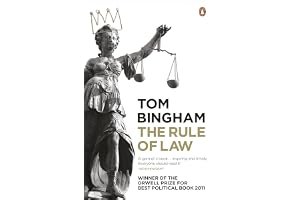
In this brilliant short book, Britain's former senior law lord, and one of the world's most acute legal minds, examines what the idea actually means. He makes clear that the rule of law is not an arid legal doctrine but is the foundation of a fair and just society, is a guarantee of responsible government, is an important contribution to economic growth and offers the best means yet devised for securing peace and co-operation. He briefly examines the historical origins of the rule, and then advances eight conditions which capture its essence as understood in western democracies today. He also discusses the strains imposed on the rule of law by the threat and experience of international terrorism.
The book will be influential in many different fields and should become a key text for anyone interested in politics, society and the state of our world.


This book is cited as mandatory reading for all prospective law students at every law school in the country, but I would go further and decree it compulsory for all politicians and indeed anybody with any interest in public life. [source]

It’s essentially a basic introduction to the social and political functions of law in modern Britain, which is addressed to non-lawyers. [source]

What’s interesting about The Rule of Law is that it’s written by someone who was until very recently the UK’s most senior judge, Lord Bingham. It’s comforting because it shows that the highest level of the judiciary is really interested in the liberty of the individual and freedom in all its various guises. It’s also got all sorts of fascinating little pieces in it. For example, he criticises the way in which the Americans put certain prisoners outside the reach of their courts in Guantanamo Bay and mentions that the executive in England was doing exactly the same thing, putting prisoners beyond the reach of the courts, more than 300 years ago. But then there was an act of parliament to stop it, the Habeas Corpus Amendment Act of 1689. The book is a general look at aspects of the law which effectively guarantee the freedom of the individual. The rule of law is one of the two great pillars of democracy, the other, obviously, being the vote. But it’s probably more important than the vote, because the vote is only once in a while, but the rule of law determines the rules which everyone, including the authorities, must follow on a daily basis and is the greatest guarantee of freedom. So, it’s a very important book [source]