We've ranked the best influential books using expert recommendations, sales data, and millions of reader ratings. At Shortform, we know books. Our book guides are the best in the world. Learn why.
Man's Search for Meaning has riveted generations of readers with its descriptions of life in Nazi death camps and its lessons for spiritual survival. Between 1942 and 1945 psychiatrist Viktor Frankl labored in four different camps, including Auschwitz, while his parents, brother, and pregnant wife perished. Based on his own experience and the stories of his many patients, Frankl argues that we cannot avoid suffering but we can choose how to cope with it, find meaning in it, and move forward with renewed purpose. Frankl's theory—known as logotherapy, from the Greek word logos ("meaning")—holds that our primary drive in life is not pleasure, as Freud maintained, but the discovery and pursuit of what we personally find meaningful. In the decades since its first publication in 1959, Man's Search for Meaning has become a classic, with more than twelve million copies in print around the world. A 1991 Library of Congress survey that asked readers to name a "book that made a difference in your life" found Man's Search for Meaning among the ten most influential books in America. At once a memoir, a meditation, a treatise, and a history, it continues to inspire us all to find significance in the very act of living. (back cover)
…
Recommended by Tony Robbins, Dustin Moskovitz, Ev Williams, and 60 others.
Another book that I’ve read dozens of times. It taught me that if you change the meaning, you change everything. Meaning equals emotion, and emotion equals life. [source]
Dustin Moskovitz
Co-founder/Facebook and Asana
Dustin Moskovitz recommended this book on Twitter. [source]
I read it while spending ten days in the ICU of Bellevue hospital trying to reattach my finger from a ring avulsion accident in my kitchen. It talks about the meaning of life, and I believe you come out a better person from reading it. [source]
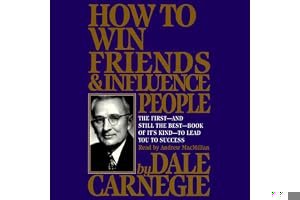
You can go after the job you want—and get it! You can take the job you have—and improve it! You can take any situation—and make it work for you!
Dale Carnegie’s rock-solid, time-tested advice has carried countless people up the ladder of success in their business and personal lives. One of the most groundbreaking and timeless bestsellers of all time, How to Win Friends & Influence People will teach you:
-Six ways to make people like you -Twelve ways to win people to your way of thinking -Nine ways to change people without arousing resentment
And much more! Achieve your maximum potential—a must-read for the twenty-first century with more than 15 million copies sold!
…
Recommended by Dave Ramsey, Daymond John, Dustin Moskovitz, and 58 others.
Major New York Times bestseller Winner of the National Academy of Sciences Best Book Award in 2012 Selected by the New York Times Book Review as one of the best books of 2011 A Globe and Mail Best Books of the Year 2011 Title One of The Economist's 2011 Books of the Year One of The Wall Street Journal's Best Nonfiction Books of the Year 2011 2013 Presidential Medal of Freedom Recipient
In the international bestseller, Thinking, Fast and Slow, Daniel Kahneman, the renowned psychologist and winner of the Nobel Prize in Economics, takes us on a groundbreaking tour of the mind and explains the two systems that drive the way we think. System 1 is fast, intuitive, and emotional; System 2 is slower, more deliberative, and more logical. The impact of overconfidence on corporate strategies, the difficulties of predicting what will make us happy in the future, the profound effect of cognitive biases on everything from playing the stock market to planning our next vacation—each of these can be understood only by knowing how the two systems shape our judgments and decisions. Engaging the reader in a lively conversation about how we think, Kahneman reveals where we can and cannot trust our intuitions and how we can tap into the benefits of slow thinking. He offers practical and enlightening insights into how choices are made in both our business and our personal lives—and how we can use different techniques to guard against the mental glitches that often get us into trouble. Winner of the National Academy of Sciences Best Book Award and the Los Angeles Times Book Prize and selected by The New York Times Book Review as one of the ten best books of 2011, Thinking, Fast and Slow is destined to be a classic.
A few months ago, Mr. Obama read “Thinking, Fast and Slow,” by Daniel Kahneman, about how people make decisions — quick, instinctive thinking versus slower, contemplative deliberation. For Mr. Obama, a deliberator in an instinctive business, this may be as instructive as any political science text. [source]
Captivating dive into human decision making, marred by inclusion of several/many? psychology studies that fail to replicate. Will stand as a cautionary tale? [source]
100,000 years ago, at least six human species inhabited the earth. Today there is just one. Us. Homo sapiens.
How did our species succeed in the battle for dominance? Why did our foraging ancestors come together to create cities and kingdoms? How did we come to believe in gods, nations and human rights; to trust money, books and laws; and to be enslaved by bureaucracy, timetables and consumerism? And what will our world be like in the millennia to come?
In Sapiens, Dr Yuval Noah Harari spans the whole of human history, from the very first humans to walk the earth to the radical – and sometimes devastating – breakthroughs of the Cognitive, Agricultural and Scientific Revolutions. Drawing on insights from biology, anthropology, paleontology and economics, he explores how the currents of history have shaped our human societies, the animals and plants around us, and even our personalities. Have we become happier as history has unfolded? Can we ever free our behaviour from the heritage of our ancestors? And what, if anything, can we do to influence the course of the centuries to come?
Bold, wide-ranging and provocative, Sapiens challenges everything we thought we knew about being human: our thoughts, our actions, our power ... and our future.
Both Melinda and I read this one, and it has sparked lots of great conversations at our dinner table. Harari takes on a daunting challenge: to tell the entire history of the human race in just 400 pages. He also writes about our species today and how artificial intelligence, genetic engineering, and other technologies will change us in the future. Although I found things to disagree with—especially Harari’s claim that humans were better off before we started farming—I would recommend Sapiens to anyone who’s interested in the history and future of our species. [source]
With extraordinary relevance and renewed popularity, George Orwell’s 1984 takes on new life in this hardcover edition.
“Orwell saw, to his credit, that the act of falsifying reality is only secondarily a way of changing perceptions. It is, above all, a way of asserting power.”—The New Yorker
In 1984, London is a grim city in the totalitarian state of Oceania where Big Brother is always watching you and the Thought Police can practically read your mind. Winston Smith is a man in grave danger for the simple reason that his memory still functions. Drawn into a forbidden love affair, Winston finds the courage to join a secret revolutionary organization called The Brotherhood, dedicated to the destruction of the Party. Together with his beloved Julia, he hazards his life in a deadly match against the powers that be.
Lionel Trilling said of Orwell’s masterpiece “1984 is a profound, terrifying, and wholly fascinating book. It is a fantasy of the political future, and like any such fantasy, serves its author as a magnifying device for an examination of the present.” Though the year 1984 now exists in the past, Orwell’s novel remains an urgent call for the individual willing to speak truth to power.
Today is World Book Day, a wonderful opportunity to address this #ChallengeRichard sent in by Mike Gonzalez of New Jersey: Make a list of your top 65 books to read in a lifetime. [source]
When Stephen Covey first released The Seven Habits of Highly Effective People, the book became an instant rage because people suddenly got up and took notice that their lives were headed off in the wrong direction; and more than that, they realized that there were so many simple things they could do in order to navigate their life correctly. This book was wonderful education for people, education in how to live life effectively and get closer to the ideal of being a ‘success’ in life.
But not everyone understands Stephen Covey’s model fully well, or maybe there are some people who haven’t read it yet. This is definitely true because we still see so much failure all around us. Now, I am not saying that by using Covey’s model, or anyone else’s model for that matter, you can become a sure-shot success, but at least we should have seen many more successes around us already judging by the number of copies the book has sold! So, where is the shortcoming?
There are two main problems here, and we are talking only about the people who have read the book already. The first problem is that most people are too lazy to implement the ideals of Stephen Covey in their lives. They consider his masterpiece of a book as a mere coffee-table book or a book that you use for light reading when you are traveling and then forget all about it. They do not realize that this book contains life-changing information. Or, they take the information and do not make the effort to actually utilize it so that it becomes knowledge for them.
The second problem is that a lot of people have a myopic view of Covey’s ideals. These are people who are impressed by the book already. If you ask them what the seven habits are, they can rattle them off end to end, but then they miss the larger picture. They do not understand that Covey was trying to tell more than he wrote in words. There are hidden implications in this book, yes, and a lot of people have just failed to see through them.
That is what we are trying to do. We are trying to show you how Covey’s book, or rather, his model, was a complete model in itself. There was nothing amiss about it. If you implement it, there should be no aspect of your life that should go untouched. The only thing is that you have to understand these ideals and try to implement them in your life.
But, before we barge into that area, it is extremely important to understand what these ideals are. What was the model that was propounded by Stephen Covey in his mega-famous book? We shall begin by trying to understand his model first, and then interpret it in such a way that it pertains to every aspect of our life
Dave Ramsey recommended this book on his website. [source]
Dustin Moskovitz
Co-founder/Facebook and Asana
I was surprised at how familiar the topics felt. [source]
Joe Martin
@benmorris @audible_com @Gladwell I enjoy the quiet on the way home, but on the way to work I am listening to the 7 habits book by Stephen Coveru, a fave of mine [source]
In Everyman’s Library for the first time—one of the most moving and eloquent accounts of the Holocaust, read by tens of millions of people around the world since its publication in 1947. The Diary of a Young Girl is the record of two years in the life of a remarkable Jewish girl whose triumphant humanity in the face of unfathomable deprivation and fear has made the book one of the most enduring documents of our time.
The Everyman’s hardcover edition reprints the Definitive Edition authorized by the Frank estate, plus a new introduction, a bibliography, and a chronology of Anne Frank’s life and times.
…
Recommended by Alice Little, Catalina Penciu, and Tim Fargo.
Alice Little
I remember being a fourth grader and trying to check out this book and being told it was grossly inappropriate and going so far as to have my parents take it to the school board and petition for me to be allowed to read this book. [source]
Catalina Penciu
I'm a huge fan of personal stories and biographies like this one. [source]
Tim Fargo
@Quixoticnance Good point, Nancy. The museum is a powerful experience, esp. when you've read her book. [source]
Cover unavailable
8
The Lean Startup: How Today's Entrepreneurs Use Continuous Innovation to Create Radically Successful Businesses
Most startups fail. But many of those failures are preventable. The Lean Startup is a new approach being adopted across the globe, changing the way companies are built and new products are launched.
Eric Ries defines a startup as an organization dedicated to creating something new under conditions of extreme uncertainty. This is just as true for one person in a garage or a group of seasoned professionals in a Fortune 500 boardroom. What they have in common is a mission to penetrate that fog of uncertainty to discover a successful path to a sustainable business.
The Lean Startup approach fosters companies that are both more capital efficient and that leverage human creativity more effectively. Inspired by lessons from lean manufacturing, it relies on "validated learning," rapid scientific experimentation, as well as a number of counter-intuitive practices that shorten product development cycles, measure actual progress without resorting to vanity metrics, and learn what customers really want. It enables a company to shift directions with agility, altering plans inch by inch, minute by minute.
Rather than wasting time creating elaborate business plans, The Lean Startup offers entrepreneurs - in companies of all sizes - a way to test their vision continuously, to adapt and adjust before it's too late. Ries provides a scientific approach to creating and managing successful startups in a age when companies need to innovate more than ever.
At Asana, we've been lucky to benefit from the author's advice firsthand; this book will enable him to help many more entrepreneurs answer the tough questions about their business. [source]
Paulo Coelho's enchanting novel has inspired a devoted following around the world. This story, dazzling in its powerful simplicity and inspiring wisdom, is about an Andalusian shepherd boy named Santiago who travels from his homeland in Spain to the Egyptian desert in search of a treasure buried in the Pyramids. What starts out as a journey to find worldly goods turns into a discovery of the treasure found within. Lush, evocative, and deeply humane, the story of Santiago is an eternal testament to the transforming power of our dreams and the importance of listening to our hearts.
There's a great quote in this book: When you're on the right path the universe conspires to help you! [source]
Daniel Ek
It was fascinating to talk to the author about how this book came to be such a hit—he never backed down, and he allowed people to read it for free in order to then boost sales—much like how Spotify’s freemium model was perceived in the early days. [source]
Eric Ripert
Speaks of everyone having an ultimate goal in life, but most of us are too afraid to pursue it. The encouragement to fulfill your dreams is very inspirational! [source]
Cover unavailable
10
Zero to One: Notes on Startups, or How to Build the Future
If you want to build a better future, you must believe in secrets.
The great secret of our time is that there are still uncharted frontiers to explore and new inventions to create. In Zero to One, legendary entrepreneur and investor Peter Thiel shows how we can find singular ways to create those new things.
Thiel begins with the contrarian premise that we live in an age of technological stagnation, even if we’re too distracted by shiny mobile devices to notice. Information technology has improved rapidly, but there is no reason why progress should be limited to computers or Silicon Valley. Progress can be achieved in any industry or area of business. It comes from the most important skill that every leader must master: learning to think for yourself.
Doing what someone else already knows how to do takes the world from 1 to n, adding more of something familiar. But when you do something new, you go from 0 to 1. The next Bill Gates will not build an operating system. The next Larry Page or Sergey Brin won’t make a search engine. Tomorrow’s champions will not win by competing ruthlessly in today’s marketplace. They will escape competition altogether, because their businesses will be unique.
Zero to One presents at once an optimistic view of the future of progress in America and a new way of thinking about innovation: it starts by learning to ask the questions that lead you to find value in unexpected places.
From the author of the bestselling biographies of Benjamin Franklin and Albert Einstein, this is the exclusive, New York Times bestselling biography of Apple co-founder Steve Jobs.
Based on more than forty interviews with Jobs conducted over two years—as well as interviews with more than a hundred family members, friends, adversaries, competitors, and colleagues—Walter Isaacson has written a riveting story of the roller-coaster life and searingly intense personality of a creative entrepreneur whose passion for perfection and ferocious drive revolutionized six industries: personal computers, animated movies, music, phones, tablet computing, and digital publishing.
At a time when America is seeking ways to sustain its innovative edge, and when societies around the world are trying to build digital-age economies, Jobs stands as the ultimate icon of inventiveness and applied imagination. He knew that the best way to create value in the twenty-first century was to connect creativity with technology. He built a company where leaps of the imagination were combined with remarkable feats of engineering.
Although Jobs cooperated with this book, he asked for no control over what was written nor even the right to read it before it was published. He put nothing off-limits. He encouraged the people he knew to speak honestly. And Jobs speaks candidly, sometimes brutally so, about the people he worked with and competed against. His friends, foes, and colleagues provide an unvarnished view of the passions, perfectionism, obsessions, artistry, devilry, and compulsion for control that shaped his approach to business and the innovative products that resulted.
Driven by demons, Jobs could drive those around him to fury and despair. But his personality and products were interrelated, just as Apple’s hardware and software tended to be, as if part of an integrated system. His tale is instructive and cautionary, filled with lessons about innovation, character, leadership, and values.
For Chesky, a source may come in the form of a biography of a business hero such as Steve Jobs or Walt Disney. His primary book source on management technique is Andy Grove’s High Output Management. [source]
Cover unavailable
12
To Kill a Mockingbird
Harper Lee, Sissy Spacek, et al
4.4
The unforgettable novel of a childhood in a sleepy Southern town and the crisis of conscience that rocked it, To Kill A Mockingbird became both an instant bestseller and a critical success when it was first published in 1960. It went on to win the Pulitzer Prize in 1961 and was later made into an Academy Award-winning film, also a classic.
Compassionate, dramatic, and deeply moving, To Kill A Mockingbird takes readers to the roots of human behavior - to innocence and experience, kindness and cruelty, love and hatred, humor and pathos. Now with over 18 million copies in print and translated into forty languages, this regional story by a young Alabama woman claims universal appeal. Harper Lee always considered her book to be a simple love story. Today it is regarded as a masterpiece of American literature.
…
Recommended by Adam Lawrence, Antonio Villaraigosa, Clive Stafford Smith, and 6 others.
Even though I know we’ve made great strides in America, and have come from the reality of Maycomb, we still suffer today from the lingering effects of the bigotry of that era. At the same time, it’s a lesson in standing tall in the face of tremendously hostile circumstances. [source]
Clive Stafford Smith
The book touches on so many issues and deals with so many prejudices – prejudices towards the mentally ill, racial stuff. It’s a book that was way ahead of its time in many ways. It’s also a wonderfully written book – a joy to read. [source]
Cover unavailable
13
The 4-Hour Workweek: Escape 9-5, Live Anywhere, and Join the New Rich
More than 100 pages of new, cutting-edge content. Forget the old concept of retirement and the rest of the deferred-life plan there is no need to wait and every reason not to, especially in unpredictable economic times. Whether your dream is escaping the rat race, experiencing high-end world travel, earning a monthly five-figure income with zero management, or just living more and working less, The 4-Hour Workweek is the blueprint. This step-by-step guide to luxury lifestyle design teaches: How Tim went from $40,000 per year and 80 hours per week to $40,000 per month and 4 hours per week. How to outsource your life to overseas virtual assistants for $5 per hour and do whatever you want How blue-chip escape artists travel the world without quitting their jobs How to eliminate 50% of your work in 48 hours using the principles of a forgotten Italian economist How to trade a long-haul career for short work bursts and frequent mini-retirements The new expanded edition of Tim Ferriss The 4-Hour Workweek includes: More than 50 practical tips and case studies from readers (including families) who have doubled income, overcome common sticking points, and reinvented themselves using the original book as a starting point Real-world templates you can copy for eliminating e-mail, negotiating with bosses and clients, or getting a private chef for less than $8 a meal How Lifestyle Design principles can be suited to unpredictable economic times The latest tools and tricks, as well as high-tech shortcuts, for living like a diplomat or millionaire without being either"
Eric Weinstein recommended this book on Twitter. [source]
Tim Draper
Founder/Draper Fisher Jurvetson
With this kind of time management and focus on the important things in life, people should be able to get 15 times as much done in a normal work week. [source]
It's about time this book was written. It is a long-overdue manifesto for the mobile lifestyle, and Tim Ferriss is the ideal ambassador. This will be huge. [source]
Cover unavailable
14
Quiet: The Power of Introverts in a World That Can't Stop Talking
At least one-third of the people we know are introverts. They are the ones who prefer listening to speaking; who innovate and create but dislike self-promotion; who favor working on their own over working in teams. It is to introverts—Rosa Parks, Chopin, Dr. Seuss, Steve Wozniak—that we owe many of the great contributions to society.
In Quiet, Susan Cain argues that we dramatically undervalue introverts and shows how much we lose in doing so. She charts the rise of the Extrovert Ideal throughout the twentieth century and explores how deeply it has come to permeate our culture. She also introduces us to successful introverts—from a witty, high-octane public speaker who recharges in solitude after his talks, to a record-breaking salesman who quietly taps into the power of questions. Passionately argued, superbly researched, and filled with indelible stories of real people, Quiet has the power to permanently change how we see introverts and, equally important, how they see themselves.
Now with Extra Libris material, including a reader’s guide and bonus content.
Leaders needn’t be the loudest. Leadership is not about theater. It’s not about dominance. It is about putting the lives of others before any other priority. In Quiet, Cain affirms to a good many of us who are introverts by nature that we needn’t try to be extroverts if we want to lead. Simply being ourselves is more important — and more effective. [source]
Danielle Morrill
Co-founder/Mattermark
Anyway, maybe you’re like me and figuring this out for yourself. It’s a good book for introverts and for those who love them [source]
Probably half the world is introverts. Maybe more. It’s not an easy life to live. I sometimes have that feeling in a room full of people, “uh-oh. I just shut down. I can’t talk anymore and there’s a lock on my mouth and this crowd threw away the key.” Do you ever get that feeling? Please? I hope you do. Let’s try to lock eyes at the party. “Quiet” shows the reader how to unlock the secret powers that probably half the world needs to unlock. [source]
One measure, perhaps, of a book's worth, is its intergenerational pliancy: do new readers acquire it and interpret it afresh down through the ages? The Meditations of Marcus Aurelius, translated and introduced by Gregory Hays, by that standard, is very worthwhile, indeed. Hays suggests that its most recent incarnation--as a self-help book--is not only valid, but may be close to the author's intent. The book, which Hays calls, fondly, a "haphazard set of notes," is indicative of the role of philosophy among the ancients in that it is "expected to provide a 'design for living.'" And it does, both aphoristically ("Think of yourself as dead. You have lived your life. Now take what's left and live it properly.") and rhetorically ("What is it in ourselves that we should prize?"). Whether these, and other entries ("Enough of this wretched, whining monkey life.") sound life-changing or like entries in a teenager's diary is up to the individual reader, as it should be. Hays's introduction, which sketches the life of Marcus Aurelius (emperor of Rome A.D. 161-180) as well as the basic tenets of stoicism, is accessible and jaunty. --H. O'Billovich
…
Recommended by Arianna Huffington, Naval Ravikant, Chip Conley, and 12 others.
Arianna Huffington
Founder/The Huffington Post
I find this book so inspirational and instructive, it lives on my nightstand. [source]
Chip Conley
I have given this book away to a number of people. [source]
Marvin Liao
Partner/500 Startups
My list would be (besides the ones I mentioned in answer to the previous question) both business & Fiction/Sci-Fi and ones I personally found helpful to myself. The business books explain just exactly how business, work & investing are in reality & how to think properly & differentiate yourself. On the non-business side, a mix of History & classic fiction to understand people, philosophy to make sense of life and Science fiction to picture what the future could be like (not always utopian). [source]
Cover unavailable
16
Getting Things Done: The Art of Stress-Free Productivity
"The Bible of business and personal productivity" —Lifehack
"A completely revised and updated edition of the blockbuster bestseller from 'the personal productivity guru'"—Fast Company
Since it was first published almost fifteen years ago, David Allen’s Getting Things Done has become one of the most influential business books of its era, and the ultimate book on personal organization. “GTD” is now shorthand for an entire way of approaching professional and personal tasks, and has spawned an entire culture of websites, organizational tools, seminars, and offshoots.
Allen has rewritten the book from start to finish, tweaking his classic text with important perspectives on the new workplace, and adding material that will make the book fresh and relevant for years to come. This new edition of Getting Things Done will be welcomed not only by its hundreds of thousands of existing fans but also by a whole new generation eager to adopt its proven principles.
…
Recommended by David Allen, Dustin Moskovitz, Ev Williams, and 20 others.
Getting Things Done by David Allen. He recently spoke at our Zappos all-hands meeting and gave me a signed copy of his book. [source]
Eric Rose
Chairman/Columbia University Department of Surgery
When I'm flat-out stressed about the volume and complexity of my work, I open this book and find immediate ways to gain a sense of control. That's really a critical need for decision making. David made me what I am today: headstrong and proud of it. [source]
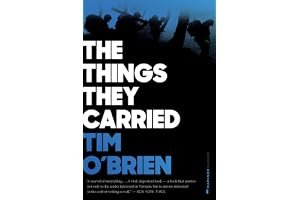
A classic, life-changing meditation on war, memory, imagination, and the redemptive power of storytelling, with more than two-million copies in print
Depicting the men of Alpha Company—Jimmy Cross, Henry Dobbins, Rat Kiley, Mitchell Sanders, Norman Bowker, Kiowa, and the character Tim O’Brien, who survived his tour in Vietnam to become a father and writer at the age of forty-three—the stories in The Things They Carried opened our eyes to the nature of war in a way we will never forget. It is taught everywhere, from high school classrooms to graduate seminars in creative writing, and in the decades since its publication it has never failed to challenge our perceptions of fact and fiction, war and peace, and courage, longing, and fear.
…
Recommended by Caroline Paul, Eugene Gu, Karl Marlantes, and 2 others.
Caroline Paul
A beautiful book by a writer who fought in Vietnam. [source]
Eugene Gu
@realDonaldTrump Tim O’Brien is the author of the book The Things They Carried, which was about the Vietnam War. Must be very triggering for Trump since he dodged the draft multiple times with fraudulent doctors’ notes for fake bone spurs like a coward. [source]
Karl Marlantes
But when O’Brien wrote The Things They Carried he came down to absolute real brass tacks. It was no longer surreal, it was like here’s a list of what a grunt carries, an infantry soldier… [source]
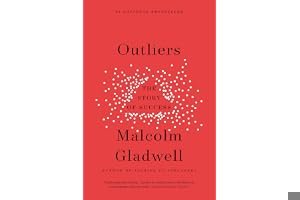
In this stunning new book, Malcolm Gladwell takes us on an intellectual journey through the world of "outliers"--the best and the brightest, the most famous and the most successful. He asks the question: what makes high-achievers different?
His answer is that we pay too much attention to what successful people are like, and too little attention to where they are from: that is, their culture, their family, their generation, and the idiosyncratic experiences of their upbringing. Along the way he explains the secrets of software billionaires, what it takes to be a great soccer player, why Asians are good at math, and what made the Beatles the greatest rock band.
Gladwell is not the first person to come up with the 10,000 hour rule. Nor is he the first person to document what it takes to become the best in the world at something. But his stories are so great as he explains these deep concepts. How did the Beatles become the best? Why are professional hockey players born in January, February and March? And so on. [source]
Alex Circei
Question: What five books would you recommend to young people interested in your career path & why? Answer: Screw It, Let's Do It: Lessons In Life by Richard Branson Outliers: The Story of Success by Malcolm Gladwell Start With Why: How Great Leaders Inspire Everyone To Take Action by Simon Sinek The Hard Thing About Hard Things: Building a Business When There Are No Easy Answers by Ben Horowitz Rich Dad Poor Dad: What the Rich Teach Their Kids About Money That the Poor and Middle Class Do Not! by Robert T. Kiyosaki [source]
Tara Westover was 17 the first time she set foot in a classroom. Born to survivalists in the mountains of Idaho, she prepared for the end of the world by stockpiling home-canned peaches and sleeping with her "head-for-the-hills bag". In the summer she stewed herbs for her mother, a midwife and healer, and in the winter she salvaged in her father's junkyard.
Her father forbade hospitals, so Tara never saw a doctor or nurse. Gashes and concussions, even burns from explosions, were all treated at home with herbalism. The family was so isolated from mainstream society that there was no one to ensure the children received an education and no one to intervene when one of Tara's older brothers became violent.
Then, lacking any formal education, Tara began to educate herself. She taught herself enough mathematics and grammar to be admitted to Brigham Young University, where she studied history, learning for the first time about important world events like the Holocaust and the civil rights movement. Her quest for knowledge transformed her, taking her over oceans and across continents, to Harvard and to Cambridge. Only then would she wonder if she'd traveled too far, if there was still a way home.
Educated is an account of the struggle for self-invention. It is a tale of fierce family loyalty and of the grief that comes with severing the closest of ties. With the acute insight that distinguishes all great writers, Westover has crafted a universal coming-of-age story that gets to the heart of what an education is and what it offers: the perspective to see one's life through new eyes and the will to change it.
As 2018 draws to a close, I’m continuing a favorite tradition of mine and sharing my year-end lists. It gives me a moment to pause and reflect on the year through the books I found most thought-provoking, inspiring, or just plain loved. It also gives me a chance to highlight talented authors – some who are household names and others who you may not have heard of before. Here’s my best of 2018 list. [source]
Tara never went to school or visited a doctor until she left home at 17. I never thought I’d relate to a story about growing up in a Mormon survivalist household, but she’s such a good writer that she got me to reflect on my own life while reading about her extreme childhood. Melinda and I loved this memoir of a young woman whose thirst for learning was so strong that she ended up getting a Ph.D. from Cambridge University. [source]
If you read or listen to only one book this summer, this is it. Bloody brilliant! Every word, every sentence. Rarely do I go through a book with such a rollecoaster of emotion, from love to hate. Thank you for sharing @tarawestover #Educated https://t.co/GqLaqlcWMp [source]
Cover unavailable
20
Predictably Irrational: The Hidden Forces That Shape Our Decisions
Why do our headaches persist after taking a one-cent aspirin but disappear when we take a 50-cent aspirin?
Why does recalling the Ten Commandments reduce our tendency to lie, even when we couldn't possibly be caught?
Why do we splurge on a lavish meal but cut coupons to save twenty-five cents on a can of soup?
Why do we go back for second helpings at the unlimited buffet, even when our stomachs are already full?
And how did we ever start spending $4.15 on a cup of coffee when, just a few years ago, we used to pay less than a dollar?
When it comes to making decisions in our lives, we think we're in control. We think we're making smart, rational choices. But are we?
In a series of illuminating, often surprising experiments, MIT behavioral economist Dan Ariely refutes the common assumption that we behave in fundamentally rational ways. Blending everyday experience with groundbreaking research, Ariely explains how expectations, emotions, social norms, and other invisible, seemingly illogical forces skew our reasoning abilities.
Not only do we make astonishingly simple mistakes every day, but we make the same "types" of mistakes, Ariely discovers. We consistently overpay, underestimate, and procrastinate. We fail to understand the profound effects of our emotions on what we want, and we overvalue what we already own. Yet these misguided behaviors are neither random nor senseless. They're systematic and predictable--making us "predictably" irrational.
From drinking coffee to losing weight, from buying a car to choosing a romantic partner, Ariely explains how to break through these systematic patterns of thought to make better decisions. "Predictably Irrational" will change the way we interact with the world--one small decision at a time.
…
Recommended by Max Levchin, Vinod Khosla, Vinod Khosla, and 22 others.
Max Levchin
Co-founder/PayPal, CEO/Affirm, Investor
Max Levchin recommended this book as an answer to "What business books would you advise young entrepreneurs read?" [source]
Andra Zaharia
'While I was thinking of the best books to add to this short list, I realized that not even half of them are directly related to digital marketing. This is because I believe that the best marketers are people who understand human nature deeply and aim to bring out the best in it. Call me naive, but that’s how I see it. If I were to want to pursue a career in marketing, I’d read … Predictably Irrational. [source]
Chris Goward
Here are some of the books that have been very impactful for me, or taught me a new way of thinking: … Predictably Irrational. [source]
Cover unavailable
21
The Subtle Art of Not Giving a F*ck: A Counterintuitive Approach to Living a Good Life
In this generation-defining self-help guide, a superstar blogger cuts through the crap to show us how to stop trying to be "positive" all the time so that we can truly become better, happier people.
For decades, we’ve been told that positive thinking is the key to a happy, rich life. "Fk positivity," Mark Manson says. "Let’s be honest, shit is fked and we have to live with it." In his wildly popular Internet blog, Manson doesn’t sugarcoat or equivocate. He tells it like it is—a dose of raw, refreshing, honest truth that is sorely lacking today. The Subtle Art of Not Giving a Fk is his antidote to the coddling, let’s-all-feel-good mindset that has infected American society and spoiled a generation, rewarding them with gold medals just for showing up.
Manson makes the argument, backed both by academic research and well-timed poop jokes, that improving our lives hinges not on our ability to turn lemons into lemonade, but on learning to stomach lemons better. Human beings are flawed and limited—"not everybody can be extraordinary, there are winners and losers in society, and some of it is not fair or your fault." Manson advises us to get to know our limitations and accept them. Once we embrace our fears, faults, and uncertainties, once we stop running and avoiding and start confronting painful truths, we can begin to find the courage, perseverance, honesty, responsibility, curiosity, and forgiveness we seek.
There are only so many things we can give a fk about so we need to figure out which ones really matter, Manson makes clear. While money is nice, caring about what you do with your life is better, because true wealth is about experience. A much-needed grab-you-by-the-shoulders-and-look-you-in-the-eye moment of real-talk, filled with entertaining stories and profane, ruthless humor, The Subtle Art of Not Giving a F**k is a refreshing slap for a generation to help them lead contented, grounded lives.
…
Recommended by Ryan Holiday, Alex Blackwell, Aunty Ada, and 21 others.
The bestselling classic on disruptive innovation, renowned author Clayton M. Christensen.
His work is cited by the world’s best-known thought leaders, from Steve Jobs to Malcolm Gladwell. In this classic bestseller—now updated with a fresh new package—innovation expert Clayton Christensen shows how even the most outstanding companies can do everything right—yet still lose market leadership. Read this international bestseller to avoid a similar fate.
Clay Christensen—who authored the award-winning Harvard Business Review article “How Will You Measure Your Life?”—explains why most companies miss out on new waves of innovation. No matter the industry, he says a successful company with established products WILL get pushed aside unless managers know how and when to abandon traditional business practices. Offering both successes and failures from leading companies as a guide, The Innovator’s Dilemma gives you a set of rules for capitalizing on the phenomenon of disruptive innovation.
Sharp, cogent, provocative, and one of the most influential business books of all time—The Innovator’s Dilemma is the book no manager or entrepreneur should be without. Add this newly released edition to your library.
Brad Stone's new book, The Everything Store, describes how Bezos developed this strategy after reading another book called The Innovator's Dilemma by Harvard professor Clayton Christensen. [source]
It's important that we make this transformation, because of what Clayton Christensen calls "the innovator's dilemma," where people who invent something are usually the last ones to see past it, and we certainly don't want to be left behind. [source]
Drew Houston
CEO/Dropbox
About how businesses get disrupted, and a lot of those themes are why startups can succeed and thrive even when there are big competitors who you would think would just wipe ’em out. [source]
In the ten years since its publication in 1988, Stephen Hawking's classic work has become a landmark volume in scientific writing, with more than nine million copies in forty languages sold worldwide. That edition was on the cutting edge of what was then known about the origins and nature of the universe. But the intervening years have seen extraordinary advances in the technology of observing both the micro- and the macrocosmic worlds. These observations have confirmed many of Professor Hawking's theoretical predictions in the first edition of his book, including the recent discoveries of the Cosmic Background Explorer satellite (COBE), which probed back in time to within 300,000 years of the universe's beginning and revealed wrinkles in the fabric of space-time that he had projected. Eager to bring to his original text the new knowledge revealed by these observations, as well as his own recent research, Professor Hawking has prepared a new introduction to the book, written an entirely new chapter on wormholes and time travel, and updated the chapters throughout.
…
Recommended by Richard Branson, Adam Hart-Davis, Anurag Ramdasan, and 2 others.
Today is World Book Day, a wonderful opportunity to address this #ChallengeRichard sent in by Mike Gonzalez of New Jersey: Make a list of your top 65 books to read in a lifetime. [source]
Adam Hart-Davis
When Stephen Hawking wrote A Brief History of Time..his publisher told him that every equation he left in would halve the number of readers [source]
Anurag Ramdasan
My first intro into the world of physics and this got me completely hooked!
The first popular work to combine the spiritual and psychological insights of modern psychoanalysis with the archetypes of world mythology, the book creates a roadmap for navigating the frustrating path of contemporary life. Examining heroic myths in the light of modern psychology, it considers not only the patterns and stages of mythology but also its relevance to our lives today--and to the life of any person seeking a fully realized existence.
Myth, according to Campbell, is the projection of a culture's dreams onto a large screen; Campbell's book, like Star Wars, the film it helped inspire, is an exploration of the big-picture moments from the stage that is our world. It is a must-have resource for both experienced students of mythology and the explorer just beginning to approach myth as a source of knowledge.
The book I’d give every graduating senior in college or high school would be … Joseph Campbell’s 'Hero of a Thousand Faces'. It's little bit dense but it’s so rich, so it’s a good one. [source]
Joseph Campbell was the first person to really open my eyes to the compassionate side of life, or of thought... Campbell was the guy who really kind of put it all together for me, and not in a way I could put my finger on... It made you just glad to be alive, realizing how vast this world is, and how similar and how different we are. [source]
Catherine Plano
Was mind blowing, it really helped me put into perspective, that there are cycles and rhythms, and I now call them initiations, when you are faced with fear we are never too sure of our potential unless we know how to fail, what did we learn from it and what are we going to do differently the next time. There is a lesson in everything we experience, as long as we slow down enough to reflect. The other thing in the hero's journey is that even when you say 'yes' to a project, it really doesn't mean that you are going to succeed at it, but if you go into a project with an open mind and embrace that you are here to learn, the journey itself is rewarding, not always the outcome and when we really look at our failures, they weren't real failures after all, but a stepping stone onto something greater. [source]
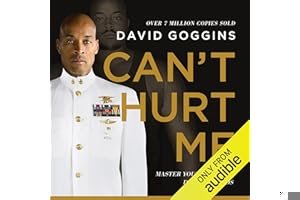
For David Goggins, childhood was a nightmare — poverty, prejudice, and physical abuse colored his days and haunted his nights. But through self-discipline, mental toughness, and hard work, Goggins transformed himself from a depressed, overweight young man with no future into a U.S. Armed Forces icon and one of the world's top endurance athletes. The only man in history to complete elite training as a Navy SEAL, Army Ranger, and Air Force Tactical Air Controller, he went on to set records in numerous endurance events, inspiring Outside magazine to name him “The Fittest (Real) Man in America.”
In Can't Hurt Me, he shares his astonishing life story and reveals that most of us tap into only 40% of our capabilities. Goggins calls this The 40% Rule, and his story illuminates a path that anyone can follow to push past pain, demolish fear, and reach their full potential.
David Goggins is a being of pure will and inspiration. Just listening to this guy talk makes you want to run up a mountain. I firmly believe people like him can change the course of the world just by inspiring us to push harder and dig deeper in everything we do. His goal to be 'uncommon amongst uncommon people' is something we can all use to propel ourselves to fulfill our true potential. I'm a better man having met him. [source]
This week’s astonishing book is Can't Hurt Me: Master Your Mind and Defy the Odds, by David Goggins. David grew up in an unbelievably tough environment with a deeply abusive father. He experienced prejudice and poverty, and suffered learning difficulties that left him graduating from high school barely able to read or do math. He became a depressed, overweight young man with an attitude. But shockingly, he turned himself into one of the world’s greatest endurance athletes, and became the only man in history to complete training as a Navy SEAL, Army Ranger, and Air Force Tactical Air Controller. To find a self-published book as #2 on Amazon, with a five star rating and over 400 reviews, speaks volumes about how good it is. If you’re trying to do more in your life, or change your life, you’ll find Goggin’s book to be a terrific inspiration. [source]
Wes Gray
@davidgoggins , excited to hear you will be at @LTRaceSeries alongside the CAF team. Myself, @patrickcleary01 and @RyanPKirlin look forward to the challenge and we'll see you there. We all love your book and thanks for signing our copies! [source]
Cover unavailable
26
The Handmaid's Tale
Margaret Atwood
4.3
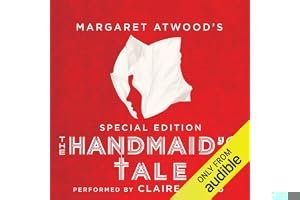
Before The Testaments, there was The Handmaid’s Tale: an instant classic and eerily prescient cultural phenomenon, from “the patron saint of feminist dystopian fiction” (New York Times).
The Handmaid’s Tale is a novel of such power that the reader will be unable to forget its images and its forecast. Set in the near future, it describes life in what was once the United States and is now called the Republic of Gilead, a monotheocracy that has reacted to social unrest and a sharply declining birthrate by reverting to, and going beyond, the repressive intolerance of the original Puritans. The regime takes the Book of Genesis absolutely at its word, with bizarre consequences for the women and men in its population.
The story is told through the eyes of Offred, one of the unfortunate Handmaids under the new social order. In condensed but eloquent prose, by turns cool-eyed, tender, despairing, passionate, and wry, she reveals to us the dark corners behind the establishment’s calm facade, as certain tendencies now in existence are carried to their logical conclusions. The Handmaid’s Tale is funny, unexpected, horrifying, and altogether convincing. It is at once scathing satire, dire warning, and a tour de force. It is Margaret Atwood at her best.
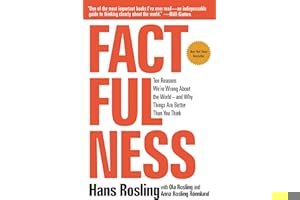
Factfulness: The stress-reducing habit of only carrying opinions for which you have strong supporting facts.
When asked simple questions about global trends—what percentage of the world’s population live in poverty; why the world’s population is increasing; how many girls finish school—we systematically get the answers wrong. So wrong that a chimpanzee choosing answers at random will consistently outguess teachers, journalists, Nobel laureates, and investment bankers.
In Factfulness, Professor of International Health and global TED phenomenon Hans Rosling, together with his two long-time collaborators, Anna and Ola, offers a radical new explanation of why this happens. They reveal the ten instincts that distort our perspective—from our tendency to divide the world into two camps (usually some version of us and them) to the way we consume media (where fear rules) to how we perceive progress (believing that most things are getting worse).
Our problem is that we don’t know what we don’t know, and even our guesses are informed by unconscious and predictable biases.
It turns out that the world, for all its imperfections, is in a much better state than we might think. That doesn’t mean there aren’t real concerns. But when we worry about everything all the time instead of embracing a worldview based on facts, we can lose our ability to focus on the things that threaten us most.
Inspiring and revelatory, filled with lively anecdotes and moving stories, Factfulness is an urgent and essential book that will change the way you see the world and empower you to respond to the crises and opportunities of the future.
As 2018 draws to a close, I’m continuing a favorite tradition of mine and sharing my year-end lists. It gives me a moment to pause and reflect on the year through the books I found most thought-provoking, inspiring, or just plain loved. It also gives me a chance to highlight talented authors – some who are household names and others who you may not have heard of before. Here’s my best of 2018 list. [source]
This was a breakthrough to me. The framework Hans enunciates is one that took me decades of working in global development to create for myself, and I could have never expressed it in such a clear way. I’m going to try to use this model moving forward. [source]
Aidan Connolly
I would suggest Hans Rosling’s Factfulness on the real world of statistics. [source]
Cover unavailable
28
Animal Farm
George Orwell and Christopher Hitchens
4.3
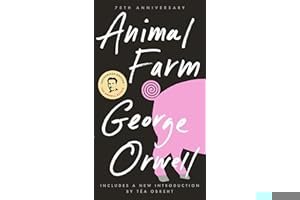
Animal Farm is one of the most famous warnings ever written. Orwell's immortal satire - 'against Stalin' as he wrote to his French translator - can be read on many levels. With its piercing clarity and deceptively simple style it is no surprise that this novel is required reading for schoolchildren and politicians alike. This fable of the steadfast horses Boxer and Clover, the opportunistic pigs Snowball and Napoleon, and the deafening choir of sheep remains an unparalleled masterpiece.
One reviewer wrote 'In a hundred years' time perhaps Animal Farm ... may simply be a fairy story: today it is a fairy story with a good deal of point.' Over sixty years on in the age of spin, it is more relevant than ever.
Rejected by such eminent publishing figures as Victor Gollancz, Jonathan Cape and T.S. Eliot, Animal Farm was published to great acclaim by Martin Secker and Warburg on 17 August 1945 in an edition of 4500 copies. In the centenary year of Martin Secker, Ltd., Harvill Secker is proud to publish this special edition with a brand-new introduction by Christopher Hitchens.
Whitney Cummings recommended this book on the podcast "The Tim Ferriss Show". [source]
Vlad Tenev
When I was in sixth grade I remember being very upset by the ending of this book. [source]
Heather Brooke
I picked Animal Farm because it is an allegory about power and its seductive and corruptive influence on people regardless of their initial good intentions. [source]
Cover unavailable
29
"Surely You're Joking, Mr. Feynman!": Adventures of a Curious Character
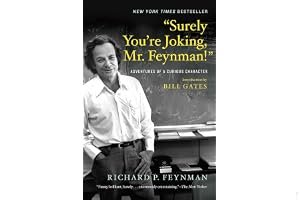
A series of anecdotes, such as are included in Surely You're Joking, Mr Feynman, shouldn't by rights add up to an autobiography, but that's just one of the many pieces of received wisdom that Nobel Prize-winning physicist Richard Feynman (1918-88) cheerfully ignores in this engagingly eccentric book. Fiercely independent (read the chapter entitled "Judging Books by Their Covers"), intolerant of stupidity even when it comes packaged as high intellectualism (check out "Is Electricity Fire?"), unafraid to offend (see "You Just Ask Them?"), Feynman informs by entertaining. It's possible to enjoy Surely You're Joking, Mr Feynman, a bestseller ever since its initial publication in 1985, simply as a bunch of hilarious yarns with the author as know-it-all hero. At some point, however, attentive readers realise that underneath all the merriment simmers a running commentary on what constitutes authentic knowledge: learning by understanding, not by rote; refusal to give up on seemingly insoluble problems, and total disrespect for fancy ideas that have no grounding in the real world. Feynman himself had all these qualities in spades, and they come through with vigour and verve in his no-bull prose. No wonder his students--and readers around the world--adored him. --Wendy Smith
Brin told the Academy of Achievement: "Aside from making really big contributions in his own field, he was pretty broad-minded. I remember he had an excerpt where he was explaining how he really wanted to be a Leonardo da Vinci, an artist and a scientist. I found that pretty inspiring. I think that leads to having a fulfilling life." [source]
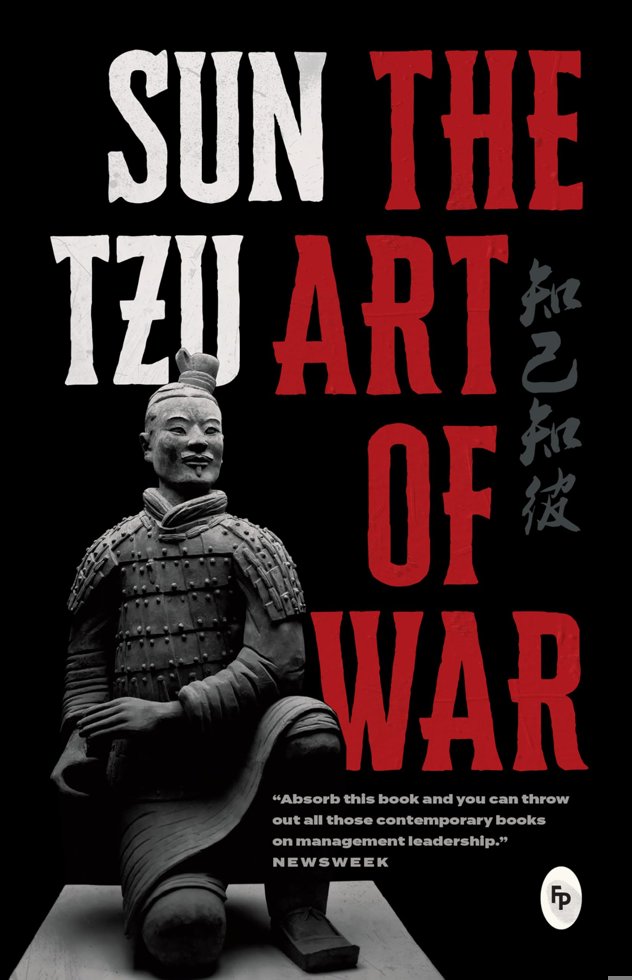
For more than two thousand years, The Art of War has stood as a cornerstone of Chinese culture-a lucid epigrammatic text that reveals as much about human psychology, politics, and economics as it does about battlefield strategy. The influence of Sun-tzu's text has grown tremendously in the West in recent years, with military leaders, politicians, and corporate executives alike finding valuable insight in these ancient words. In his crisp, accessible new translation, scholar John Minford brings this seminal work to life for modern readers.
Minford opens with a lively, learned introduction in which he explores the life and times of Sun-tzu, looks at The Art of War in the context of the turbulent Warring States period, and discusses how best to read and understand the work today. There follows Minford's translation of the core text itself in two different formats-first, the unadorned thirteen chapters of the original work and then the same text reprinted with extensive running commentary by classical Chinese scholars as well as Minford himself. The result is an opportunity for Western readers to experience Sun-tzu's work in all its intensity as it applies to many aspects of our lives.
Which books should be read by every single intelligent person on planet? … The Art of War (Sun Tsu) to learn that the act of killing fellow humans can be raised to an art. If you read all of the above works you will glean profound insight into most of what has driven the history of the western world. [source]
Cover unavailable
31
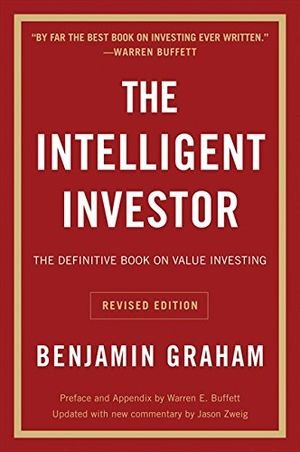
The Intelligent Investor: The Classic Text on Value Investing
The greatest investment advisor of the twentieth century, Benjamin Graham taught and inspired people worldwide. Graham's philosophy of "value investing" -- which shields investors from substantial error and teaches them to develop long-term strategies -- has made The Intelligent Investor the stock market bible ever since its original publication in 1949.
To invest successfully over a lifetime does not require a stratospheric IQ, unusual business insights, or inside information. What's needed is a sound intellectual framework for making decisions and the ability to keep emotions from corroding that framework. This book precisely and clearly prescribes the proper framework. You must provide the emotional discipline. [source]
The foundation for investing. A lot of people have used this as their guide to getting into investment, basic strategies. Actually Warren Buffett cites this as the book that got him into investing and he says that principles he learned here helped him to become a great investor. Highly recommend this book. It’s a great way understand what’s going on and how to evaluate different companies out there before you make an investment. [source]
DJ Vlad
The single biggest influence on how I buy and sell stocks. [source]
"Mere Christianity" is first and foremost a rational book — it is in many ways the opposite of a traditional religious tome. Lewis, who was once an atheist, has been on both sides of the table, and he approaches the notion of God with accessible, clear thinking. The book reveals that experiencing God doesn't have to be a mystical exercise; God can be a concrete and logical conclusion. Lewis was a man of formidable intellect, and he brought it all to bear in this phenomenal book on the rationality of faith. [source]
What does everyone in the modern world need to know? Renowned psychologist Jordan B. Peterson's answer to this most difficult of questions uniquely combines the hard-won truths of ancient tradition with the stunning revelations of cutting-edge scientific research.
Humorous, surprising, and informative, Dr. Peterson tells us why skateboarding boys and girls must be left alone, what terrible fate awaits those who criticize too easily, and why you should always pet a cat when you meet one on the street.
What does the nervous system of the lowly lobster have to tell us about standing up straight (with our shoulders back) and about success in life? Why did ancient Egyptians worship the capacity to pay careful attention as the highest of gods? What dreadful paths do people tread when they become resentful, arrogant, and vengeful? Dr. Peterson journeys broadly, discussing discipline, freedom, adventure, and responsibility, distilling the world's wisdom into 12 practical and profound rules for life. 12 Rules for Life shatters the modern commonplaces of science, faith, and human nature while transforming and ennobling the mind and spirit of its listeners.
A bracing disassembly and reconstruction of a theory of individual progress in the modern world. Fascinating compare and contrast with The Courage To Be Disliked. [source]
Just look at the table of contents: Rule 1: Stand up straight with your shoulders back Rule 2: Treat yourself like someone you are responsible for helping Rule 3: Make friends with people who want the best for you Rule 4: Compare yourself to who you were yesterday, not to who someone else is today Rule 5: Do not let your children do anything that makes you dislike them Rule 6: Set your house in perfect order before you criticise the world Rule 7: Pursue what is meaningful (not what is expedient) Rule 8: Tell the truth – or, at least, don’t lie Rule 9: Assume the person you are listening to might know something you don’t Rule 10: Be precise in your speech Rule 11: Do not bother children when they are skateboarding Rule 12: Pet a cat when you encounter one on the street Read this book. [source]
Andrew Price
@stewheckenberg @jordanbpeterson Thanks mate. I almost wish the book was published under a different author so more people would give it a chance. It’s really one of the best “how to fix your life” books around. [source]
Cover unavailable
34
The Catcher in the Rye
J. D. Salinger
4.3
The hero-narrator of The Catcher in the Rye is an ancient child of sixteen, a native New Yorker named Holden Caulfield. Through circumstances that tend to preclude adult, secondhand description, he leaves his prep school in Pennsylvania and goes underground in New York City for three days. The boy himself is at once too simple and too complex for us to make any final comment about him or his story. Perhaps the safest thing we can say about Holden is that he was born in the world not just strongly attracted to beauty but, almost, hopelessly impaled on it. There are many voices in this novel: children's voices, adult voices, underground voices-but Holden's voice is the most eloquent of all. Transcending his own vernacular, yet remaining marvelously faithful to it, he issues a perfectly articulated cry of mixed pain and pleasure. However, like most lovers and clowns and poets of the higher orders, he keeps most of the pain to, and for, himself. The pleasure he gives away, or sets aside, with all his heart. It is there for the reader who can handle it to keep.
J.D. Salinger's classic novel of teenage angst and rebellion was first published in 1951. The novel was included on Time's 2005 list of the 100 best English-language novels written since 1923. It was named by Modern Library and its readers as one of the 100 best English-language novels of the 20th century. It has been frequently challenged in the court for its liberal use of profanity and portrayal of sexuality and in the 1950's and 60's it was the novel that every teenage boy wants to read.
It was such a relief from the other books I was reading at the time, which all had a quality of homework to them. [source]
Audrey Russo
So many novels; Lord of the Flies, Great Gatsby, Great Expectations; all the Nancy Drew books; Catcher in the Rye, Books written by Zora Neale Hurston; Pat Conroy – all because of the view about different people who endure despite adversity while kindling the hearts of the human spirit. [source]
Cover unavailable
35
The Great Gatsby
F. Scott Fitzgerald
4.3
A young man, newly rich, tries to recapture the past and win back his former love, despite the fact that she has married.
When he got to high school, the president said, his tastes changed and he learned to enjoy classics like “Of Mice and Men” and “The Great Gatsby.” [source]
Melinda and I really like this book. When we were first dating, she had a green light that she would turn on when her office was empty and it made sense for me to come over. [source]
Marvin Liao
Partner/500 Startups
For Non-Business, I'd have to say Dune (Herbert), Emergency (Strauss), The Great Gatsby (Fitzgerald) or Flint (L'Amour). I re-read these books every year because they are just so well written & great stories that I get new perspective & details every time I read them. [source]
Cover unavailable
36
Atlas Shrugged
Ayn Rand
4.3
This is the story of a man who said that he would stop the motor of the world and did. Was he a destroyer or the greatest of liberators?
Why did he have to fight his battle, not against his enemies, but against those who needed him most, and his hardest battle against the woman he loved? What is the world’s motor — and the motive power of every man? You will know the answer to these questions when you discover the reason behind the baffling events that play havoc with the lives of the characters in this story.
Tremendous in its scope, this novel presents an astounding panorama of human life — from the productive genius who becomes a worthless playboy — to the great steel industrialist who does not know that he is working for his own destruction — to the philosopher who becomes a pirate — to the composer who gives up his career on the night of his triumph — to the woman who runs a transcontinental railroad — to the lowest track worker in her Terminal tunnels.
You must be prepared, when you read this novel, to check every premise at the root of your convictions.
This is a mystery story, not about the murder — and rebirth — of man’s spirit. It is a philosophical revolution, told in the form of an action thriller of violent events, a ruthlessly brilliant plot structure and an irresistible suspense. Do you say this is impossible? Well, that is the first of your premises to check.
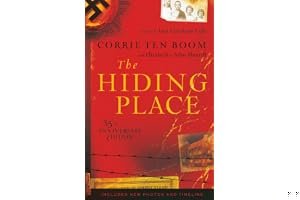
At one time Corrie ten Boom would have laughed at the idea that there would ever be a story to tell. For the first fifty years of her life nothing at all out of the ordinary had ever happened to her. She was an old-maid watchmaker living contentedly with her spinster sister and their elderly father in the tiny Dutch house over their shop. Their uneventful days, as regulated as their own watches, revolved around their abiding love for one another. However, with the Nazi invasion and occupation of Holland, a story did ensue.
Corrie ten Boom and her family became leaders in the Dutch Underground, hiding Jewish people in their home in a specially built room and aiding their escape from the Nazis. For their help, all but Corrie found death in a concentration camp. The Hiding Place is their story.
…
Recommended by Alison Alvarez.
Alison Alvarez
What I really took with me from the book were the descriptions of how she dealt with the stress of solitary confinement and eventually the Ravensbruck concentration camp. I adapted some of her techniques for keeping her mind occupied to deal with my own problems with anxiety and worry. Also, it’s a book with a surprising amount of joy in it for subject matter that is so dark. [source]
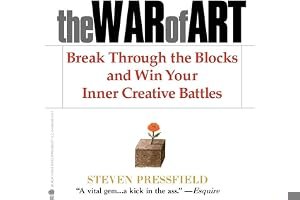
When a writer or an entrepreneur, or a manager, or an employee, or a…whatever…sits down to get to work, he or she is often met by “the resistance”. The excuses that come up: I can’t do this. I am too old. I don’t have enough money. I’m scared. “The War of Art” is the guide to getting through that block. The comfort zone is papered up and cemented shut by our excuses. Learn to blast through that wall. Because on the other side of the comfort zone are all the tools of success. [source]
Also hard to find on audio. I find Steve's voice to be fascinating, and even before I knew him, I was fascinated by listening to him speak his own work. The War of Art is one of those books, at least for me when I finally was exposed to it, I said, 'Why wasn't I informed? Why did it take this long for this book to land on my desk?'... You need to be clear with yourself about what you are afraid of, why you are afraid, and whether you care enough to dance with that fear because it will never go away. [source]
Adam Johnston
The last two pages of Steven Pressfield’s The War of Art gave me a swift kick in the ass. Do it or don’t do it. But if you don’t do it, you not only hurt yourself. You hurt your children. You hurt me. You hurt the planet. Pressfield wrote a beautiful book that you should read, but if nothing else, just read the last two pages of the book. I have them hanging on my wall in my office. [source]
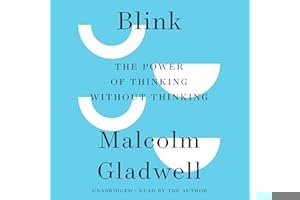
Drawing on cutting-edge neuroscience and psychology and displaying all of the brilliance that made The Tipping Point a classic, Blink changes the way you'll understand every decision you make. Never again will you think about thinking the same way.
Malcolm Gladwell redefined how we understand the world around us. Now, in Blink, he revolutionizes the way we understand the world within. Blink is a book about how we think without thinking, about choices that seem to be made in an instant - in the blink of an eye - that actually aren't as simple as they seem. Why are some people brilliant decision makers, while others are consistently inept? Why do some people follow their instincts and win, while others end up stumbling into error? How do our brains really work - in the office, in the classroom, in the kitchen, and in the bedroom? And why are the best decisions often those that are impossible to explain to others?
In Blink we meet the psychologist who has learned to predict whether a marriage will last, based on a few minutes of observing a couple; the tennis coach who knows when a player will double-fault before the racket even makes contact with the ball; the antiquities experts who recognize a fake at a glance. Here, too, are great failures of "blink": the election of Warren Harding; "New Coke"; and the shooting of Amadou Diallo by police. Blink reveals that great decision makers aren't those who process the most information or spend the most time deliberating, but those who have perfected the art of "thin-slicing" - filtering the very few factors that matter from an overwhelming number of variables.
…
Recommended by Ev Williams, Mike Shinoda, Marillyn Hewson, and 4 others.
Mike Shinoda
I know most of the guys in the band read this book. [source]
Marillyn Hewson
CEO/Lockheed Martin
CEO Marilyn Hewson recommends this book because it helped her to trust her instincts in business. [source]
Antonio Eram
When asked to name some books that had a big impact on him, Antonio mentioned Blink: The Power of Thinking Without Thinking by Malcolm Gladwell. [source]
Cover unavailable
40
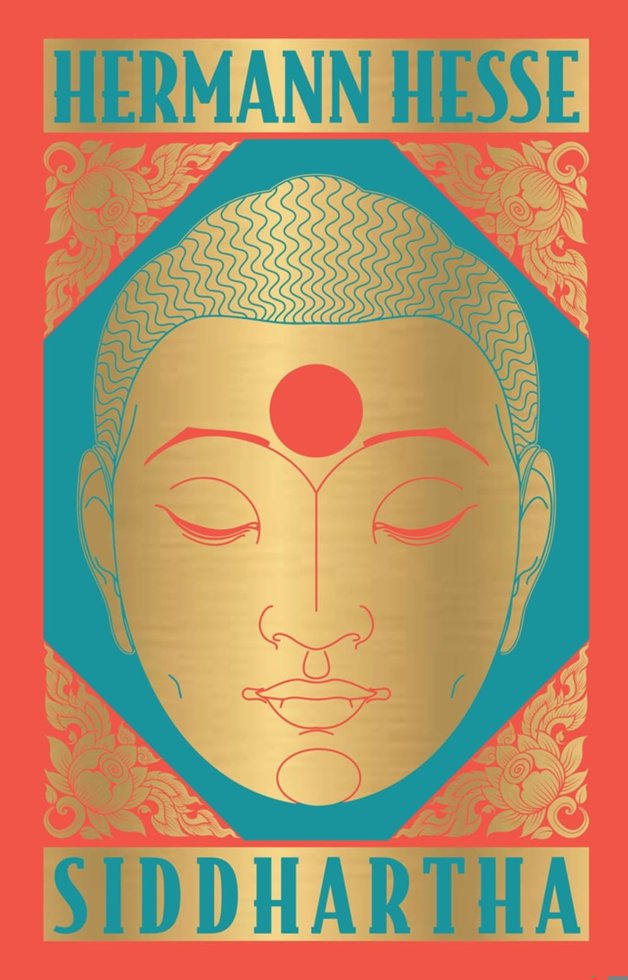
Siddhartha
Hermann Hesse
4.2
Herman Hesse's classic novel has delighted, inspired, and influenced generations of readers, writers, and thinkers. In this story of a wealthy Indian Brahmin who casts off a life of privilege to seek spiritual fulfillment. Hesse synthesizes disparate philosophies--Eastern religions, Jungian archetypes, Western individualism--into a unique vision of life as expressed through one man's search for meaning.
He says, 'Love is stronger than hate. Soft is stronger than hard. Water is stronger than stone.' [source]
Cover unavailable
41
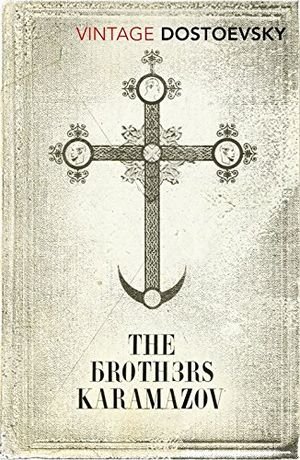
The Brothers Karamazov
Fyodor Dostoevsky
4.2
The Brothers Karamasov is a murder mystery, a courtroom drama, and an exploration of erotic rivalry in a series of triangular love affairs involving the “wicked and sentimental” Fyodor Pavlovich Karamazov and his three sons―the impulsive and sensual Dmitri; the coldly rational Ivan; and the healthy, red-cheeked young novice Alyosha. Through the gripping events of their story, Dostoevsky portrays the whole of Russian life, is social and spiritual striving, in what was both the golden age and a tragic turning point in Russian culture.
This award-winning translation by Richard Pevear and Larissa Volokhonsky remains true to the verbal inventiveness of Dostoevsky’s prose, preserving the multiple voices, the humor, and the surprising modernity of the original. It is an achievement worthy of Dostoevsky’s last and greatest novel.
…
Recommended by Randall Stephenson, Adam Townsend, Christian B Miller, and 3 others.
@FinchmanWill @jposhaughnessy @Cernovich @mcclay_roman My son's favorite book of all time [source]
Christian B Miller
A host of deep philosophical questions are at work in the book: about, say, the existence of God, the nature of morality without God, and the role of free will. [source]
At the age of thirty-six, on the verge of completing a decade’s worth of training as a neurosurgeon, Paul Kalanithi was diagnosed with stage IV lung cancer. One day he was a doctor treating the dying, and the next he was a patient struggling to live. And just like that, the future he and his wife had imagined evaporated. When Breath Becomes Air chronicles Kalanithi’s transformation from a naïve medical student “possessed,” as he wrote, “by the question of what, given that all organisms die, makes a virtuous and meaningful life” into a neurosurgeon at Stanford working in the brain, the most critical place for human identity, and finally into a patient and new father confronting his own mortality.
What makes life worth living in the face of death? What do you do when the future, no longer a ladder toward your goals in life, flattens out into a perpetual present? What does it mean to have a child, to nurture a new life as another fades away? These are some of the questions Kalanithi wrestles with in this profoundly moving, exquisitely observed memoir.
I don’t know how Kalanithi found the physical strength to write this book while he was so debilitated by the disease and then potent chemotherapy. But I’m so glad he did. He spent his whole brief life searching for meaning in one way or another -- through books, writing, medicine, surgery, and science. I’m grateful that, by reading this book, I got to witness a small part of that journey. I just wish the journey hadn’t been cut so short [source]
Despite its popularity, When Breath Becomes Air is actually underrated. It’s make-you-cry good. [source]
Bethany S. Mandel
More Shabbat reading recommendations: This book was breathtaking and such a powerful advertisement for the joy of parenthood. https://t.co/V8BH97eiL9 [source]
Cover unavailable
43
Brave New World
Aldous Huxley
4.2
Now reissued in a gorgeous hardcover edition: "one of the most prophetic dystopian works of the 20th century" (Wall Street Journal) must be read and understood by anyone concerned with preserving the human spirit in the face of our "brave new world." Huxley's masterpiece has become a bestseller once again after the American election.
Aldous Huxley's profoundly important classic of world literature,Brave New World is a searching vision of an unequal, technologically-advanced future where humans are genetically bred, socially indoctrinated, and pharmaceutically anesthetized to passively uphold an authoritarian ruling order whose motto is "Community, Identity, Stability."—all at the cost of our freedom, humanity, and perhaps our souls. "A genius [who] who spent his life decrying the onward march of the Machine" (The New Yorker), Huxley was a man of incomparable talents: equally an artist, a spiritual seeker, and one of history's keenest observers of human nature and civilization. Brave New World, his masterpiece, has enthralled and terrified millions of readers, and retains its urgent relevance to this day as both a warning as we head into tomorrow and as a thought-provoking, satisfying work of literature. Written in the shadow of the rise of fascism during the 1930s, Brave New World likewise speaks to a twenty-first-century world dominated by mass-entertainment, technology, medicine and pharmaceuticals, the arts of persuasion, and the hidden influence of elites.
The most prophetic book of the 20th century. Today many people would easily mistake it for a utopia. [source]
Andra Zaharia
These books and their core ideas have stuck with me the most and continue to guide me when I hit crossroads along the way. [source]
Catherine Mayer
It shows the ways in which technology, our need for certain creature comforts and consumer culture can be used to manipulate us. [source]
Cover unavailable
44
Jane Eyre
Charlotte Brontë
4.2
Orphaned as a child, Jane has felt an outcast her whole young life. Her courage is tested once again when she arrives at Thornfield Hall, where she has been hired by the brooding, proud Edward Rochester to care for his ward Adèle. Jane finds herself drawn to his troubled yet kind spirit. She falls in love. Hard.
But there is a terrifying secret inside the gloomy, forbidding Thornfield Hall. Is Rochester hiding from Jane? Will Jane be left heartbroken and exiled once again?
…
Recommended by Audrey Penn, John Sutherland, Lucy Atkins, and 2 others.
Audrey Penn
My next one is Jane Eyre. She was orphaned and sent to a very rich aunt, who had her own very selfish children. Jane Eyre was not the perfect child and she was sent to live in a girls’ school. She made one friend, but unfortunately the little girl died, so she had to toughen up. She grew up there and learned everything she needed to know about teaching. She was a very good artist, she played a little piano, she learned French. When she got older she became the governess for a little French girl who was the ward of a man who lived in a manor. They fell in love, but it turned out that he had a wife, who was insane and lived in the attic. So Jane Eyre ran away and found out she had an uncle who had left her a great deal of money. But she couldn’t get the man out of her mind, so she went back. She found out that after she left, the man’s wife had set the place on fire. The wife had died in the fire, and it had blinded him. They were still very much in love and they married. And they lived happily ever after. [source]
John Sutherland
There is an interesting debate … that the real heroine of Jane Eyre is not the plain little governess but the mad woman in the attic, Bertha Mason [source]
I think Charlotte Brontë’s most accomplished book is Villette. It’s probably a better book, it’s tighter and more sophisticated in some ways. But there’s something about Jane Eyre that is just deeply emotionally compelling for me. [source]
Cover unavailable
45
Night
Elie Wiesel
4.2
Night is Elie Wiesel's masterpiece, a candid, horrific, and deeply poignant autobiographical account of his survival as a teenager in the Nazi death camps. This new translation by Marion Wiesel, Elie's wife and frequent translator, presents this seminal memoir in the language and spirit truest to the author's original intent. And in a substantive new preface, Elie reflects on the enduring importance of Night and his lifelong, passionate dedication to ensuring that the world never forgets man's capacity for inhumanity to man.
Night offers much more than a litany of the daily terrors, everyday perversions, and rampant sadism at Auschwitz and Buchenwald; it also el
…
Recommended by Johanna Reiss and Steven Katz.
Johanna Reiss
Elie Wiesel wrote..that he was considering running into the barbed wire once, but he didn’t because his father needed him. [source]
Steven Katz
Probably the best known memoir that has been written about the experience of the death camps. [source]
Yuval Noah Harari, author of the critically-acclaimed New York Times bestseller and international phenomenon Sapiens, returns with an equally original, compelling, and provocative book, turning his focus toward humanity’s future, and our quest to upgrade humans into gods.
Over the past century humankind has managed to do the impossible and rein in famine, plague, and war. This may seem hard to accept, but, as Harari explains in his trademark style—thorough, yet riveting—famine, plague and war have been transformed from incomprehensible and uncontrollable forces of nature into manageable challenges. For the first time ever, more people die from eating too much than from eating too little; more people die from old age than from infectious diseases; and more people commit suicide than are killed by soldiers, terrorists and criminals put together. The average American is a thousand times more likely to die from binging at McDonalds than from being blown up by Al Qaeda.
What then will replace famine, plague, and war at the top of the human agenda? As the self-made gods of planet earth, what destinies will we set ourselves, and which quests will we undertake? Homo Deus explores the projects, dreams and nightmares that will shape the twenty-first century—from overcoming death to creating artificial life. It asks the fundamental questions: Where do we go from here? And how will we protect this fragile world from our own destructive powers? This is the next stage of evolution. This is Homo Deus.
With the same insight and clarity that made Sapiens an international hit and a New York Times bestseller, Harari maps out our future.
Harari’s new book is as challenging and readable as Sapiens. Rather than looking back, as Sapiens does, it looks to the future. I don’t agree with everything the author has to say, but he has written a thoughtful look at what may be in store for humanity. [source]
I certainly wouldn’t consider myself a big reader of paleontology or anthropology – not good words for us dyslexics! – but I enjoy learning about how society has unfolded and history has developed in an exciting, easy to read way. The sequel, Homo Deus: A Brief History of Tomorrow, is a fascinating look into the future too. While these aren’t traditional business or leadership books, they are all about people – and learning how to work with, live with, interact with people and get the best out of them is what leadership is all about. [source]
Not that I agree with all of it, but it is still mind-bending speculation about our future as a follow-up to a previous favorite, Sapiens. It’s directionally right. [source]
Cover unavailable
47
Zen and the Art of Motorcycle Maintenance: An Inquiry Into Values
This lyrical, evocative, thought-provoking journal of a man's quest for truth - and for himself - has touched and changed an entire generation, and is ready to reach out to a new one. At its heart, the story is all too simple: a man and his son take a motorcycle trip across America. But this is not a simple trip at all, for around every corner, through mountain and desert, wind and rain, and searing heat and biting cold, their pilgrimage leads them to new vistas of self-discovery and renewal.
Zen and the Art of Motorcycle Maintenance is an elemental work that has helped to shape and define the past 25-years of American culture. This special audio edition presents this adventure in an exciting new way - for the millions who have already taken this journey and want to travel these roads again, and for the many more who will discover for the first time the wonders and challenges of a story that will change the way they think and feel about their lives. Unique to audio, this edition features a new introduction by the author.
…
Recommended by Brad Feld, Drew Houston, Ev Williams, and 7 others.
Brad Feld
Co-Founder/Foundry Group
I think every entrepreneur or aspiring entrepreneur should read the book Zen and the Art of Motorcycle Maintenance. It was written in the 1970s by a guy named Robert Pirsig. It was his first book, it's kind of a hippie philosophy treatised journey. The word that sort of came out of it was Chautauqua, he's like having a conversation with his son as they do a motorcycle trip across the country, and it's just this incredible treatise on philosophy, product, quality, accomplishing what your goal is, against the backdrop of the narrator, the author, going crazy and having a psychotic break. And so it's this very powerful mix of accessible philosophy, combined with this pretty captivating journey in a book that, again, anybody who builds anything, there's so much in it that's so worth reading and just soaking in. But it's not what you'd expect, it's not a "here's how you do it", you have to read it slowly and think about it. So, it's one of my favorites. [source]
Drew Houston
CEO/Dropbox
There are engineers who dismiss all these things that can’t be fit into an algorithm, or that don’t have some kind of mathematical rigor underpinning them, this book is about that question. [source]
Honorable mentions: Jonathan Livingston Seagull, Zen and the Art of Motorcycle Maintenance, and The Joy of Sex, all given to me by my mother. I believe they helped inculcate some of the 1960s-70s ethos of individual freedom into my thinking. [source]
In this must-read book for anyone striving to succeed, pioneering psychologist Angela Duckworth shows parents, educators, students, and business people both seasoned and new that the secret to outstanding achievement is not talent but a focused persistence called grit.
Why do some people succeed and others fail? Sharing new insights from her landmark research on grit, Angela Duckworth explains why talent is hardly a guarantor of success. Rather, other factors can be even more crucial such as identifying our passions and following through on our commitments.
Drawing on her own powerful story as the daughter of a scientist who frequently bemoaned her lack of smarts, Duckworth describes her winding path through teaching, business consulting, and neuroscience, which led to the hypothesis that what really drives success is not genius, but a special blend of passion and long-term perseverance. As a professor at the University of Pennsylvania, Duckworth created her own character lab and set out to test her theory.
Here, she takes readers into the field to visit teachers working in some of the toughest schools, cadets struggling through their first days at West Point, and young finalists in the National Spelling Bee. She also mines fascinating insights from history and shows what can be gleaned from modern experiments in peak performance. Finally, she shares what she's learned from interviewing dozens of high achievers; from JP Morgan CEO Jamie Dimon to the cartoon editor of The New Yorker to Seattle Seahawks Coach Pete Carroll.
Winningly personal, insightful, and even life-changing, Grit is a book about what goes through your head when you fall down, and how that not talent or luck makes all the difference.
…
Recommended by Albert Wenger, Anu Hariharan, Benjamin Spall, and 11 others.
Benjamin Spall
Question: What five books would you recommend to youngsters interested in your professional path? … Grit by Angela Duckworth [source]
Bogdan Lucaciu
Grit: The Power of Passion and Perseverance - it was frustrating to read: “Where was this book 20 years ago!?” [source]
Stephen Lew
When asked what books he would recommend to youngsters interested in his professional path, Stephen mentioned Grit. [source]
Cover unavailable
49
Lord of the Flies
William Golding
4.2
At the dawn of the next world war, a plane crashes on an uncharted island, stranding a group of schoolboys. At first, with no adult supervision, their freedom is something to celebrate; this far from civilization the boys can do anything they want. Anything. They attempt to forge their own society, failing, however, in the face of terror, sin and evil. And as order collapses, as strange howls echo in the night, as terror begins its reign, the hope of adventure seems as far from reality as the hope of being rescued. Labeled a parable, an allegory, a myth, a morality tale, a parody, a political treatise, even a vision of the apocalypse, Lord of the Flies is perhaps our most memorable tale about “the end of innocence, the darkness of man’s heart.”
…
Recommended by Elon Musk, Ev Williams, Audrey Russo, and 5 others.
Audrey Russo
So many novels; Lord of the Flies, Great Gatsby, Great Expectations; all the Nancy Drew books; Catcher in the Rye, Books written by Zora Neale Hurston; Pat Conroy – all because of the view about different people who endure despite adversity while kindling the hearts of the human spirit. [source]
Chigozie Obioma
William Golding imbues some of these children with wisdom that would read, in the hands of a lesser author, as implausibly knowing [source]
Disco Donnie
@JoshRHernandez1 I love the book “Lord of the Flies” so just started watching The Society [source]
Cover unavailable
50
The Fault in Our Stars
John Green
4.2
Despite the tumor-shrinking medical miracle that has bought her a few years, Hazel has never been anything but terminal, her final chapter inscribed upon diagnosis. But when a gorgeous plot twist named Augustus Waters suddenly appears at Cancer Kid Support Group, Hazel's story is about to be completely rewritten.
Insightful, bold, irreverent, and raw, The Fault in Our Stars is award-winning author John Green's most ambitious and heartbreaking work yet, brilliantly exploring the funny, thrilling, and tragic business of being alive and in love.
@johngreen You should not be. It is a great book. Was recently in Amsterdam and walked some of the scenes with your huge fan, my youngest daughter. Loved hearing from you and meeting you at Kenyon. [source]
Cover unavailable
51
The Black Swan: The Impact of the Highly Improbable
A black swan is a highly improbable event with three principal characteristics: It is unpredictable; it carries a massive impact; and, after the fact, we concoct an explanation that makes it appear less random, and more predictable, than it was.
The astonishing success of Google was a black swan; so was 9/11. For Nassim Nicholas Taleb, black swans underlie almost everything about our world, from the rise of religions to events in our own personal lives.
Why do we not acknowledge the phenomenon of black swans until after they occur? Part of the answer, according to Taleb, is that humans are hardwired to learn specifics when they should be focused on generalities.
We concentrate on things we already know and time and time again fail to take into consideration what we don’t know. We are, therefore, unable to truly estimate opportunities, too vulnerable to the impulse to simplify, narrate, and categorize, and not open enough to rewarding those who can imagine the “impossible.”
For years, Taleb has studied how we fool ourselves into thinking we know more than we actually do. We restrict our thinking to the irrelevant and inconsequential, while large events continue to surprise us and shape our world. Now, in this revelatory book, Taleb explains everything we know about what we don’t know. He offers surprisingly simple tricks for dealing with black swans and benefiting from them.
Elegant, startling, and universal in its applications The Black Swan will change the way you look at the world. Taleb is a vastly entertaining writer, with wit, irreverence, and unusual stories to tell. He has a polymathic command of subjects ranging from cognitive science to business to probability theory.
The Black Swan is a landmark book – itself a black swan.
The book also contains a 4-page glossary; 19 pages of notes; and, a 28-page bibliography in addition to an index.
From the book "The Everything Store: and the Age of Amazon" “The scholar argues that people are wired to see patterns in chaos while remaining blind to unpredictable events, with massive consequences. Experimentation and empiricism trumps the easy and obvious narrative,” Stone writes. [source]
And throw in “The Black Swan” and “Fooled by Randomness”. “Fragile” means if you hit something might break. “Resilient” means if you hit something, it will stay the same. On my podcast Nassim discusses “Antifragility” – building a system, even on that works for you on a personal level, where you if you harm your self in some way it becomes stronger. That podcast changed my life He discusses Antifragility throughout history, up to our current economic situation, and even in our personal situations. [source]
A good book may have the power to change the way we see the world, but a great book actually becomes part of our daily consciousness, pervading our thinking to the point that we take it for granted, and we forget how provocative and challenging its ideas once were—and still are. The Structure of Scientific Revolutions is that kind of book. When it was first published in 1962, it was a landmark event in the history and philosophy of science. Fifty years later, it still has many lessons to teach.
With The Structure of Scientific Revolutions, Kuhn challenged long-standing linear notions of scientific progress, arguing that transformative ideas don’t arise from the day-to-day, gradual process of experimentation and data accumulation but that the revolutions in science, those breakthrough moments that disrupt accepted thinking and offer unanticipated ideas, occur outside of “normal science,” as he called it. Though Kuhn was writing when physics ruled the sciences, his ideas on how scientific revolutions bring order to the anomalies that amass over time in research experiments are still instructive in our biotech age.
This new edition of Kuhn’s essential work in the history of science includes an insightful introduction by Ian Hacking, which clarifies terms popularized by Kuhn, including paradigm and incommensurability, and applies Kuhn’s ideas to the science of today. Usefully keyed to the separate sections of the book, Hacking’s introduction provides important background information as well as a contemporary context. Newly designed, with an expanded index, this edition will be eagerly welcomed by the next generation of readers seeking to understand the history of our perspectives on science.
…
Recommended by Mark Zuckerberg, Tim O'Reilly, Danielle Morrill, and 3 others.
It's a history of science book that explores the question of whether science and technology make consistent forward progress or whether progress comes in bursts related to other social forces. I tend to think that science is a consistent force for good in the world. I think we'd all be better off if we invested more in science and acted on the results of research. I'm excited to explore this theme further. [source]
Tim O'Reilly
Founder/O'Reilly Media
The Structure of Scientific Revolutions, by Thomas Kuhn. Kuhn introduced the term "paradigm shift" to describe the changeover from Ptolemaic to Copernican astronomy. But the book is far more than a classic in the history of science. It's also a book that emphasizes how what we already believe shapes what we see, what we allow ourselves to think. I've always tried to separate seeing itself from the stories I tell myself about what I see. Pattern recognition is impeded if you are trying to overlay an existing pattern on the facts rather than letting the facts sit quietly until they tell their own story. That's General Semantics again. [source]
Andra Zaharia
I’ve gone through quite a few experiences brought on or shaped by what I’ve learned from books. A particularly unexpected one happened in college when our public relations teacher asked us to read a book called The Structure of Scientific Revolutions by Thomas Kuhn. As a humanities student, you can imagine that I wasn’t thrilled I’d have to read a book on science, but what followed blew my mind at the time. In the book, Kuhn argues that human knowledge does not accumulate incrementally, but increases in leaps, through paradigm shifts which are brought on by crises and scientific revolutions. This was one of the first books that prompted me to think about how I want to evolve in the context of all the fast-paced changes happening around me. [source]
So begins the Time Traveller’s astonishing firsthand account of his journey 800,000 years beyond his own era—and the story that launched H.G. Wells’s successful career and earned him his reputation as the father of science fiction. With a speculative leap that still fires the imagination, Wells sends his brave explorer to face a future burdened with our greatest hopes...and our darkest fears. A pull of the Time Machine’s lever propels him to the age of a slowly dying Earth. There he discovers two bizarre races—the ethereal Eloi and the subterranean Morlocks—who not only symbolize the duality of human nature, but offer a terrifying portrait of the men of tomorrow as well. Published in 1895, this masterpiece of invention captivated readers on the threshold of a new century. Thanks to Wells’s expert storytelling and provocative insight, The Time Machine will continue to enthrall readers for generations to come.
…
Recommended by Adam Roberts, Adam Roberts, and Roger Luckhurst.
Adam Roberts
It is a short novel, almost a novella, but it is smoothly and evocatively written, and it manages to open a chink in the reader’s mind that gives a her dizzying, thrilling glimpse down the vertiginous perspectives of long time. My favourite moment comes near the end, after the time traveller has left the Eloi and Morlocks behind him (as it were) and travelled more than 30 million years into the far distant future. He finds himself on a desolate beach, seemingly lifeless but for green slime on the rocks, the sun grown to massive proportions, and witnesses an eclipse [source]
It is a short novel, almost a novella, but it is smoothly and evocatively written, and it manages to open a chink in the reader’s mind that gives a her dizzying, thrilling glimpse down the vertiginous perspectives of long time. My favourite moment comes near the end, after the time traveller has left the Eloi and Morlocks behind him (as it were) and travelled more than 30 million years into the far distant future. He finds himself on a desolate beach, seemingly lifeless but for green slime on the rocks, the sun grown to massive proportions, and witnesses an eclipse [source]
Roger Luckhurst
It invents the idea of far-future visions that science fiction writers such as Isaac Asimov and Arthur C. Clarke have constantly tried to achieve. [source]
Cover unavailable
54
Crime and Punishment: A Russian Realistic Novel
Fyodor Dostoyevsky
4.2
This work has been selected by scholars as being culturally important, and is part of the knowledge base of civilization as we know it. This work was reproduced from the original artifact, and remains as true to the original work as possible. Therefore, you will see the original copyright references, library stamps (as most of these works have been housed in our most important libraries around the world), and other notations in the work.This work is in the public domain in the United States of America, and possibly other nations. Within the United States, you may freely copy and distribute this work, as no entity (individual or corporate) has a copyright on the body of the work.As a reproduction of a historical artifact, this work may contain missing or blurred pages, poor pictures, errant marks, etc. Scholars believe, and we concur, that this work is important enough to be preserved, reproduced, and made generally available to the public. We appreciate your support of the preservation process, and thank you for being an important part of keeping this knowledge alive and relevant.
It is not a crime book in the way that we understand crime fiction today. Instead it is like an existential psychological thriller. [source]
Cover unavailable
55
East of Eden
John Steinbeck
4.2
In his journal, Nobel Prize winner John Steinbeck called East of Eden "the first book," and indeed it has the primordial power and simplicity of myth. Set in the rich farmland of California's Salinas Valley, this sprawling and often brutal novel follows the intertwined destinies of two families—the Trasks and the Hamiltons—whose generations helplessly reenact the fall of Adam and Eve and the poisonous rivalry of Cain and Abel. The masterpiece of Steinbeck’s later years, East of Eden is a work in which Steinbeck created his most mesmerizing characters and explored his most enduring themes: the mystery of identity, the inexplicability of love, and the murderous consequences of love's absence.
This edition features an introduction by David Wyatt.
It's the perfect summer read...a novel so rich and full of drama you won't be able to turn the pages fast enough! [source]
John Lilly
@ben_mathes @kevinakwok @samhinkie @aweissman Amazing book. Ive always liked it better than Grapes of Wrath. [source]
Steve Benjamins
My favorite non-business book is East of Eden by John Steinbeck. I think all of John Steinbeck’s books are uplifting. He sees the best in humanity and it leaves me feeling warm and generous. [source]
Cover unavailable
56
Little Women
Louisa May Alcott
4.2
A beautiful unabridged 150th Anniversary Edition with 200 original illustrations and a Foreword by Alice L. George entitled "Why Little Women Endures 150 Years Later."
Little Women was originally published in two volumes in 1868 and 1869. This edition contains both volumes. It follows the lives of the four March sisters--Meg, Jo, Beth and Amy-- from childhood to womanhood and is loosely based on the author and her three sisters. Although Little Women was a novel for girls, it differed notably from the current writings for children, especially girls. The book was an immediate commercial and critical success and has since been adapted for cinema, TV, Broadway and even the opera.
…
Recommended by Amy Chua, Anne Thériault, Jay Kleinberg, and 1 others.
Amy Chua
Marmee is a character that really resonates for me. She’s obviously not Chinese, but she believes that integrity and hard work are the most important things in life. She holds her daughters to very high standards. She doesn’t sugarcoat much. She also reveals to her rebellious daughter Jo, the star of the book and a character loosely modeled on Louisa May Alcott herself, that she had a bad temper too when she was younger. That’s exactly what I did with my own daughter Louisa…….The kinds of mistakes that Marmee allows her daughters to make are very similar to the kinds of mistakes that I allow my daughters to make. [source]
Anne Thériault
@mmarmoset I love that book so much, and then I got to see Patty Smith perform the year I read it, and she made a Little Women reference during the show, and my heart overflowed [source]
Jay Kleinberg
Nancy Drew is another series which follows in those footsteps. The book is all led by her. I think if one looks in the magazine literature it would be hard to find a similar character at that time. These were stories initially published in a magazine and then bound together as a book. [source]
Cover unavailable
57
The Hobbit
J. R. R. Tolkien
4.2
Bilbo Baggins is a hobbit who enjoys a comfortable, unambitious life, rarely traveling any farther than his pantry or cellar. But his contentment is disturbed when the wizard Gandalf and a company of dwarves arrive on his doorstep one day to whisk him away on an adventure. They have launched a plot to raid the treasure hoard guarded by Smaug the Magnificent, a large and very dangerous dragon. Bilbo reluctantly joins their quest, unaware that on his journey to the Lonely Mountain he will encounter both a magic ring and a frightening creature known as Gollum. (back cover)
Today is World Book Day, a wonderful opportunity to address this #ChallengeRichard sent in by Mike Gonzalez of New Jersey: Make a list of your top 65 books to read in a lifetime. [source]
First up, The Hobbit, or There and Back Again, by JRR Tolkien. But you knew I was going to say that. This one book, which was published in 1937, defined so many variables for the fantasy tradition that are still in place today. Tolkien’s extraordinary achievement was to recover the epic landscapes of Anglo-Saxon myth, bring them back to life, and then to take us through them on foot, so we could see the details up close, at human scale. The Hobbit is both mythic and relatable at the same time – The New Yorker writer Adam Gopnik recently called it “an arranged marriage between the Elder Edda and The Wind in the Willows”, and I think that’s entirely fair. Though I would give more credit to the bass register of Tolkien’s imagination, its abyssal depths. Mole never delved as deep as the Mines of Moria. [source]
Cover unavailable
58
The Art of Learning: A Journey in the Pursuit of Excellence
Josh Waitzkin knows what it means to be at the top of his game. A public figure since winning his first National Chess Championship at the age of nine, Waitzkin was catapulted into a media whirlwind as a teenager when his father's book "Searching for Bobby Fischer" was made into a major motion picture. After dominating the scholastic chess world for ten years, Waitzkin expanded his horizons, taking on the martial art Tai Chi Chuan and ultimately earning the title of World Champion. How was he able to reach the pinnacle of two disciplines that on the surface seem so different? "I've come to realize that what I am best at is not Tai Chi, and it is not chess," he says. "What I am best at is the art of learning."In his riveting new book, "The Art of Learning," Waitzkin tells his remarkable story of personal achievement and shares the principles of learning and performance that have propelled him to the top -- twice.
With a narrative that combines heart-stopping martial arts wars and tense chess face-offs with life lessons that speak to all of us, "The Art of Learning" takes readers through Waitzkin's unique journey to excellence. He explains in clear detail how a well-thought-out, principled approach to learning is what separates success from failure. Waitzkin believes that achievement, even at the championship level, is a function of a lifestyle that fuels a creative, resilient growth process. Rather than focusing on climactic wins, Waitzkin reveals the inner workings of his everyday method, from systematically triggering intuitive breakthroughs, to honing techniques into states of remarkable potency, to mastering the art of performance psychology.
Through his own example, Waitzkin explains how to embrace defeat and make mistakes work for you. Does your opponent make you angry? Waitzkin describes how to channel emotions into creative fuel. As he explains it, obstacles are not obstacles but challenges to overcome, to spur the growth process by turning weaknesses into strengths. He illustrates the exact routines that he has used in all of his competitions, whether mental or physical, so that you too can achieve your peak performance zone in any competitive or professional circumstance.
In stories ranging from his early years taking on chess hustlers as a seven year old in New York City's Washington Square Park, to dealing with the pressures of having a film made about his life, to International Chess Championships in India, Hungary, and Brazil, to gripping battles against powerhouse fighters in Taiwan in the Push Hands World Championships, "The Art of Learning" encapsulates an extraordinary competitor's life lessons in a page-turning narrative.
…
Recommended by Bryan Callen, Chris Oliver, Dave Elitch, and 4 others.
I probably have recommended The Art of Learning and The 4-Hour Body, I'm not kidding, more than any other books. [source]
Chris Oliver
The Art of Learning as well is phenomenal. You're always learning new things in programming and startups so being good at learning is a crucial skill to have. [source]
Dave Elitch
I tell everyone I teach to get this book. [source]
Cover unavailable
59
Holy Bible: KJV Standard Size Thumb Index Edition: Burgundy (King James Bible)
Thomas Nelson
4.1
My Creative Bible is an exciting new concept in ways to experience the word of God in Scripture. This King James Version Journaling Bible is single-column printed, with two-inch-wide ruled margins for note-taking, scribing your reflections or creative expression. Nearly 400 hand-drawn, Scripture accompanying line-art illustrations are placed throughout the Bible to enhance embracement of The Word. There is an index of the Scripture artwork - line-art suitable for filling. Users will find this an invaluable visual tool for immersion and Bible study.
The Silky-Soft Flexcover Edition features a lovely floral design printed on a unique silky-textured material produced as an imitation leather, with the screen-printed design seemingly woven right in. There is an attached ribbon page marker and beautifully printed page-edges.
Printed on high-quality cream Bible paper with a standard black text size of 8.65 point. 1404 Pages.
…
Recommended by Walter Isaacson, Caterina Fake, A.J. Jacobs, and 7 others.
Everybody, of course, should be familiar with this book, which is a way of being taught through both parables and tales of people and their values. [source]
A.J. Jacobs
One thing that really has stuck with me is that this book talks about that you should be grateful all the time. [source]
Brett Wigdortz
I wanted to throw this in because I think a lot of leadership books believe the problems that leaders are dealing with are all new, and have never been dealt with before. But in an example that almost seems trite, because it is such a part of our cultural knowledge, if you read the book of Exodus from the point of view of leadership theory there were the same leadership lessons 3,000 years ago that people talk about today. For example, the leadership style of Moses in this book broadly has the combination of humility and will discussed by Jim Collins. He needed a great deal of convincing that he was the one who should be leading his people, but once he became that person he had the iron will to be the leader they needed. [source]
Cover unavailable
60
The Everything Store: Jeff Bezos and the Age of Amazon
The definitive story of Amazon.com, one of the most successful companies in the world, and of its driven, brilliant founder, Jeff Bezos.
Amazon.com started off delivering books through the mail. But its visionary founder, Jeff Bezos, wasn't content with being a bookseller. He wanted Amazon to become the everything store, offering limitless selection and seductive convenience at disruptively low prices. To do so, he developed a corporate culture of relentless ambition and secrecy that's never been cracked. Until now. Brad Stone enjoyed unprecedented access to current and former Amazon employees and Bezos family members, giving readers the first in-depth, fly-on-the-wall account of life at Amazon. Compared to tech's other elite innovators--Jobs, Gates, Zuckerberg--Bezos is a private man. But he stands out for his restless pursuit of new markets, leading Amazon into risky new ventures like the Kindle and cloud computing, and transforming retail in the same way Henry Ford revolutionized manufacturing.
The Everything Store will be the revealing, definitive biography of the company that placed one of the first and largest bets on the Internet and forever changed the way we shop and read.
…
Recommended by Doug McMillon, Aaron Watson, Alan Pierce, and 10 others.
I read and give this book because you need to understand what you’re up against. [source]
Aaron Watson
Amazon is going to rule the world unless governments decide to break them up. It just makes sense to understand the most powerful company on the planet. Also, there is a (small) chance that Amazon sets up HQ2 in my hometown (Pittsburgh). [source]
Alan Pierce
This was an amazing glimpse into one of the most disruptive companies in history as well as the past and future trajectory of e-commerce and retail. It is also a testament to unwavering self-belief. The thing that impressed me the most is that Jeff Bezos intentionally built an entire department dedicated to making his primary business obsolete which allowed him to take the lead in the next development, e-books. His foresight is extraordinary and he is an inspirational big thinker. [source]
Bestselling author Sherman Alexie tells the story of Junior, a budding cartoonist growing up on the Spokane Indian Reservation, with a foreword from Jaqueline Woodson. Determined to take his future into his own hands, Junior leaves his troubled school on the rez to attend an all-white farm town high school where the only other Indian is the school mascot.
Heartbreaking, funny, and beautifully written, The Absolutely True Diary of a Part-Time Indian, which is based on the author's own experiences, coupled with poignant drawings by Ellen Forney that reflect the character's art, chronicles the contemporary adolescence of one Native American boy as he attempts to break away from the life he was destined to live.
With a forward by Markus Zusak, interviews with Sherman Alexie and Ellen Forney, and four-color interior art throughout, this edition is perfect for fans and collectors alike.
Empathy is at the core of my beliefs, and this is one of the best books I’ve ever read that fosters empathetic thinking. It’s also a great reminder of how hard it is to accomplish anything when your life circumstances and surroundings negatively contribute to progress and a great reminder to stay humble. [source]
Rachel Carson’s Silent Spring was first published in three serialized excerpts in the New Yorker in June of 1962. The book appeared in September of that year and the outcry that followed its publication forced the banning of DDT and spurred revolutionary changes in the laws affecting our air, land, and water. Carson’s passionate concern for the future of our planet reverberated powerfully throughout the world, and her eloquent book was instrumental in launching the environmental movement. It is without question one of the landmark books of the twentieth century.
I’d start with Silent Spring by Rachel Carson, which looked at how pesticide use was harming, and in some cases killing, animals and humans, and really was the first book of its kind to illustrate this environmental destruction. I’ve been so involved in the environment for years and years and that has been a great guideline – it was really the awakening, if you will, to the environmental movement and to the progress we’ve made over the last quarter century or more. [source]
Sheryl Sandberg’s Lean In is a massive cultural phenomenon and its title has become an instant catchphrase for empowering women. The book soared to the top of bestseller lists internationally, igniting global conversations about women and ambition. Sandberg packed theatres, dominated opinion pages, appeared on every major television show and on the cover of Time magazine, and sparked ferocious debate about women and leadership. Ask most women whether they have the right to equality at work and the answer will be a resounding yes, but ask the same women whether they'd feel confident asking for a raise, a promotion, or equal pay, and some reticence creeps in. The statistics, although an improvement on previous decades, are certainly not in women's favour – of 197 heads of state, only twenty-two are women. Women hold just 20 percent of seats in parliaments globally, and in the world of big business, a meagre eighteen of the Fortune 500 CEOs are women. In Lean In, Sheryl Sandberg – Facebook COO and one of Fortune magazine's Most Powerful Women in Business – draws on her own experience of working in some of the world's most successful businesses and looks at what women can do to help themselves, and make the small changes in their life that can effect change on a more universal scale.
For the past five years, I've sat at a desk next to Sheryl and I've learned something from her almost every day. She has a remarkable intelligence that can cut through complex processes and find solutions to the hardest problems. Lean In combines Sheryl's ability to synthesize information with her understanding of how to get the best out of people. The book is smart and honest and funny. Her words will help all readers - especially men - to become better and more effective leaders. [source]
If you loved Sheryl Sandberg's incredible TED talk on why we have too few women leaders, or simply believe as I do that we need equality in the boardroom, then this book is for you. As Facebook's COO, Sheryl Sandberg has first-hand experience of why having more women in leadership roles is good for business as well as society. Lean In is essential reading for anyone interested in righting the injustice of this inequality. [source]
A tender, moving tale of unconditional love in a family that, despite its profound flaws, gave the author the fiery determination to carve out a successful life on her own terms.
Jeannette Walls grew up with parents whose ideals and stubborn nonconformity were both their curse and their salvation. Rex and Rose Mary Walls had four children. In the beginning, they lived like nomads, moving among Southwest desert towns, camping in the mountains. Rex was a charismatic, brilliant man who, when sober, captured his children's imagination, teaching them physics, geology, and above all, how to embrace life fearlessly. Rose Mary, who painted and wrote and couldn't stand the responsibility of providing for her family, called herself an "excitement addict." Cooking a meal that would be consumed in fifteen minutes had no appeal when she could make a painting that might last forever.
Later, when the money ran out, or the romance of the wandering life faded, the Walls retreated to the dismal West Virginia mining town -- and the family -- Rex Walls had done everything he could to escape. He drank. He stole the grocery money and disappeared for days. As the dysfunction of the family escalated, Jeannette and her brother and sisters had to fend for themselves, supporting one another as they weathered their parents' betrayals and, finally, found the resources and will to leave home.
What is so astonishing about Jeannette Walls is not just that she had the guts and tenacity and intelligence to get out, but that she describes her parents with such deep affection and generosity. Hers is a story of triumph against all odds, but also a tender, moving tale of unconditional love in a family that despite its profound flaws gave her the fiery determination to carve out a successful life on her own terms.
For two decades, Jeannette Walls hid her roots. Now she tells her own story.
…
Cover unavailable
65
The Perks of Being a Wallflower
Stephen Chbosky
4.1
Read the cult-favorite coming of age story that takes a sometimes heartbreaking, often hysterical, and always honest look at high school in all its glory. Now a major motion picture starring Logan Lerman and Emma Watson, The Perks of Being a Wallflower is a funny, touching, and haunting modern classic.
The critically acclaimed debut novel from Stephen Chbosky, Perks follows observant “wallflower” Charlie as he charts a course through the strange world between adolescence and adulthood. First dates, family drama, and new friends. Sex, drugs, and The Rocky Horror Picture Show. Devastating loss, young love, and life on the fringes. Caught between trying to live his life and trying to run from it, Charlie must learn to navigate those wild and poignant roller-coaster days known as growing up.
A #1 New York Times best seller for more than a year, an American Library Association Best Book for Young Adults (2000) and Best Book for Reluctant Readers (2000), and with millions of copies in print, this novel for teen readers (or “wallflowers” of more-advanced age) will make you laugh, cry, and perhaps feel nostalgic for those moments when you, too, tiptoed onto the dance floor of life.
…
Recommended by Emma Watson, Jamie Grayson, Rae Earl, and 1 others.
Jamie Grayson
Holy shit there’s no way this book is that old because that really ages me but I COMPLETELY agree. This book is a masterpiece and a must-read. Lessons about being human are in there and those are important right now. https://t.co/fF1spEFrUH [source]
Rae Earl
It is a tremendously powerful study of PTSD, a mental health issue that isn’t talked about enough [source]
Richard Speight Jr.
A pal for 30 years, @StephenChbosky ‘s first book #ThePerksofBeingaWallflower had a MASSIVE impact on me & countless others. Then came his great movies. Now..THE NEXT BOOK! Be like me & buy it THE DAY it comes out. (Then harass him until he agrees to put me in the movie! 🎥 🤠) https://t.co/02bMKPgF9A [source]
Milk and Honey is a collection of poetry and prose about survival. About the experience of violence, abuse, love, loss, and femininity.
The book is divided into four chapters, and each chapter serves a different purpose. Deals with a different pain. Heals a different heartache. Milk and Honey takes readers through a journey of the most bitter moments in life and finds sweetness in them because there is sweetness everywhere if you are just willing to look.
…
Cover unavailable
67
The Book Thief
Markus Zusak
4.1
It is 1939. Nazi Germany. The country is holding its breath. Death has never been busier, and will be busier still.
By her brother's graveside, Liesel's life is changed when she picks up a single object, partially hidden in the snow. It is The Gravedigger's Handbook, left behind there by accident, and it is her first act of book thievery. So begins a love affair with books and words, as Liesel, with the help of her accordian-playing foster father, learns to read. Soon she is stealing books from Nazi book-burnings, the mayor's wife's library, wherever there are books to be found.
But these are dangerous times. When Liesel's foster family hides a Jew in their basement, Liesel's world is both opened up, and closed down.
In superbly crafted writing that burns with intensity, award-winning author Markus Zusak has given us one of the most enduring stories of our time.
#1 NEW YORK TIMES BESTSELLER [[ LONGLISTED FOR THE NATIONAL BOOK AWARD [[ Hailed by Toni Morrison as "required reading," a bold and personal literary exploration of America's racial history by "the single best writer on the subject of race in the United States" (The New York Observer)
"This is your country, this is your world, this is your body, and you must find some way to live within the all of it."
In a profound work that pivots from the biggest questions about American history and ideals to the most intimate concerns of a father for his son, Ta-Nehisi Coates offers a powerful new framework for understanding our nation's history and current crisis. Americans have built an empire on the idea of "race," a falsehood that damages us all but falls most heavily on the bodies of black women and menbodies exploited through slavery and segregation, and, today, threatened, locked up, and murdered out of all proportion. What is it like to inhabit a black body and find a way to live within it? And how can we all honestly reckon with this fraught history and free ourselves from its burden?
Between the World and Me is Ta-Nehisi Coates's attempt to answer these questions in a letter to his adolescent son. Coates shares with his sonand readersthe story of his awakening to the truth about his place in the world through a series of revelatory experiences, from Howard University to Civil War battlefields, from the South Side of Chicago to Paris, from his childhood home to the living rooms of mothers whose children's lives were taken as American plunder. Beautifully woven from personal narrative, reimagined history, and fresh, emotionally charged reportage, Between the World and Me clearly illuminates the past, bracingly confronts our present, and offers a transcendent vision for a way forward.
The president also released a list of his summer favorites back in 2015: All That Is, James Salter The Sixth Extinction, Elizabeth Kolbert The Lowland, Jhumpa Lahiri Between the World and Me, Ta-Nehisi Coates Washington: A Life, Ron Chernow All the Light We Cannot See, Anthony Doerr [source]
Q: What are the books that had a major influence on you? Or simply the ones you like the most. : Tao te Ching, score takes care of itself, between the world and me, the four agreements, the old man and the sea...I love reading! [source]
Here are some of my favorite reads from 2017. Lots of friends and colleagues send me book suggestions and it's impossible to squeeze them all in. I continue to be super curious about how digital and tech are enabling people to transform our lives but I try to read a good mix of books that apply to a variety of areas and stretch my thinking more broadly. [source]
Psychologist Mihaly Csikszentmihalyi's famous investigations of "optimal experience" have revealed that what makes an experience genuinely satisfying is a state of consciousness called flow. During flow, people typically experience deep enjoyment, creativity, and a total involvement with life. In this new edition of his groundbreaking classic work, Csikszentmihalyi demonstrates the ways this positive state can be controlled, not just left to chance. Flow: The Psychology of Optimal Experience teaches how, by ordering the information that enters our consciousness, we can discover true happiness and greatly improve the quality of our lives.
While re-reading Mihaly Csikszentmihalyi’s wonderful book Flow: The Psychology of Optimal Experience, I came across this passage on working crossword puzzles. I think he could just as well be talking about making blackout poems: "There is much to be said in favor of this popular pastime, which in its best form resembles the ancient riddle contests. It is inexpensive and portable, its challenges can be finely graduated so that both novices and experts can enjoy it, and its solution produces a sense of pleasing order that gives one a satisfying feeling of accomplishment. It provides opportunities to experience a mild state of flow to many people who are stranded in airport lounges, who travel on commuter trains, or who are simply whiling away Sunday mornings." [source]
Tom Chatfield
The notion of flow is the idea that there is a state that is characterised by complete immersion in an activity, by a constant response to stimuli, and a perfect match between your ability and the challenge in front of you. [source]
Cover unavailable
70
The Grapes of Wrath
John Steinbeck, Robert DeMott
4.1
The Pulitzer Prize-winning epic of the Great Depression, a book that galvanized—and sometimes outraged—millions of readers.
First published in 1939, Steinbeck’s Pulitzer Prize-winning epic of the Great Depression chronicles the Dust Bowl migration of the 1930s and tells the story of one Oklahoma farm family, the Joads—driven from their homestead and forced to travel west to the promised land of California. Out of their trials and their repeated collisions against the hard realities of an America divided into Haves and Have-Nots evolves a drama that is intensely human yet majestic in its scale and moral vision, elemental yet plainspoken, tragic but ultimately stirring in its human dignity. A portrait of the conflict between the powerful and the powerless, of one man’s fierce reaction to injustice, and of one woman’s stoical strength, the novel captures the horrors of the Great Depression and probes into the very nature of equality and justice in America. At once a naturalistic epic, captivity narrative, road novel, and transcendental gospel, Steinbeck’s powerful landmark novel is perhaps the most American of American Classics.
…
Recommended by Antonio Villaraigosa, Elizabeth Tsurkov, John Kerry, and 2 others.
Antonio Villaraigosa
It has been over 70 years since The Grapes of Wrath was published, yet the suffering that Steinbeck describes still hits close to home with families across our country still struggling to find work and put food on the table. It reminds us progressives that the day-to-day struggles of Americans should always remain close to our hearts. [source]
While there is a story that takes place between characters, the hardship and unfairness is a central element of the book. It shows how fiction can create progressive change as well. [source]
Cover unavailable
71
Alice's Adventures in Wonderland & Through the Looking-Glass
Lewis Carroll
4.1
In 1862 Charles Lutwidge Dodgson, a shy Oxford mathematician with a stammer, created a story about a little girl tumbling down a rabbit hole. Thus began the immortal adventures of Alice, perhaps the most popular heroine in English literature.
Countless scholars have tried to define the charm of the Alice books--with those wonderfully eccentric characters the Queen of Hearts, Tweedledum, and Tweedledee, the Cheshire Cat, Mock Turtle, the Mad Hatter et al.--by proclaiming that they really comprise a satire on language, a political allegory, a parody of Victorian children's literature, even a reflection of contemporary ecclesiastical history.
Perhaps, as Dodgson might have said, Alice is no more than a dream, a fairy tale about the trials and tribulations of growing up--or down, or all turned round--as seen through the expert eyes of a child.
…
Recommended by Eric Weinstein, Jean Webb, Larry Doyle, and 1 others.
Eric Weinstein recommended this book on Twitter. [source]
Jean Webb
An imaginative, clever and fun fantasy story that satirises nineteenth century England at the same time as celebrating academic thinking. [source]
Larry Doyle
You’d have to be a zombie to miss the humour in it – it’s hilarious. Although the book is ancient, the humour feels modern [source]
Cover unavailable
72
The Little Prince Family Storybook: Unabridged Original Text
Antoine de Saint-Exupéry
4.1
Rediscover Antoine de Saint-Exupery's universal masterpiece with original text and magnificent new illustrations created by masters of film animation. This wise and enchanginting fable teaches the secret of what is really important in life.
Recommended by Ryan Holiday, Brandon Stanton, Evan Goldberg, and 1 others.
Equally allegorical, I read The Little Prince for the first time which for some reason I’d never been exposed to before. If you’re in the same boat, read it. It’s short but great. [source]
Brandon Stanton
Brandon Stanton recommended this book on the podcast "The Tim Ferriss Show". [source]
Once again, Earth is under attack. An alien species is poised for a final assault. The survival of humanity depends on a military genius who can defeat the aliens. But who?
Ender Wiggin. Brilliant. Ruthless. Cunning. A tactical and strategic master. And a child.
Recruited for military training by the world government, Ender's childhood ends the moment he enters his new home: Battle School. Among the elite recruits Ender proves himself to be a genius among geniuses. He excels in simulated war games. But is the pressure and loneliness taking its toll on Ender? Simulations are one thing. How will Ender perform in real combat conditions? After all, Battle School is just a game. Isn't it?
Oh, it’s not a favorite book or anything like that, I just added it because I liked it. I don’t think there’s any real significance to the fact that it’s listed there and other books aren’t. [source]
At one point, this was the only book listed on Mark Zuckerberg’s Facebook page. If it’s good enough to be the sole selection of the founder of Facebook, maybe there’s something to it. The plot: In anticipation of another attack from a hostile alien race, the search for a brilliant military strategist has led to Ender Wiggin. In space combat school, Ender stands out, demonstrating exceptional leadership and unconventional strategy. But it is lonely at the top for Ender, as he struggles with relentless pressure from his instructors. Through Ender’s journey, you’ll learn how to capitalize on your strengths and those of your teammates, as well as exploit your adversaries’ weaknesses. Ender is a futuristic Level 5 Leader we can all learn from. [source]
About a kid who is trained by the military to play video games … But he realizes at the end that the video games he was playing were an actual war. [source]
Cover unavailable
74
The Life-Changing Magic of Tidying Up: The Japanese Art of Decluttering and Organizing
Despite constant efforts to declutter your home, do papers still accumulate like snowdrifts and clothes pile up like a tangled mess of noodles?
Japanese cleaning consultant Marie Kondo takes tidying to a whole new level, promising that if you properly simplify and organize your home once, you'll never have to do it again. Most methods advocate a room-by-room or little-by-little approach, which doom you to pick away at your piles of stuff forever. The KonMari Method, with its revolutionary category-by-category system, leads to lasting results. In fact, none of Kondo's clients have lapsed (and she still has a three-month waiting list).
With detailed guidance for determining which items in your house "spark joy" (and which don't), this international best seller featuring Tokyo's newest lifestyle phenomenon will help you clear your clutter and enjoy the unique magic of a tidy home - and the calm, motivated mindset it can inspire.
…
Recommended by Andra Zaharia, Annie Loves Covfefe, Benjamin Spall, and 3 others.
Andra Zaharia
I’ve gone through quite a few experiences brought on or shaped by what I’ve learned from books. … a more frivolous example is The Life-Changing Magic of Tidying. I read this one when moving apartments a few years ago and it made me throw or give away ⅓ of my stuff. The result: freeing up space, both physical and mental, and acquiring some home organizing skills that have stuck with me ever since. My home is tidier and my mind is clearer because of this book. [source]
Annie Loves Covfefe
@Benny29143790 @Thereal_ssteele Oh how I love Kondo cleaning. Her first book is fantastic too!! [source]
Benjamin Spall
The Life-Changing Magic of Tidying Up by Marie Kondo … I started reading on vacation. I interviewed Marie for my own book and while the translation is somewhat quirky in places, her book is worth the hype. [source]
Cover unavailable
75
Catch-22
Joseph Heller, Christopher Buckley
4.1
This fiftieth-anniversary edition commemorates Joseph Heller’s masterpiece with a new introduction; critical essays and reviews by Norman Mailer, Alfred Kazin, Anthony Burgess, and others; rare papers and photos; and much more.
Nominated as one of America’s best-loved novels by PBS’s The Great American Read.
Now a Hulu limited series starring Christopher Abbott, George Clooney, Kyle Chandler, and Hugh Laurie.
Fifty years after its original publication, Catch-22 remains a cornerstone of American literature and one of the funniest—and most celebrated—books of all time. In recent years it has been named to “best novels” lists by Time, Newsweek, the Modern Library, and the London Observer.
Set in Italy during World War II, this is the story of the incomparable, malingering bombardier, Yossarian, a hero who is furious because thousands of people he has never met are trying to kill him. But his real problem is not the enemy—it is his own army, which keeps increasing the number of missions the men must fly to complete their service. Yet if Yossarian makes any attempt to excuse himself from the perilous missions he’s assigned, he’ll be in violation of Catch-22, a hilariously sinister bureaucratic rule: a man is considered insane if he willingly continues to fly dangerous combat missions, but if he makes a formal request to be removed from duty, he is proven sane and therefore ineligible to be relieved.
This fiftieth-anniversary edition commemorates Joseph Heller’s masterpiece with a new introduction by Christopher Buckley; a wealth of critical essays and reviews by Norman Mailer, Alfred Kazin, Anthony Burgess, and others; rare papers and photos from Joseph Heller’s personal archive; and much more. Here, at last, is the definitive edition of a classic of world literature.
…
Recommended by Brian Burkhart, Charles Glass, Kate McLoughlin, and 5 others.
Brian Burkhart
This book is a masterpiece and absolutely hilarious. In subtle ways, you realize the main character is questioning not just the notion of authority, but the way authority thinks and how we must react to it. To me, a guy with the core belief “make waves,” it has a great message, which is, “It’s okay to question the status quo.” For people just starting their careers, it’s easy to think our superiors know everything—they’re not quick to admit their insecurities, flaws, and blind spots, but they have them. And having a healthy dose of skepticism isn’t such a terrible thing. Plus, it’s just a fun read. [source]
Charles Glass
It’s one of the funniest books ever written. It’s about the insanity of military life and the absurdity of a big institution. Heller was very good on the absurdity of big institutions. Catch 22 has every character in it that the American military did have at the time and still has today in Iraq and Afghanistan: The money-makers, the crooks, the officers who were trying to claw their way to the top where they get their men killed, the placing in order of priority the pretence of military success at the cost of many civilian lives. [source]
Kate McLoughlin
It gets you to the point where you can’t apply your reason any more and laughter takes over. It’s the laughter of the absurd. [source]
Cover unavailable
76
Slaughterhouse-Five
Kurt Vonnegut and Kevin Power
4.1
Selected by the Modern Library as one of the 100 best novels of all time, Slaughterhouse-Five, an American classic, is one of the world's great antiwar books. Centering on the infamous firebombing of Dresden, Billy Pilgrim's odyssey through time reflects the mythic journey of our own fractured lives as we search for meaning in what we fear most.
Recommended by Bernard Tan, Carlos Eire, and Dan Christensen.
Bernard Tan
I’m also a Murakami and Vonnegut fan, Kafka on the Shore, The Wind-up Bird Chronicle, Norwegian Wood, Slaughterhouse-Five, etc. Now that I look at the books listed, they seem to carry an existential theme. I guess I like to understand humanity and human behaviour ultimately to better understand myself. I find reading a means to connect with people who may have lived before my time, or in a distant country, that I may never have had the chance to connect with in real life. As three-dimensional humans, we are all made up of so many faces and emotional layers that we find it hard to dissect them all, and when we find writers who can explain these thought processes in a way that’s tangible and digestible, there’s this incredibly comforting eureka moment of feeling understood. [source]
Carlos Eire
Even though he is no philosopher Vonnegut is still able to ask the questions that all of us think about – how time affects our lives. [source]
Guy Montag is a fireman. In his world, where television rules and literature is on the brink of extinction, firemen start fires rather than put them out. His job is to destroy the most illegal of commodities, the printed book, along with the houses in which they are hidden.
Montag never questions the destruction and ruin his actions produce, returning each day to his bland life and wife, Mildred, who spends all day with her television 'family'. But then he meets an eccentric young neighbor, Clarisse, who introduces him to a past where people did not live in fear and to a present where one sees the world through the ideas in books instead of the mindless chatter of television.
When Mildred attempts suicide and Clarisse suddenly disappears, Montag begins to question everything he has ever known.
This classic work on state censorship remains as relevant in today’s world of digital delights as it was when published in the black-and-white world of 1953. In a futuristic American city, firefighter Guy Montag does not put out blazes; instead, he extinguishes knowledge and promotes ignorance by conducting state decreed book burnings. After an elderly woman chooses a fiery death with her books rather than a life without the written word, he begins questioning not only his profession, but also a society that allows itself to be lulled into complacency by constant exposure to state-controlled, mind-numbing television shows. If you wonder why some people take censorship so seriously, this book will give you the answer. It’s also a fantastically inspiring story of a one-versus-a-million fight that’s worth fighting. Who knows when your turn will come? [source]
I’m not sure what compelled me to pick Fahrenheit 451 back up but I’m so glad I did because I was able to see the book in a very different context. Bradbury’s message (made explicit in his 50th Anniversary Afterword) is much less a warning against government control and much more about a road to hell paved by people attempting to rid the world of offensive speech and conflicting ideas. In a world of microaggressions and outrage porn, this is an important idea to see in such a timeless work of fiction. [source]
Selected by the Times Literary Supplement as one of the "hundred most influential books since the war"
How can we benefit from the promise of government while avoiding the threat it poses to individual freedom? In this classic book, Milton Friedman provides the definitive statement of his immensely influential economic philosophy—one in which competitive capitalism serves as both a device for achieving economic freedom and a necessary condition for political freedom. The result is an accessible text that has sold well over half a million copies in English, has been translated into eighteen languages, and shows every sign of becoming more and more influential as time goes on.
As soon as it became paperback. In fact I still have my paperback. [source]
Cover unavailable
79
The Kite Runner
Khaled Hosseini and Simon & Schuster Audi
4.1
The unforgettable, heartbreaking story of the unlikely friendship between a wealthy boy and the son of his father’s servant, The Kite Runner is a beautifully crafted novel set in a country that is in the process of being destroyed. It is about the power of reading, the price of betrayal, and the possibility of redemption; and an exploration of the power of fathers over sons—their love, their sacrifices, their lies.
A sweeping story of family, love, and friendship told against the devastating backdrop of the history of Afghanistan over the last thirty years, The Kite Runner is an unusual and powerful novel that has become a beloved, one-of-a-kind classic. --khaledhosseini.com
…
Recommended by James Altucher, Ann Miura-Ko, Magda Marcu, and 1 others.
Ann Miura-Ko recommended this book on the podcast "The Tim Ferriss Show". [source]
Magda Marcu
I’m currently reading “The Kite Runner”. I never have expectations from books, I let them surprise me as I get into the story. Learning about characteristics of different cultures, in this case the Afghan one, it’s one aspect I am interested in. [source]
Cover unavailable
80
The Bell Jar
Sylvia Plath
4.1
Sylvia Plath's shocking, realistic, and intensely emotional novel about a woman falling into the grip of insanity.
Esther Greenwood is brilliant, beautiful, enormously talented, and successful, but slowly going under—maybe for the last time. In her acclaimed and enduring masterwork, Sylvia Plath brilliantly draws the reader into Esther's breakdown with such intensity that her insanity becomes palpably real, even rational—as accessible an experience as going to the movies. A deep penetration into the darkest and most harrowing corners of the human psyche, The Bell Jar is an extraordinary accomplishment and a haunting American classic.
…
Recommended by Bryony Gordon, The CEO Library Community (through anonymous form), and Tim Kendall.
As a teenage girl, you have to read The Bell Jar. It’s a rite of passage. [source]
The CEO Library Community (through anonymous form)
One of the best 3 books I've read in 2019 [source]
Tim Kendall
Despite its subject matter, The Bell Jar is often a very funny novel. Perhaps we miss it because the pall of Plath’s biography descends across the whole work and reputation. But The Bell Jar is viciously funny. There are people still alive today who won’t talk about it because they were so badly hurt by Plath’s portrayal of them. [source]
Cover unavailable
81
Wonder
R. J. Palacio
4.0
NOW A MAJOR MOTION PICTURE STARRING JULIA ROBERTS, OWEN WILSON, AND JACOB TREMBLAY!
Over 6 million people have read the #1 New York Times bestseller WONDER and have fallen in love with Auggie Pullman, an ordinary boy with an extraordinary face.
The book that inspired the Choose Kind movement.
I won’t describe what I look like. Whatever you’re thinking, it’s probably worse.
August Pullman was born with a facial difference that, up until now, has prevented him from going to a mainstream school. Starting 5th grade at Beecher Prep, he wants nothing more than to be treated as an ordinary kid—but his new classmates can’t get past Auggie’s extraordinary face. WONDER, now a #1 New York Times bestseller and included on the Texas Bluebonnet Award master list, begins from Auggie’s point of view, but soon switches to include his classmates, his sister, her boyfriend, and others. These perspectives converge in a portrait of one community’s struggle with empathy, compassion, and acceptance.
“Wonder is the best kids’ book of the year,” said Emily Bazelon, senior editor at Slate.com and author of Sticks and Stones: Defeating the Culture of Bullying and Rediscovering the Power of Character and Empathy. In a world where bullying among young people is an epidemic, this is a refreshing new narrative full of heart and hope. R.J. Palacio has called her debut novel “a meditation on kindness” —indeed, every reader will come away with a greater appreciation for the simple courage of friendship. Auggie is a hero to root for, a diamond in the rough who proves that you can’t blend in when you were born to stand out.
Join the conversation: #thewonderofwonder
Source: penguinrandomhouse.com
…
Cover unavailable
82
The Color Purple
Alice Walker
4.0
The Color Purple is a classic. With over a million copies sold in the UK alone, it is hailed as one of the all-time 'greats' of literature, inspiring generations of readers.
Set in the deep American South between the wars, it is the tale of Celie, a young black girl born into poverty and segregation. Raped repeatedly by the man she calls 'father', she has two children taken away from her, is separated from her beloved sister Nettie and is trapped into an ugly marriage. But then she meets the glamorous Shug Avery, singer and magic-maker - a woman who has taken charge of her own destiny. Gradually, Celie discovers the power and joy of her own spirit, freeing her from her past and reuniting her with those she loves.
Since its immediate success in 1813, Pride and Prejudice has remained one of the most popular novels in the English language. Jane Austen called this brilliant work "her own darling child" and its vivacious heroine, Elizabeth Bennet, "as delightful a creature as ever appeared in print." The romantic clash between the opinionated Elizabeth and her proud beau, Mr. Darcy, is a splendid performance of civilized sparring. And Jane Austen's radiant wit sparkles as her characters dance a delicate quadrille of flirtation and intrigue, making this book the most superb comedy of manners of Regency England.
…
Recommended by Meg Rosoff.
Meg Rosoff
It’s a coming-of-age story, because she throws aside her prejudices but also sees the house and realises that she could be quite comfortable and maybe realises how important that is. [source]
Cover unavailable
84
The Name of the Wind (The Kingkiller Chronicle, #1)
Patrick Rothfuss
4.0
Told in Kvothe's own voice, this is the tale of the magically gifted young man who grows to be the most notorious wizard his world has ever seen.
The intimate narrative of his childhood in a troupe of traveling players, his years spent as a near-feral orphan in a crime-ridden city, his daringly brazen yet successful bid to enter a legendary school of magic, and his life as a fugitive after the murder of a king form a gripping coming-of-age story unrivaled in recent literature.
A high-action story written with a poet's hand, The Name of the Wind is a masterpiece that will transport readers into the body and mind of a wizard.
…
Recommended by Aubrey Marcus, Chris Albon, and Matt Schlicht.
Chris Albon
@WaltHickey I don’t really read fiction and randomly found that book, amazing. [source]
Matt Schlicht
@teej_m Read it. Love it. So amazing. Waiting for the last book and fear it may never come. [source]
From the author of the phenomenal #1 New York Times bestseller Tuesdays with Morrie, a novel that explores the unexpected connections of our lives, and the idea that heaven is more than a place; it's an answer.
Eddie is a wounded war veteran, an old man who has lived, in his mind, an uninspired life. His job is fixing rides at a seaside amusement park. On his 83rd birthday, a tragic accident kills him as he tries to save a little girl from a falling cart. He awakes in the afterlife, where he learns that heaven is not a destination. It's a place where your life is explained to you by five people, some of whom you knew, others who may have been strangers. One by one, from childhood to soldier to old age, Eddie's five people revisit their connections to him on earth, illuminating the mysteries of his "meaningless" life, and revealing the haunting secret behind the eternal question: "Why was I here?"
…
Cover unavailable
86
Harry Potter and the Sorcerer's Stone
J. K. Rowling
4.0
Harry Potter has never been the star of a Quidditch team, scoring points while riding a broom far above the ground. He knows no spells, has never helped to hatch a dragon, and has never worn a cloak of invisibility.
All he knows is a miserable life with the Dursleys, his horrible aunt and uncle, and their abominable son, Dudley - a great big swollen spoiled bully. Harry’s room is a tiny closet at the foot of the stairs, and he hasn’t had a birthday party in eleven years.
But all that is about to change when a mysterious letter arrives by owl messenger: a letter with an invitation to an incredible place that Harry - and anyone who reads about him - will find unforgettable.
For it’s there that he finds not only friends, aerial sports, and magic in everything from classes to meals, but a great destiny that’s been waiting for him…if Harry can survive the encounter. (front flap)
…
Recommended by Joe Lycett.
Joe Lycett
guys i just read this book called harry potter well worth checking out it’s about a really interesting magic lad [source]
Cover unavailable
87
The Giver (The Giver, #1)
Lois Lowry
4.0
Twelve-year-old Jonas lives in a seemingly ideal world. Not until he is given his life assignment as the Receiver does he begin to understand the dark secrets behind this fragile community.
Cover unavailable
88
Harry Potter and the Prisoner of Azkaban (Harry Potter, #3)
J.K. Rowling
4.0
For Twelve long years, the dread fortress of Azkaban held an infamous prisoner named Sirius Black. Convicted of killing thirteen people with a single curse, he was said to be the heir apparent to the Dark Lord, Voldemort.
Now he has escaped, leaving only two clues as to where he might be headed: Harry Potter's defeat of You-Know-Who was Black's downfall as well. And the Azkaban guards heard Black muttering in his sleep, "He's at Hogwarts...he's at Hogwarts."
Harry Potter isn't safe, not even within the walls of his magical school, surrounded by his friends. because on top of it all, there may well be a traitor in their midst.
(front flap)
…
Recommended by Maude Garrett.
Maude Garrett
@GeekBomb Best use of time travel in a book or series to date [source]
"A spectre is haunting Europe," Karl Marx and Frederic Engels wrote in 1848, "the spectre of Communism." This new edition of The Communist Manifesto, commemorating the 150th anniversary of its publication, includes an introduction by renowned historian Eric Hobsbawm which reminds us of the document's continued relevance. Marx and Engels's critique of capitalism and its deleterious effect on all aspects of life, from the increasing rift between the classes to the destruction of the nuclear family, has proven remarkably prescient. Their spectre, manifested in the Manifesto's vivid prose, continues to haunt the capitalist world, lingering as a ghostly apparition even after the collapse of those governments which claimed to be enacting its principles.
…
Recommended by Felipe Fernández-Armesto and Peter Singer.
Felipe Fernández-Armesto
Marx and Engels’s historical analysis is breathtakingly, brilliantly simple. I think it’s wrong but, again, you’ve just got to admire its genius. Obviously, without understanding the historical basis of Marx’s thought you can’t understand anything else in Marxism. [source]
Yes, it is. I chose The Communist Manifesto, rather than, say, Capital because it shows in a much easier-to-read, shorter work something that is central to Marx’s vision. Capital is much drier, and a lot of it is focused on economics, although there are some remarkable passages of Capital describing the conditions of industrial workers in England at the time. [source]
Cover unavailable
90
Great Expectations
Charles Dickens, Margaret Cardwell, Kate Flint
4.0
Recommended by Richard Branson, Marvin Liao, Audrey Russo, and 5 others.
Today is World Book Day, a wonderful opportunity to address this #ChallengeRichard sent in by Mike Gonzalez of New Jersey: Make a list of your top 65 books to read in a lifetime. [source]
Marvin Liao
Partner/500 Startups
My list would be (besides the ones I mentioned in answer to the previous question) both business & Fiction/Sci-Fi and ones I personally found helpful to myself. The business books explain just exactly how business, work & investing are in reality & how to think properly & differentiate yourself. On the non-business side, a mix of History & classic fiction to understand people, philosophy to make sense of life and Science fiction to picture what the future could be like (not always utopian). [source]
Audrey Russo
So many novels; Lord of the Flies, Great Gatsby, Great Expectations; all the Nancy Drew books; Catcher in the Rye, Books written by Zora Neale Hurston; Pat Conroy – all because of the view about different people who endure despite adversity while kindling the hearts of the human spirit. [source]
Cover unavailable
91
The Fountainhead
Ayn Rand
4.0
The revolutionary literary vision that sowed the seeds of Objectivism, Ayn Rand's groundbreaking philosophy, and brought her immediate worldwide acclaim.
This modern classic is the story of intransigent young architect Howard Roark, whose integrity was as unyielding as granite...of Dominique Francon, the exquisitely beautiful woman who loved Roark passionately, but married his worst enemy...and of the fanatic denunciation unleashed by an enraged society against a great creator. As fresh today as it was then, Rand's provocative novel presents one of the most challenging ideas in all of fiction--that man's ego is the fountainhead of human progress...
"A writer of great power. She has a subtle and ingenious mind and the capacity of writing brilliantly, beautifully, bitterly...This is the only novel of ideas written by an American woman that I can recall."--The New York Times
A few months ago, I was drinking a Noah’s Mill whiskey (cute) with my good buddy Brian Balfour and talking about life... During the conversation, we got on the topic of books that changed our lives. I want to share them with you. I judge a book's success if a year later I'm still using at least 1 thing from the book. [source]
Ashley Hathaway
Sometimes I want to nerd out and pick a heavy non-fiction book. I was reading The Fountainhead earlier this year which was pretty beefy. Got that checked off the list. [source]
Cover unavailable
92
The Unbearable Lightness of Being
Milan Kundera
4.0
In The Unbearable Lightness of Being, Milan Kundera tells the story of a young woman in love with a man torn between his love for her and his incorrigible womanizing and one of his mistresses and her humbly faithful lover. This magnificent novel juxtaposes geographically distant places; brilliant and playful reflections; and a variety of styles to take its place as perhaps the major achievement of one of the world’s truly great writers.
This book was recommended by on page 488 in "Tools of Titans". [source]
Bernard Tan
I wasn’t expecting anything going into it, but I am currently quite engrossed by Kundera’s understanding of humanity and his beautiful writing style. [source]
Cover unavailable
93
War And Peace
Leo Tolstoi, Louise Maude, Aylmer Maude
4.0
War and Peace broadly focuses on Napoleon's invasion of Russia in 1812 and follows three of the most well-known characters in literature: Pierre Bezukhov, the illegitimate son of a count who is fighting for his inheritance and yearning for spiritual fulfillment; Prince Andrei Bolkonsky, who leaves his family behind to fight in the war against Napoleon; and Natasha Rostov, the beautiful young daughter of a nobleman who intrigues both men.
As Napoleon's army invades, Tolstoy brilliantly follows characters from diverse backgrounds—peasants and nobility, civilians and soldiers—as they struggle with the problems unique to their era, their history, and their culture. And as the novel progresses, these characters transcend their specificity, becoming some of the most moving—and human—figures in world literature. Translated by Louise and Aylmer Maude.
Three-Volume Boxed Set
…
Recommended by Andrei Maylunas, Cécile Fabre, Kate McLoughlin, and 6 others.
One doesn’t have to invent the bicycle, there is one: it’s War and Peace. It’s about how Russia won the Napoleonic wars, and moved into the first row of nations who dealt with European history. It’s set during the peak of Russian culture, the age of Pushkin, who created the modern Russian language. It’s the peak…The only thing I would recommend to modern readers is to skip all those parts – which are completely separate from the other parts of the book – where Tolstoy is philosophising about the role of the individual in history. It’s maybe 15 per cent of the book, in separate chapters, and I would definitely recommend to skip those because they are not interesting today. [source]
Cécile Fabre
One of the key questions that Tolstoy asks in the appendix is the central question of War and Peace: how can we explain the fact that, on orders, millions of people go out and kill one another, when they know that killing another human being is morally wrong? [source]
Kate McLoughlin
Tolstoy didn’t fight in the Napoleonic wars, but he did fight in the Crimean war, so he drew on his experiences in that when he wrote War and Peace. [source]
Cover unavailable
94
The Silence of the Lambs (Hannibal Lecter, #2)
Thomas Harris
4.0
Hannibal Lecter. The ultimate villain of modern fiction. Read the five-million-copy bestseller that scared the world silent. The Silence of the Lambs. A young FBI trainee. An evil genius locked away for unspeakable crimes. A plunge into the darkest chambers of a psychopath's mind--in the deadly search for a serial killer. - back cover
If you want to be a crime writer it is one of the books that you absolutely have to read. It has been one of the most successful, if not the most successful, crime novel of the 20th century. [source]
Cover unavailable
95
Dracula
Bram Stoker
4.0
“Welcome to my house. Come freely. Go safely; and leave something of the happiness you bring.”
Recommended by Andrei Codrescu, Becky Cloonan, Claire Jarvis, and 1 others.
Andrei Codrescu
Vampirism is a growth industry. Dracula is bigger than Jesus now. [source]
Becky Cloonan
@Noise_Raptor Oh, thank you so much! This book was such a delight, and such a challenge! Dracula is one of my favorites- funny enough I'd jump at the chance to do this again XD [source]
Claire Jarvis
Dracula is very explicit. That’s what’s so surprising about it. [source]
Cover unavailable
96
The Help
Kathryn Stockett
4.0
Three ordinary women are about to take one extraordinary step.
Twenty-two-year-old Skeeter has just returned home after graduating from Ole Miss. She may have a degree, but it is 1962, Mississippi, and her mother will not be happy till Skeeter has a ring on her finger. Skeeter would normally find solace with her beloved maid Constantine, the woman who raised her, but Constantine has disappeared and no one will tell Skeeter where she has gone.
Aibileen is a black maid, a wise, regal woman raising her seventeenth white child. Something has shifted inside her after the loss of her own son, who died while his bosses looked the other way. She is devoted to the little girl she looks after, though she knows both their hearts may be broken.
Minny, Aibileen's best friend, is short, fat, and perhaps the sassiest woman in Mississippi. She can cook like nobody's business, but she can't mind her tongue, so she's lost yet another job. Minny finally finds a position working for someone too new to town to know her reputation. But her new boss has secrets of her own.
Seemingly as different from one another as can be, these women will nonetheless come together for a clandestine project that will put them all at risk. And why? Because they are suffocating within the lines that define their town and their times. And sometimes lines are made to be crossed.
In pitch-perfect voices, Kathryn Stockett creates three extraordinary women whose determination to start a movement of their own forever changes a town, and the way women, mothers, daughters, caregivers, friends, view one another. A deeply moving novel filled with poignancy, humor, and hope, The Help is a timeless and universal story about the lines we abide by, and the ones we don't. (jacket flap)
…
Recommended by Twin Mummy And Daddy.
Twin Mummy And Daddy
I love a good book and The Help is exactly that! In fact it’s an amazing book! Read my review over on the blog today! https://t.co/efaf9aRGOK #TheHelp #KathrynStockett #bookreview #bookblogger #mummybloggers #daddybloggers #pbloggers #mbloggers @UKpbloggers @UKBloggers1 #books [source]
Cover unavailable
97
The Qur'an
Maulana Muhammad Ali
4.0
One of the most influential books in the history of literature, recognized as the greatest literary masterpiece in Arabic, the Qur'an is the supreme authority and living source of all Islamic teaching, the sacred text that sets out the creed, rituals, ethics, and laws of Islam. Yet despite the growing interest in Islamic teachings and culture, there has never been a truly satisfactory English translation of the Qur'an, until now. This superb new translation of the Qur'an is written in contemporary language that remains faithful to the meaning and spirit of the original, making the text crystal clear while retaining all of this great work's eloquence. The translation is accurate and completely free from the archaisms, incoherence, and alien structures that mar existing translations. Thus, for the first time, English-speaking readers will have a text of the Qur'an which is easy to use and comprehensible. Furthermore, Haleem includes notes that explain geographical, historical, and personal allusions as well as an index in which Qur'anic material is arranged into topics for easy reference. His introduction traces the history of the Qur'an, examines its structure and stylistic features, and considers issues related to militancy, intolerance, and the subjection of women. Clearly written and filled with helpful information and guidance, this brilliant translation of the Qur'an is the best available introduction to the faith of Moslems around the world.
…
Recommended by Ahmad Thomson, Ayaan Hirsi Ali, and Naeem Ul Haque.
Ahmad Thomson
When I accepted Islam I’d done it on the basis of meeting Shaykh Abdalqadir and the people around him, and I realised that I knew nothing about it really. So obviously one of the first things was to learn the basics – and I thought I’d better read the Qur’an because that’s the book of the Muslims! At the time I had the Arberry translation which is accurate, and which in some measure conveys the poetry of the very pure Arabic of the original. In fact, at the time of the Prophet, blessings and peace be on him, some people accepted Islam on the basis of the purity of the Arabic in which the Qur’an is written: they said, ‘This couldn’t have been written by a human being!’ As the years passed I had access to the Muhammad Pickthall and Yusuf Ali translations, which are written in a rather Biblical English. Their use of vocabulary was not always appropriate, because sometimes it included words that have taken on certain connotations through the way they are used in the European Christian tradition. For example, the word ‘sin’ is used to translate the word dhanb in Arabic – but dhanb really means a wrong action which holds you back from the mercy of your Lord. So this is a completely different way of looking at a wrong action, and there’s no guilt attached to it. The Bewley translation is a beautiful translation, where some of the key terms are not translated but transliterated, with a small glossary at the back defining what each term means. This helps you to keep to the original meaning of the Qur’an – it’s a clear, crisp rendering of its meaning in English. I often read a translation of an ayat and I think I never remember reading that before, and I compare it with how Pickthall or Yusuf Ali translated it – and I see that they didn’t quite hit the mark. Read 4 Al-Muwatta of Imam Malik by Translated by Aisha Bewley and Ya'qub Johnson Read [source]
The Koran is supposed to be the words of God and the Hadith are the sayings and deeds of the prophet. The Koran has the basic commands; the Hadith or the Sunna, is a sort of manual. It is supposed to be a guideline of how to understand the Koran, because people say that it’s not explicit enough. The Hadith is a compilation of six volumes and they are called the Sahith Sitta – Sitta just means six and Sahith means authentic. [source]
Naeem Ul Haque
The judiciary must not forget that far far above our constitution is the ultimate book of principles and that is the wholly Quran. Every judge in the country must keep a copy of Quran with translation on his/ her desk so that the judge can realise that the Law of God is Supreme. [source]
Cover unavailable
98
The Elements of Style
William Jr. Strunk
4.0
You know the authors' names. You recognize the title. You've probably used this book yourself. And now "The Elements of Style"-the most widely read and employed English style manual-is available in a specially bound 50th Anniversary Edition that offers the title's vast audience an opportunity to own a more durable and elegantly bound edition of this time-tested classic. Offering the same content as the Fourth Edition, revised in 1999, the new casebound 50th Anniversary Edition includes a brief overview of the book's illustrious history. Used extensively by individual writers as well as high school and college students of writing, it has conveyed the principles of English style to millions of readers. This new deluxe edition makes the perfect gift for writers of any age and ability level. Fifty Years of Acclaim for "The Elements of Style," by William Strunk Jr. and E.B. White "I first read "Elements of Style" during the summer before I went off to Exeter, and I still direct my students at Harvard to their definition about the difference between 'that' and 'which.' It is the Bible for good, clear writing." -- Henry Louis Gates Jr. "For writers of all kinds and sizes the world begins and ends with Strunk and White's "Elements of Style." Only something to actually write about trumps the list of what is required to put words together in some kind of coherent way. I treasure its presence in my life and salute its fifty years of glory and accomplishment." -- Jim Lehrer ""The Elements of Style" remains an unwavering beacon of light in these grammatically troubled times. I would be lost without it." -- Ann Patchett "To the extent I know how to write clearly at all, I probably taught myself while I was teaching others -- seventh graders, in Flint, Michigan, in 1967. I taught them with a copy of Strunk & White lying in full view on my desk, sort of in the way the Gideons leave Bibles in cheap hotel rooms, as a way of saying to the hapless inhabitant: 'In case your reckless ways should strand you here, there's help.' S&W doesn't really teach you how to write, it just tantalizingly reminds you that there's an orderly way to go about it, that clarity's ever your ideal, but -- really -- it's all going to be up to you." -- Richard Ford ""The Elements of Style" never seems to go out of date. Its counsel is sound and funny, wise and unpretentious. And while its precepts are a foundation of direct communication, Strunk and White do not insist on a way of writing beyond clear expression. The rest is up to the imagination, the intelligence within." -- David Remnick, editor of "The New Yorker" "It's the toughness-the irreverence and implicit laughter-that attracted me to the little book when I was seventeen. I fell in love with Strunk & White's loathing for cant and bloviation, the ruthless cutting of crap, jargon, and extra words. For me, that skeptical directness included a tacit permission by "The Elements of Style" to break its rules on occasion: an alloy of generosity in the blade, a grace I still admire and still learn from." -- Robert Pinsky "In the quest for clarity, one can have no better guides than Strunk and White. For me, their book has been invaluable and remains essential." -- Dan Rather "Eschew surplusage! A perfect book." --Jonathan Lethem "Not until I started teaching writing and I reread "The Elements of Style" did I realize that most everything I would be teaching young writers, and everything I would be learning myself as a writer, was contained between the covers of this slim, elegant, wise little book." -- Julia Alvarez "Strunk and White seared their way into my brain long ago, and I benefit from them daily." -- Steven J. Dubner, co-author of "Freakonomics" "Since high school, I have kept a copy of this book handy. That should be unnecessary. I should, by now, have fully internalized "The Elements of Style." But sometimes I get entangled in a paragraph that refuses to be 'clear, brief, bold.' I dip back into "The Elements of Style" and am refreshed. After Scott Simon interviewed me on NPR about whether the word 'e-mail' needs a hyphen (yes, it does), some listeners, including friends of mine, wondered why I had answered in the affirmative when asked, in passing, 'Are you a drunken white man?' Those listeners misheard. 'Strunk and White man' was what Scott said." -- Roy Blount Jr. "Strunk & White--writing's good-natured law firm--still contains enough sparkling good sense to clean up the whole bloviating blogosphere." -- Thomas Mallon "I used Strunk -- that's what we called it, Strunk -- as a student at Berkeley fifty years ago. I didn't know that it was new, and that we were the first generation to be educated in "The Elements of Style." I got a firm foundation in the English language, learned to write basically, and could depict the realistic world. Then I was able to become an impressionist and expressionist." -- Maxine Hong Kingston "Strunk and White's gigantic little book must be the most readable advice on writing ever written. Side by side with Roget, Shakespeare, the Bible, and a dictionary, it's an essential for every writer's shelf." -- X.J. Kennedy" ""With what joy I welcome the fiftieth anniversary of "The Elements of Style." I am greatly indebted to this book for the invaluable help it has given me all these years." -- Horton Foote "Elegant, droll, and perfectly proportioned, and like your favorite aunt, strict but affectionate. And, like your favorite aunt, full of optimism: You can, and will, be a better writer! There has never been a better, briefer, or more loved book about the art and craft of communicating." -- Susan Orlean "This book is an essential tool. It has been of great use to me and is probably responsible for my best writing. I owe my success to Strunk and White; only the mistakes are mine." -- Ben Affleck, in "O, the Oprah Magazine" "This book is a wonderful example of teaching by example. Not only does it recommend clear and concise writing, it demonstrates it. Written in the style of a friend offering help, it is a godsend to anyone wanting to put words on paper. Thank you, Messieurs Strunk and White. And Happy Anniversary, "Elements of Style."" -- S.E. Hinton "When I began to have ... I wouldn't say arguments but conversations in my mind with Strunk and White about a few of their rules and principles, I knew I was coming into my own. If only they were still here to talk things over! No doubt their side of the exchange would be kindly put, well-informed, and wise. They'd probably help me with my side of it. What more could one want from writers reaching out to help other writers?" -- Barbara Wallraff, language columnist for "The Atlantic" "I don't believe there is a serious writer alive who doesn't have a worn copy of 'Strunk & White'on his or her bookshelf." -- Mignon Fogarty, author of "Grammar Girl's Quick and Dirty Tips ""for Better Writing" "This little book has inspired hundreds of thousands of people to write better -- partly by precept and partly by example. It continues to influence more writers than any other. It's a force for good in the world." -- Bryan A. Garner, author of "Garner's Modern American Usage" "I can think of no better guide to good writing, and I always think of this little classic with a warm heart. More importantly, I revisit its pages often. It's the one essential book on writing." -- Jay Parini, author of "Why Poetry Matters" "Clarity and simplicity have always been the goals, and this book shows the way. It has always been a lighthouse in the dark and stormy night of student prose, of all of our prose." -- Ron Carlson "The only rules you are ever going to get from me are all in Strunk and White." --Ursula K. Le Guin, from "Steering the Craft " "["The Elements of Style "is] a book to which I return from time to time, the way I periodically reread Shakespeare. I always discover something new, settle a question that has been puzzling me, or learn a principle of usage that I have been pretending to know, a pretense that has resulted in inconsistency and in the sort of errors from which I can only pray some saintly copy editor will save me." -- Francine Prose, from "Reading"" Like A Writer" ..".still a little book, small enough and important enough to carry in your pocket, as I carry mine." -- Charles Osgood "Almost every writer has a Strunk and White story. One journalism professor spends the first two weeks of school forcing his students to memorize the book. A top editor at a major paper buys copies at yard sales to distribute to her writers and interns. It has even caused love affairs. . . . Could its greatness be any more clear?" -- Jesse Sheidlower, American Editor of the "Oxford"" English Dictionary," on NPR" ""If the English language is one of the finest homes ever devised for the human spirit, "Elements" is the best guided house tour we've got." --David Gelernter, "The Wall Street Journal" ..".Should be the daily companion of anyone who writes for a living and, for that matter, anyone who writes at all." "--"Jonathan Yardley, " Greensboro (N.C.) Daily News" "No book in shorter space, with fewer words, will help any writer more than this persistent little volume." -- Herbert A. Kenny, "The Boston Globe" "Buy it, study it, enjoy it. It's as timeless as a book can be in our age of volubility." -- Charles Poore, "The New York Times" "White is one of the best stylists and most lucid minds in this country. What he says and his way of saying it are equally rewarding." "-- "Edmund Fuller, "The Wall Street Journal ""If you have any young friends who aspire to become writers, the second greatest favor you can do them is to present them with copies of "The Elements of Style." The first greatest, of course, is to shoot them now, while they're happy." -- Dorothy Parker, "Esquire"
…
Recommended by Tobi Lütke, Alina Varlanuta, Ann Handley, and 3 others.
Tobi Lütke
Founder & CEO/Shopify
My most frequently gifted book is this book because I like good writing. [source]
Alina Varlanuta
My professional path – copywriting – somehow intertwines with my unprofessional (hahaha) path – writing so I would recommend reading literature for both. Somehow reading and writing are two ways of doing the same thing: storytelling (even when you read you tell yourself a story in your own voice, bringing your personal emotion and empathy to the story you’re reading). The only difference is that when I’m reading, panic is far away from me, in a safe place. Nevertheless, the words below helped me rewrite and think twice before adding an exclamation point: The Elements of Style. [source]
Bill Nye
This is my guide. I accept that I’ll never write anything as good as the introductory essay by the author. It’s brilliant. [source]
Cover unavailable
99
The Picture of Dorian Gray
Oscar Wilde
4.0
On its first publication The Picture of Dorian Gray was regarded as dangerously modern in its depiction of fin-de-siècle decadence. In this updated version of the Faust story, the tempter is Lord Henry Wotton, who lives selfishly for amoral pleasure; Dorian's good angel is the portrait painter Basil Hallward, whom Dorian murders. The book highlights the tension between the polished surface of high society and the life of secret vice. Although sin is punished in the end the book has a flavour of the elegantly perverse.
With an Afterword by Peter Harness.
Designed to appeal to the booklover, the Macmillan Collector's Library is a series of beautifully bound gift editions of much loved classic titles. Bound in real cloth, printed on high quality paper, and featuring ribbon markers and gilt edges, Macmillan Collector's Library are books to love and treasure.
…
Recommended by Andra Zaharia, Eric Berkowitz, Marc Montagne, and 1 others.
Andra Zaharia
A copy from 1903 of this book is my most prized possession. [source]
Eric Berkowitz
The Picture of Dorian Gray is now a part of the canon that no one would admit to not having read. Most of us have read it and delighted in its witticisms. It’s hard to imagine, but when Dorian Gray was first published, the book was not well received at all. It was totally panned. It was held against him as being an example of an effete character. It was being serialised by Lippincott’s Magazine, and the serialisation of the novel stopped when it became too inflammatory. [source]
Marc Montagne
My favorite fiction book is the The Picture of Dorian Gray by Oscar Wilde. I'm a huge Oscar Wilde fan, he has one of the brightest minds and the Picture is a masterpiece and his unique novel. I consider that you should only read books that you would consider reading again at some point while still enjoying the same pleasure. The Picture is definitely one of those. [source]
Cover unavailable
100
The Charisma Myth: How Anyone Can Master the Art and Science of Personal Magnetism
What if charisma could be taught? For the first time, science and technology have taken charisma apart, figured it out and turned it into an applied science: In controlled laboratory experiments, researchers could raise or lower people's level of charisma as if they were turning a dial. What you'll find here is practical magic: unique knowledge, drawn from a variety of sciences, revealing what charisma really is and how it works. You'll get both the insights and the techniques you need to apply this knowledge. The world will become your lab, and every person you meet, a chance to experiment. The Charisma Myth is a mix of fun stories, sound science, and practical tools. Cabane takes a hard scientific approach to a heretofore mystical topic, covering what charisma actually is, how it is learned, what its side effects are, and how to handle them.
…
Recommended by Marissa Mayer, Laura Lang, Dr. Monali Y. Desai, and 2 others.
Marissa Mayer
Former CEO/Yahoo!
Proud of our friend and neighbor Olivia Fox Cabane - her book 'The Charisma Myth' launched today and is already #122 of all books on Amazon. It went into its second printing even before launch! [source]
Laura Lang
CEO/Time Inc.
Olivia Fox Cabane offers hands-on advice and a practical guide to humanizing leaders without comprising integrity or authority. She focused on the ‘it’ factors that can make a real difference. [source]
Dr. Monali Y. Desai
Currently, my favorite business book is The Charisma Myth (Olivia Fox Cabane) because I feel it has so many small but impactful takeaways about improving how you communicate with others, I try to reread it once a year. [source]


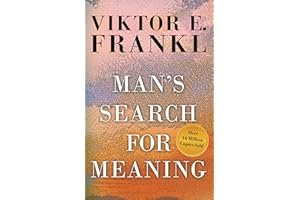 1