We've ranked the best film books using expert recommendations, sales data, and millions of reader ratings. At Shortform, we know books. Our book guides are the best in the world. Learn why.
Cover unavailable
1
Hitchcock. Edition définitive
François Truffaut
5.0
En 1955, François Truffaut rencontre Alfred Hitchcock pour les Cahiers du cinéma. En 1962, Jules et Jim vient consacrer son talent de cinéaste et il prépare La peau douce (1964), de son aveu même le plus hitchcockien de ses films. Aux États-Unis, Hitchcock, avec Frenzy (1962), est au faîte de sa créativité et de son succès. Mais les critiques restent réticents. Naît alors l'idée du «Hitchbook» : un livre dont Truffaut serait l'initiateur, le «provocateur» même, et qui révèlerait la vraie nature de l'homme, vulnérable, sensible, et aussi les secrets perdus que détiennent les grands cinéastes qui ont commencé à l'époque du muet. Hitchcock accepte le principe de répondre à 500 questions portant exclusivement sur sa carrière. Pendant cet entretien qui va durer 4 ans, Truffaut va l'interroger à la façon dont Œdipe allait consulter l'Oracle. Il tentera d'élucider à travers toute l'œuvre de Hitchcock les mécanismes de ce «langage d'émotion» qui est le ressort de son style inimitable et le classe dans la catégorie des «artistes inquiets comme Kafka, Dostoïevski ou Poe».
…
Recommended by Darren Aronofsky and Mat Whitecross.
Darren Aronofsky
This book is an amazing guide to Hitchcock’s thought process…Truffaut got Hitchcock to reveal a lot of the different techniques that he used to put together his monumental body of work. [source]
Mat Whitecross
One of the best books on film ever written. [source]
Cover unavailable
2
In the Blink of an Eye
Walter Murch
4.9
In the Blink of an Eye is celebrated film editor Walter Murch's vivid, multifaceted, thought-provoking essay on film editing. Starting with what might be the most basic editing question - Why do cuts work? - Murch treats the reader to a wonderful ride through the aesthetics and practical concerns of cutting film. Along the way, he offers his unique insights on such subjects as continuity and discontinuity in editing, dreaming, and reality; criteria for a good cut; the blink of the eye as an emotional cue; digital editing; and much more. In this second edition, Murch reconsiders and completely revises his popular first edition's lengthy meditation on digital editing (which accounts for a third of the book's pages) in light of the technological changes that have taken place in the six years since its publication.
A short, brilliant book about film editing that has quite a few lessons for writers, too. (It would make an excellent companion to Sidney Lumet’s Making Movies.) I first read about Murch in Lawrence Weschler’s book about his adventures in astrophysics, Waves Passing In The Night, which I picked randomly off my local library’s New Arrivals shelf. [source]
Cover unavailable
3
Making Movies
Sidney Lumet
4.9
From one of America's most acclaimed directors comes a book that is both a professional memoir and a definitive guide to the art, craft, and business of the motion picture. Drawing on 40 years of experience on movies ranging from Long Day's Journey Into Night to The Verdict, Lumet explains the painstaking labor that results in two hours of screen magic.
Recommended by Darren Aronofsky.
Darren Aronofsky
It’s an incredibly clear, honest, and precise discussion of the films Lumet made over the course of his career. There are many pearls of wisdom about directing and filmmaking in the book. [source]
Cover unavailable
4
Easy Riders, Raging Bulls
Peter Biskind
4.8
This down-and-dirty romp through Hollywood in the 1970s introduces the young filmmakers--Coppola, Scorsese, Lucas, Spielberg, Altman, and Beatty--and recreates an era that transformed American culture forever.
Recommended by B.J. Novak and Darren Aronofsky.
B.J. Novak
Highly recommend it. … About filmmaking in the glory days of the '70s. [source]
Darren Aronofsky
This is an incredibly delicious read—just a great, great account of that era from Easy Rider (’69) through the mid-’70s. It’s the story of all those great filmmakers—my icons—Scorsese, Coppola, Friedkin, and Bogdanovich. They changed the way movies were made in America. It recounts their adventures in making movies. [source]
Cover unavailable
5
Sculpting in Time
Andrey Tarkovsky, Kitty Hunter-Blair
4.8
An alternate cover edition can be found here.
Andrey Tarkovsky, the genius of modern Russian cinema--hailed by Ingmar Bergman as "the most important director of our time"--died an exile in Paris in December 1986. In Sculpting in Time, he has left his artistic testament, a remarkable revelation of both his life and work. Since Ivan's Childhood won the Golden Lion at the Venice Film Festival in 1962, the visionary quality and totally original and haunting imagery of Tarkovsky's films have captivated serious movie audiences all over the world, who see in his work a continuation of the great literary traditions of nineteenth-century Russia. Many critics have tried to interpret his intensely personal vision, but he himself always remained inaccessible.
In Sculpting in Time, Tarkovsky sets down his thoughts and his memories, revealing for the first time the original inspirations for his extraordinary films--Ivan's Childhood, Andrey Rublyov, Solaris, The Mirror, Stalker, Nostalgia, and The Sacrifice. He discusses their history and his methods of work, he explores the many problems of visual creativity, and he sets forth the deeply autobiographical content of part of his oeuvre--most fascinatingly in The Mirror and Nostalgia. The closing chapter on The Sacrifice, dictated in the last weeks of Tarkovsky's life, makes the book essential reading for those who already know or who are just discovering his magnificent work.
…
Cover unavailable
6
The Disaster Artist: My Life Inside The Room, the Greatest Bad Movie Ever Made
Greg Sestero, Tom Bissell
4.7
New York Times bestseller—now a major motion picture directed by and starring James Franco!
From the actor who somehow lived through it all, a “sharply detailed…funny book about a cinematic comedy of errors” (The New York Times): the making of the cult film phenomenon The Room.
In 2003, an independent film called The Room—starring and written, produced, and directed by a mysteriously wealthy social misfit named Tommy Wiseau—made its disastrous debut in Los Angeles. Described by one reviewer as “like getting stabbed in the head,” the $6 million film earned a grand total of $1,800 at the box office and closed after two weeks. Years later, it’s an international cult phenomenon, whose legions of fans attend screenings featuring costumes, audience rituals, merchandising, and thousands of plastic spoons.
Hailed by The Huffington Post as “possibly the most important piece of literature ever printed,” The Disaster Artist is the hilarious, behind-the-scenes story of a deliciously awful cinematic phenomenon as well as the story of an odd and inspiring Hollywood friendship. Actor Greg Sestero, Tommy’s costar and longtime best friend, recounts the film’s bizarre journey to infamy, unraveling mysteries for fans (like, who is Steven? And what’s with that hospital on Guerrero Street?)—as well as the most important question: how the hell did a movie this awful ever get made? But more than just a riotously funny story about cinematic hubris, “The Disaster Artist is one of the most honest books about friendship I’ve read in years” (Los Angeles Times).
I’ve been watching The Room for years, and I first read Bissell on the subject in Magic Hours. This was a total behind-the-scenes trip, and it is no surprise to me that the movie based on it has gotten great reviews. (I still haven’t seen it.) [source]
Cover unavailable
7
Story: Substance, Structure, Style, and the Principles of Screenwriting
Robert McKee's screenwriting workshops have earned him an international reputation for inspiring novices, refining works in progress and putting major screenwriting careers back on track. Quincy Jones, Diane Keaton, Gloria Steinem, Julia Roberts, John Cleese and David Bowie are just a few of his celebrity alumni. Writers, producers, development executives and agents all flock to his lecture series, praising it as a mesmerizing and intense learning experience. In Story, McKee expands on the concepts he teaches in his $450 seminars (considered a must by industry insiders), providing readers with the most comprehensive, integrated explanation of the craft of writing for the screen. No one better understands how all the elements of a screenplay fit together, and no one is better qualified to explain the "magic" of story construction and the relationship between structure and character than Robert McKee.
…
Recommended by Bill Liao.
Bill Liao
The human world occurs in language so best get good at it! [source]
Cover unavailable
8
Save the Cat: The Last Book on Screenwriting You'll Ever Need
Blake Snyder
4.6
This ultimate insider's guide reveals the secrets that none dare admit, told by a show biz veteran who's proven that you can sell your script if you can save the cat!
It takes you through 11 different 'archetypes' of screenplays you can write, and the exact elements each needs to be a great story. [source]
Cover unavailable
9
Adventures in the Screen Trade
William Goldman
4.6
Now available as an ebook for the first time!
No one knows the writer's Hollywood more intimately than William Goldman. Two-time Academy Award-winning screenwriter and the bestselling author of Marathon Man, Tinsel, Boys and Girls Together, and other novels, Goldman now takes you into Hollywood's inner sanctums...on and behind the scenes for Butch Cassidy and the Sundance Kid, All the President's Men, and other films...into the plush offices of Hollywood producers...into the working lives of acting greats such as Redford, Olivier, Newman, and Hoffman...and into his own professional experiences and creative thought processes in the crafting of screenplays. You get a firsthand look at why and how films get made and what elements make a good screenplay. Says columnist Liz Smith, "You'll be fascinated.
According to David Mamet, a film director must, above all things, think visually. Most of this instructive and funny book is written in dialogue form and based on film classes Mamet taught at Columbia University. He encourages his students to tell their stories not with words, but through the juxtaposition of uninflected images. The best films, Mamet argues, are composed of simple shots. The great filmmaker understands that the burden of cinematic storytelling lies less in the individual shot than in the collective meaning that shots convey when they are edited together. Mamet borrows many of his ideas about directing, writing, and acting from Russian masters such as Konstantin Stanislavsky, Sergei M. Eisenstein, and Vsevelod Pudovkin, but he presents his material in so delightful and lively a fashion that he revitalizes it for the contemporary reader.
…
Cover unavailable
11
Notes on the Cinematograph
Robert Bresson
4.6
A key influence on the French New Wave and the director of such iconic works as Pickpocket and A Man Escaped, Robert Bresson is one of the central figures of French cinema. Notes on the Cinematograph is not only his definitive treatise on film—its inherent peculiarity and potential—but an ascetic meditation on how art transcends, and is transformed by, the senses.
Bresson upends inherited truths with empirical ones, calling for film to divest itself of the trappings of theater in order to come into its own as an art form. While theater is capable of simulation, film can capture immanent being. Therefore, he argues, the two forms are innately at odds: “No marriage of theater and cinematography without both being exterminated.”
To this end, Bresson rechristens his actors “models” and conducts them through grueling shoots where they repeat their lines and movements until he deems them vacant of actorly intention and charged, instead, with inscrutability: “A model. Enclosed in his mysterious appearance. He has brought home to him all of him that was outside. He is there, behind that forehead, those cheeks.”
…
Cover unavailable
12
Rebel Without a Crew: Or, How a 23-year-old Film Maker with $7,000 Became a Hollywood Player
Robert Rodriguez
4.6
The film-maker Robert Rodriguez describes how he made El Mariachi for $7000, demonstrating many ways in which a film-maker can do for nothing what professionals spend thousands of dollars doing without a second thought.
Recommended by Mat Whitecross.

Mat Whitecross
Yes, I remember growing up and really wanting to be a film-maker. I didn’t understand how films were made. There wasn’t a huge amount of information at the time. It seemed like an impossible dream to go off and become a director – there was no sure-fire route. There still isn’t. I remember going to the careers adviser at school and saying I want to be a director and he pretty much laughed at me and said, ‘Well you can’t!’ [source]
Cover unavailable
13
Film Art: An Introduction
David Bordwell, Kristin Thompson
4.6
Film Art is often assigned to college students taking their first film class. Authors David Bordwell and Kristin Thompson do not follow the traditional method of teaching film art through a close analysis of individual films. Instead, they provide an overview of the major issues students confront when they watch movies. In clear, straightforward prose, the authors describe and dissect the complexities of filmmaking, film narrative, film form, and film technique. This book serves as a fine introduction not only to the field of film studies, but also to the theories and concerns of two of the most important scholars in that field.
…
Cover unavailable
14
The Great Movies
Roger Ebert
4.5
America’s most trusted and best-known film critic Roger Ebert presents one hundred brilliant essays on some of the best movies ever made.
For the past five years Roger Ebert, the famed film writer and critic, has been writing biweekly essays for a feature called "The Great Movies," in which he offers a fresh and fervent appreciation of a great film. The Great Movies collects one hundred of these essays, each one of them a gem of critical appreciation and an amalgam of love, analysis, and history that will send readers back to that film with a fresh set of eyes and renewed enthusiasm–or perhaps to an avid first-time viewing. Ebert’s selections range widely across genres, periods, and nationalities, and from the highest achievements in film art to justly beloved and wildly successful popular entertainments. Roger Ebert manages in these essays to combine a truly populist appreciation for our most important form of popular art with a scholar’s erudition and depth of knowledge and a sure aesthetic sense. Wonderfully enhanced by stills selected by Mary Corliss, film curator at the Museum of Modern Art, The Great Movies is a treasure trove for film lovers of all persuasions, an unrivaled guide for viewers, and a book to return to again and again.
The Great Movies includes: All About Eve • Bonnie and Clyde • Casablanca • Citizen Kane • The Godfather • Jaws • La Dolce Vita • Metropolis • On the Waterfront • Psycho • The Seventh Seal • Sweet Smell of Success • Taxi Driver • The Third Man • The Wizard of Oz • and eighty-five more films.
From the Hardcover edition.
…
Cover unavailable
15
Screenplay: The Foundations of Screenwriting
Syd Field
4.5
A generation of screenwriters has used Syd Field’s bestselling books to ignite successful careers in film. Now the celebrated producer, lecturer, teacher, and bestselling author has updated his classic guide for a new generation of filmmakers, offering a fresh insider’s perspective on the film industry today. From concept to character, from opening scene to finished script, here are easily understood guidelines to help aspiring screenwriters—from novices to practiced writers—hone their craft. Filled with updated material—including all-new personal anecdotes and insights, guidelines on marketing and collaboration, plus analyses of recent films, from American Beauty to Lord of the Rings—Screenplay presents a step-by-step, comprehensive technique for writing the screenplay that will succeed in Hollywood. Discover:
•Why the first ten pages of your script are crucially important •How to visually “grab” the reader from page one, word one •Why structure and character are the essential foundation of your screenplay •How to adapt a novel, a play, or an article into a screenplay •Tips on protecting your work—three legal ways to claim ownership of your screenplay •The essentials of writing great dialogue, creating character, building a story line, overcoming writer’s block, getting an agent, and much more.
With this newly updated edition of his bestselling classic, Syd Field proves yet again why he is revered as the master of the screenplay—and why his celebrated guide has become the industry’s gold standard for successful screenwriting.
…
Cover unavailable
16
What is Cinema?: Volume 1
Andre Bazin, Hugh Gray, Jean Renoir, Dudley Andrew
4.5
André Bazin's What Is Cinema? (volumes I and II) have been classics of film studies for as long as they've been available and are considered the gold standard in the field of film criticism. Although Bazin made no films, his name has been one of the most important in French cinema since World War II. He was co-founder of the influential Cahiers du Cinéma, which under his leadership became one of the world's most distinguished publications. Championing the films of Jean Renoir (who contributed a short foreword to Volume I), Orson Welles, and Roberto Rossellini, he became the protégé of François Truffaut, who honors him touchingly in his forword to Volume II. This new edition includes graceful forewords to each volume by Bazin scholar and biographer Dudley Andrew, who reconsiders Bazin and his place in contemporary film study. The essays themselves are erudite but always accessible, intellectual, and stimulating. As Renoir puts it, the essays of Bazin "will survive even if the cinema does not."
Bazin believed that films should be smooth, and needn’t be so socially weighty; he felt that films should have a realism to them. [source]
Cover unavailable
17
Lynch on Lynch
David Lynch
4.5
David Lynch erupted onto the cinema landscape in 1977 with Eraserhead, establishing himself as one of the most original and imaginative directors at work in contemporary cinema. Over the course of his career, he has remained true to a vision of the innocent lost in darkness and confusion, balancing hallucination and surrealism with a sense of Americana that is as pure and simple as his compelling storylines. In this volume, Lynch speaks openly about his films as well as about his lifelong commitment to painting, his work in photography, his television projects, and his musical collaborations with Angelo Badalamenti.
…
Cover unavailable
18
Something Like an Autobiography
Akira Kurosawa
4.4
"A first rate book and a joy to read...It's doubtful that a complete understanding of the director's artistry can be obtained without reading this book...Also indispensable for budding directors are the addenda, in which Kurosawa lays out his beliefs on the primacy of a good script, on scriptwriting as an essential tool for directors, on directing actors, on camera placement, and on the value of steeping oneself in literature, from great novels to detective fiction." —Variety
"For the lover of Kurosawa's movies...this is nothing short of must reading...a fitting companion piece to his many dynamic and absorbing screen entertainments." —Washington Post Book World
…
Cover unavailable
19
The Conversations: Walter Murch and the Art of Editing Film
Michael Ondaatje
4.4
The Conversations is a treasure, essential for any lover or student of film, and a rare, intimate glimpse into the worlds of two accomplished artists who share a great passion for film and storytelling, and whose knowledge and love of the crafts of writing and film shine through.
It was on the set of the movie adaptation of his Booker Prize-winning novel, The English Patient, that Michael Ondaatje met the master film and sound editor Walter Murch, and the two began a remarkable personal conversation about the making of films and books in our time that continued over two years. From those conversations stemmed this enlightened, affectionate book -- a mine of wonderful, surprising observations and information about editing, writing and literature, music and sound, the I-Ching, dreams, art and history.
The Conversations is filled with stories about how some of the most important movies of the last thirty years were made and about the people who brought them to the screen. It traces the artistic growth of Murch, as well as his friends and contemporaries -- including directors such as Francis Ford Coppola, George Lucas, Fred Zinneman and Anthony Minghella -- from the creation of the independent, anti-Hollywood Zoetrope by a handful of brilliant, bearded young men to the recent triumph of Apocalypse Now Redux.
Among the films Murch has worked on are American Graffiti, The Conversation, the remake of A Touch of Evil, Julia, Apocalypse Now, The Godfather (all three), The Talented Mr. Ripley, and The English Patient.
"Walter Murch is a true oddity in Hollywood. A genuine intellectual and renaissance man who appears wise and private at the centre of various temporary storms to do with film making and his whole generation of filmmakers. He knows, probably, where a lot of the bodies are buried."
…
Cover unavailable
20
As You Wish: Inconceivable Tales from the Making of The Princess Bride
Cary Elwes, Joe Layden, Rob Reiner
4.4
From actor Cary Elwes, who played the iconic role of Westley in The Princess Bride, comes a first-person account and behind-the-scenes look at the making of the cult classic film filled with never-before-told stories, exclusive photographs, and interviews with costars Robin Wright, Wallace Shawn, Billy Crystal, Christopher Guest, and Mandy Patinkin, as well as author and screenwriter William Goldman, producer Norman Lear, and director Rob Reiner.
The Princess Bride has been a family favorite for close to three decades. Ranked by the American Film Institute as one of the top 100 Greatest Love Stories and by the Writers Guild of America as one of the top 100 screenplays of all time, The Princess Bride will continue to resonate with audiences for years to come.
Cary Elwes was inspired to share his memories and give fans an unprecedented look into the creation of the film while participating in the twenty-fifth anniversary cast reunion. In As You Wish he has created an enchanting experience; in addition to never-before seen photos and interviews with his fellow cast mates, there are plenty of set secrets, backstage stories, and answers to lingering questions about off-screen romances that have plagued fans for years!
With a foreword by Rob Reiner and a limited edition original poster by acclaimed artist Shepard Fairey, As You Wish is a must-have for all fans of this beloved film.
…
Cover unavailable
21
Film Directing: Shot by Shot - 25th Anniversary Edition: Visualizing from Concept to Screen
Steven D. Katz
4.4
This international best-seller is filled with visual techniques for filmmakers and screenwriters who want to expand their stylistic knowledge.
Cover unavailable
22
My Last Sigh
Luis Bunuel
4.4
This long out-of-paint autobiography provides insight into the genesis of Bunuel's films and conveys his frank opinions on dwarves, Catholicism, the Marquis de Sade, food, and smoking, not to mention his recipe for a good dry martini!
Recommended by Jason Webster.
Jason Webster
Yes. He is fantastic at the celebration of the non-rational which is one of the things that I find very appealing about Spain. This is Buñuel’s autobiography where he talks about how important it is to let his mind wander and to daydream even though it is becoming more and more unfashionable. He is almost like a prophet of non-rationality in this very rational world. He’s lucky in that he lived during a time when other non-rationalists were doing something similar. His group included Pablo Picasso, Salvador Dalí and Federico García Lorca. So he was part of the surrealist movement for a while, although the surrealists are seen as a strangely hierarchical sort of structure. They don’t seem to be very freedom-loving when it comes to how they act. They were constantly bickering amongst themselves and then kicking people out of their group if it offended their ideas, which is a bit of a contradiction in terms. [source]
Cover unavailable
23
Herzog on Herzog
Paul Cronin, Werner Herzog
4.4
An invaluable set of career-length interviews with the German genius hailed by François Truffaut as "the most important film director alive"
Most of what we've heard about Werner Herzog is untrue. The sheer number of false rumors and downright lies disseminated about the man and his films is truly astonishing. Yet Herzog's body of work is one of the most important in postwar European cinema. His international breakthrough came in 1973 with Aguirre, The Wrath of God, in which Klaus Kinski played a crazed Conquistador. For The Enigma of Kaspar Hauser, Herzog cast in the lead a man who had spent most of his life institutionalized, and two years later he hypnotized his entire cast to make Heart of Glass. He rushed to an explosive volcanic Caribbean island to film La Soufrière, paid homage to F. W. Murnau in a terrifying remake of Nosferatu, and in 1982 dragged a boat over a mountain in the Amazon jungle for Fitzcarraldo. More recently, Herzog has made extraordinary "documentary" films such as Little Dieter Needs to Fly. His place in cinema history is assured, and Paul Cronin's volume of dialogues provides a forum for Herzog's fascinating views on the things, ideas, and people that have preoccupied him for so many years.
…
Cover unavailable
24
Film as a Subversive Art: By Amos Vogel
Amos Vogel, Scott MacDonald
4.4
A classic returns! The original edition of Amos Vogel's seminal book, "Film as a Subversive Art" was first published in 1974, and has been out of print since 1987. According to Vogel--founder of Cinema 16, North America's legendary film society--the book details the "accelerating worldwide trend toward a more liberated cinema, in which subjects and forms hitherto considered unthinkable or forbidden are boldly explored." So ahead of his time was Vogel that the ideas that he penned some 30 years ago are still relevant today, and readily accessible in this classic volume. Accompanied by over 300 rare film stills, "Film as a Subversive Art" analyzes how aesthetic, sexual and ideological subversives use one of the most powerful art forms of our day to exchange or manipulate our conscious and unconscious, demystify visual taboos, destroy dated cinematic forms, and undermine existing value systems and institutions. This subversion of form, as well as of content, is placed within the context of the contemporary world view of science, philosophy, and modern art, and is illuminated by a detailed examination of over 500 films, including many banned, rarely seen, or never released works.
…
Cover unavailable
25
The Ride of a Lifetime: Lessons Learned from 15 Years as CEO of the Walt Disney Company
A grand vision defined: The CEO of Disney, one of Time's most influential people of 2019, shares the ideas and values he embraced to reinvent one of the most beloved companies in the world and inspire the people who bring the magic to life.
Robert Iger became CEO of The Walt Disney Company in 2005, during a difficult time. Competition was more intense than ever and technology was changing faster than at any time in the company's history. His vision came down to three clear ideas: Recommit to the concept that quality matters, embrace technology instead of fighting it, and think bigger--think global--and turn Disney into a stronger brand in international markets.
Twelve years later, Disney is the largest, most respected media company in the world, counting Pixar, Marvel, Lucasfilm, and 21st Century Fox among its properties. Its value is nearly five times what it was when Iger took over, and he is recognized as one of the most innovative and successful CEOs of our era.
In The Ride of a Lifetime, Robert Iger shares the lessons he's learned while running Disney and leading its 200,000 employees, and he explores the principles that are necessary for true leadership, including:
- Optimism. Even in the face of difficulty, an optimistic leader will find the path toward the best possible outcome and focus on that, rather than give in to pessimism and blaming. - Courage. Leaders have to be willing to take risks and place big bets. Fear of failure destroys creativity. - Decisiveness. All decisions, no matter how difficult, can be made on a timely basis. Indecisiveness is both wasteful and destructive to morale. - Fairness. Treat people decently, with empathy, and be accessible to them.
This book is about the relentless curiosity that has driven Iger for forty-five years, since the day he started as the lowliest studio grunt at ABC. It's also about thoughtfulness and respect, and a decency-over-dollars approach that has become the bedrock of every project and partnership Iger pursues, from a deep friendship with Steve Jobs in his final years to an abiding love of the Star Wars mythology.
"The ideas in this book strike me as universal" Iger writes. "Not just to the aspiring CEOs of the world, but to anyone wanting to feel less fearful, more confidently themselves, as they navigate their professional and even personal lives."
I expected a book written by the person who has led Disney for decades to be defined by both gripping storytelling and deep leadership wisdom. The author delivers, and then some! This book is leadership gold—you won’t forget the stories or the lessons. [source]
Bob's book is great and he's an excellent CEO. [source]
John Stamos
Loving the book Bob. Really honest and fascinating! Every Disney fan (everyone) needs to read. https://t.co/13VZpFleb0 [source]
Cover unavailable
26
The Hunger Games (The Hunger Games, #1)
Suzanne Collins
4.3
WINNING MEANS FAME AND FORTUNE. LOSING MEANS CERTAIN DEATH. THE HUNGER GAMES HAVE BEGUN. . . .
In the ruins of a place once known as North America lies the nation of Panem, a shining Capitol surrounded by twelve outlying districts. The Capitol is harsh and cruel and keeps the districts in line by forcing them all to send one boy and once girl between the ages of twelve and eighteen to participate in the annual Hunger Games, a fight to the death on live TV.
Sixteen-year-old Katniss Everdeen regards it as a death sentence when she steps forward to take her sister's place in the Games. But Katniss has been close to dead before—and survival, for her, is second nature. Without really meaning to, she becomes a contender. But if she is to win, she will have to start making choices that weight survival against humanity and life against love.
A brutal, exciting, action-based sci-fi novel. Hugely popular and excellent fun. [source]
Cover unavailable
27
The Filmmaker's Handbook: A Comprehensive Guide for the Digital Age: 2013 Edition
Steven Ascher and Edward Pincus
4.3
The authoritative guide to producing, directing, shooting, editing, and distributing your video or film
Widely acknowledged as the “bible” of video and film production, and used in courses around the world, The Filmmaker’s Handbook is now updated with the latest advances in HD and new digital formats. For students and teachers, professionals and novices, this indispensable handbook covers all aspects of movie making. * Techniques for making dramatic features, documentaries, corporate, broadcast, and experimental videos and films * Shooting with DSLRs, video, film, and digital cinema cameras * Digital editing with the latest video editing systems * In-depth coverage of lenses, lighting, sound recording, and mixing * The business aspects of funding and producing your project * Getting your movie shown in theaters, on TV, and on the Web
…
Cover unavailable
28
On Filmmaking: An Introduction to the Craft of the Director
Alexander Mackendrick, Paul Cronin, Martin Scorsese
4.3
An invaluable analysis of the director's art and craft, from one of the most revered of all film school directors. Alexander 'Sandy' Mackendrick directed classic Ealing comedies plus a Hollywood masterpiece, Sweet Smell of Success. But after retiring from film-making in 1969, he then spent nearly 25 years teaching his craft at the California Institute of the Arts in Los Angeles.
Mackendrick produced hundreds of pages of masterly handouts and sketches, designed to guide his students to a finer understanding of how to write a story, and then use those devices peculiar to cinema in order to tell that story as effectively as possible. Gathered and edited in this collection, Mackendrick's teachings reveal that he had the talent not only to make great films, but also to articulate the process with a clarity and insight that will still inspire any aspirant film-maker.
…
Cover unavailable
29
Down and Dirty Pictures: Miramax, Sundance, and the Rise of Independent Film
Peter Biskind
4.3
DOWN AND DIRTY PICTURES chronicles the rise of independent filmmakers and of the twin engines the Sundance Film Festival and Miramax Films that have powered them. Peter Biskind profiles the people who took the independent movement from obscurity to the Oscars, most notably Sundance founder Robert Redford and Harvey Weinstein, who with his brother, Bob, made Miramax an indie powerhouse. Candid, penetrating and controversial, DOWN AND DIRTY PICTURES is a must read for anyone interested in the film world.
"In DOWN AND DIRTY PICTURES, Biskind takes on the movie industry of the 1990s and again gets the story....Peter Biskind captures his era as John Dunne did that of the Zanucks." Frank Rich, The New York Times
"Dishy, teeming, superbly reported and packed with lively inside anecdotes...[a] juicy and fascinating expose." - Entertainment Weekly
…
Cover unavailable
30
Film Form: Essays In Film Theory
Sergei Eisenstein, Jay Leyda
4.3
Twelve essays written between 1928 and 1945 that demonstrate key points in the development of Eisenstein’s film theory and in particular his analysis of the sound-film medium. Edited, translated, and with an Introduction by Jay Leyda; Index; photographs and diagrams.
Cover unavailable
31
Directing: Film Techniques and Aesthetics
Michael Rabiger and Mick Hurbis-Cherrier
4.3
This comprehensive manual has inspired tens of thousands of readers worldwide to realize their artistic vision and produce well-constructed films. Filled with practical advice on every stage of production, this is the book you will return to throughout your career.
Directing covers the methods, technologies, thought processes, and judgments that a director must use throughout the fascinating process of making a film. The core of the book is the human, psychological, and technical knowledge that every director needs, the enduring elements of the craft that remain vital.
Directing also provides an unusually clear view of the artistic process, particularly in working with actors and principle crew to achieve personally expressive storytelling and professionalism on any budget.
Directing explores in detailed and applicable terms how to engage with the conceptual and authorial sides of filmmaking. Its eminently practical tools and exercises show how to: discover your artistic identity; develop credible and compelling stories with your cast and crew; and become a storyteller with a distinctive voice and style.
The companion website includes teaching notes, dozens of practical hands-on projects and film study activities to help you master technical and conceptual skills, film analysis questionnaires, and all the essential production forms and logs.
New to the fifth edition
* Virtually every chapter has been revised, updated, and re-organized for a streamlined and integrated approach.
* Expanded sections on the basics of drama, including thorough analyses of recent films
* Discussions of the director's approach to script analysis and development
* New discussion exploring the elements of naturalistic and stylistic aesthetic approaches.
* New discussion on the narrative power of lighting and the lens - including many recent film examples for shot size, perspective, focus and exposure
* Greater emphasis on the implications of composition, mise-en-scene, continuity shooting and editing, long take shooting, point-of-view sequences, and camera handling
* Expanded discussion of collaboration between the director and principle creative crew
* Updated coverage of workflow and comparative advantages to digital or film acquisition
* New section on film production safety, set protocol and etiquette
…
Cover unavailable
32
The Magic Lantern
Ingmar Bergman, Joan Tate
4.3
“When a film is not a document, it is a dream. . . . At the editing table, when I run the strip of film through, frame by frame, I still feel that dizzy sense of magic of my childhood.” Bergman, who has conveyed this heady sense of wonder and vision to moviegoers for decades, traces his lifelong love affair with film in his breathtakingly visual autobiography, The Magic Lantern.
More grand mosaic than linear account, Bergman’s vignettes trace his life from a rural Swedish childhood through his work in theater to Hollywood’s golden age, and a tumultuous romantic history that includes five wives and more than a few mistresses. Throughout, Bergman recounts his life in a series of deeply personal flashbacks that document some of the most important moments in twentieth-century filmmaking as well as the private obsessions of the man behind them. Ambitious in scope yet sensitively wrought, The Magic Lantern is a window to the mind of one of our era’s great geniuses.
“[Bergman] has found a way to show the soul’s landscape . . . . Many gripping revelations.”—New York Times Book Review
“Joan Tate’s translation of this book has delicacy and true pitch . . . The Magic Lantern is as personal and penetrating as a Bergman film, wry, shadowy, austere.”—New Republic
“[Bergman] keeps returning to his past, reassessing it, distilling its meaning, offering it to his audiences in dazzling new shapes.”—New York Times
“What Bergman does relate, particularly his tangled relationships with his parents, is not only illuminating but quite moving. No ‘tell-all’ book this one, but revealing in ways that much longer and allegedly ‘franker’ books are not.”—Library Journal
…
Cover unavailable
33
Directing Actors
Judith Weston
4.3
Internationally-renowned directing coach Weston demonstrates what constitutes a good performance, what actors want from a director, what directors do wrong, script analysis and preparation, how actors work, and shares insights into the director/actor relationship.
Cover unavailable
34
Hollywood Babylon: The Legendary Underground Classic of Hollywood's Darkest and Best Kept Secrets
Kenneth Anger
4.3
"Hollywood Babylon" was originally published in Paris, and quickly became an underground legend. Not a word has been changed. Not a story omitted. Here is the hot, luscious plum of sizzling scandal that continues to shock the world.
Cover unavailable
35
If Chins Could Kill: Confessions of a B Movie Actor
Bruce Campbell
4.3
Okay, so at least you're interested enough to pick up this book and look inside. I think you and I are going to get along just fine.
Life is full of choices. Right now, yours is whether or not to buy the autobiography of a mid-grade, kind of hammy actor.
Am I supposed to know this guy? you think to yourself.
No, and that's exactly the point. Bookstores are chock full of household name actors and their high stakes shenanigans. I don't want to be a spoilsport, but we've all been down that road before.
Case in point: look to your left - see that Judy Garland book? You don't need that, you know plenty about her already - great voice, crappy life. Now look to your right at the Charlton Heston book. You don't need to cough up hard-earned dough for that either. You know his story too - great voice, crappy toupee.
The truth is that though you might not have a clue who I am, there are countless working stiffs like me out there, grinding away every day at the wheel of fortune.
If Chins Could Kill: Confessions of a B Movie Actor is my first book, and I invite you to ride with me through the choppy waters of blue collar Hollywood.
Okay, so buy the damned book already and read like the wind!
Best, Bruce Campbell
P.S. If the book sucks, at least there are gobs of pictures, and they're not crammed in the middle like all those other actor books.
…
Cover unavailable
36
Pictures at a Revolution: Five Movies and the Birth of the New Hollywood
Mark Harris
4.3
Explores the epic human drama behind the making of the five movies nominated for Best Picture in 1967-Guess Who's Coming to Dinner, The Graduate, In the Heat of the Night, Doctor Doolittle, and Bonnie and Clyde-and through them, the larger story of the cultural revolution that transformed Hollywood, and America, forever.
Recommended by Josh Charles and Kyle Russell.
Josh Charles
@MarkHarrisNYC I love this so much Mark. Can’t wait to read this book! [source]
Kyle Russell
Found my new "recommends in every coffee meeting" book - "Pictures at a Revolution: Five Movies and the Birth of the New Hollywood," telling the stories behind the 5 Best Picture nominees in 1968 https://t.co/xpghc74OWy [source]
Cover unavailable
37
The Wes Anderson Collection
Matt Zoller Seitz
4.2
Wes Anderson is one of the most influential voices from the past two decades of American cinema. A true auteur, Anderson is known for the visual artistry, inimitable tone, and idiosyncratic characterizations that make each of his films—Bottle Rocket, Rushmore, The Royal Tenenbaums, The Life Aquatic with Steve Zissou, The Darjeeling Limited, Fantastic Mr. Fox, and Moonrise Kingdom—instantly recognizable as “Andersonian.”
The Wes Anderson Collection is the first in-depth overview of Anderson’s filmography, guiding readers through his life and career. Previously unpublished photos, artwork, and ephemera complement a book-length conversation between Anderson and award-winning critic Matt Zoller Seitz. The interview and images are woven together in a meticulously designed book that captures the spirit of his films: melancholy and playful, wise and childish—and thoroughly original.
…
Cover unavailable
38
Men, Women, and Chain Saws: Gender in the Modern Horror Film
Carol J. Clover
4.2
Do the pleasures of horror movies really begin and end in sadism? So the public discussion of film assumes, and so film theory claims. Carol Clover argues, however, that these films work mainly to engage the viewer in the plight of the victim-hero - the figure, often a female, who suffers pain and fright but eventually rises to vanquish the forces of oppression.
Cover unavailable
39
Harry Potter and the Sorcerer's Stone
J. K. Rowling
4.2
Harry Potter has never been the star of a Quidditch team, scoring points while riding a broom far above the ground. He knows no spells, has never helped to hatch a dragon, and has never worn a cloak of invisibility.
All he knows is a miserable life with the Dursleys, his horrible aunt and uncle, and their abominable son, Dudley - a great big swollen spoiled bully. Harry’s room is a tiny closet at the foot of the stairs, and he hasn’t had a birthday party in eleven years.
But all that is about to change when a mysterious letter arrives by owl messenger: a letter with an invitation to an incredible place that Harry - and anyone who reads about him - will find unforgettable.
For it’s there that he finds not only friends, aerial sports, and magic in everything from classes to meals, but a great destiny that’s been waiting for him…if Harry can survive the encounter. (front flap)
…
Recommended by Joe Lycett.
Joe Lycett
guys i just read this book called harry potter well worth checking out it’s about a really interesting magic lad [source]
Cover unavailable
40
How to Read a Film: The World of Movies, Media, Multimedia: Language, History, Theory
James Monaco
4.2
First published in 1977, this popular book has become the source on film and media. Now, James Monaco offers a revised and rewritten third edition incorporating every major aspect of this dynamic medium right up to the present. Looking at film from many vantage points, How to Read a Film: Movies, Media, Multimedia explores the medium as both art and craft, sensibility and science, tradition and technology. After examining film's close relation to such other narrative media as the novel, painting, photography, television, and even music, Monaco discusses those elements necessary to understand how films convey meaning and, more importantly, how we can best discern all that a film is attempting to communicate. In a key departure from the book's previous editions, the new and still-evolving digital context of film is now emphasized throughout How to Read a Film. A new chapter on multimedia brings media criticism into the twenty-first century with a thorough discussion of topics like virtual reality, cyberspace, and the proximity of both to film. Monaco has likewise doubled the size and scope of his "Film and Media: A Chronology" appendix. The book also features a new introduction, an expanded bibliography, and hundreds of illustrative black-and-white film stills and diagrams. It is a must for all film students, media buffs, and movie fans.
…
Cover unavailable
41
The Writer's Journey: Mythic Structure for Writers
Christopher Vogler
4.2
Provides new insights and observations from Vogler's pioneering work in mythic structure for writers.
Recommended by Darren Aronofsky.
Darren Aronofsky
It’s the Bible for screenwriters. I think it’s the best book on how to write a screenplay ever written. It helped me get through so many roadblocks as a writer. [source]
Cover unavailable
42
The Anatomy of Story: 22 Steps to Becoming a Master Storyteller
John Truby
4.2
John Truby is one of the most respected and sought-after story consultants in the film industry, and his students have gone on to pen some of Hollywood's most successful films, including Sleepless in Seattle, Scream, and Shrek. The Anatomy of Story is his long-awaited first book, and it shares all of his secrets for writing a compelling script. Based on the lessons in his award-winning class, Great Screenwriting, The Anatomy of Story draws on a broad range of philosophy and mythology, offering fresh techniques and insightful anecdotes alongside Truby's own unique approach for how to build an effective, multifaceted narrative. Truby's method for constructing a story is at once insightful and practical, focusing on the hero's moral and emotional growth. As a result, writers will dig deep within and explore their own values and worldviews in order to create an effective story. Writers will come away with an extremely precise set of tools to work with--specific, useful techniques to make the audience care about their characters, and that make their characters grow in meaningful ways. They will construct a surprising plot that is unique to their particular concept, and they will learn how to express a moral vision that can genuinely move an audience.
The foundations of story that Truby lays out are so fundamental they are applicable--and essential--to all writers, from novelists and short-story writers to journalists, memoirists, and writers of narrative non-fiction.
…
Cover unavailable
43
Catching the Big Fish: Meditation, Consciousness, and Creativity
David Lynch
4.2
Where do ideas come from?
In Catching the Big Fish, internationally acclaimed filmmaker David Lynch provides a rare window into his methods as an artist, his personal working style, and the immense creative benefits he has experienced from the practice of meditation.
Lynch describes the experience of "diving within" and "catching" ideas like fish - and then preparing them for television or movie screens, and other mediums in which he works, such as painting, music, and design. Lynch writes for the first time about his more than three-decade commitment to Transcendental Meditation and the difference it has made in his creative process.
In brief chapters, Lynch explains the development of his ideas - where they came from, how he grasps them, and which ones appeal to him the most. He specifically discusses how he puts his thoughts into action and how he engages with others around him. Finally, he considers the self and the surrounding world - and how the process of "diving within" that has so deeply affected his own work can directly benefit others.
Catching the Big Fish comes as a revelation to the legion of fans who have longed to better understand Lynch's personal vision. And it is equally intriguing to those who wonder how they can nurture their own creativity.
Since publication of the first edition in 1974, Film Theory and Criticism has been the most widely used and cited anthology of critical writings about film. Extensively revised and updated, this sixth edition highlights both classic texts and cutting edge essays from more than a century of thought and writing about the movies. Editors Leo Braudy and Marshall Cohen have reformulated the book's sections and their introductions in order to lead students into a rich understanding of what the movies have accomplished, both as individual works and as contributions to what has been called "the art form of the twentieth [and now twenty-first] century." Building upon the wide range of selections and the extensive historical coverage that marked previous editions, this new compilation stretches from the earliest attempts to define the cinema to the most recent efforts to place film in the contexts of psychology, sociology, and philosophy, and to explore issues of gender and race. The sixth edition features several new essays that discuss the impact of digital technology on the traditional conceptions of what films do and how they manage to do it. Additional selections from the important works of Gilles Deleuze round out sections dealing with the theories of such writers as Sergei Eisenstein, Andre Bazin, and Christian Metz, among others. New essays also strengthen sections dealing with the idea of "excess" in film, film spectatorship, the horror genre, and feminist criticism. Film Theory and Criticism, 6/e, is ideal for undergraduate and graduate courses in film theory and criticism."
…
Cover unavailable
45
Transcendental Style in Film: Ozu, Bresson, Dreyer
Paul Schrader
4.2
With a new introduction, acclaimed director and screenwriter Paul Schrader revisits and updates his contemplation of slow cinema over the past fifty years. Unlike the style of psychological realism, which dominates film, the transcendental style expresses a spiritual state by means of austere camerawork, acting devoid of self-consciousness, and editing that avoids editorial comment. This seminal text analyzes the film style of three great directors—Yasujiro Ozu, Robert Bresson, and Carl Dreyer—and posits a common dramatic language used by these artists from divergent cultures. The new edition updates Schrader’s theoretical framework and extends his theory to the works of Andrei Tarkovsky (Russia), Béla Tarr (Hungary), Theo Angelopoulos (Greece), and Nuri Bilge Ceylan (Turkey), among others. This key work by one of our most searching directors and writers is widely cited and used in film and art classes. With evocative prose and nimble associations, Schrader consistently urges readers and viewers alike to keep exploring the world of the art film.
…
Cover unavailable
46
This Is Orson Welles
Orson Welles, Peter Bogdanovich, Jonathan Rosenbaum
4.2
Innovative film and theater director, radio producer, actor, writer, painter, narrator, and magician, Orson Welles (1915–1985) was the last true Renaissance man of the twentieth century. From such great radio works as "War of the Worlds" to his cinematic masterpieces Citizen Kane, The Magnificent Ambersons, Othello, Macbeth, Touch of Evil, and Chimes at Midnight, Welles was a master storyteller, as expansive as he was enigmatic. This Is Orson Welles, a collection of penetrating and witty conversations between Welles and Peter Bogdanovich, includes insights into Welles's radio, theater, film, and television work; Hollywood producers, directors, and stars; and almost everything else, from acting to magic, literature to comic strips, bullfighters to gangsters. Now including Welles's revealing memo to Universal about his artistic intentions for Touch of Evil, (of which the "director's edition" was released in Fall 1998) this book, which Welles ultimately considered his autobiography, is a masterpiece as unique and engaging as the best of his works.
…
Recommended by Mat Whitecross.
Mat Whitecross
Orson Welles has always been my favourite director. I remember catching films of his late at night. One of the first films I saw of his was Touch of Evil; I had never seen anything like it. And the book is incredibly inspiring. He is sitting down with his friend Peter Bogdanovich, who is another great film director, and the two of them just talk about Orson Welles’s career. Welles is a great conversationalist. [source]
Cover unavailable
47
Cinema 1: The Movement-Image
Gilles Deleuze
4.2
Cover unavailable
48
The New Biographical Dictionary of Film
David Thomson
4.2
David Thomson’s New Biographical Dictionary of Film topped Sight & Sound magazine’s 2010 poll of international critics and writers as the best film book of all time.
Now in its fifth edition, updated, and with more than 130 new entries—from Judd Apatow to Lena Horne—the classic, beloved film book is better than ever.
For thirty-five years, David Thomson’s Biographical Dictionary of Film has been “fiendishly seductive” (Greil Marcus, Rolling Stone), “the finest reference book ever written about movies” (Graham Fuller, Interview), and “not only an indispensable book about cinema, but one of the most absurdly ambitious literary achievements of our time” (Geoff Dyer, The Guardian). For this edition, Thomson has brought up to date and in some case recast the biographies, and has added new ones (Clive Owen, Scarlett Johansson, Jake Gyllenhaal, and Marion Cotillard, for example). The book now includes almost 1,500 entries, some of them just a pungent paragraph, some of them several thousand words long, every one a gem.
Here is a great, rare book that encompasses the chaos of art, entertainment, money, vulgarity, and nonsense that we call the movies. Personal, opinionated, funny, daring, provocative, and passionate, it is the one book that every filmmaker and film buff must own, from the man David Hare called “the most stimulating and thoughtful film critic now writing.”
This volume is a compendium of biographical profiles of just about every major figure in film. But it is really much more than a movie reference book. [source]
Cover unavailable
49
Film History: An Introduction
David Bordwell, Kristin Thompson
4.2
Cover unavailable
50
The Story of Film
Mark Cousins
4.2
Cover unavailable
51
Conquest of the Useless: Reflections from the Making of Fitzcarraldo
Werner Herzog
4.2
Werner Herzog (Grizzly Man) is one of the most revered and enigmatic filmmakers of our time, and Fitzcarraldo is one of his most honored and admired films. More than just Herzog’s journal of the making of the monumental, problematical motion picture, which involved, among other things, major cast changes and reshoots, and the hauling (without the use of special effects) of a 360-ton steamship over a mountain , Conquest of the Useless is a work of art unto itself, an Amazonian fever dream that emerged from the delirium of the jungle. With fascinating observations about crew and cast—including Herzog’s lead, the somewhat demented internationally renowned star Klaus Kinski—and breathtaking insights into the filmmaking process that are uniquely Werner Herzog, Conquest of the Useless is an eye-opening look into the mind of a cinematic master.
…
Cover unavailable
52
Cinematography: Theory and Practice: Image Making for Cinematographers and Directors
Blain Brown
4.2
The world of cinematography has changed more in the last few years than it has since it has in 1929, when sound recording was introduced. New technology, new tools and new methods have revolutionized the art and craft of telling stories visually. While some aspects of visual language, lighting and color are eternal, shooting methods, workflow and cameras have changed radically. Even experienced film artists have a need to update and review new methods and equipment. These change affect not only the director of photography but also the director, the camera assistants, gaffers, and digital imaging technicians.
Cinematography: Theory and Practice covers both the artistry and craftsmanship of cinematography and visual storytelling. Few art forms are as tied to their tools and technology as is cinematography. Take your mastery of these new tools, techniques, and roles to the next level with this cutting-edge roadmap from author and filmmaker Blain Brown.
Whether you are a student of filmmaking, just breaking into the business, currently working in the industry and looking to move up to the next level, or an experienced professional who wants to update their knowledge of tools and techniques, this book provides both a basic introduction to these issues as well as more advanced and in-depth coverage of the subject.
The companion website features additional material, including lighting demonstrations, basic methods of lighting, using diffusion and other topics.
Topics Include:
Visual language Visual storytelling Continuity and coverage Cameras and digital sensors Exposure techniques for film and video Color in-depth Understanding digital images Waveform monitors, vectorscopes, and test charts Using linear, gamma, and log encoded video Image control and grading on the set The tools and basics of film lighting ASC-CDL, ACES and other new methods Optics and focus Camera movement Set operations Green screen, high speed and other topics
…
Cover unavailable
53
The Celluloid Closet: Homosexuality in the Movies
Vito Russo
4.1
Praised by the Chicago Tribune as "an impressive study" and written with incisive wit and searing perception--the definitive, highly acclaimed landmark work on the portrayal of homosexuality in film.
Cover unavailable
54
1001 Movies You Must See Before You Die
Steven Jay Schneider
4.1
Updated with brand-new entries to describe the most recent major motion pictures, this critically-acclaimed volume spans more than a century of moviemaking, concisely describing 1001 of the best films from around the world. New in this edition are entries to describe such film hits as "Lord of the Rings", "Mystic River", "Fahrenheit 9/11", and "Million Dollar Baby". But in fact, this volume's team of critics goes back to 1902, describing such films as "The Great Train Robbery", and progressing chronologically across the decades to cover the best cinematic dramas, comedies, westerns, musicals, suspense and horror films, gangster classics, "films noirs", sci-fi epics, documentaries, and adaptations of novels and stage plays made by filmmakers around the world.
Movie fans will find descriptions of great musicals like "Singing in the Rain", westerns like "High Noon", science-fiction classics like "Star Wars", dramas like "Chinatown" and "Schindler's List", and international classics from master directors who include Fellini, Antonioni, Resnais, Truffaut, Eisenstein, Kurosawa, and many others.
Each entry includes a full list of cast and credits, awards won by the film, an essay summarizing the story line and screen-history, and still shots of the film's memorable scenes. At the back of the book, both an alphabetical index and a genre index will help readers find any film they're looking for. The book is illustrated with hundreds of movie still shots in color and black and white.
…
Cover unavailable
55
To Kill a Mockingbird
Harper Lee, Sissy Spacek, et al
4.1
The unforgettable novel of a childhood in a sleepy Southern town and the crisis of conscience that rocked it, To Kill A Mockingbird became both an instant bestseller and a critical success when it was first published in 1960. It went on to win the Pulitzer Prize in 1961 and was later made into an Academy Award-winning film, also a classic.
Compassionate, dramatic, and deeply moving, To Kill A Mockingbird takes readers to the roots of human behavior - to innocence and experience, kindness and cruelty, love and hatred, humor and pathos. Now with over 18 million copies in print and translated into forty languages, this regional story by a young Alabama woman claims universal appeal. Harper Lee always considered her book to be a simple love story. Today it is regarded as a masterpiece of American literature.
…
Recommended by Adam Lawrence, Antonio Villaraigosa, Clive Stafford Smith, and 6 others.
Even though I know we’ve made great strides in America, and have come from the reality of Maycomb, we still suffer today from the lingering effects of the bigotry of that era. At the same time, it’s a lesson in standing tall in the face of tremendously hostile circumstances. [source]
Clive Stafford Smith
The book touches on so many issues and deals with so many prejudices – prejudices towards the mentally ill, racial stuff. It’s a book that was way ahead of its time in many ways. It’s also a wonderfully written book – a joy to read. [source]
Cover unavailable
56
Harry Potter and the Goblet of Fire (Harry Potter, #4)
J.K. Rowling
4.1
It is the summer holidays, and one night Harry Potter wakes up with his scar burning. He has had a strange dream, one that he can't help worrying about...until a timely invitation from Ron Weasley arrives: to nothing less than the Quidditch World Cup!
Soon Harry is reunited with Ron and Hermione and gasping at the thrills of an international Quidditch match. But then something horrible happens which casts a shadow over everybody, and Harry in particular...
…
Recommended by Big Structural Change.
Big Structural Change
@siriusclaw Azkaban ftw! Goblet is the worst of the series. Great book though. [source]
Cover unavailable
57
Cassavetes on Cassavetes
John Cassavetes, Ray Carney
4.1
Since his death in 1989, John Cassavettes has become increasingly renowned as a cinematic hero--a renegade loner who fought the Hollywood system, steering his own creative course in a career spanning thirty years. Having already established himself as an actor, he struck out as a filmmaker in 1959 with Shadows, and proceeded to build a formidable body of work, including such classics as Faces, Woman Under the Influence, The Killing of a Chinese Bookie, and Gloria. In Cassavettes on Cassavettes, Ray Carney presents the great director in his own words--frank, uncompromising, humane, and passionate about life and art.
…
Cover unavailable
58
The Invention of Hugo Cabret
Brian Selznick
4.1
Orphan, clock keeper, and thief, Hugo lives in the walls of a busy Paris train station, where his survival depends on secrets and anonymity. But when his world suddenly interlocks with an eccentric, bookish girl and a bitter old man who runs a toy booth in the station, Hugo's undercover life, and his most precious secret, are put in jeopardy. A cryptic drawing, a treasured notebook, a stolen key, a mechanical man, and a hidden message from Hugo's dead father form the backbone of this intricate, tender, and spellbinding mystery.
…
Cover unavailable
59
Godard on Godard: Critical Writings
Jean-Luc Godard, Tom Milne, Annette Michelson
4.1
Jean-Luc Godard, like many of his European contemporaries, came to filmmaking through film criticism. This collection of essays and interviews, ranging from his early efforts for La Gazette du Cinéma to his later writings for Cahiers du Cinéma, reflects his dazzling intelligence, biting wit, maddening judgments, and complete unpredictability. In writing about Hitchcock, Welles, Bergman, Truffaut, Bresson, and Renoir, Godard is also writing about himself—his own experiments, obsessions, and discoveries. This book offers evidence that he may be even more original as a thinker about film than as a director. Covering the period of 1950–1967, the years of Breathless, A Woman Is a Woman, My Life to Live, Alphaville, La Chinoise, and Weekend, this book of writings is an important document and a fascinating study of a vital stage in Godard’s career. With commentary by Tom Milne and Richard Roud, and an extensive new foreword by Annette Michelson that reassesses Godard in light of his later films, here is an outrageous self-portrait by a director who, even now, continues to amaze and bedevil, and to chart new directions for cinema and for critical thought about its history.
…
Cover unavailable
60
Pride and Prejudice
Jane Auste
4.1
Alternate cover edition of ISBN 9780679783268
Since its immediate success in 1813, Pride and Prejudice has remained one of the most popular novels in the English language. Jane Austen called this brilliant work "her own darling child" and its vivacious heroine, Elizabeth Bennet, "as delightful a creature as ever appeared in print." The romantic clash between the opinionated Elizabeth and her proud beau, Mr. Darcy, is a splendid performance of civilized sparring. And Jane Austen's radiant wit sparkles as her characters dance a delicate quadrille of flirtation and intrigue, making this book the most superb comedy of manners of Regency England.
…
Recommended by Meg Rosoff.
Meg Rosoff
It’s a coming-of-age story, because she throws aside her prejudices but also sees the house and realises that she could be quite comfortable and maybe realises how important that is. [source]
Cover unavailable
61
From Caligari to Hitler: A Psychological History of the German Film
Siegfried Kracauer
4.1
A landmark, now classic, study of the rich cinematic history of the Weimar Republic, From Caligari to Hitler was first published by Princeton University Press in 1947. Siegfried Kracauer--a prominent German film critic and member of Walter Benjamin's and Theodor Adorno's intellectual circle--broke new ground in exploring the connections between film aesthetics, the prevailing psychological state of Germans in the Weimar era, and the evolving social and political reality of the time. Kracauer's pioneering book, which examines German history from 1921 to 1933 in light of such movies as The Cabinet of Dr. Caligari, M, Metropolis, and The Blue Angel, has never gone out of print. Now, over half a century after its first appearance, this beautifully designed and entirely new edition reintroduces Kracauer for the twenty-first century. Film scholar Leonardo Quaresima places Kracauer in context in a critical introduction, and updates the book further with a new bibliography, index, and list of inaccuracies that crept into the first edition. This volume is a must-have for the film historian, film theorist, or cinema enthusiast.
In From Caligari to Hitler, Siegfried Kracauer made a startling (and still controversial) claim: films as a popular art provide insight into the unconscious motivations and fantasies of a nation. In films of the 1920s, he traced recurring visual and narrative tropes that expressed, he argued, a fear of chaos and a desire for order, even at the price of authoritarian rule. The book has become an undisputed classic of film historiography, laying the foundations for the serious study of film.
Kracauer was an important film critic in Weimar Germany. A Jew, he escaped the rise of Nazism, fleeing to Paris in 1933. Later, in anguish after Benjamin's suicide, he made his way to New York, where he remained until his death in 1966. He wrote From Caligari to Hitler while working as a "special assistant" to the curator of the Museum of Modern Art's film division. He was also on the editorial board of Bollingen Series. Despite many critiques of its attempt to link movies to historical outcomes, From Caligari to Hitler remains Kracauer's best-known and most influential book, and a seminal work in the study of film. Princeton published a revised edition of his Theory of Film: The Redemption of Physical Reality in 1997.
…
Cover unavailable
62
House of Psychotic Women: An Autobiographical Topography of Female Neurosis in Horror and Exploitation Films
Kier-La Janiss
4.1
House of Psychotic Women is an autobiographical exploration of female neurosis in horror and exploitation films. Cinema is full of neurotic personalities, but few things are more transfixing than a woman losing her mind onscreen. Horror as a genre provides the most welcoming platform for these histrionics: crippling paranoia, desperate loneliness, masochistic death-wishes, dangerous obsessiveness, apocalyptic hysteria. Unlike her male counterpart - 'the eccentric' - the female neurotic lives a shamed existence, making these films those rare places where her destructive emotions get to play. Named after the U.S.-retitling of Carlos Aured's The Blue Eyes of the Broken Doll, House of Psychotic Women is an examination of these characters through a daringly personal autobiographical lens. Anecdotes and memories interweave with film history, criticism, trivia and confrontational imagery to create a reflective personal history and an examination of female madness, both onscreen and off. This sharply-designed book with a 32-page full-colour section is packed with rare stills, posters, pressbooks and artwork that combine with family photos and artifacts to form a titillating sensory overload, with a filmography that traverses the acclaimed and the obscure in equal measure. Films covered include The Entity, The Corruption of Chris Miller, Singapore Sling, 3 Women, Toys Are Not for Children, Repulsion, Let's Scare Jessica to Death, The Haunting of Julia, Secret Ceremony, Cutting Moments, Out of the Blue, Mademoiselle, The Piano Teacher, Possession, Antichrist and hundreds more!
…
Cover unavailable
63
Cronenberg on Cronenberg
David Cronenberg, Chris Rodley
4.1
With films such as The Brood and Videodrome, David Cronenberg established himself as Canada's most provocative director. With subsequent movies such as The Dead Zone, The Fly, Dead Ringers and Naked Lunch, Cronenberg demonstrated his ability not only to touch painful nerves but also to invest his own developing genre with seriousness, philosophical dimension and a rare emotional intensity.
Cronenberg on Cronenberg charts his development from maker of inexpensive 'exploitation' cinema to internationally renowned director of million-dollar movies, and reveals the concerns and obsessions which continue to dominate his increasingly rich and complex work. This edition, with an additional chapter, follows Cronenberg's work up to the creation of Crash.
…
Cover unavailable
64
I Lost it at the Movies: Film Writings, 1954-1965
Pauline Kael
4.1
I Lost it at the Movies is vintage Kael on such classics of post-War cinema as On the Waterfront, Smiles of a Summer Night, West Side Story, The Seven Samurai, Lolita, Jules et Jim etc. Her comments are so fresh and direct, it's as if the movies had only been released last week.
Cover unavailable
65
Silver Screen Fiend: Learning About Life from an Addiction to Film
Patton Oswalt
4.1
Between 1995 and 1999, Patton Oswalt lived with an unshakable addiction. It wasn’t drugs, alcohol, or sex: it was film. After moving to Los Angeles, Oswalt became a huge film buff (or as he calls it, a sprocket fiend), absorbing classics, cult hits, and new releases at the famous New Beverly Cinema. Silver screen celluloid became Patton’s life schoolbook, informing his notion of acting, writing, comedy, and relationships.
Set in the nascent days of LA’s alternative comedy scene, Silver Screen Fiend chronicles Oswalt’s journey from fledgling stand-up comedian to self-assured sitcom actor, with the colorful New Beverly collective and a cast of now-notable young comedians supporting him all along the way.
…
Cover unavailable
66
Life Itself
Roger Ebert
4.1
Roger Ebert is the best-known film critic of our time. He has been reviewing films for the Chicago Sun-Times since 1967, and was the first film critic ever to win a Pulitzer Prize. He has appeared on television for four decades, including twenty-three years as cohost of Siskel & Ebert at the Movies.
In 2006, complications from thyroid cancer treatment resulted in the loss of his ability to eat, drink, or speak. But with the loss of his voice, Ebert has only become a more prolific and influential writer. And now, for the first time, he tells the full, dramatic story of his life and career.
Roger Ebert's journalism carried him on a path far from his nearly idyllic childhood in Urbana, Illinois. It is a journey that began as a reporter for his local daily, and took him to Chicago, where he was unexpectedly given the job of film critic for the Sun-Times, launching a lifetime's adventures.
In this candid, personal history, Ebert chronicles it all: his loves, losses, and obsessions; his struggle and recovery from alcoholism; his marriage; his politics; and his spiritual beliefs. He writes about his years at the Sun-Times, his colorful newspaper friends, and his life-changing collaboration with Gene Siskel. He remembers his friendships with Studs Terkel, Mike Royko, Oprah Winfrey, and Russ Meyer (for whom he wrote Beyond the Valley of the Dolls and an ill-fated Sex Pistols movie). He shares his insights into movie stars and directors like John Wayne, Werner Herzog, and Martin Scorsese.
This is a story that only Roger Ebert could tell. Filled with the same deep insight, dry wit, and sharp observations that his readers have long cherished, this is more than a memoir-it is a singular, warm-hearted, inspiring look at life itself.
"I believe that if, at the end, according to our abilities, we have done something to make others a little happier, and something to make ourselves a little happier, that is about the best we can do. To make others less happy is a crime. To make ourselves unhappy is where all crime starts. We must try to contribute joy to the world. That is true no matter what our problems, our health, our circumstances. We must try. I didn't always know this, and am happy I lived long enough to find it out." -from LIFE ITSELF
…
Cover unavailable
67
Creativity, Inc.: Overcoming the Unseen Forces That Stand in the Way of True Inspiration
“What does it mean to manage well?” From Ed Catmull, co-founder (with Steve Jobs and John Lasseter) of Pixar Animation Studios, comes an incisive book about creativity in business—sure to appeal to readers of Daniel Pink, Tom Peters, and Chip and Dan Heath. Creativity, Inc. is a book for managers who want to lead their employees to new heights, a manual for anyone who strives for originality, and the first-ever, all-access trip into the nerve center of Pixar Animation—into the meetings, postmortems, and “Braintrust” sessions where some of the most successful films in history are made. It is, at heart, a book about how to build a creative culture—but it is also, as Pixar co-founder and president Ed Catmull writes, “an expression of the ideas that I believe make the best in us possible.” For nearly twenty years, Pixar has dominated the world of animation, producing such beloved films as the Toy Story trilogy, Monsters, Inc., Finding Nemo, The Incredibles, Up, and WALL-E, which have gone on to set box-office records and garner thirty Academy Awards. The joyousness of the storytelling, the inventive plots, the emotional authenticity: In some ways, Pixar movies are an object lesson in what creativity really is. Here, in this book, Catmull reveals the ideals and techniques that have made Pixar so widely admired—and so profitable.
As a young man, Ed Catmull had a dream: to make the first computer-animated movie. He nurtured that dream as a Ph.D. student at the University of Utah, where many computer science pioneers got their start, and then forged a partnership with George Lucas that led, indirectly, to his founding Pixar with Steve Jobs and John Lasseter in 1986. Nine years later, Toy Story was released, changing animation forever. The essential ingredient in that movie’s success—and in the thirteen movies that followed—was the unique environment that Catmull and his colleagues built at Pixar, based on philosophies that protect the creative process and defy convention, such as:
• Give a good idea to a mediocre team, and they will screw it up. But give a mediocre idea to a great team, and they will either fix it or come up with something better. • If you don’t strive to uncover what is unseen and understand its nature, you will be ill prepared to lead. • It’s not the manager’s job to prevent risks. It’s the manager’s job to make it safe for others to take them. • The cost of preventing errors is often far greater than the cost of fixing them. • A company’s communication structure should not mirror its organizational structure. Everybody should be able to talk to anybody. • Do not assume that general agreement will lead to change—it takes substantial energy to move a group, even when all are on board.
This book is written by the founder of Pixar and is about his experience building a culture that fosters creativity. His theory is that people are fundamentally creative, but many forces stand in the way of people being able to do their best work. I love reading first-hand accounts about how people build great companies like Pixar and nurture innovation and creativity. This should be inspiring to anyone looking to do the same, and hopefully there will be lessons we can apply to connecting the world! [source]
No matter your circumstances, storytelling and creativity are two 'meta-skills' that can take your business and life to the next level. Ed is a master. [source]
The Genius of the System: Hollywood Filmmaking in the Studio Era
Thomas Schatz
4.1
At a time when the studio is making a stunning comeback, film historian Thomas Schatz provides an indispensable account of Hollywood's tradional blend of business and art. This book lays to rest the persistent myth that businesspeople and producers stifle artistic talent and reveals instead the genius of a system of collaboration and conflict. Working from industry documents, Schatz traces the development of house styles, the rise and fall of careers, and the making-and unmaking-of movies, from Frankenstein to Spellbound to Grand Hotel. Richly illustrated and highly readable, The Genius of the System gives the definitive view of the workings of the Old Hollywood and the foundations of the New.
This is an amazing book. It’s an academic book, but it reads like a novel. It was a very important book for me when I was studying film and television. Film theory was dominated for many years by the idea of the auteur, the single visionary director who managed, in the hell of the industrial system that was Hollywood’s studio system, to nonetheless produce amazing individual work. Thomas Schatz’s book is a complete antidote to that. While he doesn’t in any way argue that Alfred Hitchcock or John Ford weren’t great directors, he talks about the vigour and energy of the classical Hollywood system. It’s not about these maverick individuals succeeding by fighting against the system. [source]
It’s about how gradually the stars became more savvy: they started saying I want to do this or that kind of movie, because people don’t like to be told they’re one sort of star. But people didn’t want to see Bogart going insane for example: he’s a cynic, and also a romantic, and you want to see that Warners’ style. That’s something Schatz deals with – that all the major studios developed a very specific house style. MGM was the kind of massive, prestige house – they famously said they never made B-grade movies – whereas Warners had this reputation for gang movies, and Jimmy Cagney was their big star. Universal developed the horror genre which was cheap, and as a result the players that were contracted to these studios fitted those house styles. But the stars become more important, and eventually the directors did too, largely down to Hitchcock, who inspired auteurs like Spielberg, Cimino and Coppola. [source]
Cover unavailable
69
The Kite Runner
Khaled Hosseini and Simon & Schuster Audi
4.1
The unforgettable, heartbreaking story of the unlikely friendship between a wealthy boy and the son of his father’s servant, The Kite Runner is a beautifully crafted novel set in a country that is in the process of being destroyed. It is about the power of reading, the price of betrayal, and the possibility of redemption; and an exploration of the power of fathers over sons—their love, their sacrifices, their lies.
A sweeping story of family, love, and friendship told against the devastating backdrop of the history of Afghanistan over the last thirty years, The Kite Runner is an unusual and powerful novel that has become a beloved, one-of-a-kind classic. --khaledhosseini.com
…
Recommended by James Altucher, Ann Miura-Ko, Magda Marcu, and 1 others.
Ann Miura-Ko recommended this book on the podcast "The Tim Ferriss Show". [source]
Magda Marcu
I’m currently reading “The Kite Runner”. I never have expectations from books, I let them surprise me as I get into the story. Learning about characteristics of different cultures, in this case the Afghan one, it’s one aspect I am interested in. [source]
Cover unavailable
70
Harry Potter and the Prisoner of Azkaban (Harry Potter, #3)
J.K. Rowling
4.1
For Twelve long years, the dread fortress of Azkaban held an infamous prisoner named Sirius Black. Convicted of killing thirteen people with a single curse, he was said to be the heir apparent to the Dark Lord, Voldemort.
Now he has escaped, leaving only two clues as to where he might be headed: Harry Potter's defeat of You-Know-Who was Black's downfall as well. And the Azkaban guards heard Black muttering in his sleep, "He's at Hogwarts...he's at Hogwarts."
Harry Potter isn't safe, not even within the walls of his magical school, surrounded by his friends. because on top of it all, there may well be a traitor in their midst.
(front flap)
…
Recommended by Maude Garrett.
Maude Garrett
@GeekBomb Best use of time travel in a book or series to date [source]
Cover unavailable
71
Fight Club
Chuck Palahniuk
4.1
"THE FIRST RULE ABOUT FIGHT CLUB IS YOU DON'T TALK ABOUT CLUB."
Every weekend, in the basements and parking lots of bars across the country, young men with good white-collar jobs and absent fathers take off their shoes and shirts and fight each other barehanded for as long as they have to. Then they go back to those jobs with blackened eyes and loosened teeth and the sense that they can handle anything. Fight Club is the invention of Tyler Durden, projectionist, waiter, and dark, anarchic genius, and it's only the beginning of his plans for revenge on a world where cancer support groups have the corner on human warmth. As the narrator of Fight Club puts it: "If people thought you were dying, they gave you their full attention."
"THE SECOND RULE ABOUT FIGHT CLUB IS YOU DON'T TALK ABOUT CLUB."
Where does Tyler Durden come from? Why do his violent schemes so capture the troubled, insomniac narrator? What events bring them to the roof of the world's tallest building, wired to explode in ten minutes? The answers in Fight Club reveal a world poised on the brink of mayhem—and introduce a blazingly original literary scene.
"THE THIRD RULE ABOUT FIGHT CLUB IS TWO MEN PER FIGHT."
What will the end of the millennium feel like? Readers of Chuck Palahniuk's brilliantly apocalyptic and unnerving first novel are going to find out.
I’m amazed how many young people haven’t read this book. Truly life-changing. This is the classic of my generation; it is the book that defines our age and ultimately, how to find meaning in it. It’s a cautionary tale too—about being too caught up in revolutionary ideas. [source]
Van Badham
SUPER EXCITED to receive my copy of “Solved! How Other Countries Have Cracked the World’s Biggest Problems and We Can, Too” by Andrew Wear. SO GREAT to read a political book that’s about both pragmatic action *and* hope. Squee! #auspol https://t.co/jIYgr36kZO [source]
Cover unavailable
72
The American Cinema: Directors and Directions, 1929-1968
Andrew Sarris
4.1
"The American Cinema is the Citizen Kane of film criticism, a brilliant book that elevated American directors from craftsmen to artists, launched the careers of numerous film critics, and shaped the aesthetics of a whole generation of viewers by providing new ways of looking at movies."--Emanuel Levy, author of George Cukor, Master of Elegance
The auteur theory, of which film critic Andrew Sarris was the leading American proponent, holds that artistry in cinema can be largely attributed to film directors, who, while often working against the strictures of studios, producers, and scriptwriters, manage to infuse each film in their oeuvre with their personal style. Sarris's The American Cinema, the bible of auteur studies, is a history of American film in the form of a lively guide to the work of two hundred film directors, from Griffith, Chaplin, and von Sternberg to Mike Nichols, Stanley Kubrick, and Jerry Lewis. In addition, the book includes a chronology of the most important American films, an alphabetical list of over 6000 films with their directors and years of release, and the seminal essays "Toward a Theory of Film History" and "The Auteur Theory Revisited." Over twenty-five years after its initial publication, The American Cinema remains perhaps the most influential book ever written on the subject.
…
Recommended by Barry Forshaw.
Barry Forshaw
Film noir is a genre that had no definition in its own day other than ‘crime film’. All of those who were making films noirs, such as Robert Mitchum and similar great stars and directors of that era, wouldn’t have called what they were working on film noir. They were making crime movies and dramas. So, the title ‘film noir’ defines the moment when we started to take such films seriously and it was given a French moniker because that nation was the first to grant it serious academic attention. [source]
Cover unavailable
73
Five Came Back: A Story of Hollywood and the Second World War
Mark Harris
4.1
In Pictures at a Revolution, Mark Harris turned the story of the five movies nominated for Best Picture in 1967 into a landmark work of cultural history, a book about the transformation of an art form and the larger social shift it signified. In Five Came Back, he achieves something larger and even more remarkable, giving us the untold story of how Hollywood changed World War II, and how World War II changed Hollywood, through the prism of five film directors caught up in the war: John Ford, William Wyler, John Huston, Frank Capra, and George Stevens. It was the best of times and the worst of times for Hollywood before the war. The box office was booming, and the studios’ control of talent and distribution was as airtight as could be hoped. But the industry’s relationship with Washington was decidedly uneasy—hearings and investigations into allegations of corruption and racketeering were multiplying, and hanging in the air was the insinuation that the business was too foreign, too Jewish, too un-American” in its values and causes. Could an industry this powerful in shaping America’s mind-set really be left in the hands of this crew? Following Pearl Harbor, Hollywood had the chance to prove its critics wrong and did so with vigor, turning its talents and its business over to the war effort to an unprecedented extent. No industry professionals played a bigger role in the war than America’s most legendary directors: Ford, Wyler, Huston, Capra, and Stevens. Between them they were on the scene of almost every major moment of America’s war, and in every branch of service—army, navy, and air force; Atlantic and Pacific; from Midway to North Africa; from Normandy to the fall of Paris and the liberation of the Nazi death camps; to the shaping of the message out of Washington, D.C. As it did for so many others, World War II divided the lives of these men into before and after, to an extent that has not been adequately understood. In a larger sense—even less well understood—the war divided the history of Hollywood into before and after as well. Harris reckons with that transformation on a human level—through five unforgettable lives—and on the level of the industry and the country as a whole. Like these five men, Hollywood too, and indeed all of America, came back from the war having grown up more than a little.
…
Cover unavailable
74
The Good, The Bad and The Multiplex: What's Wrong With Modern Movies?
Mark Kermode
4.1
In It's Only a Movie, the incomparable Mark Kermode showed us the weird world of a film critic's life lived in widescreen. Now, in The Good, The Bad and The Multiplex, he takes us into the belly of the beast to ask: 'What's wrong with modern movies?'
If blockbusters make money no matter how bad they are, then why not make a good one for a change? How can 3-D be the future of cinema when it's been giving audiences a headache for over a hundred years? Why pay to watch films in cinemas that don't have a projectionist but do have a fast-food stand? And, in a world in which Sex and the City 2 was a hit, what the hell are film critics for?
Outspoken, opinionated and hilariously funny, The Good, The Bad and The Multiplex is a must for anyone who has ever sat in an undermanned, overpriced cinema and asked themselves: 'How the hell did things get to be this terrible?'
Heaven’s Gate was not just a flop, it collapsed United Artists – the studio that was founded by DW Griffiths, Mary Pickford, and Douglas Fairbanks, and it’s ridiculous that one man and one movie could do that. For its faults, the studio system wouldn’t have let that happen. Steven Bach, the author of this book, was the head of production at United Artists and he writes just beautifully: you can’t believe he was a movie executive. It’s a forensic account of how they take a gamble on this one guy director Michael Cimino on a movie that was originally budgeted at six million dollars and ended up costing 39 million dollars. Shooting went over schedule by at least a year and the final cut of the movie was four hours long. [source]
Cover unavailable
76
Harry Potter and the Order of the Phoenix (Harry Potter, #5)
J. K. Rowling
4.1
Dumbledore lowered his hands and surveyed Harry through his half-moon glasses. 'It is time,' he said, 'for me to tell you what I should have told you five years ago, Harry. Please sit down. I am going to tell you everything.'
Harry Potter is due to start his fifth year at Hogwarts School of Witchcraft and Wizadry. He is desperate to get back to school and find out why his friends Ron and Hermione have been so secretive all summer. However, what Harry is about to discover in his new year at Hogwarts will turn his world upside down... (back cover)
…
Recommended by Shami Chakrabarti.
Shami Chakrabarti
It’s all about the War on Terror as far as I’m concerned. [source]
Cover unavailable
77
The Parade's Gone By...
Kevin Brownlow
4.1
The magic of the silent screen, illuminated by the recollections of those who created it. A narrative and photographic history of the early days of the movies, combining fact, anecdote, and reminiscence in a critical survey of films, actors, directors, producers, writers, editors, technicians, and other participants and hangers-on.
Cover unavailable
78
Cinema 2: The Time-Image
Gilles Deleuze
4.1
Cinema 2: The Time-Image brings to completion Gilles Deleuze's work on the theoretical implications of the cinematographic image. In Cinema 1: The Movement-Image, Deleuze proposed a new way to understand narrative cinema, based on Henri Bergson's notion of the movement-image and C.S. Pierce's classification of images and signs. In Cinema 2, he explains why, since World War II, time has come to dominate film: the fragment or solitary image, in supplanting narrative cinema's rational development of events, illustrates this new significance of time.
Deleuze ascribes this shift to the condition of postwar Europe: the situations and spaces 'we no longer know how to describe'—buildings deserted but inhabited, cities undergoing demolition or reconstruction—and the new race of characters who emerged from this rubble, mutants who 'saw rather than acted.' Deleuze discusses the films of Rossellini, De Sica, Fellini, Godard, Resnais, Antonioni, Pasolini, Rohmer, Ophuls, and many others, suggesting that contemporary cinema, far from being dead, is only beginning to find new ways to capture time in the image.
…
Cover unavailable
79
The Filmmaker's Eye: Learning (and Breaking) the Rules of Cinematic Composition
Gustavo Mercado
4.1
This is the only book that combines conceptual and practical instruction on creating polished and eloquent images for film and video with the technical know-how to achieve them.
Loaded with hundreds of full-color examples, The Filmmaker's Eye is a focused, easy-to-reference guide that shows you how to become a strong visual storyteller through smart, effective choices for your shots. This book has struck a chord worldwide and is being translated into several languages
After a short introduction to basic principles, a variety of shots are deconstructed in the following format:
- Why It Works: an introduction to a particular type of shot - How It Works: callouts point out exactly how the shot works the way it does--the visual rules and technical aspects in action - Technical Considerations: the equipment and techniques needed to get the shot. - Breaking the Rules: examples where the "rules" are brilliant subverted
…
Cover unavailable
80
The Films of Akira Kurosawa
Donald Richie
4.1
In an epilogue provided for his incomparable study of Akira Kurosawa (1910-1998), Donald Richie reflects on Kurosawa's life work of thirty feature films and describes his last, unfinished project, a film set in the Edo period to be called The Ocean Was Watching.
Kurosawa remains unchallenged as one of the century's greatest film directors. Through his long and distinguished career he managed, like very few others in the teeth of a huge and relentless industry, to elevate each of his films to a distinctive level of art. His Rashomon—one of the best-remembered and most talked-of films in any language—was a revelation when it appeared in 1950 and did much to bring Japanese cinema to the world's attention. Kurosawa's films display an extraordinary breadth and an astonishing strength, from the philosophic and sexual complexity of Rashomon to the moral dedication of Ikiru, from the naked violence of Seven Samurai to the savage comedy of Yojimbo, from the terror-filled feudalism of Throne of Blood to the piercing wit of Sanjuro.
…
Cover unavailable
81
Images: My Life in Film
Ingmar Bergman, Marianne Ruuth
4.1
Following the success of his bestselling autobiography The Magic Lantern, the most influential film director of our time shares his wisdom and insights about himself and his cinematic work. Bergman's career spanned 40 years and produced over 50 films, many of which are considered classics. Over 200 photos.
Cover unavailable
82
The Help
Kathryn Stockett
4.0
Three ordinary women are about to take one extraordinary step.
Twenty-two-year-old Skeeter has just returned home after graduating from Ole Miss. She may have a degree, but it is 1962, Mississippi, and her mother will not be happy till Skeeter has a ring on her finger. Skeeter would normally find solace with her beloved maid Constantine, the woman who raised her, but Constantine has disappeared and no one will tell Skeeter where she has gone.
Aibileen is a black maid, a wise, regal woman raising her seventeenth white child. Something has shifted inside her after the loss of her own son, who died while his bosses looked the other way. She is devoted to the little girl she looks after, though she knows both their hearts may be broken.
Minny, Aibileen's best friend, is short, fat, and perhaps the sassiest woman in Mississippi. She can cook like nobody's business, but she can't mind her tongue, so she's lost yet another job. Minny finally finds a position working for someone too new to town to know her reputation. But her new boss has secrets of her own.
Seemingly as different from one another as can be, these women will nonetheless come together for a clandestine project that will put them all at risk. And why? Because they are suffocating within the lines that define their town and their times. And sometimes lines are made to be crossed.
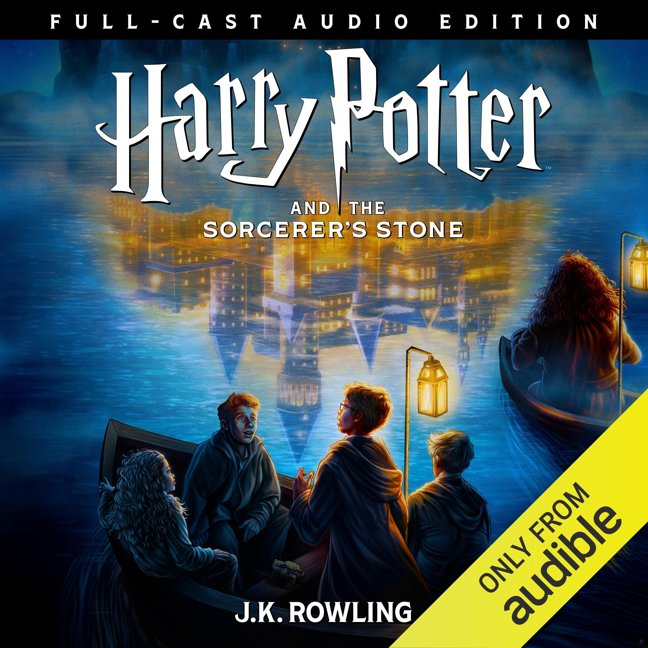
In pitch-perfect voices, Kathryn Stockett creates three extraordinary women whose determination to start a movement of their own forever changes a town, and the way women, mothers, daughters, caregivers, friends, view one another. A deeply moving novel filled with poignancy, humor, and hope, The Help is a timeless and universal story about the lines we abide by, and the ones we don't. (jacket flap)
…
Recommended by Twin Mummy And Daddy.
Twin Mummy And Daddy
I love a good book and The Help is exactly that! In fact it’s an amazing book! Read my review over on the blog today! https://t.co/efaf9aRGOK #TheHelp #KathrynStockett #bookreview #bookblogger #mummybloggers #daddybloggers #pbloggers #mbloggers @UKpbloggers @UKBloggers1 #books [source]
Cover unavailable
83
Room to Dream
David Lynch
4.0
The extraordinary, highly anticipated memoir from visionary filmmakerDavid Lynch
In this memoir, David Lynch, co-creator of Twin Peaks and writer and director of groundbreaking films like Eraserhead, The Elephant Man, Blue Velvet and Mulholland Drive, opens up about a lifetime of extraordinary creativity, the friendships he has made along the way and the struggles he has faced--sometimes successful, sometimes not--to bring his projects to fruition.
Part-memoir, part-biography, Room to Dream interweaves Lynch's own reflections on his life with the story of those times, as told by Kristine McKenna, drawing from extensive and explosive interviews with ninety of Lynch's friends, family members, actors, agents, musicians, and collaborators. Lynch responds to each recollection and reveals the inner story of the life behind the art.
…
Cover unavailable
84
The Great Gatsby
F. Scott Fitzgerald
4.0
A young man, newly rich, tries to recapture the past and win back his former love, despite the fact that she has married.
When he got to high school, the president said, his tastes changed and he learned to enjoy classics like “Of Mice and Men” and “The Great Gatsby.” [source]
Melinda and I really like this book. When we were first dating, she had a green light that she would turn on when her office was empty and it made sense for me to come over. [source]
Marvin Liao
Partner/500 Startups
For Non-Business, I'd have to say Dune (Herbert), Emergency (Strauss), The Great Gatsby (Fitzgerald) or Flint (L'Amour). I re-read these books every year because they are just so well written & great stories that I get new perspective & details every time I read them. [source]
Cover unavailable
85
Space Odyssey: Stanley Kubrick, Arthur C. Clarke, and the Making of a Masterpiece
Michael Benson
4.0
The definitive story of the making of 2001: A Space Odyssey, acclaimed today as one of the greatest films ever made, and of director Stanley Kubrick and writer Arthur C. Clarke—“a tremendous explication of a tremendous film….Breathtaking” (TheWashington Post).
Fifty years ago a strikingly original film had its premiere. Still acclaimed as one of the most remarkable and important motion pictures ever made, 2001: A Space Odyssey depicted the first contacts between humanity and extraterrestrial intelligence. The movie was the product of a singular collaboration between Stanley Kubrick and science fiction visionary Arthur C. Clarke. Fresh off the success of his cold war satire Dr. Strangelove, Kubrick wanted to make the first truly first-rate science fiction film. Drawing from Clarke’s ideas and with one of the author’s short stories as the initial inspiration, their bold vision benefited from pioneering special effects that still look extraordinary today, even in an age of computer-generated images.
In Space Odyssey, author, artist, and award-winning filmmaker Michael Benson “delivers expert inside stuff” (San Francisco Chronicle) from his extensive research of Kubrick’s and Clarke’s archives. He has had the cooperation of Kubrick’s widow, Christiane, and interviewed most of the key people still alive who worked on the film. Drawing also from other previously unpublished interviews, Space Odyssey provides a 360-degree view of the film from its genesis to its legacy, including many previously untold stories. And it features dozens of photos from the making of the film, most never previously published.
“At last! The dense, intense, detailed, and authoritative saga of the making of the greatest motion picture I’ve ever seen…Michael Benson has done the Cosmos a great service” (Academy Award-winning actor Tom Hanks).
…
Cover unavailable
86
The Haunted Screen: Expressionism in the German Cinema and the Influence of Max Reinhardt
Lotte Eisner
4.0
The Golden Age of German cinema began at the end of the First World War and ended shortly after the coming of sound. From The Cabinet of Dr. Caligari onwards the principal films of this period were characterized by two influences: literary Expressionism, and the innovations of the theatre directors of this period, in particular Max Reinhardt. This book demonstrates the connection between German Romanticism and the cinema through Expressionist writings. It discusses the influence of the theatre: the handling of crowds; the use of different levels, and of selective lighting on a predominately dark stage; the reliance on formalized gesture; the innovation of the intimate theatre. Against this background the principal films of the period are examined in detail. The author explains the key critical concepts of the time, and surveys not only the work of the great directors, such as Fritz Lang and F. W. Murnau, but also the contribution of their writers, cameramen, and designers. As The Times Literary Supplement wrote, 'Mme. Eisner is first and foremost a film critic, and one of the best in the world. She has all the necessary gifts.' And it described the original French edition of this book as 'one of the very few classics of writing on the film and arguably the best book on the cinema yet written.'
…
Cover unavailable
87
The Five C's of Cinematography: Motion Picture Filming Techniques
Joseph V Mascelli
4.0
With the aid of photographs and diagrams, this text concisely presents concepts and techniques of motion picture camerawork and the allied areas of film-making with which they interact with and impact. Included are discussions on: cinematic time and space; compositional rules; and types of editing.
Cover unavailable
88
Who the Devil Made It: Conversations with Legendary Film Directors
Peter Bogdanovich
4.0
Peter Bogdanovich, director, screenwriter, actor and critic, interviews sixteen legendary directors of the first hundred years of film - from Allan Dwan and Raoul Walsh to Leo McCarey, Alfred Hitchcock and Sidney Lumet. The conversations brought together in this book give us a history of the movies. They are the stories of pioneers who came to the picture business from many worlds. Some were adventurers (running away to sea; joining Pancho Villa) before finding their place in the movies. Some were football stars, some electrical engineers, lawyers, auto mechanics, airplane designers. Some were trained in silent movies (Dwan, Walsh, Lang, von Sternberg, Hitchcock). Many of them were men who lived to the hilt and brought to their work the residue of their earlier experiences.
…
Cover unavailable
89
Complicated Women: Sex and Power in Pre-Code Hollywood
MICK LASALLE
4.0
In the pre-Code Hollywood era, between 1929 and 1934, women in American cinema took lovers, had babies out of wedlock, got rid of cheating husbands, enjoyed their sexuality, led unapologetic careers, and, in general, acted the way many think women only acted after 1968.
Before then, women on screen had come in two varieties-sweet ingenue or vamp. Then two stars came along: Greta Garbo, who turned the femme fatale into a woman whose capacity for love and sacrifice made all other human emotions seem pale; and Norma Shearer, who succeeded in taking the ingenue to a place she'd never been: the bedroom. In their wake came a deluge of other complicated women-Marlene Dietrich, Jean Harlow, and Mae West, to name a few. Then, in July 1934, the draconian Production Code became the law in Hollywood and these modern women of the screen were banished, not to be seen again until the code was repealed three decades later.
A thorough survey and a tribute to these films, Complicated Women reveals how this was the true Golden Age of women's films.
…
Cover unavailable
90
Cinematic Storytelling
Jennifer Van Sijll
4.0
What the industry's most succcessful writers and directors have in common is that they have mastered the cinematic conventions specific to the medium.
Recommended by Andi Dumitrescu.
Andi Dumitrescu
My career path is made of several components, all of them main ones: sound engineering, film montage, movie directing, composition and vocal singing. That’s what I want to do in life and this is what makes me happy. For each of these, I’ve had book to help me along the way: The Eye is Quicker, by Richard D. Pepperman, Cut by Cut by Gael Chandler, The Technique of Film and Video Editing by Ken Dancyger, Directing by Mike Goodridge, Cinematic Storytelling by Jennifer Van Sijll, Sound for Picture by Tom Kenny and The Rock'n'Roll Singer's Survival Manual by Mark Baxter. [source]
Cover unavailable
91
The Great Movies II
Roger Ebert
4.0
Continuing the pitch-perfect critiques begun in The Great Movies, Roger Ebert's The Great Movies II collects 100 additional essays, each one of them a gem of critical appreciation and an amalgam of love, analysis, and history that will send readers back to films with a fresh set of eyes and renewed enthusiasm—or perhaps to an avid first-time viewing. Neither a snob nor a shill, Ebert manages in these essays to combine a truly populist appreciation for today's most important form of popular art with a scholar's erudition and depth of knowledge and a sure aesthetic sense. Once again wonderfully enhanced by stills selected by Mary Corliss, former film curator at the Museum of Modern Art, The Great Movies II is a treasure trove for film lovers of all persuasions, an unrivaled guide for viewers, and a book to return to again and again.
Films featured in The Great Movies II
12 Angry Men · The Adventures of Robin Hood · Alien · Amadeus · Amarcord · Annie Hall · Au Hasard, Balthazar · The Bank Dick · Beat the Devil · Being There · The Big Heat · The Birth of a Nation · The Blue Kite · Bob le Flambeur · Breathless · The Bridge on the River Kwai · Bring Me the Head of Alfredo García · Buster Keaton · Children of Paradise · A Christmas Story · The Color Purple · The Conversation · Cries and Whispers · The Discreet Charm of the Bourgeoisie · Don’t Look Now · The Earrings of Madame de . . . · The Fall of the House of Usher · The Firemen’s Ball · Five Easy Pieces · Goldfinger · The Good, the Bad and the Ugly · Goodfellas · The Gospel According to Matthew · The Grapes of Wrath · Grave of the Fireflies · Great Expectations · House of Games · The Hustler · In Cold Blood · Jaws · Jules and Jim · Kieslowski’s Three Colors Trilogy · Kind Hearts and Coronets · King Kong · The Last Laugh · Laura · Leaving Las Vegas · Le Boucher · The Leopard · The Life and Death of Colonel Blimp · The Manchurian Candidate · The Man Who Laughs · Mean Streets · Mon Oncle · Moonstruck · The Music Room · My Dinner with Andre · My Neighbor Totoro · Nights of Cabiria · One Flew Over the Cuckoo’s Nest · Orpheus · Paris, Texas · Patton · Picnic at Hanging Rock · Planes, Trains and Automobiles · The Producers · Raiders of the Lost Ark · Raise the Red Lantern · Ran · Rashomon · Rear Window · Rififi · The Right Stuff · Romeo and Juliet · The Rules of the Game · Saturday Night Fever · Say Anything · Scarface · The Searchers · Shane · Snow White and the Seven Dwarfs · Solaris · Strangers on a Train · Stroszek · A Sunday in the Country · Sunrise · A Tale of Winter · The Thin Man · This Is Spinal Tap ·Tokyo Story · Touchez Pas au Grisbi · Touch of Evil · The Treasure of the Sierra Madre · Ugetsu · Umberto D · Unforgiven · Victim · Walkabout · West Side Story · Yankee Doodle Dandy
…
Cover unavailable
92
Scorsese on Scorsese
David Thompson, Ian Christie, Michael Powell
4.0
The interviews with the director Martin Scorsese which make up this book reveal a man with an unbridled passion for film. This revised edition contains material on GoodFellas, Cape Fear, The Age of Innocence, and other projects up to Casino.
Cover unavailable
93
The Stanley Kubrick Archives
Alison Castle
4.0
The first book to explore Stanley Kubrick's archives is also the most comprehensive study of the filmmaker to date Part 1: The films In 1968, when Stanley Kubrick was asked to comment on the metaphysical significance of 2001: A Space Odyssey, he replied: ?It's not a message I ever intended to convey in words. 2001 is a nonverbal experience?. I tried to create a visual experience, one that bypasses verbalized pigeonholing and directly penetrates the subconscious with an emotional and philosophic content.? The philosophy behind Part I borrows from this line of thinking: from the opening sequence of Killer's Kiss to the final frames of Eyes Wide Shut, Kubrick's complete films will be presented chronologically and wordlessly via frame enlargements. A completely nonverbal experience. Part 2: The Creative Process Divided into chapters chronologically by film, Part 2 brings to life the creative process of Kubrick's filmmaking by presenting a remarkable collection of material from his archives, including photographs, props, posters, artwork, set designs, sketches, correspondence, documents, screenplays, drafts, notes, and shooting schedules. Accompanying the visual material are essays by noted Kubrick scholars, articles written by and about Kubrick, and a selection of Kubrick's best interviews. Special features ? Part 1 features 800 film stills scanned directly from the original prints and interpositives ? Part 2 presents about 800 items from the archives, most of which have never been published before ? essays by Kubrick scholars Gene D. Phillips, Michel Ciment, and Rodney Hill ? selected articles and essays, including interviews with and essays by Stanley Kubrick ? illustrated Kubrickchronology ? audio CD featuring a 70-minute 1966 interview of Stanley Kubrick by Jeremy Bernstein BONUS ? books in the first print run will each include a twelve-frame film strip from a 70mm print of 2001: A Space Odyssey owned by Stanley Kubrick Made in cooperation with Jan Harlan, Christiane Kubrick, and the Stanley Kubrick Estate. The editor: Alison Castle received a BA in philosophy from Columbia University and an MA in photography and film from New York University (NYU/International Center of Photography masters program). Castle also edited TASCHEN's Some Like it Hot. She lives in Paris, home of the world's best cinemas.
…
Cover unavailable
94
Kitchen Confidential: Adventures in the Culinary Underbelly
Anthony Bourdain
4.0
A deliciously funny, delectably shocking banquet of wild-but-true tales of life in the culinary trade from Chef Anthony Bourdain, laying out his more than a quarter-century of drugs, sex, and haute cuisine—now with all-new, never-before-published material.
New York Chef Tony Bourdain gives away secrets of the trade in his wickedly funny, inspiring memoir/expose. Kitchen Confidential reveals what Bourdain calls "twenty-five years of sex, drugs, bad behavior and haute cuisine."
…
Recommended by Eric Ripert, Jon Favreau, Catalina Penciu, and 2 others.
Eric Ripert
I love that Tony’s world in the kitchen was filled with pirate-like renegades when mine was peopled with regimented professionals. How eye-opening and entertaining to read about the other side! [source]
I'm a huge fan of personal stories and biographies with a touch of gastronomy like this one. [source]
Cover unavailable
95
My Autobiography
Charlie Chaplin
4.0
Chaplin’s heartfelt and hilarious autobiography tells the story of his childhood, the challenge of identifying and perfecting his talent, his subsequent film career and worldwide celebrity. In this, one of the very first celebrity memoirs, Chaplin displays all the charms, peculiarities and deeply-held beliefs that made him such an endearing and lasting character.
Re-issued as part of Melville House’s Neversink Library, My Autobiography offers dedicated Chaplin fans and casual admirers alike an astonishing glimpse into the the heart and the mind of Hollywood’s original genius maverick.
Take this unforgettable journey with the man George Bernard Shaw called “the only genius to come out of the movie industry” as he moves from his impoverished South London childhood to the heights of Hollywood wealth and fame; from the McCarthy-era investigations to his founding of United Artists to his “reverse migration” back to Europe, My Autobiography is a reading experience not to be missed.
…
Cover unavailable
96
Harry Potter and the Deathly Hallows (Harry Potter, #7)
J. K. Rowling, Mary GrandPré
4.0
Harry Potter is leaving Privet Drive for the last time. But as he climbs into the sidecar of Hagrid’s motorbike and they take to the skies, he knows Lord Voldemort and the Death Eaters will not be far behind.
The protective charm that has kept him safe until now is broken. But the Dark Lord is breathing fear into everything he loves. And he knows he can’t keep hiding.
To stop Voldemort, Harry knows he must find the remaining Horcruxes and destroy them.
He will have to face his enemy in one final battle. --jkrowling.com
…
Cover unavailable
97
Harry Potter and the Chamber of Secrets (Harry Potter, #2)
J.K. Rowling
4.0
The Dursleys were so mean and hideous that summer that all Harry Potter wanted was to get back to the Hogwarts School for Witchcraft and Wizardry. But just as he's packing his bags, Harry receives a warning from a strange, impish creature named Dobby who says that if Harry Potter returns to Hogwarts, disaster will strike
And strike it does. For in Harry's second year at Hogwarts, fresh torments and horrors arise, including an outrageously stuck-up new professor, Gilderoy Lockhart, a spirit named Moaning Myrtle who haunts the girls' bathroom, and the unwanted attentions of Ron Weasley's younger sister, Ginny.
But each of these seem minor annoyances when the real trouble begins, and someone -- or something -- starts turning Hogwarts students to stone. Could it be Draco Malfoy, a more poisonous rival than ever? Could it possibly be Hagrid, whose mysterious past is finally told? Or could it be the one everyone at Hogwarts most suspects . . . Harry Potter himself?
…
Cover unavailable
98
Lulu in Hollywood
Louise Brooks
4.0
Louise Brooks (1906-1985) is one of the most famous actresses of the silent era, renowned as much for her rebellion against the Hollywood system as for her performances in such influential films as Pandora’s Box and Diary of a Lost Girl. Eight autobiographical essays by Brooks, on topics ranging from her childhood in Kansas and her early days as a Denishawn and Ziegfeld Follies dancer to her friendships with Martha Graham, Charles Chaplin, W. C. Fields, Humphrey Bogart, and others are collected here.
Originally published: New York: Knopf, 1982.
…
Cover unavailable
99
The Princess Diarist
Carrie Fisher
4.0
The last book from beloved Hollywood icon Carrie Fisher, The Princess Diarist is an intimate, hilarious, and revealing recollection of what happened behind the scenes on one of the most famous film sets of all time, the first StarWars movie.
When Carrie Fisher discovered the journals she kept during the filming of the first Star Wars movie, she was astonished to see what they had preserved--plaintive love poems, unbridled musings with youthful naivet�, and a vulnerability that she barely recognized. Before her passing, her fame as an author, actress, and pop-culture icon was indisputable, but in 1977, Carrie Fisher was just a teenager with an all-consuming crush on her costar, Harrison Ford.
With these excerpts from her handwritten notebooks, The Princess Diarist is Fisher's intimate and revealing recollection of what happened on one of the most famous film sets of all time--and what developed behind the scenes. Fisher also ponders the joys and insanity of celebrity, and the absurdity of a life spawned by Hollywood royalty, only to be surpassed by her own outer-space royalty. Laugh-out-loud hilarious and endlessly quotable, The Princess Diarist brims with the candor and introspection of a diary while offering shrewd insight into one of Hollywood's most beloved stars.
…
Cover unavailable
100
Open Book
Jessica Simpson
4.0
Jessica reveals for the first time her inner monologue and most intimate struggles. Guided by the journals she's kept since age fifteen, and brimming with her unique humor and down-to-earth humanity, Open Book is as inspiring as it is entertaining.
This was supposed to be a very different book. Five years ago, Jessica Simpson was approached to write a motivational guide to living your best life. She walked away from the offer, and nobody understood why. The truth is that she didn’t want to lie.
Jessica couldn’t be authentic with her readers if she wasn’t fully honest with herself first.
Now, America’s Sweetheart, preacher’s daughter, pop phenomenon, reality TV pioneer, and the billion-dollar fashion mogul invites readers on a remarkable journey, examining a life that blessed her with the compassion to help others but also burdened her with an almost crippling need to please. Open Book is Jessica Simpson using her voice, heart, soul, and humor to share things she’s never shared before.
First celebrated for her voice, she became one of the most talked-about women in the world, whether for music and fashion, her relationship struggles, or as a walking blonde joke. But now, instead of being talked about, Jessica is doing the talking. Her book shares the wisdom and inspirations she’s learned and shows the real woman behind all the pop-culture clichés — “chicken or fish,” “Daisy Duke,” "football jinx," “mom jeans,” “sexual napalm…” and more. Open Book is an opportunity to laugh and cry with a close friend, one that will inspire you to live your best, most authentic life, now that she is finally living hers.
…
Recommended by Yashar Ali.
Yashar Ali
I love @JessicaSimpson and I love her new book It’s an honest and earnest memoir Lots of juicy tidbits of course, but she’s also heartbreakingly honest about the impact alcohol had on her life See the screenshot for my favorite part 🐘 https://t.co/6O8tOX0SEt https://t.co/LJ8vh6Ms46 [source]