We've ranked the best creativity books using expert recommendations, sales data, and millions of reader ratings. At Shortform, we know books. Our book guides are the best in the world. Learn why.
"Without The Artist's Way, there would have been no Eat, Pray, Love.” —Elizabeth Gilbert
A stunning gift edition of the powerful bestselling book on creativity.The Artist’s Way is one of the bestselling gift books of all time. Beautifully packaged with a slipcase and ribbon, this tenth anniversary gift edition is the ideal gift for loved ones engaged in creative lives.
Recommended by Anand C and Emma Gannon.
Anand C
STARTING FROM AUTHENTICITY: by observing, showing humility and being grateful - I started being open to what’s in the sub-conscious more (30+ sessions in). Speaking your truth is a powerful result of this. One great book to help explore this. https://t.co/sOAgAHhWsO [source]
Emma Gannon
Instead of all these fast paced books saying: ‘Here’s how to be amazing, here’s how to get a side hustle, here’s how to hustle, hustle, hustle.’ This is the total opposite. It’s about slowing right down and connecting with yourself again. [source]
Cover unavailable
2
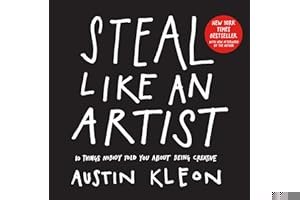
Steal Like an Artist: 10 Things Nobody Told You About Being Creative
You don’t need to be a genius, you just need to be yourself. That’s the message from Austin Kleon, a young writer and artist who knows that creativity is everywhere, creativity is for everyone. A manifesto for the digital age, Steal Like an Artist is a guide whose positive message, graphic look and illustrations, exercises, and examples will put readers directly in touch with their artistic side.
Part of ambition is modeling yourself after those you’d like to be like. Austin’s philosophy of ruthlessly stealing and remixing the greats might sound appalling at first but it is actually the essence of art. You learn by stealing, you become creative by stealing, you push yourself to be better by working with these materials. Austin is a fantastic artist, but most importantly he communicates the essence of writing and creating art better than anyone else I can think of. It is a manifesto for any young, creative person looking to make his mark. Pair up with Show Your Work which is also excellent. [source]
Breezy and fun and yes, scary. Scary because it calls your bluff. [source]
Andra Zaharia
While I was thinking of the best books to add to this short list, I realized that not even half of them are directly related to digital marketing. This is because I believe that the best marketers are people who understand human nature deeply and aim to bring out the best in it. Call me naive, but that’s how I see it. If I were to want to pursue a career in marketing, I’d read … Steal Like An Artist. [source]
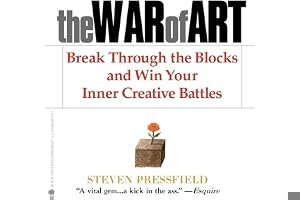
When a writer or an entrepreneur, or a manager, or an employee, or a…whatever…sits down to get to work, he or she is often met by “the resistance”. The excuses that come up: I can’t do this. I am too old. I don’t have enough money. I’m scared. “The War of Art” is the guide to getting through that block. The comfort zone is papered up and cemented shut by our excuses. Learn to blast through that wall. Because on the other side of the comfort zone are all the tools of success. [source]
Also hard to find on audio. I find Steve's voice to be fascinating, and even before I knew him, I was fascinated by listening to him speak his own work. The War of Art is one of those books, at least for me when I finally was exposed to it, I said, 'Why wasn't I informed? Why did it take this long for this book to land on my desk?'... You need to be clear with yourself about what you are afraid of, why you are afraid, and whether you care enough to dance with that fear because it will never go away. [source]
Adam Johnston
The last two pages of Steven Pressfield’s The War of Art gave me a swift kick in the ass. Do it or don’t do it. But if you don’t do it, you not only hurt yourself. You hurt your children. You hurt me. You hurt the planet. Pressfield wrote a beautiful book that you should read, but if nothing else, just read the last two pages of the book. I have them hanging on my wall in my office. [source]
"A must read for anyone hoping to live a creative life... I dare you not to be inspired to be brave, to be free, and to be curious.” —PopSugar
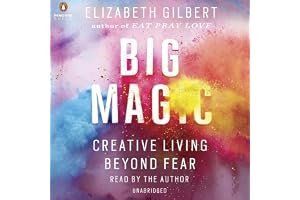
From the worldwide bestselling author of Eat Pray Love and City of Girls: the path to the vibrant, fulfilling life you’ve dreamed of
Readers of all ages and walks of life have drawn inspiration and empowerment from Elizabeth Gilbert’s books for years. Now this beloved author digs deep into her own generative process to share her wisdom and unique perspective about creativity. With profound empathy and radiant generosity, she offers potent insights into the mysterious nature of inspiration. She asks us to embrace our curiosity and let go of needless suffering. She shows us how to tackle what we most love, and how to face down what we most fear. She discusses the attitudes, approaches, and habits we need in order to live our most creative lives. Balancing between soulful spirituality and cheerful pragmatism, Gilbert encourages us to uncover the “strange jewels” that are hidden within each of us. Whether we are looking to write a book, make art, find new ways to address challenges in our work, embark on a dream long deferred, or simply infuse our everyday lives with more mindfulness and passion, Big Magic cracks open a world of wonder and joy.
I read a bunch of books on writing before I wrote my first book and the two that stuck with me were Stephen King’s book and “On Writing Well” by Zinsser (which is a bit on the technical side). I was also surprised by how much I enjoyed Elizabeth Gilbert’s “Big Magic.” [source]
Chelsea Frank
I read everything with an open mind, often challenging myself by choosing books with an odd perspective or religious/spiritual views. These books do not reflect my personal feelings but are books that helped shape my perspective on life, love, and happiness. [source]
Cover unavailable
5
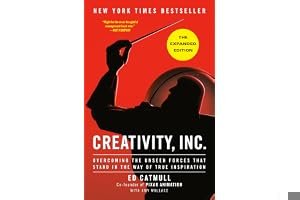
Creativity, Inc.: Overcoming the Unseen Forces That Stand in the Way of True Inspiration
“What does it mean to manage well?” From Ed Catmull, co-founder (with Steve Jobs and John Lasseter) of Pixar Animation Studios, comes an incisive book about creativity in business—sure to appeal to readers of Daniel Pink, Tom Peters, and Chip and Dan Heath. Creativity, Inc. is a book for managers who want to lead their employees to new heights, a manual for anyone who strives for originality, and the first-ever, all-access trip into the nerve center of Pixar Animation—into the meetings, postmortems, and “Braintrust” sessions where some of the most successful films in history are made. It is, at heart, a book about how to build a creative culture—but it is also, as Pixar co-founder and president Ed Catmull writes, “an expression of the ideas that I believe make the best in us possible.” For nearly twenty years, Pixar has dominated the world of animation, producing such beloved films as the Toy Story trilogy, Monsters, Inc., Finding Nemo, The Incredibles, Up, and WALL-E, which have gone on to set box-office records and garner thirty Academy Awards. The joyousness of the storytelling, the inventive plots, the emotional authenticity: In some ways, Pixar movies are an object lesson in what creativity really is. Here, in this book, Catmull reveals the ideals and techniques that have made Pixar so widely admired—and so profitable.
As a young man, Ed Catmull had a dream: to make the first computer-animated movie. He nurtured that dream as a Ph.D. student at the University of Utah, where many computer science pioneers got their start, and then forged a partnership with George Lucas that led, indirectly, to his founding Pixar with Steve Jobs and John Lasseter in 1986. Nine years later, Toy Story was released, changing animation forever. The essential ingredient in that movie’s success—and in the thirteen movies that followed—was the unique environment that Catmull and his colleagues built at Pixar, based on philosophies that protect the creative process and defy convention, such as:
• Give a good idea to a mediocre team, and they will screw it up. But give a mediocre idea to a great team, and they will either fix it or come up with something better. • If you don’t strive to uncover what is unseen and understand its nature, you will be ill prepared to lead. • It’s not the manager’s job to prevent risks. It’s the manager’s job to make it safe for others to take them. • The cost of preventing errors is often far greater than the cost of fixing them. • A company’s communication structure should not mirror its organizational structure. Everybody should be able to talk to anybody. • Do not assume that general agreement will lead to change—it takes substantial energy to move a group, even when all are on board.
This book is written by the founder of Pixar and is about his experience building a culture that fosters creativity. His theory is that people are fundamentally creative, but many forces stand in the way of people being able to do their best work. I love reading first-hand accounts about how people build great companies like Pixar and nurture innovation and creativity. This should be inspiring to anyone looking to do the same, and hopefully there will be lessons we can apply to connecting the world! [source]
No matter your circumstances, storytelling and creativity are two 'meta-skills' that can take your business and life to the next level. Ed is a master. [source]
Immensely helpful and illuminating to any aspiring writer, Stephen King’s critically lauded, classic bestseller shares the experiences, habits, and convictions that have shaped him and his work.
"Long live the King" hailed Entertainment Weekly upon publication of Stephen King’s On Writing. Part memoir, part master class by one of the bestselling authors of all time, this superb volume is a revealing and practical view of the writer’s craft, comprising the basic tools of the trade every writer must have. King’s advice is grounded in his vivid memories from childhood through his emergence as a writer, from his struggling early career to his widely reported, near-fatal accident in 1999—and how the inextricable link between writing and living spurred his recovery. Brilliantly structured, friendly and inspiring, On Writing will empower and entertain everyone who reads it—fans, writers, and anyone who loves a great story well told.
I read a bunch of books on writing before I wrote my first book and the two that stuck with me were Stephen King’s book and “On Writing Well” by Zinsser (which is a bit on the technical side). [source]
Alina Varlanuta
My professional path – copywriting – somehow intertwines with my unprofessional (hahaha) path – writing so I would recommend reading literature for both. Somehow reading and writing are two ways of doing the same thing: storytelling (even when you read you tell yourself a story in your own voice, bringing your personal emotion and empathy to the story you’re reading). The only difference is that when I’m reading, panic is far away from me, in a safe place. Nevertheless, the words below helped me rewrite and think twice before adding an exclamation point: On Writing by Stephen King. [source]
Andrew Cowan
Yes. It is a surprise to a lot of people that this book is so widely read on university campuses and so widely recommended by teachers of writing. Students love it. It’s bracing: there’s no nonsense. He says somewhere in the foreword or preface that it is a short book because most books are filled with bullshit and he is determined not to offer bullshit but to tell it like it is. [source]
Cover unavailable
7
Show Your Work! 10 Ways to Show Your Creativity and Get Discovered: 10 Ways to Share Your Creativity and Get Discovered
In his New York Times bestseller Steal Like an Artist, Austin Kleon showed readers how to unlock their creativity by stealing from the community of other movers and shakers. Now, in an even more forward-thinking and necessary book, he shows how to take that critical next step on a creative journey getting known. Show Your Work! is about why generosity trumps genius. It s about getting findable, about using the network instead of wasting time networking. It s not self-promotion, it s self-discovery let others into your process, then let them steal from you. Filled with illustrations, quotes, stories, and examples, Show Your Work! offers ten transformative rules for being open, generous, brave, productive. In chapters such as You Don t Have to Be a Genius; Share Something Small Every Day; and Stick Around, Kleon creates a user s manual for embracing the communal nature of creativity what he calls the ecology of talent. From broader life lessons about work (you can t find your voice if you don t use it) to the etiquette of sharing and the dangers of oversharing to the practicalities of Internet life (build a good domain name; give credit when credit is due), it s an inspiring manifesto for succeeding as any kind of artist or entrepreneur in the digital age."
…
Recommended by Ryan Holiday, Armina Sirbu, Benjamin Spall, and 5 others.
Part of ambition is modeling yourself after those you’d like to be like. Austin’s philosophy of ruthlessly stealing and remixing the greats might sound appalling at first but it is actually the essence of art. You learn by stealing, you become creative by stealing, you push yourself to be better by working with these materials. Austin is a fantastic artist, but most importantly he communicates the essence of writing and creating art better than anyone else I can think of. It is a manifesto for any young, creative person looking to make his mark. Pair up with Show Your Work which is also excellent. [source]
Armina Sirbu
Show your work - by Austin Kleon - is magical and I feel like reading it slowly, like enjoying a cappuccino. I need to let each "mini-chapter" sink in and take my time to also apply what I am reading there because it's "spot on" for my current projects. [source]
Benjamin Spall
Question: What five books would you recommend to youngsters interested in your professional path? Show Your Work! by Austin Kleon, … [source]
Major New York Times bestseller Winner of the National Academy of Sciences Best Book Award in 2012 Selected by the New York Times Book Review as one of the best books of 2011 A Globe and Mail Best Books of the Year 2011 Title One of The Economist's 2011 Books of the Year One of The Wall Street Journal's Best Nonfiction Books of the Year 2011 2013 Presidential Medal of Freedom Recipient
In the international bestseller, Thinking, Fast and Slow, Daniel Kahneman, the renowned psychologist and winner of the Nobel Prize in Economics, takes us on a groundbreaking tour of the mind and explains the two systems that drive the way we think. System 1 is fast, intuitive, and emotional; System 2 is slower, more deliberative, and more logical. The impact of overconfidence on corporate strategies, the difficulties of predicting what will make us happy in the future, the profound effect of cognitive biases on everything from playing the stock market to planning our next vacation—each of these can be understood only by knowing how the two systems shape our judgments and decisions. Engaging the reader in a lively conversation about how we think, Kahneman reveals where we can and cannot trust our intuitions and how we can tap into the benefits of slow thinking. He offers practical and enlightening insights into how choices are made in both our business and our personal lives—and how we can use different techniques to guard against the mental glitches that often get us into trouble. Winner of the National Academy of Sciences Best Book Award and the Los Angeles Times Book Prize and selected by The New York Times Book Review as one of the ten best books of 2011, Thinking, Fast and Slow is destined to be a classic.
A few months ago, Mr. Obama read “Thinking, Fast and Slow,” by Daniel Kahneman, about how people make decisions — quick, instinctive thinking versus slower, contemplative deliberation. For Mr. Obama, a deliberator in an instinctive business, this may be as instructive as any political science text. [source]
Captivating dive into human decision making, marred by inclusion of several/many? psychology studies that fail to replicate. Will stand as a cautionary tale? [source]
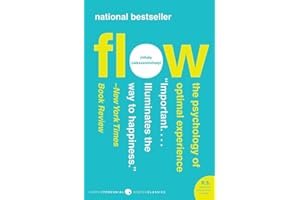
Psychologist Mihaly Csikszentmihalyi's famous investigations of "optimal experience" have revealed that what makes an experience genuinely satisfying is a state of consciousness called flow. During flow, people typically experience deep enjoyment, creativity, and a total involvement with life. In this new edition of his groundbreaking classic work, Csikszentmihalyi demonstrates the ways this positive state can be controlled, not just left to chance. Flow: The Psychology of Optimal Experience teaches how, by ordering the information that enters our consciousness, we can discover true happiness and greatly improve the quality of our lives.
While re-reading Mihaly Csikszentmihalyi’s wonderful book Flow: The Psychology of Optimal Experience, I came across this passage on working crossword puzzles. I think he could just as well be talking about making blackout poems: "There is much to be said in favor of this popular pastime, which in its best form resembles the ancient riddle contests. It is inexpensive and portable, its challenges can be finely graduated so that both novices and experts can enjoy it, and its solution produces a sense of pleasing order that gives one a satisfying feeling of accomplishment. It provides opportunities to experience a mild state of flow to many people who are stranded in airport lounges, who travel on commuter trains, or who are simply whiling away Sunday mornings." [source]
Tom Chatfield
The notion of flow is the idea that there is a state that is characterised by complete immersion in an activity, by a constant response to stimuli, and a perfect match between your ability and the challenge in front of you. [source]
Cover unavailable
10
Where Good Ideas Come from: The Natural History of Innovation
The printing press, the pencil, the flush toilet, the battery--these are all great ideas. But where do they come from? What kind of environment breeds them? What sparks the flash of brilliance? How do we generate the breakthrough technologies that push forward our lives, our society, our culture? Steven Johnson's answers are revelatory as he identifies the seven key patterns behind genuine innovation, and traces them across time and disciplines. From Darwin and Freud to the halls of Google and Apple, Johnson investigates the innovation hubs throughout modern time and pulls out the approaches and commonalities that seem to appear at moments of originality.
Quite good at giving examples of how you create environments that can encourage good ideas. [source]
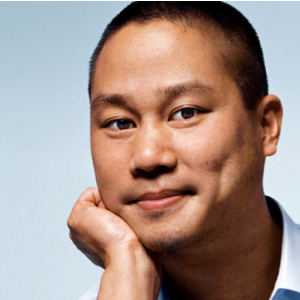
Tony Hsieh
CEO/Zappos.com
Author Steven Johnson argues in his 2010 book that innovation comes from the collision of ideas. This can happen when an individual working in isolation builds off years of existing knowledge to fuel his insights, or it can happen much more quickly when several creative types bounce ideas off each other in a community like Silicon Valley. This theory is one of the reasons why Hsieh decided to invest $350 million of his own money in 2010 into the Downtown Project, which is building a community of entrepreneurs in Zappos' neighborhood. [source]
Also add to this: “How We Got to Now” by Steven Johnson. Basically: don’t believe the myth of the lonely genius. Ideas come from a confluence of history, “the adjacent possible” specific geographic locations, etc. The connections Johnson makes are brilliant. For instance, The Gutenberg Press (which, in itself, was invented because of improvements in sewing looms), made everyone realize they had bad vision. So the science of lenses was created. So microscopes were eventually created. So germs were eventually discovered. So modern medical science was discovered. And so on. Johnson is a thinker and a linker and tells a good story. [source]
Cover unavailable
11
Bird By Bird: Some Instructions on Writing and Life
Anne Lamott
4.5
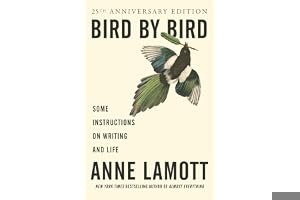
Thirty years ago my older brother, who was ten years old at the time, was trying to get a report on birds written that he'd had three months to write. It was due the next day. We were out at our family cabin in Bolinas, and he was at the kitchen table close to tears, surrounded by binder paper and pencils and unopened books on birds, immobilized by the hugeness of the task ahead. Then my father sat down beside him, put his arm around my brother's shoulder, and said, 'Bird by bird, buddy. Just take it bird by bird.'" "Superb writing advice... hilarious, helpful and provocative." -- "New York Times Book Review."
"A warm, generous and hilarious guide through the writer's world and its treacherous swamps." -- "Los Angeles Times."
"A gift to all of us mortals who write or ever wanted to write... sidesplittingly funny, patiently wise and alternately cranky and kind -- a reveille to get off our duffs and start writing "now," while we still can." -- "Seattle Times.
Bird by Bird is one of my absolute favorite books, and I gift it to everybody, which I should probably also give to startup founders, quite frankly. A lot of the lessons are the same. But you can get to your destination, even though you can only see 20 feet in front of you. [source]
It was wonderful to read these two provocative books of essays by two incredibly wise and compassionate women. … Anne Lamott’s book is ostensibly about the art of writing, but really it too is about life and how to tackle the problems, temptations and opportunities life throws at us. Both will make you think and both made me a better person this year. [source]
Cover unavailable
12
The Creative Habit: Learn It and Use It for Life
Twyla Tharp
4.4
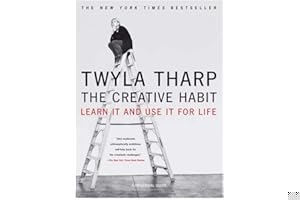
Creativity is not a gift from the gods, says Twyla Tharp, bestowed by some divine and mystical spark. It is the product of preparation and effort, and it's within reach of everyone who wants to achieve it. All it takes is the willingness to make creativity a habit, an integral part of your life: In order to be creative, you have to know how to prepare to be creative. In The Creative Habit, Tharp takes the lessons she has learned in her remarkable thirty-five-year career and shares them with you, whatever creative impulses you follow -- whether you are a painter, composer, writer, director, choreographer, or, for that matter, a businessperson working on a deal, a chef developing a new dish, a mother wanting her child to see the world anew.
When Tharp is at a creative dead end, she relies on a lifetime of exercises to help her get out of the rut, and The Creative Habit contains more than thirty of them to ease the fears of anyone facing a blank beginning and to open the mind to new possibilities.
Tharp's exercises are practical and immediately doable -- for the novice or expert. In "Where's Your Pencil?" she reminds us to observe the world -- and get it down on paper. In "Coins and Chaos," she provides the simplest of mental games to restore order and peace. In "Do a Verb," she turns your mind and body into coworkers. In "Build a Bridge to the Next Day," she shows how to clean your cluttered mind overnight.
To Tharp, sustained creativity begins with rituals, self-knowledge, harnessing your memories, and organizing your materials (so no insight is ever lost). Along the way she leads you by the hand through the painful first steps of scratching for ideas, finding the spine of your work, and getting out of ruts into productive grooves. In her creative realm, optimism rules. An empty room, a bare desk, a blank canvas can be energizing, not demoralizing. And in this inventive, encouraging book, Twyla Tharp shows us how to take a deep breath and begin!
…
Cover unavailable
13
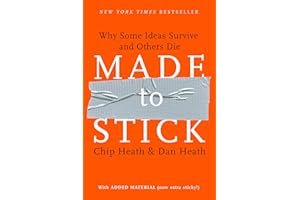
Made to Stick: Why Some Ideas Survive and Others Die
NEW YORK TIMES BESTSELLER - The instant classic about why some ideas thrive, why others die, and how to improve your idea's chances--essential reading in the "fake news" era.
Mark Twain once observed, "A lie can get halfway around the world before the truth can even get its boots on." His observation rings true: Urban legends, conspiracy theories, and bogus news stories circulate effortlessly. Meanwhile, people with important ideas--entrepreneurs, teachers, politicians, and journalists--struggle to make them "stick."
In Made to Stick, Chip and Dan Heath reveal the anatomy of ideas that stick and explain ways to make ideas stickier, such as applying the human scale principle, using the Velcro Theory of Memory, and creating curiosity gaps. Along the way, we discover that sticky messages of all kinds--from the infamous "kidney theft ring" hoax to a coach's lessons on sportsmanship to a vision for a new product at Sony--draw their power from the same six traits.
Made to Stick will transform the way you communicate. It's a fast-paced tour of success stories (and failures): the Nobel Prize-winning scientist who drank a glass of bacteria to prove a point about stomach ulcers; the charities who make use of the Mother Teresa Effect; the elementary-school teacher whose simulation actually prevented racial prejudice.
Provocative, eye-opening, and often surprisingly funny, Made to Stick shows us the vital principles of winning ideas--and tells us how we can apply these rules to making our own messages stick.
@conorgil My all-time favorite example of research communication is The Selfish Gene. Astonishingly effective at explaining deep research ideas/findings to a lay reader. A book with great advice: https://t.co/QD1sM2o0z6 (It isn't specific to research but still super valuable.) [source]
Bill Liao
The Book "Made to Stick" combined with "The Poetics" by Aristotle really helped me to see the power of telling great stories with surprises in them and every time I meet a start-up I can always make a contribution to their pitch. [source]
Cristian-Dragos Baciu
I highly recommend all the books written by the Heath brothers, especially Made to Stick: Why Some Ideas Survive And Others Die. This one's a must-read for marketers. The reason I enjoyed their work so much is because they offer real-life stories and insights that makes it so much easier for the reader to imprint that information in his mind [source]
Cover unavailable
14
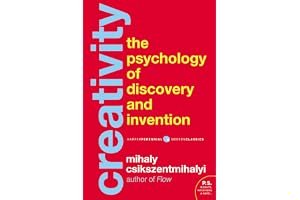
Creativity: Flow and the Psychology of Discovery and Invention
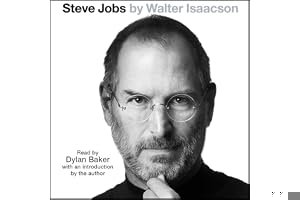
From the author of the bestselling biographies of Benjamin Franklin and Albert Einstein, this is the exclusive, New York Times bestselling biography of Apple co-founder Steve Jobs.
Based on more than forty interviews with Jobs conducted over two years—as well as interviews with more than a hundred family members, friends, adversaries, competitors, and colleagues—Walter Isaacson has written a riveting story of the roller-coaster life and searingly intense personality of a creative entrepreneur whose passion for perfection and ferocious drive revolutionized six industries: personal computers, animated movies, music, phones, tablet computing, and digital publishing.
At a time when America is seeking ways to sustain its innovative edge, and when societies around the world are trying to build digital-age economies, Jobs stands as the ultimate icon of inventiveness and applied imagination. He knew that the best way to create value in the twenty-first century was to connect creativity with technology. He built a company where leaps of the imagination were combined with remarkable feats of engineering.
Although Jobs cooperated with this book, he asked for no control over what was written nor even the right to read it before it was published. He put nothing off-limits. He encouraged the people he knew to speak honestly. And Jobs speaks candidly, sometimes brutally so, about the people he worked with and competed against. His friends, foes, and colleagues provide an unvarnished view of the passions, perfectionism, obsessions, artistry, devilry, and compulsion for control that shaped his approach to business and the innovative products that resulted.
Driven by demons, Jobs could drive those around him to fury and despair. But his personality and products were interrelated, just as Apple’s hardware and software tended to be, as if part of an integrated system. His tale is instructive and cautionary, filled with lessons about innovation, character, leadership, and values.
For Chesky, a source may come in the form of a biography of a business hero such as Steve Jobs or Walt Disney. His primary book source on management technique is Andy Grove’s High Output Management. [source]
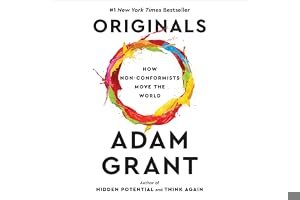
In Originals the author addresses the challenge of improving the world from the perspective of becoming original: choosing to champion novel ideas and values that go against the grain, battle conformity, and buck outdated traditions. How can we originate new ideas, policies, and practices without risking it all?
Using surprising studies and stories spanning business, politics, sports, and entertainment, Grant explores how to recognize a good idea, speak up without getting silenced, build a coalition of allies, choose the right time to act, and manage fear and doubt; how parents and teachers can nurture originality in children; and how leaders can build cultures that welcome dissent. Learn from an entrepreneur who pitches his start-ups by highlighting the reasons not to invest, a woman at Apple who challenged Steve Jobs from three levels below, an analyst who overturned the rule of secrecy at the CIA, a billionaire financial wizard who fires employees for failing to criticize him, and a TV executive who didn’t even work in comedy but saved Seinfeld from the cutting-room floor. The payoff is a set of groundbreaking insights about rejecting conformity and improving the status quo.
…
Recommended by Richard Branson, Arianna Huffington, Tony Hsieh, and 6 others.
Today is World Book Day, a wonderful opportunity to address this #ChallengeRichard sent in by Mike Gonzalez of New Jersey: Make a list of your top 65 books to read in a lifetime. [source]
Arianna Huffington
Founder/The Huffington Post
A fascinating, eye-opening read that will help you not just recognize your own unique gifts, but find the strength to challenge conventional wisdom to bring them to life. [source]
Tony Hsieh
CEO/Zappos.com
It's always interesting just to learn different perspectives, but to be careful of not trying to just say, 'Oh this book is the Bible, and we should copy that,' … Instead, I want us t0 take the parts that make sense for Zappos and try to incorporate them." [source]
Cover unavailable
17
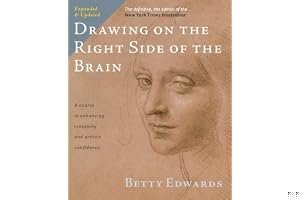
The New Drawing on the Right Side of the Brain
Betty Edwards
4.3
When Drawing on the Right Side of the Brain was first published in 1979, it hit the New York Times bestseller list within two weeks and stayed there for more than a year. In 1989, when Dr. Betty Edwards revised the book, it went straight to the Times list again. Now Dr. Edwards celebrates the twentieth anniversary of her classic book with a second revised edition.Over the last decade, Dr. Edwards has refined her material through teaching hundreds of workshops and seminars. Truly The New Drawing on the Right Side of the Brain, this edition includes:
the very latest developments in brain research new material on using drawing techniques in the corporate world and in education instruction on self-expression through drawing an updated section on using color detailed information on using the five basic skills of drawing for problem solving
…
Recommended by Adam Robinson and Adam Robinson.
Adam Robinson
One of five books that confirm there is far, far more in our unconscious mind than is dreamt of in our philosophy. [source]
Adam Robinson
One of five books that confirm there is far, far more in our unconscious mind than is dreamt of in our philosophy. [source]
Cover unavailable
18
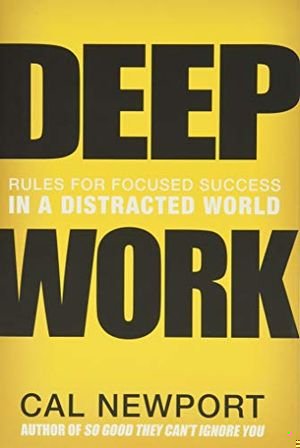
Deep Work: Rules for Focused Success in a Distracted World
One of the most valuable skills in our economy is becoming increasingly rare. If you master this skill, you'll achieve extraordinary results.
Deep work is the ability to focus without distraction on a cognitively demanding task. It's a skill that allows you to quickly master complicated information and produce better results in less time. Deep work will make you better at what you do and provide the sense of true fulfillment that comes from craftsmanship. In short, deep work is like a super power in our increasingly competitive twenty-first century economy. And yet, most people have lost the ability to go deep-spending their days instead in a frantic blur of e-mail and social media, not even realizing there's a better way.
In Deep Work, author and professor Cal Newport flips the narrative on impact in a connected age. Instead of arguing distraction is bad, he instead celebrates the power of its opposite. Dividing this book into two parts, he first makes the case that in almost any profession, cultivating a deep work ethic will produce massive benefits. He then presents a rigorous training regimen, presented as a series of four "rules," for transforming your mind and habits to support this skill.
A mix of cultural criticism and actionable advice, Deep Work takes the reader on a journey through memorable stories-from Carl Jung building a stone tower in the woods to focus his mind, to a social media pioneer buying a round-trip business class ticket to Tokyo to write a book free from distraction in the air-and no-nonsense advice, such as the claim that most serious professionals should quit social media and that you should practice being bored. Deep Work is an indispensable guide to anyone seeking focused success in a distracted world.
As automation and outsourcing reshape the workplace, what new skill do we need? The ability to do deep work. Cal Newport's exciting new book is an introduction and guide to the kind of intense concentration in a distraction-free environment that results in fast, powerful learning and performance. Think of it as calisthenics for your mind-and start your exercise program today. [source]
Marvin Liao
Partner/500 Startups
The Joy of Not Working (Zelinkski), Flash Foresight (Burrus), The Art of Worldly Wisdom (Gracian), Sapiens (Yuval), The End of Jobs (Pearson), Deep Work (Newport), Sovereign Individual (Davidson), The Fourth Economy (Davison) & The Monk & the Riddle (Komisar). Every single one of these books completely changed how I looked at everything in the world & literally pushed my life in a new direction. They were Paradigm Shifting as they say. (hate that word but it really was a Paradigm Shift for me). [source]
I've been a fan of Cal for a long time. His book So Good They Can't Ignore You is one of my favorites, but it's his new book that's probably had the biggest and most immediate impact on me. For those of you who enjoyed Tyler Cowen's Average is Over, you already know how important the ability to focus, be creative, and think at a high level is going to be in the future. This is a book that explains how to cultivate and protect that skill--the ability to do deep work. One thing I've already started doing since reading this book is recording the number of hours of deep work I do each day in my morning journal. It's a way of keeping a running tally and monitoring if I begin to get distracted or slow my pace. Anyway, great book! [source]
Cover unavailable
19
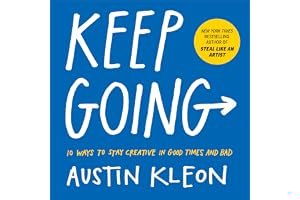
Keep Going: 10 Ways to Stay Creative in Good Times and Bad
In his previous books Steal Like an Artist and Show Your Work!, both New York Times bestsellers, Austin Kleon gave readers the keys to unlock their creativity and showed them how to become known. Now he offers his most inspiring work yet, with ten simple rules for how to stay creative, focused, and true to yourself—for life.
The creative life is not a linear journey to a finish line, it’s a loop—so find a daily routine, because today is the only day that matters. Disconnect from the world to connect with yourself—sometimes you just have to switch into airplane mode. Keep Going celebrates getting outdoors and taking a walk (as director Ingmar Bergman told his daughter, ”The demons hate fresh air”). Pay attention, and especially pay attention to what you pay attention to. Worry less about getting things done, and more about the worth of what you’re doing. Instead of focusing on making your mark, work to leave things better than you found them.
Keep Going and its timeless, practical, and ethical principles are for anyone trying to sustain a meaningful and productive life.
…
Recommended by Deborah Harkness and Todd Henry.
Deborah Harkness
For creative friends and family, I highly recommend @austinkleon's KEEP GOING: 10 WAYS TO STAY CREATIVE IN GOOD TIMES AND BAD. Love this book. It is inspirational and practical! https://t.co/hbxTcV3F7Q [source]
Todd Henry
Such a phenomenal guy and it's a great, great book. [source]
You can go after the job you want—and get it! You can take the job you have—and improve it! You can take any situation—and make it work for you!
Dale Carnegie’s rock-solid, time-tested advice has carried countless people up the ladder of success in their business and personal lives. One of the most groundbreaking and timeless bestsellers of all time, How to Win Friends & Influence People will teach you:
-Six ways to make people like you -Twelve ways to win people to your way of thinking -Nine ways to change people without arousing resentment
And much more! Achieve your maximum potential—a must-read for the twenty-first century with more than 15 million copies sold!
…
Recommended by Dave Ramsey, Daymond John, Dustin Moskovitz, and 58 others.
In this stunning new book, Malcolm Gladwell takes us on an intellectual journey through the world of "outliers"--the best and the brightest, the most famous and the most successful. He asks the question: what makes high-achievers different?
His answer is that we pay too much attention to what successful people are like, and too little attention to where they are from: that is, their culture, their family, their generation, and the idiosyncratic experiences of their upbringing. Along the way he explains the secrets of software billionaires, what it takes to be a great soccer player, why Asians are good at math, and what made the Beatles the greatest rock band.
Gladwell is not the first person to come up with the 10,000 hour rule. Nor is he the first person to document what it takes to become the best in the world at something. But his stories are so great as he explains these deep concepts. How did the Beatles become the best? Why are professional hockey players born in January, February and March? And so on. [source]
Alex Circei
Question: What five books would you recommend to young people interested in your career path & why? Answer: Screw It, Let's Do It: Lessons In Life by Richard Branson Outliers: The Story of Success by Malcolm Gladwell Start With Why: How Great Leaders Inspire Everyone To Take Action by Simon Sinek The Hard Thing About Hard Things: Building a Business When There Are No Easy Answers by Ben Horowitz Rich Dad Poor Dad: What the Rich Teach Their Kids About Money That the Poor and Middle Class Do Not! by Robert T. Kiyosaki [source]
In this candid and riveting memoir, for the first time ever, Nike founder and CEO Phil Knight shares the inside story of the company’s early days as an intrepid start-up and its evolution into one of the world’s most iconic, game-changing, and profitable brands.
In 1962, fresh out of business school, Phil Knight borrowed $50 from his father and created a company with a simple mission: import high-quality, low-cost athletic shoes from Japan. Selling the shoes from the trunk of his lime green Plymouth Valiant, Knight grossed $8,000 his first year. Today, Nike’s annual sales top $30 billion. In an age of startups, Nike is the ne plus ultra of all startups, and the swoosh has become a revolutionary, globe-spanning icon, one of the most ubiquitous and recognizable symbols in the world today.
But Knight, the man behind the swoosh, has always remained a mystery. Now, for the first time, in a memoir that is candid, humble, gutsy, and wry, he tells his story, beginning with his crossroads moment. At 24, after backpacking around the world, he decided to take the unconventional path, to start his own business—a business that would be dynamic, different.
Knight details the many risks and daunting setbacks that stood between him and his dream—along with his early triumphs. Above all, he recalls the formative relationships with his first partners and employees, a ragtag group of misfits and seekers who became a tight-knit band of brothers. Together, harnessing the transcendent power of a shared mission, and a deep belief in the spirit of sport, they built a brand that changed everything.
This memoir, by the co-founder of Nike, is a refreshingly honest reminder of what the path to business success really looks like: messy, precarious, and riddled with mistakes. I’ve met Knight a few times over the years. He’s super nice, but he’s also quiet and difficult to get to know. Here Knight opens up in a way few CEOs are willing to do. I don’t think Knight sets out to teach the reader anything. Instead, he accomplishes something better. He tells his story as honestly as he can. It’s an amazing tale. [source]
I've known Phil Knight since I was a kid, but I didn't really know him until I opened this beautiful, startling, intimate book. And the same goes for Nike. I've worn the gear with pride, but I didn't realize the remarkable saga of innovation and survival and triumph that stood behind every swoosh. Candid, funny, suspenseful, literary - this is a memoir for people who love sport, but above all it's a memoir for people who love memoirs. [source]
Cover unavailable
23
Writing Down the Bones: Freeing the Writer Within
Natalie Goldberg
4.3
With insight, humor, and practicality, Natalie Goldberg inspires writers and would-be writers to take the leap into writing skillfully and creatively. She offers suggestions, encouragement, and solid advice on many aspects of the writer’s craft: on writing from “first thoughts” (keep your hand moving, don’t cross out, just get it on paper), on listening (writing is ninety percent listening; the deeper you listen, the better you write), on using verbs (verbs provide the energy of the sentence), on overcoming doubts (doubt is torture; don’t listen to it)—even on choosing a restaurant in which to write. Goldberg sees writing as a practice that helps writers comprehend the value of their lives. The advice in her book, provided in short, easy-to-read chapters with titles that reflect the author’s witty approach (“Writing Is Not a McDonald’s Hamburger,” “Man Eats Car,” “Be an Animal”), will inspire anyone who writes—or who longs to.
…
Recommended by Brie Code.
Brie Code
@gamesandbowties Oh I love that book! And am intrigued by mystic poetry and would love to see it on Twitter 😇 [source]
Cover unavailable
24
Creative Confidence: Unleashing the Creative Potential Within Us All
Tom Kelley, David Kelley
4.3
IDEO founder and Stanford d.school creator David Kelley and his brother Tom Kelley, IDEO partner and the author of the bestselling The Art of Innovation, have written a powerful and compelling book on unleashing the creativity that lies within each and every one of us.
Too often, companies and individuals assume that creativity and innovation are the domain of the "creative types." But two of the leading experts in innovation, design, and creativity on the planet show us that each and every one of us is creative. In an incredibly entertaining and inspiring narrative that draws on countless stories from their work at IDEO, the Stanford d.school, and with many of the world's top companies, David and Tom Kelley identify the principles and strategies that will allow us to tap into our creative potential in our work lives, and in our personal lives, and allow us to innovate in terms of how we approach and solve problems. It is a book that will help each of us be more productive and successful in our lives and in our careers.
…
Recommended by Cristina Riesen, Kimberly Gloria Choi, and Robert Katai.
Cristina Riesen
First, a word on career paths. In time, I realised that career paths are like one-way streets. Magic happens in unexplored territories. Plus life is how you choose to live every moment, every day. So today, rather than building a career, I prefer to make lateral moves in life, working with great people and being part of ambitious projects impacting the world. There are a few books that got me here: … Tom and David Kelley "Creative Confidence". [source]
Kimberly Gloria Choi
I read about this during my first job in a startup (luxola) now Sephora SEA as a designer. This is before I started my small business - www.marchbabycollective.com. I have always wanted to do something on my own besides my full time job, it’s always a great way to express yourself with other designing task, you know, just to keep your creative juices flowing. The Stanford D. School and IDEO U have always interested me, and here I came across this book that was written by David Kelley. [source]
Robert Katai
Another book that has helped me in a specific moment was “Creative Confidence”. I don’t remember which part helped me, but I can remember that I had some mornings in which I woke up at 5 or 6 o'clock in the morning just to start my day reading something creative. [source]
Cover unavailable
25
Quiet: The Power of Introverts in a World That Can't Stop Talking
At least one-third of the people we know are introverts. They are the ones who prefer listening to speaking; who innovate and create but dislike self-promotion; who favor working on their own over working in teams. It is to introverts—Rosa Parks, Chopin, Dr. Seuss, Steve Wozniak—that we owe many of the great contributions to society.
In Quiet, Susan Cain argues that we dramatically undervalue introverts and shows how much we lose in doing so. She charts the rise of the Extrovert Ideal throughout the twentieth century and explores how deeply it has come to permeate our culture. She also introduces us to successful introverts—from a witty, high-octane public speaker who recharges in solitude after his talks, to a record-breaking salesman who quietly taps into the power of questions. Passionately argued, superbly researched, and filled with indelible stories of real people, Quiet has the power to permanently change how we see introverts and, equally important, how they see themselves.
Now with Extra Libris material, including a reader’s guide and bonus content.
Leaders needn’t be the loudest. Leadership is not about theater. It’s not about dominance. It is about putting the lives of others before any other priority. In Quiet, Cain affirms to a good many of us who are introverts by nature that we needn’t try to be extroverts if we want to lead. Simply being ourselves is more important — and more effective. [source]
Danielle Morrill
Co-founder/Mattermark
Anyway, maybe you’re like me and figuring this out for yourself. It’s a good book for introverts and for those who love them [source]
Probably half the world is introverts. Maybe more. It’s not an easy life to live. I sometimes have that feeling in a room full of people, “uh-oh. I just shut down. I can’t talk anymore and there’s a lock on my mouth and this crowd threw away the key.” Do you ever get that feeling? Please? I hope you do. Let’s try to lock eyes at the party. “Quiet” shows the reader how to unlock the secret powers that probably half the world needs to unlock. [source]
Cover unavailable
26
Art and Fear: Observations on the Perils (and Rewards) of Artmaking
David Bayles, Ted Orland
4.3
"This is a book about making art. Ordinary art. Ordinary art means something like: all art not made by Mozart. After all, art is rarely made by Mozart-like people; essentially-statistically speaking-there aren't any people like that. Geniuses get made once-a-century or so, yet good art gets made all the time, so to equate the making of art with the workings of genius removes this intimately human activity to a strangely unreachable and unknowable place. For all practical purposes making art can be examined in great detail without ever getting entangled in the very remote problems of genius." --from the Introduction
The authors believe that art can be taught, and moreover learned, and the traps that waylay our efforts can be avoided or managed with some cheerful guidance. [source]
Even the smartest among us can feel inept as we fail to figure out which light switch or oven burner to turn on, or whether to push, pull, or slide a door. The fault, argues this ingenious—even liberating—book, lies not in ourselves, but in product design that ignores the needs of users and the principles of cognitive psychology. The problems range from ambiguous and hidden controls to arbitrary relationships between controls and functions, coupled with a lack of feedback or other assistance and unreasonable demands on memorization. The Design of Everyday Things shows that good, usable design is possible. The rules are simple: make things visible, exploit natural relationships that couple function and control, and make intelligent use of constraints. The goal: guide the user effortlessly to the right action on the right control at the right time.
In this entertaining and insightful analysis, cognitive scientist Don Norman hails excellence of design as the most important key to regaining the competitive edge in influencing consumer behavior. Now fully expanded and updated, with a new introduction by the author, The Design of Everyday Things is a powerful primer on how—and why—some products satisfy customers while others only frustrate them.
…
Recommended by Andrew Chen, Marissa Mayer, Nir Eyal, and 23 others.
Grey Baker
I mainly read to decompress and change my state of mind, so it’s hard to point to an insight I read that helped me. Reading fiction has pulled me out of a bad mood more times than I can count, though, and always reenergises me to attack problems that had stumped me again. That said, I read and loved Norman Norman’s “The Design of Everyday Things”, and it’s helped me think through design problems ever since. [source]
Julia Enthoven
For people interested in designing or building software products: The Design of Everyday Things by Don Norman and The Lean Product Playbook by Dan Olsen. Both books have informed my product sense and helped me make decisions about great UX. [source]
Kaci Lambe
These three books are about how people actually use design in their lives. They helped me understand this very basic idea: There are no dumb users, only bad designers. Take the time to create based on how your design will be interacted with. Test it. Iterate. That's how you become a good designer. [source]
Most business books give you the same old advice: Write a business plan, study the competition, seek investors, yadda yadda. If you're looking for a book like that, put this one back on the shelf.
Rework shows you a better, faster, easier way to succeed in business. Read it and you'll know why plans are actually harmful, why you don't need outside investors, and why you're better off ignoring the competition. The truth is, you need less than you think. You don't need to be a workaholic. You don't need to staff up. You don't need to waste time on paperwork or meetings. You don't even need an office. Those are all just excuses.
What you really need to do is stop talking and start working. This book shows you the way. You'll learn how to be more productive, how to get exposure without breaking the bank, and tons more counterintuitive ideas that will inspire and provoke you.
With its straightforward language and easy-is-better approach, Rework is the perfect playbook for anyone who’s ever dreamed of doing it on their own. Hardcore entrepreneurs, small-business owners, people stuck in day jobs they hate, victims of "downsizing," and artists who don’t want to starve anymore will all find valuable guidance in these pages.
Unperturbed by conventional wisdom, the authors start fresh and rewrite the rules of business. Their approach turns out to be as successful as it is counter-intuitive. [source]
If given a choice between investing in someone who has read Rework or has an MBA, I'm investing in Rework every time. This is a must read for every entrepreneur. [source]
Tony Hsieh
CEO/Zappos.com
The wisdom in these pages is edgy yet simple, straightforward, and proven. Read this book multiple times to help give you the courage you need to get out there and make something great. [source]
Cover unavailable
29
Manage Your Day-to-Day: Build Your Routine, Find Your Focus, and Sharpen Your Creative Mind
Do you work at a breakneck pace all day, only to find that you haven't accomplished the most important things on your agenda by the time you leave the office? With wisdom from 20 leading creative minds, 99U's Manage Your Day-to-Day will equip you with pragmatic insights for using your time wisely and making your best work. We'll show you how to build a rock-solid daily routine, field a constant barrage of messages, find focus amidst chaos, and carve out the time you need to do the work that matters. Contributors include Scott Belsky, Mark McGuinness, Gretchen Rubin, Seth Godin, Tony Schwartz, Leo Babauta, Cal Newport, Christian Jarrett, Dan Ariely, Erin Rooney Doland, Aaron Dignan, Lori Deschene, Tiffany Shlain, Linda Stone, James Victore, Todd Henry, Scott McDowell, Stefan Sagmeister, Elizabeth Grace Saunders, and Steven Pressfield.
A time management book. Personally, I like Manage your day-to-day by 99U. It is an extremely quick read, but provides some good insights for those who need some basic guidance regarding time management, especially in creative fields. [source]
Irina Marinescu
Product Managers can easily fill an entire day with work and never get to do any meaningful strategy thinking or feature viability research etc. Emails and meetings can quickly get out of hand. This book doesn’t provide a magical never-heard-of recipe, but its structure, the clear message, and actionable takeaways will do the trick. It helps to return to it from time to time. One advice I found to work well for me is Unnecessary Creation from Manage Your Day-to-Day. Though aimed at creative jobs, it helped me exercise my skills, find new tools and improve my stream of thought. [source]
Cover unavailable
30
Imagine: How Creativity Works
Jonah Lehrer
4.2
The profound mysteries of creative thought have long intimidated the world's finest brains. How do you measure the imagination? How do you quantify an epiphany? These daunting questions led researchers to neglect the subject for hundreds of years. In Jonah Lehrer's ambitious and enthralling new book, we go in search of the epiphany. Shattering the myth of creative 'types', Lehrer shows how new research is deepening our understanding of the human imagination. Creativity is not a 'gift' that only some possess. It's a term for a variety of distinct thought processes that we can all learn to use more effectively. Some acts of imagination are best done sipping espresso in a crowded cafe, while others require long walks in a quiet park. Lehrer helps us fit our creative strategies to the task at hand. The journey begins with the fluttering of neurons in the prefrontal cortex, before moving out to consider how this new science can also make neighbourhoods more vibrant, companies more productive and schools more effective. We'll learn about Bob Dylan's writing habits and the drug addiction of poets. We'll see why Elizabethan England experienced a creative explosion, and how Pixar designed its office space to get the most out of its talent. Collapsing the layers separating the neuron from the finished symphony, Imagine reveals the deep inventiveness of the human mind and its essential role in our increasingly complex world.
…
Cover unavailable
31
Predictably Irrational: The Hidden Forces That Shape Our Decisions
Why do our headaches persist after taking a one-cent aspirin but disappear when we take a 50-cent aspirin?
Why does recalling the Ten Commandments reduce our tendency to lie, even when we couldn't possibly be caught?
Why do we splurge on a lavish meal but cut coupons to save twenty-five cents on a can of soup?
Why do we go back for second helpings at the unlimited buffet, even when our stomachs are already full?
And how did we ever start spending $4.15 on a cup of coffee when, just a few years ago, we used to pay less than a dollar?
When it comes to making decisions in our lives, we think we're in control. We think we're making smart, rational choices. But are we?
In a series of illuminating, often surprising experiments, MIT behavioral economist Dan Ariely refutes the common assumption that we behave in fundamentally rational ways. Blending everyday experience with groundbreaking research, Ariely explains how expectations, emotions, social norms, and other invisible, seemingly illogical forces skew our reasoning abilities.
Not only do we make astonishingly simple mistakes every day, but we make the same "types" of mistakes, Ariely discovers. We consistently overpay, underestimate, and procrastinate. We fail to understand the profound effects of our emotions on what we want, and we overvalue what we already own. Yet these misguided behaviors are neither random nor senseless. They're systematic and predictable--making us "predictably" irrational.
From drinking coffee to losing weight, from buying a car to choosing a romantic partner, Ariely explains how to break through these systematic patterns of thought to make better decisions. "Predictably Irrational" will change the way we interact with the world--one small decision at a time.
…
Recommended by Max Levchin, Vinod Khosla, Vinod Khosla, and 22 others.
Max Levchin
Co-founder/PayPal, CEO/Affirm, Investor
Max Levchin recommended this book as an answer to "What business books would you advise young entrepreneurs read?" [source]
Andra Zaharia
'While I was thinking of the best books to add to this short list, I realized that not even half of them are directly related to digital marketing. This is because I believe that the best marketers are people who understand human nature deeply and aim to bring out the best in it. Call me naive, but that’s how I see it. If I were to want to pursue a career in marketing, I’d read … Predictably Irrational. [source]
Chris Goward
Here are some of the books that have been very impactful for me, or taught me a new way of thinking: … Predictably Irrational. [source]
The first practical explanation of how creativity works, this results-oriented bestseller trains listeners to move beyond a "vertical" mode of thought to tap the potential of lateral thinking.
Recommended by Andra Zaharia, Faisal Amin, and Tudor Mihailescu.
Andra Zaharia
While I was thinking of the best books to add to this short list, I realized that not even half of them are directly related to digital marketing. This is because I believe that the best marketers are people who understand human nature deeply and aim to bring out the best in it. Call me naive, but that’s how I see it. If I were to want to pursue a career in marketing, I’d read … Lateral Thinking. [source]
Faisal Amin
I believe reading is a habit that must be inculcated irrespective of the career paths. Below mentioned are a few of my favourites that can hopefully bring wisdom to aspiring entrepreneurs. Lateral thinking by Edward de Bono 7 habits of highly effective people by Stephen R. Covey The lean startup by Eric Ries Rich Dad Poor Dad by Robert Kiyosaki Freakonomics by Stephen J. Dubner and Steven Levitt [source]
Tudor Mihailescu
Beyond communication, CFO needs to learn to influence effectively, get people to contribute so that they buy in. Again, this is a vast space, some of my personal favourites being Who Moved My Cheese (Johnson), Lateral Thinking (de Bono), The Art of Asking (Palmer). [source]
A former international hostage negotiator for the FBI offers a new, field-tested approach to high-stakes negotiations—whether in the boardroom or at home.
After a stint policing the rough streets of Kansas City, Missouri, Chris Voss joined the FBI, where his career as a hostage negotiator brought him face-to-face with a range of criminals, including bank robbers and terrorists. Reaching the pinnacle of his profession, he became the FBI’s lead international kidnapping negotiator. Never Split the Difference takes you inside the world of high-stakes negotiations and into Voss’s head, revealing the skills that helped him and his colleagues to succeed where it mattered most: saving lives. In this practical guide, he shares the nine effective principles—counter-intuitive tactics and strategies—you too can use to become more persuasive in both your professional and personal life.
Life is a series of negotiations you should be prepared for: buying a car; negotiating a salary; buying a home; renegotiating rent; deliberating with your partner. Taking emotional intelligence and intuition to the next level, Never Split the Difference gives you the competitive edge in any discussion.
Emphasizes the importance of emotional intelligence without sacrificing deal-making power. From the pen of a former hostage negotiator—someone who couldn’t take no for an answer—which makes it fascinating reading. But it’s also eminently practical. In these pages, you will find the techniques for getting the deal you want. [source]
This book blew my mind. It’s a riveting read, full of instantly actionable advice—not just for high-stakes negotiations, but also for handling everyday conflicts at work and at home. [source]
Cover unavailable
34
Start with Why: How Great Leaders Inspire Everyone to Take Action
Why are some people and organizations more innovative, more influential, and more profitable than others? Why do some command greater loyalty from customers and employees alike? Even among the successful, why are so few able to repeat their success over and over?
People like Martin Luther King Jr., Steve Jobs, and the Wright Brothers might have little in common, but they all started with why. It was their natural ability to start with why that enabled them to inspire those around them and to achieve remarkable things.
In studying the leaders who've had the greatest influence in the world, Simon Sinek discovered that they all think, act, and communicate in the exact same way—and it's the complete opposite of what everyone else does. Sinek calls this powerful idea The Golden Circle, and it provides a framework upon which organizations can be built, movements can be lead, and people can be inspired. And it all starts with WHY.
Any organization can explain what it does; some can explain how they do it; but very few can clearly articulate why. WHY is not money or profit—those are always results. WHY does your organization exist? WHY does it do the things it does? WHY do customers really buy from one company or another? WHY are people loyal to some leaders, but not others?
Starting with WHY works in big business and small business, in the nonprofit world and in politics. Those who start with WHY never manipulate, they inspire. And the people who follow them don't do so because they have to; they follow because they want to.
Drawing on a wide range of real-life stories, Sinek weaves together a clear vision of what it truly takes to lead and inspire. This book is for anyone who wants to inspire others or who wants to find someone to inspire them.
Today is World Book Day, a wonderful opportunity to address this #ChallengeRichard sent in by Mike Gonzalez of New Jersey: Make a list of your top 65 books to read in a lifetime. [source]
The basis of this book is so important to anyone looking to increase their influence, profits or impact. People won't truly buy into a product, service, movement, or idea until they understand the WHY behind it. When you start with the why, everything else falls into place. This book is so impactful, I consider it required reading. [source]
Tony Hsieh
CEO/Zappos.com
Over the years he’s recommended well over 20 business books — including his own, the 2010 bestseller Delivering Happiness and you can always find what he’s currently reading atop his cluttered desk. Start with Why is amogst those titles. [source]
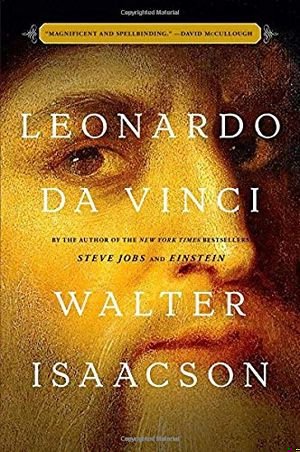
Based on thousands of pages from Leonardo's astonishing notebooks and new discoveries about his life and work, Walter Isaacson weaves a narrative that connects his art to his science. He shows how Leonardo's genius was based on skills we can improve in ourselves, such as passionate curiosity, careful observation, and an imagination so playful that it flirted with fantasy. He produced the two most famous paintings in history, The Last Supper and the Mona Lisa. But in his own mind, he was just as much a man of science and technology. With a passion that sometimes became obsessive, he pursued innovative studies of anatomy, fossils, birds, the heart, flying machines, botany, geology, and weaponry. His ability to stand at the crossroads of the humanities and the sciences, made iconic by his drawing of Vitruvian Man, made him history's most creative genius
I think Leonardo was one of the most fascinating people ever. Although today he’s best known as a painter, Leonardo had an absurdly wide range of interests, from human anatomy to the theater. Isaacson does the best job I’ve seen of pulling together the different strands of Leonardo’s life and explaining what made him so exceptional. A worthy follow-up to Isaacson’s great biographies of Albert Einstein and Steve Jobs. [source]
Microsoft CEO has plunged into what must be an advance copy of Leonardo da Vinci by Walter Isaacson, who has written biographies of Steve Jobs, Albert Einstein and Ben Franklin. Isaacson’s biography is based on the Renaissance master’s personal notebooks, so you know we’re going to be taken into the creative mind of the genius. [source]
On Writing Well has been praised for its sound advice, its clarity and the warmth of its style. It is a book for everybody who wants to learn how to write or who needs to do some writing to get through the day, as almost everybody does in the age of e-mail and the Internet. Whether you want to write about people or places, science and technology, business, sports, the arts or about yourself in the increasingly popular memoir genre, On Writing Well offers you fundamental priciples as well as the insights of a distinguished writer and teacher. With more than a million copies sold, this volume has stood the test of time and remains a valuable resource for writers and would-be writers.
I read a bunch of books on writing before I wrote my first book and the two that stuck with me were Stephen King’s book and “On Writing Well” by Zinsser (which is a bit on the technical side). [source]
Tim O'Reilly
Founder/O'Reilly Media
On Writing Well, by William Zinsser. I wouldn't say this book influenced me, since my principles of writing were established long before I read it. However, it does capture many things that I believe about effective writing. [source]
One of the most popular personal development and self-improvement books of all time, Think and Grow Rich has sold over 100 million copies worldwide since its first publication during the Great Depression. In this hardcover edition, Napoleon Hill presents a "Philosophy of Achievement" in 13 principles drawn from the success stories of such greats as Andrew Carnegie, Henry Ford, Thomas Edison, and other millionaires of his time.
Think and Grow Rich reveals the secrets that can bring you fortune. By suppressing negative thoughts and keeping your focus on the long term, you can find true and lasting success. Napoleon Hill details his philosophy through the following 13 principles:
Desire Faith Autosuggestion Specialized Knowledge Imagination Organized Planning Decision Persistence Power of the Master Mind The Mystery of Sex Transmutation The Subconscious Mind The Brain The Sixth Sense Follow the steps outlined here, and you may just find the path to your own personal fortune.
For anyone interested in my career path, I’d recommend books in various genres. On a real practical level, I’d certainly recommend reading any and all plant/mushroom/tree/ecology/nature books you can acquire. It’s even more helpful to read the books that pertain specifically to your ecosystem and bioregion. Additionally, I’d also recommend reading a plethora of business and marketing books — both old and new alike. Think And Grow Rich by Napoleon Hill, Crush It! by Gary Vaynerchuk, Influence: The Psychology of Persuasion by Robert Cialdini, and anything by Seth Godin would be my top recommendations. And of course, every book I mentioned in the previous answers are strongly recommended as well. [source]
Alan Pierce
This book dramatically changed the way I structured my day to day life. Based on over two decades of personal interviews and studies of some of history's’ greatest minds, the author distills the lessons he learned and details how you can train and condition your mind through daily habit to master your actions. The way it promotes a disciplined and holistic approach of continual self-improvement, goal setting and strategic decision making really resonated with me. [source]
Cover unavailable
38
Thinkertoys: A Handbook of Creative-Thinking Techniques
Michael Michalko
4.2
Rethink the Way You Think
In hindsight, every great idea seems obvious. But how can you be the person who comes up with those ideas? In this revised and expanded edition of his groundbreaking Thinkertoys, creativity expert Michael Michalko reveals life-changing tools that will help you think like a genius. From the linear to the intuitive, this comprehensive handbook details ingenious creative-thinking techniques for approaching problems in unconventional ways. Through fun and thought-provoking exercises, you’ll learn how to create original ideas that will improve your personal life and your business life. Michalko’s techniques show you how to look at the same information as everyone else and see something different.
With hundreds of hints, tricks, tips, tales, and puzzles, Thinkertoys will open your mind to a world of innovative solutions to everyday and not-so-everyday problems.
The multi million-copy bestseller Six Thinking Hats by Edward de Bono, author of Lateral Thinking and I Am Right You Are Wrong, teaches you how to run better meetings and make better decisions. Meetings are a crucial part of all our lives, but too often they go nowhere and waste valuable time. In Six Thinking Hats, Edward de Bono shows how meetings can be transformed to produce quick, decisive results every time. The Six Hats method is a devastatingly simple technique based on the brain's different modes of thinking. The intelligence, experience and information of everyone is harnessed to reach the right conclusions quickly. These principles fundamentally change the way you work and interact. They have been adopted by businesses and governments around the world to end conflict and confusion in favour of harmony and productivity. 'An inspiring man with brilliant ideas. De Bono never ceases to amaze with his clarity of thought' Richard Branson. Edward de Bono invented the concept of lateral thinking. A world-renowned writer and philosopher, he is the leading authority in the field of creative thinking and the direct teaching of thinking as a skill. Dr de Bono has written more than 60 books, in 40 languages, with people now teaching his methods worldwide. He has chaired a special summit of Nobel Prize laureates, and been hailed as one of the 250 people who have contributed most to mankind
…
Cover unavailable
40
A Whole New Mind: Moving from the Information Age to the Conceptual Age
This is one of the books I recommend to people looking for a career in advertising. [source]
Cover unavailable
41
The Dot
Peter H Reynolds
4.2
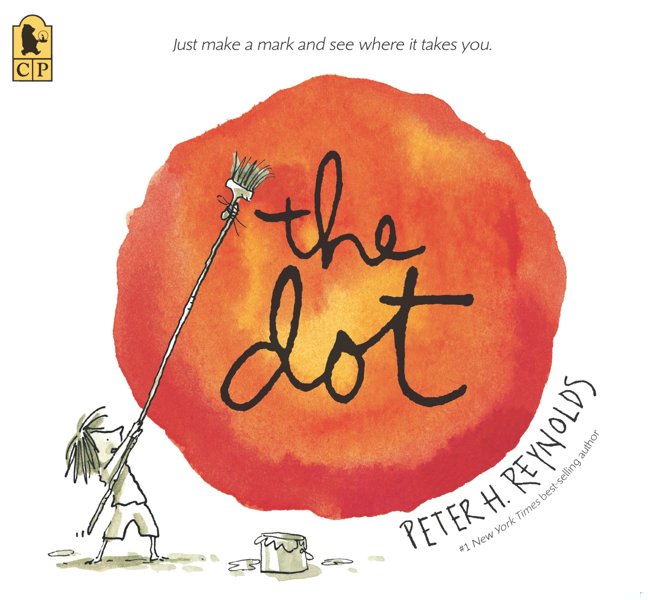
With a simple, witty story and free-spirited illustrations, Peter H. Reynolds entices even the stubbornly uncreative among us to make a mark -- and follow where it takes us.
Her teacher smiled. "Just make a mark and see where it takes you."
Art class is over, but Vashti is sitting glued to her chair in front of a blank piece of paper. The words of her teacher are a gentle invitation to express herself. But Vashti can't draw - she's no artist. To prove her point, Vashti jabs at a blank sheet of paper to make an unremarkable and angry mark. "There!" she says.
That one little dot marks the beginning of Vashti's journey of surprise and self-discovery. That special moment is the core of Peter H. Reynolds's delicate fable about the creative spirit in all of us.
…
Cover unavailable
42
Wired to Create: Unraveling the Mysteries of the Creative Mind
Is it possible to make sense of something as elusive as creativity?
Based on psychologist Scott Barry Kaufman’s groundbreaking research and Carolyn Gregoire’s popular article in the Huffington Post, Wired to Create offers a glimpse inside the “messy minds” of highly creative people. Revealing the latest findings in neuroscience and psychology, along with engaging examples of artists and innovators throughout history, the book shines a light on the practices and habits of mind that promote creative thinking. Kaufman and Gregoire untangle a series of paradoxes— like mindfulness and daydreaming, seriousness and play, openness and sensitivity, and solitude and collaboration – to show that it is by embracing our own contradictions that we are able to tap into our deepest creativity. Each chapter explores one of the ten attributes and habits of highly creative people:
Imaginative Play • Passion • Daydreaming • Solitude • Intuition • Openness to Experience • Mindfulness • Sensitivity • Turning Adversity into Advantage • Thinking Differently
With insights from the work and lives of Pablo Picasso, Frida Kahlo, Marcel Proust, David Foster Wallace, Thomas Edison, Josephine Baker, John Lennon, Michael Jackson, musician Thom Yorke, chess champion Josh Waitzkin, video-game designer Shigeru Miyamoto, and many other creative luminaries, Wired to Create helps us better understand creativity – and shows us how to enrich this essential aspect of our lives.
…
Cover unavailable
43
Ignore Everybody: and 39 Other Keys to Creativity
Hugh MacLeod
4.2
When Hugh MacLeod was a struggling young copywriter living in a YMCA, he started to doodle on the backs of business cards while sitting at a bar. Those cartoons eventually led to a popular blog-gapingvoid.com-and a reputation for pithy insight and humor, in both words and pictures.MacLeod has opinions on everything from marketing to the meaning of life, but one of his main subjects is creativity. How do new ideas emerge in a cynical, risk-averse world? Where does inspiration come from? What does it take to make a living as a creative person?Ignore Everybody expands on MacLeod's sharpest insights, wittiest cartoons, and most useful advice. For example:-Selling out is harder than it looks. Diluting your product to make it more commercial will just make people like it less.-If your plan depends on you suddenly being "discovered" by some big shot, your plan will probably fail. Nobody suddenly discovers anything. Things are made slowly and in pain.-Don't try to stand out from the crowd; avoid crowds altogether. There's no point trying to do the same thing as 250,000 other young hopefuls, waiting for a miracle. All existing business models are wrong. Find a new one.-The idea doesn't have to be big. It just has to be yours. The sovereignty you have over your work will inspire far more people than the actual content ever will.After learning MacLeod's forty keys to creativity, you will be ready to unlock your own brilliance and unleash it on the world.
I thought I might put my money where my mouth is. I keep whining that young people are not in touch with some essential books on advertising that have helped me shape the way I practise my trade today, but I never did anything about it. So I am starting here the ultimate books to read list. I will add to it as I get suggestions and as more good books get written. [source]
"This is what the future of work (and the world) looks like. Actually, it's already happening around you." — Tony Hsieh, CEO, Zappos.com
In bestsellers such as Purple Cow and Tribes, Seth Godin taught readers how to make remarkable products and spread powerful ideas. But this book is about you—your choices, your future, and your potential to make a huge difference in whatever field you choose.
There used to be two teams in every workplace: management and labor. Now there's a third team: the linchpins. These people figure out what to do when there's no rule book. They delight and challenge their customers and peers. They love their work, pour their best selves into it, and turn each day into a kind of art.
Linchpins are the essential building blocks of great organizations. They may not be famous but they're indispensable. And in today's world, they get the best jobs and the most freedom.
As Godin writes, "Every day I meet people who have so much to give but have been bullied enough or frightened enough to hold it back. It's time to stop complying with the system and draw your own map. You have brilliance in you, your contribution is essential, and the art you create is precious. Only you can do it, and you must."
…
Recommended by Andra Zaharia, Ann Handley, Armina Sirbu, and 6 others.
Andra Zaharia
While I was thinking of the best books to add to this short list, I realized that not even half of them are directly related to digital marketing. This is because I believe that the best marketers are people who understand human nature deeply and aim to bring out the best in it. Call me naive, but that’s how I see it. If I were to want to pursue a career in marketing, I’d read anything by Seth Godin (Linchpin in particular). [source]
Armina Sirbu
My favorite book is Linchpin by Seth Godin. I think it's business, but it can very well be non-business as well because it's so much about life. I re-read fragments from time to time to get a jump-start when I need it. [source]
Bernard Tan
Now that I look at the books listed, they seem to carry an existential theme. I guess I like to understand humanity and human behaviour ultimately to better understand myself. I find reading a means to connect with people who may have lived before my time, or in a distant country, that I may never have had the chance to connect with in real life. As three-dimensional humans, we are all made up of so many faces and emotional layers that we find it hard to dissect them all, and when we find writers who can explain these thought processes in a way that’s tangible and digestible, there’s this incredibly comforting eureka moment of feeling understood. [source]
Cover unavailable
45
The E-Myth Revisited: Why Most Small Businesses Don't Work and What to Do About It
E-Myth \ 'e-,'mith\ n 1: the entrepreneurial myth: the myth that most people who start small businesses are entrepreneurs 2: the fatal assumption that an individual who understands the technical work of a business can successfully run a business that does that technical work
Voted #1 business book by Inc. 500 CEOs.
An instant classic, this revised and updated edition of the phenomenal bestseller dispels the myths about starting your own business. Small business consultant and author Michael E. Gerber, with sharp insight gained from years of experience, points out how common assumptions, expectations, and even technical expertise can get in the way of running a successful business.
Gerber walks you through the steps in the life of a business—from entrepreneurial infancy through adolescent growing pains to the mature entrepreneurial perspective: the guiding light of all businesses that succeed—and shows how to apply the lessons of franchising to any business, whether or not it is a franchise. Most importantly, Gerber draws the vital, often overlooked distinction between working on your business and working in your business.
The E-Myth Revisited will help you grow your business in a productive, assured way.
After reading The E-Myth Revisited by Michael Gerber and The 80/20 Principle by Richard Koch, I decided that extreme questions were the forcing function I needed. [source]
Brian Scudamore
Founder & CEO/1-800-GOT-JUNK?
The book that’s had the biggest impact on me is The E-Myth by Michael Gerber (I even wrote about it in my own book). I read it front to back, then reread it right away. Gerber takes you through every step of a running a business from start to finish, and shows you what you need to make it successful. I read it when I was looking to take 1-800-GOT-JUNK? to the next level, and I had an epiphany: people don’t fail, systems do. Reading his book got me to take a good, hard look at my business and focus on developing our systems and hiring happy people. His book is one of the reasons we were able to sell out of 1-800-GOT-JUNK? franchises and scale that success into three other home-service companies, WOW 1 DAY PAINTING, You Move Me, and Shack Shine under the O2E Brands banner. [source]
Cover unavailable
46
Crossing the Chasm: Marketing and Selling Disruptive Products to Mainstream Customers
The bible for bringing cutting-edge products to larger markets--now revised and updated with new insights into the realities of high-tech marketing
In Crossing the Chasm, Geoffrey A. Moore shows that in the Technology Adoption Life Cycle--which begins with innovators and moves to early adopters, early majority, late majority, and laggards--there is a vast chasm between the early adopters and the early majority. While early adopters are willing to sacrifice for the advantage of being first, the early majority waits until they know that the technology actually offers improvements in productivity. The challenge for innovators and marketers is to narrow this chasm and ultimately accelerate adoption across every segment.
This third edition brings Moore's classic work up to date with dozens of new examples of successes and failures, new strategies for marketing in the digital world, and Moore's most current insights and findings. He also includes two new appendices, the first connecting the ideas in Crossing the Chasm to work subsequently published in his Inside the Tornado, and the second presenting his recent groundbreaking work for technology adoption models for high-tech consumer markets.
…
Recommended by Andrew Chen, Drew Houston, Ev Williams, and 28 others.
Drew Houston
CEO/Dropbox
It’s about how do technology products make their way from early adopters t the mainstream. [source]
Ron Conway
Bestselling guide that created a new game plan for marketing in high-tech industries. [source]
This is a key component in my Purple Cow thinking, but with a twist. I'm not as worried about the chasm as I am about the desire of marketers to go for the big middle. [source]
Cover unavailable
47
Daily Rituals: How Artists Work
Mason Currey
4.2
Franz Kafka, frustrated with his living quarters and day job, wrote in a letter to Felice Bauer in 1912, “time is short, my strength is limited, the office is a horror, the apartment is noisy, and if a pleasant, straightforward life is not possible then one must try to wriggle through by subtle maneuvers.”
Kafka is one of 161 inspired—and inspiring—minds, among them, novelists, poets, playwrights, painters, philosophers, scientists, and mathematicians, who describe how they subtly maneuver the many (self-inflicted) obstacles and (self-imposed) daily rituals to get done the work they love to do, whether by waking early or staying up late; whether by self-medicating with doughnuts or bathing, drinking vast quantities of coffee, or taking long daily walks. Thomas Wolfe wrote standing up in the kitchen, the top of the refrigerator as his desk, dreamily fondling his “male configurations”. . . Jean-Paul Sartre chewed on Corydrane tablets (a mix of amphetamine and aspirin), ingesting ten times the recommended dose each day . . . Descartes liked to linger in bed, his mind wandering in sleep through woods, gardens, and enchanted palaces where he experienced “every pleasure imaginable.”
Here are: Anthony Trollope, who demanded of himself that each morning he write three thousand words (250 words every fifteen minutes for three hours) before going off to his job at the postal service, which he kept for thirty-three years during the writing of more than two dozen books . . . Karl Marx . . . Woody Allen . . . Agatha Christie . . . George Balanchine, who did most of his work while ironing . . . Leo Tolstoy . . . Charles Dickens . . . Pablo Picasso . . . George Gershwin, who, said his brother Ira, worked for twelve hours a day from late morning to midnight, composing at the piano in pajamas, bathrobe, and slippers . . .
Here also are the daily rituals of Charles Darwin, Andy Warhol, John Updike, Twyla Tharp, Benjamin Franklin, William Faulkner, Jane Austen, Anne Rice, and Igor Stravinsky (he was never able to compose unless he was sure no one could hear him and, when blocked, stood on his head to “clear the brain”).
Brilliantly compiled and edited, and filled with detail and anecdote, Daily Rituals is irresistible, addictive, magically inspiring.
…
Recommended by Alok Kejriwal, B. J. Novak, Bobby Voicu, and 1 others.
Alok Kejriwal
Daily Rituals - Book Review "Sooner or later, Pritchett writes, "great men turn to be alike. They never stop working. They never lose a minute. It's very depressing". Daily Rituals is a remarkable book. It chronicles the daily habits of artists, writers, composers.. see note https://t.co/tMUhBKmzkI [source]
B. J. Novak
B. J. also recommended Daily Rituals by Mason Currey for anyone who would enjoy seeing the daily routines of legends like Steve Jobs, Charles Darwin, and Charles Dickens. "It is so reassuring to see that everyone has their own system, and how dysfunctional a lot of them are". [source]
Bobby Voicu
Mason Currey’s "Daily Rituals" will show you how 161 of the most creative and inspiring minds in the world work. This book’s great to demolish the myth that artists don’t have a routine and they’re just waiting for inspiration to hit them. As David Brook… https://t.co/4Owd29TQEm [source]
Cover unavailable
48
Drive: The Surprising Truth About What Motivates Us
The New York Times bestseller that gives readers a paradigm-shattering new way to think about motivation
Most people believe that the best way to motivate is with rewards like money—the carrot-and-stick approach. That's a mistake, says Daniel H. Pink (author of To Sell Is Human: The Surprising Truth About Motivating Others). In this provocative and persuasive new book, he asserts that the secret to high performance and satisfaction-at work, at school, and at home—is the deeply human need to direct our own lives, to learn and create new things, and to do better by ourselves and our world.
Drawing on four decades of scientific research on human motivation, Pink exposes the mismatch between what science knows and what business does—and how that affects every aspect of life. He examines the three elements of true motivation—autonomy, mastery, and purpose-and offers smart and surprising techniques for putting these into action in a unique book that will change how we think and transform how we live.
…
Recommended by Tobi Lütke, Bogdan Lucaciu, David Brudo, and 5 others.
Tobi Lütke
Founder & CEO/Shopify
Tobi Lütke recommended this book in an interview in "The Globe and Mail." [source]
Bogdan Lucaciu
Spoiler: it’s autonomy, mastery, and purpose. [source]
Researcher and thought leader Dr. Brené Brown offers a powerful new vision that encourages us to dare greatly: to embrace vulnerability and imperfection, to live wholeheartedly, and to courageously engage in our lives.
“It is not the critic who counts; not the man who points out how the strong man stumbles, or where the doer of deeds could have done them better. The credit belongs to the man who is actually in the arena, whose face is marred by dust and sweat and blood; who strives valiantly; . . . who at best knows in the end the triumph of high achievement, and who at worst, if he fails, at least fails while daring greatly.” —Theodore Roosevelt
Every day we experience the uncertainty, risks, and emotional exposure that define what it means to be vulnerable, or to dare greatly. Whether the arena is a new relationship, an important meeting, our creative process, or a difficult family conversation, we must find the courage to walk into vulnerability and engage with our whole hearts.
In Daring Greatly, Dr. Brown challenges everything we think we know about vulnerability. Based on twelve years of research, she argues that vulnerability is not weakness, but rather our clearest path to courage, engagement, and meaningful connection. The book that Dr. Brown’s many fans have been waiting for, Daring Greatly will spark a new spirit of truth—and trust—in our organizations, families, schools, and communities.
…
Recommended by AnneMarie Schindler, Chase Jarvis, and Chelsea Frank.
AnneMarie Schindler
I suggest these books because they really open up 'how' you think about life and in turn work, success/challenges/setbacks, and in general, yourself. I believe that the more you can understand yourself and broaden your approach to work, the easier it will be to find work that energizes you. Finally, I'm a team player at heart, and love working with others to achieve a huge goal so a portion of these deal with team composition and performance too. [source]
Chase Jarvis
Chase Jarvis recommended this book on the podcast "The Tim Ferriss Show". [source]
Chelsea Frank
I read everything with an open mind, often challenging myself by choosing books with an odd perspective or religious/spiritual views. These books do not reflect my personal feelings but are books that helped shape my perspective on life, love, and happiness. [source]
Cover unavailable
50
The Gift: Creativity and the Artist in the Modern World
Lewis Hyde
4.2
“A manifesto of sorts for anyone who makes art [and] cares for it.” —Zadie Smith
“The best book I know of for talented but unacknowledged creators. . . . A masterpiece.” —Margaret Atwood
“No one who is invested in any kind of art . . . can read The Gift and remain unchanged.” —David Foster Wallace
By now a modern classic, The Gift is a brilliantly orchestrated defense of the value of creativity and of its importance in a culture increasingly governed by money and overrun with commodities. This book is even more necessary today than when it first appeared.
An illuminating and transformative book, and completely original in its view of the world, The Gift is cherished by artists, writers, musicians, and thinkers. It is in itself a gift to all who discover the classic wisdom found in its pages.
I’m not really sure what to say about this book. It just kind of re-affirmed a lot of what I’ve been thinking about making art: that it’s important for me to have a day job, so I can separate work from play, and that the more generous you are with your audience (through blogging, teaching, sharing, etc.) the better off you’ll be as an artist—spiritually and financially. [source]
Lucy Newlyn
The Gift is not a book about Wordsworth. The subtitle of the UK edition is “How the Creative Spirit Transforms the World”. Lewis Hyde looks at creativity not as the route to celebrity, but rather in terms of a “gift economy”. He plays off the great Marcel Mauss’s 1923 anthropological essay The Gift, building on Mauss’s idea that there’s no such thing as a free gift – when you give something, you expect something in return. If you apply this notion to creativity, thinking of creative artefacts as gifts that elicit further gifts, then you begin to understand creativity in terms of community – as an economy that is spiritual, communal, energising and potentially transformative, rather than simply egotistical, for fame and money. [source]
John Berger’s Classic Text on Art John Berger's Ways of Seeing is one of the most stimulating and the most influential books on art in any language. First published in 1972, it was based on the BBC television series about which the (London) Sunday Times critic commented: "This is an eye-opener in more ways than one: by concentrating on how we look at paintings . . . he will almost certainly change the way you look at pictures." By now he has.
"Berger has the ability to cut right through the mystification of the professional art critics . . . He is a liberator of images: and once we have allowed the paintings to work on us directly, we are in a much better position to make a meaningful evaluation" —Peter Fuller, Arts Review
"The influence of the series and the book . . . was enormous . . . It opened up for general attention to areas of cultural study that are now commonplace" —Geoff Dyer in Ways of Telling
Winner of the 1972 Booker Prize for his novel, G., John Peter Berger (born November 5th, 1926) is an art critic, painter and author of many novels including A Painter of Our Time, From A to X and Bento’s Sketchbook.
You have to understand the Marxist interpretation of art; it is absolutely fundamental to the way that art history departments now study the material. Then you have to critique it, because we’ve moved on from the 1970s and the collapse of Marxism in most of the world shows—amongst other things—that the model was flawed. But it’s still a very good book to read, for a teenager especially. [source]
Cover unavailable
52
The Effective Executive: The Definitive Guide to Getting the Right Things Done
A handsome, commemorative edition of Peter F. Drucker’s timeless classic work on leadership and management, with a foreword by Jim Collins.
What makes an effective executive?
For decades, Peter F. Drucker was widely regarded as "the dean of this country’s business and management philosophers" (Wall Street Journal). In this concise and brilliant work, he looks to the most influential position in management—the executive.
The measure of the executive, Drucker reminds us, is the ability to "get the right things done." This usually involves doing what other people have overlooked as well as avoiding what is unproductive. Intelligence, imagination, and knowledge may all be wasted in an executive job without the acquired habits of mind that mold them into results.
Drucker identifies five practices essential to business effectiveness that can—and must—be mastered:
Managing time; Choosing what to contribute to the organization; Knowing where and how to mobilize strength for best effect; Setting the right priorities; Knitting all of them together with effective decision-making Ranging across the annals of business and government, Drucker demonstrates the distinctive skill of the executive and offers fresh insights into old and seemingly obvious business situations.
…
Recommended by Drew Houston, Ev Williams, Guy Kawasaki, and 15 others.
Drew Houston
CEO/Dropbox
I think one of the most valuable concepts from this book is measuring your time. [source]
I think it's much more valuable than 99% of the so-called time management books out there. [source]
Matt Mullenweg
Founder & CEO/Automattic
We're both big fans of Peter Drucker and his book The Effective Executive, as well as Alain de Botton's How Proust Can Change your Life. [source]
Cover unavailable
53
Do the Work
Steven Pressfield
4.1
“There is an enemy. There is an intelligent, active, malign force working against us. Step one is to recognize this. This recognition alone is enormously powerful. It saved my life, and it will save yours.” —Steven Pressfield
Could you be getting in your way of producing great work? Have you started a project but never finished? Would you like to do work that matters, but don’t know where to start?
The answer is Do the Work, a manifesto by bestselling author Steven Pressfield, that will show you that it’s not about better ideas, it’s about actually doing the work.
Do the Work is a weapon against Resistance—a tool that will help you take action and successfully ship projects out the door. Picking up where The War of Art and Turning Pro left off, Do the Work takes the reader from the start to the finish of any long-form project—novel, screenplay, album, software piece, you name it. Do the Work identifies the predictable Resistance Points along the way and walks you through each of them.
No, you are not crazy. No, you are not alone. No, you are not the first person to “hit the wall” in Act Two. Do the Work charts the territory. It’s the stage-by-stage road map for taking your project from Page One to THE END.
…
Recommended by David Allen, David Cancel, Jeff Bullas, and 1 others.
New York Times best-selling author and professor Brené Brown offers a powerful and inspiring book that explores how to cultivate the courage, compassion, and connection to embrace your imperfections and to recognize that you are enough.
Each day we face a barrage of images and messages from society and the media telling us who, what, and how we should be. We are led to believe that if we could only look perfect and lead perfect lives, we'd no longer feel inadequate. So most of us perform, please, and perfect, all the while thinking, What if I can't keep all of these balls in the air? Why isn't everyone else working harder and living up to my expectations? What will people think if I fail or give up? When can I stop proving myself?In The Gifts of Imperfection, Bren頂rown, PhD, a leading expert on shame, authenticity and belonging, shares what she's learned from a decade of research on the power of Wholehearted Living--a way of engaging with the world from a place of worthiness.In her ten guideposts, Brown engages our minds, hearts, and spirits as she explores how we can cultivate the courage, compassion, and connection to wake up in the morning and think, No matter what gets done and how much is left undone, I am enough, and to go to bed at night thinking, Yes, I am sometimes afraid, but I am also brave. And, yes, I am imperfect and vulnerable, but that doesn't change the truth that I am worthy of love and belonging.
…
Cover unavailable
55
The Power of Habit: Why We Do What We Do in Life and Business
A young woman walks into a laboratory. Over the past two years, she has transformed almost every aspect of her life. She has quit smoking, run a marathon, and been promoted at work. The patterns inside her brain, neurologists discover, have fundamentally changed.
Marketers at Procter & Gamble study videos of people making their beds. They are desperately trying to figure out how to sell a new product called Febreze, on track to be one of the biggest flops in company history. Suddenly, one of them detects a nearly imperceptible pattern—and with a slight shift in advertising, Febreze goes on to earn a billion dollars a year.
An untested CEO takes over one of the largest companies in America. His first order of business is attacking a single pattern among his employees—how they approach worker safety—and soon the firm, Alcoa, becomes the top performer in the Dow Jones.
What do all these people have in common? They achieved success by focusing on the patterns that shape every aspect of our lives.
They succeeded by transforming habits.
In The Power of Habit, award-winning New York Times business reporter Charles Duhigg takes us to the thrilling edge of scientific discoveries that explain why habits exist and how they can be changed. With penetrating intelligence and an ability to distill vast amounts of information into engrossing narratives, Duhigg brings to life a whole new understanding of human nature and its potential for transformation.
Along the way we learn why some people and companies struggle to change, despite years of trying, while others seem to remake themselves overnight. We visit laboratories where neuroscientists explore how habits work and where, exactly, they reside in our brains. We discover how the right habits were crucial to the success of Olympic swimmer Michael Phelps, Starbucks CEO Howard Schultz, and civil-rights hero Martin Luther King, Jr. We go inside Procter & Gamble, Target superstores, Rick Warren’s Saddleback Church, NFL locker rooms, and the nation’s largest hospitals and see how implementing so-called keystone habits can earn billions and mean the difference between failure and success, life and death.
At its core, The Power of Habit contains an exhilarating argument: The key to exercising regularly, losing weight, raising exceptional children, becoming more productive, building revolutionary companies and social movements, and achieving success is understanding how habits work.
Habits aren’t destiny. As Charles Duhigg shows, by harnessing this new science, we can transform our businesses, our communities, and our lives.
…
Recommended by Naval Ravikant, Blake Irving, Alden Mills, and 15 others.
I also recently finished The Power of Habit, or close to finish as I get. That one was interesting, not because of its content necessarily, but because it’s good for me to always keep on top of mind how powerful my habits are. … I think learning how to break habits is a very important meta-skill that can serve you better in life than almost anything else. Although you can read tons of books on it, the reality is you’re never going to learn how to break bad habits until you just break them. [source]
Blake Irving
CEO/GoDaddy
You know, there's a book called The Power of Habit by Charles Duhigg. Simple read book about just how to build positive habits that can be I think I what I'd call you know whether in your personal life or whether in your business life to help you build you know, have a loop that can build your success and that's one I mean there are so many great books out there. [source]
Alden Mills
More recent books that have had a significant impact on me are The Power of Habit and The Diamond Cutter. Both represent different forces for me – the former helps me tactically with making incremental improvements in my life. [source]
Cover unavailable
56
Not a Box
Antoinette Portis
4.1
A box is just a box . . . unless it's not a box. From mountain to rocket ship, a small rabbit shows that a box will go as far as the imagination allows.
Inspired by a memory of sitting in a box on her driveway with her sister, Antoinette Portis captures the thrill when pretend feels so real that it actually becomes real—when the imagination takes over and inside a cardboard box, a child is transported to a world where anything is possible.
New York Times bestseller and named Best Marketing Book of 2014 by the American Marketing Association
What makes things popular? Why do people talk about certain products and ideas more than others? Why are some stories and rumors more infectious? And what makes online content go viral?
If you said advertising, think again. People don't listen to advertisements, they listen to their peers. But why do people talk about certain products and ideas more than others? Why are some stories and rumors more infectious? And what makes online content go viral?
Wharton marketing professor Jonah Berger has spent the last decade answering these questions. He's studied why New York Times articles make the paper's own Most E-mailed List, why products get word of mouth, and how social influence shapes everything from the cars we buy to the clothes we wear to the names we give our children. In this book, Berger reveals the secret science behind word-of-mouth and social transmission. Discover how six basic principles drive all sorts of things to become contagious, from consumer products and policy initiatives to workplace rumors and YouTube videos.
Contagious combines groundbreaking research with powerful stories. Learn how a luxury steakhouse found popularity through the lowly cheese-steak, why anti-drug commercials might have actually increased drug use, and why more than 200 million consumers shared a video about one of the seemingly most boring products there is: a blender. If you've wondered why certain stories get shared, e-mails get forwarded, or videos go viral, Contagious explains why, and shows how to leverage these concepts to craft contagious content. This book provides a set of specific, actionable techniques for helping information spread - for designing messages, advertisements, and information that people will share. Whether you're a manager at a big company, a small business owner trying to boost awareness, a politician running for office, or a health official trying to get the word out, Contagious will show you how to make your product or idea catch on.
…
Recommended by Vinod Khosla, Vinod Khosla, Andrew Medal, and 10 others.
Andrew Medal
The world is #CONTAGIOUS ☢️☢️☢️ • • My dog and I love this book. I read to him when he wants to learn about marketing techniques. The last time I read this book was in 2013. If you want a read that dissects how and… https://t.co/6v0ckSnSQe [source]
Ee Ling Lim
Contagious by Jonah Berger is another interesting one for those trying to figure out how to market their business. In Contagious, Jonah identifies what makes some things go viral, and narrowed it down to 6 principles STEPPS: Social currency (content that makes people look good when they talk about it), Triggers (top of mind topics), Emotion (content that we care about, especially high arousal ones like anger, awe, excitement and humor), Public, Practical and Stories. [source]
Erik Cheong
Explains why certain products and ideas become popular while others fail. It reveals the secret science behind word-of-mouth and social transmission. Discover how six basic principles drive all sorts of things to become contagious, from consumer products and policy initiatives to workplace rumors and YouTube videos. [source]
Cover unavailable
58
Understanding Comics: The Invisible Art
Scott McCloud
4.1
The bestselling international classic on storytelling and visual communication
"You must read this book." — Neil Gaiman
Praised throughout the cartoon industry by such luminaries as Art Spiegelman, Matt Groening, and Will Eisner, Scott McCloud's Understanding Comics is a seminal examination of comics art: its rich history, surprising technical components, and major cultural significance. Explore the secret world between the panels, through the lines, and within the hidden symbols of a powerful but misunderstood art form.
…
Recommended by Ev Williams, Austin Kleon, Bret Victor, and 1 others.
Unsolicited, but here’s my advice for visual thinkers (and others) who want to be better writers: … Cartoonists, because their work demands work from two disciplines (writing/art, poetry/design, words/pictures), are highly instructive when it comes to visual people learning to write, writers learning to make art, etc. (Check out Scott McCloud’s Understanding Comics for more.) [source]
Will Brooker
Understanding Comics is a book about how comics work, told in comic form. It’s very accessible, it’s for the general reader and is about comics in general, not just superhero comics. It explores areas like pacing and editing – how motion can be created through static panels on a page, and how arranging those panels in different ways, or drawing in different styles, or combining text and image, has different effects. It’s almost like a book on film study which explores the role of sound, lighting or editing. Scott McCloud is an artist himself, and he draws pastiches to show how different styles produce different effects. [source]
Cover unavailable
59
Catching the Big Fish: Meditation, Consciousness, and Creativity
David Lynch
4.1
Where do ideas come from?
In Catching the Big Fish, internationally acclaimed filmmaker David Lynch provides a rare window into his methods as an artist, his personal working style, and the immense creative benefits he has experienced from the practice of meditation.
Lynch describes the experience of "diving within" and "catching" ideas like fish - and then preparing them for television or movie screens, and other mediums in which he works, such as painting, music, and design. Lynch writes for the first time about his more than three-decade commitment to Transcendental Meditation and the difference it has made in his creative process.
In brief chapters, Lynch explains the development of his ideas - where they came from, how he grasps them, and which ones appeal to him the most. He specifically discusses how he puts his thoughts into action and how he engages with others around him. Finally, he considers the self and the surrounding world - and how the process of "diving within" that has so deeply affected his own work can directly benefit others.
Catching the Big Fish comes as a revelation to the legion of fans who have longed to better understand Lynch's personal vision. And it is equally intriguing to those who wonder how they can nurture their own creativity.
We've all had experience with two dramatically different types of leaders. The first type drain intelligence, energy, and capability from the ones around them and always need to be the smartest ones in the room. These are the idea killers, the energy sappers, the diminishers of talent and commitment. On the other side of the spectrum are leaders who use their intelligence to amplify the smarts and capabilities of the people around them. When these leaders walk into a room, lightbulbs go off over people's heads, ideas flow, and problems get solved. These are the leaders who inspire employees to stretch themselves to deliver results that surpass expectations. These are the Multipliers. And the world needs more of them, especially now, when leaders are expected to do more with less.
In this engaging and highly practical book, leadership expert Liz Wiseman and management consultant Greg McKeown explore these two leadership styles, persuasively showing how Multipliers can have a resoundingly positive and profitable effect on organizations—getting more done with fewer resources, developing and attracting talent, and cultivating new ideas and energy to drive organizational change and innovation.
In analyzing data from more than 150 leaders, Wiseman and McKeown have identified five disciplines that distinguish Multipliers from Diminishers. These five disciplines are not based on innate talent; indeed, they are skills and practices that everyone can learn to use, even lifelong and recalcitrant Diminishers. Lively, real-world case studies and practical tips and techniques bring to life each of these principles, showing you how to become a Multiplier too, whether you are a new or an experienced manager. Just imagine what you could accomplish if you could harness all the energy and intelligence around you. Multipliers will show you how.
…
Recommended by Dustin Moskovitz, Ben Chestnut, Mike Weinberg, and 2 others.
In this groundbreaking book, journalist and innovation expert Warren Berger shows that one of the most powerful forces for igniting change in business and in our daily lives is a simple, under-appreciated tool—one that has been available to us since childhood. Questioning—deeply, imaginatively, "beautifully"—can help us identify and solve problems, come up with game-changing ideas, and pursue fresh opportunities. So why are we often reluctant to ask "Why?"
Berger's surprising findings reveal that even though children start out asking hundreds of questions a day, questioning "falls off a cliff" as kids enter school. In an education and business culture devised to reward rote answers over challenging inquiry, questioning isn't encouraged—and, in fact, is sometimes barely tolerated.
And yet, as Berger shows, the most creative, successful people tend to be expert questioners. They've mastered the art of inquiry, raising questions no one else is asking—and finding powerful answers. The author takes us inside red-hot businesses like Google, Netflix, IDEO, and Airbnb to show how questioning is baked into their organizational DNA. He also shares inspiring stories of artists, teachers, entrepreneurs, basement tinkerers, and social activists who changed their lives and the world around them—by starting with a "beautiful question." Berger explores important questions, such as:
- Why aren't we nurturing kids' natural ability to question—and what can parents and schools do about that?
- Since questioning is a starting point for innovation, how might companies and business leaders begin to encourage and exploit it?
- And most important, how can each of us re-ignite that questioning spark—and use inquiry as a powerful means to rethink and reinvent our lives?
A More Beautiful Question outlines a practical Why / What If / How system of inquiry that can guide you through the process of innovative questioning—helping you find imaginative, powerful answers to your own "beautiful questions."
…
Cover unavailable
62
What It Is
Lynda Barry
4.1
How do objects summon memories? What do real images feel like? For decades, these types of questions have permeated the pages of Lynda Barry’s compositions, with words attracting pictures and conjuring places through a pen that first and foremost keeps on moving. What It Is demonstrates a tried-and-true creative method that is playful, powerful, and accessible to anyone with an inquisitive wish to write or to remember. Composed of completely new material, each page of Barry’s first Drawn & Quarterly book is a full-color collage that is not only a gentle guide to this process but an invigorating example of exactly what it is: “The ordinary is extraordinary.”
Unsolicited, but here’s my advice for visual thinkers (and others) who want to be better writers: Get Lynda Barry’s What It Is and do the exercises every day in a private notebook. [source]
Cover unavailable
63
The Accidental Creative: How to Be Brilliant at a Moment's Notice
Todd Henry
4.1
Have better ideas, faster, without the stress and burnout.
It isn't enough to just do your job anymore. In order to thrive in today's marketplace, all of us-even the accountants-have to be ready to generate brilliant ideas on demand.
Business creativity expert Todd Henry explains how to establish effective practices that unleash your creative potential. Born out of his consultancy and his popular podcast, Henry has created a practical method for discovering your personal creative rhythm. He focuses on five key elements:
*Focus: Begin with your end goal in mind. *Relationships: Build stimulating relationships and ideas will follow. *Energy: Manage it as your most valuable resource. *Stimuli: Structure the right "inputs" to maximize creative output. *Hours: Focus on effectiveness, not efficiency. This is a guide for staying inspired and experiencing greater creative productivity than you ever imagined possible.
…
Cover unavailable
64
Out of Our Minds: Learning to Be Creative
Ken Robinson
4.1
'Ken Robinson writes brilliantly about the different ways in which creativity is undervalued and ignored in Western culture and especially in our educational systems.' JOHN CLEESE 'Out of Our Minds explains why being creative in today's world is a vital necessity. This is a book not to be missed. Read and rejoice.' KEN BLANCHARD
'If ever there was a time when creativity was necessary for the survival and growth of any organization, it is now. This book, more than any other I know, provides important insights on how leaders can evoke and sustain those creative juices.' WARREN BENNIS
…
Cover unavailable
65
The Element: How Finding Your Passion Changes Everything
Ken Robinson, Lou Aronica
4.1
From one of the world's leading thinkers and speakers on creativity and self-fulfillment, a breakthrough book about talent, passion, and achievement The element is the point at which natural talent meets personal passion. When people arrive at the element, they feel most themselves and most inspired and achieve at their highest levels. "The Element" draws on the stories of a wide range of people, from ex-Beatle Paul McCartney to Matt Groening, creator of "The Simpsons"; from Meg Ryan to Gillian Lynne, who choreographed the Broadway productions of "Cats" and "The Phantom of the Opera"; and from writer Arianna Huffington to renowned physicist Richard Feynman and others, including business leaders and athletes. It explores the components of this new paradigm: The diversity of intelligence, the power of imagination and creativity, and the importance of commitment to our own capabilities. With a wry sense of humor, Ken Robinson looks at the conditions that enable us to find ourselves in the element and those that stifle that possibility. He shows that age and occupation are no barrier, and that once we have found our path we can help others to do so as well. "The Element" shows the vital need to enhance creativity and innovation by thinking differently about human resources and imagination. It is also an essential strategy for transforming education, business, and communities to meet the challenges of living and succeeding in the twenty-first century.
…
Recommended by Ng Rong Xin.
Ng Rong Xin
I read this book the year I graduated from college and was in my first job. It was a game-changer because it was after I read the book that I decided to take a plunge to start Explorer Junior, my start-up. [source]
Cover unavailable
66
The Art of Thinking Clearly: Better Thinking, Better Decision
The Art of Thinking Clearly by world-class thinker and entrepreneur Rolf Dobelli is an eye-opening look at human psychology and reasoning -- essential reading for anyone who wants to avoid "cognitive errors" and make better choices in all aspects of their lives.
Have you ever: Invested time in something that, with hindsight, just wasn't worth it? Or continued doing something you knew was bad for you? These are examples of cognitive biases, simple errors we all make in our day-to-day thinking. But by knowing what they are and how to spot them, we can avoid them and make better decisions.
Simple, clear, and always surprising, this indispensable book will change the way you think and transform your decision-making--work, at home, every day. It reveals, in 99 short chapters, the most common errors of judgment, and how to avoid them.
Dobelli examines our most common decision-making failings with engaging eloquence and describes how to counter them with instructive good sense. [source]
This is an unpretentious book. Dobelli doesn’t claim to be an original thinker himself. He’s a summariser of other people’s thoughts. What he’s done is brought lots of different things together in one place. Each of the 99 entries is pretty short, and it’s the kind of book to dip into. [source]
Cover unavailable
67
What Do You Do with an Idea?
Kobi Yamada, Mae Besom
4.1
This is the story of one brilliant idea and the child who helps to bring it into the world. As the child's confidence grows, so does the idea itself. And then, one day, something amazing happens. This is a story for anyone, at any age, who's ever had an idea that seemed a little too big, too odd, too difficult. It's a story to inspire you to welcome that idea, to give it some space to grow, and to see what happens next. Because your idea isn't going anywhere. In fact, it's just getting started.
This is a wonderful book for all ages. Quite insightful! Fun to look at my previous work & its spot on... “What Do You Do with an Idea?” https://t.co/hreEOQWlze [source]
Cover unavailable
68
The Day the Crayons Quit
Drew Daywalt, Oliver Jeffers
4.1
Poor Duncan just wants to color. But when he opens his box of crayons, he finds only letters, all saying the same thing: We quit!
Beige is tired of playing second fiddle to Brown. Blue needs a break from coloring all that water, while Pink just wants to be used. Green has no complaints, but Orange and Yellow are no longer speaking to each other.
What is Duncan to do? Debut author Drew Daywalt and New York Times bestseller Oliver Jeffers create a colorful solution in this playful, imaginative story that will have children laughing and playing with their crayons in a whole new way.
…
Cover unavailable
69
How to Be an Explorer of the World: Portable Life Museum
Keri Smith
4.1
From the author of Wreck This Journal, an interactive guide for exploring and documenting the art and science of everyday life.
Artists and scientists analyze the world around them in surprisingly similar ways, by observing, collecting, documenting, analyzing, and comparing. In this captivating guided journal, readers are encouraged to explore their world as both artists and scientists.
The mission Smith proposes? To document and observe the world around you. As if you've never seen it before. Take notes. Collect things you find on your travels. Document findings. Notice patterns. Copy. Trace. Focus on one thing at a time. Record what you are drawn to.
With a series of interactive prompts and a beautifully hand-illustrated two-color package, readers will enjoy exploring and discovering the world through this gorgeous book.
…
Cover unavailable
70
The Elements of Style
William Jr. Strunk
4.1
You know the authors' names. You recognize the title. You've probably used this book yourself. And now "The Elements of Style"-the most widely read and employed English style manual-is available in a specially bound 50th Anniversary Edition that offers the title's vast audience an opportunity to own a more durable and elegantly bound edition of this time-tested classic. Offering the same content as the Fourth Edition, revised in 1999, the new casebound 50th Anniversary Edition includes a brief overview of the book's illustrious history. Used extensively by individual writers as well as high school and college students of writing, it has conveyed the principles of English style to millions of readers. This new deluxe edition makes the perfect gift for writers of any age and ability level. Fifty Years of Acclaim for "The Elements of Style," by William Strunk Jr. and E.B. White "I first read "Elements of Style" during the summer before I went off to Exeter, and I still direct my students at Harvard to their definition about the difference between 'that' and 'which.' It is the Bible for good, clear writing." -- Henry Louis Gates Jr. "For writers of all kinds and sizes the world begins and ends with Strunk and White's "Elements of Style." Only something to actually write about trumps the list of what is required to put words together in some kind of coherent way. I treasure its presence in my life and salute its fifty years of glory and accomplishment." -- Jim Lehrer ""The Elements of Style" remains an unwavering beacon of light in these grammatically troubled times. I would be lost without it." -- Ann Patchett "To the extent I know how to write clearly at all, I probably taught myself while I was teaching others -- seventh graders, in Flint, Michigan, in 1967. I taught them with a copy of Strunk & White lying in full view on my desk, sort of in the way the Gideons leave Bibles in cheap hotel rooms, as a way of saying to the hapless inhabitant: 'In case your reckless ways should strand you here, there's help.' S&W doesn't really teach you how to write, it just tantalizingly reminds you that there's an orderly way to go about it, that clarity's ever your ideal, but -- really -- it's all going to be up to you." -- Richard Ford ""The Elements of Style" never seems to go out of date. Its counsel is sound and funny, wise and unpretentious. And while its precepts are a foundation of direct communication, Strunk and White do not insist on a way of writing beyond clear expression. The rest is up to the imagination, the intelligence within." -- David Remnick, editor of "The New Yorker" "It's the toughness-the irreverence and implicit laughter-that attracted me to the little book when I was seventeen. I fell in love with Strunk & White's loathing for cant and bloviation, the ruthless cutting of crap, jargon, and extra words. For me, that skeptical directness included a tacit permission by "The Elements of Style" to break its rules on occasion: an alloy of generosity in the blade, a grace I still admire and still learn from." -- Robert Pinsky "In the quest for clarity, one can have no better guides than Strunk and White. For me, their book has been invaluable and remains essential." -- Dan Rather "Eschew surplusage! A perfect book." --Jonathan Lethem "Not until I started teaching writing and I reread "The Elements of Style" did I realize that most everything I would be teaching young writers, and everything I would be learning myself as a writer, was contained between the covers of this slim, elegant, wise little book." -- Julia Alvarez "Strunk and White seared their way into my brain long ago, and I benefit from them daily." -- Steven J. Dubner, co-author of "Freakonomics" "Since high school, I have kept a copy of this book handy. That should be unnecessary. I should, by now, have fully internalized "The Elements of Style." But sometimes I get entangled in a paragraph that refuses to be 'clear, brief, bold.' I dip back into "The Elements of Style" and am refreshed. After Scott Simon interviewed me on NPR about whether the word 'e-mail' needs a hyphen (yes, it does), some listeners, including friends of mine, wondered why I had answered in the affirmative when asked, in passing, 'Are you a drunken white man?' Those listeners misheard. 'Strunk and White man' was what Scott said." -- Roy Blount Jr. "Strunk & White--writing's good-natured law firm--still contains enough sparkling good sense to clean up the whole bloviating blogosphere." -- Thomas Mallon "I used Strunk -- that's what we called it, Strunk -- as a student at Berkeley fifty years ago. I didn't know that it was new, and that we were the first generation to be educated in "The Elements of Style." I got a firm foundation in the English language, learned to write basically, and could depict the realistic world. Then I was able to become an impressionist and expressionist." -- Maxine Hong Kingston "Strunk and White's gigantic little book must be the most readable advice on writing ever written. Side by side with Roget, Shakespeare, the Bible, and a dictionary, it's an essential for every writer's shelf." -- X.J. Kennedy" ""With what joy I welcome the fiftieth anniversary of "The Elements of Style." I am greatly indebted to this book for the invaluable help it has given me all these years." -- Horton Foote "Elegant, droll, and perfectly proportioned, and like your favorite aunt, strict but affectionate. And, like your favorite aunt, full of optimism: You can, and will, be a better writer! There has never been a better, briefer, or more loved book about the art and craft of communicating." -- Susan Orlean "This book is an essential tool. It has been of great use to me and is probably responsible for my best writing. I owe my success to Strunk and White; only the mistakes are mine." -- Ben Affleck, in "O, the Oprah Magazine" "This book is a wonderful example of teaching by example. Not only does it recommend clear and concise writing, it demonstrates it. Written in the style of a friend offering help, it is a godsend to anyone wanting to put words on paper. Thank you, Messieurs Strunk and White. And Happy Anniversary, "Elements of Style."" -- S.E. Hinton "When I began to have ... I wouldn't say arguments but conversations in my mind with Strunk and White about a few of their rules and principles, I knew I was coming into my own. If only they were still here to talk things over! No doubt their side of the exchange would be kindly put, well-informed, and wise. They'd probably help me with my side of it. What more could one want from writers reaching out to help other writers?" -- Barbara Wallraff, language columnist for "The Atlantic" "I don't believe there is a serious writer alive who doesn't have a worn copy of 'Strunk & White'on his or her bookshelf." -- Mignon Fogarty, author of "Grammar Girl's Quick and Dirty Tips ""for Better Writing" "This little book has inspired hundreds of thousands of people to write better -- partly by precept and partly by example. It continues to influence more writers than any other. It's a force for good in the world." -- Bryan A. Garner, author of "Garner's Modern American Usage" "I can think of no better guide to good writing, and I always think of this little classic with a warm heart. More importantly, I revisit its pages often. It's the one essential book on writing." -- Jay Parini, author of "Why Poetry Matters" "Clarity and simplicity have always been the goals, and this book shows the way. It has always been a lighthouse in the dark and stormy night of student prose, of all of our prose." -- Ron Carlson "The only rules you are ever going to get from me are all in Strunk and White." --Ursula K. Le Guin, from "Steering the Craft " "["The Elements of Style "is] a book to which I return from time to time, the way I periodically reread Shakespeare. I always discover something new, settle a question that has been puzzling me, or learn a principle of usage that I have been pretending to know, a pretense that has resulted in inconsistency and in the sort of errors from which I can only pray some saintly copy editor will save me." -- Francine Prose, from "Reading"" Like A Writer" ..".still a little book, small enough and important enough to carry in your pocket, as I carry mine." -- Charles Osgood "Almost every writer has a Strunk and White story. One journalism professor spends the first two weeks of school forcing his students to memorize the book. A top editor at a major paper buys copies at yard sales to distribute to her writers and interns. It has even caused love affairs. . . . Could its greatness be any more clear?" -- Jesse Sheidlower, American Editor of the "Oxford"" English Dictionary," on NPR" ""If the English language is one of the finest homes ever devised for the human spirit, "Elements" is the best guided house tour we've got." --David Gelernter, "The Wall Street Journal" ..".Should be the daily companion of anyone who writes for a living and, for that matter, anyone who writes at all." "--"Jonathan Yardley, " Greensboro (N.C.) Daily News" "No book in shorter space, with fewer words, will help any writer more than this persistent little volume." -- Herbert A. Kenny, "The Boston Globe" "Buy it, study it, enjoy it. It's as timeless as a book can be in our age of volubility." -- Charles Poore, "The New York Times" "White is one of the best stylists and most lucid minds in this country. What he says and his way of saying it are equally rewarding." "-- "Edmund Fuller, "The Wall Street Journal ""If you have any young friends who aspire to become writers, the second greatest favor you can do them is to present them with copies of "The Elements of Style." The first greatest, of course, is to shoot them now, while they're happy." -- Dorothy Parker, "Esquire"
…
Recommended by Tobi Lütke, Alina Varlanuta, Ann Handley, and 3 others.
Tobi Lütke
Founder & CEO/Shopify
My most frequently gifted book is this book because I like good writing. [source]
Alina Varlanuta
My professional path – copywriting – somehow intertwines with my unprofessional (hahaha) path – writing so I would recommend reading literature for both. Somehow reading and writing are two ways of doing the same thing: storytelling (even when you read you tell yourself a story in your own voice, bringing your personal emotion and empathy to the story you’re reading). The only difference is that when I’m reading, panic is far away from me, in a safe place. Nevertheless, the words below helped me rewrite and think twice before adding an exclamation point: The Elements of Style. [source]
Bill Nye
This is my guide. I accept that I’ll never write anything as good as the introductory essay by the author. It’s brilliant. [source]
Cover unavailable
71
Letters to a Young Poet
Rainer Maria Rilke
4.1
Born in 1875, the great German lyric poet Rainer Maria Rilke published his first collection of poems in 1898 and went on to become renowned for his delicate depiction of the workings of the human heart. Drawn by some sympathetic note in his poems, young people often wrote to Rilke with their problems and hopes. From 1903 to 1908 Rilke wrote a series of remarkable responses to a young, would-be poet on poetry and on surviving as a sensitive observer in a harsh world. Those letters, still a fresh source of inspiration and insight, are accompanied here by a chronicle of Rilke's life that shows what he was experiencing in his own relationship to life and work when he wrote them.
…
Recommended by Estella Ng and Todd Henry.
Estella Ng
Letters to a Young Poet - it is everything. … This line in Letters to a Young Poet “If your daily life seems poor, do not blame it; blame yourself, tell yourself that you are not poet enough to call forth its riches" is an important one to me. I constantly go back to this to evaluate if I have been living a full life. [source]
Drawing on cutting-edge neuroscience and psychology and displaying all of the brilliance that made The Tipping Point a classic, Blink changes the way you'll understand every decision you make. Never again will you think about thinking the same way.
Malcolm Gladwell redefined how we understand the world around us. Now, in Blink, he revolutionizes the way we understand the world within. Blink is a book about how we think without thinking, about choices that seem to be made in an instant - in the blink of an eye - that actually aren't as simple as they seem. Why are some people brilliant decision makers, while others are consistently inept? Why do some people follow their instincts and win, while others end up stumbling into error? How do our brains really work - in the office, in the classroom, in the kitchen, and in the bedroom? And why are the best decisions often those that are impossible to explain to others?
In Blink we meet the psychologist who has learned to predict whether a marriage will last, based on a few minutes of observing a couple; the tennis coach who knows when a player will double-fault before the racket even makes contact with the ball; the antiquities experts who recognize a fake at a glance. Here, too, are great failures of "blink": the election of Warren Harding; "New Coke"; and the shooting of Amadou Diallo by police. Blink reveals that great decision makers aren't those who process the most information or spend the most time deliberating, but those who have perfected the art of "thin-slicing" - filtering the very few factors that matter from an overwhelming number of variables.
…
Recommended by Ev Williams, Mike Shinoda, Marillyn Hewson, and 4 others.
Mike Shinoda
I know most of the guys in the band read this book. [source]
Marillyn Hewson
CEO/Lockheed Martin
CEO Marilyn Hewson recommends this book because it helped her to trust her instincts in business. [source]
Antonio Eram
When asked to name some books that had a big impact on him, Antonio mentioned Blink: The Power of Thinking Without Thinking by Malcolm Gladwell. [source]
Cover unavailable
73
Ish
Peter H. Reynolds
4.1
A creative spirit learns that thinking "ish-ly" is far more wonderful than "getting it right" in this gentle new fable from the creator of the award-winning picture book THE DOT.
Ramon loved to draw. Anytime. Anything. Anywhere.
Drawing is what Ramon does. It¹s what makes him happy. But in one split second, all that changes. A single reckless remark by Ramon's older brother, Leon, turns Ramon's carefree sketches into joyless struggles. Luckily for Ramon, though, his little sister, Marisol, sees the world differently. She opens his eyes to something a lot more valuable than getting things just "right." Combining the spareness of fable with the potency of parable, Peter Reynolds shines a bright beam of light on the need to kindle and tend our creative flames with care.
…
Cover unavailable
74
A Technique for Producing Ideas
James Webb Young
4.1
A step-by-step technique for sparking breakthrough creativity in advertising--or any field
Since its publication in 1965, A Technique for Producing Ideas has helped thousands of advertising copywriters smash through internal barriers to unleash their creativity. Professionals from poets and painters to scientists and engineers have also used the techniques in this concise, powerful book to generate exciting ideas on demand, at any time, on any subject. Now let James Webb Young's unique insights help you look inside yourself to find that big, elusive idea--and once and for all lift the veil of mystery from the creative process.
"James Webb Young is in the tradition of some of our greatest thinkers when he describes the workings of the creative process. The results of many years in advertising have proved to him that the key element in communications success is the production of relevant and dramatic ideas. He not only makes this point vividly for us but shows us the road to that goal." --William Bernbach, Former Chairman and CEO, Doyle Dane Bernbach Inc.
…
Cover unavailable
75
Story: Substance, Structure, Style, and the Principles of Screenwriting
Robert McKee's screenwriting workshops have earned him an international reputation for inspiring novices, refining works in progress and putting major screenwriting careers back on track. Quincy Jones, Diane Keaton, Gloria Steinem, Julia Roberts, John Cleese and David Bowie are just a few of his celebrity alumni. Writers, producers, development executives and agents all flock to his lecture series, praising it as a mesmerizing and intense learning experience. In Story, McKee expands on the concepts he teaches in his $450 seminars (considered a must by industry insiders), providing readers with the most comprehensive, integrated explanation of the craft of writing for the screen. No one better understands how all the elements of a screenplay fit together, and no one is better qualified to explain the "magic" of story construction and the relationship between structure and character than Robert McKee.
…
Recommended by Bill Liao.
Bill Liao
The human world occurs in language so best get good at it! [source]
Do you ever have trouble finishing what you start? Do amazing ideas come to you all the time but after the initial excitement wanes you struggle to follow through? If you're creative and ambitious, the answer is likely yes.
The problem isn't you. It's not that you're not hardworking, intelligent or deserving, but that you haven't yet installed the one key belief that will change everything: Everything is figureoutable.
Whether you want to leave a dead-end job, heal a relationship, grow a business, master your money, or just find two free hours in your day, Everything is Figureoutable will train your brain to think more positively and help you break down any dream into manageable steps.
Inside you'll learn:
- How to deal with criticism and imposter syndrome - Why it's crucial that you strive for progress not perfection - How to bounce back from failure - How to overcome a lack of time and money
You'll also hear triumphant stories of everyday people using the everything is figureoutable philosophy to transform their life. Everything is figureoutable is more than just a fun phrase to say. It's a practical, actionable discipline. And it's about to make you unstoppable!
Making the impossible possible has little to do with talent and almost everything to do with massive action. Everything Is Figureroutable turns you into the powerhouse you were born to be. This book will make you think, laugh and leap into action — often on the same page. If you ever wonder what separates those who dream from those who achieve, this book is your answer. [source]
Arianna Huffington
Founder/The Huffington Post
If you’re stuck or frustrated with any aspect of your life, take heart. With her trademark mix of warmth, intelligence and insightful advice, Marie Forleo shows us how, as the title says, everything is figureoutable. [source]
Cover unavailable
77
The Creative License: Giving Yourself Permission to Be The Artist You Truly Are
Danny Gregory
4.1
The author of "Everyday Matters: A New York Diary" teaches readers to open their lives to creativity and fulfillment by relearning how to draw. Handwritten and illustrated in color throughout.
Cover unavailable
78
A Whack on the Side of the Head: How You Can Be More Creative
Roger von Oech
4.1
Over the years, A WHACK ON THE SIDE OF THE HEAD has been praised by business people, educators, scientists, homemakers, artists, youth leaders, and many more. The book has been stimulating creativity in millions of readers, translated into eleven languages, and used in seminars around the world.
Now Roger von Oech's fully illustrated and updated volume is filled with even more provocative puzzles, anecdotes, exercises, metaphors, cartoons, questions, quotations, stories, and tips designed to systematically break through your mental blocks and unlock your mind for creative thinking. This new edition will attract an entire new generation of readers with updated and mind-stretching material.
Nothing has ever pushed me into a different career path but A Whack on the Side of the Head by Roger von Oech can really alter how you think. It's a very fun book to read because Roger is constantly throwing puzzles at you and systematically training you on how to be more of an independent and creative thinker. [source]
Cover unavailable
79
Secrets of the Millionaire Mind: Mastering the Inner Game of Wealth
In his groundbreaking Secrets of the Millionaire Mind, T. Harv Eker states: "Give me five minutes, and I can predict your financial future for the rest of your life!" Eker does this by identifying your "money and success blueprint." This blueprint determines your financial life. If your money blueprint is not set for a high level of success, you will never have a lot of money, and if somehow you do, you will most likely lose it! The good news is that now you can actually reset your money blueprint to create natural and automatic success.
…
Recommended by Jochen Siepmann and Lewis Smith.
Jochen Siepmann
Question: What books had the biggest impact on you? Perhaps changed the way you see things or dramatically changed your career path. Answer: Rich Dad, Poor Dad (Robert Kiyosaki) Money, Master The Game (Anthony Robbins) Secrets Of The Millionaire Mind (T Harv Eker) [source]
Lewis Smith
"Secrets of the Millionaire Mind" by T Harv Eker has also had a radical impact on me in recent years and on my attitude towards money. I find it almost embarrassing to recommend because the ideas are very radical and "woo woo", but if you stick with it, it can change your perspective totally. [source]
Cover unavailable
80
The Now Habit: A Strategic Program for Overcoming Procrastination and Enjoying Guilt-Free Play
Learn how to overcome procrastination and enjoy guilt-free play! One of the most effective programs to combat procrastination, THE NOW HABIT has sold over 100,000 copies, has been translated into 11 languages, and is now revised and updated.
Featuring a new introduction and a new section providing strategies to understand and deal with the role technology plays in procrastination today, THE NOW HABIToffers a comprehensive plan to help readers lower their stress and increase their time to enjoy guilt-free play. Dr. Fiore’s techniques will help any busy person start tasks sooner and accomplish them more quickly, without the anxiety brought on by the negative habits of procrastination and perfectionism.
…
Recommended by Liisa Kyle and Lisa Rothstein.
Liisa Kyle
I recommend THE NOW HABIT to my coaching clients and friends and family members because it provides clear, practical, effective advice for gettingthings done without beating yourself up. [source]
Lisa Rothstein
THE NOW HABIT is the definitive bible for releasing anyone's procrastinating past and becoming a 'producer.' This book is my go-to recommendation to my clients (and myself!) for beating procrastinatiomn and the guilt that comes with it. [source]
Cover unavailable
81
How Will You Measure Your Life?
Clayton M. Christensen, James Allworth, Karen Dillon
How do you lead a fulfilling life? That profound question animates this book of inspiration and insight from world-class business strategist and bestselling author of The Innovator's Dilemma, Clayton Christensen.After beating a heart attack, advanced-stage cancer and a stroke in three successive years, the world-renowned innovation expert and author of one of the best selling and most influential business books of all time The Innovator's Dilemma Clayton M. Christensen delivered a short but powerful speech to the Harvard Business School graduating class. He presented a set of personal guidelines that have helped him find meaning and happiness in his life- a challenge even the brightest and most motivated of students find daunting.Akin to The Last Lecture in its revelatory perspective following life-altering events, that speech subsequently became a hugely popular article in the Harvard Business Review and is now a groundbreaking book, putting forth a series of questions and models for success that have long been applied in the world of business, but also can be used to find cogent answers to pressing life questions: How can I be sure that I?ll find satisfaction in my career? How can I be sure that my relationships with my spouse, my family and my close friends become enduring sources of happiness? How can I avoid compromising my integrity (and stay out of jail)?How Will You Measure Your Life is a highly original, surprising book from a singular business figure. Its a book sure to inspire and educate readers,companies and individuals, students of business, mid-career professionals, and even parents the world over.
…
Recommended by Nir Eyal, Dmitry Dragilev, Dragos Novac, and 5 others.
Dmitry Dragilev
How Will You Measure Your Life by Clayton Christensen is a wonderful book in terms of figuring out what is you’re doing with life in general. [source]
Dragos Novac
Clay’s Innovator’s Dilemma was important. Also, about 10 years later, he had another which really had a profound impact on me and on my belief systems – How will you measure your life. [source]
Iulia Ghita
Christensen’s writings are so powerful that they make you rethink your life and your business strategies. How Will You Measure Your Life taught me that it’s easier to hold on to my principles 100% of the time than it is to hold on to them 98% of the time. Made me realize there is no “just this once” in life. [source]
Cover unavailable
82
Turning Pro
Steven Pressfield
4.0
The follow up to the War of Art. In the War of Art Pressfield identifies the enemy to living an authentic life – resistance. In Turning Pro, Pressfield teaches you how to defeat it.
For non-business, a nonfiction one would be Turning Pro by Steven Pressfield, which is about taking a professional approach to your art - ensuring you sit down every day and do the work, rather than treating it like a hobby. [source]
Cover unavailable
83
What Every Body is Saying: An Ex-FBI Agent's Guide to Speed-Reading People
Read this book and send your nonverbal intelligence soaring. Joe Navarro, a former FBI counterintelligence officer and a recognized expert on nonverbal behavior, explains how to "speed-read" people: decode sentiments and behaviors, avoid hidden pitfalls, and look for deceptive behaviors. You'll also learn how your body language can influence what your boss, family, friends, and strangers think of you. You will discover:
The ancient survival instincts that drive body language Why the face is the least likely place to gauge a person's true feelings What thumbs, feet, and eyelids reveal about moods and motives The most powerful behaviors that reveal our confidence and true sentiments Simple nonverbals that instantly establish trust Simple nonverbals that instantly communicate authority Filled with examples from Navarro's professional experience, this definitive book offers a powerful new way to navigate your world.
For anyone who's ever wished to, but had trouble starting, keeping, or finishing a journal or sketchbook comes Wreck This Journal, an illustrated book that features a subversive collection of prompts, asking readers to muster up their best mistake- and mess-making abilities to fill the pages of the book (and destroy them). Acclaimed illustrator Keri Smith encourages journalers to engage in "destructive" acts-poking holes through pages, adding photos and defacing them, painting with coffee, and more-in order to experience the true creative process. Readers discover a new way of art and journal making-and new ways to escape the fear of the blank page and fully engage in the creative process.
In The Power of Your Subconscious Mind, Dr. Joseph Murphy gives you the tools you will need to unlock the awesome powers of your subconscious mind. You can improve your relationships, your finances, your physical well-being. Once you learn how to use this unbelievably powerful force there is nothing you will not be able to accomplish. Join the millions of people who have already unlocked the power of their subconscious minds. I urge you to study this book and apply the techniques outlined therein; and as you do, I feel absolutely convinced that you will lay hold of a miracle-working power that will lift you up from confusion, misery, melancholy, and failure, and guide you to your true place, solve your difficulties, sever you from emotional and physical bondage, and place you on the royal road to freedom, happiness, and peace of mind.- Dr. Joseph Murphy
…
Recommended by The CEO Library Community (through anonymous form).
The CEO Library Community (through anonymous form)
One of the best 3 books I've read in 2019 [source]
Cover unavailable
86
How to Think Like Leonardo da Vinci: Seven Steps to Genius Every Day
Michael J. Gelb
4.0
Genius is made, not born. And human beings are gifted with an almost unlimited potential for learning and creativity. Now you can uncover your own hidden abilities, sharpen your senses, and liberate your unique intelligence—by following the example of the greatest genius of all time, Leonardo da Vinci.
Acclaimed author Michael J. Gelb, who has helped thousands of people expand their minds to accomplish more than they ever thought possible, shows you how. Drawing on Da Vinci's notebooks, inventions, and legendary works of art, Gelb introduces Seven Da Vincian Principles—the essential elements of genius—from curiosità, the insatiably curious approach to life to connessione, the appreciation for the interconnectedness of all things. With Da Vinci as your inspiration, you will discover an exhilarating new way of thinking. And step-by-step, through exercises and provocative lessons, you will harness the power—and awesome wonder—of your own genius, mastering such life-changing abilities as:
•Problem solving •Creative thinking •Self-expression •Enjoying the world around you •Goal setting and life balance •Harmonizing body and mind
Drawing on Da Vinci's notebooks, inventions, and legendary works of art, acclaimed author Michael J. Gelb, introduces seven Da Vincian principles, the essential elements of genius, from curiosita, the insatiably curious approach to life, to connessione, the appreciation for the interconnectedness of all things. With Da Vinci as their inspiration, readers will discover an exhilarating new way of thinking.
Step-by-step, through exercises and provocative lessons, anyone can harness the power and awesome wonder of their own genius, mastering such life-changing skills as problem solving, creative thinking, self-expression, goal setting and life balance, and harmonizing body and mind.
As featured in the bestselling book The Secret, here is the landmark guide to wealth creation republished with the classic essay “How to Get What You Want.” Wallace D. Wattles spent a lifetime considering the laws of success as he found them in the work of the world’s great philosophers. He then turned his life effort into this simple, slender book – a volume that he vowed could replace libraries of philosophy, spirituality, and self-help for the purpose of attaining one definite goal: a life of prosperity. Wattles describes a definite science of wealth attraction, built on the foundation of one commanding idea: “There is a thinking stuff from which all things are made…A thought, in this substance, produces the thing that is imaged by the thought.” In his seventeen short, straight-to-the-point chapters, Wattles shows how to use this idea, how to overcome barriers to its application, and how work with very direct methods that awaken it in your life. He further explains how creation and not competition is the hidden key to wealth attraction, and how your power to get rich uplifts everyone around you. The Science of Getting Rich concludes with Wattle’s rare essay “How to Get Want You Want” – a brilliant refresher of his laws of wealth creation.
I read everything with an open mind, often challenging myself by choosing books with an odd perspective or religious/spiritual views. These books do not reflect my personal feelings but are books that helped shape my perspective on life, love, and happiness. [source]
This isn’t philosophy—it’s the pragmatic way to riches. I loved how Wallace talked about how becoming rich is a noble desire. Too many people start saying things like “money isn’t everything” when you claim you want to be rich. You need money to access things in your environment. Your potential can only be reached when you are in full possession of wealth. This book gives a method for success that is just as certain as mathematical equations. Things come to you when you make them come to you. Some important takeaways from this great read include: It’s is a misconception that wealth is limited. The world is rich, and individuals are only poor because they do not act. Thoughts always find a way into reality. [source]
Cover unavailable
88
The Success Principles: How to Get from Where You Are to Where You Want to Be
Jack Canfield, cocreator of the phenomenal bestselling Chicken Soup for the Soul® series, turns to the principles he's studied, taught, and lived for more than 30 years in this practical and inspiring guide that will help any aspiring person get from where they are to where they want to be.
The Success Principlesâ„¢ will teach you how to increase your confidence, tackle daily challenges, live with passion and purpose, and realize all your ambitions. Not merely a collection of good ideas, this book spells out the 64 timeless principles used by successful men and women throughout history. Taken together and practiced every day, these principles will transform your life beyond your wildest dreams!
Filled with memorable and inspiring stories of CEOs, world-class athletes, celebrities, and everyday people, The Success Principlesâ„¢ will give you the proven blueprint you need to achieve any goal you desire.
…
Recommended by Randy Murray, Shaen Yeo, and 1 others.
Randy Murray
"One of the most powerful ways to learn anything is to teach it to others." @JackCanfield in his very helpful book The Success Principles. [source]
Shaen Yeo
The Success Principles by Jack Canfield. Distilling the principles into bite sized pieces showed me that anyone could succeed. It wasn't that people got lucky or that success is only for the deserving few, but that we could all share a piece of the pie, if we believed in it and took action. [source]
Cover unavailable
89
Art Matters
Neil Gaiman and Chris Riddel
4.0
Combining Neil Gaiman's extraordinary words with Chris Riddell's deft and striking illustrations, Art Matters will inspire its readers to seize the day in the name of art.
Neil Gaiman once said that 'the world always seems brighter when you've just made something that wasn't there before'. This little book is the embodiment of that vision.
Drawn together from speeches, poems and creative manifestos, Art Matters will explore how reading, imagining and creating can change the world. A creative call to arms, the book will champion freedom of ideas, making art in the face of adversity and choosing to be bold. It will be inspirational to young and old, and will encourage glorious, creative rebellion.
…
Cover unavailable
90
Making Ideas Happen: Overcoming the Obstacles Between Vision and Reality
Scott Belsky
4.0
How the world's leading innovators push their ideas to fruition again and again
Edison famously said that genius is 1 percent inspiration, 99 percent perspiration. Ideas for new businesses, solutions to the world's problems, and artistic breakthroughs are common, but great execution is rare.
According to Scott Belsky, the capacity to make ideas happen can be developed by anyone willing to develop their organizational habits and leadership capability. That's why he founded Behance, a company that helps creative people and teams across industries develop these skills.
Belsky has spent six years studying the habits of creative people and teams that are especially productive-the ones who make their ideas happen time and time again. After interviewing hundreds of successful creatives, he has compiled their most powerful-and often counterintuitive-practices, such as:
•Generate ideas in moderation and kill ideas liberally •Prioritize through nagging •Encourage fighting within your team
While many of us obsess about discovering great new ideas, Belsky shows why it's better to develop the capacity to make ideas happen-a capacity that endures over time.
…
Recommended by Andreas Zhou.
Andreas Zhou
I still use some of the methods this book teaches around productivity. It also teaches some very important lessons around how to break out of 'analysis paralysis' and actually execute on ideas. [source]
Cover unavailable
91
To Sell Is Human: The Surprising Truth About Moving Others
From the bestselling author of Drive and A Whole New Mind comes a surprising--and surprisingly useful--new book that explores the power of selling in our lives.
According to the U.S. Bureau of Labor Statistics, one in nine Americans works in sales. Every day more than fifteen million people earn their keep by persuading someone else to make a purchase.
But dig deeper and a startling truth emerges:
Yes, one in nine Americans works in sales. But sodo the other eight.
Whether we’re employees pitching colleagues on a new idea, entrepreneurs enticing funders to invest, or parents and teachers cajoling children to study, we spend our days trying to move others. Like it or not, we’re all in sales now.
To Sell Is Human offers a fresh look at the art and science of selling. As he did in Drive and A Whole New Mind, Daniel H. Pink draws on a rich trove of social science for his counterintuitive insights. He reveals the new ABCs of moving others (it's no longer "Always Be Closing"), explains why extraverts don't make the best salespeople, and shows how giving people an "off-ramp" for their actions can matter more than actually changing their minds.
Along the way, Pink describes the six successors to the elevator pitch, the three rules for understanding another's perspective, the five frames that can make your message clearer and more persuasive, and much more. The result is a perceptive and practical book--one that will change how you see the world and transform what you do at work, at school, and at home.
…
Recommended by Cat Williams-Treloar, Jeffrey Shaw, and Ola Olusoga.
Cat Williams-Treloar
Daniel Pink "To Sell is Human" - describes selling as a way to move and serve people along the journey. It's packed full of examples, science and experiments in an easily digestible form. [source]
Jeffrey Shaw
I’m asked all the time what books I suggest. These are the best of the best. Links to each book are here https://t.co/pJXWOeZtBu #marketing #entrepreneur https://t.co/1wCkqQw8GX [source]
Ola Olusoga
Like Charlie Munger once said: “I’ve long believed that a certain system - which almost any intelligent person can learn - works way better than the systems most people use to understand the world. What you need is a latticework of mental models in your head. And, with that system, things gradually fit together in a way that enhances cognition. Just as multiple factors shape every system, multiple mental models from a variety of disciplines are necessary to understand that system". You can read this book to start building a "latticework of mental models in your head". [source]
Cover unavailable
92
Walking in This World: The Practical Art of Creativity
Julia Cameron
4.0
In this long-awaited sequel to the international bestseller The Artist's Way, Julia Cameron presents the next step in her course of discovering and recovering the creative self. Walking In This World picks up where The Artist's Way left off to present readers with a second course--Part Two in an amazing journey toward discovering our human potential. Cameron shows readers how to inhabit this world with a sense of wonder, a childlike inquisitiveness that each of us was born with. Full of valuable new strategies and techniques for breaking difficult creative ground, this is the "intermediate level" of the Artist's Way program.
…
Cover unavailable
93
It's Not How Good You Are, It's How Good You Want To Be
Paul Arden
4.0
It’s Not How Good You Are, It’s How Good You Want to Be is a handbook of how to succeed in the world: a pocket bible for the talented and timid alike to help make the unthinkable thinkable and the impossible possible.
The world’s top advertising guru, Paul Arden, offers up his wisdom on issues as diverse as problem solving, responding to a brief, communicating, playing your cards right, making mistakes, and creativity – all endeavors that can be applied to aspects of modern life.
This uplifting and humorous little book provides a unique insight into the world of advertising and is a quirky compilation of quotes, facts, pictures, wit and wisdom – all packed into easy-to-digest, bite-sized spreads. If you want to succeed in life or business, this book is a must.
The reason why I gift this book is because you can read it in 40 minutes. [source]
Cover unavailable
94
Save the Cat: The Last Book on Screenwriting You'll Ever Need
Blake Snyder
4.0
This ultimate insider's guide reveals the secrets that none dare admit, told by a show biz veteran who's proven that you can sell your script if you can save the cat!
It takes you through 11 different 'archetypes' of screenplays you can write, and the exact elements each needs to be a great story. [source]
Cover unavailable
95
The Writing Life
Annie Dillard
4.0
Annie Dillard has written eleven books, including the memoir of her parents, An American Childhood; the Northwest pioneer epic The Living; and the nonfiction narrative Pilgrim at Tinker Creek. A gregarious recluse, she is a member of the American Academy of Arts and Letters.
Cover unavailable
96
Just Kids
Patti Smith
4.0
In Just Kids, Patti Smith's first book of prose, the legendary American artist offers a never-before-seen glimpse of her remarkable relationship with photographer Robert Mapplethorpe in the epochal days of New York City and the Chelsea Hotel in the late sixties and seventies. An honest and moving story of youth and friendship, Smith brings the same unique, lyrical quality to Just Kids as she has to the rest of her formidable body of work--from her influential 1975 album Horses to her visual art and poetry.
This is the single best audiobook ever recorded by Patti Smith. It is not going to change the way you do business, but it might change the way you live. It's about love and loss and art. [source]
Academic Batgirl
This book helped me to see how my life as an academic is artful and creative, and gave me renewed faith in embracing risks, innovation, and taking on art with love and strength even when it’s frustrating or “success” is not assured. Recommend! 8/end https://t.co/tkWtSVY6b9 [source]
Dominic Mackenzie isn’t too proud to take advantage of the local gloryhole. As far as he’s concerned, there’s nothing better than a warm, wet mouth without any strings attached. It’s only by accident that he discovers the shocking identity of the man on his knees. Once the secret’s out, then all bets are off.
Warning: This title contains m/m sex and twincest.
Cover unavailable
99
Zen in the Art of Writing
Ray Bradbury
4.0
"Every morning I jump out of bed and step on a land mine. The land mine is me. After the explosion, I spend the rest of the day putting the pieces back together. Now, it's your turn. Jump!"
Zest. Gusto. Curiosity. These are the qualities every writer must have, as well as a spirit of adventure. In this exuberant book, the incomparable Ray Bradbury shares the wisdom, experience, and excitement of a lifetime of writing. Here are practical tips on the art of writing from a master of the craft—everything from finding original ideas to developing your own voice and style—as well as the inside story of Bradbury's own remarkable career as a prolific author of novels, stories, poems, films, and plays.
Zen in the Art of Writing is more than just a how-to manual for the would-be writer: it is a celebration of the act of writing itself that will delight, impassion, and inspire the writer in you. Bradbury encourages us to follow the unique path of our instincts and enthusiasms to the place where our inner genius dwells, and he shows that success as a writer depends on how well you know one subject: your own life.
In Zen in the Art of Writing: Releasing the Creative Genius Within You, Ray Bradbury — acclaimed author, dystopian novelist, hater of symbolism — shares not only his wisdom and experience in writing, but also his contagious excitement for the craft. Blending practical how-to’s on everything from finding your voice to negotiating with editors with snippets and glimpses of the author’s own career, the book is at once a manual and a manifesto, imbued with equal parts insight and enthusiasm. [source]
Cover unavailable
100
The Monk Who Sold His Ferrari: A Fable About Fulfilling Your Dreams and Reaching Your Destiny
Wisdom to Create a Life of Passion, Purpose, and Peace
This inspiring tale provides a step-by-step approach to living with greater courage, balance, abundance, and joy. A wonderfully crafted fable, The Monk Who Sold His Ferrari tells the extraordinary story of Julian Mantle, a lawyer forced to confront the spiritual crisis of his out-of-balance life. On a life-changing odyssey to an ancient culture, he discovers powerful, wise, and practical lessons that teach us to:
Develop Joyful Thoughts, Follow Our Life's Mission and Calling, Cultivate Self-Discipline and Act Courageously, Value Time as Our Most Important Commodity, Nourish Our Relationships, and Live Fully, One Day at a Time.
…
Recommended by Iqbal Ameer and Shaen Yeo.
Iqbal Ameer
The Monk Who Sold His Ferrari by Robin Sharma is a great read especially when I feel burnt out or when the business is going through hard times. This book made me realize that sometimes I need to prioritize myself before the business as my overall health will affect how I manage my team. [source]
Shaen Yeo
I have borrowed "The Monk who sold his Ferrari". I can't believe I have not gotten down to reading this book. I believe I will have lots to learn from it! [source]


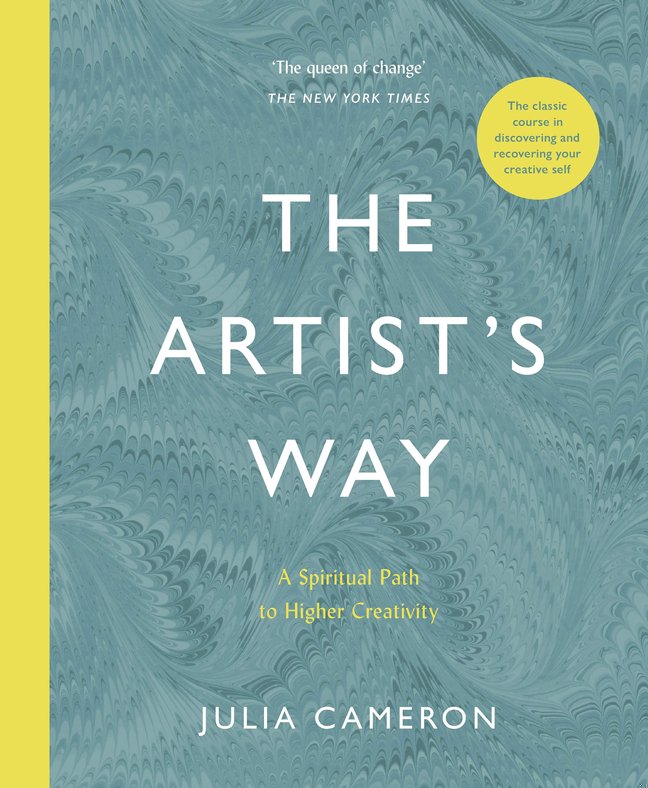 1
1
 Recommended by Anand C and Emma Gannon.