We've ranked the best branding books using expert recommendations, sales data, and millions of reader ratings. At Shortform, we know books. Our book guides are the best in the world. Learn why.
Cover unavailable
1
Building a StoryBrand: Clarify Your Message So Customers Will Listen
New York Times bestselling author Donald Miller uses the seven universal elements of powerful stories to teach readers how to dramatically improve how they connect with customers and grow their businesses.
Donald Miller’s StoryBrand process is a proven solution to the struggle business leaders face when talking about their businesses. This revolutionary method for connecting with customers provides readers with the ultimate competitive advantage, revealing the secret for helping their customers understand the compelling benefits of using their products, ideas, or services. Building a StoryBrand does this by teaching readers the seven universal story points all humans respond to; the real reason customers make purchases; how to simplify a brand message so people understand it; and how to create the most effective messaging for websites, brochures, and social media. Whether you are the marketing director of a multibillion dollar company, the owner of a small business, a politician running for office, or the lead singer of a rock band, Building a StoryBrand will forever transform the way you talk about who you are, what you do, and the unique value you bring to your customers.

…
Recommended by Dave Ramsey, Nick Loper, Sa El, and 1 others.
Dave Ramsey recommended this book on his website. [source]
Nick Loper
I just finished Building a StoryBrand, and need to fill in the worksheets and re-think my homepage as a result. That's the mark of a good business book — homework! [source]
Sa El
This book is all about telling the story of your business to your customers to that they know exactly what you offer and how to make them the hero in the journey. If you want to build a smart site, with a strong call to action, this book is essential. [source]

New York Times bestseller and named Best Marketing Book of 2014 by the American Marketing Association
What makes things popular? Why do people talk about certain products and ideas more than others? Why are some stories and rumors more infectious? And what makes online content go viral?
If you said advertising, think again. People don't listen to advertisements, they listen to their peers. But why do people talk about certain products and ideas more than others? Why are some stories and rumors more infectious? And what makes online content go viral?
Wharton marketing professor Jonah Berger has spent the last decade answering these questions. He's studied why New York Times articles make the paper's own Most E-mailed List, why products get word of mouth, and how social influence shapes everything from the cars we buy to the clothes we wear to the names we give our children. In this book, Berger reveals the secret science behind word-of-mouth and social transmission. Discover how six basic principles drive all sorts of things to become contagious, from consumer products and policy initiatives to workplace rumors and YouTube videos.
Contagious combines groundbreaking research with powerful stories. Learn how a luxury steakhouse found popularity through the lowly cheese-steak, why anti-drug commercials might have actually increased drug use, and why more than 200 million consumers shared a video about one of the seemingly most boring products there is: a blender. If you've wondered why certain stories get shared, e-mails get forwarded, or videos go viral, Contagious explains why, and shows how to leverage these concepts to craft contagious content. This book provides a set of specific, actionable techniques for helping information spread - for designing messages, advertisements, and information that people will share. Whether you're a manager at a big company, a small business owner trying to boost awareness, a politician running for office, or a health official trying to get the word out, Contagious will show you how to make your product or idea catch on.
…
Recommended by Vinod Khosla, Vinod Khosla, Andrew Medal, and 10 others.
Andrew Medal
The world is #CONTAGIOUS ☢️☢️☢️ • • My dog and I love this book. I read to him when he wants to learn about marketing techniques. The last time I read this book was in 2013. If you want a read that dissects how and… https://t.co/6v0ckSnSQe [source]
Ee Ling Lim
Contagious by Jonah Berger is another interesting one for those trying to figure out how to market their business. In Contagious, Jonah identifies what makes some things go viral, and narrowed it down to 6 principles STEPPS: Social currency (content that makes people look good when they talk about it), Triggers (top of mind topics), Emotion (content that we care about, especially high arousal ones like anger, awe, excitement and humor), Public, Practical and Stories. [source]
Erik Cheong
Explains why certain products and ideas become popular while others fail. It reveals the secret science behind word-of-mouth and social transmission. Discover how six basic principles drive all sorts of things to become contagious, from consumer products and policy initiatives to workplace rumors and YouTube videos. [source]
Cover unavailable
3
Made to Stick: Why Some Ideas Survive and Others Die
NEW YORK TIMES BESTSELLER - The instant classic about why some ideas thrive, why others die, and how to improve your idea's chances--essential reading in the "fake news" era.
Mark Twain once observed, "A lie can get halfway around the world before the truth can even get its boots on." His observation rings true: Urban legends, conspiracy theories, and bogus news stories circulate effortlessly. Meanwhile, people with important ideas--entrepreneurs, teachers, politicians, and journalists--struggle to make them "stick."
In Made to Stick, Chip and Dan Heath reveal the anatomy of ideas that stick and explain ways to make ideas stickier, such as applying the human scale principle, using the Velcro Theory of Memory, and creating curiosity gaps. Along the way, we discover that sticky messages of all kinds--from the infamous "kidney theft ring" hoax to a coach's lessons on sportsmanship to a vision for a new product at Sony--draw their power from the same six traits.
Made to Stick will transform the way you communicate. It's a fast-paced tour of success stories (and failures): the Nobel Prize-winning scientist who drank a glass of bacteria to prove a point about stomach ulcers; the charities who make use of the Mother Teresa Effect; the elementary-school teacher whose simulation actually prevented racial prejudice.
Provocative, eye-opening, and often surprisingly funny, Made to Stick shows us the vital principles of winning ideas--and tells us how we can apply these rules to making our own messages stick.
@conorgil My all-time favorite example of research communication is The Selfish Gene. Astonishingly effective at explaining deep research ideas/findings to a lay reader. A book with great advice: https://t.co/QD1sM2o0z6 (It isn't specific to research but still super valuable.) [source]
Bill Liao
The Book "Made to Stick" combined with "The Poetics" by Aristotle really helped me to see the power of telling great stories with surprises in them and every time I meet a start-up I can always make a contribution to their pitch. [source]
Cristian-Dragos Baciu
I highly recommend all the books written by the Heath brothers, especially Made to Stick: Why Some Ideas Survive And Others Die. This one's a must-read for marketers. The reason I enjoyed their work so much is because they offer real-life stories and insights that makes it so much easier for the reader to imprint that information in his mind [source]
Cover unavailable
4
The Brand Gap
Marty Neumeier
5.0
THE BRAND GAP is the first book to present a unified theory of brand-building. Whereas most books on branding are weighted toward either a strategic or creative approach, this book shows how both ways of thinking can unite to produce a "charismatic brand"--a brand that customers feel is essential to their lives. In an entertaining two-hour read you'll learn:
- the new definition of brand - the five essential disciplines of brand-building - how branding is changing the dynamics of competition - the three most powerful questions to ask about any brand - why collaboration is the key to brand-building - how design determines a customer's experience - how to test brand concepts quickly and cheaply - the importance of managing brands from the inside - 220-word brand glossary
From the back cover: Not since McLuhan's THE MEDIUM IS THE MESSAGE has a book compressed so many ideas into so few pages. Using the visual language of the boardroom, Neumeier presents the first unified theory of branding--a set of five disciplines to help companies bridge the gap between brand strategy and customer experience. Those with a grasp of branding will be inspired by the new perspectives they find here, and those who would like to understand it better will suddenly "get it." This deceptively simple book offers everyone in the company access to "the most powerful business tool since the spreadsheet."
…
Recommended by Andy Budd and Robert Jones.
Robert Jones
It’s got a nice, informal definition of what a brand is…It’s very readable. [source]
A dynamic new cover heralds the reissue of this bestselling business classic, which Spencer Johnson, M.D., co-author of The One Minute Manager praised as "One of the most important communication books I've ever read. I recommend it highly!"
Recommended by Ev Williams, Tim O'Reilly, Ken Norton, and 7 others.
Tim O'Reilly
Founder/O'Reilly Media
Positioning, and The 22 Immutable Laws of Marketing by Al Ries and Jack Trout. Anyone who wants to start a business with impact needs to read these books. [source]
Marvin Liao
Partner/500 Startups
My list would be (besides the ones I mentioned in answer to the previous question) both business & Fiction/Sci-Fi and ones I personally found helpful to myself. The business books explain just exactly how business, work & investing are in reality & how to think properly & differentiate yourself. On the non-business side, a mix of History & classic fiction to understand people, philosophy to make sense of life and Science fiction to picture what the future could be like (not always utopian). [source]
This book is built around the brilliant insight that your prospect doesn't care nearly as much about what you do as you do, and thus you must boil down your offering into a unique slot that repositions the competition. [source]
Influence, the classic book on persuasion, explains the psychology of why people say "yes"—and how to apply these understandings. Dr. Robert Cialdini is the seminal expert in the rapidly expanding field of influence and persuasion. His thirty-five years of rigorous, evidence-based research along with a three-year program of study on what moves people to change behavior has resulted in this highly acclaimed book.
You'll learn the six universal principles, how to use them to become a skilled persuader—and how to defend yourself against them. Perfect for people in all walks of life, the principles of Influence will move you toward profound personal change and act as a driving force for your success.
The tipping point is that magic moment when an idea, trend, or social behavior crosses a threshold, tips, and spreads like wildfire. Just as a single sick person can start an epidemic of the flu, so too can a small but precisely targeted push cause a fashion trend, the popularity of a new product, or a drop in the crime rate. This widely acclaimed bestseller, in which Malcolm Gladwell explores and brilliantly illuminates the tipping point phenomenon, is already changing the way people throughout the world think about selling products and disseminating ideas.
Gladwell introduces us to the particular personality types who are natural pollinators of new ideas and trends, the people who create the phenomenon of word of mouth. He analyzes fashion trends, smoking, children's television, direct mail, and the early days of the American Revolution for clues about making ideas infectious, and visits a religious commune, a successful high-tech company, and one of the world's greatest salesmen to show how to start and sustain social epidemics.
Bunch of really good information in here on how to make ideas go viral. This could be good to apply to any kind of products or ideas you may have. Definitely, check out The Tipping Point, which is one of my favorites. [source]
Malcolm Gladwell's breakthrough insight was to focus on the micro-relationships between individuals, which helped organizations realize that it's not about the big ads and the huge charity balls... it's about setting the stage for the buzz to start. [source]
Andy Stern
I think that when we talk about making change, it is much more about macro change, like in policy. This book reminds you that at times when you're building big movements, or trying to elect significant decision-makers in politics, sometimes it's the little things that make a difference. Ever since the book was written, we've become very used to the idea of things going viral unexpectedly and then having massive impact. The Tipping Point, to me, is really an appreciation that very small things can rearrange thinking in ways – like infectious diseases – that have huge implications. While we're always searching for the big policy changes – and we think we have to do that in very traditional ways of building coalitions against constituencies, movements and the media – sometimes it's the little things that actually tip the situation. Like the story of a person and their unique set of circumstances that really captures an issue about health care or housing. So it's trying to remember, while you're thinking about the grand and the glorious, that thinking about the small things can equally bring about change. [source]
Cover unavailable
8
Start with Why: How Great Leaders Inspire Everyone to Take Action
Why are some people and organizations more innovative, more influential, and more profitable than others? Why do some command greater loyalty from customers and employees alike? Even among the successful, why are so few able to repeat their success over and over?
People like Martin Luther King Jr., Steve Jobs, and the Wright Brothers might have little in common, but they all started with why. It was their natural ability to start with why that enabled them to inspire those around them and to achieve remarkable things.
In studying the leaders who've had the greatest influence in the world, Simon Sinek discovered that they all think, act, and communicate in the exact same way—and it's the complete opposite of what everyone else does. Sinek calls this powerful idea The Golden Circle, and it provides a framework upon which organizations can be built, movements can be lead, and people can be inspired. And it all starts with WHY.
Any organization can explain what it does; some can explain how they do it; but very few can clearly articulate why. WHY is not money or profit—those are always results. WHY does your organization exist? WHY does it do the things it does? WHY do customers really buy from one company or another? WHY are people loyal to some leaders, but not others?
Starting with WHY works in big business and small business, in the nonprofit world and in politics. Those who start with WHY never manipulate, they inspire. And the people who follow them don't do so because they have to; they follow because they want to.
Drawing on a wide range of real-life stories, Sinek weaves together a clear vision of what it truly takes to lead and inspire. This book is for anyone who wants to inspire others or who wants to find someone to inspire them.
Today is World Book Day, a wonderful opportunity to address this #ChallengeRichard sent in by Mike Gonzalez of New Jersey: Make a list of your top 65 books to read in a lifetime. [source]
The basis of this book is so important to anyone looking to increase their influence, profits or impact. People won't truly buy into a product, service, movement, or idea until they understand the WHY behind it. When you start with the why, everything else falls into place. This book is so impactful, I consider it required reading. [source]
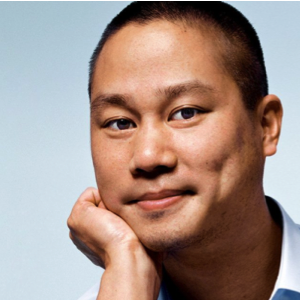
Tony Hsieh
CEO/Zappos.com
Over the years he’s recommended well over 20 business books — including his own, the 2010 bestseller Delivering Happiness and you can always find what he’s currently reading atop his cluttered desk. Start with Why is amogst those titles. [source]
Cover unavailable
9
Purple Cow, New Edition: Transform Your Business by Being Remarkable--Includes new bonus chapter
You're either a Purple Cow or you're not. You're either remarkable or invisible. Make your choice.
What do Starbucks and JetBlue and KrispyKreme and Apple and DutchBoy and Kensington and Zespri and Hard Candy have that you don't? How do they continue to confound critics and achieve spectacular growth, leaving behind former tried-and true brands to gasp their last?
Face it, the checklist of tired 'P's marketers have used for decades to get their product noticed -Pricing, Promotion, Publicity, to name a few-aren't working anymore. There's an exceptionally important 'P' that has to be added to the list. It's Purple Cow.
Cows, after you've seen one, or two, or ten, are boring. A Purple Cow, though...now that would be something. Purple Cow describes something phenomenal, something counterintuitive and exciting and flat out unbelievable. Every day, consumers come face to face with a lot of boring stuff-a lot of brown cows-but you can bet they won't forget a Purple Cow. And it's not a marketing function that you can slap on to your product or service. Purple Cow is inherent. It's built right in, or it's not there. Period.
In Purple Cow, Seth Godin urges you to put a Purple Cow into everything you build, and everything you do, to create something truly noticeable. It's a manifesto for marketers who want to help create products that are worth marketing in the first place.
…
Recommended by Joe Gebbia, Vinod Khosla, Vinod Khosla, and 21 others.
Joe Gebbia
Co-founder/Airbnb
Make something that’s distinct enough that people want to talk about it. [source]
Marvin Liao
Partner/500 Startups
My list would be (besides the ones I mentioned in answer to the previous question) both business & Fiction/Sci-Fi and ones I personally found helpful to myself. The business books explain just exactly how business, work & investing are in reality & how to think properly & differentiate yourself. On the non-business side, a mix of History & classic fiction to understand people, philosophy to make sense of life and Science fiction to picture what the future could be like (not always utopian). [source]
A few months ago, I was drinking a Noah’s Mill whiskey (cute) with my good buddy Brian Balfour and talking about life... During the conversation, we got on the topic of books that changed our lives. I want to share them with you. I judge a book's success if a year later I'm still using at least 1 thing from the book. [source]
In this candid and riveting memoir, for the first time ever, Nike founder and CEO Phil Knight shares the inside story of the company’s early days as an intrepid start-up and its evolution into one of the world’s most iconic, game-changing, and profitable brands.
In 1962, fresh out of business school, Phil Knight borrowed $50 from his father and created a company with a simple mission: import high-quality, low-cost athletic shoes from Japan. Selling the shoes from the trunk of his lime green Plymouth Valiant, Knight grossed $8,000 his first year. Today, Nike’s annual sales top $30 billion. In an age of startups, Nike is the ne plus ultra of all startups, and the swoosh has become a revolutionary, globe-spanning icon, one of the most ubiquitous and recognizable symbols in the world today.
But Knight, the man behind the swoosh, has always remained a mystery. Now, for the first time, in a memoir that is candid, humble, gutsy, and wry, he tells his story, beginning with his crossroads moment. At 24, after backpacking around the world, he decided to take the unconventional path, to start his own business—a business that would be dynamic, different.
Knight details the many risks and daunting setbacks that stood between him and his dream—along with his early triumphs. Above all, he recalls the formative relationships with his first partners and employees, a ragtag group of misfits and seekers who became a tight-knit band of brothers. Together, harnessing the transcendent power of a shared mission, and a deep belief in the spirit of sport, they built a brand that changed everything.
This memoir, by the co-founder of Nike, is a refreshingly honest reminder of what the path to business success really looks like: messy, precarious, and riddled with mistakes. I’ve met Knight a few times over the years. He’s super nice, but he’s also quiet and difficult to get to know. Here Knight opens up in a way few CEOs are willing to do. I don’t think Knight sets out to teach the reader anything. Instead, he accomplishes something better. He tells his story as honestly as he can. It’s an amazing tale. [source]
I've known Phil Knight since I was a kid, but I didn't really know him until I opened this beautiful, startling, intimate book. And the same goes for Nike. I've worn the gear with pride, but I didn't realize the remarkable saga of innovation and survival and triumph that stood behind every swoosh. Candid, funny, suspenseful, literary - this is a memoir for people who love sport, but above all it's a memoir for people who love memoirs. [source]
Cover unavailable
11
The 22 Immutable Laws of Branding: How to Build a Product or Service Into a World-Class Brand
Laura Ries, Al Ries
4.7
The only way to stand out in today's -- and tomorrow's -- cluttered marketplace is to build your product or service into a brand. Think Nike, Starbuck's, Xerox, and Kleenex, and you're thinking brands in the biggest and most lucrative sense. In The 22 Immutable Laws of Branding, marketing guru Al Ries, together with Laura Ries, has put together the authoritative work on brands and branding -- organized in a short, pithy book that can be read and digested in as brief a time as an airplane ride.
…
Recommended by Tim O'Reilly and Bogdana Butnar.
Tim O'Reilly
Founder/O'Reilly Media
Positioning, and The 22 Immutable Laws of Marketing by Al Ries and Jack Trout. Anyone who wants to start a business with impact needs to read these books. [source]
Bogdana Butnar
I thought I might put my money where my mouth is. I keep whining that young people are not in touch with some essential books on advertising that have helped me shape the way I practise my trade today, but I never did anything about it. So I am starting here the ultimate books to read list. I will add to it as I get suggestions and as more good books get written. [source]
A candid and indispensable primer on all aspects of advertising from the man Time has called "the most sought after wizard in the business". 223 photos.
I thought I might put my money where my mouth is. I keep whining that young people are not in touch with some essential books on advertising that have helped me shape the way I practise my trade today, but I never did anything about it. So I am starting here the ultimate books to read list. I will add to it as I get suggestions and as more good books get written. [source]
Seth Godin’s three essential questions for every marketer: “What’s your story?” “Will the people who need to hear this story believe it?” “Is it true?” All marketers tell stories. And if they do it right, we believe them. We believe that wine tastes better in a $20 glass than a $1 glass. We believe that an $80,000 Porsche is vastly superior to a $36,000 Volkswagen that’s virtually the same car. We believe that $125 sneakers make our feet feel better—and look cooler—than a $25 brand. And believing it makes it true.
As Seth Godin showed in this controversial book, great marketers don’t talk about features or even benefits. Instead, they tell a story—a story we want to believe, whether it’s factual or not. In a world where most people have an infinite number of choices and no time to make them, every organization is a marketer, and all marketing is about telling stories.
Marketers succeed when they tell us a story that fits our worldview, a story that we intuitively embrace and then share with our friends. Think of the Dyson vacuum cleaner, or Fiji water, or the iPod.
But beware: If your stories are inauthentic, you cross the line from fib to fraud. Marketers fail when they are selfish and scurrilous, when they abuse the tools of their trade and make the world worse. That’s a lesson learned the hard way by telemarketers, cigarette companies, and sleazy politicians.
But for the rest of us, it’s time to embrace the power of the story. As Godin writes, “Stories make it easier to understand the world. Stories are the only way we know to spread an idea. Marketers didn’t invent storytelling. They just perfected it.”
…
Recommended by Joe Gebbia, Steve Blank, Alan Webber, and 1 others.
Joe Gebbia
Co-founder/Airbnb
I remember something that the author says in there which I never forgot, which is to make something people want to talk about. [source]
Alan Webber
Founder/Fast Company
If Seth Godin didn't exist we'd need to invent him. [source]
Cover unavailable
14
Delivering Happiness: A Path to Profits, Passion, and Purpose
You want to learn about the path that we took at Zappos to get to over $1 billion in gross merchandise sales in less than ten years. You want to learn about the path I took that eventually led me to Zappos, and the lessons I learned along the way. You want to learn from all the mistakes we made at Zappos over the years so that your business can avoid making some of the same ones. You want to figure out the right balance of profits, passion, and purpose in business and in life. You want to build a long-term, enduring business and brand. You want to create a stronger company culture, which will make your employees and coworkers happier and create more employee engagement, leading to higher productivity. You want to deliver a better customer experience, which will make your customers happier and create more customer loyalty, leading to increased profits. You want to build something special. You want to find inspiration and happiness in work and in life. You ran out of firewood for your fireplace. This book makes an excellent fire-starter.
…
Recommended by Ev Williams, Chip Conley, Adam Johnston, and 15 others.
Chip Conley
The author is a wise guy. Sincerely. He’s one of the wisest and most thoughtful business leaders of the modern age. [source]
Adam Johnston
Inspiring case study into building brand and customer service. [source]
Chelsea Frank
I read everything with an open mind, often challenging myself by choosing books with an odd perspective or religious/spiritual views. These books do not reflect my personal feelings but are books that helped shape my perspective on life, love, and happiness. [source]
Cover unavailable
15
Designing Brand Identity: An Essential Guide for the Entire Branding Team
Alina Wheeler
4.7
From researching the competition to translating the vision of the CEO, to designing and implementing an integrated brand identity programme, the meticulous development process of designing a brand identity is presented through a highly visible step-by-step approach in five phases.
Cover unavailable
16
Zag: The #1 Strategy of High-Performance Brands
Marty Neumeier
4.6
"When everybody zigs, zag," says Marty Neumeier in this fresh view of brand strategy. ZAG follows the ultra-clear "whiteboard overview" style of the author's first book, THE BRAND GAP, but drills deeper into the question of how brands can harness the power of differentiation. The author argues that in an extremely cluttered marketplace, traditional differentiation is no longer enough--today companies need "radical differentiation" to create lasting value for their shareholders and customers. In an entertaining 3-hour read you'll learn:
- why me-too brands are doomed to fail - how to "read" customer feedback on new products and messages - the 17 steps for designing "difference" into your brand - how to turn your brand's "onliness" into a "trueline" to drive synergy - the secrets of naming products, services, and companies - the four deadly dangers faced by brand portfolios - how to "stretch" your brand without breaking it - how to succeed at all three stages of the competition cycle
From the back cover: In an age of me-too products and instant communications, keeping up with the competition is no longer a winning strategy. Today you have to out-position, out-maneuver, and out-design the competition. The new rule? When everybody zigs, zag. In his first book, THE BRAND GAP, Neumeier showed companies how to bridge the distance between business strategy and design. In ZAG, he illustrates the number-one strategy of high-performance brands--radical differentiation.
ZAG is an AIGA Design Press book, published under Peachpit's New Riders imprint in partnership with AIGA. For a quick peek inside ZAG, go to www.zagbook.com.
This book provides evidence-based answers to the key questions asked by marketers every day. Tackling issues such as how brands grow, how advertising really works, what price promotions really do & how loyalty programs really affect loyalty.
Cover unavailable
18
Crush It!: Why Now Is the Time to Cash In on Your Passion
Do you have a hobby you wish you could indulge in all day? An obsession that keeps you up at night? Now is the perfect time to take that passion and make a living doing what you love. In Crush It! Why NOW Is the Time to Cash In on Your Passion, Gary Vaynerchuk shows you how to use the power of the Internet to turn your real interests into real businesses. Gary spent years building his family business from a local wine shop into a national industry leader. Then one day he turned on a video camera, and by using the secrets revealed here, transformed his entire life and earning potential by building his personal brand. By the end of this book, readers will have learned how to harness the power of the Internet to make their entrepreneurial dreams come true. Step by step, Crush It! is the ultimate driver’s manual for modern business.
…
Recommended by Eric Schmidt, Tony Hsieh, Ryan Hoover, and 8 others.
Tony Hsieh
CEO/Zappos.com
Gary Vaynerchuk is one of those entrepreneurs who has discovered the secret to combining passion with business. He is always an inspiration and always entertaining. You owe it to yourself to read this book! [source]
For anyone interested in my career path, I’d recommend books in various genres. On a real practical level, I’d certainly recommend reading any and all plant/mushroom/tree/ecology/nature books you can acquire. It’s even more helpful to read the books that pertain specifically to your ecosystem and bioregion. Additionally, I’d also recommend reading a plethora of business and marketing books — both old and new alike. Think And Grow Rich by Napoleon Hill, Crush It! by Gary Vaynerchuk, Influence: The Psychology of Persuasion by Robert Cialdini, and anything by Seth Godin would be my top recommendations. And of course, every book I mentioned in the previous answers are strongly recommended as well. [source]

Cover unavailable
19
Jab, Jab, Jab, Right Hook: How to Tell Your Story in a Noisy Social World
The New York Times bestselling author and social media expert returns with hard-won advice on how to connect with customers and beat the competition by mastering social media marketing
When managers and marketers outline their social media strategies, they often plan for the "right hook"-their next highly anticipated sale or campaign that's going to put the competition out for the count. Even companies committed to jabbing-patiently engaging with customers to build the relationships so crucial to successful social media campaigns-still yearn to land the powerful, bruising swing that will knock out their opponent or their customer's resistance in one tooth-spritzing, killer blow. Right hooks, after all, convert traffic to sales. They easily show results and ROI. Except when they don't.
In the same passionate, street-wise style readers have come to expect, Gary Vaynerchuk is on a mission to improve marketers' right hooks by changing the way they fight to make their customers happy, and ultimately to compete. Thanks to the massive change and proliferation in social media platforms in the last four years, the winning combination of jabs and right hooks is different now. Communication is still key, but context matters more than ever. It's not just about developing high-quality content, but developing high-quality content perfectly adapted to specific social media platforms and mobile devices-content tailor-made for Facebook, YouTube, Instagram, Pinterest, Twitter, and Tumblr. A mash-up of the best elements of Crush It! and The Thank You Economy with a 2013 spin, here is a blueprint to social media marketing strategies that really works.
…
Recommended by Daymond John, Marvin Liao, Aaron Agius, and 35 others.
Marvin Liao
Partner/500 Startups
My list would be (besides the ones I mentioned in answer to the previous question) both business & Fiction/Sci-Fi and ones I personally found helpful to myself. The business books explain just exactly how business, work & investing are in reality & how to think properly & differentiate yourself. On the non-business side, a mix of History & classic fiction to understand people, philosophy to make sense of life and Science fiction to picture what the future could be like (not always utopian). [source]
Alex Circei
Question: What five books would you recommend to young people interested in your career path & why? Answer: Screw It, Let's Do It: Lessons In Life by Richard Branson Outliers: The Story of Success by Malcolm Gladwell Start With Why: How Great Leaders Inspire Everyone To Take Action by Simon Sinek The Hard Thing About Hard Things: Building a Business When There Are No Easy Answers by Ben Horowitz Rich Dad Poor Dad: What the Rich Teach Their Kids About Money That the Poor and Middle Class Do Not! by Robert T. Kiyosaki [source]
Auston Bunsen
I’ve got a few, one book that really impacted me early on as someone coming from a middle-class family was “Rich dad, Poor dad”. [source]
Cover unavailable
20
The 22 Immutable Laws of Marketing: Violate Them at Your Own Risk
World-renowned marketing consultants and bestselling authors Al Ries and Jack Trout reveal 22 laws of marketing, with hundreds of examples that illustrate their success, in this innovative and sensible guide to marketing. Each law is described in detail and backed up by numerous examples of what worked and what didn't in the international marketplace.
Question: What books would you recommend to young people interested in your career path? Answer: Purple Cow by Seth Godin End of Jobs by Taylor Pearson Rework by Jason Fried & DHH Trust Me I’m Lying by Ryan Holiday The Complacent Class by Tyler Cowen The 22 Immutable Laws of Marketing by Al Ries and Jack Trout Losing My Virginity by Richard Branson [source]

Question: What five books would you recommend to young people interested in your career path & why? Answer: I know this is sounds self-serving but I’d recommended both of my books, the soon to be released, “Niche Down: How to Become Legendary by Being Different” and Harper Collins’ “instant classic,” “Play Bigger: How Pirates, Dreamers and Innovators Create and Dominate Markets” In addition: The Effective Executive, by Peter Drucker The E-Myth, by Michael Gerber Radical Candor: Be a Kickass Boss Without Losing Your Humanity by Kim Scott Back from the Dead, by Bill Walton The 22 Immutable Laws of Marketing, by Al Ries and Jack Trout [source]
Even the smartest among us can feel inept as we fail to figure out which light switch or oven burner to turn on, or whether to push, pull, or slide a door. The fault, argues this ingenious—even liberating—book, lies not in ourselves, but in product design that ignores the needs of users and the principles of cognitive psychology. The problems range from ambiguous and hidden controls to arbitrary relationships between controls and functions, coupled with a lack of feedback or other assistance and unreasonable demands on memorization. The Design of Everyday Things shows that good, usable design is possible. The rules are simple: make things visible, exploit natural relationships that couple function and control, and make intelligent use of constraints. The goal: guide the user effortlessly to the right action on the right control at the right time.
In this entertaining and insightful analysis, cognitive scientist Don Norman hails excellence of design as the most important key to regaining the competitive edge in influencing consumer behavior. Now fully expanded and updated, with a new introduction by the author, The Design of Everyday Things is a powerful primer on how—and why—some products satisfy customers while others only frustrate them.
…
Recommended by Andrew Chen, Marissa Mayer, Nir Eyal, and 23 others.
Grey Baker
I mainly read to decompress and change my state of mind, so it’s hard to point to an insight I read that helped me. Reading fiction has pulled me out of a bad mood more times than I can count, though, and always reenergises me to attack problems that had stumped me again. That said, I read and loved Norman Norman’s “The Design of Everyday Things”, and it’s helped me think through design problems ever since. [source]
Julia Enthoven
For people interested in designing or building software products: The Design of Everyday Things by Don Norman and The Lean Product Playbook by Dan Olsen. Both books have informed my product sense and helped me make decisions about great UX. [source]
Kaci Lambe
These three books are about how people actually use design in their lives. They helped me understand this very basic idea: There are no dumb users, only bad designers. Take the time to create based on how your design will be interacted with. Test it. Iterate. That's how you become a good designer. [source]
How do successful companies create products people can’t put down?
Why do some products capture widespread attention while others flop? What makes us engage with certain products out of sheer habit? Is there a pattern underlying how technologies hook us? Nir Eyal answers these questions (and many more) by explaining the Hook Model—a four-step process embedded into the products of many successful companies to subtly encourage customer behavior. Through consecutive “hook cycles,” these products reach their ultimate goal of bringing users back again and again without depending on costly advertising or aggressive messaging.
Hooked is based on Eyal’s years of research, consulting, and practical experience. He wrote the book he wished had been available to him as a start-up founder—not abstract theory, but a how-to guide for building better products. Hooked is written for product managers, designers, marketers, start-up founders, and anyone who seeks to understand how products influence our behavior.
Eyal provides readers with:
• Practical insights to create user habits that stick. • Actionable steps for building products people love.
• Fascinating examples from the iPhone to Twitter, Pinterest to the Bible App, and many other habit-forming products.
…
Recommended by Andrew Chen, Nir Eyal, Ken Norton, and 41 others.
Matt Mullenweg
Founder & CEO/Automattic
Hooked gives you the blueprint for the next generation of products. Read Hooked or the company that replaces you will. [source]
Boris Veldhuijzen van Zanten
The book everyone in Silicon Valley is talking about. [source]

Chandini Jain
One of the five books Chandini would you recommend to young people interested in her career path. [source]
Cover unavailable
23
No Logo
Naomi Klein
4.5
With a new Afterword to the 2002 edition, No Logo employs journalistic savvy and personal testament to detail the insidious practices and far-reaching effects of corporate marketing—and the powerful potential of a growing activist sect that will surely alter the course of the 21st century. First published before the World Trade Organization protests in Seattle, this is an infuriating, inspiring, and altogether pioneering work of cultural criticism that investigates money, marketing, and the anti-corporate movement.
As global corporations compete for the hearts and wallets of consumers who not only buy their products but willingly advertise them from head to toe—witness today's schoolbooks, superstores, sporting arenas, and brand-name synergy—a new generation has begun to battle consumerism with its own best weapons. In this provocative, well-written study, a front-line report on that battle, we learn how the Nike swoosh has changed from an athletic status-symbol to a metaphor for sweatshop labor, how teenaged McDonald's workers are risking their jobs to join the Teamsters, and how "culture jammers" utilize spray paint, computer-hacking acumen, and anti-propagandist wordplay to undercut the slogans and meanings of billboard ads (as in "Joe Chemo" for "Joe Camel").
No Logo will challenge and enlighten students of sociology, economics, popular culture, international affairs, and marketing.
"This book is not another account of the power of the select group of corporate Goliaths that have gathered to form our de facto global government. Rather, it is an attempt to analyze and document the forces opposing corporate rule, and to lay out the particular set of cultural and economic conditions that made the emergence of that opposition inevitable." —Naomi Klein, from her Introduction
…
Recommended by Bogdana Butnar and David Lammy.
Bogdana Butnar
I thought I might put my money where my mouth is. I keep whining that young people are not in touch with some essential books on advertising that have helped me shape the way I practise my trade today, but I never did anything about it. So I am starting here the ultimate books to read list. I will add to it as I get suggestions and as more good books get written. [source]
David Lammy
This is another modern classic worth revisiting. It charts how brands have become tangled up with identity – how they stopped being markers of quality and became symbols of identity and markers of status. Logos have moved from the inside label to being splashed all over products. Having a coffee in Starbucks is an experience not a product. What you wear helps signal your worth. [source]
John Berger’s Classic Text on Art John Berger's Ways of Seeing is one of the most stimulating and the most influential books on art in any language. First published in 1972, it was based on the BBC television series about which the (London) Sunday Times critic commented: "This is an eye-opener in more ways than one: by concentrating on how we look at paintings . . . he will almost certainly change the way you look at pictures." By now he has.
"Berger has the ability to cut right through the mystification of the professional art critics . . . He is a liberator of images: and once we have allowed the paintings to work on us directly, we are in a much better position to make a meaningful evaluation" —Peter Fuller, Arts Review
"The influence of the series and the book . . . was enormous . . . It opened up for general attention to areas of cultural study that are now commonplace" —Geoff Dyer in Ways of Telling
Winner of the 1972 Booker Prize for his novel, G., John Peter Berger (born November 5th, 1926) is an art critic, painter and author of many novels including A Painter of Our Time, From A to X and Bento’s Sketchbook.
You have to understand the Marxist interpretation of art; it is absolutely fundamental to the way that art history departments now study the material. Then you have to critique it, because we’ve moved on from the 1970s and the collapse of Marxism in most of the world shows—amongst other things—that the model was flawed. But it’s still a very good book to read, for a teenager especially. [source]

Cover unavailable
25
Creativity, Inc.: Overcoming the Unseen Forces That Stand in the Way of True Inspiration
“What does it mean to manage well?” From Ed Catmull, co-founder (with Steve Jobs and John Lasseter) of Pixar Animation Studios, comes an incisive book about creativity in business—sure to appeal to readers of Daniel Pink, Tom Peters, and Chip and Dan Heath. Creativity, Inc. is a book for managers who want to lead their employees to new heights, a manual for anyone who strives for originality, and the first-ever, all-access trip into the nerve center of Pixar Animation—into the meetings, postmortems, and “Braintrust” sessions where some of the most successful films in history are made. It is, at heart, a book about how to build a creative culture—but it is also, as Pixar co-founder and president Ed Catmull writes, “an expression of the ideas that I believe make the best in us possible.” For nearly twenty years, Pixar has dominated the world of animation, producing such beloved films as the Toy Story trilogy, Monsters, Inc., Finding Nemo, The Incredibles, Up, and WALL-E, which have gone on to set box-office records and garner thirty Academy Awards. The joyousness of the storytelling, the inventive plots, the emotional authenticity: In some ways, Pixar movies are an object lesson in what creativity really is. Here, in this book, Catmull reveals the ideals and techniques that have made Pixar so widely admired—and so profitable.
As a young man, Ed Catmull had a dream: to make the first computer-animated movie. He nurtured that dream as a Ph.D. student at the University of Utah, where many computer science pioneers got their start, and then forged a partnership with George Lucas that led, indirectly, to his founding Pixar with Steve Jobs and John Lasseter in 1986. Nine years later, Toy Story was released, changing animation forever. The essential ingredient in that movie’s success—and in the thirteen movies that followed—was the unique environment that Catmull and his colleagues built at Pixar, based on philosophies that protect the creative process and defy convention, such as:
• Give a good idea to a mediocre team, and they will screw it up. But give a mediocre idea to a great team, and they will either fix it or come up with something better. • If you don’t strive to uncover what is unseen and understand its nature, you will be ill prepared to lead. • It’s not the manager’s job to prevent risks. It’s the manager’s job to make it safe for others to take them. • The cost of preventing errors is often far greater than the cost of fixing them. • A company’s communication structure should not mirror its organizational structure. Everybody should be able to talk to anybody. • Do not assume that general agreement will lead to change—it takes substantial energy to move a group, even when all are on board.
This book is written by the founder of Pixar and is about his experience building a culture that fosters creativity. His theory is that people are fundamentally creative, but many forces stand in the way of people being able to do their best work. I love reading first-hand accounts about how people build great companies like Pixar and nurture innovation and creativity. This should be inspiring to anyone looking to do the same, and hopefully there will be lessons we can apply to connecting the world! [source]
No matter your circumstances, storytelling and creativity are two 'meta-skills' that can take your business and life to the next level. Ed is a master. [source]
Hello, My Name Is Awesome: How to Create Brand Names That Stick
Alexandra Watkins
4.5
Every year, 6 million companies and more than 100,000 products are launched. They all need an awesome name, but many (such as Xobni, Svbtle, and Doostang) look like the results of a drunken Scrabble game. In this entertaining and engaging book, ace naming consultant Alexandra Watkins explains how anyone--even noncreative types--can create memorable and buzz-worthy brand names. No degree in linguistics required. The heart of the book is Watkins's proven SMILE and SCRATCH Test--two acronyms for what makes or breaks a name. She also provides up-to-date advice, like how to make sure that Siri spells your name correctly and how to nab an available domain name. And you'll see dozens of examples--the good, the bad, and the "so bad she gave them an award." Alexandra Watkins is not afraid to name names.
"This is not a book about charismatic visionary leaders. It is not about visionary product concepts or visionary products or visionary market insights. Nor is it about just having a corporate vision. This is a book about something far more important, enduring, and substantial. This is a book about visionary companies." So write Jim Collins and Jerry Porras in this groundbreaking book that shatters myths, provides new insights, and gives practical guidance to those who would like to build landmark companies that stand the test of time.
Drawing upon a six-year research project at the Stanford University Graduate School of Business, Collins and Porras took eighteen truly exceptional and long-lasting companies -- they have an average age of nearly one hundred years and have outperformed the general stock market by a factor of fifteen since 1926 -- and studied each company in direct comparison to one of its top competitors. They examined the companies from their very beginnings to the present day -- as start-ups, as midsize companies, and as large corporations. Throughout, the authors asked: "What makes the truly exceptional companies different from other companies?"
What separates General Electric, 3M, Merck, Wal-Mart, Hewlett-Packard, Walt Disney, and Philip Morris from their rivals? How, for example, did Procter & Gamble, which began life substantially behind rival Colgate, eventually prevail as the premier institution in its industry? How was Motorola able to move from a humble battery repair business into integrated circuits and cellular communications, while Zenith never became dominant in anything other than TVs? How did Boeing unseat McDonnell Douglas as the world's best commercial aircraft company -- what did Boeing have that McDonnell Douglas lacked?
By answering such questions, Collins and Porras go beyond the incessant barrage of management buzzwords and fads of the day to discover timeless qualities that have consistently distinguished out-standing companies. They also provide inspiration to all executives and entrepreneurs by destroying the false but widely accepted idea that only charismatic visionary leaders can build visionary companies.
Filled with hundreds of specific examples and organized into a coherent framework of practical concepts that can be applied by managers and entrepreneurs at all levels, Built to Last provides a master blueprint for building organizations that will prosper long into the twenty-first century and beyond.
…
Recommended by Jeff Bezos, Drew Huston, Ev Williams, and 13 others.
recommends this book because it shows how to create a long lasting company. [source]
Tim O'Reilly
Founder/O'Reilly Media
Built to Last, by James Collins and Jerry Porras. The idea here is that great companies aren't afraid to have strong values. In fact, their cult-like values are what make them stand out from the norm. [source]
Alden Mills
Built to Last focused my daydreaming mind into what it takes to build truly great companies. [source]

Cover unavailable
28
LOGO Design Love, Annotated and Expanded Edition
David Airey
4.5
Completely updated and expanded, the second edition of David Airey's "Logo Design Love" contains more of just about everything that made the first edition so great: more case studies, more sketches, more logos, more tips for working with clients, more insider stories, and more practical information for getting the job and getting it done right. In "Logo Design Love," David shows you how to develop an iconic brand identity from start to finish, using client case studies from renowned designers. In the process, he reveals how designers create effective briefs, generate ideas, charge for their work, and collaborate with clients. David not only shares his personal experiences working on identity projects-including sketches and final results of his own successful designs-he also uses the work of many well-known designers such as Paula Scher, who designed the logos for Citi and Microsoft Windows, and Lindon Leader, creator of the current FedEx identity, as well as work from leading design studios, including Moving Brands, Pentagram, MetaDesign, Sagmeister & Walsh, and many more. In "Logo Design Love," you'll learn: Best practices for extending a logo into a complete brand identity systemWhy one logo is more effective than anotherHow to create your own iconic designsWhat sets some designers above the rest31 practical design tips for creating logos that last
A tribe is any group of people, large or small, who are connected to one another, a leader, and an idea. For millions of years, humans have been seeking out tribes, be they religious, ethnic, economic, political, or even musical (think of the Deadheads). It's our nature.
Now the Internet has eliminated the barriers of geography, cost, and time. All those blogs and social networking sites are helping existing tribes get bigger. But more important, they're enabling countless new tribes to be born—groups of ten or ten thousand or ten million who care about their iPhones, or a political campaign, or a new way to fight global warming. And so the key question: Who is going to lead us?
The Web can do amazing things, but it can't provide leadership. That still has to come from individuals—people just like you who have passion about something. The explosion in tribes means that anyone who wants to make a difference now has the tools at her fingertips.
If you think leadership is for other people, think again—leaders come in surprising packages. Consider Joel Spolsky and his international tribe of scary-smart software engineers. Or Gary Vaynerhuck, a wine expert with a devoted following of enthusiasts. Chris Sharma leads a tribe of rock climbers up impossible cliff faces, while Mich Mathews, a VP at Microsoft, runs her internal tribe of marketers from her cube in Seattle. All they have in common is the desire to change things, the ability to connect a tribe, and the willingness to lead.
If you ignore this opportunity, you risk turning into a "sheepwalker"—someone who fights to protect the status quo at all costs, never asking if obedience is doing you (or your organization) any good. Sheepwalkers don't do very well these days.
Tribes will make you think (really think) about the opportunities in leading your fellow employees, customers, investors, believers, hobbyists, or readers. . . . It's not easy, but it's easier than you think.
…
Recommended by Andrew Youderian, Bogdana Butnar, Michael Herrmann, and 2 others.
Andrew Youderian
The book "Tribes" by Seth Godin has been helpful as I've learned and studied how to best lead a Community. [source]
Bogdana Butnar
I thought I might put my money where my mouth is. I keep whining that young people are not in touch with some essential books on advertising that have helped me shape the way I practise my trade today, but I never did anything about it. So I am starting here the ultimate books to read list. I will add to it as I get suggestions and as more good books get written. [source]
Michael Herrmann
Another good book for today. The author argues that every product/service appeals to a "Tribe" of like-minded people. As businesspeople it's important we understand their dynamics. [source]
Cover unavailable
30
This Is Marketing: You Can't Be Seen Until You Learn to See
Real marketing isn't about racking up clicks and tweets; it's about connection, empathy, and making a difference.
Over the past quarter century, Seth Godin has taught and inspired millions of entrepreneurs, marketers, leaders, and fans from all walks of life, via his blog, online courses, lectures, and bestselling books. He is the inventor of countless ideas and phrases that have made their way into mainstream business language, from Permission Marketing to Purple Cow to Tribes to The Dip.
Now, for the first time, Godin offers the core of his marketing wisdom in one accessible, timeless package. At the heart of his approach is a big idea: Great marketers don't use consumers to solve their company's problem; they use marketing to solve other people's problems. They don't just make noise; they make the world better. Truly powerful marketing is grounded in empathy, generosity, and emotional labor.
This book teaches you how to identify your smallest viable audience; draw on the right signals and signs to position your offering; build trust and permission with your target market; speak to the narratives your audience tells themselves about status, affiliation, and dominance; spot opportunities to create and release tension; and give people the tools to achieve their goals.
It's time for marketers to stop lying, spamming, and feeling guilty about their work. It's time to stop confusing social media metrics with true connections. It's time to stop wasting money on stolen attention that won't pay off in the long run. THIS IS MARKETING offers a better approach that will still apply for decades to come, no matter how the tactics of marketing continue to evolve.
…
Recommended by Seth Godin, Aaron Watson, and Deke Bridges.
Nobody had written the definitive book of the post-advertising age. It needed to be able to explain everything from Airbnb to Trump to the success of Instagram. If there’s going to be a coherent, unified theory of marketing, it will not only explain what we see, but give us the tools to create our own change in the world. [source]
Aaron Watson
This book is my favorite thing he has produced. Unlike most non-fiction books, This Is Marketing does a good job of not going on too long or belaboring the point. Seth deliver succinct actionable insights, some of which I’ve already implemented with the Piper and Going Deep brands. [source]
Deke Bridges
Up late re-reading some of this book again. Seth Godin's book THIS IS MARKETING is so much more than branding, marketing, advertising, and growth. It really makes you think about how to review life. Fantastic book... all his works make your brain click. Got my copy at @Powells. https://t.co/46hSB0Fhv3 [source]
Strategy is not complex. But it is hard. It’s hard because it forces people and organizations to make specific choices about their future—something that doesn’t happen in most companies.
Now two of today’s best-known business thinkers get to the heart of strategy—explaining what it’s for, how to think about it, why you need it, and how to get it done. And they use one of the most successful corporate turnarounds of the past century, which they achieved together, to prove their point.
A.G. Lafley, former CEO of Procter & Gamble, in close partnership with strategic adviser Roger Martin, doubled P&G’s sales, quadrupled its profits, and increased its market value by more than $100 billion in just ten years. Now, drawn from their years of experience at P&G and the Rotman School of Management, where Martin is dean, this book shows how leaders in organizations of all sizes can guide everyday actions with larger strategic goals built around the clear, essential elements that determine business success—where to play and how to win.
The result is a playbook for winning. Lafley and Martin have created a set of five essential strategic choices that, when addressed in an integrated way, will move you ahead of your competitors. They are:
• What is our winning aspiration? • Where will we play? • How will we win? • What capabilities must we have in place to win? • What management systems are required to support our choices?
The stories of how P&G repeatedly won by applying this method to iconic brands such as Olay, Bounty, Gillette, Swiffer, and Febreze clearly illustrate how deciding on a strategic approach—and then making the right choices to support it—makes the difference between just playing the game and actually winning.
…
Recommended by Meg Whitman and Jeremy Miller.
Meg Whitman
CEO/HP
The entire company has organized around "Playing to Win" which is a book written by A.G. Lafley and a colleague of his. Listen, there are many ways to deploy strategy in companies. This is one I found to be particularly helpful because organizations have a lot of trouble making decisions, particularly at our scale. So this notion of where to play, what countries, what market segments, what products, and where not to play because we can't do it profitably, has been a very good discipline. ... And then once you determine where you're going to play, how to win. That is through a combination of where you are going to excel versus competitors. It's actually been a really good common framework that we can apply across HP. It's easily understandable and actually forces the tough trade-offs. [source]
Cover unavailable
32
On Writing Well: The Classic Guide To Writing Nonfiction
On Writing Well has been praised for its sound advice, its clarity and the warmth of its style. It is a book for everybody who wants to learn how to write or who needs to do some writing to get through the day, as almost everybody does in the age of e-mail and the Internet. Whether you want to write about people or places, science and technology, business, sports, the arts or about yourself in the increasingly popular memoir genre, On Writing Well offers you fundamental priciples as well as the insights of a distinguished writer and teacher. With more than a million copies sold, this volume has stood the test of time and remains a valuable resource for writers and would-be writers.
I read a bunch of books on writing before I wrote my first book and the two that stuck with me were Stephen King’s book and “On Writing Well” by Zinsser (which is a bit on the technical side). [source]
Tim O'Reilly
Founder/O'Reilly Media
On Writing Well, by William Zinsser. I wouldn't say this book influenced me, since my principles of writing were established long before I read it. However, it does capture many things that I believe about effective writing. [source]
In his long-awaited memoir, Yvon Chouinard-legendary climber, businessman, environmentalist, and founder of Patagonia, Inc.-shares the persistence and courage that have gone into being head of one of the most respected and environmentally responsible companies on earth. From his youth as the son of a French Canadian blacksmith to the thrilling, ambitious climbing expeditions that inspired his innovative designs for the sport's equipment, Let My People Go Surfing is the story of a man who brought doing good and having grand adventures into the heart of his business life-a book that will deeply affect entrepreneurs and outdoor enthusiasts alike.
…
Recommended by Alastair Humphreys, Amir Salihefendic, Andrew Youderian, and 5 others.
Question: What five books would you recommend to young people interested in your career path & why? Answer: 7 Habits of Highly Effective People (Getting the right things done) Entreleadership (Great primer on management) Let My People Go Surfing (How to build a business on your terms, that embraces your values) Essentialism (The Importance of focus) Work the System (A primer on building systems in your business) [source]
Holger Seim
When it comes to biographies I particularly like Let My People Go Surfing. [source]
Cover unavailable
34
Onward: How Starbucks Fought for Its Life without Losing Its Soul
In 2008, Howard Schultz, the president and chairman of Starbucks, made the unprecedented decision to return as the CEO eight years after he stepped down from daily oversight of the company and became chairman. Concerned that Starbucks had lost its way, Schultz was determined to help it return to its core values and restore not only its financial health, but also its soul. In Onward, he shares the remarkable story of his return and the company's ongoing transformation under his leadership, revealing how, during one of the most tumultuous economic times in history, Starbucks again achieved profitability and sustainability without sacrificing humanity.
Offering readers a snapshot of a moment in history that left no company unscathed, the book zooms in to show, in riveting detail, how one company struggled and recreated itself in the midst of it all. The fastpaced narrative is driven by day-to-day tension as conflicts arise and lets readers into Schultz's psyche as he comes to terms with his limitations and evolving leadership style. Onward is a compelling, candid narrative documenting the maturing of a brand as well as a businessman.
Onward represents Schultz's central leadership philosophy: It's not just about winning, but the right way to win. Ultimately, he gives readers what he strives to deliver every day - sense of hope that, no matter how tough times get, the future can be just as or more successful than the past, whatever one defines success to be.
…
Recommended by Ron Conway.
Ron Conway
Story of his return to Starbucks, and the success of the company in a tumlutuous economic time in history. [source]
Cover unavailable
35
Sticky Branding: 12.5 Ways to Stand Out, Attract Customers, and Grow an Incredible Brand
Jeremy Miller
4.4
Sticky Brands exist in almost every industry. Companies like Apple, Nike, and Starbucks have made themselves as recognizable as they are successful. But large companies are not the only ones who can stand out. It’s achievable for any business willing to break away from the industry norms and find innovative ways to serve its customers.
Based on a decade of research into what makes companies successful, Sticky Branding’s 12.5 guiding principles are drawn from hundreds of interviews with CEOs and business owners who have excelled within their industries. By following their examples your company will:
- Attract more customers - Sell more, faster - Inspire employee engagement - Become immune to the competition - Earn higher profits
Sticky Branding is your branding playbook. It provides ideas, stories and exercises to make your company stand out, attract customers, and grow into an incredible brand.
…
Recommended by Jeremy Miller.
Cover unavailable
36
Where Good Ideas Come from: The Natural History of Innovation
The printing press, the pencil, the flush toilet, the battery--these are all great ideas. But where do they come from? What kind of environment breeds them? What sparks the flash of brilliance? How do we generate the breakthrough technologies that push forward our lives, our society, our culture? Steven Johnson's answers are revelatory as he identifies the seven key patterns behind genuine innovation, and traces them across time and disciplines. From Darwin and Freud to the halls of Google and Apple, Johnson investigates the innovation hubs throughout modern time and pulls out the approaches and commonalities that seem to appear at moments of originality.
Quite good at giving examples of how you create environments that can encourage good ideas. [source]
Tony Hsieh
CEO/Zappos.com
Author Steven Johnson argues in his 2010 book that innovation comes from the collision of ideas. This can happen when an individual working in isolation builds off years of existing knowledge to fuel his insights, or it can happen much more quickly when several creative types bounce ideas off each other in a community like Silicon Valley. This theory is one of the reasons why Hsieh decided to invest $350 million of his own money in 2010 into the Downtown Project, which is building a community of entrepreneurs in Zappos' neighborhood. [source]
Also add to this: “How We Got to Now” by Steven Johnson. Basically: don’t believe the myth of the lonely genius. Ideas come from a confluence of history, “the adjacent possible” specific geographic locations, etc. The connections Johnson makes are brilliant. For instance, The Gutenberg Press (which, in itself, was invented because of improvements in sewing looms), made everyone realize they had bad vision. So the science of lenses was created. So microscopes were eventually created. So germs were eventually discovered. So modern medical science was discovered. And so on. Johnson is a thinker and a linker and tells a good story. [source]
Cover unavailable
37
The Start-up of You: Adapt to the Future, Invest in Yourself, and Transform Your Career
From the co-founder and chairman of LinkedIn and author Ben Casnocha comes a revolutionary new book on how to apply the strategies of successful entrepreneurship to your career: in other words, how to run the 'start-up of you'.
In a world where wages are virtually stagnant, creative disruption is rocking every industry, global competition for jobs is fierce, and job security is a thing of the past, we're all on our own when it comes to our careers. In the face of such uncertainty, the key to success is to think and act like an entrepreneur: to be nimble and self-reliant, to be innovative, and to know how to network and stand out from the crowd. And this is precisely what Hoffman and Casnocha show you how to do in a book that is both inspirational and supremely practical.
Just as LinkedIn is the one online community that no professional can afford not to belong to, this is the book that no professional can afford to be without.
Everyone, women and men alike, needs to think big to succeed. This is a practical book that shows you how to take control and build a career that will enable you to have real impact. [source]
The Startup of You" describes how to take the Silicon Valley approach to building a life: start with an idea, and work over your entire career to turn it something remarkable. In the world today, I think that the startup approach to life is necessary. This book distills the key techniques needed to succeed. [source]
The same extraordinary vision and timing that enabled Reid to found LinkedIn is once again on display with his book "the start-up of YOU." His central thesis, that every individual can benefit from acting as the entrepreneur of their own life and career, has never been more important than it is in today's increasingly globalized, competitive, and networked world. [source]
Cover unavailable
38
Building Strong Brands
David A. Aaker
4.3
In this compelling work, Aaker uses real brand-building cases from Saturn, General Electric, Kodak, Healthy Choice, McDonald's, and others to demonstrate how strong brands have been created and managed.
As industries turn increasingly hostile, it is clear that strong brand-building skills are needed to survive and prosper. In David Aaker's pathbreaking book, Managing Brand Equity, managers discovered the value of a brand as a strategic asset and a company's primary source of competitive advantage. Now, in this compelling new work, Aaker uses real brand-building cases from Saturn, General Electric, Kodak, Healthy Choice, McDonald's, and others to demonstrate how strong brands have been created and managed.
A common pitfall of brand strategists is to focus on brand attributes. Aaker shows how to break out of the box by considering emotional and self-expressive benefits and by introducing the brand-as-person, brand-as-organization, and brand-as-symbol perspectives. The twin concepts of brand identity (the brand image that brand strategists aspire to create or maintain) and brand position (that part of the brand identity that is to be actively communicated) play a key role in managing the "out-of-the-box" brand.
A second pitfall is to ignore the fact that individual brands are part of a larger system consisting of many intertwined and overlapping brands and subbrands. Aaker shows how to manage the "brand system" to achieve clarity and synergy, to adapt to a changing environment, and to leverage brand assets into new markets and products.
Aaker also addresses practical management issues, introducing a set of brand equity measures, termed the brand equity ten, to help those who measure and track brand equity across products and markets. He presents and analyzes brand-nurturing organizational forms that are responsive to the challenges of coordinated brands across markets, products, roles, and contexts. Potentially destructive organizational pressures to change a brand's identity and position are also discussed.
As executives in a wide range of industries seek to prevent their products and services from becoming commodities, they are recommitting themselves to brands as a foundation of business strategy. This new work will be essential reading for the battle-ready.
…
Cover unavailable
39
Branding: In Five and a Half Steps
Michael Johnson
4.3
Michael Johnson is one of the world’s leading graphic designers and brand consultants. His studio, johnson banks, is responsible for the rebranding of many notable clients, including Virgin Atlantic, Think London, BFI, Christian Aid, and MORE TH>N, and he has garnered a plethora of awards in the process.
In Branding, Johnson strips everyday brands down to their basic components, with case studies that enable us to understand why we select one product or service over another and allow us to comprehend how seemingly subtle influences can affect key life decisions. The first part of the book shows how the birth of a brand begins not with finding a solution but rather with identifying the correct question—the missing gap in the market—to which an answer is needed. Johnson proceeds to unveil hidden elements involved in creating a successful brand—from the strapline that gives the brand a narrative and a purpose to clever uses of typography that unite design and language.
With more than 1,000 vibrant illustrations showcasing the world’s most successful corporate identities, as well as generic templates enabling you to create your own brand or ad with ease, Branding explores every step of the development process required to create the simplest and most immediately compelling brands.
…
Cover unavailable
40
Brand Thinking and Other Noble Pursuits
Debbie Millman
4.3
We are now living in a world with over one hundred brands of bottled water. The United States alone is home to over 45,000 shopping malls. And there are more than 19 million customized beverage choices a barista can whip up at your local Starbucks. Whether it’s good or bad, the real question is why we behave this way in the first place. Why do we telegraph our affiliations or our beliefs with symbols, signs, and codes?
Brand Thinking and Other Noble Pursuits contains twenty interviews with the world’s leading designers and thinkers in branding. The interviews contain spirited views on how and why humans have branded the world around us, and the ideas, inventions, and insight inherent in the search.
…
Cover unavailable
41
Creating a Brand Identity: A Guide for Designers: (Graphic Design Books, Logo Design, Marketing)
Catharine Slade-Brooking
4.3
Creating a Brand Identity goes behind the scenes to explore the creative processes involved in designing a successful brand identity, one of the most fascinating and complex challenges in graphic design.
This bestselling book is ideal for students, professionals and agencies working in the fields of:
Authored by design and branding expert, Catharine Slade–Brooking, Creating a Brand Identity includes exercises and examples that highlight the key activities undertaken by graphic designers to create successful brand identities, including:
• Defining the audience • Analysing competitors • Creating mood boards • Naming brands • Logo design • Client presentations • Rebranding • Launching a new brand identity
Case studies throughout the book are illustrated with brand identities from a diverse range of industries including digital media, fashion, advertising, product design, packaging, retail and more.
The book uses images of professional design concepts, brand case studies and diagrams throughout to illustrate the text. Flow–charts are also used extensively to highlight the step–by–step methodology applied by industry professionals to create a brand.
The content of the book has been derived from Catharine Slade–Brooking own experience of entering the world of branding as a graduate and having to learn the hard way, 'on the job'. This, in turn, enabled the author to develop teaching materials for undergraduate and postgraduate students on the BA Graphic Communication course at the University of the Creative Arts, where Slade–Brooking is a lecturer. The book has been recommended across a wide range of university courses, from graphic design school to animation, digital media, textiles and interior design. It includes a full glossary of brand terminology and a list of recommended further reading.
…
Cover unavailable
42
The 1-Page Marketing Plan: Get New Customers, Make More Money, And Stand out From The Crowd
To build a successful business, you need to stop doing random acts of marketing and start following a reliable plan for rapid business growth. Traditionally, creating a marketing plan has been a difficult and time-consuming process, which is why it often doesn't get done.
In The 1-Page Marketing Plan, serial entrepreneur and rebellious marketer Allan Dib reveals a marketing implementation breakthrough that makes creating a marketing plan simple and fast. It's literally a single page, divided up into nine squares. With it you'll be able to map out your own sophisticated marketing plan and go from zero to marketing hero.
Whether you're just starting out or are an experienced entrepreneur, The 1-Page Marketing Plan is the easiest and fastest way to create a marketing plan that will propel your business growth.
In this groundbreaking new book you'll discover: • How to get new customers, clients, or patients and how make more profit from existing ones. • Why “big business” style marketing could kill your business and strategies that actually work for small and medium-sized businesses. • How to close sales without being pushy, needy, or obnoxious while turning the tables and having prospects begging you to take their money. • A simple step-by-step process for creating your own personalized marketing plan that is literally one page. Simply follow along and fill in each of the nine squares that make up your own 1-Page Marketing Plan. • How to annihilate competitors and make yourself the only logical choice. • How to get amazing results on a small budget using the secrets of direct response marketing. • How to charge high prices for your products and services and have customers actually thank you for it.
…
Cover unavailable
43
Emotional Branding: The New Paradigm for Connecting Brands to People
Marc Gobe
4.3
Emotional Branding is the best selling revolutionary business book that has created a movement in branding circles by shifting the focus from products to people. The “10 Commandments of Emotional Branding” have become a new benchmark for marketing and creative professionals, emotional branding has become a coined term by many top industry experts to express the new dynamic that exists now between brands and people. The emergence of social media, consumer empowerment and interaction were all clearly predicted in this book 10 years ago around the new concept of a consumer democracy. In this updated edition, Marc Gobé covers how social media helped elect Barack Obama to the White House, how the idea behind Twitter is transforming our civilization, and why new generations are re-inventing business, commerce, and management as we know it by leveraging the power of the web. In studying the role of women as "shoppers in chief, "and defining the need to look at the marketplace by recognizing differences in origins, cultures, and choices, Emotional Branding foresaw the break up of mass media to more targeted and culturally sensitive modes of communications. As the first marketing book ever to study the role of the LGBTQ community as powerful influencers for many brands, Emotional Branding opened the door to a renewed sensitivity toward traditional research that privilege individuality and the power of the margins to be at the center of any marketing strategy. A whole segment in the book looks at the role of the senses in branding and design. The opportunity that exists in understanding how we feel about a brand determines how much we want to buy. By exploring the 5 senses, Emotional Branding shows how some brands have built up their businesses by engaging in a sensory interaction with their consumers. Emotional Branding explores how effective consumer interaction needs to be about senses and feelings, emotions and sentiments. Not unlike the Greek culture that used philosophy, poetry, music, and the art of discussion and debate to stimulate the imagination, the concept of emotional branding establishes the forum in which people can convene and push the limits of their creativity. Through poetry the Greeks invented mathematics, the basis of science, sculpture, and drama. Unless we focus on humanizing the branding process we will lose the powerful emotional connection people have with brands. Critics hailed Emotional Branding as a breakthrough and a fresh approach to building brands. Design in this book is considered a new media, the web a place where people will share information and communicate, architecture a part of the brand building process, and people as the most powerful element of any branding strategy. Most importantly, it emphasizes the need to transcend the traditional language of marketing--from one based on statistics and data to a visually compelling new form of communication that fosters creativity and innovation.
From the Trade Paperback edition.
…
Cover unavailable
44
Guerrilla Marketing: Easy and Inexpensive Strategies for Making Big Profits from Your Small Business
When Guerrilla Marketing was first published in 1983, Jay Levinson revolutionized marketing strategies for the small-business owner with his take-no-prisoners approach to finding clients. Based on hundreds of solid ideas that really work, Levinson’s philosophy has given birth to a new way of learning about market share and how to gain it. In this completely updated and expanded fourth edition, Levinson offers a new arsenal of weaponry for small-business success including
* strategies for marketing on the Internet (explaining when and precisely how to use it)
* tips for using new technology, such as podcasting and automated marketing
* programs for targeting prospects and cultivating repeat and referral business
* management lessons in the age of telecommuting and freelance employees
Guerrilla Marketing is the entrepreneur’s marketing bible -- and the book every small-business owner should have on his or her shelf.
…
Recommended by Drew Houston, Bogdana Butnar, Pat Walls, and 1 others.
Drew Houston
CEO/Dropbox
About how do you get attention and users for your product if you have no money? The tactic of putting a video on Hacker News or creating a viral video, that was a seed that was planted by reading this book. [source]
Bogdana Butnar
I thought I might put my money where my mouth is. I keep whining that young people are not in touch with some essential books on advertising that have helped me shape the way I practise my trade today, but I never did anything about it. So I am starting here the ultimate books to read list. I will add to it as I get suggestions and as more good books get written. [source]
Pat Walls
One of the best marketing books out there, and looking back - it was way before it's time. [source]
Cover unavailable
45
The Hero and the Outlaw: Building Extraordinary Brands Through the Power of Archetypes
Margaret Mark, Carol Pearson, Carol S. Pearson
4.3
A brand's meaning--how it resonates in the public heart and mind--is a company's most valuable competitive advantage. Yet, few companies really know how brand meaning works, how to manage it, and how to use brand meaning strategically. Written by best-selling author Carol S. Pearson (The Hero Within) and branding guru Margaret Mark, this groundbreaking book provides the illusive and compelling answer. Using studies drawn from the experiences of Nike, Marlboro, Ivory and other powerhouse brands, the authors show that the most successful brands are those that most effectively correspond to fundamental patterns in the unconscious mind known as archetypes. The book provides tools and strategies to: - Implement a proven system for identifying the most appropriate and leverageable archetypes for any company and/or brand - Harness the power of the archetype to align corporate strategy to sustain competitive advantage
…
Cover unavailable
46
Permission Marketing: Turning Strangers Into Friends And Friends Into Customers
The man Business Week calls "the ultimate entrepreneur for the Information Age" explains "Permission Marketing"—the groundbreaking concept that enables marketers to shape their message so that consumers will willingly accept it.
Whether it is the TV commercial that breaks into our favorite program, or the telemarketing phone call that disrupts a family dinner, traditional advertising is based on the hope of snatching our attention away from whatever we are doing. Seth Godin calls this Interruption Marketing, and, as companies are discovering, it no longer works.
Instead of annoying potential customers by interrupting their most coveted commodity—time—Permission Marketing offers consumers incentives to accept advertising voluntarily. Now this Internet pioneer introduces a fundamentally different way of thinking about advertising products and services. By reaching out only to those individuals who have signaled an interest in learning more about a product, Permission Marketing enables companies to develop long-term relationships with customers, create trust, build brand awareness -- and greatly improve the chances of making a sale.
…
Recommended by Steve Blank, Noah Kagan, Foti Panagio, and 1 others.
A few months ago, I was drinking a Noah’s Mill whiskey (cute) with my good buddy Brian Balfour and talking about life... During the conversation, we got on the topic of books that changed our lives. I want to share them with you. I judge a book's success if a year later I'm still using at least 1 thing from the book. [source]
Foti Panagio
Honestly, it’s not really as simple as following a career path, at least not anymore. I’d recommend instead reading books on innovation and leadership because that can give you the confidence you need to blaze your own trail and to take your career as it comes. I’d suggest that a good background reading list would include … Permission Marketing by Seth Godin [source]
Cover unavailable
47
Designing Brand Identity: An Essential Guide for the Whole Branding Team
Alina Wheeler and Debbie Millman
4.3
Whether you're the project manager for your company's rebrand, or you need to educate your staff or your students about brand fundamentals, Designing Brand Identity is the quintessential resource. From research to brand strategy to design execution, launch, and governance, Designing Brand Identity is a compendium of tools for branding success and best practices for inspiration.
3 sections: brand fundamentals, process basics, and case studies. Over 100 branding subjects, checklists, tools, and diagrams. 50 case studies that describe goals, process, strategy, solution, and results. Over 700 illustrations of brand touchpoints. More than 400 quotes from branding experts, CEOs, and design gurus. "Designing Brand Identity is a comprehensive, pragmatic, and easy-to-understand resource for all brand builders--global and local. It's an essential reference for implementing an entire brand system." - Carlos Martinez Onaindia, Global Brand Studio Leader, Deloitte
"Alina Wheeler explains better than anyone else what identity design is and how it functions. There's a reason this is the 5th edition of this classic." - Paula Scher, Partner, Pentagram
"Designing Brand Identity is the book that first taught me how to build brands. For the past decade, it's been my blueprint for using design to impact people, culture, and business." - Alex Center, Design Director, The Coca-Cola Company
"Alina Wheeler's book has helped so many people face the daunting challenge of defining their brand." - Andrew Ceccon, Executive Director, Marketing, FS Investments
"If branding was a religion, Alina Wheeler would be its goddess, and Designing Brand Identity its bible." - Olka Kazmierczak, Founder, Pop Up Grupa
"The 5th edition of Designing Brand Identity is the Holy Grail. This book is the professional gift you have always wanted." - Jennifer Francis, Director of Marketing, Communications, and Visitor Experience, Louvre Abu Dhabi
…
Recommended by Kimberly Gloria Choi.
Kimberly Gloria Choi
When asked what books she would recommend to youngsters interested in her professional path, Kimberly mentioned Designing Brand Identity. [source]
Cover unavailable
48
How to Style Your Brand: Everything You Need to Know to Create a Distinctive Brand Identity
Fiona Humberstone
4.3
The right brand identity has the power to attract, engage and compel people to do business with you. But for many entrepreneurs, creating an effective brand can be a challenge.
Whether you're a start-up on a lemonade budget, or a seasoned entrepreneur planning on working with a professional, an understanding of the process is essential.
In this comprehensive workbook, Fiona Humberstone will walk you through the process of styling your brand. From finding your focus, creating an inspirational vision and unlocking the power of colour psychology; Fiona will help you understand the design details that will make your business irresistible. How to Style Your Brand will ensure you get your branding right, first time.
In How to Style Your Brand, Fiona shares with you the secrets behind using colour to create an emotive connection; how to use pattern and illustrations to add character and personality and how to carefully select typefaces that add a distinctive and intentional edge to your designs. We'll examine how to pull all of these elements together to create a remarkable and cohesive design that you can be proud of. I'll encourage you to think big about your business so that you develop the focus and vision to brief a designer with confidence, or feel able to create your own identity. Once you understand the principles behind styling a brand, there is no reason why you can t create something extraordinary for your business.
Drawing on her experience from developing hundreds of brand identities for companies worldwide, Fiona's tried and tested framework will give you the clarity, confidence and creative know-how to create a brand identity that wins you work.
Packed with more than 60 inspirational examples of some of the best brand identities for small businesses worldwide, How to Style Your Brand is more than a business book.
…
Cover unavailable
49
The Brand Flip: Why Customers Now Run Companies and How to Profit from It
Marty Neumeier
4.3
Best-selling brand expert Marty Neumeier shows you how to make the leap from a company-driven past to the consumer-driven future. You'll learn how to flip your brand from offering products to offering meaning, from value protection to value creation, from cost-based pricing to relationship pricing, from market segments to brand tribes, and from customer satisfaction to customer empowerment. In the 13 years since Neumeier wrote The Brand Gap, the influence of social media has proven his core theory: "A brand isn't what you say it is - it's what they say it is." People are no longer consumers or market segments or tiny blips in big data. They don't buy brands. They join brands. They want a vote in what gets produced and how it gets delivered. They're willing to roll up their sleeves and help out-not only by promoting the brand to their friends, but by contributing content, volunteering ideas, and even selling products or services. At the center of the book is the Brand Commitment Matrix, a simple tool for organizing the six primary components of a brand. Your brand community is your tribe. How will you lead it?
Wish all books maximized learning per hour of reading time. A very well done book on branding and new brand values. It will be the death of many incumbents. [source]
Cover unavailable
50
What Great Brands Do: The Seven Brand-Building Principles That Separate the Best from the Rest
Denise Lee Yohn
4.3
How great organizations put their company's brand front and centerResearch suggests that only a small portion of companies practice brand-building the way great brands do. "What Great Brands Do" reveals how exceptional firms rely on a brand-as-business management approach in order to grow and succeed in tough economic climates, regardless of the size of their marketing budgets. This must-have guide distills their approach into seven guiding principles and best practices to provide a thoughtful and practical methodology for putting a company's brand in the driver's seat of the organization.
"What Great Brands Do" shows how a diverse group of great companies have all used their exceptional brand platforms as management tools to fuel, align, and get guide every task they undertake--and have achieved higher-than-average profit margins as a results. This vital guide outlines the seven great brands' principles: Great brands start inside; Great brands avoid selling products; Great brands ignore trends; Great brands don't chase customers; Great brands sweat the small stuff; Great brands commit and stay committed; and Great brands never need to "give back."Offers seven principles and practices that any company can adopt to build a successful brandIncludes real-world examples from such high-profile companies as IBM, REI, Starbucks, and LululemonWritten by Denise Lee Yohn, an acclaimed brand-as-business consultant, whose client include Frito-Lay, VF Corporation (including Nautica brand), New Balance Athletic Shoe Inc., Brookstone, Asics, Jamba Juice, Jack in the Box, and more
"What Great Brands Do" will change the way you think about and work with brand-building, it is essential reading for any business leader who wants to ensure that current brand activities help lay the foundation for continued growth.
…
Cover unavailable
51
How Brands Become Icons: The Principles of Cultural Branding
D. B. Holt
4.3
Coca-Cola. Harley-Davidson. Nike. Budweiser. Valued by customers more for what they symbolize than for what they do, products like these are more than brands--they are cultural icons. How do managers create brands that resonate so powerfully with consumers? Based on extensive historical analyses of some of America's most successful iconic brands, including ESPN, Mountain Dew, Volkswagen, Budweiser, and Harley-Davidson, this book presents the first systematic model to explain how brands become icons. Douglas B. Holt shows how iconic brands create "identity myths" that, through powerful symbolism, soothe collective anxieties resulting from acute social change. Holt warns that icons can't be built through conventional branding strategies, which focus on benefits, brand personalities, and emotional relationships. Instead, he calls for a deeper cultural perspective on traditional marketing themes like targeting, positioning, brand equity, and brand loyalty--and outlines a distinctive set of "cultural branding" principles that will radically alter how companies approach everything from marketing strategy to market research to hiring and training managers. Until now, Holt shows, even the most successful iconic brands have emerged more by intuition and serendipity than by design. With How Brands Become Icons, managers can leverage the principles behind some of the most successful brands of the last half-century to build their own iconic brands. Douglas B. Holt is associate professor of Marketing at Harvard Business School.
…
Cover unavailable
52
Archetypes in Branding: A Toolkit for Creatives and Strategists
Margaret Hartwell
4.3
Archetypes in Branding: A Toolkit for Creatives and Strategists offers a highly participatory approach to brand development. Combined with a companion deck of sixty original archetype cards, this kit will give you a practical tool to: Reveal your brand's motivations, how it moves in the world, what its trigger points are and why it attracts certain customers. Forge relationships with the myriad stakeholders that affect your business. Empower your team to access their creativity and innovate with integrity. Readers will use this tool over and over again to inform and enliven brand strategy, and to create resonant and authentic communications. For more information visit www.archetypesinbranding.com.
…
Cover unavailable
53
Buyology: Truth and Lies About Why We Buy and the New Science of Desire
Martin Lindstrom
4.3
How much do we know about why we buy? What truly influences our decisions in today’s message-cluttered world? An eye-grabbing advertisement, a catchy slogan, an infectious jingle? Or do our buying decisions take place below the surface, so deep within our subconscious minds, we’re barely aware of them?
In BUYOLOGY, Lindstrom presents the astonishing findings from his groundbreaking, three-year, seven-million-dollar neuromarketing study, a cutting-edge experiment that peered inside the brains of 2,000 volunteers from all around the world as they encountered various ads, logos, commercials, brands, and products. His startling results shatter much of what we have long believed about what seduces our interest and drives us to buy. Among his finding:
Gruesome health warnings on cigarette packages not only fail to discourage smoking, they actually make smokers want to light up.
Despite government bans, subliminal advertising still surrounds us – from bars to highway billboards to supermarket shelves.
"Cool” brands, like iPods trigger our mating instincts.
Other senses – smell, touch, and sound - are so powerful, they physically arouse us when we see a product.
Sex doesn't sell. In many cases,people in skimpy clothing and suggestive poses not only fail to persuade us to buy products - they often turn us away .
Companies routinetly copy fromthe world ofreligion and create rituals – like drinking a Corona with a lime – to capture our hard-earned dollars.
Filled with entertaining inside stories about how we respond to such well-known brands as Marlboro, Nokia, Calvin Klein, Ford, and American Idol, BUYOLOGY is a fascinating and shocking journey into the mind of today’s consumer that will captivate anyone who’s been seduced – or turned off – by marketers’ relentless attempts to win our loyalty, our money, and our minds. Includes a foreword by Paco Underhill.
…
Cover unavailable
54
LOGO Modernism
Jens Müller
4.3
Brand new: An unprecedented catalog of modern trademarks Modernist aesthetics in architecture, art, and product design are familiar to many. In soaring glass structures or minimalist canvases, we recognize a time of vast technological advance which affirmed the power of human beings to reshape their environment and to break, radically, from the conventions or constraints of the past.Less well-known, but no less fascinating, is thedistillation of modernism in graphic design. With the creation of clean visual concepts, designers sought to move away from the mystique they identified with the commercial artist, and to counterbalance an increasingly complicated world with clarity.This unprecedented TASCHEN publication, authored byJens Muller, brings together approximately 6,000 trademarks, focused on the period 1940 1980, to examine howmodernist attitudes and imperatives gave birth to corporate identity. Ranging from media outfits to retail giants, airlines to art galleries, the sweeping survey is organized into three design-orientated chapters: Geometric, Effect, and Typographic. Each chapter is then sub-divided into form and style led sections such as alphabet, overlay, dots and squares.Alongside the comprehensive catalog, the book features an introduction fromJens Mulleron the history of logos, and an essay byR. Roger Remingtonon modernism and graphic design. Eight designer profiles and eight instructive case studies are also included, with a detailed look at the life and work of such luminaries asPaul Rand, Yusaku Kamekura, andAnton Stankowski, and at such significant projects asFiat, The Daiei, Inc., and theMexico Olympic Games of 1968. An unrivaled resource for graphic designers, advertisers, and branding specialists, Logo Modernismis equally fascinating to anyone interested in social, cultural, and corporate history, and in the sheer persuasive power of image and form. Text in English, French, and German "
…
Cover unavailable
55
Lovemarks
Kevin Roberts
4.2
"Ideas move mountains, especially in turbulent times. Lovemarks is the product of the fertile-iconoclast mind of Kevin Roberts, CEO Worldwide of Saatchi & Saatchi. Roberts argues vociferously, and with a ton of data to support him, that traditional branding practices have become stultified. What's needed are customer Love affairs. Roberts lays out his grand scheme for mystery, magic, sensuality, and the like in his gloriously designed book Lovemarks." --Tom Peters
Tom Peters, one of the most influential business thinkers of all time, described the first edition of Lovemarks: the future beyond brands as "brilliant." He also announced it as the "Best Business Book" published in the first five years of this century. Now translated into fourteen languages, with more than 150,000 copies in print, Lovemarks is back in a revised edition featuring a new chapter on the peculiarly human experience of shopping.
The new chapter, "Diamonds in the Mine," is an insightful collection of ideas for producers and consumers, for owners of small stores and operators of superstores. So forget making lists! Shopping, says Kevin Roberts, is an emotional event. With this as a starting point, he looks at the history of shopping and how it has changed so dramatically over the last ten years. Using the Lovemark elements of Mystery, Sensuality, and Intimacy, Roberts delves into the secrets of success that can be used to create the ultimate shopping experience.
…
Recommended by Bogdana Butnar.
Bogdana Butnar
I thought I might put my money where my mouth is. I keep whining that young people are not in touch with some essential books on advertising that have helped me shape the way I practise my trade today, but I never did anything about it. So I am starting here the ultimate books to read list. I will add to it as I get suggestions and as more good books get written. [source]
Cover unavailable
56
Identity Designed: The Definitive Guide to Visual Branding
David Airey
4.2
Ideal for students of design, independent designers, and entrepreneurs who want to expand their understanding of effective design in business, Identity Designed is the definitive guide to visual branding.
Written by best-selling writer and renowned designer David Airey, Identity Designed formalizes the process and the benefits of brand identity design and includes a substantial collection of high-caliber projects from a variety of the world’s most talented design studios. You’ll see the history and importance of branding, a contemporary assessment of best practices, and how there’s always more than one way to exceed client expectations. You’ll also learn a range of methods for conducting research, defining strategy, generating ideas, developing touchpoints, implementing style guides, and futureproofing your designs. Each identity case study is followed by a recap of key points. The book includes projects by Lantern, Base, Pharus, OCD, Rice Creative, Foreign Policy, Underline Studio, Fedoriv, Freytag Anderson, Bedow, Robot Food, Together Design, Believe in, Jack Renwick Studio, ico Design, and Lundgren+Lindqvist. Identity Designed is a must-have, not only for designers, but also for entrepreneurs who want to improve their work with a greater understanding of how good design is good business.
…
Cover unavailable
57
How to
Michael Bierut
4.2
The first monograph, design manual, and manifesto by Michael Bierut, one of the world’s most renowned graphic designers—a career retrospective that showcases more than thirty-five of his most noteworthy projects for clients as the Brooklyn Academy of Music, the Yale School of Architecture, the New York Times, Saks Fifth Avenue, and the New York Jets, and reflects eclectic enthusiasm and accessibility that has been the hallmark of his career.
Protégé of design legend Massimo Vignelli and partner in the New York office of the international design firm Pentagram, Michael Bierut has had one of the most varied and successful careers of any living graphic designer, serving a broad spectrum of clients as diverse as Saks Fifth Avenue, Harley-Davidson, the Atlantic Monthly, the William Jefferson Clinton Foundation, Billboard, Princeton University, the New York Jets, the Brooklyn Academy of Music, and the Morgan Library.
How to, Bierut’s first career retrospective, is a landmark work in the field. Featuring more than thirty-five of his projects, it reveals his philosophy of graphic design—how to use it to sell things, explain things, make things look better, make people laugh, make people cry, and (every once in a while) change the world. Specially chosen to illustrate the breadth and reach of graphic design today, each entry demonstrates Bierut’s eclectic approach. In his entertaining voice, the artist walks us through each from start to finish, mixing historic images, preliminary drawings (including full-size reproductions of the notebooks he has maintained for more than thirty-five years), working models and rejected alternatives, as well as the finished work. Throughout, he provides insights into the creative process, his working life, his relationship with clients, and the struggles that any design professional faces in bringing innovative ideas to the world.
Offering insight and inspiration for artists, designers, students, and anyone interested in how words, images, and ideas can be put together, How to provides insight to the design process of one of this century’s most renowned creative minds.
…
Cover unavailable
58
Eating the Big Fish: How Challenger Brands Can Compete Against Brand Leaders
Adam Morgan
4.2
EATING THE BIG FISH: How Challenger Brands Can Compete Against Brand Leaders, Second Edition, Revised and Expanded The second edition of the international bestseller, now revised and updated for 2009, just in time for the business challenges ahead.
It contains over 25 new interviews and case histories, two completely new chapters, introduces a new typology of 12 different kinds of Challengers, has extensive updates of the main chapters, a range of new exercises, supplies weblinks to view interviews online and offers supplementary downloadable information.
…
Recommended by Vinod Khosla, Jeremy Miller, Steven Stokes, and 1 others.
Brand building for entrepreneurs trying to upset the incumbents. One of the few “how to” books I enjoyed. [source]
Steven Stokes
One must-read book for such entrepreneurs that want to take their brand’s fledgling proposition, their drive, spirit, personalities and angst and cement it into a Challenger brand (such as Brewdog, Gymbox, Simba Mattresses or Lush), is Eating the Big Fish. At DUKE, we recognised the increasing indifference from consumers towards brands and most of their advertising. This gave us a springboard to be always radically fighting indifference, because we passionately believe that radical thinking and creative work is one of the best ways of truly transforming businesses. [source]
Cover unavailable
59
Book of Branding - a guide to creating brand identity for startups and beyond
Radim Malinic
4.2
Cover unavailable
60
Confessions of an Advertising Man
David Ogilvy
4.2
A new edition of the timeless business classic featured on Mad Men—as fresh and relevant now as the day it was written
"We admire people who work hard, who are objective and thorough. We detest office politicians, toadies, bullies, and pompous asses. We abhor ruthlessness. The way up our ladder is open to everybody. In promoting people to top jobs, we are influenced as much by their character as anything else." —David Ogilvy
David Ogilvy was considered the "father of advertising" and a creative genius by many of the biggest global brands. First published in 1963, this seminal book revolutionized the world of advertising and became a bible for the 1960s ad generation. It also became an international bestseller, translated into 14 languages. Fizzing with Ogilvy's pioneering ideas and inspirational philosophy, it covers not only advertising, but also people management, corporate ethics, and office politics, and forms an essential blueprint for good practice in business.
…
Recommended by Bogdana Butnar, Ola Olusoga, Robert Katai, and 3 others.
Bogdana Butnar
I thought I might put my money where my mouth is. I keep whining that young people are not in touch with some essential books on advertising that have helped me shape the way I practise my trade today, but I never did anything about it. So I am starting here the ultimate books to read list. I will add to it as I get suggestions and as more good books get written. [source]
Ola Olusoga
For business, I've read Influence by Robert Cialdini 3 times, and Traction by Gabriel Weinberg twice, so if number of times read indicates favor, then those are it. There are a whole bunch of others, like The Personal MBA by Josh Kaufman, Confession of an Advertising Man by David Ogilvy, The 4 Hour Work Week by Tim Ferriss, and Running Lean by Ash Maurya, that I've also enjoyed and recommend to people. [source]
Robert Katai
Another book that I read on a trip when I was visiting my girlfriend (who is now my wife) is David Ogilvy’s book “Confessions of an advertising man”. It’s a simple book that must be in every marketer’s or ad person's library. [source]
Cover unavailable
61
Platform: Get Noticed in a Noisy World
Michael Hyatt
4.2
As the former chairman and CEO of Thomas Nelson Publishers, author Michael Hyatt gained insight on the importance of combining compelling products with a meaningful platform. Now, with nearly three hundred thousand followers on Twitter, his large and growing platform serves as the foundation for his own successful writing, speaking, and business coaching practice. In this straightforward how-to, he offers down-to-earth guidance on crafting an effective and meaningful online platform to help readers extend their influence, monetize it, and build a sustainable career.Social media technologies have provided unprecedented opportunities for getting noticed and earning money in an increasingly noisy world. Platform goes behind the scenes into the world of social media success. You’ll discover what bestselling authors, public speakers, entrepreneurs, musicians, and other creatives are doing differently to gain contacts, connections, and followers and win customers in today’s crowded marketplace. With proven strategies, easy-to-replicate formulas, and practical tips, this book makes it easier, less expensive, and more possible than ever to stand out from the crowd and launch a business.
…
Recommended by Jeff Bullas.
Cover unavailable
62
Brandwashed
Martin Lindstrom, Morgan Spurlock
4.2
Foreword by Morgan Spurlock
From the bestselling author of Buyology comes a shocking insider’s look at how today’s global giants conspire to obscure the truth and manipulate our minds, all in service of persuading us to buy.
Marketing visionary Martin Lindstrom has been on the front lines of the branding wars for over twenty years. Here, he turns the spotlight on his own industry, drawing on all he has witnessed behind closed doors, exposing for the first time the full extent of the psychological tricks and traps that companies devise to win our hard-earned dollars.
Picking up from where Vance Packard's bestselling classic, The Hidden Persuaders, left off more than half-a-century ago, Lindstrom reveals:
• New findings that reveal how advertisers and marketers intentionally target children at an alarmingly young age – starting when they are still in the womb! • Shocking results of an fMRI study which uncovered what heterosexual men really think about when they see sexually provocative advertising (hint: it isn’t their girlfriends). • How marketers and retailers stoke the flames of public panic and capitalize on paranoia over global contagions, extreme weather events, and food contamination scares. • The first ever neuroscientific evidence proving how addicted we all are to our iPhones and our Blackberry’s (and the shocking reality of cell phone addiction - it can be harder to shake than addictions to drugs and alcohol). • How companies of all stripes are secretly mining our digital footprints to uncover some of the most intimate details of our private lives, then using that information to target us with ads and offers ‘perfectly tailored’ to our psychological profiles. • How certain companies, like the maker of one popular lip balm, purposely adjust their formulas in order to make their products chemically addictive. • What a 3-month long guerilla marketing experiment, conducted specifically for this book, tells us about the most powerful hidden persuader of them all. • And much, much more. This searing expose introduces a new class of tricks, techniques, and seductions – the Hidden Persuaders of the 21st century- and shows why they are more insidious and pervasive than ever.
…
Cover unavailable
63
A More Beautiful Question: The Power of Inquiry to Spark Breakthrough Ideas
In this groundbreaking book, journalist and innovation expert Warren Berger shows that one of the most powerful forces for igniting change in business and in our daily lives is a simple, under-appreciated tool—one that has been available to us since childhood. Questioning—deeply, imaginatively, "beautifully"—can help us identify and solve problems, come up with game-changing ideas, and pursue fresh opportunities. So why are we often reluctant to ask "Why?"
Berger's surprising findings reveal that even though children start out asking hundreds of questions a day, questioning "falls off a cliff" as kids enter school. In an education and business culture devised to reward rote answers over challenging inquiry, questioning isn't encouraged—and, in fact, is sometimes barely tolerated.
And yet, as Berger shows, the most creative, successful people tend to be expert questioners. They've mastered the art of inquiry, raising questions no one else is asking—and finding powerful answers. The author takes us inside red-hot businesses like Google, Netflix, IDEO, and Airbnb to show how questioning is baked into their organizational DNA. He also shares inspiring stories of artists, teachers, entrepreneurs, basement tinkerers, and social activists who changed their lives and the world around them—by starting with a "beautiful question." Berger explores important questions, such as:
- Why aren't we nurturing kids' natural ability to question—and what can parents and schools do about that?
- Since questioning is a starting point for innovation, how might companies and business leaders begin to encourage and exploit it?
- And most important, how can each of us re-ignite that questioning spark—and use inquiry as a powerful means to rethink and reinvent our lives?
A More Beautiful Question outlines a practical Why / What If / How system of inquiry that can guide you through the process of innovative questioning—helping you find imaginative, powerful answers to your own "beautiful questions."
…
Cover unavailable
64
Managing Brand Equity
David A. Aaker
4.2
In a fascinating and insightful examination of the phenomenon of brand equity, Aaker provides a clear and well-defined structure of the relationship between a brand and its symbol and slogan, as well as each of the five underlying assets, which will clarify for managers exactly how brand equity does contribute value.
The most important assets of any business are intangible: its company name, brands, symbols, and slogans, and their underlying associations, perceived quality, name awareness, customer base, and proprietary resources such as patents, trademarks, and channel relationships. These assets, which comprise brand equity, are a primary source of competitive advantage and future earnings, contends David Aaker, a national authority on branding. Yet, research shows that managers cannot identify with confidence their brand associations, levels of consumer awareness, or degree of customer loyalty. Moreover in the last decade, managers desperate for short-term financial results have often unwittingly damaged their brands through price promotions and unwise brand extensions, causing irreversible deterioration of the value of the brand name. Although several companies, such as Canada Dry and Colgate-Palmolive, have recently created an equity management position to be guardian of the value of brand names, far too few managers, Aaker concludes, really understand the concept of brand equity and how it must be implemented.
The author opens each chapter with a historical analysis of either the success or failure of a particular company's attempt at building brand equity: the fascinating Ivory soap story; the transformation of Datsun to Nissan; the decline of Schlitz beer; the making of the Ford Taurus; and others. Finally, citing examples from many other companies, Aaker shows how to avoid the temptation to place short-term performance before the health of the brand and, instead, to manage brands strategically by creating, developing, and exploiting each of the five assets in turn
…
Cover unavailable
65
Primalbranding: Create Zealots for Your Brand, Your Company, and Your Future
Patrick Hanlon
4.2
"Whether you're leading an advertising agency, a Fortune 500 company, a middle school, or a political movement, you need to read this book." --Daniel H. Pink, author of When: The Scientific Secrets of Perfect Timing
In one of the most original books of its kind ever written, Patrick Hanlon explains how the most powerful brands create a community of believers, revealing the seven components that will help every company and marketer capture the public imagination--and seize a bigger slice of the pie.
What is the magic glue that adheres consumers to Google, Mini Cooper, and Oprah, but not to others? Why do many brands with great product innovation, perfect locations, terrific customer experiences, and breakthrough advertising fail to get the same visceral traction in the marketplace that brands like Apple, Starbucks, or Nike have? After years of working with famous brands like Absolut, Ford Motor Company, LEGO, Disney, Montblanc, Sara Lee, and others, Patrick Hanlon, senior advertising executive and founder of Thinktopia, decided to find the answers. His search revealed seven definable assets that together construct the belief system that lies behind every successful brand, whether it's a product, service, city, personality, social cause, or movement.
In Primalbranding, Hanlon explores those seven components, known as the primal code, and shows how to use and combine them to create a community of believers in which the consumer develops a powerful emotional attachment to the brand. These techniques work for everyone involved in creating and selling an image, from marketing managers to social advocates to business leaders seeking to increase customer preference for new or existing products. Primalbranding presents a world of new possibilities for everyone trying to spark public appeal--and the opportunity to move from being just another product on the shelf to becoming a desired and necessary part of the culture.
…
Cover unavailable
66
Kellogg on Branding: The Marketing Faculty of the Kellogg School of Management
Tim Calkins, Alice Tybout, et al.
4.2
The Foreword by renowned marketing guru Philip Kotler sets the stage for a comprehensive review of the latest strategies for building, leveraging, and rejuvenating brands. Destined to become a marketing classic, Kellogg on Branding includes chapters written by respected Kellogg marketing professors and managers of successful companies. It includes: The latest thinking on key branding concepts, including brand positioning and designStrategies for launching new brands, leveraging existing brands, and managing a brand portfolioTechniques for building a brand-centered organizationInsights from senior managers who have fought branding battles and wonThis is the first book on branding from the faculty of the Kellogg School, the respected resource for dynamic marketing information for today's ever-changing and challenging environment. Kellogg is the brand that executives and marketing managers trust for definitive information on proven approaches for solving marketing dilemmas and seizing marketing opportunities.
…
Cover unavailable
67
Brand Leadership
David A. Aaker, Erich Joachimsthaler
4.1
A dozen management fads have come and gone in the past decade, but brand equity, first explored by David Aaker in the late 1980s, has exploded in importance. Recognized by "Brandweek" as "the dean of the brand-equity movement," Aaker now prepares managers for the next level of the brand revolution -- brand leadership.For the first time, Aaker and coauthor Erich Joachimsthaler describe how the emerging paradigm of strategic brand leadership is replacing the classic, tactically oriented brand management system pioneered by Procter & Gamble. This fundamental shift involves nothing less than a revolution in organizational structure, systems, and culture -- as the authors demonstrate with hundreds of case studies from companies such as Polo Ralph Lauren, Virgin Airlines, Adidas, GE, Marriott, IBM, McDonald's, Maggi, and Swatch. This immensely readable book provides the brand management team with the capability to:
Create and elaborate brand identities (what should the brand stand for)
Use the brand relationship spectrum, a powerful tool to harness subbrands and endorsed brands to form brand architectures that create clarity, synergy and leveraged assets
Identify the customer "sweet spot" and the driving idea that will move brand-building efforts beyond advertising to break out of the clutter
Use the Internet and sponsorship to make brands resources work more effectively
Address the four imperatives of global brand managementLike David Aaker's two previous bestselling books, "Brand Leadership" will be essential reading for line executives and brand managers in market-driven firms worldwide.
…
Cover unavailable
68
Brand Sense: Build Powerful Brands through Touch, Taste, Smell, Sight, and Sound
Martin Lindstrom, Philip Kotler
4.1
Recommended by Marius Ciuchete Paun.
Marius Ciuchete Paun
I read it back in 2005 while I was on the plane to Miami (I didn’t had issues reading a whole book during a 7 hours flight, back then!). It made me understand how powerful brands build their audiences using the 5 senses. [source]
Cover unavailable
69
Aaker on Branding: 20 Principles That Drive Success
David Aaker
4.1
Aaker on Branding presents in a compact form the twenty essential principles of branding that will lead to the creation of strong brands. Culled from the six David Aaker brand books and related publications, these principles provide the broad understanding of brands, brand strategy, brand portfolios, and brand building that all business, marketing, and brand strategists should know.
Aaker on Branding is a “go-to” source for how you create and maintain strong brands and synergetic brand portfolios. It provides a checklist of strategies, perspectives, tools, and concepts that represents not only what you should know but also what action options should be on the table. When followed, these principles will lead to strong, enduring brands that both support business strategies going forward and create coherent and effective brand families.
Those now interested in and involved with branding are faced with information overload, not only from the Aaker books but from others as well. It is hard to know what to read and which elements to adapt. There are a lot of good ideas out there but also some that are inferior, need updating, or are subject to being misinterpreted and misapplied. And there are some ideas that, while plausible, are simply wrong if not dangerous—especially if taken literally.
Aaker on Branding offers a sense of topic priorities and a roadmap to David Aaker’s books, thinking, and contributions. As it structures the larger literature of the brand field, it also advances the theory of branding and the practice of brand management and, by extension, the practice of business management.
…
Cover unavailable
70
Differentiate or Die: Survival in Our Era of Killer Competition
Jack Trout
4.1
"Any damn fool can put on a deal, but it takes genius, faith, and perseverance to create a brand."-David Ogilvy In today's ultra-competitive world, the average supermarket has 40,000 brand items on its shelves. Car shoppers can wander through the showrooms of over twenty automobile makers. For marketers, differentiating products today is more challenging than at any time in history yet it remains at the heart of successful marketing. More importantly, it remains the key to a company's survival. In Differentiate or Die, bestselling author Jack Trout doesn't beat around the bush. He takes marketers to task for taking the easy route too often, employing high-tech razzle-dazzle and sleight of hand when they should be working to discover and market their product's uniquely valuable qualities. He examines successful differentiation initiatives from giants like Dell Computer, Southwest Airlines, and Wal-Mart to smaller success stories like Streit's Matzoh and Connecticut's tiny Trinity College to determine why some marketers succeed at differentiating themselves while others struggle and fail. More than just a collection of marketing success stories, however, Differentiate or Die is an in-depth exploration of today's most successful differentiation strategies. It explains what these strategies are, where and when they should be applied, and how they can help you carve out your own image in a crowded marketplace. Marketing executives in all types of organizations, regardless of size, can learn how to achieve product differentiation through strategies including: • Revisiting the U.S.P. Rosser Reeves's classic unique selling proposition approach, updated for today's marketplace • Positioning Understanding how the mind works in the differentiating process • Owning an Idea Techniques to seize a differentiating idea, dramatize it, and make it your own • Competition How to use differentiating ideas against your competitors in the marketplace Consumers today are faced with an explosion of choices. In this environment, distinctive product attributes are quickly copied by competitors, perceived by consumers to be minimal, or both. Still, those who fail to differentiate their product or service in the mind of the consumer won't stand a chance. Differentiate or Die outlines the many ways you can achieve differentiation. It also warns how difficult it is to achieve differentiation by being creative, cheap, customer oriented, or quality driven things that your competitors can do as well. Praise for Differentiate or Die "Another great book by the king of positioning!"-John Schnatter, CEO, Papa John's International "Differentiate or Die differentiates itself on the groaning marketing bookshelf with its lucid prose, its clear vision of the future marketplace . . . and its sensible solutions for surviving the frenzied competition we're sure to find there."-Dan Rather, CBS News "What I like about Differentiate or Die is the book's emphasis on the power of logic, simplicity, and clarity-getting to the essence of a problem. In Silicon Valley, attributes like that can make the difference between having lunch and being lunch."-Scott McNealy, CEO, Sun Microsystems, Inc. "Trout and Rivkin marvelously illustrate that differentiation is the cornerstone of successful marketing." -Philip Kotler, S.C. Johnson Distinguished Professor of International Marketing, Kellogg Graduate School of Management, Northwestern University "We've built our business by being first-and executing best. Jack Trout and Steve Rivkin are doing the same, delivering the timely, powerful insights that will drive tomorrow's marketing strategies. A must read for anyone looking to win in an unforgiving competitive marketplace."-Mike Ruettgers, CEO, EMC Corporation "Dotcom executives must learn the lessons of Differentiate or Die. If they don't, I pity their investors."-Aaron Cohen, CEO, Concrete Media; Co-Founder, Bolt.com
…
Cover unavailable
71
Cultural Strategy: Using Innovative Ideologies to Build Breakthrough Brands
Douglas Holt and Douglas Cameron
4.1
How do we explain the breakthrough market success of businesses like Nike, Starbucks, Ben & Jerry's, and Jack Daniel's? Conventional models of strategy and innovation simply don't work. The most influential ideas on innovation are shaped by the worldview of engineers and economists - build a better mousetrap and the world will take notice. Holt and Cameron challenge this conventional wisdom and take an entirely different approach: champion a better ideology and the world will take notice as well. Holt and Cameron build a powerful new theory of cultural innovation. Brands in mature categories get locked into a form of cultural mimicry, what the authors call a cultural orthodoxy. Historical changes in society create demand for new culture - ideological opportunities that upend this orthodoxy. Cultural innovations repurpose cultural content lurking in subcultures to respond to this emerging demand, leapfrogging entrenched incumbents.
Cultural Strategy guides managers and entrepreneurs on how to leverage ideological opportunities:
- How managers can use culture to out-innovate their competitors - How entrepreneurs can identify new market opportunities that big companies miss - How underfunded challengers can win against category Goliaths - How technology businesses can avoid commoditization - How social entrepreneurs can develop businesses that appeal to more than just fellow activists - How subcultural brands can break out of the 'cultural chasm' to mass market success - How global brands can pursue cross-cultural strategies to succeed in local markets - How organizations can maximize their innovation capabilities by avoiding the brand bureaucracy trap
Written by leading authorities on branding in the world today, along with one of the advertising industry's leading visionaries, Cultural Strategy transforms what has always been treated as the "intuitive" side of market innovation into a systematic strategic discipline.
…
Cover unavailable
72
Win Bigly: Persuasion in a World Where Facts Don't Matter
The New York Times bestseller that explains one of the most important perceptual shifts in the history of humankind
Scott Adams was one of the earliest public figures to predict Donald Trump's election. The mainstream media regarded Trump as a lucky clown, but Adams - best known as "the guy who created Dilbert" -- recognized a level of persuasion you only see once in a generation. We're hardwired to respond to emotion, not reason, and Trump knew exactly which emotional buttons to push.
The point isn't whether Trump was right or wrong, good or bad. Adams goes beyond politics to look at persuasion tools that can work in any setting--the same ones Adams saw in Steve Jobs when he invested in Apple decades ago. Win Bigly is a field guide for persuading others in any situation--or resisting the tactics of emotional persuasion when they're used on you.
This revised edition features a bonus chapter that assesses just how well Adams foresaw the outcomes of Trump's tactics with North Korea, the NFL protesters, Congress, and more.
@_KevinAGC Best book on writing persuasively: @ScottAdamsSays "Win Bigly" and @RobertCialdini "Influence". [source]
Aaron Watson
This one’s going to be controversial. Adams, the creator of Dilbert, was one of the first commentators to come out and predict that Trump would win the 2016 presidential election. How’d he do that? By viewing the world through his Persuasion Filter. This reframing of how humans interact, the world works, and why Trump won was fascinating. It’s already starting to influence the way that I write. Check it out. [source]
Cover unavailable
73
Badass Your Brand: The Impatient Entrepreneur's Guide to Turning Expertise into Profit
Pia Silva
4.1
Recommended by B. Jeffrey Madoff, David J. Dunworth, Diane Diresta, and 1 others.
B. Jeffrey Madoff
Full disclosure: Pia and I have spoken at events together. Her book is like hearing her speak; candid, funny, and badass. She learned by doing, by making mistakes, which gives her an understanding and empathy for the struggles businesses go through. To read her book is to spend time with her. It's fun, informative and insightful. You'll like her. You'll like her book because like her, it's authentic. It's a great handbook for entrepreneurs who want to learn how to navigate the rocky shoals of business. [source]
David J. Dunworth
Pia has struck the perfect chord for small business owners, or those attempting to market themselves. I was so impressed by this Badass Brands book, I plan to re-brand my own business. As a marketing agency, we're all vanilla, even the specialty firms like mine. Her 4-legged approach is perfectly laid out, understandable and interest-peaking. Following this format can definitely separate the porcupines from the fish. I love everything about Badass Brands and can't wait to be one. [source]
Diane Diresta
Badass Your Brand gives the reader in-your-face strategies to stand out, build your brand, and be more profitable. Full of creative ideas, Pia shares her journey from debt to success as she discovered how to be a badass by thinking differently, pricing differently, and designing the life of her dreams.. This is the one book every start-up or seasoned entrepreneur must read. [source]
Cover unavailable
74
Crushing It!: How Great Entrepreneurs Build Their Business and Influence-and How You Can, Too
Gary Vaynerchuk
4.1
Recommended by Casey Neistat, Carolina Millan, and Dave Isbitski.
so much congrats to my friend @garyvee on the release of his new book. out now! do yourself a favor a pick up a copy [source]
Carolina Millan
Crushing It! by @garyvee is one of my favorite books. So inspiring! 🎊 This book offers new lessons and inspiration drawn from the experiences of dozens of influencers and entrepreneurs who rejected the predictable corporate path in favor of pursuing their dreams. 🏆🎟 https://t.co/Ww5Hmuja8m [source]
Dave Isbitski
Thanks @garyvee on the new Crushing It! book. Really helping me focus on some of the brand building I've built past decade. So much I've done wrong, there is lots of insight here. I love how much of the book is others personal journeys. https://t.co/ub4lrIPF0V [source]
Cover unavailable
75
Branded Interactions: Creating the Digital Experience
Marco Spies
4.1
Digital design plays a crucial role in how customers experience a brand. However, corporate websites and online shops are only one part of interactive brand identity. The importance of mobile apps for smartphones and tablets has grown exponentially in recent years, while interactive touch points and billboards are increasingly found in the real world. The interface is now the brand.
Branded Interactions is a practical handbook for professional digital designers and those just starting out. It is designed to guide the reader through the process of digital brand design in five key phases: discovering a demographic, defining an action plan, designing an interface, delivering a quality product, and distributing the design to the marketplace.
All the sections are packed with real-world examples, case studies, and interviews with experts from leading brands and interactive agencies. A wealth of design documentation and diagrams helps to build a solid framework for any project, incorporating brand strategy at every stage while remaining flexible enough to incorporate change and creativity.
…
Cover unavailable
76
Known: The Handbook for Building and Unleashing Your Personal Brand in the Digital Age
Mark W. Schaefer
4.1
Where do you want to go next in your life?
Do you want be positioned to get a better job, acquire more customers, or attract more donations for your charity? Do you want to be regarded as an authority in a way that could lead to a book project or speaking career?
Today, the influence that provides an edge in our world is determined by how well you're known. Being known is not the same as being famous. It's not about having millions of fans and red carpet appearances. Becoming known is about approaching your digital life with an intent that establishes the authority, reputation, and audience to achieve your goals.
Known is the first book of its kind to teach you, step by step, how the most successful people focus their efforts, create a plan, and activate their personal brand in a measurable way.
Mark W. Schaefer, college educator, consultant, and best-selling author of six books including The Tao of Twitter and The Content Code, has delivered a practical handbook for achieving extraordinary personal power in the digital age.
…
Recommended by Jay Baer, Mark Schaefer, and 1 others.
Mark Schaefer
Thank you so much! RT @edmaxwell: @markwschaefer @aerialvideosusa Just listened to “Known” on a long drive. Excellent. Now I want the paperback version to highlight. Great concepts. I recommend the book to everyone. [source]
Cover unavailable
77
Stand Out: How to Find Your Breakthrough Idea and Build a Following Around It
Dorie Clark
4.1
Standing out is no longer optional
Too many people believe that if they keep their heads down and work hard, they’ll be recognized on the merits of their work. But that’s simply not true anymore. “Safe” jobs disappear daily, and the clamor of everyday life drowns out ordinary contributions. To make a name for yourself, to create true job security, and to make a difference in the world, you have to share your unique perspective and inspire others to take action. But in a noisy world where it seems everything’s been said—and shouted from the rooftops—how can your ideas stand out?
Fortunately, you don’t have to be a genius or a worldwide superstar to make an impact. Drawing on interviews with more than fifty thought leaders in fields ranging from business to genomics to urban planning, Dorie Clark shows how these masters achieved success and how anyone—with hard work—can do the same. Whether it’s learning to ask the right questions, developing and building on an expert niche, or combining disparate fields to get a new perspective, Clark outlines ways to develop the ideas that set you apart.
Of course, having a breakthrough insight is only half the battle. If you really want to share your ideas, you have to find a way to build an audience, communicate your message, and inspire others to embrace your vision. Starting small is fine; Clark provides a step-by-step guide to help you leverage your existing networks, attract new people to your cause, and, ultimately, build a community around your ideas.
Featuring vivid examples based on interviews with influencers such as Seth Godin, David Allen, and Daniel Pink, Clark shows you how to break through and ensure that your ideas get noticed. Becoming a thought leader in your company or in your profession is the ultimate career insurance. But—even more important—it’s also a chance to change the world for the better. Whatever your cause, perspective, or point of view, the world can’t afford for the best ideas to remain buried inside you. Whether it’s how to improve the educational system or how to make your company more efficient, your ideas matter. The world needs your insights, and it’s time to be bold.
Brand Portfolio Strategy: Creating Relevance, Differentiation, Energy, Leverage, and Clarity
David A. Aaker
4.1
In this long-awaited book from the world's premier brand expert and author of the seminal work Building Strong Brands, David Aaker shows managers how to construct a brand portfolio strategy that will support a company's business strategy and create relevance, differentiation, energy, leverage, and clarity. Building on case studies of world-class brands such as Dell, Disney, Microsoft, Sony, Dove, Intel, CitiGroup, and PowerBar, Aaker demonstrates how powerful, cohesive brand strategies have enabled managers to revitalize brands, support business growth, and create discipline in confused, bloated portfolios of master brands, subbrands, endorser brands, co-brands, and brand extensions. Aaker offers readers step-by-step advice on what to do when confronting scenarios such as the following: • Brands are underleveraged • The business strategy is at risk because of inadequate brand platforms • The business faces a relevance threat caused by emerging subcategories • The firm's brands are tired and bland • Strategy is paralyzed by a lack of priority among the brands • Brands are cluttered and confusing to both customers and employees • The firm needs to move into the super-premium or value arenas to create margin or sales volume • Margin pressures require points of differentiation Renowned brand guru Aaker demonstrates that assuring that each brand in the portfolio has a clear role and actively reinforces and supports the other portfolio brands will profoundly affect the firm's profitability. Brand Portfolio Strategy is required reading not only for brand managers but for all managers with bottom-line responsibility to their shareholders.
…
Cover unavailable
79
Bigger Than This: How to Turn Any Venture Into An Admired Brand
Fabian Geyrhalter
4.1
What do brands like Planet Fitness, Everlane, and Bombas all have in common? They’re capturing peoples’ emotions and winning customers’ hearts. And they are based on commodity products or services.
Following the success of his #1 bestselling book, “How to Launch a Brand,” acclaimed brand strategist Fabian Geyrhalter is back with an enlightening new book that digs deep into today’s new world of brand creation. “Bigger Than This” challenges companies – from startups to Fortune 100s – to (re)discover their spark and connect with today’s consumers on a deeper level.
In “Bigger Than This,” Geyrhalter analyzes brands that are based on commodity products – watches, socks, shoes, fish – yet they quickly turn into beloved brands. He emphasizes the importance of storytelling, encouraging brands to embrace 8 simple traits these brands showcase and offers specific, actionable commandments that any brand can implement – story, belief, cause, heritage, delight, transparency, solidarity and individuality. Instead of playing “dress-up,” he wants businesses to uncover the roots of their ventures and share honest, empathetic stories that resonate with consumers, creating a loyal following that leads to strong, successful brands.
Delightfully concise and refreshing, Geyrhalter draws on his personal experience of having helped shape over 60 brands, and intentionally (and noticeably) steps away from marketing fluff and business lingo that often clouds the integrity of marketing books.
…
Cover unavailable
80
Logos that Last: How to Create Iconic Visual Branding
Allan Peters
4.1
Learn how to create iconic visual branding that stands the test of time with the innovative tools and inspiration in Logos That Last.*Winner of the 2023 American Graphic Design Award for Book Design from Graphic Design USA**One of the “top 20 books that all graphic designers should read (and own),” according to Adobe.com*Author Allan Peters is an award-winning graphic designer whose expertise in logos and rebranding has been tapped by major media outlets, including The New York Times and CNN. In this landmark guide for designers and brand strategists of any level, Peters distills his knowledge and experience from over two decades of designing for top brands such as Google, Amazon, Disney, Target, and Nike, as well as personal passion projects. Over the years, Peters has developed a unique creative process, which he shares in Logos that Last for the very first time. Learn how to build great relationships with clients while cultivating consistency and productivity.Logos that Last also includes:Detailed case studies that follow designs from concept to completionTips for turning a good idea into a great logoStrategies for extending a great logo into a dynamic brand systemAdvice for turning your passion into your professionWith Logos that Last, discover how to create inventive, thoughtful, and enduring logos using Peters’s own hands-on, step-by-step process.
…
Cover unavailable
81
Hey, Whipple, Squeeze This: The Classic Guide to Creating Great Ads
Luke Sullivan, Edward Boches
4.1
The classic guide to creating great advertising now covers all media: Digital, Social, and TraditionalHey Whipple, Squeeze This has helped generations of young creatives make their mark in the field. From starting out and getting work, to building successful campaigns, you gain a real-world perspective on what it means to be great in a fast-moving, sometimes harsh industry. You'll learn how to tell brand stories and create brand experiences online and in traditional media outlets, and you'll learn more about the value of authenticity, simplicity, storytelling, and conflict.
Advertising is in the midst of a massive upheaval, and while creativity is still king, it's not nearly enough. This book is an essential resource for advertising professionals who need up-to-date digital skills to reach the modern consumer.
Turn great ideas into successful campaigns Work effectively in all media channels Avoid the kill shots that will sink any campaign Protect your work Succeed without selling out Today's consumer has seen it all, and they're less likely than ever to even notice your masterpiece of art and copy, let alone internalize it. Your job is to craft a piece that rises out of the noise to make an impact. Hey Whipple, Squeeze This provides the knowledge to create impressive, compelling work.
…
Recommended by Bogdana Butnar and Irina Nica.
Bogdana Butnar
I thought I might put my money where my mouth is. I keep whining that young people are not in touch with some essential books on advertising that have helped me shape the way I practise my trade today, but I never did anything about it. So I am starting here the ultimate books to read list. I will add to it as I get suggestions and as more good books get written. [source]
Irina Nica
This book taught me how to think when I write. It also taught me how to be the voice of a product (or a person) in writing and, ultimately, how to build my own voice. [source]
Cover unavailable
82
Brand Identity Breakthrough: How to Craft Your Company's Unique Story to Make Your Products Irresistible
Gregory V. Diehl
4.1
Does your business have a story to tell? It should! From the moment you first opened your doors, you began crafting it. With every new product you release, you carve out an even more unique niche in your industry. This all builds up to one thing--brand identity. Does yours stand out from the crowd?
With a decade of experience studying businesses across the world, Diehl has unlocked the key to creating innovative brand identities and distinct business stories. In Brand Identity Breakthrough, you and your small business will learn how to develop a strong brand identity by combining your personality and values with the functionality of your products, becoming an irreplaceable brand and company.
Whether you lead a growing company, or are just starting out, Brand Identity Breakthrough will give you a smarter way to think about product development flow, branding, brand mapping strategy, and business model generation. With proven, and well-organized logic, it will set you on the path to selling more--and at higher prices--giving the customers exactly what they want and sending your profits through the roof. In Brand Identity Breakthrough, you will learn...
-How to incorporate a unique selling proposition into your branding -The best methods for selling products to customers as a small business -How to use business storytelling to sell products in both physical and online marketplaces
Table of Contents
Section I: Why Identity Matters Chapter 1: Can You Tell a Good Story? (The Importance of Business Storytelling) Chapter 2: When Good Ideas Fail Chapter 3: Why Entrepreneurs Fail to See Their Own Value Chapter 4: Why Others Fail to See Your Value
Section II: Creating Your Brand Identity Chapter 5: Uncovering Your Core Values Chapter 6: Developing a Unique Selling Proposition Chapter 7: Crafting Your Personality Profile Chapter 8: Knowing Your Target Audience
Section III: Telling Your Story to the World Chapter 9: How to Sell Who You Are (Your Brand Identity as a Sales Pitch) Chapter 10: How to Speak with Clarity, Authority, & Authenticity Chapter 11: How to Display Your Character Through Writing Chapter 12: How to Educate Your Audience About Your Brand Identity
Section IV: Brand Identity Case Studies Case Study #1: Rebranding a Whole Industry's Adversarial Image Case Study #2: Pre-Seeding a Two-Sided Marketplace for Launch Case Study #3: Turning a Charitable Project into a Profitable Movement Case Study #4: Skyrocketing a Personal Brand through Narrative Focus Case Study #5: Embracing Personality in a Technical Niche
Section V: Resources for Prospective Entrepreneurs Appendix 1: Entrepreneurial Terms Defined Appendix 2: 50 Useful Starting Questions for New Entrepreneurs Appendix 3: Making Money Online
…
Cover unavailable
83
The Art of the Start 2.0: The Time-Tested, Battle-Hardened Guide for Anyone Starting Anything
Guy Kawasaki
4.1
A new product, a new service, a new company, a new division, a new organization, a new anything—where there’s a will, here’s the way. It begins with a dream that just won’t quit, the once-in-a-lifetime thunderbolt of pure inspiration, the obsession, the world-beater, the killer app, the next big thing. Everyone who wants to make the world a better place becomes possessed by a grand idea. But what does it take to turn your idea into action? Whether you are an entrepreneur, intrapreneur, or not-for-profit crusader, there’s no shortage of advice available on issues such as writing a business plan, recruiting, raising capital, and branding. In fact, there are so many books, articles, and Web sites that many startups get bogged down to the point of paralysis. Or else they focus on the wrong priorities and go broke before they discover their mistakes. In The Art of the Start, Guy Kawasaki brings two decades of experience as one of business’s most original and irreverent strategists to offer the essential guide for anyone starting anything, from a multinational corporation to a church group. At Apple in the 1980s, he helped lead one of the great companies of the century, turning ordinary consumers into evangelists. As founder and CEO of Garage Technology Ventures, a venture capital firm, he has field-tested his ideas with dozens of newly hatched companies. And as the author of bestselling business books and articles, he has advised thousands of people who are making their startup dreams real. From raising money to hiring the right people, from defining your positioning to creating a brand, from creating buzz to buzzing the competition, from managing a board to fostering a community, this book will guide you through an adventure that’s more art than science—the art of the start.
…
Recommended by Ev Williams and Deepak Hariharan.
Deepak Hariharan
Art of the Start by Guy Kawasaki was my bible when I started up. If you plan to become an entrepreneur – this is an absolute must-read. [source]
Cover unavailable
84
A New Brand World: Eight Principles for Achieving Brand Leadership in the Twenty-First Century
Scott Bedbury, Stephen Fenichell
4.1
What does it really take to succeed in business today? In A New Brand World, Scott Bedbury, who helped make Nike and Starbucks two of the most successful brands of recent years, explains this often mysterious process by setting out the principles that helped these companies become leaders in their respective industries. With illuminating anecdotes from his own in-the-trenches experiences and dozens of case studies of other winning—and failed—branding efforts (including Harley-Davidson, Guinness, The Gap, and Disney), Bedbury offers practical, battle-tested advice for keeping any business at the top of its game.
…
Recommended by Adam Johnston.
Adam Johnston
The best book on productivity and time management that I’ve read. [source]
Cover unavailable
85
Selling the Invisible: A Field Guide to Modern Marketing
Harry Beckwith
4.1
A treasury of hundreds of quick, practical, and easy-to-read strategies - few are more than a page long - Selling the Invisible will open your eyes to new ideas in this crucial branch of marketing including why focus groups, value-price positioning, discount pricing, and being the best usually fail; the critical emotion that most influences your prospects - and how to deal with it; the vital role of vividness, focus, "anchors, " and stereotypes; the importance of Halo, Cocktail Party, and Lake Wobegon Effects; marketing lessons from black holes, grocery lists, the Hearsay Rule, and the fame of Pikes Peak; dozens of proven yet consistently over-looked ideas for research, presentations, publicity, advertising, and client retention...and much more.
…
Recommended by Brian Burkhart, Drew McLellan, and Shep Hyken.
Brian Burkhart
I love this book. Everyone is a salesperson in some regard. You may not have a product to sell, but you certainly have yourself, your ideas, and your value to sell. Convincing people you, your principles, and your thoughts matter is a never-ending project. In Beckwith’s book—which is about selling services versus widgets—this theory definitely holds up. He also offers up a few profound thoughts on how people are wired. [source]
Drew McLellan
Question: What five books would you recommend to young people interested in your career path & why? Answer: Radical Leap by Steve Farber Becoming a Category of One by Joe Calloway Selling the Invisible by Harry Beckwith Killing Marketing by Joe Pulizzi and Robert Rose Waiting for your Cat to Bark by Bryan and Jeffrey Eisenberg The Power of Moments by Chip and Dan Heath [source]
Cover unavailable
86
How to Launch a Brand (2nd Edition) – Your Step-By-Step Guide to Crafting a Brand: From Positioning to Naming and Brand Identity
Fabian Geyrhalter
4.1
This book will guide you through the steps necessary to build a brand from the ground up. Most entrepreneurs, even seasoned brand managers, launch first and then work on slowly transforming the new offering into a brand. A logical progression, I would agree. After all, how can you possibly launch as a brand if you don't have any customers or marketing outreach and--obviously, since you just launched a new offering--you have no legacy or advocates?
The simple answer is by design. Design relates to the systematic process you have to adhere to, which is likely the primary reason you are holding this book in your hands. In addition though, design truly holds the key to the success of your new brand. It will set your offering apart to look, feel, and sound like a brand at the time of launch, as opposed to something that might or might not have the power to eventually turn into a brand. This book will teach you how to launch your brand by design.
In this book I share expert insights based on two decades of professional experience transforming new product and service ventures from ideation phases to tangible brand realities. Each of the key phases of preparing for a brand launch are broken down into practical guidelines designed to help you make the right branding decisions along the way.
…
Cover unavailable
87
Draplin Design Co.: Pretty Much Everything
Aaron James Draplin
4.1
Esquire. Ford Motors. Burton Snowboards. The Obama Administration. While all of these brands are vastly different, they share at least one thing in common: a teeny, little bit of Aaron James Draplin. Draplin is one of the new school of influential graphic designers who combine the power of design, social media, entrepreneurship, and DIY aesthetic to create a successful business and way of life.
Pretty Much Everything is a mid-career survey of work, case studies, inspiration, road stories, lists, maps, how-tos, and advice. It includes examples of his work—posters, record covers, logos—and presents the process behind his design with projects like Field Notes and the “Things We Love” State Posters. Draplin also offers valuable advice and hilarious commentary that illustrates how much more goes into design than just what appears on the page. With Draplin’s humor and pointed observations on the contemporary design scene, Draplin Design Co. is the complete package for the new generation of designers.
…
Cover unavailable
88
The Fortune Cookie Principle: The 20 Keys to a Great Brand Story and Why Your Business Needs One
Bernadette Jiwa
4.0
"This should be the next book you read. Urgent, leveraged and useful, it will change your business like nothing else." SETH GODIN —Author The Icarus Deception
It's not how good you are. It's how well you tell your story.
Big corporations might have huge marketing and advertising budgets but you’ve got a story. Your brand story isn't just what you tell people. It's what they believe about you based on the signals your brand sends. The Fortune Cookie Principle is a brand building framework and communication strategy consisting of 20 keys that enable you to begin telling your brand’s story from the inside out. It’s the foundation upon which you can differentiate your brand and make emotional connections with the kind of clients and customers you want to serve.
The most successful brands in the world don’t behave like commodities and neither should you. A great brand story will make you stand out, increase brand awareness, create customer loyalty and power profits. Isn't it time to gave your customers a story to tell? The Fortune Cookie Principle will show you how.
ADVANCE PRAISE FOR THE FORTUNE COOKIE PRINCIPLE
"It's so easy to overcomplicate what great brands and new businesses need to do to resonate with their consumers. The simple questions asked in this book help you to de-mystify that process. It encourages you to think beyond what you do to why you do it and why that matters to your customers. Had this been available when I was driving Sales and Marketing Capabilities in my past corporate life at Cadbury Schweppes, this would have been recommended reading. Now I'm an entrepreneur I simply apply these principles each and every day." Wendy Wilson Bett—Co-Founder Peter's Yard
"Yes, you need a great product, but without a compelling story, success is improbable. The 'Fortune Cookie Principle' is an easy-to-read guide that will help any marketer or business owner begin to ask the right questions about the stories they tell. Bernadette includes dozens of examples and questions to get your storytelling ship in the right order. Let's face it...telling compelling stories to attract and retain customers is not easy. Most brand marketers are not great storytellers. This book will give you a new perspective on your marketing, and help you move from talking about yourself to talking about things your customers actually care about. Then, and only then, will your marketing actually work in today's consumer-led economy." Joe Pulizzi—Founder Content Marketing Institute
"The wisdom in this book is better than any fortune. Read and apply!" Chris Guillebeau—Author $100 Startup
“This book is an inspiration. Bernadette ignites real-world experience with a true passion for helping businesses move to the next level.” Mark Schaefer—Author Return on Influence
"Full of inspiring stories about what makes businesses unique (and successful) in today's supersaturated markets." David Airey —Author Work For Money, Design For Love.
“If you're someone who cares about why you do what you do and how you do it, this book is for you.” Tina Roth Eisenberg—Founder of Tattly
…
Cover unavailable
89
The Choice Factory: 25 Behavioural Biases That Influence What We Buy
Richard Shotton
4.0
Before you can influence decisions, you need to understand what drives them. In The Choice Factory, Richard Shotton sets out to help you learn. By observing a typical day of decision-making, from trivial food choices to significant work-place moves, he investigates how our behaviour is shaped by psychological shortcuts. With a clear focus on the marketing potential of knowing what makes us tick, Shotton has drawn on evidence from academia, real-life ad campaigns and his own original research. The Choice Factory is written in an entertaining and highly-accessible format, with 25 short chapters, each addressing a cognitive bias and outlining simple ways to apply it to your own marketing challenges. Supporting his discussion, Shotton adds insights from new interviews with some of the smartest thinkers in advertising, including Rory Sutherland, Lucy Jameson and Mark Earls. From priming to the pratfall effect, charm pricing to the curse of knowledge, the science of behavioural economics has never been easier to apply to marketing. The Choice Factory is the new advertising essential.
…
Cover unavailable
90
The Road to Recognition: The A-To-Z Guide to Personal Branding for Accelerating Your Professional Success in the Age of Digital Media
Seth Price, Barry Feldman
4.0
Ready to reap the rewards of recognition?
You own a brand. Its name is your name.
You need to take ownership of it and earn recognition as an expert in your field. There's no simple shortcut. But now there's a remarkably useful roadmap featuring:
An A to Z guide packed with actionable advice for developing your personal brand and accelerating your professional success. 26 practical lessons to help you whether you're an entrepreneur, business leader, aspiring professional, creative, marketer or second careerist Insights from professionals who are reaping the rewards of recognition
…
Recommended by Mark Roberge, Frederick Townes, Jay Acunzo, and 1 others.
Mark Roberge
CRO/HubSpot
Seth and Barry have outlined a simple roadmap for building relationships and recognition in the digital age. This is a must read. [source]
Frederick Townes
Personal branding is a language that’s best learned via a guided journey. Read this book to master individual differentiation in the land of information overload we call the web. [source]
Jay Acunzo
There are plenty of smart people and resources in this industry, but few think about the delivery and reader experience like Seth and Barry. If you're a believer in books that are both nutritious AND delicious, you're in luck. [source]
Cover unavailable
91
Different: Escaping the Competitive Herd
Youngme Moon
4.0
Why trying to be the best … competing like crazy … makes you mediocre
Every few years a book—through a combination of the author’s unique voice, storytelling ability, wit, and insight—simply breaks the mold. Bill Bryson’s A Walk inthe Woods is one example. Richard Feynman’s “Surely You’re Joking, Mr. Feynman!” is another.
Now comes Youngme Moon’s Different, a bookfor “people who don’t read business books.” Actually, it’s more like a personal conversation with a friend who has thought deeply about how the world works … and who gets you to see that world in a completely new light.
If there is one strain of conventional wisdom pervading every company in every industry, it’s the absolute importance of “competing like crazy.” Youngme Moon’s message is simply “Get off this treadmill that’s taking you nowhere. Going tit for tat and adding features, augmentations, and gimmicks to beat the competition has the perverse result of making you like everyone else.” Different provides a highly original perspective on what it means to offer something that is meaningfully different—different in a manner that is both fundamental and comprehensive.
Youngme Moon identifies the outliers, the mavericks, the iconoclasts—the players who have thoughtfully rejected orthodoxy in favor of an approach that is more adventurous. Some are even “hostile,” almost daring you to buy what they are selling. The MINI Cooper was launched with fearless abandon: “Worried that this car is too small? Look here. It’s even smaller than you think.”
These are players that strike a genuine chord with even the most jaded consumers. In fact, almost every success story of the past two decades has been an exception to the rule. Simply go to your computer and compare AOL and Yahoo! with Google. The former pile on feature upon feature to their home pages, while Google is like an austere boutique, dominating a category filled with “extras.”
Different shows how to succeed in a world where conformity reigns…but exceptions rule.
…
Recommended by Jay Baer.
Cover unavailable
92
Book Yourself Solid: The Fastest, Easiest, and Most Reliable System for Getting More Clients Than You Can Handle Even If You Hate Marketing and Selling
Michael Port
4.0
Kick off the cycle of success with serious self-promotion that worksBook Yourself Solid is a handbook for self-promotion that translates into results. We tend to think of "busy" as the equivalent of "successful"--but that's not always the case. The key lies in what you're busy doing. Success means spending your time doing work that gets you closer to your goals, and the critical driving force behind that success is self-promotion. This book shows you how to promote more than just your skills--you need to sell your reputation, your service, your very self. It starts with laying a foundation so potential clients know you can give them what they want and need. How do people see you, and how does that diverge from what you would like them to think? Once you know where you are, you can map out a plan for getting where you need to be, and this book shows you how to build the reputation you need to be the go-to person in your field--and keep the business coming in long-term.
Book Yourself Solid has been one of the most popular marketing books in the world for service-based businesses since its initial release in 2006. This new third edition includes updated and expanded strategies, techniques, and skills to help you get more clients and increase your take-home profits.
Build a solid foundation for a stellar public image Enhance your reputation for trust and credibility Perfect your pitch and pricing to attract higher-caliber clients Adopt the six core strategies that will keep you booked solid Spending just a small amount of time on self-promotion is an investment. You build a reputation that attracts high-quality clients, which boosts your profits, your track record, and your reputation, which in turn attracts even more high-quality clients. Book Yourself Solid shows you how to kick off this cycle of success, and maintain it for the long term.
If you're even slightly uncomfortable with the idea of networking, marketing, or selling, this is the book for you. Book Yourself Solid gives you everything you need to fill your business with ideal clients. Before you're even finished reading the book, you'll be inspired to take action! [source]
Lead generation and conversion is the heart of any marketing enterprise, and Michael Port's ingenious and practical system is among the best I've seen. Read this book and transform your business! [source]
Cover unavailable
93
Brand Bible: The Complete Guide to Building, Designing, and Sustaining Brands
Debbie Millman
4.0
Brand Bible is a comprehensive resource on brand design fundamentals. It looks at the influences of modern design going back through time, delivering a short anatomical overview and examines brand treatments and movements in design. You'll learn the steps necessary to develop a successful brand system from defining the brand attributes and assessing the competition, to working with materials and vendors, and all the steps in between. The author, who is the president of the design group at Sterling Brands, has overseen the design/redesign of major brands including Pepsi, Burger King, Tropicana, Kleenex, and many more.
…
Cover unavailable
94
Unlabel: Selling You Without Selling Out
Marc Ecko
4.0
One of the most provocative entrepreneurs of our time, who started Ecko Unltd out of his parents’ garage and turned it into a media empire, Marc Ecko reveals his formula for building an authentic brand or business.
As instructive as it is innovative, Unlabel will empower you to channel your creativity, find the courage to defy convention, and summon the confidence to act and compete in any environment.
This visual blueprint will teach you how to grow both creatively and commercially by testing your personal brand against the principles of the Authenticity Formula.
Marc Ecko shares the bruising mistakes and remarkable triumphs that reveal the truth behind his success, growing from a misfit kid airbrushing T-shirts in his parents’ garage to the bold creator of two hugely successful branded platforms—Ecko Unltd. and Complex Media. As Ecko explains, it’s not enough to simply merge your inner artist with business savvy, you must understand the anatomy of a brand, starting with its authentic spine.
With Unlabel, you will learn how to discover your own voice by overcoming fear and taking action, what it means to deliver on your promises, why failure is essential, how to understand how your product or service makes people feel, and how to recognize if your nostalgia for the past is hampering your ability to envision your future.
Unlabel is a bold and honest approach to building an authentic personal brand, growing a bootstrap start-up into a sustainable business.
What the author thinks about start-ups is something I have just hopped on his coat tails. These companies, they’re called founders, but the companies aren't found; they're made, they're created. [source]
I've always believed that students should learn their trade from the masters--but there are times when you can't just follow what's come before. Marc Ecko designed his future while putting his own spin on history. He's fearless, and he built his brand out of his love of art and pop culture, without being seduced by nostalgia. Marc may have been inspired by Star Wars, but he made it his own – and no one has made Star Wars cooler than Ecko. His unique vision became a global force in fashion. For art and execution, this is the text book I wish I could have bought in college. [source]
Cover unavailable
95
Brandsimple: How the Best Brands Keep It Simple and Succeed
Allen P. Adamson, Sir Martin Sorrell
4.0
In an era of mixed media messages, in which brands are extended to the breaking point and marketing theories compete for attention, it is difficult to create effective brands. Drawing on the authors' experience of working with the world's top brands, this book shows how to communicate with customers and make your brand resonate.
Cover unavailable
96
No Bullsh*t Branding: A Step-by-Step Guide to Discover, Design, and Deliver Your Brand
James Martin
4.0
Stop selling pretty logos. Start building brands that work in the real world.Do inflated processes, branding jargon, and performative “thought leadership” leave you feeling like creativity is not enough or that you must become a brand psychologist to be taken seriously? In No Bullsh*t Branding, James Martin (Made By James), partner at Lincoln Design Co, strips branding back to what it truly requires. No mystique. No posturing. No bloated decks. Just clear tools and creative confidence to build brands that succeed in the market, not only in portfolios.You will learn to build brands from the inside out using the Five Idea Keys, the Minimum Viable Brand, and reputation-through-evidence frameworks. You will not be asked to reinvent yourself as a coach or consultant. You will learn to think, make, and ship brands with honesty, clarity, and conviction.This is for designers who want to move beyond execution and operate as true creative partners. You will learn to shape ideas with intention, design identities with purpose, and build reputations that grow through proof, not performance.You will also learn how to apply these tools to your own ideas. The goal is not only stronger client outcomes. It is to help you release your own concepts without perfectionism, build your creative voice publicly, and grow a career grounded in real-world evidence rather than noise.You will discover:Why real brands begin with truthful ideas, not tacticsHow to use the Five Idea Keys to turn sparks into structured brand foundationsHow to build a Minimum Viable Brand without unnecessary complexityHow to choose names, messaging, and visuals that serve the ideaHow to attract aligned clients through proof, not persuasionHow to grow your reputation alongside your client work, without burnoutThrough real case studies and transparent process breakdowns, No Bullsh*t Branding shows how clarity, evidence, and creative honesty outperform inflated theory and trend-chasing every time.If you have ever felt underqualified, overcomplicated, or pressured to follow industry scripts, this book will help you trust your instincts, sharpen your craft, and build brands that stand up in the world and stand out in the market, including your own.With wit, warmth, and a justified level of profanity, No Bullsh*t Branding champions designers, honors creative instinct, and teaches branding without the nonsense.
…
Cover unavailable
97
The Brand Mapping Strategy: Design, Build, and Accelerate Your Brand
Karen Leland
4.0
If You Don’t Define Your Brand, Someone Else Will Define It for You
Sharing hard-earned insights, advice, and best practices, brand and marketing strategist Karen Tiber Leland helps entrepreneurs, business owners, CEOs, and executives create a brand by design instead of default, gain greater influence in their industries and companies, and become thought leaders in their fields.
The Brand Mapping Strategy uses proven strategies, best practices and anecdotes from real life brand-building successes to give readers the tools they need to design, build, and accelerate a successful brand. Readers will be able to:
Develop an overall blueprint for their brand using the Brand Mapping Process® Determine which online tactics (and in what combination) will work for their brand Expand the current brand outreach and contribution to a bigger audience in their industry, community, or the world at large Become a thought or industry leader, using clear positioning, a specific strategy for brand building, and a method for implementation Leverage content effectively and efficiently to build their brand Develop a marketing and social media strategy using the right platform
…
Cover unavailable
98
The Luxury Strategy: Break the Rules of Marketing to Build Luxury Brands
Jean-Noël Kapferer, Vincent Bastien
4.0
Luxury is in fashion and is now to be found in almost every retail, manufacturing and service sector. New terms like "mass-luxury," "new luxury" and "hyper luxury" attempt to qualify luxury. But if everything is luxury then surely the term itself has no meaning! There is confusion today about what really makes a luxury product, a luxury brand or a luxury company.
The Luxury Strategy analyzes in depth the essence of luxury, highlights its managerial implications and rationalizes the highly original methods – often very far from the usual marketing strategies – used to transform small family businesses such as Ferrari, BMW, Louis Vuitton, Cartier, Chanel, Armani or Ralph Lauren into worldwide successes.
The Luxury Strategy clarifies the difference between "premium," "fashion," and "luxury," and sets out the counter-intuitive rules for successfully marketing luxury goods and services.
Luxury experts Jean-Noel Kapferer and Vincent Bastien provide the first rigorous blueprint for effectively managing luxury brands and companies at the highest level, including human resources and financial management.
Finally, The Luxury Strategy unveils how in any market, including B to B, a company can learn from luxury strategies to differentiate itself profitably.
…
Cover unavailable
99
Identify: Basic Principles of Identity Design in the Iconic Trademarks of Chermayeff Geismar
Tom Geismar, Sagi Haviv, Ivan Chermayeff
4.0
The NBC peacock. Chase Bank's blue octagon. Mobil Oil's arresting red O. PBS's poetic silhouettes of "Everyman."
Chermayeff & Geismar's visual identities are instantly recognizable by countless millions around the world (one identity--the official logo for the U.S. Bicentennial--even sits on Mars) and set the standard for what a successful trademark is.
In Identify, celebrated designers Tom Geismar and Ivan Chermayeff, and partner, rising star Sagi Haviv (called a "logo prodigy" by The New Yorker) open up their studio for the first time in the firm's 55-year history and reveal the creative process that lead to the firm's iconic visual identities, from the oldest (Chase Bank and Mobil Oil in the 1960s) to the more recent (Armani Exchange and the Library of Congress in the 2000s).
The team demonstrates how their approach to design has remained unaltered by cultural and technological change and is in fact more successful than ever in today's online and digital applications, due to the powerful simplicity that is the hallmark of the firm's work.
A showcase of some of the world's most famous and enduring trademarks, an account of how they came to be, and an unprecented insider's peek into a legendary branding and graphic design firm. Identify: Basic Principles of Identity Design in the Iconic Trademarks of Chermayeff & Geismar unveils the thinking and the process behind identity design that works.
…
Cover unavailable
100
The Origin of Brands: How Product Evolution Creates Endless Possibilities for New Brands