The Role of Mindfulness in Sports Performance

The Role of Mindfulness in Sports Performance

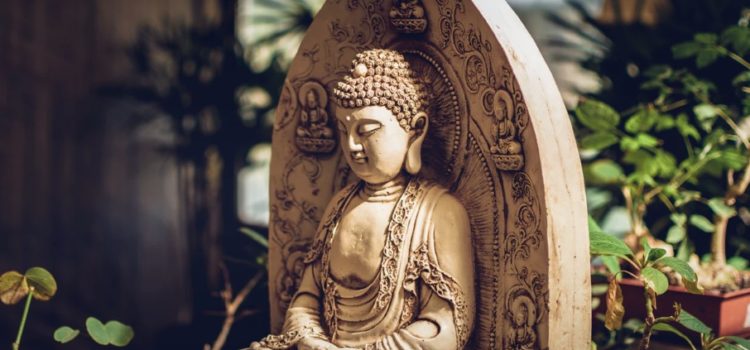
How can mindfulness help you become a better athlete? Can practicing mindfulness improve sports performance? To excel in sports, you need to maintain an emotional state that allows for confident, uninhibited performance. If you have any mental or emotional conflicts, you can’t access peak performance states. Mindfulness can help you achieve that by training you to remain unperturbed in the face of distractions and emotional turbulence. Learn about the benefits of mindfulness in sports.

What Is the Singularity Theory in Physics?

What Is the Singularity Theory in Physics?

What is the singularity theory? Why did Hawking come to question his theory of Big Bang singularity? Hawking’s mathematical proof that space and time had a beginning, according to general relativity, was what first propelled him to fame within the physics community. Later, reflecting on his own theoretical proof about the big bang singularity, Hawking came to believe that they imply the theory of general relativity is incomplete, not that the universe actually did begin at a singularity. Read more to learn about the singularity theory and why Hawking came to believe that it indicates a problem.

Buddha Nature Says Humans Are Inherently Good

Buddha Nature Says Humans Are Inherently Good

What is the doctrine of Buddha Nature? If humans are good by their nature, why do they get tangled up in so much conflict and negativity? Buddhists believe that all humans possess what they call “Buddha Nature”—the fundamental nature of all conscious beings. The belief in Buddha Nature is essentially the belief in humans’ intrinsic state of purity and positivity. Anything negative—like conflict and negative emotions such as anger and hatred—are rooted in ignorance or intellect. Keep reading to learn about the Buddhist concept of Buddha Nature.

The Dalai Lama’s Advice: 5 Steps to Happiness

The Dalai Lama’s Advice: 5 Steps to Happiness

What are the main teachings of the Dalai Lama? What advice does he profess? In his book The Art of Happiness (co-authored with psychiatrist Howard C. Cutler), His Holiness the Dalai Lama walks you down the Buddhist path towards happiness. The Dalai Lama’s advice for achieving happiness is unique in its simplicity and flexibility: learn where your emotions come from and make the effort to change. We’ll discuss several strategies to make that effort.

How to Develop a Positive Mindset

How to Develop a Positive Sales Attitude

Is your mind overwhelmed with negativity? Why do people tend to focus more on the negative and take the positive for granted? Research shows that negative events have a greater impact on you than positive ones—your emotional responses are stronger for negative events than they are for positive ones. But that doesn’t mean that you must give in to all this negativity—you can develop a positive mindset if you’re motivated enough to rid yourself of the negativity. Keep reading to learn how to motivate yourself to change your thinking and rewire your mind for more positivity.

The Art of Happiness: Quotes by the Dalai Lama

The Art of Happiness: Quotes by the Dalai Lama

Are you looking for The Art of Happiness quotes by the Dalai Lama and Howard C. Cutler? What are some of the most noteworthy passages worth revisiting? In The Art of Happiness, you’ll walk with the Dalai Lama, Nobel Peace Prize winner and spiritual leader of Tibet, down the Buddhist path toward happiness. According to him, you have the power to bring more happiness into your life by simply training yourself to be happier. Here’s a selection of passages with explanations to help you put them into context.

The Art of Happiness by the Dalai Lama: Overview

The Art of Happiness by the Dalai Lama: Overview

What is the Dalai Lama and Howard C. Cutler’s The Art of Happiness about? What is the Dalai Lama’s advice for achieving happiness? In The Art of Happiness, the Dalai Lama and psychiatrist Howard C. Cutler outline the Dalai Lama’s beliefs on how to achieve greater happiness in life—by training yourself to be happier. The Dalai Lama’s advice for achieving happiness is unique in its simplicity and flexibility: be empathetic, accept your suffering, learn about your mind. Here’s a brief overview of the key ideas.

How to Attain Freedom From Suffering: 4 Buddhist Tips

How to Attain Freedom From Suffering: 4 Buddhist Tips

Can you really free yourself from suffering? And if so, what does it take? Suffering is a fact of life, but Buddhists believe that you can attain freedom from suffering. The first step is to change your perspective on suffering: Instead of viewing suffering as inherently bad, look for a silver lining in every situation that makes you suffer. Here are four strategies to free yourself from unnecessary suffering.

The Importance of Spirituality

The Importance of Spirituality

Do you practice spirituality? Is it true that people who practice spirituality tend to be happier than those who don’t? There is a strong positive correlation between practicing spirituality and happiness. Studies have shown that those who have spirituality or religion in their lives tend to be happier and less depressed and anxious than those who don’t. Keep reading to learn about the importance of spirituality.

The Dalai Lama’s Thoughts on Happiness

The Dalai Lama’s Thoughts on Happiness

What is happiness at its core? Do you think happiness is a natural human state? According to the Dalai Lama, happiness is not merely an emotional state, but a mental and intellectual one. It’s about being content with your life on all levels. In his book The Art of Happiness (co-authored with Howard C. Cutler), he proposes that all humans should seek out happiness by training themselves to be happy in four different ways. Here is how to cultivate true happiness, according to the spiritual leader Dalai Lama.