The 21st-Century Problems: The Looming Challenges

The 21st-Century Problems: The Looming Challenges

What are the biggest problems of the 21st century? Why can’t these problems be solved with nationalist politics? According to Yuval Noah Harari, an Israeli public intellectual and author of 21 Lessons for the 21st Century, the biggest problems of the 21st century are all global in nature, and therefore, they require an international response. They are three of them: 1) the nuclear threat, 2) the climate change, and 3) the dual rise of bio- and info-tech. Keep reading to learn about the three major 21st-century problems, according to Yuval Noah Harari.

AI-Induced Unemployment: The Threat Is Real

AI-Induced Unemployment: The Threat Is Real

Will AI cause mass unemployment? Are smart assisstants and self-driving cars going to make people lose their jobs? AI-based systems are taking every industry by storm. The concern of AI causing unemployment on a massive scale is becoming increasingly urgent as AI capabilities progress. Keep reading to learn about AI-induced unemployment, and some possible routes the government could take to adapt to the AI-automated economy.

The True Dangers of Artificial Intelligence

The True Dangers of Artificial Intelligence

What are the dangers of artificial intelligence? Could AI develop a will of its own, as seen in science fiction movies? The true dangers of artificial intelligence are quite different from what we see in movies, where robots come to develop free will and start running amok killing people. Robots themselves are as benign or as dangerous as the people who program them—and, in the hands of violent or power-hungry people, AI could bring devastation to humans.  Keep reading to learn about the dangers of artificial intelligence.

The Future of Terrorism: The Threat Is Minor

The Future of Terrorism: The Threat Is Minor

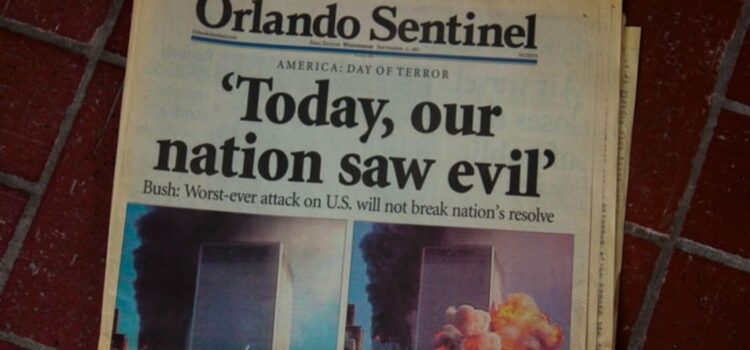
What is the future of terrorism? Will there be more or fewer terrorist attacks going forward? According to Yuval Noah Harari, the author of 21 Lessons for the 21st Century, we shouldn’t worry too much about the future of terrorism because the threat is currently minor. However, if terrorists obtain nuclear weapons or launch cyber- or bioterrorism attacks, the threat can grow exponentially. Keep reading for more about the future of terrorism.

Is Global Justice a Realistic Goal or a Pipe Dream?

Is Global Justice a Realistic Goal or a Pipe Dream?

Is global justice a feasible political goal? How can justice be realized on a global scale in such a complex and intricately connected world? Most of the injustices in the world are embedded in systems and structures which makes it almost impossible to know all of the effects of individuals’ actions. Further, humans’ brains haven’t evolved to grasp justice on a global scale because our sense of justice developed during the times of ancient hunter-gatherer societies who lived in small communities. Keep reading to learn about the dilemma of global justice.

The Rise of the Global Civilization: Towards Unity

The Rise of the Global Civilization: Towards Unity

Can it be argued that we are all part of one global civilization? What are the common themes that are shared by all nations of the world? As globalization has connected the world economically, socially, and technologically, all of humankind has merged into one global civilization. And although nations differ in terms of cultures and religions, they all follow virtually the same economic, medical, and scientific paradigms.  Read about the rise of global civilization.

The Problem With Nationalism: Us Versus Them

The Problem With Nationalism: Us Versus Them

What is the problem with nationalism? How does nationalism erode the collective spirit and what are its implications for the world at large? Many people around the world are finding comfort in the identity and community of their nations, but there is a major problem with nationalism. Specifically, nationalism creates an “us” and “them” mentality, which makes it difficult to come together as a global civilization to address collective problems.  Keep reading to learn about the problem with nationalism.

Stanley McChrystal: Leadership & Teamwork Principles

Stanley McChrystal: Leadership & Teamwork Principles

What was Stanley McChrystal’s take on leadership? What were the four principles that guided his command of the U.S. task force? When Stanley McChrystal assumed leadership of the JSOC, he channeled his efforts into creating a teamwork ecosystem based on four principles: shared consciousness, trust, cooperation, and empowerment. He nurtured this ecosystem by ensuring that silos and competition didn’t hinder its functioning and that transparency gave it oxygen. Keep reading to learn about Stanley McChrystal’s leadership principles and how he implemented them to restructure the JSOC.