5 Causes of the Scientific Revolution, Explained

5 Causes of the Scientific Revolution, Explained

What were the causes of the Scientific Revolution? How did the new acceptance of ignorance become the root of our quest for knowledge? The Scientific Revolution was caused by a shift in the way people viewed the world and its future. These paradigm shifts included the willingness to accept our own ignorance, an emphasis on math and observation, the desire for imperial dominance, and the new belief in progress. We’ll cover how these causes of the Scientific Revolution changed the world, formed a web with the economy, politics, and religion, and sparked the movement toward modernity.

4 Culture Heroes, From Mesopotamia to America
4 Culture Heroes, From Mesopotamia to America

What is a culture hero? What do culture heroes have to do with Joseph Campbell’s hero’s journey? A culture hero is a founder who appears at the beginning of a culture’s legendary past. Culture heroes often help found that culture’s universe and change the course of history. We’ll cover the concept of the culture hero and look at examples of culture heroes in Native American, French, and Chinese traditions.

Why Are Human Babies So Helpless? (It’s Actually a Good Thing)

Why Are Human Babies So Helpless? (It’s Actually a Good Thing)

Why are human babies so helpless? Is there an advantage to their helplessness? Human babies are so helpless because they’re born prematurely, relative to other animals. Because they’re born before they’re fully developed, human babies are helpless, but this may provide a key to why humans are so successful as a species. We’ll cover why human babies are so helpless and why this could be an advantage in the animal kingdom.

Warring States Period in China: 6 Tactics of Warfare (Sun Tzu)

Warring States Period in China: 6 Tactics of Warfare (Sun Tzu)

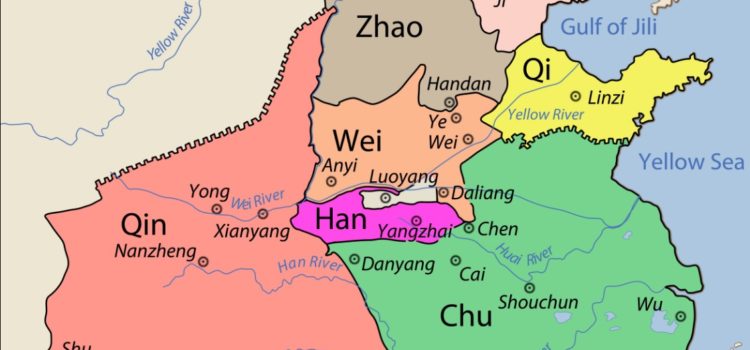
What was the Warring States Period? What can it teach us about battle tactics? The Warring States Period, or Era of Warring States, was a period between around 480 B.C.E. to around 246 B.C.E. During this era, various Chinese dynasties were at war, including the Wei, Zhou, Han, and Qi. The Qi eventually won control of the area. We’ll cover how the warring states formed alliances during this period and what we can learn from their turmoil.

History of Religion: From Animism to Communism

History of Religion: From Animism to Communism

The history of religion is vast. What are the main turning points in the history of religion? How has religion unified mankind? How has it divided us? The history of religion starts with animism and progresses through the rise of polytheism, monotheism, and natural law religions. Each type of religion influenced the ones that came later, and today we see the legacies of them. We’ll cover the history of religion from the animism of our forager ancestors to some of the most widespread religions today.

General Cao Cao: 3 Lessons From a Military Hero

General Cao Cao: 3 Lessons From a Military Hero

Who was General Cao Cao? What lessons can we learn from China’s General Cao Cao? How did he follow the principles of Sun Tzu’s The Art of War to lead his forces to victory? General Cao Cao was a well-respected and renowned military leader in Chinese history who avidly abided by Sun Tzu’s Art of War. Toward the end of the Han dynasty (206 B.C.E. to 220 C.E.), Cao Cao often invaded enemy territories. We’ll cover three lessons you can learn from General Cao Cao and how he adapted Sun Tzu’s strategies to become a great leader.

Biology of Happiness: Some People Are Wired for Joy

Biology of Happiness: Some People Are Wired for Joy

What is the biology of happiness? What neurochemicals are involved? Does my biological dictate how happy I’m destined to be? The biology of happiness is a theory that our happiness is determined mostly by oxytocin, serotonin, and dopamine. According to this theory, some people are wired to be happier than others. We’ll cover the theory of the biology of happiness and explore some counter views on what makes us happy (or not).