5 Critical Sun Tzu Quotes On Leadership, Explained

5 Critical Sun Tzu Quotes On Leadership, Explained

What are some of the greatest Sun Tzu quotes on leadership? Are they applicable today, outside the battlefield? According to Sun Tzu, The leadership describes the acuity and competence of the person charged with leading a fighting force. A good leader should be intelligent, trustworthy, humane, courageous, and stern. When all of these factors are at play, the leader is capable of making sound decisions and can count on the people to support them.  We’ll cover Sun Tzu’s quotes on leadership and expand on what they meant on the battlefield. You’ll find that many of them are just as applicable

General Cao Cao: 3 Lessons From a Military Hero

General Cao Cao: 3 Lessons From a Military Hero

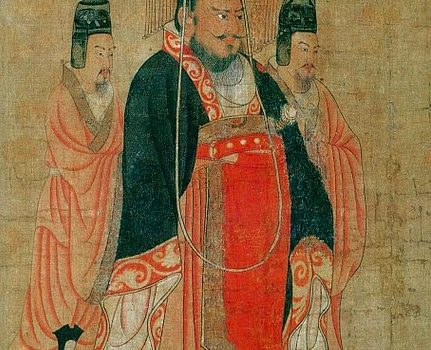
Who was General Cao Cao? What lessons can we learn from China’s General Cao Cao? How did he follow the principles of Sun Tzu’s The Art of War to lead his forces to victory? General Cao Cao was a well-respected and renowned military leader in Chinese history who avidly abided by Sun Tzu’s Art of War. Toward the end of the Han dynasty (206 B.C.E. to 220 C.E.), Cao Cao often invaded enemy territories. We’ll cover three lessons you can learn from General Cao Cao and how he adapted Sun Tzu’s strategies to become a great leader.

The Dichotomy of Leadership: Book Summary

The Dichotomy of Leadership: Book Summary

Leaders set the tone and example for their teams, and as they navigate challenging situations leaders must constantly keep a careful balance of seemingly opposite forces. When a leader struggles or is ineffective, it is typically a sign that she has veered too far to either side of one of these dichotomies; in this way, a leader’s greatest strength can become her weakness if she doesn’t keep it balanced.  Here are the key dichotomies of leadership, from the book by Jocko Willink.

What Is Extreme Ownership? (From Jocko Willink)

What Is Extreme Ownership? (From Jocko Willink)

What is the key to being a great leader? Is it about having the right personality type, training, or team? Former U.S. Navy SEALs Jocko Willink and Leif Babin, authors of Extreme Ownership, argue that the best leaders take responsibility for every aspect of their team and every task they’re working to accomplish. Extreme Ownership is total accountability over everything that happens under a leader’s direction. Extreme ownership requires a leader to own her team’s mistakes and failures — without blame or excuses — and objectively assess what works and what doesn’t in order to constantly improve. As Willink and

No Bad Teams, Only Bad Leaders (From Jocko Willink)

No Bad Teams, Only Bad Leaders (From Jocko Willink)

While many leadership books and training courses focus on developing individual habits and traits, leadership is inextricably tied to the team’s performance. There are only two types of leaders — effective and ineffective — and the only way to measure a leader’s effectiveness is based on whether her team succeeds or fails.  As the person at the top of the chain of command, everything ultimately reflects back on you. You must make decisions quickly and definitively, and accept their consequences, good or bad. As a leader, you determine the team’s performance. This gives rise to the phrase, “no bad teams,

Cover & Move (From Jocko’s Extreme Ownership)

Cover & Move (From Jocko’s Extreme Ownership)

Chapter 5 explores the Cover and Move strategy. On a battlefield, Cover and Move allows a team to work together to reach a destination: One group provides cover — keeping an eye out and having weapons ready to ward off enemies — as the other group advances forward. Then they switch roles, essentially leapfrogging forward, until they reach their destination.  This may not appear to have much relevance outside a warzone, but the principle of Cover and Move is teamwork. The entire team must work together, supporting and protecting each other, for everyone’s safety and success. Everyone on the team

Prioritize and Execute (from Jocko’s Extreme Ownership)

Prioritize and Execute (from Jocko’s Extreme Ownership)

There are times when it feels like everything goes wrong at once, and that there is no way to accomplish everything at the same time. In these situations, a leader has to be able to calmly take stock of the situation, decide what needs to happen first, and carry it out; this Law of Combat is called Prioritize and Execute. Trying to address several issues at the same time is overwhelming and inefficient. Most likely, you are only dividing your attention and won’t be able to tackle any of them effectively. Instead — even when it feels like five fires