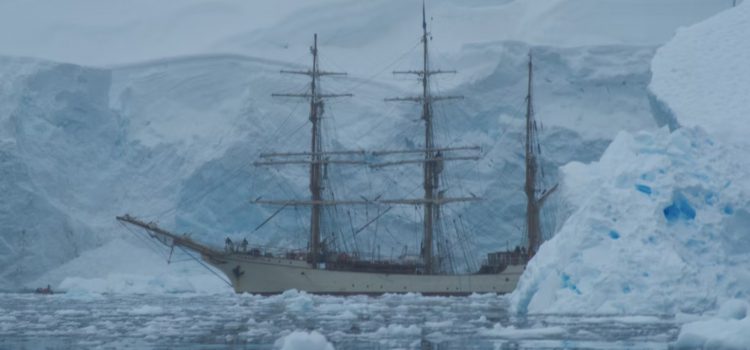
Ernest Shackleton’s Leadership: How He Stepped Up
Ernest Shackleton’s Leadership: How He Stepped Up

How did Ernest Shackleton step up as a leader when the Endurance sank? What are lessons on leadership to take away from Shackleton’s experience? In 1914, Ernest Shackleton and 27 other men set out on the Endurance ship to Antarctica, but the ship became trapped in ice. Shackleton effectively led his team through a time of crisis, and all the men survived because of his leadership skills. Learn more about Ernest Shackleton’s leadership skills from Alfred Lansing’s book Endurance.

What Is Human Nature? Philosophy of Rutger Bregman

What Is Human Nature? Philosophy of Rutger Bregman

What is human nature in philosophy? Are humans benevolent or evil by their nature? In philosophy, human nature has been debated extensively. Some philosophers argue that humans are naturally deceitful and cruel, seemingly with a lot of evidence to back us up: Throughout history, groups of humans have gone to war, committed genocide, and owned slaves. But despite our history of evil, humans are fundamentally good. Here’s why the basic nature of humankind is inherently good, according to historian Rutger Bregman.

Ernest Shackleton’s Endurance Expedition: Background

Ernest Shackleton’s Endurance Expedition: Background

What do you need to know before learning about the Endurance shipwreck? Was Ernest Shackleton qualified to lead an Antarctic expedition? In Endurance, Alfred Lansing recounts the unsuccessful Imperial Trans-Antarctic Expedition. But before getting into the details of the shipwreck, he gives a brief overview of other Antarctic expeditions that inspired Shackleton to conduct his own expedition. Read below for a background of Shackleton’s Endurance expedition.

Plato’s Symposium: Diotima’s Speech on Love

Plato’s Symposium: Diotima’s Speech on Love

What does Diotima say about love in Plato’s Symposium? How does her concept of love relate to beauty? In Plato’s Symposium, Diotima’s speech centers on the human experience of love rather than its purpose or benefits. She concludes that the main object of love is not beauty. Rather, it’s goodness. However, she argues that beauty is integral to a good life and introduces the concept of the “ascent”—a process of learning to appreciate beauty in all its forms. In this article, we’ll explore Diotima’s views on love by explaining what humans love, why humans love, and how humans should love.

The History of Astronomy: From Chaos to Cosmos

The History of Astronomy: From Chaos to Cosmos

What does the history of astronomy look like? What is the birthplace of science? In his book Cosmos, Carl Sagan outlined the history of astronomical thought, from 600 BC to the 17th century. He tells the story of how Thales of Miletus broke the status quo by rejecting the supernatural all the way up to Newton’s discovery of gravity. Here’s a brief timeline of the history of astronomy.

Human Cooperation: The Reason Our Species Survived

Human Cooperation: The Reason Our Species Survived

If humans are cooperative by nature, why do we wage wars with each other? Does our species owe its survival to competition or to cooperation? According to Rutger Bregman, the author of Humankind, human cooperation is the reason our species survived. Based on archaeological evidence, he concludes that early humans were compassionate and cooperative. He argues that, contrary to popular belief, they didn’t engage in war with each other. Here’s why humans are cooperative—rather than competitive—by nature, according to Bregman.

Endurance by Alfred Lansing: Overview and Takeaways

Endurance by Alfred Lansing: Overview and Takeaways

What is Endurance by Alfred Lansing about? What should you take away from the book? Endurance tells the story of British explorer Ernest Shackleton and his 27 men who in 1914 set out to cross Antarctica on foot. But their ship became trapped between massive ice floes, forcing them to begin an 11-month journey through ice and open ocean. Keep reading for a brief overview of Alfred Lansing’s Endurance.

What Is Social Learning? The Reason Humans Survived

What Is Social Learning? The Reason Humans Survived

What is social learning? How does the ability to learn through imitation help Homo sapiens endure? Social learning is learning through imitation. According to Rutger Bregman, the author of Humankind, humans’ capacity for social learning was instrumental in the survival of our species. He argues that social learning is the key factor that made Homo sapiens survive and Neanderthals (who were bigger and stronger) die out. Keep reading to learn about the role of social learning in human survival.

South Georgia Island: Shackleton’s Final Rescue Effort

South Georgia Island: Shackleton’s Final Rescue Effort

What happened to Ernest Shackleton on South Georgia Island? Did they find people to help them on the island? In 1915, the Endurance ship sank on the way to Antarctica. The crew’s leader, Ernest Shackleton, led a rescue mission that lasted for years and his final mission was to reach South Georgia Island for rescue. Find out if Ernest Shackleton’s final attempt at rescue was successful.