It Doesn’t Have to Hurt by Sanjay Gupta—Book Overview

A woman holding the back of her neck because she's suffering from chronic pain

Chronic pain doesn’t have to control your life. In It Doesn’t Have to Hurt, Sanjay Gupta explains how chronic pain develops when multiple body systems malfunction together, and why standard medical treatments often fall short. He argues that effective pain management requires a holistic, personalized approach combining physical and mind-body treatments. Gupta draws on his experience treating complex pain conditions to offer practical strategies you can implement immediately. This guide explores his key recommendations—from pharmaceuticals and movement to optimism and social connection.

A Healthful Bedtime Routine Powers Your Next Day (The 5 AM Club)

A smiling woman sleeping in bed and holding a pillow illustrates a healthful bedtime routine

Want to wake up energized at 5 a.m.? The secret might lie in what you do the night before. Robin Sharma’s The 5 AM Club reveals that your bedtime routine is just as crucial as your morning one—and getting quality sleep is the foundation of it all. From timing your last meal to creating the perfect wind-down ritual, small changes to your nighttime habits can transform your mornings. Keep reading to discover how to build an evening routine that sets you up for success, and learn why sleep is your most powerful tool for growth.

Ellen Langer’s The Mindful Body: Book Overview & Takeaways

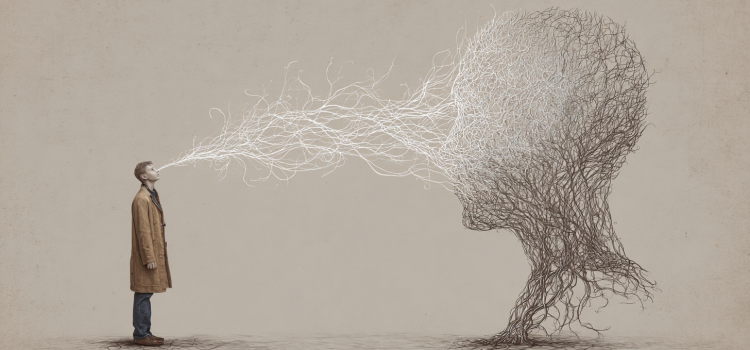
A mind-body connection illustrated through a man being connected to his brain

If you’ve ever felt your stomach turn in a moment of anxiety or felt like jumping up and down with excitement, then you’ve experienced the mind-body connection firsthand. Ellen Langer’s The Mindful Body argues that you can use this connection to take control of your health. We’ll explore Langer’s assertion that the mind and body are inextricable and discuss how this link manifests in health outcomes. We’ll also examine three limiting beliefs that shape health, including the view that health is a finite resource. Finally, we’ll touch on two research-backed strategies for approaching your health mindfully. Continue reading for our

The Joy of Movement by Kelly McGonigal: Overview

A cartoon image of a man and woman jogging in a park

What if the secret to lasting fitness isn’t willpower or discipline, but rediscovering the natural joy your body was designed to feel during movement? In The Joy of Movement, Stanford psychologist Kelly McGonigal challenges everything we think we know about exercise by revealing how our brains are evolutionarily wired to find movement rewarding—not punishing. Whether you’re someone who dreads the gym or you’re seeking a deeper understanding of why some activities feel naturally energizing while others feel like punishment, this guide will help you discover how to harness movement’s built-in rewards to create sustainable, joyful fitness habits.

Andrew Huberman: Cortisol Is Vital for Energy Management

A woman with long brown hair and a thoughtful expression looking at a whiteboard that has "CORTISOL" written on it

Do you sometimes feel energized in the morning but struggle to wind down at night? What if you could get better sleep and sustained energy by leveraging your body’s natural hormone cycles? According to neuroscientist Andrew Huberman, cortisol gets a bad rap. In an episode of Huberman Lab titled “How to Control Your Cortisol & Overcome Burnout,” he explains how cortisol actually serves as your body’s sophisticated energy management system.

Daniel Lieberman’s Exercised: Book Overview & Takeaways

A young man wearing eyeglasses and a bright yellow sweater reading a book by lamplight

Does going for a run feel like you’re fighting against your deepest instincts? What if the natural resistance to exercise isn’t a character flaw but an evolutionary feature? Daniel Lieberman’s Exercised: Why Something We Never Evolved to Do Is Healthy and Rewarding tackles these puzzles. The Harvard evolutionary biologist reveals how our ancestors conserved energy for survival while explaining why modern humans must actively pursue fitness to stay healthy. Keep reading to discover how understanding humans’ evolutionary past can transform your approach to staying active and well.

John Green’s Everything is Tuberculosis: Book Overview

Author John Green speaking on stage

How has tuberculosis shaped human history? Why is tuberculosis—a completely curable disease—still killing over 1.6 million people annually? Best-selling novelist and YouTube educator John Green’s Everything Is Tuberculosis confronts this troubling paradox, revealing how social inequality, stigma, and systemic failures allow a preventable tragedy to continue. After meeting a teenage TB patient in Sierra Leone, Green embarked on a mission to understand and combat humanity’s deadliest infectious disease. Read more in our overview of Everything Is Tuberculosis.

The Song of the Cell by Siddhartha Mukherjee: Book Overview

A middle-aged woman with short brown hair and a cream-colored sweater reading a book while sitting in a chair by a window

What’s The Song of the Cell by Siddhartha Mukherjee about? How can cell biology change the way we think about the human body? Siddhartha Mukherjee’s The Song of the Cell: An Exploration of Medicine and the New Human dives into cell biology—examining its history, its use in modern medicine, and its radical possibilities for the future. Mukherjee considers the all-encompassing role cells play in our understanding of illness and the body. Read more in our overview of The Song of the Cell: An Exploration of Medicine and the New Human.

The 3 Ds of Health Insurance, Explained by Jay Feinman

A man in a suit crossing his arms in the shape of an X to signify he is denying something

What are the three Ds of insurance? What do insurance companies gain by slowing down the payment process? How are these tactics exploitative? In his book Delay, Deny, Defend, legal scholar and insurance expert Jay Feinman argues that major US insurance companies are profit-seeking entities that systematically avoid paying legitimate claims. He explains the tactics they use, and how and why they often work. Continue reading to learn about the three Ds insurance strategy.

The Functional Medicine Approach to Autoimmune Disease

An up close graphic of hands washing with soap in a sink

What’s the difference between functional medicine and traditional medicine? What can functional medicine do for autoimmune disease? In her book The Autoimmune Solution, functional medicine physician Amy Myers asserts that a functional medicine approach is required to treat autoimmune disease. She insists that modern lifestyles are more to blame than genetics. Keep reading to learn what’s causing the autoimmune epidemic.