The History of Electromagnetic Theory: A Step Toward Unification
The History of Electromagnetic Theory: A Step Toward Unification

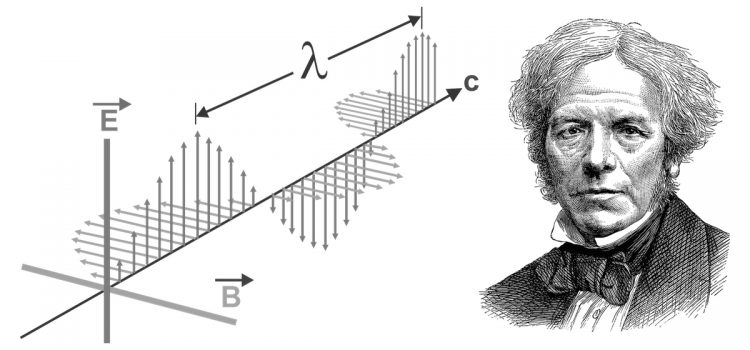
How did James Clerk Maxwell build upon the work of Michael Faraday? How do astronomers today benefit from scientific work done in the middle of the 19th century? Since the birth of classical physics, the greatest advancements in knowledge have come from bringing together different fields of study. Even the early steps in physics—such as an unexpected unity among electricity, magnetism, and light—united what were thought at the time to be wildly different areas of study. Theoretical physicist Michio Kaku discusses the history of electromagnetic theory in his book The God Equation. Take a look.

The Second Half of Life: 2 Ways to Keep Thriving as You Age

The Second Half of Life: 2 Ways to Keep Thriving as You Age

Are you over 35? Have you successfully transitioned into the last half of your life, or are you prepared to do so? In From Strength to Strength, management expert Arthur Brooks explains how and why you lose your job skills as you get older. Then, he provides solutions. He shows how you can find a job that suits your changing brain and achieve a meaningful life instead of fruitlessly chasing success in your former field. Keep reading for Brooks’s strategies as well as an exercise that will help you prepare now for the transition to the second half of life.

Dostoyevsky & Kierkegaard: Absurdism Is a Bridge Too Far

Dostoyevsky & Kierkegaard: Absurdism Is a Bridge Too Far

Why don’t all existentialist philosophers embrace absurdism? What do they advocate instead? Existentialist philosopher Albert Camus contends that life is absurd. But, according to his fellow existentialists Fyodor Dostoyevsky and Søren Kierkegaard, absurdism should be rejected; there’s a better way to face life. Keep reading to learn Camus’s argument, the counterarguments by other philosophers, and Camus’s rebuttals.

J. Robert Oppenheimer on Japan: From Pearl Harbor to Nagasaki

J. Robert Oppenheimer on Japan: From Pearl Harbor to Nagasaki

Did J. Robert Oppenheimer support the use of the atomic bomb? Did he ever change his mind? In American Prometheus, Kai Bird and Martin Sherwin provide a comprehensive biography of J. Robert Oppenheimer, best known for developing the atomic bomb that wrought destruction on Japan in World War II. They discuss his arguments for the permissibility of bombing Japan and his attitude afterward. Keep reading to learn about the views of J. Robert Oppenheimer on Japan’s fate in the war.

Symmetry in Mathematics: Evidence of a Grand Design?

Symmetry in Mathematics: Evidence of a Grand Design?

How can symmetry lead to scientific discoveries? What might symmetry imply about the universe? Theoretical physicist Michio Kaku describes himself as agnostic. But, he finds it amazing that all the laws of physics can be summarized succinctly and that they display such symmetry. For him, the mathematical beauty of the laws of physics opens the door to the possibility that there’s a grand design. Keep reading to learn why Kaku repeatedly points to symmetry in mathematics in his book The God Equation.

Was Robert Oppenheimer a Communist? A Look at the Evidence

Was Robert Oppenheimer a Communist? A Look at the Evidence

Was Robert Oppenheimer a communist? Was he actually a member of the Communist Party? In American Prometheus, Kai Bird and Martin Sherwin examine the claims that scientist J. Robert Oppenheimer was a communist. They explain that his political activism and connections led to allegations of Communist Party membership. Read more to learn what Bird and Sherwin learned and concluded.

Albert Camus: Suicide Isn’t a Satisfactory Response to Absurdity

Albert Camus: Suicide Isn’t a Satisfactory Response to Absurdity

How did people react to Albert Camus’s philosophy of the absurd? Why did some think that suicide seemed like a reasonable response? According to Albert Camus, suicide isn’t the answer. In The Myth of Sisyphus, Camus draws on existentialist theory to argue that humans are doomed to an absurd condition. He asserts that, rather than surrendering to this belief via suicide, you should derive fulfillment from your brief existence. Continue reading to learn more about Camus’s views on suicide in the context of the absurd.

What Is the Standard Model of Physics? Michio Kaku Explains

What Is the Standard Model of Physics? Michio Kaku Explains

What is the Standard Model of physics? How close is it to a unified theory? What’s it missing? Scientists have yet to figure out the unifying theory—what theoretical physicist Michio Kaku calls “the God Equation.” But, physicists have made a great deal of progress using an intermediate step toward that theory. They refer to it as the Standard Model. Keep reading to understand the Standard Model, what it tells us about the universe, and what it doesn’t explain.

The Chevalier Incident: Oppenheimer’s Opportunity for Treason

The Chevalier Incident: Oppenheimer’s Opportunity for Treason

What did J. Robert Oppenheimer discuss with Haakon Chevalier? Why did Oppenheimer lie to the FBI about it? When J. Robert Oppenheimer was fighting to keep his security clearance after World War II, the Chevalier incident threatened to sink his efforts—and his career. Biographers Kai Bird and Martin Sherwin explain the affair in their 2006 book American Prometheus. Continue reading to learn about the intriguing Chevalier incident.

Albert Camus: Absurdity Is Man’s Futile Search for Meaning

Albert Camus: Absurdity Is Man’s Futile Search for Meaning

Does it ever feel like life is just, well, ridiculous? What does Albert Camus mean by absurdity? According to Albert Camus, absurdity defines our lives. He observes that we search for meaning and purpose and ask huge questions about our existence. But, for all our searching and asking, we come up with just beliefs, theories, and hopes—and always come up short of certainty. Read more to learn about Camus’s philosophy of the absurd.