How to Do a Time Audit: 4 Steps to Managing Your Time

a drawing of a man with a questioning look and calendars, clocks, and lists swirling around him illustrates a time audit

Are you feeling overwhelmed by your daily tasks? Do you wonder where all your time goes? A time audit can help you regain control of your schedule. In his book Buy Back Your Time, Dan Martell outlines a simple process to analyze your activities and get a handle on how your time is allocated. This method allows you to identify high-value tasks and energy-draining activities. Read more to get details on Martell’s four-step time audit process and discover how it can transform your daily routine.

The Thousand Brains Theory: Jeff Hawkins Explains

Many tiny brains and one large brain illustrates the Thousand Brains theory

Are your thoughts the result of thousands of tiny brains voting? What if your sense of self is actually an illusion created by these mini-minds? In A Thousand Brains, Jeff Hawkins presents a groundbreaking theory about how our brains function. He proposes that the neocortex consists of thousands of cortical columns, each acting as a mini-brain. These columns work together to create our complex cognition and awareness. Read on to learn about the Thousand Brains theory and see how it could revolutionize our understanding of human intelligence.

Plato’s Ideal Society: An Overview of The Republic, Books II-IV

A painting of a beautiful ancient Greek city with a lake and mountains in the distance illustrates Plato’s ideal city

What does the ideal society look like? Has a philosopher from ancient Greece already designed one? In The Republic, Plato presents his vision of a perfect city-state. Through the character of Socrates, he outlines a society with a strict class system, communal living for some, and a “noble lie” to maintain order. Keep reading to explore the ins and outs of Plato’s ideal society.

What if There’s No Free Will? 3 Implications if It’s True

People walking in a bustling city scene illustrate life without free will

What would life be like there’s no free will? How would society function if we accepted that our actions are predetermined? In his book Determined, Robert Sapolsky explores the concept of life without free will and its implications for society. He argues that embracing determinism could lead to a fairer and kinder world, despite the challenges it presents to our traditional notions of praise, reward, blame, and personal responsibility. Read on to learn Sapolsky’s perspective on human behavior.

5 Time Wasters at Work That Might Surprise You (Dan Martell)

A man in an office wearing a pile of hats on his head, signifying time wasting at work

Are you struggling with time management at work? Do you find yourself caught in a cycle of chaos and stress? In his book Buy Back Your Time, Dan Martell explores common time wasters at work and how to overcome them. He offers insights into habits that drain entrepreneurs’ energy and productivity, providing strategies to identify and confront these behaviors. Read on to discover how you can stop wasting time at work by changing some of your habits.

What Is a True Believer? 4 Types Drawn to Mass Movements

four people of various ages standing next to each other and facing the camera illustrate what a true believer is

What is a true believer? What types of people are most susceptible to joining mass movements? In his book The True Believer, Eric Hoffer explores the psychology behind mass movements and their followers. He identifies several groups of people who are particularly drawn to these causes, including the marginalized, the unfulfilled, the guilt-ridden, and the self-interested. Read more to dive deeper into Hoffer’s insightful analysis of what makes a true believer.

Plato’s Analogy of the Divided Line: Why Knowledge Is King

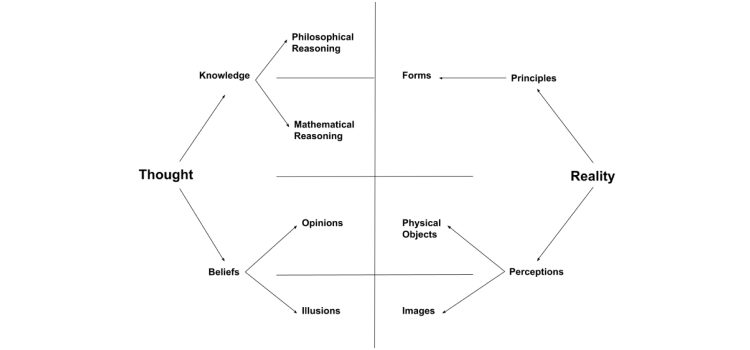
A diagram of Plato’s analogy of the divided line with Thought and Reality on opposing sides

What’s the nature of knowledge and reality? What makes some ideas more true or valuable than others? Plato’s analogy of the divided line explores these questions in his seminal work The Republic. This thought-provoking concept categorizes different levels of understanding, from illusions to ultimate truth. It offers insights into how we perceive the world and what constitutes genuine knowledge. Keep reading for an exploration of Plato’s philosophy, and discover how it still influences our thinking today.

How to Create a Training Manual That Saves You Time: 4 Steps

a manager handing a document to an employee with a team in the background illustrates how to create a training manual

Do you feel overwhelmed by the thought of training new employees? Are you looking for ways to streamline your business processes and save time? In Buy Back Your Time, Dan Martell offers a solution: creating operating manuals for your company’s processes. He details how to create a training manual that can help you take a hands-off approach to employee training while maintaining quality standards. Read on to discover Martell’s four-step process for creating effective training manuals, and learn how to apply these principles to your personal life as well.

How to Start a Social Movement: 2 Forces You Must Leverage

a black and white drawing of people from the back walking in the same direction illustrates what causes mass movements

What drives people to join social movements? What makes individuals willing to sacrifice everything for a cause? In The True Believer, Eric Hoffer explores what causes mass social movements to start and gain momentum. He examines the psychological factors that lead people to dedicate themselves to a collective cause, often at great personal cost. Keep reading to learn how to start a social movement by understanding the two powerful forces behind them.

Plato: Society Deteriorates in 4 Steps (The Republic)

A view from above of a city square in ancient Greece illustrates Plato's society model

How do societies evolve over time? What did ancient philosophers think about the progression of political systems? Plato’s vision of societal change is explored in his seminal work The Republic. The Greek thinker outlines a descent from an ideal city-state through four increasingly flawed forms of government. His theory offers insights into the nature of power, justice, and human behavior. Keep reading to understand Plato’s society model, and discover how his ideas still resonate in modern political discourse.