We've ranked the best journalism books using expert recommendations, sales data, and millions of reader ratings. At Shortform, we know books. Our book guides are the best in the world. Learn why.
Cover unavailable
1
Catch and Kill: Lies, Spies, and a Conspiracy to Protect Predators
In a dramatic account of violence and espionage, Pulitzer Prize-winning investigative reporter Ronan Farrow exposes serial abusers and a cabal of powerful interests hell-bent on covering up the truth, at any cost.
In 2017, a routine network television investigation led Ronan Farrow to a story only whispered about: one of Hollywood's most powerful producers was a predator, protected by fear, wealth, and a conspiracy of silence. As Farrow drew closer to the truth, shadowy operatives, from high-priced lawyers to elite war-hardened spies, mounted a secret campaign of intimidation, threatening his career, following his every move and weaponizing an account of abuse in his own family.
All the while, Farrow and his producer faced a degree of resistance that could not be explained - until now. And a trail of clues revealed corruption and cover-ups from Hollywood, to Washington, and beyond.
This is the untold story of the exotic tactics of surveillance and intimidation deployed by wealthy and connected men to threaten journalists, evade accountability and silence victims of abuse - and it's the story of the women who risked everything to expose the truth and spark a global movement.
Both a spy thriller and a meticulous work of investigative journalism, Catch and Kill breaks devastating new stories about the rampant abuse of power - and sheds far-reaching light on investigations that shook the culture.
…
Recommended by Reese Witherspoon, Bastian Obermayer, Julie K. Brown, and 4 others.
Congrats @RonanFarrow on your incredible book #CatchandKill. Amazing investigative reporting and A real thrill ride of a read. 📚 [source]
Bastian Obermayer
I know I’m very late to this party, but: „Catch And Kill“ from the unrelenting @RonanFarrow is a hell of a read!! Need inspiration for how to hold the powerful accountable - or only looking for great entertainment? Get this book. https://t.co/y3xWkUTWhh [source]
Julie K. Brown
The parallels to the Jeffrey Epstein case are amazing in @RonanFarrow’s new book. Imagine this same predatory behavior and coverup among powerful men — not at a TV-media network — but at the highest levels of our government. #perversionofjustice https://t.co/wh2EJlg7iW [source]
Cover unavailable
2
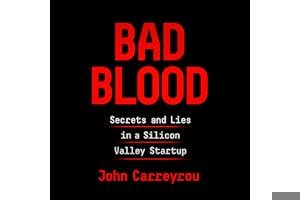
Bad Blood: Secrets and Lies in a Silicon Valley Startup
The full inside story of the breathtaking rise and shocking collapse of a multibillion-dollar startup, by the prize-winning journalist who first broke the story and pursued it to the end in the face of pressure and threats from the CEO and her lawyers.
In 2014, Theranos founder and CEO Elizabeth Holmes was widely seen as the female Steve Jobs: a brilliant Stanford dropout whose startup "unicorn" promised to revolutionize the medical industry with a machine that would make blood tests significantly faster and easier. Backed by investors such as Larry Ellison and Tim Draper, Theranos sold shares in a fundraising round that valued the company at $9 billion, putting Holmes's worth at an estimated $4.7 billion. There was just one problem: The technology didn't work.
For years, Holmes had been misleading investors, FDA officials, and her own employees. When Carreyrou, working at The Wall Street Journal, got a tip from a former Theranos employee and started asking questions, both Carreyrou and the Journal were threatened with lawsuits. Undaunted, the newspaper ran the first of dozens of Theranos articles in late 2015. By early 2017, the company's value was zero and Holmes faced potential legal action from the government and her investors. Here is the riveting story of the biggest corporate fraud since Enron, a disturbing cautionary tale set amid the bold promises and gold-rush frenzy of Silicon Valley.
A bunch of my friends recommended this one to me. Carreyrou gives you the definitive insider’s look at the rise and fall of Theranos. The story is even crazier than I expected, and I found myself unable to put it down once I started. This book has everything: elaborate scams, corporate intrigue, magazine cover stories, ruined family relationships, and the demise of a company once valued at nearly $10 billion. [source]
Finished “bad blood” on the Theranos scandal. Wow. Just wow. It’s a must read for everyone in tech and startups. Just 1-click buy it :) Amazing how far charisma and social proof got them. Here’s the NYT review of the book https://t.co/PyMGxfoG2R [source]
Brad Feld
Co-Founder/Foundry Group
Every entrepreneur and VC should read this book. John Carreyrou has done something important here. Maybe this book will finally put a nail in the phrase “fake it till you make it”, but I doubt it. The amount of lying, disingenuousness, blatant and unjustified self-promotion, and downright deceit that exists in entrepreneurship right now is at a local maximum. This always happens when entrepreneurship gets trendy. Carreyrou just wrote a long warning for entrepreneurs and VCs. [source]
Cover unavailable
3
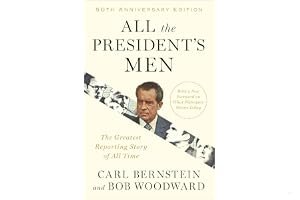
All the President's Men
Bob Woodward, Carl Bernstein
4.9
This landmark book details all the events of the biggest political scandal in the history of this nation--Watergate. Woodward and Bernstein kept the headlines coming, delivering revelation after amazing revelation to a shocked public. Black-and-white photograph section.
Recommended by Nick Davies.
Nick Davies
What is so good about All the President’s Men is that most books about journalists are full of gun fights and car chases – but that’s just not what the job involves. Woodward and Bernstein simply wrote a great, really detailed account of the work that went into the case. I still use sections from it as case studies when I give lectures. [source]
Cover unavailable
4
In Cold Blood
Truman Capote
4.9
On November 15, 1959, in the small town of Holcomb, Kansas, four members of the Clutter family were savagely murdered by blasts from a shotgun held a few inches from their faces. There was no apparent motive for the crime, and there were almost no clues.
As Truman Capote reconstructs the murder and the investigation that led to the capture, trial, and execution of the killers, he generates both mesmerizing suspense and astonishing empathy. At the center of his study are the amoral young killers Perry Smith and Dick Hickcock, who, vividly drawn by Capote, are shown to be reprehensible yet entirely and frighteningly human. In Cold Blood is a seminal work of modern prose, a remarkable synthesis of journalistic skill and powerfully evocative narrative.
One of the reasons I like this true crime novelisation is down to the fact it was so out of character for Capote and took everyone by surprise. It is also an excellent, almost biographical, insight into the two young killers’ minds. [source]
I think in all honesty it is one of the finest books ever written. It took him six years to finish it because he had to wait for the court case and the final verdict which was the two perpetrators being executed. [source]
Cover unavailable
5
Fear and Loathing in Las Vegas
Hunter S. Thompson
4.8
Fear and Loathing in Las Vegas is the best chronicle of drug-soaked, addle-brained, rollicking good times ever committed to the printed page. It is also the tale of a long weekend road trip that has gone down in the annals of American pop culture as one of the strangest journeys ever undertaken.
Recommended by Bill Earner and Matthew O’Brien.
Bill Earner
My favorites novels are 100 Years of Solitude, All the King's Men, The Last Samurai, and Fear and Loathing in Las Vegas. [source]
Matthew O’Brien
It’s one of my favourite books and probably my favourite Las Vegas-related book. Hunter S Thompson came out here in the early 70s to cover the Mint 400 off-road race for Sports Illustrated. He ended up writing a 10,000-word riff on his visit. In 1971, Jann Wenner ultimately published two long sections of it in Rolling Stone. Those two stories were the foundation for Fear and Loathing in Las Vegas. [source]
The real story of the crash began in bizarre feeder markets where the sun doesn't shine and the SEC doesn't dare, or bother, to tread: the bond and real estate derivative markets where geeks invent impenetrable securities to profit from the misery of lower- and middle-class Americans who can't pay their debts. The smart people who understood what was or might be happening were paralyzed by hope and fear; in any case, they weren't talking.
Michael Lewis creates a fresh, character-driven narrative brimming with indignation and dark humor, a fitting sequel to his #1 bestseller Liar's Poker. Out of a handful of unlikely-really unlikely-heroes, Lewis fashions a story as compelling and unusual as any of his earlier bestsellers, proving yet again that he is the finest and funniest chronicler of our time.
Michael Lewis's ability to boil down the most complicated subjects is like a magic trick. You can't believe your own eyes. He takes on important issues - from the 2008 Wall Street crash in "The Big Short" to parenting in "Home Game" - and breaks them down to the deepest truths. His combination of an extraordinarily analytical mind and a deep understanding of human nature allows him to weave together data and events to offer a fresh and insightful narrative. Whatever the topic, the result is always compelling and even thrilling. I am in awe of him. [source]
Now a New York Times bestseller and from the author of The Psychopath Test, a captivating and brilliant exploration of one of our world's most underappreciated forces: shame.
'It's about the terror, isn't it?'
'The terror of what?' I said.
'The terror of being found out.'
For the past three years, Jon Ronson has travelled the world meeting recipients of high-profile public shamings. The shamed are people like us - people who, say, made a joke on social media that came out badly, or made a mistake at work. Once their transgression is revealed, collective outrage circles with the force of a hurricane and the next thing they know they're being torn apart by an angry mob, jeered at, demonized, sometimes even fired from their job.
A great renaissance of public shaming is sweeping our land. Justice has been democratized. The silent majority are getting a voice. But what are we doing with our voice? We are mercilessly finding people's faults. We are defining the boundaries of normality by ruining the lives of those outside it. We are using shame as a form of social control.
Simultaneously powerful and hilarious in the way only Jon Ronson can be, So You've Been Publicly Shamed is a deeply honest book about modern life, full of eye-opening truths about the escalating war on human flaws - and the very scary part we all play in it.
…
Recommended by Ryan Holiday, Audrey Russo, Max Rushden, and 1 others.
There’s no question this was the year’s best book about media and culture–maybe even the best of the decade. Not only is it provocative and insightful, but the idea—interviewing and focusing on people who have screwed up and found themselves in the midst of massive online controversies—is one I am genuinely jealous of. Ronson proceeds to write about it with such sensitivity, empathy, humor and insight that I was blown away. If you’ve at all appreciated any of my media criticism over the years, please read this book. It looks at all that’s wrong with the rage and glee with which we tear people down–often people who were never public figures to begin with. He is just a helluva writer. If you get a chance, watch Monica Lewinsky’s TED talk which is also surprisingly good and pairs well with the ideas in the book. [source]
Audrey Russo
So You Have Been Publicly Shamed – Jon Ronson (we are living in interesting times and I am trying to have perspective on how social media has altered our personas) [source]
Max Rushden
fascinating, open & honest. I've said this before - but I recommend @jonronson's book - "So You've Been Publicly Shamed" - on the often seismic difference between someone's mistakes and the impact on their lives...and our increasing inability to forgive.👍❤️ https://t.co/bzJRyOO3Mb [source]
Her name was Henrietta Lacks, but scientists know her as HeLa. She was a poor Southern tobacco farmer who worked the same land as her slave ancestors, yet her cells—taken without her knowledge—became one of the most important tools in medicine. The first “immortal” human cells grown in culture, they are still alive today, though she has been dead for more than sixty years. If you could pile all HeLa cells ever grown onto a scale, they’d weigh more than 50 million metric tons—as much as a hundred Empire State Buildings. HeLa cells were vital for developing the polio vaccine; uncovered secrets of cancer, viruses, and the atom bomb’s effects; helped lead to important advances like in vitro fertilization, cloning, and gene mapping; and have been bought and sold by the billions.
Yet Henrietta Lacks remains virtually unknown, buried in an unmarked grave.
Now Rebecca Skloot takes us on an extraordinary journey, from the “colored” ward of Johns Hopkins Hospital in the 1950s to stark white laboratories with freezers full of HeLa cells; from Henrietta’s small, dying hometown of Clover, Virginia — a land of wooden slave quarters, faith healings, and voodoo — to East Baltimore today, where her children and grandchildren live and struggle with the legacy of her cells.
Henrietta’s family did not learn of her “immortality” until more than twenty years after her death, when scientists investigating HeLa began using her husband and children in research without informed consent. And though the cells had launched a multimillion-dollar industry that sells human biological materials, her family never saw any of the profits. As Rebecca Skloot so brilliantly shows, the story of the Lacks family — past and present — is inextricably connected to the dark history of experimentation on African Americans, the birth of bioethics, and the legal battles over whether we control the stuff we are made of.
Over the decade it took to uncover this story, Rebecca became enmeshed in the lives of the Lacks family—especially Henrietta’s daughter Deborah, who was devastated to learn about her mother’s cells. She was consumed with questions: Had scientists cloned her mother? Did it hurt her when researchers infected her cells with viruses and shot them into space? What happened to her sister, Elsie, who died in a mental institution at the age of fifteen? And if her mother was so important to medicine, why couldn’t her children afford health insurance?
Intimate in feeling, astonishing in scope, and impossible to put down, The Immortal Life of Henrietta Lacks captures the beauty and drama of scientific discovery, as well as its human consequences.
Yes. This is a fascinating book on so many different levels. It is really compelling as the story of the author trying to uncover the history of the woman from whom all these cells came. [source]
In this stunning new book, Malcolm Gladwell takes us on an intellectual journey through the world of "outliers"--the best and the brightest, the most famous and the most successful. He asks the question: what makes high-achievers different?
His answer is that we pay too much attention to what successful people are like, and too little attention to where they are from: that is, their culture, their family, their generation, and the idiosyncratic experiences of their upbringing. Along the way he explains the secrets of software billionaires, what it takes to be a great soccer player, why Asians are good at math, and what made the Beatles the greatest rock band.
Gladwell is not the first person to come up with the 10,000 hour rule. Nor is he the first person to document what it takes to become the best in the world at something. But his stories are so great as he explains these deep concepts. How did the Beatles become the best? Why are professional hockey players born in January, February and March? And so on. [source]
Alex Circei
Question: What five books would you recommend to young people interested in your career path & why? Answer: Screw It, Let's Do It: Lessons In Life by Richard Branson Outliers: The Story of Success by Malcolm Gladwell Start With Why: How Great Leaders Inspire Everyone To Take Action by Simon Sinek The Hard Thing About Hard Things: Building a Business When There Are No Easy Answers by Ben Horowitz Rich Dad Poor Dad: What the Rich Teach Their Kids About Money That the Poor and Middle Class Do Not! by Robert T. Kiyosaki [source]
Cover unavailable
10
Behind the Beautiful Forevers: Life, Death, and Hope in a Mumbai Undercity
From Pulitzer Prize-winner Katherine Boo, a landmark work of narrative nonfiction that tells the dramatic and sometimes heartbreaking story of families striving toward a better life in one of the twenty-first century's great, unequal cities.
In this brilliantly written, fast-paced book, based on three years of uncompromising reporting, a bewildering age of global change and inequality is made human.
Annawadi is a makeshift settlement in the shadow of luxury hotels near the Mumbai airport, and as India starts to prosper, Annawadians are electric with hope. Abdul, a reflective and enterprising Muslim teenager, sees "a fortune beyond counting" in the recyclable garbage that richer people throw away. Asha, a woman of formidable wit and deep scars from a childhood in rural poverty, has identified an alternate route to the middle class: political corruption. With a little luck, her sensitive, beautiful daughter - Annawadi's "most-everything girl" - will soon become its first female college graduate. And even the poorest Annawadians, like Kalu, a fifteen-year-old scrap-metal thief, believe themselves inching closer to the good lives and good times they call "the full enjoy."
But then Abdul the garbage sorter is falsely accused in a shocking tragedy; terror and a global recession rock the city; and suppressed tensions over religion, caste, sex, power and economic envy turn brutal. As the tenderest individual hopes intersect with the greatest global truths, the true contours of a competitive age are revealed. And so, too, are the imaginations and courage of the people of Annawadi.
With intelligence, humor, and deep insight into what connects human beings to one another in an era of tumultuous change, Behind the Beautiful Forevers carries the reader headlong into one of the twenty-first century's hidden worlds, and into the lives of people impossible to forget.
Katherine Boo spent three years getting to know the people of Annawadi, a slum of about 3,000 people on the edge of a sewage-filled lake in India’s largest city. Her book is a poignant reminder of how much more work needs to be done to address the inequities in the world. But it’s also an uplifting story of people striving to make a life for themselves, sacrificing for their families, and in their own way, being innovative and entrepreneurial in creating a vibrant local economy. [source]
Adam Minter
Vivid scenes of walking down Mumbai’s Airport Road, lined by shacks and trash pickers, and behind them are walls, and behind them are the finest five star hotels in India. [source]
Cover unavailable
11
The Tipping Point: How Little Things Can Make a Big Difference
The tipping point is that magic moment when an idea, trend, or social behavior crosses a threshold, tips, and spreads like wildfire. Just as a single sick person can start an epidemic of the flu, so too can a small but precisely targeted push cause a fashion trend, the popularity of a new product, or a drop in the crime rate. This widely acclaimed bestseller, in which Malcolm Gladwell explores and brilliantly illuminates the tipping point phenomenon, is already changing the way people throughout the world think about selling products and disseminating ideas.
Gladwell introduces us to the particular personality types who are natural pollinators of new ideas and trends, the people who create the phenomenon of word of mouth. He analyzes fashion trends, smoking, children's television, direct mail, and the early days of the American Revolution for clues about making ideas infectious, and visits a religious commune, a successful high-tech company, and one of the world's greatest salesmen to show how to start and sustain social epidemics.
Bunch of really good information in here on how to make ideas go viral. This could be good to apply to any kind of products or ideas you may have. Definitely, check out The Tipping Point, which is one of my favorites. [source]
Malcolm Gladwell's breakthrough insight was to focus on the micro-relationships between individuals, which helped organizations realize that it's not about the big ads and the huge charity balls... it's about setting the stage for the buzz to start. [source]
Andy Stern
I think that when we talk about making change, it is much more about macro change, like in policy. This book reminds you that at times when you're building big movements, or trying to elect significant decision-makers in politics, sometimes it's the little things that make a difference. Ever since the book was written, we've become very used to the idea of things going viral unexpectedly and then having massive impact. The Tipping Point, to me, is really an appreciation that very small things can rearrange thinking in ways – like infectious diseases – that have huge implications. While we're always searching for the big policy changes – and we think we have to do that in very traditional ways of building coalitions against constituencies, movements and the media – sometimes it's the little things that actually tip the situation. Like the story of a person and their unique set of circumstances that really captures an issue about health care or housing. So it's trying to remember, while you're thinking about the grand and the glorious, that thinking about the small things can equally bring about change. [source]
Cover unavailable
12
Hell's Angels: A Strange and Terrible Saga
Hunter Stockton Thompson, Sylvie Durastanti
4.5
"California, Labor Day weekend...early, with ocean fog still in the streets, outlaw motorcyclists wearing chains, shades & greasy Levis roll out from damp garages, all-night diners & cast-off one-night pads in Frisco, Hollywood, Berdoo & East Oakland, heading for the Monterey peninsula, north of Big Sur...The Menace is loose again." Thus begins Hunter S. Thompson's vivid account of his experiences with California's most notorious motorcycle gang, the Hell's Angels.
In the mid-60s, Thompson spent almost two years living with the controversial Angels, cycling up & down the coast, reveling in the anarchic spirit of their clan, and, as befits their name, raising hell. His book successfully captures a singular moment in American history, when the biker lifestyle was 1st defined, & when such countercultural movements were electrifying & horrifying America. Thompson, the creator of Gonzo journalism, writes with his usual bravado, energy & brutal honesty, & with a nuanced & incisive eye; as The New Yorker pointed out, "For all its uninhibited & sardonic humor, Thompson's book is a thoughtful piece of work." As illuminating now as when originally published in '67, Hell's Angels is a gripping portrait, the best account we have of the truth behind an American legend.
…
Cover unavailable
13
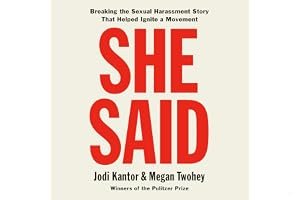
She Said: Breaking the Sexual Harassment Story That Helped Ignite a Movement
Jodi Kantor, Megan Twohey
4.5
From the Pulitzer-prize winning reporters who broke the news of Harvey Weinstein's sexual harassment and abuse for the New York Times, Jodi Kantor and Megan Twohey, the thrilling untold story of their investigation and its consequences for the #MeToo movement.
On October 5, 2017, the New York Times published an article by Jodi Kantor and Megan Twohey--and then the world changed. For months Kantor and Twohey had been having confidential discussions with top actresses, former Weinstein employees and other sources, learning of disturbing long-buried allegations, some of which had been covered up by onerous legal settlements. The journalists meticulously picked their way through a web of decades-old secret payouts and nondisclosure agreements, pressed some of the most famous women in the world--and some unknown ones--to risk going on the record, and faced down Weinstein, his team of high-priced defenders, and even his private investigators.
But nothing could have prepared them for what followed the publication of their Weinstein story. Within days, a veritable Pandora's Box of sexual harassment and abuse was opened, and women who had suffered in silence for generations began coming forward, trusting that the world would understand their stories. Over the next twelve months, hundreds of men from every walk of life and industry would be outed for mistreating their colleagues. But did too much change--or not enough? Those questions plunged the two journalists into a new phase of reporting and some of their most startling findings yet.
With superlative detail, insight, and journalistic expertise, Kantor and Twohey take us for the first time into the very heart of this social shift, reliving in real-time what it took to get the story and giving an up-close portrait of the forces that hindered and spurred change. They describe the surprising journeys of those who spoke up--for the sake of other women, for future generations, and for themselves--and so changed us all.
…
Recommended by Nigella Lawson, Arianna Ciccone, Cindy Gallop, and 9 others.
Prompted by a @jonronson tweet, I’ve been listing to the audio-book version of #SheSaid by @jodikantor and @mega2e, and I just want to tell you it is brilliant. [source]
Arianna Ciccone
'She Said' is the best book about journalism I have ever read. Here are its best lessons for journalists. https://t.co/40HmRx0sDi via @thisisinsider [source]
Cindy Gallop
Everybody, @jodikantor @mega2e's book is a MUST-READ - buy it here: https://t.co/hfSoCVs2Yp I'm ordering copies to be delivered to @adage @adweek @CampaignLiveUS @campaignmag @thedrum because this is THE investigative roadmap for how you expose the Weinsteins of the ad industry https://t.co/uoIWEHSajQ [source]
Cover unavailable
14
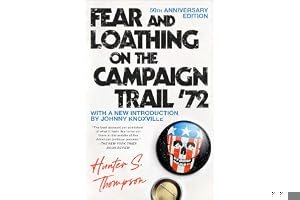
Fear and Loathing on the Campaign Trail '72
Hunter S. Thompson
4.5
Hilarious, terrifying, insightful, and compulsively readable, these are the articles that Hunter S. Thompson wrote for Rolling Stone magazine while covering the 1972 election campaign of President Richard M. Nixon and his unsuccessful opponent, Senator George S. McGovern. Hunter focuses largely on the Democratic Party's primaries and the breakdown of the national party as it splits between the different candidates.
With drug-addled alacrity and incisive wit, Thompson turned his jaundiced eye and gonzo heart to the repellent and seductive race for president, deconstructed the campaigns, and ended up with a political vision that is eerily prophetic
…
Cover unavailable
15
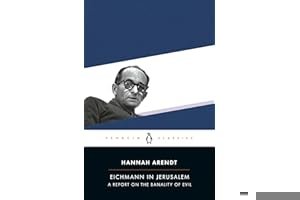
Eichmann in Jerusalem: A Report on the Banality of Evil
Originally appearing as a series of articles in The New Yorker, Hannah Arendt’s authoritative and stunning report on the trial of Nazi leader Adolf Eichmann sparked a flurry of debate upon its publication. This revised edition includes material that came to light after the trial, as well as Arendt’s postscript directly addressing the controversy that arose over her account. A major journalistic triumph by an intellectual of singular influence, Eichmann in Jerusalem is as shocking as it is informative—an unflinching look at one of the most unsettling and unsettled issues of the twentieth century that remains hotly debated to this day.
…
Recommended by Dr. Phil Zimbardo, Daniel Pick, David Bell, and 1 others.
Dr. Phil Zimbardo
Talks about Eichmann as illustrating the banality of evil. [source]
Daniel Pick
The trial focused public attention on the individual high bureaucrat who had such personal responsibility in the Final Solution. There was, in a way, this enigma of what went on in Eichmann’s mind. [source]
David Bell
Political philosopher Arendt sees the work of the Nazis as the inevitable result of colonialism and industrialisation. [source]
Cover unavailable
16
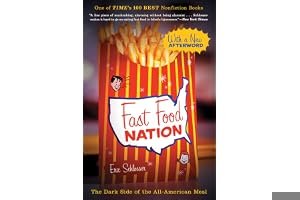
Fast Food Nation: The Dark Side of the All-American Meal
Fast food has hastened the malling of our landscape, widened the chasm between rich and poor, fueled an epidemic of obesity, and propelled American cultural imperialism abroad. That's a lengthy list of charges, but here Eric Schlosser makes them stick with an artful mix of first-rate reportage, wry wit, and careful reasoning.
Schlosser's myth-shattering survey stretches from California's subdivisions where the business was born to the industrial corridor along the New Jersey Turnpike where many fast food's flavors are concocted. Along the way, he unearths a trove of fascinating, unsettling truths -- from the unholy alliance between fast food and Hollywood to the seismic changes the industry has wrought in food production, popular culture, and even real estate. (back cover)
…
Recommended by Richard Branson, Antonio Eram, Barry Estabrook, and 1 others.
Today is World Book Day, a wonderful opportunity to address this #ChallengeRichard sent in by Mike Gonzalez of New Jersey: Make a list of your top 65 books to read in a lifetime. [source]
Antonio Eram
This book was recommended by Antonio when asked for titles he would recommend to young people interested in his career path. [source]
Barry Estabrook
Eric Schlosser takes apart a single fast-food meal and shows not only how it affects our health but also how the people who serve it to you are treated. He also looks at how the people in the slaughterhouses working with the cattle are treated, and so it shows you the true picture of the all-American meal – burgers and fries. [source]
Cover unavailable
17
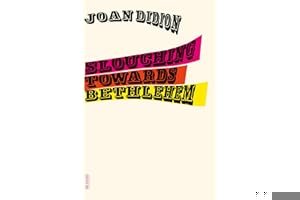
Slouching Towards Bethlehem: Essays
Joan Didion
4.5
Upon its publication in 1968, Slouching Towards Bethlehem confirmed Joan Didion as one of the most prominent writers on the literary scene. Her unblinking vision and deadpan tone have influenced subsequent generations of reporters and essayists, changing our expectations of style, voice, and the artistic possibilities of nonfiction.
"In her portraits of people," The New York Times Book Review wrote, "Didion is not out to expose but to understand, and she shows us actors and millionaires, doomed brides and naïve acid-trippers, left-wing ideologues and snobs of the Hawaiian aristocracy in a way that makes them neither villainous nor glamorous, but alive and botched and often mournfully beautiful. . . . A rare display of some of the best prose written today in this country."
In essay after essay, Didion captures the dislocation of the 1960s, the disorientation of a country shredding itself apart with social change. Her essays not only describe the subject at hand—the murderous housewife, the little girl trailing the rock group, the millionaire bunkered in his mansion—but also offer a broader vision of America, one that is both terrifying and tender, ominous and uniquely her own.
Joyce Carol Oates has written, "Joan Didion is one of the very few writers of our time who approaches her terrible subject with absolute seriousness, with fear and humility and awe. Her powerful irony is often sorrowful rather than clever. . . . She has been an articulate witness to the most stubborn and intractabletruths of our time, a memorable voice, partly eulogistic, partly despairing; always in control."
I like Didion for her writing style and her control over her material, but also for the way in which she captures a historical moment. [source]
Cover unavailable
18
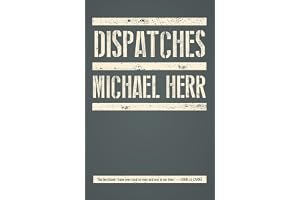
Dispatches
Michael Herr
4.5
Written on the front lines in Vietnam, Dispatches became an immediate classic of war reportage when it was published in 1977.
From its terrifying opening pages to its final eloquent words, Dispatches makes us see, in unforgettable and unflinching detail, the chaos and fervor of the war and the surreal insanity of life in that singular combat zone. Michael Herr’s unsparing, unorthodox retellings of the day-to-day events in Vietnam take on the force of poetry, rendering clarity from one of the most incomprehensible and nightmarish events of our time.
Dispatches is among the most blistering and compassionate accounts of war in our literature.
…
Recommended by Lawrence Kaplan.
Lawrence Kaplan
Dispatches came out in 1977, soon after the fall of Saigon. It’s delivered in the voice of the New Journalism of the era. Herr takes us up close, on patrol with American troops. It’s so vivid that it reads like fiction. Herr’s book shows us the dark side of America’s foreign policy and the consequences of ideas hatched in air-conditioned conference rooms in Washington DC. [source]
Cover unavailable
19
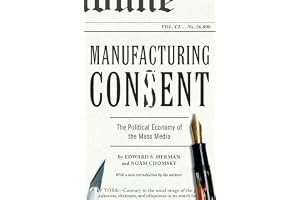
Manufacturing Consent: The Political Economy of the Mass Media
In this pathbreaking work, Edward S. Herman and Noam Chomsky show that, contrary to the usual image of the news media as cantankerous, obstinate, and ubiquitous in their search for truth and defense of justice, in their actual practice they defend the economic, social, and political agendas of the privileged groups that dominate domestic society, the state, and the global order.
Based on a series of case studies—including the media’s dichotomous treatment of “worthy” versus “unworthy” victims, “legitimizing” and “meaningless” Third World elections, and devastating critiques of media coverage of the U.S. wars against Indochina—Herman and Chomsky draw on decades of criticism and research to propose a Propaganda Model to explain the media’s behavior and performance. Their new introduction updates the Propaganda Model and the earlier case studies, and it discusses several other applications. These include the manner in which the media covered the passage of the North American Free Trade Agreement and subsequent Mexican financial meltdown of 1994-1995, the media’s handling of the protests against the World Trade Organization, World Bank, and International Monetary Fund in 1999 and 2000, and the media’s treatment of the chemical industry and its regulation. What emerges from this work is a powerful assessment of how propagandistic the U.S. mass media are, how they systematically fail to live up to their self-image as providers of the kind of information that people need to make sense of the world, and how we can understand their function in a radically new way.
…
Recommended by Louis Nyffenegger.
Louis Nyffenegger
Few technical books and a bit of everything. The following books are currently sitting on my bedside table: "The Hitchhiker's Guide To The Galaxy", "Predictable Revenue", "Manufacturing Consent", "Agile Application Security". "Oauth In Action", "Serious Cryptography". [source]
Cover unavailable
20
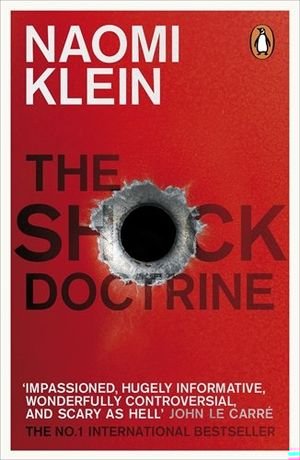
The Shock Doctrine: The Rise of Disaster Capitalism
In her ground-breaking reporting from Iraq, Naomi Klein exposed how the trauma of invasion was being exploited to remake the country in the interest of foreign corporations. She called it "disaster capitalism." Covering Sri Lanka in the wake of the tsunami, and New Orleans post-Katrina, she witnessed something remarkably similar. People still reeling from catastrophe were being hit again, this time with economic "shock treatment" losing their land and homes to rapid-fire corporate makeovers. The Shock Doctrine retells the story of the most dominant ideology of our time, Milton Friedman's free market economic revolution. In contrast to the popular myth of this movement's peaceful global victory, Klein shows how it has exploited moments of shock and extreme violence in order to implement its economic policies in so many parts of the world from Latin America and Eastern Europe to South Africa, Russia, and Iraq. At the core of disaster capitalism is the use of cataclysmic events to advance radical privatization combined with the privatization of the disaster response itself. By capitalizing on crises, created by nature or war, Klein argues that the disaster capitalism complex now exists as a booming new economy, and is the violent culmination of a radical economic project that has been incubating for fifty years.
…
Recommended by Donna Dickenson, George Monbiot, and Mat Whitecross.
Donna Dickenson
Naomi Klein’s argument is that capitalism actually requires deliberately engineered shocks to the economic systems. [source]
The Shock Doctrine explains some of the mechanisms by which patrimonial capital acquires power and enhances its wealth. It’s a brilliant piece of work, and one of those rare books that changes the way you perceive the world. [source]
Mat Whitecross
It starts with the theory that moments of crisis have been utilised by the right wing in the US and other countries to manipulate people into following their agenda. [source]
Cover unavailable
21
The Psychopath Test: A Journey Through the Madness Industry
Jon Ronson
4.5
In this madcap journey, a bestselling journalist investigates psychopaths and the industry of doctors, scientists, and everyone else who studies them.
The Psychopath Test is a fascinating journey through the minds of madness. Jon Ronson's exploration of a potential hoax being played on the world's top neurologists takes him, unexpectedly, into the heart of the madness industry. An influential psychologist who is convinced that many important CEOs and politicians are, in fact, psychopaths teaches Ronson how to spot these high-flying individuals by looking out for little telltale verbal and nonverbal clues. And so Ronson, armed with his new psychopath-spotting abilities, enters the corridors of power. He spends time with a death-squad leader institutionalized for mortgage fraud in Coxsackie, New York; a legendary CEO whose psychopathy has been speculated about in the press; and a patient in an asylum for the criminally insane who insists he's sane and certainly not a psychopath.
Ronson not only solves the mystery of the hoax but also discovers, disturbingly, that sometimes the personalities at the helm of the madness industry are, with their drives and obsessions, as mad in their own way as those they study. And that relatively ordinary people are, more and more, defined by their maddest edges.
…
Recommended by Memo Akten.
Memo Akten
@therourke you may very well be a pyschopath!, it doesn't mean you'll be an axe wielding homicidal maniac :) (I think I might be a bit pyschopath, dunno. My AE is a bit of a yoyo. At times I might feel more for a fly in a spiderweb than a person). V interesting book: https://t.co/QRAJAZPhDY [source]
Cover unavailable
22
Into the Wild
Jon Krakauer
4.4
Librarian's Note: An alternate cover edition can be found here
In April, 1992, a young man from a well-to-do family hitchhiked to Alaska and walked alone into the wilderness north of Mt. McKinley. His name was Christopher Johnson McCandless. He had given $25,000 in savings to charity, abandoned his car and most of his possessions, burned all the cash in his wallet, and invented a new life for himself. Four months later, a party of moose hunters found his decomposed body. How McCandless came to die is the unforgettable story of Into the Wild.
Immediately after graduating from college in 1991, McCandless had roamed through the West and Southwest on a vision quest like those made by his heroes Jack London and John Muir. In the Mojave Desert he abandoned his car, stripped it of its license plates, and burned all of his cash. He would give himself a new name, Alexander Supertramp, and, unencumbered by money and belongings, he would be free to wallow in the raw, unfiltered experiences that nature presented. Craving a blank spot on the map, McCandless simply threw away the maps. Leaving behind his desperate parents and sister, he vanished into the wild.
…
Recommended by Holger Seim.
Holger Seim
When it comes to adventure stories, Into the Wild. [source]
Cover unavailable
23
The Girl with the Dragon Tattoo (Millennium, #1)
Stieg Larsson and Reg Keelan
4.4
Harriet Vanger, a scion of one of Sweden’s wealthiest families disappeared over forty years ago. All these years later, her aged uncle continues to seek the truth. He hires Mikael Blomkvist, a crusading journalist recently trapped by a libel conviction, to investigate. He is aided by the pierced and tattooed punk prodigy Lisbeth Salander. Together they tap into a vein of unfathomable iniquity and astonishing corruption.
An international publishing sensation, Stieg Larsson’s The Girl with the Dragon Tattoo combines murder mystery, family saga, love story, and financial intrigue into one satisfyingly complex and entertainingly atmospheric novel.
Alternate Cover Edition ISBN 0307269752 (ISBN13: 9780307269751)
…
Cover unavailable
24
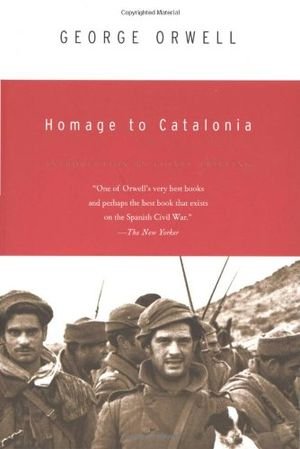
Homage to Catalonia
George Orwell
4.4
In 1936 George Orwell travelled to Spain to report on the Civil War and instead joined the fight against the Fascists. This famous account describes the war and Orwell’s own experiences. Introduction by Lionel Trilling.
The other reason I picked this book is that Orwell, like Dan Schorr, was an outsider. When he went to Spain, he was an unknown. He wasn’t Hemingway. He wasn’t a well-connected intellectual. He just had this amazing eye for detail. He was an amazing observer, and he could write so powerfully. This book, to me, is just one of the classics of foreign reporting. [source]
Anyone who wants to go off and write about Egypt, Tunisia or Libya today should pack a copy of Homage to Catalonia. It’s brilliant reportage. As you know, it opens with a vignette of an Italian militiaman in the barracks in Barcelona and he only saw this guy for a few moments but it captures the excitement. [source]
Cover unavailable
25
Columbine
Dave Cullen
4.4
"The tragedies keep coming. As we reel from the latest horror . . . " So begins a new epilogue, illustrating how Columbine became the template for nearly two decades of "spectacle murders." It is a false script, seized upon by a generation of new killers. In the wake of Newtown, Aurora, and Virginia Tech, the imperative to understand the crime that sparked this plague grows more urgent every year.
What really happened April 20, 1999? The horror left an indelible stamp on the American psyche, but most of what we "know" is wrong. It wasn't about jocks, Goths, or the Trench Coat Mafia. Dave Cullen was one of the first reporters on scene, and spent ten years on this book-widely recognized as the definitive account. With a keen investigative eye and psychological acumen, he draws on mountains of evidence, insight from the world's leading forensic psychologists, and the killers' own words and drawings-several reproduced in a new appendix. Cullen paints raw portraits of two polar opposite killers. They contrast starkly with the flashes of resilience and redemption among the survivors.
…
Cover unavailable
26
Into Thin Air: A Personal Account of the Mt. Everest Disaster
Jon Krakauer
4.4
When Jon Krakauer reached the summit of Mt. Everest in the early afternoon of May 10, 1996, he hadn't slept in fifty-seven hours and was reeling from the brain-altering effects of oxygen depletion. As he turned to begin his long, dangerous descent from 29,028 feet, twenty other climbers were still pushing doggedly toward the top. No one had noticed that the sky had begun to fill with clouds. Six hours later and 3,000 feet lower, in 70-knot winds and blinding snow, Krakauer collapsed in his tent, freezing, hallucinating from exhaustion and hypoxia, but safe. The following morning, he learned that six of his fellow climbers hadn't made it back to their camp and were desperately struggling for their lives. When the storm finally passed, five of them would be dead, and the sixth so horribly frostbitten that his right hand would have to be amputated.
Into Thin Air is the definitive account of the deadliest season in the history of Everest by the acclaimed journalist and author of the bestseller Into the Wild. On assignment for Outside Magazine to report on the growing commercialization of the mountain, Krakauer, an accomplished climber, went to the Himalayas as a client of Rob Hall, the most respected high-altitude guide in the world. A rangy, thirty-five-year-old New Zealander, Hall had summited Everest four times between 1990 and 1995 and had led thirty-nine climbers to the top. Ascending the mountain in close proximity to Hall's team was a guided expedition led by Scott Fischer, a forty-year-old American with legendary strength and drive who had climbed the peak without supplemental oxygen in 1994. But neither Hall nor Fischer survived the rogue storm that struck in May 1996.
Krakauer examines what it is about Everest that has compelled so many people -- including himself -- to throw caution to the wind, ignore the concerns of loved ones, and willingly subject themselves to such risk, hardship, and expense. Written with emotional clarity and supported by his unimpeachable reporting, Krakauer's eyewitness account of what happened on the roof of the world is a singular achievement.
Into the Wild is available on audio, read by actor Campbell Scott.
…
Recommended by Richard Branson, Cristina Riesen, Fabrice Grinda, and 2 others.
Today is World Book Day, a wonderful opportunity to address this #ChallengeRichard sent in by Mike Gonzalez of New Jersey: Make a list of your top 65 books to read in a lifetime. [source]
Cristina Riesen
First, a word on career paths. In time, I realised that career paths are like one-way streets. Magic happens in unexplored territories. Plus life is how you choose to live every moment, every day. So today, rather than building a career, I prefer to make lateral moves in life, working with great people and being part of ambitious projects impacting the world. There are a few books that got me here: … Jon Krakauer "Into Thin Air". [source]
Fabrice Grinda
I have lots of books to recommend, but they are not related to my career path. The only one that is remotely related is Peter Thiel’s Zero to One. That said here are books I would recommend. [source]
Cover unavailable
27
Nothing to Envy: Ordinary Lives in North Korea
Barbara Demick, Karen White, et al
4.4
Nothing to Envy follows the lives of six North Koreans over fifteen years—a chaotic period that saw the death of Kim Il-sung, the unchallenged rise to power of his son Kim Jong-il, and the devastation of a far-ranging famine that killed one-fifth of the population.
Taking us into a landscape most of us have never before seen, award-winning journalist Barbara Demick brings to life what it means to be living under the most repressive totalitarian regime today—an Orwellian world that is by choice not connected to the Internet, in which radio and television dials are welded to the one government station, and where displays of affection are punished; a police state where informants are rewarded and where an offhand remark can send a person to the gulag for life.
Demick takes us deep inside the country, beyond the reach of government censors. Through meticulous and sensitive reporting, we see her six subjects—average North Korean citizens—fall in love, raise families, nurture ambitions, and struggle for survival. One by one, we experience the moments when they realize that their government has betrayed them.
Nothing to Envy is a groundbreaking addition to the literature of totalitarianism and an eye-opening look at a closed world that is of increasing global importance.
…
Recommended by Hyeonseo Lee.
Hyeonseo Lee
She includes great details that show everyday life in North Korea. [source]
Moneyball is a quest for something as elusive as the Holy Grail, something that money apparently can't buy: the secret of success in baseball. The logical places to look would be the front offices of major league teams and the dugouts, perhaps even in the minds of the players themselves. Michael Lewis mines all these possibilities - his intimate and original portraits of big league ballplayers are alone worth the price of admission - but the real jackpot is a cache of numbers - numbers! - collected over the years by a strange brotherhood of amateur baseball enthusiasts: software engineers, statisticians, Wall Street analysts, layers, and physics professors.
What these geek numbers show - no, prove - is that the traditional yardsticks of success for players and teams are fatally flawed. Even the box score misleads us by ignoring the crucial importance of the humble base on balls. The information has been around for years, and nobody inside Major League Baseball paid it any mind. And then came Billy Beane, general manager of the Oakland Athletics.
Billy paid attention to those numbers - with the second-lowest payroll in baseball at his disposal, he had to - and this book records his astonishing experiment in finding and fielding a team that nobody else wanted. Moneyball is a roller coaster ride: before the 2002 season opens, Oakland must relinquish its three most prominent (and expensive) players, is written off by just about everyone, and comes roaring back to challenge the American League record for consecutive wins.
In a narrative full of fabulous characters and brilliant excursions into the unexpected, Lewis shows us how and why the new baseball knowledge works. He also sets up a sly and hilarious morality tale: Big Money, like Goliath, is always supposed to win... how can we not cheer for David?
You would think that the relationship between training and skill would be utterly obvious in sports, but apparently it isn’t. [source]
Daniel Hamermesh
What the book is really about is a guy who is using some econometrics to predict which players will do better in advancing wins, which is a remarkable use of economic thinking. [source]
David Papineau
It’s a parable of the disinclination of people in general to base their practices on evidence, a parable for evidence-based policy in general. [source]
Cover unavailable
29
The Omnivore's Dilemma: A Natural History of Four Meals
What should we have for dinner? For omnivore's like ourselves, this simple question has always posed a dilemma: When you can eat just about anything nature (or the supermarket) has to offer, deciding what you should eat will inevitably stir anxiety, especially when some of the foods on offer might shorten your life. Today, buffeted by one food fad after another, America is suffering from what can only be described as a national eating disorder. The omnivore's dilemma has returned with a vengeance, as the cornucopia of the modern American supermarket and fast-food outlet confronts us with a bewildering and treacherous food landscape. What's at stake in our eating choices is not only our own and our children's health, but the health of the environment that sustains life on earth.
The Omnivore's Dilemma is a groundbreaking book in which one of America's most fascinating, original, and elegant writers turns his own omnivorous mind to the seemingly straightforward question of what we should have for dinner. The question has confronted us since man discovered fire, but, according to Michael Pollan, the bestselling author of The Botany of Desire, how we answer it today, ath the dawn of the twenty-first century, may well determine our very survival as a species. Should we eat a fast-food hamburger? Something organic> Or perhaps something we hunt, gather or grow ourselves?
To find out, Pollan follows each of the food chains that sustain us--industrial food, organic or alternative food, and food we forage ourselves--from the source to a final meal, and in the process develops a definitive account of the American way of eating. His absorbing narrative takes us from Iowa cornfields to food laboratories, from feedlots and fast-food restaurants to organic farms and hunting grounds, always emphasizing our dynamic coevolutionary relationship with the handful of plant and animal species we depend on. Each time Pollan sits down to a meal, he deploys his unique blend of personal and investigative journalism to trace the origins of everything consumed, revealing what we unwittingly ingest and explaining how our taste for particular foods and flavors reflects our evolutionary inheritance.
The surprising answers Pollan offers to the simple question posed by this book have profound political, economic, psychological, and even mortal implications for all of us. Ultimately, this is a book as much about visionary solutions as it is about problems, and Pollan contends that, when it comes to food, doing the right thing often turns out to be the tastiest thing an eater can do. Beautifully written and thrillingly argued, The Omnivore's Dilemma promises to change the way we think about the politics and pleasure of eating. For anyone who reads it, dinner will never again look, or taste, quite the same. --jacket
…
Recommended by Barry Estabrook, Gabriel Coarna, Paul Rozin, and 1 others.
Barry Estabrook
Michael Pollan looks at food production through four meals. One is a fast-food meal, the other is an industrial-scale organic meal, then there is a small-scale organic meal and finally he actually goes out and either grows or kills, in the case of the meat, the entire meal himself. That is the narrative. [source]
Gabriel Coarna
Michael Pollan's "The Omnivore's Dilemma" --more precisely, the first 3rd of it-- was what first made me realize how badly the Earth, as an ecosystem, is out of balance. [source]
Paul Rozin
Michael Pollan is an excellent journalist who specializes in the food domain.He proposes relying more on whole foods and less on processed foods, like Oreo Cookies. He argues that unprocessed foods are more nutritious, more wholistic and better for the environment. [source]
Cover unavailable
30
Voices from Chernobyl
Svetlana Alexievich
4.4
On April 26, 1986, the worst nuclear reactor accident in history occurred at the Chernobyl complex in Pripyat. English-language reportage on the incident has, so far, focused on facts, names, and data; Voices from Chernobyl presents first-hand accounts of what happened to the people of Belarus and the fear, anger, and uncertainty that they lived through. In order to give voice to their experiences, Svetlana Alexievich interviewed hundreds of people (firefighters, disaster-cleanup technicians, and innocent citizens alike) affected by the meltdown. She presents these interviews in monologue form, giving readers a harrowing inside view into the minds of the affected people. No spin, no accusations, and no summary judgment: just the lifeshattering pain of the meltdown and the aftermath.
…
Recommended by Caterina Fake, Craig Mazin, Kate Brown, and 1 others.
These are sources I found fascinating and useful. Not ALL of them, but a bunch. First up, obviously... Svetlana Alexievich's Voices From Chernobyl. Absolutely essential, and heartbreaking, reading. There's a reason Ms. Alexievich has a Nobel Prize. [source]
Kate Brown
It’s a very beautiful work and I think it gives you the emotional landscape of how people dealt with their anxieties, fears, the health problems that ensued, and their growing sense of disillusionment with their political leaders and the Communist party. [source]
Rebecca Altman
What follows events like Chernobyl is a politics of measurement. Who counts? What counts? Who does the counting? How are boundaries drawn for the purposes of counting and comparing? And what is discounted, or never counted at all? [source]
Cover unavailable
31
The Electric Kool-Aid Acid Test
Tom Wolfe
4.4
They say if you remember the '60s, you weren't there. But, fortunately, Tom Wolfe was there, notebook in hand, politely declining LSD while Ken Kesey and his Merry Pranksters fomented revolution, turning America on to a dangerously playful way of thinking as their Day-Glo conveyance, Further, made the most influential bus ride since Rosa Parks's. By taking On the Road's hero Neal Cassady as his driver on the cross-country revival tour and drawing on his own training as a magician, Kesey made Further into a bully pulpit, and linked the beat epoch with hippiedom. Paul McCartney's Many Years from Now cites Kesey as a key influence on his trippy Magical Mystery Tour film. Kesey temporarily renounced his literary magic for the cause of "tootling the multitudes"--making a spectacle of himself--and Prankster Robert Stone had to flee Kesey's wild party to get his life's work done. But in those years, Kesey's life was his work, and Wolfe infinitely multiplied the multitudes who got tootled by writing this major literary-journalistic monument to a resonant pop-culture moment.
Kesey's theatrical metamorphosis from the distinguished author of One Flew over the Cuckoo's Nest to the abominable shaman of the "Acid Test" soirees that launched The Grateful Dead required Wolfe's Day-Glo prose account to endure (though Kesey's own musings in Demon Box are no slouch either). Even now, Wolfe's book gives what Wolfe clearly got from Kesey: a contact high.
I needed a little bit of a mental rest and I was just embroiled, everything was war all day long, and eventually I needed a mental break from that. And a random book that happened to be in this location I was at was The Electric Kool-Aid Acid Test by Tom Wolfe. Which is about the 60' and it's about hippies and it's abot psychedelics drugs and it was a good mental break because it was obviously the complete opposite of what I was experiencing at the time. And it kind of got me out of it. [source]
Cover unavailable
32
The Elements of Journalism: What Newspeople Should Know and The Public Should Expect
Bill Kovach, Tom Rosenstiel
4.4
The Book That Every Citizen and Journalist Should Read
“What this book does better than any single book on media history, ethics, or practice is weave . . . [together] why media audiences have fled and why new technology and megacorporate ownership are putting good journalism at risk.” —Rasmi Simhan, Boston Globe
“Kovach and Rosenstiel’s essays on each [element] are concise gems, filled with insights worthy of becoming axiomatic. . . . The book should become essential reading for journalism professionals and students and for the citizens they aim to serve.” —Carl Sessions Stepp, American Journalism Review
“If you think journalists have no idea what you want . . . here is a book that agrees with you. Better—it has solutions. The Elements of Journalism is written for journalists, but any citizen who wonders why the news seems trivial or uninspiring should read it.” —Marta Salij, Detroit Free Press
The elements of journalism are: * Journalism’s first obligation is to the truth. * Its first loyalty is to citizens. * Its essence is a discipline of verification. * Its practitioners must maintain an independence from those they cover. * It must serve as an independent monitor of power. * It must provide a forum for public criticism and compromise. * It must strive to make the significant interesting and relevant. * It must keep the news comprehensive and proportional. * Its practitioners must be allowed to exercise their personal conscience.
In Evicted, Princeton sociologist and MacArthur "Genius" Matthew Desmond follows eight families in Milwaukee as they struggle to keep a roof over their heads. Evicted transforms our understanding of poverty and economic exploitation while providing fresh ideas for solving one of 21st-century America's most devastating problems. Its unforgettable scenes of hope and loss remind us of the centrality of home, without which nothing else is possible.
If you want a good understanding of how the issues that cause poverty are intertwined, you should read this book about the eviction crisis in Milwaukee. Desmond has written a brilliant portrait of Americans living in poverty. He gave me a better sense of what it is like to be poor in this country than anything else I have read. [source]
Nadella is using this season to learn more in a variety of subjects. By the looks of it, he is interested in, among other things, virtual reality, the refugee crisis, and housing for the urban poor. [source]
Surprising insights into the lives of people who were evicted. I make a lot of assumptions about these people. Turns out I was wrong WHY they get evicted. [source]
Cover unavailable
34
Hiroshima
John Hersey
4.3
On August 6, 1945, Hiroshima was destroyed by the first atom bomb ever dropped on a city. This book, John Hersey's journalistic masterpiece, tells what happened on that day. Told through the memories of survivors, this timeless, powerful and compassionate document has become a classic "that stirs the conscience of humanity" (The New York Times).
Almost four decades after the original publication of this celebrated book, John Hersey went back to Hiroshima in search of the people whose stories he had told. His account of what he discovered about them is now the eloquent and moving final chapter of Hiroshima.
…
Recommended by Alex Blumberg.
Alex Blumberg
I had always been interested in this kind of … long form narrative nonfiction. [source]
Cover unavailable
35
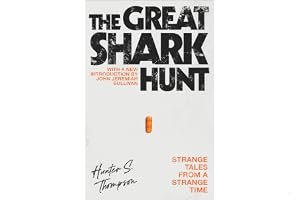
The Great Shark Hunt: Strange Tales from a Strange Time (The Gonzo Papers, #1)
Hunter S. Thompson
4.3
The first volume in Hunter S. Thompson’s bestselling Gonzo Papers offers brilliant commentary and outrageous humor, in his signature style.
Originally published in 1979, the first volume of the bestselling “Gonzo Papers” is now back in print. The Great Shark Hunt is Dr. Hunter S. Thompson’s largest and, arguably, most important work, covering Nixon to napalm, Las Vegas to Watergate, Carter to cocaine. These essays offer brilliant commentary and outrageous humor, in signature Thompson style.
Ranging in date from the National Observer days to the era of Rolling Stone, The Great Shark Hunt offers myriad, highly charged entries, including the first Hunter S. Thompson piece to be dubbed “gonzo”—“The Kentucky Derby Is Decadent and Depraved,” which appeared in Scanlan's Monthly in 1970. From this essay a new journalistic movement sprang which would change the shape of American letters. Thompson's razor-sharp insight and crystal clarity capture the crazy, hypocritical, degenerate, and redeeming aspects of the explosive and colorful ‘60s and ‘70s.
…
Cover unavailable
36
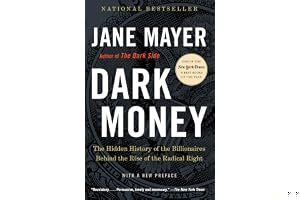
Dark Money: The Hidden History of the Billionaires Behind the Rise of the Radical Right
Who are the immensely wealthy right-wing ideologues shaping the fate of America today? From the bestselling author of The Dark Side, an electrifying work of investigative journalism that uncovers the agenda of this powerful group.
In her new preface, Jane Mayer discusses the results of the most recent election and Donald Trump's victory, and how, despite much discussion to the contrary, this was a huge victory for the billionaires who have been pouring money in the American political system.
Why is America living in an age of profound and widening economic inequality? Why have even modest attempts to address climate change been defeated again and again? Why do hedge-fund billionaires pay a far lower tax rate than middle-class workers? In a riveting and indelible feat of reporting, Jane Mayer illuminates the history of an elite cadre of plutocrats—headed by the Kochs, the Scaifes, the Olins, and the Bradleys—who have bankrolled a systematic plan to fundamentally alter the American political system. Mayer traces a byzantine trail of billions of dollars spent by the network, revealing a staggering conglomeration of think tanks, academic institutions, media groups, courthouses, and government allies that have fallen under their sphere of influence. Drawing from hundreds of exclusive interviews, as well as extensive scrutiny of public records, private papers, and court proceedings, Mayer provides vivid portraits of the secretive figures behind the new American oligarchy and a searing look at the carefully concealed agendas steering the nation. Dark Money is an essential book for anyone who cares about the future of American democracy.
…
Recommended by Brad Feld and Avi Asherschapiro.
Avi Asherschapiro
Who could forget that great book of reportage, "Dark Money," about the shadowy mechanization of the Nurses Union & the Climate Change Youth Movement. [source]
Cover unavailable
37
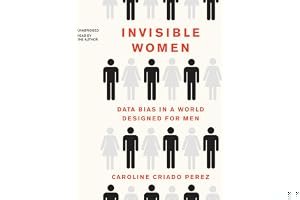
Invisible Women: Data Bias in a World Designed for Men
Imagine a world where your phone is too big for your hand, where your doctor prescribes a drug that is wrong for your body, where in a car accident you are 47% more likely to be seriously injured, where every week the countless hours of work you do are not recognised or valued. If any of this sounds familiar, chances are that you're a woman.
Invisible Women shows us how, in a world largely built for and by men, we are systematically ignoring half the population. It exposes the gender data gap – a gap in our knowledge that is at the root of perpetual, systemic discrimination against women, and that has created a pervasive but invisible bias with a profound effect on women’s lives.
Award-winning campaigner and writer Caroline Criado Perez brings together for the first time an impressive range of case studies, stories and new research from across the world that illustrate the hidden ways in which women are forgotten, and the impact this has on their health and well-being. From government policy and medical research, to technology, workplaces, urban planning and the media, Invisible Women reveals the biased data that excludes women. In making the case for change, this powerful and provocative book will make you see the world anew.
…
Recommended by Adam Wagner, Asher Wolf, Caitlin Moran, and 9 others.
Adam Wagner
@CCriadoPerez @MumsnetTowers I love this - the book, Poppy, the mug - it's so well composed! [source]
Asher Wolf
Tell me your best thing today. Mine was an amazing book and greeting card arrived in the post from the wonderful @MmeEmmeline https://t.co/GpEs2lg037 [source]
Caitlin Moran
@CCriadoPerez mate, I bow in admiration. it's an AMAZING, game-changing book. [source]
Cover unavailable
38
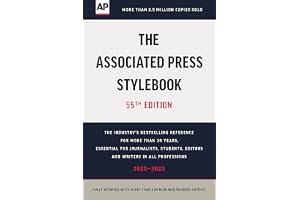
The Associated Press Stylebook 2020: and Briefing on Media Law
The Associated Press
4.3
A fully revised and updated edition of the bible of the newspaper industry
The style of The Associated Press is the gold standard for news writing. With the AP Stylebook in hand, you can learn how to write and edit with the clarity and professionalism for which their writers and editors are famous.
The AP Stylebook will help you master the AP's rules on grammar, spelling, punctuation, capitalization, abbreviation, word and numeral usage, and when to use "more than" instead of "over." To make navigating these specialty chapters even easier, the Stylebook includes a comprehensive index.
Fully revised and updated to keep pace with world events, common usage, and AP procedures, The AP Stylebook is the one reference that all writers, editors and students cannot afford to be without.
…
Cover unavailable
39
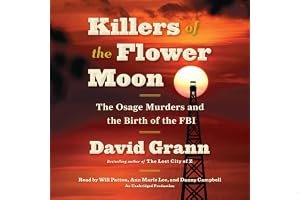
Killers of the Flower Moon: The Osage Murders and the Birth of the FBI
In the 1920s, the richest people per capita in the world were members of the Osage Indian Nation in Oklahoma. After oil was discovered beneath their land, the Osage rode in chauffeured automobiles, built mansions, and sent their children to study in Europe.
Then, one by one, they began to be killed off. One Osage woman, Mollie Burkhart, watched as her family was murdered. Her older sister was shot. Her mother was then slowly poisoned. And it was just the beginning, as more Osage began to die under mysterious circumstances.
In this last remnant of the Wild West—where oilmen like J. P. Getty made their fortunes and where desperadoes such as Al Spencer, “the Phantom Terror,” roamed – virtually anyone who dared to investigate the killings were themselves murdered. As the death toll surpassed more than twenty-four Osage, the newly created F.B.I. took up the case, in what became one of the organization’s first major homicide investigations. But the bureau was then notoriously corrupt and initially bungled the case. Eventually the young director, J. Edgar Hoover, turned to a former Texas Ranger named Tom White to try to unravel the mystery. White put together an undercover team, including one of the only Native American agents in the bureau. They infiltrated the region, struggling to adopt the latest modern techniques of detection. Together with the Osage they began to expose one of the most sinister conspiracies in American history.
A true-life murder mystery about one of the most monstrous crimes in American history.
…
Recommended by Jacqueline Novogratz.
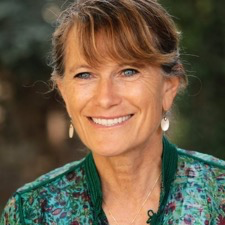
Jacqueline Novogratz
Reads like a novel while giving a deeper understanding of both the good and the terrible that humans are capable of. [source]
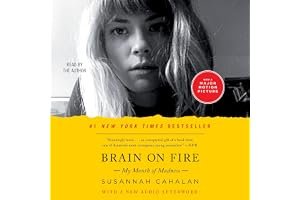
An award-winning memoir and instant New York Times bestseller that goes far beyond its riveting medical mystery, Brain on Fire is the powerful account of one woman’s struggle to recapture her identity.
When twenty-four-year-old Susannah Cahalan woke up alone in a hospital room, strapped to her bed and unable to move or speak, she had no memory of how she’d gotten there. Days earlier, she had been on the threshold of a new, adult life: at the beginning of her first serious relationship and a promising career at a major New York newspaper. Now she was labeled violent, psychotic, a flight risk. What happened?
In a swift and breathtaking narrative, Cahalan tells the astonishing true story of her descent into madness, her family’s inspiring faith in her, and the lifesaving diagnosis that nearly didn’t happen.
…
Recommended by Jessica Flitter and Joann Corleyschwarzkopf.
Jessica Flitter
The readability for me is probably the key element for students—and maybe for teachers as well—because it’s a book that you really can’t put down. If that’s what we need to make students readers, then I’m all for it. [source]
Joann Corleyschwarzkopf
Need a fun boost for your team? Want to jump-start great problem-solving? >Book a 1-hour #creativethinking, virtual experience & get a complimentary pdf copy - Brain on Fire: Unleashing Your Creative Superpowers! for each attendee #teambuilding Info here: https://t.co/j6hOxMJrNH https://t.co/b9hAxV90Mf [source]
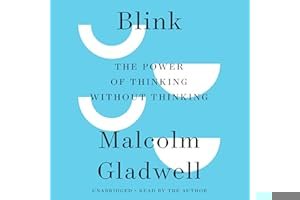
Drawing on cutting-edge neuroscience and psychology and displaying all of the brilliance that made The Tipping Point a classic, Blink changes the way you'll understand every decision you make. Never again will you think about thinking the same way.
Malcolm Gladwell redefined how we understand the world around us. Now, in Blink, he revolutionizes the way we understand the world within. Blink is a book about how we think without thinking, about choices that seem to be made in an instant - in the blink of an eye - that actually aren't as simple as they seem. Why are some people brilliant decision makers, while others are consistently inept? Why do some people follow their instincts and win, while others end up stumbling into error? How do our brains really work - in the office, in the classroom, in the kitchen, and in the bedroom? And why are the best decisions often those that are impossible to explain to others?
In Blink we meet the psychologist who has learned to predict whether a marriage will last, based on a few minutes of observing a couple; the tennis coach who knows when a player will double-fault before the racket even makes contact with the ball; the antiquities experts who recognize a fake at a glance. Here, too, are great failures of "blink": the election of Warren Harding; "New Coke"; and the shooting of Amadou Diallo by police. Blink reveals that great decision makers aren't those who process the most information or spend the most time deliberating, but those who have perfected the art of "thin-slicing" - filtering the very few factors that matter from an overwhelming number of variables.
…
Recommended by Ev Williams, Mike Shinoda, Marillyn Hewson, and 4 others.
Mike Shinoda
I know most of the guys in the band read this book. [source]
Marillyn Hewson
CEO/Lockheed Martin
CEO Marilyn Hewson recommends this book because it helped her to trust her instincts in business. [source]
Antonio Eram
When asked to name some books that had a big impact on him, Antonio mentioned Blink: The Power of Thinking Without Thinking by Malcolm Gladwell. [source]
Immensely helpful and illuminating to any aspiring writer, Stephen King’s critically lauded, classic bestseller shares the experiences, habits, and convictions that have shaped him and his work.
"Long live the King" hailed Entertainment Weekly upon publication of Stephen King’s On Writing. Part memoir, part master class by one of the bestselling authors of all time, this superb volume is a revealing and practical view of the writer’s craft, comprising the basic tools of the trade every writer must have. King’s advice is grounded in his vivid memories from childhood through his emergence as a writer, from his struggling early career to his widely reported, near-fatal accident in 1999—and how the inextricable link between writing and living spurred his recovery. Brilliantly structured, friendly and inspiring, On Writing will empower and entertain everyone who reads it—fans, writers, and anyone who loves a great story well told.
I read a bunch of books on writing before I wrote my first book and the two that stuck with me were Stephen King’s book and “On Writing Well” by Zinsser (which is a bit on the technical side). [source]
Alina Varlanuta
My professional path – copywriting – somehow intertwines with my unprofessional (hahaha) path – writing so I would recommend reading literature for both. Somehow reading and writing are two ways of doing the same thing: storytelling (even when you read you tell yourself a story in your own voice, bringing your personal emotion and empathy to the story you’re reading). The only difference is that when I’m reading, panic is far away from me, in a safe place. Nevertheless, the words below helped me rewrite and think twice before adding an exclamation point: On Writing by Stephen King. [source]
Andrew Cowan
Yes. It is a surprise to a lot of people that this book is so widely read on university campuses and so widely recommended by teachers of writing. Students love it. It’s bracing: there’s no nonsense. He says somewhere in the foreword or preface that it is a short book because most books are filled with bullshit and he is determined not to offer bullshit but to tell it like it is. [source]
Cover unavailable
43
Freakonomics: A Rogue Economist Explores the Hidden Side of Everything
Which is more dangerous, a gun or a swimming pool? What do schoolteachers and sumo wrestlers have in common? Why do drug dealers still live with their moms? How much do parents really matter? What kind of impact did Roe v. Wade have on violent crime? Freakonomics will literally redefine the way we view the modern world.
These may not sound like typical questions for an economist to ask. But Steven D. Levitt is not a typical economist. He is a much heralded scholar who studies the stuff and riddles of everyday life -- from cheating and crime to sports and child rearing -- and whose conclusions regularly turn the conventional wisdom on its head. He usually begins with a mountain of data and a simple, unasked question. Some of these questions concern life-and-death issues; others have an admittedly freakish quality. Thus the new field of study contained in this book: freakonomics.
Through forceful storytelling and wry insight, Levitt and co-author Stephen J. Dubner show that economics is, at root, the study of incentives -- how people get what they want, or need, especially when other people want or need the same thing. In Freakonomics, they set out to explore the hidden side of ... well, everything. The inner workings of a crack gang. The truth about real-estate agents. The myths of campaign finance. The telltale marks of a cheating schoolteacher. The secrets of the Ku Klux Klan.
What unites all these stories is a belief that the modern world, despite a surfeit of obfuscation, complication, and downright deceit, is not impenetrable, is not unknowable, and -- if the right questions are asked -- is even more intriguing than we think. All it takes is a new way of looking. Steven Levitt, through devilishly clever and clear-eyed thinking, shows how to see through all the clutter.
Freakonomics establishes this unconventional premise: If morality represents how we would like the world to work, then economics represents how it actually does work. It is true that readers of this book will be armed with enough riddles and stories to last a thousand cocktail parties. But Freakonomics can provide more than that. It will literally redefine the way we view the modern world. (front flap)
…
Recommended by Malcolm Gladwell, Daymond John, Ev Williams, and 12 others.
James Altucher recommended this book on the podcast "The Tim Ferriss Show". [source]
Cover unavailable
44
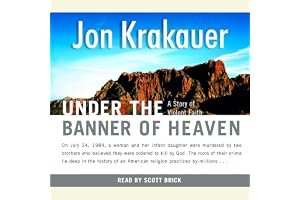
Under the Banner of Heaven: A Story of Violent Faith
Jon Krakauer
4.3
A multilayered, bone-chilling narrative of messianic delusion, savage violence, polygamy, and unyielding faith. This is vintage Krakauer, an utterly compelling work of nonfiction that illuminates an otherwise confounding realm of human behavior.
Jon Krakauer’s literary reputation rests on insightful chronicles of lives conducted at the outer limits. In Under The Banner of Heaven: A Story of Violent Faith, he shifts his focus from extremes of physical adventure to extremes of religious belief within our own borders. At the core of his book is an appalling double murder committed by two Mormon Fundamentalist brothers, Ron and Dan Lafferty, who insist they received a revelation from God commanding them to kill their blameless victims. Beginning with a meticulously researched account of this "divinely inspired" crime, Krakauer constructs a multilayered, bone-chilling narrative of messianic delusion, savage violence, polygamy, and unyielding faith. Along the way, he uncovers a shadowy offshoot of America’s fastest-growing religion, and raises provocative questions about the nature of religious belief.
Krakauer takes readers inside isolated communities in the American West, Canada, and Mexico, where some forty-thousand Mormon Fundamentalists believe the mainstream Mormon Church went unforgivably astray when it renounced polygamy. Defying both civil authorities and the Mormon establishment in Salt Lake City, the leaders of these outlaw sects are zealots who answer only to God. Marrying prodigiously and with virtual impunity (the leader of the largest fundamentalist church took seventy-five "plural wives," several of whom were wed to him when they were fourteen or fifteen and he was in his eighties), fundamentalist prophets exercise absolute control over the lives of their followers, and preach that any day now the world will be swept clean in a hurricane of fire, sparing only their most obedient adherents.
Weaving the story of the Lafferty brothers and their fanatical brethren with a clear-eyed look at Mormonism’s violent past, Krakauer examines the underbelly of the most successful homegrown faith in the United States, and finds a distinctly American brand of religious extremism. The result is vintage Krakauer, an utterly compelling work of nonfiction that illuminates an otherwise confounding realm of human behavior.
…
Cover unavailable
45
Between the World and Me
Ta-Nehisi Coates
4.3
#1 NEW YORK TIMES BESTSELLER [[ LONGLISTED FOR THE NATIONAL BOOK AWARD [[ Hailed by Toni Morrison as "required reading," a bold and personal literary exploration of America's racial history by "the single best writer on the subject of race in the United States" (The New York Observer)
"This is your country, this is your world, this is your body, and you must find some way to live within the all of it."
In a profound work that pivots from the biggest questions about American history and ideals to the most intimate concerns of a father for his son, Ta-Nehisi Coates offers a powerful new framework for understanding our nation's history and current crisis. Americans have built an empire on the idea of "race," a falsehood that damages us all but falls most heavily on the bodies of black women and menbodies exploited through slavery and segregation, and, today, threatened, locked up, and murdered out of all proportion. What is it like to inhabit a black body and find a way to live within it? And how can we all honestly reckon with this fraught history and free ourselves from its burden?
Between the World and Me is Ta-Nehisi Coates's attempt to answer these questions in a letter to his adolescent son. Coates shares with his sonand readersthe story of his awakening to the truth about his place in the world through a series of revelatory experiences, from Howard University to Civil War battlefields, from the South Side of Chicago to Paris, from his childhood home to the living rooms of mothers whose children's lives were taken as American plunder. Beautifully woven from personal narrative, reimagined history, and fresh, emotionally charged reportage, Between the World and Me clearly illuminates the past, bracingly confronts our present, and offers a transcendent vision for a way forward.
The president also released a list of his summer favorites back in 2015: All That Is, James Salter The Sixth Extinction, Elizabeth Kolbert The Lowland, Jhumpa Lahiri Between the World and Me, Ta-Nehisi Coates Washington: A Life, Ron Chernow All the Light We Cannot See, Anthony Doerr [source]
Q: What are the books that had a major influence on you? Or simply the ones you like the most. : Tao te Ching, score takes care of itself, between the world and me, the four agreements, the old man and the sea...I love reading! [source]
Here are some of my favorite reads from 2017. Lots of friends and colleagues send me book suggestions and it's impossible to squeeze them all in. I continue to be super curious about how digital and tech are enabling people to transform our lives but I try to read a good mix of books that apply to a variety of areas and stretch my thinking more broadly. [source]
Cover unavailable
46
Nickel and Dimed: On (Not) Getting by in America
Barbara Ehrenreich
4.3
Barbara Ehrenreich, our sharpest and most original social critic, goes "undercover" in Nickel and Dmined as an unskilled worker to reveal the dark side of American prosperity.
Millions of Americans work full time, year round, for poverty-level wages. In 1998, Barbara Ehrenreich decided to join them. She was inspired in part by the rhetoric surrounding welfare reform, which promised that a job -- any job -- can be the ticket to a better life. But how does anyone survive, let alone prosper, on $6 an hour? To find out, Ehrenreich left her home, took the cheapest lodgings she could find, and accepted whatever jobs she was offered. Moving from Florida to Maine to Minnesota, she worked as a waitress, a hotel maid, a cleaning woman, a nursing-home aide, and a Wal-Mart sales clerk. She lived in trailer parks and crumbling residential motels. Very quickly, she discovered that no job is truly "unskilled," that even the lowliest occupations require exhausting mental and muscular effort. She also learned that one job is not enough; you need at least two if you int to live indoors.
Nickel and Dimed reveals low-rent America in all its tenacity, anxiety, and surprising generosity -- a land of Big Boxes, fast food, and a thousand desperate stratagems for survival. Read it for the smoldering clarity of Ehrenreich's perspective and for a rare view of how "prosperity" looks from the bottom. You will never see anything -- from a motel bathroom to a restaurant meal -- in quite the same way again.
…
Recommended by Angela Pham, Jim Edwards, Leah Lizarondo, and 1 others.
Angela Pham
Another form of non-fiction heartbreak. This is a timeless look at how most of America survives. You cannot be an empathetic business leader without this lens. [source]
Jim Edwards
@Astrologic007 @ainecain @businessinsider @B_Ehrenreich @AndrewYang @carolhunter @esaagar @EmmaVigeland @kthalps @ErinBurnett @mviser Nickel and Dimed is a great book and everyone should read it. @B_Ehrenreich [source]
Leah Lizarondo
These books propelled me to want to work on a social enterprise and underscored my passion for making a difference in food policy. I believe we can build an innovative company that has deep social impact. That we can use the same mindsets that single bottom-line companies have to build successful triple and quadruple bottom-line companies. It is the holy grail -- for your work to present the challenge to be creative, innovative, quick on a daily basis but also at the end of the day, the knowledge that you are making a real difference in people's lives. I feel extremely fortunate to be in this position right now. [source]
Cover unavailable
47
Going Clear: Scientology, Hollywood, and the Prison of Belief
Lawrence Wright
4.3
A clear-sighted revelation, a deep penetration into the world of Scientology by the Pulitzer Prize-winning author of the now-classic study of al-Qaeda's 9/11 attack, the Looming Tower. Based on more than two hundred personal interviews with both current and former Scientologists--both famous and less well known--and years of archival research, Lawrence Wright uses his extraordinary investigative skills to uncover for us the inner workings of the Church of Scientology: its origins in the imagination of science-fiction writer L. Ron Hubbard; its struggles to find acceptance as a legitimate (and legally acknowledged) religion; its vast, secret campaign to infiltrate the U.S. government; and its dramatic efforts to grow and prevail after the death of Hubbard.
At the book's center, two men whom Wright brings vividly to life, showing how they have made Scientology what it is today: The darkly brilliant L. Ron Hubbard--whose restless, expansive mind invented a new religion tailor-made to prosper in the spiritually troubled post-World War II era. And his successor, David Miscavige--tough and driven, with the unenviable task of preserving the church in the face of ongoing scandals and continual legal assaults.
We learn about Scientology's esoteric cosmology; about the auditing process that determines an inductee's state of being; about the Bridge to Total Freedom, through which members gain eternal life. We see the ways in which the church pursues celebrities, such as Tom Cruise and John Travolta, and how young idealists who joined the Sea Org, the church's clergy, whose members often enter as children, signing up with a billion-year contract and working with little pay in poor conditions. We meet men and women "disconnected" from friends and family by the church's policy of shunning critical voices. And we discover, through many firsthand stories, the violence that has long permeated the inner sanctum of the church.
In Going Clear, Wright examines what fundamentally makes a religion a religion, and whether Scientology is, in fact, deserving of the constitutional protections achieved in its victory over the IRS. Employing all his exceptional journalistic skills of observations, understanding, and synthesis, and his ability to shape a story into a compelling narrative, Lawrence Wright has given us an evenhanded yet keenly incisive book that goes far beyond an immediate exposé and uncovers the very essence of what makes Scientology the institution it is.
On Writing Well has been praised for its sound advice, its clarity and the warmth of its style. It is a book for everybody who wants to learn how to write or who needs to do some writing to get through the day, as almost everybody does in the age of e-mail and the Internet. Whether you want to write about people or places, science and technology, business, sports, the arts or about yourself in the increasingly popular memoir genre, On Writing Well offers you fundamental priciples as well as the insights of a distinguished writer and teacher. With more than a million copies sold, this volume has stood the test of time and remains a valuable resource for writers and would-be writers.
I read a bunch of books on writing before I wrote my first book and the two that stuck with me were Stephen King’s book and “On Writing Well” by Zinsser (which is a bit on the technical side). [source]
Tim O'Reilly
Founder/O'Reilly Media
On Writing Well, by William Zinsser. I wouldn't say this book influenced me, since my principles of writing were established long before I read it. However, it does capture many things that I believe about effective writing. [source]
Great blunt advice about writing better non-fiction. So inspiring. [source]
Cover unavailable
49
The Right Stuff
Tom Wolfe
4.2
Millions of words have poured forth about man's trip to the moon, but until now few people have had a sense of the most engrossing side of the adventure; namely, what went on in the minds of the astronauts themselves - in space, on the moon, and even during certain odysseys on earth. It is this, the inner life of the astronauts, that Tom Wolfe describes with his almost uncanny emapthetic powers, that made this book a classic.
Today is World Book Day, a wonderful opportunity to address this #ChallengeRichard sent in by Mike Gonzalez of New Jersey: Make a list of your top 65 books to read in a lifetime. [source]
Anop Anthony
The Right Stuff is a marvelously readable book about test pilots and astronauts. [source]
Cal Fussman
"I note: Tim Ferriss asked Cal, "If you were a billionaire and could give 2 to 3 books to every graduating high school senior in the country this year, what would they be?" His answer (updated since the podcast) is: "For everyone: How to Win Friends and Influence People by Dale Carnegie. For females: West with the Night by Beryl Markham. For males: The Right Stuff by Tom Wolfe. That's a good start for a journey". [source]
Cover unavailable
50
The New Jim Crow: Mass Incarceration in the Age of Colorblindness
"Jarvious Cotton's great-great-grandfather could not vote as a slave. His great-grandfather was beaten to death by the Klu Klux Klan for attempting to vote. His grandfather was prevented from voting by Klan intimidation; his father was barred by poll taxes and literacy tests. Today, Cotton cannot vote because he, like many black men in the United States, has been labeled a felon and is currently on parole."
As the United States celebrates the nation's "triumph over race" with the election of Barack Obama, the majority of young black men in major American cities are locked behind bars or have been labeled felons for life. Although Jim Crow laws have been wiped off the books, an astounding percentage of the African American community remains trapped in a subordinate status--much like their grandparents before them.
In this incisive critique, former litigator-turned-legal-scholar Michelle Alexander provocatively argues that we have not ended racial caste in America: we have simply redesigned it. Alexander shows that, by targeting black men and decimating communities of color, the U.S. criminal justice system functions as a contemporary system of racial control, even as it formally adheres to the principle of color blindness. The New Jim Crow challenges the civil rights community--and all of us--to place mass incarceration at the forefront of a new movement for racial justice in America.
I read The New Jim Crow, a study of how the U.S. justice system disproportionately criminalizes and jails blacks and Latinos. Making our criminal justice system fairer and more effective is a huge challenge for our country. I’m going to keep learning about this topic, but some things are already clear: We can’t jail our way to a just society, and our current system isn’t working (adapted with permission from Facebook’s A Year of Books project). [source]
Peter Temin
The new Jim Crow that Michelle Alexander is talking about is mass incarceration. [source]
Cover unavailable
51
The White Album: Essays
Joan Didion
4.2
First published in 1979, The White Album is a mosaicof the late sixties and seventies. It includes, among other bizarre artifacts and personalities, the dark journeys and impulses of the Manson family, a Black Panther Party press conference, the story of John Paul Getty's museum, the romance of water in an arid landscape, and the swirl and confusion of the sixties. With commanding sureness of mood and language, Joan Didion exposes the realities and dreams of that age of self-discovery whose spiritual center was California.
…
Recommended by Dan Richards and Steven Amsterdam.
Dan Richards
I feel Joan Didion is the patron saint of a maelstrom of culture and environment of a particular time. She is the great American road-trip writer, to my mind. She has that great widescreen filmic quality to her work. [source]
Steven Amsterdam
With her gaze on California of the late 60s and early 70s, Didion gives us the Black Panthers, Janis Joplin, Nancy Reagan, and the Manson follower Linda Kasabian. [source]
Cover unavailable
52
The Journalist and the Murderer
Janet Malcolm
4.2
In two previous books, Janet Malcolm explored the hidden sides of, respectively, institutional psychoanalysis and Freudian biography. In this book, she examines the psychopathology of journalism. Using a strange and unprecedented lawsuit as her larger-than-life example -- the lawsuit of Jeffrey MacDonald, a convicted murderer, against Joe McGinniss, the author of Fatal Vision, a book about the crime -- she delves into the always uneasy, sometimes tragic relationship that exists between journalist and subject. In Malcolm's view, neither journalist nor subject can avoid the moral impasse that is built into the journalistic situation. When the text first appeared, as a two-part article in The New Yorker, its thesis seemed so radical and its irony so pitiless that journalists across the country reacted as if stung.
Her book is a work of journalism as well as an essay on journalism: it at once exemplifies and dissects its subject. In her interviews with the leading and subsidiary characters in the MacDonald-McGinniss case -- the principals, their lawyers, the members of the jury, and the various persons who testified as expert witnesses at the trial -- Malcolm is always aware of herself as a player in a game that, as she points out, she cannot lose. The journalist-subject encounter has always troubled journalists, but never before has it been looked at so unflinchingly and so ruefully. Hovering over the narrative -- and always on the edge of the reader's consciousness -- is the MacDonald murder case itself, which imparts to the book an atmosphere of anxiety and uncanniness. The Journalist and the Murderer derives from and reflects many of the dominant intellectual concerns of our time, and it will have a particular appeal for those who cherish the odd, the off-center, and the unsolved.
…
Recommended by Lorraine Adams.
Lorraine Adams
This is Janet Malcolm’s account of the writing of Joe McGinniss’s non-fiction book, Fatal Vision. Basically, Fatal Vision was written using the immersion technique of spending a great deal of time with the subject to get to the ‘truth’ of the subject. There is a bias in our culture towards the non-fiction dramatic narrative, as we think it is closer to the truth than fiction because the books overtly make those claims. But we know, of course, to make non-fiction ‘read like a novel’ that certain realities have to be massaged and Malcolm picks apart the choices that McGinniss made to do this in his book about an accused murderer. His subject, Jeffrey MacDonald, was accused of murdering his pregnant young wife and daughter and he co-operated with McGinniss because he was going to be portrayed as the wrongly-accused innocent. But, in the course of writing the book, McGinniss came to believe that he had committed the murders and also discovered that he wasn’t interesting enough as a subject to describe his own inner life. This is a huge problem with non-fiction. I’ve done immersion reporting, only to find out at the end that the subject I’ve chosen is a lot less sympathetic than I had realised. Once, I discovered a woman I was following may have murdered her child in a case that couldn’t be prosecuted because of physical evidence that was difficult to definitively evaluate. So I had to start all over with another woman. At the time what Malcolm found was vexing and disputed, though now we probably admit to it, even though it is ignored by people choosing which book to read. That famous line – ‘Every journalist who is not too stupid or too full of himself to notice what is going on knows that what he does is morally indefensible’ – is an overstatement. Yet it stands for a deeper problem. [source]
Cover unavailable
53
The Girl Who Played with Fire (Millennium, #2)
Stieg Larsson, Reg Keeland
4.2
Part blistering espionage thriller, part riveting police procedural, and part piercing exposé on social injustice, The Girl Who Played with Fire is a masterful, endlessly satisfying novel.
Mikael Blomkvist, crusading publisher of the magazine Millennium, has decided to run a story that will expose an extensive sex trafficking operation. On the eve of its publication, the two reporters responsible for the article are murdered, and the fingerprints found on the murder weapon belong to his friend, the troubled genius hacker Lisbeth Salander. Blomkvist, convinced of Salander’s innocence, plunges into an investigation. Meanwhile, Salander herself is drawn into a murderous game of cat and mouse, which forces her to face her dark past.
From the Trade Paperback edition.
…
Cover unavailable
54
The Shadow of the Sun
Ryszard Kapuscinski
4.2
In 1957, Ryszard Kapuscinski arrived in Africa to witness the beginning of the end of colonial rule as the first African correspondent of Poland's state newspaper. From the early days of independence in Ghana to the ongoing ethnic genocide in Rwanda, Kapuscinski has crisscrossed vast distances pursuing the swift, and often violent, events that followed liberation. Kapuscinski hitchhikes with caravans, wanders the Sahara with nomads, and lives in the poverty-stricken slums of Nigeria. He wrestles a king cobra to the death and suffers through a bout of malaria. What emerges is an extraordinary depiction of Africa--not as a group of nations or geographic locations--but as a vibrant and frequently joyous montage of peoples, cultures, and encounters. Kapuscinski's trenchant observations, wry analysis and overwhelming humanity paint a remarkable portrait of the continent and its people. His unorthodox approach and profound respect for the people he meets challenge conventional understandings of the modern problems faced by Africa at the dawn of the twenty-first century.
Once you discover Kapuściński, it’s a love affair for life. He’s such a beautiful writer. [source]
Cover unavailable
55
The Girl Who Kicked the Hornet's Nest (Millennium, #3)
Stieg Larsson, Reg Keeland
4.2
The stunning third and final novel in Stieg Larsson's internationally best-selling trilogy.
Lisbeth Salander - the heart of Larsson's two previous novels - lies in critical condition, a bullet wound to her head, in the intensive care unit of a Swedish city hospital. She's fighting for her life in more ways than one: if and when she recovers, she'll be taken back to Stockholm to stand trial for three murders. With the help of her friend, journalist Mikael Blomkvist, she will not only have to prove her innocence, but also identify and denounce those in authority who have allowed the vulnerable, like herself, to suffer abuse and violence. And, on her own, she will plot revenge - against the man who tried to kill her, and the corrupt government institutions that very nearly destroyed her life.
Once upon a time, she was a victim. Now Salander is fighting back.
Over the last half-billion years, there have been five mass extinctions, when the diversity of life on earth suddenly and dramatically contracted. Scientists around the world are currently monitoring the sixth extinction, predicted to be the most devastating extinction event since the asteroid impact that wiped out the dinosaurs. This time around, the cataclysm is us.
In prose that is at once frank, entertaining, and deeply informed, The New Yorker writer Elizabeth Kolbert tells us why and how human beings have altered life on the planet in a way no species has before. Interweaving research in half a dozen disciplines, descriptions of the fascinating species that have already been lost, and the history of extinction as a concept, Kolbert provides a moving and comprehensive account of the disappearances occurring before our very eyes. She shows that the sixth extinction is likely to be mankind's most lasting legacy, compelling us to rethink the fundamental question of what it means to be human.
The president also released a list of his summer favorites back in 2015: All That Is, James Salter The Sixth Extinction, Elizabeth Kolbert The Lowland, Jhumpa Lahiri Between the World and Me, Ta-Nehisi Coates Washington: A Life, Ron Chernow All the Light We Cannot See, Anthony Doerr [source]
The Sixth Extinction: An Unnatural History, by Elizabeth Kolbert. Climate change is a big problem—one of the biggest we’ll face this century—but it’s not the only environmental concern on the horizon. Humans are putting down massive amounts of pavement, moving species around the planet, over-fishing and acidifying the oceans, changing the chemical composition of rivers, and more. Natural scientists posit that there have been five extinction events in the Earth’s history (think of the asteroid that wiped out the dinosaurs), and Kolbert makes a compelling case that human activity is leading to the sixth. Unlike a lot of people who write about the environment, Kolbert doesn’t resort to hype. She just lays out the facts and wraps them in memorable anecdotes. It’s a sobering but engaging and informative read. [source]
"In his autobiography, Walmart's founder expounds on the principles of discount retailing and discusses his core values of frugality and a bias for action — a willingness to try a lot of things and make many mistakes. Bezos included both in Amazon's corporate values," Brad Stone writes. [source]
Cover unavailable
57
No Place to Hide: Edward Snowden, the NSA, and the U.S. Surveillance State
Glenn Greenwald
4.2
By Glenn Greenwald, star of Citizenfour, the Academy Award-winning documentary on Edward Snowden
In May 2013, Glenn Greenwald set out for Hong Kong to meet an anonymous source who claimed to have astonishing evidence of pervasive government spying and insisted on communicating only through heavily encrypted channels. That source turned out to be the twenty-nine-year-old NSA contractor Edward Snowden, and his revelations about the agency's widespread, systemic overreach proved to be some of the most explosive and consequential news in recent history, triggering a fierce debate over national security and information privacy.
Now Greenwald fits all the pieces together, recounting his high-intensity eleven-day trip to Hong Kong, examining the broader implications of the surveillance detailed in his reporting for The Guardian, and revealing fresh information on the NSA's unprecedented abuse of power with documents from the Snowden archive. Fearless and incisive, No Place to Hide has already sparked outrage around the globe and been hailed by voices across the political spectrum as an essential contribution to our understanding of the U.S. surveillance state.
…
Recommended by Gilbert Rwabigwi.
Gilbert Rwabigwi
Your book, “No Place To Hide”, was a thrilling/insightful read. Can’t wait to flip through @Snowden’s memoir. 🙏🏾 https://t.co/pZPLxDpNcM [source]
Cover unavailable
58
Them: Adventures with Extremists
Jon Ronson
4.2
From the bestselling author of The Psychopath Test: A Journey Through the Madness Industry and So You’ve Been Publicly Shamed.
A wide variety of extremist groups -- Islamic fundamentalists, neo-Nazis -- share the oddly similar belief that a tiny shadowy elite rule the world from a secret room. In Them, journalist Jon Ronson has joined the extremists to track down the fabled secret room.
As a journalist and a Jew, Ronson was often considered one of "Them" but he had no idea if their meetings actually took place. Was he just not invited? Them takes us across three continents and into the secret room. Along the way he meets Omar Bakri Mohammed, considered one of the most dangerous men in Great Britain, PR-savvy Ku Klux Klan Grand Wizard Thom Robb, and the survivors of Ruby Ridge. He is chased by men in dark glasses and unmasked as a Jew in the middle of a Jihad training camp. In the forests of northern California he even witnesses CEOs and leading politicians -- like Dick Cheney and George Bush -- undertake a bizarre owl ritual.
Ronson's investigations, by turns creepy and comical, reveal some alarming things about the looking-glass world of "us" and "them." Them is a deep and fascinating look at the lives and minds of extremists. Are the extremists onto something? Or is Jon Ronson becoming one of them?
Four years after his #1 bestseller The Big Short, Michael Lewis returns to Wall Street to report on a high-tech predator stalking the equity markets.
Flash Boys is about a small group of Wall Street guys who figure out that the U.S. stock market has been rigged for the benefit of insiders and that, post–financial crisis, the markets have become not more free but less, and more controlled by the big Wall Street banks. Working at different firms, they come to this realization separately; but after they discover one another, the flash boys band together and set out to reform the financial markets. This they do by creating an exchange in which high-frequency trading—source of the most intractable problems—will have no advantage whatsoever.
The characters in Flash Boys are fabulous, each completely different from what you think of when you think “Wall Street guy.” Several have walked away from jobs in the financial sector that paid them millions of dollars a year. From their new vantage point they investigate the big banks, the world’s stock exchanges, and high-frequency trading firms as they have never been investigated, and expose the many strange new ways that Wall Street generates profits.
The light that Lewis shines into the darkest corners of the financial world may not be good for your blood pressure, because if you have any contact with the market, even a retirement account, this story is happening to you. But in the end, Flash Boys is an uplifting read. Here are people who have somehow preserved a moral sense in an environment where you don’t get paid for that; they have perceived an institutionalized injustice and are willing to go to war to fix it.
…
Recommended by Alykhan Satchu.
Alykhan Satchu
@surambaya @MihrThakar @NorthmanTrader great book [source]
Cover unavailable
60
Moonwalking with Einstein: The Art and Science of Remembering Everything
The blockbuster phenomenon that charts an amazing journey of the mind while revolutionizing our concept of memory
An instant bestseller that is poised to become a classic, Moonwalking with Einstein recounts Joshua Foer's yearlong quest to improve his memory under the tutelage of top "mental athletes." He draws on cutting-edge research, a surprising cultural history of remembering, and venerable tricks of the mentalist's trade to transform our understanding of human memory. From the United States Memory Championship to deep within the author's own mind, this is an electrifying work of journalism that reminds us that, in every way that matters, we are the sum of our memories.
Of the five books I finished over vacation, the one that impressed me the most – and that is probably of broadest interest – is Moonwalking with Einstein: The Art and Science of Remembering Everything, by science writer Joshua Foer. This is an absolutely phenomenal book that looks at memory and techniques for dramatically improving memory. Foer actually mastered these techniques, which led him to the finals of the U.S. Memory Championship. His book gives fascinating insights into how the mind works. [source]
It has changed my life and made me embarrass myself much less when meeting someone twice. [source]
Deborah Blum
This book focuses not so much on the scientists but more on the consequence and meaning of memory for the rest of us. Within the framework of a memory championship, Foer looks at this almost obsessive interest in learning, how to remember everything. He asks the really interesting philosophical question, which is, are we defined by what we remember? [source]
Cover unavailable
61
The New New Journalism: Conversations with America's Best Nonfiction Writers on Their Craft
Robert S. Boynton
4.2
Forty years after Tom Wolfe, Hunter S. Thompson, and Gay Talese launched the New Journalism movement, Robert S. Boynton sits down with nineteen practitioners of what he calls the New New Journalism to discuss their methods, writings and careers.
The New New Journalists are first and foremost brilliant reporters who immerse themselves completely in their subjects. Jon Krakauer accompanies a mountaineering expedition to Everest. Ted Conover works for nearly a year as a prison guard. Susan Orlean follows orchid fanciers to reveal an obsessive subculture few knew existed. Adrian Nicole LeBlanc spends nearly a decade reporting on a family in the South Bronx. And like their muckraking early twentieth-century precursors, they are drawn to the most pressing issues of the day: Alex Kotlowitz, Leon Dash, and William Finnegan to race and class; Ron Rosenbaum to the problem of evil; Michael Lewis to boom-and-bust economies; Richard Ben Cramer to the nitty gritty of politics. How do they do it? In these interviews, they reveal the techniques and inspirations behind their acclaimed works, from their felt-tip pens, tape recorders, long car rides, and assumed identities; to their intimate understanding of the way a truly great story unfolds.
Interviews with: Gay Talese Jane Kramer* Calvin Trillin Richard Ben Cramer* Ted Conover* Alex Kotlowitz* Richard Preston* William Langewiesche* Eric Schlosser Leon Dash William Finnegan Jonathan Harr* Jon Krakauer* Adrian Nicole LeBlanc Michael Lewis* Susan Orlean Ron Rosenbaum Lawrence Weschler* Lawrence Wright*
* Search our online catalog to find other titles by these Vintage and Anchor Books authors.
…
Cover unavailable
62
Missoula: Rape and the Justice System in a College Town
Jon Krakauer
4.2
From bestselling author Jon Krakauer, a stark, powerful, meticulously reported narrative about a series of sexual assaults at the University of Montana — stories that illuminate the human drama behind the national plague of campus rape.
Missoula, Montana, is a typical college town, with a highly regarded state university, bucolic surroundings, a lively social scene, and an excellent football team — the Grizzlies — with a rabid fan base.
The Department of Justice investigated 350 sexual assaults reported to the Missoula police between January 2008 and May 2012. Few of these assaults were properly handled by either the university or local authorities. In this, Missoula is also typical.
A DOJ report released in December of 2014 estimates 110,000 women between the ages of eighteen and twenty-four are raped each year. Krakauer’s devastating narrative of what happened in Missoula makes clear why rape is so prevalent on American campuses, and why rape victims are so reluctant to report assault.
Acquaintance rape is a crime like no other. Unlike burglary or embezzlement or any other felony, the victim often comes under more suspicion than the alleged perpetrator. This is especially true if the victim is sexually active; if she had been drinking prior to the assault — and if the man she accuses plays on a popular sports team. The vanishingly small but highly publicized incidents of false accusations are often used to dismiss her claims in the press. If the case goes to trial, the woman’s entire personal life becomes fair game for defense attorneys.
This brutal reality goes a long way towards explaining why acquaintance rape is the most underreported crime in America. In addition to physical trauma, its victims often suffer devastating psychological damage that leads to feelings of shame, emotional paralysis and stigmatization. PTSD rates for rape victims are estimated to be 50%, higher than soldiers returning from war.
In Missoula, Krakauer chronicles the searing experiences of several women in Missoula — the nights when they were raped; their fear and self-doubt in the aftermath; the way they were treated by the police, prosecutors, defense attorneys; the public vilification and private anguish; their bravery in pushing forward and what it cost them.
Some of them went to the police. Some declined to go to the police, or to press charges, but sought redress from the university, which has its own, non-criminal judicial process when a student is accused of rape. In two cases the police agreed to press charges and the district attorney agreed to prosecute. One case led to a conviction; one to an acquittal. Those women courageous enough to press charges or to speak publicly about their experiences were attacked in the media, on Grizzly football fan sites, and/or to their faces. The university expelled three of the accused rapists, but one was reinstated by state officials in a secret proceeding. One district attorney testified for an alleged rapist at his university hearing. She later left the prosecutor’s office and successfully defended the Grizzlies’ star quarterback in his rape trial. The horror of being raped, in each woman’s case, was magnified by the mechanics of the justice system and the reaction of the community.
Krakauer’s dispassionate, carefully documented account of what these women endured cuts through the abstract ideological debate about campus rape. College-age women are not raped because they are promiscuous, or drunk, or send mixed signals, or feel guilty about casual sex, or seek attention. They are the victims of a terrible crime and deserving of compassion from society and fairness from a justice system that is clearly broken.
…
Cover unavailable
63
The Elements of Style
William Jr. Strunk
4.2
You know the authors' names. You recognize the title. You've probably used this book yourself. And now "The Elements of Style"-the most widely read and employed English style manual-is available in a specially bound 50th Anniversary Edition that offers the title's vast audience an opportunity to own a more durable and elegantly bound edition of this time-tested classic. Offering the same content as the Fourth Edition, revised in 1999, the new casebound 50th Anniversary Edition includes a brief overview of the book's illustrious history. Used extensively by individual writers as well as high school and college students of writing, it has conveyed the principles of English style to millions of readers. This new deluxe edition makes the perfect gift for writers of any age and ability level. Fifty Years of Acclaim for "The Elements of Style," by William Strunk Jr. and E.B. White "I first read "Elements of Style" during the summer before I went off to Exeter, and I still direct my students at Harvard to their definition about the difference between 'that' and 'which.' It is the Bible for good, clear writing." -- Henry Louis Gates Jr. "For writers of all kinds and sizes the world begins and ends with Strunk and White's "Elements of Style." Only something to actually write about trumps the list of what is required to put words together in some kind of coherent way. I treasure its presence in my life and salute its fifty years of glory and accomplishment." -- Jim Lehrer ""The Elements of Style" remains an unwavering beacon of light in these grammatically troubled times. I would be lost without it." -- Ann Patchett "To the extent I know how to write clearly at all, I probably taught myself while I was teaching others -- seventh graders, in Flint, Michigan, in 1967. I taught them with a copy of Strunk & White lying in full view on my desk, sort of in the way the Gideons leave Bibles in cheap hotel rooms, as a way of saying to the hapless inhabitant: 'In case your reckless ways should strand you here, there's help.' S&W doesn't really teach you how to write, it just tantalizingly reminds you that there's an orderly way to go about it, that clarity's ever your ideal, but -- really -- it's all going to be up to you." -- Richard Ford ""The Elements of Style" never seems to go out of date. Its counsel is sound and funny, wise and unpretentious. And while its precepts are a foundation of direct communication, Strunk and White do not insist on a way of writing beyond clear expression. The rest is up to the imagination, the intelligence within." -- David Remnick, editor of "The New Yorker" "It's the toughness-the irreverence and implicit laughter-that attracted me to the little book when I was seventeen. I fell in love with Strunk & White's loathing for cant and bloviation, the ruthless cutting of crap, jargon, and extra words. For me, that skeptical directness included a tacit permission by "The Elements of Style" to break its rules on occasion: an alloy of generosity in the blade, a grace I still admire and still learn from." -- Robert Pinsky "In the quest for clarity, one can have no better guides than Strunk and White. For me, their book has been invaluable and remains essential." -- Dan Rather "Eschew surplusage! A perfect book." --Jonathan Lethem "Not until I started teaching writing and I reread "The Elements of Style" did I realize that most everything I would be teaching young writers, and everything I would be learning myself as a writer, was contained between the covers of this slim, elegant, wise little book." -- Julia Alvarez "Strunk and White seared their way into my brain long ago, and I benefit from them daily." -- Steven J. Dubner, co-author of "Freakonomics" "Since high school, I have kept a copy of this book handy. That should be unnecessary. I should, by now, have fully internalized "The Elements of Style." But sometimes I get entangled in a paragraph that refuses to be 'clear, brief, bold.' I dip back into "The Elements of Style" and am refreshed. After Scott Simon interviewed me on NPR about whether the word 'e-mail' needs a hyphen (yes, it does), some listeners, including friends of mine, wondered why I had answered in the affirmative when asked, in passing, 'Are you a drunken white man?' Those listeners misheard. 'Strunk and White man' was what Scott said." -- Roy Blount Jr. "Strunk & White--writing's good-natured law firm--still contains enough sparkling good sense to clean up the whole bloviating blogosphere." -- Thomas Mallon "I used Strunk -- that's what we called it, Strunk -- as a student at Berkeley fifty years ago. I didn't know that it was new, and that we were the first generation to be educated in "The Elements of Style." I got a firm foundation in the English language, learned to write basically, and could depict the realistic world. Then I was able to become an impressionist and expressionist." -- Maxine Hong Kingston "Strunk and White's gigantic little book must be the most readable advice on writing ever written. Side by side with Roget, Shakespeare, the Bible, and a dictionary, it's an essential for every writer's shelf." -- X.J. Kennedy" ""With what joy I welcome the fiftieth anniversary of "The Elements of Style." I am greatly indebted to this book for the invaluable help it has given me all these years." -- Horton Foote "Elegant, droll, and perfectly proportioned, and like your favorite aunt, strict but affectionate. And, like your favorite aunt, full of optimism: You can, and will, be a better writer! There has never been a better, briefer, or more loved book about the art and craft of communicating." -- Susan Orlean "This book is an essential tool. It has been of great use to me and is probably responsible for my best writing. I owe my success to Strunk and White; only the mistakes are mine." -- Ben Affleck, in "O, the Oprah Magazine" "This book is a wonderful example of teaching by example. Not only does it recommend clear and concise writing, it demonstrates it. Written in the style of a friend offering help, it is a godsend to anyone wanting to put words on paper. Thank you, Messieurs Strunk and White. And Happy Anniversary, "Elements of Style."" -- S.E. Hinton "When I began to have ... I wouldn't say arguments but conversations in my mind with Strunk and White about a few of their rules and principles, I knew I was coming into my own. If only they were still here to talk things over! No doubt their side of the exchange would be kindly put, well-informed, and wise. They'd probably help me with my side of it. What more could one want from writers reaching out to help other writers?" -- Barbara Wallraff, language columnist for "The Atlantic" "I don't believe there is a serious writer alive who doesn't have a worn copy of 'Strunk & White'on his or her bookshelf." -- Mignon Fogarty, author of "Grammar Girl's Quick and Dirty Tips ""for Better Writing" "This little book has inspired hundreds of thousands of people to write better -- partly by precept and partly by example. It continues to influence more writers than any other. It's a force for good in the world." -- Bryan A. Garner, author of "Garner's Modern American Usage" "I can think of no better guide to good writing, and I always think of this little classic with a warm heart. More importantly, I revisit its pages often. It's the one essential book on writing." -- Jay Parini, author of "Why Poetry Matters" "Clarity and simplicity have always been the goals, and this book shows the way. It has always been a lighthouse in the dark and stormy night of student prose, of all of our prose." -- Ron Carlson "The only rules you are ever going to get from me are all in Strunk and White." --Ursula K. Le Guin, from "Steering the Craft " "["The Elements of Style "is] a book to which I return from time to time, the way I periodically reread Shakespeare. I always discover something new, settle a question that has been puzzling me, or learn a principle of usage that I have been pretending to know, a pretense that has resulted in inconsistency and in the sort of errors from which I can only pray some saintly copy editor will save me." -- Francine Prose, from "Reading"" Like A Writer" ..".still a little book, small enough and important enough to carry in your pocket, as I carry mine." -- Charles Osgood "Almost every writer has a Strunk and White story. One journalism professor spends the first two weeks of school forcing his students to memorize the book. A top editor at a major paper buys copies at yard sales to distribute to her writers and interns. It has even caused love affairs. . . . Could its greatness be any more clear?" -- Jesse Sheidlower, American Editor of the "Oxford"" English Dictionary," on NPR" ""If the English language is one of the finest homes ever devised for the human spirit, "Elements" is the best guided house tour we've got." --David Gelernter, "The Wall Street Journal" ..".Should be the daily companion of anyone who writes for a living and, for that matter, anyone who writes at all." "--"Jonathan Yardley, " Greensboro (N.C.) Daily News" "No book in shorter space, with fewer words, will help any writer more than this persistent little volume." -- Herbert A. Kenny, "The Boston Globe" "Buy it, study it, enjoy it. It's as timeless as a book can be in our age of volubility." -- Charles Poore, "The New York Times" "White is one of the best stylists and most lucid minds in this country. What he says and his way of saying it are equally rewarding." "-- "Edmund Fuller, "The Wall Street Journal ""If you have any young friends who aspire to become writers, the second greatest favor you can do them is to present them with copies of "The Elements of Style." The first greatest, of course, is to shoot them now, while they're happy." -- Dorothy Parker, "Esquire"
…
Recommended by Tobi Lütke, Alina Varlanuta, Ann Handley, and 3 others.
Tobi Lütke
Founder & CEO/Shopify
My most frequently gifted book is this book because I like good writing. [source]
Alina Varlanuta
My professional path – copywriting – somehow intertwines with my unprofessional (hahaha) path – writing so I would recommend reading literature for both. Somehow reading and writing are two ways of doing the same thing: storytelling (even when you read you tell yourself a story in your own voice, bringing your personal emotion and empathy to the story you’re reading). The only difference is that when I’m reading, panic is far away from me, in a safe place. Nevertheless, the words below helped me rewrite and think twice before adding an exclamation point: The Elements of Style. [source]
Bill Nye
This is my guide. I accept that I’ll never write anything as good as the introductory essay by the author. It’s brilliant. [source]
Cover unavailable
64
Homicide: A Year on the Killing Streets
David Simon
4.2
The scene is Baltimore; the year is 1988. Twice every three days another citizen is shot, stabbed, or bludgeoned to death. At the center of this hurricane of crime is the city's homicide unit, a small group of hard men who battle to achieve a bit of rough justice in a deadly world. This is their story.
Recommended by John R Stanton.
John R Stanton
@grisuy @anthoknees The snot boogy story is also based on something that really happened as I recall. If you haven’t read @AoDespair’s book Homicide, you should. It’s amazing and has a lot of the source material from the Wire and Homicide the show. [source]
Cover unavailable
65
We Wish to Inform You That Tomorrow We Will Be Killed with Our Families
Philip Gourevitch
4.2
In April of 1994, the government of Rwanda called on everyone in the Hutu majority to kill everyone in the Tutsi minority. Over the next three months, 800,000 Tutsis were murdered in the most unambiguous case of genocide since Hitler's war against the Jews. Philip Gourevitch's haunting work is an anatomy of the killings in Rwanda, a vivid history of the genocide's background, and an unforgettable account of what it means to survive in its aftermath.
…
Recommended by Mia Farrow.
Mia Farrow
The title is an actual quote from a note to his pastor from a man who knew he was going to be killed the next day. [source]
Cover unavailable
66
I'll Be Gone in the Dark: One Woman's Obsessive Search for the Golden State Killer
Michelle McNamara
4.2
A masterful true crime account of the Golden State Killer—the elusive serial rapist turned murderer who terrorized California for over a decade—from Michelle McNamara, the gifted journalist who died tragically while investigating the case.
"You’ll be silent forever, and I’ll be gone in the dark."
For more than ten years, a mysterious and violent predator committed fifty sexual assaults in Northern California before moving south, where he perpetrated ten sadistic murders. Then he disappeared, eluding capture by multiple police forces and some of the best detectives in the area.
Three decades later, Michelle McNamara, a true crime journalist who created the popular website TrueCrimeDiary.com, was determined to find the violent psychopath she called "the Golden State Killer." McNamara pored over police reports, interviewed victims, and embedded herself in the online communities that were as obsessed with the case as she was.
At the time of the crimes, the Golden State Killer was between the ages of eighteen and thirty, Caucasian, and athletic—capable of vaulting tall fences. He always wore a mask. After choosing a victim—he favored suburban couples—he often entered their home when no one was there, studying family pictures, mastering the layout. He attacked while they slept, using a flashlight to awaken and blind them. Though they could not recognize him, his victims recalled his voice: a guttural whisper through clenched teeth, abrupt and threatening.
I’ll Be Gone in the Dark—the masterpiece McNamara was writing at the time of her sudden death—offers an atmospheric snapshot of a moment in American history and a chilling account of a criminal mastermind and the wreckage he left behind. It is also a portrait of a woman’s obsession and her unflagging pursuit of the truth. Framed by an introduction by Gillian Flynn and an afterword by her husband, Patton Oswalt, the book was completed by McNamara's lead researcher and a close colleague. Utterly original and compelling, it is destined to become a true crime classic—and may at last unmask the Golden State Killer.
…
Cover unavailable
67
Bird By Bird: Some Instructions on Writing and Life
Anne Lamott
4.1
Thirty years ago my older brother, who was ten years old at the time, was trying to get a report on birds written that he'd had three months to write. It was due the next day. We were out at our family cabin in Bolinas, and he was at the kitchen table close to tears, surrounded by binder paper and pencils and unopened books on birds, immobilized by the hugeness of the task ahead. Then my father sat down beside him, put his arm around my brother's shoulder, and said, 'Bird by bird, buddy. Just take it bird by bird.'" "Superb writing advice... hilarious, helpful and provocative." -- "New York Times Book Review."
"A warm, generous and hilarious guide through the writer's world and its treacherous swamps." -- "Los Angeles Times."
"A gift to all of us mortals who write or ever wanted to write... sidesplittingly funny, patiently wise and alternately cranky and kind -- a reveille to get off our duffs and start writing "now," while we still can." -- "Seattle Times.
Bird by Bird is one of my absolute favorite books, and I gift it to everybody, which I should probably also give to startup founders, quite frankly. A lot of the lessons are the same. But you can get to your destination, even though you can only see 20 feet in front of you. [source]
It was wonderful to read these two provocative books of essays by two incredibly wise and compassionate women. … Anne Lamott’s book is ostensibly about the art of writing, but really it too is about life and how to tackle the problems, temptations and opportunities life throws at us. Both will make you think and both made me a better person this year. [source]
Cover unavailable
68
Fear: Trump in the White House
Bob Woodward
4.1
With authoritative reporting honed through eight presidencies from Nixon to Obama, author Bob Woodward reveals in unprecedented detail the harrowing life inside President Donald Trump’s White House and precisely how he makes decisions on major foreign and domestic policies. Woodward draws from hundreds of hours of interviews with firsthand sources, meeting notes, personal diaries, files and documents. The focus is on the explosive debates and the decision-making in the Oval Office, the Situation Room, Air Force One and the White House residence.
Fear is the most intimate portrait of a sitting president ever published during the president’s first years in office.
…
Cover unavailable
69
Personal History
Katharine Graham
4.1
An extraordinarily frank, honest, and generous book by one of America's most famous and admired women -- a book that is, as its title suggests, composed of both personal memoir and history.
It is the story of Graham's parents: the multimillionaire father who left private business and government service to buy and restore the down-and-out Washington Post, and the formidable, self-absorbed mother who was more interested in her political and charity work, and her passionate friendships with men like Thomas Mann and Adlai Stevenson, than in her children.
It is the story of how The Washington Post struggled to succeed -- a fascinating and instructive business history as told from the inside (the paper has been run by Graham herself, her father, her husband, and now her son).
It is the story of Phil Graham -- Kay's brilliant, charismatic husband (he clerked for two Supreme Court justices) -- whose plunge into manic-depression, betrayal, and eventual suicide is movingly and charitably recounted.
Best of all, it is the story of Kay Graham herself. She was brought up in a family of great wealth, yet she learned and understood nothing about money. She is half-Jewish, yet -- incredibly -- remained unaware of it for many years.She describes herself as having been naive and awkward, yet intelligent and energetic. She married a man she worshipped, and he fascinated and educated her, and then, in his illness, turned from her and abused her. This destruction of her confidence and happiness is a drama in itself, followed by the even more intense drama of her new life as the head of a great newspaper and a great company, a famous (and even feared) woman in her own right. Hers is a life that came into its own with a vengeance -- a success story on every level.
Graham's book is populated with a cast of fascinating characters, from fifty years of presidents (and their wives), to Steichen, Brancusi, Felix Frankfurter, Warren Buffett (her great advisor and protector), Robert McNamara, George Schultz (her regular tennis partner), and, of course, the great names from the Post: Woodward, Bernstein, and Graham's editor/partner, Ben Bradlee. She writes of them, and of the most dramatic moments of her stewardship of the Post (including the Pentagon Papers, Watergate, and the pressmen's strike), with acuity, humor, and good judgment. Her book is about learning by doing, about growing and growing up, about Washington, and about a woman liberated by both circumstance and her own great strengths.
…
Cover unavailable
70
What the Dog Saw and Other Adventures
Malcolm Gladwell
4.1
What is the difference between choking and panicking? Why are there dozens of varieties of mustard but only one variety of ketchup? What do football players teach us about how to hire teachers? What does hair dye tell us about the history of the 20th century?
In the past decade, Malcolm Gladwell has written three books that have radically changed how we understand our world and ourselves: The Tipping Point, Blink, and Outliers. Now, in What the Dog Saw, he brings together, for the first time, the best of his writing from The New Yorker over the same period.
Here you'll find the bittersweet tale of the inventor of the birth control pill, and the dazzling creations of pasta sauce pioneer Howard Moscowitz. Gladwell sits with Ron Popeil, the king of the American kitchen, as he sells rotisserie ovens, and divines the secrets of Cesar Millan, the "dog whisperer" who can calm savage animals with the touch of his hand. He explores intelligence tests and ethnic profiling and why it was that employers in Silicon Valley once tripped over themselves to hire the same college graduate.
@mrianleslie (Also I agree What the Dog Saw is his best book). [source]
Cover unavailable
71
The Imperfectionists
Tom Rachman
4.1
One of most acclaimed books of the year,Tom Rachman's debut novel follows the topsy-turvy private lives of the reporters and editors of an English-language newspaper in Rome.
Recommended by Robert Cottrell and Rosie Blau.
Robert Cottrell
The book is a fictional history of the International Herald Tribune. All the characters are clichés of one sort or another, by intention. [source]
Rosie Blau
It’s the story of a newspaper founded in Rome in the 1950s and we see the lives of 11 different people who work on the paper. It’s just fantastic. [source]
Cover unavailable
72
Generation of Swine: Tales of Shame and Degradation in the '80's
Hunter S. Thompson
4.1
From the bestselling author of Fear and Loathing in Las Vegas, the legendary Hunter S. Thompson's second volume of the "Gonzo Papers" is back. Generation of Swine collects hundreds of columns from the infamous journalist's 1980s tenure at the San Francisco Examiner.
Here, against a backdrop of late-night tattoo sessions and soldier-of-fortune trade shows, Dr. Thompson is at his apocalyptic best―covering emblematic events such as the 1987-88 presidential campaign, with Vice President George Bush, Sr., fighting for his life against Republican competitors like Alexander Haig, Pat Buchanan, and Pat Robertson; detailing the GOP's obsession with drugs and drug abuse; while at the same time capturing momentous social phenomena as they occurred, like the rise of cable, satellite TV, and CNN―24 hours of mainline news. Showcasing his inimitable talent for social and political analysis, Generation of Swine is vintage Thompson―eerily prescient, incisive, and enduring.
…
Cover unavailable
73
And the Band Played On: Politics, People, and the AIDS Epidemic
Randy Shilts
4.1
Upon its first publication twenty years ago, And The Band Played on was quickly recognized as a masterpiece of investigatve reporting. An international bestseller, a nominee for the National Book Critics Circle Award, and made into a critically acclaimed movie, Shilts' expose revealed why AIDS was allowed to spread unchecked during the early 80's while the most trusted institutions ignored or denied the threat. One of the few true modern classics, it changed and framed how AIDS was discussed in the following years. Now republished in a special 20th Anniversary edition, And the Band Played On remains one of the essential books of our time.
…
Recommended by Arthur Ammann, Clara Jeffery, and Jonathan Rauch.
Arthur Ammann
He was concerned because his friends were infected and some of them were dying. [source]
Clara Jeffery
Book is great but the movie pretty great too and horrifying similar failure of politicized science, just a way shorter timetable now https://t.co/TRUiKs9WTR [source]
Jonathan Rauch
A harrowing vision of what a world without marriage finally looks like. [source]
Cover unavailable
74
Consider the Lobster: And Other Essays
David Foster Wallace
4.1
Do lobsters feel pain? Did Franz Kafka have a funny bone? What is John Updike's deal, anyway? And what happens when adult video starlets meet their fans in person?
David Foster Wallace answers these questions and more in essays that are also enthralling narrative adventures. Whether covering the three-ring circus of John McCain's 2000 presidential race, plunging into the wars between dictionary writers, or confronting the World's Largest Lobster Cooker at the annual Maine Lobster Festival, Wallace projects a quality of thought that is uniquely his own and a voice as powerful and distinct as any in American letters.
Say Nothing: A True Story of Murder and Memory in Northern Ireland
Patrick Radden Keefe
4.1
14 hours, 40 minutes
From award-winning New Yorker staff writer Patrick Radden Keefe, a stunning, intricate narrative about a notorious killing in Northern Ireland and its devastating repercussions
In December 1972, Jean McConville, a thirty-eight-year-old mother of ten, was dragged from her Belfast home by masked intruders, her children clinging to her legs. They never saw her again. Her abduction was one of the most notorious episodes of the vicious conflict known as The Troubles. Everyone in the neighborhood knew the I.R.A. was responsible. But in a climate of fear and paranoia, no one would speak of it. In 2003, five years after an accord brought an uneasy peace to Northern Ireland, a set of human bones was discovered on a beach. McConville's children knew it was their mother when they were told a blue safety pin was attached to the dress--with so many kids, she had always kept it handy for diapers or ripped clothes.
Patrick Radden Keefe's mesmerizing book on the bitter conflict in Northern Ireland and its aftermath uses the McConville case as a starting point for the tale of a society wracked by a violent guerrilla war, a war whose consequences have never been reckoned with. The brutal violence seared not only people like the McConville children, but also I.R.A. members embittered by a peace that fell far short of the goal of a united Ireland, and left them wondering whether the killings they committed were not justified acts of war, but simple murders. From radical and impetuous I.R.A. terrorists such as Dolours Price, who, when she was barely out of her teens, was already planting bombs in London and targeting informers for execution; to the ferocious I.R.A. mastermind known as The Dark; to the spy games and dirty schemes of the British Army; to Gerry Adams, who negotiated the peace but betrayed his hardcore comrades by denying his I.R.A. past, Say Nothing conjures a world of passion, betrayal, vengeance, and anguish.
…
Recommended by Carrie Johnson, Margot Wallström, Mikko Takkunen, and 3 others.
Carrie Johnson
The best book I read last year. 📚 https://t.co/CULq9zZHEU [source]
Margot Wallström
I recommend the book ”Say nothing” about Northern Ireland and IRA. It makes fascinating reading about memories, murder, mourning and making peace. [source]
Mikko Takkunen
Just finished reading this remarkable book by @praddenkeefe. I was baffled getting this from @VeronicaSanchis as I don’t remember ever showing particular interest in the Troubles, but she obviously knows me better than I do. https://t.co/KlBCF41y47 https://t.co/PnJlLCZyQD [source]
Cover unavailable
76
Scoop
Evelyn Waugh
4.1
In "Scoop, " surreptitiously dubbed "a newspaper adventure, " Waugh flays Fleet Street and the social pastimes of its war correspondants as he tells how William Boot became the star of British super-journalism an how, leaving part of his shirt in the claws of the lovely Katchen, he returned from Ishmaelia to London as the "Daily's Beast's" more accoladed overseas reporter.
Recommended by Andy Borowitz, M C Beaton, Martin Bell, and 5 others.
Andy Borowitz
Everything about this book is perfect, from the prose to the characters to the Swiss-clock workings of the plot. [source]
M C Beaton
Before I worked for the Daily Express I thought Scoop was a marvellous work of fiction. Then I found it wasn’t that far from the truth. [source]
Martin Bell
The older I got and the more wars I covered – I have done about 18 – the more true it became. Everything is there. [source]
Cover unavailable
77
Palestine
Joe Sacco
4.1
Prior to Safe Area Gorazde: The War In Eastern Bosnia 1992-1995—Joe Sacco's breakthrough novel of graphic journalism—the acclaimed author was best known for Palestine, a two-volume graphic novel that won an American Book Award in 1996.
Fantagraphics Books is pleased to present the first single-volume collection of this landmark of journalism and the art form of comics.
Based on several months of research and an extended visit to the West Bank and Gaza Strip in the early 1990s (where he conducted over 100 interviews with Palestinians and Jews), Palestine was the first major comics work of political and historical nonfiction by Sacco, whose name has since become synonymous with this graphic form of New Journalism. Like Safe Area Gorazde, Palestine has been favorably compared to Art Spiegelman's Pulitzer Prize-winning Maus for its ability to brilliantly navigate such socially and politically sensitive subject matter within the confines of the comic book medium.
Sacco has often been called the first comic book journalist, and he is certainly the best. This edition of Palestine also features an introduction from renowned author, critic, and historian Edward Said (Peace and Its Discontents and The Question of Palestine), one of the world's most respected authorities on the Middle Eastern conflict.
Michael Pollan's last book, The Omnivore's Dilemma, launched a national conversation about the American way of eating; now In Defense of Food shows us how to change it, one meal at a time. Pollan proposes a new answer to the question of what we should eat that comes down to seven simple but liberating words: Eat food. Not too much. Mostly plants. Pollan's bracing and eloquent manifesto shows us how we can start making thoughtful food choices that will enrich our lives, enlarge our sense of what it means to be healthy, and bring pleasure back to eating.,,,
Today is World Book Day, a wonderful opportunity to address this #ChallengeRichard sent in by Mike Gonzalez of New Jersey: Make a list of your top 65 books to read in a lifetime. [source]
Henry Dimbleby
Pollan takes the science of food and shows where it’s been misapplied. [source]
A highly infectious, deadly virus from the central African rain forest suddenly appears in the suburbs of Washington, D.C. There is no cure. In a few days 90 percent of its victims are dead. A secret military SWAT team of soldiers and scientists is mobilized to stop the outbreak of this exotic "hot" virus. The Hot Zone tells this dramatic story, giving a hair-raising account of the appearance of rare and lethal viruses and their "crashes" into the human race. Shocking, frightening, and impossible to ignore, The Hot Zone proves that truth really is scarier than fiction.
…
Recommended by Jon Najarian and Pierre Haski.
Jon Najarian
I believe both the corona virus and ebola have a bat connection. Scary, but great book on ebola: Hot Zone by Richard Preston https://t.co/jGEjbrB7pZ [source]
Pierre Haski
@ChuBailiang The hot zone, it made my days during SARS in Beijing, a great book! https://t.co/8E8AYgIhp7 [source]
Cover unavailable
80
Tokyo Vice: An American Reporter on the Police Beat in Japan
Jake Adelstein
4.1
A riveting true-life tale of newspaper noir and Japanese organized crime from an American investigative journalist.
Jake Adelstein is the only American journalist ever to have been admitted to the insular Tokyo Metropolitan Police Press Club, where for twelve years he covered the dark side of Japan: extortion, murder, human trafficking, fiscal corruption, and of course, the yakuza. But when his final scoop exposed a scandal that reverberated all the way from the neon soaked streets of Tokyo to the polished Halls of the FBI and resulted in a death threat for him and his family, Adelstein decided to step down. Then, he fought back. In Tokyo Vice he delivers an unprecedented look at Japanese culture and searing memoir about his rise from cub reporter to seasoned journalist with a price on his head.
…
Recommended by Ben Smith.
Ben Smith
The @jakeadelstein book on which this is based is one of the great guides to beat reporting https://t.co/Jet6ZKq7Ho [source]
Cover unavailable
81
The Looming Tower: Al-Qaeda and the Road to 9/11
Lawrence Wright
4.1
A sweeping narrative history of the events leading to 9/11, a groundbreaking look at the people and ideas, the terrorist plans and the Western intelligence failures that culminated in the assault on America. Lawrence Wright's remarkable book is based on five years of research and hundreds of interviews that he conducted in Egypt, Saudi Arabia, Pakistan, Afghanistan, Sudan, England, France, Germany, Spain, and the United States.
The Looming Tower achieves an unprecedented level of intimacy and insight by telling the story through the interweaving lives of four men: the two leaders of al-Qaeda, Osama bin Laden and Ayman al-Zawahiri; the FBI's counterterrorism chief, John O'Neill; and the former head of Saudi intelligence, Prince Turki al-Faisal.
As these lives unfold, we see revealed: the crosscurrents of modern Islam that helped to radicalize Zawahiri and bin Laden . . . the birth of al-Qaeda and its unsteady development into an organization capable of the American embassy bombings in Kenya and Tanzania and the attack on the USS Cole . . . O'Neill's heroic efforts to track al-Qaeda before 9/11, and his tragic death in the World Trade towers . . . Prince Turki's transformation from bin Laden's ally to his enemy . . . the failures of the FBI, CIA, and NSA to share intelligence that might have prevented the 9/11 attacks.
The Looming Tower broadens and deepens our knowledge of these signal events by taking us behind the scenes. Here is Sayyid Qutb, founder of the modern Islamist movement, lonely and despairing as he meets Western culture up close in 1940s America; the privileged childhoods of bin Laden and Zawahiri; family life in the al-Qaeda compounds of Sudan and Afghanistan; O'Neill's high-wire act in balancing his all-consuming career with his equally entangling personal life--he was living with three women, each of them unaware of the others' existence--and the nitty-gritty of turf battles among U.S. intelligence agencies.
Brilliantly conceived and written, The Looming Tower draws all elements of the story into a galvanizing narrative that adds immeasurably to our understanding of how we arrived at September 11, 2001. The richness of its new information, and the depth of its perceptions, can help us deal more wisely and effectively with the continuing terrorist threat.
…
Recommended by Audrey Kurth Cronin, Bryan Callen, Lloyd Gardner, and 5 others.
Audrey Kurth Cronin
Reading this one book gives you an excellent grasp of the human story and the context from which al-Qaeda emerged. [source]
Wright looks at the linkage between the Egyptian Jihad and Al-Qaeda. It is a worthwhile book to read to try to understand the whole problem. [source]
Cover unavailable
82
Ten Days in a Mad-House
Nellie Bly
4.1
A courageous female journalist's classic exposé of the horrific treatment of the mentally ill in nineteenth-century America
In 1887, Nellie Bly accepted an assignment from publisher Joseph Pulitzer of the New York World and went undercover at the lunatic asylum on Blackwell Island, America's first municipal mental hospital. Calling herself "Nellie Brown," she was able to convince policemen, a judge, and a series of doctors of her madness with a few well-practiced facial expressions of derangement.
At the institution, Bly discovered the stuff of nightmares. Mentally ill patients were fed rotten, inedible food; violently abused by a brutal, uncaring staff; and misdiagnosed, mistreated, or generally ignored by the doctors and so-called mental health experts entrusted with their care. To her horror, Bly encountered sane patients who had been committed on the barest of pretenses and came to the shocking realization that, while the Blackwell Island asylum was remarkably easy to get into, it was nearly impossible to leave.
This ebook has been professionally proofread to ensure accuracy and readability on all devices.
…
Cover unavailable
83
Hitch 22: A Memoir
Christopher Hitchens
4.1
Over the course of his 60 years, Christopher Hitchens has been a citizen of both the United States and the United Kingdom. He has been both a socialist opposed to the war in Vietnam and a supporter of the U.S. war against Islamic extremism in Iraq. He has been both a foreign correspondent in some of the world's most dangerous places and a legendary bon vivant with an unquenchable thirst for alcohol and literature. He is a fervent atheist, raised as a Christian, by a mother whose Jewish heritage was not revealed to him until her suicide.
In other words, Christopher Hitchens contains multitudes. He sees all sides of an argument. And he believes the personal is political.
This is the story of his life, a life lived large.
You can get the benefit of both his voice and his writing if you listen to this audiobook. [source]
Jesper Bylund
I’m currently reading Hitch 22 by the late, and amazing, Christopher Hitchens. And I’m expecting to be blown away, because he was a spectacular author. But I have no idea how. Not sure what the book is really about. He’s just that good. [source]
Cover unavailable
84
The Forever War
Dexter Filkins
4.1
From the front lines of the battle against Islamic fundamentalism, a searing, unforgettable book that captures the human essence of the greatest conflict of our time.
Through the eyes of Dexter Filkins, the prizewinning New York Times correspondent whose work was hailed by David Halberstam as “reporting of the highest quality imaginable,” we witness the remarkable chain of events that began with the rise of the Taliban in the 1990s, continued with the attacks of 9/11, and moved on to the wars in Afghanistan and Iraq.
Filkins’s narrative moves across a vast and various landscape of amazing characters and astonishing scenes: deserts, mountains, and streets of carnage; a public amputation performed by Taliban; children frolicking in minefields; skies streaked white by the contrails of B-52s; a night’s sleep in the rubble of Ground Zero.
We embark on a foot patrol through the shadowy streets of Ramadi, venture into a torture chamber run by Saddam Hussein. We go into the homes of suicide bombers and into street-to-street fighting with a battalion of marines. We meet Iraqi insurgents, an American captain who loses a quarter of his men in eight days, and a young soldier from Georgia on a rooftop at midnight reminiscing about his girlfriend back home. A car bomb explodes, bullets fly, and a mother cradles her blinded son.
Like no other book, The Forever War allows us a visceral understanding of today’s battlefields and of the experiences of the people on the ground, warriors and innocents alike. It is a brilliant, fearless work, not just about America’s wars after 9/11, but ultimately about the nature of war itself.
…
Recommended by Kanan Makiya.
Kanan Makiya
Iraq is a country with a particularly violent history of formation. In this book you capture a flavour of some of the human complexity that history left behind. [source]
Cover unavailable
85
It's What I Do: A Photographer's Life of Love and War
Lynsey Addario
4.1
War photographer Lynsey Addario’s memoir It’s What I Do is the story of how the relentless pursuit of truth, in virtually every major theater of war in the twenty-first century, has shaped her life. What she does, with clarity, beauty, and candor, is to document, often in their most extreme moments, the complex lives of others. It’s her work, but it’s much more than that: it’s her singular calling.
Lynsey Addario was just finding her way as a young photographer when September 11 changed the world. One of the few photojournalists with experience in Afghanistan, she gets the call to return and cover the American invasion. She makes a decision she would often find herself making—not to stay home, not to lead a quiet or predictable life, but to set out across the world, face the chaos of crisis, and make a name for herself.
Addario finds a way to travel with a purpose. She photographs the Afghan people before and after the Taliban reign, the civilian casualties and misunderstood insurgents of the Iraq War, as well as the burned villages and countless dead in Darfur. She exposes a culture of violence against women in the Congo and tells the riveting story of her headline-making kidnapping by pro-Qaddafi forces in the Libyan civil war.
Addario takes bravery for granted but she is not fearless. She uses her fear and it creates empathy; it is that feeling, that empathy, that is essential to her work. We see this clearly on display as she interviews rape victims in the Congo, or photographs a fallen soldier with whom she had been embedded in Iraq, or documents the tragic lives of starving Somali children. Lynsey takes us there and we begin to understand how getting to the hard truth trumps fear.
As a woman photojournalist determined to be taken as seriously as her male peers, Addario fights her way into a boys’ club of a profession. Rather than choose between her personal life and her career, Addario learns to strike a necessary balance. In the man who will become her husband, she finds at last a real love to complement her work, not take away from it, and as a new mother, she gains an all the more intensely personal understanding of the fragility of life.
Watching uprisings unfold and people fight to the death for their freedom, Addario understands she is documenting not only news but also the fate of society. It’s What I Do is more than just a snapshot of life on the front lines; it is witness to the human cost of war.
…
Cover unavailable
86
Stiff: The Curious Lives of Human Cadavers
Mary Roach
4.0
Stiff is an oddly compelling, often hilarious exploration of the strange lives of our bodies postmortem. For two thousand years, cadavers—some willingly, some unwittingly—have been involved in science's boldest strides and weirdest undertakings. In this fascinating account, Mary Roach visits the good deeds of cadavers over the centuries and tells the engrossing story of our bodies when we are no longer with them.
…
Cover unavailable
87
Tell Me No Lies: Investigative Journalism That Changed the World
John Pilger
4.0
Prison scandals, terrorism, corporate fraud, election rigging—most likely you have heard something of the sort in the last ten minutes. But what is truth and what is part of the great "washout" of biased reporting? A celebration of lucid investigative reporting, selected by titan of the craft John Pilger, could come at no better moment. Pilger's book travels through contemporary history, from war correspondent Martha Gelhorn's wrenching 1945 account of the liberation of Dachau to Edward R. Murrow's groundbreaking excavation of McCarthyism to recent coverage of the war in Iraq. This homage to brave, often unsettling coverage features a range of great writing, from Seymour Hersh's Vietnam-era muckraking to Eric Schlosser's exposé of the fast-food industry to preeminent theorist Edward Said's writing on Islam and terrorism. Unrepentant in its mission to expose the truth behind the messages that politicians, warmongers, and corporate-run media inculcate, Tell Me No Lies is essential for anyone who wants to understand the world around them objectively and intelligently. It's not just a collection of high-quality reporting, but a call-to-arms to all who believe in honesty and justice for humanity.
…
Cover unavailable
88
Born to Run: A Hidden Tribe, Superathletes, and the Greatest Race the World Has Never Seen
Christopher McDougall
4.0
Full of incredible characters, amazing athletic achievements, cutting-edge science, and, most of all, pure inspiration, Born to Run is an epic adventure that began with one simple question: Why does my foot hurt? In search of an answer, Christopher McDougall sets off to find a tribe of the world’s greatest distance runners and learn their secrets, and in the process shows us that everything we thought we knew about running is wrong.
Isolated by the most savage terrain in North America, the reclusive Tarahumara Indians of Mexico’s deadly Copper Canyons are custodians of a lost art. For centuries they have practiced techniques that allow them to run hundreds of miles without rest and chase down anything from a deer to an Olympic marathoner while enjoying every mile of it. Their superhuman talent is matched by uncanny health and serenity, leaving the Tarahumara immune to the diseases and strife that plague modern existence. With the help of Caballo Blanco, a mysterious loner who lives among the tribe, the author was able not only to uncover the secrets of the Tarahumara but also to find his own inner ultra-athlete, as he trained for the challenge of a lifetime: a fifty-mile race through the heart of Tarahumara country pitting the tribe against an odd band of Americans, including a star ultramarathoner, a beautiful young surfer, and a barefoot wonder.
With a sharp wit and wild exuberance, McDougall takes us from the high-tech science labs at Harvard to the sun-baked valleys and freezing peaks across North America, where ever-growing numbers of ultrarunners are pushing their bodies to the limit, and, finally, to the climactic race in the Copper Canyons. Born to Run is that rare book that will not only engage your mind but inspire your body when you realize that the secret to happiness is right at your feet, and that you, indeed all of us, were born to run.
…
Recommended by Ed Stafford and Turia Pitt.
Ed Stafford
An honour to be asked to do an impromptu little talk tonight after #christophermcdougall. Great to see the big man in the flesh in the UK. #BornToRun was a book that definitely changed the path of my life. #legend @vivobarefoot #barefootrunning https://t.co/3QgVKZ0OQ4 [source]
Turia Pitt
If people are interested in running, I give them this book. [source]
Cover unavailable
89
Kingdom of Fear: Loathsome Secrets of a Star-Crossed Child in the Final Days of the American Century
Hunter S. Thompson
4.0
The Gonzo memoir from one of the most influential voices in American literature, Kingdom of Fear traces the course of Hunter S. Thompson’s life as a rebel—from a smart-mouthed Kentucky kid flaunting all authority to a convention-defying journalist who came to personify a wild fusion of fact, fiction, and mind-altering substances.
Brilliant, provocative, outrageous, and brazen, Hunter S. Thompson's infamous rule breaking—in his journalism, in his life, and under the law—changed the shape of American letters, and the face of American icons.
Call it the evolution of an outlaw. Here are the formative experiences that comprise Thompson’s legendary trajectory alongside the weird and the ugly. Whether detailing his exploits as a foreign correspondent in Rio, his job as night manager of the notorious O’Farrell Theatre in San Francisco, his epic run for sheriff of Aspen on the Freak Power ticket, or the sensational legal maneuvering that led to his full acquittal in the famous 99 Days trial, Thompson is at the peak of his narrative powers in Kingdom of Fear. And this boisterous, blistering ride illuminates as never before the professional and ideological risk taking of a literary genius and transgressive icon.
…
Cover unavailable
90
Shah of Shahs
Ryszard Kapuscinski
4.0
In Shah of Shahs Kapuscinski brings a mythographer's perspective and a novelist's virtuosity to bear on the overthrow of the last Shah of Iran, one of the most infamous of the United States' client-dictators, who resolved to transform his country into "a second America in a generation," only to be toppled virtually overnight. From his vantage point at the break-up of the old regime, Kapuscinski gives us a compelling history of conspiracy, repression, fanatacism, and revolution.
…
Recommended by Jasmin Darznik and Steve Crawshaw.
Jasmin Darznik
Kapuscinski is widely regarded as the greatest travel writer of the 20th century. Polish by birth, he witnessed some 40 revolutions and wars during his time as a journalist. He had already built a long and illustrious career when he found his way to Iran on the eve of the 1979 revolution. At that moment it was still a populist revolution rather than an Islamic one – the contours of the revolution were as yet undefined. So it is an interesting moment for him to have found himself on the streets of Tehran. [source]
Steve Crawshaw
Kapuściński’s writing has a poetry to it that I adore. He was a journalist, working for the Polish state news agency, writing a lot of routine stories. Books were his release, a chance to get at the inner truth of what was happening. Some have accused him of imagining too much, but I remain loyal. Fundamentally, he doesn’t distort in the big picture. He lets things speak. It’s like a playwright’s writing, but it’s not fiction. He stands the test of time. [source]
Cover unavailable
91
The Road to Wigan Pier
George Orwell
4.0
A searing account of George Orwell’s experiences of working-class life in the bleak industrial heartlands of Yorkshire and Lancashire, The Road to Wigan Pier is a brilliant and bitter polemic that has lost none of its political impact over time. His graphically unforgettable descriptions of social injustice, slum housing, mining conditions, squalor, hunger and growing unemployment are written with unblinking honesty, fury and great humanity.
The Road to Wigan Pier is a very transitional book. It shows all the attention to detail and the thought of street-level reportage that distinguishes Down and Out in Paris and London, but it’s moving forward to a political position—the political position—that will underlie what Orwell starts writing in the 1940s, for which we now celebrate him. [source]
It’s amazing how much of the abusive ideology revealed in his account of the miners is still present in today’s gig economy. [source]
Cover unavailable
92
War
Sebastian Junger
4.0
In his breakout bestseller, The Perfect Storm, Sebastian Junger created "a wild ride that brilliantly captures the awesome power of the raging sea and the often futile attempts of humans to withstand it" (Los Angeles Times Book Review).
Now, Junger turns his brilliant and empathetic eye to the reality of combat--the fear, the honor, and the trust among men in an extreme situation whose survival depends on their absolute commitment to one another. His on-the-ground account follows a single platoon through a 15-month tour of duty in the most dangerous outpost in Afghanistan's Korengal Valley. Through the experiences of these young men at war, he shows what it means to fight, to serve, and to face down mortal danger on a daily basis.
…
Cover unavailable
93
Footnotes in Gaza
Joe Sacco
4.0
From the great cartoonist-reporter, a sweeping, original investigation of a forgotten crime in the most vexed of places
Rafah, a town at the bottommost tip of the Gaza Strip, is a squalid place. Raw concrete buildings front trash-strewn alleys. The narrow streets are crowded with young children and unemployed men. On the border with Egypt, swaths of Rafah have been bulldozed to rubble. Rafah is today and has always been a notorious flashpoint in this bitterest of conflicts.
Buried deep in the archives is one bloody incident in 1956, that left 111 Palestinians dead, shot by Israeli soldiers. Seemingly a footnote to a long history of killing, that day in Rafah—cold-blooded massacre or dreadful mistake—reveals the competing truths that have come to define an intractable war. In a quest to get to the heart of what happened, Joe Sacco immerses himself in daily life of Rafah and the neighboring town of Khan Younis, uncovering Gaza past and present. Spanning fifty years, moving fluidly between one war and the next, alive with the voices of fugitives and schoolchildren, widows and sheikhs, Footnotes in Gaza captures the essence of a tragedy.
As in Palestine and Safe Area Goražde, Sacco’s unique visual journalism has rendered a contested landscape in brilliant, meticulous detail. Footnotes in Gaza, his most ambitious work to date, transforms a critical conflict of our age into an intimate and immediate experience.
…
Recommended by Hillary Chute and Raja Shehadeh.
Hillary Chute
Joe Sacco is the foremost figure in what he calls ‘comics journalism’ – he really established this category. [source]
Raja Shehadeh
This is an amazing, graphic and emotional book about the massacres carried out by the Israelis in the Gaza Strip in 1956. [source]
Cover unavailable
94
Fire and Fury: Inside the Trump White House
Michael Wolff
4.0
With extraordinary access to the West Wing, Michael Wolff reveals what happened behind-the-scenes in the first nine months of the most controversial presidency of our time in Fire and Fury: Inside the Trump White House.
Since Donald Trump was sworn in as the 45th President of the United States, the country―and the world―has witnessed a stormy, outrageous, and absolutely mesmerizing presidential term that reflects the volatility and fierceness of the man elected Commander-in-Chief.
This riveting and explosive account of Trump’s administration provides a wealth of new details about the chaos in the Oval Office, including: -- What President Trump’s staff really thinks of him -- What inspired Trump to claim he was wire-tapped by President Obama -- Why FBI director James Comey was really fired -- Why chief strategist Steve Bannon and Trump’s son-in-law Jared Kushner couldn’t be in the same room -- Who is really directing the Trump administration’s strategy in the wake of Bannon’s firing -- What the secret to communicating with Trump is -- What the Trump administration has in common with the movie The Producers
Never before in history has a presidency so divided the American people. Brilliantly reported and astoundingly fresh, Fire and Fury shows us how and why Donald Trump has become the king of discord and disunion.
…
Recommended by Seb Eckersleymaslin and Tony Schwartz.
Seb Eckersleymaslin
@shandsaker @ScottKilmartin @Hsuen Agreed. It’s tabloid. Read James Comey’s new book, it is much better. Some great lessons on true leadership in there. [source]
Tony Schwartz
From my experience of Trump, this is the most deeply accurate book that’s been written about him—the chaos he creates and which has enveloped all of us since he took office. Michael Wolff has a remarkable capacity to get inside the heads of people. He does it in this book just as he did it in his book about Rupert Murdoch. [source]
Cover unavailable
95
Flat Earth News: An Award-Winning Reporter Exposes Falsehood, Distortion and Propaganda in the Global Media
Nick Davies
4.0
After years of working as a respected journalist, Nick Davies broke the unwritten rule of the media by investigating the practices of his fellow colleagues. In this eye-opening exposé, Davies uncovers an industry awash in corruption and bias. His findings include the story of a prestigious Sunday newspaper that allowed the CIA to plant fiction in its columns; the newsroom that routinely rejects stories about black people; the respected paper that hired a professional fraudster to set up a front company to entrap senior political figures; as well as a number of newspapers that pay cash bribes to bent detectives. His research also exposes a range of national stories that were in fact pseudo events manufactured by the public relations industry and global news stories that were fiction generated by a machinery of international propaganda. The degree to which the media industry has affected government policy and perverted popular belief is also addressed. Gripping and thought-provoking, this is an insider’s look at one of the world’s most tainted professions.
…
Recommended by Max Mosley.
Max Mosley
This to me is fascinating because it’s the first time that a top-quality journalist has done a complete exposé on the way in which the media distort what’s going on. He says in his preface that dog doesn’t eat dog. Usually, all institutions are open to criticism by the media except the media themselves. So this is the first time that somebody has actually done it to the media. It’s immensely interesting because he has done a great deal of research and he gives all sorts of examples. [source]
Cover unavailable
96
The Bully Pulpit: Theodore Roosevelt, William Howard Taft, and the Golden Age of Journalism
Doris Kearns Goodwin
4.0
Doris Kearns Goodwin, winner of the Pulitzer Prize and author of Team of Rivals, captures the Progressive Era through the story of the broken friendship between Theodore Roosevelt and William Howard Taft, culminating in their running against one another for president in 1912.
I’m especially interested in the central question that Doris Kearns Goodwin raises in The Bully Pulpit. How does social change happen? Can it be driven by a single inspirational leader, or do other factors have to lay the groundwork first? Sometimes a single leader can make a big difference: In the field of global health, Jim Grant almost single-handedly created a global constituency for children, sparking a movement to double vaccination rates and save millions of lives. But Roosevelt’s case was different. Although he tried to push through a number of political reforms earlier in his career, he wasn’t really successful until journalists at McClure’s and other publications had rallied public support for change. [source]
Cover unavailable
97
Friday Night Lights: A Town, a Team, and a Dream
H. G. Bissinger
4.0
Return once again to the enduring account of life in the Mojo lane, to the Permian Panthers of Odessa -- the winningest high school football team in Texas history. Odessa is not known to be a town big on dreams, but the Panthers help keep the hopes and dreams of this small, dusty town going. Socially and racially divided, its fragile economy follows the treacherous boom-bust path of the oil business.In bad times, the unemployment rate barrels out of control; in good times, its murder rate skyrockets. But every Friday night from September to December, when the Permian High School Panthers play football, this West Texas town becomes a place where dreams can come true. With frankness and compassion, Bissinger chronicles one of the Panthers' dramatic seasons and shows how single-minded devotion to the team shapes the community and inspires-and sometimes shatters-the teenagers who wear the Panthers' uniforms. Includes Reader's Group Guide inside. Now a major motion picture starring Billy Bob Thorton.
…
Recommended by Brian Grazer.
Brian Grazer
About the fragility of what it’s like to grow up as a young boy – 15, 16, 17 years old. [source]
Cover unavailable
98
The Rum Diary
Hunter S. Thompson
4.0
Alternate Cover Edition can be found here.
Made into a major motion picture starring Johnny Depp, The Rum Diary—a national bestseller and New York Times Notable Book—is Hunter S. Thompson’s brilliant love story of jealousy, treachery, and violent lust in the Caribbean.
Begun in 1959 by a twenty-two-year-old Hunter S. Thompson, The Rum Diary is a brilliantly tangled love story of jealousy, treachery, and violent alcoholic lust in the Caribbean boomtown that was San Juan, Puerto Rico, in the late 1950s. The narrator, freelance journalist Paul Kemp, irresistibly drawn to a sexy, mysterious woman, is soon thrust into a world where corruption and get-rich-quick schemes rule and anything (including murder) is permissible. Exuberant and mad, youthful and energetic, this dazzling comedic romp provides a fictional excursion as riveting and outrageous as Thompson’s Fear and Loathing books.
…
Cover unavailable
99
Midnight in the Garden of Good and Evil
John Berendt
4.0
A sublime and seductive reading experience. Brilliantly conceived and masterfully written, this enormously engaging portrait of a most beguiling Southern city has become a modern classic.
Shots rang out in Savannah's grandest mansion in the misty, early morning hours of May 2, 1981. Was it murder or self-defense? For nearly a decade, the shooting and its aftermath reverberated throughout this hauntingly beautiful city of moss-hung oaks and shaded squares. John Berendt's sharply observed, suspenseful, and witty narrative reads like a thoroughly engrossing novel, and yet it is a work of nonfiction. Berendt skillfully interweaves a hugely entertaining first-person account of life in this isolated remnant of the Old South with the unpredictable twists and turns of a landmark murder case.
It is a spellbinding story peopled by a gallery of remarkable characters: the well-bred society ladies of the Married Woman's Card Club; the turbulent young redneck gigolo; the hapless recluse who owns a bottle of poison so powerful it could kill every man, woman, and child in Savannah; the aging and profane Southern belle who is the "soul of pampered self-absorption"; the uproariously funny black drag queen; the acerbic and arrogant antiques dealer; the sweet-talking, piano-playing con artist; young blacks dancing the minuet at the black debutante ball; and Minerva, the voodoo priestess who works her magic in the graveyard at midnight. These and other Savannahians act as a Greek chorus, with Berendt revealing the alliances, hostilities, and intrigues that thrive in a town where everyone knows everyone else.
…
Cover unavailable
100
American Prison: A Reporter's Undercover Journey into the Business of Punishment
Shane Bauer
4.0
In 2014, Shane Bauer was hired for $9 an hour to work as an entry-level prison guard at a private prison in Winnfield, Louisiana. An award-winning investigative journalist, he used his real name; In American Prison, Bauer weaves a much deeper reckoning with his experiences together with a thoroughly researched history of for-profit prisons in America from their origins in the decades before the Civil War. For, as he soon realized, we can't understand the cruelty of our current system and its place in the larger story of mass incarceration without understanding where it came from. Private prisons became entrenched in the South as part of a systemic effort to keep the African-American labor force in place in the aftermath of slavery, and the echoes of these shameful origins are with us still.
…
Recommended by Barack Obama and Barbara Ehrenreich.
As 2018 draws to a close, I’m continuing a favorite tradition of mine and sharing my year-end lists. It gives me a moment to pause and reflect on the year through the books I found most thought-provoking, inspiring, or just plain loved. It also gives me a chance to highlight talented authors – some who are household names and others who you may not have heard of before. Here’s my best of 2018 list.
Barbara Ehrenreich
Sometimes the only way to get the full story is to put yourself into it as an ‘immersion journalist.’ Shane Bauer wanted to know more about for-profit prisons so he got a job in one as a correction officer, or guard, and reports his experiences grippingly while weaving in the social and economic factors that give rise to these horrors. His book reveals much that that we didn’t want to know about but, having learned about, can never forget. [source]


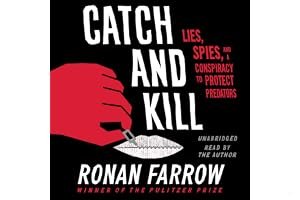 1
1