1Postwar: A History of Europe Since 1945
Finalist for the Pulitzer Prize
Winner of the Council on Foreign Relations Arthur Ross Book Award
One of the New York Times' Ten Best Books of the Year
We've ranked the best european history books using expert recommendations, sales data, and millions of reader ratings. At Shortform, we know books. Our book guides are the best in the world. Learn why.
1
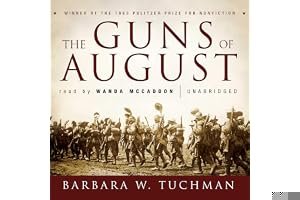
2So beautifully written. But more importantly, for me, she was writing about battles and military stuff and things that you don’t imagine that sometimes a woman might be so adept at. [source]
This book started my obsession with WWI, illustrating how drastically the world went from interrelated monarchies and cavalry charges to chemical warfare between modern nation states. If you want to see what disruption looks like, there's no greater period in human history. [source]
The best way to understand how the world resolves its conflicts and its tensions is by looking at how a conflict that has been studied thoroughly, like World War I, unfolded and resolved. Business is like this too. If anyone were to ever get to the heart of Coke vs. Pepsi, they would see a parade of mistakes in the same way World War I looks in retrospect—so many ways you could have done better. [source]
3Managing Director/Thiel Capital
Eric Weinstein recommended this book on Twitter. [source]
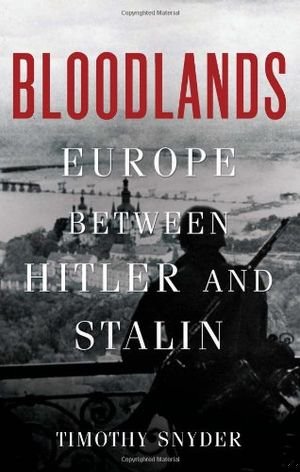
This book is about…the Stalinist repression of the areas known as the borderlands, which Snyder has termed the bloodlands. Snyder is looking at the deliberate mass murder of civilians in a particular zone of Europe between about 1930, at the start of the second Ukraine famine, and 1945. [source]
Bloodlands: Europe Between Hitler and Stalin offers the best account of the most important and terrible years of the last century, when Joseph Stalin and Adolf Hitler jointly consigned the territories and people between their two empires to the meat-grinder. [source]
4At a time of increased danger of totalitarianism in the U.S., reading a history of an insider’s view of its growth in Germany in the 1930s gives a good perspective on our contemporary problems, as well as being fascinating history and biography in its own right. [source]
@egayle333 Ellyn, with respect Hitler was always clear about his intent. A great book to read from a US perspective is In the Garden of Beasts. Trump is much more analogous to Mussolini. [source]
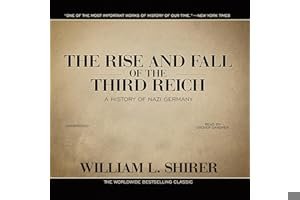
5No other powerful empire ever bequeathed such mountains of evidence about its birth and destruction as the Third Reich. When the bitter war was over, and before the Nazis could destroy their files, the Allied demand for unconditional surrender produced an almost hour-by-hour record of the nightmare empire built by Adolph Hitler. This record included the testimony of Nazi leaders and of concentration camp inmates, the diaries of officials, transcripts of secret conferences, army orders, private letters—all the vast paperwork behind Hitler's drive to conquer the world.
The famed foreign correspondent and historian William L. Shirer, who had watched and reported on the Nazis since 1925, spent five and a half years sifting through this massive documentation. The result is a monumental study that has been widely acclaimed as the definitive record of one of the most frightening chapters in the history of mankind.
This worldwide bestseller has been acclaimed as the definitive book on Nazi Germany; it is a classic work.
The accounts of how the United States got involved and how Hitler used Mussolini and Japan are astonishing, and the coverage of the war-from Germany's early successes to her eventual defeat-is must reading
A few months back, I read a book called A Higher Call: An Incredible True Story of Combat and Chivalry in the War-Torn Skies of World War II that led me to want to learn more about Nazi Germany and Hitler, so I then picked up The Rise and Fall of the Third Reich, which led me to wanting to learn more about Winston Churchill. [source]
6
7
8I remember being a fourth grader and trying to check out this book and being told it was grossly inappropriate and going so far as to have my parents take it to the school board and petition for me to be allowed to read this book. [source]
I'm a huge fan of personal stories and biographies like this one. [source]
@Quixoticnance Good point, Nancy. The museum is a powerful experience, esp. when you've read her book. [source]
9For me, this book was an eye-opener. We’re normally told the history of Europe from a nationalist perspective or from the perspective of the various kings or monarchs. It’s all an inevitable progression to the countries we have now. This tells a completely different history. It’s about a rich tapestry of peoples and regions and different forces which are much more messy and certainly don’t inevitably lead to where we are now. For example, it corrects the misperception that the Hundred Years’ War was a war between England and France because those nations didn’t exist at the time, and so on. So it’s a helpful corrective in terms of understanding our history and therefore understanding Europe today. [source]
10Large parts of the Belgian establishment loathe this book. It tells, as its sub-title says, ‘a story of greed, terror and heroism’. It lays bare the absolute fiction that King Leopold’s fief in the Congo was based on some philanthropic urge – a line that Leopold managed to peddle with extraordinary success at the time. I don’t know if what Leopold did would be called ‘genocide’ today or not. But millions died under his rule, often in horrific circumstances, invisible to the rest of the world. Modern communications didn’t exist. [source]
This is an incredibly powerful, horrifying, and utterly brilliant study of Belgian colonialism of the Congo and the brutality and genocide that followed in its wake. [source]
11
12She focuses on the meeting between Lloyd George, Georges Clemenceau and Woodrow Wilson that decided what the new boundaries would be for the world at Versailles in 1919. [source]
The beautiful story she tells is how men of goodwill did try to make the Second World War impossible. [source]
13The next one is Prussia, which is another huge topic. Prussia is not one of the forgotten countries. It’s one of the kingdoms which was so powerful in its final phase, in the late 18th century to 1918, that memory of Hohenzollern Prussia, Bismarck and the creation of the German Empire is so recent and powerful that the memory of the earlier Prussia has all but been obliterated. [source]
14
15
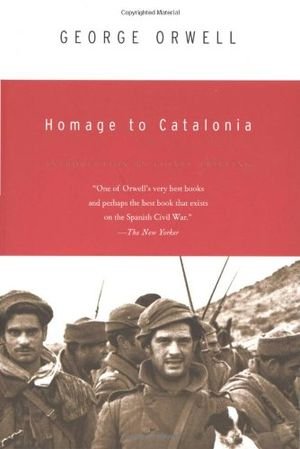
16A lot of people have read Orwell's 1984, he actually wrote a book that's better. It's this book. [source]
The other reason I picked this book is that Orwell, like Dan Schorr, was an outsider. When he went to Spain, he was an unknown. He wasn’t Hemingway. He wasn’t a well-connected intellectual. He just had this amazing eye for detail. He was an amazing observer, and he could write so powerfully. This book, to me, is just one of the classics of foreign reporting. [source]
Anyone who wants to go off and write about Egypt, Tunisia or Libya today should pack a copy of Homage to Catalonia. It’s brilliant reportage. As you know, it opens with a vignette of an Italian militiaman in the barracks in Barcelona and he only saw this guy for a few moments but it captures the excitement. [source]
17
18A fascinating study and still wholly relevant. [source]
Astrophysicist, Author & Science Communicator
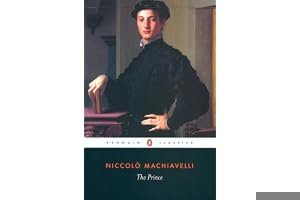
Which books should be read by every single intelligent person on planet? … The Prince (Machiavelli) to learn that people not in power will do all they can to acquire it, and people in power will do all they can to keep it. If you read all of the above works you will glean profound insight into most of what has driven the history of the western world. [source]
Author
Of course, this is a must read. Machiavelli is one of those figures and writers who is tragically overrated and underrated at the same time. Unfortunately that means that many people who read him miss the point and other people avoid him and miss out altogether. Take Machiavelli slow, and really read him. Also understand the man behind the book–not just as a masterful writer but a man who withstood heinous torture and exile with barely a whimper. Machiavelli is a glimpse into a time when power was literal and out for public viewing–when he talks about making an example of someone, he doesn’t mean calling them out, he means putting their head on a pike. Don’t let that scare you because we’re not as far from that world as we’d like to think. Deny that at your own peril. [source]
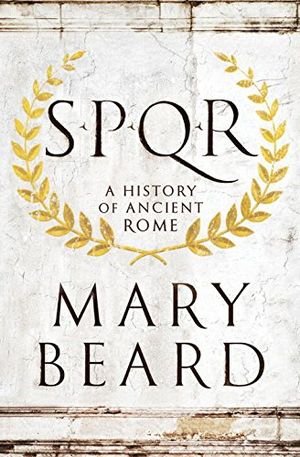
20I think SPQR is a wonderful book. Ancient Roman history is so very dense and intricate that it can be difficult to teach and learn about. Mary Beard makes it accessible—and she goes through it all, from the early days right up until the present day. [source]
22
23There's so much in this one about leadership, failures and how winners write history. [source]
24
25
26One of my students cited this book as the reason that he carried on doing history. [source]
The takeaway from reading this horror-filled book is that depredations on the scale of those that Browning describes can be perpetrated anywhere and by anyone. [source]
The essential lesson of Ordinary Men is that genocide is not the exclusive preserve of fanatics, racist thugs and homicidal maniacs. It is part of the human condition, especially of humans living in society. [source]
27It’s filled with incredibly interesting titbits and anecdotes and characterisations of people. It’s generally negative about the revolution, because it’s basically about how the revolution is really, really violent. [source]
28MacCulloch is fascinated by the key moment where many scholars would say that the Renaissance ends. [source]
30
31
32
33@cjane87 I liked Orlando Figes’ book in Crimea but it’s the only one I’ve read so I can’t say if it’s best [source]
34
35A People’s Tragedy is the most readable and illuminating history of the Russian revolution to be written, using material that only became available to historians following the Soviet Union’s collapse. [source]
Well, I’ve chosen this because, from what I remember, it’s the book I most admired while I was writing about Russia because it gives the tremendous overall sweep of the entire catastrophe up to the end of the civil war in 1922 and the famine. Figes has the capacity to focus on people you’ve never heard of and show them as representatives of ideologies competing for control of the Russian state, and he looks at it on an individual basis. [source]
36
37CEO/Microsoft
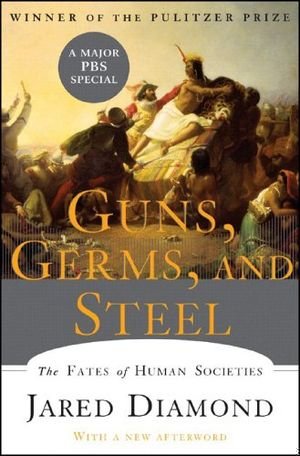
Fascinating.... Lays a foundation for understanding human history. [source]
A brilliant Pulitzer Prize-winning book about how the modern world was formed, analyzing how societies developed differently on different continents. [source]
Author
I’m a fan of books that challenge our assumptions, and Diamond offers us a new and remarkably simple way of looking at our world. Learning to challenge existing assumptions is core to effective leadership for it trains us to keep an open mind. [source]
39
40
41
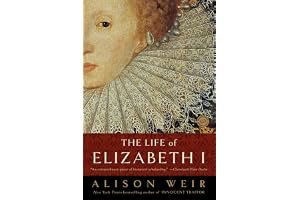
42This is one of Alison Weir’s best books. I think she has managed to teach history to more people than Oxford University, because her books are so well written and easy to follow. She is especially good at taking time to explain the world that she writes about, so the reader gets a real feel for what it was like to live in the middle ages. Her books emphasise the colour and pageantry of that era – what everyone wore, what their jewels were like. I love that kind of book. [source]
44A deadly continental struggle, the Thirty Years War devastated seventeenth-century Europe, killing nearly a quarter of all Germans and laying waste to towns and countryside alike. Peter Wilson offers the first new history in a generation of a horrifying conflict that transformed the map of the modern world.
When defiant Bohemians tossed the Habsburg emperor’s envoys from the castle windows in Prague in 1618, the Holy Roman Empire struck back with a vengeance. Bohemia was ravaged by mercenary troops in the first battle of a conflagration that would engulf Europe from Spain to Sweden. The sweeping narrative encompasses dramatic events and unforgettable individuals—the sack of Magdeburg; the Dutch revolt; the Swedish militant king Gustavus Adolphus; the imperial generals, opportunistic Wallenstein and pious Tilly; and crafty diplomat Cardinal Richelieu. In a major reassessment, Wilson argues that religion was not the catalyst, but one element in a lethal stew of political, social, and dynastic forces that fed the conflict.
By war’s end a recognizably modern Europe had been created, but at what price? The Thirty Years War condemned the Germans to two centuries of internal division and international impotence and became a benchmark of brutality for centuries. As late as the 1960s, Germans placed it ahead of both world wars and the Black Death as their country’s greatest disaster.
An understanding of the Thirty Years War is essential to comprehending modern European history. Wilson’s masterful book will stand as the definitive account of this epic conflict.
An ambitious and enlightening look at why the so-called Dark Ages were anything but that.
Prizewinning historian Chris Wickham defies the conventional view of the Dark Ages in European history with a work of remarkable scope and rigorous yet accessible scholarship. Drawing on a wealth of new material and featuring a thoughtful synthesis of historical and archaeological approaches, Wickham argues that these centuries were critical in the formulation of European identity. Far from being a middle period between more significant epochs, this age has much to tell us in its own right about the progress of culture and the development of political thought.
Sweeping in its breadth, Wickham's incisive history focuses on a world still profoundly shaped by Rome, which encompassed the remarkable Byzantine, Carolingian, and Ottonian empires, and peoples ranging from Goths, Franks, and Vandals to Arabs, Anglo- Saxons, and Vikings. Digging deep into each culture, Wickham constructs a vivid portrait of a vast and varied world stretching from Ireland to Constantinople, the Baltic to the Mediterranean. The Inheritance of Rome brilliantly presents a fresh understanding of the crucible in which Europe would ultimately be created.
46
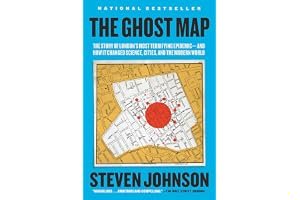
47I read the Ghost Map, a book about 1854 London Cholera outbreak. The outbreak was stopped because of a map created by Dr. John Snow. You can see hints of this map in some of our customer discovery tools because it was such an effective way of pinpointing a solution to a seemingly insurmountable problem. [source]
The Ghost Map is a book that I oftentimes give to people to show them how cool and exciting and accessible and gripping stories about scientific discoveries can be. [source]
Johnson looks at London during a specific moment in time, August 1854, and focuses on a particular incident, an outbreak of cholera in Soho, in Central London. [source]
48Founder/Virgin Group
Today is World Book Day, a wonderful opportunity to address this #ChallengeRichard sent in by Mike Gonzalez of New Jersey: Make a list of your top 65 books to read in a lifetime. [source]
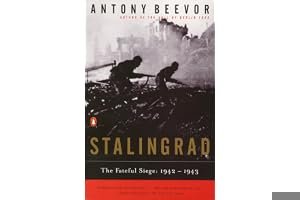
Yes, it certainly was the turning point of the war. Whatever we British may claim for the titanic fight on the Normandy beaches on D-Day, the Battle of Stalingrad was the real decider and Beevor’s account of it is simply brilliant. He combines a sense of strategic grasp with the incredibly detailed story of ordinary men’s experiences based on their own accounts. He did a huge amount of research into both the Russian side and the German side and he has come out with a masterly book. [source]
49The best book I read last year. 📚 https://t.co/CULq9zZHEU [source]
I recommend the book ”Say nothing” about Northern Ireland and IRA. It makes fascinating reading about memories, murder, mourning and making peace. [source]
Just finished reading this remarkable book by @praddenkeefe. I was baffled getting this from @VeronicaSanchis as I don’t remember ever showing particular interest in the Troubles, but she obviously knows me better than I do. https://t.co/KlBCF41y47 https://t.co/PnJlLCZyQD [source]
50Author
Tom Reiss’s book The Black Count was impressive and a side of French history I never knew and never would have otherwise. [source]
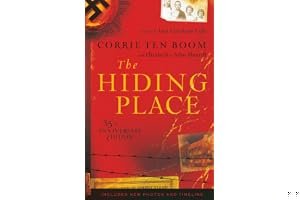
51What I really took with me from the book were the descriptions of how she dealt with the stress of solitary confinement and eventually the Ravensbruck concentration camp. I adapted some of her techniques for keeping her mind occupied to deal with my own problems with anxiety and worry. Also, it’s a book with a surprising amount of joy in it for subject matter that is so dark. [source]
53
54Vice Chairman/Berkshire Hathaway
A lot of really important stuff like: the first modern nation, the first literate society, the ideas for (modern) democracy and free markets, all originated with the Scots. [source]
In terms of business, some of the must-read books I would mention are Hooked by Nir Eyal, Web Analytics: An Hour A Day by Avinash Kaushik, Call To Action and Always Be Testing by Bryan Eisenberg, Epic Content Marketing by Joe Pulizzi, How To Build Websites That Sell by Peep Laja, Content Chemistry by Andy Crestodina. [source]
56
57Founder/The Huffington Post
I find this book so inspirational and instructive, it lives on my nightstand. [source]
I have given this book away to a number of people. [source]
Partner/500 Startups
My list would be (besides the ones I mentioned in answer to the previous question) both business & Fiction/Sci-Fi and ones I personally found helpful to myself. The business books explain just exactly how business, work & investing are in reality & how to think properly & differentiate yourself. On the non-business side, a mix of History & classic fiction to understand people, philosophy to make sense of life and Science fiction to picture what the future could be like (not always utopian). [source]
58
59
60
61So I'm reading "Midnight in Chernobyl" because obviously TV viewing needs to come with a syllabus afterwards. https://t.co/bWCLHTy7fq It is very interesting contrasting the fictionalized show, the history book, and the essays meant to debunk aspects of the show. [source]
62CEO/Microsoft
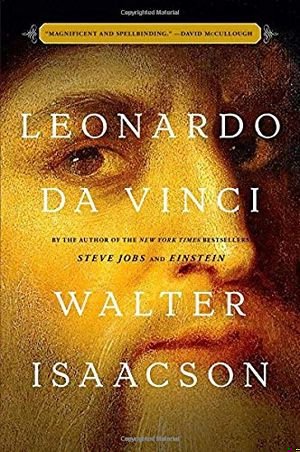
I think Leonardo was one of the most fascinating people ever. Although today he’s best known as a painter, Leonardo had an absurdly wide range of interests, from human anatomy to the theater. Isaacson does the best job I’ve seen of pulling together the different strands of Leonardo’s life and explaining what made him so exceptional. A worthy follow-up to Isaacson’s great biographies of Albert Einstein and Steve Jobs. [source]

CEO/Microsoft
Microsoft CEO has plunged into what must be an advance copy of Leonardo da Vinci by Walter Isaacson, who has written biographies of Steve Jobs, Albert Einstein and Ben Franklin. Isaacson’s biography is based on the Renaissance master’s personal notebooks, so you know we’re going to be taken into the creative mind of the genius. [source]
Author
Truly excellent book about one of history’s all time greats. [source]
63He knows that his pleasure at a beautiful landscape, at the smell of good food, will forever be coloured by what the landscape looked like in the trenches, by the food that was cooked in the trenches. [source]
66
67
68
69Christmas is coming and if you want to give a thought-provoking book to that history fan in your life then the recent books by the brilliant @peterfrankopan will satisfy. Some write books, this guy changes perceptions. https://t.co/gWZWZnv5TN [source]
@The92ers @zerohedge It’s fascinating. The Peter Frankopan book on the Silk Roads told history well from the perspective of Iran in particular [source]
70
71
72
73
74A rare and remarkable cultural history of World War I that unearths the roots of modernism
Dazzling in its originality, Rites of Spring probes the origins, impact, and aftermath of World War I, from the premiere of Stravinsky's ballet The Rite of Spring in 1913, to the death of Hitler in 1945. Recognizing that The Great War was the psychological turning point . . . for modernism as a whole, author Modris Eksteins examines the lives of ordinary people, works of modern literature, and pivotal historical events to redefine the way we look at our past and toward our future.
What the Civil War was about was mass killing on a scale that we had never ever dreamed of. [source]
Great book ⬇️ RT @PuddockII: Wow. https://t.co/EF6Iyc0Kmc [source]
What this book does is it views the war as a cultural phenomenon, rather than a military phenomenon. Eksteins is a cultural historian who thinks in terms of literature, music, plastic arts, and so on. [source]
75
76In this groundbreaking work of science, history, and archaeology, Charles C. Mann radically alters our understanding of the Americas before the arrival of Columbus in 1492.
Contrary to what so many Americans learn in school, the pre-Columbian Indians were not sparsely settled in a pristine wilderness; rather, there were huge numbers of Indians who actively molded and influenced the land around them. The astonishing Aztec capital of Tenochtitlan had running water and immaculately clean streets, and was larger than any contemporary European city. Mexican cultures created corn in a specialized breeding process that it has been called man’s first feat of genetic engineering. Indeed, Indians were not living lightly on the land but were landscaping and manipulating their world in ways that we are only now beginning to understand. Challenging and surprising, this a transformative new look at a rich and fascinating world we only thought we knew.
@TheBaltimoreSon @CharlesCMann Sure it! A total revolution in my understanding of history, all in one book. Amazing stuff. [source]
The book provides a huge hemispheric overview. [source]
It’s one of those books that takes everything you thought you knew about the history of European colonialists and indigenous groups in the Americas and turns it on its head. Just a fascinating deep-dive into early American history that questions a lot of dogma we were taught in school. [source]
77Talks about Eichmann as illustrating the banality of evil. [source]
The trial focused public attention on the individual high bureaucrat who had such personal responsibility in the Final Solution. There was, in a way, this enigma of what went on in Eichmann’s mind. [source]
Political philosopher Arendt sees the work of the Nazis as the inevitable result of colonialism and industrialisation. [source]
78Co-founder/Andreessen Horowitz
Unexpectedly the most interesting book on the topic of how you think about inclusion. [source]
Founder/FUBU
Daymond John said this is one of his most-recommended books. [source]
Genghis Khan was a great democratizer. His Mongol Empire conquered more territory in 25 years than the Romans did in 200. [source]
79The final volume in Richard J. Evans's masterly trilogy on the history of Nazi Germany traces the rise and fall of German military might, the mobilization of a "people's community" to serve a war of conquest, and Hitler's campaign of racial subjugation and genocide.Already hailed as "a masterpiece" (William Grimes in The New York Times) and "the most comprehensive history… of the Third Reich" (Ian Kershaw), this epic trilogy reaches its terrifying climax in this volume.
Evans interweaves a broad narrative of the war's progress with viscerally affecting personal testimony from a wide range of people--from generals to front-line soldiers, from Hitler Youth activists to middle-class housewives. The Third Reich at War lays bare the dynamics of a nation more deeply immersed in war than any society before or since. Fresh insights into the conflict's great events are here, from the invasion of Poland to the Battle of Stalingrad to Hitler's suicide in the bunker. But just as important is the re-creation of the daily experience of ordinary Germans in wartime, staggering under pressure from Allied bombing and their own government's mounting demands upon them. At the center of the book is the Nazi extermination of Europe's Jews, set in the context of Hitler's genocidal plans for the racial restructuring of Europe.
Blending narrative, description and analysis, The Third Reich at War creates an engrossing picture--at once sweeping and precise--of a society rushing headlong to self-destruction and taking much of Europe with it. It is the culmination of a historical masterwork that will remain the most authoritative work on Nazi Germany for years to come.
80It’s about the Holocaust. It’s also a comic book, in which the various characters are depicted as animals – the Jews as mice, the Nazis as cats. [source]
81CEO/Microsoft
I found this to be an interesting follow-up to the excellent Guns, Germs, and Steel. It examines the downfall of some of history's greatest civilizations. [source]
I found Jared Diamond’s book Collapse more valuable in influencing my own thinking, because it shows the importance of culture in determining how humans deal with environmental threats. …….The author investigates the successes and failures of a number of civilisations which had reached a crisis point, and looks at why some succeeded and others hadn’t. [source]
This is a warning that societies can do this. We, as a human society, could do this if we’re not careful. If we stretch the earth beyond its planetary limits, we could ruin the soil, we could ruin the ocean, we could ruin the air, and we could drain the ocean of fish. He sees evidence all around that we’re doing precisely that. He sees a limit to technology to solve our problems. [source]
82Don't know who @dgjones is (Get The Templars because it's a fantastic book. And get a copy of Crusaders too. It will be out next month: https://t.co/t86sicCNPn) https://t.co/GvrfIsiOWV [source]
85
86
87
88
89
90
92
93
94During these challenging times, tales of resistance in World War II have found a receptive audience. In the case of Sonia Purnell’s biography, Americans are keen to read about our own countryman’s heroism.At the center of Purnell’s biography is socialite Virginia Hall of Baltimore, Maryland who had been shut out of the American diplomatic corps in the 1930s and stuck as a clerk in the State Department. Raised in affluence, she had learned to ride a horse, shoot, sail and cycle. An adventurous sort, she lost her leg below the knee in a hunting accident in Turkey. (True story: she shot herself in the foot.)After the Nazis invaded France, Hall got herself there to drive ambulances which she did with her prosthetic leg, known then as a ‘peg leg’ which she named Cuthbert. Fluent in French and knowledgeable about the terrain, Hall talked her way into the Office of Strategic Services, and eventually ran spy networks and supervised air drops of weapons. She was known as ‘Madonna of the Mountains.’Purnell recounts Hall’s spy operations so vividly that it feels like one is reading a spy novel. As Purnell’s title suggests, Hall was often underestimated and overlooked. In rescuing Virginia Hall from obscurity, the book also tells a great story about the Resistance. [source]
95
96
97Best book I have read this year. https://t.co/Vv3GlB426d [source]
98
99
100