Want to know what books Elizabeth Taylor recommends? We've researched interviews, social media posts, podcasts, and articles to build a comprehensive list of Elizabeth Taylor's favorite book recommendations of all time. At Shortform, we know books. Our book guides are the best in the world. Learn why.
Cover unavailable
1
Our Man: Richard Holbrooke and the End of the American Century
George Packer
4.5
Richard Holbrooke was brilliant, utterly self-absorbed, and possessed of almost inhuman energy and appetites. Admired and detested, he was the force behind the Dayton Accords that ended the Balkan wars, America's greatest diplomatic achievement in the post-Cold War era. His power lay in an utter belief in himself and his idea of a muscular, generous foreign policy. From his days as a young adviser in Vietnam to his last efforts to end the war in Afghanistan, Holbrooke embodied the postwar American impulse to take the lead on the global stage. But his sharp elbows and tireless self-promotion ensured that he never rose to the highest levels in government that he so desperately coveted. His story is thus the story of America during its era of supremacy: its strength, drive, and sense of possibility, as well as its penchant for overreach and heedless self-confidence.
In Our Man, drawn from Holbrooke's diaries and papers, we are given a nonfiction narrative that is both intimate and epic in its revelatory portrait of this extraordinary and deeply flawed man and the elite spheres of society and government he inhabited.
…
Recommended by Carl Bildt, Clara Jeffery, Elizabeth Taylor, and 2 others.
Packer presents Holbrooke as a contradictory figure. While he craved approval by the elite, he also wanted to be a man of the people. He was enthralled with celebrity and money. Holbrooke’s social climbing and gross behavior are unseemly, yet Packer approaches him with such an empathic imagination, you just can’t help rooting for this deeply flawed man. [source]
Carl Bildt
Excellent writing, powerful personalities, profound policy lessons. A book well worth reading. https://t.co/NgwpAZP2PE [source]
Clara Jeffery
@cityartssf 4/ But then I started it and this is one amazing book. Yes, you learn or relearn about every conflict from Vietnam to Afghanistan. But THE DISH. THE JUICY JUICY DISH, on so many DC/Hollywood/NYC figures. It's a salacious page-turner! It's a beach read. [source]
Cover unavailable
2
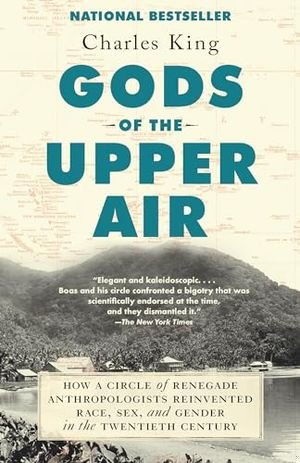
Gods of the Upper Air: How a Circle of Renegade Anthropologists Reinvented Race, Sex, and Gender in the Twentieth Century
Charles King
4.4
A dazzling group portrait of Franz Boas, the founder of cultural anthropology, and his circle of women scientists, who upended American notions of race, gender, and sexuality in the 1920s and 1930s--a sweeping chronicle of how our society began to question the basic ways we understand other cultures and ourselves.
At the end of the 19th century, everyone knew that people were defined by their race and sex and were fated by birth and biology to be more or less intelligent, able, nurturing, or warlike. But one rogue researcher looked at the data and decided everyone was wrong. Franz Boas was the very image of a mad scientist: a wild-haired immigrant with a thick German accent. By the 1920s he was also the foundational thinker and public face of a new school of thought at Columbia University called cultural anthropology. He proposed that cultures did not exist on a continuum from primitive to advanced. Instead, every society solves the same basic problems--from childrearing to how to live well--with its own set of rules, beliefs, and taboos.
Boas's students were some of the century's intellectual stars: Margaret Mead, the outspoken field researcher whose Coming of Age in Samoa is one of the most widely read works of social science of all time; Ruth Benedict, the great love of Mead's life, whose research shaped post-Second World War Japan; Ella Deloria, the Dakota Sioux activist who preserved the traditions of Native Americans of the Great Plains; and Zora Neale Hurston, whose studies under Boas fed directly into her now-classic novel, Their Eyes Were Watching God. Together, they mapped vanishing civilizations from the Arctic to the South Pacific and overturned the relationship between biology and behavior. Their work reshaped how we think of women and men, normalcy and deviance, and re-created our place in a world of many cultures and value systems.
Gods of the Upper Air is a page-turning narrative of radical ideas and adventurous lives, a history rich in scandal, romance, and rivalry, and a genesis story of the fluid conceptions of identity that define our present moment.
…
Recommended by Damakant Jayshi, Elizabeth Taylor, and Ibram X. Kendi.
At the centre of King’s fascinating book is Columbia University’s Franz Boas (1858–1942), the father of cultural anthropology who challenged his era’s prevailing wisdom that race, gender and sexuality were destiny. While Boas championed cultural diversity and scientific discovery, he also created an environment that inspired a circle of visionary women researchers whose who were pathbreaking. [source]
Damakant Jayshi
About to finish this wonderful book, Gods of the Upper Air by @charleskingdc. It's been a fascinating read so far! https://t.co/YHMeMlRk6P [source]
Ibram X. Kendi
@charleskingdc @JimGoldgeier Oh, thank you. But Charles your new bestseller, Gods of the Upper Air, is so necessary too for our times with eugenics and newer versions of pseudoscientific bigotry ascendant. I’m so glad for the great reception to your wonderful book. [source]
Cover unavailable
3
Flash: The Making of Weegee the Famous: The Making of Weegee the Famous
Christopher Bonanos
4.2
The first definitive biography of Weegee the Famous—photographer, psychic, fiend—from Christoper Bonanos, author of Instant: The Story of Polaroid. Arthur Fellig’s ability to arrive at a crime scene just as the cops did was so uncanny that he renamed himself “Weegee,” claiming that he functioned as a human Ouija board. Weegee documented better than any other photographer the crime, grit, and complex humanity of midcentury New York City. In Flash, we get a portrait not only of the man (both flawed and deeply talented, with generous appetites for publicity, women, and hot pastrami) but also of the fascinating time and place that he occupied.
From self-taught immigrant kid to newshound to art-world darling to latter-day caricature—moving from the dangerous streets of New York City to the celebrity culture of Los Angeles and then to Europe for a quixotic late phase of experimental photography and filmmaking—Weegee lived a life just as worthy of documentation as the scenes he captured. With Flash, we have an unprecedented and ultimately moving view of the man now regarded as an innovator and a pioneer, an artist as well as a newsman, whose photographs are among most powerful images of urban existence ever made.
Bonanos entwined Weegee’s evolution as a person and as a photographer and placed this story in the context of the emergence of street photography and crime photography. He vivified that that moment when technology—the camera in Weegee’s hands and imagination, against the backdrop of a rapidly changing New York—captured a rich, stark world in a revolutionary way. [source]
Cover unavailable
4
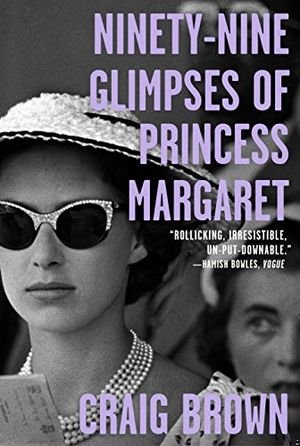
Ninety-Nine Glimpses of Princess Margaret
Craig Brown
3.5
A witty and profound portrait of the most talked-about English royal
She made John Lennon blush and Marlon Brando tongue-tied. She iced out Princess Diana and humiliated Elizabeth Taylor. Andy Warhol photographed her. Jack Nicholson offered her cocaine. Gore Vidal revered her. Francis Bacon heckled her. Peter Sellers was madly in love with her. For Pablo Picasso, she was the object of sexual fantasy.
Princess Margaret aroused passion and indignation in equal measures. To her friends, she was witty and regal. To her enemies, she was rude and demanding. In her 1950s heyday, she was seen as one of the most glamorous and desirable women in the world. By the time of her death in 2002, she had come to personify disappointment. One friend said he had never known an unhappier woman. The tale of Princess Margaret is Cinderella in reverse: hope dashed, happiness mislaid, life mishandled.
Such an enigmatic and divisive figure demands a reckoning that is far from the usual fare. Combining interviews, parodies, dreams, parallel lives, diaries, announcements, lists, catalogues, and essays, Craig Brown's Ninety-Nine Glimpses of Princess Margaret is a kaleidoscopic experiment in biography and a witty meditation on fame and art, snobbery and deference, bohemia and high society.
Brown makes Margaret an interesting, complex figure, and he pushes the traditional form of biography by contending with both a life, and the spectacle of a life.It raises fascinating questions about formation of public impressions and somehow in creating this multi-faceted form, is also profoundly empathic. [source]
Cover unavailable
5
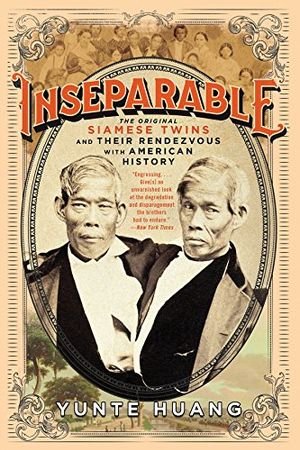
Inseparable: The Original Siamese Twins and Their Rendezvous with American History
Yunte Huang
3.9
Nearly a decade after his triumphant Charlie Chan biography, Yunte Huang returns with this long-awaited portrait of Chang and Eng Bunker (1811–1874), twins conjoined at the sternum by a band of cartilage and a fused liver, who were “discovered” in Siam by a British merchant in 1824. Bringing an Asian American perspective to this almost implausible story, Huang depicts the twins, arriving in Boston in 1829, first as museum exhibits but later as financially savvy showmen who gained their freedom and traveled the backroads of rural America to bring “entertainment” to the Jacksonian mobs. Their rise from subhuman, freak-show celebrities to rich southern gentry; their marriage to two white sisters, resulting in twenty-one children; and their owning of slaves, is here not just another sensational biography but a Hawthorne-like excavation of America’s historical penchant for finding feast in the abnormal, for tyrannizing the “other”—a tradition that, as Huang reveals, becomes inseparable from American history itself.
What a dramatic story, and way to look at America. They arrived as freaks, winning freedom from the oppressive men who brought them from Thailand for a traveling show, until they married two sisters who bore them 21 children, two of whom served in the Confederate army. [source]
Cover unavailable
6
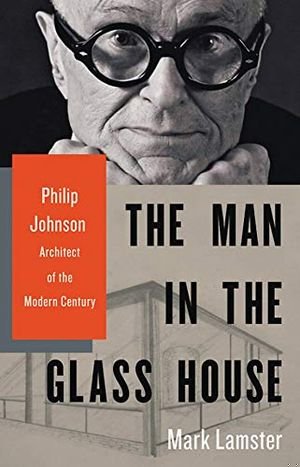
The Man in the Glass House: Philip Johnson, Architect of the Modern Century
Mark Lamster
4.1
A "smoothly written and fair-minded" (Wall Street Journal) biography of architect Philip Johnson -- a finalist for the National Book Critic's Circle Award.
When Philip Johnson died in 2005 at the age of 98, he was still one of the most recognizable and influential figures on the American cultural landscape. The first recipient of the Pritzker Prize and MoMA's founding architectural curator, Johnson made his mark as one of America's leading architects with his famous Glass House in New Caanan, CT, and his controversial AT&T Building in NYC, among many others in nearly every city in the country -- but his most natural role was as a consummate power broker and shaper of public opinion.
Johnson introduced European modernism -- the sleek, glass-and-steel architecture that now dominates our cities -- to America, and mentored generations of architects, designers, and artists to follow. He defined the era of "starchitecture" with its flamboyant buildings and celebrity designers who esteemed aesthetics and style above all other concerns. But Johnson was also a man of deep paradoxes: he was a Nazi sympathizer, a designer of synagogues, an enfant terrible into his old age, a populist, and a snob. His clients ranged from the Rockefellers to televangelists to Donald Trump.
Award-winning architectural critic and biographer Mark Lamster's The Man in the Glass House lifts the veil on Johnson's controversial and endlessly contradictory life to tell the story of a charming yet deeply flawed man. A rollercoaster tale of the perils of wealth, privilege, and ambition, this book probes the dynamics of American culture that made him so powerful, and tells the story of the built environment in modern America.
Lamster draws upon his own deep knowledge of architectural history and trends, digs into Johnson’s past and traces his origins in Cleveland, Ohio to Harvard, from curator to modern and post-modern architect and winner of the inaugural Pritzker Architecture Prize. Lamster captures the forces animating Johnson and his quest for celebrity and recognition. [source]
Cover unavailable
7
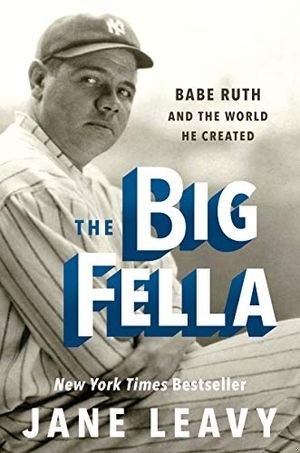
The Big Fella: Babe Ruth and the World He Created
Jane Leavy
4.0
From Jane Leavy, the award-winning, New York Times bestselling author of The Last Boy and Sandy Koufax, comes the definitive biography of Babe Ruth—the man Roger Angell dubbed "the model for modern celebrity."
He lived in the present tense—in the camera’s lens. There was no frame he couldn’t or wouldn’t fill. He swung the heaviest bat, earned the most money, and incurred the biggest fines. He expanded notions of the possible. Like all the new-fangled gadgets then flooding the marketplace—radios, automatic clothes washers, Brownie cameras, microphones and loudspeakers—Babe Ruth "made impossible events happen." Aided by his crucial partnership with Christy Walsh—business manager, spin doctor, damage control wizard, and surrogate father, all stuffed into one tightly buttoned double-breasted suit—Ruth drafted the blueprint for modern athletic stardom.
His was a life of journeys and itineraries—from uncouth to couth, impoverished to spendthrift, abandoned to abandon; from Baltimore to Boston to New York, and back to Boston at the end of his career for a finale with the only team that would have him. There were road trips and hunting trips; grand tours of foreign capitals and post-season promotional tours, not to mention those 714 trips around the bases.
After hitting his 60th home run in September 1927—a total that would not be exceeded until 1961, when Roger Maris did it with the aid of the extended modern season—he embarked on the mother of all barnstorming tours, a three-week victory lap across America, accompanied by Yankee teammate Lou Gehrig. This was Babe Ruth’s Louisiana Purchase: a star turn through the American heartland, during which he annexed, for Major League Baseball, for the Yankees, and for his own sweet self, uncharted major league territories.
Walsh called the tour a "Symphony of Swat." The Omaha World Herald called it "the biggest show since Ringling Brothers, Barnum and Bailey, and seven other associated circuses offered their entire performance under one tent." In The Big Fella, acclaimed biographer Jane Leavy recreates that 21-day circus and in so doing captures the romp and the pathos that defined Ruth’s life and times. Drawing from more than 250 interviews, a trove of previously untapped documents, and Ruth family records, Leavy breaks through the mythology that has obscured the legend and delivers the man.
The Big Fella includes 32-pages of black-and-white photos and close to 40 black-and-white images throughout.
Babe Ruth was an extraordinary baseball player and Leavy makes that case in the context of the emergence of athletic stardom and celebrity. This is not a mere recounting of statistics. Leavy gives Babe Ruth a place in cultural history. [source]
Cover unavailable
8
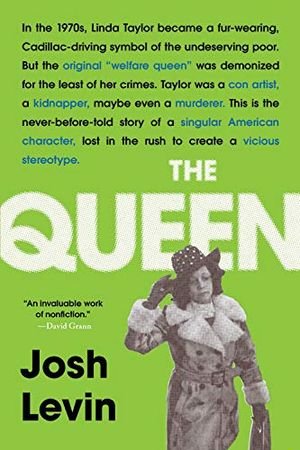
The Queen: The Forgotten Life Behind an American Myth
Josh Levin
3.9
On the South Side of Chicago in 1974, Linda Taylor reported a phony burglary, concocting a lie about stolen furs and jewelry. The detective who checked it out soon discovered she was a welfare cheat who drove a Cadillac to collect ill-gotten government checks. And that was just the beginning: Taylor, it turned out, was also a kidnapper, and possibly a murderer. A desperately ill teacher, a combat-traumatized Marine, an elderly woman hungry for companionship; after Taylor came into their lives, all three ended up dead under suspicious circumstances. But nobody--not the journalists who touted her story, not the police, and not presidential candidate Ronald Reagan--seemed to care about anything but her welfare thievery.
Growing up in the Jim Crow South, Taylor was made an outcast because of her color. As she rose to infamy, the press and politicians manipulated her image to demonize poor black women. Part social history, part true-crime investigation, Josh Levin's mesmerizing book, the product of six years of reporting and research, is a fascinating account of American racism and an expose of the "welfare queen" myth, one that fueled political debates that reverberate to this day. The Queen tells, for the first time, the fascinating story of what was done to Linda Taylor, what she did to others, and what was done in her name.
Linda Taylor—a Cadillac-driving, fur-clad woman who scammed the system—was the poster person for welfare abuse. Levin’s stamina and creative search for evidence in this book is extraordinary, especially considering how elusive she was and how many identities she assumed. [source]
Cover unavailable
9
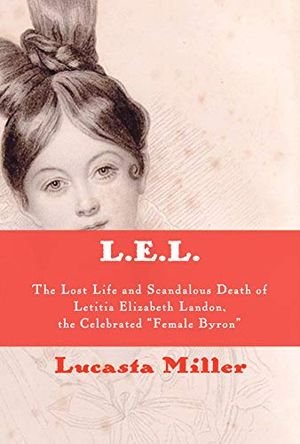
L.E.L.: The Lost Life and Scandalous Death of Letitia Elizabeth Landon, the Celebrated "female Byron"
Lucasta Miller
3.9
A lost nineteenth-century literary life, brilliantly rediscovered--Letitia Elizabeth Landon, hailed as the female Byron; she changed English poetry; her novels, short stories, and criticism, like Byron though in a woman's voice, explored the dark side of sexuality.
"None among us dares to say / What none will choose to hear"--L.E.L., "Lines of Life" Letitita Elizabeth Landon--pen name L.E.L.--dared to say it and made sure she was heard. Hers was a life lived in a blaze of scandal and worship, one of the most famous women of her time, the Romantic Age in London's 1820s, her life and writing on the ascendency as Byron's came to an end. Lucasta Miller tells the full story and re-creates the literary London of her time. She was born in 1802 and was shaped by the aftermath of the Napoleonic Wars, a time of conservatism when values were in flux. She began publishing poetry in her teens and came to be known as a daring poet of thwarted romantic love. We see L.E.L. as an emblematic figure who embodied a seismic cultural shift, the missing link between the age of Byron and the creation of Victorianism. Miller writes of Jane Eyre as the direct connection to L.E.L.--its first-person confessional voice, its Gothic extremes, its love triangle, and in its emphasis on sadomasochistic romantic passion.
Miller sets out to reclaim Landon’s literary accomplishments and establish her as a bridge between Romanticism and Victorianism. Miller contends that Landon’s work has been overlooked and perhaps made invisible because she was regarded as popular writer whose feminine poetry was dismissed, and that she should be considered from a contemporary perspective as ‘proto-postmodern,’ sort of postmodernist in training. [source]
Cover unavailable
10
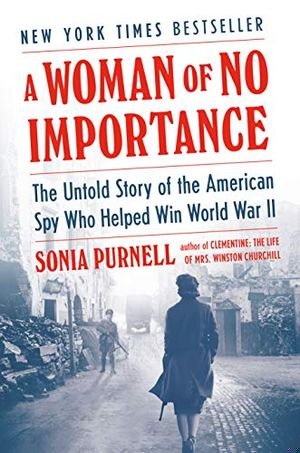
A Woman of No Importance: The Untold Story of the American Spy Who Helped Win World War II
Sonia Purnell
4.4
In 1942, the Gestapo sent out an urgent transmission: "She is the most dangerous of all Allied spies. We must find and destroy her."
The target in their sights was Virginia Hall, a Baltimore socialite who talked her way into Special Operations Executive, the spy organization dubbed Winston Churchill's "Ministry of Ungentlemanly Warfare." She became the first Allied woman deployed behind enemy lines and--despite her prosthetic leg--helped to light the flame of the French Resistance, revolutionizing secret warfare as we know it.
Virginia established vast spy networks throughout France, called weapons and explosives down from the skies, and became a linchpin for the Resistance. Even as her face covered wanted posters and a bounty was placed on her head, Virginia refused order after order to evacuate. She finally escaped through a death-defying hike over the Pyrenees into Spain, her cover blown. But she plunged back in, adamant that she had more lives to save, and led a victorious guerilla campaign, liberating swathes of France from the Nazis after D-Day.
Based on new and extensive research, Sonia Purnell has for the first time uncovered the full secret life of Virginia Hall--an astounding and inspiring story of heroism, spycraft, resistance, and personal triumph over shocking adversity.
During these challenging times, tales of resistance in World War II have found a receptive audience. In the case of Sonia Purnell’s biography, Americans are keen to read about our own countryman’s heroism.At the center of Purnell’s biography is socialite Virginia Hall of Baltimore, Maryland who had been shut out of the American diplomatic corps in the 1930s and stuck as a clerk in the State Department. Raised in affluence, she had learned to ride a horse, shoot, sail and cycle. An adventurous sort, she lost her leg below the knee in a hunting accident in Turkey. (True story: she shot herself in the foot.)After the Nazis invaded France, Hall got herself there to drive ambulances which she did with her prosthetic leg, known then as a ‘peg leg’ which she named Cuthbert. Fluent in French and knowledgeable about the terrain, Hall talked her way into the Office of Strategic Services, and eventually ran spy networks and supervised air drops of weapons. She was known as ‘Madonna of the Mountains.’Purnell recounts Hall’s spy operations so vividly that it feels like one is reading a spy novel. As Purnell’s title suggests, Hall was often underestimated and overlooked. In rescuing Virginia Hall from obscurity, the book also tells a great story about the Resistance. [source]
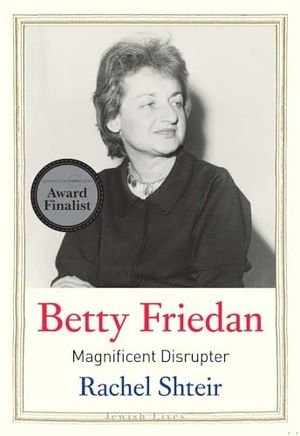
Interested in labor, unions and theater, Friedan was a quarrelsome nonconformist with a temper who graduated from Smith College, was a fractious founder of the National Organization for Women, visionary and paranoid, unyielding in continuing conflicts that by her death in 2006 had cemented her image as uncompromising and resistant to a capacious women’s movement — one that was in sync with calls for racial equality and anti-war activity. Shteir’s recognition of her accomplishments and appreciation of her principles go a long way to rewrite Friedan’s life and legacy. [source]
Cover unavailable
12
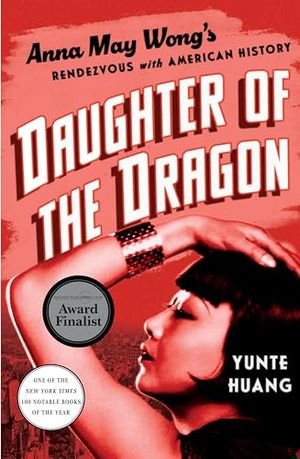
Daughter of the Dragon: Anna May Wong's Rendezvous with American History
Anna May Wong’s likeness appears on a U.S. silver quarter, yet today she is largely forgotten. Huang’s biography, though, is more than an act of reclamation. Daughter of the Dragon is the capstone in Huang’s ambitious trilogy—each an NBCC finalist—spotlighting Asian American cultural icons, starting with fictional Honolulu cop Charlie Chan, then the original Siamese twins, Chang and Eng Bunker. [source]
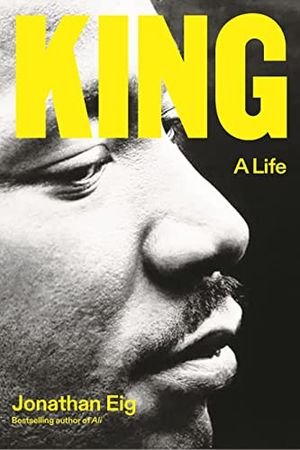
Eig enriches our understanding of King and rescues the civil rights leader from what he describes as ‘the gray mist of hagiography.’ He traces the arc of ‘Little Mike,’ son of a Georgia sharecropper, to national prominence as an eloquent advocate for Black rights, as well as a crusader against the Vietnam War and poverty, all the way to Memphis and the Lorraine Motel balcony. Building on more than 200 interviews and recently released FBI files, Eig made national news by debunking a famous quotation about Malcolm X attributed to King, tracks fissures in the civil rights movement, and reveals King’s womanizing. [source]
Cover unavailable
14
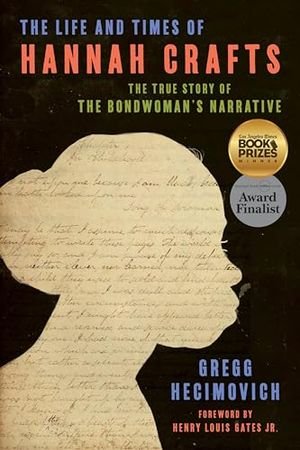
The Life and Times of Hannah Crafts: The True Story of The Bondwoman's Narrative
This is quite a detective story—the discovery of an unpublished 19th-century manuscript, and then the historical excavation work to identify its author by more than her pen name. Furman University professor Hecimovich worked with the tools of a gumshoe, the sensibilities of a literary scholar, the nuanced perspective of a historian, and the congeniality of a tour guide as he shared with readers his search through public records, handwritten diaries and almanacs, wills, and slave inventories. He finally revealed the writer to be Hannah Bond, who had learned to read and write as an enslaved house servant in North Carolina before escaping to the North. [source]
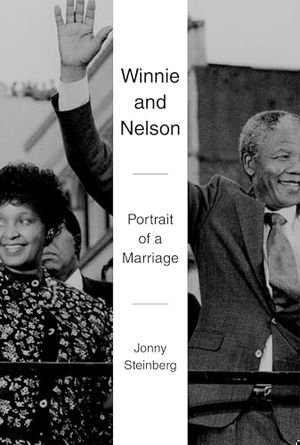
Steinberg writes a portrait of the Mandela marriage as a window to a country struggling to come to terms with itself. Both Nelson and Winnie Mandela were wounded souls, deeply scarred by apartheid, by the time they met at a bus stop in the Black township of Soweto. Social worker Winnie was just 20 years old, and Nelson was nearly two decades her senior, married, a father of small children, and was on trial for treason when they married 15 months later. During his nearly three decades of imprisonment, Winnie was allowed to visit only a few times, and she became more militant and prone to violence as Nelson became more conciliatory. Steinberg is empathic in his depictions of Winnie and Nelson Mandela, and it is painful to read about this deeply wounded couple, battling both the state and one each other. [source]
Winnie and Nelson are heroic figures, but there’s a lot which is not at all heroic about them. It’s a ‘portrait of a marriage’, a very loaded phrase, because it’s warts and all. It’s warts which many historians had not talked or not known about, and previous biographers had left out (which just illustrates how biography is such a treacherous thing: it can be utterly misleading by omission). At the crudest level, we hear about the love affairs of both parties, the way in which they emotionally tried to cope against the crushing, evil machine that they were fighting. It’s both a history of South Africa with a freshness and a chilling detail that I hadn’t appreciated, but also makes one feel tremendously sorry for the two principal characters, in a Greek tragedy sort of way. Sometimes you’re just really cross with them. How could they end up doing such self-destructive things? In other words, the book brings the reader very close to two fascinating people who changed the world. [source]
Cover unavailable
16
Red Comet: The Short Life and Blazing Art of Sylvia Plath
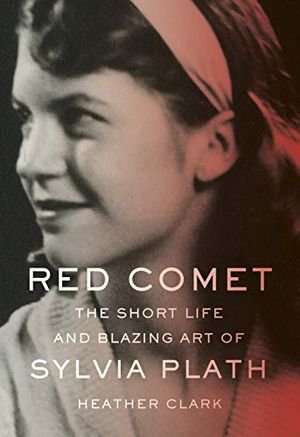
Clark not only unearths new evidence about Plath’s life but also brings a fresh, subtle and nuanced critical perspective to her work. Plath is mythologised and pathologised; she has come to be seen as an icon or a victim, a “high priestess of poetry, obsessed with death,” as Clark writes. What Clark does here is recover Sylvia Plath as an aesthetically accomplished, important poet. [source]
Cover unavailable
17
Stranger in the Shogun's City: A Japanese Woman and Her World
Amy Stanley tells the story of how Edo became Tokyo through the life of Tsuneno, daughter of a Buddhist priest in a rural province at a moment that Japan’s transformation is taking root. Stanley renders Tsuneno’s messy life, unique struggles and the quotidian particulars of her world so richly that that this Japanese woman from another era becomes achingly human and resonant. [source]
Cover unavailable
18
The Price of Peace: Money, Democracy, and the Life of John Maynard Keynes
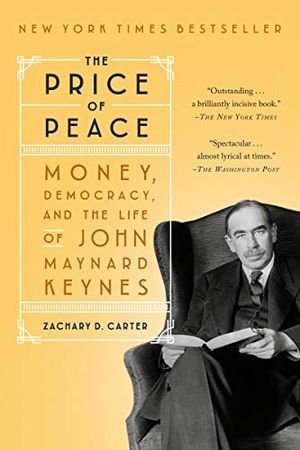
The Price of Peace is a biography of an eminent, visionary economist, the story of how John Meynard Keynes came to his revolutionary ideas, refined and advanced them through his life and how they came to dominate economic thought. One may think of Keynes as economist, but Keynesianism is much more than that—he has views on war, art, culture and a vision of fairness. Keynes had a dream of a fairer and more fulfilling life for all. Carter’s writing about economic theory is so lucid, so colourful, and such a pleasant surprise for me. [source]
Lydia Polgreen
Flat out rave for my brilliant colleague @zachdcarter’s first book, which could not be more timely! https://t.co/rqdVlbajjV [source]
Cover unavailable
19
Metaphysical Animals: How Four Women Brought Philosophy Back to Life
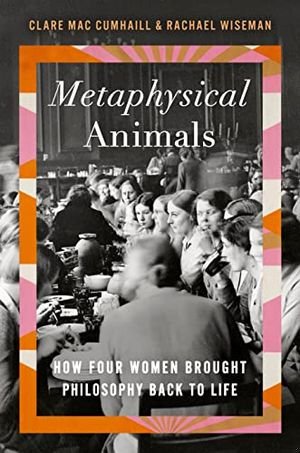
At the outset of World War II, a quartet of young women, Oxford students—Elizabeth Anscombe, Iris Murdoch, Philippa Foot, and Mary Midgley—were ‘bored of listening to men talk about books by men about men.’ As their male counterparts departed for the front lines, this brilliant group of women came together in their dining halls and shared lodging quarters to challenge the thinking of their male colleagues. In the shadows of the Holocaust and Hiroshima, these friends rejected the logical positivists who favoured empirical scientific questions. They didn’t really create a distinct philosophical approach as much as they shared an interest in the metaphysics of morals. [source]
Cover unavailable
20
Up from the Depths: Herman Melville, Lewis Mumford, and Rediscovery in Dark Times
A biography about writing biography! Very meta, and very much in the interdisciplinary tradition of American Studies. In his gorgeous braid of cultural history, Cornell University professor Sachs entwines the lives and work of poet and fiction writer Herman Melville (1819-1891) and the philosopher and literary critic Lewis Mumford (1895-1990), illuminating their coextending concerns about their worlds in crisis. Sachs brilliantly provides the connective tissue between Melville and his biographer Mumford so that these writers seem to be in conversation with one another, both deeply affected by their dark times. [source]


 1
1