Want to know what books Suzannah Lipscomb recommends? We've researched interviews, social media posts, podcasts, and articles to build a comprehensive list of Suzannah Lipscomb's favorite book recommendations of all time. At Shortform, we know books. Our book guides are the best in the world. Learn why.
Cover unavailable
1
King Leopold's Ghost
Adam Hochschil
4.4
In the 1880s, as the European powers were carving up Africa, King Leopold II of Belgium seized for himself the vast and mostly unexplored territory surrounding the Congo River. Carrying out a genocidal plundering of the Congo, he looted its rubber, brutalized its people, and ultimately slashed its population by ten million--all the while shrewdly cultivating his reputation as a great humanitarian. Heroic efforts to expose these crimes eventually led to the first great human rights movement of the twentieth century, in which everyone from Mark Twain to the Archbishop of Canterbury participated. King Leopold's Ghost is the haunting account of a megalomaniac of monstrous proportions, a man as cunning, charming, and cruel as any of the great Shakespearean villains. It is also the deeply moving portrait of those who fought Leopold: a brave handful of missionaries, travelers, and young idealists who went to Africa for work or adventure and unexpectedly found themselves witnesses to a holocaust. Adam Hochschild brings this largely untold story alive with the wit and skill of a Barbara Tuchman. Like her, he knows that history often provides a far richer cast of characters than any novelist could invent. Chief among them is Edmund Morel, a young British shipping agent who went on to lead the international crusade against Leopold. Another hero of this tale, the Irish patriot Roger Casement, ended his life on a London gallows. Two courageous black Americans, George Washington Williams and William Sheppard, risked much to bring evidence of the Congo atrocities to the outside world. Sailing into the middle of the story was a young Congo River steamboat officer named Joseph Conrad. And looming above them all, the duplicitous billionaire King Leopold II. With great power and compassion, King Leopold's Ghost will brand the tragedy of the Congo--too long forgotten--onto the conscience of the West
This is an incredibly powerful, horrifying, and utterly brilliant study of Belgian colonialism of the Congo and the brutality and genocide that followed in its wake. [source]
Steve Crawshaw
Large parts of the Belgian establishment loathe this book. It tells, as its sub-title says, ‘a story of greed, terror and heroism’. It lays bare the absolute fiction that King Leopold’s fief in the Congo was based on some philanthropic urge – a line that Leopold managed to peddle with extraordinary success at the time. I don’t know if what Leopold did would be called ‘genocide’ today or not. But millions died under his rule, often in horrific circumstances, invisible to the rest of the world. Modern communications didn’t exist. [source]
Cover unavailable
2
The Return of Martin Guerre
Natalie Zemon Davis
4.0
The clever peasant Arnaud du Tilh had almost won his case, when a man with a wooden leg swaggered into the French courtroom, denounced du Tilh, and reestablished his claim to the identity, property, and wife of Martin Guerre. This book, by the noted historian who served as a consultant for the film, adds new dimensions to this famous legend.
This book tells the fascinating story of Martin Guerre: a mysterious tale of imposture, love, and honour among sixteenth-century French peasants. It is a brilliant bit of historical detective work and a captivating read that plunges the reader deep into the world of the past. [source]
Jonathan Healey
It’s such an intricate story of very ordinary people, and yet Natalie Davis uses it to draw out these big themes about sixteenth-century Europe. [source]
Cover unavailable
3
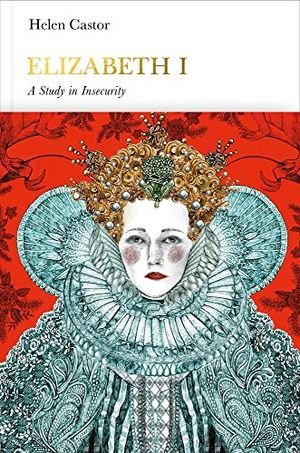
Elizabeth I: A Study in Insecurity
Helen Castor
4.5
In the popular imagination, as in her portraits, Elizabeth I is the image of monarchical power. The Virgin Queen ruled over a Golden Age: the Spanish Armada was defeated; English explorers reached the ends of the earth; a new Church of England rose from the ashes of past conflict; the English Renaissance bloomed in the genius of Shakespeare, Spenser and Sidney. But the image is also armour.
In this illuminating new account of Elizabeth's reign, Helen Castor shows how England's iconic queen was shaped by profound and enduring insecurity-an insecurity which was both a matter of practical political reality and personal psychology. From her precarious upbringing at the whim of a brutal, capricious father and her perilous accession after his death, to the religious division that marred her state and the failure to marry that threatened her line, Elizabeth lived under constant threat. But, facing down her enemies with a compellingly inscrutable public persona, the last and greatest of the Tudor monarchs would become a timeless, fearless queen.
This is a light little book, perfect for holiday reading. Yet despite its short length, it provides a wonderfully rich evocation of Elizabeth I’s reign, in gorgeously turned phrases. Quite simply, a little gem of a book. [source]
Cover unavailable
4
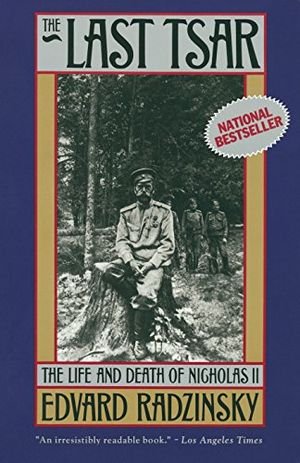
The Last Tsar: The Life and Death of Nicholas II
Edvard Radzinsky
4.3
Russian playwright and historian Radzinsky mines sources never before available to create a fascinating portrait of the monarch, and a minute-by-minute account of his terrifying last days. Updated for the paperback edition.
This tale of the demise of Tsar Nicholas II and his family is superbly written, brilliantly researched, and an utterly enchanting read. It makes the last days of the Romanovs devastatingly vivid and completely unforgettable. [source]
Cover unavailable
5
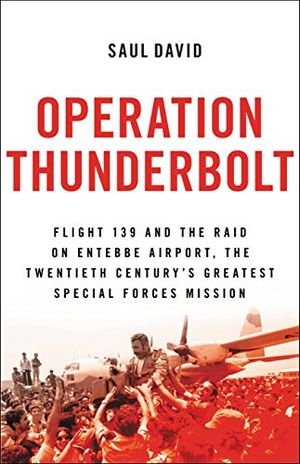
Operation Thunderbolt: Flight 139 and the Raid on Entebbe Airport, the Most Audacious Hostage Rescue Mission in History
Saul David
4.3
The definitive account of one of the greatest Special Forces missions ever, the Raid of Entebbe, by acclaimed military historian Saul David.
On June 27, 1976, an Air France flight from Tel Aviv to Paris was hijacked by a group of Arab and German terrorists who demanded the release of 53 terrorists. The plane was forced to divert to Entebbe, in Uganda -- ruled by the murderous despot Idi Amin, who had no interest in intervening.
Days later, Israeli commandos disguised as Ugandan soldiers assaulted the airport terminal, killed all the terrorists, and rescued all the hostages but three who were killed in the crossfire. The assault force suffered just one fatality: its commander, Yoni Netanyahu (brother of Israel's Prime Minister.) Three of the country's greatest leaders -- Ehud Barak, Shimon Peres and Yitzhak Rabin -- planned and pulled off one of the most astonishing military operations in history.
This book tells the amazing story of the hostage rescue mission at Entebbe Airport in 1976. It is a stunning piece of research based on newly-released classified documents and interviews with the participants. [source]
Cover unavailable
6
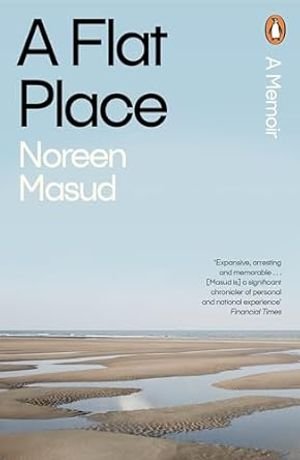
A Flat Place: Moving Through Empty Landscapes, Naming Complex Trauma
Masud brings together her love of flat landscapes—she has written about flat landscapes and literature as an academic—with her experience of confinement by her father while growing up in Pakistan, and her diagnosis of complex PTSD. Flat landscapes become both a memory and a metaphor in this book. It doesn’t sound, in my description, as amazing as it is in practice, you’ve just got to try it. It’s quite extraordinary. [source]
Cover unavailable
7
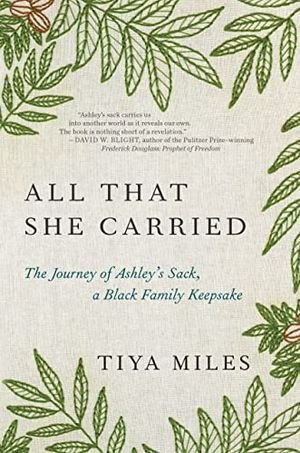
All That She Carried: The Journey of Ashley's Sack, a Black Family Keepsake
This is a work of historical excavation. It concerns a sack that belonged to a girl called Ashley, who, when she was nine years old, was sold away from her mother Rose. Both were enslaved. This was the 1850s, and the sack was later embroidered by Ashley’s granddaughter, Ruth, who worked this incredible inscription that tells us almost everything we know about the story. This book is what we can know about these women, the discoveries made about their identity, and the thousands of others whose stories cannot be told who experienced unimaginable horror. A people’s trauma. [source]
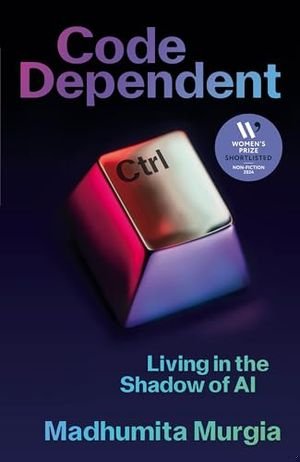
Murgia is, in theory, very positive towards technology, but she’s looking at the dark underbelly of what it means across the world, for those who are what she calls ‘slaves to the AI revolution,’ whose job it is to monitor social media, day in day out, or who are labelling images of roads so that AI can learn what a street sign is and what a piece of tarmac looks like. She also looks at some of the ways in which it can be a positive, always from the human side of the story. I came away never wanting to accept cookies again. It’s essential reading. [source]
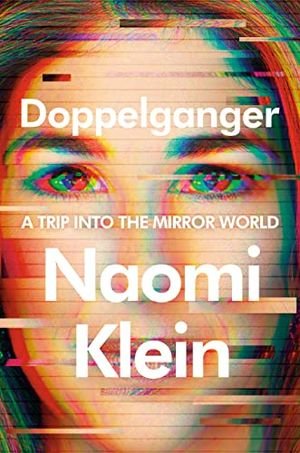
This is such an interesting book. It starts from the experience of the author being mistaken repeatedly for the writer Naomi Wolf, and her indignation about that. Because here are two women who have gone on very different directions, politically speaking. She uses that as a jumping off point to think about the way in which we all have digital doubles – thinking about our social media presences, and the way we recreate ourselves digitally. It becomes this incredibly clever, acutely observed, often funny meditation on the moment in history in which we are living. [source]
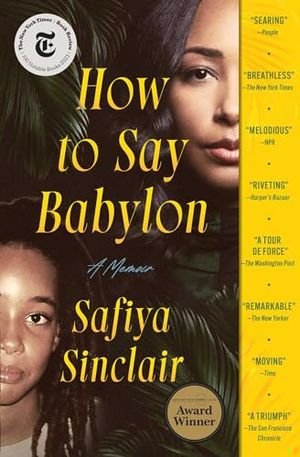
This is Safiya Sinclair’s first work of prose. She’s a poet. And you know that when you read it, because her prose is astonishing. This is a story of her upbringing in a Rastafarian family in Jamaica, and it exposes the subjugation under which she lives. The father is the god of the household. Women are tightly controlled in what they can wear, what they can do, who they can be. It explores her parents’ story and her experience of growing up in this environment, her breaking free, and the role of poetry in that. It’s lyrical, a completely delicious read. And it has had a lot of attention for the quality of the telling. [source]
Cover unavailable
11
Thunderclap: A Memoir of Art and Life and Sudden Death
It examines the life and work of Carel Fabritius, the 17 th -century Dutch artist – who painted ‘The Goldfinch’, among other things. He actually only left just over a dozen paintings, and has been under-recognised in assessments of the Golden Age of Art. But it’s also an examination of Cumming’s own father’s work – James Cumming, an artist in his own right. The two disparate stories are drawn together, I suppose, by what one might call memoir. There’s a connection, which is Laura herself. It’s a work of admiration of both people, and it has this incredible structure which unfurls and pulls in all manner of things along the way. [source]