We've ranked the best agile books using expert recommendations, sales data, and millions of reader ratings. At Shortform, we know books. Our book guides are the best in the world. Learn why.
Cover unavailable
1
The Lean Startup: How Today's Entrepreneurs Use Continuous Innovation to Create Radically Successful Businesses
Most startups fail. But many of those failures are preventable. The Lean Startup is a new approach being adopted across the globe, changing the way companies are built and new products are launched.
Eric Ries defines a startup as an organization dedicated to creating something new under conditions of extreme uncertainty. This is just as true for one person in a garage or a group of seasoned professionals in a Fortune 500 boardroom. What they have in common is a mission to penetrate that fog of uncertainty to discover a successful path to a sustainable business.
The Lean Startup approach fosters companies that are both more capital efficient and that leverage human creativity more effectively. Inspired by lessons from lean manufacturing, it relies on "validated learning," rapid scientific experimentation, as well as a number of counter-intuitive practices that shorten product development cycles, measure actual progress without resorting to vanity metrics, and learn what customers really want. It enables a company to shift directions with agility, altering plans inch by inch, minute by minute.
Rather than wasting time creating elaborate business plans, The Lean Startup offers entrepreneurs - in companies of all sizes - a way to test their vision continuously, to adapt and adjust before it's too late. Ries provides a scientific approach to creating and managing successful startups in a age when companies need to innovate more than ever.
At Asana, we've been lucky to benefit from the author's advice firsthand; this book will enable him to help many more entrepreneurs answer the tough questions about their business. [source]
Cover unavailable
2
Coaching Agile Teams: A Companion for ScrumMasters, Agile Coaches, and Project Managers in Transition
Lyssa Adkins
4.8
The Provocative and Practical Guide to Coaching Agile Teams As an agile coach, you can help project teams become outstanding at agile, creating products that make them proud and helping organizations reap the powerful benefits of teams that deliver both innovation and excellence. More and more frequently, ScrumMasters and project managers are being asked to coach agile teams. But it's a challenging role. It requires new skills--as well as a subtle understanding of when to step in and when to step back. Migrating from "command and control" to agile coaching requires a whole new mind-set. In Coaching Agile Teams, Lyssa Adkins gives agile coaches the insights they need to adopt this new mind-set and to guide teams to extraordinary performance in a re-energized work environment. You'll gain a deep view into the role of the agile coach, discover what works and what doesn't, and learn how to adapt powerful skills from many allied disciplines, including the fields of professional coaching and mentoring. Coverage includes Understanding what it takes to be a great agile coach Mastering all of the agile coach's roles: teacher, mentor, problem solver, conflict navigator, and performance coach Creating an environment where self-organized, high-performance teams can emerge Coaching teams past cooperation and into full collaboration Evolving your leadership style as your team grows and changes Staying actively engaged without dominating your team and stunting its growth Recognizing failure, recovery, and success modes in your coaching Getting the most out of your own personal agile coaching journey Whether you're an agile coach, leader, trainer, mentor, facilitator, ScrumMaster, project manager, product owner, or team member, this book will help you become skilled at helping others become truly great. What could possibly be more rewarding?
…
Cover unavailable
3
The Phoenix Project: A Novel About IT, DevOps, and Helping Your Business Win
Bill is an IT manager at Parts Unlimited. It's Tuesday morning and on his drive into the office, Bill gets a call from the CEO.
The company's new IT initiative, code named Phoenix Project, is critical to the future of Parts Unlimited, but the project is massively over budget and very late. The CEO wants Bill to report directly to him and fix the mess in ninety days or else Bill's entire department will be outsourced.
With the help of a prospective board member and his mysterious philosophy of The Three Ways, Bill starts to see that IT work has more in common with manufacturing plant work than he ever imagined. With the clock ticking, Bill must organize work flow streamline interdepartmental communications, and effectively serve the other business functions at Parts Unlimited.
In a fast-paced and entertaining style, three luminaries of the DevOps movement deliver a story that anyone who works in IT will recognize. Readers will not only learn how to improve their own IT organizations, they'll never view IT the same way again.
…
Recommended by Jeffrey Snover and Louis Nyffenegger.
Jeffrey Snover
Great thread. I know of a number of devops people that haven't read this book. Ya'll should fix that. https://t.co/Yri4JJ0jBZ [source]
Louis Nyffenegger
I don't think I have a specific book that I can call my favourite. Some books have had a big impact on my view of how to build a product/company ("Rework"), some were very enjoyable to read ("The Phoenix Project"), some helped me improve the way I think ("The Pleasure Of Finding Things Out") and some the way I live ("Essentialism") or work ("Deep Work"). [source]
Cover unavailable
4
Scrum: The Art of Doing Twice the Work in Half the Time
Essential Scrum: A Practical Guide to the Most Popular Agile Process
Kenneth Rubin
4.6
A Practical Guide to the Most Popular Agile Process The Single-Source, Comprehensive Guide to Scrum for All Team Members, Managers, and Executives If you want to use Scrum to develop innovative products and services that delight your customers, Essential Scrum is the complete, single-source reference you've been searching for. Leading Scrum coach and trainer Kenny Rubin illuminates the values, principles, and practices of Scrum, and describes flexible, proven approaches that can help you implement it far more effectively. Whether you are new to Scrum or years into your use, this book will introduce, clarify, and deepen your Scrum knowledge at the team, product, and portfolio levels. Drawing from Rubin's experience helping hundreds of organizations succeed with Scrum, this book provides easy-to-digest descriptions enhanced by more than two hundred illustrations based on an entirely new visual icon language for describing Scrum's roles, artifacts, and activities. Essential Scrum will provide every team member, manager, and executive with a common understanding of Scrum, a shared vocabulary they can use in applying it, and practical knowledge for deriving maximum value from it.
…
Cover unavailable
6
Sprint: How to Solve Big Problems and Test New Ideas in Just Five Days
A fantastic, proven formula for moving from idea to prototyping to decision making within five days, based on a process he developed while working at Google and later GV. [source]
Cat Williams-Treloar
Jake Knapp, John Zeratsky & Braden Kowitz "Sprint" - the go-to guide on how to sprint. You may not follow everything to the tee, but it's simple, clean and full of great examples of how to move fast with structure. [source]
Javed Khatri
This book details the "sprint" process used at Google Ventures. We follow a similar process at Kustard to validate business ideas and to solve problems without wasting much time, money and energy. If you want to quickly validate an idea, this is a proven model and a must read. [source]
Cover unavailable
7
Agile Retrospectives: Making Good Teams Great
Esther Derby, Diana Larsen, Ken Schwaber
4.6
See how to mine the experience of your software development team continually throughout the life of the project. The tools and recipes in this book will help you uncover and solve hidden (and not-so-hidden) problems with your technology, your methodology, and those difficult "people" issues on your team.
Project retrospectives help teams examine what went right and what went wrong on a project. But traditionally, retrospectives (also known as "post-mortems") are only helpful at the end of the project--too late to help. You need agile retrospectives that are iterative and incremental. You need to accurately find and fix problems to help the team today.
Now, Derby and Larsen show you the tools, tricks, and tips you need to fix the problems you face on a software development project on an on-going basis. You'll see how to architect retrospectives in general, how to design them specifically for your team and organization, how to run them effectively, how to make the needed changes, and how to scale these techniques up. You'll learn how to deal with problems, and implement solutions effectively throughout the project--not just at the end.
With regular tune-ups, your team will hum like a precise, world-class orchestra.
Contents
Forward Preface Introduction
1. Helping your team inspect and adapt 2. A retrospective custom-fit for your team 3. Leading retrospectives 4. Activities to set the stage 5. Activities to gather data 6. Activities to gather insights 7. Activities to decide what to do 8. Activities to close the retrospective 9. Releases and project retrospectives 10. Make it so
Written in a fast-paced thriller style, 'The Goal' contains a serious message for all managers in industry and explains the ideas which underline the Theory of Constraints developed by the author.
Recommended by Jeff Bezos, Danielle Morrill, Kevin Systrom, and 4 others.
Encourages companies to identify the biggest constraints in their operations and then structure their organizations to get the most out of those constraints. [source]
Kevin Systrom
About basically manufacturing and supply chain management. It sounds really boring, but I promise you it’s really good. [source]
Chris Goward
Here are some of the books that have been very impactful for me, or taught me a new way of thinking: … The Goal. [source]
Cover unavailable
9
Agile Estimating and Planning
Mike Cohn
4.5
Praise for Agile Estimating and Planning "Traditional, deterministic approaches to planning and estimating simply don't cut it on the slippery slopes of today's dynamic, change-driven projects. Mike Cohn's breakthrough book gives us not only the philosophy, but also the guidelines and a proven set of tools that we need to succeed in planning, estimating, and scheduling projects with a high uncertainty factor. At the same time, the author never loses sight of the need to deliver business value to the customer each step of the way."
--Doug DeCarlo, author of eXtreme Project Management: Using Leadership, Principles and Tools to Deliver Value in the Face of Volatility (Jossey-Bass, 2004)
"We know how to build predictive plans and manage them. But building plans that only estimate the future and then embrace change, challenge most of our training and skills. In Agile Estimating and Planning, Mike Cohn once again fills a hole in the Agile practices, this time by showing us a workable approach to Agile estimating and planning. Mike delves into the nooks and crannies of the subject and anticipates many of the questions and nuances of this topic. Students of Agile processes will recognize that this book is truly about agility, bridging many of the practices between Scrum and ExtremeProgramming."
--Ken Schwaber, Scrum evangelist, Agile Alliance cofounder, and signatory to the Agile Manifesto
"In Agile Estimating and Planning, Mike Cohn has, for the first time, brought together most everything that the Agile community has learned about the subject. The book is clear, well organized, and a pleasant and valuable read. It goes into all the necessary detail, and at the same time keeps the reader's burden low. We can dig in as deeply as we need to, without too much detail before we need it. The book really brings together everything we have learned about Agile estimation and planning over the past decade. It will serve its readers well."
--Ron Jeffries, www.XProgramming.com, author of Extreme Programming Installed (Addison-Wesley, 2001) and Extreme Programming Adventures in C# (Microsoft Press, 2004)
"Agile Estimating and Planning provides a view of planning that's balanced between theory and practice, and it is supported by enough concrete experiences to lend it credibility. I particularly like the quote 'planning is a quest for value.' It points to a new, more positive attitude toward planning that goes beyond the 'necessary evil' view that I sometimes hold."
--Kent Beck, author of Extreme Programming Explained, Second Edition (Addison-Wesley, 2005)
"Up-front planning is still the most critical part of software development. Agile software development requires Agile planning techniques. This book shows you how to employ Agile planning in a succinct, practical, and easy-to-follow manner."
--Adam Rogers, Ultimate Software
"Mike does a great follow-up to User Stories Applied by continuing to provide Agile teams with the practical approaches and techniques to increase agility. In this book, Mike provides time-proven and well-tested methods for being successful with the multiple levels of planning and estimating required by Agile. This book is the first to detail the disciplines of Agile estimating and planning, in ways that rival my 1980 civil engineering texts on CPM Planning and Estimating."
--Ryan Martens, President and Founder, Rally Software Development Corporation
"With insight and clarity, Mike Cohn shows how to effectively produce software of high business value. With Agile estimation and planning, you focus effort where it really counts, and continue to do so as circumstances change."
--Rick Mugridge, Rimu Research Ltd., and lead author, Fit for Developing Software (Prentice Hall, 2005)
"Finally! The groundbreaking book my clients have been clamoring for! Agile Estimating and Planning demystifies the process of defining, driving, and delivering great software that matters to the business. Mike's clarity, insight, and experience leap out through every page of this book, offering an approach that is relevant and immediately useful to all members of an Agile project."
--Kert D. Peterson, President, Enterprise Agile Group, LLC
"This isn't yet another generic book on Agile software development. Agile Estimating and Planning fills a gap left by most of the other books and gives you important, practical, down-to-earth techniques needed to be successful on Agile development projects."
--Steve Tockey, Principal Consultant, Construx Software
"Estimation, planning, and tracking is a trinity. If you don't do one of them, you don't need the other two. This book provides very practical knowledge for estimation, planning, prioritizing, and tracking. It should be compulsory subject matter for project managers and their teams, even if they hesitate to call themselves Agile."
--Niels Malotaux, Project Coach
"Effective planning is an important, but often misunderstood, part of any successful Agile project. With Agile Estimating and Planning, Mike Cohn has given us a definitive guide to a wide range of Agile estimating and planning practices. With his clear and practical style, Mike not only explains how to successfully get started planning an Agile project, but also provides a wealth of tips and advice for improving any team's Agile planning process. This book is a must-read for managers, coaches, and members of Agile teams."
--Paul Hodgetts, Agile coach and CEO, Agile Logic
"Mike's writing style captures the essence of agility-just the right amount of information to bring clarity to the reader. This book provides an excellent guide for all Agile practitioners, both seasoned and novice."
--Robert Holler, President and CEO, VersionOne, LLC
"It is as if Mike took the distilled knowledge regarding planning and estimation of a great Agile developer (which he is) and laid out all he knows in an easily understandable manner. More importantly, he has a great mix of concepts with real-world examples finished off with a case study so the reader can relate the information to their own situation. Unless you are already an expert Agile planner and estimator, this book is for you."
--Alan Shalloway, CEO, Senior Consultant, Net Objectives, and coauthor of Design Patterns Explained, Second Edition (Addison-Wesley, 2005)
"Although I had plenty of XP experience before trying out Mike Cohn's Agile planning practices, the effectiveness of the practical and proven techniques in this book blew me away! The book recognizes that people, not tools or processes, produce great software, and that teams benefit most by learning about their project and their product as they go. The examples in the book are concrete, easily grasped, and simply reek of common sense. This book will help teams (whether Agile or not) deliver more value, more often, and have fun doing it! Whether you're a manager or a programmer, a tester or a CEO, part of an Agile team, or just looking for a way to stamp out chaos and death marches, this book will guide you."
--Lisa Crispin, coauthor of Testing Extreme Programming (Addison-Wesley, 2003)
"Mike Cohn does an excellent job demonstrating how an Agile approach can address issues of risk and uncertainty in order to provide more meaningful estimates and plans for software projects."
--Todd Little, Senior Development Manager, Landmark Graphics
"Mike Cohn explains his approach to Agile planning, and shows how 'critical chain' thinking can be used to effectively buffer both schedule and features. As with User Stories Applied, this book is easy to read and grounded in real-world experience."
--Bill Wake, author of Refactoring Workbook (Addison-Wesley, 2003)
"Mike brings this book to life with real-world examples that help reveal how and why an Agile approach works for planning software development projects. This book has great breadth, ranging from the fundamentals of release planning to advanced topics such as financial aspects of prioritization. I can see this book becoming an invaluable aid to Agile project managers, as it provides a wealth of practical tips such as how to set iteration length and boot-strap velocity, and communicate progress."
--Rachel Davies, Independent Consultant
"There has been a need for a solid, pragmatic book on the long-term vision of an Agile Project for project managers. Agile Estimating and Planning addresses this need. It's not theory--this book contains project-tested practices that have been used on Agile projects. As Mike's test subjects, we applied these practices to the development of video games (one of the most unpredictable project environments you can imagine) with success."
--Clinton Keith, Chief Technical Officer, High Moon Studios
"When I first heard Mike Cohn speak, I was impressed by a rare combination of qualities: deep experience and understanding in modern iterative and Agile methods; a drive to find and validate easy, high-impact solutions beyond the status quo of traditional (usually ineffective) methods; and the passion and clarity of a natural coach. These qualities are evident in this wonderful, practical guide. I estimate you won't be disappointed in studying and applying his advice."
--Craig Larman, Chief Scientist, Valtech, and author of Applying UML and Patterns, Third Edition (Prentice Hall, 2005) and Agile and Iterative Development (Addison-Wesley, 2004)
"Agile Estimating and Planning is a critical guide on how to successfully provide value to customers of IT services. This book is filled with clear examples that are essential--from project team members to the executive level."
--Lou Thomas, Director, Applications Development, Farm Credit Services of America
"This work is deeply significant in that it articulates and details structured techniques to realize a simple, but profound insight--planning is an iterative quest for value, rather than a perfunctory scheduling of activities. Mike presents processes to converge on this value while reducing risk and uncertainty, supporting decision making, establishing trust, and conveying information. Agile methodologies have shifted the emphasis from plans to planning, but have glossed over many of the finer details of Agile planning. Now, very simply and accessibly, Mike demonstrates how it can be done."
--Sanjiv Augustine, Practice Director, Lean-Agile Consulting at CC Pace, and author of Managing Agile Projects (Prentice Hall, 2005)
"The techniques described in Agile Estimating and Planning have helped us tremendously with planning and managing our projects. It provides all you have ever wanted to know about Agile project management."
"Mike Cohn presents a highly pragmatic and logical approach to making projects successful in a world beset by uncertainty and change. With his trademark clarity and directness, Mike cuts through the management mumbo jumbo to present practical techniques that can be put into use immediately. Put the odds squarely in your favor by making Mike Cohn the planning guru on your next big project."
"This book distills the fundamental ideas behind Agile estimating and planning, presenting them in a thoughtful and approachable manner. This is a 'must-have' book that presents clear, unambiguous, and practical advice for anyone who wants to successfully manage modern software development projects."
--Scott W. Ambler, President, Ambysoft Inc.
"How do your projects go? Frustrating changes? Uncertainty? Product missing both the mark and the deadline? With insight and clarity, Mike Cohn shows how to effectively produce software that is of high business value. With agile estimation and planning, you focus effort where it really counts, and continue to do so as circumstances change."
--Rick Mugridge, Rimu Research Ltd., and lead author of Fit for Developing Software
"We are true believers in the agile methods described in this book, and have experienced a substantially positive impact from their implementation and continued use. I would highly recommend this book to anyone who is interested in making their software development more practical and effective."
--Mark M. Gutrich, President and CEO, Fast 401k, Inc.
Detailed, Proven Techniques for Estimating and Planning Any Agile Project Agile Estimating and Planning is the definitive, practical guide to estimating and planning agile projects. In this book, Agile Alliance cofounder Mike Cohn discusses the philosophy of agile estimating and planning and shows you exactly how to get the job done, with real-world examples and case studies.
Concepts are clearly illustrated and readers are guided, step by step, toward how to answer the following questions: What will we build? How big will it be? When must it be done? How much can I really complete by then? You will first learn what makes a good plan-and then what makes it agile.
Using the techniques in Agile Estimating and Planning, you can stay agile from start to finish, saving time, conserving resources, and accomplishing more. Highlights include:
Why conventional prescriptive planning fails and why agile planning works How to estimate feature size using story points and ideal days--and when to use each How and when to re-estimate How to prioritize features using both financial and nonfinancial approaches How to split large features into smaller, more manageable ones How to plan iterations and predict your team's initial rate of progress How to schedule projects that have unusually high uncertainty or schedule-related risk How to estimate projects that will be worked on by multiple teams Agile Estimating and Planning supports any agile, semiagile, or iterative process, including Scrum, XP, Feature-Driven Development, Crystal, Adaptive Software Development, DSDM, Unified Process, and many more. It will be an indispensable resource for every development manager, team leader, and team member.
…
Cover unavailable
10
Clean Code: A Handbook of Agile Software Craftsmanship
Robert C. Martin
4.5
Even bad code can function. But if code isn t clean, it can bring a development organization to its knees. Every year, countless hours and significant resources are lost because of poorly written code. But it doesn t have to be that way. Noted software expert Robert C. Martin presents a revolutionary paradigm with Clean Code: A Handbook of Agile Software Craftsmanship. Martin has teamed up with his colleagues from Object Mentor to distill their best agile practice of cleaning code on the fly into a book that will instill within you the values of a software craftsman and make you a better programmer but only if you work at it. What kind of work will you be doing? You ll be reading code lots of code. And you will be challenged to think about what s right about that code, and what s wrong with it. More importantly, you will be challenged to reassess your professional values and your commitment to your craft. Clean Code is divided into three parts. The first describes the principles, patterns, and practices of writing clean code. The second part consists of several case studies of increasing complexity. Each case study is an exercise in cleaning up code of transforming a code base that has some problems into one that is sound and efficient. The third part is the payoff: a single chapter containing a list of heuristics and smells gathered while creating the case studies. The result is a knowledge base that describes the way we think when we write, read, and clean code. Readers will come away from this book understanding
How to tell the difference between good and bad code How to write good code and how to transform bad code into good code How to create good names, good functions, good objects, and good classes How to format code for maximum readability How to implement complete error handling without obscuring code logic How to unit test and practice test-driven development This book is a must for any developer, software engineer, project manager, team lead, or systems analyst with an interest in producing better code. "
…
Recommended by Ana Bell.
Ana Bell
This book is going to show you how to write code that is readable by yourself in the future, or by somebody else. You can sit on the couch and read it; you don’t need to code. You can actually enjoy it if you don’t know how to program at all. [source]
Major New York Times bestseller Winner of the National Academy of Sciences Best Book Award in 2012 Selected by the New York Times Book Review as one of the best books of 2011 A Globe and Mail Best Books of the Year 2011 Title One of The Economist's 2011 Books of the Year One of The Wall Street Journal's Best Nonfiction Books of the Year 2011 2013 Presidential Medal of Freedom Recipient
In the international bestseller, Thinking, Fast and Slow, Daniel Kahneman, the renowned psychologist and winner of the Nobel Prize in Economics, takes us on a groundbreaking tour of the mind and explains the two systems that drive the way we think. System 1 is fast, intuitive, and emotional; System 2 is slower, more deliberative, and more logical. The impact of overconfidence on corporate strategies, the difficulties of predicting what will make us happy in the future, the profound effect of cognitive biases on everything from playing the stock market to planning our next vacation—each of these can be understood only by knowing how the two systems shape our judgments and decisions. Engaging the reader in a lively conversation about how we think, Kahneman reveals where we can and cannot trust our intuitions and how we can tap into the benefits of slow thinking. He offers practical and enlightening insights into how choices are made in both our business and our personal lives—and how we can use different techniques to guard against the mental glitches that often get us into trouble. Winner of the National Academy of Sciences Best Book Award and the Los Angeles Times Book Prize and selected by The New York Times Book Review as one of the ten best books of 2011, Thinking, Fast and Slow is destined to be a classic.
A few months ago, Mr. Obama read “Thinking, Fast and Slow,” by Daniel Kahneman, about how people make decisions — quick, instinctive thinking versus slower, contemplative deliberation. For Mr. Obama, a deliberator in an instinctive business, this may be as instructive as any political science text. [source]
Captivating dive into human decision making, marred by inclusion of several/many? psychology studies that fail to replicate. Will stand as a cautionary tale? [source]
Cover unavailable
12
Drive: The Surprising Truth About What Motivates Us
The New York Times bestseller that gives readers a paradigm-shattering new way to think about motivation
Most people believe that the best way to motivate is with rewards like money—the carrot-and-stick approach. That's a mistake, says Daniel H. Pink (author of To Sell Is Human: The Surprising Truth About Motivating Others). In this provocative and persuasive new book, he asserts that the secret to high performance and satisfaction-at work, at school, and at home—is the deeply human need to direct our own lives, to learn and create new things, and to do better by ourselves and our world.
Drawing on four decades of scientific research on human motivation, Pink exposes the mismatch between what science knows and what business does—and how that affects every aspect of life. He examines the three elements of true motivation—autonomy, mastery, and purpose-and offers smart and surprising techniques for putting these into action in a unique book that will change how we think and transform how we live.
…
Recommended by Tobi Lütke, Bogdan Lucaciu, David Brudo, and 5 others.
Tobi Lütke
Founder & CEO/Shopify
Tobi Lütke recommended this book in an interview in "The Globe and Mail." [source]
Bogdan Lucaciu
Spoiler: it’s autonomy, mastery, and purpose. [source]
In The Five Dysfunctions of a Team Patrick Lencioni once again offers a leadership fable that is as enthralling and instructive as his first two best-selling books, The Five Temptations of a CEO and The Four Obsessions of an Extraordinary Executive. This time, he turns his keen intellect and storytelling power to the fascinating, complex world of teams.
Kathryn Petersen, Decision Tech's CEO, faces the ultimate leadership crisis: Uniting a team in such disarray that it threatens to bring down the entire company. Will she succeed? Will she be fired? Will the company fail? Lencioni's utterly gripping tale serves as a timeless reminder that leadership requires as much courage as it does insight.
Throughout the story, Lencioni reveals the five dysfunctions which go to the very heart of why teams even the best ones-often struggle. He outlines a powerful model and actionable steps that can be used to overcome these common hurdles and build a cohesive, effective team. Just as with his other books, Lencioni has written a compelling fable with a powerful yet deceptively simple message for all those who strive to be exceptional team leaders.
…
Recommended by AnneMarie Schindler, Holger Seim, Jennifer Rock, and 3 others.
AnneMarie Schindler
I suggest these books because they really open up 'how' you think about life and in turn work, success/challenges/setbacks, and in general, yourself. I believe that the more you can understand yourself and broaden your approach to work, the easier it will be to find work that energizes you. Finally, I'm a team player at heart, and love working with others to achieve a huge goal so a portion of these deal with team composition and performance too. [source]
Holger Seim
Lencioni’s books helped me to shift my focus from individual performance to team performance, and what it takes to make a team perform well. It helped me to realize and take seriously the fact that great team performance doesn’t happen magically but needs conscious effort. When I discovered The Five Dysfunctions of a Team for the first time, we had a dysfunctional team at Blinkist and the book opened my eyes to see the problem clearly and showed clear steps for how they should be tackled. Beforehand I was aware that we had a problem, but I couldn’t pinpoint it specifically and hence, couldn’t solve it easily. This book helped a lot. [source]
Jennifer Rock
In Patrick Lencioni's book The Five Dysfunctions of a Team, the executive asks her senior leaders "Who is your first team?" And they each answer incorrectly that it's the team that reports to him or her. The point is that you need to shift your perspective to understanding your senior leadership peers are your first team. We read that book as a leadership team in a corporation where I worked -- and the environment was very competitive between us. When we agreed that our cross-functional leadership team was our first team, we became more cooperative, innovative and productive. And we vastly boosted our results. [source]
Cover unavailable
14
Management 3.0: Leading Agile Developers, Developing Agile Leaders
Jurgen Appel
4.5
In many organizations, management is the biggest obstacle to successful Agile development. Unfortunately, reliable guidance on Agile management has been scarce indeed. Now, leading Agile manager Jurgen Appelo fills that gap, introducing a realistic approach to leading, managing, and growing your Agile team or organization. Writing for current managers and developers moving into management, Appelo shares insights that are grounded in modern complex systems theory, reflecting the intense complexity of modern software development. Appelo's Management 3.0 model recognizes that today's organizations are living, networked systems; and that management is primarily about people and relationships. Management 3.0 doesn't offer mere checklists or prescriptions to follow slavishly; rather, it deepens your understanding of how organizations and Agile teams work and gives you tools to solve your own problems. Drawing on his extensive experience as an Agile manager, the author identifies the most important practices of Agile management and helps you improve each of them. Coverage includes - Getting beyond "Management 1.0" control and "Management 2.0" fads - Understanding how complexity affects your organization - Keeping your people active, creative, innovative, and motivated - Giving teams the care and authority they need to grow on their own - Defining boundaries so teams can succeed in alignment with business goals - Sowing the seeds for a culture of software craftsmanship - Crafting an organizational network that promotes success - Implementing continuous improvement that actually works Thoroughly pragmatic-and never trendy-Jurgen Appelo's Management 3.0 helps you bring greater agility to any software organization, team, or project.
…
Cover unavailable
15
User Stories Applied: For Agile Software Development
Mike Cohn
4.4
Thoroughly reviewed and eagerly anticipated by the agile community, User Stories Applied offers a requirements process that saves time, eliminates rework, and leads directly to better software.
The best way to build software that meets users' needs is to begin with "user stories": simple, clear, brief descriptions of functionality that will be valuable to real users. In User Stories Applied, Mike Cohn provides you with a front-to-back blueprint for writing these user stories and weaving them into your development lifecycle.
You'll learn what makes a great user story, and what makes a bad one. You'll discover practical ways to gather user stories, even when you can't speak with your users. Then, once you've compiled your user stories, Cohn shows how to organize them, prioritize them, and use them for planning, management, and testing.
User role modeling: understanding what users have in common, and where they differ Gathering stories: user interviewing, questionnaires, observation, and workshops Working with managers, trainers, salespeople and other "proxies" Writing user stories for acceptance testing Using stories to prioritize, set schedules, and estimate release costs Includes end-of-chapter practice questions and exercises User Stories Applied will be invaluable to every software developer, tester, analyst, and manager working with any agile method: XP, Scrum... or even your own home-grown approach.
…
Cover unavailable
16
Kanban: Successful Evolutionary Change for Your Technology Business
David J. Anderson
4.4
Cover unavailable
17
User Story Mapping: Discover the Whole Story, Build the Right Product
Jeff Patton and Peter Economy
4.4
How do you build a product that delights users? You must first know who your users are and how they plan to use what you're building. With this practical book, you'll explore the often-misunderstood practice of user story mapping, and learn how it can help keep your team stay focused on users and their experience throughout the development process.
You and your team will learn that user stories aren't a way to write better specifications, but a way to organize and have better conversations. This book will help you understand what kinds of conversations you should be having, when to have them, and what to keep track of when you do.Learn the key concepts used to create a great story mapUnderstand how user stories really work, and how to make good use of them in agile and lean projectsExamine the nuts and bolts of managing stories through the development cycleUse strategies that help you continue to learn before and after the product's release to customers and users
"User Story Mapping" is ideal for agile and lean software development team members, product managers and UX practitioners in commercial product companies, and business analysts and project managers in IT organizations--whether you're new to this approach or want to understand more about it.
Succeeding with Agile: Software Development Using Scrum
Mike Cohn
4.4
Proven, 100% Practical Guidance for Making Scrum and Agile Work in Any Organization.
This is the definitive, realistic, actionable guide to starting fast with Scrum and agile–and then succeeding over the long haul. Leading agile consultant and practitioner Mike Cohn presents detailed recommendations, powerful tips, and real-world case studies drawn from his unparalleled experience helping hundreds of software organizations make Scrum and agile work.
"Succeeding with Agile" is for pragmatic software professionals who want real answers to the most difficult challenges they face in implementing Scrum. Cohn covers every facet of the transition: getting started, helping individuals transition to new roles, structuring teams, scaling up, working with a distributed team, and finally, implementing effective metrics and continuous improvement.
Throughout, Cohn presents “Things to Try Now” sections based on his most successful advice. Complementary “Objection” sections reproduce typical conversations with those resisting change and offer practical guidance for addressing their concerns. Coverage includes: - Practical ways to get started immediately–and “get good” fast - Overcoming individual resistance to the changes Scrum requires - Staffing Scrum projects and building effective teams - Establishing “improvement communities” of people who are passionate about driving change - Choosing which agile technical practices to use or experiment with - Leading self-organizing teams - Making the most of Scrum sprints, planning, and quality techniques - Scaling Scrum to distributed, multiteam projects - Using Scrum on projects with complex sequential processes or challenging compliance and governance requirements - Understanding Scrum’s impact on HR, facilities, and project management
Whether you've completed a few sprints or multiple agile projects and whatever your role–manager, developer, coach, ScrumMaster, product owner, analyst, team lead, or project lead–this book will help you succeed with your very next project. Then, it will help you go much further: It will help you transform your entire development organization.
…
Recommended by Nicolae Andronic.
Nicolae Andronic
I’m a technical guy. I studied the IT field and did software development for a long time until I discovered the business world. So the path for me is to slowly adapt from the clear, technical world, to the fuzzy, way more complex, business world. All the books that I recommend help this transition. “Succeeding with Agile” - Mike Cohn: for approaching the process involved into building a product in an organized manner. [source]
Cover unavailable
19
Extreme Programming Explained: Embrace Change (The XP Series)
Kent Beck
4.4
"In this second edition of Extreme Programming Explained, Kent Beck organizes and presents five years' worth of experiences, growth, and change revolving around XP. If you are seriously interested in understanding how you and your team can start down the path of improvement with XP, you must read this book."
--Francesco Cirillo, Chief Executive Officer, XPLabs S.R.L. "The first edition of this book told us what XP was--it changed the way many of us think about software development. This second edition takes it farther and gives us a lot more of the 'why' of XP, the motivations and the principles behind the practices. This is great stuff. Armed with the 'what' and the 'why, ' we can now all set out to confidently work on the 'how' how to run our projects better, and how to get agile techniques adopted in our organizations."
--Dave Thomas, The Pragmatic Programmers LLC "This book is dynamite! It was revolutionary when it first appeared a few years ago, and this new edition is equally profound. For those who insist on cookbook checklists, there's an excellent chapter on 'primary practices, ' but I urge you to begin by truly contemplating the meaning of the opening sentence in the first chapter of Kent Beck's book: 'XP is about social change.' You should do whatever it takes to ensure that every IT professional and every IT manager--all the way up to the CIO--has a copy of Extreme Programming Explained on his or her desk."
--Ed Yourdon, author and consultant "XP is a powerful set of concepts for simplifying the process of software design, development, and testing. It is about minimalism and incrementalism, which are especially useful principles when tackling complex problems that require a balance of creativity and discipline."
--Michael A. Cusumano, Professor, MIT Sloan School of Management, and author of The Business of Software "Extreme Programming Explained is the work of a talented and passionate craftsman. Kent Beck has brought together a compelling collection of ideas about programming and management that deserves your full attention. My only beef is that our profession has gotten to a point where such common-sense ideas are labeled 'extreme.'..."
--Lou Mazzucchelli, Fellow, Cutter Business Technology Council "If your organization is ready for a change in the way it develops software, there's the slow incremental approach, fixing things one by one, or the fast track, jumping feet first into Extreme Programming. Do not be frightened by the name, it is not that extreme at all. It is mostly good old recipes and common sense, nicely integrated together, getting rid of all the fat that has accumulated over the years."
--Philippe Kruchten, UBC, Vancouver, British Columbia "Sometimes revolutionaries get left behind as the movement they started takes on a life of its own. In this book, Kent Beck shows that he remains ahead of the curve, leading XP to its next level. Incorporating five years of feedback, this book takes a fresh look at what it takes to develop better software in less time and for less money. There are no silver bullets here, just a set of practical principles that, when used wisely, can lead to dramatic improvements in software development productivity."
--Mary Poppendieck, author of Lean Software Development: An Agile Toolkit "Kent Beck has revised his classic book based on five more years of applying and teaching XP. He shows how the path to XP is both easy and hard: It can be started with fewer practices, and yet it challenges teams to go farther than ever."
--William Wake, independent consultant "With new insights, wisdom from experience, and clearer explanations of the art of Extreme Programming, this edition of Beck's classic will help many realize the dream of outstanding software development."
--Joshua Kerievsky, author of Refactoring to Patterns and Founder, Industrial Logic, Inc. "XP has changed the way our industry thinks about software development. Its brilliant simplicity, focused execution, and insistence on fact-based planning over speculation have set a new standard for software delivery."
--David Trowbridge, Architect, Microsoft Corporation Accountability. Transparency. Responsibility. These are not words that are often applied to software development.
In this completely revised introduction to Extreme Programming (XP), Kent Beck describes how to improve your software development by integrating these highly desirable concepts into your daily development process.
The first edition of Extreme Programming Explained is a classic. It won awards for its then-radical ideas for improving small-team development, such as having developers write automated tests for their own code and having the whole team plan weekly. Much has changed in five years. This completely rewritten second edition expands the scope of XP to teams of any size by suggesting a program of continuous improvement based on:
Five core values consistent with excellence in software development Eleven principles for putting those values into action Thirteen primary and eleven corollary practices to help you push development past its current business and technical limitations Whether you have a small team that is already closely aligned with your customers or a large team in a gigantic or multinational organization, you will find in these pages a wealth of ideas to challenge, inspire, and encourage you and your team members to substantially improve your software development.
You will discover how to:
Involve the whole team--XP style Increase technical collaboration through pair programming and continuous integration Reduce defects through developer testing Align business and technical decisions through weekly and quarterly planning Improve teamwork by setting up an informative, shared workspace You will also find many other concrete ideas for improvement, all based on a philosophy that emphasizes simultaneously increasing the humanity and effectiveness of software development.
Every team can improve. Every team can begin improving today. Improvement is possible--beyond what we can currently imagine. Extreme Programming Explained, Second Edition, offers ideas to fuel your improvement for years to come.
…
Recommended by Steve Blank.
Cover unavailable
20
Turn the Ship Around!: A True Story of Turning Followers into Leaders
"Leadership should mean giving control rather than taking control and creating leaders rather than forging followers." David Marquet, an experienced Navy officer, was used to giving orders. As newly appointed captain of the USS Santa Fe, a nuclear-powered submarine, he was responsible for more than a hundred sailors, deep in the sea. In this high-stress environment, where there is no margin for error, it was crucial his men did their job and did it well.
But the ship was dogged by poor morale, poor performance, and the worst retention in the fleet. Marquet acted like any other captain until, one day, he unknowingly gave an impossible order, and his crew tried to follow it anyway. When he asked why the order wasn't challenged, the answer was "Because you told me to." Marquet realized he was leading in a culture of followers, and they were all in danger unless they fundamentally changed the way they did things. That's when Marquet took matters into his own hands and pushed for leadership at every level.
Turn the Ship Around! is the true story of how the Santa Fe skyrocketed from worst to first in the fleet by challenging the U.S. Navy's traditional leader-follower approach. Struggling against his own instincts to take control, he instead achieved the vastly more powerful model of giving control. Before long, each member of Marquet's crew became a leader and assumed responsibility for everything he did, from clerical tasks to crucial combat decisions. The crew became fully engaged, contributing their full intellectual capacity every day, and the Santa Fe started winning awards and promoting a highly disproportionate number of officers to submarine command.
No matter your business or position, you can apply Marquet's radical guidelines to turn your own ship around. The payoff: a workplace where everyone around you is taking responsibility for their actions, where people are healthier and happier, where everyone is a leader.
So many leadership books are either theoretical (written by people who study it but don’t do it) or by people who look back and try to explain how they did it. Though both valuable, most leadership books are also very hard to implement as prescribed. That’s what makes Marquet’s book is so remarkable. A submarine commander, he used to obey traditional models of leadership … until they failed him. Unable to change any variables (people, technology or equipment), the only thing left for him to change in order to achieve success was how he acted as a leader. Based on real life events, Marquet presents his ideas in a superbly practical way — perfect for implementing. [source]
A wonderful book about a naval Admiral that was running one of the worst performing U.S. nuclear submarines and turned it around to be the best performing U.S. submarine by infusing his staff with basically saying they’re not waiting for a command, they’re saying what they intend to do. [source]
Cover unavailable
21
The Principles of Product Development Flow: Second Generation Lean Product Development
Donald G. Reinertsen
4.3
In this book, Reinertsen provides an examination of product development practices. He explains why invisible and unmanaged queues are the underlying root cause of poor product development performance. He shows why these queues form and how they undermine the speed, quality, and efficiency in product development.
Cover unavailable
22
Scrum Mastery: From Good To Great Servant-Leadership
Geoff Watts, Rebecca Traeger, Ole Storksen, Mike Cohn, Esther Derby
4.3
The basics of being a ScrumMaster are fairly straightforward: Facilitate the Scrum process and remove impediments. But being a great ScrumMaster, one who truly embodies the principles of servant-leadership and helps move a team to the high performance levels possible with Scrum, is much harder and much more elusive. In his over ten years of coaching numerous Scrum teams, the highly-respected and experienced Scrum coach Geoff Watts has identified patterns that separate a good ScrumMaster from a great one. In this book, he not only illustrates these patterns through stories of his own experiences and those of the many Scrum teams he has encountered but offers practical guidance for you on your own path to greatness.
In this book you will learn: The skills and characteristics of great ScrumMasters How to generate, maintain and increase engagement from the team How to increase the effectiveness of the Scrum meetings, such as retrospectives and daily scrums. How to foster a more creative and collaborative team How to increase the performance of the team How to know when you are a successful ScrumMaster
Scrum Mastery is for practicing ScrumMasters who want to develop themselves into a great servant-leader capable of taking their teams beyond simple process compliance.
Comments on the book
Mike Cohn, in his foreword for the book, said:
"Most books rehash well-trod territory and I don’t finish them any wiser. I am positive I will be referring back to this book for many years"
Roman Pichler, author of Agile Product Management with Scrum: Creating Products That Customers Love said:
"I am thoroughly impressed with how comprehensive and well-written the book is. It will be indispensable for many people"
Jean Tabaka, Agile Fellow, Rally Software:
"Geoff brings us a personal and inspired peak into what truly moves us from good to great: great in how we serve; great in how we lead; great in how we create mastery in our teams and organizations; and, great in how we recognize the impediments to our own growth to greatness. Scrum mastery is a skill that can be honed and Geoff gives us rich tools to sharpen our craft."
…
Cover unavailable
23
Scrum and XP from the Trenches
Henrik Kniberg
4.3
This book aims to give you a head start by providing a detailed down-to-earth account of how one Swedish company implemented Scrum and XP with a team of approximately 40 people and how they continuously improved their process over a year's time. Under the leadership of Henrik Kniberg they experimented with different team sizes, different sprint lengths, different ways of defining "done," different formats for product backlogs and sprint backlogs, different testing strategies, different ways of doing demos, different ways of synchronizing multiple Scrum teams, etc. They also experimented with XP practices - different ways of doing continuous build, pair programming, test driven development, etc, and how to combine this with Scrum.
…
Recommended by Mircea Scarlatescu.
Mircea Scarlatescu
Many, but here’s a short list, for both entrepreneurs and team leaders: The E-Myth by Michael E. Gerber Zero to One by Peter Thiel The Lean Startup by Eric Ries Scrum and XP from the Trenches by Henrik Kniberg ReWork – Jason Fried [source]
Cover unavailable
24
The Agile Samurai
Jonathan Rasmusson
4.3
Faced with a software project of epic proportions? Tired of over-committing and under-delivering? Enter the dojo of the agile samurai, where agile expert Jonathan Rasmusson shows you how to kick-start, execute, and deliver your agile projects. Combining cutting-edge tools with classic agile practices, The Agile Samurai gives you everything you need to deliver something of value every week and make rolling your software into production a non-event.
Get ready to kick some software project butt. By learning the ways of the agile samurai you will discover:
how to create plans and schedules your customer and your team can believe in
what characteristics make a good agile team and how to form your own
how to gather requirements in a fraction of the time using agile user stories
what to do when you discover your schedule is wrong, and how to look like a pro correcting it
• how to execute fiercely by leveraging the power of agile software engineering practices
By the end of this book you will know everything you need to set up, execute, and successfully deliver agile projects, and have fun along the way. If you're a project lead, this book gives you the tools to set up and lead your agile project from start to finish. If you are an analyst, programmer, tester, usability designer, or project manager, this book gives you the insight and foundation necessary to become a valuable agile team member.
The Agile Samurai slices away the fluff and theory that make other books less-than-agile. It's packed with best practices, war stories, plenty of humor and hands-on tutorial exercises that will get you doing the right things, the right way.
This book will make a difference.
…
Cover unavailable
25
Agile Product Management with Scrum: Creating Products That Customers Love
Roman Pichler
4.3
The First Guide to Scrum-Based Agile Product Management In Agile Product Management with Scrum, leading Scrum consultant Roman Pichler uses real-world examples to demonstrate how product owners can create successful products with Scrum. He describes a broad range of agile product management practices, including making agile product discovery work, taking advantage of emergent requirements, creating the minimal marketable product, leveraging early customer feedback, and working closely with the development team. Benefitting from Pichler's extensive experience, you'll learn how Scrum product ownership differs from traditional product management and how to avoid and overcome the common challenges that Scrum product owners face. Coverage includes Understanding the product owner's role: what product owners do, how they do it, and the surprising implications Envisioning the product: creating a compelling product vision to galvanize and guide the team and stakeholders Grooming the product backlog: managing the product backlog effectively even for the most complex products Planning the release: bringing clarity to scheduling, budgeting, and functionality decisions Collaborating in sprint meetings: understanding the product owner's role in sprint meetings, including the dos and don'ts Transitioning into product ownership: succeeding as a product owner and establishing the role in the enterprise This book is an indispensable resource for anyone who works as a product owner, or expects to do so, as well as executives and coaches interested in establishing agile product management.
…
Cover unavailable
26
Agile Project Management with Scrum
Ken Schwaber
4.3
The rules and practices for Scrum—a simple process for managing complex projects—are few, straightforward, and easy to learn. But Scrum’s simplicity itself—its lack of prescription—can be disarming, and new practitioners often find themselves reverting to old project management habits and tools and yielding lesser results. In this illuminating series of case studies, Scrum co-creator and evangelist Ken Schwaber identifies the real-world lessons—the successes and failures—culled from his years of experience coaching companies in agile project management. Through them, you’ll understand how to use Scrum to solve complex problems and drive better results—delivering more valuable software faster. Gain the foundation in Scrum theory—and practice—you need to:
Rein in even the most complex, unwieldy projects Effectively manage unknown or changing product requirements Simplify the chain of command with self-managing development teams Receive clearer specifications—and feedback—from customers Greatly reduce project planning time and required tools Build—and release—products in 30-day cycles so clients get deliverables earlier Avoid missteps by regularly inspecting, reporting on, and fine-tuning projects Support multiple teams working on a large-scale project from many geographic locations Maximize return on investment!
…
Cover unavailable
27
Lean from the Trenches
Henrik Kniberg
4.3
Lean from the Trenches is all about actual practice.
Find out how the Swedish police combined XP, Scrum, and Kanban in a 60-person project. From start to finish, you'll see how to deliver a successful product using Lean principles.
We start with an organization in desperate need of a new way of doing things and finish with a group of sixty, all working in sync to develop a scalable, complex system. You'll walk through the project step by step, from customer engagement, to the daily "cocktail party," version control, bug tracking, and release. In this honest look at what works--and what doesn't--you'll find out how to: Make quality everyone's business, not just the testers. Keep everyone moving in the same direction without micromanagement. Use simple and powerful metrics to aid in planning and process improvement. Balance between low-level feature focus and high-level system focus. You'll be ready to jump into the trenches and streamline your own development process.
Contents
Foreword Preface
PART I: HOW WE WORK
1. About the Project 1.1 Timeline 5 1.2 How We Sliced the Elephant 6 1.3 How We Involved the Customer 7
2. Structuring the Teams
3. Attending the Daily Cocktail Party 3.1 First Tier: Feature Team Daily Stand-up 3.2 Second Tier: Sync Meetings per Specialty 3.3 Third Tier: Project Sync Meeting
4. The Project Board 4.1 Our Cadences 4.2 How We Handle Urgent Issues and Impediments
5. Scaling the Kanban Boards
6. Tracking the High-Level Goal
7. Defining Ready and Done 7.1 Ready for Development 7.2 Ready for System Test 7.3 How This Improved Collaboration
8. Handling Tech Stories 8.1 Example 1: System Test Bottleneck 8.2 Example 2: Day Before the Release 8.3 Example 3: The 7-Meter Class
9. Handling Bugs 9.1 Continuous System Test 9.2 Fix the Bugs Immediately 9.3 Why We Limit the Number of Bugs in the Bug Tracker 9.4 Visualizing Bugs 9.5 Preventing Recurring Bugs
10. Continuously Improving the Process 10.1 Team Retrospectives 10.2 Process Improvement Workshops 10.3 Managing the Rate of Change
11. Managing Work in Progress 11.1 Using WIP Limits 11.2 Why WIP Limits Apply Only to Features
12. Capturing and Using Process Metrics 12.1 Velocity (Features per Week) 12.2 Why We Don’t Use Story Points 12.3 Cycle Time (Weeks per Feature) 12.4 Cumulative Flow 12.5 Process Cycle Efficiency
13. Planning the Sprint and Release 13.1 Backlog Grooming 13.2 Selecting the Top Ten Features 13.3 Why We Moved Backlog Grooming Out of the Sprint Planning Meeting 13.4 Planning the Release
14. How We Do Version Control 14.1 No Junk on the Trunk 14.2 Team Branches 14.3 System Test Branch
15. Why We Use Only Physical Kanban Boards
16. What We Learned 16.1 Know Your Goal 16.2 Experiment 16.3 Embrace Failure 16.4 Solve Real Problems 16.5 Have Dedicated Change Agents 16.6 Involve People
PART II: A CLOSER LOOK AT THE TECHNIQUES
17. Agile and Lean in a Nutshell 17.1 Agile in a Nutshell 17.2 Lean in a Nutshell 17.3 Scrum in a Nutshell 17.4 XP in a Nutshell 17.5 Kanban in a Nutshell
18. Reducing the Test Automation Backlog 18.1 What to Do About It 18.2 How to Improve Test Coverage a Little Bit Each Iteration 18.3 Step 1: List Your Test Cases 18.4 Step 2: Classify Each Test 18.5 Step 3: Sort the List in Priority Order 18.6 Step 4: Automate a Few Tests Each Iteration 18.7 Does This Solve the Problem?
19. Sizing the Backlog with Planning Poker 19.1 Estimating Without Planning Poker 19.2 Estimating with Planning Poker 19.3 Special Cards
20. Cause-Effect Diagrams 20.1 Solve Problems, Not Symptoms 20.2 The Lean Problem-Solving Approach: A3 Thinking 20.3 How to Use Cause-Effect Diagrams 20.4 Example 1: Long Release Cycle 20.5 Example 2: Defects Released to Production 20.6 Example 3: Lack of Pair Programming 20.7 Example 4: Lots of Problems 20.8 Practical Issues: How to Create and Maintain the Diagrams 20.9 Pitfalls 20.10 Why Use Cause-Effect Diagrams?
21. Final Words
A1. Glossary: How We Avoid Buzzword Bingo Index
…
Cover unavailable
28
Lean Software Development: An Agile Toolkit
Mary Poppendieck / Tom Poppendieck Poppendieck / Poppendieck
4.3
Lean Software Development: An Agile Toolkit
Adapting agile practices to your development organization Uncovering and eradicating waste throughout the software development lifecycle Practical techniques for every development manager, project manager, and technical leader Lean software development: applying agile principles to your organization
In Lean Software Development, Mary and Tom Poppendieck identify seven fundamental "lean" principles, adapt them for the world of software development, and show how they can serve as the foundation for agile development approaches that work. Along the way, they introduce 22 "thinking tools" that can help you customize the right agile practices for any environment.
Better, cheaper, faster software development. You can have all three-if you adopt the same lean principles that have already revolutionized manufacturing, logistics and product development.
Iterating towards excellence: software development as an exercise in discovery Managing uncertainty: "decide as late as possible" by building change into the system. Compressing the value stream: rapid development, feedback, and improvement Empowering teams and individuals without compromising coordination Software with integrity promoting coherence, usability, fitness, maintainability, and adaptability How to "see the whole"-even when your developers are scattered across multiple locations and contractors Simply put, Lean Software Development helps you refocus development on value, flow, and people-so you can achieve breakthrough quality, savings, speed, and business alignment.
…
Cover unavailable
29
The Mythical Man-Month: Essays on Software Engineering
Few books on software project management have been as influential and timeless as The Mythical Man-Month. With a blend of software engineering facts and thought-provoking opinions, Fred Brooks offers insight for anyone managing complex projects. These essays draw from his experience as project manager for the IBM System/360 computer family and then for OS/360, its massive software system. Now, 20 years after the initial publication of his book, Brooks has revisited his original ideas and added new thoughts and advice, both for readers already familiar with his work and for readers discovering it for the first time.
The added chapters contain (1) a crisp condensation of all the propositions asserted in the original book, including Brooks' central argument in The Mythical Man-Month: that large programming projects suffer management problems different from small ones due to the division of labor; that the conceptual integrity of the product is therefore critical; and that it is difficult but possible to achieve this unity; (2) Brooks' view of these propositions a generation later; (3) a reprint of his classic 1986 paper "No Silver Bullet"; and (4) today's thoughts on the 1986 assertion, "There will be no silver bullet within ten years."
From "The Everything Store", written by Brad Stone “An influential computer scientist makes the counterintuitive argument that small groups of engineers are more effective than larger ones at handling complex software projects. The book lays out the theory behind Amazon’s two pizza teams,” Stone writes. [source]
The basic premise of Inspired is that the best tech companies create products in a manner very different from how most companies create products. The goal of the book is to share the techniques of the best companies. This book is aimed primarily at Product Managers working on technology-powered products. That includes the hundreds of "tech companies" like Google, Facebook, Amazon, Twitter and the like, as well as the thousands of companies moving to leverage technology (financial companies, media companies, retailers, manufacturers, nearly every industry). Inspired covers companies from early stage start-ups to large, established companies. The products might be consumer products or devices, business services for small businesses to enterprises, internal tools, and developer platforms.
Inspired is secondarily aimed at the designers, engineers, user researchers and data scientists that work closely with the product managers on product teams at these same companies.
From the bestselling author of The Black Swan and one of the foremost philosophers of our time, Nassim Nicholas Taleb, a book on how some systems actually benefit from disorder.
In The Black Swan Taleb outlined a problem; in Antifragile he offers a definitive solution: how to gain from disorder and chaos while being protected from fragilities and adverse events. For what he calls the "antifragile" is one step beyond robust, as it benefits from adversity, uncertainty and stressors, just as human bones get stronger when subjected to stress and tension.
Taleb stands uncertainty on its head, making it desirable, and proposing that things be built in an antifragile manner. Extremely ambitious and multidisciplinary, Antifragile provides a blueprint for how to behave-and thrive-in a world we don't understand and which is too uncertain for us to even try to understand. He who is not antifragile will perish. Why is the city state better than the nation state, why is debt bad for you, and why is almost everything modern bound to fail? The book covers innovation, health, biology, medicine, life decisions, politics, foreign policy, urban planning, war, personal finance, and economic systems. Throughout, the voice and recipes of the ancient wisdom from Phoenician, Roman, Greek, and Medieval sources are heard loud and clear.
You ask about success. To be successful you have to avoid being “fragile” – the idea that if something hurts you, you let collapse completely. You also have to avoid simply being resilient. Bouncing back is not enough. Antifragile is when something tries to hurt you and you come back stronger. That is real life business. That is real life success. Nassim focuses on the economy. But when I read the book I kept asking myself, “how can I apply this to the areas of my life where I feel most fragile?” [source]
Marvin Liao
Partner/500 Startups
My list would be (besides the ones I mentioned in answer to the previous question) both business & Fiction/Sci-Fi and ones I personally found helpful to myself. The business books explain just exactly how business, work & investing are in reality & how to think properly & differentiate yourself. On the non-business side, a mix of History & classic fiction to understand people, philosophy to make sense of life and Science fiction to picture what the future could be like (not always utopian). [source]
Vlad Tenev
The general concept is applicable to many fields beyond biology, for instance finance, economics and monetary policy. [source]
Cover unavailable
32
Measure What Matters: How Google, Bono, and the Gates Foundation Rock the World with OKRs
Legendary venture capitalist John Doerr reveals how the goal-setting system of Objectives and Key Results (OKRs) has helped tech giants from Intel to Google achieve explosive growth--and how it can help any organization thrive.
In the fall of 1999, John Doerr met with the founders of a start-up whom he'd just given $12.5 million, the biggest investment of his career. Larry Page and Sergey Brin had amazing technology, entrepreneurial energy, and sky-high ambitions, but no real business plan. For Google to change the world (or even to survive), Page and Brin had to learn how to make tough choices on priorities while keeping their team on track. They'd have to know when to pull the plug on losing propositions, to fail fast. And they needed timely, relevant data to track their progress -- to measure what mattered.
Doerr taught them about a proven approach to operating excellence: Objectives and Key Results. He had first discovered OKRs in the 1970s as an engineer at Intel, where the legendary Andy Grove ("the greatest manager of his or any era") drove the best-run company Doerr had ever seen. Later, as a venture capitalist, Doerr shared Grove's brainchild with more than fifty companies. Wherever the process was faithfully practiced, it worked.
In this goal-setting system, objectives define what we seek to achieve; key results are how those top-priority goals will be attained with specific, measurable actions within a set time frame. Everyone's goals, from entry level to CEO, are transparent to the entire organization.
The benefits are profound. OKRs surface an organization's most important work. They focus effort and foster coordination. They keep employees on track. They link objectives across silos to unify and strengthen the entire company. Along the way, OKRs enhance workplace satisfaction and boost retention.
In Measure What Matters, Doerr shares a broad range of first-person, behind-the-scenes case studies, with narrators including Bono and Bill Gates, to demonstrate the focus, agility, and explosive growth that OKRs have spurred at so many great organizations. This book will help a new generation of leaders capture the same magic.
John explains how OKRs Objectives and Key Results work and shows how you can apply them in all sorts of situations. I’d recommend John’s book for anyone interested in becoming a better manager (and I’d say that even if I hadn’t been interviewed for a super-nice chapter about the Gates Foundation). [source]
Whether you're a seasoned CEO or a first-time entrepreneur, you'll find valuable lessons, tools, and inspiration in the pages of Measure What Matters. I'm glad John invested the time to share these ideas with the world. [source]
In this indispensable book, the most important venture capitalist of our era reveals a key to business innovation and success. This crisp and colorful book combines fascinating case studies with insightful personal stories to show how OKRs can add magic to organizations of any size. [source]
Cover unavailable
33
The Pragmatic Programmer: From Journeyman to Master
Andrew Hunt and David Thomas
4.3
-- Ward Cunningham Straight from the programming trenches, The Pragmatic Programmer cuts through the increasing specialization and technicalities of modern software development to examine the core process--taking a requirement and producing working, maintainable code that delights its users. It covers topics ranging from personal responsibility and career development to architectural techniques for keeping your code flexible and easy to adapt and reuse. Read this book, and youll learn how to *Fight software rot; *Avoid the trap of duplicating knowledge; *Write flexible, dynamic, and adaptable code; *Avoid programming by coincidence; *Bullet-proof your code with contracts, assertions, and exceptions; *Capture real requirements; *Test ruthlessly and effectively; *Delight your users; *Build teams of pragmatic programmers; and *Make your developments more precise with automation. Written as a series of self-contained sections and filled with entertaining anecdotes, thoughtful examples, and interesting analogies, The Pragmatic Programmer illustrates the best practices and major pitfalls of many different aspects of software development. Whether youre a new coder, an experienced programm
…
Recommended by Jeff Atwood, Hadley Wickham, and 1 others.
This book is about the craft of software development, and thinking about how to produce good code. [source]
Cover unavailable
34
Continuous Delivery: Reliable Software Releases Through Build, Test, and Deployment Automation
Jez Humble and David Farley
4.3
Winner of the 2011 Jolt Excellence Award!
Getting software released to users is often a painful, risky, and time-consuming process. This groundbreaking new book sets out the principles and technical practices that enable rapid, incremental delivery of high quality, valuable new functionality to users. Through automation of the build, deployment, and testing process, and improved collaboration between developers, testers, and operations, delivery teams can get changes released in a matter of hours-- sometimes even minutes-no matter what the size of a project or the complexity of its code base. Jez Humble and David Farley begin by presenting the foundations of a rapid, reliable, low-risk delivery process. Next, they introduce the "deployment pipeline," an automated process for managing all changes, from check-in to release. Finally, they discuss the "ecosystem" needed to support continuous delivery, from infrastructure, data and configuration management to governance. The authors introduce state-of-the-art techniques, including automated infrastructure management and data migration, and the use of virtualization. For each, they review key issues, identify best practices, and demonstrate how to mitigate risks. Coverage includes - Automating all facets of building, integrating, testing, and deploying software - Implementing deployment pipelines at team and organizational levels - Improving collaboration between developers, testers, and operations - Developing features incrementally on large and distributed teams - Implementing an effective configuration management strategy - Automating acceptance testing, from analysis to implementation - Testing capacity and other non-functional requirements - Implementing continuous deployment and zero-downtime releases - Managing infrastructure, data, components and dependencies - Navigating risk management, compliance, and auditing Whether you're a developer, systems administrator, tester, or manager, this book will help your organization move from idea to release faster than ever--so you can deliver value to your business rapidly and reliably.
…
Cover unavailable
35
Start with Why: How Great Leaders Inspire Everyone to Take Action
Why are some people and organizations more innovative, more influential, and more profitable than others? Why do some command greater loyalty from customers and employees alike? Even among the successful, why are so few able to repeat their success over and over?
People like Martin Luther King Jr., Steve Jobs, and the Wright Brothers might have little in common, but they all started with why. It was their natural ability to start with why that enabled them to inspire those around them and to achieve remarkable things.
In studying the leaders who've had the greatest influence in the world, Simon Sinek discovered that they all think, act, and communicate in the exact same way—and it's the complete opposite of what everyone else does. Sinek calls this powerful idea The Golden Circle, and it provides a framework upon which organizations can be built, movements can be lead, and people can be inspired. And it all starts with WHY.
Any organization can explain what it does; some can explain how they do it; but very few can clearly articulate why. WHY is not money or profit—those are always results. WHY does your organization exist? WHY does it do the things it does? WHY do customers really buy from one company or another? WHY are people loyal to some leaders, but not others?
Starting with WHY works in big business and small business, in the nonprofit world and in politics. Those who start with WHY never manipulate, they inspire. And the people who follow them don't do so because they have to; they follow because they want to.
Drawing on a wide range of real-life stories, Sinek weaves together a clear vision of what it truly takes to lead and inspire. This book is for anyone who wants to inspire others or who wants to find someone to inspire them.
Today is World Book Day, a wonderful opportunity to address this #ChallengeRichard sent in by Mike Gonzalez of New Jersey: Make a list of your top 65 books to read in a lifetime. [source]
The basis of this book is so important to anyone looking to increase their influence, profits or impact. People won't truly buy into a product, service, movement, or idea until they understand the WHY behind it. When you start with the why, everything else falls into place. This book is so impactful, I consider it required reading. [source]
Tony Hsieh
CEO/Zappos.com
Over the years he’s recommended well over 20 business books — including his own, the 2010 bestseller Delivering Happiness and you can always find what he’s currently reading atop his cluttered desk. Start with Why is amogst those titles. [source]
Most business books give you the same old advice: Write a business plan, study the competition, seek investors, yadda yadda. If you're looking for a book like that, put this one back on the shelf.
Rework shows you a better, faster, easier way to succeed in business. Read it and you'll know why plans are actually harmful, why you don't need outside investors, and why you're better off ignoring the competition. The truth is, you need less than you think. You don't need to be a workaholic. You don't need to staff up. You don't need to waste time on paperwork or meetings. You don't even need an office. Those are all just excuses.
What you really need to do is stop talking and start working. This book shows you the way. You'll learn how to be more productive, how to get exposure without breaking the bank, and tons more counterintuitive ideas that will inspire and provoke you.
With its straightforward language and easy-is-better approach, Rework is the perfect playbook for anyone who’s ever dreamed of doing it on their own. Hardcore entrepreneurs, small-business owners, people stuck in day jobs they hate, victims of "downsizing," and artists who don’t want to starve anymore will all find valuable guidance in these pages.
Unperturbed by conventional wisdom, the authors start fresh and rewrite the rules of business. Their approach turns out to be as successful as it is counter-intuitive. [source]
If given a choice between investing in someone who has read Rework or has an MBA, I'm investing in Rework every time. This is a must read for every entrepreneur. [source]
Tony Hsieh
CEO/Zappos.com
The wisdom in these pages is edgy yet simple, straightforward, and proven. Read this book multiple times to help give you the courage you need to get out there and make something great. [source]
Cover unavailable
37
Team of Teams: New Rules of Engagement for a Complex World
Stanley McChrystal, Tantum Collins, David Silverman, and Chris Fussell
The retired four-star general and and bestselling author of My Share of the Task shares a powerful new leadership model
As commander of Joint Special Operations Command (JSOC), General Stanley McChrystal played a crucial role in the War on Terror. But when he took the helm in 2004, America was losing that war badly: despite vastly inferior resources and technology, Al Qaeda was outmaneuvering America’s most elite warriors.
McChrystal came to realize that today’s faster, more interdependent world had overwhelmed the conventional, top-down hierarchy of the US military. Al Qaeda had seen the future: a decentralized network that could move quickly and strike ruthlessly. To defeat such an enemy, JSOC would have to discard a century of management wisdom, and pivot from a pursuit of mechanical efficiency to organic adaptability. Under McChrystal’s leadership, JSOC remade itself, in the midst of a grueling war, into something entirely new: a network that combined robust centralized communication with decentralized managerial authority. As a result, they beat back Al Qaeda.
In this book, McChrystal shows not only how the military made that transition, but also how similar shifts are possible in all organizations, from large companies to startups to charities to governments. In a turbulent world, the best organizations think and act like a team of teams, embracing small groups that combine the freedom to experiment with a relentless drive to share what they’ve learned.
Drawing on a wealth of evidence from his military career, the private sector, and sources as diverse as hospital emergency rooms and NASA’s space program, McChrystal frames the existential challenge facing today’s organizations, and presents a compelling, effective solution.
…
Recommended by Doug McMillon, Gene Kim, and Josh Bersin.
Here's a list of the top books that taught and inspired me this year. I go back to Sam Walton's book frequently and was struck, this year, by some common principles between Sam and General McChrystal. It seems they learned some similar things about what works when it comes to leading teams. For example, fostering a shared consciousness and empowering execution delivers results. Greg Foran shared The Good Jobs Strategy with me and I see a connection to Tim Brown's Change by Design. We are making progress in designing a "system" for our associates that results in opportunities for them and an even better work environment. [source]
Gene Kim
I love this diagram from the amazing book "Team of Teams" by General Stanley McChrystal! RT @TechBeaconCom: RT @manupaisable: Great visualization of the problems relying on org charts by @j_elmqvist @DOES_EUR #DOES19 https://t.co/XTz8SAWhff [source]
Cover unavailable
38
Agile Testing: A Practical Guide for Testers and Agile Teams
Lisa Crispin
4.2
Testing is a key component of agile development. The widespread adoption of agile methods has brought the need for effective testing into the limelight, and agile projects have transformed the role of testers. Much of a tester's function, however, remains largely misunderstood. What is the true role of a tester? Do agile teams actually need members with QA backgrounds? What does it really mean to be an "agile tester?"
Two of the industry's most experienced agile testing practitioners and consultants, Lisa Crispin and Janet Gregory, have teamed up to bring you the definitive answers to these questions and many others. In Agile Testing, Crispin and Gregory define agile testing and illustrate the tester's role with examples from real agile teams. They teach you how to use the agile testing quadrants to identify what testing is needed, who should do it, and what tools might help. The book chronicles an agile software development iteration from the viewpoint of a tester and explains the seven key success factors of agile testing.
Readers will come away from this book understanding
- How to get testers engaged in agile development - Where testers and QA managers fit on an agile team - What to look for when hiring an agile tester - How to transition from a traditional cycle to agile development - How to complete testing activities in short iterations - How to use tests to successfully guide development - How to overcome barriers to test automation
This book is a must for agile testers, agile teams, their managers, and their customers.
Machines need to be productive. People need to be effective.Productivity books focus on doing more, Jim and Tonianne want you to focus on doing better. Personal Kanban is about choosing the right work at the right time. Recognizing why we do the things we do. Understanding the impact of our actions. Creating value - not just product. For ourselves, our families, our friends, our co-workers. For our legacy.Personal Kanban takes the same Lean principles from manufacturing that led the Japanese auto industry to become a global leader in quality, and applies them to individual and team work. Personal Kanban asks only that we visualize our work and limit our work-in-progress. Visualizing work allows us to transform our conceptual and threatening workload into an actionable, context-sensitive flow. Limiting our work-in-progress helps us complete what we start and understand the value of our choices. Combined, these two simple acts encourage us to improve the way we work and the way we make choices to balance our personal, professional, and social lives.Neither a prescription nor a plan, Personal Kanban provides a light, actionable, achievable framework for understanding our work and its context. This book describes why students, parents, business leaders, major corporations, and world governments all see immediate results with Personal Kanban.
Why is change so difficult and frightening? How do you create change when you have few resources and no title or authority to back you up? Chip and Dan Heath, the best-selling authors of Made to Stick, are back with a ground-breaking book that addresses one of the greatest challenges of our personal and professional lives — how to change things when change is hard.
In their follow-up book to the critically acclaimed international bestseller Made to Stick, Chip and Dan Heath talk about how difficult change is in our companies, our careers, and our lives, why change is so hard, and how we can overcome our resistance and make change happen. The Heaths liken the human mind to two distinct entities — the animal mind, or what psychologist Jonathan Haidt calls the elephant, and the logical brain, which Haidt describes as the rider. The elephant is instinctive; it acts on emotion. It likes gorging on Oreos and sleeping in. And it loves routines — doing things the same old way, every day.
The rider is the planner and thinker. The rider obsesses about the future. He or she wants to stop eating junk food and stop hitting the snooze button. But it’s hard, because when the rider and elephant disagree on where to go, the rider usually loses. And that describes the essential tension between our primitive emotional brain and our high intellect, and helps to explain why changing how we behave is so difficult. The secret to making a switch is understanding this odd couple relationship. Direct the Rider. Motivate the Elephant. Shape the Path.
Throughout Switch, Chip and Dan Heath illustrate and explain situations in which sweeping change was adopted, from a university researcher who ended the cycle of child abuse in a group of families, to an entrepreneur who turned his skeptical employees into customer service zealots and saved his company.
In the tradition of Made to Stick, Blink, and Outliers, Switch is filled with engaging and entertaining stories of how companies and individuals have brought about and sustained significant change. An indispensable guide to making change happen, it is certain to become a classic.
…
Recommended by Africa Mentor, Richard H Thaler, Satya Patel, and 2 others.
Africa Mentor
6 fine summer reads | London Business School London Business School Review A good book is the best travel companion – wherever you are. By the pool or on your commute, be transported with these titles chos... https://t.co/Wo9NYOrwqG via @theafricamentor #entrepreneur #africabiz [source]
Tudor Mihailescu
First thing first, finance people need to be decent communicators, ideally awesome communicators. There is an art in building a case or in delivering a presentation and we need to treat this step as seriously as we have treated the other steps. I do believe this is a top priority for an aspiring or practicing CFO - There are plenty of books on this topic, I would recommend the works of Chip and Dan Health like Switch and Made to Stick [source]
Cover unavailable
41
Reinventing Organizations: A Guide to Creating Organizations Inspired by the Next Stage of Human Consciousness
The way we manage organizations seems increasingly out of date. Deep inside, we sense that more is possible. We long for soulful workplaces, for authenticity, community, passion, and purpose.
In this groundbreaking book, the author shows that every time, in the past, when humanity has shifted to a new stage of consciousness, it has achieved extraordinary breakthroughs in collaboration. A new shift in consciousness is currently underway. Could it help us invent a more soulful and purposeful way to run our businesses and nonprofits, schools and hospitals?
A few pioneers have already cracked the code and they show us, in practical detail, how it can be done. Leaders, founders, coaches, and consultants will find this work a joyful handbook, full of insights, examples, and inspiring stories.
ADVANCE PRAISE
"Congratulations on a spectacular treatise! This is truly pioneering work. In terms of integral sophistication, there is simply nothing like it out there." --Ken Wilber, from the Foreword
"The most exciting book I've read in years on organization design and leadership models." --Jenny Wade, Ph.D., Author of Changes of Mind
"A book like Reinventing Organizations only comes along once in a decade. Sweeping and brilliant in scope, it is the Good To Great for a more enlightened age. What it reveals about the organizational model of the future is exhilarating and deeply hopeful." --Norman Wolfe, Author of The Living Organization
"A comprehensive, highly practical account of the emergent worldview in business. Everything you need to know about building a new paradigm organization!" --Richard Barrett, Chairman and Founder, Barrett Values Center
"Frederic Laloux has done business people and professionals everywhere a signal service. He has discovered a better future for organizations by describing, in useful detail, the unusual best practices of today." --Bill Torbert, Author of Action Inquiry
"As the rate of change escalates exponentially, the old ways of organizing and educating, which were designed for efficiency and repetition, are dying. Frederic Laloux is one of the few management leaders exploring what comes next. It's deeply different." --Bill Drayton, Founder, Ashoka: Innovators for the Public
…
Recommended by Armina Sirbu, Bogdan Lucaciu, Cristina Riesen, and 1 others.
Armina Sirbu
Reinventing Organizations by F. Laloux - the best book there is about the organizations of the future. [source]
Bogdan Lucaciu
Completely unrelated people told me about it at the same time, for different reasons. People that I really looked up to. Quite serendipitous. It was almost spooky reading it, I didn't expect such a highly regarded book to be so close to my unconventional beliefs about organisation design. [source]
Cristina Riesen
First, a word on career paths. In time, I realised that career paths are like one-way streets. Magic happens in unexplored territories. Plus life is how you choose to live every moment, every day. So today, rather than building a career, I prefer to make lateral moves in life, working with great people and being part of ambitious projects impacting the world. There are a few books that got me here: … Frederic Laloux "Reinventing Organizations". [source]
Cover unavailable
42
Kanban and Scrum - Making the Most of Both
Henrik Kniberg, Mattias Skarin
4.2
Scrum and Kanban are two flavours of Agile software development - two deceptively simple but surprisingly powerful approaches to software development. So how do they relate to each other? The purpose of this book is to clear up the fog, so you can figure out how Kanban and Scrum might be useful in your environment. Part I illustrates the similarities and differences between Kanban and Scrum, comparing for understanding, not for judgement. There is no such thing as a good or bad tool - just good or bad decisions about when and how to use which tool. This book includes: - Kanban and Scrum in a nutshell - Comparison of Kanban and Scrum and other Agile methods - Practical examples and pitfalls - Cartoons and diagrams illustrating day-to-day work - Detailed case study of a Kanban implementation within a Scrum organization Part II is a case study illustrating how a Scrum-based development organization implemented Kanban in their operations and support teams.
The international bestseller—now with a new preface by author John Kotter.
Millions worldwide have read and embraced John Kotter’s ideas on change management and leadership. From the ill-fated dot-com bubble to unprecedented M&A activity to scandal, greed, and ultimately, recession—we’ve learned that widespread and difficult change is no longer the exception. It’s the rule. Now with a new preface, this refreshed edition of the global bestseller Leading Change is more relevant than ever.
John Kotter’s now-legendary eight-step process for managing change with positive results has become the foundation for leaders and organizations across the globe. By outlining the process every organization must go through to achieve its goals, and by identifying where and how even top performers derail during the change process, Kotter provides a practical resource for leaders and managers charged with making change initiatives work. Leading Change is widely recognized as his seminal work and is an important precursor to his newer ideas on acceleration published in Harvard Business Review.
Needed more today than at any time in the past, this bestselling business book serves as both visionary guide and practical toolkit on how to approach the difficult yet crucial work of leading change in any type of organization. Reading this highly personal book is like spending a day with the world’s foremost expert on business leadership. You’re sure to walk away inspired—and armed with the tools you need to inspire others.
Published by Harvard Business Review Press.
…
Recommended by Helen Bevan.
Helen Bevan
Kotter's book "Leading Change", published 23 years ago, introduced us to the 8 steps model, the best known/used model for planning change in the world. Kotter has updated the model, based on new research & you can get the eBook for free: https://t.co/4dqW7x2fvm Via @KotterInc https://t.co/33DKCcj8DZ [source]
Cover unavailable
44
Impact Mapping: Making a Big Impact with Software Products and Projects
Gojko Adzic, Marjory Bisset, Tom Poppendieck
4.2
Software is everywhere today, but countless software products and projects die a slow death without ever making any impact. The result is a tremendous amount of time and money wasted due to wrong assumptions, lack of focus, poor communication of objectives, lack of understanding and misalignment with overall goals. There has to be a better way to deliver!
This handbook is a practical guide to impact mapping, a simple yet incredibly effective method for collaborative strategic planning that helps organisations make an impact with software. Impact mapping helps to create better plans and roadmaps that ensure alignment of business and delivery, and are easily adaptable to change. Impact mapping fits nicely into several current trends in software product management and release planning, including goal-oriented requirements engineering, frequent iterative delivery, agile and lean software methods, lean startup product development cycles, and design thinking.
Who is this book for?
The primary audience of this book are senior people involved in building software products or delivering software projects, from both business and delivery sides. This includes business sponsors and those whose responsibilities include product ownership, project oversight or portfolio management, architecture, business analysis, quality improvement and assurance and delivery.
- Business people assigned to software projects will learn how to communicate their ideas better. - Senior product or project sponsors will learn how to communicate their assumptions more effectively to delivery teams, how to engage delivery teams to make better strategic decisions, and how to manage their project portfolio more effectively. - Delivery teams that are already working under the umbrella of agile or lean delivery methods, and more recently lean startup ideas, will learn how to better focus deliverables and engage business sponsors and users. - Delivery teams moving to agile or lean delivery methods will get ideas on how to address some common issues with scaling these practices, such as creating a big picture view, splitting work into small chunks that still have business value and reporting progress more meaningfully.
About the author
Gojko Adzic is a strategic software delivery consultant who works with ambitious teams to improve the quality of their software products and processes. Gojko won the 2012 Jolt Award for the best book, was voted by peers as the most influential agile testing professional in 2011, and his blog won the UK Agile Award for the best online publication in 2010. To get in touch, write to gojko@neuri.co.uk or visit http://gojko.net.
…
Cover unavailable
45
The Fifth Discipline: The Art & Practice of the Learning Organization
This revised edition of Peter Senge’s bestselling classic, The Fifth Discipline, is based on fifteen years of experience in putting the book’s ideas into practice. As Senge makes clear, in the long run the only sustainable competitive advantage is your organization’s ability to learn faster than the competition. The leadership stories in the book demonstrate the many ways that the core ideas in The Fifth Discipline, many of which seemed radical when first published in 1990, have become deeply integrated into people’s ways of seeing the world and their managerial practices.
In The Fifth Discipline, Senge describes how companies can rid themselves of the learning “disabilities” that threaten their productivity and success by adopting the strategies of learning organizations—ones in which new and expansive patterns of thinking are nurtured, collective aspiration is set free, and people are continually learning how to create results they truly desire.
The updated and revised Currency edition of this business classic contains over one hundred pages of new material based on interviews with dozens of practitioners at companies like BP, Unilever, Intel, Ford, HP, Saudi Aramco, and organizations like Roca, Oxfam, and The World Bank. It features a new Foreword about the success Peter Senge has achieved with learning organizations since the book’s inception, as well as new chapters on Impetus (getting started), Strategies, Leaders’ New Work, Systems Citizens, and Frontiers for the Future.
Mastering the disciplines Senge outlines in the book will:
• Reignite the spark of genuine learning driven by people focused on what truly matters to them • Bridge teamwork into macro-creativity • Free you of confining assumptions and mindsets • Teach you to see the forest and the trees • End the struggle between work and personal time
…
Recommended by Brian Tracy, Jana Eggers, Josh Brewer, and 2 others.
Jana Eggers
My entrepreneurial and leadership inspiration came from a long line of amazing women in my family that always acted independently and gave me the fire and confidence to chose my path, and some fantastic and inspiring men who always expected me to do more. What I love about 5th Discipline is that it focuses on learning, specifically teaching and inspiring your organization to be a learning org. It is more critical than now than ever before that we be able to learn from customers and the current context of our business for adapting to new challenges. One of my favorite parts of the book is how it teaches teams to work across boundaries -- systems thinking. I've found this builds amazingly cohesive and respectful teams. So this is a business book, but it is really about organizations and how to get them learning and working together for a common purpose. [source]
Josh Brewer
After working at many startups and now running my own company, the one difference I have observed between good and great companies (and products) is how oriented the org is toward learning, The more people in an organization learn, the more value they create for the whole company. [source]
Cover unavailable
46
The DevOps Handbook: How to Create World-Class Agility, Reliability, and Security in Technology Organizations
Gene Kim, Patrick Debois, John Willis, Jez Humble, John Allspaw
4.2
Increase profitability, elevate work culture, and exceed productivity goals through DevOps practices.
More than ever, the effective management of technology is critical for business competitiveness. For decades, technology leaders have struggled to balance agility, reliability, and security. The consequences of failure have never been greater whether it's the healthcare.gov debacle, cardholder data breaches, or missing the boat with Big Data in the cloud.
And yet, high performers using DevOps principles, such as Google, Amazon, Facebook, Etsy, and Netflix, are routinely and reliably deploying code into production hundreds, or even thousands, of times per day.
Following in the footsteps of The Phoenix Project, The DevOps Handbook shows leaders how to replicate these incredible outcomes, by showing how to integrate Product Management, Development, QA, IT Operations, and Information Security to elevate your company and win in the marketplace."
Table of contents
Preface Spreading the Aha! Moment Introduction
PART I: THE THREE WAYS 1. Agile, continuous delivery and the three ways 2. The First Way: The Principles of Flow 3. The Second Way: The Principle of Feedback 4. The Third Way: The Principles of Continual Learning
PART II: WHERE TO START 5. Selecting which value stream to start with 6. Understanding the work in our value stream… 7. How to design our organization and architecture 8. How to get great outcomes by integrating operations into the daily work for development
PART III: THE FIRST WAY: THE TECHNICAL PRACTICES OF FLOW 9. Create the foundations of our deployment pipeline 10. Enable fast and reliable automated testing 11. Enable and practice continuous integration 12. Automate and enable low-risk releases 13. Architect for low-risk releases
PART IV: THE SECOND WAY: THE TECHNICAL PRACTICES OF FEEDBACK 14*. Create telemetry to enable seeing abd solving problems 15. Analyze telemetry to better anticipate problems 16. Enable feedbackso development and operation can safely deploy code 17. Integrate hypothesis-driven development and A/B testing into our daily work 18. Create review and coordination processes to increase quality of our current work
PART V: THE THRID WAY: THE TECHNICAL PRACTICES OF CONTINUAL LEARNING 19. Enable and inject learning into daily work 20. Convert local discoveries into global improvements 21. Reserve time to create organizational learning 22. Information security as everyone’s job, every day 23. Protecting the deployment pipeline
PART VI: CONCLUSION A call to action Conclusion to the DevOps Handbook
APPENDICES 1. The convergence of Devops 2. The theory of constraints and core chronic conflicts 3. Tabular form of downward spiral 4. The dangers of handoffs and queues 5. Myths of industrial safety 6. The Toyota Andon Cord 7. COTS Software 8. Post-mortem meetings 9. The Simian Army 10. Transparent uptime
Additional Resources Endnotes
…
Cover unavailable
47
Peopleware: Productive Projects and Teams
Tom DeMarco and Tim Lister
4.2
Recommended by Jeff Atwood and 1 others.
Cover unavailable
48
Implementing Lean Software Development: From Concept to Cash
Mary Poppendieck
4.2
Cover unavailable
49
Running Lean: Iterate from Plan A to a Plan That Works
Ash Maurya
4.2
We live in an age of unparalleled opportunity for innovation. We’re building more products than ever before, but most of them fail—not because we can’t complete what we set out to build, but because we waste time, money, and effort building the wrong product.
What we need is a systematic process for quickly vetting product ideas and raising our odds of success. That’s the promise of Running Lean.
In this inspiring book, Ash Maurya takes you through an exacting strategy for achieving a "product/market fit" for your fledgling venture, based on his own experience in building a wide array of products from high-tech to no-tech. Throughout, he builds on the ideas and concepts of several innovative methodologies, including the Lean Startup, Customer Development, and bootstrapping.
Running Lean is an ideal tool for business managers, CEOs, small business owners, developers and programmers, and anyone who’s interested in starting a business project.
Find a problem worth solving, then define a solution Engage your customers throughout the development cycle Continually test your product with smaller, faster iterations Build a feature, measure customer response, and verify/refute the idea Know when to "pivot" by changing your plan’s course Maximize your efforts for speed, learning, and focus Learn the ideal time to raise your "big round" of funding
Get on track with The Lean Series Presented by Eric Ries—bestselling author of The Lean Startup: How Today’s Entrepreneurs Use Continuous Innovation to Create Radically Successful Businesses—The Lean Series gives you solid footing in a proven methodology that will help your business succeed.
…
Recommended by Ash Maurya, Garrett Moon, and Ola Olusoga.
Garrett Moon
Running Lean by Ash Maurya: Learn to build products the lean way! [source]
Ola Olusoga
For business, I've read Influence by Robert Cialdini 3 times, and Traction by Gabriel Weinberg twice, so if number of times read indicates favor, then those are it. There are a whole bunch of others, like The Personal MBA by Josh Kaufman, Confession of an Advertising Man by David Ogilvy, The 4 Hour Work Week by Tim Ferriss, and Running Lean by Ash Maurya, that I've also enjoyed and recommend to people. [source]
Cover unavailable
50
Agile Software Development, Principles, Patterns, and Practices
Robert C. Martin
4.2
Written by a software developer for software developers, this book is a unique collection of the latest software development methods. The author includes OOD, UML, Design Patterns, Agile and XP methods with a detailed description of a complete software design for reusable programs in C++ and Java. Using a practical, problem-solving approach, it shows how to develop an object-oriented application--from the early stages of analysis, through the low-level design and into the implementation. Walks readers through the designer's thoughts -- showing the errors, blind alleys, and creative insights that occur throughout the software design process. The book covers: Statics and Dynamics; Principles of Class Design; Complexity Management; Principles of Package Design; Analysis and Design; Patterns and Paradigm Crossings. Explains the principles of OOD, one by one, and then demonstrates them with numerous examples, completely worked-through designs, and case studies. Covers traps, pitfalls, and work arounds in the application of C++ and OOD and then shows how Agile methods can be used. Discusses the methods for designing and developing big software in detail. Features a three-chapter, in-depth, single case study of a building security system. For Software Engineers, Programmers, and Analysts who want to understand how to design object oriented software with state of the art methods.
…
Cover unavailable
51
Agile Software Development with Scrum
Ken Schwaber, Mike Beedle
4.2
eXtreme Programming is an ideal many software shops would love to reach, but with the constant pressures to produce software quickly, they cannot actually implement it. The Agile software process allows a company to implement eXtreme Programming quickly and immediately-and to begin producing software incrementally in as little as 30 days! Implementing eXtreme Programming is easier said than done. The process can be time consuming and actually slow down current software projects that are in process. This book shows readers how to use SCRUM, an Agile software development process, to quickly and seamlessly implement XP in their shop-while still producing actual software. Using SCRUM and the Agile process can virtually eliminate all downtime during an XP implementation.
…
Cover unavailable
52
Accelerate: Building and Scaling High-Performing Technology Organizations
Nicole Forsgren PhD
4.2
Does technology actually matter? And how can we apply technology to drive business value? For years, we've been told that the performance of software delivery teams doesn't matter--that it can't provide a competitive advantage to our companies. Through four years of groundbreaking research, Dr. Nicole Forsgren, Jez Humble, and Gene Kim set out to find a way to measure software delivery performance--and what drives it--using rigorous statistical methods. This book presents both the findings and the science behind that research. Readers will discover how to measure the performance of their teams, and what capabilities they should invest in to drive higher performance.
…
Recommended by Kirk Borne.
Kirk Borne
Fantastic accomplishment! Congratulations @nicolefv on your outstanding #DevOps book ... I love that: “The Science of Lean” ... that works also for #DataOps and Lean Analytics. https://t.co/i9gPhKL0dt https://t.co/DNJpuJtER0 [source]
Cover unavailable
53
Fifty Quick Ideas to Improve Your User Stories
Gojko Adzic, David Evans, Nikola Korac
4.2
This book will help you write better user stories, spot and fix common issues, split stories so that they are smaller but still valuable, and deal with difficult stuff like crosscutting concerns, long-term effects and non-functional requirements. Above all, this book will help you achieve the promise of agile and iterative delivery: to ensure that the right stuff gets delivered through productive discussions between delivery team members and business stakeholders.
…
Cover unavailable
54
Learning Agile: Understanding Scrum, XP, Lean, and Kanban
Andrew Stellman and Jennifer Greene
4.2
Agile revolutionized the way people think about developing software, but there are literally dozens of ways that you can "go agile." While one team may find a particular agile practice easy to use, another team may find the same practice devilishly difficult. This book demystifies agile methodologies: why they’re designed the way they are, what problems they address, and the values, principles, and ideas they embody.
Learning Agile helps you recognize the principles that apply to development problems specific to your team, company, and projects. You’ll discover how to use that information to guide your choice of methodologies and practices.
With this book you’ll learn:
Values that effective software teams possess The methodologies that embody those values The practices that make up those methodologies And principles that help you bring those values, methodologies, and practices to your team and your company
…
Cover unavailable
55
Test Driven Development: By Example
Kent Beck
4.2
Follows two TDD projects from start to finish, illustrating techniques programmers can use to increase the quality of their work. The examples are followed by references to the featured TDD patterns and refactorings. This book emphasises on agile methods and fast development strategies.
Cover unavailable
56
The Scrum Field Guide: Agile Advice for Your First Year and Beyond
Mitch Lacey
4.1
Thousands of organizations are adopting Scrum to transform the way they execute complex projects, in software and beyond. This guide will give you the skills and confidence needed to deploy Scrum, resulting in high-performing teams and satisfied customers. Drawing on years of hands-on experience helping companies succeed, Certified Scrum Trainer (CST) Mitch Lacey helps you overcome the major challenges of Scrum adoption and the deeper issues that emerge later. "Extensively revised to reflect improved Scrum practices and tools, this edition adds an all-new section of tips from the field." Lacey covers many new topics, including immersive interviewing, collaborative estimation, and deepening business alignment. In 35 engaging chapters, you ll learn how to build support and maximize value across your company. Now part of the renowned Mike Cohn Signature Series on agile development, this pragmatic guide addresses everything from establishing roles and priorities to determining team velocity, setting sprint length, and conducting customer reviews. Coverage includes Bringing teams and new team members on board Creating a workable definition of done Planning for short-term wins, and removing impediments to success Balancing predictability and adaptability in release planning Running productive daily scrums Fixing failing sprints Accurately costing projects, and measuring the value they deliver Managing risks in dynamic Scrum projects Prioritizing and estimating backlogs Working with distributed and offshore teams Institutionalizing improvements, and extending agility throughout the organization Packed with real-world examples straight from Lacey s experience, this book will be invaluable to anyone transitioning to Scrum, seeking to improve their early results, or trying to get back on track. "
…
Cover unavailable
57
Crucial Conversations: Tools for Talking When Stakes Are High
Kerry Patterson, Joseph Grenny, Ron McMillan, and Al Switzler
Crucial Conversations: Tools For Talking When Stakes Are High is a guide to hone your conversation skills, and prepare you for the most important or trying times of your life and career. The book discusses how talking in the right way can help people achieve what they want. People are often tongue-tied when it comes to interacting with someone, especially when there is a lot of tension in the air. Strong emotions often give away the ability to rationalise one's thoughts, especially during conversations, and emotionally-driven conversations will not work on important occasions. This book teaches readers how to tackle such situations with ease. It provides tips on how to be persuasive, and turn a conversation to one's advantage. The book helps in dealing with confrontations at home, at work, and even with friends. These skills can positively impact the lives of the book's readers in all spheres, and direct their thoughts in a constructive manner. Some of the sections from the book are, How to Notice When Safety Is at Risk, How to Speak Persuasively Not Abrasively, How to Turn Crucial Conversations, and How to Stay Focused on What You Really Want.Kerry Patterson, the co-founder of VitalSmarts, has authored four bestsellers. Some of his other books are Change Anything: The New Science of Personal Success, and Crucial Confrontations: Tools for Resolving Broken Promises, Violated Expectations, and Bad Behavior. Joseph Grenny works as a consultant for many Fortune 500 companies and has impacted many lives throughout the globe through his corporate change initiatives. He is the co-founder of VitalSmarts, and a popular speaker too. Al Switzler is the author of four New York Times bestsellers and has designed and framed many programs for Fortune 500 companies. Ron McMillan has worked as a leadership consultant and trained many people, from first level managers to CEOs.
…
Recommended by Max Levchin and Deke Bridges.
Max Levchin
Co-founder/PayPal, CEO/Affirm, Investor
A now-venerable guide to having tough conversations in a way that engages the debaters. [source]
Deke Bridges
Picked up this great book @Powells to read. Better conversation and listening enables you to get deeper into subjects at hand. When talking with people, this makes your communication skills a very powerful tool. Always be learning. #growth #education #leadership https://t.co/r0ujX9IPqh [source]
Cover unavailable
58
Gamestorming: A Playbook for Innovators, Rule-breakers, and Changemakers
Dave Gray, Sunni Brown, James Macanufo
4.1
Great things don't happen in a vacuum. But creating an environment for creative thinking and innovation can be a daunting challenge. How can you make it happen at your company? The answer may surprise you: gamestorming.
This book includes more than 80 games to help you break down barriers, communicate better, and generate new ideas, insights, and strategies. The authors have identified tools and techniques from some of the world's most innovative professionals, whose teams collaborate and make great things happen. This book is the result: a unique collection of games that encourage engagement and creativity while bringing more structure and clarity to the workplace. Find out why -- and how -- with Gamestorming.
Overcome conflict and increase engagement with team-oriented games Improve collaboration and communication in cross-disciplinary teams with visual-thinking techniques Improve understanding by role-playing customer and user experiences Generate better ideas and more of them, faster than ever before Shorten meetings and make them more productive Simulate and explore complex systems, interactions, and dynamics Identify a problem's root cause, and find the paths that point toward a solution
…
Recommended by Andy Budd and Ola Olusoga.
Ola Olusoga
Skimmed in the past, rereading. It has great examples of frameworks that help move you from fuzzy ideas to tangible output. [source]
Cover unavailable
59
Scrum Guide
Gunther Verheye
4.1
The Scrum Guide documents the Scrum framework and is maintained by Scrum’s creators, Ken Schwaber and Jeff Sutherland.
Cover unavailable
60
The Art of Agile Development
James Shore, Shane Warden
4.1
The Art of Agile Development contains practical guidance for anyone considering or applying agile development for building valuable software. Plenty of books describe what agile development is or why it helps software projects succeed, but very few combine information for developers, managers, testers, and customers into a single package that they can apply directly.
This book provides no-nonsense advice on agile planning, development, delivery, and management taken from the authors' many years of experience with Extreme Programming (XP). You get a gestalt view of the agile development process, including comprehensive guidance for non-technical readers and hands-on technical practices for developers and testers.
The Art of Agile Development gives you clear answers to questions such as:
How can we adopt agile development? Do we really need to pair program? What metrics should we report? What if I can't get my customer to participate? How much documentation should we write? When do we design and architect? As a non-developer, how should I work with my agile team? Where is my product roadmap? How does QA fit in? The book teaches you how to adopt XP practices, describes each practice in detail, then discusses principles that will allow you to modify XP and create your own agile method. In particular, this book tackles the difficult aspects of agile development: the need for cooperation and trust among team members.
Whether you're currently part of an agile team, working with an agile team, or interested in agile development, this book provides the practical tips you need to start practicing agile development. As your experience grows, the book will grow with you, providing exercises and information that will teach you first to understand the rules of agile development, break them, and ultimately abandon rules altogether as you master the art of agile development.
"Jim Shore and Shane Warden expertly explain the practices and benefits of Extreme Programming. They offer advice from their real-world experiences in leading teams. They answer questions about the practices and show contraindications - ways that a practice may be mis-applied. They offer alternatives you can try if there are impediments to applying a practice, such as the lack of an on-site customer.
--Ken Pugh, Author of Jolt Award Winner, Prefactoring
"I will leave a copy of this book with every team I visit."
--Brian Marick, Exampler Consulting
…
Cover unavailable
61
Clean Agile: Back to Basics
Robert C. Martin
4.1
Twenty years after the Agile Manifesto was first presented, the legendary Robert C. Martin ("Uncle Bob") reintroduces agile values and principles for a new generation of software developers. In this eagerly-awaited book, the best-selling author of The Clean Coder shows how to bring unprecedented levels of professionalism and discipline to agile development -- and thereby write far more effective, successful software. As with his other books, Martin's Clean Agile: Back to Basics doesn't merely present multiple choices and options, and say "use your best judgment": it tells you what choices to make, and why those choices are critical to your success. Writing in the agile context, Martin offers direct, no-nonsense answers to crucial questions like: How and why did Agile begin? What are the costs and benefits of Agile? What are the most effective practices of Agile Development? How should an Agile team be organized? What roles do programmers, testers, and managers play in an Agile team? What is the role of the Agile Coach? What about Agile for large projects? What kinds of projects benefit from Agile? Clean Agile: Back to Basics is essential reading for programmers, managers, testers, project managers and every software professional called upon to lead or participate in an agile project.
…
Cover unavailable
62
Agile Software Requirements: Lean Requirements Practices for Teams, Programs, and the Enterprise
Dean Leffingwell
4.1
"We need better approaches to understanding and managing software requirements, and Dean provides them in this book. He draws ideas from three very useful intellectual pools: classical management practices, Agile methods, and lean product development. By combining the strengths of these three approaches, he has produced something that works better than any one in isolation." -From the Foreword by Don Reinertsen, President of Reinertsen & Associates; author of Managing the Design Factory; and leading expert on rapid product development Effective requirements discovery and analysis is a critical best practice for serious application development. Until now, however, requirements and Agile methods have rarely coexisted peacefully. For many enterprises considering Agile approaches, the absence of effective and scalable Agile requirements processes has been a showstopper for Agile adoption. In Agile Software Requirements, Dean Leffingwell shows exactly how to create effective requirements in Agile environments. Part I presents the "big picture" of Agile requirements in the enterprise, and describes an overall process model for Agile requirements at the project team, program, and portfolio levels Part II describes a simple and lightweight, yet comprehensive model that Agile project teams can use to manage requirements Part III shows how to develop Agile requirements for complex systems that require the cooperation of multiple teams Part IV guides enterprises in developing Agile requirements for ever-larger "systems of systems," application suites, and product portfolios This book will help you leverage the benefits of Agile without sacrificing the value of effective requirements discovery and analysis. You'll find proven solutions you can apply right now-whether you're a software developer or tester, executive, project/program manager, architect, or team leader.
…
Cover unavailable
63
The Unicorn Project: A Novel About Developers, Digital Disruption, and Thriving in the Age of Data
This highly anticipated follow-up to the bestselling title The Phoenix Project takes another look at Parts Unlimited, this time from the perspective of software development. In The Phoenix Project, Bill, an IT manager at Parts Unlimited, is tasked with a project critical to the future of the business, code named Phoenix Project. But the project is massively over budget and behind schedule. The CEO demands Bill fix the mess in ninety days or else Bill's entire department will be outsourced. In The Unicorn Project, we follow Maxine, a senior lead developer and architect, as she is exiled to the Phoenix Project, to the horror of her friends and colleagues, as punishment for contributing to a payroll outage. She tries to survive in what feels like a heartless and uncaring bureaucracy and to work within a system where no one can get anything done without endless committees, paperwork, and approvals. One day, she is approached by a ragtag bunch of misfits who say they want to overthrow the existing order, to liberate developers, to bring joy back to technology work, and to enable the business to win in a time of digital disruption. To her surprise, she finds herself drawn ever further into this movement, eventually becoming one of the leaders of the Rebellion, which puts her in the crosshairs of some familiar and very dangerous enemies. The Age of Software is here, and another mass extinction event looms--this is a story about "red shirt" developers and business leaders working together, racing against time to innovate, survive, and thrive in a time of unprecedented uncertainty...and opportunity.
…
Cover unavailable
64
Actionable Agile Metrics for Predictability: An Introduction
Daniel S. Vacanti
4.1
Actionable Agile Metrics for Predictability is a comprehensive guide on how to use flow metrics and analytics to get the predictability your customers crave.
“When will it be done?”
That is probably the first question your customers ask you once you start working on something for them. Think about how many times you have been asked that question. How many times have you ever actually been right?
We can debate all we want whether this is a fair question to ask given the tremendous amount of uncertainty in knowledge work, but the truth of the matter is that our customers are going to inquire about completion time whether we like it or not. Which means we need to come up with an accurate way to answer them. The problem is that the forecasting tools that we currently utilize have made us ill-equipped to provide accurate answers to reasonable customer questions.
Until now.
…
Cover unavailable
65
Agile Project Management: Creating Innovative Products (Agile Software Development Series)
Jim Highsmith
4.1
Cover unavailable
66
Tribal Leadership: Leveraging Natural Groups to Build a Thriving Organization
“Tribal Leadership gives amazingly insightful perspective on how people interact and succeed. I learned about myself and learned lessons I will carry with me and reflect on for the rest of my life.” —John W. Fanning, Founding Chairman and CEO napster Inc.
“An unusually nuanced view of high-performance cultures.” —Inc.
Within each corporation are anywhere from a few to hundreds of separate tribes. In Tribal Leadership, Dave Logan, John King, and Halee Fischer-Wright demonstrate how these tribes develop—and show you how to assess them and lead them to maximize productivity and growth. A business management book like no other, Tribal Leadership is an essential tool to help managers and business leaders take better control of their organizations by utilizing the unique characteristics of the tribes that exist within.
…
Recommended by Eric Schmidt, Tony Hsieh, and Graham Duncan.
Tony Hsieh
CEO/Zappos.com
admires the book because it explains the importance of creating a strong company culture. [source]
Graham Duncan
Has looked at thousands of organizations and puts them into categories. [source]
Cover unavailable
67
Toyota Kata: Managing People for Improvement, Adaptiveness and Superior Results
Mike Rother
4.1
"How any organization in any industry can progress from old-fashioned management by results to a strikingly different and better way."--James P. Womack, Chairman and Founder, Lean Enterprise Institute. This game-changing book puts you behind the curtain of Toyota, providing new insight into the legendary automaker's management practices and offering practical guidance for leading and developing people in a way that makes the best use of their brainpower. Drawing on six years of research into Toyota's employee-management routines, Toyota Kata examines and elucidates, for the first time, the company's organizational routines--called kata--that power its success with continuous improvement and adaptation. The book also reaches beyond Toyota to explain issues of human behavior in organizations and provide specific answers to questions such as: How can we make improvement and adaptation part of everyday work throughout the organization? How can we develop and utilize the capability of everyone in the organization to repeatedly work toward and achieve new levels of performance? How can we give an organization the power to handle dynamic, unpredictable situations and keep satisfying customers? Mike Rother explains how to improve our prevailing management approach through the use of two kata: Improvement Kata--a repeating routine of establishing challenging target conditions, working step-by-step through obstacles, and always learning from the problems we encounter; and Coaching Kata: a pattern of teaching the improvement kata to employees at every level to ensure it motivates their ways of thinking and acting. With clear detail, an abundance of practical examples, and a cohesive explanation from start to finish, Toyota Kata gives executives and managers at any level actionable routines of thought and behavior that produce superior results and sustained competitive advantage.
…
Cover unavailable
68
Scrum: a Breathtakingly Brief and Agile Introduction
Chris Sims
4.1
A pocket-sized overview of roles, artifacts and the sprint cycle, adapted from the bestseller The Elements of Scrum by Chris Sims & Hillary Louise Johnson
Cover unavailable
69
Lean UX: Designing Great Products with Agile Teams
Jeff Gothelf, Josh Seiden
4.1
Lean UX has become the preferred approach to interaction design, tailor-made for today's agile teams. In the second edition of this award winning book, leading advocates Jeff Gothelf and Josh Seiden expand on the valuable Lean UX principles, tactics, and techniques covered in the first edition to share how product teams can easily incorporate design, experimentation, iteration, and continuous learning from real users into their Agile process.
Inspired by Lean and Agile development theories, Lean UX lets you focus on the actual experience being designed, rather than deliverables. This book shows you how to collaborate closely with other members of your Agile product team, and gather feedback early and often. You'll learn how to drive the design in short, iterative cycles to assess what works best for the business and the user. Lean UX shows you how to make this change--for the better.
Frame a vision of the problem you're solving and focus your team on the right outcomes Bring the designers' toolkit to the rest of your product team Share your insights with your team much earlier in the process Create Minimum Viable Products to determine which ideas are valid Incorporate the voice of the customer throughout the project cycle Make your team more productive: combine Lean UX with Agile's Scrum framework Understand the organizational shifts necessary to integrate Lean UX
…
Recommended by Andy Budd and Laura Klein.
Cover unavailable
70
The Toyota Way: 14 Management Principles from the World's Greatest Manufacturer
Jeffrey Liker
4.1
"This book will give you an understanding of what has made Toyota successful and some practical ideas that you can use to develop your own approach to business."--Gary Convis, Managing Office of Toyota
Fewer man-hours. Less inventory. The highest quality cars with the fewest defects of any competing manufacturer. In factories around the globe, Toyota consistently raises the bar for manufacturing, product development, and process excellence. The result is an amazing business success story: steadily taking market share from price-cutting competitors, earning far more profit than any other automaker, and winning the praise of business leaders worldwide.
The Toyota Way reveals the management principles behind Toyota's worldwide reputation for quality and reliability. Dr. Jeffrey Liker, a renowned authority on Toyota's Lean methods, explains how you can adopt these principles--known as the "Toyota Production System" or "Lean Production"--to improve the speed of your business processes, improve product and service quality, and cut costs, no matter what your industry.
Drawing on his extensive research on Toyota, Dr. Liker shares his insights into the foundational principles at work in the Toyota culture. He explains how the Toyota Production System evolved as a new paradigm of manufacturing excellence, transforming businesses across industries. You'll learn how Toyota fosters employee involvement at all levels, discover the difference between traditional process improvement and Toyota's Lean improvement, and learn why companies often think they are Lean--but aren't.
…
Cover unavailable
71
Team Topologies: Evolving Organization Design for Business and Technology
Successful teams are fundamental to create successful outcomes for any business, across all industries, to include building and running modern software systems, and successful organizations take care in designing and evolving their team structures. In TEAM TOPOLOGIES DevOps consultants Matthew Skelton and Manuel Pais share secrets of successful team patterns and interactions to help readers choose and evolve the right team patterns for their organization, making sure to keep the software healthy and optimize value streams. TEAM TOPOLOGIES will help readers discover: Team patterns used by successful organizations Common team patterns to avoid with modern software systems When and why to use different team patternsHow to evolve teams effectivelyHow to split software and align to teams
…
Recommended by Gene Kim.
Gene Kim
@notoriousMVK @CloudBees Congrats to @matthewpskelton and @manupaisable for their amazing book, “Team Topologies,” which they’ll be signing this week, too! [source]
Cover unavailable
72
The People's Scrum: Agile Ideas for Revolutionary Transformation
Tobias Maye
4.1
Foreword by Ron Jeffries & Afterword by Lyssa Adkins
Tobias Mayer has always brought both enthusiasm and skepticism to scrum. Whether you agree or disagree with him, and you're likely to do both, the essays in this book will always give you something worth thinking about.
Mike Cohn, author of Succeeding with Agile: Software Development using Scrum
Tobias Mayer’s signature move is to pick up a stone and throw it through our glass house, smashing our old paradigms and causing us, after some pain and turmoil, to say, “OK, my comfortable way doesn’t work anymore. Now what?”
Lyssa Adkins, author of Coaching Agile Teams
Tobias Mayer has a really interesting mind: wide, deep, imaginative, and quirky. I value the quirky most because it's unpredictable. But in hindsight his jumps reveal themselves as the result of intelligence and rigor. What's more, he gets those jumps gracefully down on paper so that we can all participate.
Lee Devin, author of Artrful Making and The Soul of Design
Tobias Mayer is known in the agile community as a brilliant and evangelical orator, an innovative trainer and an extraordinary trouble maker. You could call him the Hunter S. Thompson of the software arena, and no one who knows him would laugh. This book is a collection of essays drawn from his writing over the past seven years on the blogs Agile Thinking and Agile Anarchy, missives from the front lines of agile practice that represent the next generation of thinking on conventional agile topics like self-organization, technical debt and estimation–and utterly original writing on new topics like organizational anarchy, corporate oppression, the effect of testosterone on business practices, and artisanal product development.
Moving beyond the mere how-to, this is a book to excite the emotions and the intellect in those of us who have chosen the path of scrum to guide us in our work lives. Not since Paul Graham’s Hackers and Painters has the discussion of software development been elevated to this level of world-view-changing discourse. In Tobias Mayer, technology has an exciting new voice to lead us into the brave new world of agile practice.
…
Cover unavailable
73
Practices for Scaling Lean & Agile Development: Large, Multisite, and Offshore Product Development with Large-Scale Scrum
Craig Larman, Bas Vodde
4.1
Lean and Agile Development for Large-Scale Products: Key Practices for Sustainable Competitive Success Increasingly, large product-development organizations are turning to lean thinking, agile principles and practices, and large-scale Scrum to sustainably and quickly deliver value and innovation. Drawing on their long experience leading and guiding lean and agile adoptions for large, multisite, and offshore product development, internationally recognized consultant and best-selling author Craig Larman and former leader of the agile transformation at Nokia Networks Bas Vodde share the key action tools needed for success. Coverage includes Frameworks for large-scale Scrum for multihundred-person product groups Testing and building quality in Product management and the end of the "contract game" between business and R&D Envisioning a large release, and planning for multiteam development Low-quality legacy code: why it's created, and how to stop it Continuous integration in a large multisite context Agile architecting Multisite or offshore development Contracts and outsourced development In a competitive environment that demands ever-faster cycle times and greater innovation, the practices inspired by lean thinking and agile principles are ever-more relevant. Practices for Scaling Lean & Agile Development will help people realize a lean enterprise--and deliver on the significant benefits of agility. In addition to the action tools in this text, see the companion book Scaling Lean & Agile Development: Thinking and Organizational Tools for Large-Scale Scrumfor complementary foundation tools.
…
Cover unavailable
74
The Coaching Habit: Say Less, Ask More Change the Way You Lead Forever
Coaching is an essential skill for leaders. But for most busy, overworked managers, coaching employees is done badly, or not at all. They’re just too busy, and it’s too hard to change.
But what if managers could coach their people in 10 minutes or less?
In Michael Bungay Stanier’s The Coaching Habit, coaching becomes a regular, informal part of your day so managers and their teams can work less hard and have more impact.
Coaching is an art and it’s far easier said than done. It takes courage to ask a question rather than offer up advice, provide an answer, or unleash a solution. Giving another person the opportunity to find their own way, make their own mistakes, and create their own wisdom is both brave and vulnerable. It can also mean unlearning our “fix it” habits. In this practical and inspiring book, Michael shares seven transformative questions that can make a difference in how we lead and support. And, he guides us through the tricky part - how to take this new information and turn it into habits and a daily practice.
––Brené Brown, author of Rising Strong and Daring Greatly
Drawing on years of experience training more than 10,000 busy managers from around the globe in practical, everyday coaching skills, Bungay Stanier reveals how to unlock your peoples’ potential. He unpacks seven essential coaching questions to demonstrate how—by saying less and asking more—you can develop coaching methods that produce great results. • Get straight to the point in any conversation with The Kickstart Question • Stay on track during any interaction with The AWE Question • Save hours of time for yourself with The Lazy Question, and hours of time for others with The Strategic Question • Get to the heart of any interpersonal or external challenge with The Focus Question and The Foundation Question • Finally, ensure others find your coaching as beneficial as you do with The Learning Question
A fresh, innovative take on the traditional how-to manual, the book combines insider information with research based in neuroscience and behavioural economics, together with interactive training tools to turn practical advice into practiced habits. Dynamic question-and-answer sections help identify old habits and kick-start new behaviour, making sure you get the most out of all seven chapters. Witty and conversational, The Coaching Habit takes your work—and your workplace—from good to great.
…
Recommended by Armina Sirbu, Brene Brown, Dan Rockwell, and 3 others.
Armina Sirbu
The Coaching Habit by M. Stanier - for people who need to coach their teams. [source]
Coaching is an art and it's far easier said than done. It takes courage to ask a question rather than offer up advice, provide and answer, or unleash a solution. giving another person the opportunity to find their own way, make their own mistakes, and create their own wisdom is both brave and vulnerable. In this practical and inspiring book, Michael shares seven transformative questions that can make a difference in how we lead and support. And he guides us through the tricky part - how to take this new information and turn it into habits and a daily practice. [source]
Scott Perry
Michael Bungay-Stanier’s The Coaching Habit was the first book I read when I received the altMBA6 “care package.” It delivers a system for developing worthwhile habits and engagements that I found compelling and effective. I use the seven question system Michael teaches in my work as a guitar teacher, life coach, and musical collaborator. [source]
Cover unavailable
75
Refactoring: Improving the Design of Existing Code
Martin Fowler
4.1
Fully Revised and Updated-Includes New Refactorings and Code Examples"Any fool can write code that a computer can understand. Good programmers write code that humans can understand." --M. Fowler (1999) For more than twenty years, experienced programmers worldwide have relied on Martin Fowler's Refactoring to improve the design of existing code and to enhance software maintainability, as well as to make existing code easier to understand. This eagerly awaited new edition has been fully updated to reflect crucial changes in the programming landscape. Refactoring, Second Edition, features an updated catalog of refactorings and includes JavaScript code examples, as well as new functional examples that demonstrate refactoring without classes. Like the original, this edition explains what refactoring is; why you should refactor; how to recognize code that needs refactoring; and how to actually do it successfully, no matter what language you use. Understand the process and general principles of refactoring Quickly apply useful refactorings to make a program easier to comprehend and change Recognize "bad smells" in code that signal opportunities to refactor Explore the refactorings, each with explanations, motivation, mechanics, and simple examples Build solid tests for your refactorings Recognize tradeoffs and obstacles to refactoring Includes free access to the canonical web edition, with even more refactoring resources. (See inside the book for details about how to access the web edition.)
This is next on my list of technical books to read! Refactoring is one of two programming books that I’ve read multiple times (the other is Smalltalk Best Practice Patterns), and I’m due for another reading. What perfect time then to dive into Martin Fowler’s long anticipated 2nd edition, now using JavaScript rather than Java for the code examples. Like the stoic books, I read Refactoring and that Smalltalk book again and again not because I’m going to learn something new, per se, but because I want to be reminded about what I already know. And what better time to reread than just as we’re kicking off a new major project that needs a fresh architectural foundation. Also, these two books just remind every time of how much I love the craft of programming. It’s not just having the programs, it’s not just solving problems, it’s simply using my hands and head to program that in and of itself is sublime. [source]
Cover unavailable
76
The Clean Coder: A Code of Conduct for Professional Programmers
Programmers who endure and succeed amidst swirling uncertainty and nonstop pressure share a common attribute: They care deeply about the practice of creating software. They treat it as a craft. They are professionals. In The Clean Coder: A Code of Conduct for Professional Programmers, legendary software expert Robert C. Martin introduces the disciplines, techniques, tools, and practices of true software craftsmanship. This book is packed with practical advice-about everything from estimating and coding to refactoring and testing. It covers much more than technique: It is about attitude. Martin shows how to approach software development with honor, self-respect, and pride; work well and work clean; communicate and estimate faithfully; face difficult decisions with clarity and honesty; and understand that deep knowledge comes with a responsibility to act. Readers will learn What it means to behave as a true software craftsman How to deal with conflict, tight schedules, and unreasonable managers How to get into the flow of coding, and get past writer's block How to handle unrelenting pressure and avoid burnout How to combine enduring attitudes with new development paradigms How to manage your time, and avoid blind alleys, marshes, bogs, and swamps How to foster environments where programmers and teams can thrive When to say "No"-and how to say it When to say "Yes"-and what yes really means Great software is something to marvel at: powerful, elegant, functional, a pleasure to work with as both a developer and as a user. Great software isn't written by machines. It is written by professionals with an unshakable commitment to craftsmanship. The Clean Coder will help you become one of them-and earn the pride and fulfillment that they alone possess.
…
Cover unavailable
77
Our Iceberg Is Melting: Changing and Succeeding Under Any Conditions
A new edition of the classic business parable that has sold more than a million copies since 2006. Our Iceberg Is Melting is a simple fable about doing well in an ever-changing world. Based on the award-winning work of Harvard’s John Kotter, it is a story that has been used to help thousands of people and organizations.
The fable is about a penguin colony in Antarctica. A group of beautiful emperor penguins live as they have for many years. Then one curious bird discovers a potentially devastating problem threatening their home—and pretty much no one listens to him.
The characters in the story, Fred, Alice, Louis, Buddy, the Professor, and NoNo, are like people we recognize—even ourselves. Their tale is one of resistance to change and heroic action, seemingly intractable obstacles and the most clever tactics for dealing with those obstacles. It’s a story that is occurring in different forms all around us today—but the penguins handle the very real challenges a great deal better than most of us.
Our Iceberg Is Melting is based on pioneering work that shows how Eight Steps produce needed change in any sort of group. It’s a story that can be enjoyed by anyone while at the same time providing invaluable guidance for a world that just keeps moving faster and faster.
…
Recommended by Virginia LeBlanc.
Virginia LeBlanc
Question: What books had the biggest impact on you? Perhaps changed the way you see things or dramatically changed your career path. Answer: The Art of War by Sun Tzu Who Moved My Cheese by Spencer Johnson, M.D. Our Iceberg is Melting: Changing and Succeeding Under Any Conditions by John Kotter Conscious Capitalism by John Mackey The Talent Code by Daniel Coyle Divergent series by Veronica Roth A mash up, I know…some simple others profound but just as important, eye-opening, and affirming. These and so many more helped change how I see things, my thinking and being, and helped to understand and accept my divergent (differing/deviating) career path in life. [source]
Cover unavailable
78
How to Change the World: Change Management 3.0
Jurgen Appel
4.1
How do I deal with my crappy organization? I like my work but I don’t like what our management is doing. How do I deal with it? Well, that’s easy. You have three options:
1. Ignore it. Changing organizations is hard work. If you don’t have the stamina to learn how to be a good change agent, then stop complaining about what’s bad. Accept that the organization is what it is, and enjoy the good parts of your work.
2. Quit your job. The only reason there are bad organizations is that people don’t quit their jobs. Do the world a favor and find a better place to work. Help bad organizations out of their misery by not working for them.
3. Learn about change management. Most people are terrible at influencing other people and changing organizations. But, if you’re serious about it, you can learn how to be a more effective change agent.
It’s take it, leave it, or change it...
This book is for those who choose option 3.
…
Cover unavailable
79
Specification by Example: How Successful Teams Deliver the Right Software
Gojko Adzic
4.1
Summary
Specification by Example is an emerging practice for creating software based on realistic examples, bridging the communication gap between business stakeholders and the dev teams building the software. In this book, author Gojko Adzic distills interviews with successful teams worldwide, sharing how they specify, develop, and deliver software, without defects, in short iterative delivery cycles.
About the Technology
Specification by Example is a collaborative method for specifying requirements and tests. Seven patterns, fully explored in this book, are key to making the method effective. The method has four main benefits: it produces living, reliable documentation; it defines expectations clearly and makes validation efficient; it reduces rework; and, above all, it assures delivery teams and business stakeholders that the software that's built is right for its purpose.
About the Book
This book distills from the experience of leading teams worldwide effective ways to specify, test, and deliver software in short, iterative delivery cycles. Case studies in this book range from small web startups to large financial institutions, working in many processes including XP, Scrum, and Kanban.
This book is written for developers, testers, analysts, and business people working together to build great software.
Purchase of the print book comes with an offer of a free PDF, ePub, and Kindle eBook from Manning. Also available is all code from the book.
What's Inside
Common process patterns How to avoid bad practices Fitting SBE in your process 50+ case studies For additional resources go to specificationbyexample.com.
…
Cover unavailable
80
Lean Enterprise: How High Performance Organizations Innovate at Scale
Jez Humble, Joanne Molesky, Barry O'Reilly
4.1
How well does your organization respond to changing market conditions, customer needs, and emerging technologies when building software-based products? This practical guide presents Lean and Agile principles and patterns to help you move fast at scale—and demonstrates why and how to apply these methodologies throughout your organization, rather than with just one department or team.
Through case studies, you’ll learn how successful enterprises have rethought everything from governance and financial management to systems architecture and organizational culture in the pursuit of radically improved performance. Adopting Lean will take time and commitment, but it’s vital for harnessing the cultural and technical forces that are accelerating the rate of innovation.
* Discover how Lean focuses on people and teamwork at every level, in contrast to traditional management practices * Approach problem-solving experimentally, by exploring solutions, testing assumptions, and getting feedback from real users * Lead and manage large-scale programs in a way that empowers employees, increases the speed and quality of delivery, and lowers costs * Learn how to implement ideas from the DevOps and Lean Startup movements even in complex, regulated environments
…
Cover unavailable
81
Leading Lean Software Development: Results Are Not the Point
Mary Poppendieck, Tom Poppendieck
4.1
Building on their breakthrough bestsellers Lean Software Development and Implementing Lean Software Development, Mary and Tom Poppendieck's latest book shows software leaders and team members exactly how to drive high-value change throughout a software organization--and make it stick. They go far beyond generic implementation guidelines, demonstrating exactly how to make lean work in real projects, environments, and companies.
The Poppendiecks organize this book around the crucial concept of frames, the unspoken mental constructs that shape our perspectives and control our behavior in ways we rarely notice. For software leaders and team members, some frames lead to long-term failure, while others offer a strong foundation for success. Drawing on decades of experience, the authors present twenty-four frames that offer a coherent, complete framework for leading lean software development. You'll discover powerful new ways to act as competency leader, product champion, improvement mentor, front-line leader, and even visionary.
Systems thinking: focusing on customers, bringing predictability to demand, and revamping policies that cause inefficiency Technical excellence: implementing low-dependency architectures, TDD, and evolutionary development processes, and promoting deeper developer expertise Reliable delivery: managing your biggest risks more effectively, and optimizing both workflow and schedules Relentless improvement: seeing problems, solving problems, sharing the knowledge Great people: finding and growing professionals with purpose, passion, persistence, and pride Aligned leaders: getting your entire leadership team on the same page From the world's number one experts in Lean software development, Leading Lean Software Development will be indispensable to everyone who wants to transform the promise of lean into reality--in enterprise IT and software companies alike.
…
Cover unavailable
82
Managing for Happiness: Games, Tools & Practices to Motivate Any Team
Jurgen Appelo
4.0
A practical handbook for making management great again, "Managing for Happiness" offers a complete set of practices for more effective management that makes work fun.
Work and fun are not polar opposites; they're two sides of the same coin, and making the workplace a pleasant place to be keeps employees motivated and keeps customers coming back for more. It's not about gimmicks or 'perks' that disrupt productivity; it's about finding the passion that drives your business, and making it contagious.
This book provides tools, games, and practices that put joy into work, with practical, real-world guidance for empowering workers and delighting customers. These aren't break time exploits or downtime amusements--they're real solutions for common management problems. Define roles and responsibilities, create meaningful team metrics, and replace performance appraisals with something more useful. An organization's culture rests on the back of management, and this book shows you how to create change for the better.
Somewhere along the line, people collectively started thinking that work is work and fun is something you do on the weekends. This book shows you how to transform your organization into a place with enthusiastic Monday mornings. Redefine job titles and career paths Motivate workers and measure team performance Change your organization's culture Make management--and work--fun again
Modern organizations expect everyone to be servant leaders and systems thinkers, but nobody explains "how." To survive in the 21st century, companies need to dig past the obvious and find what works. What keeps top talent? What inspires customer loyalty? The answer is great management, which inspires great employees, who then provide a great customer experience. "Managing for Happiness" is a practical handbook for achieving organizational greatness.
…
Cover unavailable
83
Collaboration Explained: Facilitation Skills for Software Project Leaders
Jean Tabaka
4.0
"Collaboration Explained is a deeply pragmatic book that helps agile practitioners understand and manage complex organizational and team dynamics. As an agile coach, I've found the combination of straightforward advice and colorful anecdotes to be invaluable in guiding and focusing interactions with my teams. Jean's wealth of experience is conveyed in a carefully struck balance of reference guides and prose, facilitating just-in-time learning in the agile spirit. All in all, a superb resource for building stronger teams that's fit for agile veterans and neophytes alike." --Arlen Bankston, Lean Agile Practice Manager, CC Pace "If Agile is the new 'what, ' then surely Collaboration is the new 'how.' There are many things I really like about Jean's new book. Right at the top of the list is that I don't have to make lists of ideas for collaboration and facilitation anymore. Jean has it all. Not only does she have those great ideas for meetings, retrospectives, and team decision-making that I need to remember, but the startling new and thought-provoking ideas are there too. And the stories, the stories, the stories! The best way to transfer wisdom. Thanks, Jean!" --Linda Rising, Independent Consultant The Hands-On Guide to Effective Collaboration in Agile Projects To succeed, an agile project demands outstanding collaboration among all its stakeholders. But great collaboration doesn't happen by itself; it must be carefully planned and facilitated throughout the entire project lifecycle. Collaboration Explained is the first book to bring together proven, start-to-finish techniques for ensuring effective collaboration in any agile software project. Since the early days of the agile movement, Jean Tabaka has been studying and promoting collaboration in agile environments. Drawing on her unsurpassed experience, she offers clear guidelines and easy-to-use collaboration templates for every significant project event: from iteration and release planning, through project chartering, all the way through post-project retrospectives. Tabaka's hands-on techniques are applicable to every leading agile methodology, from Extreme Programming and Scrum to Crystal Clear. Above all, they are practical: grounded in a powerful understanding of the technical, business, and human challenges you face as a project manager or development team member. - Build collaborative software development cultures, leaders, and teams - Prepare yourself to collaborate--and prepare your team - Define clear roles for each participant in promoting collaboration - Set your collaborative agenda - Master tools for organizing collaboration more efficiently - Run effective collaborative meetings--including brainstorming sessions - Promote better small-group and pair-programming collaboration - Get better information, and use it to make better decisions - Use non-abusive conflict to drive positive outcomes - Collaborate to estimate projects and schedules more accurately - Strengthen collaboration across distributed, virtual teams - Extend collaboration from individual projects to the entire development organization
…
Cover unavailable
84
Making Work Visible: Exposing Time Theft to Optimize Work & flow
Dominica Degrandis
4.0
In this timely book by Information Technology time management expert Dominica DeGrandis, the real crime of the century is revealed--time theft, one of the most costly factors impacting enterprises in their day-to-day operations. In three parts, DeGrandis reveals the five primary causes (a.k.a. the five thieves of time) of value stream delays, the simple yet highly effective solutions that make work visible, and the metrics needed to track the flow of work to better apply time saving solutions. Throughout the book, readers will learn effective practices that create high-performing flow within an organization. Using full-color illustrations and other visual cues, this book isn't your normal stodgy or hard to understand IT book, it sets itself apart from the Lean, Kanban, and -make work visible- titles by 'showing' as well as telling how to utilize visual tools in the most effective way possible, increasing work flow in quantitative ways. Exercises, bulleted takeaways, and real-world examples from DeGrandis' own work experience all underpin the utility of the book's content. Additional vignettes throughout the book also show how other practices within an enterprise, such as marketing and financial departments, can use the same methods to solve and prevent time theft crimes within their own practices.
…
Cover unavailable
85
Rethinking Agile: Why Agile Teams Have Nothing To Do With Business Agility
Klaus Leopold
4.0
Cover unavailable
86
Agile Coaching
Rachel Davies, Liz Sedley
4.0
Discover how to coach your team to become more Agile. Agile Coaching de-mystifies agile practices--it's a practical guide to creating strong agile teams. Packed with useful tips from practicing agile coaches Rachel Davies and Liz Sedley, this book gives you coaching tools that you can apply whether you are a project manager, a technical lead, or working in a software team.
To lead change, you need to expand your toolkit, and this book gives you the tools you need to make the transition from agile practitioner to agile coach.
Agile Coaching is all about working with people to create great agile teams. You'll learn how to build a team that produces great software and has fun doing it. In the process, you'll grow a team that's self-sufficient and skillful.
This book provides you with deeper knowledge of how agile practices work and how to inspire your team to improve. Discover how to coach your team through the agile lifecycle, from planning to writing software. Learn the secrets of running effective agile meetings and how to get your team following a consistent approach to creating software. You'll find chapters dedicated to introducing Test-Driven Development, designing Retrospectives, and making progress visible.
Find out what works and what to avoid when introducing agile practices to your team. Throughout the book the authors share their personal coaching stories from experience with real teams, giving you insights into what works and what to avoid. Each chapter also covers hurdles that you and your team may face and what to do to clear them.
…
Cover unavailable
87
Agile Software Development
Alistair Cockburn
4.0
-- Not just a lightweight approach: highly scalable and completely customizable!-- Sound advice for completing even the most complex and difficult projects -- without burnout.
-- Based on more than ten years of research with highly functional software development teams.
Lightweight methodologies are exploding in popularity because their flexibility is ideal for today's fast-changing development environments. In Agile Software Development, legendary software expert Alistair Cockburn reviews the advantages and disadvantages of lightweight methods, synthesizing the field's key lessons into a simplified approach that allows developers to focus on building quality software rapidly, cost-effectively, and without burnout. Ideal for managers seeking to transcend yesterday's failed approaches, the agile movement views software development as a cooperative game. As players move throughout the game, they use markers and props to inform, remind, and inspire themselves and each other. The goal of the game: to deliver a working software system -- and to use the lessons of each project to build a new, smarter "game" for the next project. For every IT executive and manager, software developer, team leader, team member, and client concerned with building robust, cost-effective software.
…
Cover unavailable
88
The Professional Product Owner: Leveraging Scrum as a Competitive Advantage
Don McGreal
4.0
The Professional Product Owner's Guide to Maximizing Value with Scrum "This book presents a method of communicating our desires, cogently, coherently, and with a minimum of fuss and bother." --Ken Schwaber, Chairman & Founder, Scrum.org The role of the Product Owner is more crucial than ever. But it's about much more than mechanics: it's about taking accountability and refocusing on value as the primary objective of all you do. In The Professional Product Owner, two leading experts in successful Scrum product ownership show exactly how to do this. You'll learn how to identify where value can be found, measure it, and maximize it throughout your entire product lifecycle. Drawing on their combined 40+ years of experience in using agile and Scrum in product management, Don McGreal and Ralph Jocham guide you through all facets of envisioning, emerging, and maturing a product using the Scrum framework. McGreal and Jocham discuss strategy, showing how to connect Vision, Value, and Validation in ROI-focused agile product management. They lay out Scrum best-practices for managing complexity and continuously delivering value, and they define the concrete practices and tools you can use to manage Product Backlogs and release plans, all with the goal of making you a more successful Product Owner. Throughout, the authors share revealing personal experiences that illuminate obstacles to success and show how they can be overcome. Define success from the "outside in," using external customer-driven measurements to guide development and maximize value Bring empowerment and entrepreneurship to the Product Owner's role, and align everyone behind a shared business model Use Evidence-Based Management (EBMgt) to invest in the right places, make smarter decisions, and reduce risk Effectively apply Scrum's Product Owner role, artifacts, and events Populate and manage Product Backlogs, and use just-in-time specifications Plan and manage releases, improve transparency, and reduce technical debt Scale your product, not your Scrum Use Scrum to inject autonomy, mastery, and purpose into your product team's work Whatever your role in product management or agile development, this guide will help you deliver products that offer more value, more rapidly, and more often.
Register your book for convenient access to downloads, updates, and/or corrections as they become available. See inside book for details.
…
Cover unavailable
89
Kanban in Action
Marcus Hammarberg, Joakim Sunden
4.0
Do you have more work that needs to be done than you have time to do it? Do you suffer from interruptions and context switching? Would your work benefit from faster feedback and shorter lead times? Are you challenged to find time and guidance for improving your way of working? If you answered yes to any of these questions, kanban is for you!
Kanban is an emerging second generation agile method inspired by five decades of process excellence in the Japanese auto manufacturing industry, also known as lean thinking. Kanban leverages visual management techniques to involve stakeholders and to facilitate understanding of how the work works. Through limiting the amount of work in process, and by focusing on finishing that work as soon as possible, kanban helps you to adjust demand to capacity, to reduce lead times and to create a driver for continuous improvement.
Kanban in Action is a down-to-earth, no-frills, get-to-know-the-ropes introduction to kanban. It's based on the real-world experience and observations from two kanban coaches who have introduced this process to dozens of teams. In this book, you'll discover basic but powerful techniques on how to visualize and track work, how to construct a kanban board, how to visualize queues and bottlenecks, and much much more. You'll learn the principles of why kanban works as well as nitty-gritty details like how to use different color stickies to help you organize and track your work items.
…
Cover unavailable
90
The Age of Agile: How Smart Companies Are Transforming the Way Work Gets Done
Stephen Denning
4.0
More value from less work.
An unstoppable business revolution is under way — and it is Agile. Companies that embrace Agile Management learn to connect everyone and everything . . . all the time. They can deliver instant, intimate, frictionless value on a large scale.
Agile began emerging many decades ago, but truly took off in the software development industry. Sparking dramatic improvements in quality, innovation, and speed-to-market, the Agile movement is now spreading quickly throughout all kinds of companies. It enables a team, a unit, or an enterprise to nimbly adapt and upgrade products and services to meet rapidly changing technology and customer needs. And the process is applicable anywhere — companies don’t need to be born Agile, like Spotify. Even centuries-old Barclays is making the transition and reaping rewards.
Filled with examples from every sector, The Age of Agile helps readers:
Master the three laws of Agile Management (team, customer, network) ● Embrace the new mindset ● Overcome constraints ● Employ meaningful metrics ● Make the entire organization Agile ● And more
With this breakthrough approach, even global giants can learn to act entrepreneurially. Their future depends on it.
…
Cover unavailable
91
An Agile Adoption and Transformation Survival Guide
Michael Sahota
4.0
Cover unavailable
92
Large-Scale Scrum: Scaling Agile for Large & Multisite Development
Craig Larman
4.0
In "Large-Scale Scrum," Craig Larman and Bas Vodde offer the most direct, concise, actionable guide to reaping the full benefits of agile in distributed, global enterprises. Larman and Vodde have distilled their immense experience helping geographically distributed development organizations move to agile. Going beyond their previous books, they offer today's fastest, most focused guidance: "brass tacks" advice and field-proven best practices for achieving value fast, and achieving even more value as you move forward. Targeted to enterprise project participants and stakeholders, "Large-Scale Scrum" offers straight-to-the-point insights for scaling Scrum across the entire project lifecycle, from sprint planning to retrospective. Larman and Vodde help you: Implement proven Scrum frameworks for large-scale developments Scale requirements, planning, and product management Scale design and architecture Effectively manage defects and interruptions Integrate Scrum into multisite and offshore projects Choose the right adoption strategies and organizational designs This will be the go-to resource for enterprise stakeholders at all levels: everyone who wants to maximize the value of Scrum in large, complex projects.
…
Cover unavailable
93
Facilitator's Guide to Participatory Decision-Making
Sam Kaner, Michael Doyle, Lenny Lind, Catherine Toldi, Sarah Fisk, Duane Berger
4.0
Completely revised and updated, the second edition is loaded with new tools and techniques.
Two powerful new chapters on agenda design A full section devoted to reaching closure More than twice as many tools for handling difficult dynamics 70 brand-new pages and over 100 pages significantly improved
Cover unavailable
94
Lean Analytics: Use Data to Build a Better Startup Faster
Alistair Croll and Benjamin Yoskovitz
4.0
Whether you’re a startup founder trying to disrupt an industry or an intrapreneur trying to provoke change from within, your biggest challenge is creating a product people actually want. Lean Analytics steers you in the right direction.
This book shows you how to validate your initial idea, find the right customers, decide what to build, how to monetize your business, and how to spread the word. Packed with more than thirty case studies and insights from over a hundred business experts, Lean Analytics provides you with hard-won, real-world information no entrepreneur can afford to go without.
Understand Lean Startup, analytics fundamentals, and the data-driven mindset Look at six sample business models and how they map to new ventures of all sizes Find the One Metric That Matters to you Learn how to draw a line in the sand, so you’ll know it’s time to move forward Apply Lean Analytics principles to large enterprises and established products
Like Charlie Munger once said: “I’ve long believed that a certain system - which almost any intelligent person can learn - works way better than the systems most people use to understand the world. What you need is a latticework of mental models in your head. And, with that system, things gradually fit together in a way that enhances cognition. Just as multiple factors shape every system, multiple mental models from a variety of disciplines are necessary to understand that system". You can read this book to start building a "latticework of mental models in your head". [source]
Cover unavailable
95
Scrum: A Pocket Guide: A Smart Travel Companion
Gunther Verheyen
4.0
This pocket guide is the one book to read for everyone who wants to learn about Scrum. The book covers all roles, rules and the main principles underpinning Scrum, and is based on the Scrum Guide Edition 2013. A broader context to this fundamental description of Scrum is given by describing the past and the future of Scrum. The author, Gunther Verheyen, has created a concise, yet complete and passionate reference about Scrum. The book demonstrates his core view that Scrum is about a journey, a journey of discovery and fun. He designed the book to be a helpful guide on that journey. Ken Schwaber, Scrum co-creator says that this book currently is the best available description of Scrum around. The book combines some rare characteristics: It describes Scrum in its entirety, yet places it in a broader context (of past and future). The author focuses on the subject, Scrum, in a way that it truly supports the reader. The book has a language and style in line with the philosophy of Scrum. The book shows the playfulness of Scrum. David Starr and Ralph Jocham, Professional Scrum trainers and early agile adopters, say that this is the ultimate book to be advised as follow-up book to the students they teach Scrum to and to teams and managers of organizations that they coach Scrum to."
…
Cover unavailable
96
Liftoff: Launching Agile Teams & Projects
Diana Larsen, Ainsley Nies
4.0
Liftoff-it's the unexplored, often ignored, Agile project practice. As the first act of flight, a rocket launch requires an entire set of systems to lift the vehicle into orbit-not just the vehicle itself, but all the systems needed for smoothly moving off the ground into space. Likewise, your project needs its entire set of supporting systems in place to begin a successful journey to delivery. Whatever you call it (project kickoff, bootcamp, inception, or jump start), liftoff gives your team its trajectory, and launches your project. This critical practice informs, inspires, and aligns everyone to a singular purpose: the successful delivery of software. This success is in your hands! Agile veterans Diana Larsen and Ainsley Nies teach you how to organize and conduct liftoffs, hold team activities to discover what's most important, and offer a working framework for effective and lightweight agile chartering.
…
Cover unavailable
97
Domain-Driven Design: Tackling Complexity in the Heart of Software
Eric Evans
4.0
"Eric Evans has written a fantastic book on how you can make the design of your software match your mental model of the problem domain you are addressing. "His book is very compatible with XP. It is not about drawing pictures of a domain; it is about how you think of it, the language you use to talk about it, and how you organize your software to reflect your improving understanding of it. Eric thinks that learning about your problem domain is as likely to happen at the end of your project as at the beginning, and so refactoring is a big part of his technique. "The book is a fun read. Eric has lots of interesting stories, and he has a way with words. I see this book as essential reading for software developers--it is a future classic." --Ralph Johnson, author of Design Patterns "If you don't think you are getting value from your investment in object-oriented programming, this book will tell you what you've forgotten to do. "Eric Evans convincingly argues for the importance of domain modeling as the central focus of development and provides a solid framework and set of techniques for accomplishing it. This is timeless wisdom, and will hold up long after the methodologies du jour have gone out of fashion." --Dave Collins, author of Designing Object-Oriented User Interfaces "Eric weaves real-world experience modeling--and building--business applications into a practical, useful book. Written from the perspective of a trusted practitioner, Eric's descriptions of ubiquitous language, the benefits of sharing models with users, object life-cycle management, logical and physical application structuring, and the process and results of deep refactoring are major contributions to our field." --Luke Hohmann, author of Beyond Software Architecture "This book belongs on the shelf of every thoughtful software developer." --Kent Beck "What Eric has managed to capture is a part of the design process that experienced object designers have always used, but that we have been singularly unsuccessful as a group in conveying to the rest of the industry. We've given away bits and pieces of this knowledge...but we've never organized and systematized the principles of building domain logic. This book is important." --Kyle Brown, author of Enterprise Java(TM) Programming with IBM(R) WebSphere(R) The software development community widely acknowledges that domain modeling is central to software design. Through domain models, software developers are able to express rich functionality and translate it into a software implementation that truly serves the needs of its users. But despite its obvious importance, there are few practical resources that explain how to incorporate effective domain modeling into the software development process. Domain-Driven Design fills that need. This is not a book about specific technologies. It offers readers a systematic approach to domain-driven design, presenting an extensive set of design best practices, experience-based techniques, and fundamental principles that facilitate the development of software projects facing complex domains. Intertwining design and development practice, this book incorporates numerous examples based on actual projects to illustrate the application of domain-driven design to real-world software development. Readers learn how to use a domain model to make a complex development effort more focused and dynamic. A core of best practices and standard patterns provides a common language for the development team. A shift in emphasis--refactoring not just the code but the model underlying the code--in combination with the frequent iterations of Agile development leads to deeper insight into domains and enhanced communication between domain expert and programmer. Domain-Driven Design then builds on this foundation, and addresses modeling and design for complex systems and larger organizations.Specific topics covered include: Getting all team members to speak the same language Connecting model and implementation more deeply Sharpening key distinctions in a model Managing the lifecycle of a domain object Writing domain code that is safe to combine in elaborate ways Making complex code obvious and predictable Formulating a domain vision statement Distilling the core of a complex domain Digging out implicit concepts needed in the model Applying analysis patterns Relating design patterns to the model Maintaining model integrity in a large system Dealing with coexisting models on the same project Organizing systems with large-scale structures Recognizing and responding to modeling breakthroughs With this book in hand, object-oriented developers, system analysts, and designers will have the guidance they need to organize and focus their work, create rich and useful domain models, and leverage those models into quality, long-lasting software implementations.
Software in 30 Days: How Agile Managers Beat the Odds, Delight Their Customers, And Leave Competitors In the Dust
Ken Schwaber
4.0
A Radical Approach to Fast, Valuable, and Low–Risk Software Development
Software development doesn't have to be slow and expensive anymore. The Agile and Scrum software development method allows creation of the game–changing software you need to grow your business - in 30 days or less. Projects that use it are three times more successful than those that don′t, and the productivity gain versus traditional "waterfall" methods has been over 100 percent on many projects.
For the business manager, the entrepreneur, or IT manager, Software in 30 Days explains how this unorthodox process works, how to get started, and how to succeed. Learn powerful concepts such as the "art of the possible," "bottom–up intelligence," and why it′s good to fail early. With simple but profound shifts in thinking, you will be able to control risk, manage projects, and deliver your best work possible, faster and cheaper than ever before.
…
Cover unavailable
99
The Lean Product Playbook: How to Innovate with Minimum Viable Products and Rapid Customer Feedback
Dan Olsen
4.0
The missing manual on how to apply Lean Startup to build products that customers love"The Lean Product Playbook" is a practical guide to building products that customers love. Whether you work at a startup or a large, established company, we all know that building great products is hard. Most new products fail. This book helps improve your chances of building successful products through clear, step-by-step guidance and advice.
The Lean Startup movement has contributed new and valuable ideas about product development and has generated lots of excitement. However, many companies have yet to successfully adopt Lean thinking. Despite their enthusiasm and familiarity with the high-level concepts, many teams run into challenges trying to adopt Lean because they feel like they lack specific guidance on what exactly they should be doing.
If you are interested in Lean Startup principles and want to apply them to develop winning products, this book is for you. This book describes the Lean Product Process: a repeatable, easy-to-follow methodology for iterating your way to product-market fit. It walks you through how to: - Determine your target customers - Identify underserved customer needs - Create a winning product strategy - Decide on your Minimally Viable Product (MVP) - Design your MVP prototypeTest your MVP with customers - Iterate rapidly to achieve product-market fit
This book was written by entrepreneur and Lean product expert Dan Olsen whose experience spans product management, UX design, coding, analytics, and marketing across a variety of products. As a hands-on consultant, he refined and applied the advice in this book as he helped many companies improve their product process and build great products. His clients include Facebook, Box, Hightail, Epocrates, and Medallia.
Executives, product managers, designers, developers, marketers, analysts and anyone who is passionate about building great products will find "The Lean Product Playbook" an indispensable, hands-on resource.
…
Recommended by Nir Eyal, Ken Norton, Dan Olsen, and 2 others.
Julia Enthoven
For people interested in designing or building software products: The Design of Everyday Things by Don Norman and The Lean Product Playbook by Dan Olsen. Both books have informed my product sense and helped me make decisions about great UX. [source]
Cover unavailable
100
Agile Project Management for Dummies
Mark C. Layton
4.0
Flex your project management muscle Agile project management is a fast and flexible approach to managing all projects, not just software development. By learning the principles and techniques in this book, you'll be able to create a product roadmap, schedule projects, and prepare for product launches with the ease of Agile software developers. You'll discover how to manage scope, time, and cost, as well as team dynamics, quality, and risk of every project.
As mobile and web technologies continue to evolve rapidly, there is added pressure to develop and implement software projects in weeks instead of months--and Agile Project Management For Dummies can help you do just that. Providing a simple, step-by-step guide to Agile project management approaches, tools, and techniques, it shows product and project managers how to complete and implement projects more quickly than ever.
Complete projects in weeks instead of months Reduce risk and leverage core benefits for projects Turn Agile theory into practice for all industries Effectively create an Agile environment Get ready to grasp and apply Agile principles for faster, more accurate development.


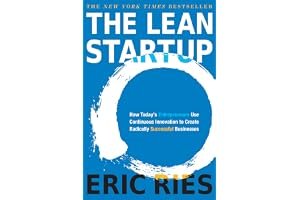 1
1