What separates restaurants that thrive for decades from those that close within a year? Restaurateur Danny Meyer argues the answer lies in what he calls “enlightened hospitality”—a philosophy that puts people first.
In Setting the Table, Meyer shares how this approach transformed him from a young salesman into the founder of Union Square Hospitality Group. This guide breaks down Meyer’s journey and the principles that made his restaurants successful in one of the world’s most competitive dining scenes. We’ll also examine how his philosophy translates into practical strategies for hiring, handling mistakes, and building lasting customer relationships.
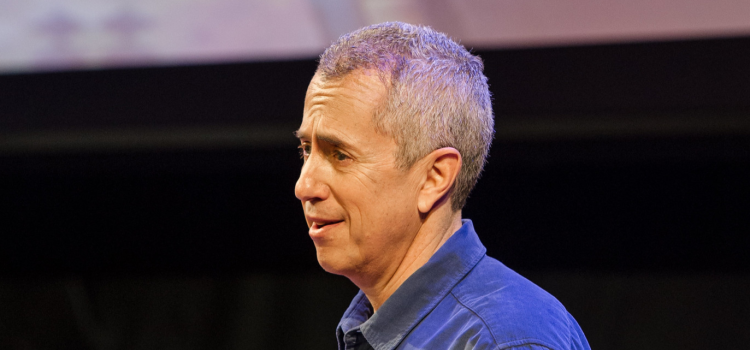
Image source: TEDx Manhattan, flicker.com (cropped)
Table of Contents
Setting the Table Book Overview
For restaurateur Danny Meyer, food does more than just satiate hunger; it fosters connections, creates a community, and elevates everyday experiences into memorable moments. In Setting the Table, Meyer recounts the growth of his restaurant business and shares the ingredients to his success. His guiding philosophy is what he calls enlightened hospitality: prioritizing people—both customers and employees—no matter what business you’re in.
Meyer is the founder and executive chairman of the Union Square Hospitality Group (USHG), the company behind some of New York’s best-known restaurants and bars, including Union Square Cafe, Gramercy Tavern, and Shake Shack. For his contributions to the restaurant industry, Meyer was recognized as one of TIME’s 100 Most Influential People of 2015 and has received a number of awards, including the James Beard Award for Outstanding Restaurateur. In addition to writing Setting the Table, he has authored and coauthored some recipe books.
This guide is divided into two parts. In Part 1: The Rise of a Restaurateur, we’ll cover Meyer’s roots and his journey to the top of the restaurant business. In Part 2: Lessons From Meyer, we’ll explore the driving principles behind his businesses’ long-term success in a notoriously challenging industry. Since the book was published in 2006, we’ll also include some updates on Meyer and his businesses and how the industry has changed over the years.
Part 1: The Rise of a Restaurateur
Meyer grew up in St. Louis, Missouri, the middle child of Morton “Morty” Meyer and Roxanne Meyer (née Harris). His business philosophy was shaped by two contrasting role models: His father and his grandfather.
His father Morty was a charismatic serial entrepreneur with a big appetite for risk, launching businesses like travel agencies and hotels in St. Louis and Italy. Morty’s business deals with an airline allowed him to fly Meyer to Italy frequently, where Meyer spent his time exploring and discovering off-the-beaten-track restaurants. At age 20, Meyer worked for Morty’s tour company in Rome, which gave him hands-on experience in the hospitality industry—he looked after customers, fine-tuning itineraries to include hidden restaurants and family-run trattorias, and he relished the chance to make both restaurant owners and clients happy.
Meyer writes that Morty’s business ventures were initially successful, but he lacked the discipline and business acumen to sustain them. The businesses’ failures, combined with Morty’s frequent absences due to business demands, strained family relationships. While Meyer admired his father’s entrepreneurial spirit and people skills, he also saw Morty as a cautionary tale about the dangers of taking reckless risks and growing businesses too quickly.
What his father lacked in consistency and reliability, Meyer found in his maternal grandfather, Irving Harris, a successful businessman and philanthropist. From Harris, Meyer learned the value of building something enduring, thinking big while maintaining focus, and giving back to society.
Meyer’s Early Career
After graduating from Trinity College in Connecticut, Meyer worked as a salesman. He was a top performer, but he didn’t find the job meaningful, and he reached a turning point when the company asked him to launch an office overseas. As he was considering his options—including going to law school—his relatives made him realize that he had always been passionate about food and encouraged him to open a restaurant.
In 1984, Meyer left his sales job and sold his stock in the company, the proceeds of which he would later use as capital. But before venturing out on his own, Meyer worked at a New York restaurant called Pesca, where he would meet his future wife Audrey Heffernan (they were married in 1988). At Pesca, he gained hands-on experience and insight into mistakes to avoid when running a restaurant. For example, the owners comped meals for friends with no record of the expense, which complicated their finances.
After an eight-month stint at Pesca, Meyer spent a few months in Italy and France. He immersed himself in restaurant culture—taking notes on everything from menus to aesthetics and ambience—and worked as a stagiaire (essentially an intern in the kitchen). On this trip, he realized his real talents lay not in cooking but in designing and managing the overall hospitality experience.
The Birth of Union Square Cafe
Back in New York, armed with stock proceeds from his previous job and additional funds borrowed from family, Meyer looked at numerous properties as a potential location for his restaurant. Instead of choosing a spot in an already fashionable neighborhood, he defied convention by setting up in Union Square, a somewhat seedy area. But Meyer saw its potential: There was a weekend farmers’ market, and a real estate expert predicted that companies would relocate to Union Square to escape the high costs of trendier neighborhoods.
Meyer believed his restaurant could play a part in the neighborhood’s transformation. With a long-term lease locked in at a low rent, he could offer both excellence and value—good meals at reasonable prices that could attract loyal customers. If the restaurant gained a following, it would then give other businesses the confidence to move to the area.
In 1985, Union Square Cafe opened its doors. It reflected Meyer’s notes from his European sojourn, the architects’ vision, and the character of the neighborhood. Though Meyer brought his dream to life, he and his team still faced many challenges. For example, he says that in the restaurant’s first week, they were overwhelmed by an unexpectedly big crowd, leading to mixed-up orders and delayed dishes. But such experiences taught them to work together and make sure the guests got the best service.
Union Square Cafe’s Breakthrough
Meyer says the restaurant’s big break came in 1986 with a 2-star review from The New York Times; business spiked 60% overnight. In 1989, a revamped menu earned Union Square Cafe three stars from The New York Times. The restaurant also landed at number 13 on the Zagat Survey’s list of New York’s top 40 favorite restaurants.
Expanding the Empire
Influenced by his father’s mistakes, Meyer says he was cautious about growing his business too rapidly, and he resisted opening a second restaurant until he had enough confidence and experience to replicate Union Square Cafe’s success. In 1994, he opened Gramercy Tavern at Gramercy Park.
Meyer recounts that Gramercy Tavern didn’t live up to the hype in the beginning. After some reflection, he decided to focus on his team’s strength: a well-established culture of excellent service, driven by Meyer’s business philosophy of enlightened hospitality. (We’ll go into more detail about this philosophy later in the guide.) Meyer wanted to translate this culture from Union Square Cafe’s casual atmosphere to a more refined yet warm and approachable dining destination. It worked: Gramercy Tavern earned three stars from The New York Times.
Meyer continued to expand strategically, making sure that every restaurant had his special brand of service. In 1998, he opened Eleven Madison Park, which offered a contemporary American fine-dining experience, and Tabla, a modern Indian restaurant. These were followed by barbecue restaurant Blue Smoke in 2002, Shake Shack in 2004, and The Modern (located at the Museum of Modern Art) in 2005. All of Meyer’s restaurants fall under his umbrella company, Union Square Hospitality Group (USHG).
Making a Difference
Perhaps no other USHG restaurant has had a more direct impact on the community than Shake Shack. The fast-casual restaurant chain started as a temporary kiosk in 2001. Meyer recounts that the Madison Square Park Conservancy asked USHG to operate a hotdog cart in Madison Square Park to support a restoration project. The cart was such a hit that it made a return for the next two summers, and in 2004, Meyer decided to turn it into a permanent fixture. He says Shake Shack is an example of how a business can thrive while making a positive contribution to the community: The rent goes directly to the city and the conservancy, which uses the funds to sustain the park and other neighborhood projects.
Receiving Recognition
In 2005, Meyer received the James Beard Award for Outstanding Restaurateur, validating his approach to the restaurant business: Regardless of concept—whether it was a fine-dining establishment like Eleven Madison Park or a hotdog-and-burger kiosk—every restaurant demonstrated the same level of culinary excellence, and offered knowledgeable service and gracious hospitality.
Part 2: Lessons From Meyer
In this section, we’ll break down the secret sauce behind the success of Meyer’s empire, which he formulated and refined through years of experience and learning.
Lesson 1: Practice Enlightened Hospitality
Meyer’s core business philosophy is enlightened hospitality, which means prioritizing people above all else and showing them that you’re on their side. He stresses the difference between service and hospitality: Service is transactional and refers to the way you deliver a product; hospitality is the way you make people feel as you deliver a product.
Enlightened hospitality is unique in that it upends the usual business model, where investors are at the top of the priority list or where the customer is king. Instead, Meyer says you should prioritize your stakeholders in this order: employees, customers, community, suppliers, and investors. Let’s discuss Meyer’s advice for being hospitable to each group.
1) Employees
Being hospitable to employees means providing them with a living wage, benefits, and an environment wherein they feel free to express themselves. Meyer also prefers to promote from within, so that employees know they have something to strive for.
Meyer adds that selecting leaders from internal candidates—rather than outsourcing new people—is also good for the business, as the existing staff already have a deep understanding of the company’s philosophy and systems.
2) Customers
Being hospitable to customers means providing them with an experience that gives them positive feelings. This means ensuring that their interactions with employees are pleasant and helpful and that their environments are comfortable and tailored to their needs. For example, the chairs at some of Meyer’s restaurants are upholstered to help absorb and minimize noise, so customers can have conversations without having to talk over the usual restaurant din.
Meyer and his staff also take customer feedback seriously, whether it’s direct (like through comment cards or dialogues) or indirect (observing whether customers are having a good time).
Meyer and his staff also treat each customer—whether a regular or a first-timer—with the same care and attention so they’re encouraged to keep coming back. Meyer aims for 25% to 40% of their patrons to be regulars who dine at his restaurants 6-12 times throughout the year.
3) Community
Being hospitable to the community means using your capabilities to establish community programs and encouraging employees to volunteer and work together to contribute to and improve the community. Meyer says this not only uplifts communities and brings about social change but is also good for business—customers and investors want to support companies that have their eyes on more than just the bottom line.
4) Suppliers
Being hospitable to suppliers means fostering mutually beneficial relationships. Instead of bargaining for the cheapest price, look at the big picture: Meyer says the suppliers with the best fit aren’t necessarily those who offer the lowest price but the ones who offer excellent quality, honor your relationship, and have values that are aligned with yours.
5) Investors
Being hospitable to investors means being honest with them about when they can see a return. Meyer argues that only after looking after the needs of the first four stakeholders can you generate a consistent profit for investors.
Lesson 2: Understand That Context Is Everything
Meyer argues that restaurants can’t be successful as generic concepts that can be dropped anywhere; instead, each establishment must be woven into the fabric of its community, embodying its spirit and serving its people. This helps the restaurant feel authentic and relevant to the people it serves, which contributes to greater success. Understanding context also helps businesses make wise decisions about expansion and ensures that new ventures enhance rather than dilute the brand.
Before opening any new restaurant, Meyer applies strict criteria: The opportunity must fit his goals, represent something groundbreaking, align with his company’s capacity for excellence, allow them to be leaders in their niche, benefit existing businesses, generate genuine excitement, serve a community he wants to work in, fit harmoniously with the location, and represent a wise investment. Meyer has turned down lucrative opportunities (like opening restaurants in Las Vegas casinos) because they didn’t align with his values or vision.
Lesson 3: Hire for Emotional Skills Over Technical Ability
Meyer safeguards the culture of enlightened hospitality by having a stringent hiring process. He says he gives greater weight to soft skills—like work ethic, empathy, and integrity—than to technical abilities. This is because technical skills can be taught relatively easily, but emotional intelligence and hospitality instincts are harder to develop. Meyer believes that people who have those natural abilities tend to create more authentic guest experiences as opposed to experiences that feel routine.
As part of the hiring process, prospective employees work in real situations for a few shifts so current staff can observe how the applicants interact with guests and colleagues. Meyer then asks for the team’s input when making hiring decisions—the entire team must agree that a candidate has the makings of a top performer, not just an average one, which reinforces that only excellence is acceptable. Hiring by consensus also strengthens team dynamics and lets team members know their opinions matter.
Lesson 4: Turn Mistakes Into Opportunities
Meyer says that while mistakes are inevitable, how you respond to them makes all the difference. He believes handling a mistake well can transform a bad experience into a good one and can even strengthen customer loyalty—customers remember and appreciate businesses that try to make things right. For example, when there was a mix-up in a guest’s reservation, the staff was extra attentive, giving the guest complimentary drinks and appetizers, and speeding up service.
Meyer teaches his staff the “Five As” for addressing mistakes: awareness (noticing the issue promptly), acknowledgment (taking accountability), apology (saying sorry sincerely), action (correcting the situation right away), and additional generosity (doing more than what’s required to leave a positive impression). He also empowers employees to find creative solutions to make amends, even if it means they don’t strictly follow policies.
Lesson 5: Maintain Excellence But Lead With Compassion
Meyer expects excellence from his staff, but he understands that performance can slip from time to time, with workers inevitably falling short of the ideal. To manage this, he continuously redirects them toward excellence without drama or humiliation: He holds people accountable when they’re not performing at the expected level, but he does it in a respectful way that encourages them to learn and grow.