
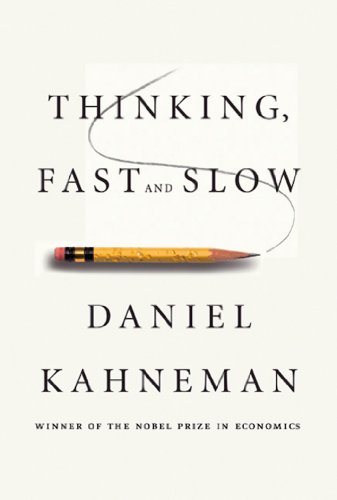
This article is an excerpt from the Shortform summary of "Thinking, Fast and Slow" by Daniel Kahneman. Shortform has the world's best summaries of books you should be reading.
Like this article? Sign up for a free trial here .
System 2 thinking is thinking that allocates attention to the effortful mental activities that demand it, including complex computations. It’s often associated with the subjective experience of agency, choice, and concentration.
System 2 can help you recognize when you need to slow down and think more carefully, especially during high-stakes decisions or challenging problems. We’ll cover readings from Thinking, Fast and Slow by Daniel Kahneman to explain how this mental system works, why it often stays dormant, and how to use it more effectively in your daily life.
Originally Published: November 4, 2019
Last Updated: December 13, 2025
System 2: Thinking Slow
System 2 thinking allocates your attention to the effortful mental activities that demand it. Some common examples of tasks that require System 2 thinking include maintaining your focus, making difficult choices, and performing complex calculations. This mental system also converts your intuitions into beliefs and your impulses into voluntary actions.
The author adds that everything you encounter will first go through the much faster System 1. System 2 only activates when there’s something you can’t resolve with faster, associative thinking. For instance, driving your car on an empty road is generally a System 1 task—it’s simple and familiar enough that you can probably do it without conscious thought. However, if you need to parallel park in a tight space, your mind will activate System 2 so you can make careful adjustments to avoid the cars around you.
| System 1 Can Also Back Up System 2 Kahneman describes System 2 as a backup system that kicks in when System 1 can’t resolve an issue. However, sometimes it’s the other way around, and you need System 1 to solve problems that System 2 gets stuck on. In A Mind For Numbers, Barbara Oakley describes “diffuse-mode” and “focus-mode” thinking—two methods of thought that resemble Kahneman’s two systems. In diffuse-mode thinking, which roughly corresponds to System 1, your thoughts traverse longer neural pathways between more diverse concepts. This may lead you to connect distantly related ideas in ways that you’d have never thought of while using active focus-mode thinking (similar to Kahneman’s System 2). That’s why answers sometimes come to you in a sudden flash of insight after you’ve stopped thinking about a problem. This also means that, when you’re stuck on a difficult issue, sometimes the best thing to do is take a break and let your mind relax—let System 1 take over for a while and see what it comes up with. |
System 2 Is Lazy
Kahenman writes that your brain defaults to System 1 not only because it’s faster, but also because it uses less mental energy, and your brain instinctively tries to reserve your mental resources however it can. In simpler terms, System 2 is lazy, so it wants to let System 1 handle as much of the thinking as possible.
As a result, you often won’t question the impulses and intuitions that System 1 generates, as rethinking your System 1’s decisions would use energy your brain would rather not expend. This problem gets worse when you’re tired or stressed—your limited mental resources are already strained, which makes you even less able to devote conscious effort to solving problems and making decisions.
(Shortform note: To compound the problem of limited mental resources, modern life practically guarantees that you’re always mentally exhausted. In Willpower Doesn’t Work, organizational psychologist Benjamin Hardy explains how you’re barraged by decisions and temptations every single day. Each decision drains your mental reserves, leaving you less able to make good decisions—and more likely to default to whatever’s easiest—as the day goes on.)
———End of Preview———
Like what you just read? Read the rest of the world's best summary of "Thinking, Fast and Slow" at Shortform . Learn the book's critical concepts in 20 minutes or less .
Here's what you'll find in our full Thinking, Fast and Slow summary :
- Why we get easily fooled when we're stressed and preoccupied
- Why we tend to overestimate the likelihood of good things happening (like the lottery)
- How to protect yourself from making bad decisions and from scam artists