Pursue Your Goals With Intentionality: 3 Recommendations

Pursue Your Goals With Intentionality: 3 Recommendations

Do you have big dreams for your future? What are Brad Stulberg and Steve Magness’s recommendations for pursuing your goals? In Peak Performance, Brad Stulberg and Steve Magness recommend that you intentionally structure your day-to-day life around your goals. They offer three concrete recommendations for intentionally pursuing your goals. Discover how to pursue your goals with a laser-focused mindset.

Peak Performance Quotes on Stress, Rest, and Purpose

Peak Performance Quotes on Stress, Rest, and Purpose

What are the best Peak Performance quotes? How does the combination of stress and rest enhance optimal performance? In Peak Performance, human performance experts Brad Stulberg and Steve Magness highlight optimal strategies for subjecting your body to stress and recuperating afterward. By doing so, you’re refreshing your body so you can perform at your best when something important comes up. Below we’ve listed a few of the best Peak Performance quotes that represent the authors’ main ideas.

Personal Kanban: Book Overview and Productivity Takeaways

Personal Kanban: Book Overview and Productivity Takeaways

What’s Personal Kanban about? How can you use kanban boards to organize your life? In Personal Kanban, Agile productivity experts Jim Benson and Tonianne DeMaria teach you how to use kanban boards—a management method that keeps automakers efficient and software developers productive—to organize your life. Read below for a brief Personal Kanban book overview.

What Is the Kanban System? The Best Way to Stay Productive

What Is the Kanban System? The Best Way to Stay Productive

What is the kanban system? How does having your own personal kanban improve productivity? Before you start developing your own personal kanban, it’s helpful to understand the system’s background. In Personal Kanban, Jim Benson and Tonianne DeMaria explore what kanban is, its origins and benefits, and the difference between traditional and personal kanban. Let’s break down the basics of the kanban system below.

Choose Your Own Path: Advice From Henry David Thoreau

A woman choosing her own path at a crossroads sign during a sunset.

What choices are the right ones for you? Do you tend to follow your intuition and live by your convictions? Henry David Thoreau made an interesting choice when he went to live in the woods. Perhaps even more interesting was his decision to leave the woods two years later. By looking at his example, you can draw inspiration to make your own choices. Read more to learn how Thoreau carved out his own life and how you can choose your own path, as well.

How to Create a Kanban Board: 6 Steps to an Organized Life

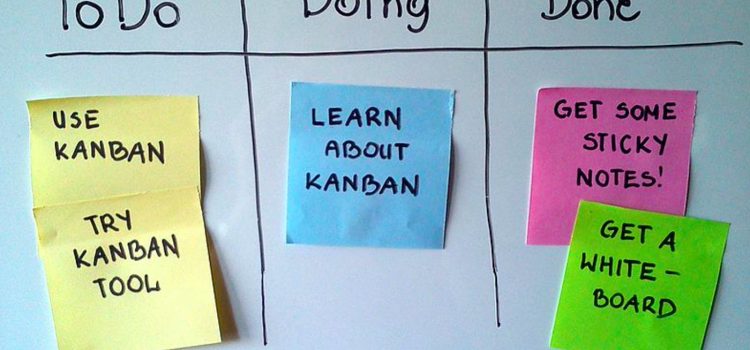
A kanban board with sticky notes.

Do you know how to create a kanban board? How do you know what tasks are the most important to work on? In Personal Kanban, Jim Benson and Tonianne DeMaria teach you the basics of personal kanban so you can create one yourself. They lay out the steps to get started on your personal organization journey. Continue reading to learn how to develop your own kanban board.

How to Prioritize Workload: Carefully Choose Your Tasks

How to Prioritize Workload: Carefully Choose Your Tasks

Are you overwhelmed with the amount of tasks you have to complete? How do you prioritize all your work? In Personal Kanban, Jim Benson and Tonianne DeMaria say that a kanban board will help you complete your tasks. To do so, you need to start prioritizing the important to-do items over the less important ones. Keep reading to learn how to prioritize workload based on a “Ready, Doing, and Done” table.

8 Bias Exercises: Clear Away the Clouds Between You & Reality

8 Bias Exercises: Clear Away the Clouds Between You & Reality

Do you know when you’re objectifying people? Are you susceptible to believing lies? Are you a hedgehog or a fox? Everyone has biases, but you can come out on top by recognizing what biases you have and taking steps to minimize their negative impact on the way you perceive reality. We put together eight bias exercises based on works by Malcolm Gladwell, Philip Tetlock, Lao Tzu, and others. Let’s dive into these exercises, which you can complete individually or with a group.

Importance and Urgency: How to Tell the Difference

Importance and Urgency: How to Tell the Difference

What’s the difference between importance and urgency? Is it better to prioritize important tasks over urgent ones? In Personal Kanban, Jim Benson and Tonianne DeMaria advise prioritizing important tasks that inspire continuous improvement. While these tasks may not be urgent, they’ll benefit you in the long run. Learn how to tell the difference between what’s important and what’s urgent.