How to Gain Respect: Body Language Is Key

How to Gain Respect: Body Language Is Key
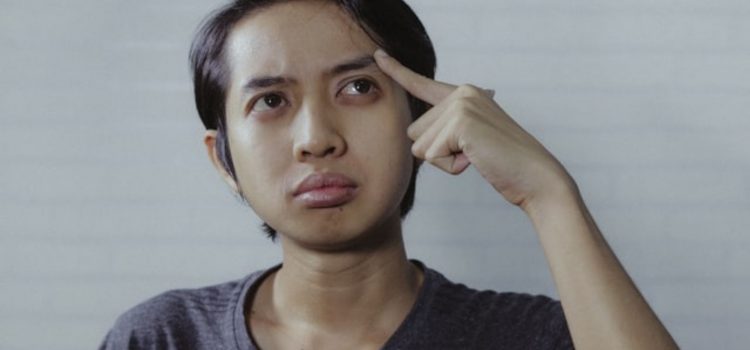
Do you wish that people valued and respected you more? What can you do to make that happen? Jordan Peterson argues that others will treat you with more respect if you simply stand up straight. There’s a deeply-ingrained biological reason for this. Understanding the science behind it and leveraging it to your advantage can cause you to behave differently. As a result, people will treat you differently. Read more to learn how to gain respect.

A Look at the Future of VR (Outside of Gaming)

A Look at the Future of VR (Outside of Gaming)

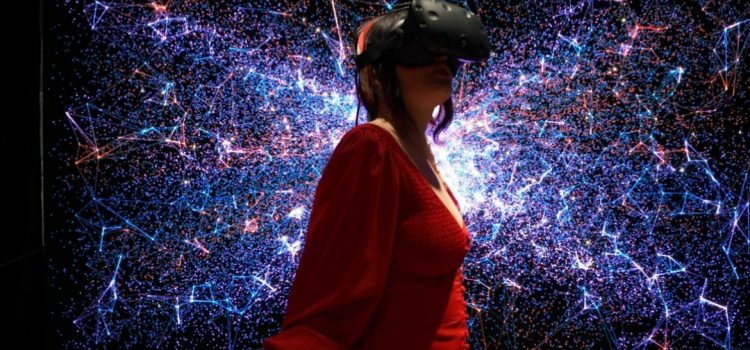
How can virtual reality be useful outside of gaming? Is VR the future? Will the virtual world sever interpersonal relationships? What kind of effect will VR have on mental health? When most people think of virtual reality, they think of an expensive gaming headset with mediocre graphics and limited games. However, VR is for a lot more than just video games. VR technology is becoming more prominent in healthcare, education, and even in the workplace.  Learn why VR may just be the future of technology.

Fake Memories: Why and How Do They Occur?

Fake Memories: Why and How Do They Occur?

Do you ever remember an event differently than someone else who was there? How do fake memories form in the brain? A fake memory is one that is remembered differently from how it happened or one in which details of a thing or event are wrong. But, don’t worry—everybody has fake memories. It’s part of how the human brain functions. Here’s why your memory may be playing tricks on you.

Perceiving Reality: We All Use a Distorted Lens

Perceiving Reality: We All Use a Distorted Lens

Are you perceiving reality accurately, or do you have blind spots in your perception? Does everybody perceive the world in the same way? According to Harvard professor and social psychologist Daniel Gilbert, we all are perceiving reality through a distorted lens. Gilbert says that your brain fabricates your present reality by filling in visual and aural gaps in your perception with assumed information—and by interpreting present events in a way that’s advantageous to you. Here are the two fabrications that most people make about reality.

How to Judge a Personality Based on Little Information

How to Judge a Personality Based on Little Information

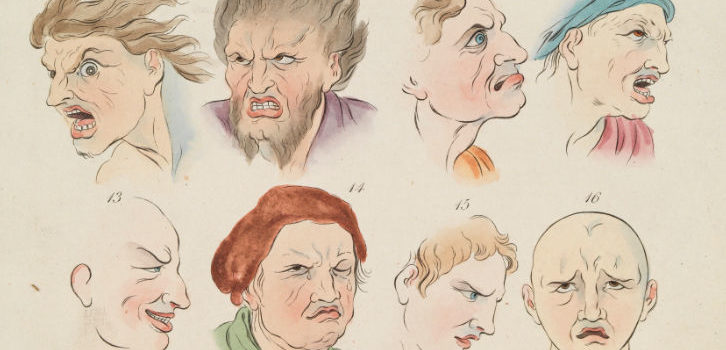
What’s the most effective way to size up someone’s personality? How much information do we really need to accurately size up a person’s qualities? When it comes to reading personalities, we really don’t need much information. In fact, too much information can obscure the bigger picture with irrelevant details. Taking a “thin slice”—an extremely small segment of information about a person’s life—can lead to very accurate judgments about their personality. Here’s why “thin-slicing” is the best way to judge a personality.

The Role of the Unconscious in Insight Problem-Solving

The Role of the Unconscious in Insight Problem-Solving

What’s an “insight problem”? How do you solve such a problem? An insight problem is a problem that requires a fundamental shift in perspective in order to arrive at the solution. Oftentimes, the solution to an insight problem comes out seemingly out of nowhere in an “Aha! moment” fashion. In 1931, psychologist Norman Maier investigated how we arrive at solutions to insight problems in his famous Two-String Problem experiment. Here’s what he found.

Personal Preferences: Why Do We Like What We Like?

Personal Preferences: Why Do We Like What We Like?

Why do we like what we like? How do we determine our own preferences? Are our judgments about our own likes and dislikes always accurate? We’re good at making fast judgments about what we do and don’t like. But, surprisingly, sometimes these snap judgments about our own preferences can be inaccurate.  Here’s why your judgments about what you do and don’t like may not reflect your actual preferences.

The Mere Exposure Effect: Why We Like Familiarity

The Mere Exposure Effect: Why We Like Familiarity

What is the mere exposure effect? Why do we like things that are familiar and dislike what’s unfamiliar? The mere exposure effect occurs when we start to like things just because we’ve been exposed to them before. It applies to everything from the people we interact with to that song that keeps playing on the radio. Here’s why we like the familiar and try to stay from the unfamiliar.

The Effect of Ventromedial Prefrontal Cortex Damage

The Effect of Ventromedial Prefrontal Cortex Damage

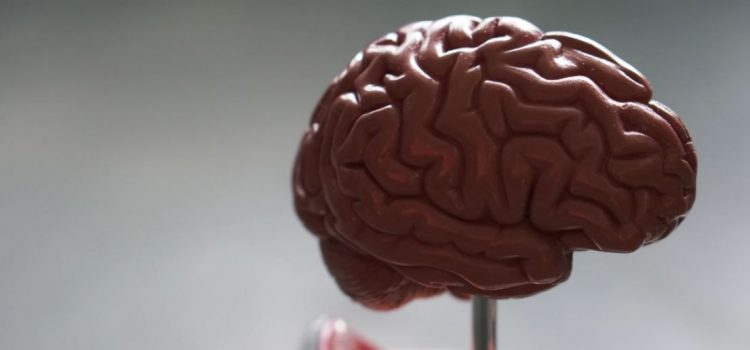
What is the function of the ventromedial prefrontal cortex (vmPFC)? What happens when the vmPFC brain region is damaged? The ventromedial prefrontal cortex (vmPFC) is an area of the brain which has been extensively studied with regard to value computation. Observing patients with ventromedial prefrontal cortex damage has yielded some intriguing insights into the way the brain makes decisions. Learn about vmPFC’s role in decision-making, and what happens when it’s damaged.

Understanding the Priming Effect (Psychology)

Understanding the Priming Effect (Psychology)

What is priming? What are the different kinds of priming? In psychology, the priming effect occurs when exposure to a previous stimulus influences one’s reaction to the subsequent stimulus. Priming has been extensively researched in studies of a wide range of social and psychological phenomena, including memory, motivation, stereotyping, and prejudice. Learn about the psychology of priming.