Monsters: A Fan’s Dilemma by Claire Dederer (Book Overview)

The silhouette of a woman using a laptop at a desk

Can you love art made by terrible people? Claire Dederer’s Monsters: A Fan’s Dilemma tackles this question head-on, exploring why we feel conflicted when artists we admire turn out to be abusers, bigots, or otherwise morally compromised. This guide walks through Dederer’s framework: the three most common types of monstrous artists (abusive men, rebellious women, and bigots), why these figures trouble us so deeply, and three possible responses to their work. We’ll also explore Dederer’s three core lessons about human complexity, drawn from her examination of figures like Picasso, Doris Lessing, Richard Wagner, and J.K. Rowling.

The Immortal Life of Henrietta Lacks: 20 Discussion Questions

Three men and two women in a book club discussion with book shelves in the background

We’ve put together discussion questions for The Immortal Life of Henrietta Lacks by Rebecca Skloot that you can use with a book club or a class at school. We include sample answers, book club activities that will help you get more out of what you’ve read, and recommendations for more reading if you like this book. Book Synopsis The Immortal Life of Henrietta Lacks tells the true story of Henrietta Lacks, a poor African American tobacco farmer who died of cervical cancer in 1951. Before her death, doctors at Johns Hopkins Hospital took samples of her cancer cells without her

Bad Blood: 23 Book Club Discussion Questions & Activities

Books in stacks on a table and placed on bookshelves in a bookstore

We’ve put together discussion questions for Bad Blood by John Carreyrou that you can use with a book club, a class at school, or a team at work. We include sample answers, book club activities that will help you get more out of what you’ve read, and recommendations for more reading if you like this book. Book Synopsis Bad Blood tells the true story of Theranos, a Silicon Valley startup founded by Stanford dropout Elizabeth Holmes, who claimed to have revolutionized blood testing. Holmes promised that her company’s proprietary technology could run hundreds of diagnostic tests using just a few

Moral Ambition by Rutger Bregman: Book Overview & Takeaways

A woman doing volunteer work by cleaning up trash

Tired of feeling like your career doesn’t matter? You’re not alone. In Moral Ambition, Rutger Bregman explains that 25% of workers in wealthy countries believe their jobs are socially meaningless. At the same time, the world’s biggest problems, from climate change to global poverty, need talented people working on solutions. His answer is to restructure your career around creating a measurable impact on humanity’s greatest challenges. To understand Bregman’s critique of current approaches and his proposed alternative, we’ll examine his argument through four questions: What is moral ambition? Why does it matter? Why do both traditional activism and effective altruism

The 3 Ds of Health Insurance, Explained by Jay Feinman

A man in a suit crossing his arms in the shape of an X to signify he is denying something

What are the three Ds of insurance? What do insurance companies gain by slowing down the payment process? How are these tactics exploitative? In his book Delay, Deny, Defend, legal scholar and insurance expert Jay Feinman argues that major US insurance companies are profit-seeking entities that systematically avoid paying legitimate claims. He explains the tactics they use, and how and why they often work. Continue reading to learn about the three Ds insurance strategy.

Delay, Deny, Defend by Jay Feinman—Book Overview

A stamp on a wooden desk that has the word "denied" on it

Have you had a valid health insurance claim denied? What can be done to restore the protection that insurance is meant to provide? In the book Delay, Deny, Defend, Jay Feinman argues that major US insurance companies have transformed from trusted protectors to profit-seeking entities that systematically avoid paying legitimate claims. He says major insurers abandoned their traditional protective role to maximize profits at the expense of their policyholders.  Continue reading below for an overview of this eye-opening book.

How the Lazy Stereotype Hurts Marginalized People

A hard working employee defeating the lazy stereotype in a store

Are you constantly caught in a cycle of overworking to prove your worth? Have you noticed that some people seem to carry an even heavier burden of expectations than others? Devon Price’s eye-opening book, Laziness Does Not Exist, explores how the lazy stereotype disproportionately impacts marginalized communities. His research reveals how people facing discrimination often work twice as hard just to receive the same recognition as their peers. Find out how breaking free from these harmful expectations could transform your life.

With AI, Truth Isn’t a Priority: Yuval Noah Harari Explains Why

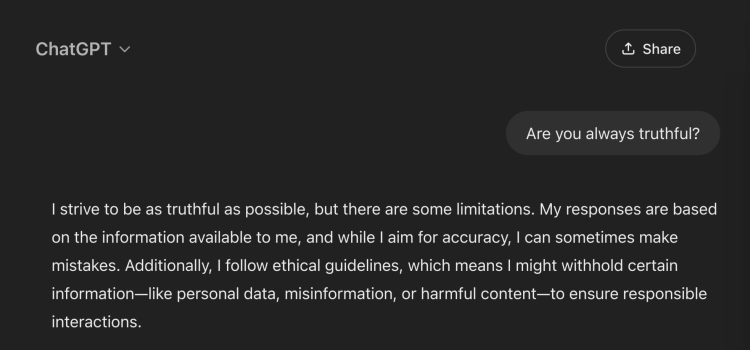
A ChatGPT conversation about its truthfulness illustrates the issue of AI truth

What happens when AI systems get better at mimicking human emotions and creating emotional connections? How can we ensure that, with AI, truth remains a priority? In his book Nexus, Yuval Noah Harari reveals how AI’s growing ability to generate human-like content poses unprecedented challenges to our relationship with truth. AI systems are becoming increasingly skilled at creating emotional connections while potentially compromising accuracy and authenticity. Keep reading to explore why the quest for truth in AI systems matters more than ever, and what we can do about it.

AI and Human Agency: A Delicate Balance (Harari)

An AI robot and a human child looking at each other illustrates the balance of AI and human agency

What happens when artificial intelligence becomes better than humans at understanding our social systems and stories? How can we maintain control over AI as it grows more powerful? In his book Nexus, Yuval Noah Harari explores the complex relationship between AI and human agency. He warns that AI systems are advancing rapidly, potentially surpassing our ability to comprehend and shape the social structures that organize our world. Keep reading to discover how we can maintain human agency while harnessing the benefits of AI technology.

The Ethical Use of AI Can Protect Us From AI’s Dangers (Harari)

A woman using a desktop computer at a desk in front of a window illustrates the ethical use of AI

How does artificial intelligence shape the information we consume? What steps can we take to ensure AI becomes a force for good rather than harm? In his book Nexus, Yuval Noah Harari explores the ethical use of AI and its potential impact on humanity. The real danger, he contends, isn’t in the technology itself but in how humans choose to use it, particularly when decisions are based on unreliable information or manipulation. Keep reading to explore how we can harness this powerful technology for humanity’s benefit while avoiding its potential pitfalls.