How to Recover From Trauma: Lessons From the Holocaust

woman made of jigsaw puzzle pieces being put together illustrates how to recover from trauma with lessons from the Holocaust

Are you trying to recover from trauma? What might you learn from a Holocaust victim? At the age of sixteen, Edith Eva Eger was sent to Auschwitz. Her transformation from a Holocaust survivor to a respected psychologist exemplifies the resilience and strength inherent in human nature, along with the profound impact of self-acceptance and conscious choices. Keep reading to learn how to recover from trauma with Eger’s lessons from the Holocaust.

Who Is Bobby Pappas? (The Greatest Beer Run Ever)

an underground communications bunker during the Vietnam War where Bobby Pappas might have worked (The Greatest Beer Run Ever)

Who’s Bobby Pappas? What was his condition when Chick Donohue found him in Vietnam? When John “Chick” Donohue made an epic beer run to Vietnam during the war, he planned to drop in on his pal Bobby Pappas. He wanted to bring him news and encouragement from home. But, first, Chick had to make sure Bobby was still alive. Keep reading for an overview of Bobby Pappas (The Greatest Beer Run Ever).

Surviving the Holocaust: How to Deal With Survivor’s Guilt

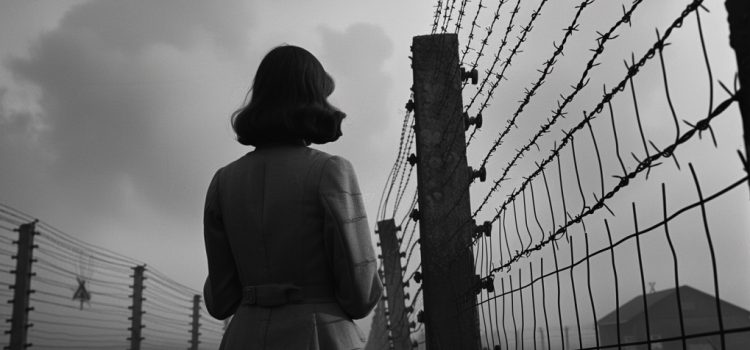
a woman by a tall barbed wire fence in the 1940s illustrates surviving the Holocaust and how to deal with survivor’s guilt

Do you feel guilty for surviving a traumatic experience? What might you learn about survivor’s guilt from a victim of the Holocaust? In her memoir, Dr. Edith Eva Eger delves into the arduous process of reconstructing her existence following the genocide of World War II. She highlights the obstacles that survivors encountered and the routes they took to achieve meaning and purpose. Continue reading to learn how to deal with survivor’s guilt by understanding what surviving the Holocaust means to Eger.

Edith Eger: Auschwitz on the Outside—Freedom on the Inside

a sketch of a young woman looking up with birds flying overhead illustrates psychological freedom in Auschwitz

How did Edith Eger survive the Holocaust? How did she create a tolerable existence amid unthinkable horrors? According to Edith Eger, Auschwitz was a prison only for her body. Incredibly, she found ways to maintain psychological freedom while she faced cruelty, dehumanization, the loss of loved ones, and very little hope. Read more to discover how this remarkable woman persevered through one of history’s darkest chapters.

Edith Eva Eger’s The Choice: Embrace the Possible (Overview)

a drawing of a woman sitting by a window and reading a book

How does someone recover from an experience like the Holocaust? What inspiration can we draw from a life rebuilt? In her memoir, Dr. Edith Eva Eger provides a profoundly touching and insightful account of her life during the Holocaust. She talks about her time at Auschwitz and her efforts to reconstruct her existence after the war. Keep reading for an overview of Edith Eva Eger’s The Choice: Embrace the Possible.

Verbal Judo: The Gentle Art of Persuasion (Overview)

A young man reads a book in a cozy library or bookshop with tall bookshelves and a bright window

What if you applied martial arts principles to communication? What difference could it make in your ability to make your message heard? George Thompson argues that Verbal Judo is the most effective way to resolve conflicts and respond to confrontations. He explains each of his method’s principles and how to apply them, even under pressure. Continue reading for an overview of Verbal Judo: The Gentle Art of Persuasion by George Thompson.

Verbal Judo for Law Enforcement: Using Words, Not Force

A police officer talks calmly and compassionately with a troubled man, illustrating Verbal Judo for law enforcement

How is Verbal Judo applied to law enforcement? What happens when police officers practice empathy? Law enforcement trainer and English professor George Thompson wrote Verbal Judo to explain how to handle any tense situation calmly. He argues that, in a high-pressure situation, it’s most effective to act as if you’re practicing judo. Keep reading to learn about Verbal Judo for law enforcement.

The Importance of Empathy in Communication (+ Tips)

Two men talking pleasantly in a cafe illustrate the importance of empathy in communication

What difference does empathy make in communication? How can it help you de-escalate tense moments? According to law enforcement trainer and English professor George Thompson, empathy is a powerful tool when you need to introduce calm into a high-stress situation. He presents empathy as a fundamental tool in the Verbal Judo toolbox. Continue reading to learn about the importance of empathy in communication and how to use it to read people.

What Is Mushin? Cultivating Calm in the Middle of the Storm

A calm man with his eyes closed sits in a chair, practicing mushin in the middle of chaos

What is mushin? Is it the same as mindfulness? How can it help you remain calm and even de-escalate a high-stress situation? A core skill in Verbal Judo is cultivating a mindset called mushin (wushin in Chinese), which practitioners of many Japanese and Chinese martial arts aim to achieve. In his book Verbal Judo, George Thompson explains mushin and how you can cultivate it and use it to great advantage. Read more to learn what mushin is and how to apply it.