The Stickiness Factor: Make Your Ideas Catch On and Spread

The Stickiness Factor: Make Your Ideas Catch On and Spread

What is the “Stickiness Factor”? Where does it come from? Why is it important in business, sales, and marketing? The Stickiness Factor is the idea that you can change the presentation of a message to make it more contagious and stickier (having a more lasting impact). This idea was popularized in Malcolm Gladwell’s book The Tipping Point. We’ll cover examples of products and messages that have the stickiness factor and look at why the message needs to be sticky for businesses to succeed.

What Is Confirmation Bias? Definition + Examples

What Is Confirmation Bias? Definition + Examples

What is confirmation bias? What is the confirmation bias definition, and what are some clear confirmation bias examples? Confirmation bias is the tendency to only see the evidence that confirms the beliefs you already hold. We select evidence on the basis of preconceived frameworks, biases, or hypotheses. We’ll cover how confirmation bias occurs and why it means that “experts” often aren’t experts at all.

How We Rely on Transactive Memory in Relationships and Work

How We Rely on Transactive Memory in Relationships and Work

What is transactive memory? How does it work, and how does it depend on your relationships? Transactive memory is the process of relying on the people we have close relationships with to hold information for us. We often depend on transactive memory becomes our own individual memories have limited space. We’ll cover how the transactive memory system works and why it makes small groups and companies functions better.

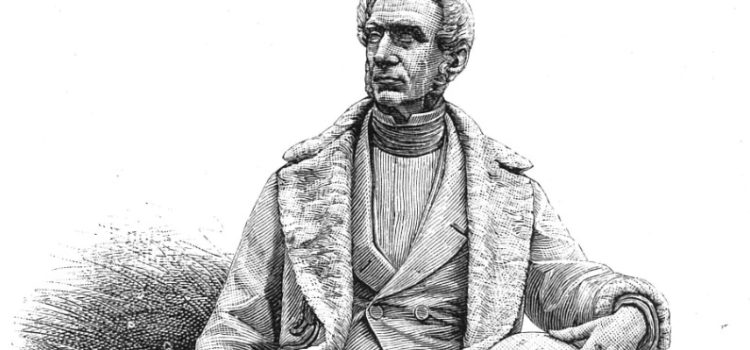
Adolphe Quetelet: Big Mistakes of a Brilliant Statistician

Adolphe Quetelet: Big Mistakes of a Brilliant Statistician

Who was Adolphe Quetelet? Why is he famous, and what was one of his biggest scientific mistakes? Adolphe Quetelet (Quételet) was a Belgian mathematician who developed the idea of the “average human” (l’homme moyen) through the use of “means”—golden averages that represented the ideal human form. He lived from 1796 to 1874. We’ll cover Adolphe Quetelet’s mistake in assuming that all phenomena can be charted on a bell curve and we’ll look at how we understand the world differently today.

Mediocristan: The Predictable, Boring World (Black Swan)

Mediocristan: The Predictable, Boring World (Black Swan)

What is Mediocristan? Where is it? Where does the word come from? What elements of our lives fall under the purview of Mediocristan? Mediocristan is a term coined by Nassim Nicholas Taleb to explain the facets of our experience that are nonscalable. Mediocristan’s law is: Given a large-enough sample size, no individual event will have a significant effect on the total. The term was popularized by Taleb’s book The Black Swan. We’ll cover what Mediocristan is, how it differs from Extremistan, and what kinds of events, characteristics, and professions come from the land of Mediocristan.

Power of Context–Your Idea Won’t Spread in the Wrong Setting

Power of Context–Your Idea Won’t Spread in the Wrong Setting

What is the “Power of Context”? Where does it come from? Why is it important in business, sales, and marketing? The Power of Context is the idea that the environment in which the message or idea is delivered can have a huge impact on whether enough people adopt and spread it to create an epidemic. This idea was popularized in Malcolm Gladwell’s book The Tipping Point. We’ll cover examples of the power of context and look at why the context of a message can make all the difference.

Rule of 150: Why the Most Effective Groups Are Small

Rule of 150: Why the Most Effective Groups Are Small

What is the Rule of 150? What does it say about how we function and cooperate in large and small groups? The Rule of 150 is a concept in sociology that says that social structures function best at or under 150 people. Groups bigger than 150 people tend to break into smaller groups in order to function. We’ll look at an example of the Rule of 150 to see how it functions in business organizations.

The Bell Curve: Does It Actually Explain the Real World?

The Bell Curve: Does It Actually Explain the Real World?

Does the bell curve accurately describe the world? When does the bell curve work, and when does it fail? How can we make better predictions and more accurately describe the phenomena of real life? We’ll cover the situations in which the normal bell curve distribution is a good predictor of the real world, the situations where it’s not, and better ways to represent randomness in an uncertain world.