This article is an excerpt from the Shortform book guide to "Emotional Intelligence 2.0" by Travis Bradberry and Jean Greaves. Shortform has the world's best summaries and analyses of books you should be reading.
Like this article? Sign up for a free trial here .
In Emotional Intelligence 2.0, Bradberry and Greaves argue that emotional intelligence—your ability to recognize and manage emotions—accounts for 58% of job performance and predicts success better than IQ or technical skills.
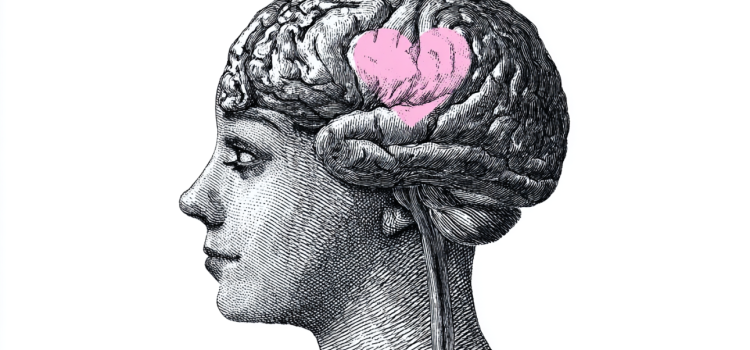
Understanding the importance of emotional intelligence starts with understanding your brain. When you experience something, that information passes through your limbic system before reaching the frontal lobe, where logical thinking happens. This wiring means you feel before you think, making emotional awareness essential rather than optional for navigating workplace dynamics, building relationships, and making sound decisions.
The Importance of EQ
Bradberry and Greaves make the case that emotional intelligence is the most important predictor of success in your personal and professional life. EQ isn’t just nice to have—it’s a basic ability that shapes your every interaction and each decision you make. The authors draw on two types of evidence to make their case: neuroscience research that reveals how your brain is wired to process social information and workplace research that shows what happens when people develop strong EQ skills. In this section, we’ll take a closer look at each of these sets of evidence.
Your Brain Processes Emotions Before Rational Thought
The foundation of Bradberry and Greaves’s argument that emotional intelligence is a vital skill lies in research showing how your brain is wired. When you experience something—seeing a friend’s facial expression, listening to your neighbor recount a school board meeting, or hearing a news story on the radio—that information travels through your body as electrical signals on its way to your brain. But these signals don’t go straight to the part of your brain that handles rational thinking. Instead, they first have to pass through the limbic system, the brain’s emotional processing center. Only after they go through the limbic system can they reach the frontal lobe, where logical thought happens.
This means that every experience you have gets filtered through your emotions before your rational brain has a chance to weigh in, and you literally feel before you think. When your partner criticizes the mess in the kitchen, your limbic system processes the criticism as a threat and triggers defensiveness before your frontal lobe can rationally assess the situation. When someone cuts you off in traffic, you feel angry before you can logically consider that they might be rushing to an emergency or running late for an important appointment. This is why you sometimes experience what Bradberry and Greaves call “emotional hijacking,” when your emotional response bypasses your rational brain and completely takes over your behavior.
(Shortform note: The idea of emotional hijacking, popularized by Daniel Goleman’s Emotional Intelligence, is widely used to explain intense emotional reactions, but research suggests the mechanics may be more complex than originally thought. While early studies portrayed the amygdala as a “fear center” that can bypass rational brain regions, newer research shows it helps process many types of experiences, not just threatening ones, and works with rather than against the brain’s reasoning centers. The amygdala helps us detect what matters to us and respond accordingly. So when we feel intense emotions, it’s not because one part of our brain has “hijacked” another but because multiple regions work together to generate a response.)
Crucially, Bradberry and Greaves note that you can’t avoid having emotional reactions, nor should you try. Your brain isn’t wired for purely rational thinking: It’s designed to process emotions first because, from an evolutionary perspective, the ability to quickly recognize threats and opportunities confers survival advantages. So, you will always feel before you think, even in situations where you want to respond rationally. Because you can’t turn off your emotions or bypass this neural pathway, your only effective option is to develop skills for recognizing and managing emotions, rather than ignoring or suppressing them.
| The Brain’s Emotional Processing: An Evolving Understanding Bradberry and Greaves’s explanation that sensory signals pass through the limbic system before reaching the frontal lobe reflects a model of brain evolution that was widely accepted when neuroscience emerged in the mid-20th century. This model, the “triune brain,” proposed that the human brain evolved in three layers: a primitive “reptilian” brain for survival instincts, an emotional “limbic system” that emerged in early mammals, and finally a neocortex unique to higher primates. Neuroscientist Paul MacLean introduced this theory in the 1960s based on comparative anatomy studies, which showed that some brain structures (like the brainstem) appeared similar across species while others (like the forebrain) looked dramatically different. But starting in the 1970s, advances in molecular genetics enabled scientists to trace the development of brain cells across species. This research revealed that the brain didn’t really evolve by adding new layers on top of unchanged older structures. Instead, all vertebrate brains—from fish to reptiles to mammals—may share a common developmental plan. What differs across species isn’t the basic structures, but their proportions, which depend on how long each developmental stage lasts during embryonic development. For example, a mouse has a cortex, but it’s proportionally smaller than a human’s, meaning the human neocortex isn’t a new structure but rather an expanded version of what exists in other mammals. Modern neuroscience has also found that emotion and cognition are interdependent functions working at the same time through interconnected brain networks. During emotional responses, the amygdala and other limbic structures activate, but so do cortical areas and the brainstem—there’s no pathway where information travels through one region “before” another. While some responses are faster and more automatic than others, this reflects differences in the relative activation of interconnected networks, rather than a strict sequence from emotion to reason. Despite this complexity, the authors’ core insight remains sound: Emotions do influence our decisions in ways we can’t simply override through willpower. |
EQ Predicts Success Better Than IQ
How the human brain is wired explains why emotional intelligence has a powerful impact on your ability to succeed at work. Bradberry and Greaves explain that because emotions shape everything we do, people who can recognize and manage emotions outperform those who are less skilled at EQ. In fact, research suggests that EQ accounts for 58% of people’s job performance across all types of roles; that people with high EQ earn an average of $29,000 more per year than those with lower EQ; and that 90% of top performers have high levels of emotional intelligence. Bradberry and Greaves contend that these findings aren’t coincidences: They’re the predictable results of how emotional intelligence operates in practice.
High EQ enables you to navigate the complex social dynamics of any workplace. For example, when you can read a room and sense that the idea you’re proposing isn’t landing well, you can adjust your approach. When you can resolve conflicts among colleagues constructively, you build trust instead of burning bridges. In contrast, low EQ creates problems that undermine your effectiveness at work. If you don’t recognize when your emotions are clouding your judgment, you’ll make decisions based on temporary feelings rather than sound reasoning. If you can’t read others’ emotional states, you’ll miss crucial social cues. If you can’t manage relationships skillfully, then conflicts escalate, trust erodes, and collaboration becomes impossible.
| Does ‘Emotional Intelligence’ Measure Anything New? The authors’ explanation of EQ’s impact on success draws on peer-reviewed research. But scientists have since debated whether “emotional intelligence” is a distinct trait or if it overlaps with other psychological qualities, like Conscientiousness (being organized and hardworking), Extraversion (being outgoing and sociable), and Emotional Stability (staying calm under stress). Decades of research show that these traits reliably predict job performance. When researchers examined the type of EQ measure Bradberry and Greaves use, they found that what these tests measure overlaps with standard personality traits. When they accounted for this overlap, the connection between EQ scores and job performance disappeared. This matters for several reasons. First, personality traits tend to be relatively stable in adults, which raises questions about whether EQ can really be developed through practice. Second, treating overlapping characteristics as if they’re distinct undermines scientific progress. When researchers study EQ without recognizing that it overlaps heavily with Conscientiousness and Emotional Stability, studies claiming to reveal new insights about “emotional intelligence” may actually be rediscovering things psychologists already knew about personality—just under a different name. This makes it harder for scientists to develop a clear understanding of what actually predicts the ability to navigate complex social dynamics and why. |
The difference in performance between people with high and low emotional intelligence suggests that EQ matters more than IQ or your level of technical expertise for most forms of success at work. Bradberry and Greaves note that even brilliant, highly knowledgeable people will struggle professionally if they constantly alienate their colleagues, make impulsive decisions under stress, and struggle to navigate workplace dynamics. Conversely, strong emotional intelligence enables you to build alliances, earn trust, and create opportunities that raw intellect alone cannot.
(Shortform note: The relationship between emotional intelligence and career success may be more dependent on context than suggested by the statistics Bradberry and Greaves cite. Researchers have warned that the idea that EQ matters more than IQ doesn’t apply across the board: It’s most relevant in situations where intellectual ability matters less than people skills. The authors’ statistics come from studies of senior executives, and by the time someone reaches such high-level positions, they’ve already been filtered for IQ, so EQ becomes what sets the best apart from those who are merely “good.” Earlier in your career, when you’re still building expertise, your cognitive skills and job knowledge may matter more than EQ.)
———End of Preview———
Like what you just read? Read the rest of the world's best book summary and analysis of Travis Bradberry and Jean Greaves's "Emotional Intelligence 2.0" at Shortform .
Here's what you'll find in our full Emotional Intelligence 2.0 summary :
- What emotional intelligence is and why it's essential for your workplace success
- The 4 reasons you need to work on your EQ
- How you can use EQ to better manage relationships