We've ranked the best university books using expert recommendations, sales data, and millions of reader ratings. At Shortform, we know books. Our book guides are the best in the world. Learn why.
Cover unavailable
1
Frankenstein
Mary Shelley
5.0
Mary Shelley began writing Frankenstein when she was only eighteen. At once a Gothic thriller, a passionate romance, and a cautionary tale about the dangers of science, Frankenstein tells the story of committed science student Victor Frankenstein. Obsessed with discovering the cause of generation and life and bestowing animation upon lifeless matter, Frankenstein assembles a human being from stolen body parts but; upon bringing it to life, he recoils in horror at the creature's hideousness. Tormented by isolation and loneliness, the once-innocent creature turns to evil and unleashes a campaign of murderous revenge against his creator, Frankenstein.
Frankenstein, an instant bestseller and an important ancestor of both the horror and science fiction genres, not only tells a terrifying story, but also raises profound, disturbing questions about the very nature of life and the place of humankind within the cosmos: What does it mean to be human? What responsibilities do we have to each other? How far can we go in tampering with Nature? In our age, filled with news of organ donation genetic engineering, and bio-terrorism, these questions are more relevant than ever.
…
Recommended by Michael Arrington, Adam Roberts, Adam Roberts, and 5 others.
Michael Arrington
Founder/TechCrunch
Shelley wrote this book as a teenager, and most of us read it in high school. Often credited as the first science fiction novel. You can read just about any political viewpoint you want into the book, and there are strong undertones that technology isn’t all good. But what I get out of it is the creativeness that can come with solitude, and how new technology can be misunderstood, even perhaps by the creator (see Twitter). Key thing to remember: Frankenstein is the name of the scientist/creator, not the Monster. Everybody forgets that. [source]
Adam Roberts
Brian Aldiss has famously argued that science fiction starts with Mary Shelley’s novel, and many people have agreed with him. [source]
Brian Aldiss has famously argued that science fiction starts with Mary Shelley’s novel, and many people have agreed with him. [source]
Cover unavailable
2
Jane Eyre
Charlotte Brontë
5.0
Orphaned as a child, Jane has felt an outcast her whole young life. Her courage is tested once again when she arrives at Thornfield Hall, where she has been hired by the brooding, proud Edward Rochester to care for his ward Adèle. Jane finds herself drawn to his troubled yet kind spirit. She falls in love. Hard.
But there is a terrifying secret inside the gloomy, forbidding Thornfield Hall. Is Rochester hiding from Jane? Will Jane be left heartbroken and exiled once again?
…
Recommended by Audrey Penn, John Sutherland, Lucy Atkins, and 2 others.
Audrey Penn
My next one is Jane Eyre. She was orphaned and sent to a very rich aunt, who had her own very selfish children. Jane Eyre was not the perfect child and she was sent to live in a girls’ school. She made one friend, but unfortunately the little girl died, so she had to toughen up. She grew up there and learned everything she needed to know about teaching. She was a very good artist, she played a little piano, she learned French. When she got older she became the governess for a little French girl who was the ward of a man who lived in a manor. They fell in love, but it turned out that he had a wife, who was insane and lived in the attic. So Jane Eyre ran away and found out she had an uncle who had left her a great deal of money. But she couldn’t get the man out of her mind, so she went back. She found out that after she left, the man’s wife had set the place on fire. The wife had died in the fire, and it had blinded him. They were still very much in love and they married. And they lived happily ever after. [source]
John Sutherland
There is an interesting debate … that the real heroine of Jane Eyre is not the plain little governess but the mad woman in the attic, Bertha Mason [source]
I think Charlotte Brontë’s most accomplished book is Villette. It’s probably a better book, it’s tighter and more sophisticated in some ways. But there’s something about Jane Eyre that is just deeply emotionally compelling for me. [source]
Cover unavailable
3
Hamlet
William Shakespeare
4.8
No Fear Shakespeare gives you the complete text of Hamlet on the left-hand page, side-by-side with an easy-to-understand translation on the right.
"Hamlet" is the story of the Prince of Denmark who learns of the death of his father at the hands of his uncle, Claudius. Claudius murders Hamlet's father, his own brother, to take the throne of Denmark and to marry Hamlet's widowed mother. Hamlet is sunk into a state of great despair as a result of discovering the murder of his father and the infidelity of his mother. Hamlet is torn between his great sadness and his desire for the revenge of his father's murder.
Philosophy runs through this play–all sorts of great lines. There are gems like “..for there is nothing either good or bad, but thinking makes it so” which I used in my last book and “Beware of entrance to a quarrel; but, being in, bear it, that the opposed may beware of thee.” was a favorite of Sherman. [source]
Tim Lott
I love the speech when Hamlet’s uncle Claudius admits to being inflicted with the primal eldest curse for killing his brother, and begs on his knees for forgiveness for this ultimate violation of the law of nature. [source]
Cover unavailable
4
The Great Gatsby
F. Scott Fitzgerald
4.7
A young man, newly rich, tries to recapture the past and win back his former love, despite the fact that she has married.
When he got to high school, the president said, his tastes changed and he learned to enjoy classics like “Of Mice and Men” and “The Great Gatsby.” [source]
Melinda and I really like this book. When we were first dating, she had a green light that she would turn on when her office was empty and it made sense for me to come over. [source]
Marvin Liao
Partner/500 Startups
For Non-Business, I'd have to say Dune (Herbert), Emergency (Strauss), The Great Gatsby (Fitzgerald) or Flint (L'Amour). I re-read these books every year because they are just so well written & great stories that I get new perspective & details every time I read them. [source]
Cover unavailable
5
Pride and Prejudice
Jane Auste
4.7
Alternate cover edition of ISBN 9780679783268
Since its immediate success in 1813, Pride and Prejudice has remained one of the most popular novels in the English language. Jane Austen called this brilliant work "her own darling child" and its vivacious heroine, Elizabeth Bennet, "as delightful a creature as ever appeared in print." The romantic clash between the opinionated Elizabeth and her proud beau, Mr. Darcy, is a splendid performance of civilized sparring. And Jane Austen's radiant wit sparkles as her characters dance a delicate quadrille of flirtation and intrigue, making this book the most superb comedy of manners of Regency England.
…
Recommended by Meg Rosoff.
Meg Rosoff
It’s a coming-of-age story, because she throws aside her prejudices but also sees the house and realises that she could be quite comfortable and maybe realises how important that is. [source]
Cover unavailable
6
Dracula
Bram Stoker
4.7
“Welcome to my house. Come freely. Go safely; and leave something of the happiness you bring.”
Recommended by Andrei Codrescu, Becky Cloonan, Claire Jarvis, and 1 others.
Andrei Codrescu
Vampirism is a growth industry. Dracula is bigger than Jesus now. [source]
Becky Cloonan
@Noise_Raptor Oh, thank you so much! This book was such a delight, and such a challenge! Dracula is one of my favorites- funny enough I'd jump at the chance to do this again XD [source]
Claire Jarvis
Dracula is very explicit. That’s what’s so surprising about it. [source]
Cover unavailable
7
The Handmaid's Tale
Margaret Atwood
4.6
Before The Testaments, there was The Handmaid’s Tale: an instant classic and eerily prescient cultural phenomenon, from “the patron saint of feminist dystopian fiction” (New York Times).
The Handmaid’s Tale is a novel of such power that the reader will be unable to forget its images and its forecast. Set in the near future, it describes life in what was once the United States and is now called the Republic of Gilead, a monotheocracy that has reacted to social unrest and a sharply declining birthrate by reverting to, and going beyond, the repressive intolerance of the original Puritans. The regime takes the Book of Genesis absolutely at its word, with bizarre consequences for the women and men in its population.
The story is told through the eyes of Offred, one of the unfortunate Handmaids under the new social order. In condensed but eloquent prose, by turns cool-eyed, tender, despairing, passionate, and wry, she reveals to us the dark corners behind the establishment’s calm facade, as certain tendencies now in existence are carried to their logical conclusions. The Handmaid’s Tale is funny, unexpected, horrifying, and altogether convincing. It is at once scathing satire, dire warning, and a tour de force. It is Margaret Atwood at her best.
Atwood takes all the hard information about gender inequality that she sees around her and then turns it up a few notches. [source]
Cliff Bleszinski
@HandmaidsOnHulu Done. Love the show, book is a classic, can't wait for season 2. [source]
Grady Booch
I read this several years ago but — much like Orwell’s 1984 — it seems particularly relevant given our current political morass. [source]
Cover unavailable
8
1984
George Orwell
4.6
A PBS Great American Read Top 100 Pick
With extraordinary relevance and renewed popularity, George Orwell’s 1984 takes on new life in this hardcover edition.
“Orwell saw, to his credit, that the act of falsifying reality is only secondarily a way of changing perceptions. It is, above all, a way of asserting power.”—The New Yorker
In 1984, London is a grim city in the totalitarian state of Oceania where Big Brother is always watching you and the Thought Police can practically read your mind. Winston Smith is a man in grave danger for the simple reason that his memory still functions. Drawn into a forbidden love affair, Winston finds the courage to join a secret revolutionary organization called The Brotherhood, dedicated to the destruction of the Party. Together with his beloved Julia, he hazards his life in a deadly match against the powers that be.
Lionel Trilling said of Orwell’s masterpiece “1984 is a profound, terrifying, and wholly fascinating book. It is a fantasy of the political future, and like any such fantasy, serves its author as a magnifying device for an examination of the present.” Though the year 1984 now exists in the past, Orwell’s novel remains an urgent call for the individual willing to speak truth to power.
Today is World Book Day, a wonderful opportunity to address this #ChallengeRichard sent in by Mike Gonzalez of New Jersey: Make a list of your top 65 books to read in a lifetime. [source]
Today is World Book Day, a wonderful opportunity to address this #ChallengeRichard sent in by Mike Gonzalez of New Jersey: Make a list of your top 65 books to read in a lifetime. [source]
Marvin Liao
Partner/500 Startups
My list would be (besides the ones I mentioned in answer to the previous question) both business & Fiction/Sci-Fi and ones I personally found helpful to myself. The business books explain just exactly how business, work & investing are in reality & how to think properly & differentiate yourself. On the non-business side, a mix of History & classic fiction to understand people, philosophy to make sense of life and Science fiction to picture what the future could be like (not always utopian). [source]
Audrey Russo
So many novels; Lord of the Flies, Great Gatsby, Great Expectations; all the Nancy Drew books; Catcher in the Rye, Books written by Zora Neale Hurston; Pat Conroy – all because of the view about different people who endure despite adversity while kindling the hearts of the human spirit. [source]
Cover unavailable
10
The Odyssey
Homer
4.6
After enduring the Trojan War, Odysseus begins the treacherous journey home to Ithaca. On the way, he faces ravenous monsters and vengeful gods. But the real battle awaits, as his kingdom is under siege by unruly suitors vying for his wife’s hand—and his son’s head. To reclaim his throne and save his family, Odysseus must rely on his wits…and help from the unpredictable gods.
Homer’s The Odyssey was composed around 700 BC. It is one of the earliest epics in existence and remains one of the most influential works of literature today.
Revised edition: Previously published as The Odyssey, this edition of The Odyssey (AmazonClassics Edition) includes editorial revisions.
…
Recommended by Caterina Fake, Ted Turner, Charlotte Higgins, and 3 others.
When I got to college, I was a classics major, and that was mainly the study of Greek - and to a lesser extent Roman - history and culture, and that fascinated me: the Iliad, the Odyssey, the Aeneid by Virgil. [source]
Charlotte Higgins
It’s a very easy read, and a completely different world from The Iliad. Whereas The Iliad depicts a militaristic and war-wrecked world, The Odyssey is like a fairytale and it’s fascinatingly complex. It’s told in flashbacks, it has time that’s extended and time that’s compressed, and it’s told from different viewpoints. [source]
Janine di Giovanni
The thing I loved about Ulysses was that he’s so in love with adventure and with love. [source]
Cover unavailable
11
Wuthering Heights
Emily Bronte
4.6
You can find the redesigned cover of this edition HERE.
This best-selling Norton Critical Edition is based on the 1847 first edition of the novel. For the Fourth Edition, the editor has collated the 1847 text with several modern editions and has corrected a number of variants, including accidentals. The text is accompanied by entirely new explanatory annotations.
New to the fourth Edition are twelve of Emily Bronte's letters regarding the publication of the 1847 edition of Wuthering Heights as well as the evolution of the 1850 edition, prose and poetry selections by the author, four reviews of the novel, and poetry selections by the author, four reviews of the novel, and Edward Chitham's insightful and informative chronology of the creative process behind the beloved work.
Five major critical interpretations of Wuthering Heights are included, three of them new to the Fourth Edition. A Stuart Daley considers the importance of chronology in the novel. J. Hillis Miller examines Wuthering Heights's problems of genre and critical reputation. Sandra M. Gilbert assesses the role of Victorian Christianity plays in the novel, while Martha Nussbaum traces the novel's romanticism. Finally, Lin Haire-Sargeant scrutinizes the role of Heathcliff in film adaptations of Wuthering Heights.
A Chronology and updated Selected Bibliography are also included.
…
Recommended by Claire Jarvis, John Sutherland, Rachel Hickman, and 2 others.
Claire Jarvis
Wuthering Heights is a strange novel in a lot of ways. It’s a standalone—there’s not really another book like it. [source]
John Sutherland
The Brontës had this idea of a Samson figure. Rochester, like Samson, has to be mutilated before he can be domesticated. What is interesting about Heathcliff, in Wuthering Heights, is that he isn’t. He remains this superman. He is greater than a human being. He is named after two elemental things, the heath and the cliff. We never know what his first name is. [source]
Rachel Hickman
In Wuthering Heights once again it’s the landscape that underlines the choices the characters must make. Cathy must choose between the grand house in the lush valley: protected, comfortable and tame; or the wild, exhilarating bleakness of Wuthering Heights. [source]
Cover unavailable
12
Mrs. Dalloway
Virginia Woolf
4.6
In this vivid portrait of one day in a woman's life, Clarissa Dalloway is preoccupied with the last-minute details of party preparation while in her mind she is much more than a perfect society hostess. As she readies her house, she is flooded with far-away remembrances. And, met with the realities of the present, Clarissa reexamines the choices she has made, hesitantly looking ahead to growing old. Undeniably triumphant, this is the inspired novelistic outline of human consciousness.
…
Recommended by Charles Fernyhough and Maria Sveland.
Charles Fernyhough
Woolf is interested in the intersections between minds. She’s trying to show how minds bleed into each other. [source]
Maria Sveland
It’s one of the saddest books I’ve ever read. I could really identify with Clarissa, this empty, poor person who is going out to find some flowers for a party. At the same moment, we are following her out into the beautiful morning as the story starts. It’s clear very soon that Clarissa is a woman who has lost her soul among all the duties and conventions of a boring marriage. That loss is so overwhelming and confusing that she loses contact even with her own body. She describes feeling young, but at the same time really old. I don’t know why I identified with her so strongly. [source]
Cover unavailable
13
Heart of Darkness
Joseph Conrad
4.6
Heart of Darkness, a novel by Joseph Conrad, was originally a three-part series in Blackwood's Magazine in 1899. It is a story within a story, following a character named Charlie Marlow, who recounts his adventure to a group of men onboard an anchored ship. The story told is of his early life as a ferry boat captain. Although his job was to transport ivory downriver, Charlie develops an interest in investing an ivory procurement agent, Kurtz, who is employed by the government. Preceded by his reputation as a brilliant emissary of progress, Kurtz has now established himself as a god among the natives in “one of the darkest places on earth.” Marlow suspects something else of Kurtz: he has gone mad.
A reflection on corruptive European colonialism and a journey into the nightmare psyche of one of the corrupted, Heart of Darkness is considered one of the most influential works ever written.
…
Cover unavailable
14
The Tempest
William Shakespeare
4.6
Performed variously as escapist fantasy, celebratory fiction, and political allegory, The Tempest is one of the plays in which Shakespeare's genius as a poetic dramatist found its fullest expression. Significantly, it was placed first when published in the First Folio of 1623, and is now generally seen as the playwright's most penetrating statement about his art.
Stephen Orgel's wide-ranging introduction examines changing attitudes to The Tempest, and reassesses the evidence behind the various readings. He focuses on key characters and their roles and relationships, as well as on the dramatic, historical, and political context, finding the play to be both more open and more historically determined than traditional views have allowed.
ABOUT THE SERIES: For over 100 years Oxford World's Classics has made available the widest range of literature from around the globe. Each affordable volume reflects Oxford's commitment to scholarship, providing the most accurate text plus a wealth of other valuable features, including expert introductions by leading authorities, helpful notes to clarify the text, up-to-date bibliographies for further study, and much more.
…
Recommended by Peter Atkins.
Peter Atkins
There is a kind of allegory about scientific endeavour in The Tempest which I enjoy. It’s magical, and it is an allegory of human knowledge. [source]
Cover unavailable
15
Macbeth
William Shakespeare, Dr. Barbara A. Mowat, Paul Werstine Ph.D.
4.5
One night on the heath, the brave and respected general Macbeth encounters three witches who foretell that he will become king of Scotland. At first sceptical, he’s urged on by the ruthless, single-minded ambitions of Lady Macbeth, who suffers none of her husband’s doubt. But seeing the prophecy through to the bloody end leads them both spiralling into paranoia, tyranny, madness, and murder.
This shocking tragedy - a violent caution to those seeking power for its own sake - is, to this day, one of Shakespeare’s most popular and influential masterpieces.
…
Cover unavailable
16
Othello
William Shakespeare
4.5
Othello by William Shakespeare. One of the greatest classics of literary fiction, now available in high quality.
Cover unavailable
17
A Midsummer Night's Dream
William Shakespeare, John Gilbert, Ned Halley
4.5
A Midsummer Night's Dream is perhaps the best loved of Shakespeare's plays. It brings together aristocrats, workers, and fairies in a wood outside Athens, and from there the magic begins. A young woman flees Athens with her lover, only to be pursued by her would-be husband and by her best friend. Unwittingly, all four find themselves in an enchanted forest where fairies and sprites soon take an interest in human affairs, dispensing magical love potions and casting mischievous spells. In this dazzling comedy, confusion ends in harmony, as love is transformed, misplaced, and - ultimately - restored.
Illustrated throughout by Sir John Gilbert (1817-1897), famous for his depictions of historical scenes. As well as Shakespeare, he illustrated works of Sir Walter Scott, Cervantes, Wilkie Collins and Wordsworth.
With an Introduction by Ned Halley.
Designed to appeal to the book lover, Macmillan Collector's Library is a series of beautifully bound hardback gift editions of much loved classic titles. Bound in real cloth, printed on high quality paper, and featuring ribbon markers and gilt edges, Macmillan Collector's Library are books to love and treasure.
…
Cover unavailable
18
Beloved
Toni Morrison
4.5
Staring unflinchingly into the abyss of slavery, this spellbinding novel transforms history into a story as powerful as Exodus and as intimate as a lullaby.
Sethe was born a slave and escaped to Ohio, but eighteen years later she is still not free. She has too many memories of Sweet Home, the beautiful farm where so many hideous things happened. Her new home is haunted by the ghost of her baby, who died nameless and whose tombstone is engraved with a single word: Beloved.
Filled with bitter poetry and suspense as taut as a rope, Beloved is a towering achievement by Nobel Prize laureate Toni Morrison.
…
Recommended by Bianca Belair, Esi Edugyan, and Farah Jasmine Griffin.
Bianca Belair
@ylc130 I went to the library when I was in the 3rd grade and read Beloved... I remember being so confused and my Mama having to explain it to me... I later read it as an adult and it hit me completely different. GREAT BOOK! [source]
Esi Edugyan
I was shocked by the blunt force of its subject matter and its exquisitely torqued prose. It remains one of my most adored novels. [source]
Farah Jasmine Griffin
Beloved was Morrison’s fifth novel. It’s a gripping story, inspired by a famous abolitionist case, the true story of a woman who runs away from slavery with her children, but when the slave catchers catch up with her, she kills one of her own and tries to kill the others, rather than returning them to slavery. [source]
Cover unavailable
19
Brave New World
Aldous Huxley
4.5
Now reissued in a gorgeous hardcover edition: "one of the most prophetic dystopian works of the 20th century" (Wall Street Journal) must be read and understood by anyone concerned with preserving the human spirit in the face of our "brave new world." Huxley's masterpiece has become a bestseller once again after the American election.
Aldous Huxley's profoundly important classic of world literature,Brave New World is a searching vision of an unequal, technologically-advanced future where humans are genetically bred, socially indoctrinated, and pharmaceutically anesthetized to passively uphold an authoritarian ruling order whose motto is "Community, Identity, Stability."—all at the cost of our freedom, humanity, and perhaps our souls. "A genius [who] who spent his life decrying the onward march of the Machine" (The New Yorker), Huxley was a man of incomparable talents: equally an artist, a spiritual seeker, and one of history's keenest observers of human nature and civilization. Brave New World, his masterpiece, has enthralled and terrified millions of readers, and retains its urgent relevance to this day as both a warning as we head into tomorrow and as a thought-provoking, satisfying work of literature. Written in the shadow of the rise of fascism during the 1930s, Brave New World likewise speaks to a twenty-first-century world dominated by mass-entertainment, technology, medicine and pharmaceuticals, the arts of persuasion, and the hidden influence of elites.
The most prophetic book of the 20th century. Today many people would easily mistake it for a utopia. [source]
Andra Zaharia
These books and their core ideas have stuck with me the most and continue to guide me when I hit crossroads along the way. [source]
Catherine Mayer
It shows the ways in which technology, our need for certain creature comforts and consumer culture can be used to manipulate us. [source]
Cover unavailable
20
King Lear
William Shakespeare
4.5
In King Lear, one of Shakespeare's greatest and most enduring plays, an aging father's demand that his daughters publicly declare their love for him triggers a reaction that involves nations and brings suffering and death to his entire family. The play takes ordinary jealousies, demands for love, sibling rivalries, desires for money and power, and petty cruelties to the extreme. In this play, we see ourselves and our small vices magnified to gigantic proportions; also, through the character of Lear, we see the end of our lives, with old age portrayed in all its vulnerability, helplessness, pride, and finally, perhaps, wisdom. THE NEW FOLGER LIBRARY SHAKESPEARE Designed to make Shakespeare's great plays available to all readers, the New Folger Library edition of Shakespeare's plays provides accurate texts in modern spelling and punctuation, as well as scene-by-scene action summaries, full explanatory notes, many pictures clarifying Shakespeare's language, and notes recording all significant departures from the early printed versions. Each play is prefaced by a brief introduction, by a guide to reading Shakespeare's language, and by accounts of his life and theater. Each play is followed by an annotated list of further readings and by a Modern Perspective written by an expert on that particular play.
Jobs told Walter Isaacson, the author of his biography, that he “loved King Lear”, which isn’t surprising. [source]
Kathleen Taylor
Lear is about all sorts of things but one of the things it’s about is people getting old and not ceding what their kids think they should to them and the kids trying to bully them. [source]
So begins the Time Traveller’s astonishing firsthand account of his journey 800,000 years beyond his own era—and the story that launched H.G. Wells’s successful career and earned him his reputation as the father of science fiction. With a speculative leap that still fires the imagination, Wells sends his brave explorer to face a future burdened with our greatest hopes...and our darkest fears. A pull of the Time Machine’s lever propels him to the age of a slowly dying Earth. There he discovers two bizarre races—the ethereal Eloi and the subterranean Morlocks—who not only symbolize the duality of human nature, but offer a terrifying portrait of the men of tomorrow as well. Published in 1895, this masterpiece of invention captivated readers on the threshold of a new century. Thanks to Wells’s expert storytelling and provocative insight, The Time Machine will continue to enthrall readers for generations to come.
…
Recommended by Adam Roberts, Adam Roberts, and Roger Luckhurst.
Adam Roberts
It is a short novel, almost a novella, but it is smoothly and evocatively written, and it manages to open a chink in the reader’s mind that gives a her dizzying, thrilling glimpse down the vertiginous perspectives of long time. My favourite moment comes near the end, after the time traveller has left the Eloi and Morlocks behind him (as it were) and travelled more than 30 million years into the far distant future. He finds himself on a desolate beach, seemingly lifeless but for green slime on the rocks, the sun grown to massive proportions, and witnesses an eclipse [source]
It is a short novel, almost a novella, but it is smoothly and evocatively written, and it manages to open a chink in the reader’s mind that gives a her dizzying, thrilling glimpse down the vertiginous perspectives of long time. My favourite moment comes near the end, after the time traveller has left the Eloi and Morlocks behind him (as it were) and travelled more than 30 million years into the far distant future. He finds himself on a desolate beach, seemingly lifeless but for green slime on the rocks, the sun grown to massive proportions, and witnesses an eclipse [source]
Roger Luckhurst
It invents the idea of far-future visions that science fiction writers such as Isaac Asimov and Arthur C. Clarke have constantly tried to achieve. [source]
In this graphic memoir, Alison Bechdel charts her fraught relationship with her late father.
Distant and exacting, Bruce Bechdel was an English teacher and director of the town funeral home, which Alison and her family referred to as the Fun Home. It was not until college that Alison, who had recently come out as a lesbian, discovered that her father was also gay. A few weeks after this revelation, he was dead, leaving a legacy of mystery for his daughter to resolve.
…
Recommended by Hillary Chute.
Hillary Chute
Alison has a strip that’s been running for a long time called Dykes to Watch Out For, but this is an autobiographical book. ‘Fun Home’ is short for the funeral home Alison’s dad ran when she was a child. It’s a book that blew me away and continues to blow me away every time I read it – and I must have read it five or six times by now: probably the best book I’ve read in the past ten years in any genre or form. It’s an incredibly crafted book in which the chapters are not chronological but thematic, and each chapter is keyed to a book that her father loved. So it’s not a book about what happened to her father, a closeted gay man who committed suicide a few months after Alison herself came out when she was 19. It’s about looking through a family archive to try and get a sense of her father’s particularity. [source]
Cover unavailable
23
The Picture of Dorian Gray
Oscar Wilde
4.5
On its first publication The Picture of Dorian Gray was regarded as dangerously modern in its depiction of fin-de-siècle decadence. In this updated version of the Faust story, the tempter is Lord Henry Wotton, who lives selfishly for amoral pleasure; Dorian's good angel is the portrait painter Basil Hallward, whom Dorian murders. The book highlights the tension between the polished surface of high society and the life of secret vice. Although sin is punished in the end the book has a flavour of the elegantly perverse.
With an Afterword by Peter Harness.
Designed to appeal to the booklover, the Macmillan Collector's Library is a series of beautifully bound gift editions of much loved classic titles. Bound in real cloth, printed on high quality paper, and featuring ribbon markers and gilt edges, Macmillan Collector's Library are books to love and treasure.
…
Recommended by Andra Zaharia, Eric Berkowitz, Marc Montagne, and 1 others.
Andra Zaharia
A copy from 1903 of this book is my most prized possession. [source]
Eric Berkowitz
The Picture of Dorian Gray is now a part of the canon that no one would admit to not having read. Most of us have read it and delighted in its witticisms. It’s hard to imagine, but when Dorian Gray was first published, the book was not well received at all. It was totally panned. It was held against him as being an example of an effete character. It was being serialised by Lippincott’s Magazine, and the serialisation of the novel stopped when it became too inflammatory. [source]
Marc Montagne
My favorite fiction book is the The Picture of Dorian Gray by Oscar Wilde. I'm a huge Oscar Wilde fan, he has one of the brightest minds and the Picture is a masterpiece and his unique novel. I consider that you should only read books that you would consider reading again at some point while still enjoying the same pleasure. The Picture is definitely one of those. [source]
Cover unavailable
24
Waiting for Godot
Samuel Becket
4.5
The story revolves around two seemingly homeless men simply waiting for someone—or something—named Godot. Vladimir and Estragon wait near a tree, inhabiting a drama spun of their own consciousness. The result is a comical wordplay of poetry, dreamscapes, and nonsense, which has been interpreted as mankind’s inexhaustible search for meaning. Beckett’s language pioneered an expressionistic minimalism that captured the existential post-World War II Europe. His play remains one of the most magical and beautiful allegories of our time.
Have recently come to appreciate the awesome, absurdist humor of this book. [source]
Cover unavailable
25
The Adventures of Huckleberry Finn
Mark Twain
4.4
Adventures of Huckleberry Finn (or, in more recent editions, The Adventures of Huckleberry Finn) is a novel by Mark Twain, first published in the United Kingdom in December 1884 and in the United States in February 1885. Commonly named among the Great American Novels, the work is among the first in major American literature to be written throughout in vernacular English, characterized by local color regionalism. It is told in the first person by Huckleberry "Huck" Finn, the narrator of two other Twain novels (Tom Sawyer Abroad and Tom Sawyer, Detective) and a friend of Tom Sawyer. It is a direct sequel to The Adventures of Tom Sawyer.
Today is World Book Day, a wonderful opportunity to address this #ChallengeRichard sent in by Mike Gonzalez of New Jersey: Make a list of your top 65 books to read in a lifetime. [source]
I enjoy nearly everything Mark Twain ever wrote, but my favorite is The Adventures of Huckleberry Finn. This novel showcases Twain at the top of his game in terms of acerbic wit, sharp societal observations and the use of regional dialects - for which he initially garnered great criticism, before the passage of time enabled critics to understand and acknowledge its authenticity. [source]
Cover unavailable
26
Romeo and Juliet
William Shakespeare, Dr. Barbara A. Mowat, Paul Werstine Ph.D.
4.4
In Romeo and Juliet, Shakespeare creates a violent world, in which two young people fall in love. It is not simply that their families disapprove; the Montagues and the Capulets are engaged in a blood feud.
In this death-filled setting, the movement from love at first sight to the lovers’ final union in death seems almost inevitable. And yet, this play set in an extraordinary world has become the quintessential story of young love. In part because of its exquisite language, it is easy to respond as if it were about all young lovers.
…
Cover unavailable
27
The Strange Case of Dr. Jekyll and Mr. Hyde
Robert Louis Stevenson
4.4
Strange Case of Dr Jekyll and Mr Hyde is the original title of a novella written by the famous Scottish author Robert Louis Stevenson that was first published in 1886. The work is commonly known today as The Strange Case of Dr Jekyll and Mr Hyde, Dr Jekyll and Mr Hyde, or simply Jekyll & Hyde. It is about a London lawyer named John Gabriel Utterson who investigates strange occurrences between his old friend, Dr Henry Jekyll, and the evil Edward Hyde.
…
Cover unavailable
28
Things Fall Apart (The African Trilogy, #1)
Chinua Achebe
4.4
THINGS FALL APART tells two overlapping, intertwining stories, both of which center around Okonkwo, a “strong man” of an Ibo village in Nigeria. The first of these stories traces Okonkwo's fall from grace with the tribal world in which he lives, and in its classical purity of line and economical beauty it provides us with a powerful fable about the immemorial conflict between the individual and society.
The second story, which is as modern as the first is ancient, and which elevates the book to a tragic plane, concerns the clash of cultures and the destruction of Okonkwo's world through the arrival of aggressive, proselytizing European missionaries. These twin dramas are perfectly harmonized, and they are modulated by an awareness capable of encompassing at once the life of nature, human history, and the mysterious compulsions of the soul. THINGS FALL APART is the most illuminating and permanent monument we have to the modern African experience as seen from within.
…
Recommended by Barack Obama, Helon Habila, Jacqueline Novogratz, and 2 others.
As 2018 draws to a close, I’m continuing a favorite tradition of mine and sharing my year-end lists. It gives me a moment to pause and reflect on the year through the books I found most thought-provoking, inspiring, or just plain loved. It also gives me a chance to highlight talented authors – some who are household names and others who you may not have heard of before. Here’s my best of 2018 list. [source]
Helon Habila
It almost feels like a cliché to say that this is one of my favourite books. But there is no way you can escape this book. It is such a part of African literature. It is an inescapable classic. It is a brilliant feat of storytelling, the economy of it, the brevity, the imagery, the ear he has for the traditional language. [source]
Jacqueline Novogratz
The first book I read by an African author. Achebe is unflinching in his portrayal of the challenges of change, the relationships of colonialism, and power/powerlessness. [source]
Cover unavailable
29
Beowulf
Seamus Heaney
4.4
Beowulf is a major epic of Anglo-Saxon literature, probably composed between the first half of the seventh century and the end of the first millennium. The poem was inspired by the oral tradition Anglo-Saxon and Germanic transcribed a verse epic, recounting the exploits of Beowulf hero who gave his name to the poem, on which are grafted chretiens additions.
Cover unavailable
30
Wide Sargasso Sea
Jean Rhys, Edwidge Danticat
4.4
Wide Sargasso Sea, a masterpiece of modern fiction, was Jean Rhys’s return to the literary center stage. She had a startling early career and was known for her extraordinary prose and haunting women characters. With Wide Sargasso Sea, her last and best-selling novel, she ingeniously brings into light one of fiction’s most fascinating characters: the madwoman in the attic from Charlotte Brontë’s Jane Eyre. This mesmerizing work introduces us to Antoinette Cosway, a sensual and protected young woman who is sold into marriage to the prideful Mr. Rochester. Rhys portrays Cosway amidst a society so driven by hatred, so skewed in its sexual relations, that it can literally drive a woman out of her mind.
A new introduction by the award-winning Edwidge Danticat, author most recently of Claire of the Sea Light, expresses the enduring importance of this work. Drawing on her own Caribbean background, she illuminates the setting’s impact on Rhys and her astonishing work.
…
Cover unavailable
31
Dr. Faustus
Christopher Marlowe
4.4
The Tragical History of the Life and Death of Doctor Faustus, commonly referred to simply as Doctor Faustus, is an Elizabethan tragedy by Christopher Marlowe, based on German stories about the title character Faust, that was first performed sometime between 1588 and Marlowe's death in 1593. Two different versions of the play were published in the Jacobean era, several years later. The powerful effect of early productions of the play is indicated by the legends that quickly accrued around them—that actual devils once appeared on the stage during a performance, "to the great amazement of both the actors and spectators", a sight that was said to have driven some spectators mad.
…
Cover unavailable
32
Animal Farm
George Orwell and Christopher Hitchens
4.4
Animal Farm is one of the most famous warnings ever written. Orwell's immortal satire - 'against Stalin' as he wrote to his French translator - can be read on many levels. With its piercing clarity and deceptively simple style it is no surprise that this novel is required reading for schoolchildren and politicians alike. This fable of the steadfast horses Boxer and Clover, the opportunistic pigs Snowball and Napoleon, and the deafening choir of sheep remains an unparalleled masterpiece.
One reviewer wrote 'In a hundred years' time perhaps Animal Farm ... may simply be a fairy story: today it is a fairy story with a good deal of point.' Over sixty years on in the age of spin, it is more relevant than ever.
Rejected by such eminent publishing figures as Victor Gollancz, Jonathan Cape and T.S. Eliot, Animal Farm was published to great acclaim by Martin Secker and Warburg on 17 August 1945 in an edition of 4500 copies. In the centenary year of Martin Secker, Ltd., Harvill Secker is proud to publish this special edition with a brand-new introduction by Christopher Hitchens.
Whitney Cummings recommended this book on the podcast "The Tim Ferriss Show". [source]
Vlad Tenev
When I was in sixth grade I remember being very upset by the ending of this book. [source]
Heather Brooke
I picked Animal Farm because it is an allegory about power and its seductive and corruptive influence on people regardless of their initial good intentions. [source]
"A spectre is haunting Europe," Karl Marx and Frederic Engels wrote in 1848, "the spectre of Communism." This new edition of The Communist Manifesto, commemorating the 150th anniversary of its publication, includes an introduction by renowned historian Eric Hobsbawm which reminds us of the document's continued relevance. Marx and Engels's critique of capitalism and its deleterious effect on all aspects of life, from the increasing rift between the classes to the destruction of the nuclear family, has proven remarkably prescient. Their spectre, manifested in the Manifesto's vivid prose, continues to haunt the capitalist world, lingering as a ghostly apparition even after the collapse of those governments which claimed to be enacting its principles.
…
Recommended by Felipe Fernández-Armesto and Peter Singer.
Felipe Fernández-Armesto
Marx and Engels’s historical analysis is breathtakingly, brilliantly simple. I think it’s wrong but, again, you’ve just got to admire its genius. Obviously, without understanding the historical basis of Marx’s thought you can’t understand anything else in Marxism. [source]
Yes, it is. I chose The Communist Manifesto, rather than, say, Capital because it shows in a much easier-to-read, shorter work something that is central to Marx’s vision. Capital is much drier, and a lot of it is focused on economics, although there are some remarkable passages of Capital describing the conditions of industrial workers in England at the time. [source]
Cover unavailable
34
The Yellow Wall-Paper
Charlotte Perkins Gilman, Elaine Hedges
4.3
‘It is stripped off - the paper - in great patches . . . The colour is repellent . . . In the places where it isn’t faded and where the sun is just so - I can see a strange, provoking, formless sort of figure, that seems to skulk about . . .’
Based on the author’s own experiences, 'The Yellow Wallpaper' is the chilling tale of a woman driven to the brink of insanity by the ‘rest cure’ prescribed after the birth of her child. Isolated in a crumbling colonial mansion, in a room with bars on the windows, the tortuous pattern of the yellow wallpaper winds its way into the recesses of her mind.
Charlotte Perkins Gilman was America’s leading feminist intellectual of the early twentieth century. In addition to her masterpiece 'The Yellow Wallpaper', this new edition includes a selection of her best short fiction and extracts from her autobiography.
…
Cover unavailable
35
A Room of One's Own
Virginia Woolf
4.3
A Room of One's Own is an extended essay by Virginia Woolf. First published on the 24th of October, 1929, the essay was based on a series of lectures she delivered at Newnham College and Girton College, two women's colleges at Cambridge University in October 1928. While this extended essay in fact employs a fictional narrator and narrative to explore women both as writers of and characters in fiction, the manuscript for the delivery of the series of lectures, titled Women and Fiction, and hence the essay, are considered nonfiction. The essay is seen as a feminist text, and is noted in its argument for both a literal and figural space for women writers within a literary tradition dominated by patriarchy.
…
Cover unavailable
36
Dubliners
James Joyce, Terence Brown, Roman Muradov, Colum McCann
4.3
For the centennial of its original publication, an irresistible Graphic Deluxe Edition of one of the most beloved books of the 20th century
Perhaps the greatest short story collection in the English language, James Joyce’s Dubliners is a vivid and unflinching portrait of “dear dirty Dublin” at the turn of the twentieth century. These fifteen stories, including such unforgettable ones as “Araby,” “Grace,” and “The Dead,” delve into the heart of the city of Joyce’s birth, capturing the cadences of Dubliners’ speech and portraying with an almost brute realism their outer and inner lives. Dubliners is Joyce at his most accessible and most profound, and this edition is the definitive text, authorized by the Joyce estate and collated from all known proofs, manuscripts, and impressions to reflect the author’s original wishes.
It is the perfect story—you can almost touch the characters, and yet it is told from a remote point of view, from a distance but not without affection [source]
Cover unavailable
37
The Importance of Being Earnest
Oscar Wilde
4.3
Oscar Wilde's madcap farce about mistaken identities, secret engagements, and lovers entanglements still delights readers more than a century after its 1895 publication and premiere performance. The rapid-fire wit and eccentric characters of The Importance of Being Earnest have made it a mainstay of the high school curriculum for decades.
Cecily Cardew and Gwendolen Fairfax are both in love with the same mythical suitor. Jack Worthing has wooed Gwendolen as Ernest while Algernon has also posed as Ernest to win the heart of Jack's ward, Cecily. When all four arrive at Jack's country home on the same weekend the "rivals" to fight for Ernest's undivided attention and the "Ernests" to claim their beloveds pandemonium breaks loose. Only a senile nursemaid and an old, discarded hand-bag can save the day!
…
Cover unavailable
38
Paradise Lost
John Milton
4.3
In Paradise, God’s favored new creations—Adam and Eve—live in bliss, untainted by sin. In another realm, Satan and his banished rebel angels collude to destroy God’s tranquil new design. Into this idyll called Earth, and the confidence of Adam and Eve, Satan will instigate the fall of man.
At the heart of this complex, audacious epic poem is a drama driven by the most recognizable human flaws. More than a story from Genesis, it is the extraordinary expression of Milton’s search for personal truth and the meaning of existence, written to “justify the ways of God to men.”
AmazonClassics brings you timeless works from the masters of storytelling. Ideal for anyone who wants to read a great work for the first time or rediscover an old favorite, these new editions open the door to literature’s most unforgettable characters and beloved worlds.
Paradise Lost is a homecoming story of marital breakup and martial reunion, just as the Odyssey is. They’re also both epics about redefining a community in the wake of a devastating war, and about whether there will ever be an end to war. [source]
Milton’s astonishing intervention in the Adam and Eve story includes thinking how it was possible—not for ignorant children, but knowing, thoughtful, complex human beings in a relationship with one another—to do what they did. [source]
Cover unavailable
39
Slaughterhouse-Five
Kurt Vonnegut and Kevin Power
4.3
Selected by the Modern Library as one of the 100 best novels of all time, Slaughterhouse-Five, an American classic, is one of the world's great antiwar books. Centering on the infamous firebombing of Dresden, Billy Pilgrim's odyssey through time reflects the mythic journey of our own fractured lives as we search for meaning in what we fear most.
Recommended by Bernard Tan, Carlos Eire, and Dan Christensen.
Bernard Tan
I’m also a Murakami and Vonnegut fan, Kafka on the Shore, The Wind-up Bird Chronicle, Norwegian Wood, Slaughterhouse-Five, etc. Now that I look at the books listed, they seem to carry an existential theme. I guess I like to understand humanity and human behaviour ultimately to better understand myself. I find reading a means to connect with people who may have lived before my time, or in a distant country, that I may never have had the chance to connect with in real life. As three-dimensional humans, we are all made up of so many faces and emotional layers that we find it hard to dissect them all, and when we find writers who can explain these thought processes in a way that’s tangible and digestible, there’s this incredibly comforting eureka moment of feeling understood. [source]
Carlos Eire
Even though he is no philosopher Vonnegut is still able to ask the questions that all of us think about – how time affects our lives. [source]
Daniel Defoe relates the tale of an English sailor marooned on a desert island for nearly three decades. An ordinary man struggling to survive in extraordinary circumstances, Robinson Crusoe wrestles with fate and the nature of God. This edition features maps.
Recommended by Neil Griffiths.
Neil Griffiths
Quite apart from the rendering of its themes, what makes this book so wonderful for me is its gentle sentence-making. Boyle was (and might still be) poet. I love the way, in about a page and a half, Boyle reduces something essential about Englishness, colonialism, the public school system to the self-sufficiency of Robinson Crusoe, and then just riffs on that, with erudition, wit and warmth. What more do you want from a short fiction than to do all that? [source]
Cover unavailable
41
Persuasion
Jane Austen
4.3
Twenty-seven-year old Anne Elliot is Austen's most adult heroine. Eight years before the story proper begins, she is happily betrothed to a naval officer, Frederick Wentworth, but she precipitously breaks off the engagement when persuaded by her friend Lady Russell that such a match is unworthy. The breakup produces in Anne a deep and long-lasting regret. When later Wentworth returns from sea a rich and successful captain, he finds Anne's family on the brink of financial ruin and his own sister a tenant in Kellynch Hall, the Elliot estate. All the tension of the novel revolves around one question: Will Anne and Wentworth be reunited in their love?
Jane Austen once compared her writing to painting on a little bit of ivory, 2 inches square. Readers of Persuasion will discover that neither her skill for delicate, ironic observations on social custom, love, and marriage nor her ability to apply a sharp focus lens to English manners and morals has deserted her in her final finished work.
…
Recommended by Jenny Davidson.
Jenny Davidson
Persuasion is an unusually brilliant novel, just in terms of its style of narration. Out of all of the novels Austen published in her short life, this one feels most to me like a real love story. [source]
Cover unavailable
42
The Road
Cormac McCarthy
4.3
A searing, postapocalyptic novel destined to become Cormac McCarthy’s masterpiece.
A father and his son walk alone through burned America. Nothing moves in the ravaged landscape save the ash on the wind. It is cold enough to crack stones, and when the snow falls it is gray. The sky is dark. Their destination is the coast, although they don’t know what, if anything, awaits them there. They have nothing; just a pistol to defend themselves against the lawless bands that stalk the road, the clothes they are wearing, a cart of scavenged food—and each other.
The Road is the profoundly moving story of a journey. It boldly imagines a future in which no hope remains, but in which the father and his son, “each the other’s world entire,” are sustained by love. Awesome in the totality of its vision, it is an unflinching meditation on the worst and the best that we are capable of: ultimate destructiveness, desperate tenacity, and the tenderness that keeps two people alive in the face of total devastation. (front flap)
It's got everything that's grabbing the headlines in America right now. It's about race and class, the economy, culture, immigration and the danger of the us-versus-them mentality. And underneath it all, pumps the heart and soul of family love, the pursuit of happiness, and what home really means. [source]
This is possibly the most important environmental book ever written. It is a thought-experiment that imagines the world without a biosphere. That is the fundamental thought-experiment at the heart of environmentalism. All the horrors of that story arise from the disappearance of the biosphere, leaving people without any means of feeding themselves and without any means of survival. They are thrown into a brutal and fatal competition where the only thing left to eat is each other. [source]
Greg Garrett
There is no creature that has been transformed by leaking chemicals or radioactive satellites. But, on the other hand, there are human beings who consume other humans and that informs the major conflicts of the book. So, you’ve got a post-apocalyptic setting and you’ve got ethical quandaries for the main characters. There’s the sense of menace that permeates the zombie apocalypse. It’s not bad enough that they’re going to kill you, they’re also going to eat you. What I love about this story is its literary quality. We tend to think of the zombie apocalypse as a low-culture, pulp phenomenon. [source]
Cover unavailable
43
The Complete Maus
Art SPIEGELMAN
4.3
Combined for the first time here are Maus I: A Survivor's Tale and Maus II - the complete story of Vladek Spiegelman and his wife, living and surviving in Hitler's Europe. By addressing the horror of the Holocaust through cartoons, the author captures the everyday reality of fear and is able to explore the guilt, relief and extraordinary sensation of survival - and how the children of survivors are in their own way affected by the trials of their parents. A contemporary classic of immeasurable significance.
…
Recommended by Susan Bordo.
Susan Bordo
It’s about the Holocaust. It’s also a comic book, in which the various characters are depicted as animals – the Jews as mice, the Nazis as cats. [source]
Cover unavailable
44
A Streetcar Named Desire
Tennessee Williams
4.3
The Pulitzer Prize and Drama Critics Circle Award winning play—reissued with an introduction by Arthur Miller (Death of a Salesman and The Crucible), and Williams’ essay “The World I Live In.”
It is a very short list of 20th-century American plays that continue to have the same power and impact as when they first appeared—57 years after its Broadway premiere, Tennessee Williams’ A Streetcar Named Desire is one of those plays. The story famously recounts how the faded and promiscuous Blanche DuBois is pushed over the edge by her sexy and brutal brother-in-law, Stanley Kowalski. Streetcar launched the careers of Marlon Brando, Jessica Tandy, Kim Hunter, and Karl Malden, and solidified the position of Tennessee Williams as one of the most important young playwrights of his generation, as well as that of Elia Kazan as the greatest American stage director of the ’40s and ’50s.
…
Cover unavailable
45
Twelfth Night
William Shakespeare, Dr. Barbara A. Mowat, Paul Werstine Ph.D.
4.3
Named for the twelfth night after Christmas, the end of the Christmas season, Twelfth Night plays with love and power. The Countess Olivia, a woman with her own household, attracts Duke (or Count) Orsino. Two other would-be suitors are her pretentious steward, Malvolio, and Sir Andrew Aguecheek.
Onto this scene arrive the twins Viola and Sebastian; caught in a shipwreck, each thinks the other has drowned. Viola disguises herself as a male page and enters Orsino’s service. Orsino sends her as his envoy to Olivia—only to have Olivia fall in love with the messenger. The play complicates, then wonderfully untangles, these relationships.
…
Cover unavailable
46
To the Lighthouse
Virginia Woolf, Stella McNichol, Hermione Lee
4.3
For years now the Ramsays have spent every summer in their holiday home in Scotland, and they expect these summers will go on forever; but as the First World War looms, the integrity of family and society will be fatally challenged. To the Lighthouse is at once a vivid impressionist depiction of a family holiday, and a meditation on a marriage, on parenthood and childhood, on grief, tyranny and bitterness. Its use of stream of consciousness, reminiscence and shifting perspectives, gives the novel an intimate, poetic essence, and at the time of publication in 1927 it represented an utter rejection of Victorian and Edwardian literary values. Virginia Woolf saw the novel as an elegy to her own parents, and in her diary she wrote: 'I used to think of him (father) and mother daily; but writing The Lighthouse laid them in my mind'.
Aristotle tells us that all politics starts in the family, and you really do see that in To the Lighthouse. Woolf always said that there is no symbolism in the lighthouse at all, and I think we should believe her. All the same, I do think that the lighthouse, in a way, is Mrs Ramsay because the lighthouse is there to protect us from harm and from hazards, and Mrs Ramsay is a self-sacrificing, patient mother who attends to everyone’s needs and tends to protect them from hazards. Of course, that was an impossibility for Woolf, because her mother died when she was 13. So she is really trying to recreate her mother and also her father, Mr Ramsay. She’s brought them to life – I wonder what that must have been like for her to write. In Hot Milk, I refer to To the Lighthouse as well as Woolf’s earlier novel The Voyage Out. It seems to Sofia that her mother is a hazard, and she says, later, ‘I’ve been waiting for her to take the voyage out of her gloom, to buy a ticket to a vital life with an extra ticket for me. I’ve been waiting all my life for her to reserve a seat for me.’ [source]
Hermione Lee
When all is said and done, I think it is her greatest novel. [source]
Cover unavailable
47
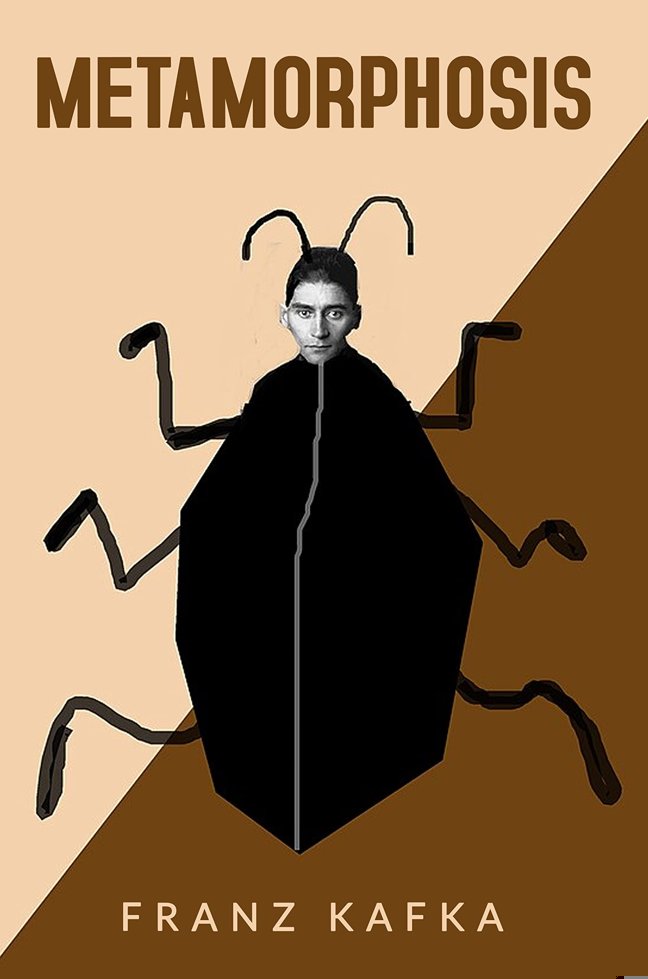
The Metamorphosis
Franz Kafka
4.3
Alternate cover edition of ISBN 0553213695 / 9780553213690
"As Gregor Samsa awoke one morning from uneasy dreams he found himself transformed in his bed into a gigantic insect. He was laying on his hard, as it were armor-plated, back and when he lifted his head a little he could see his domelike brown belly divided into stiff arched segments on top of which the bed quilt could hardly keep in position and was about to slide off completely. His numerous legs, which were pitifully thin compared to the rest of his bulk, waved helplessly before his eyes."
With it's startling, bizarre, yet surprisingly funny first opening, Kafka begins his masterpiece, The Metamorphosis. It is the story of a young man who, transformed overnight into a giant beetle-like insect, becomes an object of disgrace to his family, an outsider in his own home, a quintessentially alienated man. A harrowing—though absurdly comic—meditation on human feelings of inadequacy, guilt, and isolation, The Metamorphosis has taken its place as one of the most widely read and influential works of twentieth-century fiction. As W.H. Auden wrote, "Kafka is important to us because his predicament is the predicament of modern man."
David Lynch said this is one of his most-recommended books. [source]
David Lynch
David Lynch said this is one of his most-recommended books. [source]
Cover unavailable
48
The Catcher in the Rye
J. D. Salinger
4.3
The hero-narrator of The Catcher in the Rye is an ancient child of sixteen, a native New Yorker named Holden Caulfield. Through circumstances that tend to preclude adult, secondhand description, he leaves his prep school in Pennsylvania and goes underground in New York City for three days. The boy himself is at once too simple and too complex for us to make any final comment about him or his story. Perhaps the safest thing we can say about Holden is that he was born in the world not just strongly attracted to beauty but, almost, hopelessly impaled on it. There are many voices in this novel: children's voices, adult voices, underground voices-but Holden's voice is the most eloquent of all. Transcending his own vernacular, yet remaining marvelously faithful to it, he issues a perfectly articulated cry of mixed pain and pleasure. However, like most lovers and clowns and poets of the higher orders, he keeps most of the pain to, and for, himself. The pleasure he gives away, or sets aside, with all his heart. It is there for the reader who can handle it to keep.
J.D. Salinger's classic novel of teenage angst and rebellion was first published in 1951. The novel was included on Time's 2005 list of the 100 best English-language novels written since 1923. It was named by Modern Library and its readers as one of the 100 best English-language novels of the 20th century. It has been frequently challenged in the court for its liberal use of profanity and portrayal of sexuality and in the 1950's and 60's it was the novel that every teenage boy wants to read.
It was such a relief from the other books I was reading at the time, which all had a quality of homework to them. [source]
Audrey Russo
So many novels; Lord of the Flies, Great Gatsby, Great Expectations; all the Nancy Drew books; Catcher in the Rye, Books written by Zora Neale Hurston; Pat Conroy – all because of the view about different people who endure despite adversity while kindling the hearts of the human spirit. [source]
Cover unavailable
49
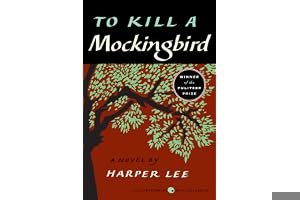
To Kill a Mockingbird
Harper Lee, Sissy Spacek, et al
4.3
The unforgettable novel of a childhood in a sleepy Southern town and the crisis of conscience that rocked it, To Kill A Mockingbird became both an instant bestseller and a critical success when it was first published in 1960. It went on to win the Pulitzer Prize in 1961 and was later made into an Academy Award-winning film, also a classic.
Compassionate, dramatic, and deeply moving, To Kill A Mockingbird takes readers to the roots of human behavior - to innocence and experience, kindness and cruelty, love and hatred, humor and pathos. Now with over 18 million copies in print and translated into forty languages, this regional story by a young Alabama woman claims universal appeal. Harper Lee always considered her book to be a simple love story. Today it is regarded as a masterpiece of American literature.
…
Recommended by Adam Lawrence, Antonio Villaraigosa, Clive Stafford Smith, and 6 others.
Even though I know we’ve made great strides in America, and have come from the reality of Maycomb, we still suffer today from the lingering effects of the bigotry of that era. At the same time, it’s a lesson in standing tall in the face of tremendously hostile circumstances. [source]
Clive Stafford Smith
The book touches on so many issues and deals with so many prejudices – prejudices towards the mentally ill, racial stuff. It’s a book that was way ahead of its time in many ways. It’s also a wonderfully written book – a joy to read. [source]
Cover unavailable
50
Gulliver's Travels
Jonathan Swift
4.2
For the last 250 years people everywhere have enjoyed reading about Lemuel Gulliver's travels in the strange countries of Lilliput and Brobdingnag. The people of these countries, with all their curiously human failings, come to life in Martin Aitchison's vivid illustrations. Here is a story to make you laugh - but to make you think, too.
Which books should be read by every single intelligent person on planet? … Gulliver's Travels (Swift) to learn, among other satirical lessons, that most of the time humans are Yahoos. If you read all of the above works you will glean profound insight into most of what has driven the history of the western world. [source]
In the first place, it is very funny. We read it first as an adventure story, when we were kids, without understanding the political context in Europe or the philosophical context. Then when we read it again as adults we realise that Swift is having a good deal of fun here. Just the religious allegory with the Big-enders and the Little-enders and the idea of people who live for ever. And don’t they just turn out to be the kind of people who live for ever today? They show every sign of Alzheimer’s. [source]
Cover unavailable
51
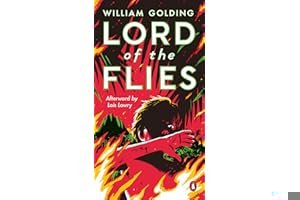
Lord of the Flies
William Golding
4.2
At the dawn of the next world war, a plane crashes on an uncharted island, stranding a group of schoolboys. At first, with no adult supervision, their freedom is something to celebrate; this far from civilization the boys can do anything they want. Anything. They attempt to forge their own society, failing, however, in the face of terror, sin and evil. And as order collapses, as strange howls echo in the night, as terror begins its reign, the hope of adventure seems as far from reality as the hope of being rescued. Labeled a parable, an allegory, a myth, a morality tale, a parody, a political treatise, even a vision of the apocalypse, Lord of the Flies is perhaps our most memorable tale about “the end of innocence, the darkness of man’s heart.”
…
Recommended by Elon Musk, Ev Williams, Audrey Russo, and 5 others.
Audrey Russo
So many novels; Lord of the Flies, Great Gatsby, Great Expectations; all the Nancy Drew books; Catcher in the Rye, Books written by Zora Neale Hurston; Pat Conroy – all because of the view about different people who endure despite adversity while kindling the hearts of the human spirit. [source]
Chigozie Obioma
William Golding imbues some of these children with wisdom that would read, in the hands of a lesser author, as implausibly knowing [source]
Disco Donnie
@JoshRHernandez1 I love the book “Lord of the Flies” so just started watching The Society [source]
Cover unavailable
52
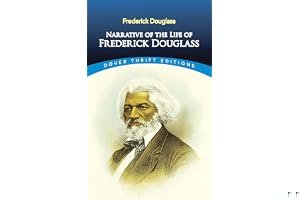
Narrative of the Life of Frederick Douglass
Frederick Douglass
4.2
An alternate cover edition of this ISBN can be found here.
Former slave, impassioned abolitionist, brilliant writer, newspaper editor and eloquent orator whose speeches fired the abolitionist cause, Frederick Douglass (1818–1895) led an astounding life. Physical abuse, deprivation and tragedy plagued his early years, yet through sheer force of character he was able to overcome these obstacles to become a leading spokesman for his people. In this, the first and most frequently read of his three autobiographies, Douglass provides graphic descriptions of his childhood and horrifying experiences as a slave as well as a harrowing record of his dramatic escape to the North and eventual freedom. Published in 1845 to quell doubts about his origins — since few slaves of that period could write — the Narrative is admired today for its extraordinary passion, sensitive and vivid descriptions and storytelling power. It belongs in the library of anyone interested in African-American history and the life of one of the country's most courageous and influential champions of civil rights. A selection of the Common Core State Standards Initiative.
…
Recommended by Bianca Belair.
Bianca Belair
For #BlackHistoryMonth I will be sharing some of my favorite books by Black Authors 6th Book: Narrative of the Life of Frederick Douglass By: Frederick Douglass The 1st of many autobiographies that he wrote, and another classic you will find on almost every must-read A.A list. https://t.co/v5PgGpoqxQ [source]
Cover unavailable
53
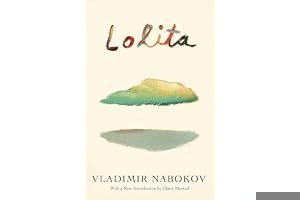
Lolita
Vladimir Nabokov
4.2
When it was published in 1955, Lolita immediately became a cause célèbre because of the freedom and sophistication with which it handled the unusual erotic predilections of its protagonist. But Vladimir Nabokov's wise, ironic, elegant masterpiece owes its stature as one of the twentieth century's novels of record not to the controversy its material aroused but to its author's use of that material to tell a love story almost shocking in its beauty and tenderness.
Awe and exhilaration–along with heartbreak and mordant wit–abound in this account of the aging Humbert Humbert's obsessive, devouring, and doomed passion for the nymphet Dolores Haze. Lolita is also the story of a hypercivilized European colliding with the cheerful barbarism of postwar America, but most of all, it is a meditation on love–love as outrage and hallucination, madness and transformation. With an introduction by Martin Amis.
…
Recommended by Ev Williams, Bryan Callen, Ella Berthoud, and 3 others.
So here are my three must read books. I've been reading a lot of great books like: Outsmart Your Instincts, The Culture Code, and Antonio Damasio’s The Strange Order, and sometimes when you read a lot of nonfiction it’s very enriching, sometimes you need a novel. I really believe you should take a minute and read something beautiful. Listen, listen to Lolita by Nabokov. But also listen to Blood Meridian by Cormac McCarthy and listen to Richard Poe narrate that. Those are two of the greatest feats of the english language that I can think of. Then there’s Fortress of Solitude, an amazing book, Extremely Loud and Incredibly Close, these are great novels. Cold Mountain is a beautiful novel, Snow Falling On Cedars, I mean they’ve been around for a while. But goddamnit, get those under your belt. Those are the novels I think you should read. You know Love In The Time Of Cholera it just makes you ache. Kind of like a Hemingway thing, where Hemingway “ahh!”, it’s the same thing, you know. So I don’t know, I’m a fan of all those books. Those are my 3 slash 20 books. [source]
Ella Berthoud
Even though it’s wrong, you sympathise with him because he can’t help himself and writes about it in such a passionate and empathetic way. [source]
Richard Cohen
It’s more imbued with references to the sun and using the sun as symbol or metaphor – almost a kind of character in the novel – than any other work in literature. [source]
Cover unavailable
54
The Scarlet Letter
Nathaniel Hawthorne, Thomas E. Connolly, Nina Baym
4.2
Nathaniel Hawthorne's THE SCARLET LETTER reaches to our nation's historical and moral roots for the material of great tragedy. Set in an early New England colony, the novel shows the terrible impact a single, passionate act has on the lives of three members of the community: the defiant Hester Prynne; the fiery, tortured Reverend Dimmesdale; and the obsessed, vengeful Chillingworth.
With THE SCARLET LETTER, Hawthorne became the first American novelist to forge from our Puritan heritage a universal classic, a masterful exploration of humanity's unending struggle with sin, guilt and pride.
…
Recommended by Carol Gilligan.
Carol Gilligan
The Scarlet Letter is a tragic love story, but it’s also a story about resistance and transformation. [source]
Cover unavailable
55
The Prince
Nicollo Machiavelli, Tim Parks
4.2
Niccolo Machiavelli's "The Prince" is intended to be a treatise on ruling and is considered by many to be a classic of political science. In the book Machiavelli offers many bits of practical advice on how to rule and even though the book was written in the early 16th century its ideas are still very relevant today. Where "The Prince" differs from other political literature before it is in its separation of the lofty idealism of morality and ethics from the practical demands of governing. It is this very aspect of Machiavelli's work that has made his name synonymous with an almost immoral opportunism and his book a timeless classic.
Which books should be read by every single intelligent person on planet? … The Prince (Machiavelli) to learn that people not in power will do all they can to acquire it, and people in power will do all they can to keep it. If you read all of the above works you will glean profound insight into most of what has driven the history of the western world. [source]
Of course, this is a must read. Machiavelli is one of those figures and writers who is tragically overrated and underrated at the same time. Unfortunately that means that many people who read him miss the point and other people avoid him and miss out altogether. Take Machiavelli slow, and really read him. Also understand the man behind the book–not just as a masterful writer but a man who withstood heinous torture and exile with barely a whimper. Machiavelli is a glimpse into a time when power was literal and out for public viewing–when he talks about making an example of someone, he doesn’t mean calling them out, he means putting their head on a pike. Don’t let that scare you because we’re not as far from that world as we’d like to think. Deny that at your own peril. [source]
Cover unavailable
56
The Iliad
Homer, Robert Fagles, Bernard Knox
4.2
Dating to the ninth century B.C., Homer’s timeless poem still vividly conveys the horror and heroism of men and gods wrestling with towering emotions and battling amidst devastation and destruction, as it moves inexorably to the wrenching, tragic conclusion of the Trojan War. Renowned classicist Bernard Knox observes in his superb introduction that although the violence of the Iliad is grim and relentless, it coexists with both images of civilized life and a poignant yearning for peace.
Combining the skills of a poet and scholar, Robert Fagles, winner of the PEN/Ralph Manheim Medal for Translation and a 1996 Academy Award in Literature from the American Academy of Arts and Letters, brings the energy of contemporary language to this enduring heroic epic. He maintains the drive and metric music of Homer’s poetry, and evokes the impact and nuance of the Iliad’s mesmerizing repeated phrases in what Peter Levi calls “an astonishing performance.”
When I got to college, I was a classics major, and that was mainly the study of Greek - and to a lesser extent Roman - history and culture, and that fascinated me: the Iliad, the Odyssey, the Aeneid by Virgil. [source]
Charlotte Higgins
I think The Iliad has much to say to politicians now – it’s completely clear-eyed about collateral damage, about problems of post-conflict and about the ghastly things that happen to women and children in war. [source]
There are always new translations of The Iliad coming out, but this one has a very specific approach, both in terms of its philosophy of translation and its approach to the text. [source]
Cover unavailable
57
Northanger Abbey
Jane Austen and Alfred Mac Adam
4.2
Jane Austen's first novel—published posthumously in 1818—tells the story of Catherine Morland and her dangerously sweet nature, innocence, and sometime self-delusion. Though Austen's fallible heroine is repeatedly drawn into scrapes while vacationing at Bath and during her subsequent visit to Northanger Abbey, Catherine eventually triumphs, blossoming into a discerning woman who learns truths about love, life, and the heady power of literature. The satirical novel pokes fun at the gothic novel while earnestly emphasizing caution to the female sex.
…
Cover unavailable
58
Sir Gawain and the Green Knight
Anonymous, Burton Raffel, et al.
4.2
Written by an anonymous 14th-century poet, this epic poem is recognized as an equal of Chaucer's masterworks and of the great Old English poems, including "Beowulf." This edition includes a Preface by Raffel and a new Introduction. Revised reissue.
Cover unavailable
59
Alice's Adventures in Wonderland & Through the Looking-Glass
Lewis Carroll
4.2
In 1862 Charles Lutwidge Dodgson, a shy Oxford mathematician with a stammer, created a story about a little girl tumbling down a rabbit hole. Thus began the immortal adventures of Alice, perhaps the most popular heroine in English literature.
Countless scholars have tried to define the charm of the Alice books--with those wonderfully eccentric characters the Queen of Hearts, Tweedledum, and Tweedledee, the Cheshire Cat, Mock Turtle, the Mad Hatter et al.--by proclaiming that they really comprise a satire on language, a political allegory, a parody of Victorian children's literature, even a reflection of contemporary ecclesiastical history.
Perhaps, as Dodgson might have said, Alice is no more than a dream, a fairy tale about the trials and tribulations of growing up--or down, or all turned round--as seen through the expert eyes of a child.
…
Recommended by Eric Weinstein, Jean Webb, Larry Doyle, and 1 others.
Eric Weinstein recommended this book on Twitter. [source]
Jean Webb
An imaginative, clever and fun fantasy story that satirises nineteenth century England at the same time as celebrating academic thinking. [source]
Larry Doyle
You’d have to be a zombie to miss the humour in it – it’s hilarious. Although the book is ancient, the humour feels modern [source]
Cover unavailable
60
Sense and Sensibility
Jane Austen
4.2
Alternate cover edition of ISBN 9780141439662
'The more I know of the world, the more am I convinced that I shall never see a man whom I can really love. I require so much!'
Marianne Dashwood wears her heart on her sleeve, and when she falls in love with the dashing but unsuitable John Willoughby she ignores her sister Elinor's warning that her impulsive behaviour leaves her open to gossip and innuendo. Meanwhile Elinor, always sensitive to social convention, is struggling to conceal her own romantic disappointment, even from those closest to her. Through their parallel experience of love—and its threatened loss—the sisters learn that sense must mix with sensibility if they are to find personal happiness in a society where status and money govern the rules of love.
This edition includes explanatory notes, textual variants between the first and second editions, and Tony Tanner's introduction to the original Penguin Classic edition.
…
Recommended by Edward Skidelsky.
Edward Skidelsky
Jane Austen’s purpose is to illustrate this very Aristotelian virtue of prudence: that you’ve got to look out for your interests, you mustn’t just give in to passion. [source]
Cover unavailable
61
Emma
Jane Austen, Fiona Stafford
4.2
Emma Woodhouse is one of Austen's most captivating and vivid characters. Beautiful, spoilt, vain and irrepressibly witty, Emma organizes the lives of the inhabitants of her sleepy little village and plays matchmaker with devastating effect.
Emma is the Regency novel in the sense that it was written and published during the Regency. I think the feel of much of Jane Austen is really in the late 1790s – the beginning of the French Wars. Jane Austen wasn’t writing about politics. She is famously someone who writes about what she knows. Her world is essentially a provincial world of manners. [source]
Cover unavailable
62
The Merchant of Venice
William Shakespeare, Dr. Barbara A. Mowat, Paul Werstine Ph.D.
4.2
In this lively comedy of love and money in sixteenth-century Venice, Bassanio wants to impress the wealthy heiress Portia but lacks the necessary funds. He turns to his merchant friend, Antonio, who is forced to borrow from Shylock, a Jewish moneylender. When Antonio's business falters, repayment becomes impossible--and by the terms of the loan agreement, Shylock is able to demand a pound of Antonio's flesh. Portia cleverly intervenes, and all ends well (except of course for Shylock).
…
Cover unavailable
63
Their Eyes Were Watching God
Zora Neale Hurston
4.2
Fair and long-legged, independent and articulate, Janie Crawford sets out to be her own person -- no mean feat for a black woman in the '30s. Janie's quest for identity takes her through three marriages and into a journey back to her roots.
Recommended by Farah Jasmine Griffin.
Farah Jasmine Griffin
Hurston gives us one of the first true love stories in African American writing. [source]
Cover unavailable
64
Disgrace
J.M. COETZEE
4.2
After years teaching Romantic poetry at the Technical University of Cape Town, David Lurie, middle-aged and twice divorced, has an impulsive affair with a student. The affair sours; he is denounced and summoned before a committee of inquiry. Willing to admit his guilt, but refusing to yield to pressure to repent publicly, he resigns and retreats to his daughter Lucy's isolated smallholding.
For a time, his daughter's influence and the natural rhythms of the farm promise to harmonise his discordant life. But the balance of power in the country is shifting. He and Lucy become victims of a savage and disturbing attack which brings into relief all the faultlines in their relationship.
…
Recommended by Justin Cartwright and Kevin Bloom.
Justin Cartwright
The book is a sort of farewell note to South Africa – a Goodbye, I’m off. [source]
Kevin Bloom
This book was written in the late 90s and although it is very difficult – especially with writers like J M Coetzee – to link the work to the man, my personal reading of the book is that it is a work of profound disappointment and sadness. It is all about a fifty-something professor, David Lurie, who teaches at a Cape Town university. He has an affair with a young student – Melanie. He gets hauled before a disciplinary panel and refuses to defend himself. [source]
Cover unavailable
65
The Bloody Chamber and Other Stories
Angela Carter
4.1
Angela Carter was a storytelling sorceress, the literary godmother of such contemporary masters of supernatural fiction as Neil Gaiman, David Mitchell, Audrey Niffenegger, J. K. Rowling, and Kelly Link, who introduces this edition of Carter's most celebrated book, published for the seventy-fifth anniversary of her birth.
In The Bloody Chamber - which includes the story that is the basis of Neil Jordan's 1984 movie The Company of Wolves - Carter spins subversively dark and sensual versions of familiar fairy tales and legends like "Little Red Riding Hood," "Bluebeard," "Puss in Boots," and "Beauty and the Beast," giving them exhilarating new life in a style steeped in the romantic trappings of the gothic tradition.
Yes. Angela Carter played a very important role in my life because I was born in 1937, a few years before she was born, and although we didn’t grow up together, we both grew up in a world where sexism was out in the open. There was no critique of the type of sexism that I experienced when I grew up, and I think the same is true for her. And we both experienced what a lot of people called the second wave of feminism in the 20th century. [source]
Cover unavailable
66
Death of a Salesman
Arthur Miller
4.1
In the spring of 1948 Arthur Miller retreated to a log cabin in Connecticut with the first two lines of a new play already fixed in his mind. He emerged six weeks later with the final script of Death of a Salesman - a painful examination of American life and consumerism. Opening on Broadway the following year, Miller's extraordinary masterpiece changed the course of modern theatre. In creating Willy Loman, his destructively insecure anti-hero, Miller himself defined his aim as being 'to set forth what happens when a man does not have a grip on the forces of life'.
…
Recommended by Daniel Pink, Tim Lott, and 1 others.
Tim Lott
Death of a Salesman is more about the relationship between fathers and sons than brothers, but the motif of maimed brother relationships runs in all directions. [source]
Cover unavailable
67
The Canterbury Tales
Geoffrey Chaucer, Nevill Coghill
4.1
The procession that crosses Chaucer's pages is as full of life and as richly textured as a medieval tapestry. The Knight, the Miller, the Friar, the Squire, the Prioress, the Wife of Bath, and others who make up the cast of characters -- including Chaucer himself -- are real people, with human emotions and weaknesses. When it is remembered that Chaucer wrote in English at a time when Latin was the standard literary language across western Europe, the magnitude of his achievement is even more remarkable. But Chaucer's genius needs no historical introduction; it bursts forth from every page of The Canterbury Tales.
If we trust the General Prologue, Chaucer intended that each pilgrim should tell two tales on the way to Canterbury and two tales on the way back. He never finished his enormous project and even the completed tales were not finally revised. Scholars are uncertain about the order of the tales. As the printing press had yet to be invented when Chaucer wrote his works, The Canterbury Tales has been passed down in several handwritten manuscripts.
…
Recommended by Marion Turner.
Marion Turner
Each individual tale can be interpreted in so many ways—Chaucer really opens up possibilities of multiple interpretations. Even when he seems to give you a clear moral, that moral is never effective or convincing. He’s always saying: ‘Find your own moral; find your own meaning.’ [source]
Cover unavailable
68
Antigone (The Theban Plays, #3)
Sophocles
4.1
The curse placed on Oedipus lingers and haunts a younger generation in this new and brilliant translation of Sophocles' classic drama. The daughter of Oedipus and Jocasta, Antigone is an unconventional heroine who pits her beliefs against the King of Thebes in a bloody test of wills that leaves few unharmed. Emotions fly as she challenges the king for the right to bury her own brother. Determined but doomed, Antigone shows her inner strength throughout the play.
Antigone raises issues of law and morality that are just as relevant today as they were more than two thousand years ago. Whether this is your first reading or your twentieth, Antigone will move you as few pieces of literature can.
To make this quintessential Greek drama more accessible to the modern reader, this Prestwick House Literary Touchstone Edition includes a glossary of difficult terms, a list of vocabulary words, and convenient sidebar notes. By providing these, it is our intention that readers will more fully enjoy the beauty, wisdom, and intent of the play.
…
Cover unavailable
69
The Republic: The Influential Classic
Plato
4.1
The newest deluxe edition in the bestselling Capstone Classics Series This ancient classic has had a make-over. In recent years these Capstone Classic deluxe editions have caught the book buying public's imagination. The volumes of international bestsellers such as Think and Grow Rich and The Art of War have quickly become the market leaders. Now Plato's best known work, one of the most intellectually and historically influential works of philosophy and political theory, has been brought to life in this luxury, hardback, keep-sake edition.
This edition includes:
Plato's plans for a perfect society characterised by a blend of wisdom, courage, self-discipline and justice Lessons to learn about living according to eternal truths, instead of existing simply for survival and pleasure A new introduction by Tom Butler Bowdon, the classic personal development expert
It’s very readable even if you aren’t a professional philosopher. Take the story of ‘The Ring of Gyges,’ which raises the question of whether you would continue to act like a good person if you had a ring of invisibility that let you get away with doing whatever you wanted to do. That’s a fascinating thought experiment that anybody can appreciate. [source]
I’m about a third through this and still can’t tell whether Plato is making a mockery of Socrates ideas for the idyllic society or not. So many of the arguments presented as Socrates’ are so tortured and with so disconnected leaps of logic that it’s hard to take it at face value. Yet still, it’s good fun to follow the dialogue. It reads more like a play than a book, and again, immensely accessible. It’s fun to see the lines that continue from a book like this to the considerations of the Stoics all the way to Adam Smith and the Wealth of Nations and then onto a modern critique and history in that Debt: First 5,000 Years. A conversation spanning millennia. [source]
Jonathan Glover
It contains a tremendous amount of nonsense about what the ideal society would be like. But it is an unmissable book because of Socrates. He invented the method of doing and teaching philosophy that has never been improved on. [source]
Cover unavailable
70
North and South
Elizabeth Cleghorn Gaskell
4.1
Exclusively from Audible
Written at the request of Charles Dickens, North and South is a book about rebellion; it poses fundamental questions about the nature of social authority and obedience. Gaskell expertly blends individual feeling with social concern, and her heroine, Margaret Hale, is one of the most original creations of Victorian literature.
When Margaret Hale's father leaves the Church in a crisis of conscience she is forced to leave her comfortable home in the tranquil countryside of Hampshire and move with her family to the fictional industrial town of Milton in the north of England. Though at first disgusted by her new surroundings, she witnesses the brutality wrought by the Industrial Revolution and becomes aware of the poverty and suffering of the local mill workers. Sympathetic to the poor she makes friends among them and develops a fervent sense of social justice. She clashes with the mill-owner and self-made man, John Thornton, who is contemptuous of his workers. However, their fierce opposition masks a deeper attraction.
Gaskell based her depiction of Milton on Manchester, where she lived as the wife of a Unitarian minister. She was an accomplished writer, much of her work published in Charles Dickens' magazine Household Words including North and South which was originally published as a serial. She was also friends with Charlotte Brontë and after her death, her father, Patrick Brontë, chose Gaskell to write The Life of Charlotte Brontë.
…
Cover unavailable
71
The Sorrows of Young Werther
Johann Wolfgang von Goethe, David Constantine
4.1
The Sorrows of Young Werther propelled Goethe to instant fame when it first appeared in 1774. Goethe's story of a sensitive young artist--an alienated youth of searching introspection and passionate intensity--captured the Romantic sensibility of the day and led to a wave of imitations. Translated by the award-winning author David Constantine, this new edition captures the novel's lyric clarity and powerful immediacy. In addition, Constantine's critical introduction sheds light on the autobiographical background, the novel's epistolary form and structure, and Werther's reception and afterlife. The explanatory notes illuminate contemporary allusions, literary references, and the parallels with Goethe's life.
About the Series For over 100 years Oxford World's Classics has made available the broadest spectrum of literature from around the globe. Each affordable volume reflects Oxford's commitment to scholarship, providing the most accurate text plus a wealth of other valuable features, including expert introductions by leading authorities, voluminous notes to clarify the text, up-to-date bibliographies for further study, and much more.
I read The Sorrows of Young Werther by Goethe which looks at a different burning fire—that of young love—and how crazy it makes us. A beautifully written book that every person should read. [source]
Ed Cooke
Wonderful story of a young man who falls in love and it doesn't really work out so well. [source]
Cover unavailable
72
The Lonely Londoners
Sam Selvon, Nasta Sushiela
4.1
From the brilliant, sharp, witty pen of Sam Selvon, The Lonely Londoners is a classic novel of immigrant life in 1950s London.
At Waterloo Station, hopeful new arrivals from the West Indies step off the boat train, ready to start afresh in 1950s London. There, homesick Moses Aloetta, who has already lived in the city for years, meets Henry 'Sir Galahad' Oliver and shows him the ropes. In this strange, cold and foggy city where the natives can be less than friendly at the sight of a black face, has Galahad met his Waterloo? But the irrepressible newcomer cannot be cast down. He and all the other lonely new Londoners - from shiftless Cap to Tolroy, whose family has descended on him from Jamaica - must try to create a new life for themselves. As pessimistic 'old veteran' Moses watches their attempts, they gradually learn to survive and come to love the heady excitements of London.
…
Recommended by Christine L. Corton.
Christine L. Corton
He came over to London from Trinidad in the 1950s, part of the Windrush immigration. He was among the first black, immigrant writers to be published in this country. The Lonely Londoners was published in 1956. He sees the fog as yet another reason why someone from the West Indies would feel this was an isolating place. Not only are they experiencing the coldness of the British people, who they’d been led to expect would welcome them—all they’re getting from these people is discrimination and suspicion—but also they’re in an environment where the fog settles on the day and you can’t even see the sun. [source]
Cover unavailable
73
Oedipus Rex (The Theban Plays, #1)
Sophocles, Elizabeth Osborne, J.E. Thomas
4.1
"...what man wins more happiness than just its shape and the ruin when that shape collapses?"
Sophocles' Oedipus Rex has never been surpassed for the raw and terrible power with which its hero struggles to answer the eternal question, "Who am I?" The play, a story of a king who acting entirely in ignorance kills his father and marries his mother, unfolds with shattering power; we are helplessly carried along with Oedipus towards the final, horrific truth.
To make Oedipus more accessible for the modern reader, our Prestwick House Literary Touchstone Classics includes a glossary of the more difficult words, as well as convenient sidebar notes to enlighten the reader on aspects that may be confusing or overlooked. We hope that the reader may, through this edition, more fully enjoy the beauty of the verse, the wisdom of the insights, and the impact of the drama.
…
Cover unavailable
74
The Stranger
Albert Camus, Jonathan Davis, et al
4.1
Through the story of an ordinary man unwittingly drawn into a senseless murder on an Algerian beach, Camus explored what he termed "the nakedness of man faced with the absurd." First published in English in 1946; now in a new translation by Matthew Ward.
Seminal novel on existentialism and the absurd by Albert Camus from 1946. Explores that feeling of disconnectedness from society, its norms, and the absurdity of every day life. Striking first-person account in a powerful, direct language. [source]
Kyle Maynard
Kyle Maynard said this is one of his most-recommended books. [source]
Cover unavailable
75
Poetics
Aristotle and Malcolm Heath
4.1
‘The plot is the source and the soul of tragedy’
In his near-contemporary account of Greek tragedy, Aristotle examines the dramatic elements of plot, character, language and spectacle that combine to produce pity and fear in the audience, and asks why we derive pleasure from this apparently painful process. Taking examples from the plays of Aeschylus, Sophocles and Euripides, The Poetics introduces into literary criticism such central concepts as mimesis (‘imitation’), hamartia (‘error’), and katharsis (‘purification’). Aristotle explains how the most effective tragedies rely on complication and resolution, recognition and reversals, centring on characters of heroic stature, idealized yet true to life. One of the most powerful, perceptive and influential works of criticism in Western literary history, the Poetics has informed serious thinking about drama ever since.
Malcolm Heath’s lucid English translation makes the Poetics fully accessible to the modern reader. It is accompanied by an extended introduction, which discusses the key concepts in detail and includes suggestions for further reading.
…
Recommended by Bill Liao and Richard Walter.
Bill Liao
The Book "Made to Stick" combined with "The Poetics" by Aristotle really helped me to see the power of telling great stories with surprises in them and every time I meet a start-up I can always make a contribution to their pitch. [source]
Richard Walter
Aristotle’s Poetics is the user’s guide to dramatic narrative and dramatic structure. It’s just a ragged little pamphlet really. [source]
Cover unavailable
76
A Portrait of the Artist as a Young Man / Dubliners
James Joyce, Kevin J.H. Dettmar
4.1
Widely regarded as the greatest stylist of twentieth-century English literature, James Joyce deserves the term “revolutionary.” His literary experiments in form and structure, language and content, signaled the modernist movement and continue to influence writers today. His two earliest, and perhaps most accessible, successes—A Portrait of the Artist as a Young Man and Dubliners—are here brought together in one volume. Both works reflect Joyce’s lifelong love-hate relationship with Dublin and the Irish culture that formed him.
In the semi-autobiographical Portrait, young Stephen Dedalus yearns to be an artist, but first must struggle against the forces of church, school, and society, which fetter his imagination and stifle his soul. The book’s inventive style is apparent from its opening pages, a record of an infant’s impressions of the world around him—and one of the first examples of the “stream of consciousness” technique.
Comprising fifteen stories, Dubliners presents a community of mesmerizing, humorous, and haunting characters—a group portrait. The interactions among them form one long meditation on the human condition, culminating with “The Dead,” one of Joyce’s most graceful compositions centering around a character’s epiphany. A carefully woven tapestry of Dublin life at the turn of the last century, Dubliners realizes Joyce’s ambition to give his countrymen “one good look at themselves.”
Kevin J. H. Dettmar is Professor of English and Cultural Studies at Southern Illinois University Carbondale. He is the author or editor of a half-dozen books on James Joyce, modernist literature, and rock music. He is currently finishing a term as President of the Modernist Studies Association. --back cover
…
Recommended by Richard Bourke.
Richard Bourke
Joyce’s depiction is one of Ireland in the aftermath of the fall of Charles Stewart Parnell. [source]
Cover unavailable
77
Utopia
Thomas More, Paul Turner
4.1
Utopia (Libellus vere aureus, nec minus salutaris quam festivus, de optimo rei publicae statu deque nova insula Utopia) is a satirical work of fiction and political philosophy by Thomas More (1478–1535) published in 1516 in Latin. The book is a frame narrative primarily depicting a fictional island society as described by the character Raphael Hythloday who lived there some years, who describes and its religious, social and political customs.
…
Recommended by Ellen Wayland-Smith.
Ellen Wayland-Smith
More was building on older ideas about an earlier age, an Edenic state, when private property didn’t exist. [source]
Cover unavailable
78
Don Quixote
Miguel de Cervantes, Edith Grossman
4.1
Edith Grossman's definitive English translation of the Spanish masterpiece, in an expanded P.S. edition
Widely regarded as one of the funniest and most tragic books ever written, Don Quixote chronicles the adventures of the self-created knight-errant Don Quixote of La Mancha and his faithful squire, Sancho Panza, as they travel through sixteenth-century Spain. You haven't experienced Don Quixote in English until you've read this masterful translation.
This P.S. edition features an extra 16 pages of insights into the book, including author interviews, recommended reading, and more.
I read this book as a child and then, reread many times as an adult. And he’s my favorite character. [source]
Cover unavailable
79
Endgame
Samuel Beckett
4.1
Samuel Beckett was awarded the Nobel Prize for Literature in 1969; his literary output of plays, novels, stories, and poetry has earned him an uncontested place as one of the greatest writers of our time. Endgame, originally written in French and translated into English by Beckett himself, is now considered by many critics to be his greatest single work. A pinnacle of Beckett's characteristic raw minimalism, it is a pure and devastating distillation of the human essence in the face of approaching death.
…
Cover unavailable
80
The Bell Jar
Sylvia Plath
4.1
Sylvia Plath's shocking, realistic, and intensely emotional novel about a woman falling into the grip of insanity.
Esther Greenwood is brilliant, beautiful, enormously talented, and successful, but slowly going under—maybe for the last time. In her acclaimed and enduring masterwork, Sylvia Plath brilliantly draws the reader into Esther's breakdown with such intensity that her insanity becomes palpably real, even rational—as accessible an experience as going to the movies. A deep penetration into the darkest and most harrowing corners of the human psyche, The Bell Jar is an extraordinary accomplishment and a haunting American classic.
…
Recommended by Bryony Gordon, The CEO Library Community (through anonymous form), and Tim Kendall.
As a teenage girl, you have to read The Bell Jar. It’s a rite of passage. [source]
The CEO Library Community (through anonymous form)
One of the best 3 books I've read in 2019 [source]
Tim Kendall
Despite its subject matter, The Bell Jar is often a very funny novel. Perhaps we miss it because the pall of Plath’s biography descends across the whole work and reputation. But The Bell Jar is viciously funny. There are people still alive today who won’t talk about it because they were so badly hurt by Plath’s portrayal of them. [source]
Cover unavailable
81
Americanah
Chimamanda Ngozi Adichie
4.1
Ifemelu and Obinze are young and in love when they depart military-ruled Nigeria for the West. Beautiful, self-assured Ifemelu heads for America, where despite her academic success, she is forced to grapple with what it means to be black for the first time. Quiet, thoughtful Obinze had hoped to join her, but with post-9/11 America closed to him, he instead plunges into a dangerous, undocumented life in London. Fifteen years later, they reunite in a newly democratic Nigeria, and reignite their passion—for each other and for their homeland.
Source: chimamanda.com
…
Recommended by Barack Obama, Angelica Ross, and Julia Enthoven.
As 2018 draws to a close, I’m continuing a favorite tradition of mine and sharing my year-end lists. It gives me a moment to pause and reflect on the year through the books I found most thought-provoking, inspiring, or just plain loved. It also gives me a chance to highlight talented authors – some who are household names and others who you may not have heard of before. Here’s my best of 2018 list. [source]
Angelica Ross
@WarnerMediaGrp @tressiemcphd @Lupita_Nyongo @DanaiGurira LOVE THIS BOOK! Can’t wait for this!!!! [source]
Julia Enthoven
For non-business, I’ve loved so many different books that it’s hard to pick a favorite. Recently, I’ve enjoyed The Art of Fielding and Americanah, and I love classics like A Farewell to Arms and Lord of the Flies. [source]
Cover unavailable
82
The Awakening
Kate Chopin
4.1
When first published in 1899, The Awakening shocked readers with its honest treatment of female marital infidelity. Audiences accustomed to the pieties of late Victorian romantic fiction were taken aback by Chopin's daring portrayal of a woman trapped in a stifling marriage, who seeks and finds passionate physical love outside the confines of her domestic situation.
Aside from its unusually frank treatment of a then-controversial subject, the novel is widely admired today for its literary qualities. Edmund Wilson characterized it as a work "quite uninhibited and beautifully written, which anticipates D. H. Lawrence in its treatment of infidelity." Although the theme of marital infidelity no longer shocks, few novels have plumbed the psychology of a woman involved in an illicit relationship with the perception, artistry, and honesty that Kate Chopin brought to The Awakening.
…
Cover unavailable
83
Crime and Punishment: A Russian Realistic Novel
Fyodor Dostoyevsky
4.1
This work has been selected by scholars as being culturally important, and is part of the knowledge base of civilization as we know it. This work was reproduced from the original artifact, and remains as true to the original work as possible. Therefore, you will see the original copyright references, library stamps (as most of these works have been housed in our most important libraries around the world), and other notations in the work.This work is in the public domain in the United States of America, and possibly other nations. Within the United States, you may freely copy and distribute this work, as no entity (individual or corporate) has a copyright on the body of the work.As a reproduction of a historical artifact, this work may contain missing or blurred pages, poor pictures, errant marks, etc. Scholars believe, and we concur, that this work is important enough to be preserved, reproduced, and made generally available to the public. We appreciate your support of the preservation process, and thank you for being an important part of keeping this knowledge alive and relevant.
It is not a crime book in the way that we understand crime fiction today. Instead it is like an existential psychological thriller. [source]
Cover unavailable
84
The Secret Garden
Frances Hodgson Burnett
4.1
"One of the most delightful and enduring classics of children's literature, The Secret Garden by Victorian author Frances Hodgson Burnett has remained a firm favorite with children the world over ever since it made its first appearance. Initially published as a serial story in 1910 in The American Magazine, it was brought out in novel form in 1911.
The plot centers round Mary Lennox, a young English girl who returns to England from India, having suffered the immense trauma by losing both her parents in a cholera epidemic. However, her memories of her parents are not pleasant, as they were a selfish, neglectful and pleasure-seeking couple. Mary is given to the care of her uncle Archibald Craven, whom she has never met. She travels to his home, Misselthwaite Manor located in the gloomy Yorkshire, a vast change from the sunny and warm climate she was used to. When she arrives, she is a rude, stubborn and given to stormy temper tantrums. However, her nature undergoes a gradual transformation when she learns of the tragedies that have befallen her strict and disciplinarian uncle whom she earlier feared and despised. Once when he's away from home, Mary discovers a charming walled garden which is always kept locked. The mystery deepens when she hears sounds of sobbing from somewhere within her uncle's vast mansion. The kindly servants ignore her queries or pretend they haven't heard, spiking Mary's curiosity.
The Secret Garden appeals to both young and old alike. It has wonderful elements of mystery, spirituality, charming characters and an authentic rendering of childhood emotions and experiences. Commonsense, truth and kindness, compassion and a belief in the essential goodness of human beings lie at the heart of this unforgettable story. It is the best known of Frances Hodgson Burnett's works, though most of us have definitely heard of, if not read, her other novel Little Lord Fauntleroy.
The book has been adapted extensively on stage, film and television and translated into all the world's major languages. In 1991, a Japanese anime version was launched for television in Japan. It remains a popular and beloved story of a child's journey into maturity, and a must-read for every child, parent, teacher and anyone who would enjoy this fascinating glimpse of childhood. One of the most delightful and enduring classics of children's literature, The Secret Garden by Victorian author Frances Hodgson Burnett has remained a firm favorite with children the world over ever since it made its first appearance. Initially published as a serial story in 1910 in The American Magazine, it was brought out in novel form in 1911."
…
Recommended by Clare Morpurgo and M G Leonard.
Clare Morpurgo
The book is about a girl coming to live in England from India. She is a sickly child who had a pretty awful early childhood in India. [source]
M G Leonard
The redemptive power of the natural world and gardening was something that struck a chord with me. [source]
Cover unavailable
85
A Doll's House
Henrik Ibsen
4.1
A Doll's House (1879), is a masterpiece of theatrical craft which, for the first time portrayed the tragic hypocrisy of Victorian middle class marriage on the stage. The play ushered in a new social era and "exploded like a bomb into contemporary life".
The Student Edition contains these exclusive features:
· A chronology of the playwright's life and work
· An introduction giving the background of the play
· Commentary on themes, characters. language and style
· Notes on individual words and phrases in the text
More than three decades after its first publication, Edward Said's groundbreaking critique of the West's historical, cultural, and political perceptions of the East has become a modern classic.
In this wide-ranging, intellectually vigorous study, Said traces the origins of "orientalism" to the centuries-long period during which Europe dominated the Middle and Near East and, from its position of power, defined "the orient" simply as "other than" the occident. This entrenched view continues to dominate western ideas and, because it does not allow the East to represent itself, prevents true understanding. Essential, and still eye-opening, Orientalism remains one of the most important books written about our divided world.
…
Cover unavailable
87
Mansfield Park
Jane Austen, Margaret Drabble
4.1
Adopted into the household of her uncle, Sir Thomas Bertram, Fanny Price grows up a meek outsider among her cousins in the unaccustomed elegance of Mansfield Park. Soon after Sir Thomas absents himself on estate business in Antigua (the family's investment in slavery and sugar is considered in the Introduction in a new, post-colonial light), Mary Crawford and her brother Henry arrive at Mansfield, bringing with them London glamour, and the seductive taste for flirtation and theatre that precipitates a crisis. While Mansfield Park appears in some ways to continue where Pride and Prejudice left off, it is, as Kathryn Sutherland shows in her illuminating Introduction, a much darker work, which challenges 'the very values (of tradition, stability, retirement and faithfulness) it appears to endorse'. This new edition provides an accurate text based, for the first time since its original publication, on the first edition of 1814.
…
Recommended by Mary Warnock.
Mary Warnock
This is an oddity but it is a highly moralistic novel. Fanny Price, the heroine, whom many people find rather tiresome, is a highly moral and articulate character and one of the things that intrigues me so much is that Jane Austen at the beginning of the 19th century had the correct view that you can’t be morally involved unless you feel strongly that some things are good and some things are bad. [source]
Cover unavailable
88
Never Let Me Go
Kazuo Ishiguro
4.1
From the Booker Prize-winning author of The Remains of the Day and When We Were Orphans, comes an unforgettable edge-of-your-seat mystery that is at once heartbreakingly tender and morally courageous about what it means to be human.
Hailsham seems like a pleasant English boarding school, far from the influences of the city. Its students are well tended and supported, trained in art and literature, and become just the sort of people the world wants them to be. But, curiously, they are taught nothing of the outside world and are allowed little contact with it.
Within the grounds of Hailsham, Kathy grows from schoolgirl to young woman, but it’s only when she and her friends Ruth and Tommy leave the safe grounds of the school (as they always knew they would) that they realize the full truth of what Hailsham is.
Never Let Me Go breaks through the boundaries of the literary novel. It is a gripping mystery, a beautiful love story, and also a scathing critique of human arrogance and a moral examination of how we treat the vulnerable and different in our society. In exploring the themes of memory and the impact of the past, Ishiguro takes on the idea of a possible future to create his most moving and powerful book to date.
It’s a difficult book to talk about because one almost doesn’t want to give away the premise, which drops on you like a ton of bricks around page eighty or so… It’s set at a very unusual boarding school where the students are being raised and educated for the absolute darkest of purposes, which they initially have no knowledge of or control over, and prove ultimately unable to escape from. [source]
Cover unavailable
89
Ulysses
James Joyce
4.1
Loosely based on the Odyssey, this landmark of modern literature follows ordinary Dubliners in 1904. Capturing a single day in the life of Dubliner Leopold Bloom, his friends Buck Mulligan and Stephen Dedalus, his wife Molly, and a scintillating cast of supporting characters, Joyce pushes Celtic lyricism and vulgarity to splendid extremes. Captivating experimental techniques range from interior monologues to exuberant wordplay and earthy humor. A major achievement in 20th century literature.
…
Recommended by Andi Dumitrescu, Charles Fernyhough, Debbie Millman, and 4 others.
Andi Dumitrescu
If I had to make a more rational choice, I’d go with Ulises or The Master and Margareta, but I think that choice is a bit snobbish. [source]
Charles Fernyhough
The archetypal stream of consciousness novel. Joyce didn’t invent the technique, but he makes it flourish in the most extraordinary way. [source]
Debbie Millman
I also really love a line from this book, which is 'The longest way around is the shortest way home.' [source]
Cover unavailable
90
Candide, ou l'Optimisme
Voltaire, Tobias Smollett
4.1
Candide, ou l'Optimisme is a French satire first published in 1759 by Voltaire, a philosopher of the Age of Enlightenment. The novella has been widely translated, with English versions titled Candide: or, All for the Best (1759); Candide: or, The Optimist (1762); and Candide: or, Optimism (1947). It begins with a young man, Candide, who is living a sheltered life in an Edenic paradise and being indoctrinated with Leibnizian optimism (or simply Optimism) by his mentor, Pangloss. The work describes the abrupt cessation of this lifestyle, followed by Candide's slow, painful disillusionment as he witnesses and experiences great hardships in the world. Voltaire concludes with Candide, if not rejecting optimism outright, advocating a deeply practical precept, "we must cultivate our garden," in lieu of the Leibnizian mantra of Pangloss, "all is for the best" in the "best of all possible worlds." Candide is characterised by its sarcastic tone, as well as by its erratic, fantastical and fast-moving plot. A picaresque novel with a story similar to that of a more serious bildungsroman, it parodies many adventure and romance cliches, the struggles of which are caricatured in a tone that is mordantly matter-of-fact. Still, the events discussed are often based on historical happenings, such as the Seven Years' War and the 1755 Lisbon earthquake. As philosophers of Voltaire's day contended with the problem of evil, so too does Candide in this short novel, albeit more directly and humorously. Voltaire ridicules religion, theologians, governments, armies, philosophies, and philosophers through allegory; most conspicuously, he assaults Leibniz and his optimism. As expected by Voltaire, Candide has enjoyed both great success and great scandal. Immediately after its secretive publication, the book was widely banned because it contained religious blasphemy, political sedition and intellectual hostility hidden under a thin veil of naivete. However, with its sharp wit and insightful portrayal of the human condition, the novel has since inspired many later authors and artists to mimic and adapt it. Today, Candide is recognized as Voltaire's magnum opus and is often listed as part of the Western canon; it is arguably taught more than any other work of French literature. In his book of intellectual history Martin Seymour-Smith listed Candide as one of The 100 Most Influential Books Ever Written. Candide contains thirty episodic chapters, which may be grouped into two main schemes: one consists of two divisions, separated by the protagonist's hiatus in El Dorado; the other consists of three parts, each defined by its geographical setting. By the former scheme, the first half of Candide constitutes the rising action and the last part the resolution. This view is supported by the strong theme of travel and quest, reminiscent of adventure and picaresque novels, which tend to employ such a dramatic structure. By the latter scheme, the thirty chapters may be grouped into three parts each comprising ten chapters and defined by locale: I-X are set in Europe, XI-XX are set in the Americas, and XXI-XXX are set in Europe and the Ottoman Empire. The plot summary that follows uses this second format and includes Voltaire's additions of 1761. Chapters I-X The tale of Candide begins in the castle of the Baron Thunder-ten-Tronckh in Westphalia, home to the Baron's daughter, Lady Cunegonde; his bastard nephew, Candide; a tutor, Pangloss; a chambermaid, Paquette; and the rest of the Baron's family. The protagonist, Candide, is romantically attracted to Cunegonde. He is a child of "the most unaffected simplicity," whose face is "the index of his mind." Dr. Pangloss, professor of "metaphysico-theologo-cosmolonigologie" (English translation: "metaphysico-theologo-cosmonigology") and self-proclaimed optimist, teaches his pupils that they live in the "best of all possible worlds" and that "all is for the best."
…
Cover unavailable
91
Bartleby the Scrivener
Herman Melville
4.0
Academics hail it as the beginning of modernism, but to readers around the world—even those daunted by Moby-Dick—Bartleby the Scrivener is simply one of the most absorbing and moving novellas ever. Set in the mid-19th century on New York City's Wall Street, it was also, perhaps, Herman Melville's most prescient story: what if a young man caught up in the rat race of commerce finally just said, "I would prefer not to"?
The tale is one of the final works of fiction published by Melville before, slipping into despair over the continuing critical dismissal of his work after Moby-Dick, he abandoned publishing fiction. The work is presented here exactly as it was originally published in Putnam's magazine—to, sadly, critical disdain.
…
Cover unavailable
92
Hard Times
Charles Dickens, Jeff Nunokawa, et al.
4.0
"My satire is against those who see figures and averages, and nothing else," proclaimed Charles Dickens in explaining the theme of this classic novel. Published in 1854, the story concerns one Thomas Gradgrind, a "fanatic of the demonstrable fact," who raises his children, Tom and Louisa, in a stifling and arid atmosphere of grim practicality.
Without a moral compass to guide them, the children sink into lives of desperation and despair, played out against the grim background of Coketown, a wretched community shadowed by an industrial behemoth. Louisa falls into a loveless marriage with Josiah Bouderby, a vulgar banker, while the unscrupulous Tom, totally lacking in principle, becomes a thief who frames an innocent man for his crime. Witnessing the degradation and downfall of his children, Gradgrind realizes that his own misguided principles have ruined their lives.
Considered Dickens' harshest indictment of mid-19th-century industrial practices and their dehumanizing effects, this novel offers a fascinating tapestry of Victorian life, filled with the richness of detail, brilliant characterization, and passionate social concern that typify the novelist's finest creations.
Of Dickens' work, the eminent Victorian critic John Ruskin had this to say: "He is entirely right in his main drift and purpose in every book he has written; and all of them, but especially Hard Times, should be studied with close and earnest care by persons interested in social questions."
…
Cover unavailable
93
Rebecca
Daphne du Maurier, Anna Massey, et al
4.0
Last night I dreamt I went to Manderley again . . .
The novel begins in Monte Carlo, where our heroine is swept off her feet by the dashing widower Maxim de Winter and his sudden proposal of marriage. Orphaned and working as a lady's maid, she can barely believe her luck. It is only when they arrive at his massive country estate that she realizes how large a shadow his late wife will cast over their lives--presenting her with a lingering evil that threatens to destroy their marriage from beyond the grave.
The main thing about Rebecca that I find completely compelling is the way that you, the reader, become complicit in a situation which, eventually, turns into a crime. [source]
Throughout the story, she feels the first wife haunt the house, and she can never quite measure up to her. And then the heroine begins to wonder: What if Rebecca was murdered? What if my husband did it? [source]
Cover unavailable
94
Oliver Twist
Charles Dickens
4.0
Oliver is an orphan living on the dangerous London streets with no one but himself to rely on. Fleeing from poverty and hardship, he falls in with a criminal street gang who will not let him go, however hard he tries to escape.
One of the most swiftly moving and unified of Charles Dickens’s great novels, Oliver Twist is also famous for its re-creation–through the splendidly realized figures of Fagin, Nancy, the Artful Dodger, and the evil Bill Sikes–of the vast London underworld of pickpockets, thieves, prostitutes, and abandoned children. Victorian critics took Dickens to task for rendering this world in such a compelling, believable way, but readers over the last 150 years have delivered an alternative judgment by making this story of the orphaned Oliver Twist one of its author’s most loved works.
…
Recommended by Ann Widdecombe, Audrey Penn, and Chigozie Obioma.
Ann Widdecombe
Oliver is a boy who has escaped the workhouse and is adopted by a family of pickpockets. He’s the exception – because he’s being manipulated by the grownups… [source]
Audrey Penn
I’m going to go with Oliver Twist. I was raised on all of these books, but I loved Oliver Twist. I have always believed that people, no matter how bad they are, when they see a really good kid in trouble, they’re going to help. [source]
Chigozie Obioma
One day he had this radical idea that, if you want something, you can actually make a demand on life. [source]
Cover unavailable
95
Orlando
Virginia Woolf, Brenda Lyons, Sandra M Gilbert
4.0
Virginia Woolf's Orlando 'The longest and most charming love letter in literature', playfully constructs the figure of Orlando as the fictional embodiment of Woolf's close friend and lover, Vita Sackville-West. Spanning three centuries, the novel opens as Orlando, a young nobleman in Elizabeth's England, awaits a visit from the Queen and traces his experience with first love as England under James I lies locked in the embrace of the Great Frost. At the midpoint of the novel, Orlando, now an ambassador in Constantinople, awakes to find that he is now a woman, and the novel indulges in farce and irony to consider the roles of women in the 18th and 19th centuries. As the novel ends in 1928, a year consonant with full suffrage for women. Orlando, now a wife and mother, stands poised at the brink of a future that holds new hope and promise for women.
…
Recommended by Andrei Codrescu.
Andrei Codrescu
This is Woolf’s mysterious and magical insight into the cyclical, sexual nature of time. It’s her most beautiful writing too, in my opinion. [source]
Cover unavailable
96
Alice's Adventures in Wonderland (Wisehouse Classics - Original 1865 Edition with the Complete Illustrations by Sir John Tenniel) (2016)
Lewis Carroll, Sam Vaseghi, et al.
4.0
Alice's Adventures in Wonderland is a work of children's literature by the English mathematician and author, the Reverend Charles Lutwidge Dodgson, written under the pseudonym Lewis Carroll. It tells the story of a girl named Alice who falls down a rabbit-hole into a fantasy realm populated by grotesque figures like talking playing cards and anthropomorphic creatures. The Wonderland described in the tale plays with logic in ways that have made the story of lasting popularity with adults as well as children. It is considered to be one of the most characteristic examples of the genre of literary nonsense.
…
Recommended by Georg Grey.
Georg Grey
The best book on programming for the layman is Alice in Wonderland; but that's because it's the best book on anything for laymen. [source]
Cover unavailable
97
Madame Bovary
Gustave Flaubert, Margaret Mauldon, Malcolm Bowie, Mark Overstall
4.0
Clicca qui per l'edizione "Storie senza tempo".
'Oh, why, dear God, did I marry him?'
Emma Bovary is beautiful and bored, trapped in her marriage to a mediocre doctor and stifled by the banality of provincial life. An ardent devourer of sentimental novels, she longs for passion and seeks escape in fantasies of high romance, in voracious spending and, eventually, in adultery. But even her affairs bring her disappointment, and when real life continues to fail to live up to her romantic expectations, the consequences are devastating. Flaubert's erotically charged and psychologically acute portrayal of Emma Bovary caused a moral outcry on its publication in 1857. It was deemed so lifelike that many women claimed they were the model for his heroine; but Flaubert insisted: 'Madame Bovary, c'est moi.'
This modern translation by Flaubert's biographer, Geoffrey Wall, retains all the delicacy and precision of the French original. The edition also contains a preface by the novelist Michèle Roberts.
…
Cover unavailable
98
Inferno
Dante Alighieri
4.0
This work is designed as an introduction to Dante's Inferno. With this in mind, Longfellow's poetic translation has been juxtaposed side by side with a prose version -- the poem for enjoying the poetry without the interruption of footnotes; the prose for delving more deeply into various aspects of the work.
Most of the footnotes are taken from various translations and commentaries (listed below), some of which utilize many of the older commentators such as Boccacio, Benvenuto, Scartazzini, etc. I have avoided material thats get overly involved in language issues or meter, since these are interpretative aspects more interesting to the Dante scholar than a lay reader.
In the prose version I have tried to give a reading that is more easily understood than the poetry by itself, while trying to maintain something of the nature of the text, and have attempted to clarify remaining vagaries with footnotes. Other footnotes are either informational, giving historical or biographical background, or try to give an idea of some of the interpretations available for various passages.
…
Recommended by Chris Walsh and Nick Havely.
Chris Walsh
The Inferno is the classic moment of people not wanting to talk about cowardice. [source]
Nick Havely
It is a close and reliable translation, with the original text on the facing page, and it also has excellent notes. [source]
Cover unavailable
99
The Taming of the Shrew
William Shakespeare, Dr. Barbara A. Mowat, Paul Werstine Ph.D.
4.0
Renowned as Shakespeare's most boisterous comedy, The Taming of the Shrew is the tale of two young men, the hopeful Lucentio and the worldly Petruchio, and the two sisters they meet in Padua. Lucentio falls in love with Bianca, the apparently ideal younger daughter of the wealthy Baptista Minola. But before they can marry, Bianca's formidable elder sister, Katherine, must be wed. Petruchio, interested only in the huge dowry, arranges to marry Katherine -against her will- and enters into a battle of the sexes that has endured as one of Shakespeare's most enjoyable works.
…
Cover unavailable
100
The Remains of the Day
Kazuo Ishiguro
4.0
An elegant Everyman's Library hardcover edition of the universally acclaimed novel—winner of the Booker Prize, a bestseller and a perpetually strong backlist title, and the basis for an award-winning film—with full-cloth binding, a silk ribbon marker, a chronology, and a new introduction by Salman Rushdie.
Here is Kazuo Ishiguro's profoundly compelling portrait of Stevens, the perfect butler, and of his fading, insular world in post-World War II England. Stevens, at the end of three decades of service at Darlington Hall, spending a day on a country drive, embarks as well on a journey through the past in an effort to reassure himself that he has served humanity by serving the "great gentleman," Lord Darlington. But lurking in his memory are doubts about the true nature of Lord Darlington's "greatness," and much graver doubts about the nature of his own life.
If you read The Remains of the Day, which is one of my favorite books, you can't help but come away and think, I just spent 10 hours living an alternate life and I learned something about life and about regret. You can't do that in a blog post. [source]
Riz Khan
About missed chances and what the British character does to a person’s emotions. There is this brick wall that they can’t crack through and after a while a bit of the grout wears away. [source]


 1
1