We've ranked the best rhetoric books using expert recommendations, sales data, and millions of reader ratings. At Shortform, we know books. Our book guides are the best in the world. Learn why.
Influence, the classic book on persuasion, explains the psychology of why people say "yes"—and how to apply these understandings. Dr. Robert Cialdini is the seminal expert in the rapidly expanding field of influence and persuasion. His thirty-five years of rigorous, evidence-based research along with a three-year program of study on what moves people to change behavior has resulted in this highly acclaimed book.
You'll learn the six universal principles, how to use them to become a skilled persuader—and how to defend yourself against them. Perfect for people in all walks of life, the principles of Influence will move you toward profound personal change and act as a driving force for your success.
It covers a range of ways in which we end up doing things, and how we don’t understand why we’re doing them. [source]
Max Levchin
Co-founder/PayPal, CEO/Affirm, Investor
Max Levchin recommended this book as an answer to "What business books would you advise young entrepreneurs read?" [source]
Cover unavailable
2
The Art of Rhetoric
Aristotle
5.0
For all men are persuaded by considerations of where their interest lies...
Aristotle's Art of Rhetoric is the earliest systematic treatment of the subject, and it remains among the most incisive works on rhetoric that we possess. In it, we are asked: What is a good speech? What do popular audiences find persuasive? How does one compose a persuasive speech? Aristotle considers these questions in the context of the ancient Greek democratic city-state, in which large audiences of ordinary citizens listened to speeches pro and con before casting the votes that made the laws, decided the policies, and settled the cases in court. Persuasion by means of the spoken word was the vehicle for conducting politics and administering the law. After stating the basic principles of persuasive speech, Aristotle places rhetoric in relation to allied fields such as politics, ethics, psychology, and logic, and he demonstrates how to construct a persuasive case for any kind of plea on any subject of communal concern. Aristotle views persuasion flexibly, examining how speakers should devise arguments, evoke emotions, and demonstrate their own credibility. The treatise provides ample evidence of Aristotle's unique and brilliant manner of thinking, and has had a profound influence on later attempts to understand what makes speech persuasive.
The new translation of the text is accompanied by an introduction discussing the political, philosophical, and rhetorical background to Aristotle's treatise, as well as the composition and transmission of the original text and an account of Aristotle's life.
…
Cover unavailable
3
Thank You for Arguing: What Aristotle, Lincoln, and Homer Simpson Can Teach Us About the Art of Persuasion
Thank You for Arguing is your master class in the art of persuasion, taught by professors ranging from Bart Simpson to Winston Churchill.
The time-tested secrets this book discloses include Cicero’s three-step strategy for moving an audience to action—as well as Honest Abe’s Shameless Trick of lowering an audience’s expectations by pretending to be unpolished. But it’s also replete with contemporary techniques such as politicians’ use of “code” language to appeal to specific groups and an eye-opening assortment of popular-culture dodges—including The Yoda Technique, The Belushi Paradigm, and The Eddie Haskell Ploy.
Whether you’re an inveterate lover of language books or just want to win a lot more anger-free arguments on the page, at the podium, or over a beer, Thank You for Arguing is for you. Written by one of today’s most popular language mavens, it’s warm, witty, erudite, and truly enlightening. It not only teaches you how to recognize a paralipsis and a chiasmus when you hear them, but also how to wield such handy and persuasive weapons the next time you really, really want to get your own way.
…
Recommended by Angela Pham.
Angela Pham
The attendees in the altMBA program actually influenced me the most in my book purchases: Robin Flaherty persuaded me to buy Thank You For Arguing. [source]
You can go after the job you want—and get it! You can take the job you have—and improve it! You can take any situation—and make it work for you!
Dale Carnegie’s rock-solid, time-tested advice has carried countless people up the ladder of success in their business and personal lives. One of the most groundbreaking and timeless bestsellers of all time, How to Win Friends & Influence People will teach you:
-Six ways to make people like you -Twelve ways to win people to your way of thinking -Nine ways to change people without arousing resentment
And much more! Achieve your maximum potential—a must-read for the twenty-first century with more than 15 million copies sold!
…
Recommended by Dave Ramsey, Daymond John, Dustin Moskovitz, and 58 others.
NEW YORK TIMES BESTSELLER - The instant classic about why some ideas thrive, why others die, and how to improve your idea's chances--essential reading in the "fake news" era.
Mark Twain once observed, "A lie can get halfway around the world before the truth can even get its boots on." His observation rings true: Urban legends, conspiracy theories, and bogus news stories circulate effortlessly. Meanwhile, people with important ideas--entrepreneurs, teachers, politicians, and journalists--struggle to make them "stick."
In Made to Stick, Chip and Dan Heath reveal the anatomy of ideas that stick and explain ways to make ideas stickier, such as applying the human scale principle, using the Velcro Theory of Memory, and creating curiosity gaps. Along the way, we discover that sticky messages of all kinds--from the infamous "kidney theft ring" hoax to a coach's lessons on sportsmanship to a vision for a new product at Sony--draw their power from the same six traits.
Made to Stick will transform the way you communicate. It's a fast-paced tour of success stories (and failures): the Nobel Prize-winning scientist who drank a glass of bacteria to prove a point about stomach ulcers; the charities who make use of the Mother Teresa Effect; the elementary-school teacher whose simulation actually prevented racial prejudice.
Provocative, eye-opening, and often surprisingly funny, Made to Stick shows us the vital principles of winning ideas--and tells us how we can apply these rules to making our own messages stick.
@conorgil My all-time favorite example of research communication is The Selfish Gene. Astonishingly effective at explaining deep research ideas/findings to a lay reader. A book with great advice: https://t.co/QD1sM2o0z6 (It isn't specific to research but still super valuable.) [source]
Bill Liao
The Book "Made to Stick" combined with "The Poetics" by Aristotle really helped me to see the power of telling great stories with surprises in them and every time I meet a start-up I can always make a contribution to their pitch. [source]
Cristian-Dragos Baciu
I highly recommend all the books written by the Heath brothers, especially Made to Stick: Why Some Ideas Survive And Others Die. This one's a must-read for marketers. The reason I enjoyed their work so much is because they offer real-life stories and insights that makes it so much easier for the reader to imprint that information in his mind [source]
Cover unavailable
6
Amusing Ourselves to Death: Public Discourse in the Age of Show Business
Television has conditioned us to tolerate visually entertaining material measured out in spoonfuls of time, to the detriment of rational public discourse and reasoned public affairs. In this eloquent, persuasive book, Neil Postman alerts us to the real and present dangers of this state of affairs, and offers compelling suggestions as to how to withstand the media onslaught. Before we hand over politics, education, religion, and journalism to the show business demands of the television age, we must recognize the ways in which the media shape our lives and the ways we can, in turn, shape them to serve out highest goals.
…
Recommended by Austin Kleon, Kara Nortman, Stephen Kinsella, and 3 others.
Earlier this year Postman’s son Andrew wrote an op-ed with the title, “My dad predicted Trump in 1985 — it’s not Orwell, he warned, it’s Brave New World.” Postman wrote: “What Orwell feared were those who would ban books. What Huxley feared was that there would be no reason to ban a book, for there would be no one who wanted to read one.” [source]
Kara Nortman
@andrewchen Also a great book on the topic - Amusing Ourselves to Death https://t.co/yWLBxKumLQ [source]
Stephen Kinsella
@AlanReillyIRL @t0nyyates @WhelanKarl Yes! Fantastic book. So glad you're re-reading it. [source]
Cover unavailable
7
The Elements of Style
William Jr. Strunk
4.6
You know the authors' names. You recognize the title. You've probably used this book yourself. And now "The Elements of Style"-the most widely read and employed English style manual-is available in a specially bound 50th Anniversary Edition that offers the title's vast audience an opportunity to own a more durable and elegantly bound edition of this time-tested classic. Offering the same content as the Fourth Edition, revised in 1999, the new casebound 50th Anniversary Edition includes a brief overview of the book's illustrious history. Used extensively by individual writers as well as high school and college students of writing, it has conveyed the principles of English style to millions of readers. This new deluxe edition makes the perfect gift for writers of any age and ability level. Fifty Years of Acclaim for "The Elements of Style," by William Strunk Jr. and E.B. White "I first read "Elements of Style" during the summer before I went off to Exeter, and I still direct my students at Harvard to their definition about the difference between 'that' and 'which.' It is the Bible for good, clear writing." -- Henry Louis Gates Jr. "For writers of all kinds and sizes the world begins and ends with Strunk and White's "Elements of Style." Only something to actually write about trumps the list of what is required to put words together in some kind of coherent way. I treasure its presence in my life and salute its fifty years of glory and accomplishment." -- Jim Lehrer ""The Elements of Style" remains an unwavering beacon of light in these grammatically troubled times. I would be lost without it." -- Ann Patchett "To the extent I know how to write clearly at all, I probably taught myself while I was teaching others -- seventh graders, in Flint, Michigan, in 1967. I taught them with a copy of Strunk & White lying in full view on my desk, sort of in the way the Gideons leave Bibles in cheap hotel rooms, as a way of saying to the hapless inhabitant: 'In case your reckless ways should strand you here, there's help.' S&W doesn't really teach you how to write, it just tantalizingly reminds you that there's an orderly way to go about it, that clarity's ever your ideal, but -- really -- it's all going to be up to you." -- Richard Ford ""The Elements of Style" never seems to go out of date. Its counsel is sound and funny, wise and unpretentious. And while its precepts are a foundation of direct communication, Strunk and White do not insist on a way of writing beyond clear expression. The rest is up to the imagination, the intelligence within." -- David Remnick, editor of "The New Yorker" "It's the toughness-the irreverence and implicit laughter-that attracted me to the little book when I was seventeen. I fell in love with Strunk & White's loathing for cant and bloviation, the ruthless cutting of crap, jargon, and extra words. For me, that skeptical directness included a tacit permission by "The Elements of Style" to break its rules on occasion: an alloy of generosity in the blade, a grace I still admire and still learn from." -- Robert Pinsky "In the quest for clarity, one can have no better guides than Strunk and White. For me, their book has been invaluable and remains essential." -- Dan Rather "Eschew surplusage! A perfect book." --Jonathan Lethem "Not until I started teaching writing and I reread "The Elements of Style" did I realize that most everything I would be teaching young writers, and everything I would be learning myself as a writer, was contained between the covers of this slim, elegant, wise little book." -- Julia Alvarez "Strunk and White seared their way into my brain long ago, and I benefit from them daily." -- Steven J. Dubner, co-author of "Freakonomics" "Since high school, I have kept a copy of this book handy. That should be unnecessary. I should, by now, have fully internalized "The Elements of Style." But sometimes I get entangled in a paragraph that refuses to be 'clear, brief, bold.' I dip back into "The Elements of Style" and am refreshed. After Scott Simon interviewed me on NPR about whether the word 'e-mail' needs a hyphen (yes, it does), some listeners, including friends of mine, wondered why I had answered in the affirmative when asked, in passing, 'Are you a drunken white man?' Those listeners misheard. 'Strunk and White man' was what Scott said." -- Roy Blount Jr. "Strunk & White--writing's good-natured law firm--still contains enough sparkling good sense to clean up the whole bloviating blogosphere." -- Thomas Mallon "I used Strunk -- that's what we called it, Strunk -- as a student at Berkeley fifty years ago. I didn't know that it was new, and that we were the first generation to be educated in "The Elements of Style." I got a firm foundation in the English language, learned to write basically, and could depict the realistic world. Then I was able to become an impressionist and expressionist." -- Maxine Hong Kingston "Strunk and White's gigantic little book must be the most readable advice on writing ever written. Side by side with Roget, Shakespeare, the Bible, and a dictionary, it's an essential for every writer's shelf." -- X.J. Kennedy" ""With what joy I welcome the fiftieth anniversary of "The Elements of Style." I am greatly indebted to this book for the invaluable help it has given me all these years." -- Horton Foote "Elegant, droll, and perfectly proportioned, and like your favorite aunt, strict but affectionate. And, like your favorite aunt, full of optimism: You can, and will, be a better writer! There has never been a better, briefer, or more loved book about the art and craft of communicating." -- Susan Orlean "This book is an essential tool. It has been of great use to me and is probably responsible for my best writing. I owe my success to Strunk and White; only the mistakes are mine." -- Ben Affleck, in "O, the Oprah Magazine" "This book is a wonderful example of teaching by example. Not only does it recommend clear and concise writing, it demonstrates it. Written in the style of a friend offering help, it is a godsend to anyone wanting to put words on paper. Thank you, Messieurs Strunk and White. And Happy Anniversary, "Elements of Style."" -- S.E. Hinton "When I began to have ... I wouldn't say arguments but conversations in my mind with Strunk and White about a few of their rules and principles, I knew I was coming into my own. If only they were still here to talk things over! No doubt their side of the exchange would be kindly put, well-informed, and wise. They'd probably help me with my side of it. What more could one want from writers reaching out to help other writers?" -- Barbara Wallraff, language columnist for "The Atlantic" "I don't believe there is a serious writer alive who doesn't have a worn copy of 'Strunk & White'on his or her bookshelf." -- Mignon Fogarty, author of "Grammar Girl's Quick and Dirty Tips ""for Better Writing" "This little book has inspired hundreds of thousands of people to write better -- partly by precept and partly by example. It continues to influence more writers than any other. It's a force for good in the world." -- Bryan A. Garner, author of "Garner's Modern American Usage" "I can think of no better guide to good writing, and I always think of this little classic with a warm heart. More importantly, I revisit its pages often. It's the one essential book on writing." -- Jay Parini, author of "Why Poetry Matters" "Clarity and simplicity have always been the goals, and this book shows the way. It has always been a lighthouse in the dark and stormy night of student prose, of all of our prose." -- Ron Carlson "The only rules you are ever going to get from me are all in Strunk and White." --Ursula K. Le Guin, from "Steering the Craft " "["The Elements of Style "is] a book to which I return from time to time, the way I periodically reread Shakespeare. I always discover something new, settle a question that has been puzzling me, or learn a principle of usage that I have been pretending to know, a pretense that has resulted in inconsistency and in the sort of errors from which I can only pray some saintly copy editor will save me." -- Francine Prose, from "Reading"" Like A Writer" ..".still a little book, small enough and important enough to carry in your pocket, as I carry mine." -- Charles Osgood "Almost every writer has a Strunk and White story. One journalism professor spends the first two weeks of school forcing his students to memorize the book. A top editor at a major paper buys copies at yard sales to distribute to her writers and interns. It has even caused love affairs. . . . Could its greatness be any more clear?" -- Jesse Sheidlower, American Editor of the "Oxford"" English Dictionary," on NPR" ""If the English language is one of the finest homes ever devised for the human spirit, "Elements" is the best guided house tour we've got." --David Gelernter, "The Wall Street Journal" ..".Should be the daily companion of anyone who writes for a living and, for that matter, anyone who writes at all." "--"Jonathan Yardley, " Greensboro (N.C.) Daily News" "No book in shorter space, with fewer words, will help any writer more than this persistent little volume." -- Herbert A. Kenny, "The Boston Globe" "Buy it, study it, enjoy it. It's as timeless as a book can be in our age of volubility." -- Charles Poore, "The New York Times" "White is one of the best stylists and most lucid minds in this country. What he says and his way of saying it are equally rewarding." "-- "Edmund Fuller, "The Wall Street Journal ""If you have any young friends who aspire to become writers, the second greatest favor you can do them is to present them with copies of "The Elements of Style." The first greatest, of course, is to shoot them now, while they're happy." -- Dorothy Parker, "Esquire"
…
Recommended by Tobi Lütke, Alina Varlanuta, Ann Handley, and 3 others.
Tobi Lütke
Founder & CEO/Shopify
My most frequently gifted book is this book because I like good writing. [source]
Alina Varlanuta
My professional path – copywriting – somehow intertwines with my unprofessional (hahaha) path – writing so I would recommend reading literature for both. Somehow reading and writing are two ways of doing the same thing: storytelling (even when you read you tell yourself a story in your own voice, bringing your personal emotion and empathy to the story you’re reading). The only difference is that when I’m reading, panic is far away from me, in a safe place. Nevertheless, the words below helped me rewrite and think twice before adding an exclamation point: The Elements of Style. [source]
Bill Nye
This is my guide. I accept that I’ll never write anything as good as the introductory essay by the author. It’s brilliant. [source]
Cover unavailable
8
On Writing Well: The Classic Guide To Writing Nonfiction
On Writing Well has been praised for its sound advice, its clarity and the warmth of its style. It is a book for everybody who wants to learn how to write or who needs to do some writing to get through the day, as almost everybody does in the age of e-mail and the Internet. Whether you want to write about people or places, science and technology, business, sports, the arts or about yourself in the increasingly popular memoir genre, On Writing Well offers you fundamental priciples as well as the insights of a distinguished writer and teacher. With more than a million copies sold, this volume has stood the test of time and remains a valuable resource for writers and would-be writers.
I read a bunch of books on writing before I wrote my first book and the two that stuck with me were Stephen King’s book and “On Writing Well” by Zinsser (which is a bit on the technical side). [source]
Tim O'Reilly
Founder/O'Reilly Media
On Writing Well, by William Zinsser. I wouldn't say this book influenced me, since my principles of writing were established long before I read it. However, it does capture many things that I believe about effective writing. [source]
Great blunt advice about writing better non-fiction. So inspiring. [source]
Cover unavailable
9
Classical Rhetoric for the Modern Student
Edward P. J. Corbett, Robert J. Connors
4.5
Widely used in advanced composition and writing courses, Classical Rhetoric for the Modern Student discusses the three vital components of classical rhetoric--argument, arrangement, and style--bringing these elements to life and demonstrating their effective use in yesterday's and today's writing. Presenting its subject in five parts, the text provides grounding in the elements and applications of classical rhetoric; the strategies and tactics of argumentation; the effective presentation and organization of discourses; the development of power, grace, and felicity in expression; and the history of rhetorical principles. Numerous examples of classic and contemporary rhetoric, from paragraphs to complete essays, appear throughout the book, many followed by detailed analyses. The fourth edition of Classical Rhetoric for the Modern Student features a new section on the Progymnasmata (classical composition exercises), a new analysis of a color advertisement in the Introduction, an updated survey of the history of rhetoric, and an updated section on "External Aids to Invention."
…
Cover unavailable
10
The Elements of Eloquence: How to Turn the Perfect English Phrase
Mark Forsyth
4.5
The idiosyncratic, erudite and brilliantly funny new book from Mark Forsyth, bestselling author of The Etymologicon and The Horologicon.
In an age unhealthily obsessed with substance, this is a book on the importance of pure style.
From classic poetry to pop lyrics and from the King James Bible to advertising slogans, Mark Forsyth explains the secrets that make a phrase - such as ‘Tiger, tiger, burning bright’ or ‘To be or not to be’ - memorable.
In his inimitably entertaining and witty style he takes apart famous lines and shows how you too can write like Shakespeare or Oscar Wilde. Whether you’re aiming for literary immortality or just an unforgettable one-liner, The Elements of Eloquence proves that you don't need to have anything to say - you simply need to say it well.
…
Recommended by Bill Liao.
Bill Liao
The human world occurs in language so best get good at it! [source]
A former international hostage negotiator for the FBI offers a new, field-tested approach to high-stakes negotiations—whether in the boardroom or at home.
After a stint policing the rough streets of Kansas City, Missouri, Chris Voss joined the FBI, where his career as a hostage negotiator brought him face-to-face with a range of criminals, including bank robbers and terrorists. Reaching the pinnacle of his profession, he became the FBI’s lead international kidnapping negotiator. Never Split the Difference takes you inside the world of high-stakes negotiations and into Voss’s head, revealing the skills that helped him and his colleagues to succeed where it mattered most: saving lives. In this practical guide, he shares the nine effective principles—counter-intuitive tactics and strategies—you too can use to become more persuasive in both your professional and personal life.
Life is a series of negotiations you should be prepared for: buying a car; negotiating a salary; buying a home; renegotiating rent; deliberating with your partner. Taking emotional intelligence and intuition to the next level, Never Split the Difference gives you the competitive edge in any discussion.
Emphasizes the importance of emotional intelligence without sacrificing deal-making power. From the pen of a former hostage negotiator—someone who couldn’t take no for an answer—which makes it fascinating reading. But it’s also eminently practical. In these pages, you will find the techniques for getting the deal you want. [source]
This book blew my mind. It’s a riveting read, full of instantly actionable advice—not just for high-stakes negotiations, but also for handling everyday conflicts at work and at home. [source]
Cover unavailable
12
How to Read a Book: The Classic Guide to Intelligent Reading
With more than half a million paperback copies in print and now in this stunning hardcover keepsake edition, How to Read a Book is the classic and definitive guide to reading comprehension and retention for students of literature, scholars across disciplines, and anyone who just loves to read.
Originally written in 1940 and first published by Simon & Schuster in 1972, How to Read a Book introduces and elucidates the various levels of reading and how to achieve them in order to gain the most understanding and insight from any book. From elementary reading, through systematic skimming and inspectional reading, to speed reading and beyond, readers will learn when and how to “judge a book by its cover,” perceive structure no matter the prose, read critically, and extract the author’s message from the text.
Also included are specific reading techniques that work best for reading particular genres, whether they be practical books, imaginative literature, plays, poetry, history, science and mathematics, philosophy, or social science works. A recommended reading list and multiple comprehension tests are incorporated as well in order to measure progress in reading skills, speed, and understanding.
As poignant and applicable today as it was nearly seventy-five years ago, this beautiful hardcover edition is the perfect way for you to discover or rediscover How to Read a Book, a rare phenomenon and the best and most successful guide to reading comprehension.
…
Recommended by Sergey Brin, Ben Chestnut, Kevin Systrom, and 3 others.
had “How to Read a Book” by Mortimer J. Adler as one of his most recommended books. [source]
Ben Chestnut
Founder & CEO/MailChimp
I also love How to Read a Book by Mortimer Adler. I’m teaching its tips to my children while they’re young, so they can consume books much faster and have more fun reading. [source]
Kevin Systrom
The author's thesis is that the most important part of reading a book is to actually read the table of contents and familiarize yourself with the major structure of the book. [source]
Cover unavailable
13
The Trivium: The Liberal Arts of Logic, Grammar, and Rhetoric
Sister Miriam Joseph and Marguerite McGlin
4.5
The Trivium guides the reader through a clarifying and rigorous account of logic, grammar, and rhetoric. A thorough presentation of general grammar, propositions, syllogisms, enthymemes, fallacies, poetics, figurative language, and metrical discourse--accompanied by lucid graphics and enlivened by examples from Shakespeare, Milton, Plato, and others-makes The Trivium a perfect book for teachers, students, writers, lawyers, and all serious users of language.
…
Cover unavailable
14
Gorgias
Plato, Robin Waterfield
4.5
One of Plato's most widely read dialogues, Gorgias treats the temptations of worldly success and the rewards of the genuinely moral life. Appealing to philosophers as a classic text of moral philosophy--and to everyone for its vividness, clarity, and occassional bitter humor--this new translation is accompanied by explanatory notes and an illuminating and accessible introduction.
About the Series: For over 100 years Oxford World's Classics has made available the broadest spectrum of literature from around the globe. Each affordable volume reflects Oxford's commitment to scholarship, providing the most accurate text plus a wealth of other valuable features, including expert introductions by leading authorities, voluminous notes to clarify the text, up-to-date bibliographies for further study, and much more.
…
Recommended by David Greenberg.
David Greenberg
Plato and Socrates heavily disapproved of spin (or rhetoric, as it was referred to back then). Aristotle and the Sophists had a different point of view. [source]
Cover unavailable
15
A Rulebook for Arguments
Anthony Weston
4.4
From academic writing to personal and public discourse, the need for good arguments and better ways of arguing is greater than ever before.
This timely fifth edition of A Rulebook for Arguments sharpens an already-classic text, adding updated examples and a new chapter on public debates that provides rules for the etiquette and ethics of sound public dialogue as well as clear and sound thinking in general.
…
Cover unavailable
16
A Rhetoric of Motives
Kenneth Burke
4.4
As critic, Kenneth Burke's preoccupations were at the beginning purely esthetic and literary; but after Counter-Statement (1931), he began to discriminate a "rhetorical" or persuasive component in literature, and thereupon became a philosopher of language and human conduct.
In A Grammar of Motives (1945) and A Rhetoric of Motives (1950), Burke's conception of "symbolic action" comes into its own: all human activities—linguisitc or extra-linguistic—are modes of symbolizing; man is defined as the symbol-using (and -misusing) animal. The critic's job becomes one of the interpreting human symbolizing wherever he finds it, with the aim of illuminating human motivation. Thus the reach of the literary critic now extends to the social and ethical.
A Grammar of Motives is a "methodical meditation" on such complex linguistic forms as plays, stories, poems, theologies, metaphysical systems, political philosophies, constitutions. A Rhetoric of Motives expands the field to human ways of persuasion and identification. Persuasion, as Burke sees it, "ranges from the bluntest quest of advantage, as in sales promotion or propaganda, through courtship, social etiquette, education, and the sermon, to a 'pure' form that delights in the process of appeal for itself alone, without ulterior purpose. And identification ranges from the politician who, addressing an audience of farmers, says, 'I was a farm boy myself,' through the mysteries of social status, to the mystic's devout identification with the sources of all being."
…
Cover unavailable
17
Phaedrus
Plato, Alexander Nehamas, et al.
4.4
Set in the idyllic countryside outside Athens, the Phaedrus is a dialogue between the philosopher Socrates and his young friend Phaedrus, inspired by their reading of a clumsy speech by the writer Lysias about love. After first considering the virtues of romantic love, their conversation develops into a wide-ranging discussion on such subjects as the pursuit of beauty, the nature of humanity, the immortality of the soul and the attainment of truth, and ends with an in-depth consideration of the principles of rhetoric. Probably a work of Plato’s maturity, the Phaedrus represents a high point in his achievement as a writer. It remains a fascinating exploration of love, mortality, destiny and what it means to be human.
A good book may have the power to change the way we see the world, but a great book actually becomes part of our daily consciousness, pervading our thinking to the point that we take it for granted, and we forget how provocative and challenging its ideas once were—and still are. The Structure of Scientific Revolutions is that kind of book. When it was first published in 1962, it was a landmark event in the history and philosophy of science. Fifty years later, it still has many lessons to teach.
With The Structure of Scientific Revolutions, Kuhn challenged long-standing linear notions of scientific progress, arguing that transformative ideas don’t arise from the day-to-day, gradual process of experimentation and data accumulation but that the revolutions in science, those breakthrough moments that disrupt accepted thinking and offer unanticipated ideas, occur outside of “normal science,” as he called it. Though Kuhn was writing when physics ruled the sciences, his ideas on how scientific revolutions bring order to the anomalies that amass over time in research experiments are still instructive in our biotech age.
This new edition of Kuhn’s essential work in the history of science includes an insightful introduction by Ian Hacking, which clarifies terms popularized by Kuhn, including paradigm and incommensurability, and applies Kuhn’s ideas to the science of today. Usefully keyed to the separate sections of the book, Hacking’s introduction provides important background information as well as a contemporary context. Newly designed, with an expanded index, this edition will be eagerly welcomed by the next generation of readers seeking to understand the history of our perspectives on science.
…
Recommended by Mark Zuckerberg, Tim O'Reilly, Danielle Morrill, and 3 others.
It's a history of science book that explores the question of whether science and technology make consistent forward progress or whether progress comes in bursts related to other social forces. I tend to think that science is a consistent force for good in the world. I think we'd all be better off if we invested more in science and acted on the results of research. I'm excited to explore this theme further. [source]
Tim O'Reilly
Founder/O'Reilly Media
The Structure of Scientific Revolutions, by Thomas Kuhn. Kuhn introduced the term "paradigm shift" to describe the changeover from Ptolemaic to Copernican astronomy. But the book is far more than a classic in the history of science. It's also a book that emphasizes how what we already believe shapes what we see, what we allow ourselves to think. I've always tried to separate seeing itself from the stories I tell myself about what I see. Pattern recognition is impeded if you are trying to overlay an existing pattern on the facts rather than letting the facts sit quietly until they tell their own story. That's General Semantics again. [source]
Andra Zaharia
I’ve gone through quite a few experiences brought on or shaped by what I’ve learned from books. A particularly unexpected one happened in college when our public relations teacher asked us to read a book called The Structure of Scientific Revolutions by Thomas Kuhn. As a humanities student, you can imagine that I wasn’t thrilled I’d have to read a book on science, but what followed blew my mind at the time. In the book, Kuhn argues that human knowledge does not accumulate incrementally, but increases in leaps, through paradigm shifts which are brought on by crises and scientific revolutions. This was one of the first books that prompted me to think about how I want to evolve in the context of all the fast-paced changes happening around me. [source]
Cover unavailable
19
A Handlist of Rhetorical Terms
Richard A. Lanham
4.4
The first edition of this widely used work has been reprinted many times over two decades. With a unique combination of alphabetical and descriptive lists, it provides in one convenient, accessible volume all the rhetorical terms—mostly Greek and Latin—that students of Western literature and rhetoric are likely to come across in their reading or to find useful in their writing. Now the Second Edition offers new features that will make it still more useful:—A completely revised alphabetical listing that defines nearly 1,000 terms used by scholars of formal rhetoric from classical Greece to the present day.—A revised system of cross-references between terms.—Many new examples and new, extended entries for central terms.—A revised Terms-by-Type listing to identify unknown terms.—A new typographical design for easier access.
…
Cover unavailable
20
Rhetorica ad Herennium
Cicero, Harry Caplan
4.4
The Rhetorica ad Herrenium was traditionally attributed to Cicero (106 43 BCE), and reflects, as does Cicero s De Inventione, Hellenistic rhetorical teaching. But most recent editors attribute it to an unknown author.
The Greek art of rhetoric was first naturalized at Rome in the time of the younger Scipio, and Latin treatises on the subject were in circulation from the time of the Gracchi. But the books by Cato, Antonius, and the other Roman writers have not come down to us, and it is from the second decade of the first century B.C. that we have, in the treatise addressed to Gaius Herennius, the oldest Latin Art preserved entire. Like Cicero's incomplete De Inventione, which belongs close to it in time, this work reflects Hellenistic rhetorical teaching. Our author, however, gives us a Greek art in Latin dress, combining a Roman spirit with Greek doctrine. It is a technical manual, systematic and formal in arrangement; its exposition is bald, but in greatest part clear and precise. Indeed the writer's specific aims are to achieve clarity and conciseness, and to complete the exposition of his subject with reasonable speed. He seeks clarity through the use of Roman terms, and of specially selected examples; he seeks conciseness by keeping practical needs always in view, by scrupulously avoiding irrelevant matter, and by presenting methods and principles, not a host of particular illustrations of a given point.
…
Cover unavailable
21
Pre-Suasion: A Revolutionary Way to Influence and Persuade
The author of the legendary bestseller Influence, social psychologist Robert Cialdini shines a light on effective persuasion and reveals that the secret doesn’t lie in the message itself, but in the key moment before that message is delivered.
What separates effective communicators from truly successful persuaders? Using the same combination of rigorous scientific research and accessibility that made his Influence an iconic bestseller, Robert Cialdini explains how to capitalize on the essential window of time before you deliver an important message. This “privileged moment for change” prepares people to be receptive to a message before they experience it. Optimal persuasion is achieved only through optimal pre-suasion. In other words, to change “minds” a pre-suader must also change “states of mind.”
His first solo work in over thirty years, Cialdini’s Pre-Suasion draws on his extensive experience as the most cited social psychologist of our time and explains the techniques a person should implement to become a master persuader. Altering a listener’s attitudes, beliefs, or experiences isn’t necessary, says Cialdini—all that’s required is for a communicator to redirect the audience’s focus of attention before a relevant action.
From studies on advertising imagery to treating opiate addiction, from the annual letters of Berkshire Hathaway to the annals of history, Cialdini draws on an array of studies and narratives to outline the specific techniques you can use on online marketing campaigns and even effective wartime propaganda. He illustrates how the artful diversion of attention leads to successful pre-suasion and gets your targeted audience primed and ready to say, “Yes.”
I just finished reading Pre-Suasion, or I should say I just finished skimming Pre-Suasion by Robert Cialdini. I don’t think I needed to read the entire book to get the point, but it was still good to read what I did. [source]
Cover unavailable
22
Farnsworth's Classical English Rhetoric
Ward Farnsworth
4.3
Rhetoric, one of the oldest academic disciplines, has two faces: first, the art of using language to influence or persuade; second, the body of established patterns of language, spoken or written, that makes words and phrases memorable, emphatic, and effective. There are very few recent books that tackle the subject, and in this new effort, written with the scholar and orator in mind, Farnsworth collects and discusses the great masters of English prose Lincoln and Churchill, Dickens and Melville, Burke and Paine and, using their own words, proceeds to organize, illustrate, and analyze the most frequently used rhetorical devices with clarity and detail. The way we use our language to convince and cajole is based on timeless principles on repetition and variety, suspense and relief, expectation and satisfaction that have been employed by writers and speakers since the Golden Age of Greece. They can be applied with effect to the construction of simple sentences and paragraphs, or entire compositions. Here, distilled from the best examples in our language, we see those principles in actual use: for the general reader it is an indispensable guide, a highly useful reference, and a rewarding (and even entertaining) source of instruction.
…
Cover unavailable
23
TED Talks: The official TED guide to public speaking
In Ted Talks Chris Anderson, head of TED, reveals the inside secrets of how to give a first-class presentation. Where books like Talk Like TED and TED Talks Storytelling whetted the appetite, here is the official TED guide to public speaking from the man who put TED talks on the world's stage. 'Nobody in the world better understands the art and science of public speaking than Chris Anderson. He is absolutely the best person to have written this book' Elizabeth Gilbert.
Anderson shares his five key techniques to presentation success: Connection, Narration, Explanation, Persuasion and Revelation (plus the three to avoid). He also answers the most frequently asked questions about giving a talk, from 'What should I wear?' to 'How do I handle my nerves?'.
Ted Talks is also full of presentation tips from such TED notable speakers as Sir Ken Robinson, Bill Gates, Mary Roach, Amy Cuddy, Elizabeth Gilbert, Dan Gilbert, Amanda Palmer, Matt Ridley and many more. This is a lively, fun read with great practical application from the man who knows what goes into a truly memorable speech. In Ted Talks Anderson pulls back the TED curtain for anyone who wants to learn how to prepare an exceptional presentation.
…
Recommended by Chris Anderson, Chris Anderson, Chris Anderson, and 1 others.
Chris Anderson
In Apollo week, a great book recommendation: this more than a story of a computer--it's about the first shot in the man vs machine battles (should astronauts be pilots or "spam in a can"?) that foreshadowed today's debates about drones & self driving cars https://t.co/CidYughKHz [source]
Chris Anderson
In Apollo week, a great book recommendation: this more than a story of a computer--it's about the first shot in the man vs machine battles (should astronauts be pilots or "spam in a can"?) that foreshadowed today's debates about drones & self driving cars https://t.co/CidYughKHz [source]
Chris Anderson
In Apollo week, a great book recommendation: this more than a story of a computer--it's about the first shot in the man vs machine battles (should astronauts be pilots or "spam in a can"?) that foreshadowed today's debates about drones & self driving cars https://t.co/CidYughKHz [source]
Cover unavailable
24
They Say / I Say: The Moves That Matter in Academic Writing
Gerald Graff and Cathy Birkenstein
4.3
The book that has taught millions of students to present their arguments as a response to what "they say" has been expanded to define as broadly as possible who's included in "they."
Readings demonstrate the moves that matter in academic writing and represent a multitude of perspectives.
The Fourth Edition includes an anthology of 40 readings--half of which are NEW--that will prompt students to listen, think, and write about five important issues, including new "How Can We Bridge the Differences That Divide Us?"
…
Recommended by Raul Pachecovega.
Raul Pachecovega
They Say/I Say: The Moves that Matter in Academic Writing (my reading notes) https://t.co/wLOB6VMiSO Best book ever to write analytical and argumentative writing. [source]
Cover unavailable
25
A Grammar of Motives
Kenneth Burke
4.3
About this book Mr. Burke contributes an introductory and summarizing remark, "What is involved, when we say what people are doing and why they are doing it? An answer to that question is the subject of this book. The book is concerned with the basic forms of through which, in accordance with the nature of the world as all men necessarily experience it, are exemplified in the attributing of motives. These forms of though can be embodied profoundly or trivially, truthfully or falsely. They are equally present in systematically elaborated or metaphysical structures, in legal judgments, in poetry and fiction, in political and scientific works, in news and in bits of gossip offered at random."
…
Cover unavailable
26
The New Rhetoric: A Treatise on Argumentation
Chaim Perelman, Lucie Olbrechts-Tyteca, John Wilkinson, Purcell Weaver
4.3
"It is difficult to see how any rhetorician, rhetorical critic, logician interested in verbal logic, or student of either philosophical or popular argument can claim full competence without familiarity with this work. It challenges the orthodoxies of all and suggests fresh modes of inquiry to all." —The Quarterly Journal of Speech
Cover unavailable
27
The Rhetoric of Fiction
Wayne C. Booth
4.3
The first edition of The Rhetoric of Fiction transformed the criticism of fiction and soon became a classic in the field. One of the most widely used texts in fiction courses, it is a standard reference point in advanced discussions of how fictional form works, how authors make novels accessible, and how readers recreate texts, and its concepts and terms—such as "the implied author," "the postulated reader," and "the unreliable narrator"—have become part of the standard critical lexicon.
For this new edition, Wayne C. Booth has written an extensive Afterword in which he clarifies misunderstandings, corrects what he now views as errors, and sets forth his own recent thinking about the rhetoric of fiction. The other new feature is a Supplementary Bibliography, prepared by James Phelan in consultation with the author, which lists the important critical works of the past twenty years—two decades that Booth describes as "the richest in the history of the subject."
…
Cover unavailable
28
Wired for Story: The Writer's Guide to Using Brain Science to Hook Readers from the Very First Sentence
This guide reveals how writers can utilize cognitive storytelling strategies to craft stories that ignite readers’ brains and captivate them through each plot element.
Imagine knowing what the brain craves from every tale it encounters, what fuels the success of any great story, and what keeps readers transfixed. Wired for Story reveals these cognitive secrets—and it’s a game-changer for anyone who has ever set pen to paper. The vast majority of writing advice focuses on “writing well” as if it were the same as telling a great story. This is exactly where many aspiring writers fail—they strive for beautiful metaphors, authentic dialogue, and interesting characters, losing sight of the one thing that every engaging story must do: ignite the brain’s hardwired desire to learn what happens next. When writers tap into the evolutionary purpose of story and electrify our curiosity, it triggers a delicious dopamine rush that tells us to pay attention. Without it, even the most perfect prose won’t hold anyone’s interest. Backed by recent breakthroughs in neuroscience as well as examples from novels, screenplays, and short stories, Wired for Story offers a revolutionary look at story as the brain experiences it. Each chapter zeroes in on an aspect of the brain, its corresponding revelation about story, and the way to apply it to your storytelling right now.
…
Cover unavailable
29
How to Do Things with Words
J. L. Austin, J. O. Urmson, Marina Sbisà
4.2
John L. Austin was one of the leading philosophers of the twentieth century. The William James Lectures presented Austin's conclusions in the field to which he directed his main efforts on a wide variety of philosophical problems. These talks became the classic How to Do Things with Words.
For this second edition, the editors have returned to Austin's original lecture notes, amending the printed text where it seemed necessary. Students will find the new text clearer, and, at the same time, more faithful to the actual lectures. An appendix contains literal transcriptions of a number of marginal notes made by Austin but not included in the text. Comparison of the text with these annotations provides new dimensions to the study of Austin's work.
…
Recommended by Stephen Breyer.
Stephen Breyer
JL Austin was an ordinary language philosopher. When I studied in Oxford, I went to one of his classes and I read his books. How to Do Things with Words teaches us a lot about how ordinary language works. It is useful to me as a judge, because it helps me avoid the traps that linguistic imprecision can set. If I had to pick a single thing that I draw from Austin’s work it would be that context matters. It enables us to understand, when someone makes a statement, what that statement refers to and what that person meant. Austin set a famous exam question: you bet that all swans are white or black, but does this refer to possible swans on Mars? Not clear. The question is: what’s the context? What’s the scope of that bet? [source]
Improve communication, resolve conflicts, and avoid the most common conversational disasters through simple, easily remembered strategies that deflect and redirect negative behaviour.
Verbal Judo is the martial art of the mind and mouth that can show you how to be better prepared in every verbal encounter. Listen and speak more effectively, engage people through empathy (the most powerful word in the English language), avoid the most common conversational disasters, and use proven strategies that allow you to successfully communicate your point of view and take the upper hand in most disputes.
…
Cover unavailable
31
Competitive Strategy: Techniques for Analyzing Industries and Competitors
Now nearing its 60th printing in English and translated into nineteen languages, Michael E. Porter's Competitive Strategy has transformed the theory, practice, and teaching of business strategy throughout the world. Electrifying in its simplicity -- like all great breakthroughs -- Porter's analysis of industries captures the complexity of industry competition in five underlying forces. Porter introduces one of the most powerful competitive tools yet developed: his three generic strategies -- lowest cost, differentiation, and focus -- which bring structure to the task of strategic positioning. He shows how competitive advantage can be defined in terms of relative cost and relative prices, thus linking it directly to profitability, and presents a whole new perspective on how profit is created and divided. In the almost two decades since publication, Porter's framework for predicting competitor behavior has transformed the way in which companies look at their rivals and has given rise to the new discipline of competitor assessment.
More than a million managers in both large and small companies, investment analysts, consultants, students, and scholars throughout the world have internalized Porter's ideas and applied them to assess industries, understand competitors,, and choose competitive positions. The ideas in the book address the underlying fundamentals of competition in a way that is independent of the specifics of the ways companies go about competing.
Competitive Strategy has filled a void in management thinking. It provides an enduring foundation and grounding point on which all subsequent work can be built. By bringing a disciplined structure to the question of how firms achieve superior profitability, Porter's rich frameworks and deep insights comprise a sophisticated view of competition unsurpassed in the last quarter-century.
…
Recommended by Denise Morris Kipnis.
Denise Morris Kipnis
Question: What five books would you recommend to young people interested in your career path & why? Answer: In addition to Built to Change, Process Consultation, and Flawless Consulting, I would add: The Wisdom of Teams by Katzenbach & Smith Diagnosing and Changing Organizational Culture by Cameron & Quinn Designing Organizations by Galbraith Understanding Research Methods by Patten Competitive Strategy by Michael Porter [source]
Cover unavailable
32
The Rhetorical Tradition: Readings from Classical Times to the Present
Patricia Bizzell, Bruce Herzberg
4.2
The Rhetorical Tradition — the first comprehensive anthology of primary texts covering the history of rhetoric — examines rhetorical theory from classical antiquity through the modern period. Extensive editorial material makes it an essential text for the beginning student as well as the professional scholar.
Cover unavailable
33
Win Bigly: Persuasion in a World Where Facts Don't Matter
The New York Times bestseller that explains one of the most important perceptual shifts in the history of humankind
Scott Adams was one of the earliest public figures to predict Donald Trump's election. The mainstream media regarded Trump as a lucky clown, but Adams - best known as "the guy who created Dilbert" -- recognized a level of persuasion you only see once in a generation. We're hardwired to respond to emotion, not reason, and Trump knew exactly which emotional buttons to push.
The point isn't whether Trump was right or wrong, good or bad. Adams goes beyond politics to look at persuasion tools that can work in any setting--the same ones Adams saw in Steve Jobs when he invested in Apple decades ago. Win Bigly is a field guide for persuading others in any situation--or resisting the tactics of emotional persuasion when they're used on you.
This revised edition features a bonus chapter that assesses just how well Adams foresaw the outcomes of Trump's tactics with North Korea, the NFL protesters, Congress, and more.
@_KevinAGC Best book on writing persuasively: @ScottAdamsSays "Win Bigly" and @RobertCialdini "Influence". [source]
Aaron Watson
This one’s going to be controversial. Adams, the creator of Dilbert, was one of the first commentators to come out and predict that Trump would win the 2016 presidential election. How’d he do that? By viewing the world through his Persuasion Filter. This reframing of how humans interact, the world works, and why Trump won was fascinating. It’s already starting to influence the way that I write. Check it out. [source]
Cover unavailable
34
The Mother Tongue: English and How It Got That Way
With dazzling wit and astonishing insight, Bill Bryson—the acclaimed author of The Lost Continent—brilliantly explores the remarkable history, eccentricities, resilience and sheer fun of the English language. From the first descent of the larynx into the throat (why you can talk but your dog can't), to the fine lost art of swearing, Bryson tells the fascinating, often uproarious story of an inadequate, second-rate tongue of peasants that developed into one of the world's largest growth industries.
…
Cover unavailable
35
Office Of Assertion: An Art of Rhetoric for the Academic Essay
Scott F. Crider
4.2
A frivolous argument or inflated claim is often dismissed with the reply, "That's just rhetoric!" But as Scott Crider explains in The Office of Assertion, the classical tradition of rhetoric is both a productive and a liberal art. The ability to employ rhetoric successfully can enable the student, as an effective communicator, to reflect qualities of soul through argument. In that sense, rhetoric is much more than a technical skill. Crider addresses the intelligent university student with respect and humor. This short but serious book is informed by both the ancient rhetorical tradition and recent discoveries concerning the writing process. Though practical, it is not simply a "how-to" manual; though philosophical, it never loses sight of writing itself. Crider combines practical guidance about how to improve an academic essay with reflection on the final purposes—educational, political, and philosophical—of such improvement.
…
Cover unavailable
36
The Iliad
Homer, Robert Fagles, Bernard Knox
4.2
Dating to the ninth century B.C., Homer’s timeless poem still vividly conveys the horror and heroism of men and gods wrestling with towering emotions and battling amidst devastation and destruction, as it moves inexorably to the wrenching, tragic conclusion of the Trojan War. Renowned classicist Bernard Knox observes in his superb introduction that although the violence of the Iliad is grim and relentless, it coexists with both images of civilized life and a poignant yearning for peace.
Combining the skills of a poet and scholar, Robert Fagles, winner of the PEN/Ralph Manheim Medal for Translation and a 1996 Academy Award in Literature from the American Academy of Arts and Letters, brings the energy of contemporary language to this enduring heroic epic. He maintains the drive and metric music of Homer’s poetry, and evokes the impact and nuance of the Iliad’s mesmerizing repeated phrases in what Peter Levi calls “an astonishing performance.”
When I got to college, I was a classics major, and that was mainly the study of Greek - and to a lesser extent Roman - history and culture, and that fascinated me: the Iliad, the Odyssey, the Aeneid by Virgil. [source]
Charlotte Higgins
I think The Iliad has much to say to politicians now – it’s completely clear-eyed about collateral damage, about problems of post-conflict and about the ghastly things that happen to women and children in war. [source]
There are always new translations of The Iliad coming out, but this one has a very specific approach, both in terms of its philosophy of translation and its approach to the text. [source]
Cover unavailable
37
Communication Skills Training: How to Talk to Anyone, Connect Effortlessly, Develop Charisma, and Become a People Person (Practical Emotional Intelligence Book 8)
Do you struggle with communicating your thoughts, feelings, and ideas?Have you ever been misunderstood and misinterpreted? Do you, sometimes, misunderstand or misinterpret the signals you are receiving?These situations indicate the inability to communicate appropriately, and it can prove to be detrimental in life and your career. You might be surprised at how many opportunities you could be missing out on. Likewise, a lot of relationships have been ruined because people do not know how to send out the right signals or receive them properly.What if I told you that "communicating" is not only simple and straightforward, but also easy to master?This book provides a comprehensive guide on how you can quickly move through conversations and express yourself in a manner that is conducive to relationship-building and productivity.In this audiobook, you will discover:The foundations of communication, the forms it takes, and the elements that comprise itThe biggest mistakes people make when communicatingHow to read people and connect with different personality typesThe invisible barriers against effective communication and how to address themSecrets to becoming an empathetic listener and conversationalistHow to form your message to get your point across effectivelyThe art of conveying your thoughts and feelings across different mediumsHow to give useful feedback without offending peopleAnd many more tips on improving your communication skills!The best types of communication are those that are simple and easy to understand. As such, this book aims to provide you with the information you need in a format that is non-demanding, easy to digest, and even easier to apply.Is effective communication complicated or demanding? Not at all! With the help of this audiobook Communication Skills Training, you are on your way to becoming a better, more skilled communicator!Scroll up, click "buy now," and master the art of smart and effective communication!
…
Cover unavailable
38
Writing & Rhetoric Book 1: Fable - Student Edition - A one-semester course for grades 3 or 4 and up
Paul Kortepeter
4.2
Cover unavailable
39
On the Ideal Orator
Marcus Tullius Cicero, James M. May, Jakob Wisse
4.2
In On the Ideal Orator, (De oratore), Cicero, the greatest Roman orator and prosewriter of his day, gives his mature views on rhetoric, oratory, and philosophy. Cast in the lively, literary form of a dialogue, this classic work presents a daring view of the orator as the master of all language communication while still emphasizing his role at the heart of Roman society and politics. Cicero's conception of the ideal orator represents his own original synthesis of the positions of the philosophers and the rhetoricians in the age-old quarrel between these disciplines. The first translation of De oratore in over fifty years, this volume is ideal for courses on Cicero and on the history of rhetoric/oratory. James May and Jakob Wisse provide an accurate and accessible translation which is based on--and contributes to--recent advances in our understanding of Deoratore and of the many aspects of ancient rhetoric, philosophy, and history relevant to it. Their translation reflects the many variations of Cicero's style, which are essential ingredients of the work. The volume includes extensive annotation, based on current scholarship and offering significant original contributions as well. It is also enhanced by a full introduction covering all important aspects of both the work and its historical background; appendices on Cicero's works, figures of thought and speech, and alternate manuscript readings; a glossary of terms from rhetoric and Roman life and politics; and a comprehensive index of names and places.
…
Cover unavailable
40
Classical Rhetoric and Its Christian and Secular Tradition from Ancient to Modern Times
George A. Kennedy
4.2
Since its original publication by UNC Press in 1980, this book has provided thousands of students with a concise introduction and guide to the history of the classical tradition in rhetoric, the ancient but ever vital art of persuasion. Now, George Kennedy offers a thoroughly revised and updated edition of Classical Rhetoric and Its Christian and Secular Tradition. From its development in ancient Greece and Rome, through its continuation and adaptation in Europe and America through the Middle Ages and Renaissance, to its enduring significance in the twentieth century, he traces the theory and practice of classical rhetoric through history. At each stage of the way, he demonstrates how new societies modified classical rhetoric to fit their needs. For this edition, Kennedy has updated the text and the bibliography to incorporate new scholarship; added sections relating to women orators and rhetoricians throughout history; and enlarged the discussion of rhetoric in America, Germany, and Spain. He has also included more information about historical and intellectual contexts to assist the reader in understanding the tradition of classical rhetoric.
What does it mean when a fictional hero takes a journey? Shares a meal? Gets drenched in a sudden rain shower? Often, there is much more going on in a novel or poem than is readily visible on the surface -- a symbol, maybe, that remains elusive, or an unexpected twist on a character -- and there's that sneaking suspicion that the deeper meaning of a literary text keeps escaping you.
In this practical and amusing guide to literature, Thomas C. Foster shows how easy and gratifying it is to unlock those hidden truths, and to discover a world where a road leads to a quest; a shared meal may signify a communion; and rain, whether cleansing or destructive, is never just rain. Ranging from major themes to literary models, narrative devices, and form, How to Read Literature Like a Professor is the perfect companion for making your reading experience more enriching, satisfying, and fun.
…
Cover unavailable
42
Metaphors We Live By
George Lakoff, Mark Johnson
4.2
The now-classic Metaphors We Live By changed our understanding of metaphor and its role in language and the mind. Metaphor, the authors explain, is a fundamental mechanism of mind, one that allows us to use what we know about our physical and social experience to provide understanding of countless other subjects. Because such metaphors structure our most basic understandings of our experience, they are "metaphors we live by", metaphors that can shape our perceptions and actions without our ever noticing them.
In this updated edition of Lakoff and Johnson's influential book, the authors supply an afterword surveying how their theory of metaphor has developed within the cognitive sciences to become central to the contemporary understanding of how we think and how we express our thoughts in language.
I became aware of all the metaphors embedded in the way I speak and, therefore, the way I think about what is and what isn’t possible. [source]
Cover unavailable
43
Permanence and Change: An Anatomy of Purpose
Kenneth Burke
4.2
Permanence and Change was written and first published in the depths of the Great Depression. Attitudes Toward History followed it two years later. These were revolutionary texts in the theory of communication, and, as classics, they retain their surcharge of energy. Permanence and Change treats human communication in terms of ideal cooperation, whereas Attitudes Towards History characterizes tactics and patterns of conflict typical of actual human associations. It is in Permanence and Change that Burke establishes in path-breaking fashion that form permeates society just as it does poetry and the arts. Hence, his master idea that forms of art are not exclusively aesthetic: the cycles of a storm, the gradations of a sunrise, the stages of an epidemic, the undoing of Prince Hamlet are all instances of progressive form. This new edition of Permanence and Change reprints Hugh Dalziel Duncan's long sociological introduction and includes a substantial new afterward in which Burke reexamines his early ideas in light of subsequent developments in his own thinking and in social theory.
…
Cover unavailable
44
Language as Symbolic Action: Essays on Life, Literature, and Method
Kenneth Burke
4.2
From the Preface:The title for this collection was the title of a course in literary criticism that I gave for many years at Bennington College. And much of the material presented here was used in that course. The title should serve well to convey the gist of these various pieces. For all of them are explicitly concerned with the attempt to define and track down the implications of the term "symbolic action," and to show how the marvels of literature and language look when considered form that point of view.
…
Cover unavailable
45
The Archaeology of Knowledge & The Discourse on Language
Michel Foucault
4.1
Librarian note: an alternate cover for this edition can be found here.
Madness, sexuality, power, knowledge—are these facts of life or simply parts of speech? In a series of works of astonishing brilliance, historian Michel Foucault excavated the hidden assumptions that govern the way we live and the way we think.
The Archaeology of Knowledge begins at the level of “things aid” and moves quickly to illuminate the connections between knowledge, language, and action in a style at once profound and personal. A summing up of Foucault’s own methodological assumptions, this book is also a first step toward a genealogy of the way we live now.
Challenging, at times infuriating, it is an absolutely indispensable guide to one of the most innovative thinkers of our time.
Winner, Rhetorical Society of America Book Award, 2007 Winner, CCCC Outstanding Book Award, 2007
Winner, Gary A. Olson Award for Rhetoric and Cultural Studies, 2006
Extending the feminist rhetorical project to define and model rhetorical listening Long-ignored within rhetoric and composition studies, listening has returned to the disciplinary radar. Rhetorical Listening: Identification, Gender, Whiteness argues that rhetorical listening facilitates conscious identifications needed for cross-cultural communication.
Krista Ratcliffe establishes eavesdropping, listening metonymically, and listening pedagogically as approaches to rhetorical listening. She defines and models rhetorical listening, addressing identifications with gender and whiteness within public debates, scholarship, and pedagogy. Offering an approach grounded in classical rhetorical theory, Heideggerian theory, feminist theory, and critical race theory, Ratcliffe presents rhetorical listening as an invention tactic that engages spoken and written texts and supplements reading, writing, speaking, and silence as a rhetorical art.
Theorizing intersections of gender and whiteness, Rhetorical Listening examines how whiteness functions as an "invisible" racial category and provides disciplinary and cultural reasons for the displacement of listening and for the use of rhetorical listening as a code of cross-cultural conduct. Ratcliffe presents rhetorical listening in terms of cultural logics, stances, and dominant interpretive tropes. She highlights the modern identification theory of Kenneth Burke and the postmodern identification and disidentification theory of Diana Fuss and presents nonidentification as a more productive site for rhetorical listening.
…
Cover unavailable
47
Burn the Haystack: Decode Dating, Torch the Duds, and Make Room for Men Who Matter
Jennie Young PhD
4.1
USA TODAY AND NATIONAL INDIE BESTSELLER!It’s time for a dating revolution!How do you find a needle in a haystack? You burn the haystack to the ground.Among Dr. Jennie Young’s legion of fans, the “needle” is a long-term, committed partner and the “haystack” is the group of men available to date. So often women are advised to “give the guy a chance,” to take seriously men whose app bios tell women not to take themselves seriously. Young’s refreshing approach to online dating turns this advice on its head: Give almost no one a chance.A professor of feminist rhetoric, Young teaches people how to decode the hidden meanings in ordinary communication. Fascinated (and frustrated) by the rhetorical gambits she saw in men’s profiles when she first downloaded a dating app, she created Burned Haystack to help other women navigate the nonsense and find their needles.Young has revolutionized the dating lexicon by identifying common toxic rhetorical patterns in men’s messaging, such as:Test and Apologize: He texts some sexual innuendo, then apologizes before you can even respond. He’s testing if you’ll be okay with being objectified. The test is real; the apology isn’t.Disciplinary/Directive: He uses his dating app profile to “lay down the law” with women, which usually turns into abuse down the road. Understanding this pattern will help you disengage from this guy before he ruins your life.Blue Ribbon for Bare Minimum: He opens his bio with “I will never hit you” (shockingly common) or brags about basic adult life skills such as having a job or washing his sheets. Things don’t improve from here.Young’s engaging system empowers readers to sort through profiles quickly and effectively, preserving both time and sanity. And with its blend of scathing humor and academic rigor, Burn the Haystack is so much more than a dating tool—it gives women the skills to break down communication from the classroom to the boardroom and everywhere in between, and the confidence to approach life with a deeper, more powerful level of understanding.
…
Cover unavailable
48
The Rhetoric & The Poetics of Aristotle
James Cameron Stewart
4.1
Translated by Rhys Roberts and Ingram Bywater, Introduction by Edward P.J. Corbett
Cover unavailable
49
On Christian Doctrine
D. W. Robertson
4.1
"There are certain rules for the interpretation of Scripture which I think might with great advantage be taught to earnest students of the word, that they may profit not only from reading the works of others who have laid open the secrets of the sacred writings, but also from themselves opening such secrets to others. These rules I propose to teach to those who are able and willing to learn." With these words Saint Augustine (354-430 AD) began one of the finest theological treatments ever written on reading and interpreting Holy Scripture. Pastors, monks, and educated laypersons cherished De Doctrina Christiana from the time Augustine wrote it through the Middle Ages. Today, if this wonderful little book is less well-known, it nevertheless remains as insightful as ever.
…
Cover unavailable
50
Reading Like a Writer: A Guide for People Who Love Books and for Those Who Want to Write Them
Francine Prose
4.1
In her entertaining and edifying New York Times bestseller, acclaimed author Francine Prose invites you to sit by her side and take a guided tour of the tools and the tricks of the masters to discover why their work has endured. Written with passion, humor, and wisdom, Reading Like a Writer will inspire readers to return to literature with a fresh eye and an eager heart - to take pleasure in the long and magnificent sentences of Philip Roth and the breathtaking paragraphs of Isaac Babel; she is deeply moved by the brilliant characterization in George Eliot's Middlemarch. She looks to John Le Carré for a lesson in how to advance plot through dialogue and to Flannery O'Connor for the cunning use of the telling detail. And, most important, Prose cautions readers to slow down and pay attention to words, the raw material out of which all literature is crafted.
…
Cover unavailable
51
Writing & Rhetoric Book 5
Paul Kortepeter, Christine Perrin, et al.
4.1
Cover unavailable
52
Propaganda
Edward Bernays
4.1
“Bernays’ honest and practical manual provides much insight into some of the most powerful and influential institutions of contemporary industrial state capitalist democracies.”—Noam Chomsky
“The conscious and intelligent manipulation of the organized habits and opinions of the masses is an important element in democratic society. Those who manipulate this unseen mechanism of society constitute an invisible government which is the true ruling power of our country.”—Edward Bernays, Propaganda
A seminal and controversial figure in the history of political thought and public relations, Edward Bernays (1891–1995), pioneered the scientific technique of shaping and manipulating public opinion, which he famously dubbed “engineering of consent.” During World War I, he was an integral part of the U.S. Committee on Public Information (CPI), a powerful propaganda apparatus that was mobilized to package, advertise and sell the war to the American people as one that would “Make the World Safe for Democracy.” The CPI would become the blueprint in which marketing strategies for future wars would be based upon.
Bernays applied the techniques he had learned in the CPI and, incorporating some of the ideas of Walter Lipmann, became an outspoken proponent of propaganda as a tool for democratic and corporate manipulation of the population. His 1928 bombshell Propaganda lays out his eerily prescient vision for using propaganda to regiment the collective mind in a variety of areas, including government, politics, art, science and education. To read this book today is to frightfully comprehend what our contemporary institutions of government and business have become in regards to organized manipulation of the masses.
This is the first reprint of Propaganda in over 30 years and features an introduction by Mark Crispin Miller, author of The Bush Dyslexicon: Observations on a National Disorder.
…
Recommended by Cynthia Johnson, Dave Elitch, and Jérôme Jarre.
Cynthia Johnson
What people don’t realise is that PR was originally called ‘propaganda.’ After World War II, that word had such negative connotations that they changed it to public relations, but PR and propaganda are one and the same. This book offers a really interesting breakdown of how little has changed in, almost, 100 years. [source]
Dave Elitch
The author was Sigmund Freud’s nephew. He took all of Freud’s theories on the subconscious and came to the conclusion that human beings are either savage animals that are going to rip each other apart, or they can be controlled and made docile via consumerism. [source]
Jérôme Jarre
This book opened my eyes to the marketing industry in a time when I was blindly playing my role in it. [source]
Cover unavailable
53
Style: Lessons in Clarity and Grace
Joseph M. Williams, Joseph Bizup
4.1
"For courses in English and Writing." Emphasizes the importance of style in writing for a global audience "Style: Lessons in Clarity and Grace" asserts that style is a matter of making informed choices in the service of one s readers. While writers know best what they want to say, readers ultimately decide if they ve said it well. This flagship text builds on that premise, with updates on subjects such as gender-neutral writing and writing for global audiences. It brings the authors innovative approach to the needs of today s students, while maintaining that writing with style is a civic and ethical virtue. Also available with Pearson Writer Pearson Writeris a revolutionary digital tool for writers at all levels. Built for mobile devices, it streamlines the tedious and time-consuming aspects of writing, so that students can focus on developing their ideas. Pearson Writermakes it easy to stay organized, track tasks, and stay on top of writing projects. Students can set milestones prior to the due date, manage their sources, organize their notes visually in the Notebook, and even get automatic feedback on their prose. Pearson Writer is now available with Noteclipper, which allows students to save online sources quickly and easily. Features of Pearson Writer: Writing, Grammar, and Research Guide is a go-to resource any time students have a question or need help. Automatic Writing Review checks prose for possible spelling, grammar, and style errors, while offering grammar lessons and suggestions for revising and editing. Citation Generator keeps track of every source throughout students research process and builds a bibliography in the background, taking care of those formatting details. Research Database and NoteClipper make searching for and managing source materials easier. Project Manager and Notebookhelp students stay on top of multiple projects and make organizing ideas and sources less cumbersome. Note: You are purchasing a standalone product; Pearson Writer does not come packaged with this content. Students, if interested in purchasing this title with Pearson Writer, ask your instructor for the correct package ISBN and Course ID. Instructors, contact your Pearson representative for more information. If you would like to purchase both the physical text and Pearson Writer, search for: 013415083X / 9780134150833 Style: Lessons in Clarity and Grace Plus Pearson Writer Access Card Package Package consists of: 032197235X / 9780321972354 Pearson Writer Standalone Access Card 0134080416 / 9780134080413 Style: Lessons in Clarity and Grace "
Writing well and describing things well is very valuable to a good programmer, and even more to a data scientist. [source]
Cover unavailable
54
Figures of Speech: 60 Ways To Turn A Phrase
Arthur Quinn
4.1
Writing is not like chemical engineering. The figures of speech should not be learned the same way as the periodic table of elements. This is because figures of speech are not about hypothetical structures in things, but about real potentialities within language and within ourselves. The "figurings" of speech reveal the apparently limitless plasticity of language itself. We are inescapably confronted with the intoxicating possibility that we can make language do for us almost anything we want. Or at least a Shakespeare can. The figures of speech help to see how he does it, and how we might. Therefore, in the chapters presented in this volume, the quotations from Shakespeare, the Bible, and other sources are not presented to exemplify the definitions. Rather, the definitions are presented to lead to the quotations. And the quotations are there to show us how to do with language what we have not done before. They are there for imitation.
…
Cover unavailable
55
The Rhetoric Companion
Douglas Wilson and N. D. Wilson
4.1
This textbook is designed for students of classical rhetoric who are old enough to drive, and young enough to still be breathing. It is offered in the conviction that God in His common grace bestowed a great deal of practical wisdom about public discourse on the ancient practitioners of rhetoric, and that we must hold what they taught up against the final standard of Scripture.
Definitions of rhetoric vary in the classical writers, but adapting one of them, with a peculiarly Christian backdrop and understanding, provides us with our working definition of rhetoric: "the art of a good man speaking well." And in this "art," you want three things to line up. You want convergence of ethos, pathos, and logos.
Logos: Logic is the foundation for logos. Logic deals with statements and their relationships with one another. For diligent speakers, and especially for those diligent students who are not all that confident, the inclination is to put all your eggs in the basket of content preparation. Logos is a great place to begin, but ethos and pathos are just as important.
Ethos: Give yourself to the cultivation of your character, but beware of the dangers of affectation. The problems attendant to this will be avoided if your first concern is that of worship, study, helping, giving, and so forth. If someone goes off to a good liberal arts college and comes back home with a tweed jacket with patches on the elbows, a pipe, and faux accent, and is twice as much of a snot as when he left home, the problem is ethos. Remember, a person cannot be a good speaker without being a good person, and this means that in the Christian worldview, ethos is holiness.
Pathos: We do not play with words, we work with them. And because we live in a fallen world, we fight dragons with them. Believe what you say, and say what you believe. And if you do not feel it at any level, this means you do not really believe it. This means there should be a correspondence between the content of what you are saying and how you are affected by it. If you shed false tears, then you are a manipulative, deceitful, treacherous hazard to the republic. Do not try to affect a group of hearers by anything that does not affect you first.
As a stand-alone text, this book can be used over the course of a term or semester. As a supplement or companion, it can be used in conjunction with some of the historic texts for the study of classic rhetoric, extended over the course of a year. Besides ethos, pathos, and logos, this book also covers the five canons of rhetoric, fallacies, the composition of arguments, copiousness, and presentation, among other things. Each of the thirty-one chapters contains a lesson, exercises, and review questions, along with suggested reading material and excerpts from the classical masters of the art of rhetoric.
…
Cover unavailable
56
Encyclopedia of Rhetoric
Thomas O. Sloane
4.1
The Encyclopedia of Rhetoric is a comprehensive survey of the latest research--as well as the foundational teachings--in this broad field. Featuring 150 original, signed articles by leading scholars from many different fields of study it brings together knowledge from classics, philosophy, literature, literary theory, cultural studies, speech and communications. The Encyclopedia surveys basic concepts (speaker, style and audience); elements; genres; terms (fallacies, figures of speech); and the rhetoric of non-Western cultures and cultural movements. It covers rhetoric as the art of proof and persuasion; as the language of public speech and communication; and as a theoretical approach and critical tool used in the study of literature, art, and culture at large, including new forms of communication such as the internet. The Encyclopedia is the most wide ranging reference work of its kind, combining theory, history, and practice, with a special emphasis on public speaking, performance and communication. Cross-references, bibliographies after each article, and synoptic and topical indexes further enhance the work. Written for students, teachers, scholars and writers the Encyclopedia of Rhetoric is the definitive reference work on this powerful discipline.
…
Cover unavailable
57
They Can't Kill Us Until They Kill Us
Hanif Abdurraqib, Dr. Eve L. Ewing
4.1
In an age of confusion, fear, and loss, Hanif Willis-Abdurraqib's is a voice that matters. Whether he's attending a Bruce Springsteen concert the day after visiting Michael Brown's grave, or discussing public displays of affection at a Carly Rae Jepsen show, he writes with a poignancy and magnetism that resonates profoundly.
In the wake of the nightclub attacks in Paris, he recalls how he sought refuge as a teenager in music, at shows, and wonders whether the next generation of young Muslims will not be afforded that opportunity now. While discussing the everyday threat to the lives of black Americans, Willis-Abdurraqib recounts the first time he was ordered to the ground by police officers: for attempting to enter his own car.
In essays that have been published by the New York Times, MTV, and Pitchfork, among others—along with original, previously unreleased essays—Willis-Abdurraqib uses music and culture as a lens through which to view our world, so that we might better understand ourselves, and in so doing proves himself a bellwether for our times.
…
Recommended by Saadia Muzaffar.
Saadia Muzaffar
Man, this is such an amazing book of essays. Meditations on music and musicians and their moments and meaning-making. @NifMuhammad's mindworks are a gift. Go find it. (thank you @asad_ch!) https://t.co/htSueYYBUT [source]
Cover unavailable
58
Writing Tools: 50 Essential Strategies for Every Writer
Roy Peter Clark
4.1
A special 10th anniversary edition of Roy Peter Clark's bestselling guide to writing, featuring five bonus tools.
Ten years ago, Roy Peter Clark, America's most influential writing teacher, whittled down almost thirty years of experience in journalism, writing, and teaching into a series of fifty short essays on different aspects of writing. In the past decade, Writing Tools has become a classic guidebook for novices and experts alike and remains one of the best loved books on writing available.
Organized into four sections, "Nuts and Bolts," "Special Effects," "Blueprints for Stories," and "Useful Habits," Writing Tools is infused with more than 200 examples from journalism and literature. This new edition includes five brand new, never-before-shared tools.
Accessible, entertaining, inspiring, and above all, useful for every type of writer, from high school student to novelist, Writing Tools is essential reading.
…
Cover unavailable
59
Rhetoric: A Very Short Introduction
Richard Toye
4.1
Rhetoric was once an essential part of western education. Aristotle wrote an important treatise on it and Demosthenes remains famous to this day for his skills as a rhetorician. But skill with rhetoric today is no longer admired. Rhetoric is often seen as a synonym for shallow, deceptive language-empty words, empty rhetoric--and therefore as something quite negative. But if we view rhetoric in more neutral terms, as the "art of persuasion," it is clear that we are all forced to engage with it at some level, if only because we are constantly exposed to the rhetoric of others. In this Very Short Introduction, Richard Toye explores the purpose of rhetoric. Rather than presenting a defense of it, he considers it as the foundation-stone of civil society, and an essential part of any democratic process. Using wide-ranging examples from ancient Greece, medieval Islamic preaching, the wartime speeches of Winston Churchill, and modern cinema, Toye considers why we should all have an appreciation of the art of rhetoric.
About the Series:
Oxford's Very Short Introductions series offers concise and original introductions to a wide range of subjects--from Islam to Sociology, Politics to Classics, Literary Theory to History, and Archaeology to the Bible. Not simply a textbook of definitions, each volume in this series provides trenchant and provocative--yet always balanced and complete--discussions of the central issues in a given discipline or field. Every Very Short Introduction gives a readable evolution of the subject in question, demonstrating how the subject has developed and how it has influenced society. Eventually, the series will encompass every major academic discipline, offering all students an accessible and abundant reference library. Whatever the area of study that one deems important or appealing, whatever the topic that fascinates the general reader, the Very Short Introductions series has a handy and affordable guide that will likely prove indispensable.
…
Cover unavailable
60
Lend Me Your Ears: Great Speeches in History
William Safire
4.1
An instant classic when it was first published a decade ago and now enriched by seventeen new speeches, Lend Me Your Ears contains more than two hundred outstanding moments of oratory. It is selected, arranged, and introduced by William Safire, who honed his skills as a presidential speechwriter. He is considered by many to be America's most influential political columnist and most elegant explicator of our language. Covering speeches from Demosthenes to George W. Bush, this latest edition includes the words of Cromwell to the "Rump Parliament," Orson Welles eulogizing Darryl F. Zanuck, General George Patton exhorting his troops before D-Day, and Ruth Bader Ginsburg speaking on Bush v. Gore. A new section incorporates speeches that were never delivered: what Kennedy was scheduled to say in Dallas; what Safire wrote for Nixon if the first moon landing met with disaster; and what Clinton originally planned to say after his grand jury testimony but swapped for a much fiercer speech.
…
Cover unavailable
61
You Talkin' To Me?: Rhetoric from Aristotle to Obama
Sam Leith
4.1
Rhetoric is what gives words power. It's nothing to be afraid of. It isn't the exclusive preserve of politicians: it's everywhere, from your argument with the insurance company to your plea to the waitress for a table near the window. It convicts criminals (and then frees them on appeal). It causes governments to rise and fall, best men to be shunned by brides, and people to march with steady purpose towards machine guns.
In this highly entertaining (and persuasive) book, Sam Leith examines how people have taught, practised and thought about rhetoric from its Attic origins to its twenty-first century apotheosis. Along the way, he tells the stories of its heroes and villains, from Cicero and Erasmus, to Hitler, Obama - and Gyles Brandreth.
…
Cover unavailable
62
On Great Writing (On the Sublime)
Longinus, G. M. A. Grube
4.1
Celebrated for its own clarity and sublime style, this classic work of literary theory draws on the writings of Demosthenes, Plato, Sappho, Thucydides, Euripides, and Aeschylus, among others, to examine and delineate the essentials of a noble style. The complete translation, from the Greek of A. O. Prickard's Oxford text, features an introduction by Grube, establishing the historical and critical context of the work, and a biographical index.
…
Cover unavailable
63
The Writing Revolution 2.0: A Guide to Advancing Thinking Through Writing in All Subjects and Grades
Judith C. Hochman, Natalie Wexler, and Doug Lemov
4.1
Cover unavailable
64
Poetics
Aristotle and Malcolm Heath
4.1
‘The plot is the source and the soul of tragedy’
In his near-contemporary account of Greek tragedy, Aristotle examines the dramatic elements of plot, character, language and spectacle that combine to produce pity and fear in the audience, and asks why we derive pleasure from this apparently painful process. Taking examples from the plays of Aeschylus, Sophocles and Euripides, The Poetics introduces into literary criticism such central concepts as mimesis (‘imitation’), hamartia (‘error’), and katharsis (‘purification’). Aristotle explains how the most effective tragedies rely on complication and resolution, recognition and reversals, centring on characters of heroic stature, idealized yet true to life. One of the most powerful, perceptive and influential works of criticism in Western literary history, the Poetics has informed serious thinking about drama ever since.
Malcolm Heath’s lucid English translation makes the Poetics fully accessible to the modern reader. It is accompanied by an extended introduction, which discusses the key concepts in detail and includes suggestions for further reading.
…
Recommended by Bill Liao and Richard Walter.
Bill Liao
The Book "Made to Stick" combined with "The Poetics" by Aristotle really helped me to see the power of telling great stories with surprises in them and every time I meet a start-up I can always make a contribution to their pitch. [source]
Richard Walter
Aristotle’s Poetics is the user’s guide to dramatic narrative and dramatic structure. It’s just a ragged little pamphlet really. [source]
Cover unavailable
65
Writing & Rhetoric Book 3
Paul Kortepeter
4.1
Cover unavailable
66
The Fallacy Detective: Thirty-Eight Lessons on How to Recognize Bad Reasoning
Nathaniel Bluedorn
4.1
What is a fallacy? A fallacy is an error in logic - a place where someone has made a mistake in his thinking.
“A cloud is 90% water. A watermelon is 90% water. Therefore, since a plane can fly through a cloud, a plane can fly through a watermelon.”
This is a handy book for learning to spot common errors in reasoning.
-Covers logical fallacies and propaganda techniques. -Fun to use -- learn skills you can use right away. -For ages 12 through adult -Exercises with answer key -Includes "The Fallacy Detective Game" -2009 Edition introduces the special pleading and slippery slope fallacies. -Kindle Edition includes only our unique cartoons and illustrations.
…
Cover unavailable
67
The Ethics of Rhetoric
Richard M. Weaver
4.1
Weaver's Ethics of Rhetoric, originally published in 1953, has been called his most important statement on the ethical and cultural role of rhetoric. A strong advocate of cultural conservatism, Weaver (1910-1953) argued strongly for the role of liberal studies in the face of what he saw as the encroachments of modern scientific and technological forces in society. He was particularly opposed to sociology. In rhetoric he drew many of his ideas from Plato, especially his Phaedrus.
As a result, all the main strands of Weaver's thought can be seen in this volume, beginning with his essay on the Phaedrus and proceeding through his discussion of evolution in the 1925 Scopes "Monkey Trial." In addition, this book includes studies of Lincoln, Burke, and Milton, and remarks about sociology and some proposals for modern rhetoric. Each essay poses issues still under discussion today.
…
Cover unavailable
68
How to Slay a Wizard
Owen Benjamin
4.1
THE SECRET GUIDE TO WORD MAGICOwen Benjamin grew up hiding under a cardboard desk to survive a nuclear blast, eating margarine because the food pyramid said so, and learning about heroin from a cop who made him act out an overdose in school. He was taught he descended from a primate through random mutation, that he was spinning on a ball of liquid nickel inside an explosion that came from nothing, and that the stars he saw at night were already dead.How to Slay a Wizard is about the people who run the tricks, the tricks themselves, and the one lie at the root of every spell ever cast on a living man or woman. It is not a political book. It is not a religious book. It is a book about manipulation, who does it, how it works, and why it requires your participation to be effective.Once you see the secret spells, you will never stop seeing them. And then the wizards can no longer deceive you.
…
Cover unavailable
69
How to Win Every Argument: The Use and Abuse of Logic
Madsen Pirie
4.1
This is the book your friends will wish you hadn't read, a witty and infectious guide to arguing successfully. Each entry deals with one fallacy, explaining what the fallacy is, giving and analysing an example, outlining when/where/why the particular fallacy tends to occur and finally showing how you can perpetrate the fallacy on other people in order to win an argument. Originally published to great acclaim in 1985 as "The Book of Fallacy", this is a classic brought up-to-date for a whole new generation.
…
Cover unavailable
70
The Medium is the Massage
Marshall McLuhan, Quentin Fiore, Shepard Fairey
4.0
The Medium is the Massage is Marshall McLuhan's most condensed, and perhaps most effective, presentation of his ideas. Using a layout style that was later copied by Wired, McLuhan and coauthor/designer Quentin Fiore combine word and image to illustrate and enact the ideas that were first put forward in the dense and poorly organized Understanding Media. McLuhan's ideas about the nature of media, the increasing speed of communication, and the technological basis for our understanding of who we are come to life in this slender volume. Although originally printed in 1967, the art and style in The Medium is the Massage seem as fresh today as in the summer of love, and the ideas are even more resonant now that computer interfaces are becoming gateways to the global village.
If you really want to look at what everybody else is building on, it’s really McLuhan’s ideas. [source]
Cover unavailable
71
Rhetoric and Reality: Writing Instruction in American Colleges, 1900 - 1985
James A. Berlin
4.0
Cover unavailable
72
Making Sense: Conversations on Consciousness, Morality, and the Future of Humanity
Sam Harris
4.0
Cover unavailable
73
Cicero: The Life and Times of Rome's Greatest Politician
Anthony Everitt
4.0
“All ages of the world have not produced a greater statesman and philosopher combined.” —John Adams
He squared off against Caesar and was friends with young Brutus. He advised the legendary Pompey on his somewhat botched transition from military hero to politician. He lambasted Mark Antony and was master of the smear campaign, as feared for his wit as he was for exposing his opponents’ sexual peccadilloes. Brilliant, voluble, cranky, a genius of political manipulation but also a true patriot and idealist, Cicero was Rome’s most feared politician, one of the greatest lawyers and statesmen of all times. Machiavelli, Queen Elizabeth, John Adams and Winston Churchill all studied his example. No man has loomed larger in the political history of mankind.
In this dynamic and engaging biography, Anthony Everitt plunges us into the fascinating, scandal-ridden world of ancient Rome in its most glorious heyday. Accessible to us through his legendary speeches but also through an unrivaled collection of unguarded letters to his close friend Atticus, Cicero comes to life in these pages as a witty and cunning political operator.
Cicero leapt onto the public stage at twenty-six, came of age during Spartacus’ famous revolt of the gladiators and presided over Roman law and politics for almost half a century. He foiled the legendary Catiline conspiracy, advised Pompey, the victorious general who brought the Middle East under Roman rule, and fought to mobilize the Senate against Caesar. He witnessed the conquest of Gaul, the civil war that followed and Caesar’s dictatorship and assassination. Cicero was a legendary defender of freedom and a model, later, to French and American revolutionaries who saw themselves as following in his footsteps in their resistance to tyranny.
Anthony Everitt’s biography paints a caustic picture of Roman politics—where Senators were endlessly filibustering legislation, walking out, rigging the calendar and exposing one another’s sexual escapades, real or imagined, to discredit their opponents. This was a time before slander and libel laws, and the stories—about dubious pardons, campaign finance scandals, widespread corruption, buying and rigging votes, wife-swapping, and so on—make the Lewinsky affair and the U.S. Congress seem chaste.
Cicero was a wily political operator. As a lawyer, he knew no equal. Boastful, often incapable of making up his mind, emotional enough to wander through the woods weeping when his beloved daughter died in childbirth, he emerges in these pages as intensely human, yet he was also the most eloquent and astute witness to the last days of Republican Rome.
On Cicero:
“He taught us how to think." —Voltaire
“I tasted the beauties of language, I breathed the spirit of freedom, and I imbibed from his precepts and examples the public and private sense of a man.” —Edward Gibbon
“Who was Cicero: a great speaker or a demagogue?” —Fidel Castro
From the Hardcover edition.
…
Cover unavailable
74
I Have a Dream / Letter from Birmingham Jail
Martin Luther King Jr Jr.
4.0
In 'Letter from Birmingham Jail,' Martin Luther King Jr. explains why blacks can no longer be victims of inequality. Also features King's "I Have a Dream" speech, which was delivered to 250,000 civil rights marchers
Cover unavailable
75
The Rhetoric of Religion: Studies in Logology
Kenneth Burke
4.0
"But the point of Burke's work, and the significance of his achievement, is not that he points out that religion and language affect each other, for this has been said before, but that he proceeds to demonstrate how this is so by reference to a specific symbolic context. After a discussion 'On Words and The Word,' he analysess verbal action in St. Augustine's Confessions. He then discusses the first three chapters of Genesis, and ends with a brilliant and profound 'Prologue in Heaven,' an imaginary dialogue between the Lord and Satan in which he proposes that we begin our study of human motives with complex theories of transcendence,' rather than with terminologies developed in the use of simplified laboratory equipment. . . . Burke now feels, after some forty years of search, that he has created a model of the symbolic act which breaks through the rigidities of the 'sacred-secular' dichotomy, and at the same time shows us how we get from secular and sacred realms of action over the bridge of language. . . . Religious systems are systems of action based on communication in society. They are great social dramas which are played out on earth before an ultimate audience, God. But where theology confronts the developed cosmological drama in the 'grand style,' that is, as a fully developed cosmological drama for its religious content, the 'logologer' can be further studied not directly as knowledge but as anecdotes that help reveal for us the quandaries of human governance." --Hugh Dalziel Duncan from Critical Responses to Kenneth Burke, 1924 - 1966, edited by William H. Rueckert (Minneapolis: University of Minnesota Press, 1969).
…
Cover unavailable
76
Eats, Shoots & Leaves: The Zero Tolerance Approach to Punctuation
Lynne Truss
4.0
In Eats, Shoots & Leaves, former editor Lynne Truss, gravely concerned about our current grammatical state, boldly defends proper punctuation. She proclaims, in her delightfully urbane, witty, and very English way, that it is time to look at our commas and semicolons and see them as the wonderful and necessary things they are. Using examples from literature, history, neighborhood signage, and her own imagination, Truss shows how meaning is shaped by commas and apostrophes, and the hilarious consequences of punctuation gone awry.
Featuring a foreword by Frank McCourt, and interspersed with a lively history of punctuation from the invention of the question mark in the time of Charlemagne to George Orwell shunning the semicolon, Eats, Shoots & Leaves makes a powerful case for the preservation of proper punctuation.
…
Cover unavailable
77
The Gettysburg Address
Abraham Lincoln, Michael McCurdy
4.0
The Gettysburg Address is the most famous speech of U.S. President Abraham Lincoln and one of the most quoted speeches in United States history. It was delivered at the dedication of the Soldiers' National Cemetery in Gettysburg, Pennsylvania, on the afternoon of Thursday, November 19, 1863, during the American Civil War, four and a half months after the Union armies defeated the Confederates at the decisive Battle of Gettysburg.
…
Cover unavailable
78
An Illustrated Book of Bad Arguments
Ali Almossawi
4.0
This book is aimed at newcomers to the field of logical reasoning, particularly those who, to borrow a phrase from Pascal, are so made that they understand best through visuals. I have selected a small set of common errors in reasoning and visualized them using memorable illustrations that are supplemented with lots of examples. The hope is that the reader will learn from these pages some of the most common pitfalls in arguments and be able to identify and avoid them in practice.
…
Cover unavailable
79
Persuasion and Rhetoric
Carlo Michelstaedter, Wilhelm Snyman, Giuseppe Stellardi
4.0
Carlo Michelstaedter (1887-1910) committed suicide at the age of 23, days after completing this devastating treatise on the human condition and the course of Western civilization. This work was deemed to be so radically nihilistic, or so radically idealistic, that publishers shied away from it for decades. This new English translation brings to life the heartfelt text of the precocious Italian-Jewish writer, poet, and painter, who, refusing to compromise with life, remained loyal to his ideal of a perfect world. Keenly aware of the inevitable catastrophe that the values of his time held in store for humanity, Carlo Michelstaedter, with Persuasion and Rhetoric, also provides a pithy - albeit idiosyncratic - synthesis of the major currents of philosophical thought that held sway at the beginning of the 20th century. Its searing honesty and mordant critique have not lost any immediacy, almost a century after the work was completed as a university thesis. The reader is challenged to re-examine the dull norms, conventions, and patterns of thought all too readily adopted as humanity willingly, pathetically courts its own demise. And yet, amidst this gloomy vision, Michelstaedter forces the reader to re-appraise the here-and-now, to summon the courage to live a life worthy of being lived.
…
Cover unavailable
80
Rhetoric Retold: Regendering the Tradition from Antiquity Through the Renaissance
Cheryl Glenn
4.0
After explaining how and why women have been excluded from the rhetorical tradition from antiquity through the Renaissance, Cheryl Glenn provides the opportunity for Sappho, Aspasia, Diotima, Hortensia, Fulvia, Julian of Norwich, Margery Kempe, Margaret More Roper, Anne Askew, and Elizabeth I to speak with equal authority and as eloquently as Plato, Aristotle, Cicero, and Augustine. Her aim is nothing less than regendering and changing forever the history of rhetoric.
To that end, Glenn locates women’s contributions to and participation in the rhetorical tradition and writes them into an expanded, inclusive tradition. She regenders the tradition by designating those terms of identity that have promoted and supported men’s control of public, persuasive discourse—the culturally constructed social relations between, the appropriate roles for, and the subjective identities of women and men.
Glenn is the first scholar to contextualize, analyze, and follow the migration of women’s rhetorical accomplishments systematically. To locate these women, she follows the migration of the Western intellectual tradition from its inception in classical antiquity and its confrontation with and ultimate appropriation by evangelical Christianity to its force in the medieval Church and in Tudor arts and politics.
…
Cover unavailable
81
Writing & Rhetoric Book 2: Narrative I - Student Edition - A one semester course for grades 3 or 4 and up
Paul Kortepeter
4.0
Cover unavailable
82
The Elements of Style: Writing Strategies with Grammar (General Press)
William Strunk
4.0
Cover unavailable
83
The Sense of Style: The Thinking Person's Guide to Writing in the 21st Century
Steven Pinker
4.0
A short and entertaining book on the modern art of writing well by New York Times bestselling author Steven Pinker Why is so much writing so bad, and how can we make it better? Is the English language being corrupted by texting and social media? Do the kids today even care about good writing? Why should any of us care?
In The Sense of Style, the bestselling linguist and cognitive scientist Steven Pinker answers these questions and more. Rethinking the usage guide for the twenty-first century, Pinker doesn’t carp about the decline of language or recycle pet peeves from the rulebooks of a century ago. Instead, he applies insights from the sciences of language and mind to the challenge of crafting clear, coherent, and stylish prose.
In this short, cheerful, and eminently practical book, Pinker shows how writing depends on imagination, empathy, coherence, grammatical knowhow, and an ability to savor and reverse engineer the good prose of others. He replaces dogma about usage with reason and evidence, allowing writers and editors to apply the guidelines judiciously, rather than robotically, being mindful of what they are designed to accomplish.
Filled with examples of great and gruesome prose, Pinker shows us how the art of writing can be a form of pleasurable mastery and a fascinating intellectual topic in its own right.
…
Recommended by Ellen Lupton and 1 others.
Cover unavailable
84
Shakespeare's Use of the Arts of Language
Sister Miriam Joseph
4.0
Paul Dry Books' edition of this 1947 classic has been produced with the highest publishing standards as a companion to our edition of The Trivium
“Sister Miriam Joseph’s Shakespeare’s Use of the Arts of Language remains, after more than half a century, an immensely valuable aid to serious students of the greatest of all writers. The book manifests enormous learning and real wisdom in applying that erudition to the needs of contemporary readers.”—Harold Bloom
“The importance of this book is that it makes clear what we ought to mean when we call Shakespeare an artist in language…The average person today knows two figures of speech if he knows any…Shakespeare knew two hundred.”—Mark Van Doren, New York Herald Tribune
As part of their education in the trivium (the liberal arts of logic, grammar, and rhetoric), grammar school students in Shakespeare’s time were taught to recognize the two hundred figures of speech that Renaissance scholars had derived from Latin and Greek sources. Sister Miriam Joseph views this theory of composition as integral to Shakespeare’s mastery of language. In her classic 1947 book, she lays out these figures of speech in simple, understandable patterns and explains each one with examples from Shakespeare. Her analysis of his plays and poems illustrates that the Bard knew more about rhetoric than perhaps anyone else.
Sister Miriam Joseph (1898–1982) earned her doctorate from Columbia University. A member of the Sisters of the Holy Cross, Sister Miriam was professor of English at Saint Mary’s College from 1931 to 1960.
…
Cover unavailable
85
The Complete Works: The Revised Oxford Translation, Vol. 1
Aristotle, Jonathan Barnes
4.0
Cover unavailable
86
Don't Think of an Elephant! Know Your Values and Frame the Debate: The Essential Guide for Progressives
George Lakoff
4.0
Don't Think of An Elephant! is the antidote to the last forty years of conservative strategizing and the right wing's stranglehold on political dialogue in the United States.
Author George Lakoff explains how conservatives think, and how to counter their arguments. He outlines in detail the traditional American values that progressives hold, but are often unable to articulate. Lakoff also breaks down the ways in which conservatives have framed the issues, and provides examples of how progressives can reframe them.
Lakoff’s years of research and work with leading activists and policy makers have been distilled into this essential guide, which shows progressives how to think in terms of values instead of programs, and why people support policies which align with their values and identities, but which often run counter to their best interests.
Don't Think of an Elephant! is the definitive handbook for understanding and communicating effectively about key issues in the 2004 election, and beyond. Read it, take action—and help take America back.
These two books are the two best books of political thinking and theater from both the left and the right. Regardless of ideologies, both are experts in influencing and leading public perception through image and words. It actually matters whether we’re talking about illegal immigrants or undocumented workers, or whether we describe the problem as climate change or global warming. Strategists need to understand the power of language and framing–it doesn’t matter how right you are, if you lose this battle it can be impossible to rally people to your cause. Read both these books. [source]
Cover unavailable
87
Reclaiming Rhetorica: Women in the Rhetorical Tradition
Andrea A. Lunsford
4.0
These essays examine: how women have used language to reflect their vision of themselves and their age; how they have used traditional rhetoric and applied it to women's discourse; and how women have contributed to rhetorical theory.
Cover unavailable
88
Pedagogy of the Oppressed
Paulo Freire
4.0
First published in Portuguese in 1968, Pedagogy of the Oppressed was translated and published in English in 1970. Paulo Freire's work has helped to empower countless people throughout the world and has taken on special urgency in the United States and Western Europe, where the creation of a permanent underclass among the underprivileged and minorities in cities and urban centers is ongoing.
This 50th anniversary edition includes an updated introduction by Donaldo Macedo, a new afterword by Ira Shor and interviews with Marina Aparicio Barberan, Noam Chomsky, Ramon Flecha, Gustavo Fischman, Ronald David Glass, Valerie Kinloch, Peter Mayo, Peter McLaren and Margo Okazawa-Rey to inspire a new generation of educators, students, and general readers for years to come.
…
Recommended by Alexis Isabel.
Alexis Isabel
@dontkauf i’ve read it! great book, def worth a re-read [source]
Cover unavailable
89
Civil Rights: Rhetoric or Reality
Thomas Sowell
4.0
It is now more than three decades since the historic Supreme Court decision on desegregation, Brown v. Board of Education. Thomas Sowell takes a tough, factual look at what has actually happened over these decades -- as distinguished from the hopes with which they began or the rhetoric with which they continue, Who has gained and who has lost? Which of the assumptions behind the civil rights revolution have stood the test of time and which have proven to be mistaken or even catastrophic to those who were supposed to be helped?
…
Cover unavailable
90
The Imitation of Christ
Thomas a Kempis, Joseph N. Tylenda, Sally Cunneen
4.0
This classic of Christian devotional literature has brought understanding and comfort to millions for centuries. Both Protestants and Catholics — as well as mystics and historians of religious thought — have studied these meditations on the life and teachings of Jesus, finding in them a path to prayer and spiritual guidance. Written in a candid and conversational style, The Imitation of Christ discusses liberation from worldly inclinations, recollection as a preparation for prayer, the consolations of prayer, and the place of eucharistic communion in a devout life. With its simple, readable text, this translation will appeal to new readers as well as to those already familiar with this religious classic.
…
Cover unavailable
91
Self-Editing for Fiction Writers: How to Edit Yourself Into Print
Renni Browne, Dave King
4.0
"A superb tutorial for anyone wanting to learn from pros how to polish fiction writing with panache."-- Library Journal
Hundreds of books have been written on the art of writing. Here at last is a book by two professional editors to teach writers the techniques of the editing trade that turn promising manuscripts into published novels and short stories.
In this completely revised and updated second edition, Renni Browne and Dave King teach you, the writer, how to apply the editing techniques they have developed to your own work. Chapters on dialogue, exposition, point of view, interior monologue, and other techniques take you through the same processes an expert editor would go through to perfect your manuscript. Each point is illustrated with examples, many drawn from the hundreds of books Browne and King have edited.
…
Recommended by Alina Varlanuta.
Alina Varlanuta
My professional path – copywriting – somehow intertwines with my unprofessional (hahaha) path – writing so I would recommend reading literature for both. Somehow reading and writing are two ways of doing the same thing: storytelling (even when you read you tell yourself a story in your own voice, bringing your personal emotion and empathy to the story you’re reading). The only difference is that when I’m reading, panic is far away from me, in a safe place. Nevertheless, the words below helped me rewrite and think twice before adding an exclamation point: Self-editing for Fiction Writers. [source]
Cover unavailable
92
Letters of Note: An Eclectic Collection of Correspondence Deserving of a Wider Audience (Historical Nonfiction Letters, Letters from Famous People, Book of Letters and Correspondance)
Shaun Usher
4.0
This spectacular collection of more than 125 letters offers a never-before-seen glimpse of the events and people of history—the brightest and best, the most notorious, and the endearingly everyday. Entries include a transcript of the letter; a short contextual introduction; and, in 100 cases, a captivating facsimile of the letter itself. The artfulness of Shaun Usher's eclectic arrangement creates a reading experience rich in discovery. Mordant, hilarious, poignant, enlightening—surprise rewards each turn of the page. Colorfully illustrated with photographs, portraits, and relevant artworks, this handsome hardcover is a visual treat too, making Letters of Note an utterly distinctive gift, and an instant classic.
…
Recommended by Caterina Fake.
Cover unavailable
93
Language and Symbolic Power
Pierre Bourdieu, John Thompson, Gino Raymond, Matthew Adamson
4.0
This volume brings together Pierre Bourdieu's highly original writings on language and on the relations among language, power, and politics. Bourdieu develops a forceful critique of traditional approaches to language, including the linguistic theories of Saussure and Chomsky and the theory of speech-acts elaborated by Austin and others. He argues that language should be viewed not only as a means of communication but also as a medium of power through which individuals pursue their own interests and display their practical competence.
Drawing on the concepts that are part of his distinctive theoretical approach, Bourdieu maintains that linguistic utterances or expressions can be understood as the product of the relation between a "linguistic market" and a "linguistic habitus." When individuals use language in particular ways, they deploy their accumulated linguistic resources and implicitly adapt their words to the demands of the social field or market that is their audience. Hence every linguistic interaction, however personal or insignificant it may seem, bears the traces of the social structure that it both expresses and helps to reproduce.
Bourdieu's account sheds fresh light on the ways in which linguistic usage varies according to considerations such as class and gender. It also opens up a new approach to the ways in which language is used in the domain of politics. For politics is, among other things, the arena in which words are deeds and the symbolic character of power is at stake.
This volume, by one of the leading social thinkers in the world today, represents a major contribution to the study of language and power. It will be of interest to students throughout the social sciences and humanities, especially in sociology, politics, anthropology, linguistics, and literature.
…
Cover unavailable
94
The Dialogic Imagination: Four Essays
M. M. Bakhtin, Michael Holquist, Caryl Emerson
4.0
These essays reveal Mikhail Bakhtin (1895-1975)--known in the West largely through his studies of Rabelais and Dostoevsky--as a philosopher of language, a cultural historian, and a major theoretician of the novel. The Dialogic Imagination presents, in superb English translation, four selections from Voprosy literatury i estetiki (Problems of literature and esthetics), published in Moscow in 1975. The volume also contains a lengthy introduction to Bakhtin and his thought and a glossary of terminology.
Bakhtin uses the category "novel" in a highly idiosyncratic way, claiming for it vastly larger territory than has been traditionally accepted. For him, the novel is not so much a genre as it is a force, "novelness," which he discusses in "From the Prehistory of Novelistic Discourse." Two essays, "Epic and Novel" and "Forms of Time and of the Chronotope in the Novel," deal with literary history in Bakhtin's own unorthodox way. In the final essay, he discusses literature and language in general, which he sees as stratified, constantly changing systems of subgenres, dialects, and fragmented "languages" in battle with one another.
…
Cover unavailable
95
Fool's Talk: Recovering the Art of Christian Persuasion
Os Guinness
4.0
In our post-Christian context, public life has become markedly more secular while private life infinitely more diverse. Yet many Christians still rely on cookie-cutter approaches to evangelism and apologetics. Most of these methods assume that people are open, interested and needy for spiritual insight when increasingly most people are not. Our urgent need, then, is the capacity to persuade to make a convincing case for the gospel to people who are not interested in it. In his magnum opus, Os Guinness offers a comprehensive presentation of the art and power of creative persuasion. Christians have often relied on proclaiming and preaching, protesting and picketing. But we are strikingly weak in persuasion--the ability to talk to people who are closed to what we are saying. Actual persuasion requires more than a one-size-fits-all approach. Guinness notes, "Jesus never spoke to two people the same way, and neither should we." Following the tradition of Erasmus, Pascal, G. K. Chesterton, C. S. Lewis and Malcolm Muggeridge, Guinness demonstrates how apologetic persuasion requires both the rational and the imaginative. Persuasion is subversive, turning the tables on hearers' assumptions to surprise them with signals of transcendence and the plausibility of the gospel. This book is the fruit of forty years of thinking, honed in countless talks and discussions at many of the leading universities and intellectual centers of the world. Discover afresh the persuasive power of Christian witness, from one of the leading apologists and thinkers of our era."
…
Cover unavailable
96
How to Read Literature Like a Professor [Third Edition]: A Lively and Entertaining Guide to Understanding Literature, from The Great Gatsby to The Hate You Give – A Reference
Thomas C. Foster
4.0
Thoroughly revised and expanded for a new generation of readers, this classic guide to enjoying literature to its fullest―a lively, enlightening, and entertaining introduction to the tools of literary analysis, covering a diverse range of writing and literary devices, including symbols, themes, and contexts―teaches you how to improve your reading comprehension and make your everyday reading experience richer and more rewarding.While books can be enjoyed for their basic stories, there are often deeper literary meanings beneath the surface. How to Read Literature Like a Professor [Third Edition] helps us to discover those hidden truths by looking at literature with the practiced analytical eye―and the literary codes―of a college professor.What does it mean when a protagonist is traveling along a dusty road? When he hands a drink to his companion? When he’s drenched in a sudden rain shower? As a master class in literary criticism for beginners, Thomas C. Foster provides answers to these questions as he explores every aspect of fiction, from major themes to literary models, narrative devices, and form. Offering a broad overview of literature―a world where a road leads to a quest, a shared meal may signify a communion, and rain, whether cleansing or destructive, is never just a shower―he shows us how to make our reading experience more intellectually satisfying and fun.The world, and curricula, have changed. This third edition has been thoroughly revised to reflect those changes, and features new chapters, a new preface and epilogue, as well as fresh teaching points Foster has developed over the past decade. Foster updates the books he discusses to include more diverse, inclusive, and modern works, such as Angie Thomas’s The Hate U Give; Emily St. John Mandel’s Station Eleven; Neil Gaiman’s Neverwhere; Elizabeth Acevedo’s The Poet X; Helen Oyeyemi's Mr. Fox and Boy, Snow, Bird; Sandra Cisneros’s The House on Mango Street; Zora Neale Hurston’s Their Eyes Were Watching God; Maggie O’Farrell’s Hamnet; Madeline Miller’s Circe; Pat Barker’s The Silence of the Girls; and Tahereh Mafi’s A Very Large Expanse of Sea.In this bestselling guide, you’ll learn to decode the hidden language of literature:How to Analyze a Book: Master the "grammar of literature" and learn to spot the symbols, themes, and patterns―from quests and shared meals to rain and vampires―that enrich any story.Literary Devices Explained: Understand the codes professors use to explore everything from narrative form to character archetypes, making your reading more intellectually satisfying and fun.Advanced Placement English Resource: Discover why this accessible guide has become a go-to resource and favorite summer reading for AP English students and teachers across the country.Modern and Diverse Examples: Explore insights from classic works alongside contemporary titles like The Hate U Give, Station Eleven, Neverwhere, and Circe.
…
Cover unavailable
97
Apology
Plato and James J. Helm
4.0
The Apology of Socrates is Plato's version of the speech given by Socrates as he unsuccessfully defended himself in 399BCE against the charges of "corrupting the young, and by not believing in the gods in whom the city believes, but in other daimonia that are novel" (24b). "Apology" here has its earlier meaning (now usually expressed by the word "apologia") of speaking in defense of a cause or of one's beliefs or actions.
The revised edition of this popular textbook features revised vocabulary and grammatical notes that now appear on the same page as the text, sentence diagrams, principal parts of verbs listed both by Stephanus page and alphabetically, word frequency list for words occurring more than twice, and complete vocabulary.
…
Recommended by Mehdi Kajbaf.
Mehdi Kajbaf
It’s difficult for me to separate all the different things I was reading and learning about at that time but I think Socrates Apology is probably the best place to focus. If you aren’t familiar with Socrates, he’s considered by most to be the father of Philosophy (which means love of wisdom). He annoyed a lot of people though because he constantly challenged their world views and encouraged them to seek truth and wisdom. He questioned everything, and eventually created too much of a stir so he was sentenced to death. In the Apology he gives a powerful speech and defense which ultimately falls short. [source]
Cover unavailable
98
Steering The Craft: A Twenty-First-Century Guide to Sailing the Sea of Story
Ursula K. Le Guin
4.0
From the celebrated Ursula K. Le Guin, "a writer of enormous intelligence and wit, a master storyteller" (Boston Globe), the revised and updated edition of her classic guide to the essentials of a writer's craft. Completely revised and rewritten to address modern challenges and opportunities, this essential creative writing handbook is a short, deceptively simple guide to the craft of writing. Le Guin lays out ten chapters that address the most fundamental components of narrative writing, from the sound of language to sentence construction to point of view. Each chapter combines illustrative examples from the global canon with Le Guin’s own witty commentary and an exercise that the writer can do solo or in a group. She also offers a comprehensive guide to working in writing groups, both actual and online. Masterly and concise, Steering the Craft deserves a place on every writer's shelf.This celebrated guide to the art of storytelling focuses on the essentials:The Elements of Craft: Ten focused chapters on the essential tools of narrative, from the music of language and sentence construction to the strategic use of adjectives and adverbs.Point of View and Voice: A masterclass in choosing and maintaining a point of view, with witty commentary and clear examples that demystify narrative voice.Practical Writing Exercises: Engaging exercises at the end of each chapter, designed to sharpen your skills whether you work alone or with a group.Guidance for Writing Groups: An invaluable guide to participating in―and benefiting from―peer group workshops, both in-person and online.
…
Cover unavailable
99
Lincoln at Gettysburg: The Words That Remade America
Garry Wills
4.0
In a masterly work, Garry Wills shows how Lincoln reached back to the Declaration of Independence to write the greatest speech in the nation’s history.
The power of words has rarely been given a more compelling demonstration than in the Gettysburg Address. Lincoln was asked to memorialize the gruesome battle. Instead he gave the whole nation “a new birth of freedom” in the space of a mere 272 words. His entire life and previous training and his deep political experience went into this, his revolutionary masterpiece.
By examining both the address and Lincoln in their historical moment and cultural frame, Wills breathes new life into words we thought we knew, and reveals much about a president so mythologized but often misunderstood. Wills shows how Lincoln came to change the world and to effect an intellectual revolution, how his words had to and did complete the work of the guns, and how Lincoln wove a spell that has not yet been broken.
…
Cover unavailable
100
Know and Tell: The Art of Narration
Karen Glass
4.0
Narration, the art of telling, has been used as a pedagogical tool since ancient times. Over one hundred years ago, Charlotte Mason methodized narration and implemented it in scores of schools in Great Britain. Over the past few decades, educators in the US, mostly in home schools, have followed her guidelines with outstanding results.
This book discusses the theory behind the use of narration and then walks through the process from beginning to end, to show how simply "telling" is the foundation for higher-level thinking and writing.
While narration has grown popular among homeschoolers, it also works well in the classroom. In this book, you will find sample narrations and many resources to help you use narration with your students in any setting. If you've been wanting to try narration, but haven't felt confident enough to rely on an unfamiliar method, this book will give you the tools that you need to make the process easier.
People are narrating every day, and this book will show you how to make that natural activity a vital part of education that enhances children's relationship with knowledge and allows them to grow into skilled communicators.


 1
1




















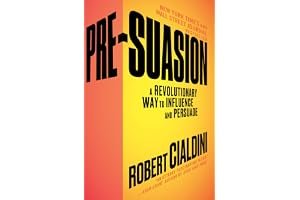


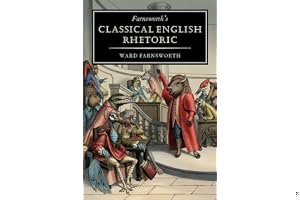
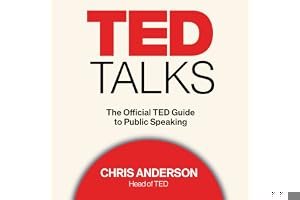










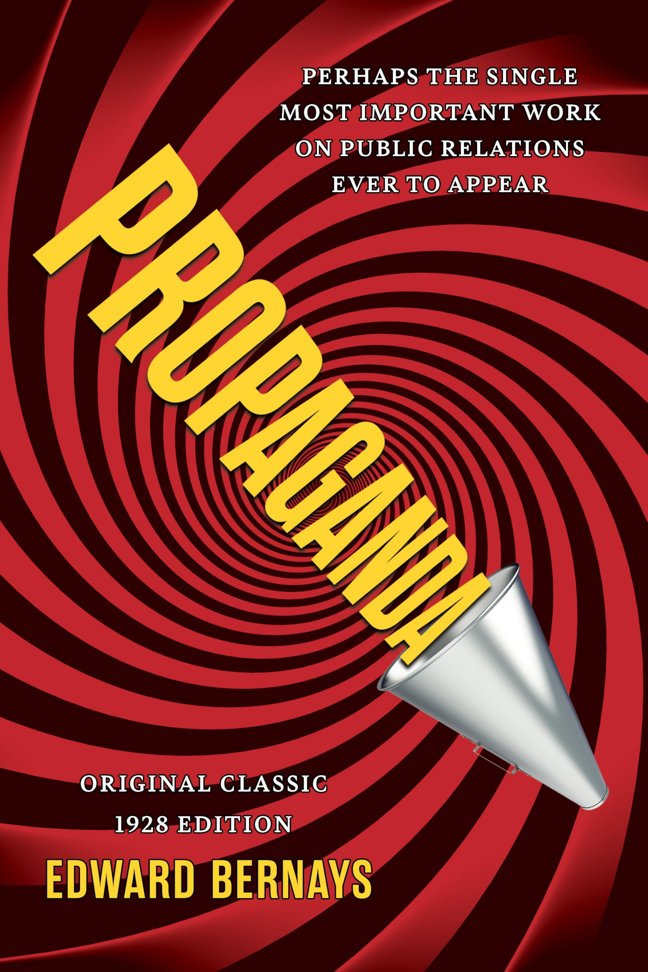











![How to Read Literature Like a Professor [Third Edition]: A Lively and Entertaining Guide to Understanding Literature, from The Great Gatsby to The Hate You Give – A Reference book cover](https://media.shortform.com/best-books/covers/318f0305d9bb13cf21328c346a748897684290ce83cea63cec9505eca4d7139c.jpg)