We've ranked the best language books using expert recommendations, sales data, and millions of reader ratings. At Shortform, we know books. Our book guides are the best in the world. Learn why.
Cover unavailable
1
The Language Instinct: How the Mind Creates Language
The classic book on the development of human language by the world’s leading expert on language and the mind.
In this classic, the world's expert on language and mind lucidly explains everything you always wanted to know about language: how it works, how children learn it, how it changes, how the brain computes it, and how it evolved. With deft use of examples of humor and wordplay, Steven Pinker weaves our vast knowledge of language into a compelling story: language is a human instinct, wired into our brains by evolution. The Language Instinct received the William James Book Prize from the American Psychological Association and the Public Interest Award from the Linguistics Society of America. This edition includes an update on advances in the science of language since The Language Instinct was first published.
…
Recommended by Lane Greene and Simon Baron-Cohen.
Lane Greene
There are two achievements in this book. One is to smuggle Linguistics 101 into a popular book, which is just fantastic. The other is his own argument about the nature of language, and the title says it all. [source]
Simon Baron-Cohen
It’s a really wonderful example of what you can do: take research into something as fundamental to human nature as language and make it accessible to a wide audience. [source]
Cover unavailable
2
The Mother Tongue: English and How It Got That Way
With dazzling wit and astonishing insight, Bill Bryson—the acclaimed author of The Lost Continent—brilliantly explores the remarkable history, eccentricities, resilience and sheer fun of the English language. From the first descent of the larynx into the throat (why you can talk but your dog can't), to the fine lost art of swearing, Bryson tells the fascinating, often uproarious story of an inadequate, second-rate tongue of peasants that developed into one of the world's largest growth industries.
…
Cover unavailable
3
The Elements of Style
William Jr. Strunk
4.8
You know the authors' names. You recognize the title. You've probably used this book yourself. And now "The Elements of Style"-the most widely read and employed English style manual-is available in a specially bound 50th Anniversary Edition that offers the title's vast audience an opportunity to own a more durable and elegantly bound edition of this time-tested classic. Offering the same content as the Fourth Edition, revised in 1999, the new casebound 50th Anniversary Edition includes a brief overview of the book's illustrious history. Used extensively by individual writers as well as high school and college students of writing, it has conveyed the principles of English style to millions of readers. This new deluxe edition makes the perfect gift for writers of any age and ability level. Fifty Years of Acclaim for "The Elements of Style," by William Strunk Jr. and E.B. White "I first read "Elements of Style" during the summer before I went off to Exeter, and I still direct my students at Harvard to their definition about the difference between 'that' and 'which.' It is the Bible for good, clear writing." -- Henry Louis Gates Jr. "For writers of all kinds and sizes the world begins and ends with Strunk and White's "Elements of Style." Only something to actually write about trumps the list of what is required to put words together in some kind of coherent way. I treasure its presence in my life and salute its fifty years of glory and accomplishment." -- Jim Lehrer ""The Elements of Style" remains an unwavering beacon of light in these grammatically troubled times. I would be lost without it." -- Ann Patchett "To the extent I know how to write clearly at all, I probably taught myself while I was teaching others -- seventh graders, in Flint, Michigan, in 1967. I taught them with a copy of Strunk & White lying in full view on my desk, sort of in the way the Gideons leave Bibles in cheap hotel rooms, as a way of saying to the hapless inhabitant: 'In case your reckless ways should strand you here, there's help.' S&W doesn't really teach you how to write, it just tantalizingly reminds you that there's an orderly way to go about it, that clarity's ever your ideal, but -- really -- it's all going to be up to you." -- Richard Ford ""The Elements of Style" never seems to go out of date. Its counsel is sound and funny, wise and unpretentious. And while its precepts are a foundation of direct communication, Strunk and White do not insist on a way of writing beyond clear expression. The rest is up to the imagination, the intelligence within." -- David Remnick, editor of "The New Yorker" "It's the toughness-the irreverence and implicit laughter-that attracted me to the little book when I was seventeen. I fell in love with Strunk & White's loathing for cant and bloviation, the ruthless cutting of crap, jargon, and extra words. For me, that skeptical directness included a tacit permission by "The Elements of Style" to break its rules on occasion: an alloy of generosity in the blade, a grace I still admire and still learn from." -- Robert Pinsky "In the quest for clarity, one can have no better guides than Strunk and White. For me, their book has been invaluable and remains essential." -- Dan Rather "Eschew surplusage! A perfect book." --Jonathan Lethem "Not until I started teaching writing and I reread "The Elements of Style" did I realize that most everything I would be teaching young writers, and everything I would be learning myself as a writer, was contained between the covers of this slim, elegant, wise little book." -- Julia Alvarez "Strunk and White seared their way into my brain long ago, and I benefit from them daily." -- Steven J. Dubner, co-author of "Freakonomics" "Since high school, I have kept a copy of this book handy. That should be unnecessary. I should, by now, have fully internalized "The Elements of Style." But sometimes I get entangled in a paragraph that refuses to be 'clear, brief, bold.' I dip back into "The Elements of Style" and am refreshed. After Scott Simon interviewed me on NPR about whether the word 'e-mail' needs a hyphen (yes, it does), some listeners, including friends of mine, wondered why I had answered in the affirmative when asked, in passing, 'Are you a drunken white man?' Those listeners misheard. 'Strunk and White man' was what Scott said." -- Roy Blount Jr. "Strunk & White--writing's good-natured law firm--still contains enough sparkling good sense to clean up the whole bloviating blogosphere." -- Thomas Mallon "I used Strunk -- that's what we called it, Strunk -- as a student at Berkeley fifty years ago. I didn't know that it was new, and that we were the first generation to be educated in "The Elements of Style." I got a firm foundation in the English language, learned to write basically, and could depict the realistic world. Then I was able to become an impressionist and expressionist." -- Maxine Hong Kingston "Strunk and White's gigantic little book must be the most readable advice on writing ever written. Side by side with Roget, Shakespeare, the Bible, and a dictionary, it's an essential for every writer's shelf." -- X.J. Kennedy" ""With what joy I welcome the fiftieth anniversary of "The Elements of Style." I am greatly indebted to this book for the invaluable help it has given me all these years." -- Horton Foote "Elegant, droll, and perfectly proportioned, and like your favorite aunt, strict but affectionate. And, like your favorite aunt, full of optimism: You can, and will, be a better writer! There has never been a better, briefer, or more loved book about the art and craft of communicating." -- Susan Orlean "This book is an essential tool. It has been of great use to me and is probably responsible for my best writing. I owe my success to Strunk and White; only the mistakes are mine." -- Ben Affleck, in "O, the Oprah Magazine" "This book is a wonderful example of teaching by example. Not only does it recommend clear and concise writing, it demonstrates it. Written in the style of a friend offering help, it is a godsend to anyone wanting to put words on paper. Thank you, Messieurs Strunk and White. And Happy Anniversary, "Elements of Style."" -- S.E. Hinton "When I began to have ... I wouldn't say arguments but conversations in my mind with Strunk and White about a few of their rules and principles, I knew I was coming into my own. If only they were still here to talk things over! No doubt their side of the exchange would be kindly put, well-informed, and wise. They'd probably help me with my side of it. What more could one want from writers reaching out to help other writers?" -- Barbara Wallraff, language columnist for "The Atlantic" "I don't believe there is a serious writer alive who doesn't have a worn copy of 'Strunk & White'on his or her bookshelf." -- Mignon Fogarty, author of "Grammar Girl's Quick and Dirty Tips ""for Better Writing" "This little book has inspired hundreds of thousands of people to write better -- partly by precept and partly by example. It continues to influence more writers than any other. It's a force for good in the world." -- Bryan A. Garner, author of "Garner's Modern American Usage" "I can think of no better guide to good writing, and I always think of this little classic with a warm heart. More importantly, I revisit its pages often. It's the one essential book on writing." -- Jay Parini, author of "Why Poetry Matters" "Clarity and simplicity have always been the goals, and this book shows the way. It has always been a lighthouse in the dark and stormy night of student prose, of all of our prose." -- Ron Carlson "The only rules you are ever going to get from me are all in Strunk and White." --Ursula K. Le Guin, from "Steering the Craft " "["The Elements of Style "is] a book to which I return from time to time, the way I periodically reread Shakespeare. I always discover something new, settle a question that has been puzzling me, or learn a principle of usage that I have been pretending to know, a pretense that has resulted in inconsistency and in the sort of errors from which I can only pray some saintly copy editor will save me." -- Francine Prose, from "Reading"" Like A Writer" ..".still a little book, small enough and important enough to carry in your pocket, as I carry mine." -- Charles Osgood "Almost every writer has a Strunk and White story. One journalism professor spends the first two weeks of school forcing his students to memorize the book. A top editor at a major paper buys copies at yard sales to distribute to her writers and interns. It has even caused love affairs. . . . Could its greatness be any more clear?" -- Jesse Sheidlower, American Editor of the "Oxford"" English Dictionary," on NPR" ""If the English language is one of the finest homes ever devised for the human spirit, "Elements" is the best guided house tour we've got." --David Gelernter, "The Wall Street Journal" ..".Should be the daily companion of anyone who writes for a living and, for that matter, anyone who writes at all." "--"Jonathan Yardley, " Greensboro (N.C.) Daily News" "No book in shorter space, with fewer words, will help any writer more than this persistent little volume." -- Herbert A. Kenny, "The Boston Globe" "Buy it, study it, enjoy it. It's as timeless as a book can be in our age of volubility." -- Charles Poore, "The New York Times" "White is one of the best stylists and most lucid minds in this country. What he says and his way of saying it are equally rewarding." "-- "Edmund Fuller, "The Wall Street Journal ""If you have any young friends who aspire to become writers, the second greatest favor you can do them is to present them with copies of "The Elements of Style." The first greatest, of course, is to shoot them now, while they're happy." -- Dorothy Parker, "Esquire"
…
Recommended by Tobi Lütke, Alina Varlanuta, Ann Handley, and 3 others.
Tobi Lütke
Founder & CEO/Shopify
My most frequently gifted book is this book because I like good writing. [source]
Alina Varlanuta
My professional path – copywriting – somehow intertwines with my unprofessional (hahaha) path – writing so I would recommend reading literature for both. Somehow reading and writing are two ways of doing the same thing: storytelling (even when you read you tell yourself a story in your own voice, bringing your personal emotion and empathy to the story you’re reading). The only difference is that when I’m reading, panic is far away from me, in a safe place. Nevertheless, the words below helped me rewrite and think twice before adding an exclamation point: The Elements of Style. [source]
Bill Nye
This is my guide. I accept that I’ll never write anything as good as the introductory essay by the author. It’s brilliant. [source]
Immensely helpful and illuminating to any aspiring writer, Stephen King’s critically lauded, classic bestseller shares the experiences, habits, and convictions that have shaped him and his work.
"Long live the King" hailed Entertainment Weekly upon publication of Stephen King’s On Writing. Part memoir, part master class by one of the bestselling authors of all time, this superb volume is a revealing and practical view of the writer’s craft, comprising the basic tools of the trade every writer must have. King’s advice is grounded in his vivid memories from childhood through his emergence as a writer, from his struggling early career to his widely reported, near-fatal accident in 1999—and how the inextricable link between writing and living spurred his recovery. Brilliantly structured, friendly and inspiring, On Writing will empower and entertain everyone who reads it—fans, writers, and anyone who loves a great story well told.
I read a bunch of books on writing before I wrote my first book and the two that stuck with me were Stephen King’s book and “On Writing Well” by Zinsser (which is a bit on the technical side). [source]
Alina Varlanuta
My professional path – copywriting – somehow intertwines with my unprofessional (hahaha) path – writing so I would recommend reading literature for both. Somehow reading and writing are two ways of doing the same thing: storytelling (even when you read you tell yourself a story in your own voice, bringing your personal emotion and empathy to the story you’re reading). The only difference is that when I’m reading, panic is far away from me, in a safe place. Nevertheless, the words below helped me rewrite and think twice before adding an exclamation point: On Writing by Stephen King. [source]
Andrew Cowan
Yes. It is a surprise to a lot of people that this book is so widely read on university campuses and so widely recommended by teachers of writing. Students love it. It’s bracing: there’s no nonsense. He says somewhere in the foreword or preface that it is a short book because most books are filled with bullshit and he is determined not to offer bullshit but to tell it like it is. [source]
Cover unavailable
5
Eats, Shoots & Leaves: The Zero Tolerance Approach to Punctuation
Lynne Truss
4.7
In Eats, Shoots & Leaves, former editor Lynne Truss, gravely concerned about our current grammatical state, boldly defends proper punctuation. She proclaims, in her delightfully urbane, witty, and very English way, that it is time to look at our commas and semicolons and see them as the wonderful and necessary things they are. Using examples from literature, history, neighborhood signage, and her own imagination, Truss shows how meaning is shaped by commas and apostrophes, and the hilarious consequences of punctuation gone awry.
Featuring a foreword by Frank McCourt, and interspersed with a lively history of punctuation from the invention of the question mark in the time of Charlemagne to George Orwell shunning the semicolon, Eats, Shoots & Leaves makes a powerful case for the preservation of proper punctuation.
…
Cover unavailable
6
The Professor and the Madman: A Tale of Murder, Insanity and the Making of the Oxford English Dictionary
Simon Winchester
4.6
The Professor and the Madman, masterfully researched and eloquently written, is an extraordinary tale of madness, genius, and the incredible obsessions of two remarkable men that led to the making of the Oxford English Dictionary -- and literary history. The compilation of the OED, begun in 1857, was one of the most ambitious projects ever undertaken. As definitions were collected, the overseeing committee, led by Professor James Murray, discovered that one man, Dr. W. C. Minor, had submitted more than ten thousand. When the committee insisted on honoring him, a shocking truth came to light: Dr. Minor, an American Civil War veteran, was also an inmate at an asylum for the criminally insane.
…
Recommended by Peter Gilliver.
Peter Gilliver
W.C. Minor was a member of the public, but he just happened to be a murderer who was banged up in Broadmoor. [source]
Cover unavailable
7
Fluent Forever: How to Learn Any Language Fast and Never Forget It
Gabriel Wyner
4.6
The ultimate rapid language-learning guide! For those who’ve despaired of ever learning a foreign language, here, finally, is a book that will make the words stick.At thirty years old, Gabriel Wyner speaks six languages fluently. He didn’t learn them in school -- who does? -- rather, he learned them in the past few years, working on his own and practicing on the subway, using simple techniques and free online resources. In Fluent Forever Wyner reveals what he’s discovered. The greatest challenge to learning a foreign language is the challenge of memory; there are just too many words and too many rules. For every new word we learn, we seem to forget two old ones, and as a result, fluency can seem out of reach. Fluent Forever tackles this challenge head-on. With empathy for the language-challenged and abundant humor, Wyner deconstructs the learning process, revealing how to build a foreign language in your mind from the ground up.
Starting with pronunciation, you’ll learn how to rewire your ears and turn foreign sounds into familiar sounds. You'll retrain your tongue to produce those sounds accurately, using tricks from opera singers and actors. Next, you'll begin to tackle words, and connect sounds and spellings to imagery, rather than translations, which will enable you to think in a foreign language. And with the help of sophisticated spaced-repetition techniques, you'll be able to memorize hundreds of words a month in minutes every day. Soon, you'll gain the ability to learn grammar and more difficult abstract words--without the tedious drills and exercises of language classes and grammar books.
This is brain hacking at its most exciting, taking what we know about neuroscience and linguistics and using it to create the most efficient and enjoyable way to learn a foreign language in the spare minutes of your day.
…
Cover unavailable
8
Through the Language Glass: Why the World Looks Different in Other Languages
Guy Deutscher
4.6
Linguistics has long shied away from claiming any link between a language and the culture of its speakers. But now, acclaimed linguist Guy Deutscher has dared to reopen the issue. Can culture influence language —and vice versa? Can different languages lead their speakers to different thoughts? Could our experience of the world depend on whether our language has a word for "blue"?
Challenging the consensus that the fundaments of language are hard-wired in our genes and thus universal, Deutscher argues that the answer to all these questions is—yes. In thrilling fashion, he takes us from Homer to Darwin, from Yale to the Amazon, from how to name the rainbow to why Russian water —a "she"— becomes a "he" once you dip a tea bag into her, demonstrating that language does in fact reflect culture in ways that are anything but trivial.
…
Recommended by Lane Greene.
Lane Greene
Yes – ish. Deustcher does a great job of first taking on those old notions. He goes back to the romantic 20th century ideas, in particular to a writer called Benjamin Lee Whorf. Whorf was an amateur linguist, he was largely self-taught but spent a lot of time doing research on this topic. Whorf famously claimed that the Hopi Indians of the American Southwest did not have a concept of time like westerners, because their language lacked those words. It turns out that he was wrong on both counts. His claims were based on interviews with one Hopi Indian in New York. Whorf was just off base and later researchers showed that. [source]
Cover unavailable
9
The Etymologicon: A Circular Stroll through the Hidden Connections of the English Language
Mark Forsyt
4.6
The Etymologicon springs from Mark Forsyth's Inky Fool blog on the strange connections between words. It's an occasionally ribald, frequently witty and unerringly erudite guided tour of the secret labyrinth that lurks beneath the English language, taking in monks and monkeys, film buffs and buffaloes, and explaining precisely what the Rolling Stones have to do with gardening.
Cover unavailable
10
On Writing Well: The Classic Guide To Writing Nonfiction
On Writing Well has been praised for its sound advice, its clarity and the warmth of its style. It is a book for everybody who wants to learn how to write or who needs to do some writing to get through the day, as almost everybody does in the age of e-mail and the Internet. Whether you want to write about people or places, science and technology, business, sports, the arts or about yourself in the increasingly popular memoir genre, On Writing Well offers you fundamental priciples as well as the insights of a distinguished writer and teacher. With more than a million copies sold, this volume has stood the test of time and remains a valuable resource for writers and would-be writers.
I read a bunch of books on writing before I wrote my first book and the two that stuck with me were Stephen King’s book and “On Writing Well” by Zinsser (which is a bit on the technical side). [source]
Tim O'Reilly
Founder/O'Reilly Media
On Writing Well, by William Zinsser. I wouldn't say this book influenced me, since my principles of writing were established long before I read it. However, it does capture many things that I believe about effective writing. [source]
Great blunt advice about writing better non-fiction. So inspiring. [source]
Cover unavailable
11
Empires of the Word: A Language History of the World
Nicholas Ostler
4.5
An unusual and authoritative 'natural history of languages' that narrates the ways in which one language has superseded or outlasted another at different times in history. The story of the world in the last five thousand years is above all the story of its languages. Some shared language is what binds any community together, and makes possible both the living of a common history and the telling of it. Yet, the history of the world's great languages has rarely been examined. Empires of the Word is the first to bring together the tales in all their glorious variety: the amazing innovations - in education, culture and diplomacy - devised by speakers in the Middle East; the uncanny resilience of Chinese throughout twenty centuries of invasions; the progress of Sanskrit from north India to Java and Japan; the struggle that gave birth to the languages of modern Europe; and the global spread of English.
…
Recommended by Henry Hitchings.
Henry Hitchings
It’s a history of all languages – some have called it a macro-history. The ambition of this book is really extraordinary. There have been lots of histories of English, and there are lots of histories of other languages in those languages, but actually to try and write a history of the whole of language is an incredibly audacious thing, and Ostler pulls it off. [source]
Cover unavailable
12
The Unfolding of Language: An Evolutionary Tour of Mankind's Greatest Invention
Guy Deutscher
4.5
Blending the spirit of Eats, Shoots & Leaves with the science of The Language Instinct, an original inquiry into the development of that most essential-and mysterious-of human creations: Language
Language is mankind's greatest invention-except, of course, that it was never invented." So begins linguist Guy Deutscher's enthralling investigation into the genesis and evolution of language. If we started off with rudimentary utterances on the level of "man throw spear," how did we end up with sophisticated grammars, enormous vocabularies, and intricately nuanced degrees of meaning?
Drawing on recent groundbreaking discoveries in modern linguistics, Deutscher exposes the elusive forces of creation at work in human communication, giving us fresh insight into how language emerges, evolves, and decays. He traces the evolution of linguistic complexity from an early "Me Tarzan" stage to such elaborate single-word constructions as the Turkish sehirlilestiremediklerimizdensiniz ("you are one of those whom we couldn't turn into a town dweller"). Arguing that destruction and creation in language are intimately entwined, Deutscher shows how these processes are continuously in operation, generating new words, new structures, and new meanings.
As entertaining as it is erudite, The Unfolding of Language moves nimbly from ancient Babylonian to American idiom, from the central role of metaphor to the staggering triumph of design that is the Semitic verb, to tell the dramatic story and explain the genius behind a uniquely human faculty.
…
Cover unavailable
13
The Stuff of Thought: Language as a Window into Human Nature
Steven Pinker
4.5
In The Stuff of Thought: Language as a Window into Human Nature, Steven Pinker looks at how the relationship between words and thoughts can help us understand who we are.
Why do so many swear words involve topics like sex, bodily functions or the divine? Why do some children's names thrive while others fall out of favour? Why do we threaten and bribe and seduce in such elaborate, often comical ways? How can a choice of metaphor damn a politician or start a war? And why do we rarely say what we actually mean?
Language, as Steven Pinker shows, is at the heart of our lives, and through the way we use it - whether to inform, persuade, entertain or manipulate - we can glimpse the very essence of what makes us human.
'Awesome' Daily Mail
'Highly entertaining ... funny and thought-provoking' The Times
'Anyone interested in language should read The Stuff of Thought ... moments of genuine revelation and some very good jokes' Mark Haddon, Sunday Telegraph Books of the Year
'No one writes about language as clearly as Steven Pinker, and this is his best book yet' David Crystal, Financial Times
Steven Pinker is the Johnstone Family Professor in the Department of Psychology at Harvard University. Until 2003, he taught in the Department of Brain and Cognitive Sciences at MIT. He conducts research on language and cognition, writes for publications such as The New York Times, Time and Slate, and is the author of six books, including The Language Instinct, How the Mind Works and The Blank Slate.
…
Recommended by Dominic Steil, Henry Hitchings, and Melissa Mohr.
Dominic Steil
One of the books that had the biggest impact on . [source]
Melissa Mohr
This is about language more generally, but it has a great chapter on swearing. It’s a really good shorter summary, where he hits all the highlights about swearing and physiology in terms of how it works in the brain and the effects it has on your body. [source]
Cover unavailable
14
In the Land of Invented Languages: Adventures in Linguistic Creativity, Madness, and Genius
Arika Okrent
4.5
Here is the captivating story of humankind’s enduring quest to build a better language—and overcome the curse of Babel. Just about everyone has heard of Esperanto, which was nothing less than one man’s attempt to bring about world peace by means of linguistic solidarity. And every Star Trek fan knows about Klingon. But few people have heard of Babm, Blissymbolics, Loglan (not to be confused with Lojban), and the nearly nine hundred other invented languages that represent the hard work, high hopes, and full-blown delusions of so many misguided souls over the centuries. With intelligence and humor, Arika Okrent has written a truly original and enlightening book for all word freaks, grammar geeks, and plain old language lovers.
…
Recommended by Lane Greene.
Lane Greene
I love this book. People have been inventing languages for hundreds of years. Think of Esperanto, or even the Na’vi language in Avatar. People have been doing this for a really long time and the underlying story – which is a funny, sweet, and sad one – is that many people have felt that existing languages were bad for one reason or another. They fall into two camps. Some people feel their natural language is ambiguous, illogical and messy, so have invented languages because they want to order the world, and force people’s thoughts into order. It draws on that thinking that we talked about earlier: people think that if the language is disordered it leads to disordered thinking. And it’s true that language is disordered and ambiguous, and vague. Any human language is that way sometimes. But these people who have tried to create perfect logical languages have failed to get anyone to learn them. They’re almost unlearnable, or extremely difficult. [source]
Cover unavailable
15
The 5 Love Languages: The Secret to Love that Lasts
Couples who understand each other's love language hold a priceless advantage in the quest for love that lasts a lifetime -- they know how to effectively and consistently make each other feel truly and deeply loved. That gift never fades away.
Recommended by Dustin Moskovitz, James Altucher, Kaci Lambe Kai, and 1 others.
Dustin Moskovitz
Co-founder/Facebook and Asana
Dustin Moskovitz recommended this book on Twitter. [source]
Kaci Lambe Kai
The Five Love Languages by Gary Chapman impacted how I interpret and receive love. Not just romantically, but in my friendships and business relationships. I had several personal and professional relationships that improved when I could appreciate that their "love language" was different than mine. I could at least see their efforts as an attempt at showing me love and kindness, even if it wasn't how I best receive or give love. This is pivotal. And if you can separate out the idea of it being for romantic partners only, I'd say this is critical reading for leaders. Not everyone is motivated and feels appreciation by a raise. Sometimes, public recognition of kind words or an act of kindness will feel better than anything else you can do. [source]
Pedro Cortés
The books that had the biggest impact are the ones that are controversial and challenge people's beliefs around work, relationships, life, and money most of them were things I already thought about (that's how I found them or decided to read them) but just by putting it in an actionable and structured way it made me think 100x more clearly about my goals and beliefs. Such examples could be the 4hww, Rich Dad Poor Dad, F.U. Money, The Five Love Languages, So good they can't ignore, Predictably Irrational and Ego is the Enemy are the ones who stand out the most. [source]
Cover unavailable
16
Our Magnificent Bastard Tongue: The Untold History of English
John McWhorter
4.5
A survey of the quirks and quandaries of the English language, focusing on our strange and wonderful grammar
Why do we say "I am reading a catalog" instead of "I read a catalog"? Why do we say "do" at all? Is the way we speak a reflection of our cultural values? Delving into these provocative topics and more, Our Magnificent Bastard Language distills hundreds of years of fascinating lore into one lively history.
Covering such turning points as the little-known Celtic and Welsh influences on English, the impact of the Viking raids and the Norman Conquest, and the Germanic invasions that started it all during the fifth century ad, John McWhorter narrates this colorful evolution with vigor. Drawing on revolutionary genetic and linguistic research as well as a cache of remarkable trivia about the origins of English words and syntax patterns, Our Magnificent Bastard Tongue ultimately demonstrates the arbitrary, maddening nature of English--and its ironic simplicity due to its role as a streamlined lingua franca during the early formation of Britain. This is the book that language aficionados worldwide have been waiting for (and no, it's not a sin to end a sentence with a preposition).
…
Cover unavailable
17
Because Internet: Understanding the New Rules of Language
Gretchen McCulloch
4.4
A linguistically informed look at how our digital world is transforming the English language.
Language is humanity's most spectacular open-source project, and the internet is making our language change faster and in more interesting ways than ever before. Internet conversations are structured by the shape of our apps and platforms, from the grammar of status updates to the protocols of comments and @replies. Linguistically inventive online communities spread new slang and jargon with dizzying speed. What's more, social media is a vast laboratory of unedited, unfiltered words where we can watch language evolve in real time.
Even the most absurd-looking slang has genuine patterns behind it. Internet linguist Gretchen McCulloch explores the deep forces that shape human language and influence the way we communicate with one another. She explains how your first social internet experience influences whether you prefer "LOL" or "lol," why ~sparkly tildes~ succeeded where centuries of proposals for irony punctuation had failed, what emoji have in common with physical gestures, and how the artfully disarrayed language of animal memes like lolcats and doggo made them more likely to spread.
Because Internet is essential reading for anyone who's ever puzzled over how to punctuate a text message or wondered where memes come from. It's the perfect book for understanding how the internet is changing the English language, why that's a good thing, and what our online interactions reveal about who we are.
…
Recommended by Andy Baio, Erin McKean, Jen Golbeck, and 4 others.
Andy Baio
"Because Internet" is out today! @GretchenAMcC's book is an insightful look at how the internet is changing language, and I love it. Highly recommended! https://t.co/vWVR1fRJyF [source]
Erin McKean
Because Internet is a joyful exploration of the newest creative upswell of English—if you want to understand why you love emoji, share memes, and don't make a sound when lol-ing, you need this book! [source]
Jen Golbeck
This book is really great! Also, it's legit funny that my submitted review used ~*sparkle text*~ in reference to the discussion in the book, and the edited review only has *bold with asterisks* and no ~. I'm sure @GretchenAMcC would have thoughts! https://t.co/kP8CnMkuSX [source]
Cover unavailable
18
The Power of Babel: A Natural History of Language
John McWhorter
4.4
There are approximately six thousand languages on Earth today, each a descendant of the tongue first spoken by Homo sapiens some 150,000 years ago. While laying out how languages mix and mutate over time, linguistics professor John McWhorter reminds us of the variety within the species that speaks them, and argues that, contrary to popular perception, language is not immutable and hidebound, but a living, dynamic entity that adapts itself to an ever-changing human environment.
Full of humor and imaginative insight, The Power of Babel draws its illustrative examples from languages around the world, including pidgins, Creoles, and nonstandard dialects.
…
Cover unavailable
19
Metaphors We Live By
George Lakoff, Mark Johnson
4.4
The now-classic Metaphors We Live By changed our understanding of metaphor and its role in language and the mind. Metaphor, the authors explain, is a fundamental mechanism of mind, one that allows us to use what we know about our physical and social experience to provide understanding of countless other subjects. Because such metaphors structure our most basic understandings of our experience, they are "metaphors we live by", metaphors that can shape our perceptions and actions without our ever noticing them.
In this updated edition of Lakoff and Johnson's influential book, the authors supply an afterword surveying how their theory of metaphor has developed within the cognitive sciences to become central to the contemporary understanding of how we think and how we express our thoughts in language.
I became aware of all the metaphors embedded in the way I speak and, therefore, the way I think about what is and what isn’t possible. [source]
Cover unavailable
20
Made in America: An Informal History of the English Language in the United States
Bill Bryson
4.4
In Made in America, Bill Bryson de-mythologizes his native land, explaining how a dusty hamlet with neither woods nor holly became Hollywood; how the Wild West wasn't won; why Americans say "lootenant" and "Toosday"; and exactly why Mr. Yankee Doodle called his feathered cap "Macaroni."
Cover unavailable
21
The Sense of Style: The Thinking Person's Guide to Writing in the 21st Century
Steven Pinker
4.4
A short and entertaining book on the modern art of writing well by New York Times bestselling author Steven Pinker Why is so much writing so bad, and how can we make it better? Is the English language being corrupted by texting and social media? Do the kids today even care about good writing? Why should any of us care?
In The Sense of Style, the bestselling linguist and cognitive scientist Steven Pinker answers these questions and more. Rethinking the usage guide for the twenty-first century, Pinker doesn’t carp about the decline of language or recycle pet peeves from the rulebooks of a century ago. Instead, he applies insights from the sciences of language and mind to the challenge of crafting clear, coherent, and stylish prose.
In this short, cheerful, and eminently practical book, Pinker shows how writing depends on imagination, empathy, coherence, grammatical knowhow, and an ability to savor and reverse engineer the good prose of others. He replaces dogma about usage with reason and evidence, allowing writers and editors to apply the guidelines judiciously, rather than robotically, being mindful of what they are designed to accomplish.
Filled with examples of great and gruesome prose, Pinker shows us how the art of writing can be a form of pleasurable mastery and a fascinating intellectual topic in its own right.
…
Recommended by Ellen Lupton and 1 others.
Cover unavailable
22
Word by Word: The Secret Life of Dictionaries
Kory Stamper
4.4
Brimming with intelligence and personality, a vastly entertaining account of how dictionaries are made a must read for word mavens.
While most of us might take dictionaries for granted, the process of writing them is in fact as lively and dynamic as language itself. With sharp wit and irreverence, Kory Stamper cracks open the complex, obsessive world of lexicography--from the agonizing decisions about what and how to define, to the knotty questions of usage in an ever-changing language. She explains why small words are the most difficult to define (have you ever tried to define is ?), how it can take nine months to define a single word, and how our biases about language and pronunciation can have tremendous social influence. Throughout, Stamper brings to life the hallowed halls (and highly idiosyncratic cubicles) of Merriam-Webster, a world inhabited by quirky, erudite individuals who quietly shape the way we communicate. A sure delight for all lovers of words, Word by Word might also quietly improve readers grasp and use of the English language."
…
Cover unavailable
23
The Adventure of English: The Biography of a Language
Melvyn Bragg
4.3
English is understood by around two thousand million people across the world. Yet it was very nearly wiped out in its early years. Melvyn Bragg explores the story of the English language - from its beginnings as a minor Germanic dialect to its position today as a truly established global language.
The latest edition of the communication guide that has sold more than 1,000,000 copies
An enlightening look at how peaceful communication can create compassionate connections with family, friends, and other acquaintances, this international bestseller uses stories, examples, and sample dialogues to provide solutions to communication problems both at home and in the workplace. Guidance is provided on identifying and articulating feelings and needs, expressing anger fully, and exploring the power of empathy in order to speak honestly without creating hostility, break patterns of thinking that lead to anger and depression, and communicate compassionately. Included in the new edition is a chapter on conflict resolution and mediation.
…
Recommended by Dustin Moskovitz, Satya Nadella, Chad Dickerson, and 3 others.
Upon becoming CEO, Nadella confronted Microsoft’s legendarily combative culture by urging his new reports to read this book, which preaches the power of empathy, self-awareness, and authenticity in collaboration in the workplace, at home, and beyond. Like many of his favorites, it was first recommended to him by his wife, Anu: “I’m heavily influenced by the books she reads more than the books I read [source]
Chad Dickerson
Rosenberg’s book Nonviolent Communication is a life-changing text. Reading just now & his concept of “life-alienating communication” basically describes the worst of twitter. Love this, though: “Out beyond ideas of wrongdoing & right-doing, there is a field. I’ll meet you there.” https://t.co/9f9gK6pVSE [source]
Cover unavailable
25
The Elements of Eloquence: How to Turn the Perfect English Phrase
Mark Forsyth
4.3
The idiosyncratic, erudite and brilliantly funny new book from Mark Forsyth, bestselling author of The Etymologicon and The Horologicon.
In an age unhealthily obsessed with substance, this is a book on the importance of pure style.
From classic poetry to pop lyrics and from the King James Bible to advertising slogans, Mark Forsyth explains the secrets that make a phrase - such as ‘Tiger, tiger, burning bright’ or ‘To be or not to be’ - memorable.
In his inimitably entertaining and witty style he takes apart famous lines and shows how you too can write like Shakespeare or Oscar Wilde. Whether you’re aiming for literary immortality or just an unforgettable one-liner, The Elements of Eloquence proves that you don't need to have anything to say - you simply need to say it well.
…
Recommended by Bill Liao.
Bill Liao
The human world occurs in language so best get good at it! [source]
Cover unavailable
26
Made to Stick: Why Some Ideas Survive and Others Die
NEW YORK TIMES BESTSELLER - The instant classic about why some ideas thrive, why others die, and how to improve your idea's chances--essential reading in the "fake news" era.
Mark Twain once observed, "A lie can get halfway around the world before the truth can even get its boots on." His observation rings true: Urban legends, conspiracy theories, and bogus news stories circulate effortlessly. Meanwhile, people with important ideas--entrepreneurs, teachers, politicians, and journalists--struggle to make them "stick."
In Made to Stick, Chip and Dan Heath reveal the anatomy of ideas that stick and explain ways to make ideas stickier, such as applying the human scale principle, using the Velcro Theory of Memory, and creating curiosity gaps. Along the way, we discover that sticky messages of all kinds--from the infamous "kidney theft ring" hoax to a coach's lessons on sportsmanship to a vision for a new product at Sony--draw their power from the same six traits.
Made to Stick will transform the way you communicate. It's a fast-paced tour of success stories (and failures): the Nobel Prize-winning scientist who drank a glass of bacteria to prove a point about stomach ulcers; the charities who make use of the Mother Teresa Effect; the elementary-school teacher whose simulation actually prevented racial prejudice.
Provocative, eye-opening, and often surprisingly funny, Made to Stick shows us the vital principles of winning ideas--and tells us how we can apply these rules to making our own messages stick.
@conorgil My all-time favorite example of research communication is The Selfish Gene. Astonishingly effective at explaining deep research ideas/findings to a lay reader. A book with great advice: https://t.co/QD1sM2o0z6 (It isn't specific to research but still super valuable.) [source]
Bill Liao
The Book "Made to Stick" combined with "The Poetics" by Aristotle really helped me to see the power of telling great stories with surprises in them and every time I meet a start-up I can always make a contribution to their pitch. [source]
Cristian-Dragos Baciu
I highly recommend all the books written by the Heath brothers, especially Made to Stick: Why Some Ideas Survive And Others Die. This one's a must-read for marketers. The reason I enjoyed their work so much is because they offer real-life stories and insights that makes it so much easier for the reader to imprint that information in his mind [source]
Cover unavailable
27
Proust and the Squid: The Story and Science of the Reading Brain
The act of reading is a miracle. Every new reader's brain possesses the extraordinary capacity to rearrange itself beyond its original abilities in order to understand written symbols. But how does the brain learn to read? As world-renowned cognitive neuroscientist and scholar of reading Maryanne Wolf explains in this impassioned book, we taught our brain to read only a few thousand years ago, and in the process changed the intellectual evolution of our species.
Wolf tells us that the brain that examined tiny clay tablets in the cuneiform script of the Sumerians is configured differently from the brain that reads alphabets or of one literate in today's technology.
There are critical implications to such an evolving brain. Just as writing reduced the need for memory, the proliferation of information and the particular requirements of digital culture may short-circuit some of written language's unique contributions—with potentially profound consequences for our future.
Turning her attention to the development of the individual reading brain, Wolf draws on her expertise in dyslexia to investigate what happens when the brain finds it difficult to read. Interweaving her vast knowledge of neuroscience, psychology, literature, and linguistics, Wolf takes the reader from the brains of a pre-literate Homer to a literacy-ambivalent Plato, from an infant listening to Goodnight Moon to an expert reader of Proust, and finally to an often misunderstood child with dyslexia whose gifts may be as real as the challenges he or she faces.
As we come to appreciate how the evolution and development of reading have changed the very arrangement of our brain and our intellectual life, we begin to realize with ever greater comprehension that we truly are what we read. Ambitious, provocative, and rich with examples, Proust and the Squid celebrates reading, one of the single most remarkable inventions in history. Once embarked on this magnificent story of the reading brain, you will never again take for granted your ability to absorb the written word.
…
Recommended by Peg Tyre.
Peg Tyre
Read this and you will never again hand your iPhone to your child in the stroller. You will start talking to them and pointing out colours. [source]
Cover unavailable
28
Bird By Bird: Some Instructions on Writing and Life
Anne Lamott
4.3
Thirty years ago my older brother, who was ten years old at the time, was trying to get a report on birds written that he'd had three months to write. It was due the next day. We were out at our family cabin in Bolinas, and he was at the kitchen table close to tears, surrounded by binder paper and pencils and unopened books on birds, immobilized by the hugeness of the task ahead. Then my father sat down beside him, put his arm around my brother's shoulder, and said, 'Bird by bird, buddy. Just take it bird by bird.'" "Superb writing advice... hilarious, helpful and provocative." -- "New York Times Book Review."
"A warm, generous and hilarious guide through the writer's world and its treacherous swamps." -- "Los Angeles Times."
"A gift to all of us mortals who write or ever wanted to write... sidesplittingly funny, patiently wise and alternately cranky and kind -- a reveille to get off our duffs and start writing "now," while we still can." -- "Seattle Times.
Bird by Bird is one of my absolute favorite books, and I gift it to everybody, which I should probably also give to startup founders, quite frankly. A lot of the lessons are the same. But you can get to your destination, even though you can only see 20 feet in front of you. [source]
It was wonderful to read these two provocative books of essays by two incredibly wise and compassionate women. … Anne Lamott’s book is ostensibly about the art of writing, but really it too is about life and how to tackle the problems, temptations and opportunities life throws at us. Both will make you think and both made me a better person this year. [source]
Cover unavailable
29
1984
George Orwell
4.3
A PBS Great American Read Top 100 Pick
With extraordinary relevance and renewed popularity, George Orwell’s 1984 takes on new life in this hardcover edition.
“Orwell saw, to his credit, that the act of falsifying reality is only secondarily a way of changing perceptions. It is, above all, a way of asserting power.”—The New Yorker
In 1984, London is a grim city in the totalitarian state of Oceania where Big Brother is always watching you and the Thought Police can practically read your mind. Winston Smith is a man in grave danger for the simple reason that his memory still functions. Drawn into a forbidden love affair, Winston finds the courage to join a secret revolutionary organization called The Brotherhood, dedicated to the destruction of the Party. Together with his beloved Julia, he hazards his life in a deadly match against the powers that be.
Lionel Trilling said of Orwell’s masterpiece “1984 is a profound, terrifying, and wholly fascinating book. It is a fantasy of the political future, and like any such fantasy, serves its author as a magnifying device for an examination of the present.” Though the year 1984 now exists in the past, Orwell’s novel remains an urgent call for the individual willing to speak truth to power.
Today is World Book Day, a wonderful opportunity to address this #ChallengeRichard sent in by Mike Gonzalez of New Jersey: Make a list of your top 65 books to read in a lifetime. [source]
called this book "one of his favorite" and recommended it to the hires. The book also inspired one the greatest TV ad (made by Jobs) [source]
Andra Zaharia
These books and their core ideas have stuck with me the most and continue to guide me when I hit crossroads along the way. [source]
Cover unavailable
30
Lingo: A Language Spotter's Guide to Europe
Gaston Dorre
4.3
Welcome to Europe as you've never known it before, seen through the peculiarities of its languages and dialects. Combining linguistics and cultural history, Gaston Dorren takes us on an intriguing tour of the continent, from Proto-Indo-European (the common ancestor of most European languages) to the rise and rise of English, via the complexities of Welsh plurals and Czech pronunciation. Along the way we learn why Esperanto will never catch on, how the language of William the Conqueror lives on in the Channel Islands and why Finnish is the easiest European language.
Surprising, witty and full of extraordinary facts, this book will change the way you think about the languages around you. Polyglot Gaston Dorren might even persuade you that English is like Chinese.
…
Cover unavailable
31
Is That a Fish in Your Ear? Translation and the Meaning of Everything
David Bellos
4.3
Funny and surprising on every page, Is That a Fish in Your Ear? offers readers new insight into the mystery of how we come to know what someone else means—whether we wish to understand Astérix cartoons or a foreign head of state. Using translation as his lens, David Bellos shows how much we can learn about ourselves by exploring the ways we use translation, from the historical roots of written language to the stylistic choices of Ingmar Bergman, from the United Nations General Assembly to the significance of James Cameron's Avatar.
Is That a Fish in Your Ear? ranges across human experience to describe why translation sits deep within us all, and why we need it in so many situations, from the spread of religion to our appreciation of literature; indeed, Bellos claims that all writers are by definition translators. Written with joie de vivre, reveling both in misunderstanding and communication, littered with wonderful asides, it promises any reader new eyes through which to understand the world. In the words of Bellos: "The practice of translation rests on two presuppositions. The first is that we are all different: we speak different tongues, and see the world in ways that are deeply influenced by the particular features of the tongue that we speak. The second is that we are all the same—that we can share the same broad and narrow kinds of feelings, information, understandings, and so forth. Without both of these suppositions, translation could not exist. Nor could anything we would like to call social life. Translation is another name for the human condition."
…
Cover unavailable
32
The Story of English
Robert McCrum, Robert Macneil, William Cran
4.3
Now revised, The Story of English is the first book to tell the whole story of the English language. Originally paired with a major PBS miniseries, this book presents a stimulating and comprehensive record of spoken and written English—from its Anglo-Saxon origins some two thousand years ago to the present day, when English is the dominant language of commerce and culture with more than one billion English speakers around the world. From Cockney, Scouse, and Scots to Gulla, Singlish, Franglais, and the latest African American slang, this sweeping history of the English language is the essential introduction for anyone who wants to know more about our common tongue.
…
Cover unavailable
33
How to Read a Book: The Classic Guide to Intelligent Reading
With more than half a million paperback copies in print and now in this stunning hardcover keepsake edition, How to Read a Book is the classic and definitive guide to reading comprehension and retention for students of literature, scholars across disciplines, and anyone who just loves to read.
Originally written in 1940 and first published by Simon & Schuster in 1972, How to Read a Book introduces and elucidates the various levels of reading and how to achieve them in order to gain the most understanding and insight from any book. From elementary reading, through systematic skimming and inspectional reading, to speed reading and beyond, readers will learn when and how to “judge a book by its cover,” perceive structure no matter the prose, read critically, and extract the author’s message from the text.
Also included are specific reading techniques that work best for reading particular genres, whether they be practical books, imaginative literature, plays, poetry, history, science and mathematics, philosophy, or social science works. A recommended reading list and multiple comprehension tests are incorporated as well in order to measure progress in reading skills, speed, and understanding.
As poignant and applicable today as it was nearly seventy-five years ago, this beautiful hardcover edition is the perfect way for you to discover or rediscover How to Read a Book, a rare phenomenon and the best and most successful guide to reading comprehension.
…
Recommended by Sergey Brin, Ben Chestnut, Kevin Systrom, and 3 others.
had “How to Read a Book” by Mortimer J. Adler as one of his most recommended books. [source]
Ben Chestnut
Founder & CEO/MailChimp
I also love How to Read a Book by Mortimer Adler. I’m teaching its tips to my children while they’re young, so they can consume books much faster and have more fun reading. [source]
Kevin Systrom
The author's thesis is that the most important part of reading a book is to actually read the table of contents and familiarize yourself with the major structure of the book. [source]
Cover unavailable
34
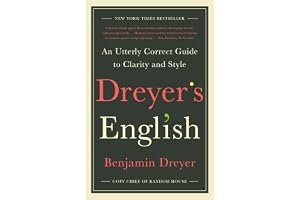
Dreyer's English: An Utterly Correct Guide to Clarity and Style
Benjamin Dreyer
4.3
A witty, informative guide to writing "good English" from Random House's longtime copy chief and one of Twitter's leading enforcers of proper grammar--a twenty-first-century Elements of Style.
As authoritative as it is amusing, this book distills everything Benjamin Dreyer has learned from the hundreds of books he has copyedited, including works by Elizabeth Strout, E. L. Doctorow, and Frank Rich, into a useful guide not just for writers but for everyone who wants to put their best foot forward in writing prose. Dreyer offers lessons on the ins and outs of punctuation and grammar, including how to navigate the words he calls "the confusables," like tricky homophones; the myriad ways to use (and misuse) a comma; and how to recognize--though not necessarily do away with--the passive voice. (Hint: If you can plausibly add "by zombies" to the end of a sentence, it's passive.) People are sharing their writing more than ever--on blogs, on Twitter--and this book lays out, clearly and comprehensibly, everything writers can do to keep readers focused on the real reason writers write: to communicate their ideas clearly and effectively. Chock-full of advice, insider wisdom, and fun facts on the rules (and nonrules) of the English language, this book will prove invaluable to everyone who wants to shore up their writing skills, mandatory for people who spend their time editing and shaping other people's prose, and--perhaps best of all--an utter treat for anyone who simply revels in language.
…
Recommended by Christina Reynolds.
Christina Reynolds
Yes, it’s a book about copy editing. And even though I disagree with his take on the Oxford comma, it’s a delightful must read. https://t.co/UJ0hTAYXsx [source]
Cover unavailable
35
The Stories of English
David Crystal
4.2
The English language is now accepted as the global lingua franca of the modern age, spoken or written in by over a quarter of the human race. But how did it evolve? How did a language spoken originally by a few thousand Anglo-Saxons become one used by more than 1,500 million? What developments can be seen as we move from Beowulf to Chaucer to Shakespeare to Dickens and the present day? A host of fascinating questions are answered in The Stories of English, a groundbreaking history of the language by David Crystal.
…
Recommended by Nicholas Ostler.
Nicholas Ostler
David Crystal is a friend of mine. Conveniently he has said in print that English may find itself in the service of mankind forever. When I challenged him he said: “I only said it may”, suggesting that he also thinks it may not. From my attempt to show that the world’s linguistic future may be very diverse, he’s a useful straw man to attack. But he’s an extremely estimable linguist and knows he can’t know the future any more than I can. [source]
Cover unavailable
36
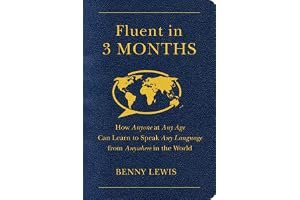
Fluent in 3 Months: How Anyone at Any Age Can Learn to Speak Any Language from Anywhere in the World
Benny Lewis
4.2
Benny Lewis, who speaks over ten languages—all self-taught—runs the largest language-learning blog in the world, Fluent In 3 Months. Lewis is a full-time "language hacker," someone who devotes all of his time to finding better, faster, and more efficient ways to learn languages. Fluent in 3 Months: How Anyone at Any Age Can Learn to Speak Any Language from Anywhere in the World is a new blueprint for fast language learning. Lewis argues that you don't need a great memory or "the language gene" to learn a language quickly, and debunks a number of long-held beliefs, such as adults not being as good of language learners as children.
…
Cover unavailable
37
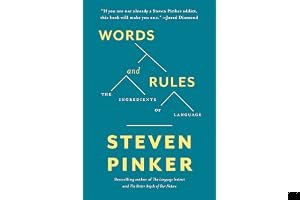
Words and Rules: The Ingredients of Language
Steven Pinker
4.2
In Words and Rules, Steven Pinker explains the mysteries of language by examining a single construction from a dozen viewpoints, proposing that the essence of language is a mental dictionary of memorized words, and a mental grammar of creative rules.
Cover unavailable
38
The Art of Language Invention: From Horse-Lords to Dark Elves, the Words Behind World-Building
David J. Peterson
4.2
An insider’s tour through the construction of invented languages from the bestselling author and creator of languages for the HBO series Game of Thrones and the Syfy series Defiance
From master language creator David J. Peterson comes a creative guide to language construction for sci-fi and fantasy fans, writers, game creators, and language lovers. Peterson offers a captivating overview of language creation, covering its history from Tolkien’s creations and Klingon to today’s thriving global community of conlangers. He provides the essential tools necessary for inventing and evolving new languages, using examples from a variety of languages including his own creations, punctuated with references to everything from Star Wars to Michael Jackson. Along the way, behind-the-scenes stories lift the curtain on how he built languages like Dothraki for HBO’s Game of Thrones and Shiväisith for Marvel’s Thor: The Dark World, and an included phrasebook will start fans speaking Peterson’s constructed languages. The Art of Language Invention is an inside look at a fascinating culture and an engaging entry into a flourishing art form—and it might be the most fun you’ll ever have with linguistics.
…
Cover unavailable
39
Words on the Move: Why English Won't—and Can't—Sit Still (Like, Literally)
John McWhorter
4.2
A bestselling linguist takes us on a lively tour of how the English language is evolving before our eyes -- and why we should embrace this transformation and not fight it
Language is always changing -- but we tend not to like it. We understand that new words must be created for new things, but the way English is spoken today rubs many of us the wrong way. Whether it’s the use of literally to mean “figuratively” rather than “by the letter,” or the way young people use LOL and like, or business jargon like What’s the ask? -- it often seems as if the language is deteriorating before our eyes.
But the truth is different and a lot less scary, as John McWhorter shows in this delightful and eye-opening exploration of how English has always been in motion and continues to evolve today. Drawing examples from everyday life and employing a generous helping of humor, he shows that these shifts are a natural process common to all languages, and that we should embrace and appreciate these changes, not condemn them.
Words on the Move opens our eyes to the surprising backstories to the words and expressions we use every day. Did you know that silly once meant “blessed”? Or that ought was the original past tense of owe? Or that the suffix -ly in adverbs is actually a remnant of the word like? And have you ever wondered why some people from New Orleans sound as if they come from Brooklyn?
McWhorter encourages us to marvel at the dynamism and resilience of the English language, and his book offers a lively journey through which we discover that words are ever on the move and our lives are all the richer for it.
…
Cover unavailable
40
What Every Body is Saying: An Ex-FBI Agent's Guide to Speed-Reading People
Read this book and send your nonverbal intelligence soaring. Joe Navarro, a former FBI counterintelligence officer and a recognized expert on nonverbal behavior, explains how to "speed-read" people: decode sentiments and behaviors, avoid hidden pitfalls, and look for deceptive behaviors. You'll also learn how your body language can influence what your boss, family, friends, and strangers think of you. You will discover:
The ancient survival instincts that drive body language Why the face is the least likely place to gauge a person's true feelings What thumbs, feet, and eyelids reveal about moods and motives The most powerful behaviors that reveal our confidence and true sentiments Simple nonverbals that instantly establish trust Simple nonverbals that instantly communicate authority Filled with examples from Navarro's professional experience, this definitive book offers a powerful new way to navigate your world.
Malcolm Gladwell, host of the podcast Revisionist History and author of the #1 New York Times bestseller Outliers, offers a powerful examination of our interactions with strangers -- and why they often go wrong.
How did Fidel Castro fool the CIA for a generation? Why did Neville Chamberlain think he could trust Adolf Hitler? Why are campus sexual assaults on the rise? Do television sitcoms teach us something about the way we relate to each other that isn't true?
While tackling these questions, Malcolm Gladwell was not solely writing a book for the page. He was also producing for the ear. In the audiobook version of Talking to Strangers, you'll hear the voices of people he interviewed--scientists, criminologists, military psychologists. Court transcripts are brought to life with re-enactments. You actually hear the contentious arrest of Sandra Bland by the side of the road in Texas. As Gladwell revisits the deceptions of Bernie Madoff, the trial of Amanda Knox, and the suicide of Sylvia Plath, you hear directly from many of the players in these real-life tragedies. There's even a theme song - Janelle Monae's "Hell You Talmbout."
Something is very wrong, Gladwell argues, with the tools and strategies we use to make sense of people we don't know. And because we don't know how to talk to strangers, we are inviting conflict and misunderstanding in ways that have a profound effect on our lives and our world.
I'll put here what I emailed Malcolm when I finished the book: "Just finished your new book in one sitting yesterday. So good. You are at the height of your powers and remain an inspiration to all of us trying to master an un-masterable profession." It's a little less practical or self-improvement oriented than his previous books, but far more thought provoking. [source]
Nilofer Merchant
An interesting analysis/ essay re Gladwell’s latest book —> https://t.co/5Ey1maNRyI [source]
Cover unavailable
42
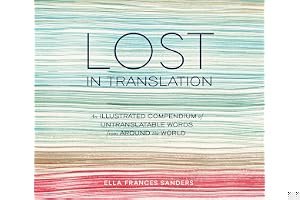
Lost in Translation: An Illustrated Compendium of Untranslatable Words from Around the World
Ella Frances Sanders
4.2
An artistic collection of more than 50 drawings featuring unique, funny, and poignant foreign words that have no direct translation into English.
Did you know that the Japanese language has a word to express the way sunlight filters through the leaves of trees? Or that there’s a Finnish word for the distance a reindeer can travel before needing to rest? Lost in Translation brings to life more than fifty words that don’t have direct English translations with charming illustrations of their tender, poignant, and humorous definitions. Often these words provide insight into the cultures they come from, such as the Brazilian Portuguese word for running your fingers through a lover’s hair, the Italian word for being moved to tears by a story, or the Swedish word for a third cup of coffee.
In this clever and beautifully rendered exploration of the subtleties of communication, you’ll find new ways to express yourself while getting lost in the artistry of imperfect translation.
…
Cover unavailable
43
The Phantom Tollbooth
Norton Juster, Jules Feiffer
4.2
Hailed as “a classic. . . . humorous, full of warmth and real invention” (The New Yorker), this beloved story -first published more than fifty years ago- introduces readers to Milo and his adventures in the Lands Beyond.
For Milo, everything’s a bore. When a tollbooth mysteriously appears in his room, he drives through only because he’s got nothing better to do. But on the other side, things seem different. Milo visits the Island of Conclusions (you get there by jumping), learns about time from a ticking watchdog named Tock, and even embarks on a quest to rescue Rhyme and Reason! Somewhere along the way, Milo realizes something astonishing. Life is far from dull. In fact, it’s exciting beyond his wildest dreams. . . .
…
Recommended by Clara Jeffery and Julie Zhuo.
Clara Jeffery
The best kids book ever https://t.co/9f3UGfmPdi [source]
Julie Zhuo
To this day, I can think of no better book that captures the imagination, wonder and adventure of life that children so intuitively grasp. [source]
Cover unavailable
44
The Story of English in 100 Words
David Crystal
4.2
The world's foremost expert on the English language takes us on an entertaining and eye-opening tour of the history of our vernacular through the ages.
In this entertaining history of the world's most ubiquitous language, David Crystal draws on one hundred words that best illustrate the huge variety of sources, influences and events that have helped to shape our vernacular since the first definitively English word — ‘roe’ — was written down on the femur of a roe deer in the fifth century.
Featuring ancient words ('loaf'), cutting edge terms that reflect our world ('twittersphere'), indispensable words that shape our tongue ('and', 'what'), fanciful words ('fopdoodle') and even obscene expressions (the "c word"...), David Crystal takes readers on a tour of the winding byways of our language via the rude, the obscure and the downright surprising.
…
Cover unavailable
45
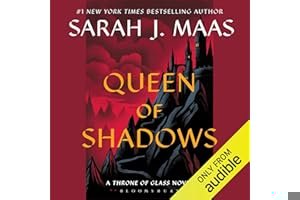
Queen of Shadows (Throne of Glass, #4)
Sarah J. Maas
4.2
The Queen has returned.
Everyone Celaena Sardothien loves has been taken from her. But she’s at last returned to the empire—for vengeance, to rescue her once-glorious kingdom, and to confront the shadows of her past…
She has embraced her identity as Aelin Galathynius, Queen of Terrasen. But before she can reclaim her throne, she must fight.
She will fight for her cousin, a warrior prepared to die for her. She will fight for her friend, a young man trapped in an unspeakable prison. And she will fight for her people, enslaved to a brutal king and awaiting their lost queen’s triumphant return.
The fourth volume in the New York Times bestselling series continues Celaena’s epic journey and builds to a passionate, agonizing crescendo that might just shatter her world.
…
Cover unavailable
46
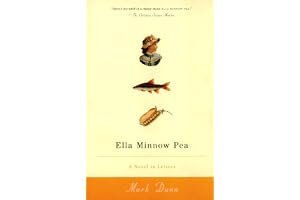
Ella Minnow Pea: A Novel in Letters
Mark Dunn
4.2
Ella Minnow Pea is a girl living happily on the fictional island of Nollop off the coast of South Carolina. Nollop was named after Nevin Nollop, author of the immortal pangram,* "The quick brown fox jumps over the lazy dog." Now Ella finds herself acting to save her friends, family, and fellow citizens from the encroaching totalitarianism of the island's Council, which has banned the use of certain letters of the alphabet as they fall from a memorial statue of Nevin Nollop. As the letters progressively drop from the statue they also disappear from the novel. The result is both a hilarious and moving story of one girl's fight for freedom of expression, as well as a linguistic tour de force sure to delight word lovers everywhere.
*pangram: a sentence or phrase that includes all the letters of the alphabet
…
Cover unavailable
47
The First Word: The Search for the Origins of Language
Christine Kenneally
4.2
Recommended by Lane Greene.
Lane Greene
This is a book about words and language and evolution. Christine Kenneally, the author, starts off by describing how, surprisingly enough, this subject was completely ignored by linguistics for a really long time. One of the big official international linguistic bodies in the late 19th century banned all study of the topic, saying that it was unknowable. Even when most intellectuals accepted evolution was a fact, they figured it was too hard to figure out whether language itself had evolved. Then she tells the 20th century story of how Noam Chomsky basically sighed and shrugged his shoulders and said: ‘Not interesting, can’t know it,’ and didn’t want to get into it for a very long time. Stephen Jay Gould, an evolutionary biologist, came to see it as a ‘spandrel’ of some other structural change, basically a by-product of evolution – something that was adapted for another purpose, but repurposed for language. [source]
Cover unavailable
48
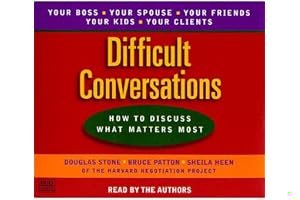
Difficult Conversations: How to Discuss What Matters Most
The 10th-anniversary edition of the New York Times business bestseller-now updated with "Answers to Ten Questions People Ask"
We attempt or avoid difficult conversations every day-whether dealing with an underperforming employee, disagreeing with a spouse, or negotiating with a client. From the Harvard Negotiation Project, the organization that brought you Getting to Yes, Difficult Conversationsprovides a step-by-step approach to having those tough conversations with less stress and more success. you'll learn how to:
? Decipher the underlying structure of every difficult conversation ? Start a conversation without defensiveness ? Listen for the meaning of what is not said ? Stay balanced in the face of attacks and accusations ? Move from emotion to productive problem solving
…
Recommended by April Wensel, Auren Hoffman, Bogdan Lucaciu, and 1 others.
April Wensel
@amyvpellegrini I really liked a book called Difficult Conversations. I also love the book Nonviolent Communication for conflicts. [source]
I’m re-reading “Difficult Conversations”. It’s written by the “Harvard Negotiation Project” guys that also wrote “Getting to Yes” and “Thanks for the Feedback”. It allowed me to navigate super important conversations by shifting from a “who’s right” stance to a learning stance. Giving it another spin after two years from the first read as I'm working on my assertiveness. [source]
Cover unavailable
49
The Horse, the Wheel, and Language: How Bronze-Age Riders from the Eurasian Steppes Shaped the Modern World
David W. Anthony
4.2
Roughly half the world's population speaks languages derived from a shared linguistic source known as Proto-Indo-European. But who were the early speakers of this ancient mother tongue, and how did they manage to spread it around the globe? Until now their identity has remained a tantalizing mystery to linguists, archaeologists, and even Nazis seeking the roots of the Aryan race. The Horse, the Wheel, and Language lifts the veil that has long shrouded these original Indo-European speakers, and reveals how their domestication of horses and use of the wheel spread language and transformed civilization.
Linking prehistoric archaeological remains with the development of language, David Anthony identifies the prehistoric peoples of central Eurasia's steppe grasslands as the original speakers of Proto-Indo-European, and shows how their innovative use of the ox wagon, horseback riding, and the warrior's chariot turned the Eurasian steppes into a thriving transcontinental corridor of communication, commerce, and cultural exchange. He explains how they spread their traditions and gave rise to important advances in copper mining, warfare, and patron-client political institutions, thereby ushering in an era of vibrant social change. Anthony also describes his fascinating discovery of how the wear from bits on ancient horse teeth reveals the origins of horseback riding.
The Horse, the Wheel, and Language solves a puzzle that has vexed scholars for two centuries--the source of the Indo-European languages and English--and recovers a magnificent and influential civilization from the past.
…
Cover unavailable
50
Kingdom of Ash (Throne of Glass, #7)
Sarah J. Maas
4.2
The final battle is here.
Aelin Galathynius has vowed to save her people―but at a tremendous cost. Locked within an iron coffin by the Queen of the Fae, Aelin must draw upon her fiery will as she endures months of torture. The knowledge that yielding to Maeve will doom those she loves keeps her from breaking, but her resolve is unraveling with each passing day…
With Aelin captured, friends and allies are scattered to different fates. Some bonds will grow even deeper, while others will be severed forever. As destinies weave together at last, all must fight if Erilea is to have any hope of salvation.
Years in the making, Sarah J. Maas's New York Times bestselling Throne of Glass series draws to an explosive conclusion as Aelin fights to save herself―and the promise of a better world.
…
Cover unavailable
51
The Horologicon: A Day's Jaunt Through the Lost Words of the English Language
Mark Forsyth
4.1
The Horologicon (or book of hours) gives you the most extraordinary words in the English language, arranged according to the hour of the day when you really need them.
Do you wake up feeling rough? Then you’re philogrobolized. Pretending to work? That’s fudgelling, which may lead to rizzling if you feel sleepy after lunch, though by dinner time you will have become a sparkling deipnosophist.
From Mark Forsyth, author of the bestselling The Etymologicon, this is a book of weird words for familiar situations. From ante-jentacular to snudge by way of quafftide and wamblecropt, at last you can say, with utter accuracy, exactly what you mean.
…
Cover unavailable
52
Don't Sleep, There Are Snakes: Life and Language in the Amazonian Jungle
Daniel Leonard Everett
4.1
A riveting account of the astonishing experiences and discoveries made by linguist Daniel Everett while he lived with the Pirahã, a small tribe of Amazonian Indians in central Brazil.
Everett, then a Christian missionary, arrived among the Pirahã in 1977–with his wife and three young children–intending to convert them. What he found was a language that defies all existing linguistic theories and reflects a way of life that evades contemporary understanding: The Pirahã have no counting system and no fixed terms for color. They have no concept of war or of personal property. They live entirely in the present. Everett became obsessed with their language and its cultural and linguistic implications, and with the remarkable contentment with which they live–so much so that he eventually lost his faith in the God he’d hoped to introduce to them.
Over three decades, Everett spent a total of seven years among the Pirahã, and his account of this lasting sojourn is an engrossing exploration of language that questions modern linguistic theory. It is also an anthropological investigation, an adventure story, and a riveting memoir of a life profoundly affected by exposure to a different culture. Written with extraordinary acuity, sensitivity, and openness, it is fascinating from first to last, rich with unparalleled insight into the nature of language, thought, and life itself.
…
Cover unavailable
53
Pre-Suasion: A Revolutionary Way to Influence and Persuade
The author of the legendary bestseller Influence, social psychologist Robert Cialdini shines a light on effective persuasion and reveals that the secret doesn’t lie in the message itself, but in the key moment before that message is delivered.
What separates effective communicators from truly successful persuaders? Using the same combination of rigorous scientific research and accessibility that made his Influence an iconic bestseller, Robert Cialdini explains how to capitalize on the essential window of time before you deliver an important message. This “privileged moment for change” prepares people to be receptive to a message before they experience it. Optimal persuasion is achieved only through optimal pre-suasion. In other words, to change “minds” a pre-suader must also change “states of mind.”
His first solo work in over thirty years, Cialdini’s Pre-Suasion draws on his extensive experience as the most cited social psychologist of our time and explains the techniques a person should implement to become a master persuader. Altering a listener’s attitudes, beliefs, or experiences isn’t necessary, says Cialdini—all that’s required is for a communicator to redirect the audience’s focus of attention before a relevant action.
From studies on advertising imagery to treating opiate addiction, from the annual letters of Berkshire Hathaway to the annals of history, Cialdini draws on an array of studies and narratives to outline the specific techniques you can use on online marketing campaigns and even effective wartime propaganda. He illustrates how the artful diversion of attention leads to successful pre-suasion and gets your targeted audience primed and ready to say, “Yes.”
I just finished reading Pre-Suasion, or I should say I just finished skimming Pre-Suasion by Robert Cialdini. I don’t think I needed to read the entire book to get the point, but it was still good to read what I did. [source]
Cover unavailable
54
Verity
Colleen Hoover
4.1
Lowen Ashleigh is a struggling writer on the brink of financial ruin when she accepts the job offer of a lifetime. Jeremy Crawford, husband of bestselling author Verity Crawford, has hired Lowen to complete the remaining books in a successful series his injured wife is unable to finish.
Lowen arrives at the Crawford home, ready to sort through years of Verity's notes and outlines, hoping to find enough material to get her started. What Lowen doesn't expect to uncover in the chaotic office is an unfinished autobiography Verity never intended for anyone to read. Page after page of bone-chilling admissions, including Verity's recollection of what really happened the day her daughter died.
Lowen decides to keep the manuscript hidden from Jeremy, knowing its contents would devastate the already grieving father. But as Lowen's feelings for Jeremy begin to intensify, she recognizes all the ways she could benefit if he were to read his wife's words. After all, no matter how devoted Jeremy is to his injured wife, a truth this horrifying would make it impossible for him to continue to love her.
A standalone romantic thriller from #1 New York Times bestselling author Colleen Hoover.
…
Cover unavailable
55
How Language Works: How Babies Babble, Words Change Meaning, and Languages Live or Die
David Crystal
4.1
In this fascinating survey of everything from how sounds become speech to how names work, David Crystal answers every question you might ever have had about the nuts and bolts of language in his usual highly illuminating way. Along the way, we find out about eyebrow flashes, whistling languages, how parents teach their children to speak, how politeness travels across languages and how the way we talk show not just how old we are but where we're from and even who we want to be.
Whether looking at the whistle languages of the Canary Islands or describing the layout of the human throat, this landmark book will enrich the lives of everyone who reads it.
…
Cover unavailable
56
The Secret Life of Pronouns: What Our Words Say About Us
James W. Pennebaker
4.1
We spend our lives communicating. In the last fifty years, we've zoomed through radically different forms of communication, from typewriters to tablet computers, text messages to tweets. We generate more and more words with each passing day. Hiding in that deluge of language are amazing insights into who we are, how we think, and what we feel.
In The Secret Life of Pronouns, social psychologist and language expert James W. Pennebaker uses his groundbreaking research in computational linguistics-in essence, counting the frequency of words we use-to show that our language carries secrets about our feelings, our self-concept, and our social intelligence. Our most forgettable words, such as pronouns and prepositions, can be the most revealing: their patterns are as distinctive as fingerprints.
Using innovative analytic techniques, Pennebaker X-rays everything from Craigslist advertisements to the Federalist Papers-or your own writing, in quizzes you can take yourself-to yield unexpected insights. Who would have predicted that the high school student who uses too many verbs in her college admissions essay is likely to make lower grades in college? Or that a world leader's use of pronouns could reliably presage whether he led his country into war? You'll learn why it's bad when politicians use "we" instead of "I," what Lady Gaga and William Butler Yeats have in common, and how Ebenezer Scrooge's syntax hints at his self-deception and repressed emotion. Barack Obama, Sylvia Plath, and King Lear are among the figures who make cameo appearances in this sprightly, surprising tour of what our words are saying-whether we mean them to or not.
…
Cover unavailable
57
The Secret Language of Birthdays: Your Complete Personology Guide for Each Day of the Year
Gary Goldschneider and Joost Elffers
4.1
Combining astrology, numerology, and pure psychic intuition, The Secret Language of Birthdays is a wholly unique compilation that reveals one's strengths, weaknesses, and major issues while providing practical advice and spiritual guidance.
Many have suspected that your birthday affects your personality and how you relate to others. Nineteen years and over one million copies later, The Secret Language of Birthdays continues to fascinate readers by describing the characteristics associated with being born on a particular day. The 366 personality profiles are based on astrology, numerology, the tarot, and Gary Goldschneider's observations of more than 14,000 people. Your strengths, weaknesses, and major concerns will be illuminated while you are given practical advice and spiritual guidance. After you study your profile, it will be hard to resist examining those of family, friends, colleagues, and even celebrities.
…
Cover unavailable
58
Talk Like TED: The 9 Public-Speaking Secrets of the World's Top Minds
Ideas are the currency of the twenty-first century. In order to succeed, you need to be able to sell your ideas persuasively. This ability is the single greatest skill that will help you accomplish your dreams. Many people have a fear of public speaking or are insecure about their ability to give a successful presentation. Now public speaking coach and bestselling author Carmine Gallo explores what makes a great presentation by examining the widely acclaimed TED Talks, which have redefined the elements of a successful presentation and become the gold standard for public speaking. TED ? which stands for technology, entertainment, and design ? brings together the world's leading thinkers. These are the presentations that set the world on fire, and the techniques that top TED speakers use will make any presentation more dynamic, fire up any team, and give anyone the confidence to overcome their fear of public speaking.
In his book, Carmine Gallo has broken down hundreds of TED talks and interviewed the most popular TED presenters, as well as the top researchers in the fields of psychology, communications, and neuroscience to reveal the nine secrets of all successful TED presentations. Gallo's step-by-step method makes it possible for anyone to deliver a presentation that is engaging, persuasive, and memorable.
Carmine Gallo's top 10 Wall Street Journal Bestseller Talk Like TED will give anyone who is insecure about their public speaking abilities the tools to communicate the ideas that matter most to them, the skill to win over hearts and minds, and the confidence to deliver the talk of their lives.
The opinions expressed by Carmine Gallo in TALK LIKE TED are his own. His book is not endorsed, sponsored or authorized by TED Conferences, LLC or its affiliates.
…
Recommended by Emma Wedekind, Radu Marcusu, and Shaen Yeo.
A book that most recently made a difference for me was Talk Like TED: The 9 Public-Speaking Secrets of the World's Top Minds. My IMWorld speech this year benefited tremendously from Carmine Gallo's framing of the nine secrets of all time successful TED presentations. I believe Gallo's step-by-step method makes it possible for anyone to sell their ideas persuasively when delivering a presentation. … Talk like TED is NOT an optional book whatever career path you want to follow. A person can have the best idea in the World, but if that person can not convince enough people, it doesn’t matter. I’ve seen too many good ideas dim due to lack of pitching skills. This book will help you raise your game when it comes to selling your ideas. [source]
Shaen Yeo
In the book Talk like TED, there were a few suggestions on how to make my speech better. I tweaked the way I speak using the advice, and produced a speech like never before. I had many people coming up to shake my hands and offer me name cards! [source]
Cover unavailable
59
The Loom of Language: An Approach to the Mastery of Many Languages
Frederick Bodmer, Lancelot Thomas Hogben
4.1
It is at the same time a history of language, a guide to foreign tongues, and a method for learning them. It shows, through basic vocabularies, family resemblances of languages—Teutonic, Romance, Greek—helpful tricks of translation, key combinations of roots and phonetic patterns. It presents by common-sense methods the most helpful approach to the mastery of many languages; it condenses vocabulary to a minimum of essential words; it simplifies grammar in an entirely new way; and it teaches a languages as it is actually used in everyday life.
But this book is more than a guide to foreign languages; it goes deep into the roots of all knowledge as it explores the history of speech. It lights up the dim pathways of prehistory and unfolds the story of the slow growth of human expression from the most primitive signs and sounds to the elaborate variations of the highest cultures. Without language no knowledge would be possible; here we see how language is at once the source and the reservoir of all we know.
Eric Weinstein recommended this book on Twitter. [source]
Cover unavailable
60
The Lexicographer's Dilemma: The Evolution of "Proper" English, from Shakespeare to South Park
Jack Lynch
4.1
For language buffs and lexicographers, copy editors and proofreaders, and anyone who appreciates the connection between language and culture—the illuminating story of “proper English.”
In its long history, the English language has had many lawmakers—those who have tried to regulate, or otherwise organize, the way we speak. The Lexicographer’s Dilemma offers the first narrative history of these endeavors, showing clearly that what we now regard as the only “correct” way to speak emerged out of specific historical and social conditions over the course of centuries.
As literary historian Jack Lynch has discovered, every rule has a human history, and the characters peopling his narrative are as interesting for their obsession as for their erudition. The struggle between prescriptivists, who prescribe a correct approach, and descriptivists, who analyze how language works, is at the heart of Lynch’s story. From the sharp-tongued satirist Jonathan Swift, who called for a governmentsponsored academy to issue rulings on the language, and the polymath Samuel Johnson, who put dictionaries on a new footing, to John Horne Tooke, the crackpot linguist whose bizarre theories continue to baffle scholars; Joseph Priestley, whose political radicalism prompted riots; and the ever-crotchety Noah Webster, whose goal was to Americanize the English language—Lynch brings to life a varied cast as illuminating as it is entertaining.
Grammatical “rules” or “laws” are not like the law of gravity, or laws against theft or murder—they’re more like rules of etiquette, made by fallible people and subject to change. Charting the evolution of English, Jack Lynch puts today’s debates—whether about Ebonics in the schools or split infinitives in the New York Times—in a rich historical context, and makes us appreciate anew the hard-won standards we now enjoy.
…
Cover unavailable
61
Anguished English: An Anthology of Accidental Assaults Upon Our Language
Richard Lederer
4.1
From bloopers and blunders to Signs of the Times to Mixed Up Metaphors...from Two-Headed Headlines to Mangling Modifiers, Anguished English is a treasury of assaults upon our common language.
Cover unavailable
62
The 16 Undeniable Laws of Communication: Apply Them and Make the Most of Your Message
The Meaning of Everything: The Story of the Oxford English Dictionary
Simon Winchester
4.1
From the best-selling author of The Professor and the Madman, The Map That Changed the World, and Krakatoa comes a truly wonderful celebration of the English language and of its unrivaled treasure house, the Oxford English Dictionary. Writing with marvelous brio, Winchester first serves up a lightning history of the English language--"so vast, so sprawling, so wonderfully unwieldy"--and pays homage to the great dictionary makers, from "the irredeemably famous" Samuel Johnson to the "short, pale, smug and boastful" schoolmaster from New Hartford, Noah Webster. He then turns his unmatched talent for story-telling to the making of this most venerable of dictionaries.
In this fast-paced narrative, the reader will discover lively portraits of such key figures as the brilliant but tubercular first editor Herbert Coleridge (grandson of the poet), the colorful, boisterous Frederick Furnivall (who left the project in a shambles), and James Augustus Henry Murray, who spent a half-century bringing the project to fruition.
Winchester lovingly describes the nuts-and-bolts of dictionary making--how unexpectedly tricky the dictionary entry for marzipan was, or how fraternity turned out so much longer and monkey so much more ancient than anticipated--and how bondmaid was left out completely, its slips found lurking under a pile of books long after the B-volume had gone to press. We visit the ugly corrugated iron structure that Murray grandly dubbed the Scriptorium--the Scrippy or the Shed, as locals called it--and meet some of the legion of volunteers, from Fitzedward Hall, a bitter hermit obsessively devoted to the OED, to W.C. Minor, whose story is one of dangerous madness, ineluctable sadness, and ultimate redemption.
The Meaning of Everything is a scintillating account of the creation of the greatest monument ever erected to a living language. Simon Winchester's supple, vigorous prose illuminates this dauntingly ambitious project--a seventy-year odyssey to create the grandfather of all word-books, the world's unrivalled uber-dictionary.
…
Cover unavailable
64
Politics and the English Language and Other Essays (Paperback)
George Orwell
4.1
A collection of short essays by George Orwell.
Cover unavailable
65
Spy the Lie: Former CIA Officers Teach You How to Detect Deception
Three former CIA officers--among the world's foremost authorities on recognizing deceptive behavior--share their proven techniques for uncovering a lie
Imagine how different your life would be if you could tell whether someone was lying or telling you the truth. Be it hiring a new employee, investing in a financial interest, speaking with your child about drugs, confronting your significant other about suspected infidelity, or even dating someone new, having the ability to unmask a lie can have far-reaching and even life-altering consequences.
As former CIA officers, Philip Houston, Michael Floyd, and Susan Carnicero are among the world's best at recognizing deceptive behavior. "Spy the Lie "chronicles the captivating story of how they used a methodology Houston developed to detect deception in the counterterrorism and criminal investigation realms, and shows how these techniques can be applied in our daily lives.
Through fascinating anecdotes from their intelligence careers, the authors teach readers how to recognize deceptive behaviors, both verbal and nonverbal, that we all tend to display when we respond to questions untruthfully. For the first time, they share with the general public their methodology and their secrets to the art of asking questions that elicit the truth.
""
"Spy the Lie" is a game-changer. You may never read another book that has a more dramatic impact on your career, your relationships, or your future.
…
Recommended by Bogdan Savonea.
Bogdan Savonea
"What five books would you recommend to young people interested in your career path & why? ""Spy the lie"" by Philip Houston and Michael Floyd and ""The subtle art of not giving a f*ck"" + ""Everything is f*cked"" by Mark Manson. I'd leave the remaining 2 books to their spirit of discovery." [source]
Cover unavailable
66
The Riddle of the Labyrinth: The Quest to Crack an Ancient Code
Margalit Fox
4.1
In the tradition of Simon Winchester and Dava Sobel, The Riddle of the Labyrinth: The Quest to Crack an Ancient Code tells one of the most intriguing stories in the history of language, masterfully blending history, linguistics, and cryptology with an elegantly wrought narrative. When famed archaeologist Arthur Evans unearthed the ruins of a sophisticated Bronze Age civilization that flowered on Crete 1,000 years before Greece's Classical Age, he discovered a cache of ancient tablets, Europe's earliest written records. For half a century, the meaning of the inscriptions, and even the language in which they were written, would remain a mystery. Award-winning New York Times journalist Margalit Fox's riveting real-life intellectual detective story travels from the Bronze Age Aegean--the era of Odysseus, Agamemnon, and Helen--to the turn of the 20th century and the work of charismatic English archeologist Arthur Evans, to the colorful personal stories of the decipherers. These include Michael Ventris, the brilliant amateur who deciphered the script but met with a sudden, mysterious death that may have been a direct consequence of the decipherment; and Alice Kober, the unsung heroine of the story whose painstaking work allowed Ventris to crack the code.
…
Cover unavailable
67
The Story of Human Language
John McWhorter
4.1
"I never met a person who is not interested in language," wrote the bestselling author and psychologist Steven Pinker. There are good reasons that language fascinates us so. It not only defines humans as a species, placing us head and shoulders above even the most proficient animal communicators, but it also beguiles us with its endless mysteries. For example:
• How did different languages come to be? • Why isn’t there just a single language? • How does a language change, and when it does, is that change indicative of decay or growth? • How does a language become extinct?
Dr. John McWhorter, one of America’s leading linguists and a frequent commentator on network television and National Public Radio, addresses these and other questions as he takes you on an in-depth, 36-lecture tour of the development of human language, showing how a single tongue spoken 150,000 years ago has evolved into the estimated 6,000 languages used around the world today.
An accomplished scholar, Professor McWhorter is also a skilled popularizer, whose book The Power of Babel was called "startling, provocative, and remarkably entertaining," by the San Diego Union-Tribune.
The London Times called him "a born teacher." And Steven Pinker, best known as the author of The Language Instinct, offered this praise for the book: "McWhorter’s arguments are sharply reasoned, refreshingly honest, and thoroughly original."
Course Lecture Titles 1. What Is Language? 2. When Language Began 3. How Language Changes—Sound Change 4. How Language Changes—Building New Material 5. How Language Changes—Meaning and Order 6. How Language Changes—Many Directions 7. How Language Changes—Modern English 8. Language Families—Indo-European 9. Language Families—Tracing Indo-European 10. Language Families—Diversity of Structures 11. Language Families—Clues to the Past 12. The Case Against the World’s First Language 13. The Case For the World’s First Language 14. Dialects—Subspecies of Species 15. Dialects—Where Do You Draw the Line? 16. Dialects—Two Tongues in One Mouth 17. Dialects—The Standard as Token of the Past 18. Dialects—Spoken Style, Written Style 19. Dialects—The Fallacy of Blackboard Grammar 20. Language Mixture—Words 21. Language Mixture—Grammar 22. Language Mixture—Language Areas 23. Language Develops Beyond the Call of Duty 24. Language Interrupted 25. A New Perspective on the Story of English 26. Does Culture Drive Language Change? 27. Language Starts Over—Pidgins 28. Language Starts Over—Creoles I 29. Language Starts Over—Creoles II 30. Language Starts Over—Signs of the New 31. Language Starts Over—The Creole Continuum 32. What Is Black English? 33. Language Death—The Problem 34. Language Death—Prognosis 35. Artificial Languages 36. Finale—Master Class
…
Cover unavailable
68
Shady Characters: The Secret Life of Punctuation, Symbols & Other Typographical Marks
Keith Houston
4.1
From ancient Greece to the Internet—via the Renaissance, Gutenberg, and Madison Avenue—Shady Characters exposes the secret history of punctuation.
A charming and indispensable tour of two thousand years of the written word, Shady Characters weaves a fascinating trail across the parallel histories of language and typography. Whether investigating the asterisk (*) and dagger (†)--which alternately illuminated and skewered heretical verses of the early Bible--or the at sign (@), which languished in obscurity for centuries until rescued by the Internet, Keith Houston draws on myriad sources to chart the life and times of these enigmatic squiggles, both exotic (¶) and everyday (&).
From the Library of Alexandria to the halls of Bell Labs, figures as diverse as Charlemagne, Vladimir Nabokov, and George W. Bush cross paths with marks as obscure as the interrobang (‽) and as divisive as the dash (--). Ancient Roman graffiti, Venetian trading shorthand, Cold War double agents, and Madison Avenue round out an ever more diverse set of episodes, characters, and artifacts.
Richly illustrated, ranging across time, typographies, and countries, Shady Characters will delight and entertain all who cherish the unpredictable and surprising in the writing life.
…
Cover unavailable
69
The Unabridged Devil's Dictionary
Ambrose Bierce, David E. Schultz, S. T. Joshi
4.1
If we could only put aside our civil pose and say what we really thought, the world would be a lot like the one alluded to in The Unabridged Devil’s Dictionary. There, a bore is "a person who talks when you wish him to listen," and happiness is "an agreeable sensation arising from contemplating the misery of another." This is the most comprehensive, authoritative edition ever of Ambrose Bierce’s satiric masterpiece. It renders obsolete all other versions that have appeared in the book’s ninety-year history.
A virtual onslaught of acerbic, confrontational wordplay, The Unabridged Devil’s Dictionary offers some 1,600 wickedly clever definitions to the vocabulary of everyday life. Little is sacred and few are safe, for Bierce targets just about any pursuit, from matrimony to immortality, that allows our willful failings and excesses to shine forth.
This new edition is based on David E. Schultz and S. T. Joshi’s exhaustive investigation into the book’s writing and publishing history. All of Bierce’s known satiric definitions are here, including previously uncollected, unpublished, and alternative entries. Definitions dropped from previous editions have been restored while nearly two hundred wrongly attributed to Bierce have been excised. For dedicated Bierce readers, an introduction and notes are also included.
Ambrose Bierce’s Devil’s Dictionary is a classic that stands alongside the best work of satirists such as Twain, Mencken, and Thurber. This unabridged edition will be celebrated by humor fans and word lovers everywhere.
…
Cover unavailable
70
Embassytown
China Mieville
4.1
In the far future, humans have colonized a distant planet, home to the enigmatic Ariekei, sentient beings famed for a language unique in the universe, one that only a few altered human ambassadors can speak.
Avice Benner Cho, a human colonist, has returned to Embassytown after years of deep-space adventure. She cannot speak the Ariekei tongue, but she is an indelible part of it, having long ago been made a figure of speech, a living simile in their language.
When distant political machinations deliver a new ambassador to Arieka, the fragile equilibrium between humans and aliens is violently upset. Catastrophe looms, and Avice is torn between competing loyalties—to a husband she no longer loves, to a system she no longer trusts, and to her place in a language she cannot speak yet speaks through her.
…
Cover unavailable
71
Kindergarten Math Workbook: Kindergarten and 1st Grade Workbook Age 5-7 | Homeschool Kindergarteners | Addition and Subtraction Activities + Worksheets
Modern Kid Press
4.1
Cover unavailable
72
Babel No More: The Search for the World's Most Extraordinary Language Learners
Michael Erard
4.1
In the tradition of the bestsellers Word Freak and The Language Instinct comes a fascinating exploration of linguistic superlearners whose abilities shed light on the intellectual potential in us all.
What do an Italian cardinal, a Connecticut blacksmith, and a German diplomat have in common with an MIT linguist, a Hungarian translator, and a Scottish church organist? They were all "hyperpolyglots," "language superlearners," or "massive multilinguals." In Babel No More, Michael Erard delves into the lives and minds of these intriguing individuals both past and present and discovers the upper limit of the human ability to learn, speak, and remember languages.
Hyperpolyglots - people who, by one definition, can use six or more languages - are fascinating not simply because what they do is out of the ordinary. Rather, their accomplishments serve as a point of reference for the rest of us; in some ways they are what the author calls a gifted neural tribe, absorbing language for reasons, and with methods, that few people would emulate. But they are also marked by simple, if dogged, methods: the most prolific multilingual in history, Cardinal Mezzofanti, used flashcards. Taken together, their pursuits present a natural experiment into the limits and the nature of memory and language.
Part scientific detective story, part travelogue, part valentine to anyone who's ever hoped to sprechen or parler something other than a mother tongue, Babel No More takes us all over the world to look at language learning in an entirely new way.
…
Cover unavailable
73
Baby Sign Language Made Easy: 101 Signs to Start Communicating with Your Child Now
Lane Rebelo
4.0
Teach yourself the art of hand reading, chapters include, the hand of man, the lines of the hand, method of reading and health in the hand. Many of the earliest books, particularly those dating back to the 1900s and before, are now extremely scarce and increasingly expensive. We are republishing these classic works in affordable, high quality, modern editions, using the original text and artwork.
Cover unavailable
74
Le Ton beau de Marot: In Praise of the Music of Language
Douglas R. Hofstadter
4.0
Lost in an art—the art of translation. Thus, in an elegant anagram (translation = lost in an art), Pulitzer Prize-winning author and pioneering cognitive scientist Douglas Hofstadter hints at what led him to pen a deep personal homage to the witty sixteenth-century French poet Clément Marot.”
Le ton beau de Marot” literally means ”The sweet tone of Marot”, but to a French ear it suggests ”Le tombeau de Marot”—that is, ”The tomb of Marot”. That double entendre foreshadows the linguistic exuberance of this book, which was sparked a decade ago when Hofstadter, under the spell of an exquisite French miniature by Marot, got hooked on the challenge of recreating both its sweet message and its tight rhymes in English—jumping through two tough hoops at once. In the next few years, he not only did many of his own translations of Marot's poem, but also enlisted friends, students, colleagues, family, noted poets, and translators—even three state-of-the-art translation programs!—to try their hand at this subtle challenge.
The rich harvest is represented here by 88 wildly diverse variations on Marot's little theme. Yet this barely scratches the surface of Le Ton beau de Marot, for small groups of these poems alternate with chapters that run all over the map of language and thought.
Not merely a set of translations of one poem, Le Ton beau de Marot is an autobiographical essay, a love letter to the French language, a series of musings on life, loss, and death, a sweet bouquet of stirring poetry—but most of all, it celebrates the limitless creativity fired by a passion for the music of words.
Dozens of literary themes and creations are woven into the picture, including Pushkin's Eugene Onegin , Dante's Inferno, Salinger's Catcher in the Rye , Villon'sBallades,Nabokov’s essays, Georges Perec's La Disparition, Vikram Seth's The Golden Gate,Horace's odes, and more.
Rife with stunning form-content interplay, crammed with creative linguistic experiments yet always crystal-clear, this book is meant not only for lovers of literature, but also for people who wish to be brought into contact with current ideas about how creativity works, and who wish to see how today’s computational models of language and thought stack up next to the human mind.
Le Ton beau de Marot is a sparkling, personal, and poetic exploration aimed at both the literary and the scientific world, and is sure to provoke great excitement and heated controversy among poets and translators, critics and writers, and those involved in the study of creativity and its elusive wellsprings.
Improve communication, resolve conflicts, and avoid the most common conversational disasters through simple, easily remembered strategies that deflect and redirect negative behaviour.
Verbal Judo is the martial art of the mind and mouth that can show you how to be better prepared in every verbal encounter. Listen and speak more effectively, engage people through empathy (the most powerful word in the English language), avoid the most common conversational disasters, and use proven strategies that allow you to successfully communicate your point of view and take the upper hand in most disputes.
…
Cover unavailable
76
Holy Sh*t: A Brief History of Swearing
Melissa Mohr
4.0
Almost everyone swears, or worries about not swearing, from the two year-old who has just discovered the power of potty mouth to the grandma who wonders why every other word she hears is obscene. Whether they express anger or exhilaration, are meant to insult or to commend, swear words perform a crucial role in language. But swearing is also a uniquely well-suited lens through which to look at history, offering a fascinating record of what people care about on the deepest levels of a culture--what's divine, what's terrifying, and what's taboo.
Holy Sh*t tells the story of two kinds of swearing--obscenities and oaths--from ancient Rome and the Bible to today. With humor and insight, Melissa Mohr takes readers on a journey to discover how "swearing" has come to include both testifying with your hand on the Bible and calling someone a *#amp;!* when they cut you off on the highway. She explores obscenities in ancient Rome--which were remarkably similar to our own--and unearths the history of religious oaths in the Middle Ages, when swearing (or not swearing) an oath was often a matter of life and death. Holy Sh*t also explains the advancement of civility and corresponding censorship of language in the 18th century, considers the rise of racial slurs after World War II, examines the physiological effects of swearing (increased heart rate and greater pain tolerance), and answers a question that preoccupies the FCC, the US Senate, and anyone who has recently overheard little kids at a playground: are we swearing more now than people did in the past?
A gem of lexicography and cultural history, Holy Sh*t is a serious exploration of obscenity--and it also just might expand your repertoire of words to choose from the next time you shut your finger in the car door.
…
Cover unavailable
77
Learn to Read: A Magical Sight Words and Phonics Activity Workbook for Beginning Readers Ages 5-7: Learn to Read and Write Made EASY 100 + Practice Pages of Fun Sight Word Puzzles Unicorns, Mermaids + Dinosaurs Preschool, Kindergarten and 1st grade
Modern Kid Press
4.0
Learn to Read: A Magical Site Words and Phonics Activity Book
This book is perfect for kids of all ages who want to learn to read and write in a fun and magical way! The book contains over 40 sight words that kids learn through the image of the word as opposed to sounding letters out. These words make up almost half of most children's books which results in a much easier experience learning other words. It also includes word recognition drills along with fun puzzles and games using magical creatures like unicorns, mermaids and dinosaurs.
The Book Contains:
Premium matte cover design Printed on high quality 60# interior stock Perfectly sized at 8.5" x 11"
…
Cover unavailable
78
Origins of the Specious: Myths and Misconceptions of the English Language
Patricia T. O'Conner, Stewart Kellerman
4.0
In Origins of the Specious, word mavens Patricia T. O'Conner and Stewart Kellerman explode the misconceptions that have led generations of language lovers astray. They reveal why some of grammar's best-known "rules" aren't--and never were--rules at all. They explain how Brits and Yanks wound up speaking the same language so differently, and why British English isn't necessarily purer. This playfully witty yet rigorously researched book sets the record straight about bogus word origins, politically correct fictions, phony français, fake acronyms, and more. English is an endlessly entertaining, ever-changing language, and yesterday's blooper could be tomorrow's bon mot--or vice versa!
What does it mean when a fictional hero takes a journey? Shares a meal? Gets drenched in a sudden rain shower? Often, there is much more going on in a novel or poem than is readily visible on the surface -- a symbol, maybe, that remains elusive, or an unexpected twist on a character -- and there's that sneaking suspicion that the deeper meaning of a literary text keeps escaping you.
In this practical and amusing guide to literature, Thomas C. Foster shows how easy and gratifying it is to unlock those hidden truths, and to discover a world where a road leads to a quest; a shared meal may signify a communion; and rain, whether cleansing or destructive, is never just rain. Ranging from major themes to literary models, narrative devices, and form, How to Read Literature Like a Professor is the perfect companion for making your reading experience more enriching, satisfying, and fun.
…
Cover unavailable
80
How to Do Things with Words
J. L. Austin, J. O. Urmson, Marina Sbisà
4.0
John L. Austin was one of the leading philosophers of the twentieth century. The William James Lectures presented Austin's conclusions in the field to which he directed his main efforts on a wide variety of philosophical problems. These talks became the classic How to Do Things with Words.
For this second edition, the editors have returned to Austin's original lecture notes, amending the printed text where it seemed necessary. Students will find the new text clearer, and, at the same time, more faithful to the actual lectures. An appendix contains literal transcriptions of a number of marginal notes made by Austin but not included in the text. Comparison of the text with these annotations provides new dimensions to the study of Austin's work.
…
Recommended by Stephen Breyer.
Stephen Breyer
JL Austin was an ordinary language philosopher. When I studied in Oxford, I went to one of his classes and I read his books. How to Do Things with Words teaches us a lot about how ordinary language works. It is useful to me as a judge, because it helps me avoid the traps that linguistic imprecision can set. If I had to pick a single thing that I draw from Austin’s work it would be that context matters. It enables us to understand, when someone makes a statement, what that statement refers to and what that person meant. Austin set a famous exam question: you bet that all swans are white or black, but does this refer to possible swans on Mars? Not clear. The question is: what’s the context? What’s the scope of that bet? [source]
Cover unavailable
81
My First Book of Patterns Pencil Control: Patterns Practice book for kids (Pattern Writing)
Wonder House Books
4.0
Help little learners build essential pre-writing skills with My First Book of Patterns: Pencil Control, a fun and engaging pencil control activity book for kids designed to develop early writing confidence through tracing, patterns, and creative exercises. By following arrows, tracing dotted lines, joining dots, and completing simple paths, children can practice controlled pencil movements while enjoying colorful, age-appropriate activities.From straight lines, curved lines, zigzag patterns, and loops to tracing butterflies, completing fish patterns, joining dots, and following paths, every activity provides hands-on practice for developing fine motor skills, hand-eye coordination, and early handwriting skills. Bright illustrations and playful themes keep young learners interested while making this book an excellent first step toward preschool and school readiness.What Kids LearnTracing straight, curved, zigzag, and looping linesPencil control through dotted-line and path-following activitiesEarly pattern recognition and visual coordinationBasic dot-to-dot, tracing, and coloring skillsKey FeaturesEngaging pre-writing and pencil control exercises for early learnersIncludes tracing, joining dots, following paths, patterns, and coloring activitiesBright, colorful illustrations that make practice fun and invitingSimple instructions and child-friendly exercises for easy learningIdeal for repeated preschool handwriting and motor skill practiceLearning BenefitsDevelops fine motor skills and hand-eye coordinationImproves pencil grip, control, and movement needed for early writingStrengthens focus, observation, and pattern recognitionBuilds confidence and prepares children for early handwriting and school activitiesPerfect ForPreschoolers, kindergarteners, and early learnersPre-writing practice, pencil control, tracing, and fine motor developmentHome learning, preschool practice, classroom activities, and quiet timeEducational gifts and activity books for young children
…
Cover unavailable
82
Trace Letters: Alphabet Handwriting Practice workbook for kids: Preschool writing Workbook with Sight words for Pre K, Kindergarten and Kids Ages 3-5. ABC print handwriting book
Sujatha Lalgudi
4.0
This Handwriting practice workbook is an excellent beginner book built on current modern learning techniques and helps preschoolers and kindergarten kids take their first step into the fun world of writing. It progressively builds confidence in writing starting with
Step 1: Master the writing of the alphabet beginning with tracing lines and curves Step 2: Writing sight words Step 3: Progress to successfully writing simple sentences Your child will learn to practice holding a pencil or crayon correctly while tracing each letter of the alphabet. With these essential drills of over 100+ pages, Your child will develop the motor control needed for writing well while also learning to recognize each letter and its sound!
The Book comes with:
A bonus coloring section at the beginning of each alphabet to encourage and engage children as they build skills progressively. Progression to writing sight words and simple sentences Premium glossy cover design Perfectly sized at 8.5" x 11" Buy today. On sale for under $10, to help your child take their first step confidently into the fun world of writing.
This beginner alphabet learn to write book is perfect for preschoolers and kindergarten kids who are looking to start their writing journey this year. The included bonus coloring sections makes this an engaging fun book for children
…
Cover unavailable
83
Lost Languages: The Enigma of the World's Undeciphered Scripts
Andrew Robinson
4.0
""Andrew Robinson has now followed up his beautifully illustrated The Story of Writing "with a highly appropriate sequel--Lost Languages, "on undeciphered scripts. Many, it seems likely, will never be deciphered ..."--Sir Arthur C. Clarke, C.B.E.A landmark study of the world's most important undeciphered writing systems and the current race to crack them
Maybe it's the tantalizing possibility of giving new voice to long-hushed peoples and civilizations. Perhaps it's the puzzle solver's delight in the mental challenges posed by breaking their codes. Whatever the reasons, the public has long been fascinated with undeciphered ancient scripts and the ongoing efforts to crack them. In "Lost Languages, Andrew Robinson reports from the front lines of the global efforts now under way to crack the Meroitic hieroglyphs of ancient Nubia, the Etruscan alphabet, the Indus Valley Sealstones, the Zapotec script--the earliest in the Americas--and five other major "lost languages." An enthralling story of genius, passion, and competition, "Lost Languages provides a revealing look at how decipherment is done. In what is truly an archaeological mystery book, the author examines each script in detail and reviews what is known about the people who created it, while weaving in the intriguing cast of characters currently competing for the glory of cracking these ancient codes.
…
Cover unavailable
84
Genki I: An Integrated Course in Elementary Japanese
Yutaka Ohno (Author) Eri Banno (Author), Yoko Ikeda (Author
4.0
Genki outlines in 23 structured lessons all the fundamentals of the Japanese language. Abundantly illustrated and containing a wide variety of exercises, Genki is sure to bring vigor to your classroom! Though primarily meant for use in college-level classes, it is also a good guide for independent learners and is a nice resource book for teachers of Japanese. Genki's authors teach at Kansai Gaidai University, which hosts the largest number of North American students spending their junior year in Japan.
…
Cover unavailable
85
American Sign Language Dictionary
Martin L.A. Sternberg
4.0
An illustrated abridgment of the most authoritative reference book on sign language, with well-written and easily understood instructions for the use of each sign. More than 5,000 signs and 8,000 illustrations. And now includes more than 500 new signs and 1,500 new illustrations.
Cover unavailable
86
501 Spanish Verbs: Fully Conjugated in All the Tenses in a New Easy-To-Learn Format Alphabetically Arranged
Christopher Kendris
4.0
Popular phrases, words, and expressions accompany the complete conjugation of common Spanish verbs.
Cover unavailable
87
Women, Fire, and Dangerous Things: What Categories Reveal About the Mind
George Lakoff
4.0
"Its publication should be a major event for cognitive linguistics and should pose a major challenge for cognitive science. In addition, it should have repercussions in a variety of disciplines, ranging from anthropology and psychology to epistemology and the philosophy of science. . . . Lakoff asks: What do categories of language and thought reveal about the human mind? Offering both general theory and minute details, Lakoff shows that categories reveal a great deal."—David E. Leary, American Scientist
…
Cover unavailable
88
Woe Is I: The Grammarphobe's Guide to Better English in Plain English
Patricia T. O'Conner
4.0
A revised and updated edition of the iconic grammar guide for the 21st century.
In this expanded and updated edition of Woe Is I, former editor at The New York Times Book Review Patricia T. O'Conner unties the knottiest grammar tangles with the same insight and humor that have charmed and enlightened readers of previous editions for years. With fresh insights into the rights, wrongs, and maybes of English grammar and usage, O'Conner offers in Woe Is I down-to-earth explanations and plain-English solutions to the language mysteries that bedevil all of us.
"Books about English grammar and usage are... never content with the status quo," O'Conner writes. "That's because English is not a stay-put language. It's always changing--expanding here, shrinking there, trying on new things, casting off old ones... Time doesn't stand still and neither does language."
In this fourth edition, O'Conner explains how the usage of an array of words has evolved. For example, the once-shunned "they," "them," and "their" for an unknown somebody is now acceptable. And the battle between "who" and "whom" has just about been won, O'Conner says (hint: It wasn't by "whom"). Then there's the use of "taller than me" in simple comparisons, instead of the ramrod-stiff "taller than I." "May" and "might," "use to" and "used to," abbreviations that use periods and those that don't, and the evolving definition of "unique" are all explained here by O'Conner. The result is an engaging, up-to-date and jargon-free guide to every reader's questions about grammar, style, and usage for the 21st century.
…
Cover unavailable
89
Save the Cat! Writes a Novel: The Last Book on Novel Writing You'll Ever Need
Jessica Brody
4.0
The first novel-writing guide from the best-selling Save the Cat! story-structure series, which reveals the 15 essential plot points needed to make any novel a success.
Novelist Jessica Brody presents a comprehensive story-structure guide for novelists that applies the famed Save the Cat! screenwriting methodology to the world of novel writing. Revealing the 15 "beats" (plot points) that comprise a successful story--from the opening image to the finale--this book lays out the Ten Story Genres (Monster in the House; Whydunit; Dude with a Problem) alongside quirky, original insights (Save the Cat; Shard of Glass) to help novelists craft a plot that will captivate--and a novel that will sell.
…
Cover unavailable
90
A Little Book of Language
David Crystal
4.0
With a language disappearing every two weeks and neologisms springing up almost daily, an understanding of the origins and currency of language has never seemed more relevant. In this charming volume, a narrative history written explicitly for a young audience, expert linguist David Crystal proves why the story of language deserves retelling.
From the first words of an infant to the peculiar modern dialect of text messaging, A Little Book of Language ranges widely, revealing language’s myriad intricacies and quirks. In animated fashion, Crystal sheds light on the development of unique linguistic styles, the origins of obscure accents, and the search for the first written word. He discusses the plight of endangered languages, as well as successful cases of linguistic revitalization. Much more than a history, Crystal’s work looks forward to the future of language, exploring the effect of technology on our day-to-day reading, writing, and speech. Through enlightening tables, diagrams, and quizzes, as well as Crystal’s avuncular and entertaining style, A Little Book of Language will reveal the story of language to be a captivating tale for all ages.
…
Cover unavailable
91
Themes and Variations
David Sedaris
4.0
In this Kindle-exclusive essay, international bestselling humor writer David Sedaris shares the rewards of a book tour and his devoted readers’ worst-kept secrets.
Dismissed by a bored author at a book signing, a betrayed young man named David Sedaris made a vow. Someday, when it was his turn at the table, he’d connect with his readers. The experience has been even more revealing than he’d hoped.
In this hilarious and perceptive essay, the celebrated humorist reflects on the unusual patterns of forced socialization between author and audience, and the obligations and sometimes surprising returns of not-so-chance encounters with strangers: jokes, secrets, insights, and even charity.
…
Cover unavailable
92
The Story of French
Jean-Benoit Nadeau, Julie Barlow
4.0
Why does everything sound better if it's said in French? That fascination is at the heart of The Story of French, the first history of one of the most beautiful languages in the world that was, at one time, the pre-eminent language of literature, science and diplomacy. Nadeau and Barlow chart the history of a language spoken as a native tongue by 130 million people around the globe. The first document written in the French was signed by the sons of Charlemagne in 832. After this, Latin was purged from the courts of France by Francois 1st, giving root to French speakers' 21st century obsession with language protection. The obsession progressed as Cardinal Richelieu established the French Academy, a group entrusted with the responsibility of keeping the language pure and eloquent. As French circled the globe, the international cast of characters included Montaigne, Catherine the Great, Frederic II of Prussia, the guides of the Lewis and Clark expedition, Jules Verne, and others. Let Nadeau and Barlow guide you through the story of a language used to write some of the world's great masterpieces of literature, construct some of the most important documents of diplomacy, bedevil millions with its vagaries of pronunciation and beguile everyone with its beauty.
…
Cover unavailable
93
Polyglot: How I Learn Languages
Kat— Lomb
4.0
Kató Lomb (1909-2003) was one of the great polyglots of the 20th century. A translator and one of the first simultaneous interpreters in the world, Lomb worked in 16 languages for state and business concerns in her native Hungary. She achieved further fame by writing books on languages, interpreting, and polyglots.
Polyglot: How I Learn Languages, first published in 1970, is a collection of anecdotes and reflections on language learning. Because Dr. Lomb learned her languages as an adult, after getting a PhD in chemistry, the methods she used will thus be of particular interest to adult learners who want to master a foreign language.
…
Cover unavailable
94
American Sign Language for Kids: 101 Easy Signs for Nonverbal Communication
Rochelle Barlow
4.0
Cover unavailable
95
Between You & Me: Confessions of a Comma Queen
Mary Norris
4.0
Mary Norris has spent more than three decades in The New Yorker's copy department, maintaining its celebrated high standards. Now she brings her vast experience, good cheer, and finely sharpened pencils to help the rest of us in a boisterous language book as full of life as it is of practical advice.
Between You & Me features Norris's laugh-out-loud descriptions of some of the most common and vexing problems in spelling, punctuation, and usage—comma faults, danglers, "who" vs. "whom," "that" vs. "which," compound words, gender-neutral language—and her clear explanations of how to handle them. Down-to-earth and always open-minded, she draws on examples from Charles Dickens, Emily Dickinson, Henry James, and the Lord's Prayer, as well as from The Honeymooners, The Simpsons, David Foster Wallace, and Gillian Flynn. She takes us to see a copy of Noah Webster's groundbreaking Blue-Back Speller, on a quest to find out who put the hyphen in Moby-Dick, on a pilgrimage to the world's only pencil-sharpener museum, and inside the hallowed halls of The New Yorker and her work with such celebrated writers as Pauline Kael, Philip Roth, and George Saunders.
Readers—and writers—will find in Norris neither a scold nor a softie but a wise and witty new friend in love with language and alive to the glories of its use in America, even in the age of autocorrect and spell-check. As Norris writes, "The dictionary is a wonderful thing, but you can't let it push you around."
…
Cover unavailable
96
The Language of Letting Go: Daily Meditations on Codependency (Hazelden Meditation Series)
Melody Beattie
4.0
Written for those of us who struggle with codependency, these daily meditations offer growth and renewal, and remind us that the best thing we can do is take responsibility for our own self-care.
Melody Beattie integrates her own life experiences and fundamental recovery reflections in this unique daily meditation book written especially for those of us who struggle with the issue of codependency. Problems are made to be solved, Melody reminds us, and the best thing we can do is take responsibility for our own pain and self-care. In this daily inspirational book, Melody provides us with a thought to guide us through the day and she encourages us to remember that each day is an opportunity for growth and renewal.
…
Cover unavailable
97
Babel: Around the World in Twenty Languages
Gaston Dorren
4.0
English is the world language, except that most of the world doesn't speak it--only one in five people does. Dorren calculates that to speak fluently with half of the world's 7.4 billion people in their mother tongues, you would need to know no fewer than twenty languages. He sets out to explore these top twenty world languages, which range from the familiar (French, Spanish) to the surprising (Malay, Javanese, Bengali). Babel whisks the reader on a delightful journey to every continent of the world, tracing how these world languages rose to greatness while others fell away and showing how speakers today handle the foibles of their mother tongues. Whether showcasing tongue-tying phonetics or elegant but complicated writing scripts, and mind-bending quirks of grammar, Babel vividly illustrates that mother tongues are like nations: each has its own customs and beliefs that seem as self-evident to those born into it as they are surprising to the outside world. Among many other things, Babel will teach you why modern Turks can't read books that are a mere 75 years old, what it means in practice for Russian and English to be relatives, and how Japanese developed separate "dialects" for men and women. Dorren lets you in on his personal trials and triumphs while studying Vietnamese in Hanoi, debunks ten widespread myths about Chinese characters, and discovers that Swahili became the lingua franca in a part of the world where people routinely speak three or more languages. Witty, fascinating and utterly compelling, Babel will change the way you look at and listen to the world and how it speaks.
…
Cover unavailable
98
Remembering the Kanji, Volume I: A Complete Course on How Not to Forget the Meaning and Writing of Japanese Characters
James W. Heisig
4.0
Cover unavailable
99
501 French Verbs
Christopher Kendris Ph.D. and Theodore Kendris Ph.D.
4.0
The bestselling 501 Verbs Series is the #1 reference source for verb usage in virtually every major language. It’s printed in two colors, features tinted page edges for ease of reference, and comes with extra help for students in the form of a CD-ROM.
This edition presents the most important and most commonly used French verbs arranged alphabetically with English translations in chart form, one verb per page, and conjugated in all persons and tenses, both active and passive. The accompanying CD-ROM gives students crossword puzzles and games, while the M3 CD includes extra practice conjugating French regular and irregular verbs.
This combined book and software package is a comprehensive guide to verb usage with a wealth of reference material and language tips, including a bilingual list of more than 1,250 additional French verbs, helpful expressions and idioms for travelers, and verb drills and short tests with all questions answered and explained.
Learning French is easy with help from 501 French Verbs!
…
Cover unavailable
100
Course in General Linguistics
Ferdinand de Saussure, Roy Harris
4.0
The Cours de linguistique generale, reconstructed from students' notes after Saussure's death in 1913, founded modern linguistic theory by breaking the study of language free from a merely historical and comparativist approach. Saussure's new method, now known as Structuralism, has since been applied to such diverse areas as art, architecture, folklore, literary criticism, and philosophy.


 1
1
 Recommended by Lane Greene and Simon Baron-Cohen.