100 Best Political Philosophy Books of All Time

We've ranked the best political philosophy books using expert recommendations, sales data, and millions of reader ratings. At Shortform, we know books. Our book guides are the best in the world. Learn why.

The Prince book cover1

The Prince

Nicollo Machiavelli, Tim Parks

5.0
Niccolo Machiavelli's "The Prince" is intended to be a treatise on ruling and is considered by many to be a classic of political science. In the book Machiavelli offers many bits of practical advice on how to rule and even though the book was written in the early 16th century its ideas are still very relevant today. Where "The Prince" differs from other political literature before it is in its sep
The Communist Manifesto book cover2

The Communist Manifesto

Karl Marx and Friedrich Engels

5.0
"A spectre is haunting Europe," Karl Marx and Frederic Engels wrote in 1848, "the spectre of Communism." This new edition of The Communist Manifesto, commemorating the 150th anniversary of its publication, includes an introduction by renowned historian Eric Hobsbawm which reminds us of the document's continued relevance. Marx and Engels's critique of capitalism and its deleterious effect on all as
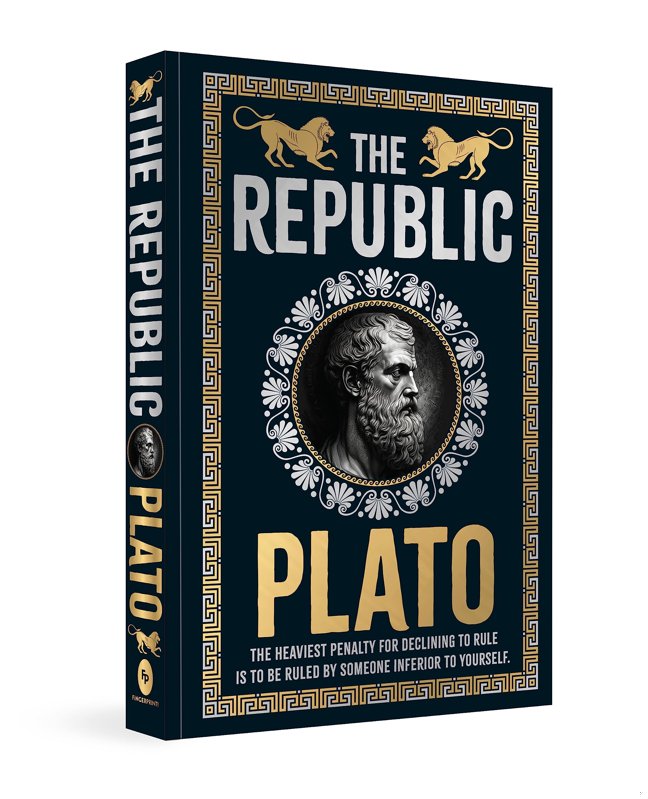
The Republic: The Influential Classic book cover3

The Republic: The Influential Classic

Plato

5.0
The newest deluxe edition in the bestselling Capstone Classics Series This ancient classic has had a make-over. In recent years these Capstone Classic deluxe editions have caught the book buying public's imagination. The volumes of international bestsellers such as Think and Grow Rich and The Art of War have quickly become the market leaders. Now Plato's best known work, one of the most intellectu
A Theory of Justice book cover4

A Theory of Justice

John Rawls

4.9
An alternative cover edition for this ISBN can be found here.

Since it appeared in 1971, John Rawls’s A Theory of Justice has become a classic. The author has now revised the original edition to clear up a number of difficulties he and others have found in the original book.

Rawls aims to express an essential part of the common core of the democratic tradition—justice as fairness—and to provide an a
The Wealth of Nations book cover5

The Wealth of Nations

Adam Smith

4.9
In his book, Smith fervently extolled the simple yet enlightened notion that individuals are fully capable of setting and regulating prices for their own goods and services. He argued passionately in favor of free trade, yet stood up for the little guy. The Wealth of Nations provided the first--and still the most eloquent--integrated description of the workings of a market economy.
The Social Contract book cover6

The Social Contract

Jean-Jacques Rousseau

4.9
"Man is born free; and everywhere he is in chains."

These are the famous opening words of a treatise that has not ceased to stir vigorous debate since its first publication in 1762. Rejecting the view that anyone has a natural right to wield authority over others, Rousseau argues instead for a pact, or ‘social contract’, that should exist between all the citizens of a state and that should be the s
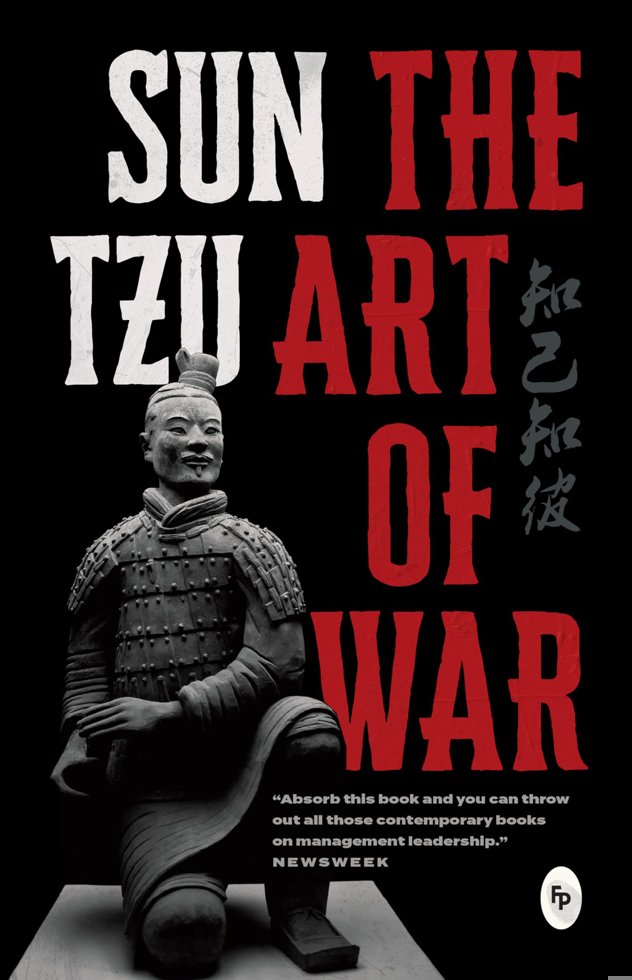
The Art of War book cover7
For more than two thousand years, The Art of War has stood as a cornerstone of Chinese culture-a lucid epigrammatic text that reveals as much about human psychology, politics, and economics as it does about battlefield strategy. The influence of Sun-tzu's text has grown tremendously in the West in recent years, with military leaders, politicians, and corporate executives alike finding valuable ins
Leviathan book cover8

Leviathan

Thomas Hobbes

4.8
'The life of man, solitary, poore, nasty, brutish, and short'

Written during the chaos of the English Civil War, Thomas Hobbes' Leviathan asks how, in a world of violence and horror, can we stop ourselves from descending into anarchy? Hobbes' case for a 'common-wealth' under a powerful sovereign - or 'Leviathan' - to enforce security and the rule of law, shocked his contemporaries, and his book was
The Road to Serfdom: Text and Documents--The Definitive Edition book cover9

The Road to Serfdom: Text and Documents--The Definitive Edition

F. A. Hayek

4.8
An unimpeachable classic work in political philosophy, intellectual and cultural history, and economics, The Road to Serfdom has inspired and infuriated politicians, scholars, and general readers for half a century. Originally published in 1944—when Eleanor Roosevelt supported the efforts of Stalin, and Albert Einstein subscribed lock, stock, and barrel to the socialist program—The Road to Serfdom
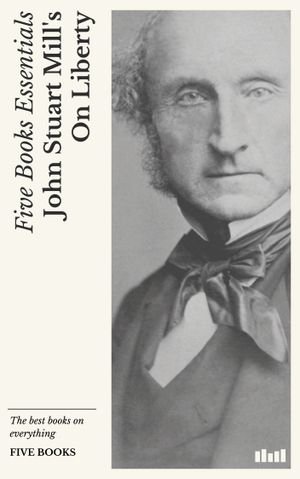
On Liberty book cover10

On Liberty

John Stuart Mill

4.8
Alternate cover edition of ISBN 9780140432077

Published in 1859, John Stuart Mill's On Liberty presented one of the most eloquent defenses of individual freedom in nineteenth-century social and political philosophy and is today perhaps the most widely-read liberal argument in support of the value of liberty. Mill's passionate advocacy of spontaneity, individuality, and diversity, along with his con
The Federalist Papers book cover11

The Federalist Papers

Alexander Hamilton

4.8
Hailed by Thomas Jefferson as “the best commentary on the principles of government which was ever written", The Federalist Papers is a collection of eighty-five essays published by Founding Fathers Alexander Hamilton, James Madison, and John Jay from 1787 to 1788, as a means to persuade the public to ratify the Constitution of the United States.

With nearly two-thirds of the essays written by Hamil
Sapiens: A Brief History of Humankind book cover12

Sapiens: A Brief History of Humankind

Yuval Noah Harari

4.7
100,000 years ago, at least six human species inhabited the earth. Today there is just one. Us. Homo sapiens.

How did our species succeed in the battle for dominance? Why did our foraging ancestors come together to create cities and kingdoms? How did we come to believe in gods, nations and human rights; to trust money, books and laws; and to be enslaved by bureaucracy, timetables and consumerism?
Justice: What's the Right Thing to Do? book cover13

Justice: What's the Right Thing to Do?

Michael J. Sandel

4.7
"For Michael Sandel, justice is not a spectator sport," The Nation's reviewer of Justice remarked. In his acclaimed book―based on his legendary Harvard course―Sandel offers a rare education in thinking through the complicated issues and controversies we face in public life today. It has emerged as a most lucid and engaging guide for those who yearn for a more robust and thoughtful public discourse
Democracy in America book cover14

Democracy in America

Alexis de Tocqueville, Isaac Kramnick, Gerald Bevan

4.6
Democracy in America has had the singular honor of being even to this day the work that political commentators of every stripe refer to when they seek to draw large conclusions about the society of the USA. Alexis de Tocqueville, a young French aristocrat, came to the young nation to investigate the functioning of American democracy & the social, political & economic life of its citizens, publishi
Animal Farm book cover15

Animal Farm

George Orwell and Christopher Hitchens

4.6
Animal Farm is one of the most famous warnings ever written. Orwell's immortal satire - 'against Stalin' as he wrote to his French translator - can be read on many levels. With its piercing clarity and deceptively simple style it is no surprise that this novel is required reading for schoolchildren and politicians alike. This fable of the steadfast horses Boxer and Clover, the opportunistic pigs S
The 48 Laws of Power book cover16

The 48 Laws of Power

Robert Greene

4.6
This amoral, cunning, ruthless, and instructive book synthesizes the philosophies of Machiavelli, Sun Tzu, and Carl Von Clausewitz with the historical legacies of statesmen, warriors, seducers, and con men throughout the ages.
17

Politics

Aristotle and Benjamin Jowett

4.6
What is the relationship of the individual to the state? What is the ideal state, and how can it bring about the most desirable life for its citizens? What sort of education should it provide? What is the purpose of amassing wealth? These are some of the questions Aristotle attempts to answer in one of the most intellectually stimulating works.
Both heavily influenced by and critical of Plato's Rep
Atlas Shrugged book cover18

Atlas Shrugged

Ayn Rand

4.6
This is the story of a man who said that he would stop the motor of the world and did. Was he a destroyer or the greatest of liberators?

Why did he have to fight his battle, not against his enemies, but against those who needed him most, and his hardest battle against the woman he loved? What is the world’s motor — and the motive power of every man? You will know the answer to these questions when
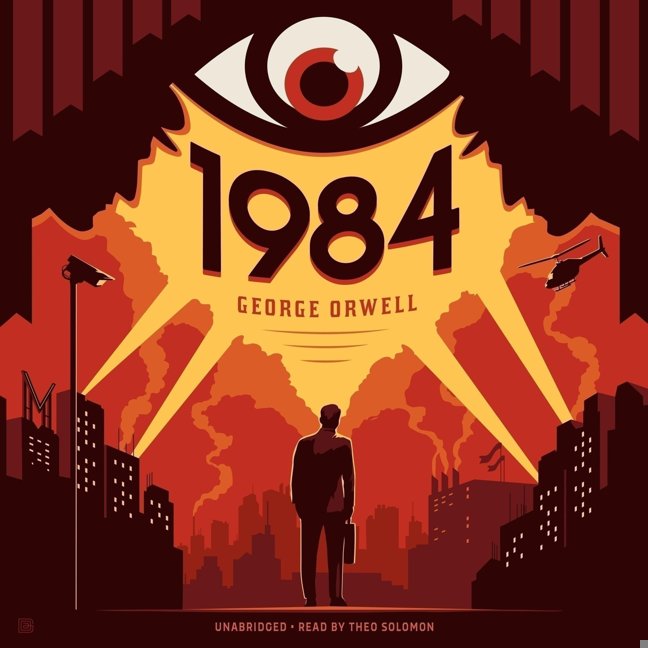
1984 book cover19

1984

George Orwell

4.5
A PBS Great American Read Top 100 Pick

With extraordinary relevance and renewed popularity, George Orwell’s 1984 takes on new life in this hardcover edition.

“Orwell saw, to his credit, that the act of falsifying reality is only secondarily a way of changing perceptions. It is, above all, a way of asserting power.”—The New Yorker

In 1984, London is a grim city in the totalitarian state of Oceania
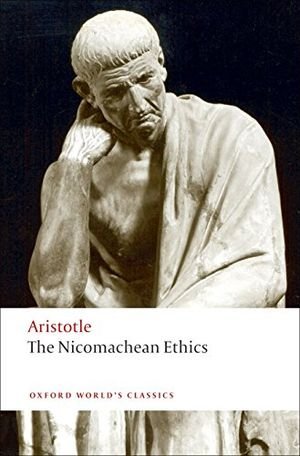
The Nicomachean Ethics book cover20

The Nicomachean Ethics

Aristotle

4.5
‘One swallow does not make a summer; neither does one day. Similarly neither can one day, or a brief space of time, make a man blessed and happy’

In the Nicomachean Ethics, Aristotle sets out to examine the nature of happiness. He argues that happiness consists in ‘activity of the soul in accordance with virtue’, for example with moral virtues, such as courage, generosity and justice, and intellect
21

Second Treatise of Government

John Locke and C. B. Macpherson

4.5
The Second Treatise is one of the most important political treatises ever written and one of the most far-reaching in its influence.
In his provocative 15-page introduction to this edition, the late eminent political theorist C. B. Macpherson examines Locke's arguments for limited, conditional government, private property and right of revolution and suggests reasons for the appeal of these argumen
The Origins of Totalitarianism book cover22

The Origins of Totalitarianism

Hannah Arendt, Nadia May, et al

4.5
Hannah Arendt's definitive work on totalitarianism and an essential component of any study of twentieth-century political history

The Origins of Totalitarianism begins with the rise of anti-Semitism in central and western Europe in the 1800s and continues with an examination of European colonial imperialism from 1884 to the outbreak of World War I. Arendt explores the institutions and operations of
23

Common Sense

Thomas Paine

4.5
Throughout history, some books have changed the world. They have transformed the way we see ourselves—and each other. They have inspired debate, dissent, war and revolution. They have enlightened, outraged, provoked and comforted. They have enriched lives—and destroyed them.

Published anonymously in 1776, six months before the Declaration of Independence, Thomas Paine’s Common Sense was a radical a
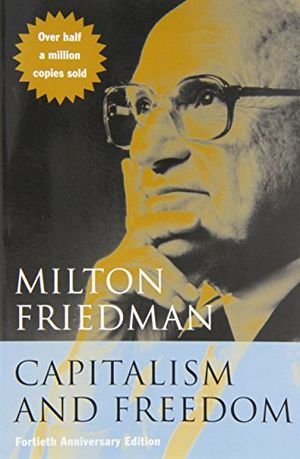
Capitalism and Freedom book cover24

Capitalism and Freedom

Milton Friedman

4.5
Selected by the Times Literary Supplement as one of the "hundred most influential books since the war"

How can we benefit from the promise of government while avoiding the threat it poses to individual freedom? In this classic book, Milton Friedman provides the definitive statement of his immensely influential economic philosophy—one in which competitive capitalism serves as both a device for achie
The Righteous Mind: Why Good People Are Divided by Politics and Religion book cover25

The Righteous Mind: Why Good People Are Divided by Politics and Religion

Jonathan Haidt

4.5
Why can’t our political leaders work together as threats loom and problems mount? Why do people so readily assume the worst about the motives of their fellow citizens? In The Righteous Mind, social psychologist Jonathan Haidt explores the origins of our divisions and points the way forward to mutual understanding.

His starting point is moral intuition—the nearly instantaneous perceptions we all ha
Anarchy, State, and Utopia book cover26

Anarchy, State, and Utopia

Robert Nozick

4.5
In this brilliant and widely acclaimed book, Robert Nozick challenges the most commonly held political and social positions of our age—liberal, socialist, and conservative.
It won the 1975 U.S. National Book Award in category Philosophy and Religion, has been translated into 11 languages, and was named one of the "100 most influential books since the war" (1945–1995) by the U.K. Times Literary Supp
Eichmann in Jerusalem: A Report on the Banality of Evil book cover27

Eichmann in Jerusalem: A Report on the Banality of Evil

Hannah Arendt

4.5
Originally appearing as a series of articles in The New Yorker, Hannah Arendt’s authoritative and stunning report on the trial of Nazi leader Adolf Eichmann sparked a flurry of debate upon its publication. This revised edition includes material that came to light after the trial, as well as Arendt’s postscript directly addressing the controversy that arose over her account. A major journalistic tr
Utopia book cover28

Utopia

Thomas More, Paul Turner

4.4
Utopia (Libellus vere aureus, nec minus salutaris quam festivus, de optimo rei publicae statu deque nova insula Utopia) is a satirical work of fiction and political philosophy by Thomas More (1478–1535) published in 1516 in Latin. The book is a frame narrative primarily depicting a fictional island society as described by the character Raphael Hythloday who lived there some years, who describes an
The Discourses book cover29

The Discourses

Niccolo Machiavelli

4.4
"It is not the well-being of individuals that makes cities great, but the well-being of the community"

Few figures in intellectual history have proved as notorious and ambiguous as Niccolò Machiavelli. But while his treatise The Prince made his name synonymous with autocratic ruthlessness and cynical manipulation, The Discourses (c.1517) shows a radically different outlook on the world of politics.
30

Two Treatises of Government

John Locke

4.4
Meditations book cover31

Meditations

Marcus Aurelius

4.4
One measure, perhaps, of a book's worth, is its intergenerational pliancy: do new readers acquire it and interpret it afresh down through the ages? The Meditations of Marcus Aurelius, translated and introduced by Gregory Hays, by that standard, is very worthwhile, indeed. Hays suggests that its most recent incarnation--as a self-help book--is not only valid, but may be close to the author's intent
Discourse on the Origin of Inequality book cover32

Discourse on the Origin of Inequality

Jean-Jacques Rousseau

4.4
If humans are benevolent by nature, how do societies become corrupt? And how do governments founded upon the defense of individual rights degenerate into tyranny? These are the questions addressed by Jean-Jacques Rousseau's Discourse on the Origin of Inequality, a strikingly original inquiry into much-explored issues of 18th-century (and subsequent) philosophy: human nature and the best form of go
The Human Condition book cover33

The Human Condition

Hannah Arendt, Margaret Canovan

4.4
A work of striking originality bursting with unexpected insights, The Human Condition is a in many respects more relevant now than when it first appeared in 1958. In her study of the state of modern humanity, Hannah Arendt considers humankind from the perspective of the actions of which it is capable. The problems Arendt identified then--diminishing human agency and political freedom; the paradox
On War book cover34

On War

Carl von Clausewitz

4.4
Carl von Clausewitz's On War has been called, "not simply the greatest, but the only truly great book on war." It is an extraordinary attempt to construct an all-embracing theory of how war works. Its coherence and ambition are unmatched by other military literature. On War is full of sharp observation, biting irony, and memorable phrases, the most famous being, "War is a continuation of politics
The Law book cover35

The Law

Frederic Bastiat and Tony Darnell

4.3
How is it that the law enforcer itself does not have to keep the law? How is it that the law permits the state to lawfully engage in actions which, if undertaken by individuals, would land them in jail? These are among the most intriguing issues in political and economic philosophy. More specifically, the problem of law that itself violates law is an insurmountable conundrum of all statist philoso
Manufacturing Consent: The Political Economy of the Mass Media book cover36

Manufacturing Consent: The Political Economy of the Mass Media

Edward S. Herman

4.3
In this pathbreaking work, Edward S. Herman and Noam Chomsky show that, contrary to the usual image of the news media as cantankerous, obstinate, and ubiquitous in their search for truth and defense of justice, in their actual practice they defend the economic, social, and political agendas of the privileged groups that dominate domestic society, the state, and the global order.

Based on a series o
The Origins of Political Order: From Prehuman Times to the French Revolution book cover37

The Origins of Political Order: From Prehuman Times to the French Revolution

Francis Fukuyama

4.3
Virtually all human societies were once organized tribally, yet over time most developed new political institutions which included a central state that could keep the peace and uniform laws that applied to all citizens. Some went on to create governments that were accountable to their constituents. We take these institutions for granted, but they are absent or are unable to perform in many of toda
12 Rules for Life: An Antidote to Chaos book cover38

12 Rules for Life: An Antidote to Chaos

Jordan B. Peterson

4.3
What does everyone in the modern world need to know? Renowned psychologist Jordan B. Peterson's answer to this most difficult of questions uniquely combines the hard-won truths of ancient tradition with the stunning revelations of cutting-edge scientific research.

Humorous, surprising, and informative, Dr. Peterson tells us why skateboarding boys and girls must be left alone, what terrible fate awa
39

Rights of Man (Chump Change Edition)

Thomas Paine

4.3
REPELS PESTS & RODENTS BY LATEST ULTRASONIC TECHNOLOGY: our ultrasonic pest control uses low fequency sound waves to repel away mice, cockroaches, rodents, spiders, ants and rats from your home. None are immune to the sound and all will leave after 3 weeks of use.
Beyond Good and Evil book cover40

Beyond Good and Evil

Friedrich Nietzsche

4.3
In Beyond Good and Evil Friedrich Nietzsche contends that no human values are absolute; that all value distinctions (such as that between 'good' and 'evil') are artificial, the result of mere traditional prejudices; and that humanity should discard its old, outmoded values (such as 'good' and 'evil').
Brave New World book cover41

Brave New World

Aldous Huxley

4.3
Now reissued in a gorgeous hardcover edition: "one of the most prophetic dystopian works of the 20th century" (Wall Street Journal) must be read and understood by anyone concerned with preserving the human spirit in the face of our "brave new world." Huxley's masterpiece has become a bestseller once again after the American election.

Aldous Huxley's profoundly important classic of world literature,
42

Reflections on the Revolution in France

Edmund Burke, L. G. Mitchell

4.3
This new and up-to-date edition of a book that has been central to political philosophy, history, and revolutionary thought for two hundred years offers readers a dire warning of the consequences that follow the mismanagement of change. Written for a generation presented with challenges of terrible proportions--the Industrial, American, and French Revolutions, to name the most obvious--Burke's Ref
The Spirit of the Laws book cover43

The Spirit of the Laws

Charles-Louis de Secondat baron de La Brède et de Montesquieu

4.3
The Spirit of the Laws is, without question, one of the central texts in the history of 18th-century thought, yet there has been no complete scholarly English language edition since 1750.

This lucid translation renders Montesquieu's problematic text newly accessible to a fresh generation of students, helping them to understand why Montesquieu was such an important figure in the early Enlightenment
On Revolution book cover44

On Revolution

Hannah Arendt, Jonathan Schell

4.3
Tracing the gradual evolution of revolutions, Arendt predicts the changing relationship between war and revolution and the crucial role such combustive movements will play in the future of international relations. She looks at the principles which underlie all revolutions, starting with the first great examples in America and France, and showing how both the theory and practice of revolution have
Discipline and Punish: The Birth of the Prison book cover45

Discipline and Punish: The Birth of the Prison

Michel Foucault, Alan Sheridan

4.3
Librarian note: an alternate cover for this edition can be found here.

In this brilliant work, the most influential philosopher since Sartre suggests that such vaunted reforms as the abolition of torture and the emergence of the modern penitentiary have merely shifted the focus of punishment from the prisoner’s body to his soul.
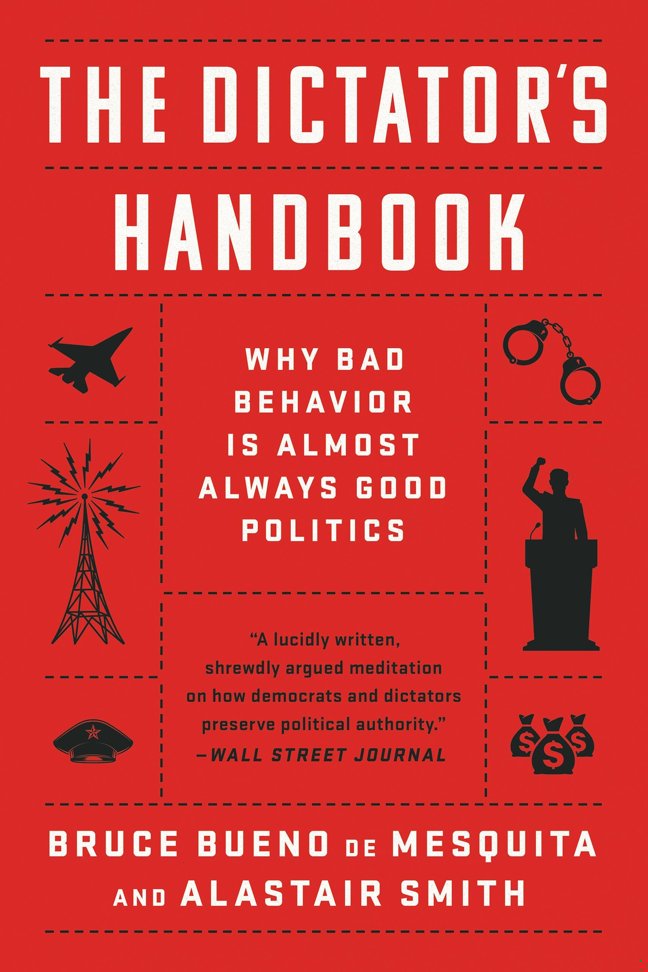
The Dictator's Handbook: Why Bad Behavior is Almost Always Good Politics book cover46

The Dictator's Handbook: Why Bad Behavior is Almost Always Good Politics

Bruce Bueno de Mesquita, Alastair Smith

4.3
For eighteen years, Bruce Bueno de Mesquita and Alastair Smith have been part of a team revolutionizing the study of politics by turning conventional wisdom on its head. They start from a single assertion: Leaders do whatever keeps them in power. They don't care about the "national interest"--or even their subjects--unless they have to.

This clever and accessible book shows that the difference bet

The Constitution of Liberty book cover47

The Constitution of Liberty

Friedrich A. von Hayek

4.3
"One of the great political works of our time, . . . the twentieth-century successor to John Stuart Mill's essay, 'On Liberty.'"—Henry Hazlitt, Newsweek

"A reflective, often biting, commentary on the nature of our society and its dominant thought by one who is passionately opposed to the coercion of human beings by the arbitrary will of others, who puts liberty above welfare and is sanguine that gr
Walden book cover48

Walden

Henry David Thoreau

4.3
At Walden Pond, Henry David Thoreau reflected on simpler living in the natural world. By removing himself from the distractions of materialism, Thoreau hoped to not only improve his spiritual life but also gain a better understanding of society through solitary introspection.

In Walden, Thoreau condenses his two-year, two-month, two-day stay into a single year, using the four seasons to symbolize h
The Conquest of Bread book cover49

The Conquest of Bread

Peter Kropotkin

4.2

The fourth in AK Press’ Working Classics series, The Conquest of Bread is Peter Kropotkin’s most extensive study of human needs and his outline of the most rational and equi-table means of satisfying them. A combination of detailed historical analysis and far-reaching utopian vision, this is a step-by-step guide to social revolution: the concrete means of achieving it, and the world that humanity’
50

The Concept of the Political

Carl Schmitt, George Schwab

4.2
In this, his most influential work, legal theorist and political philosopher Carl Schmitt argues that liberalism's basis in individual rights cannot provide a reasonable justification for sacrificing oneself for the state. This edition of the 1932 work includes the translator's introduction (by George Schwab) which highlights Schmitt's intellectual journey through the turbulent period of German hi
51

Contemporary Political Philosophy

Will Kymlicka

4.2
This new edition of Will Kymlicka's best selling critical introduction to contemporary political theory has been fully revised to include many of the most significant developments in Anglo-American political philosophy in the last 11 years, particularly the new debates over issues of democratic citizenship and cultural pluralism. The book now includes two new chapters on citizenship theory and mul
On Tyranny: Twenty Lessons from the Twentieth Century book cover52

On Tyranny: Twenty Lessons from the Twentieth Century

Timothy Snyder

4.2
A historian of fascism offers a guide for surviving and resisting America’s turn towards authoritarianism.

On November 9th, millions of Americans woke up to the impossible: the election of Donald Trump as president. Against all predictions, one of the most-disliked presidential candidates in history had swept the electoral college, elevating a man with open contempt for democratic norms and institu
Orientalism book cover53

Orientalism

Edward Said

4.2
More than three decades after its first publication, Edward Said's groundbreaking critique of the West's historical, cultural, and political perceptions of the East has become a modern classic.

In this wide-ranging, intellectually vigorous study, Said traces the origins of "orientalism" to the centuries-long period during which Europe dominated the Middle and Near East and, from its position of pow
The End of History and the Last Man book cover54

The End of History and the Last Man

Francis Fukuyama

4.2
Ever since its first publication in 1992, The End of History and the Last Man has provoked controversy and debate. Francis Fukuyama's prescient analysis of religious fundamentalism, politics, scientific progress, ethical codes, and war is as essential for a world fighting fundamentalist terrorists as it was for the end of the Cold War. Now updated with a new afterword, The End of History and the L
Utilitarianism book cover55

Utilitarianism

John Stuart Mill and George Sher

4.2
This expanded edition of John Stuart Mill's Utilitarianism includes the text of his 1868 speech to the British House of Commons defending the use of capital punishment in cases of aggravated murder. The speech is significant both because its topic remains timely and because its arguments illustrate the applicability of the principle of utility to questions of large-scale social policy.
56

Capitalist Realism: Is There No Alternative?

Mark Fisher

4.2
After 1989, capitalism has successfully presented itself as the only realistic political-economic system - a situation that the bank crisis of 2008, far from ending, actually compounded. The book analyses the development and principal features of this capitalist realism as a lived ideological framework. Using examples from politics, films, fiction, work and education, it argues that capitalist rea
What Money Can't Buy: The Moral Limits of Markets book cover57

What Money Can't Buy: The Moral Limits of Markets

Michael J. Sandel

4.2
Should we pay children to read books or to get good grades? Should we allow corporations to pay for the right to pollute the atmosphere? Is it ethical to pay people to test risky new drugs or to donate their organs? What about hiring mercenaries to fight our wars? Auctioning admission to elite universities? Selling citizenship to immigrants willing to pay?

In What Money Can't Buy, Michael J. Sandel
58

Political Philosophy: An Introduction

Jonathan Wolff

4.2
Most political debate is superficial. Just turn on cable news. Philosophy is for people who want to understand the deep questions. The goal of political philosophy is to determine the standards by which we judge different institutions good or bad, just or unjust. Some people might think they don't have much need of political philosophy: "Who cares about wishy-washy obtuse notions of justice? I'm a
59

Political Liberalism

John Rawls

4.1
This book continues and revises the ideas of justice as fairness that John Rawls presented in "A Theory of Justice" but changes its philosophical interpretation in a fundamental way. That previous work assumed what Rawls calls a "well-ordered society," one that is stable and relatively homogenous in its basic moral beliefs and in which there is broad agreement about what constitutes the good life.
Free to Choose: A Personal Statement book cover60

Free to Choose: A Personal Statement

Milton Friedman, Rose Friedman

4.1
The international bestseller on the extent to which personal freedom has been eroded by government regulations and agencies while personal prosperity has been undermined by government spending and economic controls. New Foreword by the Authors; Index.
61

The Marx-Engels Reader

Karl Marx, Friedrich Engels, Robert C. Tucker

4.1
This revised and enlarged edition of the leading anthology provides the essential writings of Marx and Engels--those works necessary for an introduction to Marxist thought and ideology.
After Virtue book cover62

After Virtue

Alasdair MacIntyre

4.1
Drawing on more than 500 years of history, this title explores the causes of the crisis in moral description and shows how attempts to formulate moral principles had grown progressively more difficult in the period after the Enlightenment. It explains what has driven moral philosophy into its quagmire and suggests ways out of it.
The Open Society and its Enemies book cover63

The Open Society and its Enemies

Karl R. Popper, Alan Ryan, E. H. Gombrich

4.1
One of the most important books of the twentieth century, Karl Popper's The Open Society and Its Enemies is an uncompromising defense of liberal democracy and a powerful attack on the intellectual origins of totalitarianism. Popper was born in 1902 to a Viennese family of Jewish origin. He taught in Austria until 1937, when he emigrated to New Zealand in anticipation of the Nazi annexation of Aust
The Wretched of the Earth book cover64

The Wretched of the Earth

Frantz Fanon

4.1
A distinguished psychiatrist from Martinique who took part in the Algerian Nationalist Movement, Frantz Fanon was one of the most important theorists of revolutionary struggle, colonialism, and racial difference in history. Fanon's masterwork is a classic alongside Edward Said's Orientalism or The Autobiography of Malcolm X, and it is now available in a new translation that updates its language fo
65

What is Political Philosophy?

Leo Strauss

4.1
"All political action has . . . in itself a directedness towards knowledge of the good: of the good life, or of the good society. For the good society is the complete political good. If this directedness becomes explicit, if men make it their explicit goal to acquire knowledge of the good life and of the good society, political philosophy emerges. . . . The theme of political philosophy is mankind
66

For a New Liberty: The Libertarian Manifesto

Murray N. Rothbard, Jeff Riggenbach, et al

4.1
A classic that for over two decades has been hailed as the best general work on libertarianism available. Rothbard begins with a quick overview of its historical roots, and then goes on to define libertarianism as resting "upon one single axiom: that no man or group of men shall aggress upon the person or property of anyone else." He writes a withering critique of the chief violator of liberty: th
The Society of the Spectacle book cover67

The Society of the Spectacle

Guy Debord, Donald Nicholson-Smith

4.1

Few works of political and cultural theory have been as enduringly provocative as Guy Debord's The Society of the Spectacle. From its publication amid the social upheavals of the 1960s up to the present, the volatile theses of this book have decisively transformed debates on the shape of modernity, capitalism and everyday life in the late twentieth century. Now finally available in a superb Englis

Why Liberalism Failed book cover68

Why Liberalism Failed

Patrick J. Deneen

4.1
Has liberalism failed because it has succeeded? Of the three dominant ideologies of the twentieth century—fascism, communism, and liberalism—only the last remains. This has created a peculiar situation in which liberalism’s proponents tend to forget that it is an ideology and not the natural end-state of human political evolution. As Patrick Deneen argues in this provocative book, liberalism is bu
The Protestant Ethic and the Spirit of Capitalism book cover69

The Protestant Ethic and the Spirit of Capitalism

Max Weber, Talcott Parsons, R.H. Tawney

4.1
The Protestant ethic — a moral code stressing hard work, rigorous self-discipline, and the organization of one's life in the service of God — was made famous by sociologist and political economist Max Weber. In this brilliant study (his best-known and most controversial), he opposes the Marxist concept of dialectical materialism and its view that change takes place through "the struggle of opposit
Justice as Fairness: A Restatement book cover70

Justice as Fairness: A Restatement

John Rawls

4.1
This book originated as lectures for a course on political philosophy that Rawls taught regularly at Harvard in the 1980s. In time the lectures became a restatement of his theory of justice as fairness, revised in light of his more recent papers and his treatise Political Liberalism (1993). As Rawls writes in the preface, the restatement presents "in one place an account of justice as fairness as
71

Liberty: Incorporating Four Essays on Liberty

Isaiah Berlin, Henry Hardy

4.1
Liberty is a revised and expanded edition of the book that Isaiah Berlin regarded as his most important--Four Essays on Liberty, a standard text of liberalism, constantly in demand and constantly discussed since it was first published in 1969. Writing in Harper's, Irving Howe described it as "an exhilarating performance--this, one tells oneself, is what the life of the mind can be."
Berlin's edito
Walden & Civil Disobedience book cover72

Walden & Civil Disobedience

Henry David Thoreau

4.1
Disdainful of America’s booming commercialism and industrialism, Henry David Thoreau left Concord, Massachusetts, in 1845 to live in solitude in the woods near Walden Pond. Walden, the account of his stay, conveys at once a naturalist’s wonder at the commonplace and a Transcendentalist’s yearning for spiritual truth and self-reliance. But even as Thoreau disentangled himself from worldly matters,
The Rebel book cover73

The Rebel

Albert Camus

4.1
By one of the most profoundly influential thinkers of our century, The Rebel is a classic essay on revolution. For Albert Camus, the urge to revolt is one of the "essential dimensions" of human nature, manifested in man's timeless Promethean struggle against the conditions of his existence, as well as the popular uprisings against established orders throughout history. And yet, with an eye toward
74

A History of Western Philosophy

Bertrand Russell

4.1
Since its first publication in 1945 Lord Russell's A History of Western Philosophy has been universally acclaimed as the outstanding one-volume work on the subject—unparalleled in its comprehensiveness, its clarity, its erudition, its grace and wit. In seventy-six chapters he traces philosophy from the rise of Greek civilization to the emergence of logical analysis in the twentieth century. Among
75

Anthem

Ayn Rand

4.1
This expanded edition of Ayn Rand's classic tale of a future dark age of the great "We"--in which individuals have no name, no independence, and no values--is a beautifully written, powerful novel that projects current social trends into the future, and anticipates such later Rand masterpieces as The Fountainhead and Atlas Shrugged.
76

Democracy: The God That Failed

Hans-Hermann Hoppe

4.1
The core of this book is a systematic treatment of the historic transformation of the West from monarchy to democracy. Revisionist in nature, it reaches the conclusion that monarchy is a lesser evil than democracy, but outlines deficiencies in both. Its methodology is axiomatic-deductive, allowing the writer to derive economic and sociological theorems, and then apply them to interpret historical
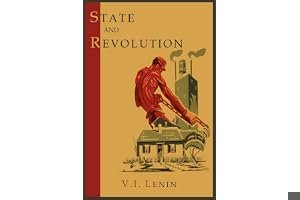
State and Revolution book cover77

State and Revolution

V I Lenin

4.1
2011 Reprint of 1932 Edition. Full facsimile of the original edition, not reproduced with Optical Recognition Software. "State and Revolution" (1917) describes the role of the State in society, the necessity of proletarian revolution, and the theoretic inadequacies of social democracy in achieving revolution. It describes the inherent nature of the State as a tool for class oppression, a creation
78

Das Kapital

Karl Marx, Friedrich Engels, Serge L. Levitsky

4.1
Das Kapital, Karl Marx's seminal work, is the book that above all others formed the twentieth century. From Kapital sprung the economic and political systems that at one time dominated half the earth and for nearly a century kept the world on the brink of war. Even today, more than one billion Chinese citizens live under a regime that proclaims fealty to Marxist ideology. Yet this important tome h
79

The Fountainhead

Ayn Rand

4.1
The revolutionary literary vision that sowed the seeds of Objectivism, Ayn Rand's groundbreaking philosophy, and brought her immediate worldwide acclaim.

This modern classic is the story of intransigent young architect Howard Roark, whose integrity was as unyielding as granite...of Dominique Francon, the exquisitely beautiful woman who loved Roark passionately, but married his worst enemy...and of
A Conflict of Visions: Ideological Origins of Political Struggles book cover80

A Conflict of Visions: Ideological Origins of Political Struggles

Thomas Sowell

4.1
Controversies in politics arise from many sources, but the conflicts that endure for generations or centuries show a remarkably consistent pattern. In this classic work, Thomas Sowell analyzes this pattern. He describes the two competing visions that shape our debates about the nature of reason, justice, equality, and power: the "constrained" vision, which sees human nature as unchanging and selfi
The Anatomy of the State (LvMI) book cover81

The Anatomy of the State (LvMI)

Murray Rothbard

4.1
In the 20th century Murray Rothbard was known as the state's greatest living enemy, and The Anatomy of the State is his most succinct and powerful statement on the topic, a daring evidence of how he came to wear that designation proudly.

He explains what a state is and what it is not. He shows how it is an institution that purports to hold the right to violate all that we otherwise hold as honest a
Five Dialogues: Euthyphro, Apology, Crito, Meno, Phaedo book cover82

Five Dialogues: Euthyphro, Apology, Crito, Meno, Phaedo

Plato, John M. Cooper, et al.

4.1
The second edition of Five Dialogues presents G. M. A. Grube's distinguished translations, as revised by John Cooper for Plato, Complete Works (Hacket, 1997). Cooper has also contributed a number of new or expanded footnotes and updated Suggestions for Further Reading.
Capital, Vol. 1: A Critical Analysis of Capitalist Production book cover83

Capital, Vol. 1: A Critical Analysis of Capitalist Production

Karl Marx

4.1
Capital, one of Marx's major and most influential works, was the product of thirty years close study of the capitalist mode of production in England, the most advanced industrial society of his day. This new translation of Volume One, the only volume to be completed and edited by Marx himself, avoids some of the mistakes that have marred earlier versions and seeks to do justice to the literary qua
84

The Open Society and Its Enemies - Volume One: The Spell of Plato

Karl R. Popper

4.0
Popper was born in 1902 to a Viennese family of Jewish origin. He taught in Austria until 1937, when he emigrated to New Zealand in anticipation of the Nazi annexation of Austria the following year, and he settled in England in 1949. Before the annexation, Popper had written mainly about the philosophy of science, but from 1938 until the end of the Second World War he focused his energies on polit
Capitalism, Socialism and Democracy book cover85

Capitalism, Socialism and Democracy

Joseph Schumpeter

4.0
Capitalism, Socialism and Democracy remains one of the greatest works of social theory written this century. When it first appeared the New English Weekly predicted that 'for the next five to ten years it will cetainly remain a work with which no one who professes any degree of information on sociology or economics can afford to be unacquainted.' Fifty years on, this prediction seems a little unde
86

The Idea of Justice

Amartya Sen

4.0
Social justice: an ideal, forever beyond our grasp; or one of many practical possibilities? More than a matter of intellectual discourse, the idea of justice plays a real role in how--and how well--people live. And in this book the distinguished scholar Amartya Sen offers a powerful critique of the theory of social justice that, in its grip on social and political thinking, has long left practical
87

Between Past and Future

Hannah Arendt, Jerome Kohn

4.0
Arendt’s penetrating observations of the modern world, based on a profound knowledge of the past, constitute a major contribution to political philosophy. In this book she describes the perplexing crises which modern society faces as a result of the loss of meaning of the traditional key words of politics: justice, reason, responsibility, virtue, and glory. Through a series of eight exercises, she
Anti-Oedipus: Capitalism and Schizophrenia book cover88

Anti-Oedipus: Capitalism and Schizophrenia

Gilles Deleuze, Felix Guattari

4.0
A major work in the development of critical theory in the late 20th century, ANTI-OEDIPUS is an essential text for feminists, literary theorists, social scientists, philosophers, and other interested in the problems of contemporary Western culture. "An important text in the rethinking of sexuality and sexual politics spurred by the feminist and gay liberation movements".--Margaret Cerullo, Hampshi
On Anarchism book cover89

On Anarchism

Noam Chomsky, Barry Pateman

4.0
We all know what Noam Chomsky is against. His scathing analysis of everything that’s wrong with our society reaches more and more people every day. His brilliant critiques of—among other things—capitalism, imperialism, domestic repression and government propaganda have become mini-publishing industries unto themselves. But, in this flood of publishing and republishing, very little ever gets said a
The True Believer: Thoughts on the Nature of Mass Movements book cover90

The True Believer: Thoughts on the Nature of Mass Movements

Eric Hoffer

4.0
A stevedore on the San Francisco docks in the 1940s, Eric Hoffer wrote philosophical treatises in his spare time while living in the railroad yards. The True Believer -- the first and most famous of his books -- was made into a bestseller when President Eisenhower cited it during one of the earliest television press conferences.Completely relevant and essential for understanding the world today, T
Civil Disobedience and Other Essays book cover91

Civil Disobedience and Other Essays

Henry David Thoreau

4.0
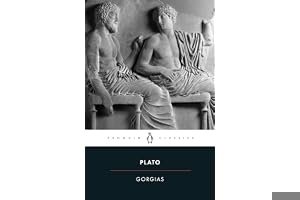
Gorgias book cover92

Gorgias

Plato, Robin Waterfield

4.0
One of Plato's most widely read dialogues, Gorgias treats the temptations of worldly success and the rewards of the genuinely moral life. Appealing to philosophers as a classic text of moral philosophy--and to everyone for its vividness, clarity, and occassional bitter humor--this new translation is accompanied by explanatory notes and an illuminating and accessible introduction.

About the Series:
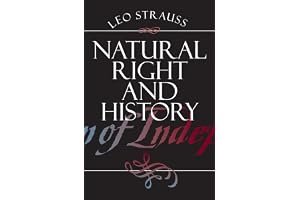
Natural Right and History book cover93

Natural Right and History

Leo Strauss

4.0
94

Political Theology: Four Chapters on the Concept of Sovereignty

Carl Schmitt, George Schwab, Tracy B. Strong

4.0
Written in the intense political and intellectual tumult of the early years of the Weimar Republic, Political Theology develops the distinctive theory of sovereignty that made Carl Schmitt one of the most significant and controversial political theorists of the twentieth century.

Focusing on the relationships among political leadership, the norms of the legal order, and the state of political emer
95

The Open Society and Its Enemies - Volume Two: Hegel and Marx

Karl Popper

4.0
Written in political exile in New Zealand during the World War II and first published in two volumes in 1945, Karl Poppers The Open Society and its Enemies was hailed by Bertrand Russell as a vigorous and profound defence of democracy. Its now legendary attack on the philosophies of Plato, Hegel and Marx prophesied the collapse of communism in Eastern Europe and exposed the fatal flaws of socially
Economic & Philosophic Manuscripts of 1844 book cover96

Economic & Philosophic Manuscripts of 1844

Karl Marx, Fredrick Engels, Martin Milligan

4.0
Communism as a political movement attained global importance after the Bolsheviks toppled the Russian Czar in 1917. After that time the works of Karl Marx and Frederick Engels, especially the influential Communist Manifesto (1848), enjoyed an international audience. The world was to learn a new political vocabulary peppered with "socialism", "capitalism", "the working class", "the bourgeoisie", "l
Memories, Dreams, Reflections book cover97

Memories, Dreams, Reflections

C.G. Jung

4.0
In the spring of 1957, when he was eighty-one years old, C. G. Jung undertook the telling of his life story. At regular intervals he had conversations with his colleague and friend Aniela Jaffé, and collaborated with her in the preparation of the text based on these talks. On occasion, he was moved to write entire chapters of the book in his own hand, and he continued to work on the final stages o
Mutual Aid book cover98

Mutual Aid

P. Kropotkin

4.0
In this cornerstone of modern liberal social theory, Peter Kropotkin states that the most effective human and animal communities are essentially cooperative, rather than competitive. Kropotkin based this classic on his observations of natural phenomena and history, forming a work of stunning and well-reasoned scholarship. Essential to the understanding of human evolution as well as social organiza
The Clash of Civilizations and the Remaking of World Order book cover99

The Clash of Civilizations and the Remaking of World Order

Samuel P. Huntington

4.0
"Sam Huntington, one of the West's most eminent political scientists, presents a challenging framework for understanding the realities of global politics in the next century. The Clash of Civilizations and the Remaking of World Order is one of the most important books to have emerged since the end of the Cold War." --HENRY A. KISSINGER

Based on the author's seminal article in Foreign Affairs, Samue
100

Political Philosophy: A Very Short Introduction

David Miller

4.0
This Very Short Introduction introduces readers to the key concepts of political philosophy: authority, democracy, freedom and its limits, justice, feminism, multiculturalism, and nationality. Accessibly written and assuming no previous knowledge of the subject, it encourages the reader to think clearly and critically about the leading political questions of our time.

Miller first investigates how