100 Best Neuroscience Books of All Time

We've ranked the best neuroscience books using expert recommendations, sales data, and millions of reader ratings. At Shortform, we know books. Our book guides are the best in the world. Learn why.

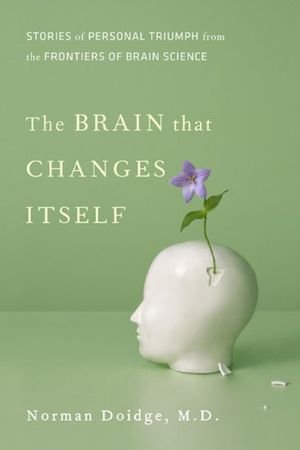
The Brain that Changes Itself: Stories of Personal Triumph from the Frontiers of Brain Science book cover1

The Brain that Changes Itself: Stories of Personal Triumph from the Frontiers of Brain Science

Norman Doidge

5.0
An astonishing new science called neuroplasticity is overthrowing the centuries-old notion that the human brain is immutable. Psychiatrist and psychoanalyst, Norman Doidge, M.D., traveled the country to meet both the brilliant scientists championing neuroplasticity and the people whose lives they’ve transformed - people whose mental limitations or brain damage were seen as unalterable. We see a wo
The Man Who Mistook His Wife for a Hat and Other Clinical Tales book cover2

The Man Who Mistook His Wife for a Hat and Other Clinical Tales

Oliver Sacks

4.9
If a man has lost a leg or an eye, he knows he has lost a leg or an eye; but if he has lost a self—himself—he cannot know it, because he is no longer there to know it. Dr. Oliver Sacks recounts the stories of patients struggling to adapt to often bizarre worlds of neurological disorder. Here are people who can no longer recognize everyday objects or those they love; who are stricken with violent t
Thinking, Fast and Slow book cover3

Thinking, Fast and Slow

Kahneman

4.9
Major New York Times bestseller
Winner of the National Academy of Sciences Best Book Award in 2012
Selected by the New York Times Book Review as one of the best books of 2011
A Globe and Mail Best Books of the Year 2011 Title
One of The Economist's 2011 Books of the Year
One of The Wall Street Journal's Best Nonfiction Books of the Year 2011
2013 Presidential Medal of Freedom Recipient

In the internatio
Why We Sleep: Unlocking the Power of Sleep and Dreams book cover4

Why We Sleep: Unlocking the Power of Sleep and Dreams

Matthew Walker

4.8
“Why We Sleep is an important and fascinating book…Walker taught me a lot about this basic activity that every person on Earth needs. I suspect his book will do the same for you.” —Bill Gates

A New York Times bestseller and international sensation, this “stimulating and important book” (Financial Times) is a fascinating dive into the purpose and power of slumber.

With two appearances on CBS This Mor
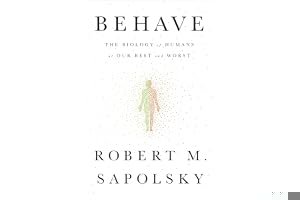
Behave: The Biology of Humans at Our Best and Worst book cover5

Behave: The Biology of Humans at Our Best and Worst

Robert M. Sapolsky

4.8
The New York Times bestseller

"It's no exaggeration to say that Behave is one of the best nonfiction books I've ever read." --David P. Barash, The Wall Street Journal


"It has my vote for science book of the year." --Parul Sehgal, The New York Times

"Hands-down one of the best books I've read in years. I loved it." --Dina Temple-Raston, The Washington Post

Named a Best Book of the Year by The Washin
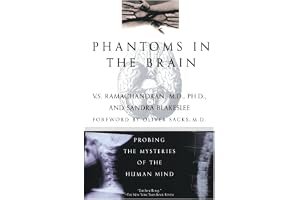
Phantoms in the Brain: Probing the Mysteries of the Human Mind book cover6

Phantoms in the Brain: Probing the Mysteries of the Human Mind

V. S. Ramachandran, Sandra Blakeslee, et al.

4.6
Neuroscientist V.S. Ramachandran is internationally renowned for uncovering answers to the deep and quirky questions of human nature that few scientists have dared to address. His bold insights about the brain are matched only by the stunning simplicity of his experiments -- using such low-tech tools as cotton swabs, glasses of water and dime-store mirrors. In Phantoms in the Brain, Dr. Ramachandr
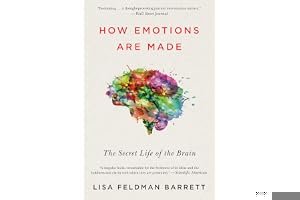
How Emotions Are Made: The Secret Life of the Brain book cover7

How Emotions Are Made: The Secret Life of the Brain

Lisa Barrett

4.5
“Fascinating . . . A thought-provoking journey into emotion science.” — Wall Street Journal

“A singular book, remarkable for the freshness of its ideas and the boldness and clarity with which they are presented.” — Scientific American

“A brilliant and original book on the science of emotion, by the deepest thinker about this topic since Darwin.” — Daniel Gilbert, best-selling author of Stumbling o
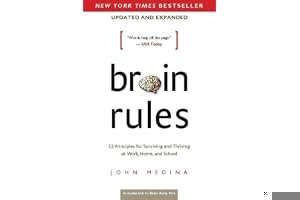
Brain Rules: 12 Principles for Surviving and Thriving at Work, Home, and School book cover8

Brain Rules: 12 Principles for Surviving and Thriving at Work, Home, and School

John Medina

4.5
Most of us have no idea what’s really going on inside our heads. Yet brain scientists have uncovered details every business leader, parent, and teacher should know—like the need for physical activity to get your brain working its best.

How do we learn? What exactly do sleep and stress do to our brains? Why is multi-tasking a myth? Why is it so easy to forget—and so important to repeat new knowledge
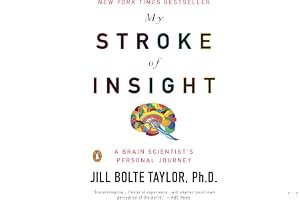
My Stroke of Insight: A Brain Scientist's Personal Journey book cover9

My Stroke of Insight: A Brain Scientist's Personal Journey

Jill Bolte Taylor

4.5
The astonishing New York Times bestseller that chronicles how a brain scientist's own stroke led to enlightenment

On December 10, 1996, Jill Bolte Taylor, a thirty-seven- year-old Harvard-trained brain scientist experienced a massive stroke in the left hemisphere of her brain. As she observed her mind deteriorate to the point that she could not walk, talk, read, write, or recall any of her life-all
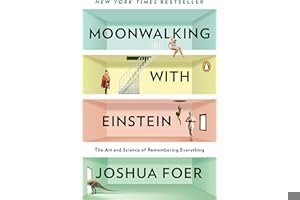
Moonwalking with Einstein: The Art and Science of Remembering Everything book cover10

Moonwalking with Einstein: The Art and Science of Remembering Everything

Joshua Foer

4.5
The blockbuster phenomenon that charts an amazing journey of the mind while revolutionizing our concept of memory

An instant bestseller that is poised to become a classic, Moonwalking with Einstein recounts Joshua Foer's yearlong quest to improve his memory under the tutelage of top "mental athletes." He draws on cutting-edge research, a surprising cultural history of remembering, and venerable tri
How to Change Your Mind: What the New Science of Psychedelics Teaches Us About Consciousness, Dying, Addiction, Depression, and Transcendence book cover11

How to Change Your Mind: What the New Science of Psychedelics Teaches Us About Consciousness, Dying, Addiction, Depression, and Transcendence

Michael Pollan

4.5
Could psychedelic drugs change our worldview? One of America's most admired writers takes us on a mind-altering journey to the frontiers of human consciousness

When LSD was first discovered in the 1940s, it seemed to researchers, scientists and doctors as if the world might be on the cusp of psychological revolution. It promised to shed light on the deep mysteries of consciousness, as well as offer
Incognito: The Secret Lives of the Brain book cover12

Incognito: The Secret Lives of the Brain

David Eagleman

4.5
If the conscious mind—the part you consider you—accounts for only a tiny fraction of the brain’s function, what is all the rest doing? This is the question that David Eagleman—renowned neuroscientist and acclaimed author of Sum—answers in a book as accessible and entertaining as it is deeply informed by startling, up-to-the-minute research.
13

Musicophilia: Tales of Music and the Brain

Oliver Sacks

4.4
With the same trademark compassion and erudition he brought to The Man Who Mistook His Wife for a Hat, Oliver Sacks explores the place music occupies in the brain and how it affects the human condition. In Musicophilia, he shows us a variety of what he calls “musical misalignments.” Among them: a man struck by lightning who suddenly desires to become a pianist at the age of forty-two; an entire gr
14

The Tell-Tale Brain: A Neuroscientist's Quest for What Makes Us Human

V. S. Ramachandran

4.4
V. S. Ramachandran is at the forefront of his field-so much so that Richard Dawkins dubbed him the "Marco Polo of neuroscience." Now, in a major new work, Ramachandran sets his sights on the mystery of human uniqueness. Taking us to the frontiers of neurology, he reveals what baffling and extreme case studies can teach us about normal brain function and how it evolved. Synesthesia becomes a window
The Body Keeps the Score: Brain, Mind, and Body in the Healing of Trauma book cover15

The Body Keeps the Score: Brain, Mind, and Body in the Healing of Trauma

Bessel van der Kolk

4.4
• A New York Times Science Bestseller •

“Packed with science and human stories, the book is an intense read. . . . The struggle and resilience of [van der Kolk’s] patients is very moving.” —New Scientist


A pioneering researcher transforms our understanding of trauma and offers a bold new paradigm for healing


Trauma is a fact of life. Veterans and their families deal with the painful aftermath of comb
16

The Power of Habit: Why We Do What We Do in Life and Business

Charles Duhigg

4.4
A young woman walks into a laboratory. Over the past two years, she has transformed almost every aspect of her life. She has quit smoking, run a marathon, and been promoted at work. The patterns inside her brain, neurologists discover, have fundamentally changed.

Marketers at Procter & Gamble study videos of people making their beds. They are desperately trying to figure out how to sell a new produ
The Language Instinct: How the Mind Creates Language book cover17

The Language Instinct: How the Mind Creates Language

Steven Pinker

4.4
The classic book on the development of human language by the world’s leading expert on language and the mind.

In this classic, the world's expert on language and mind lucidly explains everything you always wanted to know about language: how it works, how children learn it, how it changes, how the brain computes it, and how it evolved. With deft use of examples of humor and wordplay, Steven Pinker w
Descartes' Error: Emotion, Reason and the Human Brain book cover18

Descartes' Error: Emotion, Reason and the Human Brain

Antonio Damasio

4.4
Since Descartes famously proclaimed, "I think, therefore I am," science has often overlooked emotions as the source of a person’s true being. Even modern neuroscience has tended, until recently, to concentrate on the cognitive aspects of brain function, disregarding emotions. This attitude began to change with the publication of Descartes’ Error in 1995. Antonio Damasio—"one of the world’s leading
Free Will book cover19
Belief in free will touches nearly everything that human beings value. It is difficult to think about law, politics, religion, public policy, intimate relationships, morality—as well as feelings of remorse or personal achievement—without first imagining that every person is the true source of his or her thoughts and actions. And yet the facts tell us that free will is an illusion.

In this enlighten
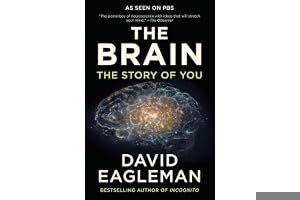
The Brain: The Story of You book cover20

The Brain: The Story of You

David Eagleman

4.4
Locked in the silence and darkness of your skull, your brain fashions the rich narratives of your reality and your identity. Join renowned neuroscientist David Eagleman for a journey into the questions at the mysterious heart of our existence. What is reality? Who are “you”? How do you make decisions? Why does your brain need other people? How is technology poised to change what it means to be hum
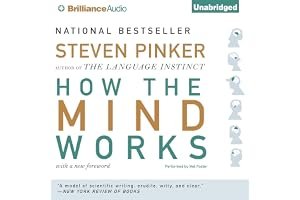
How the Mind Works book cover21

How the Mind Works

Steven Pinker

4.4
In this extraordinary bestseller, Steven Pinker, one of the world's leading cognitive scientists, does for the rest of the mind what he did for language in his 1994 book, The Language Instinct. He explains what the mind is, how it evolved, and how it allows us to see, think, feel, laugh, interact, enjoy the arts, and ponder the mysteries of life. And he does it with the wit that prompted Mark Ridl
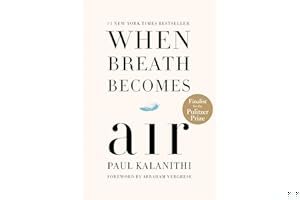
When Breath Becomes Air book cover22

When Breath Becomes Air

Paul Kalanithi

4.4
At the age of thirty-six, on the verge of completing a decade’s worth of training as a neurosurgeon, Paul Kalanithi was diagnosed with stage IV lung cancer. One day he was a doctor treating the dying, and the next he was a patient struggling to live. And just like that, the future he and his wife had imagined evaporated. When Breath Becomes Air chronicles Kalanithi’s transformation from a naïve me
Proust and the Squid: The Story and Science of the Reading Brain book cover23

Proust and the Squid: The Story and Science of the Reading Brain

Maryanne Wolf

4.4
The act of reading is a miracle. Every new reader's brain possesses the extraordinary capacity to rearrange itself beyond its original abilities in order to understand written symbols. But how does the brain learn to read? As world-renowned cognitive neuroscientist and scholar of reading Maryanne Wolf explains in this impassioned book, we taught our brain to read only a few thousand years ago, and
An Anthropologist on Mars: Seven Paradoxical Tales book cover24

An Anthropologist on Mars: Seven Paradoxical Tales

Oliver Sacks

4.4
Paradoxical portraits of seven neurological patients, including a surgeon consumed by the compulsive tics of Tourette's syndrome unless he is operating; an artist who loses all sense of color in a car accident, but finds new creative power in black & white; & others.
Predictably Irrational: The Hidden Forces That Shape Our Decisions book cover25

Predictably Irrational: The Hidden Forces That Shape Our Decisions

Dan Ariely

4.3
Why do our headaches persist after taking a one-cent aspirin but disappear when we take a 50-cent aspirin?

Why does recalling the Ten Commandments reduce our tendency to lie, even when we couldn't possibly be caught?

Why do we splurge on a lavish meal but cut coupons to save twenty-five cents on a can of soup?

Why do we go back for second helpings at the unlimited buffet, even when our stomachs are a
Emotional Intelligence: Why It Can Matter More Than IQ book cover26

Emotional Intelligence: Why It Can Matter More Than IQ

Daniel Goleman

4.3
Everyone knows that high IQ is no guarantee of success, happiness, or virtue, but until Emotional Intelligence, we could only guess why. Daniel Goleman's brilliant report from the frontiers of psychology and neuroscience offers startling new insight into our "two minds"—the rational and the emotional—and how they together shape our destiny.

Through vivid examples, Goleman delineates the five crucia
This Is Your Brain on Music: The Science of a Human Obsession book cover27

This Is Your Brain on Music: The Science of a Human Obsession

Daniel J. Levitin

4.3
Whether you load your iPod with Bach or Bono, music has a significant role in your life—even if you never realized it. Why does music evoke such powerful moods? The answers are at last be- coming clear, thanks to revolutionary neuroscience and the emerging field of evolutionary psychology. Both a cutting-edge study and a tribute to the beauty of music itself, This Is Your Brain on Music unravels a
Principles of Neural Science book cover28

Principles of Neural Science

Eric R. Kandel, James H. Schwartz, Thomas M. Jessell

4.3
This text studies the brain, its structure, function and development. It discusses neuroanatomy, cell and molecular mechanisms and signaling through a cognitive approach to behaviour. It features an expanded treatment of the nervous system, neurological and psychiatric diseases and perception.
Brain on Fire: My Month of Madness book cover29

Brain on Fire: My Month of Madness

Susannah Cahalan

4.3
An award-winning memoir and instant New York Times bestseller that goes far beyond its riveting medical mystery, Brain on Fire is the powerful account of one woman’s struggle to recapture her identity.

When twenty-four-year-old Susannah Cahalan woke up alone in a hospital room, strapped to her bed and unable to move or speak, she had no memory of how she’d gotten there. Days earlier, she had been o
Quiet: The Power of Introverts in a World That Can't Stop Talking book cover30

Quiet: The Power of Introverts in a World That Can't Stop Talking

Susan Cain

4.3
The book that started the Quiet Revolution

At least one-third of the people we know are introverts. They are the ones who prefer listening to speaking; who innovate and create but dislike self-promotion; who favor working on their own over working in teams. It is to introverts—Rosa Parks, Chopin, Dr. Seuss, Steve Wozniak—that we owe many of the great contributions to society.

In Quiet, Susan Cain a
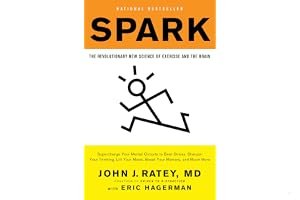
Spark: The Revolutionary New Science of Exercise and the Brain book cover31

Spark: The Revolutionary New Science of Exercise and the Brain

John J. Ratey

4.3
The authors embark upon a fascinating journey through the mind-body connection, showing how exercise is truly our best defense against everything from depression to ADD, from addiction to Alzheimer's.
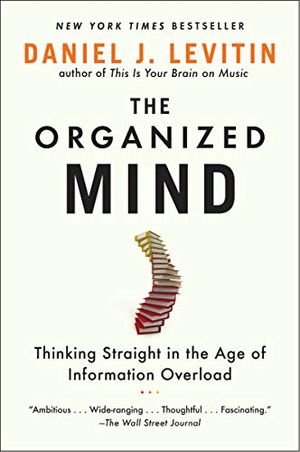
The Organized Mind: Thinking Straight in the Age of Information Overload book cover32

The Organized Mind: Thinking Straight in the Age of Information Overload

Daniel J. Levitin

4.3
New York Times bestselling author and neuroscientist Daniel J. Levitin shifts his keen insights from your brain on music to your brain in a sea of details.

The information age is drowning us with an unprecedented deluge of data. At the same time, we’re expected to make more—and faster—decisions about our lives than ever before. No wonder, then, that the average American reports frequently losing ca
33

Buddha's Brain: The Practical Neuroscience of Happiness, Love, and Wisdom

Rick Hanson

4.3
Jesus, Moses, the Buddha, and other great teachers were born with brains built essentially like anyone else's. Then they used their minds to change their brains in ways that changed history.

With the new breakthroughs in neuroscience, combined with the insights from thousands of years of contemplative practice, you, too, can shape your own brain for greater happiness, love, and wisdom.

Buddha's Brai
In Search of Memory: The Emergence of a New Science of Mind book cover34

In Search of Memory: The Emergence of a New Science of Mind

Eric R. Kandel

4.3
Nobel Prize winner Kandel intertwines cogntive psychology, neuroscience, and molecular biology with his own quest to understand memory.
On Intelligence: How a New Understanding of the Brain Will Lead to the Creation of Truly Intelligent Machines book cover35

On Intelligence: How a New Understanding of the Brain Will Lead to the Creation of Truly Intelligent Machines

Jeff Hawkins, Sandra Blakeslee

4.3
From the inventor of the PalmPilot comes a new and compelling theory of intelligence, brain function, and the future of intelligent machines

Jeff Hawkins, the man who created the PalmPilot, Treo smart phone, and other handheld devices, has reshaped our relationship to computers. Now he stands ready to revolutionize both neuroscience and computing in one stroke, with a new understanding of intellige
Blink: The Power of Thinking Without Thinking book cover36

Blink: The Power of Thinking Without Thinking

Malcolm Gladwell

4.3
Drawing on cutting-edge neuroscience and psychology and displaying all of the brilliance that made The Tipping Point a classic, Blink changes the way you'll understand every decision you make. Never again will you think about thinking the same way.

Malcolm Gladwell redefined how we understand the world around us. Now, in Blink, he revolutionizes the way we understand the world within. Blink is a bo
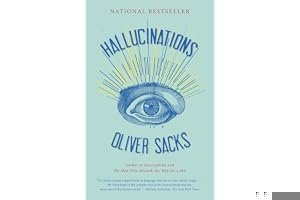
Hallucinations book cover37

Hallucinations

Oliver Sacks

4.3
Have you ever seen something that wasn’t really there? Heard someone call your name in an empty house? Sensed someone following you and turned around to find nothing?

Hallucinations don’t belong wholly to the insane. Much more commonly, they are linked to sensory deprivation, intoxication, illness, or injury. People with migraines may see shimmering arcs of light or tiny, Lilliputian figures of an
Why Zebras Don't Get Ulcers book cover38

Why Zebras Don't Get Ulcers

Robert Sapolsky

4.3
Renowned primatologist Robert Sapolsky offers a completely revised and updated edition of his most popular work, with nearly 90,000 copies in print

Now in a third edition, Robert M. Sapolsky's acclaimed and successful Why Zebras Don't Get Ulcers features new chapters on how stress affects sleep and addiction, as well as new insights into anxiety and personality disorder and the impact of spirituali
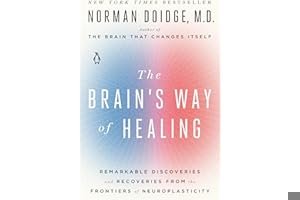
The Brain's Way of Healing: Remarkable Discoveries and Recoveries from the Frontiers of Neuroplasticity book cover39

The Brain's Way of Healing: Remarkable Discoveries and Recoveries from the Frontiers of Neuroplasticity

Norman Doidge

4.3
Now a New York Times Bestseller!

The bestselling author of The Brain That Changes Itself presents astounding advances in the treatment of brain injury and illness


In The Brain That Changes Itself, Norman Doidge described the most important breakthrough in our understanding of the brain in four hundred years: the discovery that the brain can change its own structure and function in response to menta
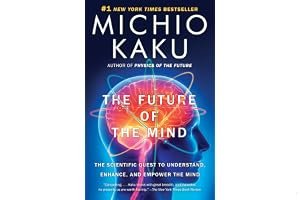
The Future of the Mind: The Scientific Quest to Understand, Enhance, and Empower the Mind book cover40

The Future of the Mind: The Scientific Quest to Understand, Enhance, and Empower the Mind

Michio Kaku

4.3
The New York Times best-selling author of Physics of the Impossible, Physics of the Future and Hyperspace tackles the most fascinating and complex object in the known universe: the human brain.

For the first time in history, the secrets of the living brain are being revealed by a battery of high tech brain scans devised by physicists. Now what was once solely the province of science fiction has bec
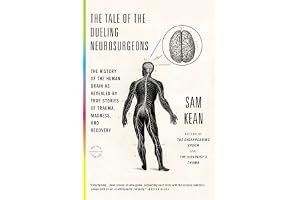
The Tale of the Dueling Neurosurgeons: The History of the Human Brain as Revealed by True Stories of Trauma, Madness, and Recovery book cover41

The Tale of the Dueling Neurosurgeons: The History of the Human Brain as Revealed by True Stories of Trauma, Madness, and Recovery

Sam Kean

4.3
From the author of the bestseller The Disappearing Spoon, tales of the brain and the history of neuroscience.

Early studies of the functions of the human brain used a simple method: wait for misfortune to strike-strokes, seizures, infectious diseases, lobotomies, horrendous accidents-and see how the victim coped. In many cases survival was miraculous, and observers could only marvel at the transf
Awakenings book cover42

Awakenings

Oliver Sacks

4.2
Awakenings--which inspired the major motion picture--is the remarkable story of a group of patients who contracted sleeping-sickness during the great epidemic just after World War I. Frozen for decades in a trance-like state, these men and women were given up as hopeless until 1969, when Dr. Oliver Sacks gave them the then-new drug L-DOPA, which had an astonishing, explosive, "awakening" effect. D
The Feeling of What Happens: Body and Emotion in the Making of Consciousness book cover43

The Feeling of What Happens: Body and Emotion in the Making of Consciousness

Antonio R. Damasio

4.2
The publication of this book is an event in the making. All over the world scientists, psychologists, and philosophers are waiting to read Antonio Damasio's new theory of the nature of consciousness and the construction of the self. A renowned and revered scientist and clinician, Damasio has spent decades following amnesiacs down hospital corridors, waiting for comatose patients to awaken, and dev
44

The Mind's Eye

Oliver W. Sacks

4.2
In Musicophilia, Oliver Sacks explored music and the brain; now, in The Mind's Eye, he writes about the myriad ways in which we experience the visual world: how we see in three dimensions; how we recognize individual faces or places; how we use language to communicate verbally; how we translate marks on paper into words and paragraphs; and, even how we represent the world internally when our eyes
45

Synaptic Self: How Our Brains Become Who We Are

Joseph LeDoux

4.2
Following up his 1996 "The Emotional Brain, " the world-renowned brain expert presents a groundbreaking work that tells a more profound story: how the little spaces between the neurons--the brain's synapses--are the channels through which we think, feel, imagine, act, and remember. In 1996 Joseph LeDoux's "The Emotional Brain" presented a revelatory examination of the biological bases of our emoti
The Shallows: What the Internet Is Doing to Our Brains book cover46

The Shallows: What the Internet Is Doing to Our Brains

Nicholas Carr

4.2
“Is Google making us stupid?” When Nicholas Carr posed that question, in a celebrated Atlantic Monthly cover story, he tapped into a well of anxiety about how the Internet is changing us. He also crystallized one of the most important debates of our time: As we enjoy the Net’s bounties, are we sacrificing our ability to read and think deeply?

Now, Carr expands his argument into the most compelling
Waking Up: A Guide to Spirituality Without Religion book cover47

Waking Up: A Guide to Spirituality Without Religion

Sam Harris

4.2
For the millions of Americans who want spirituality without religion, Sam Harris’s new book is a guide to meditation as a rational spiritual practice informed by neuroscience and psychology.

From multiple New York Times bestselling author, neuroscientist, and “new atheist” Sam Harris, Waking Up is for the 30 percent of Americans who follow no religion, but who suspect that Jesus, Buddha, Lao Tzu, R
The Master and His Emissary: The Divided Brain and the Making of the Western World book cover48

The Master and His Emissary: The Divided Brain and the Making of the Western World

Iain McGilchrist

4.2
A new edition of the bestselling classic – published with a special introduction to mark its 10th anniversary

This pioneering account sets out to understand the structure of the human brain – the place where mind meets matter. Until recently, the left hemisphere of our brain has been seen as the ‘rational’ side, the superior partner to the right. But is this distinction true?

Drawing on a vast bod
Who's in Charge? Free Will and the Science of the Brain book cover49

Who's in Charge? Free Will and the Science of the Brain

Michael Gazzaniga

4.2
“Big questions are Gazzaniga’s stock in trade.”
—New York Times

“Gazzaniga is one of the most brilliant experimental neuroscientists in the world.”
—Tom Wolfe

“Gazzaniga stands as a giant among neuroscientists, for both the quality of his research and his ability to communicate it to a general public with infectious enthusiasm.”
—Robert Bazell, Chief Science Correspondent, NBC News

The author of Human,
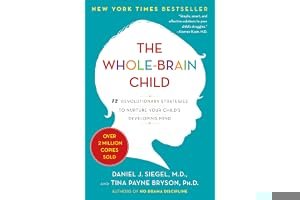
The Whole-Brain Child: 12 Revolutionary Strategies to Nurture Your Child's Developing Mind book cover50

The Whole-Brain Child: 12 Revolutionary Strategies to Nurture Your Child's Developing Mind

Daniel J. Siegel and Tina Payne Bryson

4.2
NEW YORK TIMES BESTSELLER

“Simple, smart, and effective solutions to your child’s struggles.”—Harvey Karp, M.D.


“Daniel Siegel and Tina Payne Bryson have created a masterly, reader-friendly guide to helping children grow their emotional intelligence. This brilliant method transforms everyday interactions into valuable brain-shaping moments. Anyone who cares for children—or who loves a child—should r
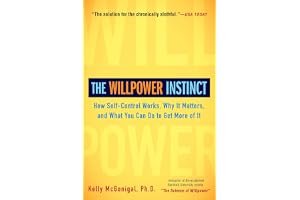
The Willpower Instinct: How Self-Control Works, Why It Matters, and What You Can Do to Get More of It book cover51

The Willpower Instinct: How Self-Control Works, Why It Matters, and What You Can Do to Get More of It

Kelly McGonigal

4.2
The first book to explain the new science of self-control and how it can be harnessed to improve our health, happiness, and productivity.

After years of watching her students struggling with their choices, health psychologist Kelly McGonigal, Ph.D., realized that much of what people believe about willpower is actually sabotaging their success. Committed to sharing what the scientific community alre
52

The Emotional Brain: The Mysterious Underpinnings of Emotional Life

Joseph Ledoux

4.2
The Emotional Brain investigates the origins of human emotions and explains that many exist as part of complex neural systems that evolved to enable us to survive.
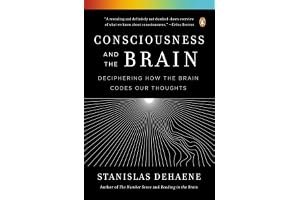
Consciousness and the Brain: Deciphering How the Brain Codes Our Thoughts book cover53

Consciousness and the Brain: Deciphering How the Brain Codes Our Thoughts

Stanislas Dehaene

4.2
A breathtaking look at the new science that can track consciousness deep in the brain

How does our brain generate a conscious thought? And why does so much of our knowledge remain unconscious? Thanks to clever psychological and brain-imaging experiments, scientists are closer to cracking this mystery than ever before.

In this lively book, Stanislas Dehaene describes the pioneering work his lab and t
54

Neuroscience: Exploring the Brain, North American Edition

Mark F. Bear

4.2
The book is designed for undergraduate neuroscience courses. It also fits well into neuroscience course geared toward health professionals such as OT and PT.
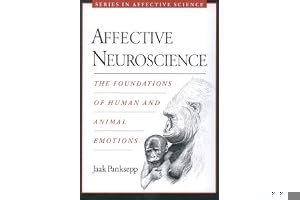
Affective Neuroscience: The Foundations of Human and Animal Emotions book cover55

Affective Neuroscience: The Foundations of Human and Animal Emotions

Jaak Panksepp

4.2
Some investigators have argued that emotions, especially animal emotions, are illusory concepts outside the realm of scientific inquiry. However, with advances in neurobiology and neuroscience, researchers are demonstrating that this position is wrong as they move closer to a lasting understanding of the biology and psychology of emotion. In Affective Neuroscience, Jaak Panksepp provides the most
56

The Mind and the Brain: Neuroplasticity and the Power of Mental Force

Jeffrey M. Schwartz MD, Sharon Begley

4.2
A groundbreaking work of science that confirms, for the first time, the independent existence of the mind–and demonstrates the possibilities for human control over the workings of the brain.

Conventional science has long held the position that 'the mind' is merely an illusion, a side effect of electrochemical activity in the physical brain. Now in paperback, Dr Jeffrey Schwartz and Sharon Begley's
57

Mind Wide Open: Your Brain and the Neuroscience of Everyday Life

Steven Johnson

4.2
In this nationally bestselling, compulsively readable account of what makes brain science a vital component of people's quest to know themselves, acclaimed science writer Steven Johnson subjects his own brain to a battery of tests to find out what's really going on inside. He asks:

How do we "read" other people?


What is the neurochemistry behind love and sex?


What does it mean that the brain is teem
Consciousness Explained book cover58

Consciousness Explained

Daniel C. Dennett

4.2
In Consciousness Explained, Daniel C. Dennett reveals the secrets of one of the last remaining mysteries of the universe: the human brain.

Daniel C. Dennett's now-classic book blends philosophy, psychology and neuroscience - with the aid of numerous examples and thought-experiments - to explore how consciousness has evolved, and how a modern understanding of the human mind is radically different fr
59

Delusions of Gender: How Our Minds, Society, and Neurosexism Create Difference

Cordelia Fine

4.2
It’s the twenty-first century, and although we tried to rear unisex children--boys who play with dolls and girls who like trucks--we failed. Even though the glass ceiling is cracked, most women stay comfortably beneath it, and everywhere we hear about vitally important “hardwired” differences between male and female brains. The neuroscience we read about in magazines, newspaper articles, books, an
The Boy Who Was Raised as a Dog: And Other Stories from a Child Psychiatrist's Notebook book cover60

The Boy Who Was Raised as a Dog: And Other Stories from a Child Psychiatrist's Notebook

Bruce D Perry and Maia Szalavitz

4.2
A renowned psychiatrist reveals how trauma affects children--and outlines the path to recoveryHow does trauma affect a child's mind--and how can that mind recover? In the classic The Boy Who Was Raised as a Dog, Dr. Perry explains what happens to the brains of children exposed to extreme stress and shares their lessons of courage, humanity, and hope. Only when we understand the science of the mind
61

Mapping the Mind

Rita Carter

4.2
Today a brain scan reveals our thoughts, moods, and memories as clearly as an X-ray reveals our bones. We can actually observe a person's brain registering a joke or experiencing a painful memory. Drawing on the latest imaging technology and the expertise of distinguished scientists, Rita Carter explores the geography of the human brain. Her writing is clear, accessible, witty, and the book's 150
62

How We Decide

Jonah Lehrer

4.2
The first book to use the unexpected discoveries of neuroscience to help us make the best decisions.

Since Plato, philosophers have described the decision-making process as either rational or emotional: we carefully deliberate, or we “blink” and go with our gut. But as scientists break open the mind’s black box with the latest tools of neuroscience, they’re discovering that this is not how the mind
The Other Brain: From Dementia to Schizophrenia, How New Discoveries about the Brain Are Revolutionizing Medicine and Science book cover63

The Other Brain: From Dementia to Schizophrenia, How New Discoveries about the Brain Are Revolutionizing Medicine and Science

R. Douglas Fields

4.2
Despite everything that has been written about the brain, a very important part of this vital organ has been overlooked in most books -- until now. The Other Brain is the story of glia, which make up approximately 85 percent of the cells in the brain. Long neglected as little more than cerebral packing material ("glia" means glue), glia are sparking a revolution in brain science.

Glia are completel
NeuroTribes: The Legacy of Autism and How to Think Smarter About People Who Think Differently book cover64

NeuroTribes: The Legacy of Autism and How to Think Smarter About People Who Think Differently

Steve Silberman

4.2
NeuroTribes is a sweeping and penetrating history, presented with a rare sympathy and sensitivity. It will change how you think of autism.' - From the foreword by Oliver Sacks

What is autism: a devastating developmental condition, a lifelong disability, or a naturally occurring form of cognitive difference akin to certain forms of genius? In truth, it is all of these things and more - and the futur
Self Comes to Mind: Constructing the Conscious Brain book cover65

Self Comes to Mind: Constructing the Conscious Brain

Antonio Damasio

4.2
From one of the most significant neuroscientists at work today, a pathbreaking investigation of a question that has confounded philosophers, psychologists, and neuroscientists for centuries: how is consciousness created?

Antonio Damasio has spent the past thirty years studying and writing about how the brain operates, and his work has garnered acclaim for its singular melding of the scientific and
66

Proust Was a Neuroscientist

Jonah Lehre

4.2
Since the dawn of the modern age, science's greatest contribution to the world has been its ability to unravel the mystery, to break down the inner working of the universe to its component parts: atoms and genes. Its greatest detriment to the world has been its unfettered desire to play with and alter them: science for science's sake, as if it offered the only path to knowledge.

According to Lehrer
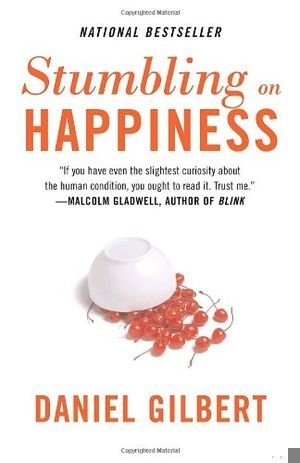
Stumbling on Happiness book cover67

Stumbling on Happiness

Daniel Gilbert

4.2
• Why are lovers quicker to forgive their partners for infidelity than for leaving dirty dishes in the sink? • Why will sighted people pay more to avoid going blind than blind people will pay to regain their sight? • Why do dining companions insist on ordering different meals instead of getting what they really want? • Why do pigeons seem to have such excellent aim; why can’t we remember one song
Mindsight: The New Science of Personal Transformation book cover68

Mindsight: The New Science of Personal Transformation

Daniel Siegel

4.1
From a pioneer in the field of mental health comes a groundbreaking book on the healing power of "mindsight," the potent skill that is the basis for both emotional and social intelligence. Mindsight allows you to make positive changes in your brain-and in your life.

- Is there a memory that torments you, or an irrational fear you can' t shake?
- Do you sometimes become unreasonably angry or upset an
The Blank Slate: The Modern Denial of Human Nature book cover69

The Blank Slate: The Modern Denial of Human Nature

Steven Pinker

4.1
“In a work of outstanding clarity and sheer brilliance Steven Pinker banishes forever fears that a biological understanding of human nature threatens humane values.”
—Helena Cronin, author of The Ant and The Peacock

“A mind blowing, mind openingexpos. Pinker's profoundly positive arguments for the compatibility of biology and humanism are unrivalled for their scope and depth and should be mandatory,
Do No Harm: Stories of Life, Death and Brain Surgery book cover70

Do No Harm: Stories of Life, Death and Brain Surgery

Henry Marsh

4.1
What is it like to be a brain surgeon? How does it feel to hold someone's life in your hands, to cut into the stuff that creates thought, feeling, and reason? How do you live with the consequences of performing a potentially lifesaving operation when it all goes wrong?

In neurosurgery, more than in any other branch of medicine, the doctor's oath to "do no harm" holds a bitter irony. Operations on t
Adult Children of Emotionally Immature Parents book cover71

Adult Children of Emotionally Immature Parents

Lindsay C Gibson

4.1
If you grew up with an emotionally immature, unavailable, or selfish parent, you may have lingering feelings of anger, loneliness, betrayal, or abandonment. You may recall your childhood as a time when your emotional needs were not met, when your feelings were dismissed, or when you took on adult levels of responsibility in an effort to compensate for your parent’s behavior. These wounds can be he
The Molecule of More: How a Single Chemical in Your Brain Drives Love, Sex, and Creativity―and Will Determine the Fate of the Human Race book cover72

The Molecule of More: How a Single Chemical in Your Brain Drives Love, Sex, and Creativity―and Will Determine the Fate of the Human Race

Daniel Z. Lieberman

4.1
73

Connectome: How the Brain's Wiring Makes Us Who We Are

Sebastian Seung

4.1
We know that each of us is unique, but science has struggled to pinpoint where, precisely, our uniqueness resides. Is it in our genes? The structure of our brains? Our genome may determine our eye color and even aspects of our personality. But our friendships, failures, and passions also shape who we are. The question is: how?Sebastian Seung, a dynamic professor at MIT, is on a quest to discover t
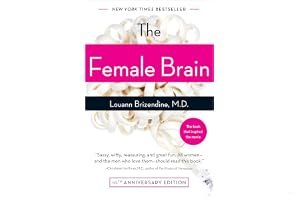
The Female Brain book cover74

The Female Brain

Louann Brizendine M.D.

4.1
This comprehensive new look at the hormonal roller coaster that rules women's lives down to the cellular level, "a user's guide to new research about the female brain and the neurobehavioral systems that make us women," offers a trove of information, as well as some stunning insights. Though referenced like a work of research, Brizedine's writing style is fully accessible. Brizendine provides a fa
75

A Primate's Memoir: A Neuroscientist's Unconventional Life Among the Baboons

Robert M. Sapolsky

4.1
In the tradition of Jane Goodall and Dian Fossey, Robert Sapolsky, a foremost science writer and recipient of a MacArthur Genius Grant, tells the mesmerizing story of his twenty-one years in remote Kenya with a troop of Savannah baboons.

“I had never planned to become a savanna baboon when I grew up; instead, I had always assumed I would become a mountain gorilla,” writes Robert Sapolsky in this wi
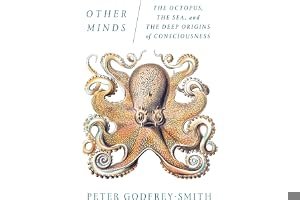
Other Minds: The Octopus, the Sea, and the Deep Origins of Consciousness book cover76

Other Minds: The Octopus, the Sea, and the Deep Origins of Consciousness

Peter Godfrey-Smith

4.1

Although mammals and birds are widely regarded as the smartest creatures on earth, it has lately become clear that a very distant branch of the tree of life has also sprouted higher intelligence: the cephalopods, consisting of the squid, the cuttlefish, and above all the octopus. In captivity, octopuses have been known to identify individual human keepers, raid neighboring tanks for food, turn off

77

How to Create a Mind: The Secret of Human Thought Revealed

Ray Kurzweil

4.1
The bold futurist and bestselling author explores the limitless potential of reverse-engineering the human brain

Ray Kurzweil is arguably today’s most influential—and often controversial—futurist. In How to Create a Mind, Kurzweil presents a provocative exploration of the most important project in human-machine civilization—reverse engineering the brain to understand precisely how it works and usin
78

Consciousness: Confessions of a Romantic Reductionist

Christof Koch

4.1
In which a scientist searches for an empirical explanation for phenomenal experience, spurred by his instinctual belief that life is meaningful.

What links conscious experience of pain, joy, color, and smell to bioelectrical activity in the brain? How can anything physical give rise to nonphysical, subjective, conscious states? Christof Koch has devoted much of his career to bridging the seemingly
79

Theoretical Neuroscience: Computational and Mathematical Modeling of Neural Systems

Peter Dayan, Laurence F. Abbott

4.1
Theoretical neuroscience provides a quantitative basis for describing what nervous systems do, determining how they function, and uncovering the general principles by which they operate. This text introduces the basic mathematical and computational methods of theoretical neuroscience and presents applications in a variety of areas including vision, sensory-motor integration, development, learning,
80

The Upward Spiral: Using Neuroscience to Reverse the Course of Depression, One Small Change at a Time

Alex Korb PhD and Daniel J. Siegel MD

4.1
Depression can feel like a downward spiral, pulling you down into a vortex of sadness, fatigue, and apathy. Based in the latest research in neuroscience, this audiobook offers dozens of little things you can do every day to rewire your brain and create an upward spiral towards a happier, healthier life.

Depression doesn't happen all at once. It starts gradually and builds momentum over time. If you
When the Air Hits Your Brain: Tales of Neurosurgery book cover81

When the Air Hits Your Brain: Tales of Neurosurgery

Frank T Vertosick Jr. MD, Kirby Heyborne, et al

4.1
"This book should be read by every medical student, doctor and present or potential patient. In other words, by all of us."
--Dr. Bernie Siegel, author of Love, Medicine and Miracles

Rule One for the neurologist in residence: "You ain't never the same when the air hits your brain." In this fascinating book, Dr. Frank Vertosick brings that fact to life through intimate portraits of patients and unspa
Gödel, Escher, Bach: An Eternal Golden Braid book cover82

Gödel, Escher, Bach: An Eternal Golden Braid

Douglas R. Hofstadter

4.1
Douglas Hofstadter's book is concerned directly with the nature of “maps” or links between formal systems. However, according to Hofstadter, the formal system that underlies all mental activity transcends the system that supports it. If life can grow out of the formal chemical substrate of the cell, if consciousness can emerge out of a formal system of firing neurons, then so too will computers at
83

Idiot Brain: What Your Head Is Really Up To

Dean Burnett

4.1
The brain is an absolute marvel—the seat of our consciousness, the pinnacle (so far) of evolutionary progress, and the engine of human experience. But it’s also messy, fallible, and about 50,000 years out of date. We cling to superstitions, remember faces but not names, miss things sitting right in front of us, and lie awake at night while our brains endlessly replay our greatest fears. Idiot Brai
Change Your Brain, Change Your Life (Revised and Expanded): The Breakthrough Program for Conquering Anxiety, Depression, Obsessiveness, Lack of Focus, Anger, and Memory Problems book cover84

Change Your Brain, Change Your Life (Revised and Expanded): The Breakthrough Program for Conquering Anxiety, Depression, Obsessiveness, Lack of Focus, Anger, and Memory Problems

Daniel G. Amen

4.0
BRAIN PRESCRIPTIONS THAT REALLY WORK
In this breakthrough bestseller, you'll see scientific evidence that your anxiety, depression, anger, obsessiveness, or impulsiveness could be related to how specific structures in your brain work. You're not stuck with the brain you're born with. Here are just a few of neuropsychiatrist Dr. Daniel Amen's surprising--and effective--"brain prescriptions" that can
86

Making Up The Mind: How The Brain Creates Our Mental World

Chris Frith

4.0
Written by one of the world's leading neuroscientists, Making Up the Mind is the first accessible account of experimental studies showing how the brain creates our mental world.

Uses evidence from brain imaging, psychological experiments and studies of patients to explore the relationship between the mind and the brain
Demonstrates that our knowledge of both the mental and physical comes to us thr
The Talent Code: Greatness Isn't Born. It's Grown. Here's How. book cover87

The Talent Code: Greatness Isn't Born. It's Grown. Here's How.

Daniel Coyle

4.0
What is the secret of talent? How do we unlock it? In this groundbreaking work, journalist and New York Times bestselling author Daniel Coyle provides parents, teachers, coaches, businesspeople—and everyone else—with tools they can use to maximize potential in themselves and others.

Whether you're coaching soccer or teaching a child to play the piano, writing a novel or trying to improve your golf
The Better Angels of Our Nature: Why Violence Has Declined book cover88

The Better Angels of Our Nature: Why Violence Has Declined

Steven Pinker

4.0
Believe it or not, today we may be living in the most peaceful moment in our species' existence. In his gripping and controversial new work, New York Times bestselling author Steven Pinker shows that despite the ceaseless news about war, crime, and terrorism, violence has actually been in decline over long stretches of history. Exploding myths about humankind's inherent violence and the curse of m
89

Human: The Science Behind What Makes Us Unique

Michael S. Gazzaniga

4.0
One of the world's leading neuroscientists explores how best to understand the human condition by examining the biological, psychological, and highly social nature of our species within the social context of our lives.

What happened along the evolutionary trail that made humans so unique? In his widely accessible style, Michael Gazzaniga looks to a broad range of studies to pinpoint the change that
Reading in the Brain: The Science and Evolution of a Human Invention book cover90

Reading in the Brain: The Science and Evolution of a Human Invention

Stanislas Dehaene

4.0
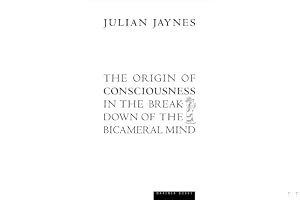
The Origin of Consciousness in the Breakdown of the Bicameral Mind book cover91

The Origin of Consciousness in the Breakdown of the Bicameral Mind

Julian Jaynes

4.0
At the heart of this seminal book is Julian Jaynes's still-controversial thesis that consciousness didn't begin far back in animal evolution but instead is a learned process that came about only 3000 years ago & is still developing. The implications of this revolutionary scientific paradigm extend into virtually all aspects of psychology, history & religion.
Preface
Introduction
The mind of man
The c
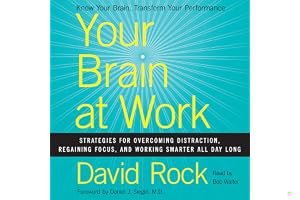
Your Brain at Work: Strategies for Overcoming Distraction, Regaining Focus, and Working Smarter All Day Long book cover92

Your Brain at Work: Strategies for Overcoming Distraction, Regaining Focus, and Working Smarter All Day Long

David Rock

4.0
Meet Emily and Paul: The parents of two young children, Emily is the newly promoted VP of marketing at a large corporation while Paul works from home or from clients' offices as an independent IT consultant. Their lives, like all of ours, are filled with a bewildering blizzard of emails, phone calls, yet more emails, meetings, projects, proposals, and plans. Just staying ahead of the storm has bec
93

A Brief Tour of Human Consciousness: From Impostor Poodles to Purple Numbers

V.S. Ramachandran

4.0
How can some people come to believe that their poodle is an impostor? Or see colors in numbers? Internationally acclaimed neuroscientist, V.S. Ramachandran, now shares his unique insight into human consciousness in an entertaining, inspiring, and intellectually dazzling brief tour of the ultimate frontier—the thoughts in our heads.A Brief Tour of Human Consciousness is made up of five investigatio
94

A User's Guide to the Brain: Perception, Attention, and the Four Theaters of the Brain

John J. Ratey

4.0
John Ratey, bestselling author and clinical professor of psychiatry at Harvard Medical School, here lucidly explains the human brain’s workings, and paves the way for a better understanding of how the brain affects who we are. Ratey provides insight into the basic structure and chemistry of the brain, and demonstrates how its systems shape our perceptions, emotions, and behavior. By giving us a gr
The Psychopath Test: A Journey Through the Madness Industry book cover95

The Psychopath Test: A Journey Through the Madness Industry

Jon Ronson

4.0
In this madcap journey, a bestselling journalist investigates psychopaths and the industry of doctors, scientists, and everyone else who studies them.

The Psychopath Test is a fascinating journey through the minds of madness. Jon Ronson's exploration of a potential hoax being played on the world's top neurologists takes him, unexpectedly, into the heart of the madness industry. An influential psyc
96

The Moral Landscape: How Science Can Determine Human Values

Sam Harris

4.0
Sam Harris' first book, The End of Faith, ignited a worldwide debate about the validity of religion. In the aftermath, Harris discovered that most people - from religious fundamentalists to non-believing scientists - agree on one point: science has nothing to say on the subject of human values. Indeed, our failure to address questions of meaning and morality through science has now become the most
Braintrust: What Neuroscience Tells Us About Morality book cover98

Braintrust: What Neuroscience Tells Us About Morality

Patricia S. Churchland

4.0
What is morality? Where does it come from? And why do most of us heed its call most of the time? In Braintrust, neurophilosophy pioneer Patricia Churchland argues that morality originates in the biology of the brain. She describes the "neurobiological platform of bonding" that, modified by evolutionary pressures and cultural values, has led to human styles of moral behavior. The result is a provoc
99

Subliminal: How Your Unconscious Mind Rules Your Behavior

Leonard Mlodinow

4.0
Leonard Mlodinow, the best-selling author of The Drunkard’s Walk and coauthor of The Grand Design (with Stephen Hawking), gives us a startling and eye-opening examination of how the unconscious mind shapes our experience of the world and how, for instance, we often misperceive our relationships with family, friends, and business associates, misunderstand the reasons for our investment decisions, a
100

Looking for Spinoza: Joy, Sorrow, and the Feeling Brain

Antonio Damasio

4.0
The last in a trilogy of books that investigates the philosophical and scientific foundations of human life


Joy, sorrow, jealousy, and awe—these and other feelings are the stuff of our daily lives. In the seventeenth century, the philosopher Spinoza devoted much of his life's work examining how these emotions supported human survival, yet hundreds of years later the biological roots of what we fee