We've ranked the best france books using expert recommendations, sales data, and millions of reader ratings. At Shortform, we know books. Our book guides are the best in the world. Learn why.
Cover unavailable
1
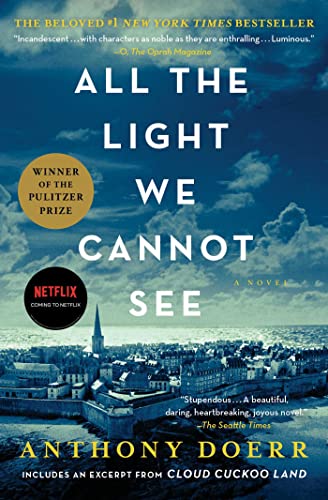
All the Light We Cannot See
Anthony Doerr
5.0
An alternate cover for this ISBN can be found here
From the highly acclaimed, multiple award-winning Anthony Doerr, the stunningly beautiful instant New York Times bestseller about a blind French girl and a German boy whose paths collide in occupied France as both try to survive the devastation of World War II.
Marie-Laure lives in Paris near the Museum of Natural History, where her father works. When she is twelve, the Nazis occupy Paris and father and daughter flee to the walled citadel of Saint-Malo, where Marie-Laure’s reclusive great uncle lives in a tall house by the sea. With them they carry what might be the museum’s most valuable and dangerous jewel.
In a mining town in Germany, Werner Pfennig, an orphan, grows up with his younger sister, enchanted by a crude radio they find that brings them news and stories from places they have never seen or imagined. Werner becomes an expert at building and fixing these crucial new instruments and is enlisted to use his talent to track down the resistance. Deftly interweaving the lives of Marie-Laure and Werner, Doerr illuminates the ways, against all odds, people try to be good to one another.

…
Recommended by Jason Goldman.
Jason Goldman
All The Light We Cannot See is the best book I've read in a while. I tend to speed read and here I savored every word; the writing is just effortlessly beautiful. I hope it's made it onto high school WWII syllabi by now. [source]
Cover unavailable
2
The Little Prince Family Storybook: Unabridged Original Text
Antoine de Saint-Exupéry
4.9
Rediscover Antoine de Saint-Exupery's universal masterpiece with original text and magnificent new illustrations created by masters of film animation. This wise and enchanginting fable teaches the secret of what is really important in life.
Recommended by Ryan Holiday, Brandon Stanton, Evan Goldberg, and 1 others.
Equally allegorical, I read The Little Prince for the first time which for some reason I’d never been exposed to before. If you’re in the same boat, read it. It’s short but great. [source]

Brandon Stanton
Brandon Stanton recommended this book on the podcast "The Tim Ferriss Show". [source]

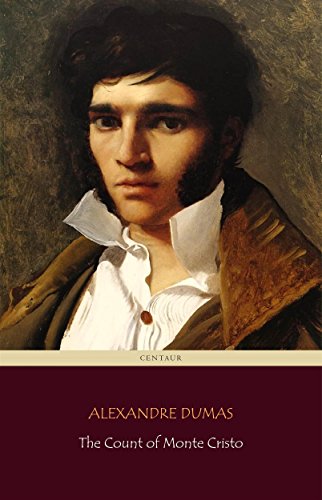
Thrown in prison for a crime he has not committed, Edmond Dantes is confined to the grim fortress of If. There he learns of a great hoard of treasure hidden on the Isle of Monte Cristo and he becomes determined not only to escape, but also to unearth the treasure and use it to plot the destruction of the three men responsible for his incarceration. Dumas’ epic tale of suffering and retribution, inspired by a real-life case of wrongful imprisonment, was a huge popular success when it was first serialized in the 1840s.
Robin Buss’s lively English translation is complete and unabridged, and remains faithful to the style of Dumas’s original. This edition includes an introduction, explanatory notes and suggestions for further reading.
…
Recommended by Ryan Holiday, Chris Kutarna, and Sol Orwell.
I thought I’d read this book before but clearly they gave me some sort of children’s version. Because the one I’d read as a kid wasn’t a 1,200 page epic of some of the most brilliant, beautiful and complicated storytelling ever put to paper. What a book! When I typed out my notes (and quotes) after finishing this book, it ran some 3,000 words. I was riveted from cover to cover. I enjoyed all the stuff I missed as a kid: the Counts struggle with his faith in light of what was done to him, the Hundred Days of Napoleon’s return, his rants against technology, the criticism of newspapers, the influence of ancient philosophy, ultimately, a warning against being consumed by revenge. Please—if you’re going on a long trip or looking to check out of modern events for a while—get this book. I recommend the Penguin Classics edition. [source]
Chris Kutarna
The Count of Monte Cristo it is about revenge and the cost of revenge. Being careful what you wish for. The other theme is about riches and wealth and what is truly valuable. [source]
Sol Orwell
I have to go with Count of Monte Cristo. An unparalleled revenge story. [source]

Cover unavailable
4
The Stranger
Albert Camus, Jonathan Davis, et al
4.8
Through the story of an ordinary man unwittingly drawn into a senseless murder on an Algerian beach, Camus explored what he termed "the nakedness of man faced with the absurd." First published in English in 1946; now in a new translation by Matthew Ward.
Seminal novel on existentialism and the absurd by Albert Camus from 1946. Explores that feeling of disconnectedness from society, its norms, and the absurdity of every day life. Striking first-person account in a powerful, direct language. [source]
Kyle Maynard
Kyle Maynard said this is one of his most-recommended books. [source]
Cover unavailable
5
Les Misérables
Victor Hugo, Isabel F. Hapgood, et al.
4.8
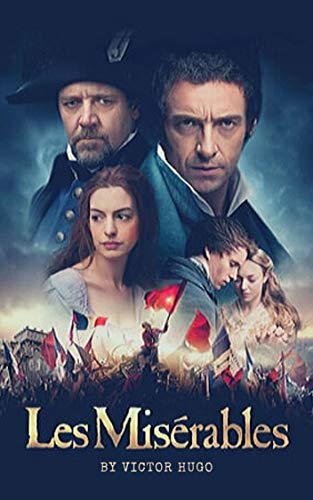
Introducing one of the most famous characters in literature, Jean Valjean—the noble peasant imprisoned for stealing a loaf of bread—Les Misérables ranks among the greatest novels of all time. In it, Victor Hugo takes readers deep into the Parisian underworld, immerses them in a battle between good and evil, and carries them to the barricades during the uprising of 1832 with a breathtaking realism that is unsurpassed in modern prose. Within his dramatic story are themes that capture the intellect and the emotions: crime and punishment, the relentless persecution of Valjean by Inspector Javert, the desperation of the prostitute Fantine, the amorality of the rogue Thénardier, and the universal desire to escape the prisons of our own minds. Les Misérables gave Victor Hugo a canvas upon which he portrayed his criticism of the French political and judicial systems, but the portrait that resulted is larger than life, epic in scope—an extravagant spectacle that dazzles the senses even as it touches the heart.
…
Recommended by Christian B Miller and David Bellos.
Christian B Miller
Vividly illustrates two ideas about character. The first is that our characters can change over time, the second is that role models can be powerful sources of character change. [source]
David Bellos
Because it’s so huge and so capacious and contains so many different stories and takes on the world, you can make anything out of Les Misérables. [source]

Cover unavailable
6
The Nightingale
KRISTIN HANNAH
4.8
In love we find out who we want to be. In war we find out who we are.
FRANCE, 1939
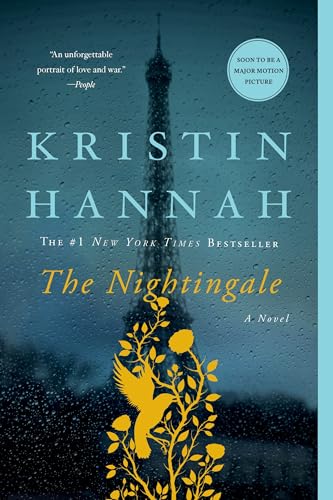
In the quiet village of Carriveau, Vianne Mauriac says goodbye to her husband, Antoine, as he heads for the Front. She doesn’t believe that the Nazis will invade France…but invade they do, in droves of marching soldiers, in caravans of trucks and tanks, in planes that fill the skies and drop bombs upon the innocent. When a German captain requisitions Vianne’s home, she and her daughter must live with the enemy or lose everything. Without food or money or hope, as danger escalates all around them, she is forced to make one impossible choice after another to keep her family alive.
Vianne’s sister, Isabelle, is a rebellious eighteen-year-old girl, searching for purpose with all the reckless passion of youth. While thousands of Parisians march into the unknown terrors of war, she meets Gäetan, a partisan who believes the French can fight the Nazis from within France, and she falls in love as only the young can…completely. But when he betrays her, Isabelle joins the Resistance and never looks back, risking her life time and again to save others.
With courage, grace and powerful insight, bestselling author Kristin Hannah captures the epic panorama of WWII and illuminates an intimate part of history seldom seen: the women’s war. The Nightingale tells the stories of two sisters, separated by years and experience, by ideals, passion and circumstance, each embarking on her own dangerous path toward survival, love, and freedom in German-occupied, war-torn France–a heartbreakingly beautiful novel that celebrates the resilience of the human spirit and the durability of women. It is a novel for everyone, a novel for a lifetime.
…
Cover unavailable
7
The plague
Albert Camus, Stuart Gilbert
4.8
A gripping tale of human unrelieved horror, of survival and resilience, and of the ways in which humankind confronts death, The Plague is at once a masterfully crafted novel, eloquently understated and epic in scope, and a parable of ageless moral resonance, profoundly relevant to our times. In Oran, a coastal town in North Africa, the plague begins as a series of portents, unheeded by the people. It gradually becomes a omnipresent reality, obliterating all traces of the past and driving its victims to almost unearthly extremes of suffering, madness, and compassion.
…
Recommended by Jim Collins, Arthur Ammann, Jenny Davidson, and 1 others.
Arthur Ammann
It’s an amazing book, considering Camus probably never personally experienced a plague. In his novel, Camus captured everything that we were dealing with in the Aids epidemic without Aids existing at that time. Without his knowing what the consequences of the HIV plague were going to be, he seems to have gotten all the actors in there and the myriad of things that you wrestle with. [source]
Jenny Davidson
Albert Camus’s The Plague probably remains the best-known novel on the topic of epidemic disease. It tells the story of those involved in an epidemic in a North African setting. It is very interested in the details about how quarantines are enforced and the role not just of the government, but of individuals who band together into groups to manage the epidemic. [source]
Stephen Breyer
He talks about the plague. Well, the plague is that part of a human being which can be very evil. That germ, he says at the end, never dies, it simply goes into remission. It lurks. It lurks in the cupboards, it lurks in the hallways, it lurks in the filing cabinets. [source]
Cover unavailable
8
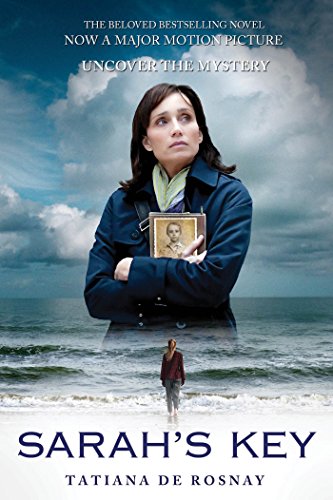
Sarah's Key
Tatiana de Rosnay
4.7
Paris, July 1942: Ten-year-old Sarah is brutally arrested with her family in the Vel' d'Hiv' roundup, the most notorious act of French collaboration with the Nazis. but before the police come to take them, Sarah locks her younger brother, Michel, in their favorite hiding place, a cupboard in the family's apartment. She keeps the key, thinking that she will be back within a few hours.
Paris, May 2002: On Vel' d'Hiv's sixtieth anniversary, Julia Jarmond, an American journalist, is asked by her Paris-based American magazine to write an article about this black day in France's past. Julia has lived in Paris for nearly twenty-five years, married a Frenchman, and she is shocked both by her ignorance about the event and the silence that still surrounds it. In the course of her investigation, she stumbles onto a trail of long-hidden family secrets that connects her to Sarah. Julia finds herself compelled to retrace the girl's ordeal, from the terrible days spent shut in at the Vel' d'Hiv' to the camps and beyond. As she probes into Sarah's past, she begins to question her own place in France and to reevaluate her marriage and her life.
Writing about the fate of her country with a pitiless clarity, Tatiana de Rosnay offers us a brilliantly subtle, compelling portrait of France under occupation and reveals the taboos and denial surrounding this painful episode in French history. (front flap)
…
Cover unavailable
9
Elegance of the Hedgehog
Barbery M Muriel Barbery
4.7
Rene is the concierge of a grand Parisian apartment building. She maintains a carefully constructed persona as someone uncultivated but reliable, in keeping with what she feels a concierge should be. But beneath this facade lies the real Rene: passionate about culture and the arts, and more knowledgeable in many ways than her employers with their outwardly successful but emotionally void lives. Down in her lodge, apart from weekly visits by her one friend Manuela, Rene lives with only her cat for company. Meanwhile, several floors up, twelve-year-old Paloma Josse is determined to avoid the pampered and vacuous future laid out for her, and decides to end her life on her thirteenth birthday. But unknown to them both, the sudden death of one of their privileged neighbours will dramatically alter their lives forever. By turns moving and hilarious, this unusual and insightful novel is now an international publishing sensation, with sales of over 10 million copies.
…
Recommended by Leo Babauta.
Cover unavailable
10
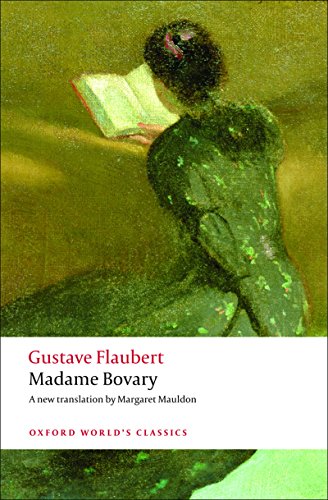
Madame Bovary
Gustave Flaubert, Margaret Mauldon, Malcolm Bowie, Mark Overstall
4.6
Clicca qui per l'edizione "Storie senza tempo".
'Oh, why, dear God, did I marry him?'
Emma Bovary is beautiful and bored, trapped in her marriage to a mediocre doctor and stifled by the banality of provincial life. An ardent devourer of sentimental novels, she longs for passion and seeks escape in fantasies of high romance, in voracious spending and, eventually, in adultery. But even her affairs bring her disappointment, and when real life continues to fail to live up to her romantic expectations, the consequences are devastating. Flaubert's erotically charged and psychologically acute portrayal of Emma Bovary caused a moral outcry on its publication in 1857. It was deemed so lifelike that many women claimed they were the model for his heroine; but Flaubert insisted: 'Madame Bovary, c'est moi.'
This modern translation by Flaubert's biographer, Geoffrey Wall, retains all the delicacy and precision of the French original. The edition also contains a preface by the novelist Michèle Roberts.
…
Cover unavailable
11
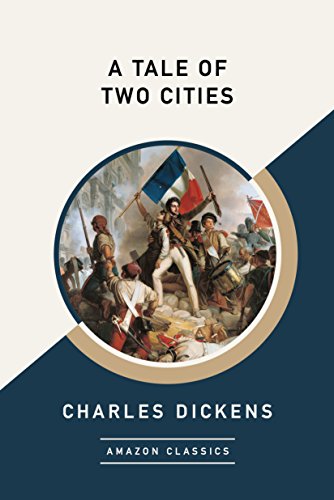
A Tale of Two Cities
Charles Dickens
4.6
This work has been selected by scholars as being culturally important and is part of the knowledge base of civilization as we know it.
This work is in the public domain in the United States of America, and possibly other nations. Within the United States, you may freely copy and distribute this work, as no entity (individual or corporate) has a copyright on the body of the work.
Scholars believe, and we concur, that this work is important enough to be preserved, reproduced, and made generally available to the public. To ensure a quality reading experience, this work has been proofread and republished using a format that seamlessly blends the original graphical elements with text in an easy-to-read typeface.
We appreciate your support of the preservation process, and thank you for being an important part of keeping this knowledge alive and relevant.
…
Recommended by Amelia Boone, Antonio Villaraigosa, and May Witwit.
As mayor of a large metropolis, the living conditions of our residents are always present in my mind. Every decision I make, I try to evaluate if it will help improve the quality of life of every Angeleno. But Dickens really dissects both the aristocrats and the revolutionaries, to show that change is never easy. As progressives, we value government’s role and power to improve our cities and communities, but at the same time we must never forget that the ends never justify the means. And that the majority cannot deprive the minority of their inalienable rights that come with a democracy. [source]
May Witwit
I started a paper about the historical reality in this book. And as I studied it more deeply I got depressed because the things that were happening were similar to Iraq. How the mob could be turned against people by devious minds. They just killed people without even knowing them. The people who were killed were probably very good people, you never know. You just can’t kill haphazardly, heads rolling everywhere for nothing. There must be a way to check these things [source]

Cover unavailable
12
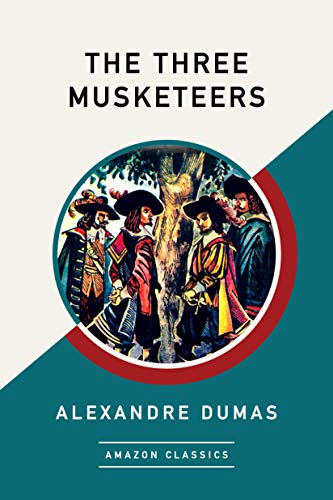
The Three Musketeers (The D'Artagnan Romances, #1)
Alexandre Dumas and William Robso
4.6
Alexandre Dumas’s most famous tale— and possibly the most famous historical novel of all time— in a handsome hardcover volume.
This swashbuckling epic of chivalry, honor, and derring-do, set in France during the 1620s, is richly populated with romantic heroes, unattainable heroines, kings, queens, cavaliers, and criminals in a whirl of adventure, espionage, conspiracy, murder, vengeance, love, scandal, and suspense. Dumas transforms minor historical figures into larger- than-life characters: the Comte d’Artagnan, an impetuous young man in pursuit of glory; the beguilingly evil seductress “Milady”; the powerful and devious Cardinal Richelieu; the weak King Louis XIII and his unhappy queen—and, of course, the three musketeers themselves, Athos, Porthos, and Aramis, whose motto “all for one, one for all” has come to epitomize devoted friendship. With a plot that delivers stolen diamonds, masked balls, purloined letters, and, of course, great bouts of swordplay, The Three Musketeers is eternally entertaining.
…
Cover unavailable
13
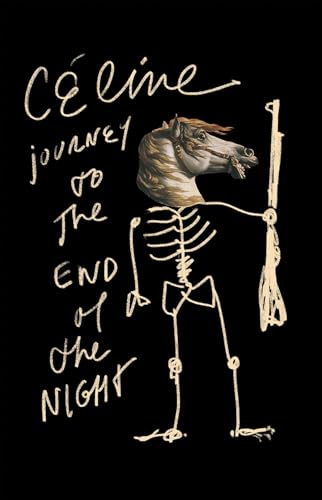
Journey to the End of the Night
Louis-Ferdinand Céline, Ralph Manheim, William T. Vollmann
4.5
Louis-Ferdinand Celine's revulsion and anger at what he considered the idiocy and hypocrisy of society explodes from nearly every page of this novel. Filled with slang and obscenities and written in raw, colloquial language, Journey to the End of the Night is a literary symphony of violence, cruelty and obscene nihilism. This book shocked most critics when it was first published in France in 1932, but quickly became a success with the reading public in Europe, and later in America where it was first published by New Directions in 1952. The story of the improbable yet convincingly described travels of the petit-bourgeois (and largely autobiographical) antihero, Bardamu, from the trenches of World War I, to the African jungle, to New York and Detroit, and finally to life as a failed doctor in Paris, takes the readers by the scruff and hurtles them toward the novel's inevitable, sad conclusion.
…
Recommended by Neil Strauss, David Downie, Quentin Hardy, and 1 others.
Neil Strauss recommended this book in the book "Tools of Titans". [source]
David Downie
I was particularly fascinated by Céline’s portrait of the city because Paris is one of the characters in the book. You get a real sense of what Paris looked like. [source]
Quentin Hardy
@p1lonn Terrible human, but that's a great book. [source]
Hemingway's memories of his life as an unknown writer living in Paris in the twenties are deeply personal, warmly affectionate, and full of wit. Looking back not only at his own much younger self, but also at the other writers who shared Paris with him - James Joyce, Wyndham Lewis, Scott and Zelda Fitzgerald - he recalls the time when, poor, happy, and writing in cafes, he discovered his vocation. Written during the last years of Hemingway's life, his memoir is a lively and powerful reflection of his genius that scintillates with the romance of the city.
…
Recommended by Janine di Giovanni, Mohsin Hamid, and Wai Chee Dimock.
Janine di Giovanni
The fact that Hemingway writes it as an old, rather bitter man trapped in his Idaho home with a bullying wife while he dreams of his youth in Paris with his first wife and child is so touching to me. [source]
We think of Hemingway as an American writer, but much of his writing is set outside of the United States, just as much of his life was set outside of the United States. [source]
Wai Chee Dimock
This is a memoir by Hemingway about his time in Paris, which includes sketches of people like F Scott Fitzgerald. [source]
Cover unavailable
15
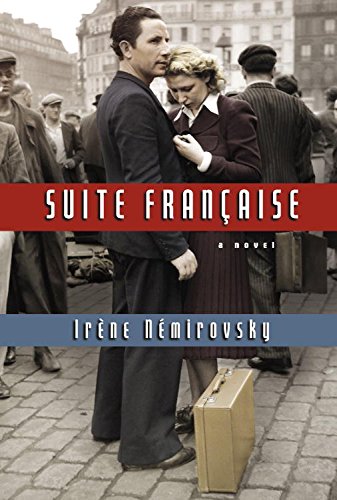
Suite Française
Irène Némirovsky, Sandra Smith
4.5
The first two stories of a masterwork once thought lost, written by a pre-WWII bestselling author who was deported to Auschwitz and died before her work could be completed.
By the early l940s, when Ukrainian-born Irène Némirovsky began working on what would become Suite Française—the first two parts of a planned five-part novel—she was already a highly successful writer living in Paris. But she was also a Jew, and in 1942 she was arrested and deported to Auschwitz: a month later she was dead at the age of thirty-nine. Two years earlier, living in a small village in central France—where she, her husband, and their two small daughters had fled in a vain attempt to elude the Nazis—she'd begun her novel, a luminous portrayal of a human drama in which she herself would become a victim. When she was arrested, she had completed two parts of the epic, the handwritten manuscripts of which were hidden in a suitcase that her daughters would take with them into hiding and eventually into freedom. Sixty-four years later, at long last, we can read Némirovsky's literary masterpiece
The first part, "A Storm in June," opens in the chaos of the massive 1940 exodus from Paris on the eve of the Nazi invasion during which several families and individuals are thrown together under circumstances beyond their control. They share nothing but the harsh demands of survival—some trying to maintain lives of privilege, others struggling simply to preserve their lives—but soon, all together, they will be forced to face the awful exigencies of physical and emotional displacement, and the annihilation of the world they know. In the second part, "Dolce," we enter the increasingly complex life of a German-occupied provincial village. Coexisting uneasily with the soldiers billeted among them, the villagers—from aristocrats to shopkeepers to peasants—cope as best they can. Some choose resistance, others collaboration, and as their community is transformed by these acts, the lives of these these men and women reveal nothing less than the very essence of humanity.
Suite Française is a singularly piercing evocation—at once subtle and severe, deeply compassionate, and fiercely ironic—of life and death in occupied France, and a brilliant, profoundly moving work of art.
…
Cover unavailable
16
Candide, ou l'Optimisme
Voltaire, Tobias Smollett
4.5
Candide, ou l'Optimisme is a French satire first published in 1759 by Voltaire, a philosopher of the Age of Enlightenment. The novella has been widely translated, with English versions titled Candide: or, All for the Best (1759); Candide: or, The Optimist (1762); and Candide: or, Optimism (1947). It begins with a young man, Candide, who is living a sheltered life in an Edenic paradise and being indoctrinated with Leibnizian optimism (or simply Optimism) by his mentor, Pangloss. The work describes the abrupt cessation of this lifestyle, followed by Candide's slow, painful disillusionment as he witnesses and experiences great hardships in the world. Voltaire concludes with Candide, if not rejecting optimism outright, advocating a deeply practical precept, "we must cultivate our garden," in lieu of the Leibnizian mantra of Pangloss, "all is for the best" in the "best of all possible worlds." Candide is characterised by its sarcastic tone, as well as by its erratic, fantastical and fast-moving plot. A picaresque novel with a story similar to that of a more serious bildungsroman, it parodies many adventure and romance cliches, the struggles of which are caricatured in a tone that is mordantly matter-of-fact. Still, the events discussed are often based on historical happenings, such as the Seven Years' War and the 1755 Lisbon earthquake. As philosophers of Voltaire's day contended with the problem of evil, so too does Candide in this short novel, albeit more directly and humorously. Voltaire ridicules religion, theologians, governments, armies, philosophies, and philosophers through allegory; most conspicuously, he assaults Leibniz and his optimism. As expected by Voltaire, Candide has enjoyed both great success and great scandal. Immediately after its secretive publication, the book was widely banned because it contained religious blasphemy, political sedition and intellectual hostility hidden under a thin veil of naivete. However, with its sharp wit and insightful portrayal of the human condition, the novel has since inspired many later authors and artists to mimic and adapt it. Today, Candide is recognized as Voltaire's magnum opus and is often listed as part of the Western canon; it is arguably taught more than any other work of French literature. In his book of intellectual history Martin Seymour-Smith listed Candide as one of The 100 Most Influential Books Ever Written. Candide contains thirty episodic chapters, which may be grouped into two main schemes: one consists of two divisions, separated by the protagonist's hiatus in El Dorado; the other consists of three parts, each defined by its geographical setting. By the former scheme, the first half of Candide constitutes the rising action and the last part the resolution. This view is supported by the strong theme of travel and quest, reminiscent of adventure and picaresque novels, which tend to employ such a dramatic structure. By the latter scheme, the thirty chapters may be grouped into three parts each comprising ten chapters and defined by locale: I-X are set in Europe, XI-XX are set in the Americas, and XXI-XXX are set in Europe and the Ottoman Empire. The plot summary that follows uses this second format and includes Voltaire's additions of 1761. Chapters I-X The tale of Candide begins in the castle of the Baron Thunder-ten-Tronckh in Westphalia, home to the Baron's daughter, Lady Cunegonde; his bastard nephew, Candide; a tutor, Pangloss; a chambermaid, Paquette; and the rest of the Baron's family. The protagonist, Candide, is romantically attracted to Cunegonde. He is a child of "the most unaffected simplicity," whose face is "the index of his mind." Dr. Pangloss, professor of "metaphysico-theologo-cosmolonigologie" (English translation: "metaphysico-theologo-cosmonigology") and self-proclaimed optimist, teaches his pupils that they live in the "best of all possible worlds" and that "all is for the best."
…
Cover unavailable
17
A Year in Provence
Peter Mayle
4.5
National Bestseller
In this witty and warm-hearted account, Peter Mayle tells what it is like to realize a long-cherished dream and actually move into a 200-year-old stone farmhouse in the remote country of the Lubéron with his wife and two large dogs. He endures January's frosty mistral as it comes howling down the Rhône Valley, discovers the secrets of goat racing through the middle of town, and delights in the glorious regional cuisine. A Year in Provence transports us into all the earthy pleasures of Provençal life and lets us live vicariously at a tempo governed by seasons, not by days.
…
Recommended by Fabrice Grinda.
Fabrice Grinda
I have lots of books to recommend, but they are not related to my career path. The only one that is remotely related is Peter Thiel’s Zero to One. That said here are books I would recommend. [source]
Cover unavailable
18
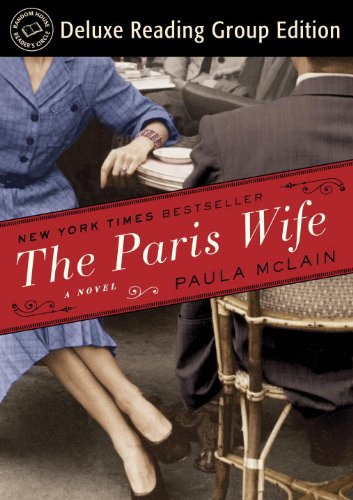
The Paris Wife
Paula McLain
4.5
A deeply evocative story of ambition and betrayal, The Paris Wife captures a remarkable period of time and a love affair between two unforgettable people: Ernest Hemingway and his wife Hadley.
Chicago, 1920: Hadley Richardson is a quiet twenty-eight-year-old who has all but given up on love and happiness—until she meets Ernest Hemingway and her life changes forever. Following a whirlwind courtship and wedding, the pair set sail for Paris, where they become the golden couple in a lively and volatile group—the fabled “Lost Generation”—that includes Gertrude Stein, Ezra Pound, and F. Scott and Zelda Fitzgerald.
Though deeply in love, the Hemingways are ill prepared for the hard-drinking and fast-living life of Jazz Age Paris, which hardly values traditional notions of family and monogamy. Surrounded by beautiful women and competing egos, Ernest struggles to find the voice that will earn him a place in history, pouring all the richness and intensity of his life with Hadley and their circle of friends into the novel that will become The Sun Also Rises. Hadley, meanwhile, strives to hold on to her sense of self as the demands of life with Ernest grow costly and her roles as wife, friend, and muse become more challenging. Despite their extraordinary bond, they eventually find themselves facing the ultimate crisis of their marriage—a deception that will lead to the unraveling of everything they’ve fought so hard for.
A heartbreaking portrayal of love and torn loyalty, The Paris Wife is all the more poignant because we know that, in the end, Hemingway wrote that he would rather have died than fallen in love with anyone but Hadley.
…
Recommended by Wai Chee Dimock.
Wai Chee Dimock
This book is told in the first person, in the voice of Hadley. In that way it’s a good complement to Monique Truong’s book, which is told in the voice of the cook. Paula McLain did a good job in terms of historical research, and in fleshing out Hadley’s psychology. [source]
Cover unavailable
19
Swann's Way (In Search of Lost Time, #1)
Marcel Proust, D.J. Enright, C.K. Scott Moncrieff, Terence Kilmartin, Richard Howard
4.5
Swann's Way tells two related stories, the first of which revolves around Marcel, a younger version of the narrator, and his experiences in, and memories of, the French town Combray. Inspired by the "gusts of memory" that rise up within him as he dips a Madeleine into hot tea, the narrator discusses his fear of going to bed at night. He is a creature of habit and dislikes waking up in the middle of the night not knowing where he is.
He claims that people are defined by the objects that surround them and must piece together their identities bit by bit each time they wake up. The young Marcel is so nervous about sleeping alone that he looks forward to his mother's goodnight kisses, but also dreads them as a sign of an impending sleepless night. One night, when Charles Swann, a friend of his grandparents, is visiting, his mother cannot come kiss him goodnight. He stays up until Swann leaves and looks so sad and pitiful that even his disciplinarian father encourages "Mamma" to spend the night in Marcel's room.
…
Recommended by Thomas Graziani.
Thomas Graziani
My favorite book is like "A la recherche du temps perdu" ("In Search of Lost Time”) from Marcel Proust. It is a seven-volumes epic work describing the intricacies of human nature. Proust style is among the most beautiful I've ever read, and he manages to really make you consider every aspect of your daily life in a different and deeper way. [source]
Cover unavailable
20
The Hunchback of Notre-Dame
Victor Hugo, Walter J. Cobb
4.5
This extraordinary historical novel, set in Medieval Paris under the twin towers of its greatest structure and supreme symbol, the cathedral of Notre-Dame, is the haunting drama of Quasimodo, the hunchback; Esmeralda, the gypsy dancer; and Claude Frollo, the priest tortured by the specter of his own damnation. Shaped by a profound sense of tragic irony, it is a work that gives full play to Victor Hugo's brilliant historical imagination and his remarkable powers of description.
…
Cover unavailable
21
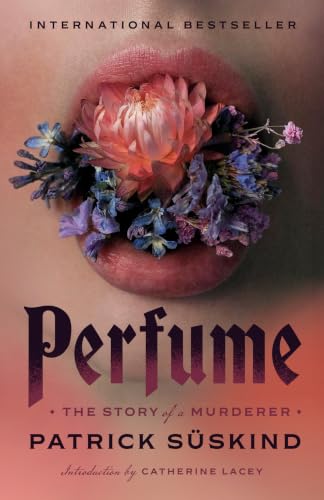
Perfume: The Story of a Murderer
Patrick Suskind, J.E. Woods
4.4
An acclaimed bestseller and international sensation, Patrick Suskind's classic novel provokes a terrifying examination of what happens when one man's indulgence in his greatest passion—his sense of smell—leads to murder.
In the slums of eighteenth-century France, the infant Jean-Baptiste Grenouille is born with one sublime gift—an absolute sense of smell. As a boy, he lives to decipher the odors of Paris, and apprentices himself to a prominent perfumer who teaches him the ancient art of mixing precious oils and herbs. But Grenouille's genius is such that he is not satisfied to stop there, and he becomes obsessed with capturing the smells of objects such as brass doorknobs and fresh-cut wood. Then one day he catches a hint of a scent that will drive him on an ever-more-terrifying quest to create the "ultimate perfume"—the scent of a beautiful young virgin. Told with dazzling narrative brilliance, Perfume is a hauntingly powerful tale of murder and sensual depravity.
…
Recommended by Denise Hamilton.
Denise Hamilton
It’s a very lush, richly imagined book. It just bursts with sensuality and the smells of Paris in the 18th century. [source]
Cover unavailable
22
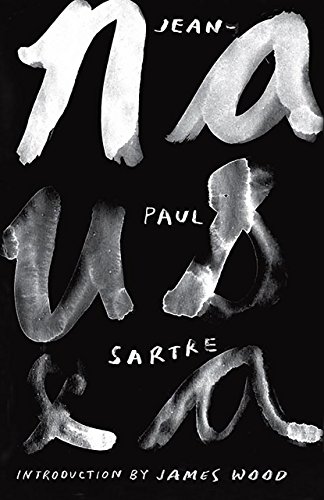
Nausea
Jean-Paul Sartre, Lloyd Alexander, et al.
4.4
Nausea is the story of Antoine Roquentin, a French writer who is horrified at his own existence. In impressionistic, diary form he ruthlessly catalogues his every feeling and sensation about the world and people around him.
His thoughts culminate in a pervasive, overpowering feeling of nausea which "spread at the bottom of the viscous puddle, at the bottom of our time, the time of purple suspenders and broken chair seats; it is made of wide, soft instants, spreading at the edge, like an oil stain."
Roquentin's efforts to try and come to terms with his life, his philosophical and psychological struggles, give Sartre the opportunity to dramatize the tenets of his Existentialist creed.
The introduction for this edition of Nausea by Hayden Carruth gives background on Sartre's life and major works, a summary of the principal themes of Existentialist philosophy, and a critical analysis of the novel itself.
Existentialists like Sartre are big on the idea that you can’t just relate a philosophical worldview by simply stating values, techniques, and facts. To understand existentialism, you must feel it. Breathe its ambience. It’s like a tonal curve for life. Yes, we can talk about highlights, shadows, and all the mechanical elements of that tonal curve, but you won’t become an artist just by knowing these mechanics. It goes much deeper than that. So Nausea is a novel, which imparts the existentialist tonal curve. I’m only halfway through it, but I’m liking it a lot already. It’s not as wild or erratic as Notes from Underground, but it’s got that similar feel. That the narrator gives us a mirror to reflect in, and those reflections are novel because we’re outside the normal tonal curve. [source]
Samantha Harvey
The question of mental illness comes down to whether Sartre’s right about his philosophy, which is an interesting question. [source]
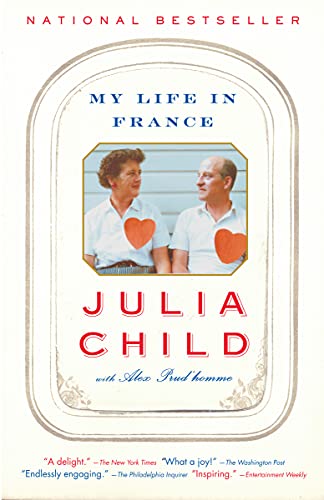
The bestselling story of Julia's years in France--and the basis for Julie & Julia, starring Meryl Streep and Amy Adams--in her own words. Although she would later singlehandedly create a new approach to American cuisine with her cookbook Mastering the Art of French Cooking and her television show The French Chef, Julia Child was not always a master chef. Indeed, when she first arrived in France in 1948 with her husband, Paul, who was to work for the USIS, she spoke no French and knew nothing about the country itself. But as she dove into French culture, buying food at local markets and taking classes at the Cordon Bleu, her life changed forever with her newfound passion for cooking and teaching. Julia's unforgettable story--struggles with the head of the Cordon Bleu, rejections from publishers to whom she sent her now-famous cookbook, a wonderful, nearly fifty-year long marriage that took the Childs across the globe--unfolds with the spirit so key to Julia's success as a chef and a writer, brilliantly capturing one of America's most endearing personalities.
…
Cover unavailable
24
The Phantom of the Opera
Gaston Leroux
4.4
First published in French as a serial in 1909, The Phantom of the Opera is a riveting story that revolves around the young, Swedish Christine Daaé. Her father, a famous musician, dies, and she is raised in the Paris Opera House with his dying promise of a protective angel of music to guide her. After a time at the opera house, she begins hearing a voice, who eventually teaches her how to sing beautifully. All goes well until Christine's childhood friend Raoul comes to visit his parents, who are patrons of the opera, and he sees Christine when she begins successfully singing on the stage. The voice, who is the deformed, murderous 'ghost' of the opera house named Erik, however, grows violent in his terrible jealousy, until Christine suddenly disappears. The phantom is in love, but it can only spell disaster.
Leroux's work, with characters ranging from the spoiled prima donna Carlotta to the mysterious Persian from Erik's past, has been immortalized by memorable adaptations. Despite this, it remains a remarkable piece of Gothic horror literature in and of itself, deeper and darker than any version that follows.
…
Cover unavailable
25
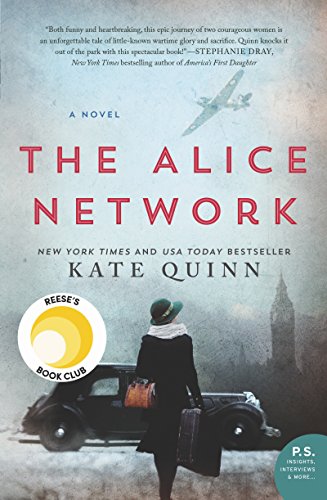
The Alice Network
Kate Quinn
4.4
An alternate cover for this ASIN can be found here.
In an enthralling new historical novel from national bestselling author Kate Quinn, two women—a female spy recruited to the real-life Alice Network in France during World War I and an unconventional American socialite searching for her cousin in 1947—are brought together in a mesmerizing story of courage and redemption.
1947. In the chaotic aftermath of World War II, American college girl Charlie St. Clair is pregnant, unmarried, and on the verge of being thrown out of her very proper family. She's also nursing a desperate hope that her beloved cousin Rose, who disappeared in Nazi-occupied France during the war, might still be alive. So when Charlie's parents banish her to Europe to have her "little problem" taken care of, Charlie breaks free and heads to London, determined to find out what happened to the cousin she loves like a sister.
1915. A year into the Great War, Eve Gardiner burns to join the fight against the Germans and unexpectedly gets her chance when she's recruited to work as a spy. Sent into enemy-occupied France, she's trained by the mesmerizing Lili, the "Queen of Spies", who manages a vast network of secret agents right under the enemy's nose.
Thirty years later, haunted by the betrayal that ultimately tore apart the Alice Network, Eve spends her days drunk and secluded in her crumbling London house. Until a young American barges in uttering a name Eve hasn't heard in decades, and launches them both on a mission to find the truth...no matter where it leads.
…
Cover unavailable
26
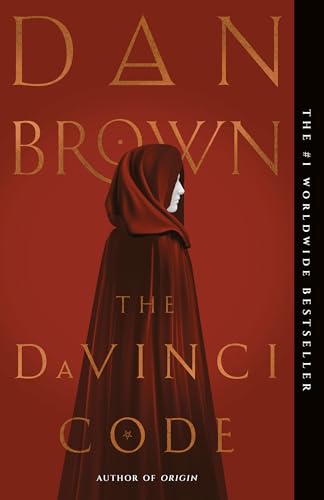
The Da Vinci Code (Robert Langdon, #2)
Dan Brown
4.4
An ingenious code hidden in the works of Leonardo da Vinci.
A desperate race through the cathedrals and castles of Europe.
An astonishing truth concealed for centuries . . . unveiled at last.
While in Paris, Harvard symbologist Robert Langdon is awakened by a phone call in the dead of the night. The elderly curator of the Louvre has been murdered inside the museum, his body covered in baffling symbols. As Langdon and gifted French cryptologist Sophie Neveu sort through the bizarre riddles, they are stunned to discover a trail of clues hidden in the works of Leonardo da Vinci—clues visible for all to see and yet ingeniously disguised by the painter.
Even more startling, the late curator was involved in the Priory of Sion—a secret society whose members included Sir Isaac Newton, Victor Hugo, and Da Vinci—and he guarded a breathtaking historical secret. Unless Langdon and Neveu can decipher the labyrinthine puzzle—while avoiding the faceless adversary who shadows their every move—the explosive, ancient truth will be lost forever.
…
Recommended by Ev Williams and Neal O'Gorman.
Neal O'Gorman
Certainly, a previous non-business book which I really enjoyed (along with many other people) was the Da Vinci Code. I was living in the States at the time, and it was a rare occasion to be on a plane and not see someone reading it. [source]
Cover unavailable
27
Chocolat (Chocolat, #1)
Joanne Harris
4.4
A timeless novel of a straitlaced village's awakening to joy and sensuality - every page offers a description of chocolate to melt in the mouths of chocoholics, francophiles, armchair gourmets, cookbook readers, and lovers of passion everywhere.
Illuminating Peter Mayle's South of France with a touch of Laura Esquivel's magic realism, Chocolat is a timeless novel of a straitlaced village's awakening to joy and sensuality. In tiny Lansquenet, where nothing much has changed in a hundred years, beautiful newcomer Vianne Rocher and her exquisite chocolate shop arrive and instantly begin to play havoc with Lenten vows. Each box of luscious bonbons comes with a free gift: Vianne's uncanny perception of its buyer's private discontents and a clever, caring cure for them. Is she a witch? Soon the parish no longer cares, as it abandons itself to temptation, happiness, and a dramatic face-off between Easter solemnity and the pagan gaiety of a chocolate festival.
Chocolat's every page offers a description of chocolate to melt in the mouths of chocoholics, francophiles, armchair gourmets, cookbook readers, and lovers of passion everywhere. It's a must for anyone who craves an escapist read, and is a bewitching gift for any holiday.
…
Cover unavailable
28
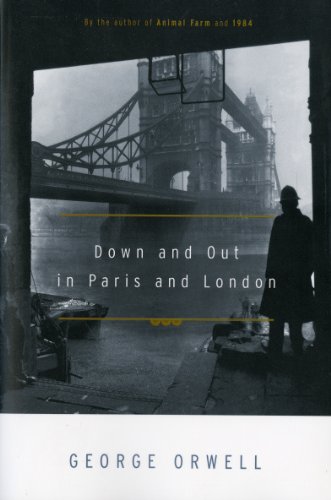
Down and Out in Paris and London
George Orwell
4.3
This unusual fictional memoir - in good part autobiographical - narrates without self-pity and often with humor the adventures of a penniless British writer among the down-and-outs of two great cities. The Parisian episode is fascinating for its expose of the kitchens of posh French restaurants, where the narrator works at the bottom of the culinary echelon as dishwasher, or plongeur. In London, while waiting for a job, he experiences the world of tramps, street people, and free lodging houses. In the tales of both cities we learn some sobering Orwellian truths about poverty and of society.
…
Recommended by D J Taylor, David Downie, David Kramaley, and 2 others.
D J Taylor
The fascination of Down and Out in Paris and London is that it’s his first book. In it, you can see Orwell stumbling, moving towards the kind of writer he wants to be, choosing the sort of subject matter he thinks will be appropriate. He spent time in Paris, working humbly in hotels and restaurants as what the French called a plongeur, someone who basically does the washing up. Then, he came back to England and went on what he called his ‘tramping adventures,’ masquerading as a down and out. [source]
David Downie
That is a book I read when I was young – in my teens – and it really marked me. [source]
David Kramaley
I really enjoyed Down and Out in Paris and London. I think it’s meant to be a semi-autobiographical novel by George Orwell. I liked it because it was one of those books that had a big influence on the way I perceive and think about the world. Highly recommended. [source]
Cover unavailable
29
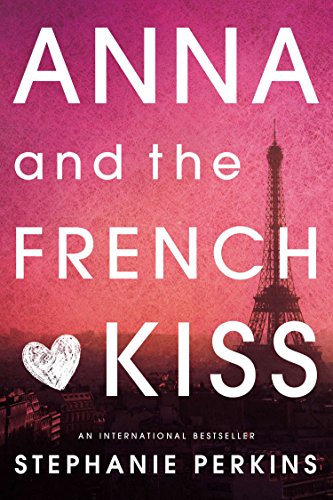
Anna and the French Kiss (Anna and the French Kiss, #1)
Stephanie Perkins
4.3
Anna is looking forward to her senior year in Atlanta, where she has a great job, a loyal best friend, and a crush on the verge of becoming more. Which is why she is less than thrilled about being shipped off to boarding school in Paris--until she meets Étienne St. Clair. Smart, charming, beautiful, Étienne has it all...including a serious girlfriend.
But in the City of Light, wishes have a way of coming true. Will a year of romantic near-misses end with their long-awaited French kiss?
…
Cover unavailable
30
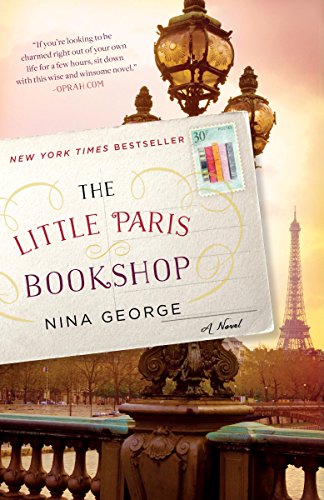
The Little Paris Bookshop
Nina George
4.3
“There are books that are suitable for a million people, others for only a hundred. There are even remedies—I mean books—that were written for one person only…A book is both medic and medicine at once. It makes a diagnosis as well as offering therapy. Putting the right novels to the appropriate ailments: that’s how I sell books.”
Monsieur Perdu calls himself a literary apothecary. From his floating bookstore in a barge on the Seine, he prescribes novels for the hardships of life. Using his intuitive feel for the exact book a reader needs, Perdu mends broken hearts and souls. The only person he can't seem to heal through literature is himself; he's still haunted by heartbreak after his great love disappeared. She left him with only a letter, which he has never opened.
After Perdu is finally tempted to read the letter, he hauls anchor and departs on a mission to the south of France, hoping to make peace with his loss and discover the end of the story. Joined by a bestselling but blocked author and a lovelorn Italian chef, Perdu travels along the country’s rivers, dispensing his wisdom and his books, showing that the literary world can take the human soul on a journey to heal itself.
Internationally bestselling and filled with warmth and adventure, The Little Paris Bookshop is a love letter to books, meant for anyone who believes in the power of stories to shape people's lives.
…
Cover unavailable
31
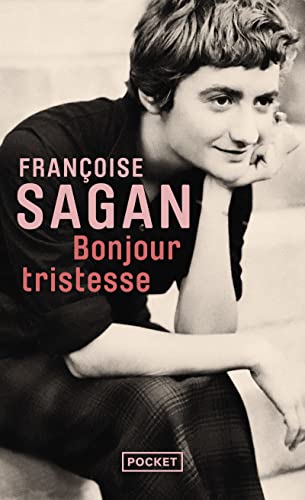
Bonjour tristesse
Francoise SAGAN
4.3
La villa est magnifique, l'été brûlant, la Méditerranée toute proche. Cécile a dix-sept ans. Elle ne connaît de l'amour que des baisers, des rendez-vous, des lassitudes. Pas pour longtemps. Son père, veuf, est un adepte joyeux des liaisons passagères et sans importance. Ils s'amusent, ils n'ont besoin de personne, ils sont heureux. La visite d'une femme de cœur, intelligente et calme, vient troubler ce délicieux désordre. Comment écarter la menace ? Dans la pinède embrasée, un jeu cruel se prépare. C'était l'été 1954. On entendait pour la première fois la voix sèche et rapide d'un « charmant petit monstre » qui allait faire scandale. la deuxième moitié du XXe siècle commençait. Elle serait à l'image de cette adolescente déchirée entre le remords et le culte du plaisir.
…
Recommended by Helena Frith Powell.
Helena Frith Powell
It gives an amazing insight into that awful stage of becoming a woman. [source]
Cover unavailable
32
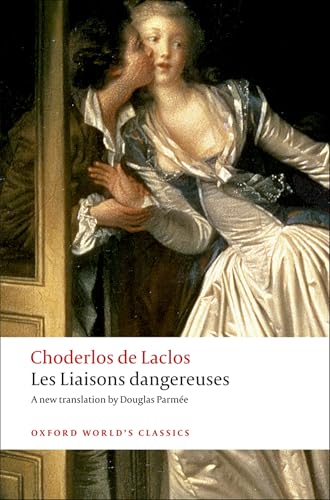
Les Liaisons dangereuses
Pierre Choderlos de Laclos, Douglas Parmée, David Coward
4.3
The complex moral ambiguities of seduction and revenge make Les Liaisons dangereuses (1782) one of the most scandalous and controversial novels in European literature. The subject of major film and stage adaptations, the novel's prime movers, the Vicomte de Valmont and the Marquise de Merteuil, form an unholy alliance and turn seduction into a game - a game which they must win. This new translation gives Laclos a modern voice, and readers will be able a judge whether the novel is as "diabolical" and "infamous" as its critics have claimed, or whether it has much to tell us about the kind of world we ourselves live in. David Coward's introduction explodes myths about Laclos's own life and puts the book in its literary and cultural context.
…
Cover unavailable
33
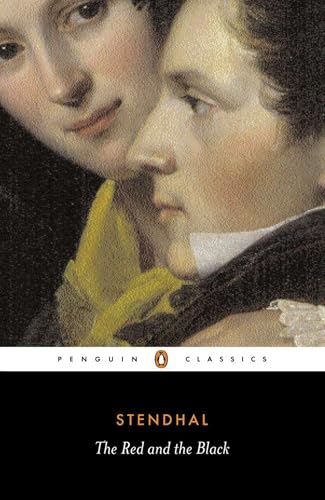
The Red and the Black
Stendhal, Roger Gard
4.3
Handsome, ambitious Julien Sorel is determined to rise above his humble provincial origins. Soon realizing that success can only be achieved by adopting the subtle code of hypocrisy by which society operates, he begins to achieve advancement through deceit and self-interest. His triumphant career takes him into the heart of glamorous Parisian society, along the way conquering the gentle, married Madame de Rênal, and the haughty Mathilde. But then Julien commits an unexpected, devastating crime - and brings about his own downfall. The Red and the Black is a lively, satirical portrayal of French society after Waterloo, riddled with corruption, greed, and ennui, and Julien - the cold exploiter whose Machiavellian campaign is undercut by his own emotions - is one of the most intriguing characters in European literature.
…
Cover unavailable
34
The Second Sex
Simone de Beauvoir, Constance Borde, Sheila Malovany-Chevallier
4.3
Newly translated and unabridged in English for the first time, and brilliantly introduced by Judith Thurman, Simone de Beauvoir’s masterpiece weaves together history, philosophy, economics, biology, and a host of other disciplines to analyze the Western notion of “woman” and to explore the power of sexuality.
Sixty years after its initial publication, The Second Sex is still as eye-opening and pertinent as ever. This triumphant and genuinely revolutionary book began as an exceptional woman’s attempt to find out who and what she was. Drawing on extensive interviews with women of every age and station of life, masterfully synthesizing research about women’s bodies and psyches as well as their historic and economic roles, The Second Sex is an encyclopedic and cogently argued document about inequality and enforced “otherness.”
This long-awaited new translation pays particular attention to the existentialist terms and French nuances that may have been misconstrued in the first English edition; restores Beauvoir’s phrasing, rhythms, and tone; and reinstates significant portions of the “Myths” and “History” chapters that were originally cut due to length, including accounts of more than seventy female figures.
A vital and life-changing work that has dramatically revised the way women talk and think about themselves, Beauvoir’s magisterial treatise continues to provoke and inspire.
…
Recommended by Arianna Huffington, Belinda Jack, Erica Jong, and 1 others.
Arianna Huffington
Founder/The Huffington Post
Great Thrive Questionnaire by @smlafleur, founder of M.M.LaFleur. On the book that changed her life, The Second Sex: "it changed my entire perception about what it means to be a woman, and it may be the unconscious reason behind why I started my company." https://t.co/tudVOb28J2 [source]
Belinda Jack
In making a distinction between sex and gender she drew attention to how much of what women had to contend with was actually something that society imposes. [source]
Erica Jong
The French literary world is incredibly sexist and here was one of their darlings pointing out how much they discriminate. [source]
Cover unavailable
35
Les Fleurs du Mal
Charles Baudelaire and Richard Howard
4.3
Presents the first American translation of the complete text of Baudelaire's 1857 masterwork and includes the complete original French texts for easy comparison.
Cover unavailable
36
Germinal
Émile Zola
4.3
The thirteenth novel in Émile Zola’s great Rougon-Macquart sequence, Germinal expresses outrage at the exploitation of the many by the few, but also shows humanity’s capacity for compassion and hope.
Etienne Lantier, an unemployed railway worker, is a clever but uneducated young man with a dangerous temper. Forced to take a back-breaking job at Le Voreux mine when he cannot get other work, he discovers that his fellow miners are ill, hungry, in debt, and unable to feed and clothe their families. When conditions in the mining community deteriorate even further, Lantier finds himself leading a strike that could mean starvation or salvation for all.
•New translation • Includes introduction, suggestions for further reading, filmography, chronology, explanatory notes, and glossary
…
Cover unavailable
37
20,000 Leagues Under the Sea
Jules Verne, William O'Connor
4.3
Go 20,000 Leagues Under the Sea with Sterling's Illustrated Classics series, and see Jules Verne's fantastic water-world as never before: through more than 70 stunning steampunk images illustrated by the incredible William O'Connor. Originally published in 1870, Verne’s amazing adventure is one of the earliest sci-fi novels ever written—and one of the most popular. Come on board the Nautilus and plunge below the waves with Captain Nemo on a voyage of exploration and imagination.
Today is World Book Day, a wonderful opportunity to address this #ChallengeRichard sent in by Mike Gonzalez of New Jersey: Make a list of your top 65 books to read in a lifetime. [source]
Re-reading it recently, I was struck not just by its dynamic plot, but also by how much science he smuggled in. [source]
Cover unavailable
38
Fall
Albert Camus, Justin O'Brien
4.2
Jean-Baptiste Clamence, a successful Parisian barrister, has come to recognize the deep-seated hypocrisy of his existence. His epigrammatic and, above all, discomforting monologue gradually saps, then undermines, the reader's own complacency.
Cover unavailable
39
The Scarlet Pimpernel
Baroness Orczy, Emmuska Orczy
4.2
Armed with only his wits and his cunning, one man recklessly defies the French revolutionaries and rescues scores of innocent men, women, and children from the deadly guillotine. His friends and foes know him only as the Scarlet Pimpernel. But the ruthless French agent Chauvelin is sworn to discover his identity and to hunt him down.
Cover unavailable
40
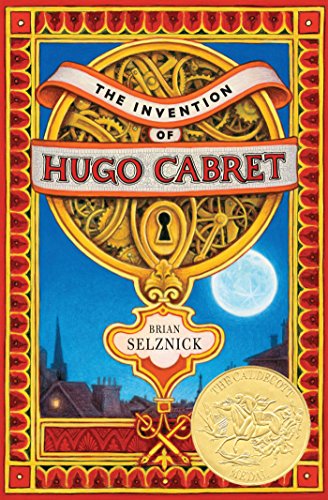
The Invention of Hugo Cabret
Brian Selznick
4.2
Orphan, clock keeper, and thief, Hugo lives in the walls of a busy Paris train station, where his survival depends on secrets and anonymity. But when his world suddenly interlocks with an eccentric, bookish girl and a bitter old man who runs a toy booth in the station, Hugo's undercover life, and his most precious secret, are put in jeopardy. A cryptic drawing, a treasured notebook, a stolen key, a mechanical man, and a hidden message from Hugo's dead father form the backbone of this intricate, tender, and spellbinding mystery.
…
Cover unavailable
41
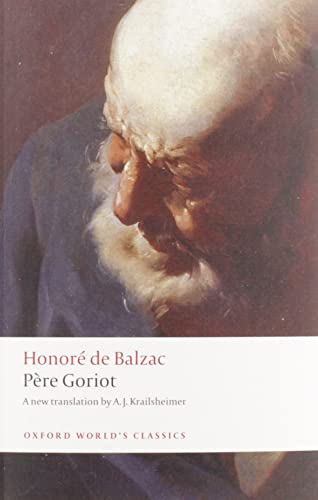
Père Goriot
Honoré de Balzac, Peter Brooks, Burton Raffel
4.2
Père Goriot is the tragic story of a father whose obsessive love for his two daughters leads to his financial and personal ruin. Interwoven with this theme is that of the impoverished young aristocrat, Rastignac, who came to Paris from the provinces to hopefully make his fortune. He befriends Goriot and becomes involved with the daughters. The story is set against the background of a whole society driven by social ambition and lust for wealth.
…
Cover unavailable
42
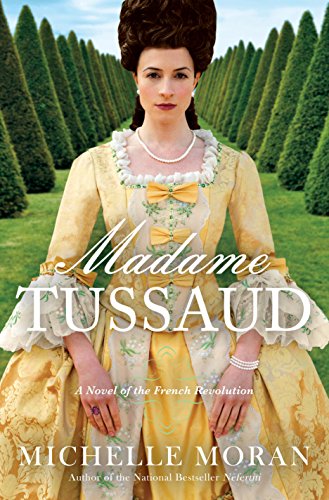
Madame Tussaud: A Novel of the French Revolution
Michelle Moran
4.2
The world knows Madame Tussaud as a wax artist extraordinaire... but who was this woman who became one of the most famous sculptresses of all time? In these pages, her tumultuous and amazing story comes to life as only Michelle Moran can tell it. The year is 1788, and a revolution is about to begin.
Smart and ambitious, Marie Tussaud has learned the secrets of wax sculpting by working alongside her uncle in their celebrated wax museum, the Salon de Cire. From her popular model of the American ambassador, Thomas Jefferson, to her tableau of the royal family at dinner, Marie's museum provides Parisians with the very latest news on fashion, gossip, and even politics. Her customers hail from every walk of life, yet her greatest dream is to attract the attention of Marie Antoinette and Louis XVI; their stamp of approval on her work could catapult her and her museum to the fame and riches she desires. After months of anticipation, Marie learns that the royal family is willing to come and see their likenesses. When they finally arrive, the king's sister is so impressed that she requests Marie's presence at Versailles as a royal tutor in wax sculpting. It is a request Marie knows she cannot refuse - even if it means time away from her beloved Salon and her increasingly dear friend, Henri Charles.
As Marie gets to know her pupil, Princesse Élisabeth, she also becomes acquainted with the king and queen, who introduce her to the glamorous life at court. From lavish parties with more delicacies than she's ever seen to rooms filled with candles lit only once before being discarded, Marie steps into a world entirely different from her home on the Boulevard du Temple, where people are selling their teeth in order to put food on the table.
Meanwhile, many resent the vast separation between rich and poor. In salons and cafés across Paris, people like Camille Desmoulins, Jean-Paul Marat, and Maximilien Robespierre are lashing out against the monarchy. Soon, there's whispered talk of revolution... Will Marie be able to hold on to both the love of her life and her friendship with the royal family as France approaches civil war? And more important, will she be able to fulfill the demands of powerful revolutionaries who ask that she make the death masks of beheaded aristocrats, some of whom she knows?
Spanning five years, from the budding revolution to the Reign of Terror, Madame Tussaud brings us into the world of an incredible heroine whose talent for wax modeling saved her life and preserved the faces of a vanished kingdom
…
Cover unavailable
43
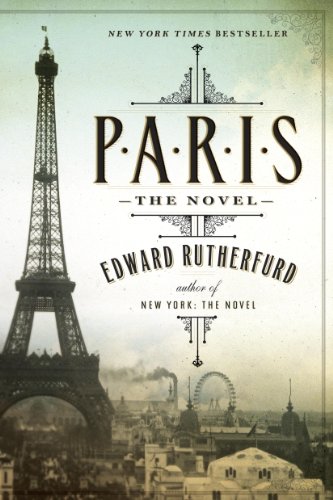
Paris
Edward Rutherfurd
4.2
From Edward Rutherfurd, the grand master of the historical novel, comes a dazzling epic about the magnificent city of Paris. Moving back and forth in time, the story unfolds through intimate and thrilling tales of self-discovery, divided loyalty, and long-kept secrets. As various characters come of age, seek their fortunes, and fall in and out of love, the novel follows nobles who claim descent from the hero of the celebrated poem The Song of Roland; a humble family that embodies the ideals of the French Revolution; a pair of brothers from the slums behind Montmartre, one of whom works on the Eiffel Tower as the other joins the underworld near the Moulin Rouge; and merchants who lose everything during the reign of Louis XV, rise again in the age of Napoleon, and help establish Paris as the great center of art and culture that it is today. With Rutherfurd’s unrivaled blend of impeccable research and narrative verve, this bold novel brings the sights, scents, and tastes of the City of Light to brilliant life.
…
Cover unavailable
44
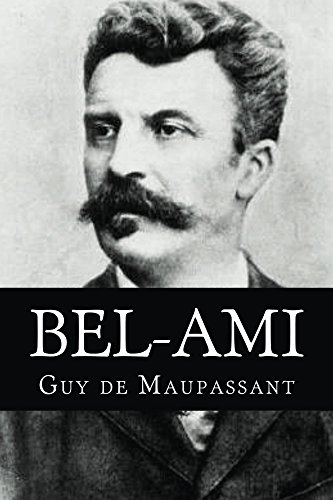
Bel-Ami
Guy de Maupassant, Douglas Parmée
4.2
Guy de Maupassant's scandalous tale of an opportunistic young man corrupted by the allure of power, "Bel-Ami" is translated with an introduction by Douglas Parmee in "Penguin Classics". Young, attractive and very ambitious, George Duroy, known to his admirers as Bel-Ami, is offered a job as a journalist on La Vie francaise and soon makes a great success of his new career. But he also comes face to face with the realities of the corrupt society in which he lives - the sleazy colleagues, the manipulative mistresses, and wily financiers - and swiftly learns to become an arch-seducer, blackmailer and social climber in a world where love is only a means to an end. Written when Maupassant was at the height of his powers, "Bel-Ami" is a novel of great frankness and cynicism, but it is also infused with the sheer joy of life - depicting the scenes and characters of Paris in the belle epoque with wit, sensitivity, and humanity. Douglas Parmee's translation captures all the vigour and vitality of Maupassant's novel. His introduction explores the similarities between Bel-Ami and Maupassant himself and demonstrates the skill with which the author depicts his large cast of characters and the French society of the Third Republic.
…
Cover unavailable
45
Around the World in Eighty Days (Extraordinary Voyages, #11)
Jules Verne, Michael Glencross, Brian Aldiss
4.2
One night in the reform club, Phileas Fogg bets his companions that he can travel across the globe in just eighty days. Breaking the well-established routine of his daily life, he immediately sets off for Dover with his astonished valet Passepartout. Passing through exotic lands and dangerous locations, they seize whatever transportation is at hand—whether train or elephant—overcoming set-backs and always racing against the clock.
…
Recommended by Cristina Riesen.
Cristina Riesen
Chronologically, my first favourite book probably was Jules Verne’s Around the World in Eighty Days. [source]
Cover unavailable
46
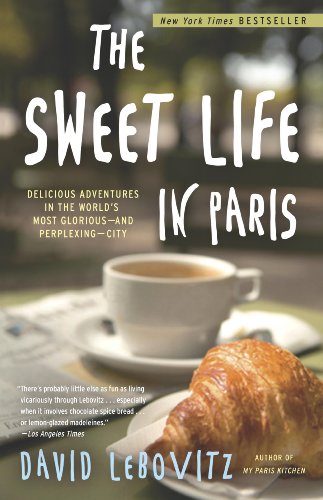
The Sweet Life in Paris: Delicious Adventures in the World's Most Glorious - and Perplexing - City
David Lebovitz
4.2
Like so many others, David Lebovitz dreamed about living in Paris ever since he first visited the city in the 1980s. Finally, after a nearly two-decade career as a pastry chef and cookbook author, he moved to Paris to start a new life. Having crammed all his worldly belongings into three suitcases, he arrived, hopes high, at his new apartment in the lively Bastille neighborhood. But he soon discovered it's a different world "en France." From learning the ironclad rules of social conduct to the mysteries of men's footwear, from shopkeepers who work so hard not to sell you anything to the etiquette of working the right way around the cheese plate, here is David's story of how he came to fall in love with--and even understand--this glorious, yet sometimes maddening, city. When did he realize he had morphed into "un vrai parisien"? It might have been when he found himself considering a purchase of men's dress socks with cartoon characters on them. Or perhaps the time he went to a bank with 135 euros in hand to make a 134-euro payment, was told the bank had no change that day, and thought it was completely normal. Or when he found himself dressing up to take out the garbage because he had come to accept that in Paris appearances and image mean everything. The more than fifty original recipes, for dishes both savory and sweet, such as Pork Loin with Brown Sugar-Bourbon Glaze, Braised Turkey in Beaujolais Nouveau with Prunes, Bacon and Bleu Cheese Cake, Chocolate-Coconut Marshmallows, Chocolate Spice Bread, Lemon-Glazed Madeleines, and Mocha-Creme Fraiche Cake, will have readers running to the kitchen once they stop laughing. "The Sweet Life in Paris" is a deliciously funny, offbeat, and irreverent look at the city of lights, cheese, chocolate, and other confections.
…
Cover unavailable
47
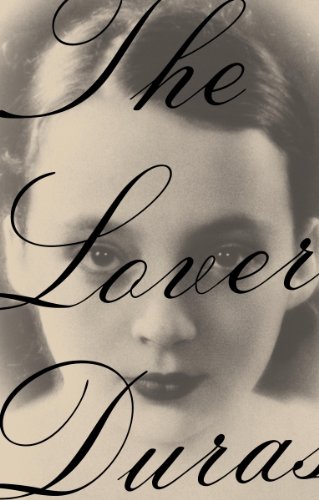
The Lover
Marguerite Duras
4.2
An international best-seller with more than one million copies in print and a winner of France's Prix Goncourt, The Lover has been acclaimed by critics all over the world since its first publication in 1984.
Set in the prewar Indochina of Marguerite Duras's childhood, this is the haunting tale of a tumultuous affair between an adolescent French girl and her Chinese lover. In spare yet luminous prose, Duras evokes life on the margins of Saigon in the waning days of France's colonial empire, and its representation in the passionate relationship between two unforgettable outcasts.
This edition of The Lover includes a new introduction by Maxine Hong Kingston that looks back at Duras's world from an intriguing new perspective—that of a visitor to Vietnam today.
Out of all the books we’re discussing, the mother in The Lover is the saddest [source]
Cover unavailable
48
Bringing Up Bébé: One American Mother Discovers the Wisdom of French Parenting
Pamela Druckerman
4.2
The runaway New York Times bestseller that shows American parents the secrets behind France's amazingly well-behaved children
When American journalist Pamela Druckerman had a baby in Paris, she didn't aspire to become a "French parent." But she noticed that French children slept through the night by two or three months old. They ate braised leeks. They played by themselves while their parents sipped coffee. And yet French kids were still boisterous, curious, and creative. Why? How?
With a notebook stashed in her diaper bag, Druckerman set out to investigate—and wound up sparking a national debate on parenting. Researched over three years and written in her warm, funny voice, Bringing Up Bébé is deeply wise, charmingly told, and destined to become a classic resource for American parents.
…
Recommended by Jessica Lauria.
Jessica Lauria
Well I just had a baby a few months ago, so my world is being dominated with all things baby. I’m currently reading ‘Bringing Up Bebe’ by Pamela Druckerman. An American journalist who raised her family in Paris and dives into the psychology of French parenting. It’s fascinating and only reinforces how neurotic American parents can be. Great to hear all sides and theories on raising children so you take bits from here and there to create your own style, just right for you and your family. [source]
Cover unavailable
49
Paris to the Moon
Adam Gopnik
4.2
With singular wit and insight, Gopnik weaves the magical with the mundane in a wholly delightful, often hilarious look at what it was to be an American family man in Paris at the end of the twentieth century.
Paris. The name alone conjures images of chestnut-lined boulevards, sidewalk cafés, breathtaking façades around every corner--in short, an exquisite romanticism that has captured the American imagination for as long as there have been Americans.
In 1995, Adam Gopnik, his wife, and their infant son left the familiar comforts and hassles of New York City for the urbane glamour of the City of Light. Gopnik is a longtime New Yorker writer, and the magazine has sent its writers to Paris for decades--but his was above all a personal pilgrimage to the place that had for so long been the undisputed capital of everything cultural and beautiful. It was also the opportunity to raise a child who would know what it was to romp in the Luxembourg Gardens, to enjoy a croque monsieur in a Left Bank café--a child (and perhaps a father, too) who would have a grasp of that Parisian sense of style we Americans find so elusive.
So, in the grand tradition of the American abroad, Gopnik walked the paths of the Tuileries, enjoyed philosophical discussions at his local bistro, wrote as violet twilight fell on the arrondissements. Of course, as readers of Gopnik's beloved and award-winning "Paris Journals" in The New Yorker know, there was also the matter of raising a child and carrying on with day-to-day, not-so-fabled life. Evenings with French intellectuals preceded middle-of-the-night baby feedings; afternoons were filled with trips to the Musée d'Orsay and pinball games; weekday leftovers were eaten while three-star chefs debated a "culinary crisis."
As Gopnik describes in this funny and tender book, the dual processes of navigating a foreign city and becoming a parent are not completely dissimilar journeys--both hold new routines, new languages, a new set of rules by which everyday life is lived. With singular wit and insight, Gopnik weaves the magical with the mundane in a wholly delightful, often hilarious look at what it was to be an American family man in Paris at the end of the twentieth century. "We went to Paris for a sentimental reeducation - I did anyway - even though the sentiments we were instructed in were not the ones we were expecting to learn, which I believe is why they call it an education."
…
Cover unavailable
50
Me Talk Pretty One Day
David Sedaris
4.2
David Sedaris' move to Paris from New York inspired these hilarious pieces, including the title essay, about his attempts to learn French from a sadistic teacher who declares that every day spent with you is like having a caesarean section. His family is another inspiration. You Can't Kill the Rooster is a portrait of his brother, who talks incessant hip-hop slang to his bewildered father. And no one hones a finer fury in response to such modern annoyances as restaurant meals presented in ludicrous towers of food and cashiers with six-inch fingernails.
…
Recommended by Ev Williams.
Cover unavailable
51
Cyrano de Bergerac
Edmond Rostand
4.2
This acclaimed adaptation for the stage has garnered such reviews as: "Emotional depth Rostand himself would surely have envied...Burgess' extravagant verse keeps its contours, yet trips off the tongue almost as though it were contemporary speech." -London Times. Performance rights available from Applause.
Recommended by Aubrey Marcus, Jenny Davidson, and Ruth Harris.
Jenny Davidson
The love story that is told in Cyrano, with its bittersweet, heartbreaking ending, is one of the most powerful I’ve ever encountered. [source]
Ruth Harris
It is set in the 17th century. Cyrano de Bergerac is the play’s hero, a cadet – a nobleman serving as a solider in the French army – and he’s deformed, with a nose so enormous that people come from far and wide to view his “protuberance”. He falls madly in love with his cousin Roxane, who is witty and leaned, but because of what he believes to be his outward ugliness he cannot proclaim his love for her. Instead, an extraordinary triangle emerges. Christian de Neuvillette, who like Cyrano is a cadet, is absolutely beautiful but very inarticulate. What Cyrano does is lend him his words and between them they become the perfect man. But it’s Christian not Cyrano who takes the prize with Roxane not realising that she has fallen in love with the wrong person and it’s only at the end of the play, many years after Christian dies in the siege of Arras, that she comes to grips with this fact and understands that her real devotion should be for the ugly Cyrano. [source]
Cover unavailable
52
The Sun Also Rises
Ernest Hemingway, William Hurt, et al
4.2
The quintessential novel of the Lost Generation, The Sun Also Rises is one of Ernest Hemingway’s masterpieces and a classic example of his spare but powerful writing style.
A poignant look at the disillusionment and angst of the post-World War I generation, the novel introduces two of Hemingway’s most unforgettable characters: Jake Barnes and Lady Brett Ashley. The story follows the flamboyant Brett and the hapless Jake as they journey from the wild nightlife of 1920s Paris to the brutal bullfighting rings of Spain with a motley group of expatriates. First published in 1926, The Sun Also Rises helped establish Hemingway as one of the greatest writers of the twentieth century.
…
Recommended by Wai Chee Dimock.
Wai Chee Dimock
Many people don’t appreciate what a big commitment writing this novel was for Hemingway. He was used to writing short stories. It meant he had to spend a lot of time on one book that could have been spent more profitably writing short stories. Like many of Hemingway’s later novels, it is stitched together from shorter pieces – in this case, what he’d already written about Pamplona. [source]
Cover unavailable
53
Madeline
Ludwig Bemelmans
4.2
Madeline is one of the best-loved characters in children's literature. Set in picturesque Paris, this tale of a brave little girl's trip to the hospital was a Caldecott Honor Book in 1940 and has as much appeal today as it did then. The combination of a spirited heroine, timelessly appealing art, cheerful humor, and rhythmic text makes Madeline a perennial favorite with children of all ages.
Cover unavailable
54
Marie Antoinette: The Journey
Antonia Fraser
4.2
Brilliantly written, a work of impeccable scholarship. An utterly riveting and intensely moving book by one of our finest biographers.
Never before has the life of Marie Antoinette been told so intimately and with such authority as in Antonia Fraser's newest work, Marie Antoinette: The Journey. Famously known as the eighteenth-century French queen whose excesses have become legend, Marie Antoinette was blamed for instigating the French Revolution. But the story of her journey begun as a fourteen-year-old sent from Vienna to marry the future Louis XVI to her courageous defense before she was sent to the guillotine reveals a woman of greater complexity and character than we have previously understood. We stand beside Marie Antoinette and witness the drama of her life as she becomes a scapegoat of the Ancien Regime when her faults were minor in comparison to the punishments inflicted on her.
The youngest daughter, fifteenth out of sixteen children, of Austrian empress Maria Teresa and Francis I, Marie Antoinette was sent on a literal journey by her mother from Vienna to Versailles with the expectation that she would further Austrian interests at all times. Yet, Marie Antoinette was by nature far from interested in state affairs and much more inclined to exert a gracious, philanthropic role, patronizing the arts especially music, as royalty would come to behave in the nineteenth century. Despite this the French accused her of political interference and wrote scandalous tracts against her, mocking her lack of sophistication. Meanwhile, longing for a family and the birth of an heir who would have cemented the Franco-Austro alliance, the French queen had to endure more than eight years of public humiliation for her barren marriage before the delivery of her first of four children.
As these problems unfold, Antonia Fraser also weaves a richly detailed account of Marie Antoinette's other, more poignant journey: from the ill-educated and unprepared girl who sought refuge in pleasure as a consolation into a magnificent, courageous woman who defied her enemies at her trial with consummate intelligence, arousing the admiration of even the most hostile revolutionaries.
Brilliantly written, Marie Antoinette is a work of impeccable scholarship. Drawing on a wealth of family letters and other archival materials, Antonia Fraser successfully avoids the hagiography of some the French queen's admirers and the misogyny of many of her critics. The result is an utterly riveting and intensely moving book by one of our finest biographers.
…
Cover unavailable
55
The Discovery of France: A Historical Geography from the Revolution to the First World War
Graham Robb
4.2
While Gustave Eiffel was changing the skyline of Paris, large parts of France were still terra incognita. Even in the age of railways and newspapers, France was a land of ancient tribal divisions, prehistoric communication networks, and pre-Christian beliefs. French itself was a minority language.Graham Robb describes that unknown world in arresting narrative detail. He recounts the epic journeys of mapmakers, scientists, soldiers, administrators, and intrepid tourists, of itinerant workers, pilgrims, and herdsmen with their millions of migratory domestic animals. We learn how France was explored, charted, and colonized, and how the imperial influence of Paris was gradually extended throughout a kingdom of isolated towns and villages.The Discovery of France explains how the modern nation came to be and how poorly understood that nation still is today. Above all, it shows how much of France—past and present—remains to be discovered.
This book has wonderful qualities that I am certain will be picked up by other reviewers. But I would like to add the following. This is the most profound examination of how nationality is enforced on a group of people, with the internal colonization process and the stamping out of idiosyncratic traits. As someone suspicious of government and state control, I was wondering how France did so well in spite of having a big government. This book gave me the answer: it took a long time for the government and the "nation" to penetrate the depth of deep France, "la France profonde". It was not until recently that French was spoken by the majority of the citizens. Schools taught French but it was just like Greek or Latin: people forgot it right after they finished their (short) school life. For a long time France's villages were unreachable. A great book, a great investigation. [source]
Cover unavailable
56
Thérèse Raquin
Émile Zola, Robin Buss
4.2
One of Zola's most famous realist novels, Therese Raquin is a clinically observed, sinister tale of adultery and murder among the lower classes in nineteenth-century Parisian society.
Set in the claustrophobic atmosphere of a dingy haberdasher's shop in the passage du Pont-Neuf in Paris, this powerful novel tells how the heroine and her lover, Laurent, kill her husband, Camille, but are subsequently haunted by visions of the dead man, and prevented from enjoying the fruits of their crime.
Zola's shocking tale dispassionately dissects the motivations of his characters--mere "human beasts", who kill in order to satisfy their lust--and stands as a key manifesto of the French Naturalist movement, of which the author was the founding father. Published in 1867, this is Zola's most important work before the Rougon-Macquart series and introduces many of the themes that can be traced through the later novel cycle.
…
Cover unavailable
57
In Search of Lost Time (6 Volumes)
Marcel Proust
4.1
For this complete, authoritative English-language edition, D. J. Enright has revised the late Terence Kilmartin's acclaimed reworking of C. K. Scott Moncrieff's translation to take into account the new definitive French editions of 'À la recherche du temps perdu' (the final volume of these new editions was published by the Bibliothèque de la Pléiade in 1989).
Proust’s reflection on the nature of time is deep and spread over his writing. [source]
Mona Simpson
You have a treat in store – and of course there are many more volumes after Swann’s Way! [source]
Cover unavailable
58
Atomised
Michel Houellebecq
4.1
Half-brothers Michel and Bruno have a mother in common but little else. Michel is a molecular biologist, a thinker, an idealist, a man with no erotic life to speak of and little in the way of human society. Bruno, by contrast, is a libertine, though more in theory than in practice, his endless lust being all too rarely reciprocated. Both are symptomatic members of our atomised society, where religion has given way to shallow 'new age' philosophies and love to meaningless sexual connections.
Atomised tells the stories of the two brothers, but the real subject of the novel is the dismantling of contemporary society and its assumptions, its political incorrectness, and its caustic and penetrating asides on everything from anthropology to the problem pages of girls' magazines.
…
Recommended by Tim Lott.
Tim Lott
The book tells the story of two half-brothers, Michel and Bruno. They both had appalling childhoods and are abandoned by their hippy mother, who spends her life in communes pursuing shallow, hedonistic relationships. The premise of the book, as the title suggests, is about the disconnection between people in the technological, scientific, post-modern world, where all relationships are mangled, damaged parodies. [source]
Cover unavailable
59
Code Name Verity
Elizabeth Wein
4.1
Oct. 11th, 1943 - A British spy plane crashes in Nazi-occupied France. Its pilot and passenger are best friends. One of the girls has a chance at survival. The other has lost the game before it's barely begun.
When "Verity" is arrested by the Gestapo, she's sure she doesn't stand a chance. As a secret agent captured in enemy territory, she's living a spy's worst nightmare. Her Nazi interrogators give her a simple choice: reveal her mission or face a grisly execution.
As she intricately weaves her confession, Verity uncovers her past, how she became friends with the pilot Maddie, and why she left Maddie in the wrecked fuselage of their plane. On each new scrap of paper, Verity battles for her life, confronting her views on courage and failure and her desperate hope to make it home. But will trading her secrets be enough to save her from the enemy?
Harrowing and beautifully written, Elizabeth Wein creates a visceral read of danger, resolve, and survival that shows just how far true friends will go to save each other. Code Name Verity is an outstanding novel that will stick with you long after the last page.
…
Cover unavailable
60
Tender Is the Night
F. Scott Fitzgerald
4.1
F. Scott Fitzgerald wrote in a friend's copy of Tender Is the Night, "If you liked The Great Gatsby, for God's sake read this. Gatsby was a tour de force but this is a confession of faith." Set in the South of France in the decade after World War I, Tender Is the Night is the story of a brilliant and magnetic psychiatrist named Dick Diver; the bewitching, wealthy, and dangerously unstable mental patient, Nicole, who becomes his wife; and the beautiful, harrowing ten-year pas de deux they act out along the border between sanity and madness. In Tender Is the Night, Fitzgerald deliberately set out to write the most ambitious and far-reaching novel of his career, experimenting radically with narrative conventions of chronology and point of view and drawing on early breakthroughs in psychiatry to enrich his account of the makeup and breakdown of character and culture. Tender Is the Night is also the most intensely, even painfully, autobiographical of Fitzgerald's novels; it smolders with a dark, bitter vitality because it is so utterly true. This account of a caring man who disintegrates under the twin strains of his wife's derangement and a lifestyle that gnaws away at his sense of moral values offers an authorial cri de coeur, while Dick Diver's downward spiral into alcoholic dissolution is an eerie portent of Fitzgerald's own fate. F. Scott Fitzgerald literally put his soul into Tender Is the Night, and the novel's lack of commercial success upon its initial publication in 1934 shattered him. He would die six years later without having published another novel, and without knowing that Tender Is the Night would come to be seen as perhaps its author's most poignant masterpiece. In Mabel Dodge Luhan's words, it raised him to the heights of "a modern Orpheus."
…
Recommended by Leo Babauta.
Cover unavailable
61
In the Shadow of Young Girls in Flower (In Search of Lost Time, #2)
Marcel Proust
4.1
In the Shadow of Young Girls in Flower is Proust’s spectacular dissection of male and female adolescence, charged with the narrator’s memories of Paris and the Normandy seaside. At the heart of the story lies his relationships with his grandmother and with the Swann family. As a meditation on different forms of love, In the Shadow of Young Girls in Flower has no equal. Here, Proust introduces some of his greatest comic inventions, from the magnificently dull M. de Norpois to the enchanting Robert de Saint-Loup. It is memorable as well for the first appearance of the two figures who for better or worse are to dominate the narrator’s life—the Baron de Charlus and the mysterious Albertine. First time in Penguin Classics
A Penguin Classics Deluxe Edition
The first completely new translation of Proust's novel since the 1920s, following Lydia Davis's brilliant translation of Swann's Way
…
Cover unavailable
62
Five Quarters of the Orange
Joanne Harris
4.1
The novels of Joanne Harris are a literary feast for the senses. Five Quarters of the Orange represents Harris's most complex and sophisticated work yet - a novel in which darkness and fierce joy come together to create an unforgettable story.
When Framboise Simon returns to a small village on the banks of the Loire, the locals do not recognize her as the daughter of the infamous Mirabelle Dartigen - the woman they still hold responsible for a terrible tragedy that took place during the German occupation decades before. Although Framboise hopes for a new beginning she quickly discovers that past and present are inextricably intertwined. Nowhere is this truth more apparent than in the scrapbook of recipes she has inherited from her dead mother.
With this book, Framboise re-creates her mother's dishes, which she serves in her small creperie. And yet as she studies the scrapbook - searching for clues to unlock the contradiction between her mother's sensuous love of food and often cruel demeanor - she begins to recognize a deeper meaning behind Mirabelle's cryptic scribbles. Within the journal's tattered pages lies the key to what actually transpired the summer Framboise was nine years old.
Rich and dark. Five Quarters of the Orange is a novel of mothers and daughters of the past and the present, of resisting, and succumbing, and an extraordinary work by a masterful writer.
…
Cover unavailable
63
The Paris Architect
Charles Belfoure
4.1
Like most gentiles in Nazi-occupied Paris, architect Lucien Bernard has little empathy for the Jews. So when a wealthy industrialist offers him a large sum of money to devise secret hiding places for Jews, Lucien struggles with the choice of risking his life for a cause he doesn’t really believe in. Ultimately he can’t resist the challenge and begins designing expertly concealed hiding spaces—behind a painting, within a column, or inside a drainpipe—detecting possibilities invisible to the average eye. But when one of his clever hiding spaces fails horribly and the immense suffering of Jews becomes incredibly personal, he can no longer deny reality.
Written by an expert whose knowledge imbues every page, this story becomes more gripping with every life the architect tries to save.
…
Cover unavailable
64
The Diving Bell and the Butterfly
Jean-Dominique Bauby
4.1
‘Locked-in syndrome: paralysed from head to toe, the patient, his mind intact, is imprisoned inside his own body, unable to speak or move. In my case, blinking my left eyelid is my only means of communication.’
In December 1995, Jean-Dominique Bauby, editor-in-chief of French ‘Elle’ and the father of two young children, suffered a massive stroke and found himself paralysed and speechless, but entirely conscious, trapped by what doctors call ‘locked-in syndrome’. Using his only functioning muscle – his left eyelid – he began dictating this remarkable story, painstakingly spelling it out letter by letter.
His book offers a haunting, harrowing look inside the cruel prison of locked-in syndrome, but it is also a triumph of the human spirit.
From the author of Outlander... a magnificent epic that once again sweeps us back in time to the drama and passion of 18th-century Scotland...
For twenty years Claire Randall has kept her secrets. But now she is returning with her grown daughter to Scotland's majestic mist-shrouded hills. Here Claire plans to reveal a truth as stunning as the events that gave it birth: about the mystery of an ancient circle of standing stones ...about a love that transcends the boundaries of time ...and about James Fraser, a Scottish warrior whose gallantry once drew a young Claire from the security of her century to the dangers of his ....
Now a legacy of blood and desire will test her beautiful copper-haired daughter, Brianna, as Claire's spellbinding journey of self-discovery continues in the intrigue-ridden Paris court of Charles Stuart ...in a race to thwart a doomed Highlands uprising ...and in a desperate fight to save both the child and the man she loves....
…
Cover unavailable
66
The Greater Journey: Americans in Paris
David McCullough
4.1
The Greater Journey is the enthralling, inspiring - and until now, untold - story of the adventurous American artists, writers, doctors, politicians, architects, and others of high aspiration who set off for Paris in the years between 1830 and 1900, ambitious to excel in their work.
After risking the hazardous journey across the Atlantic, these Americans embarked on a greater journey in the City of Light. Most had never left home, never experienced a different culture. None had any guarantee of success. That they achieved so much for themselves and their country profoundly altered American history. As David McCullough writes, "Not all pioneers went west." Elizabeth Blackwell, the first female doctor in America, was one of this intrepid band. Another was Charles Sumner, who enrolled at the Sorbonne because of a burning desire to know more about everything. There he saw black students with the same ambition he had, and when he returned home, he would become the most powerful, unyielding voice for abolition in the U.S. Senate, almost at the cost of his life.
Two staunch friends, James Fenimore Cooper and Samuel F. B. Morse, worked unrelentingly every day in Paris, Cooper writing and Morse painting what would be his masterpiece. From something he saw in France, Morse would also bring home his momentous idea for the telegraph.
Pianist Louis Moreau Gottschalk from New Orleans launched his spectacular career performing in Paris at age 15. George P. A. Healy, who had almost no money and little education, took the gamble of a lifetime and with no prospects whatsoever in Paris became one of the most celebrated portrait painters of the day. His subjects included Abraham Lincoln.
Medical student Oliver Wendell Holmes wrote home of his toil and the exhilaration in "being at the center of things" in what was then the medical capital of the world. From all they learned in Paris, Holmes and his fellow "medicals" were to exert lasting influence on the profession of medicine in the United States.
Writers Ralph Waldo Emerson, Nathaniel Hawthorne, Mark Twain, and Henry James were all "discovering" Paris, marveling at the treasures in the Louvre, or out with the Sunday throngs strolling the city's boulevards and gardens. "At last I have come into a dreamland," wrote Harriet Beecher Stowe, seeking escape from the notoriety Uncle Tom's Cabin had brought her. Almost forgotten today, the heroic American ambassador Elihu Washburne bravely remained at his post through the Franco-Prussian War, the long Siege of Paris and even more atrocious nightmare of the Commune. His vivid account in his diary of the starvation and suffering endured by the people of Paris (drawn on here for the first time) is one readers will never forget. The genius of sculptor Augustus Saint-Gaudens, the son of an immigrant shoemaker, and of painters Mary Cassatt and John Singer Sargent, three of the greatest American artists ever, would flourish in Paris, inspired by the examples of brilliant French masters, and by Paris itself.
Nearly all of these Americans, whatever their troubles learning French, their spells of homesickness, and their suffering in the raw cold winters by the Seine, spent many of the happiest days and nights of their lives in Paris. McCullough tells this sweeping, fascinating story with power and intimacy, bringing us into the lives of remarkable men and women who, in Saint-Gaudens's phrase, longed "to soar into the blue." The Greater Journey is itself a masterpiece.
…
Cover unavailable
67
Foam of the Daze: L'Ecume Des Jours
Boris Vian
4.1
The definition of Boris Vian: engineer, inventor, chronicler of jazz, trumpet player, poet and novelist, creator of spectacles, lyric writer and singer, and of course pataphysician. TamTam Books is very proud to announce the upcoming publication of Boris Vian's masterpiece L'Ecume des jours. We are bringing out a new translation by Brian Harper with the full approval of the Vian estate. The English title is Foam of the Daze. The translation made by Brian Harper takes into account the critical edition of Boris Vian's L'Ecume des jours edited with additional in depth footnotes by Gilbert Pestureau and Michel Rybalka published in France 1994. L'Ecume des jours (Foam of the Daze) is a jazz fueled Science Fiction story that is both romantic and nihilistic! Vian's novel is an assortment of bittersweet romance, absurdity and the frailty of life. Foam of the Daze is a nimble-fingered masterpiece that is both witty and incredibly moving. It is a story of a wealthy young man Colin and the love of his life Chloe, who develops a water lily in her lung. The supporting cast includes Chick, an obsessive collector of noted philosopher Jean-Sol Partre's books and stained pants, and Nicolas who is a combination of P.G. Wodehouse's fictional butler Jeeves and the Green Hornet's Kato. The soul of the book is about the nature of life disappearing and loving things intensely as if one was making love on a live grenade!
…
Cover unavailable
68
The Black Count: Glory, Revolution, Betrayal, and the Real Count of Monte Cristo
Tom Reiss
4.1
Here is the remarkable true story of the real Count of Monte Cristo – a stunning feat of historical sleuthing that brings to life the forgotten hero who inspired such classics as The Count of Monte Cristo and The Three Musketeers.
The real-life protagonist of The Black Count, General Alex Dumas, is a man almost unknown today yet with a story that is strikingly familiar, because his son, the novelist Alexandre Dumas, used it to create some of the best loved heroes of literature.
Yet, hidden behind these swashbuckling adventures was an even more incredible secret: the real hero was the son of a black slave -- who rose higher in the white world than any man of his race would before our own time. Born in Saint-Domingue (now Haiti), Alex Dumas was briefly sold into bondage but made his way to Paris where he was schooled as a sword-fighting member of the French aristocracy. Enlisting as a private, he rose to command armies at the height of the Revolution in an audacious campaign across Europe and the Middle East – until he met an implacable enemy he could not defeat.
The Black Count is simultaneously a riveting adventure story, a lushly textured evocation of 18th-century France, and a window into the modern world’s first multi-racial society. But it is also a heartbreaking story of the enduring bonds of love between a father and son.
Tom Reiss’s book The Black Count was impressive and a side of French history I never knew and never would have otherwise. [source]
Cover unavailable
69
Bruno, Chief of Police (Bruno, Chief of Police #1)
Martin Walker
4.1
The first installment in a wonderful new series that follows the exploits of Benoît Courrèges, a policeman in a small French village where the rituals of the café still rule. Bruno -- as he is affectionately nicknamed -- may be the town's only municipal policeman, but in the hearts and minds of its denizens, he is chief of police.
Bruno is a former soldier who has embraced the pleasures and slow rhythms of country life -- living in his restored shepherd's cottage; patronizing the weekly market; sparring with, and basically ignoring, the European Union bureaucrats from Brussels. He has a gun but never wears it; he has the power to arrest but never uses it. But then the murder of an elderly North African who fought in the French army changes everything and galvanizes Bruno's attention: the man was found with a swastika carved into his chest.
Because of the case's potential political ramifications, a young policewoman is sent from Paris to aid Bruno with his investigation. The two immediately suspect militants from the anti-immigrant National Front, but when a visiting scholar helps to untangle the dead man's past, Bruno's suspicions turn toward a more complex motive. His investigation draws him into one of the darkest chapters of French history -- World War II, a time of terror and betrayal that set brother against brother. Bruno soon discovers that even his seemingly perfect corner of la belle France is not exempt from that period's sinister legacy.
…
Cover unavailable
70
Life: A User's Manual
Georges Perec, David Bellos
4.1
Life: A User's Manual is an unclassified masterpiece, a sprawling compendium as encyclopedic as Dante's Commedia and Chaucer's Canterbury Tales and, in its break with tradition, as inspiring as Joyce's Ulysses. Perec's spellbinding puzzle begins in an apartment block in the XVIIth arrondissement of Paris where, chapter by chapter, room by room, like an onion being peeled, an extraordinary rich cast of characters is revealed in a series of tales that are bizarre, unlikely, moving, funny, or (sometimes) quite ordinary. From the confessions of a racing cyclist to the plans of an avenging murderer, from a young ethnographer obsessed with a Sumatran tribe to the death of a trapeze artist, from the fears of an ex-croupier to the dreams of a sex-change pop star to an eccentric English millionaire who has devised the ultimate pastime, Life is a manual of human irony, portraying the mixed marriages of fortunes, passions and despairs, betrayals and bereavements, of hundreds of lives in Paris and around the world.
But the novel in more than an extraordinary range of fictions; it is a closely observed account of life and experience. The apartment block's one hundred rooms are arranged in a magic square, and the book as a whole is peppered with a staggering range of literary puzzles and allusions, acrostics, problems of chess and logic, crosswords, and mathematical formulae. All are there for the reader to solve in the best tradition of the detective novel.
…
Recommended by Alina Varlanuta and David Bellos.
Alina Varlanuta
I don’t have a favourite book. But I do have favourite characters: … All inhabitants of the apartment block on 11Rue Simon-Crubellier who lived inside George Perec’s ‘Life. A user’s manual.’. [source]
David Bellos
Some people love it for its cleverness but, behind the cleverness, there is something more, something deeply human. [source]
Cover unavailable
71
Hunting and Gathering
Anna Gavalda
4.1
Camille is doing her best to disappear. She barely eats, works at night as a cleaner and lives in a tiny attic room. Downstairs in a beautiful, ornate apartment, lives Philibert Marquet de la Durbellière, a shy, erudite, upper-class man with an unlikely flatmate in the shape of the foul-mouthed but talented chef, Franck. One freezing evening Philibert overcomes his excruciating reitcence to rescue Camille, unconscious, from her garret and bring her into his home.
As she recovers Camille learns more about Philibert; about Franck and his guilt for his beloved but fragile grandmother Paulette, who is all he has left in the world; and about herself. And slowly, this curious quartet of misfits all discover the importance of food, friendship and love.
…
Cover unavailable
72
Giovanni’s Room
James Baldwin
4.1
An alternate cover for this ISBN can be found here.
Baldwin's haunting and controversial second novel is his most sustained treatment of sexuality, and a classic of gay literature. In a 1950s Paris swarming with expatriates and characterized by dangerous liaisons and hidden violence, an American finds himself unable to repress his impulses, despite his determination to live the conventional life he envisions for himself. After meeting and proposing to a young woman, he falls into a lengthy affair with an Italian bartender and is confounded and tortured by his sexual identity as he oscillates between the two.
Examining the mystery of love and passion in an intensely imagined narrative, Baldwin creates a moving and complex story of death and desire that is revelatory in its insight.
…
Cover unavailable
73
Rick Steves France 2020
Rick Steves and Steve Smith
4.1
Wander the lavender fields of Provence, climb the steps of the Eiffel Tower, and bite into a perfect croissant: France is yours to discover with Rick Steves! Inside Rick Steves France 2020 you'll find:
Comprehensive coverage for planning a multi-week trip to France
Rick's strategic advice on how to get the most out of your time and money, with rankings of his must-see favorites
Top sights and hidden gems, from Louvre and the Palace of Versailles to neighborhood cafés and delicate macarons
How to connect with local culture: Stroll through open-air markets in Paris, bike through rustic villages, and taste wines in Burgundy and Bordeaux
Beat the crowds, skip the lines, and avoid tourist traps with Rick's candid, humorous insight
The best places to eat, sleep, and relax with a glass of vin rouge
Self-guided walking tours of lively neighborhoods and incredible museums
Vital trip-planning tools, like how to link destinations, build your itinerary, and get from place to place
Detailed maps, including a fold-out map for exploring on the go
Useful resources including a packing list, French phrase book, a historical overview, and recommended reading
Over 1,000 bible-thin pages include everything worth seeing without weighing you down
Annually updated information on Paris, Chartres, Normandy, Mont St-Michel, Brittany, The Loire, Dordogne, Languedoc-Roussillon, Provence, The French Riviera, Nice, Monaco, The French Alps, Burgundy, Lyon, Alsace, Reims, Verdun, and much more Make the most of every day and every dollar with Rick Steves France 2020. Planning a one- to two-week trip? Check out Rick Steves Best of France.
…
Cover unavailable
74
The Girl You Left Behind
Jojo Moyes
4.1
From the New York Times bestselling author of The Giver of Stars, a sweeping bestseller of love and loss, deftly weaving two journeys from World War I France to present day London.
Paris, World War I. Sophie Lefèvre must keep her family safe while her adored husband, Édouard, fights at the front. When their town falls to the Germans, Sophie is forced to serve them every evening at her hotel. From the moment the new Kommandant sets eyes on Sophie’s portrait—painted by her artist husband—a dangerous obsession is born.
Almost a century later in London, Sophie’s portrait hangs in the home of Liv Halston, a wedding gift from her young husband before his sudden death. After a chance encounter reveals the portrait’s true worth, a battle begins over its troubled history and Liv’s world is turned upside all over again.
…
Cover unavailable
75
Almost French: Love and a New Life in Paris
Sarah Turnbull
4.1
The charming true story of a spirited young woman who finds adventure--and the love of her life--in Paris. "This isn't like me. I'm not the sort of girl who crosses continents to meet up with a man she hardly knows. Paris hadn't even been part of my travel plan..."
A delightful, fresh twist on the travel memoir, Almost French takes us on a tour that is fraught with culture clashes but rife with deadpan humor. Sarah Turnbull's stint in Paris was only supposed to last a week. Chance had brought Sarah and Frédéric together in Bucharest, and on impulse she decided to take him up on his offer to visit him in the world's most romantic city. Sacrificing Vegemite for vichyssoise, the feisty Sydney journalist does her best to fit in, although her conversation, her laugh, and even her wardrobe advertise her foreigner status. But as she navigates the highs and lows of this strange new world, from life in a bustling quatier and surviving Parisian dinner parties to covering the haute couture fashion shows and discovering the hard way the paradoxes of France today, little by little Sarah falls under its spell: maddening, mysterious, and charged with that French specialty-séduction.
An entertaining tale of being a fish out of water, Almost French is an enthralling read as Sarah Turnbull leads us on a magical tour of this seductive place-and culture-that has captured her heart
…
Cover unavailable
76
A Place of Greater Safety
Hilary Mantel
4.0
Capturing the violence, tragedy, history, and drama of the French Revolution, this novel focuses on the families and loves of three men who led the Revolution--Danton, the charismatic leader and orator; Robespierre, the cold rationalist; and Desmoulins, the rabble-rouser.
I’ve given quite a lot of copies of this book to people down the years. [source]
Cover unavailable
78
Nana
Emile Zola, Rita Schober
4.0
Cover unavailable
79
Revolution
KT McFarlan
4.0
BROOKLYN: Andi Alpers is on the edge. She’s angry at her father for leaving, angry at her mother for not being able to cope, and heartbroken by the loss of her younger brother, Truman. Rage and grief are destroying her. And she’s about to be expelled from Brooklyn Heights’ most prestigious private school when her father intervenes. Now Andi must accompany him to Paris for winter break.
PARIS: Alexandrine Paradis lived over two centuries ago. She dreamed of making her mark on the Paris stage, but a fateful encounter with a doomed prince of France cast her in a tragic role she didn’t want—and couldn’t escape.
Two girls, two centuries apart. One never knowing the other. But when Andi finds Alexandrine’s diary, she recognizes something in her words and is moved to the point of obsession. There’s comfort and distraction for Andi in the journal’s antique pages—until, on a midnight journey through the catacombs of Paris, Alexandrine’s words transcend paper and time, and the past becomes suddenly, terrifyingly present.
…
Cover unavailable
80
Citizens: A Chronicle of the French Revolution
Simon Schama
4.0
Instead of a dying Old Regime, Schama presents an ebullient country, vital & inventive, infatuated with novelty & technology. A fresh view of Louis XVI's France. A NY Times cloth bestseller. 200 illustrations.
Recommended by Lynn Hunt.
Lynn Hunt
It’s filled with incredibly interesting titbits and anecdotes and characterisations of people. It’s generally negative about the revolution, because it’s basically about how the revolution is really, really violent. [source]
Cover unavailable
81
Journey to the Center of the Earth (Extraordinary Voyages, #3)
Jules Verne
4.0
The intrepid Professor Liedenbrock embarks upon the strangest expedition of the nineteenth century: a journey down an extinct Icelandic volcano to the Earth's very core. In his quest to penetrate the planet's primordial secrets, the geologist--together with his quaking nephew Axel and their devoted guide, Hans--discovers an astonishing subterranean menagerie of prehistoric proportions. Verne's imaginative tale is at once the ultimate science fiction adventure and a reflection on the perfectibility of human understanding and the psychology of the questor.
…
Recommended by Roxana Bitoleanu, Simon Winchester, and Tullis Onstott.
Roxana Bitoleanu
If I have to choose only one non-business book I would pick Jules Verne's "A journey to the center of the earth", as a symbolic journey to the unknown, deep down, just like our personal search for meaning, for our inner driver. [source]
A fantastic piece of science fiction – it’s basically about explorers who want to know what’s inside the earth. [source]
Tullis Onstott
The book has just enough science that it seems real. [source]
Cover unavailable
82
An Officer and a Spy
Robert Harris
4.0
Robert Harris returns to the thrilling historical fiction he has so brilliantly made his own. This is the story of the infamous Dreyfus affair told as a chillingly dark, hard-edged novel of conspiracy and espionage.
Paris in 1895. Alfred Dreyfus, a young Jewish officer, has just been convicted of treason, sentenced to life imprisonment at Devil’s Island, and stripped of his rank in front of a baying crowd of twenty-thousand. Among the witnesses to his humiliation is Georges Picquart, the ambitious, intellectual, recently promoted head of the counterespionage agency that “proved” Dreyfus had passed secrets to the Germans. At first, Picquart firmly believes in Dreyfus’s guilt. But it is not long after Dreyfus is delivered to his desolate prison that Picquart stumbles on information that leads him to suspect that there is still a spy at large in the French military. As evidence of the most malignant deceit mounts and spirals inexorably toward the uppermost levels of government, Picquart is compelled to question not only the case against Dreyfus but also his most deeply held beliefs about his country, and about himself.
Bringing to life the scandal that mesmerized the world at the turn of the twentieth century, Robert Harris tells a tale of uncanny timeliness––a witch hunt, secret tribunals, out-of-control intelligence agencies, the fate of a whistle-blower--richly dramatized with the singular storytelling mastery that has marked all of his internationally best-selling novels.
…
Cover unavailable
83
Submission
Michel Houellebecq
4.0
A controversial, intelligent, and mordantly funny new novel from France's most famous living literary figure
It's 2022. François is bored. He's a middle-aged lecturer at the New Sorbonne University and an expert on J. K. Huysmans, the famous nineteenth-century Decadent author. But François's own decadence is considerably smaller in scale. He sleeps with his students, eats microwave dinners, rereads Huysmans, queues up YouPorn.
Meanwhile, it's election season. And although Francois feels "about as political as a bath towel," things are getting pretty interesting. In an alliance with the Socialists, France's new Islamic party sweeps to power. Islamic law comes into force. Women are veiled, polygamy is encouraged, and François is offered an irresistible academic advancement--on the condition that he convert to Islam.
Adam Gopnik in The New Yorker has said of Submission that "Houellebecq is not merely a satirist but--more unusually--a sincere satirist, genuinely saddened by the absurdities of history and the madnesses of mankind." Michel Houellebecq's new book may be satirical and melancholic, but it is also hilarious, a comic masterpiece by one of France's great novelists.
…
Cover unavailable
84
The Dressmaker's Gift
Fiona Valpy
4.0
From the bestselling author of The Beekeeper’s Promise comes a gripping story of three young women faced with impossible choices. How will history – and their families – judge them?
Paris, 1940. With the city occupied by the Nazis, three young seamstresses go about their normal lives as best they can. But all three are hiding secrets. War-scarred Mireille is fighting with the Resistance; Claire has been seduced by a German officer; and Vivienne’s involvement is something she can’t reveal to either of them.
Two generations later, Claire’s English granddaughter Harriet arrives in Paris, rootless and adrift, desperate to find a connection with her past. Living and working in the same building on the Rue Cardinale, she learns the truth about her grandmother – and herself – and unravels a family history that is darker and more painful than she ever imagined.
In wartime, the three seamstresses face impossible choices when their secret activities put them in grave danger. Brought together by loyalty, threatened by betrayal, can they survive history’s darkest era without being torn apart?
…
Cover unavailable
85
The Painted Girls
Cathy Marie Buchanan
4.0
1878 Paris. Following their father's sudden death, the van Goethem sisters find their lives upended. Without his wages, and with the small amount their laundress mother earns disappearing into the absinthe bottle, eviction from their lodgings seems imminent. With few options for work, Marie is dispatched to the Paris Opéra, where for a scant seventeen francs a week, she will be trained to enter the famous ballet. Her older sister, Antoinette, finds work as an extra in a stage adaptation of Émile Zola's naturalist masterpiece L'Assommoir.
Marie throws herself into dance and is soon modeling in the studio of Edgar Degas, where her image will forever be immortalized as Little Dancer Aged Fourteen. There she meets a wealthy male patron of the ballet, but might the assistance he offers come with strings attached? Meanwhile Antoinette, derailed by her love for the dangerous Émile Abadie, must choose between honest labor and the more profitable avenues open to a young woman of the Parisian demimonde.
Set at a moment of profound artistic, cultural, and societal change, The Painted Girls is a tale of two remarkable sisters rendered uniquely vulnerable to the darker impulses of "civilized society." In the end, each will come to realize that her salvation, if not survival, lies with the other.
…
Cover unavailable
86
La Dame aux Camélias
Alexandre Dumas, David Coward
4.0
One of the greatest love stories of all time, this novel has fascinated generations of readers. Dumas's subtle and moving portrait of a woman in love is based on his own love affair with one of the most desirable courtesans in Paris. This is a completely new translation commissioned for the World's Classics.
Cover unavailable
87
The Charterhouse of Parma
Stendhal, John Sturrock
4.0
Headstrong and naïve, the young Italian aristocrat Fabrizio del Dongo is determined to defy the wrath of his right-wing father and go to war to fight for Napoleon. He stumbles on the Battle of Waterloo, ill-prepared, yet filled with enthusiasm for war and glory. Finally heeding advice, Fabrizio sneaks back to Milan, only to become embroiled in a series of amorous exploits, fuelled by his impetuous nature and the political chicanery of his aunt Gina and her wily lover. Judged by Balzac to be the most important French novel of its time, The Charterhouse of Parma is a compelling novel of extravagance and daring, blending the intrigues of the Italian court with the romance and excitement of youth.
The Charterhouse of Parma by Marie-Henri Beyle https://t.co/YcXWUsbjXB , a book from my great books list https://t.co/AxBNX3QpMb https://t.co/twi8XLSy9d [source]
Cover unavailable
88
The Lost Estate
Alain-Fournier
4.0
The Lost Estate is Robin Buss's translation of Henri Alain-Fournier's poignant study of lost love, Le Grand Meaulnes. This Penguin Classics edition also contains an introduction by Adam Gopnik.
When Meaulnes first arrives at the local school in Sologne, everyone is captivated by his good looks, daring and charisma. But when Meaulnes disappears for several days, and returns with tales of a strange party at a mysterious house - and his love for the beautiful girl hidden within it, Yvonne de Galais - his life has been changed forever. In his restless search for his Lost Estate and the happiness he found there, Meaulnes, observed by his loyal friend Francois, may risk losing everything he ever had. Poised between youthful admiration and adult resignation, Alain-Fournier's compelling narrator carries the reader through this evocative and unbearably poignant portrayal of desperate friendship and vanished adolescence.
Robin Buss's translation of Le Grand Meaulnes sensitively and accurately renders Alain-Fournier's poetically charged, expressive and deceptively simple style. In his introduction, New Yorker writer Adam Gopnik discusses the life of Alain-Fournier, who was killed in the First World War after writing this, his only novel.
Henri Alban-Fournier (1886-1914), better known by the pseudonym Alain-Fournier, was born in La Chapelle d'Angillon, the son of a country school-master. He was educated at Brest and Paris, where he met the original Yvonne, who left a lasting impression on his life and work. Le Grand Meaulnes was published in 1912. Alan-Fournier joined the army as a Lieutenant in August 1914, and was killed in action on the Meuse less than a month later. Les Miracles, a volume of poems and essays, appeared posthumously in 1924.
If you liked Le Grand Meaulnes, you might enjoy Gustave Flaubert's Sentimental Education, also available in Penguin Classics.
'I read it for the first time when I was seventeen and loved every page. I find its depiction of a golden time and place just as poignant now as I did then' Nick Hornby
…
Recommended by Nick Clegg.
Nick Clegg
I just absolutely wallowed in the romance of it all. [source]
Cover unavailable
89
The Guermantes Way (In Search of Lost Time, #3)
Marcel Proust, Mark Treharne, Christopher Prendergast
4.0
After the relative intimacy of the first two volumes of In Search of Lost Time, The Guermantes Way opens up a vast, dazzling landscape of fashionable Parisian life in the late nineteenth century, as the narrator enters the brilliant, shallow world of the literary and aristocratic salons. Both a salute to, and a devastating satire of a time, place, and culture, The Guermantes Way defines the great tradition of novels that follow the initiation of a young man into the ways of the world. This elegantly packaged new translation will introduce a new generation of American readers to the literary richness of Marcel Proust. First time in Penguin Classics
A Penguin Classics Deluxe Edition with french flaps and luxurious design
Penguin Classics' superb new edition of In Search of Lost Time is the first completely new translation of Proust's masterwork since the 1920s
…
Cover unavailable
90
Memoirs of Hadrian
Marguerite Yourcenar, Grace Frick
4.0
Both an exploration of character and a reflection on the meaning of history, Memoirs of Hadrian has received international acclaim since its first publication in France in 1951. In it, Marguerite Yourcenar reimagines the Emperor Hadrian's arduous boyhood, his triumphs and reversals, and finally, as emperor, his gradual reordering of a war-torn world, writing with the imaginative insight of a great writer of the twentieth century while crafting a prose style as elegant and precise as those of the Latin stylists of Hadrian's own era.
…
Cover unavailable
91
A Year in the Merde
Stephen Clarke
4.0
Based on Stephen Clarke's own experiences and with names changed to "avoid embarrassment, possible legal action, and to prevent the author's legs being broken by someone in a Yves Saint Laurent suit," A Year in the Merde provides perfect entertainment for Francophiles and Francophobes alike.
Cover unavailable
92
Eugénie Grandet
Honoré de Balzac, Christopher Prendergast, Sylvia Raphael
4.0
"Who is going to marry Eugenie Grandet?"
This is the question that fills the minds of the inhabitants of Saumur, the setting for Eugenie Grandet (1833), one of the earliest and most famous novels in Balzac's Comedie humaine. The Grandet household, oppressed by the exacting miserliness of Grandet himself, is jerked violently out of routine by the sudden arrival of Eugenie's cousin Charles, recently orphaned and penniless. Eugenie's emotional awakening, stimulated by her love for her cousin, brings her into direct conflict with her father, whose cunning and financial success are matched against her determination to rebel.
Eugenie's moving story is set against the backdrop of provincial oppression, the vicissitudes of the wine trade, and the workings of the financial system in the aftermath of the French Revolution. It is both a poignant portrayal of private life and a vigorous fictional document of its age.
…
Cover unavailable
93
The Iron King (The Accursed Kings, #1)
Maurice Druon
4.0
The Iron King - Philip the Fair - is as cold and silent, as handsome and unblinking as a statue. He governs his realm with an iron hand, but he cannot rule his own family: his sons are weak and their wives adulterous; while his red-blooded daughter Isabella is unhappily married to an English king who prefers the company of men.
A web of scandal, murder and intrigue is weaving itself around the Iron King; but his downfall will come from an unexpected quarter. Bent on the persecution of the rich and powerful Knights Templar, Philip sentences Grand Master Jacques Molay to be burned at the stake, thus drawing down upon upon himself a curse that will destroy his entire dynasty ...
…
Cover unavailable
94
The Perfect Nanny
Leila Sliman
4.0
When Myriam, a French-Moroccan lawyer, decides to return to work after having children, she and her husband look for the perfect nanny for their two young children. They never dreamed they would find Louise: a quiet, polite, devoted woman who sings to the children, cleans the family's chic apartment in Paris's upscale tenth arrondissement, stays late without complaint, and hosts enviable kiddie parties. But as the couple and the nanny become more dependent on one another, jealousy, resentment, and suspicions mount, shattering the idyllic tableau
…
Cover unavailable
95
Back Roads France
DK Eyewitness
4.0
Take to the open road with Back Roads France and discover 24 leisurely drives through the country's beautiful villages and stunning landscapes.
Tour the Champagne region, drive through the hilltop villages and picturesque lavender fields of Provence, or discover Normandy's wild west coast. Packed with insider tips and information, this easy-to-use guide reveals incredible sights, hidden gems and authentic local experiences that can only be discovered by road.
Inside Back Roads France:
- A free laminated pull-out road map of France helps you navigate with ease - 24 easy-to-follow driving tours, each lasting one to five days - Guided walks take you through France's historic towns and villages - Experts suggest the best off-road activities in each area, from wine tours to boat trips - Contains essential travel tips, including our pick of where to stay, eat and shop, plus useful travel, visa and health information - Covers all the French rules of the road - Includes postcodes for use with GPS, plus information on road conditions and parking tips - Covers Nancy, Côtes de Toul, Reims, Champagne vineyards, Calais, Giverny, Dieppe, Honfleur, Deauville, Trouville, Bayeux, Mont-St-Michel, Dinan, Chartres, Blois, Beaune, Routes des Vins Mâconnais-Beaujolais, Puy de Dôme, Bergerac, Rocamadour, Albi, Bordeaux, Pont d'Espagne, Carcassonne, Montségur, Nîmes, Menton, Nice, St Tropez, Cassis, Bastia, Calvi and more
Staying for longer and looking for a more comprehensive guide to France? Try our DK Eyewitness Travel Guide France.
About DK Eyewitness Travel: DK's award-winning Back Roads guide books take the work out of planning a road trip, with easy-to-read maps, tips and tours to inform and enrich your journey. DK is the world's leading illustrated reference publisher, producing beautifully designed books for adults and children in over 120 countries.
…
Cover unavailable
96
Birdsong
Sebastian Faulks
4.0
Published to international critical and popular acclaim, this intensely romantic yet stunningly realistic novel spans three generations and the unimaginable gulf between the First World War and the present. As the young Englishman Stephen Wraysford passes through a tempestuous love affair with Isabelle Azaire in France and enters the dark, surreal world beneath the trenches of No Man's Land, Sebastian Faulks creates a world of fiction that is as tragic as A Farewell to Arms and as sensuous as The English Patient. Crafted from the ruins of war and the indestructibility of love, Birdsong is a novel that will be read and marveled at for years to come.
…
Cover unavailable
97
Napoleon: A Life
Andrew Roberts
4.0
The definitive biography of the great soldier-statesman by the New York Times bestselling author of The Storm of War—winner of the Los Angeles Times Book Prize for Biography and the Grand Prix of the Fondation Napoleon
Austerlitz, Borodino, Waterloo: his battles are among the greatest in history, but Napoleon Bonaparte was far more than a military genius and astute leader of men. Like George Washington and his own hero Julius Caesar, he was one of the greatest soldier-statesmen of all times.
Andrew Roberts’s Napoleon is the first one-volume biography to take advantage of the recent publication of Napoleon’s thirty-three thousand letters, which radically transform our understanding of his character and motivation. At last we see him as he was: protean multitasker, decisive, surprisingly willing to forgive his enemies and his errant wife Josephine. Like Churchill, he understood the strategic importance of telling his own story, and his memoirs, dictated from exile on St. Helena, became the single bestselling book of the nineteenth century.
An award-winning historian, Roberts traveled to fifty-three of Napoleon’s sixty battle sites, discovered crucial new documents in archives, and even made the long trip by boat to St. Helena. He is as acute in his understanding of politics as he is of military history. Here at last is a biography worthy of its subject: magisterial, insightful, beautifully written, by one of our foremost historians.
…
Cover unavailable
98
Anne of Green Gables, Complete 8-Book Box Set: Anne of Green Gables; Anne of the Island; Anne of Avonlea; Anne of Windy Poplar; Anne's House of ... Ingleside; Rainbow Valley; Rilla of Ingleside
L. M. Montgomery
4.0
Favorites for nearly 100 years, these classic novels follow the adventures of the spirited redhead Anne Shirley, who comes to stay at Green Gables and wins the hearts of everyone she meets.
Includes Anne of Green Gables, Anne of Avonlea, Anne of the Island, Anne of Windy Poplars, Anne's House of Dreams, Anne of Ingleside, Rainbow Valley and Rilla of Ingleside - the whole collection. Each book includes: The original, unabridged text; a specially commissioned biography of L.M. Montgomery; a map of Prince Edward Island.
…
Cover unavailable
99
French Lessons: Adventures with Knife, Fork, and Corkscrew
Peter Mayle
4.0
A delightful, delicious, and best-selling account of the gustatory pleasures to be found throughout France, from the beloved author of A Year in Provence.
The French celebrate food and drink more than any other people, and Peter Mayle shows us just how contagious their enthusiasm can be. We visit the Foire aux Escargots. We attend a truly French marathon, where the beverage of choice is Ch�teau Lafite-Rothschild rather than Gatorade. We search out the most pungent cheese in France, and eavesdrop on a heated debate on the perfect way to prepare an omelet. We even attend a Catholic mass in the village of Richerenches, a sacred event at which thanks are given for the aromatic, mysterious, and breathtakingly expensive black truffle. With Mayle as our charming guide, we come away satisfied (if a little hungry), and with a sudden desire to book a flight to France at once.
…
Cover unavailable
100
The Man in the Iron Mask (The D'Artagnan Romances, #3.4)
Alexandre Dumas père, Joachim Neugroschel, Francine Du Plessix-Gray
4.0
A swashbuckling novel of political intrigue.
In the concluding installment of Alexandre Dumas's celebrated cycle of the Three Musketeers, D'Artagnan remains in the service of the corrupt King Louis XIV after the Three Musketeers have retired and gone their separate ways. Unbeknownst to D'Artagnan, Aramis and Porthos plot to remove the inept king and place the king's twin brother on the throne of France. Meanwhile, a twenty-three-year-old prisoner known only as "Philippe" wastes away deep inside the Bastille. Forced to wear an iron mask, Phillippe has been imprisoned for eight years, has no knowledge of his true identity, and has not been told what crime he's committed. When the destinies of the king and Phillippe converge, the Three Musketeers and D'Artagnan find themselves caught between conflicting loyalties.