We've ranked the best counseling books using expert recommendations, sales data, and millions of reader ratings. At Shortform, we know books. Our book guides are the best in the world. Learn why.
Man's Search for Meaning has riveted generations of readers with its descriptions of life in Nazi death camps and its lessons for spiritual survival. Between 1942 and 1945 psychiatrist Viktor Frankl labored in four different camps, including Auschwitz, while his parents, brother, and pregnant wife perished. Based on his own experience and the stories of his many patients, Frankl argues that we cannot avoid suffering but we can choose how to cope with it, find meaning in it, and move forward with renewed purpose. Frankl's theory—known as logotherapy, from the Greek word logos ("meaning")—holds that our primary drive in life is not pleasure, as Freud maintained, but the discovery and pursuit of what we personally find meaningful. In the decades since its first publication in 1959, Man's Search for Meaning has become a classic, with more than twelve million copies in print around the world. A 1991 Library of Congress survey that asked readers to name a "book that made a difference in your life" found Man's Search for Meaning among the ten most influential books in America. At once a memoir, a meditation, a treatise, and a history, it continues to inspire us all to find significance in the very act of living. (back cover)
…
Recommended by Tony Robbins, Dustin Moskovitz, Ev Williams, and 60 others.
Another book that I’ve read dozens of times. It taught me that if you change the meaning, you change everything. Meaning equals emotion, and emotion equals life. [source]
Dustin Moskovitz
Co-founder/Facebook and Asana
Dustin Moskovitz recommended this book on Twitter. [source]
I read it while spending ten days in the ICU of Bellevue hospital trying to reattach my finger from a ring avulsion accident in my kitchen. It talks about the meaning of life, and I believe you come out a better person from reading it. [source]
Cover unavailable
2
The Body Keeps the Score: Brain, Mind, and Body in the Healing of Trauma
“Packed with science and human stories, the book is an intense read. . . . The struggle and resilience of [van der Kolk’s] patients is very moving.” —New Scientist
A pioneering researcher transforms our understanding of trauma and offers a bold new paradigm for healing
Trauma is a fact of life. Veterans and their families deal with the painful aftermath of combat; one in five Americans has been molested; one in four grew up with alcoholics; one in three couples have engaged in physical violence. Dr. Bessel van der Kolk, one of the world’s foremost experts on trauma, has spent over three decades working with survivors. In The Body Keeps the Score, he uses recent scientific advances to show how trauma literally reshapes both body and brain, compromising sufferers’ capacities for pleasure, engagement, self-control, and trust. He explores innovative treatments—from neurofeedback and meditation to sports, drama, and yoga—that offer new paths to recovery by activating the brain’s natural neuroplasticity. Based on Dr. van der Kolk’s own research and that of other leading specialists, The Body Keeps the Score exposes the tremendous power of our relationships both to hurt and to heal—and offers new hope for reclaiming lives.
…
Recommended by Matthew Green.
Matthew Green
Reading The Body Keeps the Score was a eureka moment for me. [source]
Cover unavailable
3
The 5 Love Languages: The Secret to Love that Lasts
Couples who understand each other's love language hold a priceless advantage in the quest for love that lasts a lifetime -- they know how to effectively and consistently make each other feel truly and deeply loved. That gift never fades away.
Recommended by Dustin Moskovitz, James Altucher, Kaci Lambe Kai, and 1 others.
Dustin Moskovitz
Co-founder/Facebook and Asana
Dustin Moskovitz recommended this book on Twitter. [source]
Kaci Lambe Kai
The Five Love Languages by Gary Chapman impacted how I interpret and receive love. Not just romantically, but in my friendships and business relationships. I had several personal and professional relationships that improved when I could appreciate that their "love language" was different than mine. I could at least see their efforts as an attempt at showing me love and kindness, even if it wasn't how I best receive or give love. This is pivotal. And if you can separate out the idea of it being for romantic partners only, I'd say this is critical reading for leaders. Not everyone is motivated and feels appreciation by a raise. Sometimes, public recognition of kind words or an act of kindness will feel better than anything else you can do. [source]
Pedro Cortés
The books that had the biggest impact are the ones that are controversial and challenge people's beliefs around work, relationships, life, and money most of them were things I already thought about (that's how I found them or decided to read them) but just by putting it in an actionable and structured way it made me think 100x more clearly about my goals and beliefs. Such examples could be the 4hww, Rich Dad Poor Dad, F.U. Money, The Five Love Languages, So good they can't ignore, Predictably Irrational and Ego is the Enemy are the ones who stand out the most. [source]
Cover unavailable
4
Instruments in the Redeemer's Hands: People in Need of Change Helping People in Need of Change
Paul David Tripp
4.6
We might be relieved if God placed our sanctification only in the hands of trained professionals, but that is not his plan. Instead, through the ministry of every part of the body, the whole church will mature in Christ. Paul David Tripp helps us discover where change is needed in our own lives and the lives of others. Following the example of Jesus, Tripp reveals how to get to know people, and how to lovingly speak truth to them.
…
Cover unavailable
5
Boundaries: When to Say Yes, How to Say No to Take Control of Your Life
Henry Cloud, John Townsend
4.5
Having clear boundaries is essential to a healthy, balanced lifestyle. A boundary is a personal property line that marks those things for which we are responsible. In other words, boundaries define who we are and who we are not. Boundaries impact all areas of our lives: Physical boundaries help us determine who may touch us and under what circumstances -- Mental boundaries give us the freedom to have our own thoughts and opinions -- Emotional boundaries help us to deal with our own emotions and disengage from the harmful, manipulative emotions of others -- Spiritual boundaries help us to distinguish God's will from our own and give us renewed awe for our Creator -- Often, Christians focus so much on being loving and unselfish that they forget their own limits and limitations. When confronted with their lack of boundaries, they ask: - Can I set limits and still be a loving person? - What are legitimate boundaries? - What if someone is upset or hurt by my boundaries? - How do I answer someone who wants my time, love, energy, or money? - Aren't boundaries selfish? - Why do I feel guilty or afraid when I consider setting boundaries? Dr. Henry Cloud and Dr. John Townsend offer biblically-based answers to these and other tough questions, showing us how to set healthy boundaries with our parents, spouses, children, friends, co-workers, and even ourselves.
Deceptively simple in its prose, How People Change is a revolutionary and provocative book for all who have felt trapped by their own desires. Paul David Tripp and Timothy S. Lane collaborate to expose the heart issues at stake and help people to make real, lasting change. These answers, the authors assert, lie in appropriating the fullness of the grace and freedom of Jesus in new ways that offer radically more hope than conventional models.
…
Cover unavailable
7
The Gift of Therapy: An Open Letter to a New Generation of Therapists and Their Patients
Irvin Yalom
4.4
Cover unavailable
8
Quiet: The Power of Introverts in a World That Can't Stop Talking
At least one-third of the people we know are introverts. They are the ones who prefer listening to speaking; who innovate and create but dislike self-promotion; who favor working on their own over working in teams. It is to introverts—Rosa Parks, Chopin, Dr. Seuss, Steve Wozniak—that we owe many of the great contributions to society.
In Quiet, Susan Cain argues that we dramatically undervalue introverts and shows how much we lose in doing so. She charts the rise of the Extrovert Ideal throughout the twentieth century and explores how deeply it has come to permeate our culture. She also introduces us to successful introverts—from a witty, high-octane public speaker who recharges in solitude after his talks, to a record-breaking salesman who quietly taps into the power of questions. Passionately argued, superbly researched, and filled with indelible stories of real people, Quiet has the power to permanently change how we see introverts and, equally important, how they see themselves.
Now with Extra Libris material, including a reader’s guide and bonus content.
Leaders needn’t be the loudest. Leadership is not about theater. It’s not about dominance. It is about putting the lives of others before any other priority. In Quiet, Cain affirms to a good many of us who are introverts by nature that we needn’t try to be extroverts if we want to lead. Simply being ourselves is more important — and more effective. [source]
Danielle Morrill
Co-founder/Mattermark
Anyway, maybe you’re like me and figuring this out for yourself. It’s a good book for introverts and for those who love them [source]
Probably half the world is introverts. Maybe more. It’s not an easy life to live. I sometimes have that feeling in a room full of people, “uh-oh. I just shut down. I can’t talk anymore and there’s a lock on my mouth and this crowd threw away the key.” Do you ever get that feeling? Please? I hope you do. Let’s try to lock eyes at the party. “Quiet” shows the reader how to unlock the secret powers that probably half the world needs to unlock. [source]
Cover unavailable
9
When People Are Big and God Is Small: Overcoming Peer Pressure, Codependency, and the Fear of Man
Edward T. Welch
4.4
However you put it, the fear of man can be summarized this way: We replace God with people. Instead of a biblically guided fear of the Lord, we fear others. Of course, the “fear of man” goes by other names. When we are in our teens, it is called “peer pressure.” When we are older, it is called “people-pleasing.” Recently, it has been called “codependency.” With these labels in mind, we can spot the fear of man everywhere. Diagnosis is fairly straightforward.
- Have you ever struggled with peer pressure? “Peer pressure” is simply a euphemism for the fear of man. - Are you over-committed? Do you find that it is hard to say no even when wisdom indicates that you should? Are you are a “people-pleaser,” another euphemism for the fear of man ? - Do you “need” something from your spouse? Do you “need” your spouse to listen to you? Respect you? Think carefully here. Certainly God is pleased when there is good communication and a mutual honor between spouses. But for many people, the desire for these things has roots in something that is far from God’s design for his image-bearers. Unless you understand the biblical parameters of marital commitment, your spouse will become the one you fear. Your spouse will control you. Your spouse will quietly take the place of God in your life. - Is self-esteem a critical concern for you? This, at least in the United States, is the most popular way that the fear of other people is expressed. If self-esteem is a recurring theme for you, chances are that your life revolves around what others think. You reverence or fear their opinions. You need them to buttress your sense of well-being and identity. You need them to fill you up. - Do you ever feel as if you might be exposed as an impostor? Many business executives and apparently successful people do. The sense of being exposed is an expression of the fear of man. It means that the opinions of other people — especially their possible opinion that you are a failure — are able to control you. - Are you always second-guessing decisions because of what other people might think? Are you afraid of making mistakes that will make you look bad in other people’s eyes? - Do you feel empty or meaningless? Do you experience “love hunger”? Here again, if you need others to fill you, you are controlled by them. - Do you get easily embarrassed? If so, people and their perceived opinions probably define you. Or, to use biblical language, you exalt the opinions of others to the point where you are ruled by them.
THE problem is clear: People are too big in our lives and God is too small. The answer is straightforward: We must learn to know that our God is more loving and more powerful than we ever imagined. Yet this task is not easy. Even if we worked at the most spectacular of national parks, or the bush in our backyard started burning without being consumed, or Jesus appeared and wrestled a few rounds with us, we would not be guaranteed a persistent reverence of God. Too often our mountain-top experiences are quickly overtaken by the clamor of the world, and God once again is diminished in our minds. The goal is to establish a daily tradition of growing in the knowledge of God.
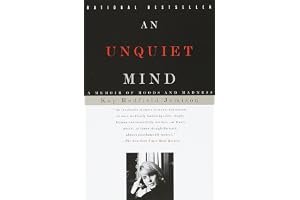
The personal memoir of a manic depressive and an authority on the subject describes the onset of the illness during her teenage years and her determined journey through the realm of available treatments.
Recommended by Jonathan Glover and Tanya Byron.
Jonathan Glover
Kay Redfield Jamison is a psychologist who has co-authored the major psychiatric textbook on manic depression. It authoritatively covers every aspect of the science, from genetics to pharmacology, and also has chapters on the links with creativity and on what the illness feels like. The chapters on the subjective experience are enriched with vivid quotations from patients. In her autobiography, An Unquiet Mind, Kay Jamison came out as not only an expert on the illness but also someone who has it. The power of her book comes from her understanding it both scientifically and from the inside. [source]
Tanya Byron
This is a divine book. A patient of mine who suffers with a bipolar illness, an absolutely inspiring young genius, recommended it to me. So I read it, and then we discussed it in a lot of our sessions together. [source]
Cover unavailable
11
Competent to Counsel: Introduction to Nouthetic Counseling
Jay E. Adams
4.4
A Classic in the Field of Christian Counseling Competent to Counsel has helped thousands of pastors, students, laypersons, and Christian counselors develop both a general approach to Christian counseling and a specific response to particular problems. Using biblically directed discussion, nouthetic counseling works by means of the Holy Spirit to bring about change in the personality and behavior of the counselee. As Dr. Jay Adams points out in his introduction, "I have been engrossed in the project of developing biblical counseling and have uncovered what I consider to be a number of important scriptural principles. . . . There have been dramatic results. . . . Not only have people’s immediate problems been resolved, but there have also been solutions to all sorts of long-term problems as well." Since its first publication in 1970, this book has gone through over thirty printings. It establishes the basis for and an introduction to a counseling approach that is being used in pastors’ studies, in counseling centers, and across dining room tables throughout the country and around the world
New York Times best-selling author and professor Brené Brown offers a powerful and inspiring book that explores how to cultivate the courage, compassion, and connection to embrace your imperfections and to recognize that you are enough.
Each day we face a barrage of images and messages from society and the media telling us who, what, and how we should be. We are led to believe that if we could only look perfect and lead perfect lives, we'd no longer feel inadequate. So most of us perform, please, and perfect, all the while thinking, What if I can't keep all of these balls in the air? Why isn't everyone else working harder and living up to my expectations? What will people think if I fail or give up? When can I stop proving myself?In The Gifts of Imperfection, Bren頂rown, PhD, a leading expert on shame, authenticity and belonging, shares what she's learned from a decade of research on the power of Wholehearted Living--a way of engaging with the world from a place of worthiness.In her ten guideposts, Brown engages our minds, hearts, and spirits as she explores how we can cultivate the courage, compassion, and connection to wake up in the morning and think, No matter what gets done and how much is left undone, I am enough, and to go to bed at night thinking, Yes, I am sometimes afraid, but I am also brave. And, yes, I am imperfect and vulnerable, but that doesn't change the truth that I am worthy of love and belonging.
…
Cover unavailable
13
Seeing with New Eyes: Counseling and the Human Condition Through the Lens of Scripture
David Powlison
4.3
Essays by a highly regarded biblical counselor. Some of these pieces exegete Scripture with a counseling perspective, while others recast specific "psychological" problems.
Cover unavailable
14
The Peacemaker: A Biblical Guide to Resolving Personal Conflict
Ken Sande
4.3
Jesus said, "Blessed are the peacemakers." But it often seems like conflict and disagreement are unavoidable. Serious, divisive conflict is everywhere-within families, in the church, and out in the world. And it can seem impossible to overcome its negative force in our lives.
In The Peacemaker, Ken Sande presents a comprehensive and practical theology for conflict resolution designed to bring about not only a cease-fire but also unity and harmony. Sande takes readers beyond resolving conflicts to true, life-changing reconciliation with family members, coworkers, and fellow believers.
Biblically based, The Peacemaker is full of godly wisdom and useful suggestions that are easily applied to any relationship needing reconciliation. Sande's years of experience as an attorney and as president of Peacemaker Ministries will strengthen readers' confidence as they stand in the gap as peacemakers.
…
Cover unavailable
15
Daring Greatly: How the Courage to Be Vulnerable Transforms the Way We Live, Love, Parent, and Lead
Researcher and thought leader Dr. Brené Brown offers a powerful new vision that encourages us to dare greatly: to embrace vulnerability and imperfection, to live wholeheartedly, and to courageously engage in our lives.
“It is not the critic who counts; not the man who points out how the strong man stumbles, or where the doer of deeds could have done them better. The credit belongs to the man who is actually in the arena, whose face is marred by dust and sweat and blood; who strives valiantly; . . . who at best knows in the end the triumph of high achievement, and who at worst, if he fails, at least fails while daring greatly.” —Theodore Roosevelt
Every day we experience the uncertainty, risks, and emotional exposure that define what it means to be vulnerable, or to dare greatly. Whether the arena is a new relationship, an important meeting, our creative process, or a difficult family conversation, we must find the courage to walk into vulnerability and engage with our whole hearts.
In Daring Greatly, Dr. Brown challenges everything we think we know about vulnerability. Based on twelve years of research, she argues that vulnerability is not weakness, but rather our clearest path to courage, engagement, and meaningful connection. The book that Dr. Brown’s many fans have been waiting for, Daring Greatly will spark a new spirit of truth—and trust—in our organizations, families, schools, and communities.
…
Recommended by AnneMarie Schindler, Chase Jarvis, and Chelsea Frank.
AnneMarie Schindler
I suggest these books because they really open up 'how' you think about life and in turn work, success/challenges/setbacks, and in general, yourself. I believe that the more you can understand yourself and broaden your approach to work, the easier it will be to find work that energizes you. Finally, I'm a team player at heart, and love working with others to achieve a huge goal so a portion of these deal with team composition and performance too. [source]
Chase Jarvis
Chase Jarvis recommended this book on the podcast "The Tim Ferriss Show". [source]
Chelsea Frank
I read everything with an open mind, often challenging myself by choosing books with an odd perspective or religious/spiritual views. These books do not reflect my personal feelings but are books that helped shape my perspective on life, love, and happiness. [source]
Cover unavailable
16
Speaking Truth in Love: Counsel in Community
David Powlison
4.3
You probably speak 20,000 words a day, give or take, and each one influences those who listen. No wonder God has so much to say about our words. We are all counselors, whether we realize it or not! Speaking Truth in Love is a blueprint for communication that strengthens community in Christ. The principles outlined in this pivotal work are specific to counseling, yet extend to marriage, family, friendship, business and the church. ? Have you ever wondered how to be a more effective counselor? ? Have you ever looked for a better way to talk to difficult people? ? Have you ever wanted to express faith and love more naturally in your relationships? Practical in its approach yet comprehensive in its scope, Speaking Truth in Love is sure to become required reading for anyone interested in pursuing a career as a counselor or anyone else who longs for ways to redeem relationships.
Now updated with new research — the book that has changed millions of lives.
After decades of research, world-renowned Stanford University psychologist Carol S. Dweck, Ph.D., discovered a simple but groundbreaking idea: the power of mindset. In this brilliant book, she shows how success in school, work, sports, the arts, and almost every area of human endeavor can be dramatically influenced by how we think about our talents and abilities. People with a fixed mindset — those who believe that abilities are fixed — are less likely to flourish than those with a growth mindset — those who believe that abilities can be developed. Mindset reveals how great parents, teachers, managers, and athletes can put this idea to use to foster outstanding accomplishment.
In this edition, Dweck offers new insights into her now famous and broadly embraced concept. She introduces a phenomenon she calls false growth mindset and guides people toward adopting a deeper, truer growth mindset. She also expands the mindset concept beyond the individual, applying it to the cultures of groups and organizations. With the right mindset, you can motivate those you lead, teach, and love — to transform their lives and your own.
One of the reasons I loved Mindset is because it’s solutions-oriented. In the book’s final chapter, Dweck describes the workshop she and her colleagues have developed to shift students from a fixed to a growth mindset. These workshops demonstrate that ‘just learning about the growth mindset can cause a big shift in the way people think about themselves and their lives. [source]
Without exaggeration, I’ve never met a CEO who didn’t have Mindset on their bookshelf. It resonates with people who have become successful because the belief that your abilities can grow is foundational to their achievements. [source]
Major New York Times bestseller Winner of the National Academy of Sciences Best Book Award in 2012 Selected by the New York Times Book Review as one of the best books of 2011 A Globe and Mail Best Books of the Year 2011 Title One of The Economist's 2011 Books of the Year One of The Wall Street Journal's Best Nonfiction Books of the Year 2011 2013 Presidential Medal of Freedom Recipient
In the international bestseller, Thinking, Fast and Slow, Daniel Kahneman, the renowned psychologist and winner of the Nobel Prize in Economics, takes us on a groundbreaking tour of the mind and explains the two systems that drive the way we think. System 1 is fast, intuitive, and emotional; System 2 is slower, more deliberative, and more logical. The impact of overconfidence on corporate strategies, the difficulties of predicting what will make us happy in the future, the profound effect of cognitive biases on everything from playing the stock market to planning our next vacation—each of these can be understood only by knowing how the two systems shape our judgments and decisions. Engaging the reader in a lively conversation about how we think, Kahneman reveals where we can and cannot trust our intuitions and how we can tap into the benefits of slow thinking. He offers practical and enlightening insights into how choices are made in both our business and our personal lives—and how we can use different techniques to guard against the mental glitches that often get us into trouble. Winner of the National Academy of Sciences Best Book Award and the Los Angeles Times Book Prize and selected by The New York Times Book Review as one of the ten best books of 2011, Thinking, Fast and Slow is destined to be a classic.
A few months ago, Mr. Obama read “Thinking, Fast and Slow,” by Daniel Kahneman, about how people make decisions — quick, instinctive thinking versus slower, contemplative deliberation. For Mr. Obama, a deliberator in an instinctive business, this may be as instructive as any political science text. [source]
Captivating dive into human decision making, marred by inclusion of several/many? psychology studies that fail to replicate. Will stand as a cautionary tale? [source]
Cover unavailable
19
Depression: Looking Up from the Stubborn Darkness
Edward T. Welch
4.3
Looking away from despair towards hope can feel risky. What if God doesn't come through for you? What if you don't feel instantly better? Instead of offering simple platitudes or unrealistic "cure-all" formulas, Edward T. Welch addresses the complex nature of depression with compassion and insight, applying the rich treasures of the gospel, and giving fresh hope to those who struggle.
Originally published as Depression: A Stubborn Darkness - Light for the Path, this new edition is updated with added content.
…
Cover unavailable
20
Love's Executioner and Other Tales of Psychotherapy
Irvin D. Yalom
4.3
The collection of ten absorbing tales by master psychotherapist Irvin D. Yalom uncovers the mysteries, frustrations, pathos, and humor at the heart of the therapeutic encounter. In recounting his patients' dilemmas, Yalom not only gives us a rare and enthralling glimpse into their personal desires and motivations but also tells us his own story as he struggles to reconcile his all-too human responses with his sensibility as a psychiatrist. Not since Freud has an author done so much to clarify what goes on between a psychotherapist and a patient.
…
Recommended by Stephen Lew.
Stephen Lew
When asked what books he would recommend to youngsters interested in his professional path, Stephen mentioned Love's executioner and other tales of psychotherapy. [source]
Cover unavailable
21
The Man Who Mistook His Wife for a Hat and Other Clinical Tales
If a man has lost a leg or an eye, he knows he has lost a leg or an eye; but if he has lost a self—himself—he cannot know it, because he is no longer there to know it. Dr. Oliver Sacks recounts the stories of patients struggling to adapt to often bizarre worlds of neurological disorder. Here are people who can no longer recognize everyday objects or those they love; who are stricken with violent tics or shout involuntary obscenities; who have been dismissed as autistic or retarded, yet are gifted with uncanny artistic or mathematical talents. If inconceivably strange, these brilliant tales illuminate what it means to be human.
…
Recommended by Bradley Voytek, Suzanne O'Sullivan, and Tanya Byron.
Bradley Voytek
I can’t imagine one day waking up and not knowing who my wife is, or seeing my wife and thinking that she was replaced by some sort of clone or robot. But that could happen to any of us. [source]
Suzanne O'Sullivan
I didn’t choose neurology because of it but the way Oliver Sacks writes about neurology is very compelling. [source]
Tanya Byron
This is a seminal book that anyone who wants to work in mental health should read. It is a charming and gentle and also an honest exposé of what can happen to us when our mental health is compromised for whatever reason. [source]
Cover unavailable
22
Addictions: A Banquet in the Grave: Finding Hope in the Power of the Gospel
Edward T. Welch
4.3
A worship disorder: this is how Edward T. Welch views addictions. Will we worship ourselves and our own desires, he writes, or will we worship the true God? With this lens the author discovers far more in Scripture on addictions than passages on drunkenness. There we learn the addict's true condition: like guests at a banquet thrown by the woman Folly, he is already in the grave (Prov. 9:13-18). Can we not escape our addictions? If we're willing to follow Jesus, the author says we have immense hope hope in God's forgiving grace, hope in God's love that is faithful even when we are not, and hope that God can give power so that we are no longer mastered by the addiction. Each chapter concludes with Practical Theology, guidance As You Face Your Own Addictions and As You Help Someone Else.
Influence, the classic book on persuasion, explains the psychology of why people say "yes"—and how to apply these understandings. Dr. Robert Cialdini is the seminal expert in the rapidly expanding field of influence and persuasion. His thirty-five years of rigorous, evidence-based research along with a three-year program of study on what moves people to change behavior has resulted in this highly acclaimed book.
You'll learn the six universal principles, how to use them to become a skilled persuader—and how to defend yourself against them. Perfect for people in all walks of life, the principles of Influence will move you toward profound personal change and act as a driving force for your success.
In The Four Agreements, don Miguel Ruiz reveals the source of self-limiting beliefs that rob us of joy and create needless suffering. Based on ancient Toltec wisdom, the Four Agreements offer a powerful code of conduct that can rapidly transform our lives to a new experience of freedom, true happiness, and love. The Four Agreements are: Be Impeccable With Your Word, Don't Take Anything Personally, Don't Make Assumptions, Always Do Your Best.
Question: What are the books that had a major influence on you? Or simply the ones you like the most. : Tao te Ching, score takes care of itself, between the world and me, the four agreements, the old man and the sea...I love reading! [source]
Karlie Kloss
I just think it’s got a lot of great principles and ideas. [source]
Cover unavailable
25
The Christian Counselor's Manual: The Practice of Nouthetic Counseling
Jay E. Adams
4.3
The Christian Counselor’s Manual is a companion and sequel to the author’s influential Competent to Counsel. It takes the approach of nouthetic counseling introduced in the earlier volume and applies it to a wide range of issues, topics, and techniques in counseling: *Who is qualified to be a counselor? *How can counselees change? *How does the Holy Spirit work? *What role does hope play? *What is the function of language? *How do we ask the right questions? *What often lies behind depression? *How do we deal with anger? *What is schizophrenia? These and hundreds more questions are answered in this comprehensive resource for the Christian counselor. A full set of indexes, a detailed table of contents, and a full complement of diagrams and forms make this an outstanding reference book for Christian counselors.
…
Cover unavailable
26
The Boy Who Was Raised as a Dog: And Other Stories from a Child Psychiatrist's Notebook
A renowned psychiatrist reveals how trauma affects children--and outlines the path to recoveryHow does trauma affect a child's mind--and how can that mind recover? In the classic The Boy Who Was Raised as a Dog, Dr. Perry explains what happens to the brains of children exposed to extreme stress and shares their lessons of courage, humanity, and hope. Only when we understand the science of the mind and the power of love and nurturing, can we hope to heal the spirit of even the most wounded child.
…
Cover unavailable
27
The Seven Principles for Making Marriage Work: A Practical Guide from the Country's Foremost Relationship Expert
Just as Masters and Johnson were pioneers in the study of human sexuality, so Dr. John Gottman has revolutionized the study of marriage. As a professor of psychology at the University of Washington and the founder and director of the Seattle Marital and Family Institute, he has studied the habits of married couples in unprecedented detail over the course of many years. His findings, and his heavily attended workshops, have already turned around thousands of faltering marriages.
This book is the culmination of his life's work: the seven principles that guide couples on the path toward a harmonious and long-lasting relationship. Straightforward in their approach, yet profound in their effect, these principles teach partners new and startling strategies for making their marriage work. Gottman helps couples focus on each other, on paying attention to the small day-to-day moments that, strung together, make up the heart and soul of any relationship. Being thoughtful about ordinary matters provides spouses with a solid foundation for resolving conflict when it does occur and finding strategies for living with those issues that cannot be resolved.
Packed with questionnaires and exercises whose effectiveness has been proven in Dr. Gottman's workshops, The Seven Principles for Making Marriage Work is the definitive guide for anyone who wants their relationship to attain its highest potential.
The Seven Principles for Making Marriage Work is the result of Dr. John Gottman's many years of closely observing thousands of marriages. This kind of longitudinal research has never been done before. Based on his findings, he has culled seven principles essential to the success of any marriage. Maintain a love map. Foster fondness and admiration. Turn toward instead of away. Accept influence. Solve solvable conflicts. Cope with conflicts you can't resolve. Create shared meaning.
Dr. Gottman's unique questionnaires and exercises will guide couples on the road to revitalizing their marriage, or making a strong one even better.
…
Cover unavailable
28
Atomic Habits: An Easy & Proven Way to Build Good Habits & Break Bad Ones
No matter your goals, Atomic Habits offers a proven framework for improving--every day. James Clear, one of the world's leading experts on habit formation, reveals practical strategies that will teach you exactly how to form good habits, break bad ones, and master the tiny behaviors that lead to remarkable results.
If you're having trouble changing your habits, the problem isn't you. The problem is your system. Bad habits repeat themselves again and again not because you don't want to change, but because you have the wrong system for change. You do not rise to the level of your goals. You fall to the level of your systems. Here, you'll get a proven system that can take you to new heights.
Clear is known for his ability to distill complex topics into simple behaviors that can be easily applied to daily life and work. Here, he draws on the most proven ideas from biology, psychology, and neuroscience to create an easy-to-understand guide for making good habits inevitable and bad habits impossible. Along the way, readers will be inspired and entertained with true stories from Olympic gold medalists, award-winning artists, business leaders, life-saving physicians, and star comedians who have used the science of small habits to master their craft and vault to the top of their field.
Learn how to: * make time for new habits (even when life gets crazy); * overcome a lack of motivation and willpower; * design your environment to make success easier; * get back on track when you fall off course; ...and much more.
Atomic Habits will reshape the way you think about progress and success, and give you the tools and strategies you need to transform your habits--whether you are a team looking to win a championship, an organization hoping to redefine an industry, or simply an individual who wishes to quit smoking, lose weight, reduce stress, or achieve any other goal.
I recently read an advance copy of James Clear’s new book, Atomic Habits. His thesis is that small but carefully selected habits can, over time, create massively positive results — not just in terms of what you accomplish, but also in terms of the type of person you become. James’s exposition rings true with what’ve I learned hanging around interesting people and high achievers. I recommend you give this book a closer look. [source]
A lot of people email me asking about habits - how to form good ones, how to break bad ones, how to stop doing the dumb shit we always do. I've got a friend named James Clear. He's an accomplished author and business owner and is kind of a "habit guru." He's probably forgotten more habits research than I've ever brought myself to look at. He just launched his first book. It's called Atomic Habits and it's probably the most practical and complete guide I've ever seen about habit formation and habit change. Do check it out. And then email him and tell him that I have luscious and beautiful hair and he doesn't. Then stick out your tongue and go, "Nyah, nyanya, nyah, nyah." [source]
James launched his book today, Atomic Habits. I’ve read it and recommend it. [source]
Cover unavailable
29
Counseling: How to Counsel Biblically (MacArthur Pastor's Library)
John MacArthur
4.2
Solid theological foundations of biblical counseling are clearly presented in contrast to humanistic and secular theories of psychological counseling. A practical, proactive, and relevant book for students, church leaders, and lay people. This collection of writers represents some of America's leading biblical teachers and counselors.
Other contributors include: Ken L. Sarles, David Powlison, Douglas Bookman, David B. Maddox, Robert Smith, William W. Goode, and Dennis M. Swanson.
…
Cover unavailable
30
Trauma and Recovery: The Aftermath of Violence--From Domestic Abuse to Political Terror
Judith L. Herman
4.2
When Trauma and Recovery was first published in 1992, it was hailed as a groundbreaking work. In the intervening years, Herman’s volume has changed the way we think about and treat traumatic events and trauma victims. In a new afterword, Herman chronicles the incredible response the book has elicited and explains how the issues surrounding the topic have shifted within the clinical community and the culture at large.Trauma and Recovery brings a new level of understanding to a set of problems usually considered individually. Herman draws on her own cutting-edge research in domestic violence as well as on the vast literature of combat veterans and victims of political terror, to show the parallels between private terrors such as rape and public traumas such as terrorism. The book puts individual experience in a broader political frame, arguing that psychological trauma can be understood only in a social context. Meticulously documented and frequently using the victims’ own words as well as those from classic literary works and prison diaries, Trauma and Recovery is a powerful work that will continue to profoundly impact our thinking.
…
Cover unavailable
31
Counseling the Hard Cases: True Stories Illustrating the Sufficiency of God’s Resources in Scripture
Stuart Scott, Heath Lambert, John Macarthur
4.2
Biblical counselors have worked for decades to demonstrate that God’s resources in Scripture are sufficient to help people with their counseling-related problems. In Counseling the Hard Cases, editors Stuart Scott and Heath Lambert use the true stories of real patients to show how the truths of God’s Word can be released to bring help, hope, and healing into the lives of those who struggle with some of the most difficult psychiatric diagnoses.
From pastors and academics to physicians and psychiatrists, a world-class team of contributing counselors share accounts of Scripture having helped overcome bipolar, dissociative identity, and obsessive compulsive disorders, postpartum depression, panic attacks, addiction, issues from childhood sexual abuse, homosexuality, and more.
The book also shows how the graces of Christ, as revealed in the Bible, brought powerful spiritual change to the lives of such people who seemed previously burdened beyond hope by mental and emotional roadblocks.
Contributors include John Babler, Ph.D., Kevin Carson, D.Min., Laura Hendrickson, M.D., Garrett Higbee, Psy.D., Robert Jones, D.Min., Martha Peace, RN, Steve Viars, D.Min., and Dan Wickert, M.D.
…
Cover unavailable
32
Maybe You Should Talk to Someone: A Therapist, Her Therapist, and Our Lives Revealed
One day, Lori Gottlieb is a therapist who helps patients in her Los Angeles practice. The next, a crisis causes her world to come crashing down. Enter Wendell, the quirky but seasoned therapist in whose office she suddenly lands. With his balding head, cardigan, and khakis, he seems to have come straight from Therapist Central Casting. Yet he will turn out to be anything but.
As Gottlieb explores the inner chambers of her patients' lives -- a self-absorbed Hollywood producer, a young newlywed diagnosed with a terminal illness, a senior citizen threatening to end her life on her birthday if nothing gets better, and a twenty-something who can't stop hooking up with the wrong guys -- she finds that the questions they are struggling with are the very ones she is now bringing to Wendell.
…
Recommended by Arianna Huffington, Andrea Barber, Chris Abraham, and 2 others.
Arianna Huffington
Founder/The Huffington Post
This is a daring, delightful, and transformative book. Lori Gottlieb takes us inside the most intimate of encounters as both clinician and patient and leaves us with a surprisingly fresh understanding of ourselves, one another, and the human condition. Her willingness to expose her own blind spots along with her patients’ shows us firsthand that we aren’t alone in our struggles and that maybe we should talk more about them! Maybe You Should Talk to Someone is funny, hopeful, wise, and engrossing—all at the same time. [source]
Andrea Barber
My new favorite book 😍😍 @LoriGottlieb1 https://t.co/7iQsEH7sDa [source]
Chris Abraham
I would like to introduce Zandria and Lori because Zan just read Lori's amazing new book this month, Maybe You Should Talk to Someone; and, since I adore you both, you should be friends. https://t.co/lwQJSJHQxb [source]
Cover unavailable
33
The Whole-Brain Child: 12 Revolutionary Strategies to Nurture Your Child's Developing Mind
“Simple, smart, and effective solutions to your child’s struggles.”—Harvey Karp, M.D.
“Daniel Siegel and Tina Payne Bryson have created a masterly, reader-friendly guide to helping children grow their emotional intelligence. This brilliant method transforms everyday interactions into valuable brain-shaping moments. Anyone who cares for children—or who loves a child—should read The Whole-Brain Child.”—Daniel Goleman, author of Emotional Intelligence
In this pioneering, practical book, Daniel J. Siegel, neuropsychiatrist and author of the bestselling Mindsight, and parenting expert Tina Payne Bryson offer a revolutionary approach to child rearing with twelve key strategies that foster healthy brain development, leading to calmer, happier children. The authors explain—and make accessible—the new science of how a child’s brain is wired and how it matures. The “upstairs brain,” which makes decisions and balances emotions, is under construction until the mid-twenties. And especially in young children, the right brain and its emotions tend to rule over the logic of the left brain. No wonder kids throw tantrums, fight, or sulk in silence. By applying these discoveries to everyday parenting, you can turn any outburst, argument, or fear into a chance to integrate your child’s brain and foster vital growth.
Complete with age-appropriate strategies for dealing with day-to-day struggles and illustrations that will help you explain these concepts to your child, The Whole-Brain Child shows you how to cultivate healthy emotional and intellectual development so that your children can lead balanced, meaningful, and connected lives. “[A] useful child-rearing resource for the entire family . . . The authors include a fair amount of brain science, but they present it for both adult and child audiences.”—Kirkus Reviews “Strategies for getting a youngster to chill out [with] compassion.”—The Washington Post “This erudite, tender, and funny book is filled with fresh ideas based on the latest neuroscience research. I urge all parents who want kind, happy, and emotionally healthy kids to read The Whole-Brain Child. This is my new baby gift.”—Mary Pipher, Ph.D., author of Reviving Ophelia and The Shelter of Each Other
“Gives parents and teachers ideas to get all parts of a healthy child’s brain working together.”—Parent to Parent
…
Recommended by Genevieve Von Lob and Graham Duncan.
Genevieve Von Lob
Siegel uses what neuroscience tells us about how a child’s brain develops to provide practical tips for parents. [source]
Graham Duncan
Graham Duncan recommended this book on the podcast "The Tim Ferriss Show". [source]
In this stunning new book, Malcolm Gladwell takes us on an intellectual journey through the world of "outliers"--the best and the brightest, the most famous and the most successful. He asks the question: what makes high-achievers different?
His answer is that we pay too much attention to what successful people are like, and too little attention to where they are from: that is, their culture, their family, their generation, and the idiosyncratic experiences of their upbringing. Along the way he explains the secrets of software billionaires, what it takes to be a great soccer player, why Asians are good at math, and what made the Beatles the greatest rock band.
Gladwell is not the first person to come up with the 10,000 hour rule. Nor is he the first person to document what it takes to become the best in the world at something. But his stories are so great as he explains these deep concepts. How did the Beatles become the best? Why are professional hockey players born in January, February and March? And so on. [source]
Alex Circei
Question: What five books would you recommend to young people interested in your career path & why? Answer: Screw It, Let's Do It: Lessons In Life by Richard Branson Outliers: The Story of Success by Malcolm Gladwell Start With Why: How Great Leaders Inspire Everyone To Take Action by Simon Sinek The Hard Thing About Hard Things: Building a Business When There Are No Easy Answers by Ben Horowitz Rich Dad Poor Dad: What the Rich Teach Their Kids About Money That the Poor and Middle Class Do Not! by Robert T. Kiyosaki [source]
Cover unavailable
35
The Theory and Practice of Group Psychotherapy
Irvin D. Yalom, Molyn Leszcz
4.2
The classic work on group psychotherapy Hailed by Jerome Frank as "the best book that exists on the subject," Irvin D. Yalom's The Theory and Practice of Group Psychotherapy has been the standard text in the field for decades. In this completely revised and updated fifth edition, Dr. Yalom and his collaborator Dr. Molyn Leszcz expand the book to include the most recent developments in the field, drawing on nearly a decade of new research as well as their broad clinical wisdom and expertise. New topics include: online therapy, specialized groups, ethnocultural diversity, trauma and managed care. At once scholarly and lively, this is the most up-to-date, incisive, and comprehensive text available on group psychotherapy.
…
Recommended by Susan Llewelyn.
Susan Llewelyn
Yalom’s book was really helpful. What Yalom says—from his clinical experience, but later backed up by researchers including some of my own studies—is that are eleven curative factors that can describe what is going on. [source]
Cover unavailable
36
Blame It on the Brain: Distinguishing Chemical Imbalances, Brain Disorders, and Disobedience
Edward T Welch
4.2
Have you ever been surprised at how some people have accused their brain, making it responsible for some of their bad behavior? As human problems seem to get both deeper and more widespread, people are desperate for solutions — and the quicker the better! How wonderful it would be, many think, if the right pill or genetic alteration could solve our problems! As Christians, we are not so naive, however. We know that we cannot blindly accept everything we hear as God’s truth. Information we receive about brain functioning is viewed the same way we view any information, whether it is about finances, parenting, or the causes of our behavior: we view it through the lens of Scripture. And that requires us to be thoughtful, careful, and prayerful as we hear and assess the latest scientific discoveries.
This means that the task before the reader in this book is twofold: to introduce areas where the brain has received too little credit, and to highlight where the brain has received too much credit (or blame). And such hope is encouraged by reports suggesting that we are on the verge of revolutionary brain treatments for problems that were once attributed to the soul.
The theological structure presented in Part One is fairly straightforward: we are created by God as a unity of at least two substances — spirit and body. Nothing new here. This is a theological statement that has stood for centuries. What is new, however, is the application of this theology to some modern question. To help the reader think through these issues and questions, Part One of this book supplies the theological resources necessary for dialogue with the brain sciences. Why theological resources rather than technological and scientific? Because theology is the lens through which Christians interpret all research, and it is essential that our lens be clear and accurate. Sadly, in relation to the brain sciences, our lenses have been particularly cloudy, and, as a result, they have not controlled our vision. In fact, many people seem to take their biblical lenses off entirely when looking at brain research. Therefore, Part One will clean and polish the reader's theological glasses.
Outfitted with this theology and its manifold applications, Part Two will put it to work. Part Two explores some modern diagnoses and experiences, all attributed to the brain, and considers them from a biblical perspective. Welch thoughtfully challenges the reader to learn a way of thinking that will allows them to think biblically about specific problems as they are encountered. This, in turn, helps to equip and enable the reader to minister biblically, with confidence, wisdom, and compassion.
…
Cover unavailable
37
The Tipping Point: How Little Things Can Make a Big Difference
The tipping point is that magic moment when an idea, trend, or social behavior crosses a threshold, tips, and spreads like wildfire. Just as a single sick person can start an epidemic of the flu, so too can a small but precisely targeted push cause a fashion trend, the popularity of a new product, or a drop in the crime rate. This widely acclaimed bestseller, in which Malcolm Gladwell explores and brilliantly illuminates the tipping point phenomenon, is already changing the way people throughout the world think about selling products and disseminating ideas.
Gladwell introduces us to the particular personality types who are natural pollinators of new ideas and trends, the people who create the phenomenon of word of mouth. He analyzes fashion trends, smoking, children's television, direct mail, and the early days of the American Revolution for clues about making ideas infectious, and visits a religious commune, a successful high-tech company, and one of the world's greatest salesmen to show how to start and sustain social epidemics.
Bunch of really good information in here on how to make ideas go viral. This could be good to apply to any kind of products or ideas you may have. Definitely, check out The Tipping Point, which is one of my favorites. [source]
Malcolm Gladwell's breakthrough insight was to focus on the micro-relationships between individuals, which helped organizations realize that it's not about the big ads and the huge charity balls... it's about setting the stage for the buzz to start. [source]
Andy Stern
I think that when we talk about making change, it is much more about macro change, like in policy. This book reminds you that at times when you're building big movements, or trying to elect significant decision-makers in politics, sometimes it's the little things that make a difference. Ever since the book was written, we've become very used to the idea of things going viral unexpectedly and then having massive impact. The Tipping Point, to me, is really an appreciation that very small things can rearrange thinking in ways – like infectious diseases – that have huge implications. While we're always searching for the big policy changes – and we think we have to do that in very traditional ways of building coalitions against constituencies, movements and the media – sometimes it's the little things that actually tip the situation. Like the story of a person and their unique set of circumstances that really captures an issue about health care or housing. So it's trying to remember, while you're thinking about the grand and the glorious, that thinking about the small things can equally bring about change. [source]
Cover unavailable
38
Emotional Intelligence: Why It Can Matter More Than IQ
Everyone knows that high IQ is no guarantee of success, happiness, or virtue, but until Emotional Intelligence, we could only guess why. Daniel Goleman's brilliant report from the frontiers of psychology and neuroscience offers startling new insight into our "two minds"—the rational and the emotional—and how they together shape our destiny.
Through vivid examples, Goleman delineates the five crucial skills of emotional intelligence, and shows how they determine our success in relationships, work, and even our physical well-being. What emerges is an entirely new way to talk about being smart.
The best news is that "emotional literacy" is not fixed early in life. Every parent, every teacher, every business leader, and everyone interested in a more civil society, has a stake in this compelling vision of human possibility.
From the Trade Paperback edition.
…
Recommended by Drew Houston, Drew Huston, Magda Marcu, and 4 others.
Drew Houston
CEO/Dropbox
It’s nonfiction, but it spelled out something that I just didn’t know you could kind of break down in a logical way. And, suddenly, I had this understanding about the world that I didn’t have before. [source]
Magda Marcu
One of the most eye opening for me was “Emotional Intelligence: Why It Can Matter More Than IQ” as it offered a different perspective on leadership, and how empathy can make you a more successful leader. Every person has some degree of empathy and through this book you understand how to apply it more intently. [source]
Robert Kelsey
Yes, that’s the key revelation. But another key element, which was quite revelatory for me when I read it, is about the impact of fear on your brain. The impact of fear as a physiological response was well known when he wrote the book, but what was less well known was the idea of fear as a neurological response. He pointed to research showing what happens to the brain when fear is triggered, and it’s very damaging. There’s a part of the brain called the amygdala, which is part of the limbic system, and deals with emotions such as fear and distress. Its main purpose is to alert you to danger and it sends an emergency signal. All those physiological responses you have are basically the body’s response to that emergency signal. That’s what people experience when they experience fear, but it’s not just the fear of a dog barking at you or someone attacking you, it’s fear based on a fear conditioning. These are moments when something happens to you that induces fear or distress, and can include fear of failure or fear of being upset, and the same response occurs. [source]
Cover unavailable
39
On Becoming a Person: A Therapist's View of Psychotherapy
Carl Rogers and Peter D. Kramer M.D.
4.2
The late Carl Rogers, founder of the humanistic psychology movement, revolutionized psychotherapy with his concept of "client-centered therapy." His influence has spanned decades, but that influence has become so much a part of mainstream psychology that the ingenious nature of his work has almost been forgotten. A new introduction by Peter Kramer sheds light on the significance of Dr. Rogers's work today. New discoveries in the field of psychopharmacology, especially that of the antidepressant Prozac, have spawned a quick-fix drug revolution that has obscured the psychotherapeutic relationship. As the pendulum slowly swings back toward an appreciation of the therapeutic encounter, Dr. Rogers's "client-centered therapy" becomes particularly timely and important.
…
Cover unavailable
40
Shame Interrupted: How God Lifts the Pain of Worthlessness and Rejection
Edward T. Welch
4.2
No more hiding. Shame controls far too many of us. Worthless, inferior, rejected, weak, humiliated, failure...it all adds up to wishing we could get away from others and hide. We know what shame feels like. The way out, however, is harder to find. Time doesn't help, neither does confession, because shame is just as often from what others do to you as it is from what you have done. But the Bible is about shame from start to finish, and, if we are willing, God's beautiful words break through. Look at Jesus through the lens of shame and see how the marginalized and worthless are his favorites and become his people. God cares for the shamed. Through Jesus you are covered, adopted, cleansed, and healed.
…
Cover unavailable
41
Finally Free: Fighting for Purity with the Power of Grace
Heath Lambert, Joshua Harris
4.2
If you have struggled personally against the powerful draw of pornography, or if you have ever tried to help someone fighting this battle, you know how hard it is to break free. But real freedom isn’t found by trying harder to change. Nor is it found in a particular method or program. Only Jesus Christ has the power to free people from the enslaving power of pornography.
In Finally Free, Dr. Heath Lambert, a leader in the biblical counseling movement, lays out eight gospel-centered strategies for overcoming the deceitful lure of pornography. Each chapter clearly demonstrates how the gospel applies to this particular battle and how Jesus can move readers from a life of struggle to a life of purity.
If you or someone you care about is fighting this battle, there is good news: No matter how intense or long-standing the struggle, Jesus Christ can, will, and does set people free from the power of pornography.
“I’ve read just about every Christian book on the topic of pornography. Finally Free is now the number one book I will recommend to pastors, counselors, strugglers, and those who love them.
- Bob Kellemen, Ph.D., Executive Director, The Biblical Counseling Coalition; Author, Sexual Abuse: Beauty for Ashes
“This book is richly biblical, soundly Christian, and centered in the gospel. Christians should read it and quickly pass it to others. It will be of enormous help to pastors, youth ministers, college ministers, and the Christians of all ages struggling against the tide of our pornographic age.”
- R. Albert Mohler Jr., president Southern Baptist Theological Seminary
This amoral, cunning, ruthless, and instructive book synthesizes the philosophies of Machiavelli, Sun Tzu, and Carl Von Clausewitz with the historical legacies of statesmen, warriors, seducers, and con men throughout the ages.
These are the books I recommend people to listen to on @applebooks. [source]
Marvin Liao
Partner/500 Startups
My list would be (besides the ones I mentioned in answer to the previous question) both business & Fiction/Sci-Fi and ones I personally found helpful to myself. The business books explain just exactly how business, work & investing are in reality & how to think properly & differentiate yourself. On the non-business side, a mix of History & classic fiction to understand people, philosophy to make sense of life and Science fiction to picture what the future could be like (not always utopian). [source]
There is no living writer (or person) who has been more influential to me than Robert Greene. I met him when I was 19 years old and he’s shaped me as a person, as a writer, as a thinker. You MUST read his books. His work on power and strategy are critical for anyone trying to accomplish anything. In life, power is force we are constantly bumping up against. People have power of over us, we seek power ourselves that we might be free enough and influential enough to accomplish our goals—so we must understand where power comes from, how it works and how to get it. But pure power is meaningless. It must be joined to mastery and purpose. So read his book Mastery so that you can figure your life’s task and how to dedicate yourself to it. [source]
What does everyone in the modern world need to know? Renowned psychologist Jordan B. Peterson's answer to this most difficult of questions uniquely combines the hard-won truths of ancient tradition with the stunning revelations of cutting-edge scientific research.
Humorous, surprising, and informative, Dr. Peterson tells us why skateboarding boys and girls must be left alone, what terrible fate awaits those who criticize too easily, and why you should always pet a cat when you meet one on the street.
What does the nervous system of the lowly lobster have to tell us about standing up straight (with our shoulders back) and about success in life? Why did ancient Egyptians worship the capacity to pay careful attention as the highest of gods? What dreadful paths do people tread when they become resentful, arrogant, and vengeful? Dr. Peterson journeys broadly, discussing discipline, freedom, adventure, and responsibility, distilling the world's wisdom into 12 practical and profound rules for life. 12 Rules for Life shatters the modern commonplaces of science, faith, and human nature while transforming and ennobling the mind and spirit of its listeners.
A bracing disassembly and reconstruction of a theory of individual progress in the modern world. Fascinating compare and contrast with The Courage To Be Disliked. [source]
Just look at the table of contents: Rule 1: Stand up straight with your shoulders back Rule 2: Treat yourself like someone you are responsible for helping Rule 3: Make friends with people who want the best for you Rule 4: Compare yourself to who you were yesterday, not to who someone else is today Rule 5: Do not let your children do anything that makes you dislike them Rule 6: Set your house in perfect order before you criticise the world Rule 7: Pursue what is meaningful (not what is expedient) Rule 8: Tell the truth – or, at least, don’t lie Rule 9: Assume the person you are listening to might know something you don’t Rule 10: Be precise in your speech Rule 11: Do not bother children when they are skateboarding Rule 12: Pet a cat when you encounter one on the street Read this book. [source]
Andrew Price
@stewheckenberg @jordanbpeterson Thanks mate. I almost wish the book was published under a different author so more people would give it a chance. It’s really one of the best “how to fix your life” books around. [source]
Cover unavailable
44
Side by Side: Walking with Others in Wisdom and Love
Edward T. Welch
4.2
Practical Guidance for Loving Others Well
Everyone needs help from time to time, especially in the midst of painful circumstances and difficult trials. In this short book, a highly respected biblical counselor and successful author offers practical guidance for all Christians--pastors and laypeople alike--who want to develop their "helping skills" when it comes to walking alongside hurting people.
Written out of the conviction that friends are the best helpers, this accessible introduction to biblical counseling will equip believers to share their burdens with one another through gentle words of wisdom and kind acts of love. This book is written for those eager to see God use ordinary relationships and conversations between ordinary Christians to work extraordinary miracles in the lives of his people.
…
Cover unavailable
45
Spiritual Depression: Its Causes and Cure
David Martyn Lloyd-Jones
4.2
This enduring collection of twenty-one sermons by D. Martyn Lloyd-Jones, each originally delivered at Westminster Chapel in London, carefully and compassionately analyzes an undeniable feature of modern society from which Christians have not escaped -- spiritual depression.
"Christian people," writes Lloyd-Jones, "too often seem to be perpetually in the doldrums and too often give this appearance of unhappiness and of lack of freedom and absence of joy. There is no question at all but that this is the main reason why large numbers of people have ceased to be interested in Christianity."
Believing the Christian joy was one of the most potent factors in the spread of Christianity in the early centuries, Lloyd-Jones not only lays bare the causes that have robbed many Christians of spiritual vitality but also points the way to the cure that is found through the mind and spirit of Christ.
…
Cover unavailable
46
War of Words: Getting to the Heart of Your Communication Struggles
Paul David Tripp
4.2
An important and biblical book about our words and our God. Few of us really think about the power, the blessing, the gift, the effect, and the danger of our words. This book will make you think before you speak. ? Steve Brown Until our hearts are completely purified by God in heaven, we must set strong guards at the gates of our mouths and fight daily battles to restrain the overflow of our sinful desires. ? helpful insights and practical tools for this battle. ? Ken Sande
…
Cover unavailable
47
Running Scared: Fear, Worry, and the God of Rest
Edward T. Welch
4.2
Running Scared, an examination of the biblical roadmap to a life of peace and security, is written for those who appreciate a comprehensive analysis written in conversational prose.
Cover unavailable
48
Shepherding a Child's Heart
Tedd Tripp
4.2
Shepherding a Child's Heart is about how to speak to the heart of your child. The things your child does and says flow from the heart. Luke 6:45 puts it this way: "...out of the overflow of the heart the mouth speaks." Written for parents with children of any age, this insightful book provides perspectives and procedures for shepherding your child's heart into the paths of life.
Cover unavailable
49
What Did You Expect?: Redeeming the Realities of Marriage
Paul David Tripp
4.2
A longtime Christian teacher and counselor calls engaged and married couples to a grace-based lifestyle of daily reconciliation, marked by six practical commitments. Marriage, according to Scripture, will always involve two flawed people living with each other in a fallen world. Yet, in counselor Paul Tripp's professional experience, the majority of couples enter marriage with unrealistic expectations, leaving them unprepared for the day-to-day realities of married life. This unique book introduces a biblical and practical approach to those realities that is rooted in God's faithfulness and Scripture's teaching on sin and grace. Spouses need to be reconciled to each other and to God on a daily basis, Tripp declares. Since we're always sinners married to sinners, reconciliation isn't just the right response in moments of failure. It must be the lifestyle of any healthy marriage. What Did You Expect? presents six practical commitments that give shape and momentum to such a lifestyle. These commitments, which include honestly facing sin, weakness, and failure; willingness to change; and embodying Christ's love, will equip couples to develop a thriving, grace-based marriage in all circumstances and seasons of their relationship.
…
Cover unavailable
50
Trusting God: Even When Life Hurts
Jerry Bridges
4.1
Jerry Bridges contends that as you begin to explore the scope of God's power over nations, nature, and the detailed lives of individuals, you'll begin to acknowledge His loving control. And as you come to know Him better, you'll find yourself trusting Him more completely.
Cover unavailable
51
The Power of Habit: Why We Do What We Do in Life and Business
A young woman walks into a laboratory. Over the past two years, she has transformed almost every aspect of her life. She has quit smoking, run a marathon, and been promoted at work. The patterns inside her brain, neurologists discover, have fundamentally changed.
Marketers at Procter & Gamble study videos of people making their beds. They are desperately trying to figure out how to sell a new product called Febreze, on track to be one of the biggest flops in company history. Suddenly, one of them detects a nearly imperceptible pattern—and with a slight shift in advertising, Febreze goes on to earn a billion dollars a year.
An untested CEO takes over one of the largest companies in America. His first order of business is attacking a single pattern among his employees—how they approach worker safety—and soon the firm, Alcoa, becomes the top performer in the Dow Jones.
What do all these people have in common? They achieved success by focusing on the patterns that shape every aspect of our lives.
They succeeded by transforming habits.
In The Power of Habit, award-winning New York Times business reporter Charles Duhigg takes us to the thrilling edge of scientific discoveries that explain why habits exist and how they can be changed. With penetrating intelligence and an ability to distill vast amounts of information into engrossing narratives, Duhigg brings to life a whole new understanding of human nature and its potential for transformation.
Along the way we learn why some people and companies struggle to change, despite years of trying, while others seem to remake themselves overnight. We visit laboratories where neuroscientists explore how habits work and where, exactly, they reside in our brains. We discover how the right habits were crucial to the success of Olympic swimmer Michael Phelps, Starbucks CEO Howard Schultz, and civil-rights hero Martin Luther King, Jr. We go inside Procter & Gamble, Target superstores, Rick Warren’s Saddleback Church, NFL locker rooms, and the nation’s largest hospitals and see how implementing so-called keystone habits can earn billions and mean the difference between failure and success, life and death.
At its core, The Power of Habit contains an exhilarating argument: The key to exercising regularly, losing weight, raising exceptional children, becoming more productive, building revolutionary companies and social movements, and achieving success is understanding how habits work.
Habits aren’t destiny. As Charles Duhigg shows, by harnessing this new science, we can transform our businesses, our communities, and our lives.
…
Recommended by Naval Ravikant, Blake Irving, Alden Mills, and 15 others.
I also recently finished The Power of Habit, or close to finish as I get. That one was interesting, not because of its content necessarily, but because it’s good for me to always keep on top of mind how powerful my habits are. … I think learning how to break habits is a very important meta-skill that can serve you better in life than almost anything else. Although you can read tons of books on it, the reality is you’re never going to learn how to break bad habits until you just break them. [source]
Blake Irving
CEO/GoDaddy
You know, there's a book called The Power of Habit by Charles Duhigg. Simple read book about just how to build positive habits that can be I think I what I'd call you know whether in your personal life or whether in your business life to help you build you know, have a loop that can build your success and that's one I mean there are so many great books out there. [source]
Alden Mills
More recent books that have had a significant impact on me are The Power of Habit and The Diamond Cutter. Both represent different forces for me – the former helps me tactically with making incremental improvements in my life. [source]
Cover unavailable
52
Codependent No More: How to Stop Controlling Others and Start Caring for Yourself
The healing touchstone of millions, this modern classic by one of America's best-loved and most inspirational authors holds the key to understanding codependency and to unlocking its stultifying hold on your life.
Is someone else's problem your problem? If, like so many others, you've lost sight of your own life in the drama of tending to someone else's, you may be codependent--and you may find yourself in this book--Codependent No More.The healing touchstone of millions, this modern classic by one of America's best-loved and most inspirational authors holds the key to understanding codependency and to unlocking its stultifying hold on your life.With instructive life stories, personal reflections, exercises, and self-tests, Codependent No More is a simple, straightforward, readable map of the perplexing world of codependency--charting the path to freedom and a lifetime of healing, hope, and happiness.Melody Beattie is the author of Beyond Codependency, The Language of Letting Go, Stop Being Mean to Yourself, The Codependent No More Workbook and Playing It by Heart.
If you want to know more about codependence I would say read this book. [source]
Cover unavailable
53
Counsel from the Cross: Connecting Broken People to the Love of Christ
Elyse M. Fitzpatrick, Dennis E. Johnson
4.1
Demonstrates the why and the how of consistently biblical, gospel-centric counseling, whether in the pastor's study or over coffee with a friend.
Cover unavailable
54
Christian Counseling: A Comprehensive Guide
Gary R. Collins
4.1
This proven guide in pastoral counseling has been extensively expanded and revised by the author to include recent developments and research, new resources, and attention to newly urgent needs such as AIDS, eating disorders, homosexuality, and violence. Written with clarity and sensitivity, this volume builds on biblical foundations and the best resources of professional psychology. It reflects the insights the author has gained from many years of Christian counseling.
New Sections include: The Legal, Ethical and Moral Issues in Counseling The Multicultural, Multiracial Issues in Counseling Conflict and Relationships Dealing with Death and Grief Alcoholism and Other Substance Abuse Crises and Trauma Counseling and Terrorism
…
Cover unavailable
55
A Theology of Biblical Counseling: The Doctrinal Foundations of Counseling Ministry
Heath Lambert
4.1
Since the beginning of the biblical counseling movement in 1970, biblical counselors have argued that counseling is a ministry of the Word, just like preaching or missions. As a ministry, counseling must be defined according to sound biblical theology rather than secular principles of psychology.
For over four decades, biblical theology has been at the core of the biblical counseling movement. Leaders in biblical counseling have emphasized a commitment to teaching doctrine in their counseling courses out of the conviction that good theology leads to good counseling…and bad theology leads to bad counseling.
A Theology of Biblical Counseling is a landmark new book that unpacks the core theological convictions that underlie sound counseling, and practical wisdom for counseling today. Dr. Heath Lambert shows how biblical counseling is rooted in the Scriptures while illustrating the real challenges counselors face today through true stories from the counseling room. A substantive textbook written in accessible language, it is an ideal resource for use in training biblical counselors at colleges, seminaries, and training institutes. In each chapter, doctrine comes to life in real ministry to real people, dramatically demonstrating how theology intersects with the lives of actual counselees.
…
Cover unavailable
56
Relationships: A Mess Worth Making
Tim S. Lane
4.1
With penetrating insight and practical applications, Relationships: A Mess Worth Making identifies how to work through the most stubborn problems that plague any contemporary relationship - be it marriage, parent-child, or friendship.
Cover unavailable
57
Encyclopedia of Counseling Package: Encyclopedia of Counseling: Master Review and Tutorial for the National Counselor Examination, State Counseling ... Preparation Comprehensive Examination
Howard G. Rosenthal
4.1
Cover unavailable
58
Dibs in Search of Self
Virginia M. Axline
4.1
The portrait of a little boy achieving, under therapy, a successful struggle for identity.
Recommended by Dorothy Singer and Tanya Byron.
Dorothy Singer
This is a wonderful book. I’ve read it several times and it’s almost guaranteed to make you cry. Dibs came from an academic family that was well off. He was having trouble in school and his parents thought he was autistic. Axline accepted his idiosyncrasies and offered him a respectful outlet for his imagination and worked with the parents. They began to be more accepting of him and Dibs began to be more accepting of himself. It’s a small book, but very moving and very powerfully written. [source]
Tanya Byron
Virginia Axline is a family therapist, and I like this book because it really resonates in terms of why I do what I do and, particularly, why I am passionate about child and adolescent mental health. The book is all about child therapy and a boy called Dibs who wouldn’t talk and wouldn’t play. He has lots of difficulties and issues, and I think he represents a lot of children with mental health problems who are easily misunderstood. We get very anxious about mental health – and when it comes to children we get deeply, deeply anxious about it. [source]

Cover unavailable
59
A Theology of Christian Counseling: More Than Redemption
Jay E. Adams
4.1
A Theology of Christian Counseling connects biblical doctrine with practical living. Salvation, that central concern of Protestant theology, is often too narrowly defined. It is thought of as “being saved from the consequences of sin.” But God is doing much more. He is making something new out of the old sinful nature. He is, in Christ, making new creatures. “No counseling system that is based on some other foundation can begin to offer what Christian counseling offers. . . . No matter what the problem is, no matter how greatly sin has abounded, the Christian counselor’s stance is struck by the far-more-abounding nature of the grace of Jesus Christ in redemption. What a difference this makes in counseling!” In this book the reader will gain an insight into the rich theological framework that supports and directs a biblical approach to counseling. And the connection between solid theology and practical application will become compelling. This book is one-of-a-kind.
…
Cover unavailable
60
Theory and Practice of Counseling and Psychotherapy
Gerald Corey
4.1
This revision of Gerald Corey's best-selling text introduces students to the major theories of counseling (psychoanalytic, Adlerian, existential, person-centered, Gestalt, reality, behavior, cognitive-behavior, family systems, feminist and, NEW to this edition, postmodern approaches) and demonstrates how each theory can be applied to a single case ("Stan"). Reviewed by 27 of the field's leading experts, Corey's Seventh Edition covers the major concepts of counseling theories, shows students how to apply those theories in practice, and helps them learn to integrate the theories into an individualized counseling style. Incorporating the thinking, feeling, and behaving dimensions of human experience, Corey offers an easy-to-understand text that helps students compare and contrast the therapeutic models. This book is the center of a suite of products that include a revised student manual, a revised casebook, a companion text, and an all-new CD-ROM.
…
Cover unavailable
61
Motivational Interviewing: Helping People Change
William R. Miller
4.1
This bestselling work for professionals and students is the authoritative presentation of motivational interviewing (MI), the powerful approach to facilitating change. The book elucidates the four processes of MI--engaging, focusing, evoking, and planning--and vividly demonstrates what they look like in action. A wealth of vignettes and interview examples illustrate the "dos and don'ts" of successful implementation in diverse contexts. Highly accessible, the book is infused with respect and compassion for clients. The companion Web page provides additional helpful resources, including reflection questions, an extended bibliography, and annotated case material. This book is in the Applications of Motivational Interviewing series. New to This Edition: *Reflects major advances in understanding and teaching MI. *Fully restructured around the new four-process model. *Additional case examples and counseling situations. *Reviews the growing evidence base and covers ways to assess MI fidelity. Pedagogical Features Include: *Online reflection questions and annotated cases, ideal for classroom discussion. *Key points at the end of each chapter. *Engaging boxes with special topics and personal reflections. *Extended bibliography and quick-reference glossary.
…
Cover unavailable
62
The Pastor and Counseling: The Basics of Shepherding Members in Need
Jeremy Pierre, Deepak Reju
4.1
Pastors spend much of their time counseling people in crisis--a delicate task that requires one to carefully evaluate each situation, share relevant principles from God's Word, and offer practical suggestions for moving forward. Too often, however, pastors feel unprepared to effectively shepherd their people through difficult circumstances such as depression, adultery, eating disorders, and suicidal thinking. Written to help pastors and church leaders understand the basics of biblical counseling, this book provides an overview of the counseling process from the initial meeting to the final session. It also includes suggestions for cultivating a culture of discipleship within a church and four appendixes featuring a quick checklist, tips for taking notes, and more.
…
Cover unavailable
63
Rid of My Disgrace: Hope and Healing for Victims of Sexual Assault
Justin S. Holcomb, Lindsey A. Holcomb
4.1
The statistics are jarring. One in four women and one in six men are or will be victims of sexual assault in their lifetime. But as sobering as the statistics are, they don't begin to speak to the darkness and grief experienced by these victims. Because sexual assault causes physical, psychological, emotional, and spiritual pain, victims need clear help, hope, and healing. In Rid of My Disgrace, a couple experienced in counseling victims of sexual assault explains how the grace of God can heal the broken and restore the disgraced.
Justin and Lindsey Holcomb outline an approach for moving from destruction to redemption. While avoiding platitudes and shallow theology, Rid of My Disgrace combines biblical and theological depth with up-to-date research. This book is primarily written for those who have been assaulted (either as children or adults) but also equips family, friends, pastors, and others to care for victims in ways that are compassionate, practical, and informed.
In this must-read book for anyone striving to succeed, pioneering psychologist Angela Duckworth shows parents, educators, students, and business people both seasoned and new that the secret to outstanding achievement is not talent but a focused persistence called grit.
Why do some people succeed and others fail? Sharing new insights from her landmark research on grit, Angela Duckworth explains why talent is hardly a guarantor of success. Rather, other factors can be even more crucial such as identifying our passions and following through on our commitments.
Drawing on her own powerful story as the daughter of a scientist who frequently bemoaned her lack of smarts, Duckworth describes her winding path through teaching, business consulting, and neuroscience, which led to the hypothesis that what really drives success is not genius, but a special blend of passion and long-term perseverance. As a professor at the University of Pennsylvania, Duckworth created her own character lab and set out to test her theory.
Here, she takes readers into the field to visit teachers working in some of the toughest schools, cadets struggling through their first days at West Point, and young finalists in the National Spelling Bee. She also mines fascinating insights from history and shows what can be gleaned from modern experiments in peak performance. Finally, she shares what she's learned from interviewing dozens of high achievers; from JP Morgan CEO Jamie Dimon to the cartoon editor of The New Yorker to Seattle Seahawks Coach Pete Carroll.
Winningly personal, insightful, and even life-changing, Grit is a book about what goes through your head when you fall down, and how that not talent or luck makes all the difference.
…
Recommended by Albert Wenger, Anu Hariharan, Benjamin Spall, and 11 others.
Benjamin Spall
Question: What five books would you recommend to youngsters interested in your professional path? … Grit by Angela Duckworth [source]
Bogdan Lucaciu
Grit: The Power of Passion and Perseverance - it was frustrating to read: “Where was this book 20 years ago!?” [source]
Stephen Lew
When asked what books he would recommend to youngsters interested in his professional path, Stephen mentioned Grit. [source]
The first popular work to combine the spiritual and psychological insights of modern psychoanalysis with the archetypes of world mythology, the book creates a roadmap for navigating the frustrating path of contemporary life. Examining heroic myths in the light of modern psychology, it considers not only the patterns and stages of mythology but also its relevance to our lives today--and to the life of any person seeking a fully realized existence.
Myth, according to Campbell, is the projection of a culture's dreams onto a large screen; Campbell's book, like Star Wars, the film it helped inspire, is an exploration of the big-picture moments from the stage that is our world. It is a must-have resource for both experienced students of mythology and the explorer just beginning to approach myth as a source of knowledge.
The book I’d give every graduating senior in college or high school would be … Joseph Campbell’s 'Hero of a Thousand Faces'. It's little bit dense but it’s so rich, so it’s a good one. [source]
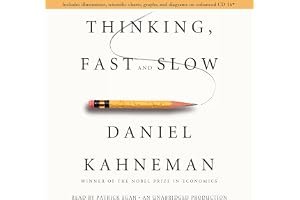
Joseph Campbell was the first person to really open my eyes to the compassionate side of life, or of thought... Campbell was the guy who really kind of put it all together for me, and not in a way I could put my finger on... It made you just glad to be alive, realizing how vast this world is, and how similar and how different we are. [source]
Catherine Plano
Was mind blowing, it really helped me put into perspective, that there are cycles and rhythms, and I now call them initiations, when you are faced with fear we are never too sure of our potential unless we know how to fail, what did we learn from it and what are we going to do differently the next time. There is a lesson in everything we experience, as long as we slow down enough to reflect. The other thing in the hero's journey is that even when you say 'yes' to a project, it really doesn't mean that you are going to succeed at it, but if you go into a project with an open mind and embrace that you are here to learn, the journey itself is rewarding, not always the outcome and when we really look at our failures, they weren't real failures after all, but a stepping stone onto something greater. [source]

Cover unavailable
66
Hold Me Tight: Seven Conversations for a Lifetime of Love
Dr. Sue Johnson EdD
4.1
Heralded by the New York Times and Time as the couples therapy with the highest rate of success, Emotionally Focused Therapy works because it views the love relationship as an attachment bond.
This idea, once controversial, is now supported by science, and has become widely popular among therapists around the world. In Hold Me Tight, Dr. Sue Johnson presents Emotionally Focused Therapy to the general public for the first time. Johnson teaches that the way to save and enrich a relationship is to reestablish safe emotional connection and preserve the attachment bond. With this in mind, she focuses on key moments in a relationship-from "Recognizing the Demon Dialogue" to "Revisiting a Rocky Moment" -- and uses them as touch points for seven healing conversations.
Through case studies from her practice, illuminating advice, and practical exercises, couples will learn how to nurture their relationships and ensure a lifetime of love.
…
Cover unavailable
67
Dare to Lead: Brave Work. Tough Conversations. Whole Hearts.
In her #1 New York Times bestsellers, Brené Brown has taught us what it means to dare greatly, rise strong, and brave the wilderness. Now, based on new research conducted with leaders, change makers, and culture shifters, she's showing us how to put those ideas into practice so we can step up and lead.
Leadership is not about titles, status, and wielding power. A leader is anyone who takes responsibility for recognizing the potential in people and ideas, and has the courage to develop that potential.
When we dare to lead, we don't pretend to have the right answers; we stay curious and ask the right questions. We don't see power as finite and hoard it; we know that power becomes infinite when we share it with others. We don't avoid difficult conversations and situations; we lean into vulnerability when it's necessary to do good work.
But daring leadership in a culture defined by scarcity, fear, and uncertainty requires skill-building around traits that are deeply and uniquely human. The irony is that we're choosing not to invest in developing the hearts and minds of leaders at the exact same time as we're scrambling to figure out what we have to offer that machines and AI can't do better and faster. What can we do better? Empathy, connection, and courage, to start.
Four-time #1 New York Times bestselling author Brené Brown has spent the past two decades studying the emotions and experiences that give meaning to our lives, and the past seven years working with transformative leaders and teams spanning the globe. She found that leaders in organizations ranging from small entrepreneurial startups and family-owned businesses to nonprofits, civic organizations, and Fortune 50 companies all ask the same question:
How do you cultivate braver, more daring leaders, and how do you embed the value of courage in your culture?
In this new book, Brown uses research, stories, and examples to answer these questions in the no-BS style that millions of readers have come to expect and love.
Brown writes, "One of the most important findings of my career is that daring leadership is a collection of skills and practices that are 100 percent teachable. It's learning and unlearning that requires brave work, tough conversations, and showing up with your whole heart. Easy? No. Because choosing courage over comfort is not always our default. Worth it? Always. We want to be brave with our lives and our work. It's why we're here."
Whether you've read Daring Greatly and Rising Strong or you're new to Brené Brown's work, this book is for anyone who wants to step up and into brave leadership.
With Dare to Lead, Brené brings decades of research to bear in a practical and insightful guide to courageous leadership. This book is a road map for anyone who wants to lead mindfully, live bravely, and dare to lead. [source]
Co-Founder/Pixar, CEO Pixar and Walt Disney Animation Studios
Brene visited Pixar to talk with our filmmakers. Her message was important, as movies are best when they come from a place of vulnerability, when the people who make them encounter setbacks and are forced to overcome them, when they are willing to have their asses handed to them. It is easy to sit back and talk about the values of a safe and meaningful culture, but extraordinarily difficult to pull it off. You don’t achieve good culture without constant attention, without an environment of safety, courage, and vulnerability. These are hard skills, but they are teachable skills. Start with this book. [source]
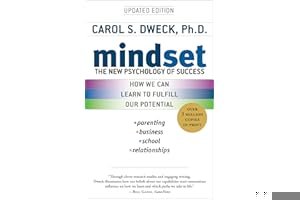
Don’t miss one of my favorite human beings @BreneBrown, discuss her book #DareToLead on this #MarieTV: this is for every one of us that wants to show up, contribute, and lean into our purpose 💪🏼💗 https://t.co/QVgSpZe9e9 [source]
Cover unavailable
68
Inside Out: Real Change Is Possible If You're Willing to Start from The...
Lawrence J. Crabb
4.1
You don't have to pretend you've got it all together ... when you don't. You don't have to pretend your best relationship deeply satisfies ... when it doesn't. You don't have to pretend your struggle with sin is a thing of the past ... when it isn't."Only Christians have the capacity to never pretend", says Larry Crabb. That's because real change is only possible when you face the realities of your internal life and let God mold you into a person who is free to be honest, courageous, and loving.
If you want a more vital union with God, a richer relationship with others, and a deeper sense of personal wholeness, let Larry Crabb help you look inside yourself. And discover how God works real, liberating change when you live from the inside out.
This expanded anniversary edition includes a new preface and new chapter from the author and celebrates more than 400,000 copies of "Inside Out" in print.
…
Cover unavailable
69
How to Help People Change: The Four-Step Biblical Process
Jay E. Adams
4.1
“While touching on many aspects of counseling, this book . . . is specifically designed to elucidate the process of counseling. I have often mentioned and illustrated that process, but not in the focused and systemic way that the four-step biblical process is set forth here. . . . This book presents a fresh perspective not only on how to counsel, but also on what measures to take at what stages of counseling.”—Jay Adams, from the preface Change is the essential goal of the counseling process. And, in the author’s words, “substantial change requires the alteration of the heart.” How can a Christian counselor facilitate such change? The answer, of course, may be found in Scripture, specifically in 2 Timothy 3:14–17. Jay Adams is a well-known counselor who bases his whole approach on Scripture. This book provides an unparalleled opportunity to see how he discovers and applies biblical principles as well as the way in which Scripture functions as the basis for his counseling approach. This book answers two questions: “How does a counselor help people change?” and, “How does Scripture provide the source of a counselor’s method?” How to Help People Change has much to say about the ongoing discussion of the relationship between theology and psychology in the enterprise of Christian counseling.
…
Cover unavailable
70
When Sinners Say "i Do": Discovering the Power of the Gospel for Marriage
Dave Harvey
4.1
Marriage is the union of two people who arrive at the altar toting some surprisingly large luggage. Often it gets opened right there on the honeymoon, sometimes it waits for the week after. The Bible calls it sin and understanding its influence can make all the difference for a man and woman who are building a life together. When Sinners Say "I Do" is about encountering the life-transforming power of the gospel in the unpredictable journey of marriage.
Dave's writing style embraces the reader as he speaks honestly, and sometimes humorously, about sin and the power of the gospel to overcome it. He opens the delightful truth of God s word and encourages the reader to see more clearly the glorious picture of what God does when sinners say "I do."
…
Cover unavailable
71
The Meaning of Marriage: Facing the Complexities of Commitment with the Wisdom of God
Timothy Keller
4.1
There is a new cover here
Based on the acclaimed sermon series by New York Times bestselling author Timothy Keller, this book shows everyone—Christians, skeptics, singles, longtime married couples, and those about to be engaged—the vision of what marriage should be according to the Bible.
Modern culture would have you believe that everyone has a soul mate; that romance is the most important part of a successful marriage; that your spouse is there to help you realize your potential; that marriage does not mean forever, but merely for now; and that starting over after a divorce is the best solution to seemingly intractable marriage issues. But these modern-day assumptions are wrong. Timothy Keller, with insights from Kathy, his wife of thirty-seven years, shows marriage to be a glorious relationship that is also misunderstood and mysterious. The Meaning of Marriage offers instruction on how to have a successful marriage, and is essential reading for anyone who wants to know God and love more deeply in this life.
…
Cover unavailable
72
Talking to Strangers: What We Should Know about the People We Don't Know
Malcolm Gladwell, host of the podcast Revisionist History and author of the #1 New York Times bestseller Outliers, offers a powerful examination of our interactions with strangers -- and why they often go wrong.
How did Fidel Castro fool the CIA for a generation? Why did Neville Chamberlain think he could trust Adolf Hitler? Why are campus sexual assaults on the rise? Do television sitcoms teach us something about the way we relate to each other that isn't true?
While tackling these questions, Malcolm Gladwell was not solely writing a book for the page. He was also producing for the ear. In the audiobook version of Talking to Strangers, you'll hear the voices of people he interviewed--scientists, criminologists, military psychologists. Court transcripts are brought to life with re-enactments. You actually hear the contentious arrest of Sandra Bland by the side of the road in Texas. As Gladwell revisits the deceptions of Bernie Madoff, the trial of Amanda Knox, and the suicide of Sylvia Plath, you hear directly from many of the players in these real-life tragedies. There's even a theme song - Janelle Monae's "Hell You Talmbout."
Something is very wrong, Gladwell argues, with the tools and strategies we use to make sense of people we don't know. And because we don't know how to talk to strangers, we are inviting conflict and misunderstanding in ways that have a profound effect on our lives and our world.
I'll put here what I emailed Malcolm when I finished the book: "Just finished your new book in one sitting yesterday. So good. You are at the height of your powers and remain an inspiration to all of us trying to master an un-masterable profession." It's a little less practical or self-improvement oriented than his previous books, but far more thought provoking. [source]
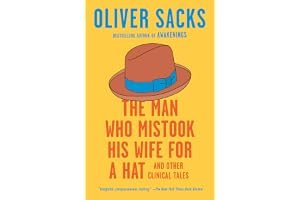
Nilofer Merchant
An interesting analysis/ essay re Gladwell’s latest book —> https://t.co/5Ey1maNRyI [source]
The physics of vulnerability is simple: If we are brave enough often enough, we will fall. The author of Daring Greatly and The Gifts of Imperfection tells us what it takes to get back up, and how owning our stories of disappointment, failure, and heartbreak gives us the power to write a daring new ending. Struggle, Brené Brown writes, can be our greatest call to courage, and rising strong our clearest path to deeper meaning, wisdom, and hope.
…
Recommended by AnneMarie Schindler, Chelsea Frank, and Shaen Yeo.
AnneMarie Schindler
I just started Rising Strong by Brene Brown. I'm turning 35 this year, and emotional intelligence isn't something that comes naturally to me. Brown's previous books have always pushed me into a space that's uncomfortable and rewarding. As a wife, parent, and entrepreneur, I'm expecting the book to help uncover some blind spots in each of those roles. [source]
Chelsea Frank
I read everything with an open mind, often challenging myself by choosing books with an odd perspective or religious/spiritual views. These books do not reflect my personal feelings but are books that helped shape my perspective on life, love, and happiness. [source]
Shaen Yeo
Non-business - Rising Strong, because it is so real, vulnerable AND full of wise nuggets which inspire me to be resilient in my life. [source]
Cover unavailable
74
Emotionally Healthy Spirituality: It's Impossible to Be Spiritually Mature, While Remaining Emotionally Immature
Peter Scazzero
4.1
In this revised bestselling book, Peter Scazzero outlines a roadmap for discipleship with Jesus that is powerfully transformative. He unveils what's wrong with our current definition of "spiritual growth" and offers not only a model of spirituality that actually works, but seven steps to change that will help you experience authentic faith and hunger for God.
Peter Scazzero learned the hard way: you can't be spiritually mature while remaining emotionally immature. Even though he was the pastor of a growing church, he did what most people do:
Avoid conflict in the name of Christianity Ignore his anger, sadness, and fear Use God to run from God Live without boundaries Eventually God awakened him to a biblical integration of emotional health and the spiritual practice of slowing down and quieting your life for to experience a firsthand relationship with Jesus. It created nothing short of a spiritual revolution in Scazzero, in his church, and now in thousands of other churches.
In this updated edition, Scazzero shares new stories and principles as he outlines his journey and the signs of emotionally unhealthy spirituality. Then he provides seven biblical, reality-tested ways to break through to the revolutionary life Christ meant for you.
Check out the full line of Emotionally Healthy Spirituality books dedicated to many different key areas of life. Workbooks, study guides, curriculum, and Spanish editions are also available.
…
Cover unavailable
75
How People Grow: What the Bible Reveals About Personal Growth
Henry Cloud, John Townsend
4.0
Our desire to grow runs deep. Yet the issues in our lives and relationships that we wish would change often stay the same, even with our best efforts at spiritual growth. What does it take to experience increasing strength and depth in our spiritual walk, our marriages and family lives and friendships, our personal development--in everything life is about? And how can we help others move into growth that is profound and lasting? Unpacking the practical and passionate theology that forms the backbone of their counseling, Drs. Henry Cloud and John Townsend shatter popular misconceptions about how God operates and how growth happens. You'll discover:
What the essential processes are that make people grow. How those processes fit into a biblical understanding of spiritual growth and theology. How spiritual growth and real-life issues are one and the same. What the responsibilities are of pastors, counselors, and others who assist people in growing—and what your own responsibilities are in your personal growth. Shining focused light on the great doctrines and themes of Christianity, How People Grow shows why all personal growth is spiritual growth--and best of all, it helps you understand the Bible in a way that will help you head with confidence down the high road of growth in Christ.
The latest groundbreaking book from Tim Ferriss, the #1 New York Times best-selling author of The 4-Hour Workweek.
From the author:
“For the last two years, I’ve interviewed nearly two hundred world-class performers for my podcast, The Tim Ferriss Show. The guests range from super celebs (Jamie Foxx, Arnold Schwarzenegger, etc.) and athletes (icons of powerlifting, gymnastics, surfing, etc.) to legendary Special Operations commanders and black-market biochemists. For most of my guests, it’s the first time they’ve agreed to a two-to-three-hour interview, and the show is on the cusp of passing 100 million downloads. “This book contains the distilled tools, tactics, and ‘inside baseball’ you won’t find anywhere else. It also includes new tips from past guests, and life lessons from new ‘guests’ you haven’t met. “What makes the show different is a relentless focus on actionable details. This is reflected in the questions. For example: What do these people do in the first sixty minutes of each morning? What do their workout routines look like, and why? What books have they gifted most to other people? What are the biggest wastes of time for novices in their field? What supplements do they take on a daily basis? “I don’t view myself as an interviewer. I view myself as an experimenter. If I can’t test something and replicate results in the messy reality of everyday life, I’m not interested. “Everything within these pages has been vetted, explored, and applied to my own life in some fashion. I’ve used dozens of the tactics and philosophies in high-stakes negotiations, high-risk environments, or large business dealings. The lessons have made me millions of dollars and saved me years of wasted effort and frustration. “I created this book, my ultimate notebook of high-leverage tools, for myself. It’s changed my life, and I hope the same for you.”
Tim is a brilliant thinker. The way he approaches mastery is inspiring in many ways. His latest book is no exception. What I loved about Tools of Titans is that it distills key tactics, routines and habits of the ultra-successful in actionable ways that anyone can take advantage of. Highly recommended. Every chapter is a valuable lesson. [source]
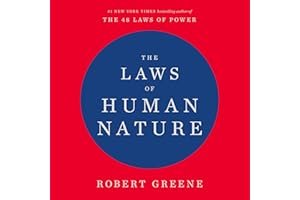
It only came out recently. I had so many questions about it that I flew to California and interviewed him about it for my podcast.It’s the collection of all the knowledge and wisdom he gained from the 100s of people he interviewed.I leave it out on my floor and read a page or two whenever I pass it.It’s already filled with 100s of my notes (see below). It’s maybe the one physical book I keep around. The rest, including my own books, I keep on my Kindle. [source]
I’m reading Tools of Titans which is just amazing. [source]
Cover unavailable
77
Anatomy of the Soul: Surprising Connections Between Neuroscience and Spiritual Practices that Can Transform Your Life and Relationships
Curt Thompson
4.0
Do you want to improve your relationships and experience lasting personal change? Join Curt Thompson, M.D., on an amazing journey to discover the surprising pathways for transformation hidden inside your own mind. Integrating new findings in neuroscience and attachment with Christian spirituality, Dr. Thompson reveals how it is possible to rewire your mind, altering your brain patterns and literally making you more like the person God intended you to be. Explaining discoveries about the brain in layman's terms, he shows how you can be mentally transformed through spiritual practices, interaction with Scripture, and connections with other people. He also provides practical exercises to help you experience healing in areas where you've been struggling. Insightful and challenging, Anatomy of the Soul illustrates how learning about one of God's most miraculous creations--your brain--can enrich your life, your relationships, and your impact on the world around you.
…
Cover unavailable
78
Safe People: How to Find Relationships That Are Good for You and Avoid Those That Aren't
Henry Cloud, John Townsend
4.0
Drs. Henry Cloud and John Townsend offer solid guidance for making safe choices in relationships, from friendships to romance. They help identify the nurturing people we all need in our lives, as well as ones we need to learn to avoid. Safe People will help you to recognize 20 traits of relationally untrustworthy people. Discover what makes some people relationally safe, and how to avoid unhealthy entanglements. You'll learn about things within yourself that jeopardize your relational security. And you'll find out what to do and what not to do to develop a balanced, healthy approach to relationships.
…
Cover unavailable
79
A Grief Observed
C.S.Lewis
4.0
A classic work on grief, A Grief Observed is C.S. Lewis’s honest reflection on the fundamental issues of life, death, and faith in the midst of loss. Written after his wife’s tragic death as a way of surviving the “mad midnight moments,” A Grief Observed an unflinchingly truthful account of how loss can lead even a stalwart believer to lose all sense of meaning in the universe, and the inspirational tale of how he can possibly regain his bearings.
…
Cover unavailable
80
The Bondage Breaker
Neil T. Anderson
4.0
>The Bondage Breaker leads readers away from the shadows and shackles in their lives and toward the freedom that comes when they
realize they have the right to be free confront the power of Satan fight the temptation to do it their way trade deception for grace affirm their identity in Christ
Drawing on cutting-edge neuroscience and psychology and displaying all of the brilliance that made The Tipping Point a classic, Blink changes the way you'll understand every decision you make. Never again will you think about thinking the same way.
Malcolm Gladwell redefined how we understand the world around us. Now, in Blink, he revolutionizes the way we understand the world within. Blink is a book about how we think without thinking, about choices that seem to be made in an instant - in the blink of an eye - that actually aren't as simple as they seem. Why are some people brilliant decision makers, while others are consistently inept? Why do some people follow their instincts and win, while others end up stumbling into error? How do our brains really work - in the office, in the classroom, in the kitchen, and in the bedroom? And why are the best decisions often those that are impossible to explain to others?
In Blink we meet the psychologist who has learned to predict whether a marriage will last, based on a few minutes of observing a couple; the tennis coach who knows when a player will double-fault before the racket even makes contact with the ball; the antiquities experts who recognize a fake at a glance. Here, too, are great failures of "blink": the election of Warren Harding; "New Coke"; and the shooting of Amadou Diallo by police. Blink reveals that great decision makers aren't those who process the most information or spend the most time deliberating, but those who have perfected the art of "thin-slicing" - filtering the very few factors that matter from an overwhelming number of variables.
…
Recommended by Ev Williams, Mike Shinoda, Marillyn Hewson, and 4 others.
Mike Shinoda
I know most of the guys in the band read this book. [source]

Marillyn Hewson
CEO/Lockheed Martin
CEO Marilyn Hewson recommends this book because it helped her to trust her instincts in business. [source]

Antonio Eram
When asked to name some books that had a big impact on him, Antonio mentioned Blink: The Power of Thinking Without Thinking by Malcolm Gladwell. [source]
Cover unavailable
82
Love & Respect
Emerson Eggerichs
4.0
A Marriage Book with a Difference!
A Revolutionary Message: "I've been married 35 years and have not heard this taught.""This is the key that I have been missing.""You connected all the dots for me.""As a counselor, I have never been so excited about any material.""You're on to something huge here."
A Simple Message: A wife has one driving need--to feel loved. When that need is met, she is happy. A husband has one driving need--to feel respected. When that need is met, he is happy. When either of these needs isn't met, things get crazy." Love and Respect "reveals why spouses react negatively to each other, and how they can deal with such conflict quickly, easily, and biblically.
A Message That Works: Based on over three decades of counseling, as well as scientific and biblical research, Dr. Emerson Eggerichs and his wife, Sarah, have already taken the "Love and Respect "message across America and are changing the way couples talk to, think about, and treat each other. What do you want for your marriage? Want some peace? Want to feel close? Want to feel valued? Want to experience marriage the way God intended? Then why not try some Love and Respect.
Dave Ramsey recommended this book on his website. [source]
Cover unavailable
83
Mindsight: The New Science of Personal Transformation
Daniel Siegel
4.0
From a pioneer in the field of mental health comes a groundbreaking book on the healing power of "mindsight," the potent skill that is the basis for both emotional and social intelligence. Mindsight allows you to make positive changes in your brain-and in your life.
- Is there a memory that torments you, or an irrational fear you can' t shake? - Do you sometimes become unreasonably angry or upset and find it hard to calm down? - Do you ever wonder why you can't stop behaving the way you do, no matter how hard you try? - Are you and your child (or parent, partner, or boss) locked in a seemingly inevitable pattern of conflict?
What if you could escape traps like these and live a fuller, richer, happier life? This isn't mere speculation but the result of twenty-five years of careful hands-on clinical work by Daniel J. Siegel, M.D. A Harvard-trained physician, Dr. Siegel is one of the revolutionary global innovators in the integration of brain science into the practice of psychotherapy. Using case histories from his practice, he shows how, by following the proper steps, nearly everyone can learn how to focus their attention on the internal world of the mind in a way that will literally change the wiring and architecture of their brain.
Through his synthesis of a broad range of scientific research with applications to everyday life, Dr. Siegel has developed novel approaches that have helped hundreds of patients heal themselves from painful events in the past and liberate themselves from obstacles blocking their happiness in the present. And now he has written the first book that will help all of us understand the potential we have to create our own lives. Showing us mindsight in action, Dr. Siegel describes
- a sixteen-year-old boy with bipolar disorder who uses meditation and other techniques instead of drugs to calm the emotional storms that made him suicidal - a woman paralyzed by anxiety, who uses mindsight to discover, in an unconscious memory of a childhood accident, the source of her dread - a physician-the author himself-who pays attention to his intuition, which he experiences as a "vague, uneasy feeling in my belly, a gnawing restlessness in my heart and my gut," and tracks down a patient who could have gone deaf because of an inaccurately written prescription for an ear infection - a twelve-year-old girl with OCD who learns a meditation that is "like watching myself from outside myself" and, using a form of internal dialogue, is able to stop the compulsive behaviors that have been tormenting her
These and many other extraordinary stories illustrate how mindsight can help us master our emotions, heal our relationships, and reach our fullest potential.
A book as inspiring as it is informative, as practical as it is profound, Mindsight offers exciting new proof that we aren't hardwired to behave in certain ways, but instead have the ability to harness the power of our minds to resculpt the neural pathways of our brains in ways that will be life-transforming.
…
Recommended by Kara Nortman.
Kara Nortman
@patrick_oshag @JohnCGreer @zackkanter Mindsight by @DrDanSiegel - Great book on board and executive team management w/o intending to be Meant to be a summary of broad range of research on brain science + best ways to impact your brain (for better outcomes) in the moment https://t.co/sMH9rfO0Ba [source]
The Secret’s 10th Anniversary Edition includes a new foreword by Rhonda Byrne, and 10 of the most life-changing insights she’s had over the last 10 years of practicing and living The Secret every day. The 10 insights alone will accelerate your understanding and mastery of the law of attraction.
Recommended by Ntwana Kasi. and Woman In Purpose.
Ntwana Kasi.
@Sibongubuhle_N Don't you have pdf of it i love this book [source]
From "one of America's best-known psychologists" (Chicago Tribune) and the bestselling author of Women Rowing North and Reviving Ophelia, an essential and inspiring book for therapists and anyone seeking to live a good life Mary Pipher's groundbreaking investigation of America's "girl-poisoning culture," Reviving Ophelia, established its author as one of the nation's foremost authorities on family issues. In Letters to a Young Therapist, Pipher shares what she has learned in thirty years of clinical practice, helping warring families, alienated adolescents, and harried professionals restore peace and beauty to their lives. Through an exhilarating mix of storytelling and sharp-eyed observation, Pipher reveals her refreshingly inventive approach to therapy-fiercely optimistic, free of dogma or psychobabble, and laced with generous warmth and practical common sense. Whether she's recommending daily swims for a sluggish teenager, encouraging a timid husband to become bolder, or simply bearing witness to a bereaved parent's sorrow, Pipher's compassion and insight shine from every page. With a preface by the author addressing recent changes in therapy and the surprising challenges of the digital age, Letters to a Young Therapist is a powerfully engaging guide to living a healthy life.
…
Cover unavailable
86
Quick Scripture Reference for Counseling
John G. Kruis
4.0
Cover unavailable
87
Diagnostic and Statistical Manual of Mental Disorders (DSM-5)
American Psychiatric Association
4.0
This new edition of Diagnostic and Statistical Manual of Mental Disorders (DSM-5), used by clinicians and researchers to diagnose and classify mental disorders, is the product of more than 10 years of effort by hundreds of international experts in all aspects of mental health. Their dedication and hard work have yielded an authoritative volume that defines and classifies mental disorders in order to improve diagnoses, treatment, and research.
The criteria are concise and explicit, intended to facilitate an objective assessment of symptom presentations in a variety of clinical settings -- inpatient, outpatient, partial hospital, consultation-liaison, clinical, private practice, and primary care. New features and enhancements make DSM-5 easier to use across all settings:
- The chapter organization reflects a lifespan approach, with disorders typically diagnosed in childhood (such as neurodevelopmental disorders) at the beginning of the manual, and those more typical of older adults (such as neurocognitive disorders) placed at the end. Also included are age-related factors specific to diagnosis. - The latest findings in neuroimaging and genetics have been integrated into each disorder along with gender and cultural considerations.- The revised organizational structure recognizes symptoms that span multiple diagnostic categories, providing new clinical insight in diagnosis. - Specific criteria have been streamlined, consolidated, or clarified to be consistent with clinical practice (including the consolidation of autism disorder, Asperger's syndrome, and pervasive developmental disorder into autism spectrum disorder; the streamlined classification of bipolar and depressive disorders; the restructuring of substance use disorders for consistency and clarity; and the enhanced specificity for major and mild neurocognitive disorders).- Dimensional assessments for research and validation of clinical results have been provided.- Both ICD-9-CM and ICD-10-CM codes are included for each disorder, and the organizational structure is consistent with the new ICD-11 in development.
The Diagnostic and Statistical Manual of Mental Disorders, Fifth Edition, is the most comprehensive, current, and critical resource for clinical practice available to today's mental health clinicians and researchers of all orientations. The information contained in the manual is also valuable to other physicians and health professionals, including psychologists, counselors, nurses, and occupational and rehabilitation therapists, as well as social workers and forensic and legal specialists.
…
Cover unavailable
88
The Search for Significance: Seeing Your True Worth Through God's Eyes
Robert McGee
4.0
Discover what two million readers have already discovered: that true significance is found only in Christ.
Robert McGee's best-selling book has helped millions of readers learn how to be free to enjoy Christ's love while no longer basing their self-worth on their accomplishments or the opinions of others. In fact, Billy Graham said that it was a book that "should be read by every Christian."
In this re-launch of this timeless classic you will:
Gain new skills for getting off the performance treadmill Discover how four false beliefs have negatively impacted your life Learn how to overcome obstacles that prevent you from experiencing the truth that your self-worth is found only in the love, acceptance, and forgiveness of Christ Other products in the Search for Significance family of products include a devotional journal and youth edition.
Psychology, Theology, and Spirituality in Christian Counseling
Mark R. McMinn
4.0
The American Association of Christian Counselors and Tyndale House Publishers are committed to ministering to the spiritual needs of people. This book is part of the professional series that offers counselors the latest techniques, theory, and general information that is vital to their work. While many books have tried to integrate theology and psychology, this book takes another step and explores the importance of the spiritual disciplines in psychotherapy, helping counselors to integrate the biblical principles of forgiveness, redemption, restitution, prayer, and worship into their counseling techniques. Since its first publication in 1996, this book has quickly become a contemporary classic--a go-to handbook for integrating what we know is true from the disciplines of theology and psychology and how that impacts your daily walk with God. This book will help you integrate spiritual disciplines--such as prayer, Scripture reading, confession--into your own life and into counseling others.
Mark R. McMinn, Ph.D., is professor of psychology at Wheaton College Graduate School in Wheaton, Illinois, where he directs and teaches in the Doctor of Psychology program. A diplomate in Clinical Psychology of the American Board of Professional Psychology, McMinn has thirteen years of postdoctoral experience in counseling, psychotherapy, and psychological testing. McMinn is the author of Making the Best of Stress: How Life's Hassles Can Form the Fruit of the Spirit; The Jekyll/Hyde Syndrome: Controlling Inner Conflict through Authentic Living; Cognitive Therapy Techniques in Christian Counseling; and Christians in the Crossfire (written with James D. Foster). He and his wife, Lisa, have three daughters.
…
Cover unavailable
90
Changes That Heal: Four Practical Steps to a Happier, Healthier You
Henry Cloud
4.0
Many of us struggle with anxiety, loneliness, and feelings of inadequacy. We know that God created us in his image, but how can we be loving when we feel burned out? How can we be free when we struggle with addiction? Will we ever enjoy the complete healing God promises?
Changes That Heal by renowned psychologist Dr. Henry Cloud offers a down-to-earth plan to help us recover from the wounds of the past and grow more and more into the image of God. Combining his professional expertise and personal experience, Dr. Cloud guides us through four basic ways to become joy-filled, mature followers of Christ:
Connect more deeply with others
Separate from others in healthy ways
Understand the good and the bad in ourselves and others
Grow into greater emotional and spiritual maturity
With fascinating case studies and helpful techniques we can start using immediately, Changes That Heal reminds us that God promises to complete his good work in us.
…
Cover unavailable
91
Good and Angry: Redeeming Anger, Irritation, Complaining, and Bitterness
David Powlison
4.0
Something that matters to you just isn’t right. First you see the problem, then you feel it. It starts with a rush of adrenaline and often a rush of words, but it ends with an overwhelming sense of irritation that impacts how we talk to those we live and work with, complaining, and maybe even a settled bitterness to a person or a group of person. We know anger affects us negatively, but we don’t know any other way to respond when life goes wrong.
Good and Angry, a groundbreaking new book from David Powlison, contends that anger is more than a problem to solve. Anger is our complex human response to things we perceive as wrong in a complex world, thus we must learn how to fruitfully and honestly deal with it. Powlison undertakes an in-depth exploration of the roots of anger, moral judgment, and righteous response by looking in a surprising place: God’s own anger.
Powlison reminds us that God gets angry too. He sees things in this world that aren’t right and he wants justice too. But God’s anger doesn’t devolve into manipulation or trying to control others to get his own way. Instead his anger is good and redemptive. It causes him to step into our world to make wrongs right, sending his own Son to die so that we can be reconciled. He is both our model for change and our power to change.
Good and Angry sets readers on a path toward a faithful and fruitful expression of anger, in which we return good for evil and redeem wrongs. Powlison offers practical help for people who struggle with irritation, complaining, or bitterness and gives guidance for how to respond constructively when life goes wrong. You, your family, and your friends will all be glad that you read this book.
…
Cover unavailable
92
The Freedom of Self-Forgetfulness
Timothy Keller
4.0
‘What are the marks of a supernaturally changed heart?’
This is one of the questions the Apostle Paul addresses as he writes to the church in Corinth. He’s not after some superficial outward tinkering, but instead a deep–rooted, life–altering change that takes place on the inside. In an age where pleasing people, puffing up your ego and building your résumé are seen as the methods to ‘make it’, the Apostle Paul calls us to find true rest in blessed self–forgetfulness.
In this short and punchy book, best–selling author Timothy Keller, shows that gospel–humility means we can stop connecting every experience, every conversation with ourselves and can thus be free from self–condemnation. A truly gospel–humble person is not a self–hating person or a self–loving person, but a self–forgetful person.
This freedom can be yours…
…
Cover unavailable
93
On Being a Therapist
Jeffrey A. Kottler
4.0
Since it was first published in 1986, On Being a Therapist has become a classic book in the field and has proved to be one of the most inspiring sources of guidance for aspiring and seasoned practitioners alike. Jeffrey Kottler provides a candid account of the profound ways in which therapists influence clients and, in turn, are impacted personally and professionally by these encounters. He shows how therapists can learn, develop, and grow during the process of therapy and explains how practitioners can use the professional skills and insights gained from their sessions to address their own personal issues, realize positive change in themselves, and so become better helpers for others. This thoroughly revised edition includes discussion about how the business and practice of therapy has changed in recent years, the effects of technology and managed care, the breakdown of theoretical orientation, and the greater client diversity represented in contemporary practice.
…
Cover unavailable
94
The Road Less Traveled: A New Psychology of Love, Traditional Values and Spiritual Growth
The Road Less Traveled: A New Psychology of Love, Traditional Values and Spiritual Growth 316 pp. "Psychotherapy is all things to all people in this mega-selling pop-psychology watershed, which features a new introduction by the author in this 25th anniversary edition. His agenda in this tome, which was first published in 1978 but didn't become a bestseller until 1983, is to reconcile the psychoanalytic tradition with the conflicting cultural currents roiling the 70s. In the spirit of Me-Decade individualism and libertinism, he celebrates self-actualization as life's highest purpose and flirts with the notions of open marriage and therapeutic sex between patient and analyst. But because he is attuned to the nascent conservative backlash against the therapeutic worldview, Peck also cites Gospel passages, recruits psychotherapy to the cause of traditional religion (he even convinces a patient to sign up for divinity school) and insists that problems must be overcome through suffering, discipline and hard work (with a therapist.) Often departing from the cerebral and rationalistic bent of Freudian discourse for a mystical, Jungian tone more compatible with New Age spirituality, Peck writes of psychotherapy as an exercise in "love" and "spiritual growth," asserts that "our unconscious is God" and affirms his belief in miracles, reincarnation and telepathy. Peck's synthesis of such clashing elements (he even throws in a little thermodynamics) is held together by a warm and lucid discussion of psychiatric principles and moving accounts of his own patients' struggles and breakthroughs. Harmonizing psychoanalysis and spirituality, Christ and Buddha, Calvinist work ethic and interminable talking cures, this book is a touchstone of our contemporary religio-therapeutic culture." -- Publishers WeeklyKeywords: MIND & BODY PSYCHOLOGY SOCIOLOGY RELIGION
…
Recommended by John C. Maxwell, Iulian Stanciu, and 1 others.
Iulian Stanciu
It helps you take a deeper look and understand why certain things happen in your life. It's an introduction to psychology. It helps you divide a person, just like you would do with a mathematical equation. [source]
Cover unavailable
95
Age of Opportunity: A Biblical Guide to Parenting Teens (Resources for Changing Lives)
Paul David Tripp
4.0
Are you hoping to merely survive your teenagers? With compassion, wit and wisdom, Tripp uncovers the heart issues affecting families during the often chaotic adolescent years. Gain assurance of God's provision for parenting success and discover ways to seize the countless opportunities to deepen communication, learn, and grow with your teens.
Cover unavailable
96
The Dialectical Behavior Therapy Skills Workbook: Practical DBT Exercises for Learning Mindfulness, Interpersonal Effectiveness, Emotion Regulation, and Distress Tolerance
Matthew McKay PhD
4.0
A clear and effective approach to learning evidence-based DBT skills—now in a fully revised and updated second edition.
Do you have trouble managing your emotions? First developed by Marsha M. Linehan for treating borderline personality disorder, dialectical behavior therapy (DBT) has proven effective as treatment for a range of other mental health problems, and can greatly improve your ability to handle distress without losing control and acting destructively. However, to make use of these techniques, you need to build skills in four key areas: distress tolerance, mindfulness, emotion regulation, and interpersonal effectiveness.
The Dialectical Behavior Therapy Skills Workbook, a collaborative effort from three esteemed authors, offers evidence-based, step-by-step exercises for learning these concepts and putting them to work for real and lasting change. Start by working on the introductory exercises and, after making progress, move on to the advanced-skills chapters. Whether you’re a mental health professional or a general reader, you'll benefit from this clear and practical guide to better managing your emotions.
This fully revised and updated second edition also includes new chapters on cognitive rehearsal, distress tolerance, and self-compassion. Once you’ve completed the exercises in this book and are ready to move on to the next level, check out the authors’ new book, The New Happiness Workbook.
This book has been awarded The Association for Behavioral and Cognitive Therapies Self-Help Seal of Merit — an award bestowed on outstanding self-help books that are consistent with cognitive behavioral therapy (CBT) principles and that incorporate scientifically tested strategies for overcoming mental health difficulties. Used alone or in conjunction with therapy, our books offer powerful tools readers can use to jump-start changes in their lives.
Find more help online at elearning.newharbinger.com. New Harbinger Online Learning offers web-based treatment for borderline personality disorder (BPD) and emotion dysregulation based on the book The Dialectical Behavior Therapy Skills Workbook. Other New Harbinger Online Learning modules offer treatment for stress, anxiety, depression, and anger.
…
Cover unavailable
97
The Road Back to You: An Enneagram Journey to Self-Discovery
Ian Morgan Cron
4.0
Ignorance is bliss except in self-awareness...
What you don't know about yourself can hurt you and your relationships―and even keep you in the shallows with God. Do you want help figuring out who you are and why you're stuck in the same ruts? The Enneagram is an ancient personality typing system with an uncanny accuracy in describing how human beings are wired, both positively and negatively.
In The Road Back to You Ian Morgan Cron and Suzanne Stabile forge a unique approach―a practical, comprehensive way of accessing Enneagram wisdom and exploring its connections with Christian spirituality for a deeper knowledge of ourselves, compassion for others, and love for God. Witty and filled with stories, this book allows you to peek inside each of the nine Enneagram types, keeping you turning the pages long after you have read the chapter about your own number. Not only will you learn more about yourself, but you will also start to see the world through other people's eyes, understanding how and why people think, feel, and act the way they do. Beginning with changes you can start making today, the wisdom of the Enneagram can help take you further along into who you really are―leading you into places of spiritual discovery you would never have found on your own, and paving the way to the wiser, more compassionate person you want to become.
…
Cover unavailable
98
David and Goliath: Underdogs, Misfits, and the Art of Battling Giants
In his #1 bestselling books The Tipping Point, Blink, and Outliers, Malcolm Gladwell has explored the ways we understand and change our world. Now he looks at the complex and surprising ways the weak can defeat the strong, the small can match up against the giant, and how our goals (often culturally determined) can make a huge difference in our ultimate sense of success. Drawing upon examples from the world of business, sports, culture, cutting-edge psychology, and an array of unforgettable characters around the world, David and Goliath is in many ways the most practical and provocative book Malcolm Gladwell has ever written.
…
Recommended by Andrew Chen, Cat Williams-Treloar, Catalina Penciu, and 3 others.
Cat Williams-Treloar
The books that I've talked the most about with friends and colleagues over the years are the Malcolm Gladwell series of novels. Glorious stories that mix science, behaviours and insight. You can't go wrong with the "The Tipping Point", "Outliers", "Blink" or "David & Goliath". [source]
Catalina Penciu
Business-wise, my goal for this year is to improve my collection and my mindset, but my favorite so far has been David and Goliath by Malcolm Gladwell. [source]
Robert Katai
Buy Malcolm Gladwell’s book “David and Goliath” and read the interesting stories about how the Davids of that moments have defeated the Goliaths. [source]
Cover unavailable
99
Idols of the Heart: Learning to Long for God Alone
Elyse Fitzpatrick
4.0
Why do we desire to live godly lives yet often find ourselves trapped in habitual sin? Fitzpatrick reveals that idolatry lies at the heart of every besetting sin, and helps us uncover hidden idols in our lives by moving us to ask: Why does the Bible warn about the deceitfulness of sin? What must I have for my life to be meaningful and happy? Do I love God whole-heartedly or are there other loves in my heart that clamor for my attention? She offers readers the hope found in God's desire to have his children live free of idols, and his commitment to free them by his sanctifying power through Jesus Christ.
…
Cover unavailable
100
The Wounded Heart: Hope for Adult Victims of Childhood Sexual Abuse
Dan Allender
4.0
Sexual abuse knows no religious or social boundaries. The Wounded Heart is an intensely personal and specific look at this form of abuse. Dr. Allender explores the secret lament of the soul damaged by sexual abuse and lays hold of the hope buried there by the One whose unstained image we all bear. Includes information about false memory issues.