 1
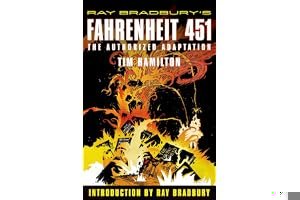
Fahrenheit 451
Montag never questions the destruction and ruin his actions produce, returning each day to his bland life and wife, Mildred, who spends all day with her television 'family'. But then he meets an eccentric young neighbor, Clarisse, who introduces him to a past where people did not live in fear and to a present where one sees the world through the ideas in books instead of the mindless chatter of television.
When Mildred attempts suicide and Clarisse suddenly disappears, Montag begins to question everything he has ever known.
Author & Entrepreneur
This classic work on state censorship remains as relevant in today’s world of digital delights as it was when published in the black-and-white world of 1953. In a futuristic American city, firefighter Guy Montag does not put out blazes; instead, he extinguishes knowledge and promotes ignorance by conducting state decreed book burnings. After an elderly woman chooses a fiery death with her books rather than a life without the written word, he begins questioning not only his profession, but also a society that allows itself to be lulled into complacency by constant exposure to state-controlled, mind-numbing television shows. If you wonder why some people take censorship so seriously, this book will give you the answer. It’s also a fantastically inspiring story of a one-versus-a-million fight that’s worth fighting. Who knows when your turn will come? [source]
Author
I’m not sure what compelled me to pick Fahrenheit 451 back up but I’m so glad I did because I was able to see the book in a very different context. Bradbury’s message (made explicit in his 50th Anniversary Afterword) is much less a warning against government control and much more about a road to hell paved by people attempting to rid the world of offensive speech and conflicting ideas. In a world of microaggressions and outrage porn, this is an important idea to see in such a timeless work of fiction. [source]