Chaos Theory and Free Will: Unpredictability vs. Choice

Two colored circles representing the diagram of chaos theory

Is free will really a thing? How might chaos theory relate to our ability to make choices? In his book Determined, Robert Sapolsky explores the fascinating intersection of chaos theory and free will. He explains the theory and how it might be applied to decision-making in complex systems. He also points to what he believes are flaws in the application. Keep reading to discover why unpredictability doesn’t necessarily mean indeterminism and how you can use options to navigate an unpredictable world.

Plato: Democracy Is the 4th Best Form of Government

People walking around in a marketplace in ancient Greece illustrates Plato's view of democracy

Is democracy truly the worst form of government, except for all the others? What was Plato’s take on it? According to Plato, democracy leaves a lot to be desired. In The Republic, he presents a thought-provoking critique of democracy through the character of Socrates. He outlines a progression of societal structures, with democracy as the second-worst. Read on to understand Plato’s analysis of democracy and discover why he believes it’s less than ideal.

God’s Intervention: How He Steps in to Save Us in 2 Distinct Ways

a man standing on top of a rocky mountain looking up as sun rays fill the sky illustrates God’s intervention

How do some people survive seemingly impossible situations? What role does faith play in finding purpose and direction in life? In Faith Still Moves Mountains, Harris Faulkner explores stories of God’s intervention in people’s lives. The book recounts miraculous rescues and divine inspirations that have saved lives and provided guidance to those feeling lost. Keep reading to discover how faith can transform lives in unexpected ways.

A Thousand Brains: A New Theory of Intelligence (Overview)

A bearded grey-haired middle-aged man thoughtfully reading a book in a room with large windows

Do you know how your brain really works? What if understanding our own intelligence could revolutionize artificial intelligence? In A Thousand Brains: A New Theory of Intelligence, neuroscientist Jeff Hawkins presents a groundbreaking theory of human cognition. He explores how the brain’s neocortex creates mental models and makes predictions. This new framework offers insights into both human intelligence and potential advancements in AI. Read on to discover how your brain’s “mini-brains” work together to create your understanding of the world.

Plato: Tyranny Is Only One Step Away From Democracy

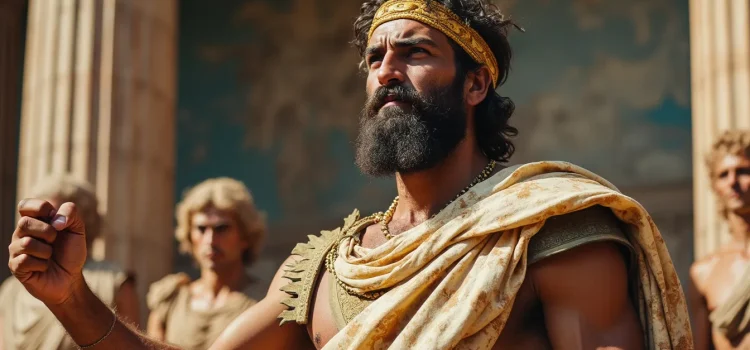
A mob of people raising their fists in ancient Greece illustrates tyranny in Plato's Republic

Is tyranny simply a form of governance, or is it a product of a certain psychology? How does Plato’s view of tyranny relate to modern political systems? According to Plato, tyranny results when democracy deteriorates. In The Republic, he describes tyrannies and the psychological profile of a tyrant, providing insights into power dynamics and human behavior that remain relevant today. Continue reading to understand Plato’s thoughts on tyranny and how it happens.

Does Quantum Indeterminacy Make Free Will Possible?

A person holding a pair of dice in their hand illustrates quantum indeterminacy and free will

Is free will real or just an illusion? Could quantum mechanics hold the key to understanding our ability to make choices? In his book Determined, Robert Sapolsky picks apart arguments in favor of free will. He even dives into the fascinating world of subatomic particles and their potential impact on human decision-making, as some people believe there’s a connection between quantum indeterminacy and free will. Read more to understand the issue and Sapolsky’s arguments.

God Will See You Through: Why Harris Faulkner Holds on to Hope

a bearded man praying with his head bowed and his hands clasped illustrates a belief that God will see you through

Do you ever felt like giving up during tough times? Do you believe in the power of faith to overcome life’s challenges? In her book Faith Still Moves Mountains, Harris Faulkner explores how God can help people through difficult situations. She shares inspiring stories of individuals who found comfort, peace, and solutions through their faith. Keep reading to discover why Faulkner believes that God will see you through the darkest moments.

The Old Brain: A Neuroscientist Explains Why We Need It

a diagram of the old brain and the neocortex

Do you know how your brain processes information? What role do the primitive parts of your brain play in your everyday life? In A Thousand Brains, neuroscientist Jeff Hawkins explores the relationship between the Old Brain and the neocortex. He explains how these two parts work together to shape our understanding of the world and enable intelligent behavior. Continue reading to discover how your ancient brain structures influence your modern thoughts and actions.

Plato’s Myth of Er: A Tale of Just Deserts in the Afterlife

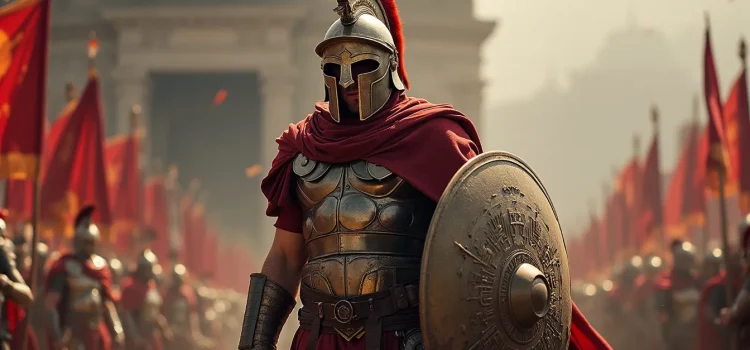
An ancient Greek soldier surrounded by clouds illustrates Plato’s myth of Er

What happens after we die? What if our actions in life truly determined our fate in the afterlife? In The Republic, Plato’s myth of Er explores these questions. This tale, recounted by Socrates, describes a soldier’s journey through the afterlife and back. It offers a fascinating glimpse into ancient Greek beliefs about justice, reincarnation, and the soul. Continue reading to learn the myth of Er and see how this ancient story still resonates with modern readers.

Determined: Robert Sapolsky Argues for Life Without Free Will

A young bearded man in a cozy living room sitting on a couch and thoughtfully reading a book

Do we have free will, or is everything predetermined? What difference does it make? In Determined, Robert Sapolsky says that decades of research have led him to two conclusions. First, people do not have free will. Second, accepting this fact will empower us to create a better world for everyone. Read on for an overview of this book that deals with a matter that scientists, philosophers, and theologians have been debating for millennia.