Sun Tzu’s Philosophy: The Goals and Art of War

Sun Tzu’s Philosophy: The Goals and Art of War

What is Sun Tzu’s philosophy in The Art of War? What are his main themes? The Art of War by Sun Tzu is a renowned guide for how to engage in conflict and be successful in battle. Written more than two thousand years ago, Sun Tzu, a Chinese warrior and philosopher, details the nature of competition and psychology of leadership and provides strategies for how to approach both. Although his teachings are geared toward actual military conflict, the principles can be useful in all arenas of conflict or competition, even at a personal level. We’ll cover some of the primary aspects

Three Kingdoms Period: Lessons on War and Loyalty

Three Kingdoms Period: Lessons on War and Loyalty

What was the Three Kingdoms Period? What can its wars teach us about the value of location, alliance, and loyalty in battle? The Three Kingdoms Period was the era in which three kingdoms ruled China: the Wei, Shu, and Wu. This period began in 220 AD and ended in 280 AD with the rise of the Jin Dynasty. We’ll cover what the Three Kingdoms Period can teach us about the importance of location, alliances, and loyalty.

Why Is Childbirth So Painful? (Actually, It Could Be Worse)

Why Is Childbirth So Painful? (Actually, It Could Be Worse)

Why is childbirth so painful? What happened in the evolution of humans to make it as arduous as it is? Childbirth is painful because of our relatively narrow hips and the relatively large brains of infants. Although we’re not sure why humans evolved such large brains, we do know that narrow hips had some evolutionary advantages. We’ll cover how humans evolved the bodies they did and why childbirth is so painful.

Early Human Migration: The Incredible Journey, Africa to America

Early Human Migration: The Incredible Journey, Africa to America

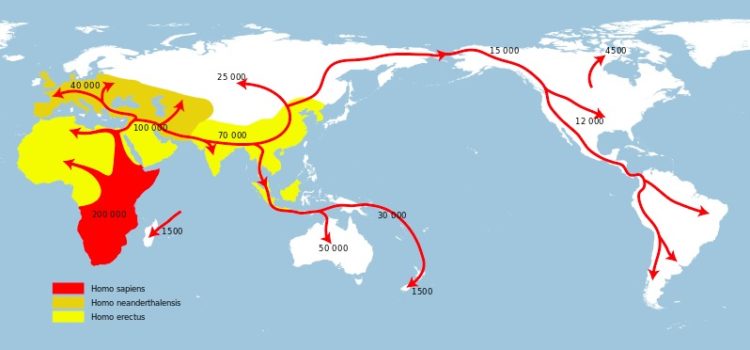
What happened during the first early human migration? Where did humans start, and where did they end up? How did human migration affect other species? The first early human migration was the era in which humans figured out how to cross the sea barrier and made it to Australia, 45,000 years ago. The next major early human migration happened 16,000 years ago, when man reached the American continent. We’ll discuss the progress of the early human migrations and how they caused some of the biggest mass extinctions of all time.

Origin of Religion: From Nature Worship to God Worship

Origin of Religion: From Nature Worship to God Worship

What is the origin of religion? What was the nature of our ancestors’ first beliefs about the universe? The origin of religion is animism, the belief that every animate and inanimate thing has thoughts and feelings and can communicate with people. From the origin of animism developed polytheism and monotheism. We’ll cover the origin of religion, animism, and how it influenced the subsequent history of religion.

Kamar al-Zaman’s Hero’s Journey (Arabian Nights)

Kamar al-Zaman’s Hero’s Journey (Arabian Nights)

Who was Kamar al-Zaman? How does this prince’s adventures in Arabian Nights tales follow the conventions of the hero’s journey? Kamar al-Zaman is a prince in the tales of The Arabian Nights. The stories of Kamar al-Zaman, Princess Budur, and the otherworldly Maymunah follow the hero’s journey popularized by Joseph Campbell in The Hero with a Thousand Faces. We’ll examine two popular Kamar al-Zaman tales and explore how they follow the stages of Campbell’s hero’s journey.

5 Causes of the Scientific Revolution, Explained

5 Causes of the Scientific Revolution, Explained

What were the causes of the Scientific Revolution? How did the new acceptance of ignorance become the root of our quest for knowledge? The Scientific Revolution was caused by a shift in the way people viewed the world and its future. These paradigm shifts included the willingness to accept our own ignorance, an emphasis on math and observation, the desire for imperial dominance, and the new belief in progress. We’ll cover how these causes of the Scientific Revolution changed the world, formed a web with the economy, politics, and religion, and sparked the movement toward modernity.