

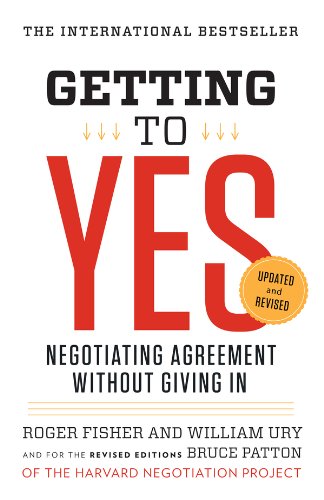
This article is an excerpt from the Shortform summary of "Getting to Yes" by Roger Fisher and William Ury. Shortform has the world's best summaries of books you should be reading.
Like this article? Sign up for a free trial here .
When entering a high-stakes negotiation, many people default to positional bargaining, where each side stakes out a rigid stance and haggles toward a middle ground. This approach often leads to inefficient compromises or stalled talks, leaving you vulnerable if the other party has more resources or influence. To break this cycle and secure a truly advantageous deal, you must look beyond your starting price and identify your Best Alternative to a Negotiated Agreement (BATNA).
Strategic preparation involves more than just setting a “bottom line” that could limit your creativity. By establishing a clear fallback option, you gain the leverage necessary to walk away from a bad deal and the confidence to pursue a superior one. Read more to explore how to apply these classic principles from negotiation theorists Roger Fisher and William Ury to protect your interests and maximize your power at the table.
Originally Published: September 23, 2019
Last Updated: January 13, 2026
Table of Contents
Best Alternative to a Negotiated Agreement
When you enter a negotiation, there is often a significant power imbalance. The other side may be wealthier, have more resources, or possess better connections. Even if it feels like they have all the leverage, you still have options.
Fisher and Ury, authors of Getting to Yes, argue that negotiating only makes sense if it gets you something better than what you could achieve on your own. This is why you must identify your BATNA—your Best Alternative to a Negotiated Agreement. This is your strongest fallback option if discussions break down entirely.
Why a BATNA Is Better Than a “Bottom Line”
To protect themselves, many negotiators set a “bottom line”—the highest price they’ll pay or the lowest they’ll accept. While this offers some protection against a bad deal, it has several downsides:
- Inflexibility: It prevents you from using new information gathered during the negotiation.
- Stifles Creativity: It stops you from developing innovative solutions that might satisfy both parties.
- Arbitrary Nature: Bottom lines are often set too high or too low, ignoring multiple measures of success.
A BATNA, by contrast, is a realistic benchmark. It is flexible enough to allow you to explore options while ensuring you don’t negotiate blindly. If you are overly committed to reaching an agreement because you’re afraid of what might happen if you don’t, you are in a weak position. Your BATNA provides the confidence to walk away.
How a BATNA Works in Practice
The purpose of negotiating is to get better results than you’d get without it. Therefore, any proposed agreement should be measured against your BATNA.
Example: The Freelancer’s Choice Imagine you are a freelancer offered $8,000 for a three-month website redesign. To decide if it’s worth your time, you look at your fallback options:
- Current Client: Pays $3,500/month ($10,500 over three months).
- Short-term Project: Another company offered $6,000 for a much shorter duration.
- Passive Income: You could use the time to build an online course.
Compared to these alternatives, the $8,000 offer is poor. Because you know your fallback is stronger ($10,500), you can confidently counter-offer at $15,000. If they refuse, you can walk away knowing you have better alternatives. This same logic applies to selling a house; if your BATNA is waiting for a trending market, you won’t feel pressured to accept a low-ball offer today.
Developing and Strengthening Your BATNA
Generating a solid BATNA involves three clear steps:
- List Actions: Brainstorm what you would do if no agreement is reached (e.g., look for jobs in another city, keep your current asset).
- Improve Options: Take the most promising ideas and turn them into viable alternatives (e.g., if moving to Chicago is an alternative, start exploring job leads there now).
- Select the Best: Identify the single most realistic and beneficial alternative to use as your benchmark.
The Power of the Trip Wire In addition to your BATNA, you can use a trip wire. This is an agreement that is slightly better than your BATNA but still less than perfect. If a negotiation reaches the trip wire, you should pause and reexamine the situation before proceeding further.
Leveraging Your BATNA for More Power
The stronger your BATNA, the more power you have. Power doesn’t just come from wealth or connections; it comes from the ability to walk away.
- The Small Town vs. The Corporation: A small town once negotiated a goodwill payment from a large corporation. The town’s BATNA was to expand its limits to include the factory and tax it directly. Because this alternative was so strong, the corporation agreed to increase its payment from $300,000 to $3.2 million.
- Assessing the Other Side: Always consider the other side’s BATNA. If they overestimate their alternatives, help them rethink their expectations. If both sides have exceptionally strong BATNAs, the best outcome may be to not reach an agreement at all.
Additional Sources of Negotiating Power
While a BATNA is a vital tool, it works best when combined with other principled negotiation skills:
- Optimism: Aiming higher often leads to better results.
- Effective Communication: Good listening and clear messaging help clear up misperceptions.
- Creativity: Crafting options that allow interests to “dovetail.”
- Legitimacy: Identifying external criteria or standards to justify your position.
By developing a strong BATNA and measuring every offer against it, you protect yourself from accepting a bad deal and give yourself the leverage to demand a great one.
| Reservation Value and Zone of Possible Agreement In Negotiation Genius, Deepak Malhotra and Max H. Bazerman supplement Fisher and Ury’s concept of a fallback option with two additional negotiation benchmarks to determine ahead of time: the reservation value (RV) and the zone of possible agreement ZOPA. Your RV is the worst deal you’re willing to accept in your current negotiation. For example, this might be the highest price you’re willing to pay or the lowest price at which you’re willing to sell. They recommend figuring out what your counterpart’s RV is as well. Your ZOPA is the space between your RV and your counterpart’s. For example, if your lowest selling price is $10,000 and the highest your counterpart’s willing to pay is $15,000, then the ZOPA is between $10,000 and $15,000. This range gives you a more tangible measurement of how much value you can either claim or surrender during a negotiation. To claim the most value, you want to make a deal as close to your counterpart’s RV (their worst potential deal) as possible. |
———End of Preview———
Like what you just read? Read the rest of the world's best summary of "Getting to Yes" at Shortform . Learn the book's critical concepts in 20 minutes or less .
Here's what you'll find in our full Getting to yes summary :
- Why the standard way of negotiating is completely wrong
- How to find outcomes that are wins for both sides
- How to protect yourself against aggressive negotiators