We've ranked the best writing books using expert recommendations, sales data, and millions of reader ratings. At Shortform, we know books. Our book guides are the best in the world. Learn why.
Immensely helpful and illuminating to any aspiring writer, Stephen King’s critically lauded, classic bestseller shares the experiences, habits, and convictions that have shaped him and his work.
"Long live the King" hailed Entertainment Weekly upon publication of Stephen King’s On Writing. Part memoir, part master class by one of the bestselling authors of all time, this superb volume is a revealing and practical view of the writer’s craft, comprising the basic tools of the trade every writer must have. King’s advice is grounded in his vivid memories from childhood through his emergence as a writer, from his struggling early career to his widely reported, near-fatal accident in 1999—and how the inextricable link between writing and living spurred his recovery. Brilliantly structured, friendly and inspiring, On Writing will empower and entertain everyone who reads it—fans, writers, and anyone who loves a great story well told.
I read a bunch of books on writing before I wrote my first book and the two that stuck with me were Stephen King’s book and “On Writing Well” by Zinsser (which is a bit on the technical side). [source]
Alina Varlanuta
My professional path – copywriting – somehow intertwines with my unprofessional (hahaha) path – writing so I would recommend reading literature for both. Somehow reading and writing are two ways of doing the same thing: storytelling (even when you read you tell yourself a story in your own voice, bringing your personal emotion and empathy to the story you’re reading). The only difference is that when I’m reading, panic is far away from me, in a safe place. Nevertheless, the words below helped me rewrite and think twice before adding an exclamation point: On Writing by Stephen King. [source]
Andrew Cowan
Yes. It is a surprise to a lot of people that this book is so widely read on university campuses and so widely recommended by teachers of writing. Students love it. It’s bracing: there’s no nonsense. He says somewhere in the foreword or preface that it is a short book because most books are filled with bullshit and he is determined not to offer bullshit but to tell it like it is. [source]
Cover unavailable
2
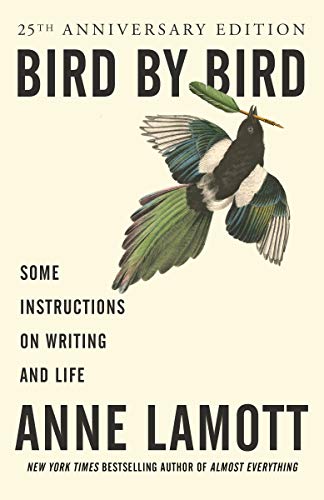
Bird By Bird: Some Instructions on Writing and Life
Anne Lamott
4.9
Thirty years ago my older brother, who was ten years old at the time, was trying to get a report on birds written that he'd had three months to write. It was due the next day. We were out at our family cabin in Bolinas, and he was at the kitchen table close to tears, surrounded by binder paper and pencils and unopened books on birds, immobilized by the hugeness of the task ahead. Then my father sat down beside him, put his arm around my brother's shoulder, and said, 'Bird by bird, buddy. Just take it bird by bird.'" "Superb writing advice... hilarious, helpful and provocative." -- "New York Times Book Review."
"A warm, generous and hilarious guide through the writer's world and its treacherous swamps." -- "Los Angeles Times."
"A gift to all of us mortals who write or ever wanted to write... sidesplittingly funny, patiently wise and alternately cranky and kind -- a reveille to get off our duffs and start writing "now," while we still can." -- "Seattle Times.
Bird by Bird is one of my absolute favorite books, and I gift it to everybody, which I should probably also give to startup founders, quite frankly. A lot of the lessons are the same. But you can get to your destination, even though you can only see 20 feet in front of you. [source]
It was wonderful to read these two provocative books of essays by two incredibly wise and compassionate women. … Anne Lamott’s book is ostensibly about the art of writing, but really it too is about life and how to tackle the problems, temptations and opportunities life throws at us. Both will make you think and both made me a better person this year. [source]
Cover unavailable
3
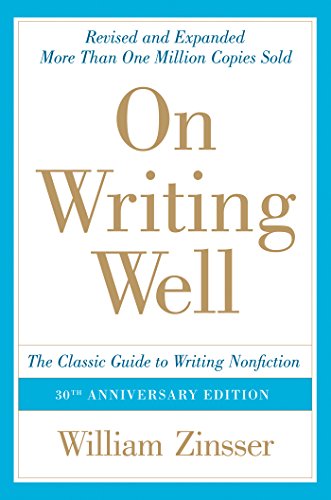
On Writing Well: The Classic Guide To Writing Nonfiction
On Writing Well has been praised for its sound advice, its clarity and the warmth of its style. It is a book for everybody who wants to learn how to write or who needs to do some writing to get through the day, as almost everybody does in the age of e-mail and the Internet. Whether you want to write about people or places, science and technology, business, sports, the arts or about yourself in the increasingly popular memoir genre, On Writing Well offers you fundamental priciples as well as the insights of a distinguished writer and teacher. With more than a million copies sold, this volume has stood the test of time and remains a valuable resource for writers and would-be writers.
I read a bunch of books on writing before I wrote my first book and the two that stuck with me were Stephen King’s book and “On Writing Well” by Zinsser (which is a bit on the technical side). [source]
Tim O'Reilly
Founder/O'Reilly Media
On Writing Well, by William Zinsser. I wouldn't say this book influenced me, since my principles of writing were established long before I read it. However, it does capture many things that I believe about effective writing. [source]
Great blunt advice about writing better non-fiction. So inspiring. [source]
Cover unavailable
4
The Elements of Style
William Jr. Strunk
4.7
You know the authors' names. You recognize the title. You've probably used this book yourself. And now "The Elements of Style"-the most widely read and employed English style manual-is available in a specially bound 50th Anniversary Edition that offers the title's vast audience an opportunity to own a more durable and elegantly bound edition of this time-tested classic. Offering the same content as the Fourth Edition, revised in 1999, the new casebound 50th Anniversary Edition includes a brief overview of the book's illustrious history. Used extensively by individual writers as well as high school and college students of writing, it has conveyed the principles of English style to millions of readers. This new deluxe edition makes the perfect gift for writers of any age and ability level. Fifty Years of Acclaim for "The Elements of Style," by William Strunk Jr. and E.B. White "I first read "Elements of Style" during the summer before I went off to Exeter, and I still direct my students at Harvard to their definition about the difference between 'that' and 'which.' It is the Bible for good, clear writing." -- Henry Louis Gates Jr. "For writers of all kinds and sizes the world begins and ends with Strunk and White's "Elements of Style." Only something to actually write about trumps the list of what is required to put words together in some kind of coherent way. I treasure its presence in my life and salute its fifty years of glory and accomplishment." -- Jim Lehrer ""The Elements of Style" remains an unwavering beacon of light in these grammatically troubled times. I would be lost without it." -- Ann Patchett "To the extent I know how to write clearly at all, I probably taught myself while I was teaching others -- seventh graders, in Flint, Michigan, in 1967. I taught them with a copy of Strunk & White lying in full view on my desk, sort of in the way the Gideons leave Bibles in cheap hotel rooms, as a way of saying to the hapless inhabitant: 'In case your reckless ways should strand you here, there's help.' S&W doesn't really teach you how to write, it just tantalizingly reminds you that there's an orderly way to go about it, that clarity's ever your ideal, but -- really -- it's all going to be up to you." -- Richard Ford ""The Elements of Style" never seems to go out of date. Its counsel is sound and funny, wise and unpretentious. And while its precepts are a foundation of direct communication, Strunk and White do not insist on a way of writing beyond clear expression. The rest is up to the imagination, the intelligence within." -- David Remnick, editor of "The New Yorker" "It's the toughness-the irreverence and implicit laughter-that attracted me to the little book when I was seventeen. I fell in love with Strunk & White's loathing for cant and bloviation, the ruthless cutting of crap, jargon, and extra words. For me, that skeptical directness included a tacit permission by "The Elements of Style" to break its rules on occasion: an alloy of generosity in the blade, a grace I still admire and still learn from." -- Robert Pinsky "In the quest for clarity, one can have no better guides than Strunk and White. For me, their book has been invaluable and remains essential." -- Dan Rather "Eschew surplusage! A perfect book." --Jonathan Lethem "Not until I started teaching writing and I reread "The Elements of Style" did I realize that most everything I would be teaching young writers, and everything I would be learning myself as a writer, was contained between the covers of this slim, elegant, wise little book." -- Julia Alvarez "Strunk and White seared their way into my brain long ago, and I benefit from them daily." -- Steven J. Dubner, co-author of "Freakonomics" "Since high school, I have kept a copy of this book handy. That should be unnecessary. I should, by now, have fully internalized "The Elements of Style." But sometimes I get entangled in a paragraph that refuses to be 'clear, brief, bold.' I dip back into "The Elements of Style" and am refreshed. After Scott Simon interviewed me on NPR about whether the word 'e-mail' needs a hyphen (yes, it does), some listeners, including friends of mine, wondered why I had answered in the affirmative when asked, in passing, 'Are you a drunken white man?' Those listeners misheard. 'Strunk and White man' was what Scott said." -- Roy Blount Jr. "Strunk & White--writing's good-natured law firm--still contains enough sparkling good sense to clean up the whole bloviating blogosphere." -- Thomas Mallon "I used Strunk -- that's what we called it, Strunk -- as a student at Berkeley fifty years ago. I didn't know that it was new, and that we were the first generation to be educated in "The Elements of Style." I got a firm foundation in the English language, learned to write basically, and could depict the realistic world. Then I was able to become an impressionist and expressionist." -- Maxine Hong Kingston "Strunk and White's gigantic little book must be the most readable advice on writing ever written. Side by side with Roget, Shakespeare, the Bible, and a dictionary, it's an essential for every writer's shelf." -- X.J. Kennedy" ""With what joy I welcome the fiftieth anniversary of "The Elements of Style." I am greatly indebted to this book for the invaluable help it has given me all these years." -- Horton Foote "Elegant, droll, and perfectly proportioned, and like your favorite aunt, strict but affectionate. And, like your favorite aunt, full of optimism: You can, and will, be a better writer! There has never been a better, briefer, or more loved book about the art and craft of communicating." -- Susan Orlean "This book is an essential tool. It has been of great use to me and is probably responsible for my best writing. I owe my success to Strunk and White; only the mistakes are mine." -- Ben Affleck, in "O, the Oprah Magazine" "This book is a wonderful example of teaching by example. Not only does it recommend clear and concise writing, it demonstrates it. Written in the style of a friend offering help, it is a godsend to anyone wanting to put words on paper. Thank you, Messieurs Strunk and White. And Happy Anniversary, "Elements of Style."" -- S.E. Hinton "When I began to have ... I wouldn't say arguments but conversations in my mind with Strunk and White about a few of their rules and principles, I knew I was coming into my own. If only they were still here to talk things over! No doubt their side of the exchange would be kindly put, well-informed, and wise. They'd probably help me with my side of it. What more could one want from writers reaching out to help other writers?" -- Barbara Wallraff, language columnist for "The Atlantic" "I don't believe there is a serious writer alive who doesn't have a worn copy of 'Strunk & White'on his or her bookshelf." -- Mignon Fogarty, author of "Grammar Girl's Quick and Dirty Tips ""for Better Writing" "This little book has inspired hundreds of thousands of people to write better -- partly by precept and partly by example. It continues to influence more writers than any other. It's a force for good in the world." -- Bryan A. Garner, author of "Garner's Modern American Usage" "I can think of no better guide to good writing, and I always think of this little classic with a warm heart. More importantly, I revisit its pages often. It's the one essential book on writing." -- Jay Parini, author of "Why Poetry Matters" "Clarity and simplicity have always been the goals, and this book shows the way. It has always been a lighthouse in the dark and stormy night of student prose, of all of our prose." -- Ron Carlson "The only rules you are ever going to get from me are all in Strunk and White." --Ursula K. Le Guin, from "Steering the Craft " "["The Elements of Style "is] a book to which I return from time to time, the way I periodically reread Shakespeare. I always discover something new, settle a question that has been puzzling me, or learn a principle of usage that I have been pretending to know, a pretense that has resulted in inconsistency and in the sort of errors from which I can only pray some saintly copy editor will save me." -- Francine Prose, from "Reading"" Like A Writer" ..".still a little book, small enough and important enough to carry in your pocket, as I carry mine." -- Charles Osgood "Almost every writer has a Strunk and White story. One journalism professor spends the first two weeks of school forcing his students to memorize the book. A top editor at a major paper buys copies at yard sales to distribute to her writers and interns. It has even caused love affairs. . . . Could its greatness be any more clear?" -- Jesse Sheidlower, American Editor of the "Oxford"" English Dictionary," on NPR" ""If the English language is one of the finest homes ever devised for the human spirit, "Elements" is the best guided house tour we've got." --David Gelernter, "The Wall Street Journal" ..".Should be the daily companion of anyone who writes for a living and, for that matter, anyone who writes at all." "--"Jonathan Yardley, " Greensboro (N.C.) Daily News" "No book in shorter space, with fewer words, will help any writer more than this persistent little volume." -- Herbert A. Kenny, "The Boston Globe" "Buy it, study it, enjoy it. It's as timeless as a book can be in our age of volubility." -- Charles Poore, "The New York Times" "White is one of the best stylists and most lucid minds in this country. What he says and his way of saying it are equally rewarding." "-- "Edmund Fuller, "The Wall Street Journal ""If you have any young friends who aspire to become writers, the second greatest favor you can do them is to present them with copies of "The Elements of Style." The first greatest, of course, is to shoot them now, while they're happy." -- Dorothy Parker, "Esquire"
…
Recommended by Tobi Lütke, Alina Varlanuta, Ann Handley, and 3 others.
Tobi Lütke
Founder & CEO/Shopify
My most frequently gifted book is this book because I like good writing. [source]
Alina Varlanuta
My professional path – copywriting – somehow intertwines with my unprofessional (hahaha) path – writing so I would recommend reading literature for both. Somehow reading and writing are two ways of doing the same thing: storytelling (even when you read you tell yourself a story in your own voice, bringing your personal emotion and empathy to the story you’re reading). The only difference is that when I’m reading, panic is far away from me, in a safe place. Nevertheless, the words below helped me rewrite and think twice before adding an exclamation point: The Elements of Style. [source]
Bill Nye
This is my guide. I accept that I’ll never write anything as good as the introductory essay by the author. It’s brilliant. [source]
When a writer or an entrepreneur, or a manager, or an employee, or a…whatever…sits down to get to work, he or she is often met by “the resistance”. The excuses that come up: I can’t do this. I am too old. I don’t have enough money. I’m scared. “The War of Art” is the guide to getting through that block. The comfort zone is papered up and cemented shut by our excuses. Learn to blast through that wall. Because on the other side of the comfort zone are all the tools of success. [source]
Also hard to find on audio. I find Steve's voice to be fascinating, and even before I knew him, I was fascinated by listening to him speak his own work. The War of Art is one of those books, at least for me when I finally was exposed to it, I said, 'Why wasn't I informed? Why did it take this long for this book to land on my desk?'... You need to be clear with yourself about what you are afraid of, why you are afraid, and whether you care enough to dance with that fear because it will never go away. [source]
Adam Johnston
The last two pages of Steven Pressfield’s The War of Art gave me a swift kick in the ass. Do it or don’t do it. But if you don’t do it, you not only hurt yourself. You hurt your children. You hurt me. You hurt the planet. Pressfield wrote a beautiful book that you should read, but if nothing else, just read the last two pages of the book. I have them hanging on my wall in my office. [source]
Cover unavailable
6
Writing Down the Bones: Freeing the Writer Within
Natalie Goldberg
4.5
With insight, humor, and practicality, Natalie Goldberg inspires writers and would-be writers to take the leap into writing skillfully and creatively. She offers suggestions, encouragement, and solid advice on many aspects of the writer’s craft: on writing from “first thoughts” (keep your hand moving, don’t cross out, just get it on paper), on listening (writing is ninety percent listening; the deeper you listen, the better you write), on using verbs (verbs provide the energy of the sentence), on overcoming doubts (doubt is torture; don’t listen to it)—even on choosing a restaurant in which to write. Goldberg sees writing as a practice that helps writers comprehend the value of their lives. The advice in her book, provided in short, easy-to-read chapters with titles that reflect the author’s witty approach (“Writing Is Not a McDonald’s Hamburger,” “Man Eats Car,” “Be an Animal”), will inspire anyone who writes—or who longs to.
…
Recommended by Brie Code.
Brie Code
@gamesandbowties Oh I love that book! And am intrigued by mystic poetry and would love to see it on Twitter 😇 [source]
The first popular work to combine the spiritual and psychological insights of modern psychoanalysis with the archetypes of world mythology, the book creates a roadmap for navigating the frustrating path of contemporary life. Examining heroic myths in the light of modern psychology, it considers not only the patterns and stages of mythology but also its relevance to our lives today--and to the life of any person seeking a fully realized existence.
Myth, according to Campbell, is the projection of a culture's dreams onto a large screen; Campbell's book, like Star Wars, the film it helped inspire, is an exploration of the big-picture moments from the stage that is our world. It is a must-have resource for both experienced students of mythology and the explorer just beginning to approach myth as a source of knowledge.
The book I’d give every graduating senior in college or high school would be … Joseph Campbell’s 'Hero of a Thousand Faces'. It's little bit dense but it’s so rich, so it’s a good one. [source]
Joseph Campbell was the first person to really open my eyes to the compassionate side of life, or of thought... Campbell was the guy who really kind of put it all together for me, and not in a way I could put my finger on... It made you just glad to be alive, realizing how vast this world is, and how similar and how different we are. [source]
Catherine Plano
Was mind blowing, it really helped me put into perspective, that there are cycles and rhythms, and I now call them initiations, when you are faced with fear we are never too sure of our potential unless we know how to fail, what did we learn from it and what are we going to do differently the next time. There is a lesson in everything we experience, as long as we slow down enough to reflect. The other thing in the hero's journey is that even when you say 'yes' to a project, it really doesn't mean that you are going to succeed at it, but if you go into a project with an open mind and embrace that you are here to learn, the journey itself is rewarding, not always the outcome and when we really look at our failures, they weren't real failures after all, but a stepping stone onto something greater. [source]
Cover unavailable
8
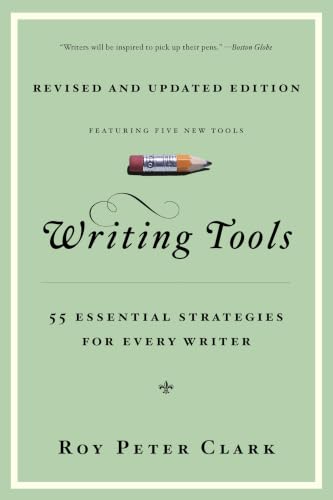
Writing Tools: 50 Essential Strategies for Every Writer
Roy Peter Clark
4.4
A special 10th anniversary edition of Roy Peter Clark's bestselling guide to writing, featuring five bonus tools.
Ten years ago, Roy Peter Clark, America's most influential writing teacher, whittled down almost thirty years of experience in journalism, writing, and teaching into a series of fifty short essays on different aspects of writing. In the past decade, Writing Tools has become a classic guidebook for novices and experts alike and remains one of the best loved books on writing available.
Organized into four sections, "Nuts and Bolts," "Special Effects," "Blueprints for Stories," and "Useful Habits," Writing Tools is infused with more than 200 examples from journalism and literature. This new edition includes five brand new, never-before-shared tools.
Accessible, entertaining, inspiring, and above all, useful for every type of writer, from high school student to novelist, Writing Tools is essential reading.
…
Cover unavailable
9
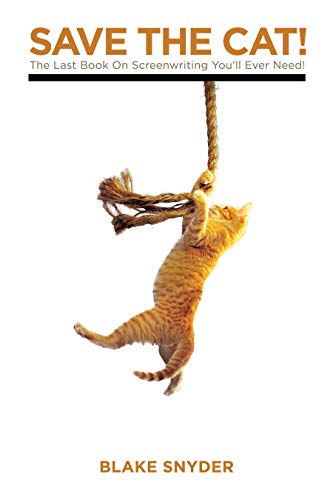
Save the Cat: The Last Book on Screenwriting You'll Ever Need
Blake Snyder
4.4
This ultimate insider's guide reveals the secrets that none dare admit, told by a show biz veteran who's proven that you can sell your script if you can save the cat!
"Without The Artist's Way, there would have been no Eat, Pray, Love.” —Elizabeth Gilbert
A stunning gift edition of the powerful bestselling book on creativity.The Artist’s Way is one of the bestselling gift books of all time. Beautifully packaged with a slipcase and ribbon, this tenth anniversary gift edition is the ideal gift for loved ones engaged in creative lives.
Recommended by Anand C and Emma Gannon.
Anand C
STARTING FROM AUTHENTICITY: by observing, showing humility and being grateful - I started being open to what’s in the sub-conscious more (30+ sessions in). Speaking your truth is a powerful result of this. One great book to help explore this. https://t.co/sOAgAHhWsO [source]
Emma Gannon
Instead of all these fast paced books saying: ‘Here’s how to be amazing, here’s how to get a side hustle, here’s how to hustle, hustle, hustle.’ This is the total opposite. It’s about slowing right down and connecting with yourself again. [source]
Cover unavailable
11
Zen in the Art of Writing
Ray Bradbury
4.3
"Every morning I jump out of bed and step on a land mine. The land mine is me. After the explosion, I spend the rest of the day putting the pieces back together. Now, it's your turn. Jump!"
Zest. Gusto. Curiosity. These are the qualities every writer must have, as well as a spirit of adventure. In this exuberant book, the incomparable Ray Bradbury shares the wisdom, experience, and excitement of a lifetime of writing. Here are practical tips on the art of writing from a master of the craft—everything from finding original ideas to developing your own voice and style—as well as the inside story of Bradbury's own remarkable career as a prolific author of novels, stories, poems, films, and plays.
Zen in the Art of Writing is more than just a how-to manual for the would-be writer: it is a celebration of the act of writing itself that will delight, impassion, and inspire the writer in you. Bradbury encourages us to follow the unique path of our instincts and enthusiasms to the place where our inner genius dwells, and he shows that success as a writer depends on how well you know one subject: your own life.
In Zen in the Art of Writing: Releasing the Creative Genius Within You, Ray Bradbury — acclaimed author, dystopian novelist, hater of symbolism — shares not only his wisdom and experience in writing, but also his contagious excitement for the craft. Blending practical how-to’s on everything from finding your voice to negotiating with editors with snippets and glimpses of the author’s own career, the book is at once a manual and a manifesto, imbued with equal parts insight and enthusiasm. [source]
Cover unavailable
12
Story: Substance, Structure, Style, and the Principles of Screenwriting
Robert McKee's screenwriting workshops have earned him an international reputation for inspiring novices, refining works in progress and putting major screenwriting careers back on track. Quincy Jones, Diane Keaton, Gloria Steinem, Julia Roberts, John Cleese and David Bowie are just a few of his celebrity alumni. Writers, producers, development executives and agents all flock to his lecture series, praising it as a mesmerizing and intense learning experience. In Story, McKee expands on the concepts he teaches in his $450 seminars (considered a must by industry insiders), providing readers with the most comprehensive, integrated explanation of the craft of writing for the screen. No one better understands how all the elements of a screenplay fit together, and no one is better qualified to explain the "magic" of story construction and the relationship between structure and character than Robert McKee.
…
Recommended by Bill Liao.
Bill Liao
The human world occurs in language so best get good at it! [source]
The real story of the crash began in bizarre feeder markets where the sun doesn't shine and the SEC doesn't dare, or bother, to tread: the bond and real estate derivative markets where geeks invent impenetrable securities to profit from the misery of lower- and middle-class Americans who can't pay their debts. The smart people who understood what was or might be happening were paralyzed by hope and fear; in any case, they weren't talking.
Michael Lewis creates a fresh, character-driven narrative brimming with indignation and dark humor, a fitting sequel to his #1 bestseller Liar's Poker. Out of a handful of unlikely-really unlikely-heroes, Lewis fashions a story as compelling and unusual as any of his earlier bestsellers, proving yet again that he is the finest and funniest chronicler of our time.
Michael Lewis's ability to boil down the most complicated subjects is like a magic trick. You can't believe your own eyes. He takes on important issues - from the 2008 Wall Street crash in "The Big Short" to parenting in "Home Game" - and breaks them down to the deepest truths. His combination of an extraordinarily analytical mind and a deep understanding of human nature allows him to weave together data and events to offer a fresh and insightful narrative. Whatever the topic, the result is always compelling and even thrilling. I am in awe of him. [source]
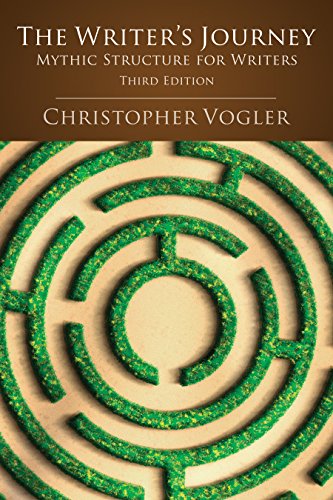
The Writer's Journey: Mythic Structure for Writers
Christopher Vogler
4.3
Provides new insights and observations from Vogler's pioneering work in mythic structure for writers.
Recommended by Darren Aronofsky.
Darren Aronofsky
It’s the Bible for screenwriters. I think it’s the best book on how to write a screenplay ever written. It helped me get through so many roadblocks as a writer. [source]
Cover unavailable
15
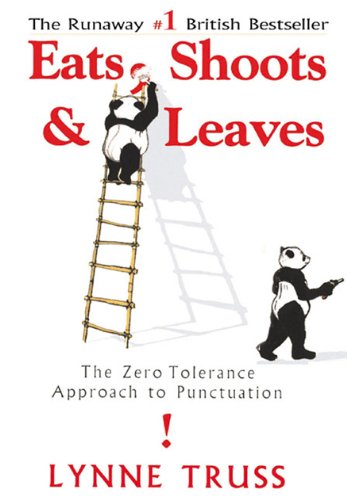
Eats, Shoots & Leaves: The Zero Tolerance Approach to Punctuation
Lynne Truss
4.3
In Eats, Shoots & Leaves, former editor Lynne Truss, gravely concerned about our current grammatical state, boldly defends proper punctuation. She proclaims, in her delightfully urbane, witty, and very English way, that it is time to look at our commas and semicolons and see them as the wonderful and necessary things they are. Using examples from literature, history, neighborhood signage, and her own imagination, Truss shows how meaning is shaped by commas and apostrophes, and the hilarious consequences of punctuation gone awry.
Featuring a foreword by Frank McCourt, and interspersed with a lively history of punctuation from the invention of the question mark in the time of Charlemagne to George Orwell shunning the semicolon, Eats, Shoots & Leaves makes a powerful case for the preservation of proper punctuation.
…
Cover unavailable
16
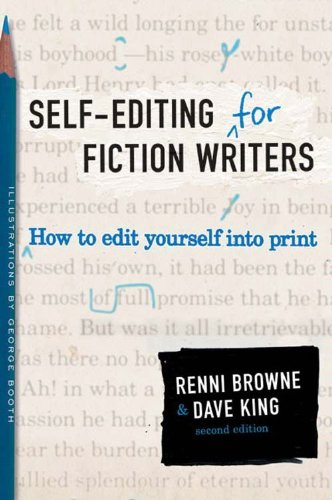
Self-Editing for Fiction Writers: How to Edit Yourself Into Print
Renni Browne, Dave King
4.3
"A superb tutorial for anyone wanting to learn from pros how to polish fiction writing with panache."-- Library Journal
Hundreds of books have been written on the art of writing. Here at last is a book by two professional editors to teach writers the techniques of the editing trade that turn promising manuscripts into published novels and short stories.
In this completely revised and updated second edition, Renni Browne and Dave King teach you, the writer, how to apply the editing techniques they have developed to your own work. Chapters on dialogue, exposition, point of view, interior monologue, and other techniques take you through the same processes an expert editor would go through to perfect your manuscript. Each point is illustrated with examples, many drawn from the hundreds of books Browne and King have edited.
…
Recommended by Alina Varlanuta.
Alina Varlanuta
My professional path – copywriting – somehow intertwines with my unprofessional (hahaha) path – writing so I would recommend reading literature for both. Somehow reading and writing are two ways of doing the same thing: storytelling (even when you read you tell yourself a story in your own voice, bringing your personal emotion and empathy to the story you’re reading). The only difference is that when I’m reading, panic is far away from me, in a safe place. Nevertheless, the words below helped me rewrite and think twice before adding an exclamation point: Self-editing for Fiction Writers. [source]
Cover unavailable
17
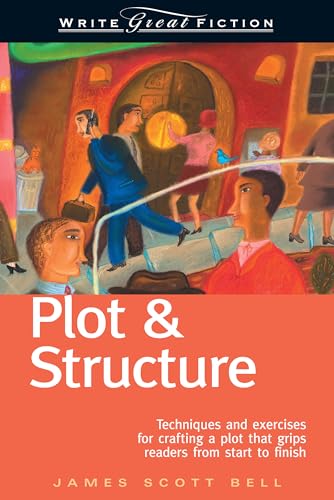
Plot & Structure: Techniques and Exercises for Crafting a Plot That Grips Readers from Start to Finish
James Scott Bell
4.3
Craft an Engaging Plot
How does plot influence story structure? What's the difference between plotting for commercial and literary fiction? How do you revise a plot or structure that's gone off course?
With "Write Great Fiction: Plot & Structure," you'll discover the answers to these questions and more. Award-winning author James Scott Bell offers clear, concise information that will help you create a believable and memorable plot, including: Techniques for crafting strong beginnings, middles, and endsEasy-to-understand plotting diagrams and chartsBrainstorming techniques for original plot ideasThought-provoking exercises at the end of each chapterStory structure models and methods for all genresTips and tools for correcting common plot problems
Filled with plot examples from popular novels, comprehensive checklists, and practical hands-on guidance, "Write Great Fiction: Plot & Structure" gives you the skills you need to approach plot and structure like an experienced pro.
…
Cover unavailable
18
The Emotion Thesaurus: A Writer's Guide to Character Expression
Becca Puglisi
4.3
The bestselling Emotion Thesaurus, often hailed as “the gold standard for writers” and credited with transforming how writers craft emotion, has now been expanded to include 55 new entries!
One of the biggest struggles for writers is how to convey emotion to readers in a unique and compelling way. When showing our characters’ feelings, we often use the first idea that comes to mind, and they end up smiling, nodding, and frowning too much.
If you need inspiration for creating characters’ emotional responses that are personalized and evocative, this ultimate show-don’t-tell guide for emotion can help. It includes:
Body language cues, thoughts, and visceral responses for 130 emotions that cover a range of intensity from mild to severe, providing innumerable options for individualizing a character’s reactions A breakdown of the biggest emotion-related writing problems and how to overcome them Advice on what should be done before drafting to make sure your characters’ emotions will be realistic and consistent Instruction for how to show hidden feelings and emotional subtext through dialogue and nonverbal cues And much more!
The Emotion Thesaurus, in its easy-to-navigate list format, will inspire you to create stronger, fresher character expressions and engage readers from your first page to your last.
…
Cover unavailable
19
Steal Like an Artist: 10 Things Nobody Told You About Being Creative
You don’t need to be a genius, you just need to be yourself. That’s the message from Austin Kleon, a young writer and artist who knows that creativity is everywhere, creativity is for everyone. A manifesto for the digital age, Steal Like an Artist is a guide whose positive message, graphic look and illustrations, exercises, and examples will put readers directly in touch with their artistic side.
Part of ambition is modeling yourself after those you’d like to be like. Austin’s philosophy of ruthlessly stealing and remixing the greats might sound appalling at first but it is actually the essence of art. You learn by stealing, you become creative by stealing, you push yourself to be better by working with these materials. Austin is a fantastic artist, but most importantly he communicates the essence of writing and creating art better than anyone else I can think of. It is a manifesto for any young, creative person looking to make his mark. Pair up with Show Your Work which is also excellent. [source]
Breezy and fun and yes, scary. Scary because it calls your bluff. [source]
Andra Zaharia
While I was thinking of the best books to add to this short list, I realized that not even half of them are directly related to digital marketing. This is because I believe that the best marketers are people who understand human nature deeply and aim to bring out the best in it. Call me naive, but that’s how I see it. If I were to want to pursue a career in marketing, I’d read … Steal Like An Artist. [source]
Cover unavailable
20
The Anatomy of Story: 22 Steps to Becoming a Master Storyteller
John Truby
4.3
John Truby is one of the most respected and sought-after story consultants in the film industry, and his students have gone on to pen some of Hollywood's most successful films, including Sleepless in Seattle, Scream, and Shrek. The Anatomy of Story is his long-awaited first book, and it shares all of his secrets for writing a compelling script. Based on the lessons in his award-winning class, Great Screenwriting, The Anatomy of Story draws on a broad range of philosophy and mythology, offering fresh techniques and insightful anecdotes alongside Truby's own unique approach for how to build an effective, multifaceted narrative. Truby's method for constructing a story is at once insightful and practical, focusing on the hero's moral and emotional growth. As a result, writers will dig deep within and explore their own values and worldviews in order to create an effective story. Writers will come away with an extremely precise set of tools to work with--specific, useful techniques to make the audience care about their characters, and that make their characters grow in meaningful ways. They will construct a surprising plot that is unique to their particular concept, and they will learn how to express a moral vision that can genuinely move an audience.
The foundations of story that Truby lays out are so fundamental they are applicable--and essential--to all writers, from novelists and short-story writers to journalists, memoirists, and writers of narrative non-fiction.
…
Cover unavailable
21
The Sense of Style: The Thinking Person's Guide to Writing in the 21st Century
Steven Pinker
4.3
A short and entertaining book on the modern art of writing well by New York Times bestselling author Steven Pinker Why is so much writing so bad, and how can we make it better? Is the English language being corrupted by texting and social media? Do the kids today even care about good writing? Why should any of us care?
In The Sense of Style, the bestselling linguist and cognitive scientist Steven Pinker answers these questions and more. Rethinking the usage guide for the twenty-first century, Pinker doesn’t carp about the decline of language or recycle pet peeves from the rulebooks of a century ago. Instead, he applies insights from the sciences of language and mind to the challenge of crafting clear, coherent, and stylish prose.
In this short, cheerful, and eminently practical book, Pinker shows how writing depends on imagination, empathy, coherence, grammatical knowhow, and an ability to savor and reverse engineer the good prose of others. He replaces dogma about usage with reason and evidence, allowing writers and editors to apply the guidelines judiciously, rather than robotically, being mindful of what they are designed to accomplish.
Filled with examples of great and gruesome prose, Pinker shows us how the art of writing can be a form of pleasurable mastery and a fascinating intellectual topic in its own right.
…
Recommended by Ellen Lupton and 1 others.
Cover unavailable
22
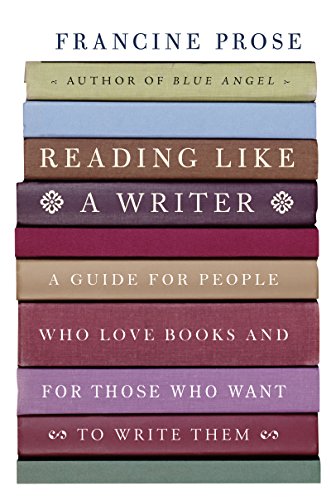
Reading Like a Writer: A Guide for People Who Love Books and for Those Who Want to Write Them
Francine Prose
4.3
In her entertaining and edifying New York Times bestseller, acclaimed author Francine Prose invites you to sit by her side and take a guided tour of the tools and the tricks of the masters to discover why their work has endured. Written with passion, humor, and wisdom, Reading Like a Writer will inspire readers to return to literature with a fresh eye and an eager heart - to take pleasure in the long and magnificent sentences of Philip Roth and the breathtaking paragraphs of Isaac Babel; she is deeply moved by the brilliant characterization in George Eliot's Middlemarch. She looks to John Le Carré for a lesson in how to advance plot through dialogue and to Flannery O'Connor for the cunning use of the telling detail. And, most important, Prose cautions readers to slow down and pay attention to words, the raw material out of which all literature is crafted.
…
Cover unavailable
23
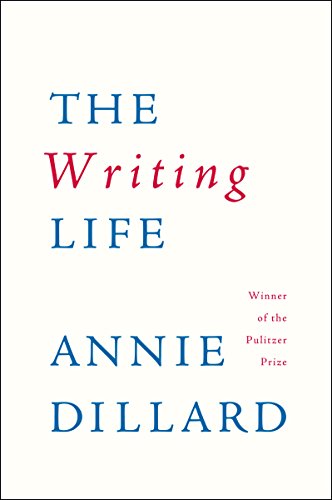
The Writing Life
Annie Dillard
4.2
Annie Dillard has written eleven books, including the memoir of her parents, An American Childhood; the Northwest pioneer epic The Living; and the nonfiction narrative Pilgrim at Tinker Creek. A gregarious recluse, she is a member of the American Academy of Arts and Letters.
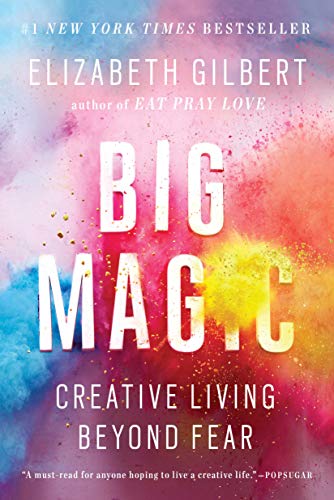
"A must read for anyone hoping to live a creative life... I dare you not to be inspired to be brave, to be free, and to be curious.” —PopSugar
From the worldwide bestselling author of Eat Pray Love and City of Girls: the path to the vibrant, fulfilling life you’ve dreamed of
Readers of all ages and walks of life have drawn inspiration and empowerment from Elizabeth Gilbert’s books for years. Now this beloved author digs deep into her own generative process to share her wisdom and unique perspective about creativity. With profound empathy and radiant generosity, she offers potent insights into the mysterious nature of inspiration. She asks us to embrace our curiosity and let go of needless suffering. She shows us how to tackle what we most love, and how to face down what we most fear. She discusses the attitudes, approaches, and habits we need in order to live our most creative lives. Balancing between soulful spirituality and cheerful pragmatism, Gilbert encourages us to uncover the “strange jewels” that are hidden within each of us. Whether we are looking to write a book, make art, find new ways to address challenges in our work, embark on a dream long deferred, or simply infuse our everyday lives with more mindfulness and passion, Big Magic cracks open a world of wonder and joy.
I read a bunch of books on writing before I wrote my first book and the two that stuck with me were Stephen King’s book and “On Writing Well” by Zinsser (which is a bit on the technical side). I was also surprised by how much I enjoyed Elizabeth Gilbert’s “Big Magic.” [source]
Chelsea Frank
I read everything with an open mind, often challenging myself by choosing books with an odd perspective or religious/spiritual views. These books do not reflect my personal feelings but are books that helped shape my perspective on life, love, and happiness. [source]
Cover unavailable
25
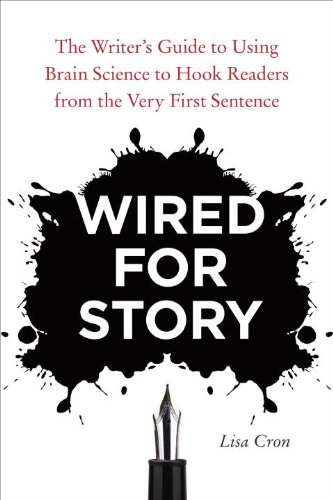
Wired for Story: The Writer's Guide to Using Brain Science to Hook Readers from the Very First Sentence
This guide reveals how writers can utilize cognitive storytelling strategies to craft stories that ignite readers’ brains and captivate them through each plot element.
Imagine knowing what the brain craves from every tale it encounters, what fuels the success of any great story, and what keeps readers transfixed. Wired for Story reveals these cognitive secrets—and it’s a game-changer for anyone who has ever set pen to paper. The vast majority of writing advice focuses on “writing well” as if it were the same as telling a great story. This is exactly where many aspiring writers fail—they strive for beautiful metaphors, authentic dialogue, and interesting characters, losing sight of the one thing that every engaging story must do: ignite the brain’s hardwired desire to learn what happens next. When writers tap into the evolutionary purpose of story and electrify our curiosity, it triggers a delicious dopamine rush that tells us to pay attention. Without it, even the most perfect prose won’t hold anyone’s interest. Backed by recent breakthroughs in neuroscience as well as examples from novels, screenplays, and short stories, Wired for Story offers a revolutionary look at story as the brain experiences it. Each chapter zeroes in on an aspect of the brain, its corresponding revelation about story, and the way to apply it to your storytelling right now.
…
Cover unavailable
26
Steering the Craft: Exercises and Discussions on Story Writing for the Lone Navigator or the Mutinous Crew
Ursula K. Le Guin
4.2
Ursula K. Le Guin generously shares the accumulated wisdom of a lifetime's work.
Cover unavailable
27
Save the Cat! Writes a Novel: The Last Book on Novel Writing You'll Ever Need
Jessica Brody
4.2
The first novel-writing guide from the best-selling Save the Cat! story-structure series, which reveals the 15 essential plot points needed to make any novel a success.
Novelist Jessica Brody presents a comprehensive story-structure guide for novelists that applies the famed Save the Cat! screenwriting methodology to the world of novel writing. Revealing the 15 "beats" (plot points) that comprise a successful story--from the opening image to the finale--this book lays out the Ten Story Genres (Monster in the House; Whydunit; Dude with a Problem) alongside quirky, original insights (Save the Cat; Shard of Glass) to help novelists craft a plot that will captivate--and a novel that will sell.
…
Cover unavailable
28
Stein on Writing: A Master Editor of Some of the Most Successful Writers of Our Century Shares His Craft Techniques and Strategies
Sol Stein
4.2
Stein on Writing provides immediately useful advice for all writers of fiction and nonfiction, whether they are newcomers or old hands, students or instructors, amateurs or professionals. As the always clear and direct Stein explains here, "This is not a book of theory. It is a book of usable solutions--how to fix writing that is flawed, how to improve writing that is good, how to create interesting writing in the first place." With examples from bestsellers as well as from students' drafts, Stein offers detailed sections on characterization, dialogue, pacing, flashbacks, trimming away flabby wording, the so-called "triage" method of revision, using the techniques of fiction to enliven nonfiction, and more.
…
Cover unavailable
29
How to Read a Book: The Classic Guide to Intelligent Reading
With more than half a million paperback copies in print and now in this stunning hardcover keepsake edition, How to Read a Book is the classic and definitive guide to reading comprehension and retention for students of literature, scholars across disciplines, and anyone who just loves to read.
Originally written in 1940 and first published by Simon & Schuster in 1972, How to Read a Book introduces and elucidates the various levels of reading and how to achieve them in order to gain the most understanding and insight from any book. From elementary reading, through systematic skimming and inspectional reading, to speed reading and beyond, readers will learn when and how to “judge a book by its cover,” perceive structure no matter the prose, read critically, and extract the author’s message from the text.
Also included are specific reading techniques that work best for reading particular genres, whether they be practical books, imaginative literature, plays, poetry, history, science and mathematics, philosophy, or social science works. A recommended reading list and multiple comprehension tests are incorporated as well in order to measure progress in reading skills, speed, and understanding.
As poignant and applicable today as it was nearly seventy-five years ago, this beautiful hardcover edition is the perfect way for you to discover or rediscover How to Read a Book, a rare phenomenon and the best and most successful guide to reading comprehension.
…
Recommended by Sergey Brin, Ben Chestnut, Kevin Systrom, and 3 others.
had “How to Read a Book” by Mortimer J. Adler as one of his most recommended books. [source]
Ben Chestnut
Founder & CEO/MailChimp
I also love How to Read a Book by Mortimer Adler. I’m teaching its tips to my children while they’re young, so they can consume books much faster and have more fun reading. [source]
Kevin Systrom
The author's thesis is that the most important part of reading a book is to actually read the table of contents and familiarize yourself with the major structure of the book. [source]
Cover unavailable
30
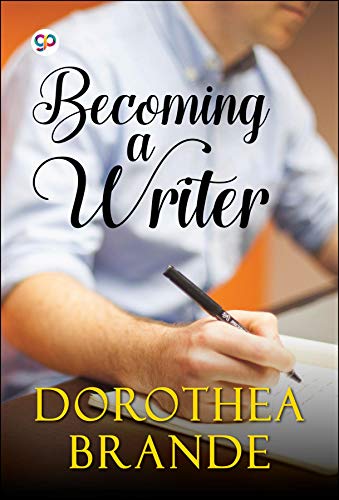
Becoming a Writer
Dorothea Brande, John Gardner
4.2
Refreshingly slim, beautifully written and deliciously elegant, Dorothea Brande's Becoming a Writer remains evergreen decades after it was first written. Brande believed passionately that although people have varying amounts of talent, anyone can write. It's just a question of finding the "writer's magic"--a degree of which is in us all. She also insists that writing can be both taught and learned. So she is enraged by the pessimistic authors of so many writing books who rejoice in trying to put off the aspiring writer by constantly stressing how difficult it all is.
With close reference to the great writers of her day--Wolfe, Forster, Wharton and so on--Brande gives practical but inspirational advice about finding the right time of day to write and being very self disciplined about it--"You have decided to write at four o'clock, and at four o'clock you must write." She's strong on confidence building and there's a lot about cheating your unconscious which will constantly try to stop you writing by coming up with excuses. Then there are exercises to help you get into the right frame of mind and to build up writing stamina. She also shows how to harness the unconscious, how to fall into the "artistic coma," then how to re-emerge and be your own critic.
This is Dorothea Brande's legacy to all those who have ever wanted to express their ideas in written form. A sound, practical, inspirational and charming approach to writing, it fulfills on finding "the writer's magic."
…
Recommended by Andrew Cowan and Sophie King.
Andrew Cowan
Because creative writing has now taken off and has become this very widespread academic discipline it is beginning to acquire its own canon of key works and key texts. This is one of the oldest of them. It’s a book that almost anyone who teaches creative writing will have read. They will probably have read it because some fundamentals are explained and I think the most important one is Brande’s sense of the creative writer being comprised of two people. One of them is the artist and the other is the critic. [source]
Sophie King
This book will help you work out what you can do with your own book. [source]
Cover unavailable
31
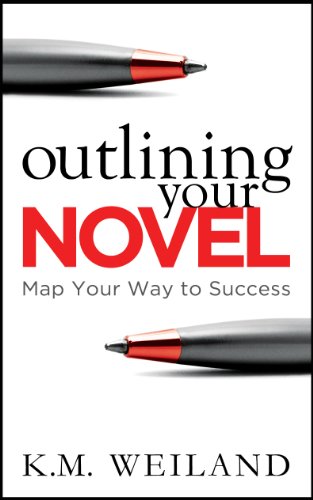
Outlining Your Novel: Map Your Way to Success
K. M. Weiland
4.2
Writers often look upon outlines with fear and trembling. But when properly understood and correctly wielded, the outline is one of the most powerful weapons in a writer’s arsenal. Outlining Your Novel: Map Your Way to Success will:
Help you choose the right type of outline for you Guide you in brainstorming plot ideas Aid you in discovering your characters Show you how to structure your scenes Explain how to format your finished outline Instruct you in how to use your outline Reveal the benefits: Ensures cohesion and balance Prevents dead-end ideas Provides foreshadowing Offers assurance and motivation Dispel misconceptions: Requires formal formatting Limits creativity Robs the joy of discovery Takes too much time Even if you're certain outlining isn't for you, the book offers all kinds of important tips on plot, structure, and character. Includes exclusive interviews with Larry Brooks, Elizabeth Spann Craig, Lisa Grace, Dan L. Hays, Jody Hedlund, Carolyn Kaufman, Becky Levine, Roz Morris, John Robinson, and Aggie Villanueva, answering important questions:
Can you describe your outlining process? What is the greatest benefit of outlining? What is the biggest potential pitfall of outlining? Do you recommend "pantsing" for certain situations and outlining for others? What's the most important contributing factor to a successful outline?
…
Cover unavailable
32
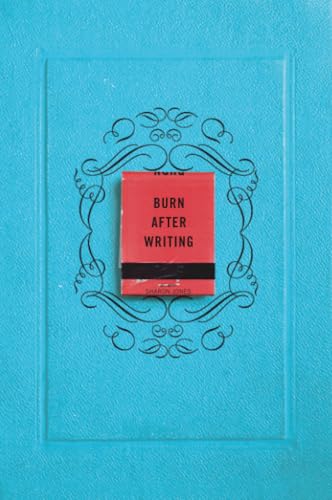
Burn After Writing
Sharon Jones
4.2
How honest can you be when no one is watching?
Tumblr, Facebook, LinkedIn, Twitter, Instagram, texting, Snapchat, YouTube…the world has become one giant confessional. In a reversal of this trend, Burn After Writingencourages you to share nothing. With its incisive questions and thought experiments, this private journal challenges you to play a game of Truth or Dare with yourself.
Push your limits, reflect on your past, present, and future, and create a secret book that’s about you, and just for you. And when you’re finished, toss it, hide it, or Burn After Writing.
…
Cover unavailable
33
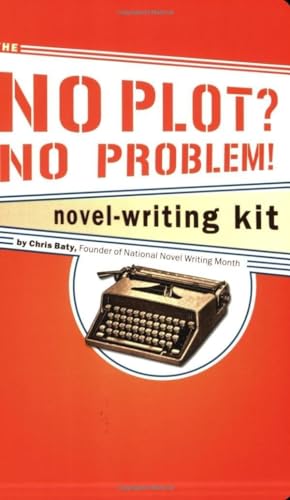
No Plot? No Problem!: A Low-Stress, High-Velocity Guide to Writing a Novel in 30 Days
Chris Baty
4.2
You've always wanted to write, but . . . just haven't gotten around to it. No Plot? No Problem! is the kick in the pants you've been waiting for.
Let Chris Baty, founder of the rockin' literary marathon National Novel Writing Month (a.k.a. NaNoWriMo), guide you through four exciting weeks of hard-core noveling. Baty's pep talks and essential survival strategies cover the initial momentum and energy of Week One, the critical "plot flashes" of Week Two, the "Can I quit now?" impulses of Week Three, and the champagne and roar of the crowd during Week Four. Whether you're a first-time novelist who just can't seem to get pen to paper or a results-oriented writer seeking a creative on-ramp into the world of publishing, this is the adventure for you.
So what are you waiting for? The No Plot? approach worked for the thousands of people who've signed up for NaNoWriMo, and it can work for you! Let No Plot? No Problem! help you get fired up and on the right track.
…
Cover unavailable
34
2,000 to 10,000: How to Write Faster, Write Better, and Write More of What You Love
Rachel Aaro
4.2
"Have you ever wanted to double your daily word counts? Do you sometimes feel like you're crawling through your story? Do you want to write more every day without increasing the time you spend writing or sacrificing quality? It's not impossible, it's not even that hard. This is the book explaining how, with a few simple changes, I boosted my daily writing from 2000 words to over 10k a day, and how you can too."
Expanding on her highly successful process for doubling daily word counts, this book, a combination of reworked blog posts and new material, offers practical writing advice for anyone who's ever longed to increase their daily writing output. In addition to updated information for Rachel's popular 2k to 10k writing efficiency process, 5 step plotting method, and easy editing tips, this new book includes chapters on creating characters that write their own stories, practical plot structure, and learning to love your daily writing. Full of easy to follow, practical advice from a commercial author who doesn't eat if she doesn't produce good books on a regular basis, 2k to 10k focuses not just on writing faster, but writing better, and having more fun while you do it.
…
Cover unavailable
35
Characters and Viewpoint (Elements of Fiction Writing)
Orson Scott Card
4.2
Vivid and memorable characters aren't born: they have to be made.
This book is a set of tools: literary crowbars, chisels, mallets, pliers and tongs. Use them to pry, chip, yank and sift good characters out of the place where they live in your memory, your imagination and your soul.
Award-winning author Orson Scott Card explains in depth the techniques of inventing, developing and presenting characters, plus handling viewpoint in novels and short stories. With specific examples, he spells out your narrative options–the choices you'll make in creating fictional people so "real" that readers will feel they know them like members of their own families.
You'll learn how to: draw the characters from a variety of sources, including a story's basic idea, real life–even a character's social circumstances make characters show who they are by the things they do and say, and by their individual "style" develop characters readers will love–or love to hate distinguish among major characters, minor characters and walk-ons, and develop each one appropriately choose the most effective viewpoint to reveal the characters and move the storytelling decide how deeply you should explore your characters' thoughts, emotions and attitudes
…
Cover unavailable
36
The Right to Write: An Invitation and Initiation Into the Writing Life
Julia Cameron
4.2
What if everything we have been taught about learning to write was wrong? In The Right to Write, Julia Cameron's most revolutionary book, the author of the bestselling self-help guide The Artist's Way, asserts that conventional writing wisdom would have you believe in a false doctrine that stifles creativity. With the techniques and anecdotes in The Right to Write, readers learn to make writing a natural, intensely personal part of life. Cameron's instruction and examples include the details of the writing processes she uses to create her own bestselling books. She makes writing a playful and realistic as well as a reflective event. Anyone jumping into the writing life for the first time and those already living it will discover the art of writing is never the same after reading The Right to Write.
…
Cover unavailable
37
Writing the Breakout Novel
Donald Maass
4.2
Take your fiction to the next level!
Maybe you're a first-time novelist looking for practical guidance. Maybe you've already been published, but your latest effort is stuck in mid-list limbo. Whatever the case may be, author and literary agent Donald Maass can show you how to take your prose to the next level and write a breakout novel - one that rises out of obscurity and hits the best-seller lists.
Maass details the elements that all breakout novels share - regardless of genre - then shows you writing techniques that can make your own books stand out and succeed in a crowded marketplace.
You'll learn to:
- establish a powerful and sweeping sense of time and place - weave subplots into the main action for a complex, engrossing story - create larger-than-life characters that step right off the page - explore universal themes that will interest a broad audience of readers - sustain a high degree of narrative tension from start to finish - develop an inspired premise that sets your novel apart from the competition
Then, using examples from the recent works of several best-selling authors - including novelist Anne Perry - Maass illustrates methods for upping the ante in every aspect of your novel writing. You'll capture the eye of an agent, generate publisher interest and lay the foundation for a promising career.
…
Cover unavailable
38
Structuring Your Novel: Essential Keys for Writing an Outstanding Story
K. M. Weiland
4.2
Is Structure the Hidden Foundation of All Successful Stories?
Why do some stories work and others don’t? The answer is structure. In this new guide from the author of the bestselling Outlining Your Novel, you will discover the universal underpinnings that guarantee powerful plot and character arcs. An understanding of proper story and scene structure will help you to not only perfectly time your story’s major events, but will also provide you with an unerring standard to use in evaluating your novel’s pacing and progression.
Structuring Your Novel will show you:
• How to determine the best methods for unleashing your unique and personal vision for your story. • How to identify common structural weaknesses and flip them around into stunning strengths. • How to eliminate saggy middles by discovering your “centerpiece.” • Why you should NEVER include conflict on every page. • How to discover the questions you don’t want readers asking about your plot—and then how to get them to ask the right questions.
Story structure has empowered countless bestselling and classic authors. Now it’s your turn!
…
Cover unavailable
39
Story Engineering: Character Development, Story Concept, Scene Construction
Larry Brooks
4.2
Cover unavailable
40
Wild Mind: Living the Writer's Life
Natalie Goldberg
4.2
Natalie Goldberg, author of the bestselling Writing Down The Bones, teaches a method of writing that can take you beyond craft to the true source of creative power: The mind that is "raw, full of energy, alive and hungry."
Here is compassionate, practical, and often humorous advice about how to find time to write, how to discover your personal style, how to make sentences come alive, and how to overcome procrastination and writer's block -- including more than thirty provocative "Try this" exercises to get your pen moving.
And here also is a larger vision of the writer's task: balancing daily responsibilities with a commitment to writing; knowing when to take risks as a writer and a human being; coming to terms with success and failure and loss; and learning self-acceptance -- both in life and art.
Wild Mind will change your way of writing. It may also change your life.
…
Cover unavailable
41
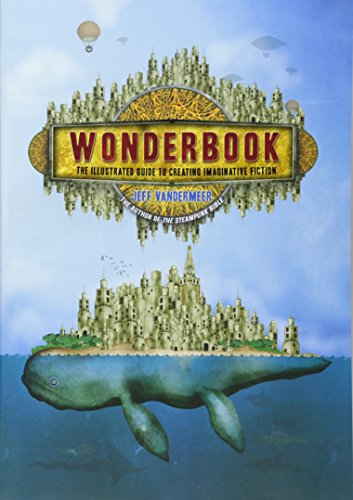
Wonderbook: The Illustrated Guide to Creating Imaginative Fiction
Jeff VanderMeer
4.2
This all-new definitive guide to writing imaginative fiction takes a completely novel approach and fully exploits the visual nature of fantasy through original drawings, maps, renderings, and exercises to create a spectacularly beautiful and inspiring object. Employing an accessible, example-rich approach, Wonderbook energizes and motivates while also providing practical, nuts-and-bolts information needed to improve as a writer. Aimed at aspiring and intermediate-level writers, Wonderbook includes helpful sidebars and essays from some of the biggest names in fantasy today, such as George R. R. Martin, Lev Grossman, Neil Gaiman, Michael Moorcock, Catherynne M. Valente, and Karen Joy Fowler, to name a few.
Praise for Wonderbook:
“Jammed with storytelling wisdom.” —Fast Company’s Co.Create blog
“This is the kind of book you leave sitting out for all to see . . . and the kind of book you will find yourself picking up again and again.” —Kirkus Reviews online
“If you’re looking for a handy guide to not just crafting imaginative fiction like sci-fi, fantasy, and horror, but to writing in general, be sure to pick up a copy of Steampunk Bible author Jeff Vandermeer’s lovingly compiled Wonderbook." —Flavorwire
“Jeff Vandermeer and Jeremy Zerfoss have created a kaleidoscopically rich and beautiful book about fiction writing.” —Star Tribune
“Because it is so layered and filled with text, tips, and links to online extras, this book can be read again and again by both those who want to learn the craft of writing and those interested in the process of others.” —Library Journal
…
Cover unavailable
42
Zen and the Art of Motorcycle Maintenance: An Inquiry Into Values
This lyrical, evocative, thought-provoking journal of a man's quest for truth - and for himself - has touched and changed an entire generation, and is ready to reach out to a new one. At its heart, the story is all too simple: a man and his son take a motorcycle trip across America. But this is not a simple trip at all, for around every corner, through mountain and desert, wind and rain, and searing heat and biting cold, their pilgrimage leads them to new vistas of self-discovery and renewal.
Zen and the Art of Motorcycle Maintenance is an elemental work that has helped to shape and define the past 25-years of American culture. This special audio edition presents this adventure in an exciting new way - for the millions who have already taken this journey and want to travel these roads again, and for the many more who will discover for the first time the wonders and challenges of a story that will change the way they think and feel about their lives. Unique to audio, this edition features a new introduction by the author.
…
Recommended by Brad Feld, Drew Houston, Ev Williams, and 7 others.
Brad Feld
Co-Founder/Foundry Group
I think every entrepreneur or aspiring entrepreneur should read the book Zen and the Art of Motorcycle Maintenance. It was written in the 1970s by a guy named Robert Pirsig. It was his first book, it's kind of a hippie philosophy treatised journey. The word that sort of came out of it was Chautauqua, he's like having a conversation with his son as they do a motorcycle trip across the country, and it's just this incredible treatise on philosophy, product, quality, accomplishing what your goal is, against the backdrop of the narrator, the author, going crazy and having a psychotic break. And so it's this very powerful mix of accessible philosophy, combined with this pretty captivating journey in a book that, again, anybody who builds anything, there's so much in it that's so worth reading and just soaking in. But it's not what you'd expect, it's not a "here's how you do it", you have to read it slowly and think about it. So, it's one of my favorites. [source]
Drew Houston
CEO/Dropbox
There are engineers who dismiss all these things that can’t be fit into an algorithm, or that don’t have some kind of mathematical rigor underpinning them, this book is about that question. [source]
Honorable mentions: Jonathan Livingston Seagull, Zen and the Art of Motorcycle Maintenance, and The Joy of Sex, all given to me by my mother. I believe they helped inculcate some of the 1960s-70s ethos of individual freedom into my thinking. [source]
Cover unavailable
43
Story Genius: How to Use Brain Science to Go Beyond Outlining and Write a Riveting Novel (Before You Waste Three Years Writing 327 Pages That Go Nowhere)
Lisa Cron
4.1
Following on the heels of Lisa Cron's breakout first book, Wired for Story, this writing guide reveals how to use cognitive storytelling strategies to build a scene-by-scene blueprint for a riveting story.
Story Genius is a foolproof program that saves writers from penning hundreds of pages only to realize that something's not working and they have to start again. Informed by story consultant Lisa Cron's science-based insights into how story structure is built into the architecture of the brain, this guide shows writers how to plumb the nitty-gritty details of their raw idea to organically generate a story scene by scene. Once writers reach the end of Cron's program, they will have both a blueprint that works and plenty of compelling writing suitable for their finished novel--allowing them to write forward with confidence.
…
Cover unavailable
44
Letters to a Young Poet
Rainer Maria Rilke
4.1
Born in 1875, the great German lyric poet Rainer Maria Rilke published his first collection of poems in 1898 and went on to become renowned for his delicate depiction of the workings of the human heart. Drawn by some sympathetic note in his poems, young people often wrote to Rilke with their problems and hopes. From 1903 to 1908 Rilke wrote a series of remarkable responses to a young, would-be poet on poetry and on surviving as a sensitive observer in a harsh world. Those letters, still a fresh source of inspiration and insight, are accompanied here by a chronicle of Rilke's life that shows what he was experiencing in his own relationship to life and work when he wrote them.
…
Recommended by Estella Ng and Todd Henry.
Estella Ng
Letters to a Young Poet - it is everything. … This line in Letters to a Young Poet “If your daily life seems poor, do not blame it; blame yourself, tell yourself that you are not poet enough to call forth its riches" is an important one to me. I constantly go back to this to evaluate if I have been living a full life. [source]
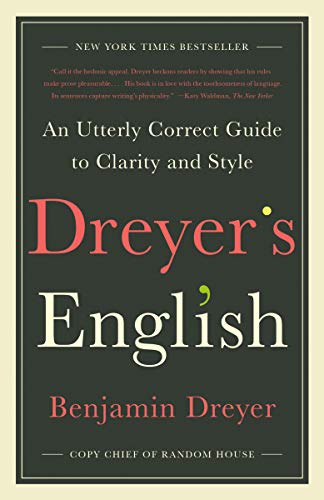
Dreyer's English: An Utterly Correct Guide to Clarity and Style
Benjamin Dreyer
4.1
A witty, informative guide to writing "good English" from Random House's longtime copy chief and one of Twitter's leading enforcers of proper grammar--a twenty-first-century Elements of Style.
As authoritative as it is amusing, this book distills everything Benjamin Dreyer has learned from the hundreds of books he has copyedited, including works by Elizabeth Strout, E. L. Doctorow, and Frank Rich, into a useful guide not just for writers but for everyone who wants to put their best foot forward in writing prose. Dreyer offers lessons on the ins and outs of punctuation and grammar, including how to navigate the words he calls "the confusables," like tricky homophones; the myriad ways to use (and misuse) a comma; and how to recognize--though not necessarily do away with--the passive voice. (Hint: If you can plausibly add "by zombies" to the end of a sentence, it's passive.) People are sharing their writing more than ever--on blogs, on Twitter--and this book lays out, clearly and comprehensibly, everything writers can do to keep readers focused on the real reason writers write: to communicate their ideas clearly and effectively. Chock-full of advice, insider wisdom, and fun facts on the rules (and nonrules) of the English language, this book will prove invaluable to everyone who wants to shore up their writing skills, mandatory for people who spend their time editing and shaping other people's prose, and--perhaps best of all--an utter treat for anyone who simply revels in language.
…
Recommended by Christina Reynolds.
Christina Reynolds
Yes, it’s a book about copy editing. And even though I disagree with his take on the Oxford comma, it’s a delightful must read. https://t.co/UJ0hTAYXsx [source]
Cover unavailable
46
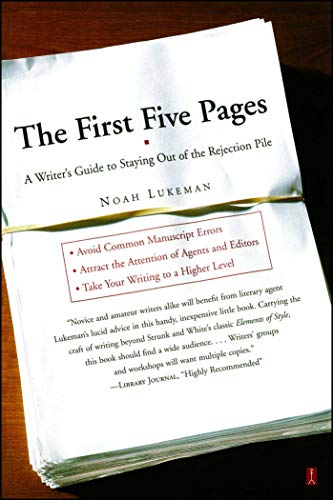
The First Five Pages: A Writer's Guide To Staying Out of the Rejection Pile
Noah Lukeman
4.1
The First Five Pages
Editors always tell novice writers that the first few pages of a manuscript are crucial in the publishing process -- and it's true. If an editor or agent (or reader) loses interest after a page or two, you've lost him or her completely, even if the middle of your novel is brilliant and the ending phenomenal. Noah Lukeman, an agent in Manhattan, has taken this advice and created a book that examines just what this means, and I have to tell you, it's one of the best I've read.
I've written (and seen published) pretty close to a dozen novels in as many years -- some are still to be published and will be out shortly; others are already out of print after four years. But I wish I had read Lukeman's book, The First Five Pages, when I began writing fiction.
I'm glad I did now. It has helped, immediately. I'm already embarrassed about some of the goofs I made in my writing -- and I've been revising recent prose with his advice in mind.
First off, Lukeman is a literary agent who once was an editor, and his editorial eye is sharp. If every novelist and short story writer in this country had Lukeman as an editor, we'd have a lot more readable prose out there.
He writes:
Many writers spend the majority of their time devising their plot. What they don't seem to understand is that if their execution -- if their prose -- isn't up to par, their plot may not even be considered.
This bears repeating, because in all the books I've read on writing, this is an element that is most often forgotten in the rush to come up with snappy ideas and sharp plot progressions. You can always send a hero on a journey, after all, but if no reader wants to follow him, you've wasted your time.
In a tone that can be a bit professorial at times, Lukeman brings what prose is -- and how it reads to others -- into sharp focus. He deals with dialogue, style, and, most importantly, sound.
Sound.
How does prose sound?
It must have rhythm, its own kind of music, in order to draw the reader into the fictive dream. Lukeman's tips and pointers are genuinely helpful, and even important with regard to the sound of the prose itself.
Lukeman also brings in on-target exercises for writers of prose and the wonderful advice for novelists to read poetry -- and often.
Those first five pages are crucial, for all concerned. But forget the editor and agent and reader. They are important for you, the writer, because they determine the sharpness of your focus, the completeness of your vision, the confidence you, as a writer, need to plunge into a three- or four- or five-hundred-page story.
The First Five Pages should be on every writer's shelf. This is the real thing.P#151;Douglas Clegg
Douglas Clegg is the author of numerous novels and stories, including The Halloween Man and the collection The Nightmare Chronicles. In addition, Clegg is the author of the world's first publisher-sponsored Internet email novel, Naomi.
…
Cover unavailable
47
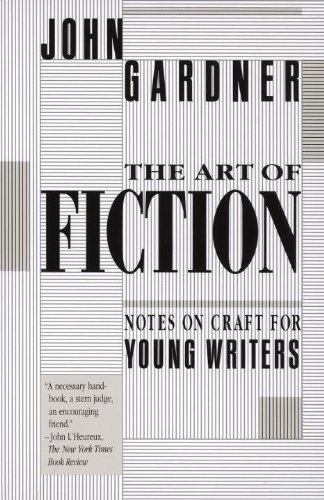
The Art of Fiction: Notes on Craft for Young Writers
John Gardner
4.1
This classic guide, from the renowned novelist and professor, has helped transform generations of aspiring writers into masterful writers— and will continue to do so for many years to come.
John Gardner was almost as famous as a teacher of creative writing as he was for his own works. In this practical, instructive handbook, based on the courses and seminars that he gave, he explains, simply and cogently, the principles and techniques of good writing. Gardner’s lessons, exemplified with detailed excerpts from classic works of literature, sweep across a complete range of topics—from the nature of aesthetics to the shape of a refined sentence. Written with passion, precision, and a deep respect for the art of writing, Gardner’s book serves by turns as a critic, mentor, and friend. Anyone who has ever thought of taking the step from reader to writer should begin here.
…
Cover unavailable
48
The Negative Trait Thesaurus: A Writer's Guide to Character Flaws
Angela Ackerman, Becca Puglisi
4.1
Crafting likable, interesting characters is a balancing act, and finding that perfect mix of strengths and weaknesses can be difficult. But the task has become easier thanks to The Negative Trait Thesaurus.
Through its flaw-centric exploration of character arc, motivation, emotional wounds, and basic needs, writers will learn which flaws make the most sense for their heroes, villains, and other members of the story’s cast. This book’s vast collection of flaws will help writers to explore the possible causes, attitudes, behaviors, thoughts, and related emotions behind their characters’ weaknesses so they can be written effectively and realistically. Common characterization pitfalls and methods to avoid them are also included, along with invaluable downloadable tools to aid in character creation.
Written in list format and fully indexed, this brainstorming resource is perfect for creating deep, flawed characters that readers will relate to.
“In these brilliantly conceived, superbly organized and astonishingly thorough volumes, Angela Ackerman and Becca Puglisi have created an invaluable resource for writers and storytellers. Whether you are searching for new and unique ways to add and define characters, or brainstorming methods for revealing those characters without resorting to clichés, it is hard to imagine two more powerful tools for adding depth and dimension to your screenplays, novels or plays.”
- Michael Hauge, Hollywood script consultant and story expert, author of Writing Screenplays That Sell and Selling Your Story in 60 Seconds: The Guaranteed Way to Get Your Screenplay or Novel Read
…
Cover unavailable
49
How to Write Science Fiction & Fantasy
Orson Scott Card
4.1
Writing for science fiction and fantasy audiences can be the most exciting writing you've ever done. Your readers are curious and want you to take them beyond ""The Fields We Know,"" to help them explore the infinite boundaries of the worlds you create.
Here, science fiction great Orson Scott Card shares his expertise in these genres. You'll learn:
- What is and isn't science fiction and fantasy, and by whose standards -- and where your work fits in. - How to build, populate, and dramatize a credible, inviting world your readers will want to explore. - How to use the MICE quotient -- milieu, idea, character, event -- to structure a successful story. - Where the markets are and how to reach them to get published.
The knowledge and skills you gain through this book will help you effectively lead your readers into the strangeness you create -- one tantalizing step at a time.
…
Cover unavailable
50
A Room of One's Own
Virginia Woolf
4.1
A Room of One's Own is an extended essay by Virginia Woolf. First published on the 24th of October, 1929, the essay was based on a series of lectures she delivered at Newnham College and Girton College, two women's colleges at Cambridge University in October 1928. While this extended essay in fact employs a fictional narrator and narrative to explore women both as writers of and characters in fiction, the manuscript for the delivery of the series of lectures, titled Women and Fiction, and hence the essay, are considered nonfiction. The essay is seen as a feminist text, and is noted in its argument for both a literal and figural space for women writers within a literary tradition dominated by patriarchy.
…
Cover unavailable
51
The Writing Strategies Book: Your Everything Guide to Developing Skilled Writers
Jennifer Serravallo
4.1
The Reading Strategies Book made the New York Times Best Seller List by making it simpler to match students' needs to high-quality instruction. Now, in The Writing Strategies Book, Jen Serravallo does the same, collecting 300 of the most effective strategies to share with writers, and grouping them beneath 10 crucial goals.
"You can think of the goals as the what, "writes Jen, "and the strategies as the how." From composing with pictures all the way to conventions and beyond, you'll have just-right teaching, just in time. With Jen's help you'll:
develop individual goals for every writer give students step-by-step strategies for writing with skill and craft coach writers using prompts aligned to a strategy present mentor texts that support a genre and strategy adjust instruction to meet individual needs with Jen's Teaching Tips demonstrate and explain a writing move with her Lesson Language learn more with Hat Tips to the work of influential teacher-authors. She even offers suggestions for stocking your writing center, planning units of study, celebrating student writing, and keeping records.
Whether you use Writing Workshop, 6+1 Traits, Daily 5's "Work on Writing," a scripted writing program, the writing exercises in your basal, or any other approach, you'll discover a treasure chest of ways to work with whole classes, small groups, or individual writers.
"I am convinced that helping kids to articulate clear goals for their work," writes Jen Serravallo, "and supporting them with strategies and feedback to accomplish those goals, makes a huge difference." With The Writing Strategies Book you can make that kind of difference with your writers every day.
…
Cover unavailable
52
Show Your Work! 10 Ways to Show Your Creativity and Get Discovered: 10 Ways to Share Your Creativity and Get Discovered
In his New York Times bestseller Steal Like an Artist, Austin Kleon showed readers how to unlock their creativity by stealing from the community of other movers and shakers. Now, in an even more forward-thinking and necessary book, he shows how to take that critical next step on a creative journey getting known. Show Your Work! is about why generosity trumps genius. It s about getting findable, about using the network instead of wasting time networking. It s not self-promotion, it s self-discovery let others into your process, then let them steal from you. Filled with illustrations, quotes, stories, and examples, Show Your Work! offers ten transformative rules for being open, generous, brave, productive. In chapters such as You Don t Have to Be a Genius; Share Something Small Every Day; and Stick Around, Kleon creates a user s manual for embracing the communal nature of creativity what he calls the ecology of talent. From broader life lessons about work (you can t find your voice if you don t use it) to the etiquette of sharing and the dangers of oversharing to the practicalities of Internet life (build a good domain name; give credit when credit is due), it s an inspiring manifesto for succeeding as any kind of artist or entrepreneur in the digital age."
…
Recommended by Ryan Holiday, Armina Sirbu, Benjamin Spall, and 5 others.
Part of ambition is modeling yourself after those you’d like to be like. Austin’s philosophy of ruthlessly stealing and remixing the greats might sound appalling at first but it is actually the essence of art. You learn by stealing, you become creative by stealing, you push yourself to be better by working with these materials. Austin is a fantastic artist, but most importantly he communicates the essence of writing and creating art better than anyone else I can think of. It is a manifesto for any young, creative person looking to make his mark. Pair up with Show Your Work which is also excellent. [source]
Armina Sirbu
Show your work - by Austin Kleon - is magical and I feel like reading it slowly, like enjoying a cappuccino. I need to let each "mini-chapter" sink in and take my time to also apply what I am reading there because it's "spot on" for my current projects. [source]
Benjamin Spall
Question: What five books would you recommend to youngsters interested in your professional path? Show Your Work! by Austin Kleon, … [source]
Cover unavailable
53
On Becoming a Novelist
John Gardner, Raymond Carver
4.1
On Becoming a Novelist contains the wisdom accumulated during John Gardner's distinguished twenty-year career as a fiction writer and creative writing teacher. With elegance, humor, and sophistication, Gardner describes the life of a working novelist; warns what needs to be guarded against, both from within the writer and from without; and predicts what the writer can reasonably expect and what, in general, he or she cannot. "For a certain kind of person," Gardner writes, "nothing is more joyful or satisfying than the life of a novelist." But no other vocation, he is quick to add, is so fraught with professional and spiritual difficulties. Whether discussing the supposed value of writer's workshops, explaining the role of the novelist's agent and editor, or railing against the seductive fruits of literary elitism, On Becoming a Novelist is an indispensable, life-affirming handbook for anyone authentically called to the profession. "A miraculously detailed account of the creative process."—Anne Tyler, Baltimore Sun
…
Recommended by Andrew Cowan.
Andrew Cowan
This is another one of the classics. He was quite a successful novelist in the States, but possibly an even more successful teacher of creative writing. The short story writer and poet Raymond Carver, for instance, was one of his students. And he died young in a motorcycle accident when he was 49. There are two classic works by him. One is this book, On Becoming a Novelist, and the other is The Art of Fiction: Notes on Craft for Young Writers. They were both put together from his teaching notes after he died. [source]
Cover unavailable
54
The Positive Trait Thesaurus: A Writer's Guide to Character Attributes
Angela Ackerman, Becca Puglisi
4.1
Character creation can be hard, but it’s about to get a lot easier. Inside The Positive Trait Thesaurus, you’ll find:
* A large selection of attributes to choose from when building a personality profile. Each entry lists possible causes for why a trait might emerge, along with associated attitudes, behaviors, thoughts, and emotions * Real character examples from literature, film, or television to show how an attribute drives actions and decisions, influences goals, and steers relationships * Advice on using positive traits to immediately hook readers while avoiding common personality pitfalls * Insight on human needs and morality, and how each determines the strengths that emerge in heroes and villains alike * Information on the key role positive attributes play within the character arc, and how they’re vital to overcoming fatal flaws and achieving success * Downloadable tools for organizing a character’s attributes and providing a deeper understanding of his past, his needs, and the emotional wounds he must overcome
If you find character creation difficult or worry that your cast members all seem the same, The Positive Trait Thesaurus is brimming with ideas to help you develop one-of-a-kind, dynamic characters that readers will love. Extensively indexed, with entries written in a user-friendly list format, this brainstorming resource is perfect for any character creation project.
“In these brilliantly conceived, superbly organized and astonishingly thorough volumes, Angela Ackerman and Becca Puglisi have created an invaluable resource for writers and storytellers. Whether you are searching for new and unique ways to add and define characters, or brainstorming methods for revealing those characters without resorting to clichés, it is hard to imagine two more powerful tools for adding depth and dimension to your screenplays, novels or plays.”
- Michael Hauge, Hollywood script consultant and story expert, author of Writing Screenplays That Sell and Selling Your Story in 60 Seconds: The Guaranteed Way to Get Your Screenplay or Novel Read
…
Cover unavailable
55
Take Off Your Pants! Outline Your Books for Faster, Better Writing
Libbie Hawker
4.1
This is an alternate cover edition of ASIN B00UKC0GHA
When it comes to writing books, are you a “plotter” or a “pantser?” Is one method really better than the other?
In this instructional ebook, author Libbie Hawker explains the benefits and technique of planning a story before you begin to write. She’ll show you how to develop a foolproof character arc and plot, how to pace any book for a can’t-put-down reading experience, and how to ensure that your stories are complete and satisfying without wasting time or words.
Hawker’s outlining technique works no matter what genre you write, and no matter the age of your audience. If you want to improve your writing speed, increase your backlist, and ensure a quality book before you even write the first word, this is the how-to book for you.
Take off your pants! It’s time to start outlining.
…
Cover unavailable
56
Screenplay: The Foundations of Screenwriting
Syd Field
4.1
A generation of screenwriters has used Syd Field’s bestselling books to ignite successful careers in film. Now the celebrated producer, lecturer, teacher, and bestselling author has updated his classic guide for a new generation of filmmakers, offering a fresh insider’s perspective on the film industry today. From concept to character, from opening scene to finished script, here are easily understood guidelines to help aspiring screenwriters—from novices to practiced writers—hone their craft. Filled with updated material—including all-new personal anecdotes and insights, guidelines on marketing and collaboration, plus analyses of recent films, from American Beauty to Lord of the Rings—Screenplay presents a step-by-step, comprehensive technique for writing the screenplay that will succeed in Hollywood. Discover:
•Why the first ten pages of your script are crucially important •How to visually “grab” the reader from page one, word one •Why structure and character are the essential foundation of your screenplay •How to adapt a novel, a play, or an article into a screenplay •Tips on protecting your work—three legal ways to claim ownership of your screenplay •The essentials of writing great dialogue, creating character, building a story line, overcoming writer’s block, getting an agent, and much more.
With this newly updated edition of his bestselling classic, Syd Field proves yet again why he is revered as the master of the screenplay—and why his celebrated guide has become the industry’s gold standard for successful screenwriting.
…
Cover unavailable
57
Creating Character Arcs: The Masterful Author's Guide to Uniting Story Structure, Plot, and Character Development (Helping Writers Become Authors Book 7)
K.M. Weiland
4.1
About the Book
Powerful Character Arcs Create Powerful Stories
Have you written a story with an exciting concept and interesting characters—but it just isn’t grabbing the attention of readers or agents? It’s time to look deeper into the story beats that create realistic and compelling character arcs. Internationally published, award-winning novelist K.M. Weiland shares her acclaimed method for achieving memorable and moving character arcs in every book you write.
By applying the foundation of the Three-Act Story Structure and then delving even deeper into the psychology of realistic and dynamic human change, Weiland offers a beat-by-beat checklist of character arc guidelines that flexes to fit any type of story.
This comprehensive book will teach you:
How to determine which arc—positive, negative, or flat—is right for your character. Why you should NEVER pit plot against character. Instead, learn how to blend story structure and character development. How to recognize and avoid the worst pitfalls of writing novels without character arcs. How to hack the secret to using overarching character arcs to create amazing trilogies and series. And much more!
Gaining an understanding of how to write character arcs is a game-changing moment in any author’s pursuit of the craft.
Bring your characters to unforgettable and realistic life—and take your stories from good to great!
…
Cover unavailable
58
Still Writing: The Perils and Pleasures of a Creative Life
Dani Shapiro
4.1
"Everything I know about life, I learned from the daily practice of sitting down to write."
From the best-selling author of Devotion and Slow Motion comes a witty, heartfelt, and practical look at the exhilarating and challenging process of storytelling. At once a memoir, meditation on the artistic process, and advice on craft, Still Writing is an intimate and eloquent companion to living a creative life.
Through a blend of deeply personal stories about what formed her as a writer, tales from other authors, and a searching look at her own creative process, Shapiro offers her gift to writers everywhere: an elegant guide of hard-won wisdom and advice for staying the course. "The writer's life requires courage, patience, empathy, openness. It requires the ability to be alone with oneself. Gentle with oneself. To be disciplined, and at the same time, take risks." Writers--and anyone with an artistic temperament--will find inspiration and comfort in these pages. Offering lessons learned over twenty years of teaching and writing, Shapiro brings her own revealing insights to weave an indispensable almanac for modern writers.
Like Anne Lamott's Bird by Bird, Virginia Woolf's A Writer's Diary, and Stephen King's On Writing, Dani Shapiro's Still Writing is a lodestar for aspiring scribes and an eloquent memoir of the writing life.
…
Cover unavailable
59
Write. Publish. Repeat. (The No-Luck-Required Guide to Self-Publishing Success)
Sean M. Platt and Johnny Truan
4.1
Write. Publish. Repeat. The No-Luck-Required Guide to Publishing
In 2013, Johnny B. Truant and Sean Platt published 1.5 million words and made their full-time livings as indie authors. In Write. Publish. Repeat., they tell you exactly how they did it: how they created over 15 independent franchises across 50+ published works, how they turned their art into a logical, sustainable business, and how any independent author can do the same to build a sustainable, profitable career with their writing.
Write. Publish. Repeat. explains the current self-publishing landscape and covers the truths and myths about what it means to be an indie author now and in the foreseeable future. It explains how to create books your readers will love and will want to return to again and again. Write. Publish. Repeat. details expert methods for building story worlds, characters, and plots, understanding your market (right down to your ideal reader), using the best tools possible to capture your draft, and explains proven best practices for editing. The book also discusses covers, titles, formatting, pricing, and publishing to multiple platforms, plus a bit on getting your books into print (and why that might not be a good idea!). But most importantly, Write. Publish. Repeat. details the psychology-driven marketing plan that Sean and Johnny built to shape their stories into "products" that readers couldn't help but be drawn into -- thus almost automatically generating sales -- and explores ways that smart, business-minded writers can do the same to future-proof their careers.
This book is not a formula with an easy path to follow. It is a guidebook that will help you build a successful indie publishing career, no matter what type of writer you are ... so long as you're the type who's willing to do the work.
Sean Platt has a good book that just came out about writing many books. I recommend it. “Write. Publish. Repeat.” I think Sean has published over 50 books. I don’t know because he uses pseudonyms as well. [source]
Kaci Lambe Kai
On the same flight, I read Write. Publish. Repeat. by Sean Platt and Johnny B. Truant. They made it seem so easy to become an author and a creative. It's as easy as the title. Create a thing. Put it out into the world. Do it all over again. I got off that flight a changed human being. I knew I wanted to make my living as an independent creative in which I create works, release them, and obtain dollars to sustain myself on that creativity. In January, I'll publish my first book. [source]
Cover unavailable
60
Beginnings, Middles & Ends (Elements of Fiction Writing)
Nancy Kress
4.1
Get your stories off to a roaring start. Keep them tight and crisp throughout. Conclude them with a wallop.
Is the story or novel you've been carrying around in your head the same one you see on the page? Or does the dialogue suddenly sound flat and predictable? Do the events seem to ramble?
Translating a flash of inspiration into a compelling story requires careful crafting. The words you choose, how you describe characters, and the way you orchestrate conflict all make the difference--the difference between a story that is slow to begin, flounders midway, or trails off at the end--and one that holds the interest of readers and editors to the final page.
By demonstrating effective solutions for potential problems at each stage of your story, Nancy Kress will help you...hook the editor on the first three paragraphs make--and keep--your story's "implicit promise"build drama and credibility by controlling your prose Dozens of exercises help you strengthen your short story or novel. Plus, you'll sharpen skills and gain new insight into...the price a writer pays for flashbacks six ways characters should "reveal" themselves techniques for writing--and rewriting Let this working resource be your guide to successful stories--from beginning to end.
…
Cover unavailable
61
The Art of Memoir
Mary Karr
4.1
Credited with sparking the current memoir explosion, Mary Karr’s The Liars’ Club spent more than a year at the top of the New York Times list. She followed with two other smash bestsellers: Cherry and Lit, which were critical hits as well.
For thirty years Karr has also taught the form, winning graduate teaching prizes for her highly selective seminar at Syracuse, where she mentored such future hit authors as Cheryl Strayed, Keith Gessen, and Koren Zailckas. In The Art of Memoir, she synthesizes her expertise as professor and therapy patient, writer and spiritual seeker, recovered alcoholic and “black belt sinner,” providing a unique window into the mechanics and art of the form that is as irreverent, insightful, and entertaining as her own work in the genre.
Anchored by excerpts from her favorite memoirs and anecdotes from fellow writers’ experience, The Art of Memoir lays bare Karr’s own process. (Plus all those inside stories about how she dealt with family and friends get told— and the dark spaces in her own skull probed in depth.) As she breaks down the key elements of great literary memoir, she breaks open our concepts of memory and identity, and illuminates the cathartic power of reflecting on the past; anybody with an inner life or complicated history, whether writer or reader, will relate.
Joining such classics as Stephen King’s On Writing and Anne Lamott’s Bird by Bird, The Art of Memoir is an elegant and accessible exploration of one of today’s most popular literary forms—a tour de force from an accomplished master pulling back the curtain on her craft.
…
Cover unavailable
62
Everybody Writes: Your Go-To Guide to Creating Ridiculously Good Content
Ann Handley
4.1
"Everybody Writes" is a go-to guide to attracting and retaining customers through stellar online communication, because in our content-driven world, every one of us is, in fact, a writer.
In "Everybody Writes", top marketing veteran Ann Handley gives expert guidance and insight into the process and strategy of content creation, production and publishing, with actionable how-to advice designed to get results.
These lessons and rules apply across all of your online assets — like web pages, home page, landing pages, blogs, email, marketing offers, and on Facebook, Twitter, LinkedIn, and other social media. Ann deconstructs the strategy and delivers a practical approach to create ridiculously compelling and competent content. It's designed to be the go-to guide for anyone creating or publishing any kind of online content — whether you're a big brand or you're small and solo.
…
Recommended by Brian Clark, David Meerman Scott, Lee Odden, and 1 others.
Brian Clark
The alternate click-bait title of Ann’s great new book could have been 73 Ways to Improve Your Writing and Conquer the World! …and it would have been an understatement. We’re all publishers now, and the better writers connect, persuade, and win. Be one of them with this book. [source]
David Meerman Scott
Throw the others away because this is the only guide you need to elevate your content to the level of awesomeness! With wisdom and an infective wittiness, Ann shows you how to take your writing from awkward or awful to electric or elegant. She’s your favorite teacher, cracking you up while her tough love gets you to do the work to improve. Even though I’ve written 10 books, I still learned a great deal in these pages and now I’m eager to flex my newfound content creation muscles. [source]
Cover unavailable
63
Trace Letters: Alphabet Handwriting Practice workbook for kids: Preschool writing Workbook with Sight words for Pre K, Kindergarten and Kids Ages 3-5. ABC print handwriting book
Sujatha Lalgudi
4.1
This Handwriting practice workbook is an excellent beginner book built on current modern learning techniques and helps preschoolers and kindergarten kids take their first step into the fun world of writing. It progressively builds confidence in writing starting with
Step 1: Master the writing of the alphabet beginning with tracing lines and curves Step 2: Writing sight words Step 3: Progress to successfully writing simple sentences Your child will learn to practice holding a pencil or crayon correctly while tracing each letter of the alphabet. With these essential drills of over 100+ pages, Your child will develop the motor control needed for writing well while also learning to recognize each letter and its sound!
The Book comes with:
A bonus coloring section at the beginning of each alphabet to encourage and engage children as they build skills progressively. Progression to writing sight words and simple sentences Premium glossy cover design Perfectly sized at 8.5" x 11" Buy today. On sale for under $10, to help your child take their first step confidently into the fun world of writing.
This beginner alphabet learn to write book is perfect for preschoolers and kindergarten kids who are looking to start their writing journey this year. The included bonus coloring sections makes this an engaging fun book for children
…
Cover unavailable
64
The Chicago Manual of Style
University of Chicago Press Staff
4.1
The 15th edition of The Chicago Manual of Style has been superseded by the 17th edition.
In the 1890s, a proofreader at the University of Chicago Press prepared a single sheet of typographic fundamentals intended as a guide for the University community. That sheet grew into a pamphlet, and the pamphlet grew into a book—the first edition of the Manual of Style, published in 1906. Now in its fifteenth edition, The Chicago Manual of Style—the essential reference for authors, editors, proofreaders, indexers, copywriters, designers, and publishers in any field—is more comprehensive and easier to use than ever before.
Those who work with words know how dramatically publishing has changed in the past decade, with technology now informing and influencing every stage of the writing and publishing process. In creating the fifteenth edition of the Manual, Chicago's renowned editorial staff drew on direct experience of these changes, as well as on the recommendations of the Manual's first advisory board, composed of a distinguished group of scholars, authors, and professionals from a wide range of publishing and business environments.
Every aspect of coverage has been examined and brought up to date—from publishing formats to editorial style and method, from documentation of electronic sources to book design and production, and everything in between. In addition to books, the Manual now also treats journals and electronic publications. All chapters are written for the electronic age, with advice on how to prepare and edit manuscripts online, handle copyright and permissions issues raised by technology, use new methods of preparing mathematical copy, and cite electronic and online sources.
A new chapter covers American English grammar and usage, outlining the grammatical structure of English, showing how to put words and phrases together to achieve clarity, and identifying common errors. The two chapters on documentation have been reorganized and updated: the first now describes the two main systems preferred by Chicago, and the second discusses specific elements and subject matter, with examples of both systems. Coverage of design and manufacturing has been streamlined to reflect what writers and editors need to know about current procedures. And, to make it easier to search for information, each numbered paragraph throughout the Manual is now introduced by a descriptive heading.
Clear, concise, and replete with commonsense advice, The Chicago Manual of Style, fifteenth edition, offers the wisdom of a hundred years of editorial practice while including a wealth of new topics and updated perspectives. For anyone who works with words, whether on a page or computer screen, this continues to be the one reference book you simply must have.
What's new in the Fifteenth Edition:
* Updated material throughout to reflect current style, technology, and professional practice
* Scope expanded to include journals and electronic publications
* Comprehensive new chapter on American English grammar and usage by Bryan A. Garner (author of A Dictionary of Modern American Usage)
* Updated and rewritten chapter on preparing mathematical copy
* Reorganized and updated chapters on documentation, including guidance on citing electronic sources
* Streamlined coverage of current design and production processes, with a glossary of key terms
* Descriptive headings on all numbered paragraphs for ease of reference
* New diagrams of the editing and production processes for both books and journals, keyed to chapter discussions
* New, expanded Web site with special tools and features for Manual users at www.chicagomanualofstyle.org.
…
Cover unavailable
65
If You Want to Write: A Book about Art, Independence and Spirit
Brenda Ueland
4.1
In her 93 remarkable years, Brenda Ueland published six million words. She said she had two rules she followed absolutely: to tell the truth, and not to do anything she didn't want to do. Her integrity shines throughout If You Want to Write, her best-selling classic on the process of writing that has already inspired thousands to find their own creative center. Carl Sandburg called this book "The best book ever written about how to write." Yet Ueland reminds us that "Whenever I say 'writing' in this book, I also mean anything that you love and want to do or to make." Ueland's writing and her teaching are made compelling by her feisty spirit of independence and joy.
…
Recommended by Guy Kawasaki and Karen Pfaff Manganillo.
Karen Pfaff Manganillo
If You Want to Write, by Brenda Euland, is undoubtedly the book that changed my way of thinking and opened up my mind to a creative career. It validated being creative… and that that is a great thing. [source]
What does it mean when a fictional hero takes a journey? Shares a meal? Gets drenched in a sudden rain shower? Often, there is much more going on in a novel or poem than is readily visible on the surface -- a symbol, maybe, that remains elusive, or an unexpected twist on a character -- and there's that sneaking suspicion that the deeper meaning of a literary text keeps escaping you.
In this practical and amusing guide to literature, Thomas C. Foster shows how easy and gratifying it is to unlock those hidden truths, and to discover a world where a road leads to a quest; a shared meal may signify a communion; and rain, whether cleansing or destructive, is never just rain. Ranging from major themes to literary models, narrative devices, and form, How to Read Literature Like a Professor is the perfect companion for making your reading experience more enriching, satisfying, and fun.
…
Cover unavailable
67
Draft No. 4: On the Writing Process
John McPhee
4.1
The long-awaited guide to writing long-form nonfiction by the legendary author and teacher
Draft No. 4 is an elucidation of the writer's craft by a master practitioner. In a series of playful but expertly wrought essays, John McPhee shares insights he's gathered over his career and refined during his long-running course at Princeton University, where he has launched some of the most esteemed writers of several generations. McPhee offers a definitive guide to the crucial decisions regarding structure, diction, and tone that shape nonfiction pieces, and presents extracts from some of his best-loved work, subjecting them to wry scrutiny. The result is a vivid depiction of the writing process, from reporting to drafting to revising and revising, and revising.
More than a compendium of advice, Draft No. 4 is enriched by personal detail and charming reflections on the life of a writer. McPhee describes his enduring relationships with The New Yorker and Farrar, Straus and Giroux, and recalls his early years at Time magazine. Enlivened by his keen sense of writing as a way of being in the world, Draft No. 4 is the long-awaited master class given by America's most renowned writing instructor.
Describes to all of us who struggle with words the struggle of writing. [source]
Catalina Penciu
My current obsession is John McPhee. He's a creative nonfiction wizard, and as soon as I got my hands on Draft No. 4, where he explains quite vividly how he chooses the structure of his stories, I was hooked. He even mentions creating an entire article based on a spiral-like diagram structure, before even starting to actually write the piece. [source]
Cover unavailable
68
Characters, Emotion & Viewpoint: Techniques and Exercises for Crafting Dynamic Characters and Effective Viewpoints
Nancy Kress
4.1
Create Complex Characters
How do you create a main character readers won't forget? How do you write a book in multiple-third-person point of view without confusing your readers (or yourself)? How do you plant essential information about a character's past into a story?
Write Great Fiction: Characters, Emotion & Viewpoint by award-winning author Nancy Kress answers all of these questions and more! This accessible book is filled with interactive exercises and valuable advice that teaches you how to:
•Choose and execute the best point of view for your story •Create three-dimensional and believable characters •Develop your characters' emotions •Create realistic love, fight, and death scenes •Use frustration to motivate your characters and drive your story
With dozens of excerpts from some of today's most popular writers, Write Great Fiction: Characters, Emotion & Viewpoint provides you with the techniques you need to create characters and stories sure to linger in the hearts and minds of agents, editors, and readers long after they've finished your book.
…
Cover unavailable
69
The Fire in Fiction: Passion, Purpose and Techniques to Make Your Novel Great
Donald Maass
4.1
Discover the Difference Between a So-So Manuscript and a Novel Readers Can't Forget
We've all read them: novels by our favorite authors that disappoint. Uninspired and lifeless, we wonder what happened. Was the author in a hurry? Did she have a bad year? Has he lost interest altogether?
Something similar is true of a great many unpublished manuscripts. They are okay stories that never take flight. They don't grip the imagination, let alone the heart. They merit only a shrug and a polite dismissal by agents and editors.
It doesn't have to be that way. In The Fire in Fiction, successful literary agent and author Donald Maass shows you not only how to infuse your story with deep conviction and fiery passion, but how to do it over and over again. The book features:
Techniques for capturing a special time and place, creating characters whose lives matter, nailing multiple-impact plot turns, making the supernatural real, infusing issues into fiction, and more. Story-enriching exercises at the end of every chapter to show you how to apply the practical tools just covered to your own work. Rich examples drawn from contemporary novels as diverse as The Lake House, Water for Elephants, and Jennifer Government to illustrate how various techniques work in actual stories. Plus, Maass introduces an original technique that any novelist can use any time, in any scene, in any novel, even on the most uninspired day...to take the most powerful experiences from your personal life and turn those experiences directly into powerful fiction.
Tap into The Fire in Fiction, and supercharge your story with originality and spark!
…
Cover unavailable
70
Revision & Self-Editing: Techniques for Transforming Your First Draft Into a Finished Novel
James Scott Bell
4.1
Spot and Fix Manuscript Missteps
Don't let the revision process intimidate you any longer. Discover how to successfully transform your first draft into a polished final draft readers won't be able to forget.
In Write Great Fiction: Revision & Self-Editing, James Scott Bell draws on his experience as a novelist and instructor to provide specific revision tips geared toward the first read-through, as well as targeted self-editing instruction focusing on the individual elements of a novel like plot, structure, characters, theme, voice, style, setting, and endings. You'll learn how to:
•Write a cleaner first draft right out of the gate using Bell's plotting principles •Get the most out of revision and self-editing techniques by honing your skills with detailed exercises •Systematically revise a completed draft using the ultimate revision checklist that talks you through the core story elements
Whether you're in the process of writing a novel, have a finished draft you don't know what to do with, or have a rejected manuscript you don't know how to fix, Revision & Self-Editing gives you the guidance you need to write and revise like a pro.
…
Cover unavailable
71
The Emotional Craft of Fiction: How to Write with Emotional Power, Develop Achingly Real Characters, Move Your Readers, and Create Riveting Moral Stakes
Donald Maass
4.1
Engage Your Readers with Emotion
While writers might disagree over showing versus telling or plotting versus pantsing, none would argue this: If you want to write strong fiction, you must make your readers feel. The reader's experience must be an emotional journey of its own, one as involving as your characters' struggles, discoveries, and triumphs are for you.
That's where The Emotional Craft of Fiction comes in. Veteran literary agent and expert fiction instructor Donald Maass shows you how to use story to provoke a visceral and emotional experience in readers. Topics covered include: emotional modes of writing beyond showing versus telling your story's emotional world moral stakes connecting the inner and outer journeys plot as emotional opportunities invoking higher emotions, symbols, and emotional language cascading change story as emotional mirror positive spirit and magnanimous writing the hidden current that makes stories move Readers can simply read a novel...or they can experience it. The Emotional Craft of Fiction shows you how to make that happen.
…
Cover unavailable
72
How Not to Write a Novel: 200 Classic Mistakes and How to Avoid Them—A Misstep-by-Misstep Guide
Howard Mittelmark, Sandra Newman
4.1
Many writing books offer sound advice on how to write well. This is not one of those books. On the contrary, this is a collection of terrible, awkward, and laughably unreadable excerpts that will teach you what to avoid—at all costs—if you ever want your novel published.
In How Not to Write a Novel, authors Howard Mittelmark and Sandra Newman distill their 30 years combined experience in teaching, editing, writing, and reviewing fiction to bring you real advice from the other side of the query letter. Rather than telling you how or what to write, they identify the 200 most common mistakes unconsciously made by writers and teach you to recognize, avoid, and amend them. With hilarious "mis-examples" to demonstrate each manuscript-mangling error, they'll help you troubleshoot your beginnings and endings, bad guys, love interests, style, jokes, perspective, voice, and more. As funny as it is useful, this essential how-NOT-to guide will help you get your manuscript out of the slush pile and into the bookstore.
…
Cover unavailable
73
Ernest Hemingway on Writing
Larry W. Phillips
4.1
An assemblage of reflections on the nature of writing and the writer from one the greatest American writers of the twentieth century.
Throughout Hemingway’s career as a writer, he maintained that it was bad luck to talk about writing—that it takes off “whatever butterflies have on their wings and the arrangement of hawk’s feathers if you show it or talk about it.”
Despite this belief, by the end of his life he had done just what he intended not to do. In his novels and stories, in letters to editors, friends, fellow artists, and critics, in interviews and in commissioned articles on the subject, Hemingway wrote often about writing. And he wrote as well and as incisively about the subject as any writer who ever lived…
This book contains Hemingway’s reflections on the nature of the writer and on elements of the writer’s life, including specific and helpful advice to writers on the craft of writing, work habits, and discipline. The Hemingway personality comes through in general wisdom, wit, humor, and insight, and in his insistence on the integrity of the writer and of the profession itself. —From the Preface by Larry W. Phillips
Ernest Hemingway famously maintained that it was bad luck to talk about writing. Yet, over the course of his career, he frequently wrote about writing in his novels and short stories, his letters to editors, friends, critics, and lovers, in interviews, and even in articles specifically commissioned on the subject. In Ernest Hemingway on Writing, editor Larry W. Phillips culls the finest, wittiest, most profound of Hemingway’s reflections on writing, the nature of the writer, and the elements of the writer’s life. The slender volume packs insights on everything from work habits to mood management to discipline to knowing what to leave out, delivered with Hemingway’s unmistakable personality and his signature zeal for integrity. [source]
Cover unavailable
74
Writing Magic: Creating Stories that Fly
Gail Carson Levine
4.1
Fairy-tale master Gail Carson, the bestselling author of Ella Enchanted, guides writers of all ages on how to develop their craft, with practical advice and heartfelt encouragement.
In Writing Magic, Newbery Honor author Gail Carson Levine shares her tricks of the trade. She shows how you can get terrific ideas for stories, invent great beginnings and endings, write sparkling dialogue, develop memorable characters—and much, much more.
She advises you about what to do when you feel stuck—and how to use helpful criticism. Best of all, she offers writing exercises that will set your imagination on fire.
With humor, honesty, and wisdom, Gail Carson Levine shows you that you, too, can make magic with your writing.
…
Cover unavailable
75
Techniques of the Selling Writer
Dwight V. Swain
4.1
Techniques of the Selling Writer provides solid instruction for people who want to write and sell fiction, not just to talk and study about it. It gives the background, insights, and specific procedures needed by all beginning writers. Here one can learn how to group words into copy that moves, movement into scenes, and scenes into stories; how to develop characters, how to revise and polish, and finally, how to sell the product.
No one can teach talent, but the practical skills of the professional writer's craft can certainly be taught. The correct and imaginative use of these kills can shorten any beginner's apprenticeship by years.
This is the book for writers who want to turn rejection slips into cashable checks.
…
Cover unavailable
76
Hooked: Write Fiction That Grabs Readers at Page One & Never Lets Them Go
Les Edgerton
4.1
*The first pages are the #1 key to acceptance or rejection of manuscripts--most agents and editors claim to make their decision on a manuscript after the very first page, which means that no writer can afford to have a weak story beginning
*The first and only fiction-writing book that focuses exclusively on beginnings--no other book on the market addresses story beginnings in a comprehensive manner
Agents and editors agree: Improper story beginnings are the single biggest barrier to publication. Why? If a novel or short story has a bad beginning, then no one will keep reading. It's just that simple. Hooked provides readers with a detailed understanding of what a beginning must include (setup, backstory, the inciting incident, etc.); instruction on how to successfully develop the story problem; tips on how to correct common beginning mistakes; exclusive insider advice from agents, acquiring book editors, and literary journal editors; and much more.
…
Cover unavailable
77
The Art of Dramatic Writing: Its Basis in the Creative Interpretation of Human Motives
Lajos Egri
4.1
Among the many "how-to" playwriting books that have appeared over the years, there have been few that attempt to analyze the mysteries of play construction. Lajos Egri's classic, The Art of Dramatic Writing, does just that, with instruction that can be applied equally well to a short story, novel, or screenplay. Examining a play from the inside out, Egri starts with the heart of any drama: its characters. All good dramatic writing hinges on people and their relationships, which serve to move the story forward and give it life, as well as an understanding of human motives - why people act the way that they do. Using examples from everything from William Shakespeare's Romeo and Juliet to Henrik Ibsen's A Doll's House, Egri shows how it is essential for the author to have a basic premise - a thesis, demonstrated in terms of human behavior - and to develop the dramatic conflict on the basis of that behavior. Using Egri's ABCs of premise, character, and conflict, The Art of Dramatic Writing is a direct, jargon-free approach to the problem of achieving truth in writing.
Wild: From Lost to Found on the Pacific Crest Trail
Cheryl Strayed
4.0
An alternate cover for this ISBN can be found here.
At twenty-two, Cheryl Strayed thought she had lost everything. In the wake of her mother’s death, her family scattered and her own marriage was soon destroyed. Four years later, with nothing more to lose, she made the most impulsive decision of her life. With no experience or training, driven only by blind will, she would hike more than a thousand miles of the Pacific Crest Trail from the Mojave Desert through California and Oregon to Washington State — and she would do it alone. Told with suspense and style, sparkling with warmth and humor, Wild powerfully captures the terrors and pleasures of one young woman forging ahead against all odds on a journey that maddened, strengthened, and ultimately healed her.
I found the narrative honest and riveting. The author used the journey through the hiking trail to work out her problems. [source]
Cover unavailable
79
The Forest for the Trees
Betsy Lerner
4.0
In this volume, Betsy Lerner, an admired American book editor, shares her editorial wisdom and provides an insider's understanding of the publishing process. From her long experience working with successful writers and discovering new voices, Lerner looks at different writer personality types and addresses the concerns of writers just getting started as well as those stalled mid-career.
Recommended by Andrew Cowan.
Andrew Cowan
Yes, she was an editor at several major American publishing houses, such as Simon & Schuster. She went on to become an agent, and also did an MFA in poetry before that, so she came through the US creative writing process and understands where many writers are coming from. [source]
Cover unavailable
80
The Courage to Write: How Writers Transcend Fear
Ralph Keyes
4.0
The Courage to Write is an invaluable book and essential reading for anyone who wishes to learn how to write well.
Katherine Anne Porter called courage "the first essential" for a writer. "I have to talk myself into bravery with every sentence," agreed Cynthia Ozick, "sometimes every syllable." E. B. White said he admired anyone who "has the guts to write anything at all."An author who has taught writing for more than thirty years,
In The Courage to Write, Ralph Keyes, an author who has taught writing for more than thirty years, assures us that anxiety is felt by writers at every level, especially when they dare to do their best. He describes the sequence of "courage points" through which all writers must pass, from the challenge of identifying a worthwhile project to the mixture of pride and panic they feel when examining a newly published book or article.
Keyes also offers specifics on how to root out dread of public "performance" and of the judgment of family and friends, make the best use of writers' workshops and conferences, and handle criticism of works in progress. Throughout, he includes the comments of many accomplished writers -- Pat Conroy, Amy Tan, Rita Dove, Isabel Allende, and others -- on how they transcended their own fears to produce great works.
Cursive Handwriting Workbook for Kids: 3-In-1 Writing Practice Book to Master Letters, Words & Sentences
Scholdeners
4.0
The Most Fun, Engaging & Comprehensive Way To Learn Cursive HandwritingFilled with funny jokes, riddles and words of encouragement to motivate the child as they progress through the workbook. PART 1: LETTERS OF THE ALPHABET Trace and then copy each letter of the alphabet
Cover unavailable
82
Writing Fiction: A Guide to Narrative Craft
Janet Burroway, Elizabeth Stuckey-French
4.0
The most widely used and respected text in its field, Writing Fiction, 7e guides the novice story writer from first inspiration to final revision. A bestseller through six editions, Writing Fiction by novelists Janet Burroway and Elizabeth Stuckey-French explores the elements of fiction, providing practical writing techniques and concrete examples. Written in a tone that is personal and non-prescriptive, the text encourages students to develop proficiency through each step of the writing process, offering an abundance of exercises designed to spur writing and creativity. The text also integrates diverse, contemporary short stories in every chapter in the belief that the reading of inspiring fiction goes hand-in-hand with the writing of fresh and exciting stories.
…
Cover unavailable
83
The Elements of Eloquence: How to Turn the Perfect English Phrase
Mark Forsyth
4.0
The idiosyncratic, erudite and brilliantly funny new book from Mark Forsyth, bestselling author of The Etymologicon and The Horologicon.
In an age unhealthily obsessed with substance, this is a book on the importance of pure style.
From classic poetry to pop lyrics and from the King James Bible to advertising slogans, Mark Forsyth explains the secrets that make a phrase - such as ‘Tiger, tiger, burning bright’ or ‘To be or not to be’ - memorable.
In his inimitably entertaining and witty style he takes apart famous lines and shows how you too can write like Shakespeare or Oscar Wilde. Whether you’re aiming for literary immortality or just an unforgettable one-liner, The Elements of Eloquence proves that you don't need to have anything to say - you simply need to say it well.
…
Recommended by Bill Liao.
Bill Liao
The human world occurs in language so best get good at it! [source]
Cover unavailable
84
The Art of War for Writers: Fiction Writing Strategies, Tactics, and Exercises
James Scott Bell
4.0
Successfully starting and finishing a publishable novel is often like fighting a series of battles - against the page, against one's own self-doubt, against rebellious characters, etc. Featuring timeless, innovative, and concise writing strategies and focused exercises, this book is the ultimate battle plan and more - it's Sun Tzu's "The Art of War" for novelists. Tactics and exercises are provided on idea generation and development, character building, plotting, drafting, querying and submitting, dealing with rejection, coping with envy and unrealistic expectations, and much more.
…
Cover unavailable
85
What I Talk About When I Talk About Running
Haruki Murakami
4.0
An intimate look at writing, running, and the incredible way they intersect, from the incomparable, bestselling author Haruki Murakami.While simply training for New York City Marathon would be enough for most people, Haruki Murakami's decided to write about it as well. The result is a beautiful memoir about his intertwined obsessions with running and writing, full of vivid memories and insights, including the eureka moment when he decided to become a writer. By turns funny and sobering, playful and philosophical, What I Talk About When I Talk About Runningis rich and revelatory, both for fans of this masterful yet guardedly private writer and for the exploding population of athletes who find similar satisfaction in athletic pursuit.
On the non-business side of things, “What I Talk about When I Talk About Running” by Haruki Murakami is my recent favorite. I’m a long distance runner and I was extremely delighted to find out that one of the top fiction writers in the world draws a huge chunk of his inspiration from long distance running. In this book, Murakami beautifully connects running to writing, which are two skills close to me that I want to get better at. [source]
The single best distillation of the kind of focus, commitment, and sense of mission it takes to become a great artist. [source]
Cover unavailable
86
Fangirl
Rainbow Rowell
4.0
A coming-of-age tale of fan fiction, family and first love.
Cath is a Simon Snow fan.
Okay, the whole world is a Simon Snow fan..
But for Cath, being a fan is her life—and she’s really good at it. She and her twin sister, Wren, ensconced themselves in the Simon Snow series when they were just kids; it’s what got them through their mother leaving. Reading. Rereading. Hanging out in Simon Snow forums, writing Simon Snow fan fiction, dressing up like the characters for every movie premiere.
Cath’s sister has mostly grown away from fandom, but Cath can’t let go. She doesn’t want to.
Now that they’re going to college, Wren has told Cath she doesn’t want to be roommates. Cath is on her own, completely outside of her comfort zone. She’s got a surly roommate with a charming, always-around boyfriend, a fiction-writing professor who thinks fan fiction is the end of the civilized world, a handsome classmate who only wants to talk about words... And she can’t stop worrying about her dad, who’s loving and fragile and has never really been alone.
For Cath, the question is: Can she do this? Can she make it without Wren holding her hand? Is she ready to start living her own life? Writing her own stories?
And does she even want to move on if it means leaving Simon Snow behind?
A powerful and moving story about identical twins trying to find their individual identities outside of their own powerful relationship. [source]
Cover unavailable
87
It Was The Best Of Sentences, It Was The Worst Of Sentences: A Writer's Guide To Crafting Killer Sentences
June Casagrand
4.0
Great writing isn't born, it's built--sentence by sentence. But too many writers--and writing guides--overlook this most important unit. The result? Manuscripts that will never be published and writing careers that will never begin. In this wickedly humorous manual, language columnist June Casagrande uses grammar and syntax to show exactly what makes some sentences great--and other sentences suck. With chapters on "Conjunctions That Kill" and "Words Gone Wild," this lighthearted guide is perfect for anyone who's dead serious about writing, from aspiring novelists to nonfiction writers, conscientious students to cheeky literati. So roll up your sleeves and prepare to craft one bold, effective sentence after another. Your readers will thank you.
"From the Trade Paperback edition."
…
Cover unavailable
88
A Poetry Handbook
Mary Oliver
4.0
With passion, wit, and good common sense, the celebrated poet Mary Oliver tells of the basic ways a poem is built—meter and rhyme, form and diction, sound and sense. She talks of iambs and trochees, couplets and sonnets, and how and why this should matter to anyone writing or reading poetry. Drawing on poems from Robert Frost, Elizabeth Bishop, and others, Oliver imparts an extraordinary amount of information in a remarkably short space.
“Mary Oliver would probably never admit to anything so grandiose as an effort to connect the conscious mind and the heart (that’s what she says poetry can do), but that is exactly what she accomplishes in this stunning little handbook.”—Los Angeles Times
…
Cover unavailable
89
You Are A Writer (So Start Acting Like One)
Jeff Goins
4.0
You Are a Writer is a book about what it takes to be a writer in the 21st Century.
Author Jeff Goins shares his own story of self-doubt and what it took for him to become a professional. He gives you practical tips for freelancing, how to get published in magazines, and what it takes to build a platform that brings the gatekeepers to you.
This journey of becoming a writer begins with a simple but important belief: You are a writer; you just need to write. Readers will learn the importance of passion and discipline and how to show up every day to do the work.
Here's what else you will learn:
- How to stop waiting to be picked and finally choose yourself - What it takes to build a platform - Why authors need to brand themselves (and how to do it) - Tips for freelancing, guest blogging, and getting published in magazines - Different ways to network with other writers, artists, and influencers - The importance of blogging and social media and how to use it well to get more readers and fans of your writing
You Are a Writer is a book that will help you fall back in love with writing and make the connections you need to build your brand as a writer. It's about living the dream of a life dedicated to words.
And it all begins with you.
…
Cover unavailable
90
Wreck This Journal (Duct Tape) Expanded Ed.
Keri Smith
4.0
Special limited duct tape cover edition of the internationally bestselling phenomenon with over seven million copies sold! Paint, poke, create, destroy, and wreck—to create a journal as unique as you are
For anyone who's ever had trouble starting, keeping, or finishing a journal or sketchbook comes this expanded edition of Wreck This Journal, a subversive illustrated book that challenges readers to muster up their best mistake- and mess-making abilities to fill the pages of the book—or destroy them.
Through a series of creative and quirky prompts, acclaimed guerilla artist Keri Smith encourages journalers to engage in destructive acts—poking holes through pages, adding photos and defacing them, painting pages with coffee, coloring outside the lines, and more—in order to experience the true creative process. With Smith's unique sensibility, readers are introduced to a new way of art- and journal-making, discovering novel ways to escape the fear of the blank page and fully engage in the creative process.
To create is to destroy. Happy wrecking!
…
Cover unavailable
91
Into Thin Air: A Personal Account of the Mt. Everest Disaster
Jon Krakauer
4.0
When Jon Krakauer reached the summit of Mt. Everest in the early afternoon of May 10, 1996, he hadn't slept in fifty-seven hours and was reeling from the brain-altering effects of oxygen depletion. As he turned to begin his long, dangerous descent from 29,028 feet, twenty other climbers were still pushing doggedly toward the top. No one had noticed that the sky had begun to fill with clouds. Six hours later and 3,000 feet lower, in 70-knot winds and blinding snow, Krakauer collapsed in his tent, freezing, hallucinating from exhaustion and hypoxia, but safe. The following morning, he learned that six of his fellow climbers hadn't made it back to their camp and were desperately struggling for their lives. When the storm finally passed, five of them would be dead, and the sixth so horribly frostbitten that his right hand would have to be amputated.
Into Thin Air is the definitive account of the deadliest season in the history of Everest by the acclaimed journalist and author of the bestseller Into the Wild. On assignment for Outside Magazine to report on the growing commercialization of the mountain, Krakauer, an accomplished climber, went to the Himalayas as a client of Rob Hall, the most respected high-altitude guide in the world. A rangy, thirty-five-year-old New Zealander, Hall had summited Everest four times between 1990 and 1995 and had led thirty-nine climbers to the top. Ascending the mountain in close proximity to Hall's team was a guided expedition led by Scott Fischer, a forty-year-old American with legendary strength and drive who had climbed the peak without supplemental oxygen in 1994. But neither Hall nor Fischer survived the rogue storm that struck in May 1996.
Krakauer examines what it is about Everest that has compelled so many people -- including himself -- to throw caution to the wind, ignore the concerns of loved ones, and willingly subject themselves to such risk, hardship, and expense. Written with emotional clarity and supported by his unimpeachable reporting, Krakauer's eyewitness account of what happened on the roof of the world is a singular achievement.
Into the Wild is available on audio, read by actor Campbell Scott.
…
Recommended by Richard Branson, Cristina Riesen, Fabrice Grinda, and 2 others.
Today is World Book Day, a wonderful opportunity to address this #ChallengeRichard sent in by Mike Gonzalez of New Jersey: Make a list of your top 65 books to read in a lifetime. [source]
Cristina Riesen
First, a word on career paths. In time, I realised that career paths are like one-way streets. Magic happens in unexplored territories. Plus life is how you choose to live every moment, every day. So today, rather than building a career, I prefer to make lateral moves in life, working with great people and being part of ambitious projects impacting the world. There are a few books that got me here: … Jon Krakauer "Into Thin Air". [source]
Fabrice Grinda
I have lots of books to recommend, but they are not related to my career path. The only one that is remotely related is Peter Thiel’s Zero to One. That said here are books I would recommend. [source]
Cover unavailable
92
The Story Grid: What Good Editors Know
Shawn Coyne and Steven Pressfiel
4.0
Cover unavailable
93
Do the Work
Steven Pressfield
4.0
“There is an enemy. There is an intelligent, active, malign force working against us. Step one is to recognize this. This recognition alone is enormously powerful. It saved my life, and it will save yours.” —Steven Pressfield
Could you be getting in your way of producing great work? Have you started a project but never finished? Would you like to do work that matters, but don’t know where to start?
The answer is Do the Work, a manifesto by bestselling author Steven Pressfield, that will show you that it’s not about better ideas, it’s about actually doing the work.
Do the Work is a weapon against Resistance—a tool that will help you take action and successfully ship projects out the door. Picking up where The War of Art and Turning Pro left off, Do the Work takes the reader from the start to the finish of any long-form project—novel, screenplay, album, software piece, you name it. Do the Work identifies the predictable Resistance Points along the way and walks you through each of them.
No, you are not crazy. No, you are not alone. No, you are not the first person to “hit the wall” in Act Two. Do the Work charts the territory. It’s the stage-by-stage road map for taking your project from Page One to THE END.
…
Recommended by David Allen, David Cancel, Jeff Bullas, and 1 others.
Cover unavailable
94
Daily Rituals: How Artists Work
Mason Currey
4.0
Franz Kafka, frustrated with his living quarters and day job, wrote in a letter to Felice Bauer in 1912, “time is short, my strength is limited, the office is a horror, the apartment is noisy, and if a pleasant, straightforward life is not possible then one must try to wriggle through by subtle maneuvers.”
Kafka is one of 161 inspired—and inspiring—minds, among them, novelists, poets, playwrights, painters, philosophers, scientists, and mathematicians, who describe how they subtly maneuver the many (self-inflicted) obstacles and (self-imposed) daily rituals to get done the work they love to do, whether by waking early or staying up late; whether by self-medicating with doughnuts or bathing, drinking vast quantities of coffee, or taking long daily walks. Thomas Wolfe wrote standing up in the kitchen, the top of the refrigerator as his desk, dreamily fondling his “male configurations”. . . Jean-Paul Sartre chewed on Corydrane tablets (a mix of amphetamine and aspirin), ingesting ten times the recommended dose each day . . . Descartes liked to linger in bed, his mind wandering in sleep through woods, gardens, and enchanted palaces where he experienced “every pleasure imaginable.”
Here are: Anthony Trollope, who demanded of himself that each morning he write three thousand words (250 words every fifteen minutes for three hours) before going off to his job at the postal service, which he kept for thirty-three years during the writing of more than two dozen books . . . Karl Marx . . . Woody Allen . . . Agatha Christie . . . George Balanchine, who did most of his work while ironing . . . Leo Tolstoy . . . Charles Dickens . . . Pablo Picasso . . . George Gershwin, who, said his brother Ira, worked for twelve hours a day from late morning to midnight, composing at the piano in pajamas, bathrobe, and slippers . . .
Here also are the daily rituals of Charles Darwin, Andy Warhol, John Updike, Twyla Tharp, Benjamin Franklin, William Faulkner, Jane Austen, Anne Rice, and Igor Stravinsky (he was never able to compose unless he was sure no one could hear him and, when blocked, stood on his head to “clear the brain”).
Brilliantly compiled and edited, and filled with detail and anecdote, Daily Rituals is irresistible, addictive, magically inspiring.
…
Recommended by Alok Kejriwal, B. J. Novak, Bobby Voicu, and 1 others.
Alok Kejriwal
Daily Rituals - Book Review "Sooner or later, Pritchett writes, "great men turn to be alike. They never stop working. They never lose a minute. It's very depressing". Daily Rituals is a remarkable book. It chronicles the daily habits of artists, writers, composers.. see note https://t.co/tMUhBKmzkI [source]
B. J. Novak
B. J. also recommended Daily Rituals by Mason Currey for anyone who would enjoy seeing the daily routines of legends like Steve Jobs, Charles Darwin, and Charles Dickens. "It is so reassuring to see that everyone has their own system, and how dysfunctional a lot of them are". [source]
Bobby Voicu
Mason Currey’s "Daily Rituals" will show you how 161 of the most creative and inspiring minds in the world work. This book’s great to demolish the myth that artists don’t have a routine and they’re just waiting for inspiration to hit them. As David Brook… https://t.co/4Owd29TQEm [source]
Cover unavailable
95
Why I Write
George Orwell
4.0
Whether puncturing the lies of politicians, wittily dissecting the English character or telling unpalatable truths about war, Orwell's timeless, uncompromising essays are more relevant, entertaining and essential than ever in today's era of spin.
Cover unavailable
96
GMC: Goal, Motivation and Conflict: The Building Blocks of Good Fiction
Debra Dixon
4.0
Goal, motivation, and conflict are the foundation of everything that happens in the story world. Using charts, examples, and movies, the author breaks these key elements down into understandable components and walks the reader through the process of laying this foundation in his or her own work.
Learn what causes sagging middles and how to fix them, which goals are important, which aren’t and why, how to get your characters to do what they need for your plot in a believable manner, and how to use conflict to create a good story. GMC can be used not only in plotting, but in character development, sharpening scenes, pitching ideas to an editor, and evaluating whether an idea will work.
Be confident your ideas will work before you write 200 pages.
Plan a road map to keep your story on track.
Discovery why your scenes aren’t working and what to do about it.
Create characters that editors and readers will care about.
…
Cover unavailable
97
A Writer's Diary
Virginia Woolf
4.0
An invaluable guide to the art and mind of Virginia Woolf, drawn by her husband from the personal record she kept over a period of twenty-seven years. Included are entries that refer to her own writing, others that are clearly writing exercises; accounts of people and scenes relevant to the raw material of her work; and comments on books she was reading. Edited and with a Preface by Leonard Woolf; Indices.
…
Recommended by Juliet Gardiner.
Juliet Gardiner
I think she is the finest diarist of the 20th century. Nobody comes near her. She is so brilliant, but she’s snobbish and anti-semitic. [source]
Cover unavailable
98
Blank Comic Book: Draw Your Own Comics - 150 Pages of Fun and Unique Templates - A Large 8.5" x 11" Notebook and Sketchbook for Kids and Adults to Unleash Creativity
Happy Toddlerz
4.0
Cover unavailable
99
The Reading Strategies Book: Your Everything Guide to Developing Skilled Readers
Jennifer Serravallo
4.0
With hit books that support strategic reading through conferring, small groups, and assessment, Jen Serravallo gets emails almost daily asking, "Isn't there a book of the strategies themselves?" Now there is.
"Strategies make the often invisible work of reading actionable and visible," Jen writes. In The Reading Strategies Book, she collects 300 strategies to share with readers in support of thirteen goals-everything from fluency to literary analysis. Each strategy is cross-linked to skills, genres, and Fountas & Pinnell reading levels to give you just-right teaching, just in time. With Jen's help you'll:
develop goals for every reader give students step-by-step strategies for skilled reading guide readers with prompts aligned to the strategies adjust instruction to meet individual needs with Jen's Teaching Tips craft demonstrations and explanations with her Lesson Language learn more with Hat Tips to the work of influential teacher-authors. Whether you use readers workshop, Daily 5/CAFE, guided reading, balanced reading, a core reading program, whole-class novels, or any other approach, The Reading Strategies Book will complement and extend your teaching. Rely on it to plan and implement goal-directed, differentiated instruction for individuals, small groups, and whole classes.
"We offer strategies to readers to put the work in doable terms for those who are still practicing," writes Jen Serravallo. "The goal is not that they can do the steps of the strategy but that they become more comfortable and competent with a new skill." With The Reading Strategies Book, you'll have ways to help your readers make progress every day.
…
Cover unavailable
100
Sin and Syntax: How to Craft Wickedly Effective Prose
Constance Hale
4.0
Today’s writers need more spunk than Strunk: whether it's the Great American e-mail, Madison Avenue advertising, or Grammy Award-winning rap lyrics, memorable writing must jump off the page. Copy veteran Constance Hale is on a mission to make creative communication, both the lyrical and the unlawful, an option for everyone.
With its crisp, witty tone, Sin and Syntax covers grammar’s ground rules while revealing countless unconventional syntax secrets (such as how to use—Gasp!—interjections or when to pepper your prose with slang) that make for sinfully good writing. Discover how to:
*Distinguish between words that are “pearls” and words that are “potatoes”
* Avoid “couch potato thinking” and “commitment phobia” when choosing verbs
* Use literary devices such as onomatopoeia, alliteration, and metaphor (and understand what you're doing)
Everyone needs to know how to write stylish prose—students, professionals, and seasoned writers alike. Whether you’re writing to sell, shock, or just sing, Sin and Syntax is the guide you need to improve your command of the English language.


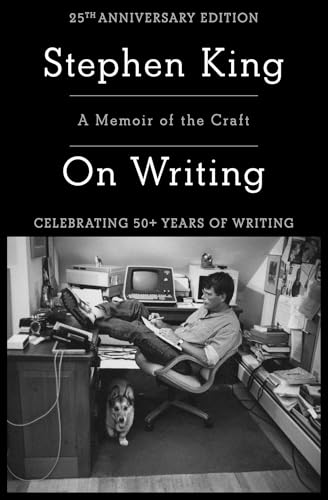 1
1