We've ranked the best short books using expert recommendations, sales data, and millions of reader ratings. At Shortform, we know books. Our book guides are the best in the world. Learn why.
Cover unavailable
1
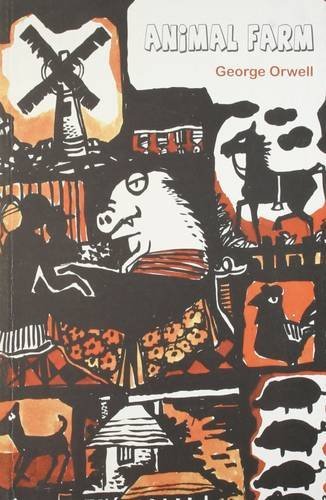
Animal Farm
George Orwell and Christopher Hitchens
5.0
Animal Farm is one of the most famous warnings ever written. Orwell's immortal satire - 'against Stalin' as he wrote to his French translator - can be read on many levels. With its piercing clarity and deceptively simple style it is no surprise that this novel is required reading for schoolchildren and politicians alike. This fable of the steadfast horses Boxer and Clover, the opportunistic pigs Snowball and Napoleon, and the deafening choir of sheep remains an unparalleled masterpiece.
One reviewer wrote 'In a hundred years' time perhaps Animal Farm ... may simply be a fairy story: today it is a fairy story with a good deal of point.' Over sixty years on in the age of spin, it is more relevant than ever.
Rejected by such eminent publishing figures as Victor Gollancz, Jonathan Cape and T.S. Eliot, Animal Farm was published to great acclaim by Martin Secker and Warburg on 17 August 1945 in an edition of 4500 copies. In the centenary year of Martin Secker, Ltd., Harvill Secker is proud to publish this special edition with a brand-new introduction by Christopher Hitchens.
Whitney Cummings recommended this book on the podcast "The Tim Ferriss Show". [source]

Vlad Tenev
When I was in sixth grade I remember being very upset by the ending of this book. [source]
Heather Brooke
I picked Animal Farm because it is an allegory about power and its seductive and corruptive influence on people regardless of their initial good intentions. [source]
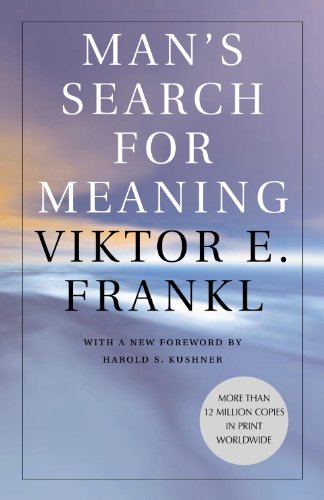
Man's Search for Meaning has riveted generations of readers with its descriptions of life in Nazi death camps and its lessons for spiritual survival. Between 1942 and 1945 psychiatrist Viktor Frankl labored in four different camps, including Auschwitz, while his parents, brother, and pregnant wife perished. Based on his own experience and the stories of his many patients, Frankl argues that we cannot avoid suffering but we can choose how to cope with it, find meaning in it, and move forward with renewed purpose. Frankl's theory—known as logotherapy, from the Greek word logos ("meaning")—holds that our primary drive in life is not pleasure, as Freud maintained, but the discovery and pursuit of what we personally find meaningful. In the decades since its first publication in 1959, Man's Search for Meaning has become a classic, with more than twelve million copies in print around the world. A 1991 Library of Congress survey that asked readers to name a "book that made a difference in your life" found Man's Search for Meaning among the ten most influential books in America. At once a memoir, a meditation, a treatise, and a history, it continues to inspire us all to find significance in the very act of living. (back cover)
…
Recommended by Tony Robbins, Dustin Moskovitz, Ev Williams, and 60 others.
Another book that I’ve read dozens of times. It taught me that if you change the meaning, you change everything. Meaning equals emotion, and emotion equals life. [source]
Dustin Moskovitz
Co-founder/Facebook and Asana
Dustin Moskovitz recommended this book on Twitter. [source]
I read it while spending ten days in the ICU of Bellevue hospital trying to reattach my finger from a ring avulsion accident in my kitchen. It talks about the meaning of life, and I believe you come out a better person from reading it. [source]
Cover unavailable
3
The Little Prince Family Storybook: Unabridged Original Text
Antoine de Saint-Exupéry
4.8
Rediscover Antoine de Saint-Exupery's universal masterpiece with original text and magnificent new illustrations created by masters of film animation. This wise and enchanginting fable teaches the secret of what is really important in life.
Recommended by Ryan Holiday, Brandon Stanton, Evan Goldberg, and 1 others.
Equally allegorical, I read The Little Prince for the first time which for some reason I’d never been exposed to before. If you’re in the same boat, read it. It’s short but great. [source]
Brandon Stanton
Brandon Stanton recommended this book on the podcast "The Tim Ferriss Show". [source]
The Old Man and the Sea, an apparently simple fable, represents the mature Hemingway at his best. He was awarded the Nobel Prize for Literature soon after its publication, and half a century later it is still one of his most read books.
I keep coming back to it. I love the straightforwardness, the tightness, and the poetry. I think it shows a common struggle that is repeated over and over in so many narratives both fictional and nonfictional. [source]
Paulo Coelho's enchanting novel has inspired a devoted following around the world. This story, dazzling in its powerful simplicity and inspiring wisdom, is about an Andalusian shepherd boy named Santiago who travels from his homeland in Spain to the Egyptian desert in search of a treasure buried in the Pyramids. What starts out as a journey to find worldly goods turns into a discovery of the treasure found within. Lush, evocative, and deeply humane, the story of Santiago is an eternal testament to the transforming power of our dreams and the importance of listening to our hearts.
There's a great quote in this book: When you're on the right path the universe conspires to help you! [source]
Daniel Ek
It was fascinating to talk to the author about how this book came to be such a hit—he never backed down, and he allowed people to read it for free in order to then boost sales—much like how Spotify’s freemium model was perceived in the early days. [source]
Eric Ripert
Speaks of everyone having an ultimate goal in life, but most of us are too afraid to pursue it. The encouragement to fulfill your dreams is very inspirational! [source]
Cover unavailable
6
We Should All Be Feminists
Chimamanda Ngozi Adichie
4.6
What does “feminism” mean today? That is the question at the heart of We Should All Be Feminists, a personal, eloquently-argued essay—adapted from her much-viewed TEDx talk of the same name—by Chimamanda Ngozi Adichie, the award-winning author of Americanah and Half of a Yellow Sun.
With humor and levity, here Adichie offers readers a unique definition of feminism for the twenty-first century—one rooted in inclusion and awareness. She shines a light not only on blatant discrimination, but also the more insidious, institutional behaviors that marginalize women around the world, in order to help readers of all walks of life better understand the often masked realities of sexual politics. Throughout, she draws extensively on her own experiences—in the U.S., in her native Nigeria, and abroad—offering an artfully nuanced explanation of why the gender divide is harmful for women and men, alike.
Argued in the same observant, witty and clever prose that has made Adichie a bestselling novelist, here is one remarkable author’s exploration of what it means to be a woman today—and an of-the-moment rallying cry for why we should all be feminists.
…
Cover unavailable
7
The Stranger
Albert Camus, Jonathan Davis, et al
4.6
Through the story of an ordinary man unwittingly drawn into a senseless murder on an Algerian beach, Camus explored what he termed "the nakedness of man faced with the absurd." First published in English in 1946; now in a new translation by Matthew Ward.
Seminal novel on existentialism and the absurd by Albert Camus from 1946. Explores that feeling of disconnectedness from society, its norms, and the absurdity of every day life. Striking first-person account in a powerful, direct language. [source]
Kyle Maynard
Kyle Maynard said this is one of his most-recommended books. [source]

The real story of the crash began in bizarre feeder markets where the sun doesn't shine and the SEC doesn't dare, or bother, to tread: the bond and real estate derivative markets where geeks invent impenetrable securities to profit from the misery of lower- and middle-class Americans who can't pay their debts. The smart people who understood what was or might be happening were paralyzed by hope and fear; in any case, they weren't talking.
Michael Lewis creates a fresh, character-driven narrative brimming with indignation and dark humor, a fitting sequel to his #1 bestseller Liar's Poker. Out of a handful of unlikely-really unlikely-heroes, Lewis fashions a story as compelling and unusual as any of his earlier bestsellers, proving yet again that he is the finest and funniest chronicler of our time.
Michael Lewis's ability to boil down the most complicated subjects is like a magic trick. You can't believe your own eyes. He takes on important issues - from the 2008 Wall Street crash in "The Big Short" to parenting in "Home Game" - and breaks them down to the deepest truths. His combination of an extraordinarily analytical mind and a deep understanding of human nature allows him to weave together data and events to offer a fresh and insightful narrative. Whatever the topic, the result is always compelling and even thrilling. I am in awe of him. [source]
The compelling story of two outsiders striving to find their place in an unforgiving world.
Drifters in search of work, George and his simple-minded friend Lennie have nothing in the world except each other and a dream -- a dream that one day they will have some land of their own. Eventually they find work on a ranch in California’s Salinas Valley, but their hopes are doomed as Lennie, struggling against extreme cruelty, misunderstanding and feelings of jealousy, becomes a victim of his own strength.
Tackling universal themes such as the friendship of a shared vision, and giving voice to America’s lonely and dispossessed, Of Mice and Men has proved one of Steinbeck’s most popular works, achieving success as a novel, a Broadway play and three acclaimed films.
When he got to high school, the president said, his tastes changed and he learned to enjoy classics like “Of Mice and Men” and “The Great Gatsby.” [source]
Steve Benjamins
I think all of John Steinbeck’s books are uplifting. He sees the best in humanity and it leaves me feeling warm and generous. I always love this paragraph in Of Mice and Men that hints at the tension between business and humanity: "It has always seemed strange to me that the things we admire in men, kindness and generosity, openness, honestly, understanding, and feeling are the concomitants of failure in our system. And those traits we detest, sharpness, greed, acquisitiveness, meanness, egotism, and self-interest are the traits of success. And while men admire the quality of the first they love the produce of the second." [source]
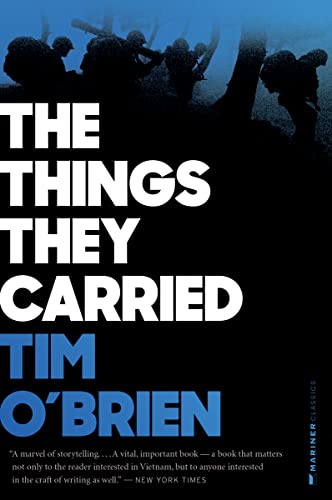
A classic, life-changing meditation on war, memory, imagination, and the redemptive power of storytelling, with more than two-million copies in print
Depicting the men of Alpha Company—Jimmy Cross, Henry Dobbins, Rat Kiley, Mitchell Sanders, Norman Bowker, Kiowa, and the character Tim O’Brien, who survived his tour in Vietnam to become a father and writer at the age of forty-three—the stories in The Things They Carried opened our eyes to the nature of war in a way we will never forget. It is taught everywhere, from high school classrooms to graduate seminars in creative writing, and in the decades since its publication it has never failed to challenge our perceptions of fact and fiction, war and peace, and courage, longing, and fear.
…
Recommended by Caroline Paul, Eugene Gu, Karl Marlantes, and 2 others.
Caroline Paul
A beautiful book by a writer who fought in Vietnam. [source]
Eugene Gu
@realDonaldTrump Tim O’Brien is the author of the book The Things They Carried, which was about the Vietnam War. Must be very triggering for Trump since he dodged the draft multiple times with fraudulent doctors’ notes for fake bone spurs like a coward. [source]
Karl Marlantes
But when O’Brien wrote The Things They Carried he came down to absolute real brass tacks. It was no longer surreal, it was like here’s a list of what a grunt carries, an infantry soldier… [source]
Cover unavailable
11
The Metamorphosis
Franz Kafka
4.6
Alternate cover edition of ISBN 0553213695 / 9780553213690
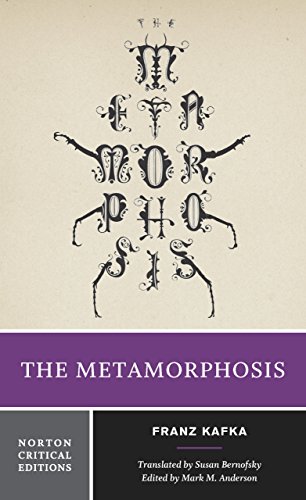
"As Gregor Samsa awoke one morning from uneasy dreams he found himself transformed in his bed into a gigantic insect. He was laying on his hard, as it were armor-plated, back and when he lifted his head a little he could see his domelike brown belly divided into stiff arched segments on top of which the bed quilt could hardly keep in position and was about to slide off completely. His numerous legs, which were pitifully thin compared to the rest of his bulk, waved helplessly before his eyes."
With it's startling, bizarre, yet surprisingly funny first opening, Kafka begins his masterpiece, The Metamorphosis. It is the story of a young man who, transformed overnight into a giant beetle-like insect, becomes an object of disgrace to his family, an outsider in his own home, a quintessentially alienated man. A harrowing—though absurdly comic—meditation on human feelings of inadequacy, guilt, and isolation, The Metamorphosis has taken its place as one of the most widely read and influential works of twentieth-century fiction. As W.H. Auden wrote, "Kafka is important to us because his predicament is the predicament of modern man."
David Lynch said this is one of his most-recommended books. [source]
David Lynch
David Lynch said this is one of his most-recommended books. [source]

Cover unavailable
12
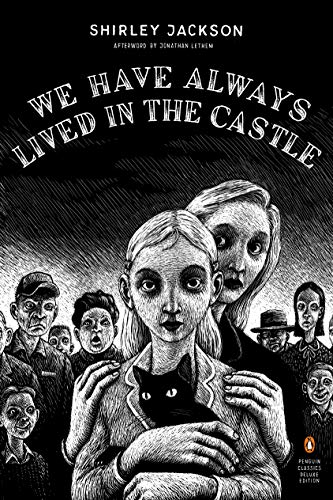
We Have Always Lived in the Castle
Shirley Jackson, Thomas Ott, Jonathan Lethem
4.5
My name is Mary Katherine Blackwood. I am eighteen years old, and I live with my sister Constance. I have often thought that with any luck at all I could have been born a werewolf, because the two middle fingers on both my hands are the same length, but I have had to be content with what I had. I dislike washing myself, and dogs, and noise, I like my sister Constance, and Richard Plantagenet, and Amanita phalloides, the death-cap mushroom. Everyone else in my family is dead...
This is a masterpiece in atmosphere and Gothic empathy. It challenges your idea about what wickedness is. [source]

Cover unavailable
13
Night
Elie Wiesel
4.5
Night is Elie Wiesel's masterpiece, a candid, horrific, and deeply poignant autobiographical account of his survival as a teenager in the Nazi death camps. This new translation by Marion Wiesel, Elie's wife and frequent translator, presents this seminal memoir in the language and spirit truest to the author's original intent. And in a substantive new preface, Elie reflects on the enduring importance of Night and his lifelong, passionate dedication to ensuring that the world never forgets man's capacity for inhumanity to man.
Night offers much more than a litany of the daily terrors, everyday perversions, and rampant sadism at Auschwitz and Buchenwald; it also el
…
Recommended by Johanna Reiss and Steven Katz.
Johanna Reiss
Elie Wiesel wrote..that he was considering running into the barbed wire once, but he didn’t because his father needed him. [source]
Steven Katz
Probably the best known memoir that has been written about the experience of the death camps. [source]
Cover unavailable
14
Fragile Things: Short Fictions and Wonders
Neil Gaiman
4.5
This is a stunning collection of short stories by acclaimed fantasy writer Neil Gaiman. His distinctive genius has been championed by writers as diverse as Norman Mailer and Stephen King. With The Sandman Neil Gaiman created one of the most sophisticated, intelligent, and influential graphic novel series of our time. Now after the recent success of his latest novel Anansi Boys, Gaiman has producedFragile Things, his second collection of short fiction. These stories will dazzle your senses, haunt your imagination, and move you to the very depths of your soul. This extraordinary compilation reveals one of the world's most gifted storytellers at the height of his powers.
…
Cover unavailable
15
Fahrenheit 451
Ray Bradbury
4.5
Guy Montag is a fireman. In his world, where television rules and literature is on the brink of extinction, firemen start fires rather than put them out. His job is to destroy the most illegal of commodities, the printed book, along with the houses in which they are hidden.
Montag never questions the destruction and ruin his actions produce, returning each day to his bland life and wife, Mildred, who spends all day with her television 'family'. But then he meets an eccentric young neighbor, Clarisse, who introduces him to a past where people did not live in fear and to a present where one sees the world through the ideas in books instead of the mindless chatter of television.
When Mildred attempts suicide and Clarisse suddenly disappears, Montag begins to question everything he has ever known.
This classic work on state censorship remains as relevant in today’s world of digital delights as it was when published in the black-and-white world of 1953. In a futuristic American city, firefighter Guy Montag does not put out blazes; instead, he extinguishes knowledge and promotes ignorance by conducting state decreed book burnings. After an elderly woman chooses a fiery death with her books rather than a life without the written word, he begins questioning not only his profession, but also a society that allows itself to be lulled into complacency by constant exposure to state-controlled, mind-numbing television shows. If you wonder why some people take censorship so seriously, this book will give you the answer. It’s also a fantastically inspiring story of a one-versus-a-million fight that’s worth fighting. Who knows when your turn will come? [source]
I’m not sure what compelled me to pick Fahrenheit 451 back up but I’m so glad I did because I was able to see the book in a very different context. Bradbury’s message (made explicit in his 50th Anniversary Afterword) is much less a warning against government control and much more about a road to hell paved by people attempting to rid the world of offensive speech and conflicting ideas. In a world of microaggressions and outrage porn, this is an important idea to see in such a timeless work of fiction. [source]
Cover unavailable
16
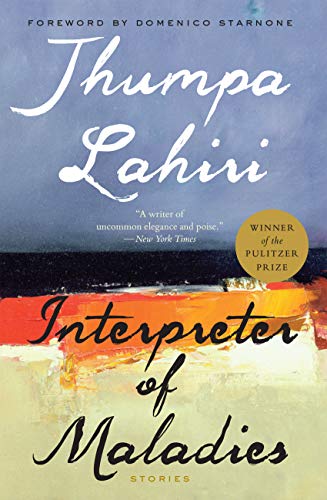
Interpreter of Maladies
Jhumpa Lahiri
4.5
Winner of the 2000 Pulitzer Prize for fiction, this stunning debut collection unerringly charts the emotional journeys of characters seeking love beyond the barriers of nations and generations. "A writer of uncommon sensitivity and restraint...Ms. Lahiri expertly captures the out-of-context lives of immigrants, expatriates, and first-generation Americans" (Wall Street Journal). In stories that travel from India to America and back again, Lahiri speaks with universal eloquence to everyone who has ever felt like a foreigner. Honored as "Debut of the Year" by the New Yorker and winner of the PEN/Hemingway Award, Interpreter of Maladies introduces a young writer of astonishing maturity and insight who "breathes unpredictable life into the page" (New York Times).
~from back cover
…
Recommended by Jane Kamensky and Leah Lizarondo.
Jane Kamensky
Lahirihas a great knack for showing both the closeness and the distance of peoples and cities. They seem so close together at the same time, they’re incredibly far apart. [source]
Leah Lizarondo
Given free time to do anything I would read fiction. This book took me out of a long dry spell because it is a collection of short stories that I could read while in the bath. Each story is written so beautifully, I still remember putting the book down from time to time, just to close my eyes and absorb what I just read. [source]

Cover unavailable
17
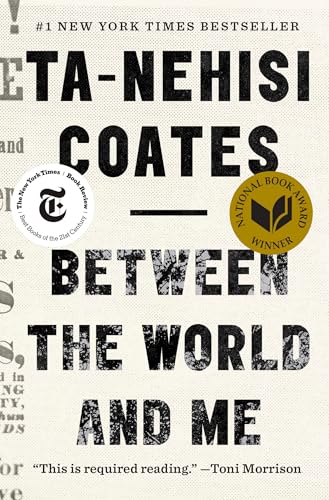
Between the World and Me
Ta-Nehisi Coates
4.5
#1 NEW YORK TIMES BESTSELLER [[ LONGLISTED FOR THE NATIONAL BOOK AWARD [[ Hailed by Toni Morrison as "required reading," a bold and personal literary exploration of America's racial history by "the single best writer on the subject of race in the United States" (The New York Observer)
"This is your country, this is your world, this is your body, and you must find some way to live within the all of it."
In a profound work that pivots from the biggest questions about American history and ideals to the most intimate concerns of a father for his son, Ta-Nehisi Coates offers a powerful new framework for understanding our nation's history and current crisis. Americans have built an empire on the idea of "race," a falsehood that damages us all but falls most heavily on the bodies of black women and menbodies exploited through slavery and segregation, and, today, threatened, locked up, and murdered out of all proportion. What is it like to inhabit a black body and find a way to live within it? And how can we all honestly reckon with this fraught history and free ourselves from its burden?
Between the World and Me is Ta-Nehisi Coates's attempt to answer these questions in a letter to his adolescent son. Coates shares with his sonand readersthe story of his awakening to the truth about his place in the world through a series of revelatory experiences, from Howard University to Civil War battlefields, from the South Side of Chicago to Paris, from his childhood home to the living rooms of mothers whose children's lives were taken as American plunder. Beautifully woven from personal narrative, reimagined history, and fresh, emotionally charged reportage, Between the World and Me clearly illuminates the past, bracingly confronts our present, and offers a transcendent vision for a way forward.
The president also released a list of his summer favorites back in 2015: All That Is, James Salter The Sixth Extinction, Elizabeth Kolbert The Lowland, Jhumpa Lahiri Between the World and Me, Ta-Nehisi Coates Washington: A Life, Ron Chernow All the Light We Cannot See, Anthony Doerr [source]
Q: What are the books that had a major influence on you? Or simply the ones you like the most. : Tao te Ching, score takes care of itself, between the world and me, the four agreements, the old man and the sea...I love reading! [source]
Here are some of my favorite reads from 2017. Lots of friends and colleagues send me book suggestions and it's impossible to squeeze them all in. I continue to be super curious about how digital and tech are enabling people to transform our lives but I try to read a good mix of books that apply to a variety of areas and stretch my thinking more broadly. [source]
Cover unavailable
18
Breakfast at Tiffany's
Truman Capote, Michael C. Hall, et al
4.5
It's New York in the 1940s, where the martinis flow from cocktail hour till breakfast at Tiffany's. And nice girls don't, except, of course, Holly Golightly. Pursued by Mafia gangsters and playboy millionaires, Holly is a fragile eyeful of tawny hair and turned-up nose, a heart-breaker, a perplexer, a traveller, a tease. She is irrepressibly 'top banana in the shock department', and one of the shining flowers of American fiction.
This edition also contains three stories: 'House of Flowers', 'A Diamond Guitar' and 'A Christmas Memory'.
So much of that novella is about personality, and about the way one is liberated by personality or burdened by it. [source]
Cover unavailable
19
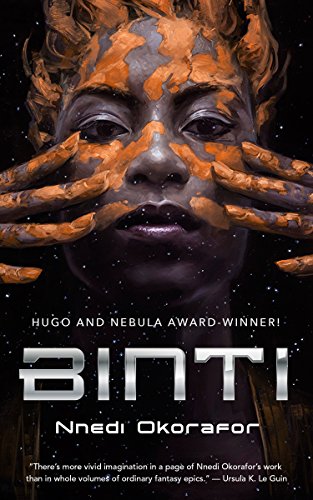
Binti (Binti, #1)
Nnedi Okorafo
4.5
Her name is Binti, and she is the first of the Himba people ever to be offered a place at Oomza University, the finest institution of higher learning in the galaxy. But to accept the offer will mean giving up her place in her family to travel between the stars among strangers who do not share her ways or respect her customs.
Knowledge comes at a cost, one that Binti is willing to pay, but her journey will not be easy. The world she seeks to enter has long warred with the Meduse, an alien race that has become the stuff of nightmares. Oomza University has wronged the Meduse, and Binti's stellar travel will bring her within their deadly reach.
If Binti hopes to survive the legacy of a war not of her making, she will need both the gifts of her people and the wisdom enshrined within the University, itself - but first she has to make it there, alive.
…
Recommended by Catherine Mayer.
Catherine Mayer
These books are set in different worlds and the characters are not all human. But they all, in some way, conform to certain psychologies that are recognisable to us. [source]
Cover unavailable
20
Dubliners
James Joyce, Terence Brown, Roman Muradov, Colum McCann
4.5
For the centennial of its original publication, an irresistible Graphic Deluxe Edition of one of the most beloved books of the 20th century
Perhaps the greatest short story collection in the English language, James Joyce’s Dubliners is a vivid and unflinching portrait of “dear dirty Dublin” at the turn of the twentieth century. These fifteen stories, including such unforgettable ones as “Araby,” “Grace,” and “The Dead,” delve into the heart of the city of Joyce’s birth, capturing the cadences of Dubliners’ speech and portraying with an almost brute realism their outer and inner lives. Dubliners is Joyce at his most accessible and most profound, and this edition is the definitive text, authorized by the Joyce estate and collated from all known proofs, manuscripts, and impressions to reflect the author’s original wishes.
It is the perfect story—you can almost touch the characters, and yet it is told from a remote point of view, from a distance but not without affection [source]
So begins the Time Traveller’s astonishing firsthand account of his journey 800,000 years beyond his own era—and the story that launched H.G. Wells’s successful career and earned him his reputation as the father of science fiction. With a speculative leap that still fires the imagination, Wells sends his brave explorer to face a future burdened with our greatest hopes...and our darkest fears. A pull of the Time Machine’s lever propels him to the age of a slowly dying Earth. There he discovers two bizarre races—the ethereal Eloi and the subterranean Morlocks—who not only symbolize the duality of human nature, but offer a terrifying portrait of the men of tomorrow as well. Published in 1895, this masterpiece of invention captivated readers on the threshold of a new century. Thanks to Wells’s expert storytelling and provocative insight, The Time Machine will continue to enthrall readers for generations to come.
…
Recommended by Adam Roberts, Adam Roberts, and Roger Luckhurst.
Adam Roberts
It is a short novel, almost a novella, but it is smoothly and evocatively written, and it manages to open a chink in the reader’s mind that gives a her dizzying, thrilling glimpse down the vertiginous perspectives of long time. My favourite moment comes near the end, after the time traveller has left the Eloi and Morlocks behind him (as it were) and travelled more than 30 million years into the far distant future. He finds himself on a desolate beach, seemingly lifeless but for green slime on the rocks, the sun grown to massive proportions, and witnesses an eclipse [source]
Roger Luckhurst
It invents the idea of far-future visions that science fiction writers such as Isaac Asimov and Arthur C. Clarke have constantly tried to achieve. [source]
Cover unavailable
22
Lord of the Flies
William Golding
4.4
At the dawn of the next world war, a plane crashes on an uncharted island, stranding a group of schoolboys. At first, with no adult supervision, their freedom is something to celebrate; this far from civilization the boys can do anything they want. Anything. They attempt to forge their own society, failing, however, in the face of terror, sin and evil. And as order collapses, as strange howls echo in the night, as terror begins its reign, the hope of adventure seems as far from reality as the hope of being rescued. Labeled a parable, an allegory, a myth, a morality tale, a parody, a political treatise, even a vision of the apocalypse, Lord of the Flies is perhaps our most memorable tale about “the end of innocence, the darkness of man’s heart.”
…
Recommended by Elon Musk, Ev Williams, Audrey Russo, and 5 others.
Audrey Russo
So many novels; Lord of the Flies, Great Gatsby, Great Expectations; all the Nancy Drew books; Catcher in the Rye, Books written by Zora Neale Hurston; Pat Conroy – all because of the view about different people who endure despite adversity while kindling the hearts of the human spirit. [source]
Chigozie Obioma
William Golding imbues some of these children with wisdom that would read, in the hands of a lesser author, as implausibly knowing [source]
Disco Donnie
@JoshRHernandez1 I love the book “Lord of the Flies” so just started watching The Society [source]
Cover unavailable
23
The Yellow Wall-Paper
Charlotte Perkins Gilman, Elaine Hedges
4.4
‘It is stripped off - the paper - in great patches . . . The colour is repellent . . . In the places where it isn’t faded and where the sun is just so - I can see a strange, provoking, formless sort of figure, that seems to skulk about . . .’
Based on the author’s own experiences, 'The Yellow Wallpaper' is the chilling tale of a woman driven to the brink of insanity by the ‘rest cure’ prescribed after the birth of her child. Isolated in a crumbling colonial mansion, in a room with bars on the windows, the tortuous pattern of the yellow wallpaper winds its way into the recesses of her mind.
Charlotte Perkins Gilman was America’s leading feminist intellectual of the early twentieth century. In addition to her masterpiece 'The Yellow Wallpaper', this new edition includes a selection of her best short fiction and extracts from her autobiography.
For more than two thousand years, The Art of War has stood as a cornerstone of Chinese culture-a lucid epigrammatic text that reveals as much about human psychology, politics, and economics as it does about battlefield strategy. The influence of Sun-tzu's text has grown tremendously in the West in recent years, with military leaders, politicians, and corporate executives alike finding valuable insight in these ancient words. In his crisp, accessible new translation, scholar John Minford brings this seminal work to life for modern readers.
Minford opens with a lively, learned introduction in which he explores the life and times of Sun-tzu, looks at The Art of War in the context of the turbulent Warring States period, and discusses how best to read and understand the work today. There follows Minford's translation of the core text itself in two different formats-first, the unadorned thirteen chapters of the original work and then the same text reprinted with extensive running commentary by classical Chinese scholars as well as Minford himself. The result is an opportunity for Western readers to experience Sun-tzu's work in all its intensity as it applies to many aspects of our lives.
Which books should be read by every single intelligent person on planet? … The Art of War (Sun Tsu) to learn that the act of killing fellow humans can be raised to an art. If you read all of the above works you will glean profound insight into most of what has driven the history of the western world. [source]
Cover unavailable
25
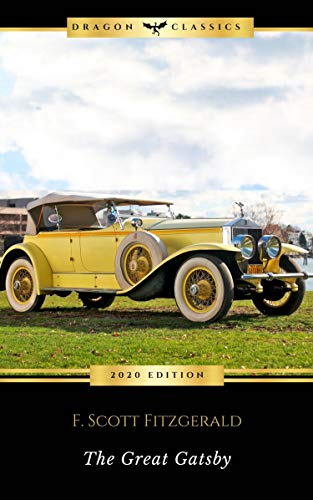
The Great Gatsby
F. Scott Fitzgerald
4.4
A young man, newly rich, tries to recapture the past and win back his former love, despite the fact that she has married.
When he got to high school, the president said, his tastes changed and he learned to enjoy classics like “Of Mice and Men” and “The Great Gatsby.” [source]
Melinda and I really like this book. When we were first dating, she had a green light that she would turn on when her office was empty and it made sense for me to come over. [source]
Marvin Liao
Partner/500 Startups
For Non-Business, I'd have to say Dune (Herbert), Emergency (Strauss), The Great Gatsby (Fitzgerald) or Flint (L'Amour). I re-read these books every year because they are just so well written & great stories that I get new perspective & details every time I read them. [source]
Cover unavailable
26
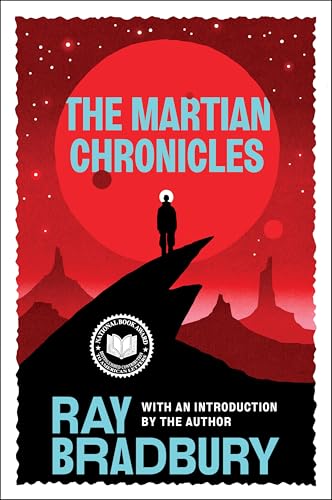
The Martian Chronicles
Ray Bradbury
4.4
The strange and wonderful tale of man’s experiences on Mars, filled with intense images and astonishing visions. Now part of the Voyager Classics collection.
The Martian Chronicles tells the story of humanity’s repeated attempts to colonize the red planet. The first men were few. Most succumbed to a disease they called the Great Loneliness when they saw their home planet dwindle to the size of a fist. They felt they had never been born. Those few that survived found no welcome on Mars. The shape-changing Martians thought they were native lunatics and duly locked them up.
But more rockets arrived from Earth, and more, piercing the hallucinations projected by the Martians. People brought their old prejudices with them – and their desires and fantasies, tainted dreams. These were soon inhabited by the strange native beings, with their caged flowers and birds of flame.
Contents: Rocket Summer Ylla The Summer Night The Earth Men The Taxpayer The Third Expedition -And the Moon Be Still As Bright The Settlers The Green Morning The Locusts Night Meeting The Shore Interim The Musicians Way in the Middle of the Air The Naming of Names Usher II The Old Ones The Martian The Luggage Store The Off Season The Watchers The Silent Towns The Long Years There Will Come Soft Rains The Million Year Picnic
This is language that is meant, like ancient Anglo-Saxon alliterative verse, to be read aloud. It contains its own music. It is music. [source]
Cover unavailable
27
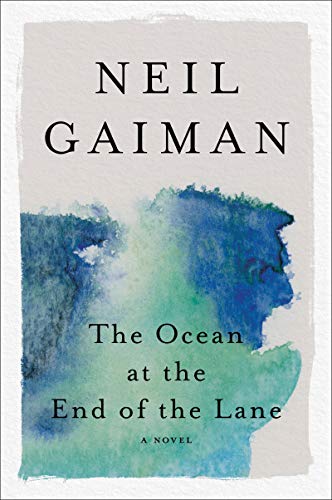
The Ocean at the End of the Lane
Neil Gaiman
4.4
Sussex, England. A middle-aged man returns to his childhood home to attend a funeral. Although the house he lived in is long gone, he is drawn to the farm at the end of the road, where, when he was seven, he encountered a most remarkable girl, Lettie Hempstock, and her mother and grandmother. He hasn't thought of Lettie in decades, and yet as he sits by the pond (a pond that she'd claimed was an ocean) behind the ramshackle old farmhouse, the unremembered past comes flooding back. And it is a past too strange, too frightening, too dangerous to have happened to anyone, let alone a small boy.
Forty years earlier, a man committed suicide in a stolen car at this farm at the end of the road. Like a fuse on a firework, his death lit a touchpaper and resonated in unimaginable ways. The darkness was unleashed, something scary and thoroughly incomprehensible to a little boy. And Lettie—magical, comforting, wise beyond her years—promised to protect him, no matter what.
A groundbreaking work from a master, The Ocean at the End of the Lane is told with a rare understanding of all that makes us human, and shows the power of stories to reveal and shelter us from the darkness inside and out. It is a stirring, terrifying, and elegiac fable as delicate as a butterfly's wing and as menacing as a knife in the dark.
For a while in 2015 I lost the ability to read (PTSD, I’m told) and “The Ocean at the End of the Lane” and Eli Brown’s “Cinnamon & Gunpowder” were the first books I was able to understand and enjoy. @neilhimself’s book in particular was like a hand pulling me up. https://t.co/foEbRxYbuj [source]
Cover unavailable
28
The Bloody Chamber and Other Stories
Angela Carter
4.4
Angela Carter was a storytelling sorceress, the literary godmother of such contemporary masters of supernatural fiction as Neil Gaiman, David Mitchell, Audrey Niffenegger, J. K. Rowling, and Kelly Link, who introduces this edition of Carter's most celebrated book, published for the seventy-fifth anniversary of her birth.
In The Bloody Chamber - which includes the story that is the basis of Neil Jordan's 1984 movie The Company of Wolves - Carter spins subversively dark and sensual versions of familiar fairy tales and legends like "Little Red Riding Hood," "Bluebeard," "Puss in Boots," and "Beauty and the Beast," giving them exhilarating new life in a style steeped in the romantic trappings of the gothic tradition.
Yes. Angela Carter played a very important role in my life because I was born in 1937, a few years before she was born, and although we didn’t grow up together, we both grew up in a world where sexism was out in the open. There was no critique of the type of sexism that I experienced when I grew up, and I think the same is true for her. And we both experienced what a lot of people called the second wave of feminism in the 20th century. [source]
Cover unavailable
29
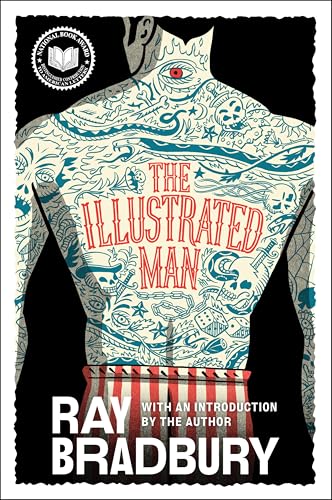
The Illustrated Man
Ray Bradbury
4.4
The Illustrated Man, a seminal work in Ray Bradbury’s career, whose extraordinary power and imagination remain undimmed by time’s passage, is available from Simon & Schuster for the first time. A peerless American storyteller, Ray Bradbury brings wonders alive. In these eighteen startling visions of humankind’s destiny, unfolding across a canvas of decorated skin, living cities take their vengeance, technology awakens the most primal natural instincts, and dreams are carried aloft in junkyard rockets. Provocative and powerful, The Illustrated Man is a kaleidoscopic blending of magic, imagination, and truth—as exhilarating as interplanetary travel, as maddening as a walk in a million-year rain, and as comforting as simple, familiar rituals on the last night of the world.
…
Recommended by Brian Moran.
Brian Moran
@BrittMichaelian One of my favorite authors! Have you read the Illustrated Man recently? The first story in the book is titled "The Veldt." It was written in 1950 but is ALL ABOUT technology we are talking about today (#AI, #VR). Every story in the book is great. [source]
Cover unavailable
30
Ficciones
Jorge Luis Borges, John Sturrock
4.3
Jorge Luis Borges was one of those very rare creators who changed the face of an art form—in his case, the short story. His work has been paid the ultimate honor of being appropriated and imitated by innumerable writers on every continent of the world. The seventeen brief masterpieces of FICCIONES explode the boundaries of genre, offering up labyrinthine libraries, a fictional encyclopedia entry that spawns an entire world, a review of a nonexistent writer’s attempt to re-create Don Quixote word for word, a man with the disabling inability to forget anything he has ever experienced, and other metaphysical puzzles. But the true measure of Borges’s greatness lies in the fact that his fictions—elaborately paradoxical, postmodern, and intellectually delicious as they are—managed to return the short story to the realm of the fabulous and the uncanny from which, as parable and fairy tale, it originally came.
This is something very hard to find, almost by definition: a literary writer who thinks in abstract terms (the only other such author I've read is Stanislaw Lem). These are philosophical thought experiments in their purest form, yet somehow magically delivered in a playful literary athmosphere. Borges is a mathematical philosopher, first and last. Ignore the "Latin American" categorization and the nonsense about his background and personal life: one should resist embedding him in a socio-cultural framework; he is as universal as they come. It is good to read a short story once in a while to see how literature and philosophy can be saved by the parable. [source]
Kate Marvel
I don’t think there will ever be a better writer on uncertainty and science than Borges [source]
There is a transnational quality to Borges’s writing. [source]
Cover unavailable
31
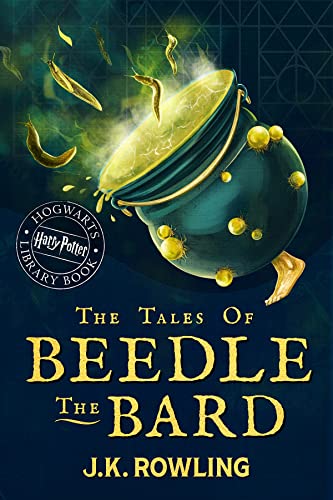
The Tales of Beedle the Bard (Hogwarts Library Book)
J.K. Rowling
4.3
The Tales of Beedle the Bard, a Wizarding classic, first came to Muggle readers’ attention in the book known as Harry Potter and the Deathly Hallows. Now, thanks to Hermione Granger’s new translation from the ancient runes, we present this stunning edition with an introduction, notes, and illustrations by J. K. Rowling, and extensive commentary by Albus Dumbledore.
Never before have Muggles been privy to these richly imaginative tales: “The Wizard and the Hopping Pot,” “The Fountain of Fair Fortune,” “The Warlock’s Hairy Heart,” “Babbitty Rabbity and Her Cackling Stump,” and of course, “The Tale of the Three Brothers.” But not only are they the equal of fairy tales we now know and love, reading them gives new insight into the world of Harry Potter.
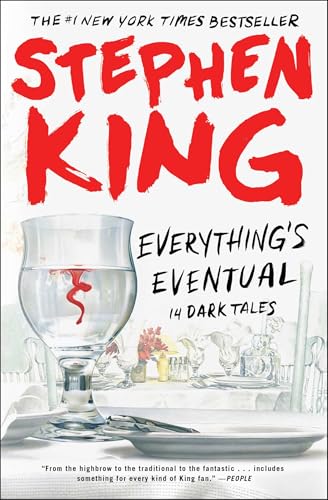
The first collection of stories Stephen King has published since Nightmares & Dreamscapes nine years ago, Everything's Eventual includes one O. Henry Prize winner, two other award winners, four stories published by The New Yorker, and "Riding the Bullet," King's original e-book, which attracted over half a million online readers and became the most famous short story of the decade.
"Riding the Bullet," published here on paper for the first time, is the story of Alan Parker, who's hitchhiking to see his dying mother but takes the wrong ride, farther than he ever intended. In "Lunch at the Gotham Café," a sparring couple's contentious lunch turns very, very bloody when the maître d' gets out of sorts. "1408," the audio story in print for the first time, is about a successful writer whose specialty is "Ten Nights in Ten Haunted Graveyards" or "Ten Nights in Ten Haunted Houses," and though Room 1408 at the Dolphin Hotel doesn't kill him, he won't be writing about ghosts anymore. And in "That Feeling, You Can Only Say What It Is In French," terror is déjà vu at 16,000 feet.
Whether writing about encounters with the dead, the near dead, or about the mundane dreads of life, from quitting smoking to yard sales, Stephen King is at the top of his form in the fourteen dark tales assembled in Everything's Eventual. Intense, eerie, and instantly compelling, they announce the stunningly fertile imagination of perhaps the greatest storyteller of our time.
…
Cover unavailable
33
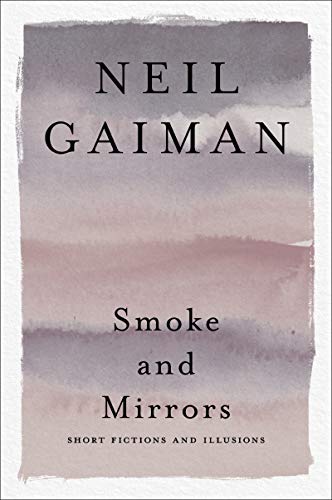
Smoke and Mirrors: Short Fiction and Illusions
Neil Gaiman
4.3
In the deft hands of Neil Gaiman, magic is no mere illusion... and anything is possible. In this, Gaiman's first book of short stories, his imagination and supreme artistry transform a mundane world into a place of terrible wonders -- a place where an old woman can purchase the Holy Grail at a thrift store, where assassins advertise their services in the Yellow Pages under "Pest Control," and where a frightened young boy must barter for his life with a mean-spirited troll living beneath a bridge by the railroad tracks. Explore a new reality -- obscured by smoke and darkness, yet brilliantly tangible -- in this extraordinary collection of short works by a master prestidigitator. It will dazzle your senses, touch your heart, and haunt your dreams.
…
Cover unavailable
34
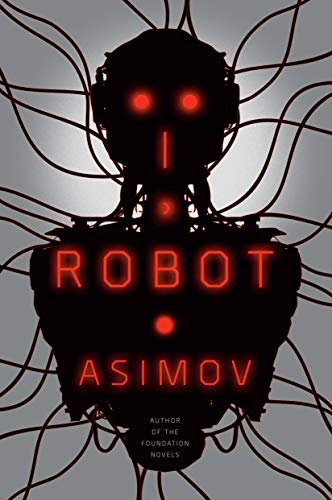
I, Robot
Isaac Asimov
4.3
The three laws of Robotics: 1) A robot may not injure a human being or, through inaction, allow a human being to come to harm. 2) A robot must obey orders given to it by human beings except where such orders would conflict with the First Law. 3) A robot must protect its own existence as long as such protection does not conflict with the First or Second Law.
With these three, simple directives, Isaac Asimov changed our perception of robots forever when he formulated the laws governing their behavior. In I, Robot, Asimov chronicles the development of the robot through a series of interlinked stories: from its primitive origins in the present to its ultimate perfection in the not-so-distant future--a future in which humanity itself may be rendered obsolete.
Here are stories of robots gone mad, of mind-read robots, and robots with a sense of humor. Of robot politicians, and robots who secretly run the world--all told with the dramatic blend of science fact and science fiction that has become Asimov's trademark.
…
Recommended by Laurie Voss.
Laurie Voss
@ThePenguinLemma @MusingsOfDeimos The I, Robot book (actually a short story collection) is amazing if you've not read it. Enough ideas to make a dozen movies. [source]
Cover unavailable
35
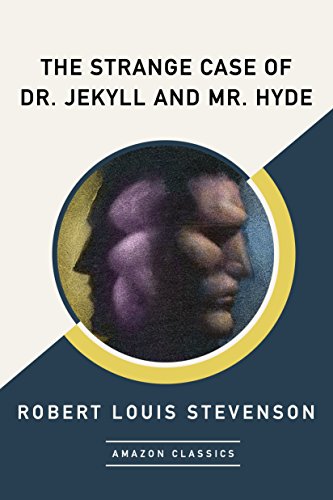
The Strange Case of Dr. Jekyll and Mr. Hyde
Robert Louis Stevenson
4.3
Strange Case of Dr Jekyll and Mr Hyde is the original title of a novella written by the famous Scottish author Robert Louis Stevenson that was first published in 1886. The work is commonly known today as The Strange Case of Dr Jekyll and Mr Hyde, Dr Jekyll and Mr Hyde, or simply Jekyll & Hyde. It is about a London lawyer named John Gabriel Utterson who investigates strange occurrences between his old friend, Dr Henry Jekyll, and the evil Edward Hyde.
…
Cover unavailable
36
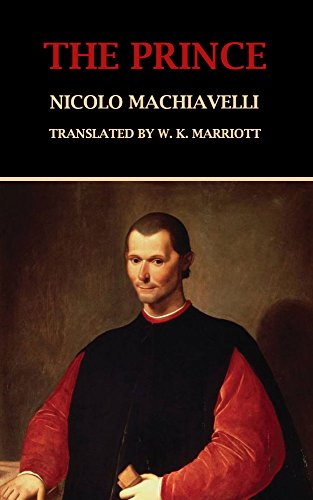
The Prince
Nicollo Machiavelli, Tim Parks
4.3
Niccolo Machiavelli's "The Prince" is intended to be a treatise on ruling and is considered by many to be a classic of political science. In the book Machiavelli offers many bits of practical advice on how to rule and even though the book was written in the early 16th century its ideas are still very relevant today. Where "The Prince" differs from other political literature before it is in its separation of the lofty idealism of morality and ethics from the practical demands of governing. It is this very aspect of Machiavelli's work that has made his name synonymous with an almost immoral opportunism and his book a timeless classic.
Which books should be read by every single intelligent person on planet? … The Prince (Machiavelli) to learn that people not in power will do all they can to acquire it, and people in power will do all they can to keep it. If you read all of the above works you will glean profound insight into most of what has driven the history of the western world. [source]
Of course, this is a must read. Machiavelli is one of those figures and writers who is tragically overrated and underrated at the same time. Unfortunately that means that many people who read him miss the point and other people avoid him and miss out altogether. Take Machiavelli slow, and really read him. Also understand the man behind the book–not just as a masterful writer but a man who withstood heinous torture and exile with barely a whimper. Machiavelli is a glimpse into a time when power was literal and out for public viewing–when he talks about making an example of someone, he doesn’t mean calling them out, he means putting their head on a pike. Don’t let that scare you because we’re not as far from that world as we’d like to think. Deny that at your own peril. [source]
Cover unavailable
37
The Death of Ivan Ilych
Leo Tolstoy
4.3
Hailed as one of the world's supreme masterpieces on the subject of death and dying, The Death of Ivan Ilyich is the story of a worldly careerist, a high court judge who has never given the inevitability of his dying so much as a passing thought. But one day, death announces itself to him, and to his shocked surprise, he is brought face to face with his own mortality.
How, Tolstoy asks, does an unreflective man confront his one and only moment of truth?
This short novel was an artistic culmination of a profound spiritual crisis in Tolstoy's life, a nine-year period following the publication of Anna Karenina during which he wrote not a word of fiction. A thoroughly absorbing, and, at times, terrifying glimpse into the abyss of death, it is also a strong testament to the possibility of finding spiritual salvation.
…
Cover unavailable
38
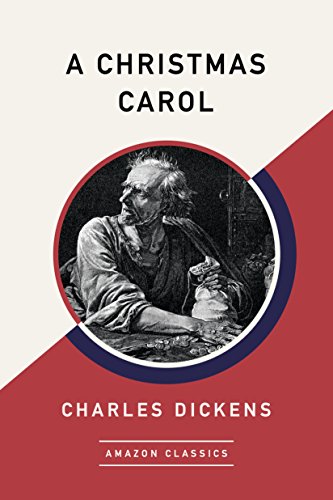
A Christmas Carol
Charles Dickens
4.3
'If I had my way, every idiot who goes around with Merry Christmas on his lips, would be boiled with his own pudding, and buried with a stake of holly through his heart. Merry Christmas? Bah humbug!'
Introduction and Afterword by Joe Wheeler To bitter, miserly Ebenezer Scrooge, Christmas is just another day. But all that changes when the ghost of his long-dead business partner appears, warning Scrooge to change his ways before it's too late.
Part of the Focus on the Family Great Stories collection, this edition features an in-depth introduction and discussion questions by Joe Wheeler to provide greater understanding for today's reader. "A Christmas Carol" captures the heart of the holidays like no other novel.
…
Cover unavailable
39
All Systems Red (The Murderbot Diaries, #1)
Martha Wells
4.3
In a corporate-dominated spacefaring future, planetary missions must be approved and supplied by the Company. Exploratory teams are accompanied by Company-supplied security androids, for their own safety.
But in a society where contracts are awarded to the lowest bidder, safety isn’t a primary concern.
On a distant planet, a team of scientists are conducting surface tests, shadowed by their Company-supplied ‘droid — a self-aware SecUnit that has hacked its own governor module, and refers to itself (though never out loud) as “Murderbot.” Scornful of humans, all it really wants is to be left alone long enough to figure out who it is.
But when a neighboring mission goes dark, it's up to the scientists and their Murderbot to get to the truth.
…
Cover unavailable
40
Labyrinths: Selected Stories and Other Writings
Jorge Luis Borges, James E. Irby, Donald A. Yates, Andre Maurois
4.3
Although his work has been restricted to the short story, the essay, and poetry, Jorge Luis Borges of Argentina is recognized all over the world as one of the most original and significant figures in modern literature. In his preface, Andre Maurois writes: "Borges is a great writer who has composed only little essays or short narratives. Yet they suffice for us to call him great because of their wonderful intelligence, their wealth of invention, and their tight, almost mathematical style."
Labyrinths is a representative selection of Borges' writing, some forty pieces drawn from various books of his published over the years. The translations are by Harriet de Onis, Anthony Kerrigan, and others, including the editors, who have provided a biographical and critical introduction, as well as an extensive bibliography.
…
Recommended by Caterina Fake, John King, and Nicholas Shakespeare.
If you are going to think about Latin American literature, Borges is always a good place to start. [source]
Nicholas Shakespeare
No writer embodied libraries more than the immobile, blind Argentine, Jorge Luis Borges. [source]
Cover unavailable
41
The Giver (The Giver, #1)
Lois Lowry
4.3
Twelve-year-old Jonas lives in a seemingly ideal world. Not until he is given his life assignment as the Receiver does he begin to understand the dark secrets behind this fragile community.
Cover unavailable
42
Nine Stories
J. D. Salinger
4.3
Nine Stories (1953) is a collection of short stories by American fiction writer J. D. Salinger published in April 1953. It includes two of his most famous short stories, "A Perfect Day for Bananafish" and "For Esmé – with Love and Squalor". (Nine Stories is the U.S. title; the book is published in many other countries as For Esmé - with Love and Squalor, and Other Stories.)
The stories are:
"A Perfect Day for Bananafish" "Uncle Wiggily in Connecticut" "Just Before the War with the Eskimos" "The Laughing Man" "Down at the Dinghy" "For Esmé – with Love and Squalor" "Pretty Mouth and Green My Eyes" "De Daumier-Smith's Blue Period" "Teddy"
…
Recommended by Ben Stiller.
Ben Stiller
When I was a teenager, my mother gave me this book. The story 'For Esmé—with Love and Squalor' affected me deeply. [source]
Cover unavailable
43
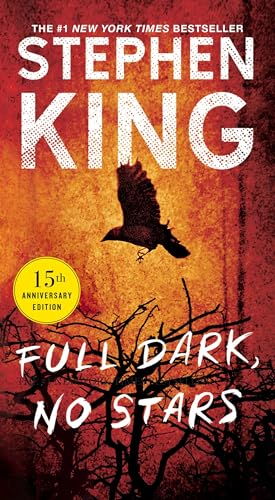
Full Dark, No Stars
Stephen King
4.3
"I believe there is another man inside every man, a stranger..." writes Wilfred Leland James in the early pages of the riveting confession that makes up "1922." the first in this pitch-black quartet of mesmerizing tales from Stephen King. For James, that stranger is awakened when his wife, Arlette, proposes selling off the family homestead and moving to Omaha, setting in motion a gruesome train of murder and madness.
In "Big Driver," a cozy-mystery writer named Tess encounters the stranger along a back road in Massachusetts when she takes a shortcut home after a book-club engagement. Violated and left for dead, Tess plots a revenge that will bring her face-to-face with another stranger: the one inside herself.
"Fair Extension," the shortest of these tales, is perhaps the nastiest and certainly the funniest. Making a deal with the devil not only saves Dave Streeter from a fatal cancer but provides rich recompense for a lifetime of resentment.
When her husband of more than twenty years is away on one of his business trips, Darcy Anderson looks for batteries in the garage. Her toe knocks up against a box under a worktable and she discovers the stranger inside her husband. It's a horrifying discovery, rendered with bristling intensity, and it definitely ends a good marriage.
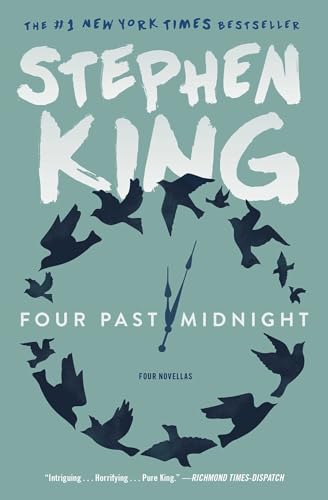
Like Different Seasons and Four Past Midnight, which generated such enduring films as The Shawshank Redemption and Stand By Me, Full Dark, No Stars proves Stephen King a master of the long story form. (front flap)
Contains: 1922 Big Driver A Fair Extension A Good Marriage
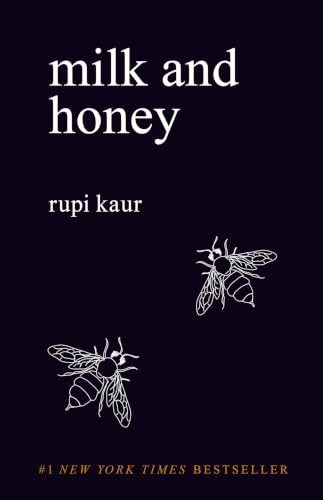
Milk and Honey is a collection of poetry and prose about survival. About the experience of violence, abuse, love, loss, and femininity.
The book is divided into four chapters, and each chapter serves a different purpose. Deals with a different pain. Heals a different heartache. Milk and Honey takes readers through a journey of the most bitter moments in life and finds sweetness in them because there is sweetness everywhere if you are just willing to look.
…
Cover unavailable
45
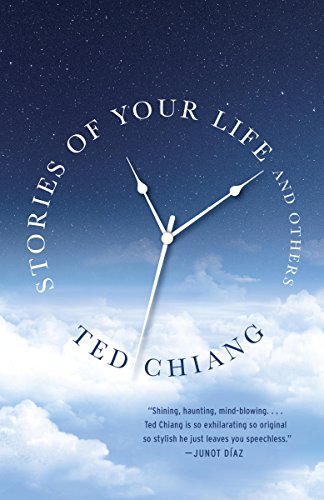
Stories of Your Life and Others
Ted Chiang
4.3
Ted Chiang's first published story, "Tower of Babylon," won the Nebula Award in 1990. Subsequent stories have won the Asimov's SF Magazine reader poll, a second Nebula Award, the Theodore Sturgeon Memorial Award, and the Sidewise Award for alternate history. He won the John W. Campbell Award for Best New Writer in 1992. Story for story, he is the most honored young writer in modern SF.
Now, collected here for the first time are all seven of this extraordinary writer's stories so far-plus an eighth story written especially for this volume.
What if men built a tower from Earth to Heaven-and broke through to Heaven's other side? What if we discovered that the fundamentals of mathematics were arbitrary and inconsistent? What if there were a science of naming things that calls life into being from inanimate matter? What if exposure to an alien language forever changed our perception of time? What if all the beliefs of fundamentalist Christianity were literally true, and the sight of sinners being swallowed into fiery pits were a routine event on city streets? These are the kinds of outrageous questions posed by the stories of Ted Chiang. Stories of your life . . . and others.
…
Recommended by Naval Ravikant, Meltem Demirors, and Ryan Len.
I’m rereading Stories of Your Life and Others by Ted Chiang. It’s one of my favorite sci-fi novels. [source]
Meltem Demirors
finally reading Ted Chiang’s Stories of Your Life and i have basically been crying since i opened my kindle such a beautiful writer and such profound topics. division by zero was my favorite of the collection, but the story the book is titled after is stunning 😍 https://t.co/2c5SuDEfkh [source]
Ryan Len
One of the best sci-fi books I’ve read in my life! [source]
Cover unavailable
46
The Good Egg (The Bad Seed, #2)
Jory John, Pete Oswald
4.3
In this follow-up to Jory John and Pete Oswald’s popular picture book The Bad Seed, meet the next best thing: a very good egg, indeed!
The good egg has been good for as long as he can remember. While the other eggs in his carton are kind of rotten, he always does the right, kind, and courteous thing. He is a verrrrrrry good egg indeed! Until one day he decides that enough is enough! He begins to crack (quite literally) from the pressure of always having to be grade-A perfect.
…
Cover unavailable
47
A Monster Calls
Patrick Ness, Jim Kay
4.2
An unflinching, darkly funny, and deeply moving story of a boy, his seriously ill mother, and an unexpected monstrous visitor.
At seven minutes past midnight, thirteen-year-old Conor wakes to find a monster outside his bedroom window. But it isn't the monster Conor's been expecting - he's been expecting the one from his nightmare, the nightmare he's had nearly every night since his mother started her treatments. The monster in his backyard is different. It's ancient. And wild. And it wants something from Conor. Something terrible and dangerous. It wants the truth.
From the final idea of award-winning author Siobhan Dowd - whose premature death from cancer prevented her from writing it herself - Patrick Ness has spun a haunting and darkly funny novel of mischief, loss, and monsters both real and imagined.
…
Cover unavailable
48
Just After Sunset
Stephen King
4.2
Just after sunset—call it dusk; call it twilight; it’s a time when human life takes on an unnatural cast, when nothing is quite as it appears, when the imagination begins to reach for shadows as they dissipate to darkness and living daylight can be scared right out of you.
Who but Stephen King would turn a Port-O-San into a slimy birth canal, or a roadside honky-tonk into a place for endless love? A book salesman with a grievance might pick up a mute hitchhiker, not knowing the silent man in the passenger seat listens altogether too well. Or an exercise routine on a stationary bicycle, begun to reduce bad cholesterol, might take its rider on a captivating—and then terrifying—journey.
Set on a remote key in Florida, “The Gingerbread Girl” is a riveting tale featuring a young woman as vulnerable—and resourceful—as Audrey Hepburn’s character in "Wait Until Dark." In “Ayana,” a blind girl works a miracle with a kiss and the touch of her hand. For King, the line between the living and the dead is often blurry, and the seams that hold our reality intact might tear apart at any moment. In one of the longer stories here, “N.,” which recently broke new ground when it was adapted as a graphic digital entertainment, a psychiatric patient’s irrational thinking might create an apocalyptic threat in the Maine countryside...or keep the world from falling victim to it.
In Bryson's biggest book, he confronts his greatest challenge: to understand—and, if possible, answer—the oldest, biggest questions we have posed about the universe and ourselves. Taking as territory everything from the Big Bang to the rise of civilization, Bryson seeks to understand how we got from there being nothing at all to there being us. To that end, he has attached himself to a host of the world’s most advanced (and often obsessed) archaeologists, anthropologists, and mathematicians, travelling to their offices, laboratories, and field camps. He has read (or tried to read) their books, pestered them with questions, apprenticed himself to their powerful minds. A Short History of Nearly Everything is the record of this quest, and it is a sometimes profound, sometimes funny, and always supremely clear and entertaining adventure in the realms of human knowledge, as only Bill Bryson can render it. Science has never been more involving or entertaining.
…
Recommended by Amanda Palmer, David Goldberg, and Fabrice Grinda.
Amanda Palmer
Amanda Palmer recommended this book in the book "Tools of Titans". [source]
David Goldberg
What I really liked about A Short History of Nearly Everything is that it gives an excellent account of a lot of the personalities and the interconnectedness of important discoveries in cosmology and elsewhere. He does such a great job of bringing together our understanding of cosmology, evolution, paleontology, and geology in a very, very fluid way. [source]
Fabrice Grinda
I have lots of books to recommend, but they are not related to my career path. The only one that is remotely related is Peter Thiel’s Zero to One. That said here are books I would recommend. [source]
Cover unavailable
50
Siddhartha
Hermann Hesse
4.2
Herman Hesse's classic novel has delighted, inspired, and influenced generations of readers, writers, and thinkers. In this story of a wealthy Indian Brahmin who casts off a life of privilege to seek spiritual fulfillment. Hesse synthesizes disparate philosophies--Eastern religions, Jungian archetypes, Western individualism--into a unique vision of life as expressed through one man's search for meaning.
He says, 'Love is stronger than hate. Soft is stronger than hard. Water is stronger than stone.' [source]
Cover unavailable
51
Night Shift
Stephen King
4.2
NIGHT SHIFT -- Stephen King's first collection of stories -- is an early showcase of the depths that King's wicked imagination could plumb. In these 20 tales, we see mutated rates gone bad ("Graveyard Shift"); a cataclysmic virus that threatens humanity ("Night Surf," the basis for The Stand); a smoker who will try anything to stop ("Quitters, Inc."); a reclusive alcoholic who begins a gruesome transformation ("Gray Matter"); and many more. This is Stephen King at his horrifying best. --back cover
A solitary finger pokes out of a drain. Novelty teeth turn predatory. Flies settle and die on an old pair of sneakers in New York, and the Nevada desert swallows a Cadillac. Meanwhile the legend of Castle Rock returns . . . and grows on you. What does it all mean? What else could it mean? First there was Night Shift (1978), then Skeleton Crew (1985), and now Stephen King is back with a third collection of stories--a vast, many-chambered cave of a volume, with passages leading every which way to hell . . . and a few to glory.
The long reach of Stephen King's imagination and the no-holds-barred force of his storytelling have never been so richly demonstrated. There's something here for readers of every stripe and predilection--classic tales of the macabre and the monstrous, cutting-edge explorations of the borderlands between good and evil, brilliant pastiches of Chandler and Conan Doyle, even a teleplay and a non-fiction bonus, a heartfelt piece of Little League baseball that first appeared in The New Yorker.
In story after story, several published here for the first time, he will take you to places you've never been before, places that are both dark and vividly illuminated. Fair warning: You will lose a good deal of sleep. But Stephen King, writing to beat the devil, will do your dreaming for you.
Can you believe? Then come . . .
…
Cover unavailable
53
The Importance of Being Earnest
Oscar Wilde
4.2
Oscar Wilde's madcap farce about mistaken identities, secret engagements, and lovers entanglements still delights readers more than a century after its 1895 publication and premiere performance. The rapid-fire wit and eccentric characters of The Importance of Being Earnest have made it a mainstay of the high school curriculum for decades.
Cecily Cardew and Gwendolen Fairfax are both in love with the same mythical suitor. Jack Worthing has wooed Gwendolen as Ernest while Algernon has also posed as Ernest to win the heart of Jack's ward, Cecily. When all four arrive at Jack's country home on the same weekend the "rivals" to fight for Ernest's undivided attention and the "Ernests" to claim their beloveds pandemonium breaks loose. Only a senile nursemaid and an old, discarded hand-bag can save the day!
…
Cover unavailable
54
Glitches (The Lunar Chronicles, #0.5)
Marissa Meyer
4.2
Cinder, a gifted mechanic, is a cyborg. She’s a second-class citizen with a mysterious past, reviled by her stepmother and blamed for her stepsister’s illness. In Glitches, a short prequel story to Cinder, we see the results of that illness play out, and the emotional toll that takes on Cinder. Something that may, or may not, be a glitch…
Cover unavailable
55
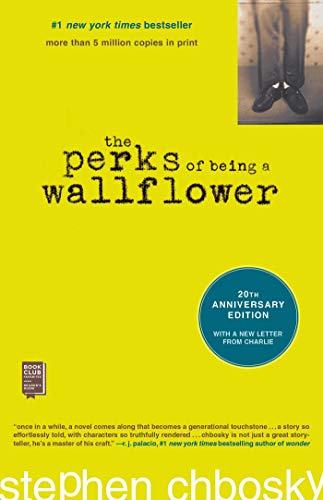
The Perks of Being a Wallflower
Stephen Chbosky
4.2
Read the cult-favorite coming of age story that takes a sometimes heartbreaking, often hysterical, and always honest look at high school in all its glory. Now a major motion picture starring Logan Lerman and Emma Watson, The Perks of Being a Wallflower is a funny, touching, and haunting modern classic.
The critically acclaimed debut novel from Stephen Chbosky, Perks follows observant “wallflower” Charlie as he charts a course through the strange world between adolescence and adulthood. First dates, family drama, and new friends. Sex, drugs, and The Rocky Horror Picture Show. Devastating loss, young love, and life on the fringes. Caught between trying to live his life and trying to run from it, Charlie must learn to navigate those wild and poignant roller-coaster days known as growing up.
A #1 New York Times best seller for more than a year, an American Library Association Best Book for Young Adults (2000) and Best Book for Reluctant Readers (2000), and with millions of copies in print, this novel for teen readers (or “wallflowers” of more-advanced age) will make you laugh, cry, and perhaps feel nostalgic for those moments when you, too, tiptoed onto the dance floor of life.
…
Recommended by Emma Watson, Jamie Grayson, Rae Earl, and 1 others.
Jamie Grayson
Holy shit there’s no way this book is that old because that really ages me but I COMPLETELY agree. This book is a masterpiece and a must-read. Lessons about being human are in there and those are important right now. https://t.co/fF1spEFrUH [source]
Rae Earl
It is a tremendously powerful study of PTSD, a mental health issue that isn’t talked about enough [source]
Richard Speight Jr.
A pal for 30 years, @StephenChbosky ‘s first book #ThePerksofBeingaWallflower had a MASSIVE impact on me & countless others. Then came his great movies. Now..THE NEXT BOOK! Be like me & buy it THE DAY it comes out. (Then harass him until he agrees to put me in the movie! 🎥 🤠) https://t.co/02bMKPgF9A [source]
Cover unavailable
56
The Lottery
Shirley Jackson
4.2
Shirley Jackson's "The Lottery" is a memorable and terrifying masterpiece, fueled by a tension that creeps up on you slowly without any clear indication of why. This is just a townful of people, after all, choosing their numbers for the annual lottery. What's there to be scared of?
Cover unavailable
57
Different Seasons
Stephen King
4.2
Rita Hayworth and Shawshank Redemption--the most satisfying tale of unjust imprisonment and offbeat escape since The Count of Monte Cristo.
Apt Pupil--a golden California schoolboy and an old man whose hideous past he uncovers enter into a fateful and chilling mutual parasitism.
The Body--four rambunctious young boys venture into the Maine woods and in sunlight and thunder find life, death, and intimations of their own mortality.
The Breathing Method--a tale told in a strange club about a woman determined to give birth no matter what. source: stephenking.com
…
Cover unavailable
58
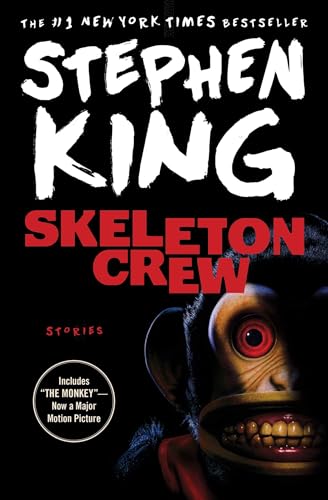
Skeleton Crew
Stephen King
4.2
In this brilliant collection of stories, Stephen King takes readers down paths that only he could imagine. A supermarket becomes the place where humanity makes its last stand against destruction. A trip to the attic becomes a journey to hell. A woman driver finds a scary shortcut to paradise. An idyllic lake harbors a bottomless evil. And a desert island is the scene of the most terrifying struggle for survival ever waged.
…
Cover unavailable
59
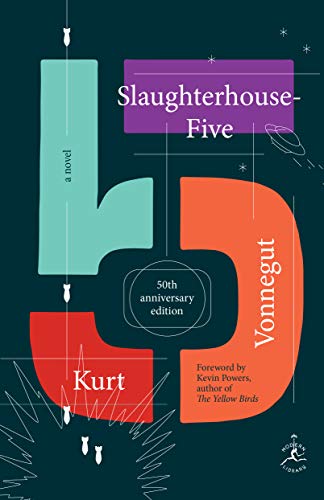
Slaughterhouse-Five
Kurt Vonnegut and Kevin Power
4.2
Selected by the Modern Library as one of the 100 best novels of all time, Slaughterhouse-Five, an American classic, is one of the world's great antiwar books. Centering on the infamous firebombing of Dresden, Billy Pilgrim's odyssey through time reflects the mythic journey of our own fractured lives as we search for meaning in what we fear most.
Recommended by Bernard Tan, Carlos Eire, and Dan Christensen.
Bernard Tan
I’m also a Murakami and Vonnegut fan, Kafka on the Shore, The Wind-up Bird Chronicle, Norwegian Wood, Slaughterhouse-Five, etc. Now that I look at the books listed, they seem to carry an existential theme. I guess I like to understand humanity and human behaviour ultimately to better understand myself. I find reading a means to connect with people who may have lived before my time, or in a distant country, that I may never have had the chance to connect with in real life. As three-dimensional humans, we are all made up of so many faces and emotional layers that we find it hard to dissect them all, and when we find writers who can explain these thought processes in a way that’s tangible and digestible, there’s this incredibly comforting eureka moment of feeling understood. [source]
Carlos Eire
Even though he is no philosopher Vonnegut is still able to ask the questions that all of us think about – how time affects our lives. [source]
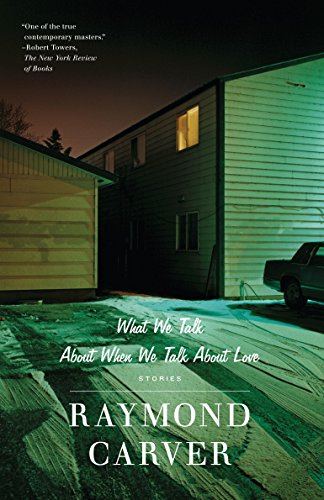
In his second collection, Carver establishes his reputation as one of the most celebrated and beloved short-story writers in American literature—a haunting meditation on love, loss, and companionship, and finding one’s way through the dark.
Cover unavailable
61
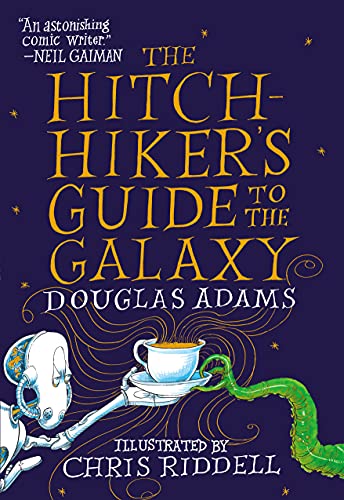
The Hitchhiker's Guide To The Galaxy (Hitchhiker's Guide to the Galaxy, #1)
Douglas Adams
4.2
One Thursday lunchtime Earth is unexpectedly demolished to make way for a new hyperspace bypass. For Arthur Dent, who has only just had his house demolished that morning, this is already more than he can cope with. Sadly, however, the weekend has only just begun. And the Galaxy is a very, very large and startling place indeed.
I guess when I was around 12 or 15... I had an existential crisis, and I was reading various books on trying to figure out the meaning of life and what does it all mean? It all seemed quite meaningless and then we happened to have some books by Nietzsche and Schopenhauer in the house, which you should not read at age 14 (laughter). It is bad, it’s really negative. So then I read Hitchhikers Guide to the Galaxy which is quite positive I think and it highlighted an important point which is that a lot of times the question is harder than the answer. And if you can properly phrase the question, then the answer is the easy part. So, to the degree that we can better understand the universe, then we can better know what questions to ask. Then whatever the question is that most approximates: what’s the meaning of life? That’s the question we can ultimately get closer to understanding. And so I thought to the degree that we can expand the scope and scale of consciousness and knowledge, then that would be a good thing. [source]
Today is World Book Day, a wonderful opportunity to address this #ChallengeRichard sent in by Mike Gonzalez of New Jersey: Make a list of your top 65 books to read in a lifetime. [source]
Michael Arrington
Founder/TechCrunch
Not sure what you’ll learn from HHGTTG, but it’s one of the funniest series of books of all time and if you haven’t read it you pretty much have to. It’s actually a five book series that’s called a trilogy, and if Adams hadn’t died of a heart attack at age 49 in 2001 there would have likely been more books written. HHGTTG and the WWII epic Catch-22 are among my favorite books when contemplating the meaninglessness and hilarity of life (HHGTTG begins with the Earth being destroyed to to make way for a hyperspatial express route). Like Dune, skip the movie, it doesn’t do the books justice. [source]
Cover unavailable
62
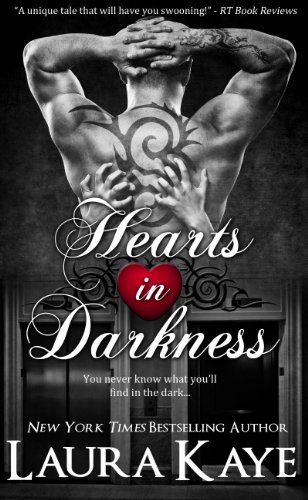
Hearts in Darkness (Hearts in Darkness, #1)
Laura Kaye
4.2
Two strangers...
When accountant Makenna James finds herself stranded in a pitch-black elevator, she can't help but wonder about the stranger stuck with her. All she noticed about him before the lights went out was a dragon tattoo; all she knows now is his sexy, gruff voice in the darkness.
Four hours...
Caden Grayson is inked, pierced, scarred on the inside and out—and terrified of the dark for reasons he'd rather not remember. Trapped in his worst nightmare, only the sweet voice of the red-headed beauty distracts him from his fear. And, oh, man, as the hours pass and the darkness heats up, that's nothing compared to her touch.
One pitch-black elevator...
He's all rough edges and she's pin-striped skirts, but in the darkness they open up and reach out without any preconceptions to hold them back. But as attraction grows and sparks fly, will they feel the same when the lights come back on?
The Hearts in Darkness Duet Continues with LOVE IN THE LIGHT!
…
Cover unavailable
63
The Grownup
Gillian Flynn
4.2
A canny young woman is struggling to survive by perpetrating various levels of mostly harmless fraud. On a rainy April morning, she is reading auras at Spiritual Palms when Susan Burke walks in. A keen observer of human behavior, our unnamed narrator immediately diagnoses beautiful, rich Susan as an unhappy woman eager to give her lovely life a drama injection. However, when the "psychic" visits the eerie Victorian home that has been the source of Susan's terror and grief, she realizes she may not have to pretend to believe in ghosts anymore. Miles, Susan's teenage stepson, doesn't help matters with his disturbing manner and grisly imagination. The three are soon locked in a chilling battle to discover where the evil truly lurks and what, if anything, can be done to escape it.
“The Grownup,” originally appeared as “What Do You Do?” in George R. R. Martin’s Rogues anthology.
…
Cover unavailable
64
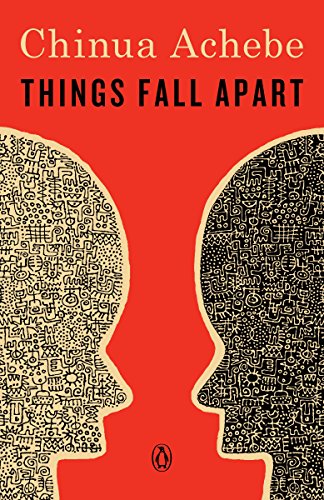
Things Fall Apart (The African Trilogy, #1)
Chinua Achebe
4.1
THINGS FALL APART tells two overlapping, intertwining stories, both of which center around Okonkwo, a “strong man” of an Ibo village in Nigeria. The first of these stories traces Okonkwo's fall from grace with the tribal world in which he lives, and in its classical purity of line and economical beauty it provides us with a powerful fable about the immemorial conflict between the individual and society.
The second story, which is as modern as the first is ancient, and which elevates the book to a tragic plane, concerns the clash of cultures and the destruction of Okonkwo's world through the arrival of aggressive, proselytizing European missionaries. These twin dramas are perfectly harmonized, and they are modulated by an awareness capable of encompassing at once the life of nature, human history, and the mysterious compulsions of the soul. THINGS FALL APART is the most illuminating and permanent monument we have to the modern African experience as seen from within.
…
Recommended by Barack Obama, Helon Habila, Jacqueline Novogratz, and 2 others.
As 2018 draws to a close, I’m continuing a favorite tradition of mine and sharing my year-end lists. It gives me a moment to pause and reflect on the year through the books I found most thought-provoking, inspiring, or just plain loved. It also gives me a chance to highlight talented authors – some who are household names and others who you may not have heard of before. Here’s my best of 2018 list. [source]
Helon Habila
It almost feels like a cliché to say that this is one of my favourite books. But there is no way you can escape this book. It is such a part of African literature. It is an inescapable classic. It is a brilliant feat of storytelling, the economy of it, the brevity, the imagery, the ear he has for the traditional language. [source]
Jacqueline Novogratz
The first book I read by an African author. Achebe is unflinching in his portrayal of the challenges of change, the relationships of colonialism, and power/powerlessness. [source]
Cover unavailable
65
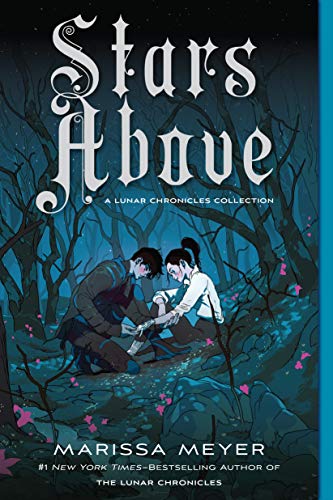
Stars Above (The Lunar Chronicles, #0.5, 0.6, 1.5, 3.1, 4.5)
Marissa Meyer
4.1
The enchantment continues....
The universe of the Lunar Chronicles holds stories—and secrets—that are wondrous, vicious, and romantic. How did Cinder first arrive in New Beijing? How did the brooding soldier Wolf transform from young man to killer? When did Princess Winter and the palace guard Jacin realize their destinies?
With nine stories—five of which have never before been published—and an exclusive never-before-seen excerpt from Marissa Meyer’s upcoming novel, Heartless, about the Queen of Hearts from Alice in Wonderland, Stars Above is essential for fans of the bestselling and beloved Lunar Chronicles.
-- The Little Android: A retelling of Hans Christian Andersen’s “The Little Mermaid,” set in the world of The Lunar Chronicles. Glitches: In this prequel to Cinder, we see the results of the plague play out, and the emotional toll it takes on Cinder. Something that may, or may not, be a glitch…. The Queen’s Army: In this prequel to Scarlet, we’re introduced to the army Queen Levana is building, and one soldier in particular who will do anything to keep from becoming the monster they want him to be. Carswell’s Guide to Being Lucky: Thirteen-year-old Carswell Thorne has big plans involving a Rampion spaceship and a no-return trip out of Los Angeles. The Keeper: A prequel to the Lunar Chronicles, showing a young Scarlet and how Princess Selene came into the care of Michelle Benoit. After Sunshine Passes By: In this prequel to Cress, we see how a nine-year-old Cress ended up alone on a satellite, spying on Earth for Luna. The Princess and the Guard: In this prequel to Winter, we see a game called The Princess The Mechanic: In this prequel to Cinder, we see Kai and Cinder’s first meeting from Kai’s perspective. Something Old, Something New: In this epilogue to Winter, friends gather for the wedding of the century...
…
Cover unavailable
66
Coraline
Neil Gaiman, Dave McKean
4.1
Coraline lives with her preoccupied parents in part of a huge old house--a house so huge that other people live in it, too... round, old former actresses Miss Spink and Miss Forcible and their aging Highland terriers ("We trod the boards, luvvy") and the mustachioed old man under the roof ("'The reason you cannot see the mouse circus,' said the man upstairs, 'is that the mice are not yet ready and rehearsed.'") Coraline contents herself for weeks with exploring the vast garden and grounds. But with a little rain she becomes bored--so bored that she begins to count everything blue (153), the windows (21), and the doors (14). And it is the 14th door that--sometimes blocked with a wall of bricks--opens up for Coraline into an entirely alternate universe. Now, if you're thinking fondly of The Lion, the Witch, and the Wardrobe or Alice's Adventures in Wonderland, you're on the wrong track. Neil Gaiman's Coraline is far darker, far stranger, playing on our deepest fears. And, like Roald Dahl's work, it is delicious.
What's on the other side of the door? A distorted-mirror world, containing presumably everything Coraline has ever dreamed of... people who pronounce her name correctly (not "Caroline"), delicious meals (not like her father's overblown "recipes"), an unusually pink and green bedroom (not like her dull one), and plenty of horrible (very un-boring) marvels, like a man made out of live rats. The creepiest part, however, is her mirrored parents, her "other mother" and her "other father"--people who look just like her own parents, but with big, shiny, black button eyes, paper-white skin... and a keen desire to keep her on their side of the door. To make creepy creepier, Coraline has been illustrated masterfully in scritchy, terrifying ink drawings by British mixed-media artist and Sandman cover illustrator Dave McKean. This delightful, funny, haunting, scary as heck, fairy-tale novel is about as fine as they come. Highly recommended. (Ages 11 and older) --Karin Snelson
…
Recommended by Simon Smith.
Simon Smith
@lindsanderson @Misterbodd @PaulWat5 @f33lthesun Awesomely scary book full stop! Great though. [source]
Cover unavailable
67
Dear Ijeawele, or a Feminist Manifesto in Fifteen Suggestions
Chimamanda Ngozi Adichie
4.1
From the best-selling author of Americanah and We Should All Be Feminists comes a powerful new statement about feminism today--written as a letter to a friend.
A few years ago, Chimamanda Ngozi Adichie received a letter from a dear friend from childhood, asking her how to raise her baby girl as a feminist. Dear Ijeawele is Adichie's letter of response.
Here are fifteen invaluable suggestions--compelling, direct, wryly funny, and perceptive--for how to empower a daughter to become a strong, independent woman. From encouraging her to choose a helicopter, and not only a doll, as a toy if she so desires; having open conversations with her about clothes, makeup, and sexuality; debunking the myth that women are somehow biologically arranged to be in the kitchen making dinner, and that men can "allow" women to have full careers, Dear Ijeawele goes right to the heart of sexual politics in the twenty-first century. It will start a new and urgently needed conversation about what it really means to be a woman today.
…
Cover unavailable
68
The Outsiders
S. E. Hinton
4.1
Librarian note: See this edition record for the Laurel-Leaf Books/Dell edition that may have been published with ISBN 014240733X.
No one ever said life was easy. But Ponyboy is pretty sure that he's got things figured out. He knows that he can count on his brothers, Darry and Sodapop. And he knows that he can count on his friends - true friends who would do anything for him, like Johnny and Two-Bit. And when it comes to the beating up on "greasers" like him and his friends - he knows that he can count on them for trouble. But one night someone takes things too far, and Ponyboy's world is turned upside down...
~from inside flap
…
Cover unavailable
69
Four Past Midnight
Stephen King
4.1
At midnight comes the point of balance. Of danger. The instang of utter stillness when between two beats of the heart, an alternative reality can slip through, like a blade between the ribs, and swithc you into a new and terrifying world.
Four Past Midnight: four heart-stopping accounts of that moment when the familiar world fractures beyond sense, the fragments spinning away from the desperate, clutching reach of sanity... (back cover)
…
Cover unavailable
70
A Room of One's Own
Virginia Woolf
4.1
A Room of One's Own is an extended essay by Virginia Woolf. First published on the 24th of October, 1929, the essay was based on a series of lectures she delivered at Newnham College and Girton College, two women's colleges at Cambridge University in October 1928. While this extended essay in fact employs a fictional narrator and narrative to explore women both as writers of and characters in fiction, the manuscript for the delivery of the series of lectures, titled Women and Fiction, and hence the essay, are considered nonfiction. The essay is seen as a feminist text, and is noted in its argument for both a literal and figural space for women writers within a literary tradition dominated by patriarchy.
…
Cover unavailable
71
The Complete Stories
Flannery O'Connor and Robert Girou
4.1
This is the original cover edition of ISBN: 0374515360 (ISBN13: 9780374515362
Winner of the National Book Award
The publication of this extraordinary volume firmly established Flannery O'Connor's monumental contribution to American fiction. There are thirty-one stories here in all, including twelve that do not appear in the only two story collections O'Connor put together in her short lifetime - Everything That Rises Must Converge and A Good Man Is Hard to Find.
O'Connor published her first story, "The Geranium," in 1946, while she was working on her master's degree at the University of Iowa. Arranged chronologically, this collection shows that her last story, "Judgement Day" - sent to her publisher shortly before her death - is a brilliantly rewritten and transfigured version of "The Geranium." Taken together, these stories reveal a lively, penetrating talent that has given us some of the most powerful and disturbing fiction of the twentieth century. Also included is an introduction by O'Connor's longtime editor and friend, Robert Giroux.
Contents: The geranium -- The barber -- Wildcat -- The crop -- The turkey -- The train -- The peeler -- The heart of the park -- A stoke of good fortune -- Enoch and the gorilla -- A good man is hard to find -- A late encounter with the enemy -- The life you save may be your own -- The river -- A circle in the fire -- The displaced person -- A temple of the Holy Ghost -- The artificial nigger -- Good country people -- You can't be any poorer than dead -- Greenleaf -- A view of the woods -- The enduring chill -- The comforts of home -- Everything that rises must converge -- The partridge festival -- The lame shall enter first -- Why do the heathen rage? -- Revelation -- Parker's back -- Judgement Day.
…
Cover unavailable
72
The Ones Who Walk Away from Omelas
Ursula K. Le Guin
4.1
Some inhabitants of a peaceful kingdom cannot tolerate the act of cruelty that underlies its happiness. The story "Omelas" was first published in New Dimensions 3, a hard-cover science fiction anthology edited by Robert Silverberg, in October 1973, and the following year it won Le Guin the prestigious Hugo Award for best short story. It was subsequently printed in her short story collection The Wind's Twelve Quarters in 1975.
…
Cover unavailable
73
Burning Chrome (Sprawl, #0)
William Gibson
4.1
Ten tales, from the computer-enhanced hustlers of Johnny Mnemonic to the technofetishist blues of Burning Chrome.
Johnny Mnemonic (1981) The Gernsback Continuum (1981) Fragments of a Hologram Rose (1977) The Belonging Kind (1981) with John Shirley Hinterlands (1981)
Red Star, Winter Orbit (1983) with Bruce Sterling New Rose Hotel (1984) The Winter Market (1985) Dogfight (1985) with Michael Swanwick Burning Chrome (1982)
…
Cover unavailable
74
Brokeback Mountain
Annie Proulx
4.1
Annie Proulx has written some of the most original and brilliant short stories in contemporary literature, and for many readers and reviewers, "Brokeback Mountain" is her masterpiece.
Ennis del Mar and Jack Twist, two ranch hands, come together when they're working as sheepherder and camp tender one summer on a range above the tree line. At first, sharing an isolated tent, the attraction is casual, inevitable, but something deeper catches them that summer.
Both men work hard, marry, and have kids because that's what cowboys do. But over the course of many years and frequent separations this relationship becomes the most important thing in their lives, and they do anything they can to preserve it.
The New Yorker won the National Magazine Award for Fiction for its publication of "Brokeback Mountain," and the story was included in Prize Stories 1998: The O. Henry Awards. In gorgeous and haunting prose, Proulx limns the difficult, dangerous affair between two cowboys that survives everything but the world's violent intolerance.
…
Recommended by Susan Quilliam.
Susan Quilliam
Brokeback Mountain is important to me because it’s the first time I’ve heard ordinary people in the street comment on a story focused on homosexual love—without distinguishing between it and heterosexual love. [source]
Cover unavailable
75
The Picture of Dorian Gray
Oscar Wilde
4.1
On its first publication The Picture of Dorian Gray was regarded as dangerously modern in its depiction of fin-de-siècle decadence. In this updated version of the Faust story, the tempter is Lord Henry Wotton, who lives selfishly for amoral pleasure; Dorian's good angel is the portrait painter Basil Hallward, whom Dorian murders. The book highlights the tension between the polished surface of high society and the life of secret vice. Although sin is punished in the end the book has a flavour of the elegantly perverse.
With an Afterword by Peter Harness.
Designed to appeal to the booklover, the Macmillan Collector's Library is a series of beautifully bound gift editions of much loved classic titles. Bound in real cloth, printed on high quality paper, and featuring ribbon markers and gilt edges, Macmillan Collector's Library are books to love and treasure.
…
Recommended by Andra Zaharia, Eric Berkowitz, Marc Montagne, and 1 others.
Andra Zaharia
A copy from 1903 of this book is my most prized possession. [source]
Eric Berkowitz
The Picture of Dorian Gray is now a part of the canon that no one would admit to not having read. Most of us have read it and delighted in its witticisms. It’s hard to imagine, but when Dorian Gray was first published, the book was not well received at all. It was totally panned. It was held against him as being an example of an effete character. It was being serialised by Lippincott’s Magazine, and the serialisation of the novel stopped when it became too inflammatory. [source]
Marc Montagne
My favorite fiction book is the The Picture of Dorian Gray by Oscar Wilde. I'm a huge Oscar Wilde fan, he has one of the brightest minds and the Picture is a masterpiece and his unique novel. I consider that you should only read books that you would consider reading again at some point while still enjoying the same pleasure. The Picture is definitely one of those. [source]
Cover unavailable
76
Heart of Darkness
Joseph Conrad
4.1
Heart of Darkness, a novel by Joseph Conrad, was originally a three-part series in Blackwood's Magazine in 1899. It is a story within a story, following a character named Charlie Marlow, who recounts his adventure to a group of men onboard an anchored ship. The story told is of his early life as a ferry boat captain. Although his job was to transport ivory downriver, Charlie develops an interest in investing an ivory procurement agent, Kurtz, who is employed by the government. Preceded by his reputation as a brilliant emissary of progress, Kurtz has now established himself as a god among the natives in “one of the darkest places on earth.” Marlow suspects something else of Kurtz: he has gone mad.
A reflection on corruptive European colonialism and a journey into the nightmare psyche of one of the corrupted, Heart of Darkness is considered one of the most influential works ever written.
…
Cover unavailable
77
The Tell-Tale Heart
Edgar Allan Poe and Byron Glaser
4.1
A murderer is convinced that the loud beating of his victim's heart will give him away to the police.
Cover unavailable
78
Cinder (The Lunar Chronicles, #1)
Marissa Meyer
4.1
The first book in the Lunar Chronicles series by Marissa Meyer! See where the futuristic YA fairytale saga all began, with the tale of a teenage cyborg who must fight for Earth's survival against villains from outer space.
Humans and androids crowd the raucous streets of New Beijing. A deadly plague ravages the population. From space, a ruthless lunar people watch, waiting to make their move. No one knows that Earth's fate hinges on one girl. . . .
Cinder, a gifted mechanic, is a cyborg. She's a second-class citizen with a mysterious past, reviled by her stepmother and blamed for her stepsister's illness. But when her life becomes intertwined with the handsome Prince Kai's, she suddenly finds herself at the center of an intergalactic struggle, and a forbidden attraction. Caught between duty and freedom, loyalty and betrayal, she must uncover secrets about her past in order to protect her world's future.
With high-stakes action and a smart, resourceful heroine, Cinder is a Cinderella retelling that is at once classic and strikingly original.
…
Recommended by Estelle Francis.
Estelle Francis
The story weaves politics, technology and fantasy in with the classic fairytale that we all know and love. [source]
Cover unavailable
79
Annihilation (Southern Reach #1)
Jeff Vandermeer
4.1
Area X has been cut off from the rest of the world for decades. Nature has reclaimed the last vestiges of human civilization. The first expedition returned with reports of a pristine, Edenic landscape; the second expedition ended in mass suicide, the third in a hail of gunfire as its members turned on one another. The members of the eleventh expedition returned as shadows of their former selves, and within weeks, all had died of cancer. In Annihilation, the first volume of Jeff VanderMeer's Southern Reach Trilogy, we join the twelfth expedition.
The group is made up of four women: an anthropologist; a surveyor; a psychologist, the de facto leader; and our narrator, a biologist. Their mission is to map the terrain, record all observations of their surroundings and of one another, and, above all, avoid being contaminated by Area X itself.
They arrive expecting the unexpected, and Area X delivers—but it’s the surprises that came across the border with them and the secrets the expedition members are keeping from one another that change everything.
…
Recommended by Stephen King, James Bradley, Kate Marvel, and 1 others.
I'm loving THE SOUTHERN REACH TRILOGY, by Jeff Vandermeer. Recommended by an indie bookseller. Creepy and fascinating. [source]
James Bradley
In the introduction to The Weird, the 2011 anthology that Jeff Vandermeer and his wife Ann edited, they suggest the weird isn’t a genre or a form so much as a technique or an affect, a thing that lurks in the interstices, and which emerges in unexpected and unsettling ways. I rather love this idea, not least because it captures something of what makes both Annihilation and its two sequels, Authority and Acceptance, so compelling, the way reading them leaves you feeling like you’ve been colonised yourself, your brain permanently altered by your descent into the world of the books. [source]
Kate Marvel
Annihilation evokes two things very well: that sense of confusion and powerlessness, and the drive to exert some sort of control over the situation by exploring and learning. [source]
Cover unavailable
80
Chess Story
Stefan Zweig, Joel Rotenberg, Peter Gay
4.1
Chess Story, also known as The Royal Game, is the Austrian master Stefan Zweig's final achievement, which was completed in Brazilian exile and sent off to his American publisher only a matter of days before his suicide in 1942. It is the only story in which Zweig looks at Nazism, and he does so with characteristic emphasis on the psychological.
Travelers by ship from New York to Buenos Aires find that on board with them is the world champion of chess, an arrogant and unfriendly man. They come together to try their skills against him and are soundly defeated. Then a mysterious passenger steps forward to advise them and their fortunes change. How he came to possess his extraordinary grasp of the game of chess and at what cost lie at the heart of Zweig's story.
This new translation of Chess Story brings out the work's unusual mixture of high suspense and poignant reflection.
…
Cover unavailable
81
And Every Morning the Way Home Gets Longer and Longer
Fredrik Backman
4.1
A little book with a big heart!
From the New York Times bestselling author of A Man Called Ove, My Grandmother Asked Me to Tell You She’s Sorry, and Britt-Marie Was Here comes an exquisitely moving portrait of an elderly man’s struggle to hold on to his most precious memories, and his family’s efforts to care for him even as they must find a way to let go.
With all the same charm of his bestselling full-length novels, here Fredrik Backman once again reveals his unrivaled understanding of human nature and deep compassion for people in difficult circumstances. This is a tiny gem with a message you’ll treasure for a lifetime.
…
Cover unavailable
82
The Curious Case of Benjamin Button
F. Scott Fitzgerald
4.1
Today, F. Scott Fitzgerald is known for his novels, but in his lifetime, his fame stemmed from his prolific achievement as one of America's most gifted story writers. "The Curious Case of Benjamin Button," a witty and fantastical satire about aging, is one of his most memorable stories.
In 1860 Benjamin Button is born an old man and mysteriously begins aging backward. At the beginning of his life he is withered and worn, but as he continues to grow younger he embraces life -- he goes to war, runs a business, falls in love, has children, goes to college and prep school, and, as his mind begins to devolve, he attends kindergarten and eventually returns to the care of his nurse.
This strange and haunting story embodies the sharp social insight that has made Fitzgerald one of the great voices in the history of American literature.
…
Cover unavailable
83
Side Jobs (The Dresden Files, #12.5)
Jim Butcher
4.1
Here, together for the first time, are the shorter from Jim Butcher's DRESDEN FILES series — a compendium of cases that Harry and his cadre of allies managed to close in record time. The tales range from the deadly serious to the absurdly hilarious. Also included is a new, never-before-published novella that takes place after the cliff-hanger ending of the new April 2010 hardcover, Changes.
Contains: + "Restoration of Faith" + "Vignette" + "Something Borrowed" -- from My Big Fat Supernatural Wedding + "It's My Birthday Too" -- from Many Bloody Returns + "Heorot" -- from My Big Fat Supernatural Honeymoon + "Day Off" -- from Blood Lite + "Backup" -- novelette from Thomas' point of view, originally published by Subterranean Press + "The Warrior" -- novelette from Mean Streets + "Last Call" -- from Strange Brew + "Love Hurts" -- from Songs of Love and Death + Aftermath -- all-new novella from Murphy's point of view, set forty-five minutes after the end of Changes
…
Cover unavailable
84
I Am Legend and Other Stories
Richard Matheson
4.1
Robert Neville is the last living man on Earth...but he is not alone. Every other man, woman, and child on Earth has become a vampire, and they are all hungry for Neville's blood.
By day, he is the hunter, stalking the sleeping undead through the abandoned ruins of civilization. By night, he barricades himself in his home and prays for dawn.
How long can one man survive in a world of vampires?
I am legend -- Buried talents -- The near departed -- Prey -- Witch war -- Dance of the dead -- Dress of white silk -- Mad house -- The funeral -- From shadowed places -- Person to person.
…
Recommended by Greg Garrett.
Greg Garrett
The monsters in the book are more like vampires. But the interesting thing about I Am Legend is that it is an apocalyptic survival story. The main character thinks that he is the last human being left on earth. [source]
Cover unavailable
85
Every Heart a Doorway (Wayward Children, #1)
Seanan McGuire
4.0
Eleanor West’s Home for Wayward Children No Solicitations No Visitors No Quests
Children have always disappeared under the right conditions; slipping through the shadows under a bed or at the back of a wardrobe, tumbling down rabbit holes and into old wells, and emerging somewhere... else.
But magical lands have little need for used-up miracle children.
Nancy tumbled once, but now she’s back. The things she’s experienced... they change a person. The children under Miss West’s care understand all too well. And each of them is seeking a way back to their own fantasy world.
But Nancy’s arrival marks a change at the Home. There’s a darkness just around each corner, and when tragedy strikes, it’s up to Nancy and her new-found schoolmates to get to the heart of the matter.
No matter the cost.
…
Cover unavailable
86
The Elephant Vanishes
Haruki Murakami
4.0
In these stories, a man sees his favorite elephant vanish into thin air; a newlywed couple suffers attacks of hunger that drive them to hold up a McDonald’s in the middle of the night; and a young woman discovers that she has become irresistible to a little green monster who burrows up through her backyard. By turns haunting and hilarious, in The Elephant Vanishes Murakami crosses the border between separate realities—and comes back bearing remarkable treasures
…
Recommended by Susan J Napier.
Susan J Napier
Murakami is writer who creates wonderful visions the stranger aspects of our mundane world. Some people call him a magical realist; Murakami has our normal world being invaded by, by strange things. [source]
Cover unavailable
87
Hearts in Atlantis
Stephen King
4.0
Five interconnected, sequential narratives, set in the years from 1960 to 1999. Each story is deeply rooted in the sixties, and each is haunted by the Vietnam War.
Stephen King, whose first novel, Carrie, was published in 1974, the year before the last U.S. troops withdrew from Vietnam, is the first hugely popular writer of the TV generation. Images from that war -- and the protests against it -- had flooded America's living rooms for a decade. Hearts in Atlantis, King's newest fiction, is composed of five interconnected, sequential narratives, set in the years from 1960 to 1999. Each story is deeply rooted in the sixties, and each is haunted by the Vietnam War.
In Part One, "Low Men in Yellow Coats," eleven-year-old Bobby Garfield discovers a world of predatory malice in his own neighborhood. He also discovers that adults are sometimes not rescuers but at the heart of the terror.
In the title story, a bunch of college kids get hooked on a card game, discover the possibility of protest...and confront their own collective heart of darkness, where laughter may be no more than the thinly disguised cry of the beast.
In "Blind Willie" and "Why We're in Vietnam," two men who grew up with Bobby in suburban Connecticut try to fill the emptiness of the post-Vietnam era in an America which sometimes seems as hollow -- and as haunted -- as their own lives.
And in "Heavenly Shades of Night Are Falling," this remarkable book's denouement, Bobby returns to his hometown where one final secret, the hope of redemption, and his heart's desire may await him.
Full of danger, full of suspense, most of all full of heart, Stephen King's new book will take some readers to a place they have never been...and others to a place they have never been able to completely leave.
…
Cover unavailable
88
The Adventures of Sherlock Holmes
Sir Arthur Conan Doyle
4.0
Sir Arthur Ignatius Conan Doyle, DL (22 May 1859 – 7 July 1930) was a Scottish author most noted for his stories about the detective Sherlock Holmes, which are generally considered a major innovation in the field of crime fiction, and the adventures of Professor Challenger. He was a prolific writer whose other works include science fiction stories, historical novels, plays and romances, poetry, and non-fiction. Conan was originally a given name, but Doyle used it as part of his surname in his later years.
…
Cover unavailable
89
Naked
David Sedaris
4.0
Welcome to the hilarious, strange, elegiac, outrageous world of David Sedaris. In Naked, Sedaris turns the mania for memoir on its proverbial ear, mining the exceedingly rich terrain of his life, his family, and his unique worldview—a sensibility at once take-no-prisoners sharp and deeply charitable. A tart-tongued mother does dead-on imitations of her young son's nervous tics, to the great amusement of his teachers; a stint of Kerouackian wandering is undertaken (of course!) with a quadriplegic companion; a family gathers for a wedding in the face of imminent death. Through it all is Sedaris's unmistakable voice, without doubt one of the freshest in American writing.
The six stories in Haruki Murakami’s mesmerizing collection are set at the time of the catastrophic 1995 Kobe earthquake, when Japan became brutally aware of the fragility of its daily existence. But the upheavals that afflict Murakami’s characters are even deeper and more mysterious, emanating from a place where the human meets the inhuman.
An electronics salesman who has been abruptly deserted by his wife agrees to deliver an enigmatic package—and is rewarded with a glimpse of his true nature. A man who has been raised to view himself as the son of God pursues a stranger who may or may not be his human father. A mild-mannered collection agent receives a visit from a giant talking frog who enlists his help in saving Tokyo from destruction. As haunting as dreams, as potent as oracles, the stories inAfter the Quake are further proof that Murakami is one of the most visionary writers at work today.
…
Cover unavailable
91
The House on Mango Street
Sandra Cisneros
4.0
Acclaimed by critics, beloved by readers of all ages, taught everywhere from inner-city grade schools to universities across the country, and translated all over the world, The House on Mango Street is the remarkable story of Esperanza Cordero.
Told in a series of vignettes – sometimes heartbreaking, sometimes deeply joyous–it is the story of a young Latina girl growing up in Chicago, inventing for herself who and what she will become. Few other books in our time have touched so many readers.
For those asking, I actually read two books in February. "The House on Mango Street" is one of the most interestingly written books I've ever digested--a beautiful work. And I loved the Shatner book because I love Shatner. #newyearsresolutionstillgoingstrong https://t.co/4TVPbjJAEJ [source]
Cover unavailable
92
Short
Holly Goldberg Sloan
4.0
Julia is very short for her age, but by the end of the summer run of The Wizard of Oz, she'll realize how big she is inside, where it counts. She hasn't ever thought of herself as a performer, but when the wonderful director of Oz casts her as a Munchkin, she begins to see herself in a new way. As Julia becomes friendly with the poised and wise Olive - one of the adults with dwarfism who've joined the production's motley crew of Munchkins - and with her deeply artistic neighbor, Mrs. Chang, Julia's own sense of self as an artist grows. Soon, she doesn't want to fade into the background and it's a good thing, because her director has more big plans for Julia!
…
Cover unavailable
93
Sock it to Me, Santa!
Madison Parke
4.0
Ryan is assigned to Jamie Peterson for his class's secret gift exchange. If word gets out that he has to make a handcrafted gift for flamboyant and openly gay Jamie, Ryan will be the laughing stock of the school. It's a good thing no self-respecting boy would be caught dead in a craft store, because otherwise he'd be at risk of being spotted when his mom drags him to her weekly craft workshops. He hopes Jamie will appreciate all the trouble he's going to for this assignment. Finding the perfect gift is gonna be tricky. Jamie deserves something good, though, after all the crap he has to put up with at school. At least, Ryan tells himself that's the reason he's putting so much thought into the gift. It couldn't be that he has feelings for Jamie, could it?
…
Cover unavailable
94
The Metamorphosis and Other Stories
Franz Kafka, Donna Freed, Jason Baker
4.0
The Metamorphosis and Other Stories, by Franz Kafka, is part of the Barnes & Noble Classicsseries, which offers quality editions at affordable prices to the student and the general reader, including new scholarship, thoughtful design, and pages of carefully crafted extras. Here are some of the remarkable features of Barnes & Noble Classics: All editions are beautifully designed and are printed to superior specifications; some include illustrations of historical interest. Barnes & Noble Classics pulls together a constellation of influences—biographical, historical, and literary—to enrich each reader's understanding of these enduring works.
Virtually unknown during his lifetime, Franz Kafka is now one of the world’s most widely read and discussed authors. His nightmarish novels and short stories have come to symbolize modern man’s anxiety and alienation in a bizarre, hostile, and dehumanized world. This vision is most fully realized in Kafka’s masterpiece, “The Metamorphosis,” a story that is both harrowing and amusing, and a landmark of modern literature.
Bringing together some of Kafka’s finest work, this collection demonstrates the richness and variety of the author’s artistry. “The Judgment,” which Kafka considered to be his decisive breakthrough, and “The Stoker,” which became the first chapter of his novel Amerika, are here included. These two, along with “The Metamorphosis,” form a suite of stories Kafka referred to as “The Sons,” and they collectively present a devastating portrait of the modern family.
Also included are “In the Penal Colony,” a story of a torture machine and its operators and victims, and “A Hunger Artist,” about the absurdity of an artist trying to communicate with a misunderstanding public. Kafka’s lucid, succinct writing chronicles the labyrinthine complexities, the futility-laden horror, and the stifling oppressiveness that permeate his vision of modern life.
Jason Baker is a writer of short stories living in Brooklyn, New York.
…
Cover unavailable
95
Notes From The Underground
Fyodor Mikhailovich Dostoyevsky, Richard Pevear, David Magarshack
4.0
Notes from Underground (Russian ??????? ?? ????????, Zapíski iz podpól'ja, also translated in English as Notes from the Underground or Letters from the Underworld while Notes from Underground is the most literal translation) (1864) is a short novel by Fyodor Dostoevsky. It is considered by many to be the world's first existentialist novel. It presents itself as an excerpt from the rambling memoirs of a bitter, isolated, unnamed narrator (generally referred to by critics as the Underground Man) who is a retired civil servant living in St. Petersburg.
It’s such a lovely weird book. Partly, it’s Dostoyevsky giving us an account, through the fictional narrator, of his view on the human condition. Just one quote: “But man has such a predilection for systems and abstract deductions that he is ready to distort the truth intentionally, he is ready to deny the evidence of his senses only to justify his logic”. The idea of humans being suckered into living only according to “logic”, and not only the vanity of such a pursuit, but the impossibility of it, is a wonderful antidote to much of contemporary morality and wonkness. In the same vein, I found the attack on the core underpinning concept of much of 20th century economics, that people are rational beings making rational choices to optimize their own advantage, so forward for its time. Notes from Underground is from 1864, yet manages to expertly debunk that narrow view. Freedom, not material advantage, is the “most advantageous advantage”, even when that’s the freedom to do yourself harm. (Any analysis of Brexit and Trump would do well to consult with Dostoyevsky). Also, major bonus points for being a short book, yet packing so much punch. [source]
Notes from Underground by Fyodor Dostoevsky https://t.co/WuSwComIfi, a book from my great books list https://t.co/AxBNX3QpMb [source]
Cover unavailable
96
Candide, ou l'Optimisme
Voltaire, Tobias Smollett
4.0
Candide, ou l'Optimisme is a French satire first published in 1759 by Voltaire, a philosopher of the Age of Enlightenment. The novella has been widely translated, with English versions titled Candide: or, All for the Best (1759); Candide: or, The Optimist (1762); and Candide: or, Optimism (1947). It begins with a young man, Candide, who is living a sheltered life in an Edenic paradise and being indoctrinated with Leibnizian optimism (or simply Optimism) by his mentor, Pangloss. The work describes the abrupt cessation of this lifestyle, followed by Candide's slow, painful disillusionment as he witnesses and experiences great hardships in the world. Voltaire concludes with Candide, if not rejecting optimism outright, advocating a deeply practical precept, "we must cultivate our garden," in lieu of the Leibnizian mantra of Pangloss, "all is for the best" in the "best of all possible worlds." Candide is characterised by its sarcastic tone, as well as by its erratic, fantastical and fast-moving plot. A picaresque novel with a story similar to that of a more serious bildungsroman, it parodies many adventure and romance cliches, the struggles of which are caricatured in a tone that is mordantly matter-of-fact. Still, the events discussed are often based on historical happenings, such as the Seven Years' War and the 1755 Lisbon earthquake. As philosophers of Voltaire's day contended with the problem of evil, so too does Candide in this short novel, albeit more directly and humorously. Voltaire ridicules religion, theologians, governments, armies, philosophies, and philosophers through allegory; most conspicuously, he assaults Leibniz and his optimism. As expected by Voltaire, Candide has enjoyed both great success and great scandal. Immediately after its secretive publication, the book was widely banned because it contained religious blasphemy, political sedition and intellectual hostility hidden under a thin veil of naivete. However, with its sharp wit and insightful portrayal of the human condition, the novel has since inspired many later authors and artists to mimic and adapt it. Today, Candide is recognized as Voltaire's magnum opus and is often listed as part of the Western canon; it is arguably taught more than any other work of French literature. In his book of intellectual history Martin Seymour-Smith listed Candide as one of The 100 Most Influential Books Ever Written. Candide contains thirty episodic chapters, which may be grouped into two main schemes: one consists of two divisions, separated by the protagonist's hiatus in El Dorado; the other consists of three parts, each defined by its geographical setting. By the former scheme, the first half of Candide constitutes the rising action and the last part the resolution. This view is supported by the strong theme of travel and quest, reminiscent of adventure and picaresque novels, which tend to employ such a dramatic structure. By the latter scheme, the thirty chapters may be grouped into three parts each comprising ten chapters and defined by locale: I-X are set in Europe, XI-XX are set in the Americas, and XXI-XXX are set in Europe and the Ottoman Empire. The plot summary that follows uses this second format and includes Voltaire's additions of 1761. Chapters I-X The tale of Candide begins in the castle of the Baron Thunder-ten-Tronckh in Westphalia, home to the Baron's daughter, Lady Cunegonde; his bastard nephew, Candide; a tutor, Pangloss; a chambermaid, Paquette; and the rest of the Baron's family. The protagonist, Candide, is romantically attracted to Cunegonde. He is a child of "the most unaffected simplicity," whose face is "the index of his mind." Dr. Pangloss, professor of "metaphysico-theologo-cosmolonigologie" (English translation: "metaphysico-theologo-cosmonigology") and self-proclaimed optimist, teaches his pupils that they live in the "best of all possible worlds" and that "all is for the best."
…
Cover unavailable
97
The Complete Short Stories of Ernest Hemingway
Ernest Hemingway
4.0
THE ONLY COMPLETE COLLECTION BY THE NOBEL PRIZE-WINNING AUTHOR
In this definitive collection of Ernest Hemingway's short stories, readers will delight in the author's most beloved classics such as "The Snows of Kilimanjaro," "Hills Like White Elephants," and "A Clean, Well-Lighted Place," and will discover seven new tales published for the first time in this collection. For Hemingway fans The Complete Short Stories is an invaluable treasury.
…
Recommended by Sonia Micu.
Sonia Micu
When I need something that is soothing, I read anything by Hemingway and life starts to feel like some sort of an adventure I shouldn’t miss. The Complete Short Stories of Ernest Hemingway is one way I got a taste of it. The Strange Country is my favourite. [source]
Cover unavailable
98
One Day in the Life of Ivan Denisovich
Alexander Solzhenitsyn, Yevgeny Yevtushenko, Eric Bogosian
4.0
Solzhenitsyn's first book, this economical, relentless novel is one of the most forceful artistic indictments of political oppression in the Stalin-era Soviet Union. The simply told story of a typical, grueling day of the titular character's life in a labor camp in Siberia, is a modern classic of Russian literature and quickly cemented Solzhenitsyn's international reputation upon publication in 1962. It is painfully apparent that Solzhenitsyn himself spent time in the gulags--he was imprisoned for nearly a decade as punishment for making derogatory statements about Stalin in a letter to a friend. Introduction by Yevgeny Yevtushenko
…
Recommended by Robert Conquest.
Robert Conquest
Yes let’s do that as I’ve quite a lot to say about old Solzh. It was a critical book – an entirely objective account of a victim in a labour camp. Just one day in an ordinary labour camp. Not exaggerated, not even a particularly nasty day. The most extraordinary part is how is got printed. It ran contrary to everyone in the Communist Party in Russia, but the Novy Mir editor Tvardovsky snuck a copy in to Khrushchev and said, ‘This is awfully good, you ought to publish it’. And he did. It was an extraordinary stroke of luck. And once it was printed, as Galina put it, ‘The Soviet government had let the genie out of the bottle, and however hard they tried later, they couldn’t put it back in.’ [source]
Cover unavailable
99
Nothing Short of a Miracle: A true story of faith, family, community and perseverance
Lisa Short and Don Wagner
4.0
Shortly after a young couple vow to love each other through sickness and health, their commitment is tested when a tragic farm accident destroys their world. Surviving the insurmountable damage seems impossible, but when a community comes together and profoundly demonstrates what can be done through prayer and support-and a Kansas farm family puts all their trust and faith in God-lives are inspired by results that are nothing short of miracle.For some, farming is a calling more than an occupation, and to those who participate in the time-honored production of America's food supply, the challenge of staying solvent through the generations is a continual concern. And when tragedy strikes at the heart of a farming family, the repercussions demand the best of individuals and community, calling forth that spirit and resolve so essential to those who live and grow on the land. This mother's account of her adult son's shocking experience with loss and the subsequent struggle to maintain life as a husband and father, and regain his role within the rural landscape of the Kansas heartland, is a heartfelt tribute to the qualities that made and keep America's precious farm families doing what they do best.
…
Cover unavailable
100
The Haunting of Hill House
Shirley Jackson
4.0
In celebration of the Shirley Jackson centennial, a Penguin Classics Deluxe Edition of the greatest haunted house story ever written
First published in 1959, Shirley Jackson’s The Haunting of Hill House has been hailed as a perfect work of unnerving terror. It is the story of four seekers who arrive at a notoriously unfriendly pile called Hill House: Dr. Montague, an occult scholar looking for solid evidence of a “haunting”; Theodora, his lighthearted assistant; Eleanor, a friendless, fragile young woman well acquainted with poltergeists; and Luke, the future heir of Hill House. At first, their stay seems destined to be merely a spooky encounter with inexplicable phenomena. But Hill House is gathering its powers—and soon it will choose one of them to make its own.
This book is one of several novels in which a group of ghost hunters or psychic investigators move into a house with a reputation of being haunted, and see what they find. But what makes this the greatest single ghost novel, in my view, is that it’s at least as much about the psychological interaction of the characters as it is about the overtly spectral. There’s a superb characterisation of the spinster character, who ultimately becomes one of the ghosts of Hill House, if you like. The scenes from her viewpoint are both moving and disturbing. [source]